Category Archives: Leaders

Bushra Arshad creates history; busts all myths; clears UPSC

Saurikh Village (Kannauj), UTTAR PRADESH :

BushraArshad01MPOs22nov2019

Bushra Arshad is being lavished with praise for achieving 6th rank in UPPCS, after the results were recently announced, and for being selected as SDM. This girl from Saurikh village is the only Muslim participant to become SDM in UPPSC-2017. She is the same Bushra Arshad who scored 277th rank in UPSC, results of which were announced in July, and subsequently was selected for the IRS, but she was not satisfied with her achievement.

She is not satisfied even with her latest achievement shows her grit and passion to achieve her dream of being in top 20 in IAS. The reality, however, seems that Bushra is fond of breaking the myths and proving the stereotypes wrong.

Her family, relatives, and husband all believe that she will not settle for anything less. They have a good reason for their belief: If a village girl, married with kids, after four surgeries and overcoming the pain of those surgeries, could score such a high rank in one of the prestigious exams and stamp her presence, then everything is possible for her.

Bushra smiles and reacts: Though we could find exemplary achievements from persons faced with each of those obstacles, my facing every one of those hurdles, probably, resulted in my being strong-willed in my quest.

Bushra’s father is a farmer and her mother is a housewife. A lone brother and a sister are also well-educated.  Both parents are graduates. But Bushra, in her mother Shama’s words, is definitely the “Extra-ordinary” one, packed with talent and way better than us.

Bushra graduated at the age of seventeen and a half. She had an MBA degree before she turned 20. She completed her studies up to class XII from Kannauj and went to Kanpur for graduation.

BushraArshad02MPOs22nov2019

Bushra says that she wanted to give the UPSC exam right away, but couldn’t since she didn’t meet the minimum age requirement. Her mother says that Bushra was admitted directly into the second class at the age of four and a half years. She adds “She already had learned so much at home itself that she never came even second (in her class).” She says Bushra is habituated to be a topper. My multi-talented daughter topped in everything”.

““Make this girl a collector” was the constant advice of anyone and everyone who visited us to my Abbu and Ammi,” says Bushra. “It got me fixated. (Again) Since I did not meet the minimum age requirement of UPSC, I prepared and appeared for JRF test.”

She cleared JRF in her first attempt and achieved a Ph.D. in Distress Management from AMU and that’s how the title “Doctor” got associated with her name. Right after that, she married Asmar Hussain. A little while later Engineer Asmar Hussain and Bushra moved to Saudi Arabia. Asmar started his studies at Jazan University, while Bushra obtained a high-ranking position. Leaving a well-placed position and an excellent package that came along with it, Bushra returned to India along with her husband.

Bushra says, “There was only one reason for our return to India, limitless love and ‘patriotism’, I often used to contemplate that the knowledge that I gained in my country through its residents, the skills born from that knowledge ought to benefit the same citizens, and that is their right.”

Her husband, Asmar Hussain, says that after this he took up a job at Coal India, they had two children. His wife underwent four major surgeries. It has been ten years since, but her desire to become a collector from within egged her constantly.

Bushra adds: “I did my job honestly. I did my duty as a mother. I also performed the responsibilities of a wife without neglecting my husband. I did not use the excuse of constant pain after surgeries to set me back and now I am appointed a deputy collector.”

Asmar Hussain, who is pursuing a Ph.D. from AMU, is a resident of Aligarh. He says that Bushra sits in the front seat of the car as a habit. Once she sets her sight on something, she achieves it at all costs.

Mohammad Akmal, a youth from Kannauj, says, “In four months, this is the second news that a girl from Saurikh has made history.Four months ago, this same girl did wonders. Bushra’s success proves that  excuses are for weak-willed people. She is truly an example of positivity and she is the talk of Kannauj ”.

source: http://www.twocircles.net / TwoCirlcles.net / Home> Indian Muslim> Lead Story> TCN Positive / by Aas Mohammed Kaif , TwoCircles.net / October 29th, 2019

Six Muslims, five of them female, crack Rajasthan Judicial Services exam

RAJASTHAN :

Mayank Pratap Singh from Jaipur is set to become the youngest judge in India

JudicialMPOs22nov2019

Jaipur:

A total of 06 Muslims have cleared the Rajasthan Judicial Services (RJS) exams result of which was announced Wednesday. Five of the six Muslims who cleared the coveted exam are female.

Youngest Judge In India

According to the result of Civil Judge Cadre 2018 under the Rajasthan Judicial Service Rules, 2010 declared early in the morning Wednesday 197 candidates successfully cleared the exam. Of them 127 are women.

Mayank Pratap Singh from Jaipur who has also cracked the Rajasthan judicial services 2018 exam at just 21 years of age, will be the youngest judge in India.

Muslims in the list

The six Muslims in the list of successful candidates are Sania Manihar, Sajida, Sana, Huma Khohri, Shehnaz Khan and Faisal Khan.

Sajida who belongs to Jodhpur secured 37th, Sana Hakim Khan bagged the 130th position, Huma Khohri 136 and Shehnaaz Khan got 143rd rank. The lone Muslim man in the list Faisal Khan got the 107th rank.

This is the first time five Muslim females have cleared the Civil Judge exam.

In the top ten, eight are women. Only the topper and the 10th ranker are men.

Selected candidates will join the service as a judicial magistrate after a two-year probation period.

The original age requirement for appearing in the judicial services exam was 23 years, which was reduced to 21 years by the Rajasthan High Court this year.

source: http://www.ummid.com / Ummid.com / Home> India> Education & Career / by ummid.com News Network / November 22nd, 2019

Akil Kureshi sworn in as new chief justice of Tripura High Court

GUJARAT :

Justice Kureshi has succeeded Chief Justice Sanjoy Karol, who has been appointed as Chief Justice of the High Court of Patna.

Akil Kureshi, who once sent Amit Shah in police custody, sworn in as new chief justice of Tripura HC

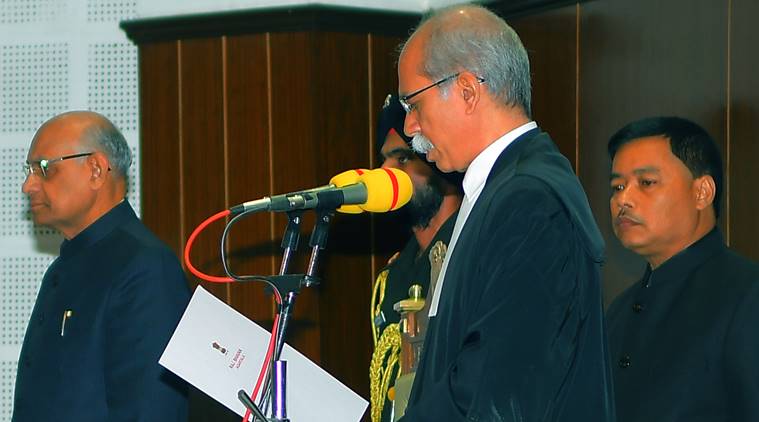
Newly appointed Chief Justice of the High Court of Tripura, Justice Akil Abdulhamid Kureshi being administered the oath of office and secrecy by Governor Ramesh Bais during at ‘Durbar Hall’ of Old Raj Bhawan in Agartala on Saturday. (ANI Photo)

Justice Akil Abdulhamid Kureshi was sworn in as the new Chief Justice of the High Court of Tripura on Saturday. He was previously serving with the Gujarat High Court.

Governor Ramesh Bais administered the oath of office and secrecy to Kureshi at Old Raj Bhawan in Agartala. He has assumed office as the 5th Chief Justice of Tripura High Court. The oath-taking ceremony was held at 11 AM in the presence of Chief Minister Biplab Kumar Deb, Deputy Chief Minister Jishnu Devvarman, cabinet ministers, Tripura High Court Justices Subhashish Talapatra, Arindam Lodh and others.

Justice Kureshi has succeeded Chief Justice Sanjoy Karol, who was has been appointed as Chief Justice of the High Court of Patna.

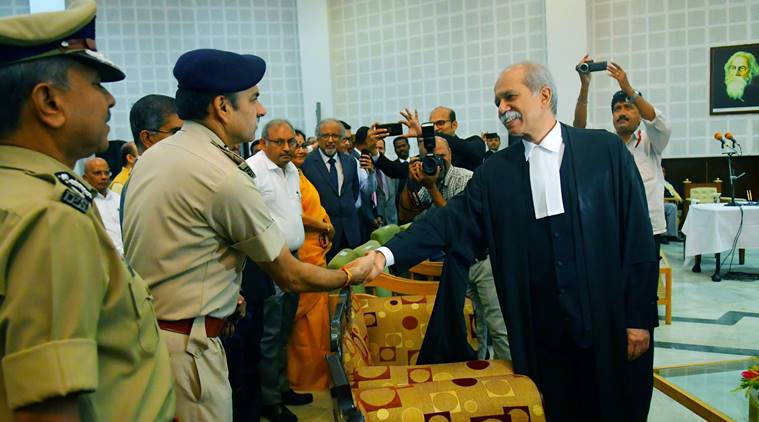
Justice Akil Abdulhamid Kureshi interacting with different officials of Tripura, during the oath-taking ceremony held at ‘Durbar Hall’ of Old Raj Bhawan in Agartala on Saturday. (ANI Photo)

In 2010, Justice Kureshi had sent incumbent Union Home Minister Amit Shah in police custody in connection with the Sohrabuddin Sheikh encounter case. A Special CBI Court had later discharged Shah from the case due to lack of evidence in 2014.

Earlier, the Supreme Court Collegium had recommended Justice Kureshi, who was the senior-most judge from Gujarat High Court, for appointment as Chief Justice of the Madhya Pradesh High Court. However, the Collegium later revised its recommendation with the modification that Justice AA Kureshi might be appointed as Chief Justice the High Court of Tripura.

The High Court of Tripura was established in 2013 with Deepak Gupta as its first Chief Justice. Previously, trials of High Court cases from the state were held at Agartala Bench of the Gauhati  High Court.

source: http://www.indianexpress.com / The Indian Express / Home> North East India / by Debraj Deb / Agartala – November 16th, 2019

‘Ulema’s Role in India’s Freedom Movements’: An Academic Bid to Stop Saffron Eraser in its Tracks

NEW DELHI :

UlemasRole01MPOs13nov2019

New Delhi :

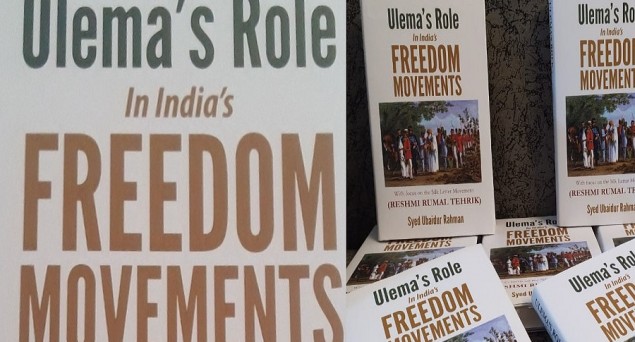
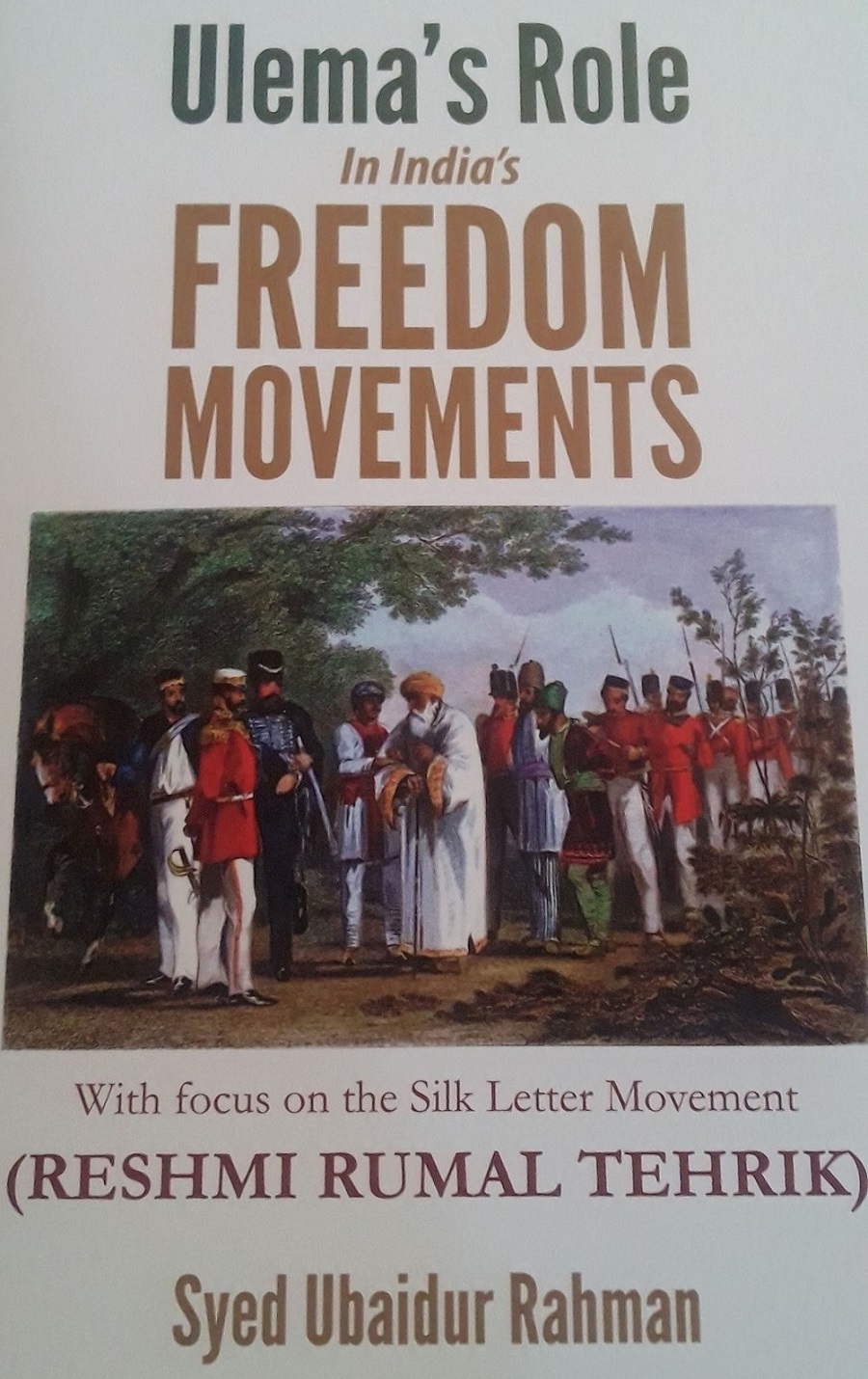
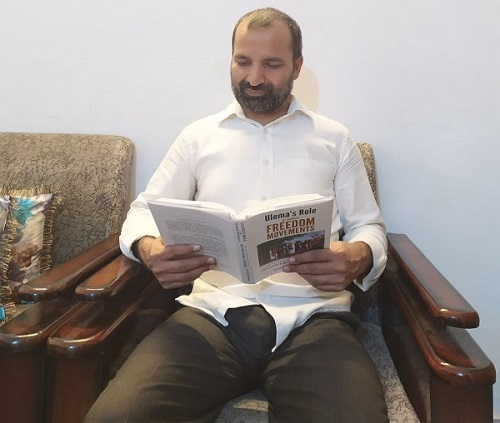
Amidst well-organized and power-backed attempts to erase M-word from the history of India’s freedom movement, has come out a humble academic bid to preserve in black and white the key role of Ulema or Muslim clerics in the ‘bloody’ freedom struggle spreading over around one century. Written by a young writer Syed Ubaidur Rahman, who is just 44, the book ‘Ulema’s Role in India’s Freedom Movements: With focus on Silk Letter Movement (Reshmi Rumal Tehrik) captures Ulema’s sacrifices in the Mutiny of 1857 and 1858, Faraizi Movement and Sayyid Ahmad Barelvi’s movement besides mainly focusing on the Silk Letter Movement as the title declares.

“The word ‘Ulema’ has become a rather very misunderstood term in the present day Indian society. Like everything Muslim, a conscious effort has been made to malign and ridicule the Muslim clergy…Over the last few centuries, the Muslim scholars have contributed immensely in seeing to it that the nation remains a single, united and cohesive unit and have made significant contributions to this end,” writes the author in the introduction of the book.

While admitting that “Ulema’s role in the society has considerably shrunk over the last several centuries,” he says that Ulema “used to have a very important place in the Indian society during Muslim rule in the country and even after the dismantling of the Mughal empire…over the centuries, on many occasions, they have led not just on spiritual front but on temporal front as well.”

“Every time in the past, when the country found itself in challenging situations, they stepped in and tried to play a much bigger role than what is usually anticipated from them. This was seen during different phases of freedom movements beginning with the first war of independence of 1857,” writes Rahman, a journalist by career who has penned several books in the last one decade, besides regularly writing articles and columns for various periodicals.

The 280-page book deals with different phases of India’s freedom struggle “with special focus on Silken Letter Conspiracy, better known as the Reshmi Rumal Tehrik.”

Highlighting the need and relevance of the book, the author says: “Not much has been written on Reshmi Rumal Tehrik or the people behind it and thus it remains shrouded in mystery. The book also discusses at length the Mutiny of 1857 and 1858, Faraizi Movement that was anti-colonial movement launched and sustained by Islamic scholars, besides Tehrik-e-Jihad of Sayyid Ahmad Barelvi in North Western Frontiers and Kashmir.”

The author says: “Despite the slide of the Muslim empire and the subsequent dismemberment, first between Muslim nawabs in the North, Deccan and South India, and later the annexation of these territories by the East India Company, Muslim scholars remained instrumental in trying to keep the Muslim empire intact. They were at the forefront in trying to stop the slide, and in posing challenges, first against those who fought the Mughals and later against the British East India Company. Shah Waliullah, the legendary Islamic scholar and reformist, did everything to stop the Mughal Empire from going to dogs. But, when despite all his efforts nothing happened, he sent a later to Ahmad Shah Abdali and also to Nawab of Oudh and Hafiz Rahmat Khan, the shrewd Ruhella chieftain. The rest is history.”

Deliberating on the core topic of the book, that is the role of Ulema in India’s freedom movement, the author writes: “Muslim ulema’s role was not limited to merely giving advice to the rulers and then become mute spectators of what was taking place. On the contrary, when they realized that there was no one coming forward to lead the masses, they took up leadership role, and fought off the invaders. From Bengal to Balakot and from Delhi to Lucknow, Muslim ulema played prominent roles in all the uprisings against the British (mis)rule. Be it Faraizi Movement, first war of independence of 1857 or the Reshmi Rumal Tehrik, they were instrumental and took leadership role. During the Mutiny of 1857, ulema were at the forefront and paid heavy price for their leadership role.”

UlemasRole02MPOs13nov2019

The book highlights the contributions of some Ulema during the Mutiny of 1857 and subsequent fights.

The author says: Maulavi Ahmadullah Shah was one of the most prominent leaders of the entire freedom movement, who led on many war fronts and collaborated with all other renowned freedom fighters. Despite being among the most prominent leaders of the 1857 Mutiny, Maulavi Ahmadullah Shah remains a rather unknown figure in the country. He was a stalwart, a shrewd military planner, a great scholar of Islamic sciences and above all a unifier beyond any iota of doubt. He allied with almost all the leading actors of the 1857 revolution, be it Tantia Topi, Nana Sahib, Begum Hazrat Mahal, Bakht Khan Ruhilla, Khan Bahadur Khan Rohilla of Bareilly or any other freedom fighter of repute. It is an irony that despite his military successes against the British East India Company in 1857 from Lucknow to Bareilly and Shahjahanpur, his name is not even mentioned. His military planning unnerved the colonial rulers and his bravery won praise from the British generals like George Bruce Malleson and Thomas Seaton.

Haji Imdadullah Muhajir Makki was another alim of repute, known for his personal piety, scholarship, courage and military exploits during the Mutiny of 1857. A father figure among ulema of his time, his most renowned disciples include Maulana Qasim Nanotwi and Maulana Rasheed Ahmad Gangohi who not just fought alongside him in Thana Bhawan and Shamli but later went on to launch Darul Ulum Deoband. Maulvi Liaqat Ali, another alim was behind the uprising in Allahabad and evicting the East India Company out of the major North Indian town. It was his personal charisma and shrewd military planning that first brought together the mutineers and later successfully beat back the Company forces. Many more ulema played prominent roles during the uprising and paid dearly when the Company came back with a vengeance. Tens of thousands of ulema were hanged to death. Even those ulema who had nothing to do with the Mutiny were implicated, jailed, sent to kalapani and unceremoniously killed. However, this dance macabre didn’t stop them from taking to the same means to defeat the colonial rulers later.

Silk Letter Movement

The author says: “Reshmi Rumal Tehrik is a freedom movement that remains largely unknown. Not much has been written on it and both its top leaders, Mahmud Hasan and Ubaidullah Sindhi, despite their stellar roles and sacrifices, remain rather unknown. While Shaikhul Hind spent three years in trying circumstances in Malta, Ubaidullah Sindhi spent more than three decades in exile, first in Afghanistan and then in Turkey and Hejaz.” 

Silk Letter Movement, known more widely as the Reshmi Rumal Tehrik, was launched by ulema of Deoband, particularly Mahmud Hasan and his renowned disciple Ubaidullah Sindhi, who later went on to become the Home Minister in the first provisional government established in Kabul. Raja Mahendra Pratap Singh was its President and Maulana Barkatullah Bhopali was its Prime Minister. The Reshmi Rumal Tehrik had a two-fold objective, one to incite the tribal people in North Western Frontier region and then forging alliance with other world powers including Afghanistan, Turkey and Germany. While Mahmud Hasan headed to Hijaz to seek help from Turkish officials, Ubaidullah Sindhi went to Kabul to forge alliance with Afghan amir. Both were very successful in their planning, but while Mahmud Hasan was still in Hijaz, Ottomans suffered heavy reverses against Sharif of Mecca who was being propped by Britain. At the same time, the entire planning of Ubaidullah Sindhi was discovered when the Silken Letters, sent by him to Mahmud Hasan were unearthed by the British CID. Hundreds of their supporters across Punjab, United Provinces and Delhi were arrested by British police.

In the introduction of the book, author Rahman says: “The pages that follow unravel a history that has been often suppressed and not much has been written on it. To many people, this side of the history may seem rather bewildering as I examine it and try to make sense as to what happened in our part of the world and how those brave men, despite the failure of 1857 mutiny rose repeatedly to defy the British Raj.”

How Important Is This Book when saffron eraser is moving fast on the canvas of freedom history of India?

Talking to India Tomorrow, the author responded to the question: “History needs to be preserved. It is the responsibility of the people, communities and the nations to preserve their histories and present right perspectives to what happened in the past. Indian Muslims have done precious little when it comes to presenting their perspective in right context. On the contrary, the Sangh Parivar, bent upon distorting the history of the last few centuries, has made strides in this field. Despite the fact they were never part of the freedom movement, they have claimed an important role for them, and have tried to co-opt major historic figures as part of their narrative. This began with Patel. Now they are trying to claim Gandhi and Ambedkar as their own, despite both being fiercely opposed to their ideology of hate. On the contrary, the Muslims have ignored this part completely. Hope this book serves its purpose and creates awareness among masses about what Muslim scholars and ulama did for the nation in the freedom struggle.”

The book has come out at a time when the BJP government in Karnataka has decided to scrap the state’s official celebrations around Tipu Sultan’s birth anniversary. Going one step ahead, the government announced to remove the lesson on the 18th century Mysore ruler from school history books.

Author Syed Obaidur Rahman

Given the communal hatred widening the gulf between Hindus and Muslims, the author wants the book reaches the masses.

“While this is of paramount importance to render this book in Hindi and other vernacular languages, this seems a hard nut to crack due to want of resources. God willing, I would definitely like to bring it in Urdu, Hindi and other regional languages,” says Rahman who has several other books to his credit, including Muslim Freedom Fighters: Contribution of Indian Muslims in the Freedom Movement, Understanding Muslim Leadership in India and Muslim Mujahideen e Aazadi, aur Tehrik e Azadi mein unki khidmaat (Urdu).

Book: Ulema’s Role in India’s Freedom Movements: With focus on the Silk Letter Movement (RESHMI RUMAL TEHRIK)

Author: Syed Ubaidur Rahman   /  Price: Rs 595  /  Pages: 280

Publisher: Global Media Publications  /  D-204, 4th Floor, Abul Fazl Enclave, Jamia Nagar, New Delhi-110025

Email: syedurahman@gmail.com, gmpublication@gmail.com / Contact: 9818327757

source: http://www.indiatomorrow.net / India Tomorrow / Home / by Mumtaz Alam, India Tomorrow / November 11th, 2019

From naming ‘IIT’ to setting up of UGC: Initiatives by Maulana Abul Kalam Azad

Mecca, SAUDI ARABIA / New Delhi   :

Homeschooled for the early part of his life, Azad is considered to be the father of the Indian Institutes of Technology (IITs). Here is a look at some of the major initiatives taken by him in setting up the Indian education system.

Maulana Abdul Kalam Aazad, HRD Minister of India, JMI, jamai, DU, IIT, National education day, education news

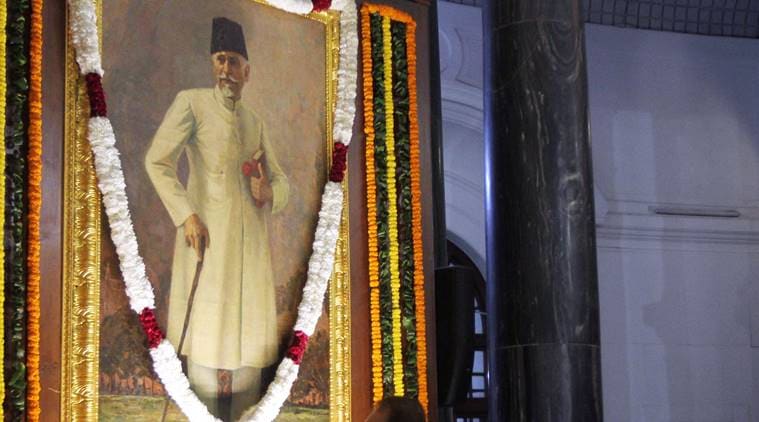
Maulana Abdul Kalam Aazad (File Photo)

Bharat Ratna awardee and India’s first Minister of Human Resource Development (HRD), Maulana Abul Kalam Azad was not only an educationalist but also a journalist. Homeschooled for the early part of his life, Azad is considered to be the father of the Indian Institutes of Technology (IITs) which are still considered among the best Indian educational institutes. Here is a look at some of the major initiatives taken by him in setting up the Indian education system.

Naming IITs – When India was looking to set up higher educational institutes which would impart knowledge in the field of science and technology, a Massachusetts Institute of Technology-like (MIT) model was thought of. The name ‘Indian Institute of Technology’ was adopted by Maulana Abul Kalam Azad before the inauguration of the institutes. The first Indian Institutes of Technology – IIT Kharagpur came into establishment in 1950.

Establishing UGC – A committee headed by S Radhakrishnan under the leadership of Azad as HRD Minister suggested extending the Universities Grant Commission (UGC)’s role to supervise work of all Indian varsities, make recommendations and grant funds. Earlier, UGC looked after three central universities, namely Aligarh, Benaras and Delhi.

DU and IISc – He laid the foundation stone of the Indian Institute of Science (IISc) in 1909, then known as the Tata Institute and granted deemed university status in 1958. Azad also oversaw the setting up of the ‘Central Institute of Education, Delhi’, which later became part of University of Delhi (DU) as the Department of Education. He was also a member of the foundation committee to establish Jamia Millia Islamia at Aligarh in UP.

Minority community – A supporter of education for poor, women and minority communities, Azad had said, “It is a birthright of every individual to receive at least the basic education without which he cannot fully discharge his duties as a citizen.”

To honour his efforts, Ministry of Minority Affairs of the Central Government of India set up the Maulana Azad Education Foundation to promote education among educationally backward sections of the society. The Ministry also provides the Maulana Abul Kalam Azad National Fellowship, an integrated five-year fellowship in the form of financial assistance to students from minority communities to pursue higher studies. The education institutes include Maulana Azad National Institute of Technology, the Maulana Azad College among others.

source: http://www.indianexpress.com / The Indian Express / Home> Education / by Education Desk , New Delhi / November 11th, 2019

Tipu, legend in the West

Srirangapatnam, KARNATAKA :

TipuSultanMPOs07nov2019

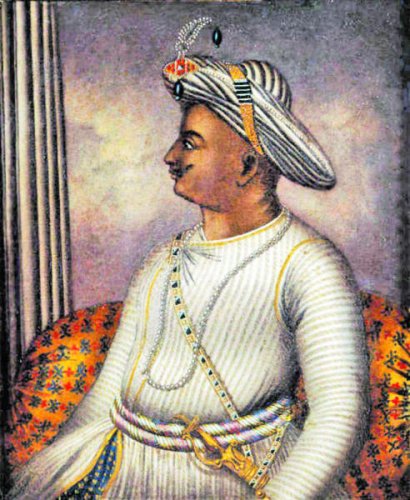
It is an irony that Tipu Sultan, the Tiger of Mysore, whom the current government in Karnataka wants to remove from its history, is celebrated in Britain, France and the US in song, drama, opera, novel, poetry and paintings. A wealth of Tipu’s  personal effects, curiosities and artifacts have found way into numerous art galleries and museums in many countries in the West. There’s not a major museum in the UK that does not exhibit some artifact related to Tipu.

The 75th Highlanders were a regiment raised in Scotland to exclusively fight Tipu. Scottish generals like Sir Hector Munro, Baillie, Beatson, Fraser, Gordon, Dunlop and others participated in the wars against Tipu. The Scots, more than the English,  were in the forefront of the British forces in all the Anglo-Mysore wars fought by Tipu as well as his father Hyder Ali. That explains the importance of the display of Tipu memorabilia in Edinburgh and Glasgow.

After Tipu was finally defeated and killed in 1799 by the British, under the command of Arthur Wellesley, the future Lord Wellington who 16 years later defeated Napoleon Bonaparte in the Battle of Waterloo, images of Tipu, his capital Srirangapatam (Srirangapatna) and his numerous impregnable forts and fortresses, proliferated throughout Britain. No other Indian ruler ever captured the imagination of the average Englishman as Tipu did. It is said that British housewives would quieten their babies by whispering “else, Tipu Sultan will come and get you.” Even three decades after Tipu’s death, his name was such a terror that when Ram Mohan Roy visited England on a mission from the then Mughal emperor, hostile crowds confronted him in London, mistaking him to be related to Tipu because his headgear resembled Tipu’s iconic turban.

Tipu Sultan, his capital city Srirangapatam, and the wars he fought against the British became favourite subjects for paintings, sketches and etchings by some of the most famous artists of the day in England and Scotland. When Ker Porter, the famous  Scottish painter’s Panorama — a single large painting of Tipu — was displayed in Edinburgh, there was euphoria among the public as they rushed to have a glimpse of it. JMW Turner, the renowned British painter, painted portraits of Tipu  and scenes of Srirangapatam and other places in Mysore kingdom. Sir David Willkie, another famous painter, was commissioned by the widow of David Baird to paint the poignant “Discovering the body of Tipu Sahib on 4 May, 1799”.  It was exhibited in 1838 in the Royal Academy of Arts in London. David Baird had spent several years in Srirangapatam as Tipu’s prisoner, and had his revenge in the final assault on him.

Alexander Allen travelled to India to personally see the hill forts of Mysore kingdom and produced captivating scenes in his paintings. William Darnell Beckford, Holmes, Hunter and many others made several stunning paintings of Tipu and his palaces. Sir Walter Scott, the great Scottish novelist, wrote works of fiction based on Tipu and his times. Charles Dickens, Wilkes Collins and Jules Verne have all depicted themes from Tipu’s life in their novels.

The numerous artifacts of Tipu Sultan, pilfered, looted and spirited away by the British after the fall of Srirangapatam, became collectors’ items. Tipu’s dismantled throne, his numerous swords, daggers, bejeweled sword belts, hookahs, ivory caskets , nutcrackers, gold watches, precious jewels and many other priceless items occupy the pride of place in museums in London, Glasgow, Edinburgh and Wales.

The most awesome of these artifacts is the life-size toy tiger depicted devouring a British soldier. It has cast a spell over generations eve since it was spirited away by Wellesley to England where it was displayed at the Kensington Museum, now  known as Victoria and Albert Museum (V& A Museum). This toy tiger in bright yellow strips has in its belly a mechanical pipe organ hidden, which creates wailing shrieks and a loud road when its handle is turned. There was near stampede for months in front of the museum when people flocked to see the wonder toy of Tipu Sultan. The fact that it is kept in an exclusive large room in the otherwise crowded V&A Museum, and with separate security, speaks of the importance that is accorded to this curious Mysore object. A replica of it is at the Scottish National Museum in Edinburgh. It was commissioned in 1999, when the bi-centenary of Tipu’s death was commemorated, as the original one at V&A could not be moved for fear of damaging it in transit.

The most significant of Tipu’s artifacts are at the Edinburgh castle. Inside the castle is the ‘National War Museum’, in which the battle honours of the Scottish Regiments are displayed. Here are seen several swords and arms used by the Scottish generals against Tipu and his Mysore armies. What is interesting are the words Carnatic, Mysore, and Srirangapatam engraved on the granite slabs displayed on the walls.

At a private museum in Powai Castle in Wales, one can see Tipu’s camp tent, made of silk and heavily embroidered, his camp cot made of sandalwood, his hookah and many other personal items, besides two large cannons.

A painting of Tipu with his war rockets hung on a wall at NASA’s Wallops Flight Facility in Virginia in the US was seen by young APJ Abdul Kalam when he was on a visit there in his early years at ISRO, about which he wrote as an inspiration many years later.

At the Edinburgh International Festival (EIF), held annually in August, Tipu’s memories come alive during the closing ceremony’s fireworks display when the Scots burst explosives and fire rockets around the castle to create scenes of their soldiers encountering deadly fires around Tipu’s forts in Nandidurg, Savandurg and other places.

Tipu Sultan, the Tiger of Mysore, died 220 years ago, but his legend continues in the lands of those he fought fiercely against, who appreciate his valour, unyielding spirit and reckless courage. In the land that he defended from them, his memory  is sought to be erased from school textbooks.

(The writer is a former Professor of History at the University of Hyderabad)

source: http://www.deccanherald.com / Deccan Herald / Home> Opinion> Comment / by K S S Seshan / November 07th, 2019

Hyderabad professor provides free education, food and shelter to under-privileged children

Hyderabad, TELANGANA :

Professor Dr Syed Jahangir of the English and Foreign Language University teaches languages, social and political science to the poor children.

Professor Dr Syed Jahangir, Head of the Department Arab Studies, EFL (English and Foreign Language) University (Photo| ANI)

Hyderabad :

To help less fortunate children, Professor Dr Syed Jahangir, Head of the Department Arab Studies, EFL (English and Foreign Language) University. provides them free education, three meals a day and accommodation at his small education institution.

Professor Jahangir teaches languages, social and political science to the poor children. “I believe that weaker sections have a greater need for quality education. If we want our children to get the best education possible then they should get the best teacher rather than a great school. Here, I have started an English Model Islamic University where children can learn multiple languages like English, Sanskrit, Arabic, Urdu, and Parsi. They are taught in modern style here.”

“I spend the morning teaching foreign students at EFL University and the rest of the day I spend with children belonging to the backward class. I provide them free food, free education and also free accommodation. Children from different parts of the country come to us to get a quality education. Several of our former students are currently working in multinational companies as language translators,” he added.

Some former and current students shared their experiences. “I am from Bihar. I have been studying here for the last three years. Whatever we need is provided by Sir. I am happy to be studying here,” said Mohammed Sadiq, a student.

Abdul Aleem said: “I studied here eight years ago and I am here now as a science teacher. Today the cost of education is so high that many young people give up their dream of being educated, while many others graduate with debts. But here, we provide quality education and create a passion for learning amongst the students.”

source: http://www.newindianexpress.com / The New Indian Express / Home> Good News / by ANI / October 31st, 2019

In Conversation With Aaliya Sultana Babi: The Royal Paleontologist

Balasinor (Mahisagar District), GUJARAT :
AaliyaMPOs28oct2019

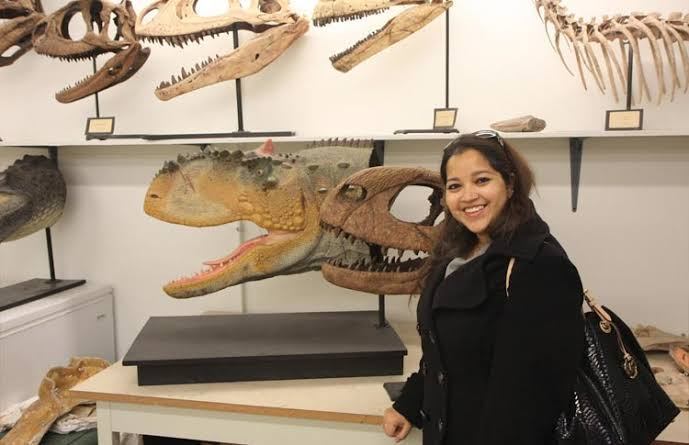
Aaliya Sultana Babi is a princess who, along with her figurative crown, also wears—quite literally—the broad-brimmed hat of a paleontologist! She is the daughter of the Nawab of Balasinor, and traces her ancestry to Sher Khan Babi, the founder of the state of Junagadh, who was bestowed the nawabship by the Mughal emperor Humayun. Tens of millions of years ago, during the Mesozoic era, the lands of Aaliya Babi’s forefathers teemed with ancient reptiles and dinosaurs, and the rocks of Rahioli village (which has earned the moniker of India’s Cretaceous Park) near Balasinor are now etched with the remains of bones, eggs, teeth, and skulls, approximately 67 million years old.

These prehistoric giants include long-necked titanosaurs, an enormous snake, and a crested abelisaur often referred to as “the T-rex of India”—the deadly Rajasaurus narmadensis. Aaliya Babi is an ardent advocate for the protection and preservation of this rare and precious fossil site in Gujarat, which is one of the largest dinosaur fossil sites in the world, and she champions the cause of dinosaur education and conservation in India.  As a dinosaur enthusiast who admires and has closely followed her work, including the Dinosaur Fossil Park and Museum that she has set up in partnership with Gujarat Tourism, I am honored to have been able to interview this Dinosaur Princess!

AALIYA BABI IS AN ARDENT ADVOCATE FOR THE PROTECTION AND PRESERVATION OF THIS RARE AND PRECIOUS FOSSIL SITE IN GUJARAT, WHICH IS ONE OF THE LARGEST DINOSAUR FOSSIL SITES IN THE WORLD, AND SHE CHAMPIONS THE CAUSE OF DINOSAUR EDUCATION AND CONSERVATION IN INDIA.

Bhavika: I really admire your contributions to the field of dinosaur conservation. What sparked your interest in dinosaurs?

Aaliya: As a young girl of about four or five, I was fascinated with dinosaurs, despite the lack of exposure to dinosaurs that we grew up amidst. While learning the English alphabet, I would say “A for Apple” and “D for Dinosaur” instead of for “Dog”! I also knew the spellings of “brontosaurus” and “diplodocus,” which were both my favourite dinosaurs! All this was forgotten when I was shipped off to a boarding school, but when I came back after completing my schooling, the interest was rekindled.

Bhavika: I wish more children in India shared your enthusiasm and fondness! Do you believe it’s important for children to be familiar with dinosaurs? What would be your advice to a child who dreams of becoming a paleontologist? 

Aaliya: Not just children, but, according to me, everyone should know about our prehistoric earth, and the fascinating creatures that inhabited it. Through our museum and fossil park, we are trying our level best to educate the people. I, in my own way, am trying to create awareness through lectures, presentations, and exhibits held across schools, colleges, universities, and museums, both in Gujarat and abroad, and have received favourable responses. If children want to take up palaeontology as a career, it is unfortunate that in India, we currently don’t have much scope in the discipline, as only limited educational institutes offer subjects related to paleontology. But we need to rectify that. There are some talks going on to include geology into school curricula in the future.

Bhavika: That’s lamentable. India has a wealth of fossils, but these are unexplored and undervalued. Why is this so? What are the current challenges? 

Aaliya: There are a lot of challenges which I have faced over the years in trying to get the fossil site protected. First and foremost, we, in India, don’t have any legislations pertaining to fossil protection, and we don’t care for our heritage. It has taken me more than twenty-two years to get the site duly recognized and protected, but still it’s open and vulnerable to vandalism, as we have limited well-trained guards. Secondly, we don’t possess the required funds for excavations and the subsequent studying of fossils, and hardly any good-quality museums exist to exhibit them. We are also lacking in trained professionals.

THERE ARE A LOT OF CHALLENGES WHICH I HAVE FACED OVER THE YEARS IN TRYING TO GET THE FOSSIL SITE PROTECTED. FIRST AND FOREMOST, WE, IN INDIA, DON’T HAVE ANY LEGISLATIONS PERTAINING TO FOSSIL PROTECTION, AND WE DON’T CARE FOR OUR HERITAGE.

Bhavika: Do you believe that there’s potential for dinosaur tourism in India?

Aaliya: There is a huge, huge, HUGE potential for dinosaur tourism in India. You see, in the earlier days, people were not very aware about dinosaurs. The Jurassic Park movie series, based on Michael Crichton’s books, has sparked interest in dinosaurs, and now we also have access to so much information and literature on them. I’ve come across both three-year-olds and eighty-year-olds who want to know about these fascinating creatures that ruled our earth for millions of years! I get children who are so deeply interested in dinosaurs that they want to become paleontologists, and so times are changing!

Bhavika: How does the Garden Palace Heritage Hotel that you run from your royal palace go toward this mission?

Aaliya: The Garden Palace was built in 1883, and we began offering the palace as a homestay around 1997. From having only 1 renovated room, to now 13 rooms, we have come a long way! When we get visitors for the fossil park, we often have them stay at our property or take their meals here, as this is the only place in the area for a comfortable accommodation and a decent meal. We are famous for our cuisine, as my mother, Begum Saheba Farhat Sultana Babi of Balasinor, is a true connoisseur of food, and has carried forward the legacy of the signature Balasinori cuisine.

Bhavika: Can you tell us about the Rajasaurus? Do you believe it should feature in one of the next films from the Jurassic World franchise?

Aaliya: Yes, definitely, the Rajasaurus should feature in the coming Jurassic World movies! The fossilized remains of the Rajasaurus narmadensis were excavated by Dr. Suresh Shrivastav and team in 1983. The dinosaur was approximately 9 meters in length and 2.4 meters in height and weighed approximately 4000 kgs. It is a genus of abelisaurid theropod carnivores from the Late Cretaceous (Maastrichtian) of India, and is represented by one species, Rajasaurus narmadensis. It was formally described in 2003 based on a partial braincase, spine, hip bone, a leg and tail—a first for an Indian theropod dinosaur. The dinosaur had a single horn-like structure on the forehead, which was probably used for display and head-butting. Like other abelisaurids, Rajasaurus was probably an ambush predator and hunted in packs. Numerous theropod eggs and nests have also been found from the Rahioli Balasinor region.

Another similar dinosaur which has been named after the village of Rahioli is the Rahiolisaurus gujaratensis. Rahiolisaurus is another genus of abelisaurid theropod dinosaur from the Late Cretaceous (Maastrichtian) of India. It fossils were excavated by teams from the GSI (Geological Survey of India), Indian Statistical Institute, Kolkata, and Texas Tech University in the USA, between 1995-1997, from the Lameta formation of Rahioli, and it was formally described as Rahiolisaurus gujaratensis in 2010. It can be distinguished from the Rajasaurus by its more slender and gracile build. It is known from a pebbly sandstone containing seven different individuals—from a juvenile to a fully-grown adult. It was 8 meters in length, 3 meters in height, and weighed approximately 2 tons.

Bhavika: Do you believe dinosaurs are linked, in anyway, to the myths and folklore of India?

Aaliya: Yes. We have heard tales of dinosaur eggs being worshipped by villagers, as they resemble shivlings. We hear that ammonite fossils (salagramas) are also worshiped, as they are believed by many to be natural manifestations and divine symbols of Lord Vishnu. The shell’s circular form, with its radial markings, resembles the discus (chakra) of the deity.

Bhavika: Is it especially challenging to be a woman in the field of science and conservation?

Aaliya: I think I am the only woman, as of now, from an aristocratic family in India, who is involved with fossil preservation and conservation. It definitely had its ups and downs, but I think I have used my family name and connection for the protection of the fossils and the betterment of the villagers.

This definitely was a roller coaster ride, but it has been a wonderful ride, nonetheless. Times are changing now, and women, today, are in all fields. I have had the support and blessings of eminent paleontologists like Dr. Ashok Sahni and Dr. Suresh Shrivastava, among others, who have helped and guided me throughout this phase, and have imparted so much of their knowledge to me. And I have a simple motto: that nothing is impossible in life; if we set our hearts and minds to it, we can achieve anything and everything! The word “IMPOSSIBLE” shouldn’t exist in our dictionary!


Featured Image Source: Indian Women Blog

source: http://www.feminisminindia.com / Feminism In India / Home> Society> Environment / by Guest Writer / posted by Bhavika Sicka / October 28th, 2019
Asaduddin Owaisi’s dream is coming true

Hyderabad, TELANGANA / MAHARASHTRA / BIHAR :

AIMIM is now more than a symbol, challenging the Muslim blackmail of secular parties in polling booths, from west to east.

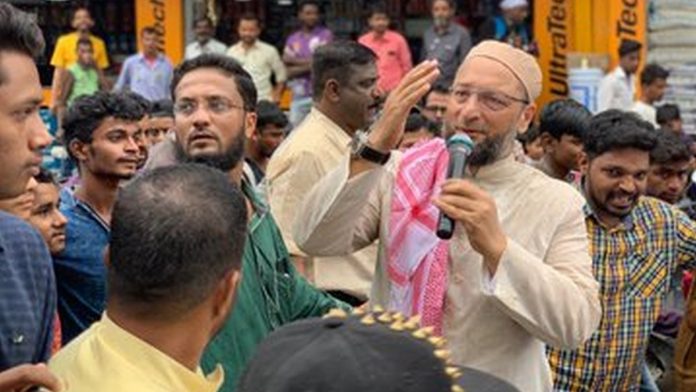
AIMIM president Asaduddin Owaisi at a party outreach programme in Aurangabad | Photo: Twitter | @aimim_national

I met Asaduddin Owaisi for the first time in Kishanganj, in Bihar’s north-eastern Seemanchal region. I asked him point-blank the question everyone wants to ask him: Are you a BJP agent? He had a logical reply: “Why would I be contesting only a few seats if I was a BJP agent? Wouldn’t the BJP like to cut Muslim votes everywhere?”

Since then, I have paid closer attention to the pattern of the All India Majlis-e-Ittehadul Muslimeen’s (AIMIM) electoral attempts. They take a handful of seats, where Muslim voters are in large enough numbers to play a decisive role. They fight these elections to win, and not to help the BJP win. For instance, the AIMIM did not put up a single candidate in Uttar Pradesh in the 2019 Lok Sabha elections since the SP and the BSP were putting up a joint fight and the AIMIM candidates would only have helped the BJP.

The idea that the AIMIM is a BJP agent, I was convinced, is a Congress conspiracy theory. For the Congress party and its sycophants, anyone who’s not with them is communal.

But this still didn’t tell me what Owaisi wanted. What was his goal? What was he trying to achieve? If he wasn’t even contesting elections on each seat, or joining any big coalitions, what could he achieve through electoral politics anyway? Muslims in his home state, Telangana, don’t care for the AIMIM outside Hyderabad .  Even in his home state, Owaisi can never dream of becoming the chief minister. The AIMIM won’t be a party of governance any time soon. I wanted the answer to the big question: What does Asaduddin Owaisi want?

What does Owaisi want?

“What I want,” he replied, “is an MLA in every state assembly. Just one is enough. And I want him to stand up in the assembly and ask the secular parties, you took Muslim votes using the BJP to blackmail them. Now how about building roads and schools in Muslim-dominated areas?”

That, I thought, was a laudable goal. Muslim voters often feel they have no choice in elections. They have to vote for a crook from a secular party because the BJP doesn’t even want their votes. The BJP-RSS worker takes a 180-degree turn when s/he reaches a Muslim neighbourhood. In such a scenario, the presence of a Muslim party that threatens the idea of Muslims as a fixed vote-bank of secular parties is a noble one.

This also means Owaisi is not trying to be the “sole spokesperson” for the Indian Muslims, a mischievous term used to describe Mohammed Ali Jinnah. Owaisi is, before anything else, a constitutionalist. Islam is his faith, the Constitution is his ideology. The point he wants to drive home is that the two can go together.

Youth icon

In Kishanganj in 2015, I saw young voters go crazy over Owaisi, like people are about their heroes. It was akin to how great sportspersons inspire hero worship. The phenomenon was explained to me by a Muslim journalist in Aligarh, who said that Owaisi was a product of post-Babri Muslim politics. The fall of the Babri Masjid in 1992 silenced vocal Muslim politicians who used to speak at mainstream public debates as Muslims. It also deepened the idea, almost to finality, that Partition had left no space for a “Muslim party” in Indian politics.

Owaisi challenges all these notions, and finds willing supporters in Muslim youth who were born after 1992. There is thus a generation divide among Muslims in Owaisi’s popularity: the pre-92 generation thinks he’s a bad idea, and the millennials think he’s just what they need. The young feel they don’t have to be apologetic about being Muslims and don’t need to accept second-class status. They think they must assert their rights as equal citizens as per the Indian Constitution, just like any other Indian, and that’s what Owaisi does on their behalf.

Obviously, Muslim votes alone are not going to help the AIMIM win seats. And why would Hindu voters want to vote for a Muslim party?

That’s why this constitutionalism is also part of the AIMIM’s appeal to Ambedkarite Dalits. The AIMIM has thus been trying, with some success, to build a coalition of the marginalised along with Dalits. A Muslim vote-bank gives the AIMIM the ability to transfer votes to a Dalit candidate, for instance. It was such an idea that led to the AIMIM’s alliance  with Prakash Ambedkar in Maharashtra.

And yet, the AIMIM lost the 2015 election in Kishanganj. I saw young voters go up to Owaisi and say – they loved him but they’ll vote for him next time. After all, the Nitish-Lalu-Congress alliance had to be supported to defeat the BJP.

Account opened

The AIMIM had stood a strong third in the Kishanganj Lok Sabha election in 2019. The Congress won the seat  and the JD(U) stood second. Had it not been for the AIMIM, the JD(U), the BJP’s ally, would have won this seat. The only seat that the UPA won and the NDA lost in Bihar was Kishanganj, thanks to the votes cut by the AIMIM.

The Congress candidate was also the sitting MLA, therefore necessitating a bypoll for the Vidhan Sabha seat. Thursday, the AIMIM won that seat . The party has opened its account in Bihar. What’s even better  is that the BJP stood second and the Congress stood third. In the Bihar assembly election in November 2020, Owaisi will be able to say that in Kishanganj it’s AIMIM versus BJP. The impact will be felt in the entire Seemanchal region.

New frontiers

The AIMIM had won two seats in the Maharashtra assembly in 2014, but lost them this time. But it picked up two new seats : Malegaon Central and Dhule City. In other words, the AIMIM has become a regular electoral party, and people are getting used to pressing the AIMIM’s kite symbol on the EVMs. The AIMIM used to be called a one-MP party, but now it has two MPs in the Lok Sabha: Imtiyaz Jaleel won the Aurangabad seat in the 2019 Lok Sabha elections.

In Uttar Pradesh, AIMIM has 30 seats in various municipal corporations – its party member was elected chairperson of the Dasna municipal council in Ghaziabad. Thursday, the AIMIM candidate in the Pratapgarh assembly bypoll stood third . Owaisi’s dream is coming true: he now has an MLA in Bihar and Maharashtra assemblies and the most important state in Indian politics, Uttar Pradesh, is within striking distance too.

The growing electoral success of the AIMIM is a reminder to secular parties that they cannot take Muslim voters for granted. If apathy or the fear of losing Hindu votes is going to make “secular” parties look away from Muslims, why blame Owaisi?

source: http://www.theprint.in / The Print / Home> Opinion / by Shivam Vij / October 25th, 2019

Owaisi’s AIMIM Wins 2 in Maharashtra, Announces Arrival in Bihar

TELANGANA / MAHARASHTRA / BIHAR  :

Asaduddin Owaisi’s AIMIM won 2 seats in Maharashtra and the Kishanganj seat in Bihar

Asaduddin Owaisi’s AIMIM won 2 seats in Maharashtra the Kishanganj seat in Bihar(Photo: Aroop Mishra/The Quint)

The elections were a mixed bag for Asaduddin Owaisi’s All India Majlis-e-Ittehadul Muslimeen. The party won two seats in Maharashtra, the same tally as 2014, and proved that its performance last time wasn’t a fluke. However, it couldn’t improve its tally even though its vote share increased from 0.9 percent in 2014 to 1.4 percent.

The more significant achievement for the party is its victory in the Kishanganj Assembly seat in Bihar, which is its first victory in the Hindi heartland.

But first the Maharashtra results.

AIMIM in Maharashtra

There is a clear pattern to the AIMIM’s performance in Maharashtra. It seems to have lost ground in Mumbai but gained aground in rest of the state.

In Malegaon Central, AIMIM’s Mohammad Ismail Abdul Khalique defeat Congress’ Aasif Sheikh by over 38,000 votes.

In Dhule City, AIMIM’s Shah Faruk Anwar defeated independent candidate Rajvardhan Kadambande by a little over 3000 votes.

The AIMIM gave a tough fight in several other seats but couldn’t manage to win. It got 41 percent votes in Aurangabad East, 35 percent in Aurangabad Central and over 20 percent in Nanded South, Nanded North, Byculla and Solapur Central.

AIMIM’s Hindu candidates made their presence felt in seats like Dharavi and Kurla getting 10-15 percent votes. However most of the other candidates fell below 10 percent.

Entry in Bihar

However, the party’s performance in Maharashtra was overshadowed by its victory in the bypoll to the Kishanganj Assembly seat in Bihar. Its candidate Qamrul Hoda defeated BJP’s Sweety Singh by over 10,000 votes.

The bypoll was necessitated after Congress MLA Mohammad Jawed vacated the seat as he was elected to the Lok Sabha earlier this year. But the Congress candidate failed to even cross 15 percent and ended up forfeiting her deposit.

The victory is a significant one as it marks the AIMIM’s entry in the Hindi Heartland. Till now the party has only won seats in Telangana and Maharashtra.

This would also boost the AIMIM’s prospects in the Muslim dominated Seemanchal region in North-Eastern Bihar.

The AIMIM also made its presence felt in the Pratapgarh Assembly bypoll in Uttar Pradesh with its candidate Mohammad Irshad securing close to 14 percent votes, ahead of the BSP and Congress and just behind the SP at 15.6 percent. The seat was won by BJP’s ally Apna Dal.

source: http://www.thequint.com / The Quint / Home> Politics / by Aditya Menon / October 26th, 2019