Category Archives: Leaders

Guardian Angel of mariners

Nagapattinam, TAMIL NADU :
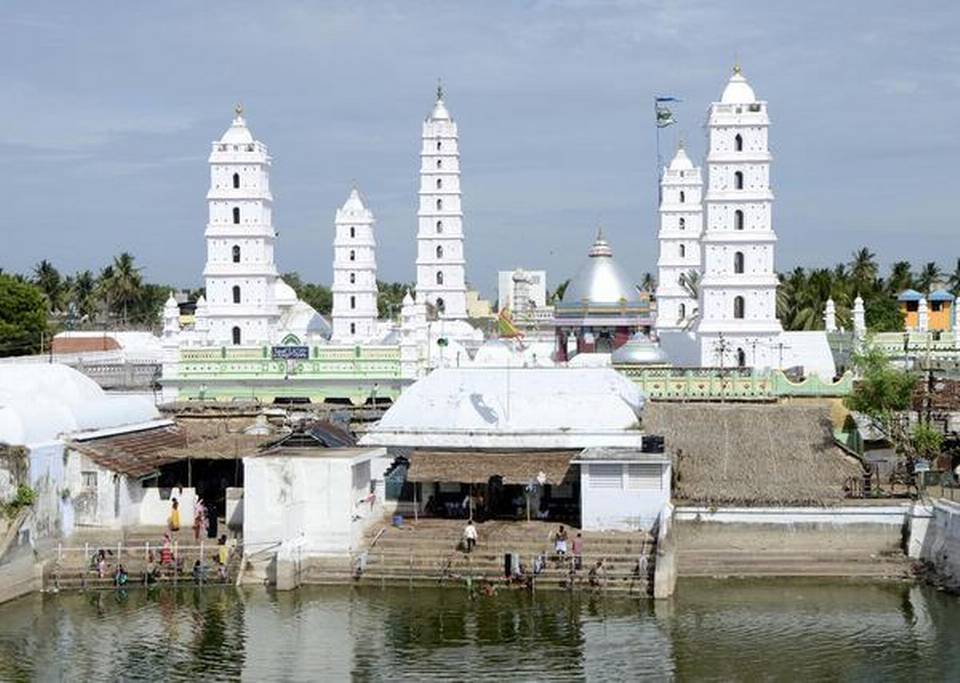
A view of Nagore Dargah, in Nagapattinam | Photo Credit: B. VELANKANNI RAJ

Cutting across faiths, sailors pray to Nagore Miran for a safe journey

“There are so many boats named after ‘Nagore Andavar’ in Kasimedu (a fishing harbour in Chennai). Don’t hastily jump to the conclusion those are owned by Muslims. They actually belong to our people,” cautions Manoharan, to me and writer Nivedita Louis. We were at his residence to record songs on Nagore Andavar as sung by Manoharan, aged about 80 and a retired fisherman of Olcott Kuppam in Chennai. Though the Nagore Andavar he refers to is a 16th century Muslim Sufi saint who transcended religious divides, it still comes as a surprise to know that Hindu fishermen living some 300 km north of Nagore where the Sufi lies buried, name their boats after him.

Continues Manoharan, “When the sea gets turbulent and we feel our lives are at risk, it is to Nagore Andavar that we plead, through songs to rescue us. And miraculously the winds will change, push us to the safety of the shore,” he says. He immediately breaks into a song in Tamil that pours out their fears and pleads for their safety from the wrath of the sea. A hundred km away from Chennai, fishermen at Veerampattinam of Pondicherry, praying for their safety before sailing into the rough sea, make their offerings to Nagore Andavar at Nagoorar Thottam.

Interestingly it was not just fishermen of the Tamil coast, but anyone who left the Tamil coastline in the 19th century placed their faith in the saint to safely cross the seas, and wherever they landed, they built a memorial or shrine for him. Those shrines today stand as testimony to the path taken by the Tamil Diaspora across continents, from maritime traders to indentured labourers. From Penang in South East Asia to the Caribbean in the Americas, with recent additions in Toronto and New York, the influence of Nagore Miran as the Sufi is also known, can be seen.

Nagore Miran, the 16th century Muslim Sufi saint, buried, as the name suggests in Nagore in Nagapattinam district of Tamil Nadu was born as Sahul Hameed in Manikhpur in North India. He took to spiritualism early in his life and travelled through West Asia to Mecca and to Burma and on to China before touching Ceylon and the South Indian coast. Travelling through the Tamil country with his band of followers, local lore has it that the Sufi cured an ailing Achutappa Nayak, the ruler of Thanjavur, and a grateful Nayak gifted land for the Sufi to stay at Nagore. Interestingly, the Sufi arrived at at a time when the Indian seafarers, particularly the Tamil Muslim ship owners, were being harassed by powerful Portuguese naval fleets.

With the hostile Portuguese at Nagapattinam, the presence of the Sufi at nearby Nagore was a great solace not just to the harassed maritime traders but to the sea faring fishermen. Among the miracles attributed to him, it was widely believed by the fishermen that, the Sufi, while residing at Nagore was able to plug the hole in a ship which was otherwise sinking off the coast.

His mysticism touched the lives of people across faiths — from Kings to commoners. They flocked to him and after his death to the Nagore dargah where he lies buried. The dargah received endowments from the Thanjavur Nayaks, Marathas and Nawabs. One of the five minarets at Nagore dargha, the tallest at 131 feet, was built by the Maratha ruler Maharaja Pratap Singh Bhonsle in the mid-eighteenth century. Govindasamy Chetty, Mahadeva Iyer and Palaniyandi Pillai are some of the donors.

In the late 18th century when the British founded Penang in Malaysia as the fourth presidency, it attracted considerable Tamil Muslim traders who were already doing business in South-East Asia. Mostly known as Chulias (those from the land of the Cholas), they became one of the earliest settlers in Penang. By early 19th century, when the settlement had grown considerably, the Company enabled them to build the Kapitan Keling mosque. They built a memorial for Nagore Sahul Hameed at the junction of Chulia street and Kings street. Similar memorials were built across South-East Asia, in Aceh, Burma, Vietnam, Ceylon, Singapore and many other parts of Malaysia wherever the traders went.

However unlike the Tamil Muslim traders, who traded within the Asiatic region, the indentured labourers were taken to distant continents by the colonial rulers, to work in the new plantations. In the early 19th century, as ships set sail from Nagapattinam, the indentured labourers, placed their faith on Nagore Miran for their safe journey across the turbulent seas. The labourers reached lands as distant as the Caribbean Islands. “When in early 20th century they moved to better pastures in Canada and the U.S., Nagore Miran along with Madurai Veeran, Mariamman and many other gods and saints found place in the newly constructed temples at Toronto and New York,” points out Prof. Davesh Soneji of University of Pennsylvania.

If the Muslim traders treated Sahul Hamid as an Awliya, the Hindu indentured labourers, used to idol worship, gave him a form and placed him in the sanctum along with other Hindu deities such as Madurai Veeran, Muneeswaran and Mariamman. “…this divinity is an integral part of most of the ‘Madrassi’ or South Indian Hindu temples in this region. In French Caribbean Islands of Guadeloupe and Martinique, Nagore Mira is worshipped in the form of a Boat and mast decorated with colourful flags. 786, the sacred Islamic number, can be found engraved on the boat,” writes Suresh Pillai, an interdisciplinary artist working at the intersection of arts, archaeology, and cultural artefacts to locate material history and empirical knowledge among living cultures.

Interestingly in Tamil Nadu itself, every year, at the beginning of the Kandhurior Urs festival in honour of the saint, festooned boats resembling ships, adorned with various flags, navigate their way through the streets of the old harbour town of Nagapattinam, before cruising through the national highway leading to Nagore. “It is really surprising how these big boats squeeze themselves through the narrow streets of Nagapattinam and Nagore before finally halting at the saints abode. After which the flags are raised on different minarets of the dargah on the first day of the Urs,” says Harini Kumar, a research scholar on Tamil Islam. Typical of the syncretic nature of the Sufi shrines, as the festival gathers momentum, various communities pay their respects to the saint, with specific non-Muslim families, including the fishermen, accorded hereditary honours.

While the syncretic nature is a common thread that runs through the Sufi beliefs, it is Nagore Miran the Sufi, emerging as the patron saint of the seas, enabling us to trace the path taken centuries ago by the Tamil Diaspora, that seems unique.

source: http://www.thehindu.com / The Hindu / Home> Society> History & Culture / by Anwar’s Trails / by Kombai S. Anwar / March 07th, 2019
Break conventions, VC exhorts historians, researchers

KERALA :

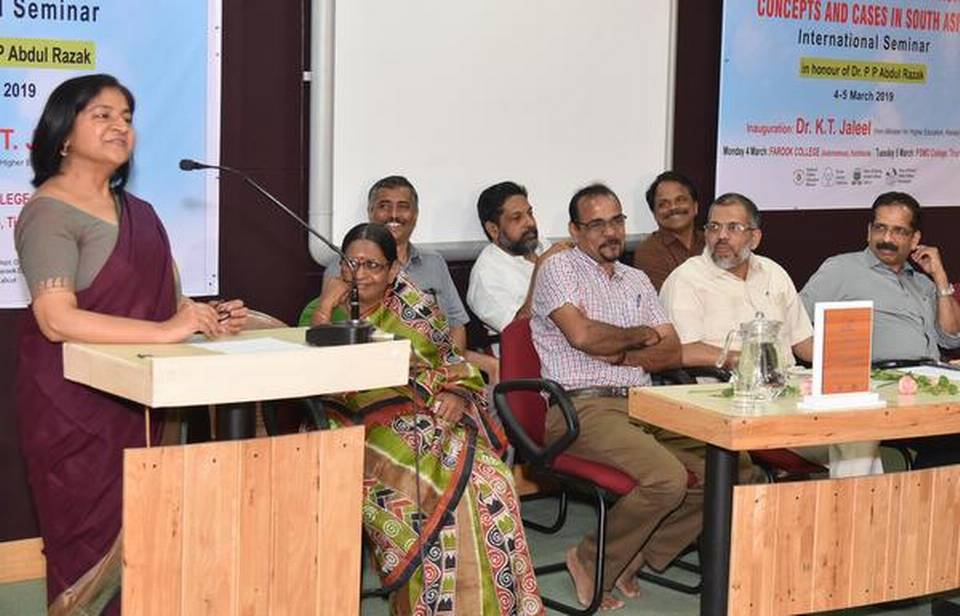
History professor Seema Alavi from Delhi University addressing an international history seminar at Farook College on Monday

Two major colleges of Malabar are jointly hosting an international history seminar in honour of well-known academic P.P. Abdul Razak, who is retiring soon from P.S.M.O. College, Tirurangadi, as its History Department head.

Calicut University Vice Chancellor K. Mohammed Basheer inaugurated the seminar on ‘Early modern and colonial in history: concepts and cases in South Asia’ at Farook College on Monday.

Dr. Basheer called upon historians and researchers to take a diversion from the traditional methods of historiography. He exhorted them to widen the study of history by including the colloquial languages and local history.

“History should be linked to the lives of ordinary people,” he said. Several reputed historians, including Seema Alavi from Delhi University, Mahmood Kooria from Leiden University, Nirmal Renjit Devasiri from Colombo University, K.N. Ganesh and K.S. Madhavan from Calicut University, are attending the two-day meet.

Farook College principal K.M. Naseer presided. T. Mohammedali, head of History Department at Farook College, welcomed the gathering. Kerala History Congress general secretary N. Gopakumaran Nair, Farook College History Old Students Association president P. Ramdas, Vijaya Lakshmi from Malayalam University spoke. K. Lukmanul Hakeem from Government Arts and Science College, Kozhikode, proposed a vote of thanks. While Farook College hosted it on the first day, PSMO College, Tirurangadi, will host the proceedings on Tuesday.

The National Higher Education Mission is supporting the seminar jointly organised by Farook College and PSMO College in association with the Social History Collective, Kozhikode.

source: http://www.thehindu.com / The Hindu / Home> News> States> Kerala / by Staff Reporter / Malappuram – March 05th, 2019

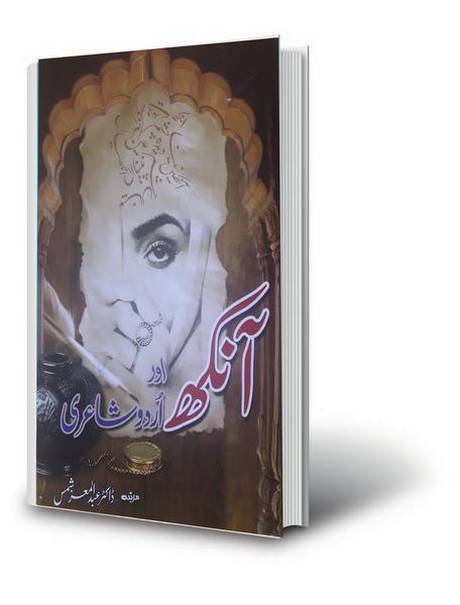
The book ‘Aankh Aur Urdu Shayeri’: A poetic eye on ‘aankh’

Aligarh, UTTAR PRADESH :

UrduBookMPOs11mar2019

An anthology of Urdu verses and proverbs, all on eyes, was launched recently

Eyes are a mirror of the soul, it is said. Some eyes are sly and roguish, some serene and shining, a few, seductive and mysterious. Prod Dr Abdul Moiz Shams and he reels out details about a variety of eyes and their intrinsic worth. He should know considering he is an ophthalmologist by profession, but then Dr Shams also has a keen eye for Urdu  poetry.

DrAbdulMoizMPOs11mar2019

During his long service as an ophthalmologist, he has looked into innumerable defective eyes holding a little flashlight. While restoring vision, he has also looked beyond, into the soul. And what he has come up with is a book titled Aankh Aur Urdu Shayeri.

Inki aankhen ye keh rahi hain Faraz

Ham pe tasneef ek kitab karo

(Her eyes tell Faraz

Write a book on us)

Dr Shams has compiled a 389-page book containing couplets of different shades and emotions on eyes. It’s a treasure trove for connoisseurs of poetry. From Mirza Ghalib, Allama Iqbal to Meer, Sauda, Shaad, Faiz, Majaz, Jigar Muradabadi, Ali Sardar Jafery, Parveen Shakir — a whole lot of Urdu poets and their verses on aankh have been listed.

The book is divided into three parts — the first one contains couplets beginning with aankh, the second one has verses which are allegorical in nature and the third part has proverbs containing the word aankh, listed topic-wise. The book is a ready reckoner of sorts, on eyes. This is perhaps the only book of its kind where all the pages are full of verses on one body part.

Right from his student days Dr Shams had a love for poetry and when he became an eye specialist, his passion took a different turn. He started focussing on poetry of eyes. It’s no wonder that he has four other books to his credit: Hamari Aankhen, Jism-o-Jan, Jism-Be-Jan and Aab-e-Hayat.

“The eye is the jewel of the body. Its function is not just to see but to look beyond and sense colour, form, light and movement. That’s why I started collecting couplets on eyes,” says Aligarh-based Dr Shams who released his book in Hyderabad.

The insightful couplets are real eye-openers. Sample this couplet of Parveen Shakir.

Aankh ko yaad hai wo pal ab bhi

Neend jab pehle pehal tuti thi

Full-length ghazals of Ali Sardar Jafery, Khaisar Siddiqi, Hasrat Mohani and Basheer Badr, all on eyes, make for delightful reading.

Gulab aankhen, sharaab aankhen

Yehi to hain lajawab aankhen

Aankhen uthen to dard ke chashme ubal pade

Palken juhken to payar ka badal baras gaya

One can get an eyeful of couplets in this book which was released at the recent two-day National Urdu Science Congress at the Maulana Azad National Urdu University. “There is no dichotomy between science and literature. In fact they complement each other,” says Dr Abid Moiz, who is also a good humour writer.

source: http://www.thehindu.com / The Hindu / Home> Life & Style> Book / by J S Ifthekhar / March 06th, 2019

The Winners scripts a success story in Kolkata Police

Kolkata, WEST BENGAL :

The Winners, an all-women patrolling team by the Kolkata Police, was launched in July 2018, with an aim to check crimes against women and make public places safer for them.

“Oye, akeli hai kya? Chalegi park me? 300 dunga. Arey bol na, jyada chahiye? (Hey, will you come with me to Park, I will pay you 300 bucks. If you want more, tell me,” said a man in his twenties to a woman near Mohor Kunja Park under Hastings police station area around four months ago. The offender had no clue that he was messing with the wrong person. Arpita Mallik, a constable with the Kolkata Police and a member of the team The Winners, made her first arrest that day.

The Winners, an all-women patrolling team by the Kolkata Police, was launched in July 2018, with an aim to check crimes against women and make public places safer for them. The team with personnel trained in self-defence has so far apprehended more than 200 “Road Romeos”.

“I was on duty in civil dress. When the man teased me, I asked him to wait and grabbed him by the collar. He put up stiff resistance but was soon surrounded by a group of policewomen and he started apologising. We arrested him and I felt good,” Arpita said with a wide smile. She stays alone and meets her husband in Malda on holidays.

EXPLAINED

Step towards better gender equation in Kolkata Police

The Kolkata Police has always been keen on increasing the presence of women in their force. The State Home Department has set up eight women-only police stations in Kolkata to investigate crimes against women. A rape or molestation survivor will be comfortable with a woman police officer, they feel. More women in the force means more women reaching out to report incidents that bother them. Several crimes, including eve-teasing, often go unreported. An all-women battalion is a step towards betterment of city police’s gender equation — 800 women in the 26,000-strong police force.

“He wasn’t very keen on me joining police but I managed,” she said. The Winners has 28 women personnel, including three senior officers. All the 25 constables are in their mid-twenties. In white uniform, they conduct patrol on scooty.

“They have been rigorously trained in self-defence and have revolver licence. Our objective is to make the city safe for women,” said Sampa Guha one of the senior officers of the team. “I am happy to see such young, smart women cops in our city. Once a man in lungi started following me on the street and retreated as soon as he spotted a group of policewomen. Cheers to these ladies,” said Anindita Ray Choudhuri, a management student.

However, the team has to fight odds while on duty. Once a constable in the team was bitten on her hand while another was heckled while on patrol inside the Millennium Park. Six persons, including two women were arrested for allegedly harassing personnel on duty.

“We face a lot of challenge and even get teased but when we are in uniform, people respect us also. There have been instances when during midnight patrolling, women came and thanked us for making them feel safe. It gives us immense satisfaction,” said Zinnatara Khatun, another member of the team.

Team Winner is headed by three sub-inspectors, including Sampa Guha, Mita Kansabanik and Zinnatara Khatun. Sampa has various accolades to her credit in power lifting in international, Asian and national events. Zinnatara Khatun is an athlete who has won the Indian Police Medal. Mita is also a power lifting champion.

When Kolkata Police decided to launch the all-woman team under the instruction of Chief Minister Mamata Banerjee, these three women were the first choice. “We were the only three women in the force who could ride a Bullet and had an edge over the others. All the team members are extremely hardworking, managing their personal and profession lives pretty well. We enjoy our job,” said Mita.

“We love catching Road Romeos,” laughs Zinnatara. Mita is married and has a 16-year-old daughter, while Zinnatara and Sampa are single.

“Earlier marriage used to give a woman financial security and an identity, but nowadays it has nothing exceptional to offer a woman,” said Zinnatara and Sampa.

Madhumita Mahapatra, another member of the team, says, “My husband is very proud to see me in uniform. I have a tight schedule but he is always there to pick me up when I finish work.” Another member, Debolina Das Rai, feels they stand for themselves to bring the change. “My husband mostly takes care of our son as I have a tight schedule. We manage well and he never complains,” she said.

Their message on Women’s Day

“People talk about women empowerment but hardly practice it. We are educated and present ourselves well but our mentality remains the same. Real change has to come from within. All women should be financially independent and should speak up. Once a woman starts sharing financial responsibility of her family and her parents, people will stop craving for male child. To bring a change, it is important for women to learn self-defence. Girls are mentally much stronger than men and we must celebrate womanhood.”

source: http://www.indianexpress.com / The Indian Express / Home> Cities / by Sweety Kumar / Kolkata / March 08th, 2019

44 women chosen for Nari Shakti Puraskar-2018

Chennai, TAMIL NADU / Kolkata, WEST BENGAL :

Other awardees included spiritual leader Sister Shivani, commando trainer Seema Rao and the only woman marine pilot in India, Reshma Nilofar Naha.

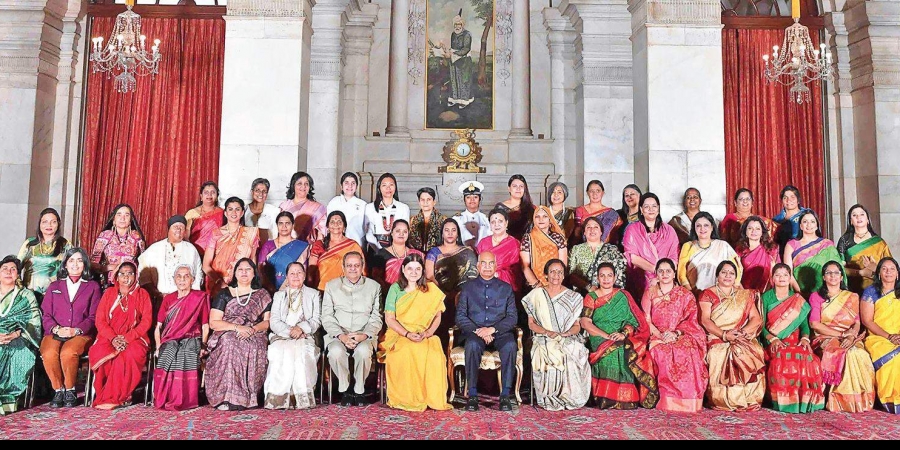
President Ram Nath Kovind with recipients of ‘Nari Shakti Puraskar-2018’ at Rashtrapati Bhawan in New Delhi on Friday.| PTI

New Delhi :

President Ram Nath Kovind on Friday presented the Nari Shakti Puraskar 2018, the highest civilian honour for women, on the occasion of International Women’s Day.

Among 44 awardees selected out of around 1,000 nominations received by the Women and Child Development Ministry were names such as scientists A Seema and Ipsita Biswas, Doordarshan News anchor Neelum Sharma, acid attack survivor Pragya Prasun, radio music composer Madhuri Barthwal and activist Manju Manikuttan.

Other awardees included spiritual leader Sister Shivani, commando trainer Seema Rao and the only woman marine pilot in India, Reshma Nilofar Naha.

“The awardees are a face of change, reflecting a shift in the status of women, from women development to women-led development,” said WCD Minister Maneka Gandhi adding, “No field has been left untouched, where women have not left their indelible mark, making women the leading force of our development trajectory,” she added.

A statement by the ministry said that while making the selection from the nominations,  the nominee’s contributions in empowering vulnerable and marginalised women was taken into account.

source: http://www.newindianexpress.com / The New Indian Express / Home> Nation / by Express News Service / March 09th, 2019

M S Jaffer Sait posted CBCID head with immediate effect

Chennai, TAMIL NADU :

He was recently promoted by the State government to the rank of Director General of Police and was serving as Project Officer in the Tamil Nadu Police Academy.

Senior IPS officer M S Jaffar Sait (File Photo | AS Ganesh/EPS)

Chennai :

Senior IPS officer M S Jaffar Sait has been made the head of the State police’s special crime investigation wing CBCID. An order issued by Niranjan Mardhi, principal secretary of the Home department, on Wednesday transferred him to the coveted post with immediate effect. Amaresh Pujari, who was heading the CBCID since April 2018, has been posted as project officer, Tamil Nadu Police Academy.

Sait had served as head of the State police’s intelligence wing during the DMK regime until 2011. Soon after AIADMK won the assembly elections in 2011 and J Jayalalithaa took charge as Chief Minister, Sait was transferred as special officer to the Mandapam Refugee Camp near Rameshwaram. He was recently promoted by the State government to the rank of Director General of Police and was serving as Project Officer in the Tamil Nadu Police Academy.

Another notable transfer in Wednesday’s order was that of R V Varun Kumar, the IPS officer who was booked in a dowry harassment in 2012 and discharged from the case by the Madras High Court in July 2018. Kumar has been promoted as a Superintendent of Police and posted in the Civil Supplies CID wing, Chennai. So far, Kumar was serving only as an Assistant Superintendent of Police and did not get any promotion due to the dowry harassment case against him.

Ashish Bhengra, one of the seniormost IPS officers in the State and serving as Director General of Police (Operations), has been given additional charge as Director General of Police, Vigilance, Tamil Nadu Generation and Distribution Corporation. Besides, four other IPS officers in various ranks were also transferred by the order on Wednesday.

source: http://www.newindianexpress.com / The New Indian Express / Home> States> Tamil Nadu / by Express News Service / March 07th, 2019

In Memoriam : Major General Afsir Karim, AVSM

Lucknow – Aligarh,(UTTAR PRADESH)  / NEW DELHI  :

MAJOR GENERAL AFSIR KARIM, AVSM
(MAY 1933 – FEB 2019)

India Foundation is deeply saddened to announce the sad passing away of Major General Afsir Karim on 12 February 2019, after a long and heroic fight against cancer.

General Karim was commissioned in the Indian Army in June 1954 and had the unique distinction to fight for his country in the 1962 India-China war and in the 1965 and 1971 India-Pakistan wars. In the 1971 Liberation War, he commanded a Parachute battalion in the Eastern theatre. For distinguished service of an exceptional order, he was awarded the AtiVishishtSeva Medal while serving in the Army.

Post retirement in May 1989, the General took to academic life and became a renowned scholar and thinker on strategic issues. As a soldier turned scholar, General Afsir Karim contribute greatly to the study of counter-terrorism and was one of the pre-eminent experts on the complexities that plagued the state of Jammu and Kashmir, having served a good part of his career in that part of India. He also served as a member of India’s National Security Advisory Board (1999–2001).

Amongst the books authored by him, are Sri Lanka Crisis (co-author 1990); Counter-Terrorism: The Pakistan Factor (1991); Transnational Terrorism: Danger in the South (1995); Kashmir: The Troubled Frontiers (1994) and Story of the Airborne Forces (1995). Amongst his writings on Kashmir was Op Topac, a semi-fictional account of Pakistan’s game plan for Kashmir. He was a former editor of the Indian Defense Review and a life trustee on the Forum for Strategic & Security Studies. He was also founder-editor of AAKROSH, India’s first journal on trans-national terrorism and an India Foundation publication.

An officer known for his uprightness and integrity, his passing away is a sad loss for the Armed Forces and the strategic community. We in India Foundation shall miss him as will countless others across the country. Om Shanti.

source: http://www.indiafoundation.in  / India Foundation /  Home> In Memoriam / February 2019

They win people’s hearts with their special skills

KERALA :

CalicutMPOs01mar2019

Third anniversary of disability management programme

The Community Disability Management and Rehabilitation Programme (CDMRP), a unique outreach scheme of the University of Calicut implemented through the Department of Psychology, celebrated its third anniversary on Thursday. The programme is implemented with the the support of the State Social Justice Department.

The celebrations marked a special gathering of a large group of differently abled children and their parents on the campus. The children with different abilities won the heart of the campus by presenting their special skills without inhibition.

Vice Chancellor K. Mohammed Basheer inaugurated the celebrations.

Speaking on the occasion, Dr. Basheer underscored the need to provide equal status to the differently abled children by bringing them to the mainstream.

Onus on society

He said the onus was on society to bring the differently abled up to the mainstream by providing what they wanted, and not just sympathy.

Registrar T.A. Abdul Majeed presided. Pace Education Group chairman P.A. Ibrahim Haji was the chief guest at the function.

Executive director D. Jayan, CDMRP director K. Manikantan, Syndicate member K.K. Haneefa, Head of Psychology Department Baby Shari, and Kozhikode District Social Justice Officer Parameswaran spoke.

source: http://www.thehindu.com / The Hindu / Home> News> States> Kerala / by Staff Reporter / Malappuram – February 01st, 2019

She chose the less-travelled path

Adoor, KERALA :

HaleemaBiwiMPOs28feb2019

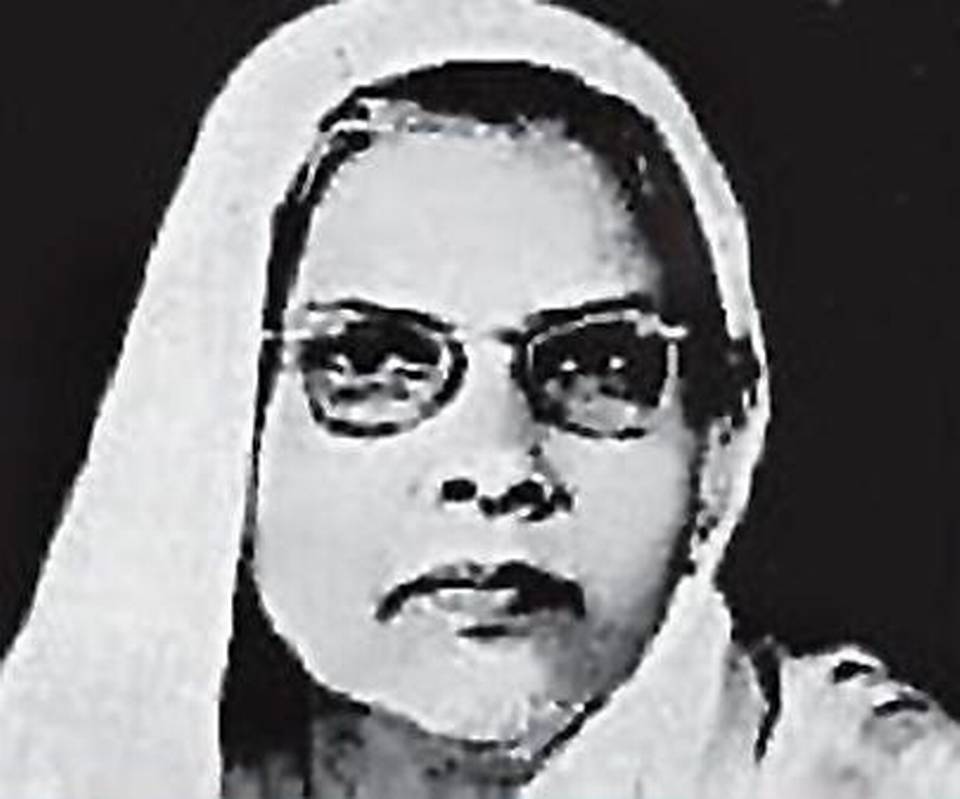
Haleema Beevi, first Muslim woman journalist of Kerala, to be remembered

Her life was a crusade against oppression of women in the Muslim community. Amidst strong protests and threats, she dedicated her life for the empowerment of women in her community.

The Kerala  Sahitya Akademi is remembering Haleema Beevi, the first Muslim woman journalist of the State, on her 100th birth anniversary.

Unsung heroine

The celebration, to be held in connection with the inauguration of the national book exhibition on Saturday, will also pave the way for more explorations on the unsung heroine of Kerala Journalism and her writings, noted Kerala Sahitya Akademi president Vaishakhan.

A recent Facebook post by writer Shihabuddin Poythumkadavu on Haleema Beevi had many responses.

Available records indicate that Haleema Beevi started her career as a journalist at the age of 18. Born in an orthodox Muslim family at Adoor in 1918, as the daughter of Peer Mohammed and Maideen Beevi, she was an ardent reader from childhood. Though she was good at studies, she could not go to school after Class 7. But she continued to read.

Muslim Vanitha

At a time when Muslim women did not even dare to come to the mainstream, Haleema Beevi started a women’s magazine, Muslim Vanitha, at Thiruvalla. Later, its functioning was shifted to Kodungalloor. She later started a daily in 1946 called Bharatha Chandrika. Later, she even started a weekly in the same name. Haleema Beevi functioned as its editor, printer, and publisher.

Prominent writers

Eminent writers Vaikom Mohammed Basheer, Sukumar Azhikode, K. Gomathi, and P. Valsala had written in her publications. Haleema Beevi used to write articles related to education.

Haleema Beevi was a municipal councillor at Thiruvalla for five years. Her husband K.M. Mohammed Moulavi, a prominent presence in the struggles against Sir C.P. Ramaswamy Iyer, was imprisoned for taking part in agitations against the Divan. Haleema Beevi too had gone to jail during the Independence struggles.

She relentlessly worked for the empowerment of women. Her goal was to bring Muslim women, who were socially and educationally backward, to the mainstream.

Women’s education

At that time, the community was even against its members learning Malayalam. But Haleema Beevi argued that education was the basic right of every man and woman. She recalled that even the Prophet had called for women’s education.

She died at the age of 82 in 2000. Though her birth centenary was in 2018, nobody noticed it that time. The akademi and Mr. Poythumkadavu are on efforts to find her writings.

source: http://www.thehindu.com / The Hindu / Home> News> States> Karnataka / by Mini Muringatheri / Thrissur – February 01st, 2019

World War II spy first Indian-origin woman to get Blue Plaque in UK

London, UNITED KINGDOM :

The Blue Plaque scheme run by English Heritage honours notable people who lived or worked in particular buildings across London.

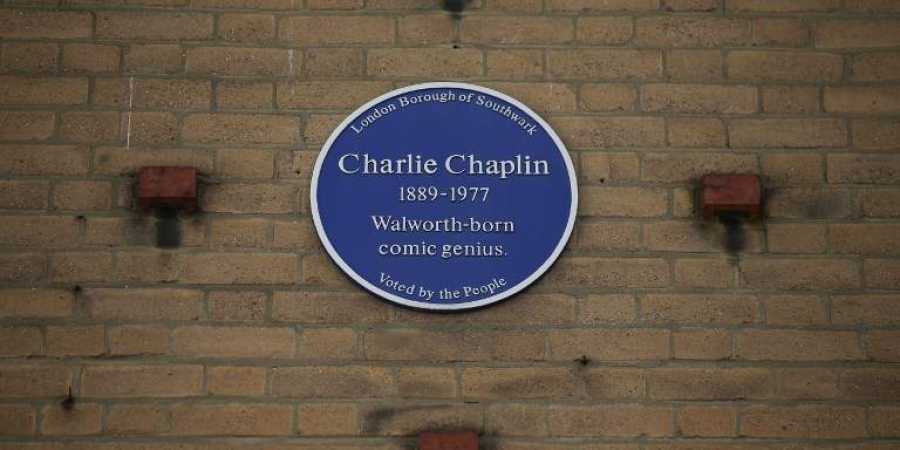
A Blue Plaque about Walworth-born comedian and actor Charlie Chaplin is seen near East Street Market in south London on September 1, 2017. (Photo | PTI)

London :

Britain’s World War II spy Noor Inayat Khan was on Monday confirmed as the first Indian-origin woman to be honoured with a Blue Plaque at her former London home.

The Blue Plaque scheme run by English Heritage honours notable people who lived or worked in particular buildings across London.

Khan’s plaque is set to go up at 4 Taviton Street in Bloomsbury, where she lived as a secret agent during the war. Khan, the daughter of Indian Sufi saint Hazrat Inayat Khan, was an agent for Britain’s Special Operations Executive (SOE) during World War II and was captured and killed by the Nazis in 1944 at just 30 years of age.

“It is from this house that she left on her final and fatal mission. Noor gave her life in the fight against fascism and her message of peace and tolerance of all religions is even more relevant today,” said Shrabani Basu, Chair of the Noor Inayat Khan Memorial Trust (NIKMT).

“The blue plaque will be a wonderful addition to the area that has a special association with Noor. It will be the first Blue Plaque for a woman of Indian-origin in Britain and is a real honour,” said Basu, who has been campaigning for the plaque since 2006 as the author of ‘Spy Princess: The Life of Noor Inayat Khan’.

Taviton Street is close to Gordon Square, which the NIKMT chose for the installation of a memorial bust in 2012 of the spy, a descendant of the 18th century Mysore ruler Tipu Sultan.

The Blue Plaque at her home is expected to be installed following building approval within the next few years.

“The Blue Plaques Panel have agreed that Noor Inayat Khan should be commemorated with a plaque. Once a nomination has been approved, it can take a further two or three years for a plaque to be unveiled,” an English Heritage spokesperson said.

“Noor Inayat Khan has deserved recognition for years. A hero who joined Britain’s effort to fight tyranny,” said Tom Tugendhat, Chair of the UK Parliament’s Foreign Affairs Committee. Born in September 1914 in Moscow to an Indian father and American mother, Khan was raised in both Paris and Britain.

As a Sufi, she believed in non-violence and also supported the Indian Independence movement but she felt compelled to join the British war effort against fascism. She went on to become the first female radio operator to be infiltrated into occupied France, where she was tortured and killed at Dachau concentration camp.

The SOE was an underground force established in Britain in 1940 by war-time Prime Minister Winston Churchill to “set Europe ablaze”.

It recruited men and women to launch guerilla war against Adolf Hitler’s forces.

Historial records show that despite being repeatedly tortured and interrogated, Khan revealed nothing and was executed by a German SS officer and her last word was recorded as “Liberte” or freedom.

She was later awarded the George Cross, the highest civilian decoration in the UK, in recognition of her bravery.

In recent months, Khan was also a frontrunner of a campaign for an ethnic minority personality to be honoured as the face of a redesigned GBP 50 note until the Bank of England announced that the note would feature a scientific figure.

Major Indian figures to be honoured with Blue Plaques in London include Mahatma Gandhi, Jawaharlal Nehru and B R Ambedkar, who spent time in the city during the Indian national movement against Britain’s colonial rule.

source: http://www.newindianexpress.com / The New Indian Express / Home> World / by PTI / February 25th, 2019