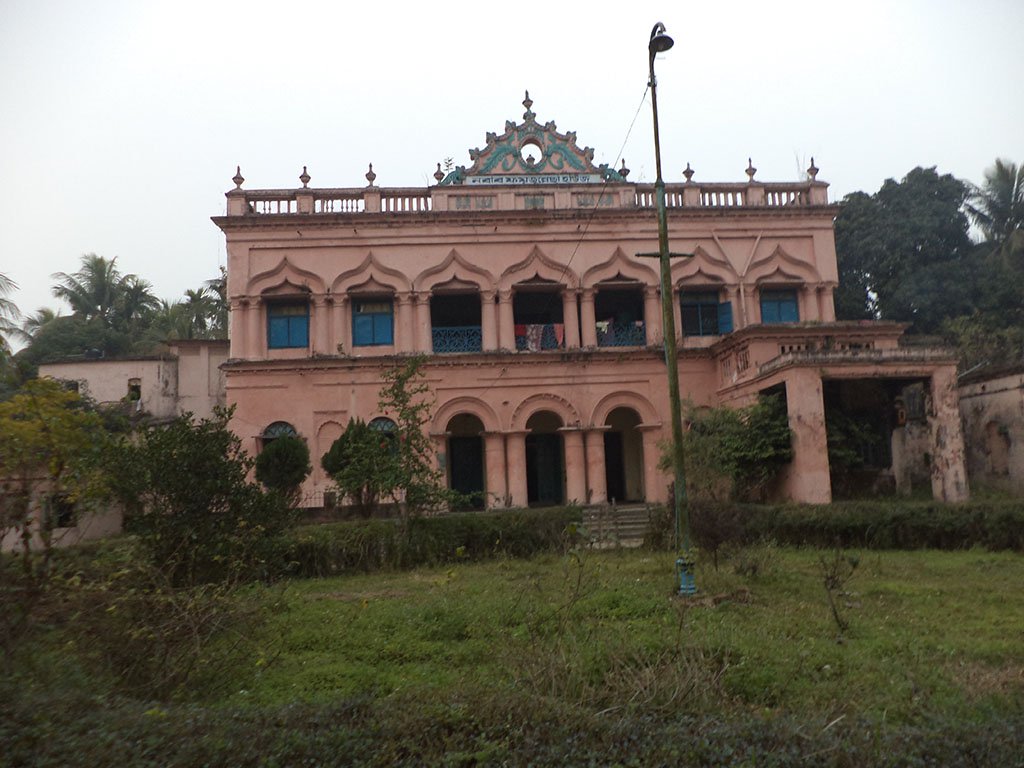
Category Archives: Leaders

Fatima and Fatima

Kolkata, WEST BENGAL :

Two remarkable women from the family of Wajid Ali Shah, the last king of Awadh, are reviving his culinary tradition in Calcutta, the city where he famously introduced potatoes into the biryani!

Last king of Awadh,Wajed Ali Shah,Manzilat Fatima

Manzilat Fatima is a descendent of Wajid Ali Shah, the last Nawab of Awadh who spent 29 years in exile in Metiayaburj, a Calcutta suburb. She launched a pop-up restaurant of Awadhi cuisine in 2014 and a home dining service, Manzilat’s, in 2018 in Calcutta. (Arijit Sen/HT Photo)

What do you do you do if a goose is plump beyond reason, won’t lay eggs and needs too much feed? Cook it, I guess. And that’s what the British Crown did to Wajid Ali Shah, the last king of Awadh, who ascended the throne as a 25-year-old in 1847 and was dethroned nine years later in 1856, a year before the first war of Indian Independence broke out.

The British said this was done because he lived and ate like a king and did little else, thus overlooking his military reforms, his attempts at administration which the East India Company did its best to thwart, and his immense popularity with his subjects.

Packed off to Metiyaburj, about four miles south of Calcutta, the ousted king was joined by his prime minister, some of his wives, musicians and officials. His chefs attended to this displaced court as best as they could. They prepared their master’s banquets with the lavishness of his days as monarch, so that when he sat for his meals, he would remember Lucknow as his great romance and not the painful reality of its passing.

If five kilogrammes of lamb mince was used to make a single kofta when he had been the king, they were not going to scale down, when he was no longer one.

Wajid Ali shah during his days in exile in Metiyaburj, a Calcutta suburb, wearing his trademark kurta with part of his chest exposed. His descendants say it was an expression of his heart being open to his subjects. ( Arijit Sen/HT Photo )

But how do you claim, centuries later, that one of India’s most famous ex-royal is your old man and that you are the sole inheritor of the royal cuisine he helped found? Wajid Ali Shah’s descendants Manzilat Fatima, 51, and Fatima Mirza, 45, of Calcutta are doing that, courtesy the documents of political pensions of their families on the one hand, and by cooking his food, on the other. Team Manzilat and Team Fatima, both say they are the real thing.

***

Family recipes are a cook’s real estate. Wajid Ali Shah’s descendants face the problem of plenty. At the time of his death, the king had 250 wives and 42 children so no ‘family recipe’ matches the other. The British also made sure that after the king’s death in 1887, his days in exile would go undocumented.

On Fatima Mirza’s table: Kachhe Tikia ke Kebab, Mutton biryani, Nargisi Kofta. Mirza is a great-great grandchild of the last king of Awadh. ( Arijit Sen/HT Photo )

“His successors and his subjects were left with nothing,” says Wasif Hussain, the manager of the king’s mausoleum in Metiyaburj. “I’ve heard that in Chartwell House [the country home of a former British premier, Winston Churchill], his kitchen with its tea-kettle, his flour bin, the utensil rack and the weighing machine have been left intact…. It’s a museum….”

A law graduate, Manzilat Fatima, is from the ‘ruling line’. Her father, Kaukub Meerza, a former Reader of the Aligarh Muslim University, is the grandson of Birjis Qadr, the son of Begum Hazrat Mahal and Wajid Ali Shah. Birjis was crowned king by Mughal emperor Bahadur Shah Zafar during 1857 as Wajid Ali Shah was by then in Calcutta. Birjis met his death in 1893 after dinner at a relative’s home in Metiyaburj.

This was not the first time that poisoning had killed an Awadhi royal, Sudipta Mitra, author of Pearl by the River, a book on Wajid Ali Shah’s exile, points out. Royal biographies mention a consort sending the king paan as a token of her love during their better days and the king not putting it past her to lace its leaves with poison when those days were over.

The murder of Birjis and its memory have stayed with the family for over 120 years. It has seeped into Manzilat’s remembrances of her childhood home (“My paternal grandmother would always check the food before it was served to family members”), and explains her impatience with ‘proof’-seekers. Ever since she launched a pop-up restaurant of Awadhi cuisine in 2014 and a home dining service, Manzilat’s, in 2018 in Calcutta, there are some set questions she has had to answer.

“ ‘Do I have monogrammed table-mats from Wajid Ali’s time?’ ‘Did I inherit a recipe book?’ No, I didn’t! Birjis’ murder snapped our links with the other branches of the family. His wife escaped from Metiyaburj to Calcutta…. And besides, my great-great-grandmother, Hazrat Mahal, was a queen who was fighting the British, not writing cookbooks. For a while, I made this my FB status,” says Manzilat cheekily while adding finishing touches to an order of Ghutwaan Kebab (made of mashed meat marinated with papaya) that a delivery man from Swiggy is waiting for her to complete, besides the mandatory biryani.

Manzilat makes a good mutton biryani, but with mustard oil to keep it non-greasy and light; Fatima Mirza, a school principal (she is of the line of Wajid Ali Shah’s principal consort, Khas Mahal) and her husband Shahanshah Mirza (his father Wasif Mirza is another great grandson of Wajid Ali Shah) consider the leaving out of ghee an overturning of the “basic biryani rule-book”. Both families, however, have more in common than they think.

While Manzilat’s cooking displays her control in colour, sense of proportion and spicing so integral to Awadhi cooking, Fatima, too, has considerable domain knowledge. Since 2018, she has been working on a cookbook penning family recipes such as the Kachhe Tikia ke Kebab.

“This is the only Awadhi kebab in which sattu is added and it was a Wajid Ali Shah favourite,” she says. “To neutralise the heat of meat and to make it easily digestible, hakeems advised chefs to add sattu (ground Bengal gram) as the king aged. The trend seems to have been to keep things light and fragrant.”


Shahanshah Mirza, another descendant of Wajid Ali Shah, with a family heirloom – a ceramic bowl. Such bowls were common in royal households. Their contents were checked by food inspectors before they were placed before the nawab. They had a special coating which would ‘crack’ if the food had poison, says Mirza. ( Arijit Sen/HT Photo )

Shahanshah Mirza, a government official and heritage enthusiast, elaborates on the difference between Awadhi and Mughlai cuisine. “Unlike Mughlai, ours has no overdose of mace or cardamom or dry fruits. We say about Urdu, Urdu aap ke zubaan pe hamla nahin karta hai, speaking it, does no assault to your tongue… Likewise, Awadhi food plays on understatement. It is big on presentation though.” Any aspiration to cheffy-ness of the standard of the former royal house of Awadh has to get the food styling right.

Wajid Ali’s descendants also make great allowances for a master chef’s ego. It was not uncommon in the heyday of the king to have his chefs refuse to cook for any other branch of the family. Some of the chefs even announced during the time of seeking employment that they were not going to expand their expertise! That is, the maker of dal would remain a dal specialist throughout his life. A biryani cook would touch nothing else.

***

The Sibtainabad Imambara, the mausoleum of Wajid Ali Shah and his son Birjis Qadr at Metiayaburj. Birjid was declared king in the absence of his father by the sepoys during 1857 and his kingship was acknowledged by the Mughal emperor, Bahadur Shah Zafar. ( Arijit Sen/HT Photo )

In Metiyaburj, Guddu, a grandson of Puttan, a descendant of one of Wajid Ali Shah’s great chefs, drops by at the Shahi Imambara, for a chat. He talks of a dish that has the sound of one made in Awadh’s hoary past. There are few “with the stomach and liver of Wajid Ali Shah” to digest dishes like a meat mutanjan (a rice dish) now, Guddu says. But Nawabi biryani, and yes, with the potato, is everywhere.

Do kings thus prepare the future food of the people? The rich trying out the pleasures that the masses will eventually grasp is something historian Fernand Braudel has elaborated upon in his works. Rows of biryani shops of various prices line the road on either side of the king’s mausoleum. “Jameson Inn, a branch of Shiraz [an old Calcutta eatery], began to make a Murgh Hazrat Mahal in 2011,” informs Hussain, the Imambara manager. But there is a piece of information doing the rounds he would like to correct.

“The potato was added to the biryani because of its exotic value. It was a new vegetable in the market introduced by the Portuguese,” says Hussain. Both Fatimas back this view. According to Abdul Halim Sharar’s Guzishta Lucknow, considered to be the go-to book for any information on Wajid Ali Shah’s exile, the king spent Rs 24,000 on a pair of silk-winged pigeons, Rs 11,000 on a pair of white peacocks and approximately Rs 9,000 a month on food for some animals in his zoo in Metiyaburj.

“If a man could afford so much, he could certainly add more meat to his biryani and not bulk it up with potatoes,” suggests Fatima Mirza. The king would presumably also not risk his social prestige. At the evening concerts in the then resplendent Sultan Khana that had all the splendour of his palaces in Lucknow, when the Calcutta elite would visit, with thumri, there was biryani and it had potatoes. Surely Wajid Ali Shah would not have a dish served that had hard times written all over it.

(L-R) Mohammad Sulaiman Qadr Meerza with his grandfather, Kaukab Meerza, the great grandson of Wajid Ali Shah and Begum Hazrat Mahal, and his father, Kamran Meerza. ( Arijit Sen/HT Photo )

******

Mohammad Sulaiman Qadr Meerza, 9, in a yellow tee and jeans is following the discussion on food and music, and the Awadh royal family closely. When he was six, his father Kamran (Manzilat’s brother), a businessman, disclosed his antecedents. He told his friends in between classes at school that he belonged to a royal family.

His friends asked: “Which one?” Sulaiman said he was the fifth generation of Wajid Ali Shah and Begum Hazrat Mahal. They did not believe him.

Next year, when he is 10, Sulaiman has plans to grow bigger. And then he will try to convince them. He says he must give it one last try.

Kitchen confidential- Nawabi recipes passed down the family
MANZILAT FATIMA’S PINEAPPLE MUTANJAN
INGREDIENTS
  • 1 cup Gobindo Bhog rice soaked for an hour
  • 1 cup sugar
  • 2 cups chopped pineapples
  • 2 1/4 cups boiling hot water (boiled with saffron strands and a pinch of kesariya colour)
  • 1 tbspoon pure ghee
  • 1 cup grated mawa
  • 1 clove; 1 cardamom; almond slivers
METHOD:

Take a heavy-bottom handi, add ghee. When hot, add cloves and the cardamom, then add the whole of the drained rice and saute quickly on medium flame.

Pour the hot water in the handi. Keep the flame high for 2-3 minutes, lower the flame and keep on sim till the rice is 3/4 cooked.

In another handi, scoop out the cooked rice and make a layer; sprinkle 1/2 of the sugar and 1/2 of the chopped pineapples and 1/2 the grated mawa.

Similarly, repeat a second layer, cover the lid and keep the handi on a tawa on sim. Leave for 5-10 minutes till the sugar melts and all ingredients blend well. Switch off the gas.

Before serving lightly mix the layers, serve hot after garnishing with silver leaf and almond slivers.

FATIMA MIRZA’S KACHHE TIKIA KE KEBAB
INGREDIENTS
  • Mince meat 500 gms; salt to taste
  • Bengal gram flour (roasted, powdered) 2 tsp
  • Garam Masala powder -1 teaspoon
  • Paste of nutmeg and mace -1 tsp
  • Onions -2 big ones; ginger-garlic paste -3 tsp; raw papaya paste -2 tsp
  • Green chillies -2; coriander leaves
  • Ghee for frying
METHOD:

Wash the minced meat. Fry the onions till they are golden brown. Mix garam masala, a paste of nutmeg, mace, fried onion and ginger-garlic paste. Sprinkle salt as desired. Add the raw papaya paste. Keep it aside for 10 minutes.

When the mutton turns tender, then mix the chopped coriander leaves and green chillies.

Using the mince mixture make flat round patties (tikia) of even size. Pour ghee into a pan. Heat it on a low flame. When the ghee crackles, start frying the patties till golden brown.

Drain out the excess ghee and serve it hot.

source: http://www.hindustantimes.com / Hindustan Times / Home> India / by Paramita Ghosh / Hindustan Times / February 24th, 2019
 

‘You are truly the enemies of Islam’: Indian Army ex officer’s open letter to Jaish-e-Mohammad

Kolkata, WEST BENGAL / NEW DELHI :

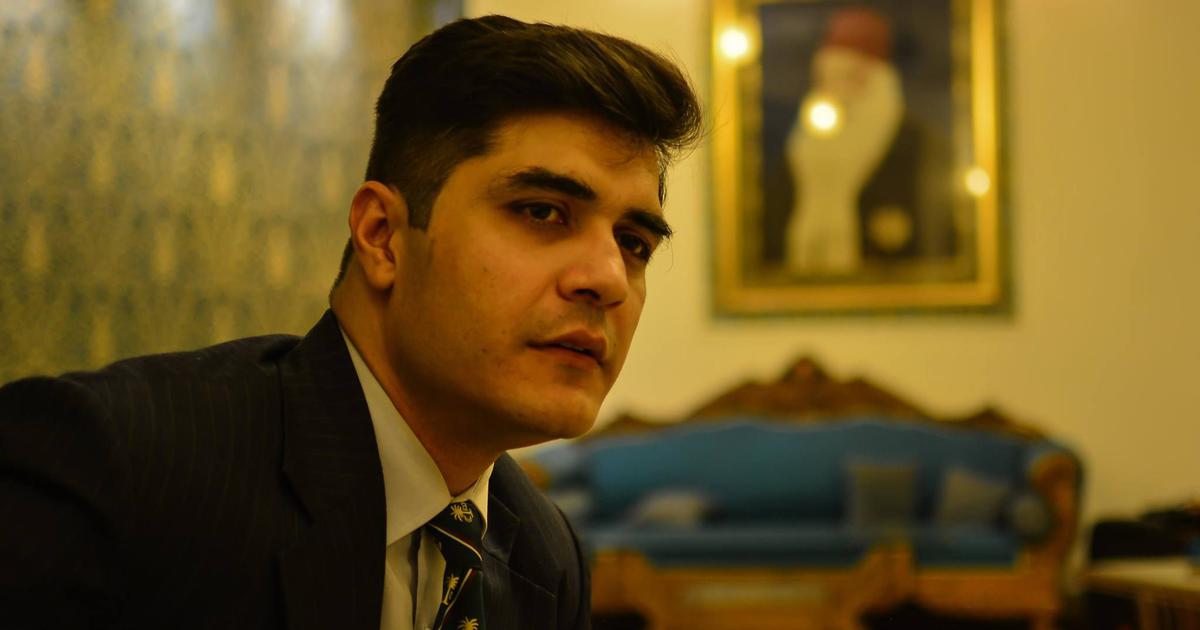
‘Any sensible person can see it’s not some cause you are fighting for, it is a racket you are running,’ writes Major Mohommed Ali Shah.

Mohommed Ali Shah | Facebook/Mohommed Ali Shah

How dare you bunch of cowards think of calling yourselves believers of Islam?

My name is Major Mohommed Ali Shah (veteran). My family has had a tradition of soldiering for 200 years. My father retired as the deputy chief of Army Staff and was vice chancellor of the Aligarh Muslim University thereafter. Because of his and his brilliant team’s back-breaking efforts, Aligarh Muslim University was ranked as India’s best university by the Times Higher Education Ranking, London, the most reliable ranking of universities in the world.

However, because of your ill actions, even such a fine university has to bear the brunt of having the word “Muslim” in its name. My father’s honest autobiography, The Sarkari Mussalman, which speaks very highly of the fine, secular organisation that is the Indian Army, was misunderstood because it had the word “Mussalman” in the title.

My ancestors were veterans of both the world wars. My family chose not to go to Pakistan during Partition but stay in India, for various reasons. We are the children of this soil. We are a family of proud Indians and have performed the pilgrimage of Haj.

So there cannot be a person more qualified to tell you cowards that nowhere in Islam does it say go kill anyone. You people are truly the enemies of Islam, giving it a bad name to the extent that the community is getting typecast. Today, every Hindi movie has a criminal or a gangster bearing a Muslim name.

I saw my father fight insurgency in Punjab in the early 1990s, in Manipur, Nagaland, and Jammu and Kashmir. I have risked my life on several occasions while serving in the Army in Jammu and Kashmir and the North East, in both Muslim and non-Muslim areas of insurgency. However, only one community is being branded as a terrorist community because of ignorant fools like you.

Peace-loving religion

My religion (I am not saying yours because you are not Muslims; you are terrorists and terror has no religion) is actually a very peace-loving religion and talks of unity in diversity. The term “jihad”, which actually means struggle and not terrorism, has been misunderstood and misinterpreted by non-Muslims to the extent that even the national media has started misrepresenting Islam, for which terror outfits like yours are responsible. Today, all good work the Muslim community is doing is being discredited because of the wrongdoings of a few misled, uneducated, disloyal enemies of humanity like you.

The brainless “fidayeen” you have been breeding are going to rot in hell and not to any heaven as you mislead and brainwash young, unemployed, ignorant youth who have absolutely no idea what the holy Quran says. Islam is a peace-loving, scientific, logical and simple religion. There has to be an end to this madness. You people have spoilt the name of such a beautiful religion that once even I, a right-thinking citizen of my motherland India, had to suffer personally. Fortunately, my parents had given me the best gift a parent can give to their child, the gift of education. I could stand tall and fight, and teach the perpetrators a lesson they would never forget in their life. Taking up arms and killing people is not the answer to anything.

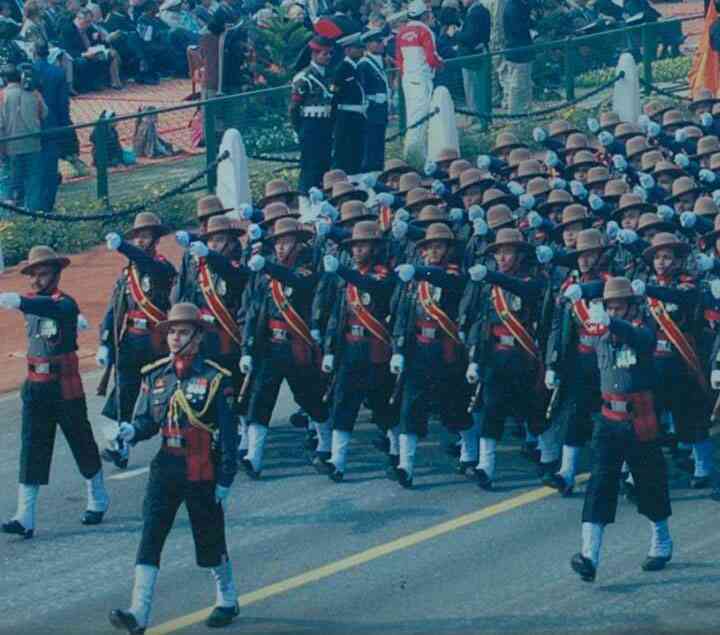
Major Mohommed Ali Shah leads an Army contingent at the Republic Day parade. Photo via Facebook

Education is the only key to progress. I am a proud Muslim and a very proud Indian, and I am qualified enough, not only because I was educated at the best school and the best college or an Indian Institute of Management but because I understand the religion much better than you do. I appeal for peace in order to be a true Muslim. You might have recruited people with little intellect who might be PhDs. However, there is a huge difference between being literate and being educated. Members of terrorist outfits like you are uneducated and should make an effort to analyse yourself, and face and understand the reality that you are not only doing great disservice to a peace-loving religion but to humanity itself. Shame on you!

My reason for writing this open letter is that I hope it reaches you somehow and, maybe, makes a difference somewhere. I truly believe the society will not change unless and until we change ourselves. I hope it reaches you and you do serious introspection, and the change begins. Violence in any form is not the answer to anything.

As Martin Luther King once said, “Darkness cannot fight darkness, only light can do that, hate can not fight hate, only love can do that.” Muslim terror outfits must realise they inflict casualties, directly and indirectly, on Muslims themselves. Any sensible person can see it is not some cause you are fighting for, it is a racket you are running. You are manufacturers of hate. The “fidayeen” whose video I saw will certainly not be going to heaven to enjoy the hospitality of hoors as he claimed. He will rot in hell. To quote a line from the film Khuda ke Liye (which made a lot of sense to me as a Muslim) that was delivered by a great actor playing the character of a maulvi, “Deen mein daari hai, daari mein deen nahi.” There is no need to wear one’s religion or patriotism on one’s sleeve. People are intelligent enough to see what is inside a person’s mind.

Root cause

Having spent considerable time combating insurgency in Jammu and Kashmir and the North East, and having risked my life multiple times in the process, I strongly believe the root cause of the militancy in Kashmir is not religion or “jihad”, as is widely believed. The real cause is that unemployed youth are extremely vulnerable and easily susceptible to brainwashing by vested interests from across the border. Educating and empowering them, making them self-sustaining will help weed out this problem once and for all. The use of arms or a show of strength can defeat them only temporarily – you kill one and 10 more will be ready to take his place. Our only hope is to win them over.

The next big question that arises is about prejudices against the Muslim community. Yes, prejudices exist, not only towards Muslims or any other community in particular, but for those who are less educated. Why would anyone employ someone who is not educated enough, or capable or suitable for the job? We have to admit that Muslims in India are not educated enough and that is the cause of all our woes. The only way forward is to educate our children.

If our children don’t get good education, they won’t have good jobs, then they won’t be able to educate their children, and so on. We will never be able to rise above the poverty line and will always be discriminated against. Education does not mean merely sending them to school. Making sure they have the right mindset is also extremely important. As Allama Mohammad Iqbal, who did great service to the Muslim community, said,

“Khudi ko kar buland itna ke har taqdeer se pehle,
Khuda bande se khud pooche bata teri raza kya hai.”

If one is educated, one can stand tall.

Finally, if we forget all our differences, if India is united, if we stand together, we have the ability to be a superpower – and we surely will be. Jai Hind!

Major Mohommed Ali Shah completed his short service commission in the Army in 2008, participating in counterinsurgency operations in Jammu and Kashmir and the North East. He is currently a defence analyst. He has also worked on and acted in several films, including Haider, Bajrangi Bhaijaan and Agent Vinod.

source: http://www.scroll.in / Scroll.in / Home> Open Letter / by Mohommed Ali Shah / February 20th, 2019

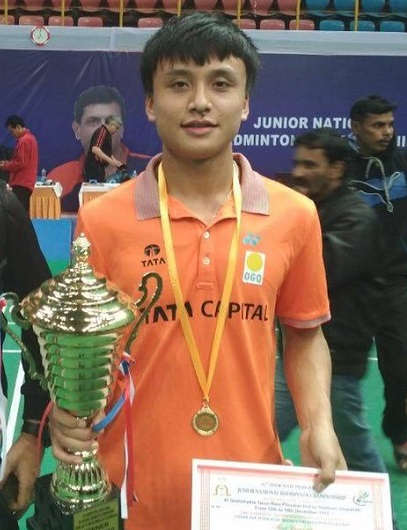
Badminton Junior: Samiya Farooqui to lead Girls team, Maisnam Luwang to lead boys

Hyderabad, TELANGANA :

Selected for Dutch Junior International and the German Junior 

SamiyaMPOs21feb2019

Harpal Singh Bedi / New Delhi :

Manipur’s Maisnam Meiraba Luwang and Samiya Imad Farooqui will spearhead 20-member Indian junior badminton team’s challenge at the Dutch Junior International from February 27 to March 3 and the German Junior from March 7-10

Manipur”s Luwang earned the distinction to lead the boys’ singles challenge by virtue of the 1192 points that he amassed following his title wins at the All-India Junior Ranking Badminton Tournaments in Vijayawada and Bangalore.

The girls’ team captain Samiya Imad Farooqui , a former 2017 U-15 Asian Junior Championships gold medallist., has 1125 points to her credit in the ranking tournaments.

The Badminton Association of India (BAI) considered the cumulative ranking points from the three All India Junior Ranking tournaments held in Vijayawada, Bangalore and Jaipur in January..

MaisnamMPOs21feb2019

While Meiraba topped the chart in the boys’ singles section, the others joining him are Andhra Pradesh’s Sai Charan Koya, Priyanshu Rajawat of Dhar in Madhya Pradesh and Sathish Kumar from Coimbatore.

In girls’ singles, Farooqui is joined by Gayatri Gopichand, Nashik girl Smit Toshniwal and Amolika Singh hailing from Uttar Pradesh.

The winner of each leg gets 500 while the runner-up bags 425. The rest of the points bifurcation are semi-finals (350), quarter-finals (275) and pre-quarter-finals (192).

Ishaan Bhatnagar and Edwin Joy will be leading India’s challenge in the boys’ doubles section.Treesa Jolly and Varshini VS will be the ones to watch in girls’ doubles while the in-form Navaneeth Bokka and Sahithi Bandi, who swept the three ranking events, will be India’s top team in mixed doubles.

The Dutch and the German Junior belong to the Junior International Grand Prix category.

Last year India won the boys’ doubles silver medal at the Dutch Junior when the talented duo of Krishna Prasad Garaga and Dhruv Kapila finished as the runners-up.

The squad

Boys :  Maisnam Meiraba (AAI), Sai Charan Koya (AP), Priyanshu Rajawat (MP), Sathish Kur K (TN)

Girls : Samiya Imad Farooqui , Gayatri Gopichand Pullela (TS), Smit Toshniwal (MAH), Amolika Singh (UP)

Doubles

Boys: Ishaan Bhatnagar (CG), Edwin Joy (KER), Navaneeth Bokka , Vishnuvardhan Goud Panjala (TS)

Girls : Treesa Jolly (KER), Varshini VS (TN), Kavya Gupta (DLI), Khushi Gupta (DLI)

Mixed Doubles: Navaneeth Bokka , Sahithi Bandi (TS), Edwin Joy,feesah Sara Siraj (KER)

source: http://www.theindianawaaz.com / The Indian Awaaz / Home / by Indian Awaaz / February 21st, 2019

IAS officer adopts daughters of two Pulwama attack martyrs

Agra, UTTAR PRADESH / Sheikhpura, BIHAR :

InayatKhanMsMPOs21feb2019

In the biggest terror attack in Jammu and Kashmir since Uri (2016), 44 Central Reserve Police Force (CRPF) jawans were martyred at Pulwana on February 14 when a suicide bomber drove an SUV packed with over 300 kg worth of explosives into a CRPF bus. Terrorist organisation Jaish-e-Mohammad claimed responsibility for the dastardly attack.

As the nation grieves for the families of the martyred soldiers, it has united to do their bit to support them.

Now, Inayat Khan, an IAS officer in Bihar has set an example by adopting daughters of two martyrs. She will bear the educational expenses and other costs of Ratan Kumar Thakur and Sanjay Kumar Sinha’s daughters throughout their lives.
“I have directed officials to open an account to raise funds for families of two victims. Whatever amount will be collected by March 10, we will divide and give it to their families. I want to appeal to the people to contribute as much as you can so that we can stand by their families at a time when they need our support,” Inayat told a news agency.
The Bihar cadre 2012 batch IAS officer will also donate two days’ salary to the families of the two martyrs.

Earlier, Khan, along with the District Magistrate staff, had paid tribute to CRPF jawans martyred in the Pulwama terror attack by observing a minute’s silence on February 16.

source: http://www.femina.in / Femina / Home> Achievers / by Femina / February 19th, 2019

When Nizam came to rescue of Rabindranath Tagore

HYDERABAD :

The correspondences between Tagore and Nizam date back 1927 when Tagore first wrote to the Nizam saying that he was sending his representative Kalimohan Ghose, to interview.

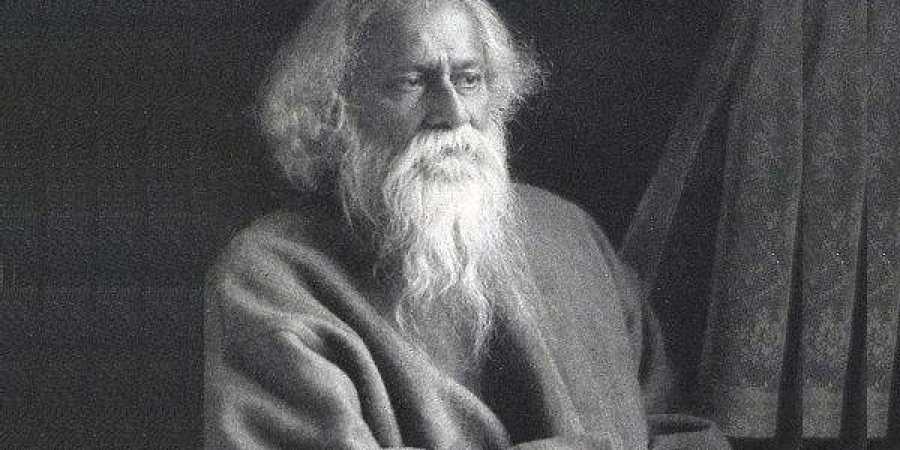
Nobel laureate Rabindranath Tagore. (File photo|EPS)

Hyderabad :

Nizam VII Osman Ali Khan Bahadur, who became the Rajpramukh on January 26, 68 years ago, was known not just for his riches but also for his philanthropy in the fields of education, science and development. What is less known is his contribution to the establishment of Rabindranath Tagore’s Shantinektan in West Bengal. Khan’s administration for  several years funded the construction of hostels, library and the setting up of Urdu department in Shantiniketan.

The correspondences between Tagore and Nizam date back 1927 when Tagore first wrote to the Nizam saying that he was sending his representative Kalimohan Ghose, to interview.

A few months later in July, Tagore wrote another letter to the him, asking for a donation to collection of books and manuscripts at Visva Bharati University, which is a public central university located in Shantiniketan.

In the letter, Tagore, said that the ‘wonderful collection of books and manuscripts that belong to Visva Bharati awaits a suitable and permanent home”. He referred to the Nizam as a ‘patron of learning’ and requested him to come to Tagore’s ‘rescue’ by donating Rs 75,000 for the library building.

Fast forward to 1933. A more desperate and worn-out Tagore wrote to the Nizam again. He described how he was facing ‘large deficits’ and how his resources were completely exhausted. He proceeded to ask for a `1 lakh-donation for establishing a hostel in Shantiniketan. Both the requests of donations were accepted.
It was six years after Tagore’s death in 1941 that Visva Bharati officials again wrote to the Nizam asking for a donation. Anil Kumar Chanda, the then principal requested Rs 85,000 for  setting up a Urdu Department. Sarojini Naidu was the Chancellor of the university at that time. It is unclear whether the donation was granted or not.

source: http://www.newindianexpress.com / The New Indian Express  / Home> States> Telangana / by Aihik Sur / Express New Service / February 18th, 2019

Surayya Abrar new head of Kodagu Women’s Congress

Kodagu, KARNATAKA :

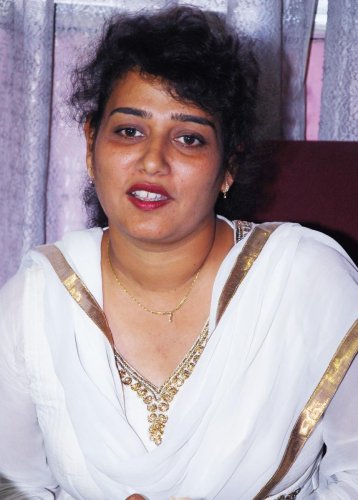
Surayya Abrar
Surayya Abrar

Surayya Abrar has been elected as the president of Kodagu Women’s Congress unit.

Surayya had served as the chairperson of Madikeri Urban Development Authority in the past.

Pushpalatha was serving as the president of Kodagu Women’s Congress unit in the past.

source: http://www.deccanherald.com / Deccan Herald / Home> State> Mangaluru / by Adithya K A / DH News Service, Madikeri / February 04th, 2019

Yusuffali M A is fifth highest-ranked Indian philanthropist

KERALA / U.A.E. :

Lulu Group chairman Yusuffali M A is ranked fifth in the list of top 10 philanthropists in the Hurun Indian Philanthropy List 2018 published on Saturday.

Yusuffali M A, CMD, Lulu Group, and A J Pai, Director, Lulu Tech Park, looking at a scale model of Lulu Cyber Tower-2 | Albin Mathew

Kochi :

Lulu Group chairman Yusuffali M A is ranked fifth in the list of top 10 philanthropists in the Hurun Indian Philanthropy List 2018 published on Saturday.

Yusuffali is the lone Malayali to figure in the list which ranks benefactors who have donated  `10 crore or more during the October 2017- September 2018 period, said Anas Rahman Junaid, managing director and chief researcher, Hurun Report India.

He had donated more than `50 crore to the Chief Minister’s Distress Relief Fund in the aftermath of the flood havoc last year.

He had  donated generously during the devastating temblors at Latur, Maharashtra and Bhuj in Gujarat, the 2004 tsunami tragedy, Uttarakhand deluge and floods in Jammu and Kashmir.

Yusuffali has also assisted several Indians, stranded in the Gulf countries, providing them financial aid and flight tickets.

source: http://www.newindianexpress.com / The New Indian Express / Home> States> Kerala / by Express News Service / February 10th, 2019

The haveli of Mughal fireworks in Chandni Chowk

Chandni Chowk, DELHI :

Delhi did have fire-crackers much more than 200 years ago and Haider Quli, the artillery chief, made good use of them at his haveli, now lying deserted.

The cluttered entrance to Haveli Haider Quli in Chandni Chowk

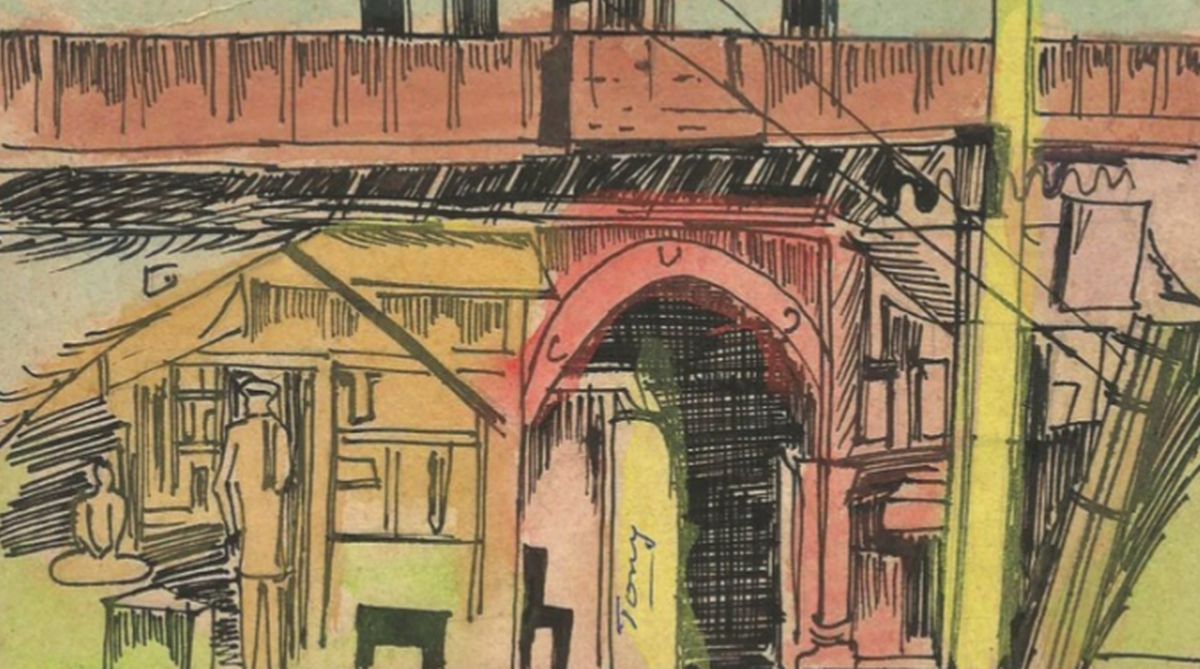
Delhi did have fire-crackers much more than 200 years ago and Haider Quli, the artillery chief, made good use of them at his haveli, now lying deserted. In Chandni Chowk is Haveli Haider Quli, whose inhabitant till February 2016 was the nonagenarian Narain Prasad. The double-story apartment he lived in was only a part of the original mansion, where now houses and shops have mushroomed and the garden that was one of its attractions has disappeared in the ensuing rabbit of a warren locality.

Haider Quli was the chief of the artillery during the reign of Mohammad Shah Rangila (1719-1748) in whose reign Nadir Shah invaded Delhi and took away the Peacock Throne and Kohinoor, along with other fabulous treasure.

Haider Quli got his exalted post because of his patron Hussein Ali, but later turned against his mentor and got him murdered while he was on his way home in Chandni Chowk. A boy related to him fired at one of the assailants, killing him on the spot but the others hacked the boy to pieces with their swords. It is said that Mohd Shah was also involved in the conspiracy, along with his mother as he had become wary of Hussein Ali.

It was Haider Quli who organized the first fireworks in 18th century Delhi some 260 years ago under his supervision as Mir Atish, whose descendants had fireworks shops behind the Jama Masjid.

The Mughal emperors preceding Mohd Shah celebrated Diwali with illuminations but there were no fireworks as such. Possibly the only cracker was a ball of gunpowder exploded by the Mir Atish and a crude kind of Phuljhari (sparkler) for the amusement of the ladies of the harem when the Seths of Chandni Chowk were worshipping Lakshmi in their shops.

It is pertinent to remember that Babur brought guns with him when he invaded India in 1526 and on whose firepower he won the First Battle of Panipat against Ibrahim Lodi-the Sultan’s elephants running amuck at the sound of the blazing cannon and the fireballs they ejected.

Gunpowder was invented or discovered in China in the ninth century and India was practically devoid of it till AD 1250. The Mughals’ ancestor, Changez Khan had made use of gunpowder during his Mongol raids because of which it made its way into parts of Russia. Evidence of this found in the story of Alibaba and the Forty Thieves, in which the chief of the robbers Abu Hassan used gunpowder (Shaitani Rait or Devil’s Sand) to overawe his victims. Then after depositing the loot in his treasure-house Simsim, he retired to the fort, where he resided as the seemingly pious Imam Sahib, to whom people went with their complaints against Abu Hassan. The hypocrite, with his lust for the slave girl Marjina, would then march out with troops in a mock campaign to nab the robber chief.

History shows that before the Mughals some sort of atishbazi was introduced into Delhi during the reign of Nasiruddin Mahmud, Chirag Delhi. But he and other Slave kings are not known to have celebrated Diwali, which was first patronised by Mohmmad bin Tughlak. The succeeding Sayyids and Lodhis may also have willy-nilly followed the custom. Babur and Humayun had their Nauroz celebrations, but Akbar did celebrate Diwali on a grand scale because of his Rajput wives. Jahangir and Shah Jahan had an even more elaborate Diwali, with the latter emperor being bathed in waters collected from seven rivers and pandits chanting mantras while the Maulvis looked askance. However, his daughter Jahanara was not burnt during Diwali celebrations but one evening at the daily lamp-lighting. Aurangzeb, despite his orthodoxy, did observe Diwali with the Rajput chiefs coming to him with sweets and gifts. Gossip would have us believe that his first Diwali was celebrated with his beloved Hira Bai Zainabadi in his arms and offering him a cup of wine to prove his love for her. But when Aurangzeb moved as if to sip it, Zainabadi (appreciating the gesture) took away the cup from his hand. No wonder when she died an early death. Aurangzeb was devastated Jahander Shah, his grandson, celebrated Diwali with concubine Lal Kanwar in Lahore (1712), when he bought all the oil available in the city for illuminations, though fireworks were absent till Mohd Shah took over after the death of Farrukhseyar and some puppet kings.

Historians, however, fix the date when Diwali crackers became popular as 200 years from now, though the British were enjoying fireworks on Guy Fawkes Night in observance of the Gunpowder Plot of 1605 (the year Akbar died). Mirza Ghalib was one of those who were present at the Diwali celebrations of Bahadur Shah Zafar, who released the bluejay or Neelkanth bird as a sign that Durga was on her way home after Dussehra. But Prof Ram Nath observes that it was actually Shah Jahan who first did so. For the later Mughals fireworks were also the main observance during Shabhe-Barat, heralding the approach of Ramzan.

This display of crackers was extended to Diwali. As a matter of fact, during Mohd Shah Rangila’s reign it was a cracker thrown at the palanquin of the emperor’s jeweller, Sukh Karan that led to the March 8, 1729, shoesellers’ riot in which Rangila Piya’s favourite concubine Nur Bai, on her way back home in Chawri Bazar from the Red Fort, lost a tooth when she was hit by a stone thrown by the rioters. So Delhi did have crackers much more than 200 years ago and Haider Quli, the artillery chief, made good use of them at his haveli-now lying deserted as even the last occupant, Narain Prasad’s 94-year-old sister has left it after her brother’s death. But whenever you see the place you instinctively think of fireworks as happened during Guru Nanak’s birthday celebrations amid a crescendo of crackers despite the ban on them.

source: http://www.thestatesman.com / The Statesman / Home> Supplements> Section 2 / The Statesman News Service / New Delhi – February 09th, 2019

The zamindar of Laksam

UNDIVIDED BENGAL / current day BANGLADESH :

BegumFaizenussisaMPOs03feb2019

So famous did the zamindar, a descendant of the Timurid dynasty from which the ruling Mughals derived become, in work to develop female education and other issues of social deprivation of women in the latter half of the 19th century, that Her Imperial Majesty Victoria, Empress of India, personally intervened to award the title of “Nawab.”

In that unique process, Begum Faizunnesa Choudhurani became the first woman in South Asia to be so honoured.

Homnabad-Pashchimgoan, now known as Laksam, close to the Indian border in Comilla District of Bangladesh, was a zamindari, characteristic of the British period, being held by a Muslim family in an area which, even today, enjoys a rich heritage of fine Hindu Temples that betrays a probable Hindu majority of the time.

She was born in 1834 to a very devout Muslim family, with its very aristocratic heritage, and was, very strictly, brought up in purda; although, in fact, her father was of sufficiently liberal mind to hire a male tutor to enhance the education of his two daughters.

Of course, in the great traditions of Islam, such an upbringing may not have permitted a great deal of social intercourse, but it is clear that it did facilitate for her an opportunity for a high degree of self education: Reading. Sadly, a vital form of education that has diminished in modern times.

That process of self and home education was, certainly, effective. Arabic and Persian in the household would have been the most commonly used languages, as in most such aristocratic families of the time; indeed, Persian was commonly used, even by the East India Company in its communications, and was an essential learning for Company employees.

Faizunnesa, in the preface of her famous work of poetic fiction, Rupjalal, was to acknowledge her tutor, Ustad Tazuddin, as the source of inspiration, and learning.

It may also be interesting to speculate that she had access to newspapers, that, as English language publications, would certainly have aided a familiarity with social changes, even in Britain.

Two years before her birth, 1832 was the year of the First Great Reform Bill passed by the British Parliament.

The act, itself, only marginally extended the voting franchise, still limited to males, as well as reforming Parliamentary seats. However, in 1817, Jeremy Bentham had first advocated enfranchisement of women, and although it was to be nearly another century before such reform was enacted in Britain, together with the succession to the throne of Queen Victoria in 1837, emancipation of women, combined with an embryonic movement for women’s rights, were certainly already on an international agenda from before the Begum’s birth.

Fascinating, indeed to suspect that, so early already, deep in the rurality of the lands that are now Bangladesh, and in a very strict Muslim family, it appears that something stirred in the field of female educational rights and opportunities.

Which, amongst other things, begins to raise suspicions that the movement towards independence, which seems largely in the late 19th and early 20th centuries to have emerged from a more “anglicised” upper and middle class in the sub-continents, may well have had some roots amongst the more leisured zamindari, especially those of ancient lineage.

However, Faizunnesa found herself at the age of 27, in a traditional polygamous marriage to a neighbouring zamindar, a distant cousin, Muhammad Gazi, becoming his second wife with whom she had two daughters.

In fact, it was a marriage at an unusually high age; at the age of nine, Muhammad Gazi, on a family visit, became obsessed with her, and sought marriage then.

Faizunnesa’s father denied permission then, on the grounds of her youth, but in the ensuing years, found it difficult to arrange any marriage for his daughter, over the well-known objections of her older suitor.

It was evidently not a marriage or situation that suited the well-educated, evidently rather independent-minded young woman.

After bearing two daughters, she returned to her parental home. There then ensued a lengthy process of obtaining marital alimony, at the end of which she received property as a settlement.

It is, however, clear that she remained on good terms with her husband, blaming his first wife, who he had married on rebound from his original failure to marry Faizunnesa, for the failure of the marriage.

On the death of her father, her apparently similarly self-assured and educated mother, took over administration of the zamindari.

On her mother’s death in 1883, Faizunnesa inherited the zamindari.

It is evident that, like so many, she was not content with British colonial rule; we may well surmise that the 1857 rebellion, although it had little impact in Bengal, and indeed the lands still at the time designated as a part of Tripura, especially the suspicion engendered by the role of Muslims in that uprising, was also contributory to her discontent.

Other women rulers in India had proved themselves content with the title Begum, usually the way in which a zamindar’s wife was addressed; Faizunnesa, alone, and a Muslim woman, made it clear that she found it degrading not to be recognised equally with male zamindars

In her writing, she also refers to the suicide of her maternal grandfather, Mozaffar Gazi  Chowdhury, preferring death to submission to the then colonial ruler, the East India Company.

In the period between the Battle of Buxar, that facilitated the Company’s domination of the lands, and the Act of Permanent Settlement in 1793, governance was so rapacious that 75% of zamindari are believed to have changed hands. It was not a period in which such aristocratic rulers could work easily.

But it is apparent that she was determined not to be suppressed by the rule of the successor administration, the British Imperial rule.

As zamindar were invited by Magistrate Douglas, the district magistrate of Tripura, to contribute to funds for his provincial development plan, she was the only zamindar who responded to the request, donating — in the absence of other support — all the funds requested.

As a result, Douglas requested the British government that she be awarded with a title. Nawab,was, at the time, the highest honorific awarded to zamindars.

The male zamindars, however, objected vociferously, and Faizunnesa was awarded the honorific title of Begum, with the agreement of Queen Victoria.

She rejected the offer, pointing out that she was already known in her lands by that title; she demanded that she be treated with equality to male zamindars. The British Parliament decided in her favour, and she became Nawab Faizunnesa. It is not hard to imagine her satisfaction beating the system!

Other women rulers in India had proved themselves content with the title Begum, usually the way in which a zamindar’s wife was addressed; Faizunnesa, alone, and a Muslim woman, made it clear that she found it degrading not to be recognised equally with male zamindars.

Her work as zamindar was far from limited to the effective administration of the lands she held. As early as 1893, with the support of her mother, she had established one of the earliest privately established female schools in the Indian sub-continent.

She also established a school at Pashchimgaon, now upgraded to a college.

In 1893, she established a dispensary for women, particularly destitute women, as well as a hospital for women in Comilla.

Her semi autobiographical “allegory,” Rupjalal, published in Dhaka in 1876, eventually brought her a worldwide literary reputation, but she also remains an outstanding figure in the continuing fight for women’s rights in the lands that are now Bangladesh.

Her origins and her upbringing suggest how hard it must have been for her to plough her furrow, despite her advantages of wealth and family.

A conspicuous, and perhaps somewhat neglected figure in the social and religious cultural development of Bangladesh today.

Tim Steel is a communications, marketing and tourism consultant.

source: http://www.dhakatribune.com / Dhaka Tribune / Home> Opinion> Heritage / by Tim Steel / August 06th, 2016

Abbas Tyabji: Forgotten Indian Freedom Fighter, associate of Gandhi

Baroda, GUJARAT :

AbbasTyabji01MPOs01feb2019

New Delhi:

On the same date of 1st February in 1854, a legend born called as Abbas Tyabji, the Grand old man of Baroda, Gujarat was an Indian freedom fighter and an associate of Mahatma Gandhi. He was an England-educated barrister, brought up in an atmosphere suffused with loyalty to the Empire.

In 1919, Abbas Tyabji pulled into the national movement due to military violence in Punjab. With the events of 1919 having shaken up the country, Tyabji became a member of the committee set up by the INC to inquire into the military violence.

He had served as the Chief Justice of the Baroda High Court. He was also a key ally and supporter of Sardar Vallabhbhai Patel during the 1918 Kheda Satyagraha, and the 1928 Bardoli Satyagraha. He was also a close supporter of Mohandas Gandhi and the Indian National Congress.

AbbasTyabji02MPOs01feb2019

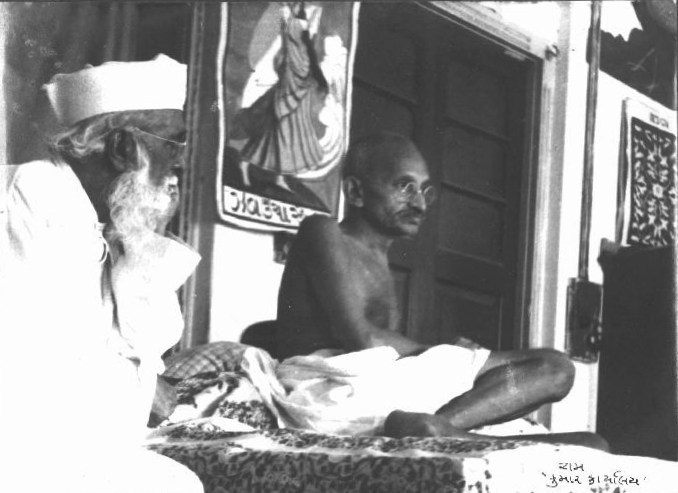
Abbas Tyabji attended along with Gandhi so many social conferences. He was appointed by the Indian National Congress as chairman of an independent fact-finding committee. He also adopted many of the Symbols of Gandhi’s Independence movement. Imprisoned often, the movement changed his lifestyle. He took to khadi, saying “this fakir’s dress has broken down all barriers”.

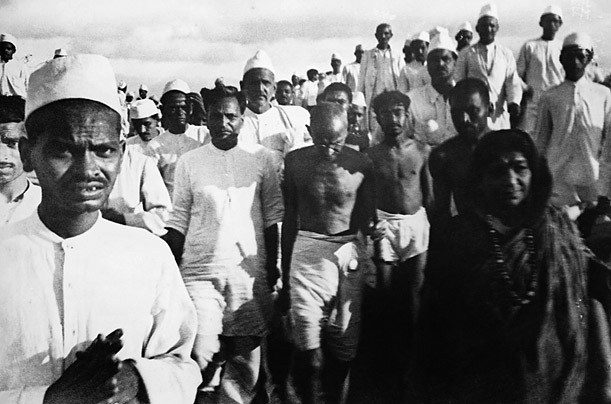
He is also known for leading Salt Satyagraha in 1930 following Gandhi’s arrest. As Mahatma Gandhi chose a nationwide non-violent protest against the British salt tax. Congress officials were convinced that Gandhi would quickly be arrested, and chose Tyabji as Gandhi’s immediate successor to lead the Salt Satyagraha in case of Gandhi’s arrest. On 4 May 1930, after the Salt March to Dandi, Gandhi was arrested and Tyabji placed in charge of the next phase of the Salt Satyagraha, a raid on the Dharasana Salt Works in Gujarat.

“Under Abbas Tyabji’s influence, Gujarat accepted the non-cooperation programme even before the Congress as a whole did. He was a signatory to the October 1921 manifesto, a bold document, calling upon Indians to withdraw from the civilian and military service of the Raj”, Gandhi wrote in his autobiography.

Abbas Tyabji died in Mussoorie on 9 June 1936.

source: http://www.siasat.com / The Siasat Daily / Home> Breaking News> India> News> Top Stories / by Siasat Web Team / February 01st, 2019