Category Archives: Leaders

The Ghazi of Peace

Bahraich, UTTAR PRADESH :

Shahid Amin, one of India’s most creative and learned historians, explores Indian syncretism through the legend of an 11th century warrior-saint.
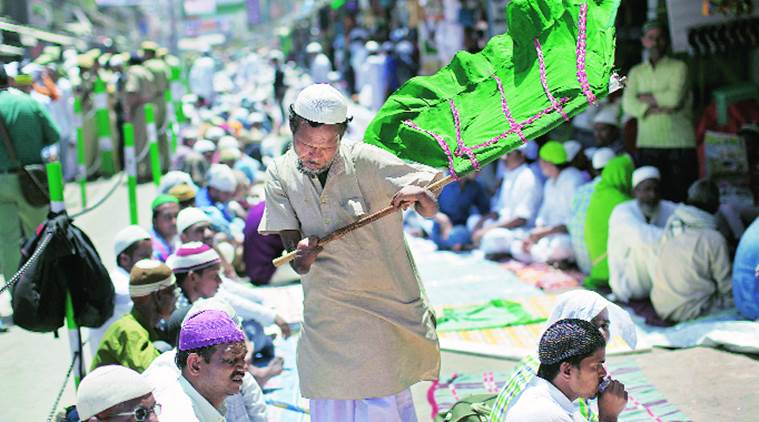
Dargahs such as the one in Ajmer (above) and Bahraich symbolise India’s syncretic heritage. Vishal Srivastav

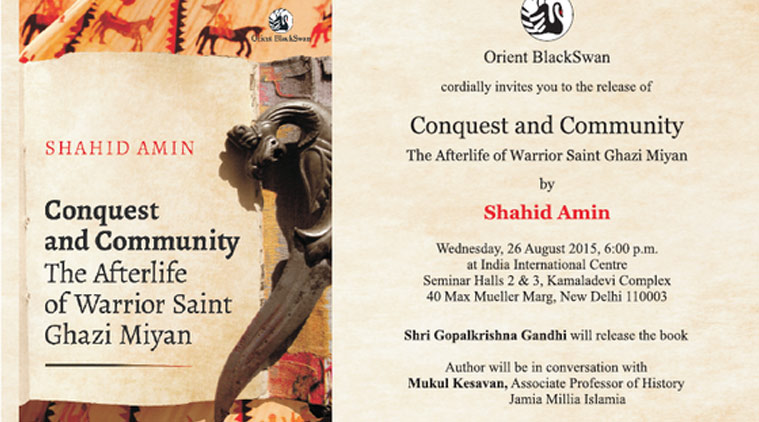
Book- Conquest and Community: The Afterlife of Warrior Saint Ghazi Miyan

Author: Shahid Amin

Publication: Orient BlackSwan

Pages: 348

Price: Rs 850

Three decades ago, the historian Shahid Amin wrote a brilliant piece, ‘Gandhi as Mahatma’, which is in many respects the locus classicus of what became the subaltern school of Indian history. What he offered was far more than what is ordinarily called “history from below”, showing that the masses made of Gandhi what they could, stepping outside the role habitually assigned to them by nationalist historiography. The Mahatma, Amin suggested, had been metamorphosed into a floating signifier.

In the present work, Conquest and Community, which cements Amin’s reputation as one of India’s most creative and learned historians, he extends this mode of analysis and turns his attention to Salar Masud or Ghazi Miyan as he is more popularly known, a warrior saint whose cult appears to have been well established by the 14th century.
GhaziMianMPOs26sept2018

The story of Ghazi Miyan begins, we may say, with Sultan Mahmud of Ghazni, whose name is calculated to turn the middle-class Hindu into a figure of rage: this early 11th century warrior made repeated incursions into India, “utterly ruined the prosperity of the country” and desecrated the shrine of Somnath. Folklore would inscribe a place for Salar Masud as Mahmud’s nephew, though contemporary records make no mention of such kinship, and representations of him as a warrior taking up arms on behalf of his uncle until he was felled in battle in 1034 against a confederation of Hindu kings began to proliferate.

More surprising still is the fact that the Ghazi was transformed into a Sufi saint, the extent of whose following and reputation might be gauged by the presence at his dargah of Mohammad bin Tughlaq, the Sultan of Delhi. Abdur Rahman Chishti’s 17th century hagiography, Mirat-i-Masudi, would displace Mahmud with Miyan Ghazi. To this day, the cult of the 11th century Indo-Turkic warrior saint thrives in north India, and Hindus and Muslims continue to be drawn in large numbers to his dargah at Bahraich.

Just how is it that the popular assent to the cult of Ghazi Miyan was garnered across the religious divide, and that too with respect to a figure associated in educated Hindu minds with the image of the rapacious Muslim invader? Amin says rather modestly that his “book eschews definitive explanations” and that he is not interested in asking why a 17th century Sufi wrote the text “at the time that he did,” or why “Hindu castes felt no compunction in installing a Muslim warrior on their domestic altar”.

He sets out, rather, to explore those aspects of the Ghazi Miyan narrative which took hold firmly in Gangetic popular culture. This leads him knee deep into some extraordinary anomalies. The commonplace view of Muslims in India renders them as beef eaters, but the Ghazi Miyan of folklore is a protector of cows, the saviour of oppressed cowherds, and a determined foe of the landlords who claimed as their prerogative the right to impregnate the virgin daughters of the Ahirs. In a similar vein, the ballads celebrate the story of the married Brahmin woman, Sati Amina, at whose home the sandalwood tree has dried up.

The family priest avers that the tree will regenerate upon the Ghazi’s arrival — and so it does. In gratitude, Amina washes the feet of the Ghazi and his followers, the Panchon Pir, and then serves them a lavish meal. What could be more violative of the social order than for a Brahmin woman to cook for a Muslim man? Yet, as the very name Sati Amina signifies — Amina is the Prophet’s mother — this is a story about in-between spaces and the risks (and pleasures) of transgressive and forbidden acts.

By the 19th century, as Amin shows, the cult of the Ghazi had become a source of acute anxiety to British, Muslim, and Hindu elites alike. Colonial ethnographers and officials had set out to clearly differentiate “Hindu” and “Muslim” communities, and the presence of a large number of Hindu worshippers at the sites associated with the Ghazi was immensely bewildering to them. On the specious ground that Bahraich was a “cosmopolitan” site and therefore not deserving to be characterized as a special religious endowment of the Muslims, the British sought to bring the dargah under their control and pocket the considerable donations left by devotees.

To the Ashraf or Muslim elites, their low-class and illiterate brethren who consorted with Hindu devotees were little better than idolaters, and the Muslim clergy had no difficulty in attributing the ignorance of Muslim devotees to their frequent social intercourse with Hindus. The zealots of the Arya Samaj and Hindu revivalists expressed alarm that “their” women were willing to surrender their dignity before a Muslim warrior saint, all too often in the hope of gaining male progeny. Such had been the consummate nature of Muslim dominance that, in Amin’s marvelously elegant and provocative rendering of the revivalist view, Hindus “partaking of holy unction” at “the altars of Muslim saints” were “virtually ingesting the leftovers from their Muslim neighbours’ kitchen.”

Few questions have animated Indian historiography, and discussions in the public sphere, as much as the relations between Hindus and Muslims. Amin’s study is a signal contribution to this literature, and he is particularly enlightening in his suggestion that while we cannot be dismissive of those who have posited a syncretic Indian past, it behooves us to view syncretism not only as a narrative of pluralism and accommodation but also in equal parts as a story of agonism, conflict and clash. His masterful study argues that while our narrative understanding of the Ghazi Miyan saga cannot stop at viewing him as “just a conqueror”, it must also contend with the fabrications and the verisimilitude engendered by local histories, ballads and folklore.

In what Amin calls “the quotidian culture of north India” reside perhaps our best hopes for neutralising those who would seek to homogenise the Indian past in the vain and dangerous quest to create the patriotic and “new Indian national”.

The writer is professor of history, University of California

source: http://www.indianexpress.com / The Indian Express / Home> Lifestyle / by Vinay Lal / October 10th, 2015
Margoob Hussain is GM of Rail Wheel Factory

Bengaluru, KARNATAKA :

Bengaluru :

Margoob Hussain has taken over as General Manager, Rail Wheel Factory. Prior to this, he was holding the post of Director General, Research Designs and Standards Organisation (RDSO), Lucknow.

Hussain joined Indian Railway Service of Electrical Engineers (IRSEE) in 1980 after graduating from IIT. He has a strong technical background and has expertise in various facets of Railway working.

Vast experience

In his 37 years of service, he has worked in various capacities. He has exposure to foreign railways such as Denmark, Germany, South Korea, Sweden and the US.

Hussain was instrumental in establishing various systems in Delhi and Kolkata metros. He has contributed immensely to various research and development programmes in the field of electric traction. He also has administrative experience of working as DRM, Hyderabad, and has been instrumental in the electrification of Barabanki–Gorakhpur–Chapra sections.

He is well-known for introducing various administrative reforms, including simplifying procedures and establishing new technical benchmarks on Indian Railways.

source: http://www.thehindubusinessline.com / Business Line / Home / by The Hindu Bureau / Bengaluru – September 21st, 2018

In a masjid during a mutiny

NEW DELHI :

MasjidMPOs21sept2018

In 1857, the mosque built by Shah Jahan’s wife was confiscated by the British

When the city of Shahjahanabad was being built by Mughal emperor Shah Jahan, his wives and daughter were also involved — they built mosques, markets and sarais to embellish the city.

The emperor’s daughter, Jahanara Begum, was the most prolific, and is best known for building the famous Chandni Chowk (moonlit square), a sarai or inn for travellers, and a beautiful garden known as Begum Ka Bagh.

The road to the mosque

Shah Jahan’s wives — Akbarabadi Begum, Sirhindi Begum and Fatehpuri Begum — built mosques in 1650 CE. The Fatehpuri mosque built by Fatehpuri Begum was aligned to the Red Fort — more specifically, to the Diwan-e-Am via the Naqqar khana (drum house) and Lahori Gate. Nobles who came to the court of the public audience had to dismount here and walk up to the court. As this was inconvenient for them, Aurangzeb had a barbican built in front of the Fort’s Lahori Darwaza so that they could dismount closer to it. Shah Jahan, who was then under house arrest in Agra Fort, sent a note to his son saying that the beautiful bride (Qila) had now been veiled.

The road from Fatehpuri mosque to the Fort passed through Chandni Chowk and Urdu Bazar (the original Urdu Bazar was located in front of the Lahori Gate till part of present day Chandi Chowk) and was lined with trees and flowers. These were cut in the beginning of the 20th century. Basheeruddin Ahmed, the writer of Waqeat e Dar ul Hukumat Dehli (1919), lamented that “the trees on both sides of the road provided solace to the inhabitants in the severe Delhi heat with its summer wind, the loo, in which the eagle abandons the eggs and deer become dark.” Today, when you go from the Red Fort to Fatehpuri mosque at the end of Chandni Chowk, you have to navigate your way through the nightmarish traffic, carts with goods, rickshaw-pullers, e-rickshaws, salesmen calling out to passers-by, and busy shoppers.

Crowded outside, peaceful inside

The mosque is next to the Khari Baoli, or spice market, so the entrance is always crowded. However, once inside the masjid, you realise that you’re in a different world — a world in which you feel a sense of peace and which is in stark contrast to the scenes outside.

Apart from the main entrance in the east, there are two other doorways — one in the north and the other in the south. With their arched entrances and parapets, these doorways have obviously seen better days. Shops outside flank them.

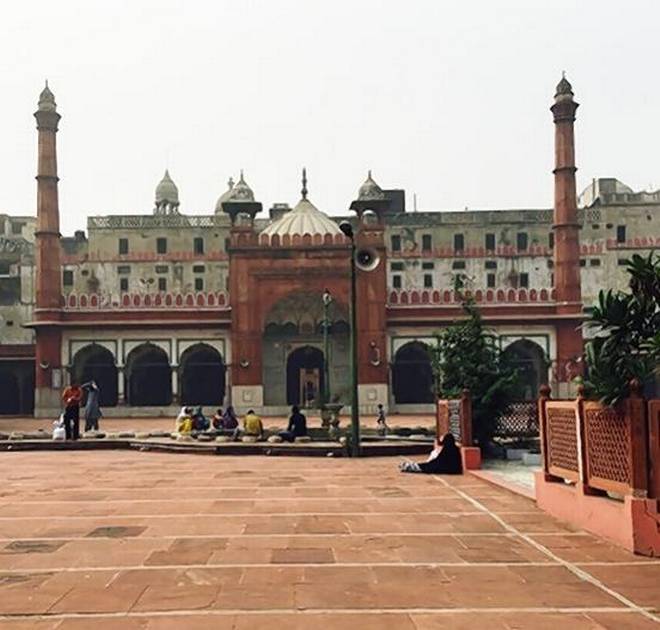
In the courtyard, the first thing that catches the eye is the lovely white dome with its longitudinal green stripes and green lotus finial. A masonry finial crowns it. Though the dome is made not of marble but red sandstone, it has been plastered so perfectly that it gives the impression of being made from marble when seen from afar. Red battlemented parapets run all along the roof in front of the dome.

The mosque, too, is built of red sandstone. Its unique feature is that it is the only medieval mosque with a single dome, flanked by two 80 ft tall minarets on both sides.

The mosque is built on a plinth of 3.5 ft. In the centre is a lofty archway with two wings which have three scalloped arches on each side. The central mihrab (in the direction of the qibla) is deep and high, and gives a beautiful appearance to the interior of the mosque. The pulpit next to the mihrab is the only piece of marble in the mosque. A mukabbir, or platform, was added in front of the main arch later, so that the imam’s words could be repeated from there and reach all those gathered in the courtyard.

There is a huge oblong tank for ablution in the courtyard that used to be fed by the famous Faiz Nahar (canal) in the Mughal era. A red sandstone enclosure next to it has graves of religious leaders who lived, prayed and taught in the mosque. There are galleries, with rooms on the ends on both sides.

From 1857 till today

The Indian sepoys, or ‘rebels’ as the British called them, who had risen up against the East India Company in 1857 had used this mosque. After the fall of Delhi in September that year, the mosque was confiscated by the British, and the courtyard, galleries and arcades on the three sides were put up for auction. As the dispossessed and displaced Muslims of Delhi post-1857 were in no position to buy it, Lala Chunnamal, a rich merchant of Delhi, bought it at the cost of ₹29,000.

In 1873, Anjuman Rashidin Sulah e Kul Islamia applied for return of the mosque. The British government agreed and tried to buy it back, but Lala Chunnamal refused. In 1877, the British offered an increased amount as well as four villages and bought it back from Lala Chunnamal’s son and restored it to the Muslims of the city. The masjid was brought back into use as a masjid, and remains so till today.

source: http://www.thehindu.com / The Hindu / Home> Opinion> Columns / by Rana Safvi / September 16th, 2018

The Paigah’s necropolis

Hyderabad, TELANGANA :

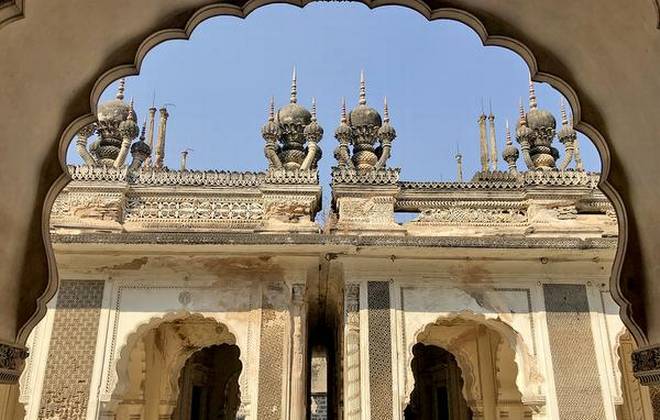
PaigahTombsMPOs20sept2018

A visit to what some call the Taj Mahal of the south

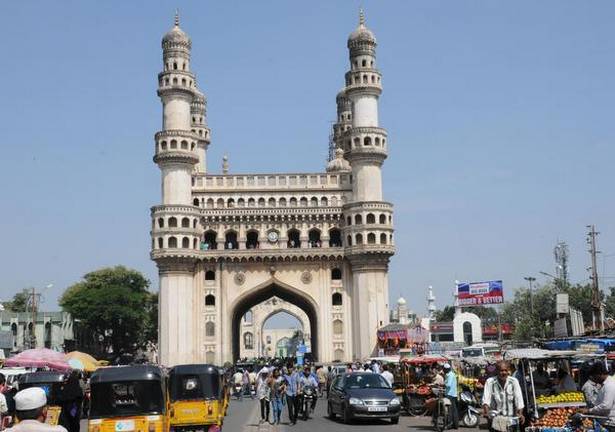
What comes to your mind when you think of Hyderabad? Sumptuous haleem and biryani, perhaps? Or the beautiful icon of the city, Charminar? Or maybe the unique khada dupatta and its accompanying necklaces, if you love clothes and handicrafts. All of these are understandable connections. Few would relate Hyderabad to an exquisite necropolis that is hidden away in the heart of the city, which I discovered recently thanks to a friend.

Dilapidated graves

At the entrance of the Pisal Banda suburb in Santosh Nagar, I stopped at a small café and asked for directions to this necropolis. No one seemed to have a clue. As I was following the GPS, I decided to trust it and ventured deeper into the crowded alley. Soon I saw a modern grave enclosure with the words ‘Paigah Tombs’ written on it there. I felt a little cheated, but then to my delight, just behind the grave enclosure was a white gateway which I entered.

On my right lay many dilapidated graves inside a rectangular enclosure. Some were as new as 2009, while some others were at least a century old and reminded me of verses on the dismaying finality of death and the futility of gathering wealth.

With my loud sighing at this state of disrepair, I managed to attract the attention of a caretaker of the Archaeological Survey of India (ASI), Rahmat, who then gave me a conducted tour.

In the courtyard were intricate work on the walls and small cupolas with Grecian horns on the roof, which were not only breathtaking but also striking in their originality. I had never seen work like this before. There were limestone trellises, ornamented pillars and roundels on the façade of the tombs. “You won’t find such work anywhere in the south or north,” Rahmat said proudly.

And how can it be that we speak of a tomb and someone hasn’t already compared it to the Taj Mahal? This is called the Taj of the south, Rahmat said, which I frankly think is gross injustice. There is no similarity in the architectural styles of the two tombs and this one is beautiful in its own right.

Origin of the name

The Maqbara Shams-ul-Umara, now better known as the Paigah Tombs, belongs to a family which was ranked only second to the Nizam of Hyderabad and to whom it was allied through matrimony. The family members were fierce loyalists of the Nizam and maintained an army to fight for the Nizam.

The word Paigah, which means pomp and rank in Persian, was a title given by the second Asaf Jahi Nizam of Hyderabad to the estate of Nawab Abul Fateh Taig Jung Bahadur in appreciation of the royal services rendered by him. The nawab was also conferred with the title of Shams-ul-Umra, which gives the tombs their name.

The first tomb, built in the 18th century and of Makrana marble, is that of Shams-ul-Umra, or the Sun of the Nobles, himself. It is delicate, with limestone and stuccowork on its enclosures. Twenty-seven members of the Paigah family, including the famous Nawab Sir Vicar-ul-Umra, are buried here.

The tombs all lie in a row under a foliated arched gallery with ornamented pillars and spectacular limestone jaalis on the façade of the buildings.

There are a number of open double storey enclosures that mostly hold several tombs inside. Each enclosure has limestone jaalis on the walls and exquisite carved teak doors as entrances. Each jaali is unique — some have motifs of fruits and flowers; others have drums, serpents, and vases.

The crypts are made of marble with intricately designed qalams (pen made of dried reed) or takhtis (slate) and headstones. A qalam or small raised mound on the cenotaph denotes that the grave belongs to a man, and a flat design of a slate denotes that a woman is buried here.

The architectural style inside the tombs and galleries is a mix of Rajasthani, Deccani and Persian, while the design on the roof is Moorish. The 30-acre compound also includes a mosque. Prayers are still held here. The sounds of the azaan and namaz waft over the graves. The Paigah family has handed over this architectural marvel to the ASI as part of our national heritage for safekeeping.

source: http://www.thehindu.com / The Hindu / Home> Opinion> Columns> Where Stones Speak / by Rana Safvi / January 21st, 2018

Accession of Hyderabad: When a battle by cables forced the Nizam’s hand

Hyderabad :

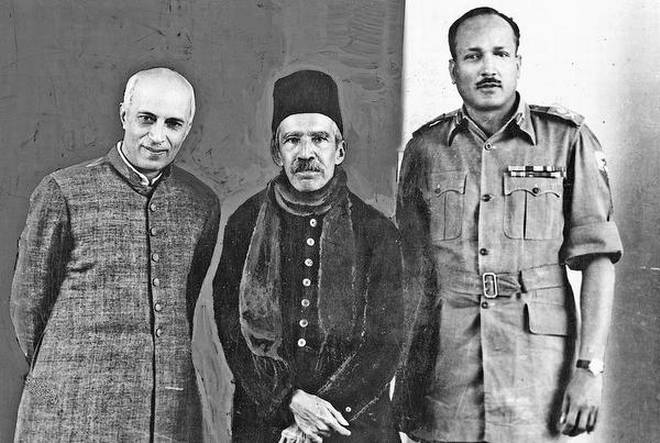
awaharlal Nehru with Nizam Mir Osman Ali Khan and Major General J. N. Chaudhuri after the police action | Photo Credit: THE HINDU

India’s diplomatic efforts succeeded in choking the supply of arms to Hyderabad, resulting in the September 17, 1948 surrender.

Seventy years ago, on September 17, 1948, at noon, Hyderabad  ceased to exist as a princely state after a war that lasted all of 109 hours. It would have gone on for longer had India not been able to stymie the former kingdom’s attempts to procure weapons for a protracted conflict.

Hyderabad became part of India more than a year after the latter’s existence as an independent nation. Ruled by the hereditary ruler Nizam Mir Osman Ali Khan, the 212,000 sq km kingdom fancied its chance as an independent country.

Standstill Agreement

Unlike the Instrument of Accession with India signed by other princely states at the time of Independence, the Nizam nominated a three-member team to negotiate a Standstill Agreement. The Agreement signed on November 29, 1947 by Governor General Lord Mountbatten and Nizam Osman Ali Khan, specified that it would be valid for one year and that foreign affairs, defence and communications would be in India’s control while the Nizam had control over domestic affairs.

Declassified diplomatic cables between India War Office Staff, the Commonwealth Relations Office (CRO) and the UK Foreign Office, archived in the British Library, reveal that immediately after Independence, India played a high-stakes diplomatic game in London to staunch the flow of arms to Hyderabad in November 1947. This shortage of weapons ultimately forced the Hyderabad army to surrender within four days with limited Indian casualties.

The Nizam scouted for arms across the board — trying to buy them from France, tapping Pakistan for supplies and finally turning to gun runners — the role of Australia-born aviator Sidney Cotton’s role in the transport of weapons from Karachi to Hyderabad is the stuff of legends.

But the role of Indian diplomats in stalling the flow at the source is less known, carried out by hidden channels.

The British government played along with India by persuading France against selling German weapons to Pakistan, which in turn wanted to funnel them to Hyderabad.

The first of the series in the diplomatic cables sent to Donaldson at the CRO by R.H.S. Allen of the Foreign Office begins innocuously enough. “French Embassy informed Foreign Office on 1st November that Pakistan Trade Commissioner in London recently represented to French Authorities in Paris that his government urgently desired 600,000 rifles, same number of revolvers and 300,000 light and heavy machine guns from former German weapons in France. It added that, if France could not supply, his govt had other offers from Sweden, Belgium and the Netherlands,” says the cable marked Important/Top Secret by CRO.

These low bore, small arms on Pakistan’s shopping list were meant for Hyderabad. But India moved the diplomatic game a notch higher, with the persuasive but often abrasive V.K. Krishna Menon, Indian High Commissioner in London, swinging into action.

“As regards Hyderabad, it was decided that we should tell Mr. Krishna Menon, who has been bothering us (FO?) on the subject, that it is not our intention, as things stand at present, to supply arms on any abnormal scale to Hyderabad, but that Hyderabad is entitled to limited quantities of arms for the legitimate purposes of their state forces and police…” (says a cable sent again to Donaldson of CRO by FO on November 14, 1947)

An exchange of nine diplomatic cables in November 1947 and multiple jottings by officials on them, show how India managed to literally starve Hyderabad of weapons.

Another cable, sent to Gordon Walker, Under-Secretary of State (the initials are illegible) dated November 11, 1947 reads: “This shows that we must have a full and frank discussion with Mr. Krishna Menon and Rahimtoolah (Habib Imran Rahimtoolah, Pakistan’s High Commissioner) on the subject. Mr Menon constantly assumes that the UK should stop Pakistan from getting arms anywhere. ..But I confess that 600,000 rifles, 300,000 machines seems to be a lot…”

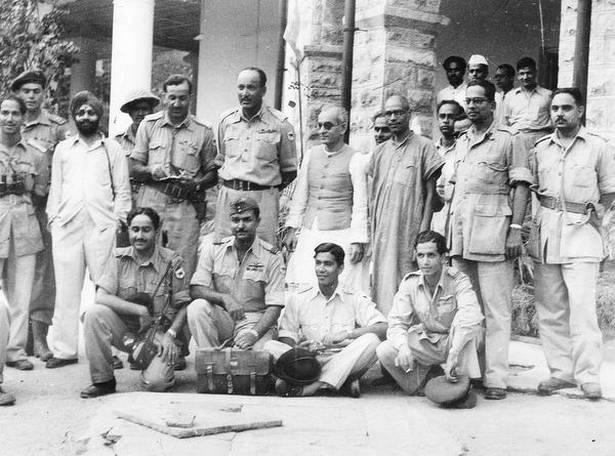
A group photograph of K. M. Munshi and Swami Ramand Tirth with Indian Union officers immediately after their arrival in Secunderabad on September 21, 1948. | Photo Credit: THE HINDU

Pakistan was not just shopping for arms — it was passing around the bowl. A rather large one at that. A cable from Washington to FO on November 26, 1947, reads: “Pakistan is now trying to get a loan of 2 billion dollars from the U.S.A. of which 200 million is for military supplies. This follows their attempt to get arms from France.” On the margin is the scribbled note: “USA have told us that they are cold-shouldering this.”

By the end of 1947 — the last cable in the series is dated December 4 — India had successfully closed the official arms pipeline for Hyderabad, hampering the Nizam’s efforts to stay independent for long.

Airborne supply

Then Sidney Cotton stepped in. He was the legendary flying ace who flew the last plane out of Berlin in 1939 and pioneered aerial reconnaissance by photographing German war efforts.

However, by the time, Cotton flew into the picture to help Hyderabad, it was too late. Hyderabad could not get any fresh weapons for 11 months from the time India and Pakistan came into existence. The armed forces of Hyderabad didn’t have arms nor ammunition for training.

Cotton flew to Hyderabad in the first quarter of 1948 to meet the Nizam and got a shopping list of weapons. He quoted an amount of £20 million in cash for running the weapons. Back in London, he hired a 24-member team and bought five used Avro Lancastrians for £5000 each. Cotton’s first run of arms began from Heathrow Airport on May 11, 1948, with the first Lancastrian that halted in Basle, Switzerland, to pick up an unspecified number of Oerlikon cannons. The first shipment of weapons landed on July 10, 1948 in Warangal.

In the course of the next two months, Hyderabad received about 25,000 mortars, 1,000 anti-tank mines, 1,200 sub-machine guns from Beretta, another 3,000 sub-machine guns, 10,000 rifles, one ack-ack and six low-calibre anti-tank guns and ammunition, delivered by Cotton.

Indian forces entered from the west in Sholapur and from the east near Suryapet. The war that began at 4 a.m. on September 13, 1948, lasted 109 hours and by September 17, 1948, Hyderabad surrendered. File | Photo Credit: P.V. SIVAKUMAR

The Nizam’s Commander-in-Chief at the time of Indian pincer movement on Hyderabad was Major General Syed Ahmed El-Edroos. He writes in his biography about the 20,000 .303 rifles and other small arms and ammunition brought in by Cotton and which had Rawalpindi Pakistan Arsenal markings on them.

But the Hyderabad army, which had a strength of 17,000 soldiers, 9,000 irregulars and 362 officers, didn’t get to train on the weapons or use them on the field. Indian forces entered from the west in Sholapur and from the east near Suryapet. The war that began at 4 a.m. on September 13, lasted 109 hours and by September 17, Hyderabad surrendered.

Cotton’s last flight out of Hyderabad’s Hakimpet airstrip was on September 16, at 3 a.m. — just hours before the surrender. This time the plane was loaded with cash of about £4 million in rupees.

Cotton was also supposed to have picked up the private militia leader Kasim Razvi. Razvi headed the Majlis-e-Ittehadul Muslimeen, and created the Razakars (volunteers) force to defend Hyderabad and the Nizam. This private militia created terror throughout the kingdom and triggered an exodus of Hindus from Hyderabad and other urban centres.

But Razvi’s escape ended in a theatrical fiasco due to a misunderstanding about the flight timing. As Cotton thundered away in his Lancastrian thinking Razvi had boarded, the militia leader desperately ran behind the plane, too late to flee. Razvi was placed under house arrest and tried for sedition. He was freed in 1957 and he emigrated to Pakistan where he died penniless in 1970.

The diplomatic heat was kept up even as Hyderabad surrendered. According to a report in The Hindu, R.K. Nehru, India’s diplomat in the U.S., in a radio broadcast on September 17 that was heard coast-to-coast said: “The British in similar circumstances would have marched in on the first outbreak of violence to restore order, put down the Razakars and bring the Nizam to his senses.” (This is significant because Pakistan and officials from Hyderabad were portraying India as an aggressor. And this Indian diplomat put things in perspective)

source: http://www.thehindu.com / The Hindu / Home> News> Cities> Hyderabad / by Serish Nanisetti / Hyderabad – September 15th, 2018

Yesteryear sportspersons wallow in nostalgia

Hyderabad, TELANGANA :

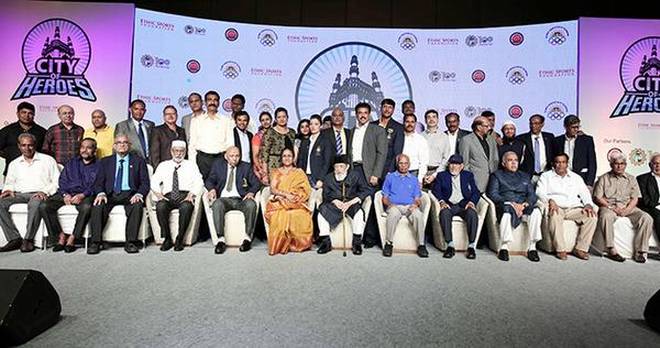
Sportspersons from the city being honoured at an event on Saturday.

Football legends and athletes felicitated by Ethic Sports Foundation

It was an evening when some of the football legends from the city went down memory lane while reflecting on the state of the sport.

On Saturday, Ethic Sports Foundation felicitated some of the finest sportspersons from the city, under the banner of ‘City of Heroes’, which also saw a sprinkling of outstanding women athletes like 2004 Athens Olympian J.J. Shobha, Arjuna Awardee and volleyballer Mulini Reddy and quite a few kabaddi players.

The objective of the event was to honour these stars of yesteryears and also remember the contribution of legendary football coach S.A. Rahim, who scripted India’s golden era in football.

Some of the speakers included sports historian and commentator Novy Kapadia, former sports scribe N. Ganesan, Olympians T. Balaram, M.S.S. Hameed, D.M.K. Afzal, S.S. Hakeem, son of late S.A. Rahim, renowned badminton coach and Dronacharya S.M. Arif, former SAI boxing coach Emani Chiranjeevi, hockey Olympians N. Mukesh Kumar and Edwards Alloysius, former India football captain Victor Amalraj, Mohd Habib, Shabbir Ali, rowing coach and Dronacharya Ismail Baig, Arjuna Awardee Mir Khasim Ali.

Jayesh Ranjan, Principal Secretary to Telangana Government, was the chief guest.

To inspire youth

Kailash Nath Yadav, MD of Ethic Sports Foundation, said they hosted the event to inspire youth by showcasing the diverse nature of sports in Hyderabad along with highlighting the efforts of the greats like S.A. Rahim.

 source: http://www.thehindu.com / The Hindu / Home> News> Cities> Hyderabad / by Special Correspondent / Hyderabad – September 15th, 2018

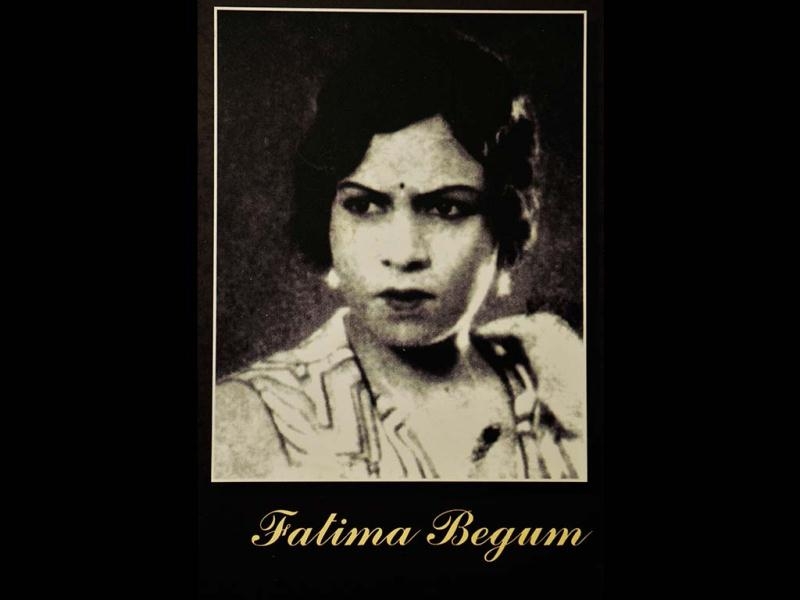
Fatma Begum: India’s First Female Director | #IndianWomenInHistory

Mumbai, MAHARASHTRA :

Fatma02MPOs15sept2018

Most people are aware of the contemporary female directors that exist in the country as they have gotten recognition, acclaim and fame but few know about Fatma Begum – actress, scriptwriter and director – who created a path for many others in the film industry to follow at a time where male domination in every sphere was prevalent. Being arguably the first in the field she set opened the way for other women to venture into the film industry.

Fatma Begum, the first female director of Indian cinema, was born to a Muslim family in India in 1892.

She was also invested in acting, screen-writing, and production. She was trained in Theatre and initially used to stage Urdu plays, following which she began working in films in 1922. She started her journey as a director with the silent film Veer Abhimanyu (1922). In a short span of time she had directed the following films: Bulbul-ae-Paristan (1926), Goddess of Love (1927), Heer Ranjha (1928), Chandrawali (1928), Shakuntala (1929), Milan Dinar (1929), Kanaktara (1929) and Goddess of Luck (1929).

Bulbul-ae-Paristan was the most famous film directed by her. It was set in ‘Paristan‘ (Fairyland) had a big budget and included special effects using technology.

Fatma worked with filmmakers like Ardeshir Irani and Nanubhai Desai. After this, she created her own production company – Fatma Films, later changed to Victoria Fatma Films – and was the first Indian woman to do so.

When Fatma joined the film industry, only men were part of it. Even female roles were played by men. Thus, Fatma’s determination to break into this male-dominated sphere marked her as a trailblazer.

As an actor, she starred in many films including Veer Abhimanyu (1922), Sita Sardaba (1924), Prithvi Vallabh (1924), Kala Naag (1924), Gul-ae Bakawali (1924) and Mumbai ni Mohani (1925). She also contributed to writing scripts and wrote the script for Bulbul-ae-Paristan (1926). A few of her films featured her daughters, Sultana and Shehzadi. She used trick photography for special effects in films and included fantasy in her films.

Rumour has it that Fatma Begum was married to Nawab Sidi Ibrahim Muhammad Yakut Khan III, the last ruler of the Sachin State. However, no evidence exists to reaffirm this as the Nawab did not acknowledge Fatma Begum or their daughters. No undisputed images of her exist today.

Having a 16-year-long film career, her Last film was Duniya Kya Kahegi after which she retired voluntarily. Her daughters, Zubeida, Sultana and Shehzadi carried on her groundbreaking legacy as they too were actors in silent films. Zubeida went on to become the first Indian actress to star in the first talking film, Alam Ara (1931).

Fatma Begum died in 1983, at the ripe old age of ninety-one, leaving behind a pioneering approach to the film industry.

Sources:

IMDb: Fatma Begum
Cinestaan: Fatma Begum, Jaddanbai: The earliest female filmmakers of Indian cinema
TCRC: The story of Fatma Begum, India’s first woman director
News18: 100 years of Indian cinema: The first women directors

source: http://www.feminisminindia.com / Feminism In India / Home> Culture> Cinema / by Maryam Mansoor / March 12th, 2017

Shahrukh Khan Felicitated As The ‘Game Changer’ At India-UK Business Summit In London

NEW DELHI / Mumbai, MAHARASHTRA :

London :

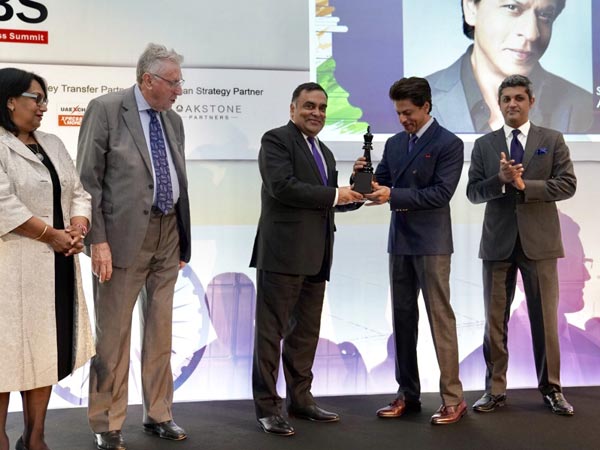
Here’s some good news for all Shahrukh Khan fans! The superstar was recently felicitated as a “Game Changer for his Unmatched Contribution to Globalizing Indian Cinema” at the business summit in London.

Time and again, King Khan has represented India at international events making the nation proud. The ET India – UK Strategic Conclave, a special business summit discussing the economic relations between India and UK was graced by the global icon in London.

Check out some of the pictures here-

SRK In Conversation

Representing the entertainment industry for a chat session on the ‘Growth of the business of entertainment across the globe and its impact on India”, Shah Rukh Khan said, “The growth for Indian films has been much smaller compared to the growth of television in India. The ratio of theatres to the audience area is still very small, we have very few theatres compared to the audience we can garner. In the Interiors of India, there are not many screens for people to go and I think there is a huge market here for entrepreneurs to get into making low-cost theatres.”

SRK Felicitated As The Game Changer

The actor, producer, activist was also felicitated with The Economic Times Game Changers of India” – Hall of Fame for “His Unmatched Contribution To Globalising Indian Cinema.”

ShahrukhKhanMPOs14sept2018

The Superstar Also Unveiled A Coffee Table Book

A coffee table book titled ‘Game Changers of India’ was also unveiled at the summit which features Shahrukh Khan along with other accomplished leaders.

SRK’s Award Acceptance Speech

Accepting this honour, the superstar said, “I take this opportunity to thank a lot of people, actors, actress, and audiences, for allowing me to continue unencumbered with any idea that I had, they gave me the ability to just go ahead and give it a shot, try and go wrong if I may, and more often than not they allowed me to go wrong”.

He further added, “Business is become about millions, targets and projections, though I fully respect the managerial capacity of business, but I like to think of it as the people who work with me allowed me the imaginarily capacity, they allowed me to imagine and they managed that imagination. So, when you become a game changer you cannot take it upon yourself, there are loads of people involved and the audience as well around the world accepts you doing the stuff you do and think it’s entertaining”.

On the work front, Shahrukh Khan will be next seen in Aanand L.Rai’s Zero co-starring Anushka Sharma and Katrina Kaif.

Salman Khan host Shahrukh Khan on Dus Ka Dum – Dumdaar Weekend

source: http://www.filmibeat.com / FilmiBeat / Home> Bollywood> News / by Madhuri V / September 12th, 2018

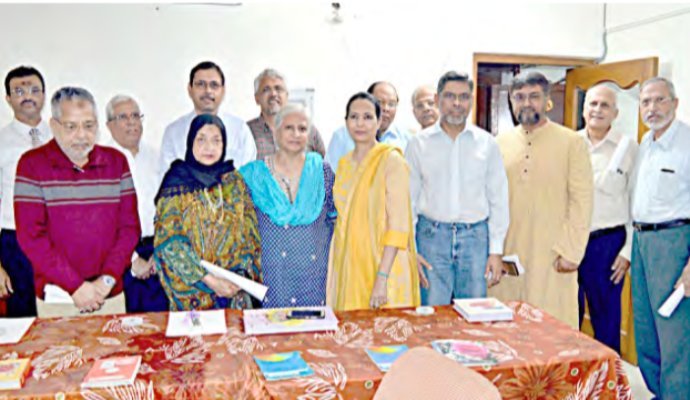
Faiz-e-Aam Trust extends help of Rs. 2.99 cr to poor students, families – Siasat’s role applauded

Hyderabad, TELANGANA :

FaizeAzamTrustMPOs13sept2018

Hyderabad:

According to the report furnished by Mr. Iftekhar Husain, Secretary of Faiz-e-Aam Trust, a sum of Rs. 2.99 crore was spent on various schemes of financial assistance to poor students and families.

In 2016-17, the trust spent Rs. 59.81 lakh for primary education, Rs. 21.21 lakh for technical education, Rs. 29.5 lakh for relief and Rs. 7.85 lakh for treatment of patients.

In this manner, from April 2017 to January 2018, Rs. 40.46 lakh, Rs. 21.21 lakh, Rs. 18.68 lakh and Rs. 3.58 lakh were spent on the above mentioned works.

So far, the trust has help 625 students of primary education, 731 of SSC, 1237 of Intermediate, Degree, PG, Engineering, MBA, MBBS and Paramedical Courses.

He further told that the trust was established in 1983 by his brother-in-law, Mr. Zulfekhar Husain. It enjoys full support from Mr. Zahed Ali Khan, Editor of Siasat Urdu Daily. The trust is now helping 1456 students ranging from primary school to Engineering and Medical courses. It is also extending financial help to 1256 patients. It rehabilitated 2280 persons.

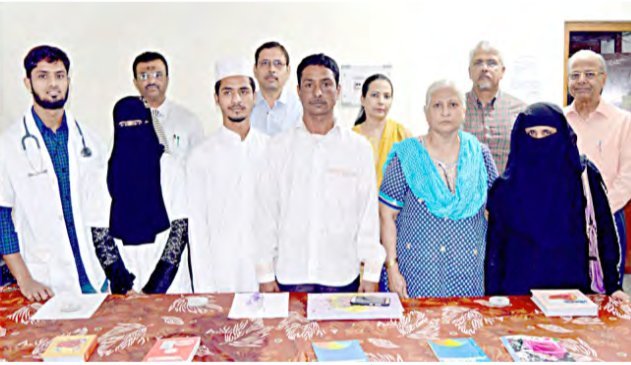
Faiz-e-Aam Trust helped Kareemunnisa whose husband, an autodriver had left her helpless. Her sons, Syed Hasan and Syed Yaseen and daughter, Saba Begum were adopted by the Trust for educating them. Syed Hasan completed MBBS whereas Saba Begum is doing the same course. Her eldest son, Syed Yaseen has completed Hifz-e-Quran.

Ms. Farukh Parveen Jamal, Chairperson of Trust, Aurangabad and Mr. Siraj Tahir, Trustee of Faiz-e-Aam Trust attended the meeting and listened to the details of the poor families.

FaizeAzamTrust02MPOs13sept2018

In collaboration with Siasat Millat Fund (Clothes bank) it helped 1552 families. Destitute Muslims of Muzaffar Nagar received help through Siasat Millat Fund. It also helped Salwa Fatima and Sania Siddiqui for their ambitions to become pilots. For Old Age Home of Siasat, the trust gave a donation of Rs. 5 lakh.

The trust also helped Nuzhat Fatima, a student of MBBS, Shaik Nazeer Ahmed and Ayesha, students of MD.

During the past three years, the trust has spent Rs. 1.6 lakh for primary education, Rs. 43.33 lakh for technical education, Rs. 71.15 lakh for rehabilitation, Rs. 23.35 lakh for treatment of patients.

It may be mentioned that Syed Hasan had secured a free seat in MBBS. Mr. Ali Asghar played a key role in getting financial help for this family.

Hajera Begum is a second year MBBS student. Her father is a tailor and her mother manufactures beedis. She has two sisters. The expenses of her MBBS fees were paid by her parents by mortgaging ornaments. Dr. Makhdoom Mohiuddin’s wife, Dr. Shaista Mohammedi Husaini received a message on WhatsApp for helping Sabera Begum which she forwarded to Secretary of Faiz-e-Aam Trust who arranged Rs. 1.27 lakh for getting back the ornaments which were mortgaged.

Mr. Rizwan Haider, Trustee welcomed the guests. Ms. Amena Saher conducted the meeting.

These details were given in a special meeting held at Faiz-e-Aam Trust which was attended by Ms. Farhat Yasmeen and Mr. Siraj Tahir, Trustees.

The other persons who attended the meeting were Dr. Samiullah Khan (Director Shadan College and MESCO member), Dr. Saukat Ali Mirza (Chairman Helping Hand), Mr. Ali Abedi (Social worker, London), Mr. Mudasir Alam (US), Mr. Jameel Haider (US), Fakhri Saheb (US), Anees Iftekhar Ali (US), Ruqayya Begum (US), Syed Haider (member, Faiz-e-Aam Trust), Aijaz Husain (US), Jafar Ahmed (US), Syed Jafar Husain (Sada-e-Husaini), Hamid Ali, Prof. Shaukat Hayat and Mr. Ahmed Basheeruddin Farooqui (former Dy.DEO).

source: http://www.siasat.com / The Siasat Daily / Home / by  Sameer, The Siasat News / January 18th, 2018

Investiture Ceremony

Mysuru, KARNATAKA :

AlKareemSchoolMPOs12sept2018

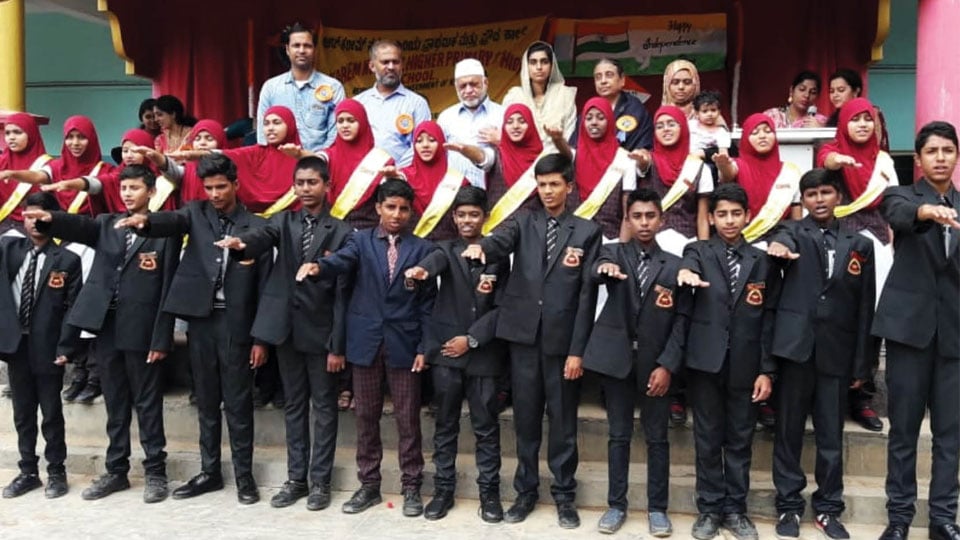
The Investiture Ceremony of Al-kareem School was held at the School premises recently.

All the School leaders were honoured and were made to take oath followed by recitation of the School pledge.

School Founder Alhaj Hussaini Baig, School Chairman advocate Kaleem Ulla Baig, School HM Yasmeen Sultana, teachers and students were present on the occasion.

The student leaders are M. Armaan, Syed Junaid, Mohammed Hassan, Junaid Ahmed, Junaid Khan, Mohammed Nabeel, Awaiz Shariff, Amith Kumar, Mohammed Zeeshan, Mohammed Anas, Mohammed Yousuf, Afsha Baig, Simran Banu, Sakeena Banu, Sadiya Taj, Umme Hani, Aiman, Suhana Kouser, Uzma Tehreem, Bibi Ayesha, Bibi Ameena and Farhana Firoze.

source: http://www.starofmysore.com / Star of Mysore / Home> News / September 09th, 2018