Category Archives: Leaders

School for expats in Saudi Arabia wins Muslim woman top award

Bhopal, MADHYA PRADESH / SAUDI ARABIA :

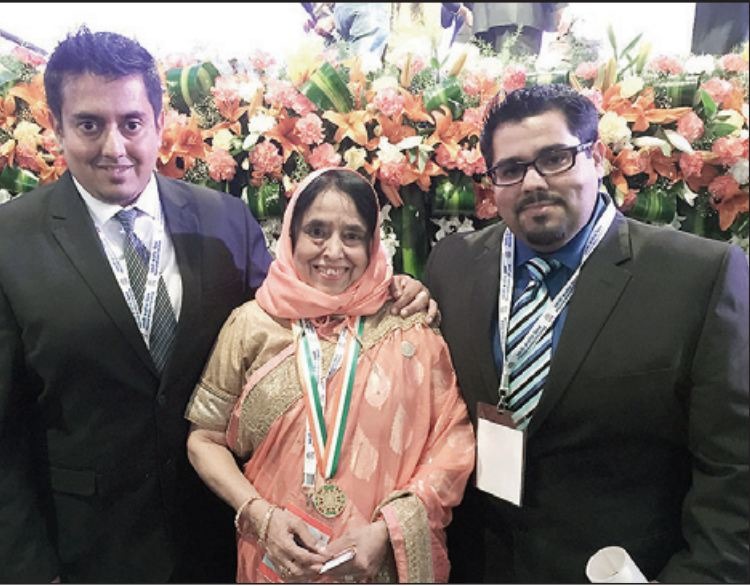
Zeenat Mussarat Jafri with her sons at the Pravasi Bharatiya Divas in Bengaluru on Monday

Bengaluru :

“A Muslim from Saudi Arabia being recognized and awarded by the BJP government. This is India.” This is how Syed Mohsin rejoiced when his mother was conferred the Pravasi Bharatiya Samman  017 in Bengaluru on Monday.

Zeenat Mussarat Jafri, 65, was given the award by President Pranab Mukherjee for providing quality education to children of Indian expatriates in Saudi Arabia. She started the first Indian school in Riyadh in 1982. “My mother is also the first woman of Indian origin from Saudi Arabia to get the Pravasi Samman,” Mohsin’s elder brother Syed Mudassir told TOI.

A native of Lucknow and a former teacher at Kendriya Vidyalaya, Zeenat went to Saudi Arabia in 1979 with her husband Musarrat Jafri, a former DRDO scientist who later joined the Saudi government as a chemical expert.

Zeenat said: “I was moved by the plight of Indians living in Riyadh. Most of them had left their children behind in India because of a lack of educational opportunities. We wanted to do something and that’s when we met Indian Prime Minister Indira Gandhi when she visited Riyadh in 1982. We requested her to speak to Saudi authorities and get permission to start a school for Indian children. We got the green signal.”

Zeenat established the International Indian School in Riyadh from the family’s savings. From the first batch of 20 students in 1982, the school now has 12,000 students and is affiliated to CBSE. “I get angry when people pull their children out of schools. I want them to complete graduation,” said Zeenat, who is running the school for the past four decades.

But what’s more Indian about Zeenat and her husband Jafri is that they haven’t given up their Indian citizenship.Since Saudi Arabia does not allow for dual citizenship, they have accepted permanent resident status. “I am an Indian and I will always be an Indian,” she said.

source: http://www.timesofindia.indiatimes.com / The Times of India / News> City News> Bangalore News / by Rakesh Prakash / TNN / January 10th, 2017

Justice Mansoor Ahmad Mir sworn in as Chief Justice

Rajapura Village (Pulwama District), JAMMU & KASHMIR :

In a simple but impressive ceremony, governor Urmila Singh on Wednesday administered the oath of office to Justice Mansoor Ahmad Mir as Chief Justice of Himachal Pradesh High Court.

In a simple but impressive ceremony, governor Urmila Singh on Wednesday administered the oath of office to Justice Mansoor Ahmad Mir as Chief Justice of Himachal Pradesh High Court.

The ceremony took place at the darbar hall of Raj Bhawan and chief secretary P Mitra read out the warrant of appointment.

Justice Mansoor Ahmad Mir was born on April 25, 1955 at Rajpora village of Pulwama district in Jammu and Kashmir. He obtained bachelors degree (BA) from Amar Singh College in 1976 and LLB <http://l.lb/> in 1978 from Kashmir University. He joined the Bar in the same year and practised in almost all branches of the law– civil, criminal, revenue at the district court, Pulwama till May 26, 1993.

He appeared in Higher Judicial Services Examination of Jammu and Kashmir in 1992 and secured 1st position in the state. He was appointed and posted as principal district and sessions Judge, Kupwara on May 27, 1993. He was posted as principal district and sessions judge, Anantnag for three years, where the Court witnessed a rapid disposal rate and the administrative set up was put back on the right track.

In 1998, he was transferred as presiding officer, Motor Accident Claims Tribunal & Transport Appellate Authority, Srinagar and remained posted for two years there. He was posted as principal district and sessions judge, Budgam till May 2002.

He has the distinction of being the first judicial officer to be posted as presiding officer, designated court of TADA/special judge, POTA for Kashmir division in May 2002, where he remained posted for two years till September, 2004. He was posted as principal district and sessions judge, Srinagar in September 2004, till his elevation as additional judge of the High Court of Jammu & Kashmir. He was appointed as Additional Judge of the High Court of Jammu & Kashmir on January 31, 2005 and later as Permanent Judge of the High Court of Jammu & Kashmir on July 7, 2007. He delivered landmark judgments in all branches of the law and decided 37000 cases from January 31, 2005 to November 24, 2013.

He was transferred to the High Court of Himachal Pradesh and took over as Acting Chief Justice on November 26, 2013 and remained as such upto June 18, 2014. During this short stint, he decided 4134 cases (3928 in Division Bench and 206 in Single Bench).

Chief minister Virbhadra Singh, former chief minister Prem Kumar Dhumal, besides others were present during the swearing-in ceremony.

source: http://www.hindustantimes.com / Hindustan Times / Home> Cities> Chandigarh / HT Correspondent , Hindustan Times / June 18th, 2014

DM & doctor: IAS officer to attend to poor patients in Uttarakhand’s Champawat

Kanpur, UTTAR PRADESH / Champawat, UTTARAKHAND :

Dr Iqbal Ahmad had in 2009 completed his MBBS from Kasturba Medical College, Mangalore in Karnataka. A year later, he was selected for Indian Administrative Service (IAS).

When Iqbal Ahmad, now the district magistrate of Champawat district in Uttarakhand, joined the civil services in 2010, he did not just have the aim of serving the nation, but wanted to go the extra mile.

The young officer had in 2009 completed his MBBS from Kasturba Medical College, Mangalore in Karnataka. A year later, he was selected for Indian Administrative Service (IAS).

However, the Kanpur-born Ahmad had to wait for another seven years to fulfil his “old wish” — to give free medical consultancy to the poor — as he had “no formal registration”.

“On September 15, the Uttarakhand medical council cleared the registration and now I can serve,” Dr Iqbal told HT.

On Friday, he walked into the district hospital and started his medical practice for the first time.

The district magistrate will serve for one hour every morning at district hospital. During tours, he will give consultancy to the locals

Dr MS Bora, chief medical officer of Champawat, welcomed the move, saying, “DM Dr Iqbal’s dececison would motivate our health department and the needy of the district would definitely benfit from his one-hour medical consultancy.”

Champawat has only 42 doctors out of the 95 sanctioned. It has one district hospital and 21 other hospitals besides about 1,500 OPDs.

Uttarakhand has almost 60% shortfall of doctors. Against a requirement of 2,700 doctors state has just 1,000 doctors.

Kumaon commission, Chadra Shekhar also welcomed the decision, saying “If an IAS like him wants to utlize his specialization for the common public, it will benefit the state.”

Shekhar recalled that earlier, a senior IAS officer from Uttarakhand, Dr Rakesh Kumar, also an MBBS holder, had served the people by providing free medical consultancy.

Another officer to have done the same is Sadanand Date, a senior superintendent of police (SSP) posted in Uttarakhand, who is also a qualified surgeon.

source: http://www.hindustantimes.com / Hindustan Times / Home> Cities> Dehradun / by Mohan Rajput, Hindustant Times. Champawat / September 23rd, 2017

Justice Ansari sworn in as Patna HC CJ

Tezpur, ASSAM / Patna, BIHAR :

Patna:

Justice Iqbal Ahmed Ansari was sworn in as the chief justice (CJ) of Patna high court by Bihar governor Ram Nath Kovind at a ceremony held at the Raj Bhawan on Friday.

Justice Ansari had been officiating as the Patna HC CJ ever since CJ L Narasimha Reddy retired on July 31 last year. He was also the acting CJ of Patna HC from December 13, 2014 to January 1, 2015 after the retirement of then CJ Rekha M Doshit. Justice Ansari joined the Patna HC on November 11, 2013.

Chief minister Nitish Kumar, deputy CM Tejashwi Prasad Yadav, former deputy CM Sushil Kumar Modi, assembly Speaker Vijay Kumar Choudhary, legislative council chairman Awadhesh Narain Singh, state advocate general Ram Balak Mahto, principal additional advocate general Lalit Kishore and senior advocates and government lawyers also attended the ceremony.

Born on October 29, 1954 at Tezpur in Assam, Ansari did BSc from Darrang College, Tezpur and graduation in law from Tezpur Law College, of which his father, a Bar-at-Law, was the founder principal.

Ansari joined the Assam judicial services in April 1991 and worked as a district and sessions judge before being elevated as a judge in the Guwahati HC in June 1999. He will retire on October 29 this year.

source: http://www.timesofindia.indiatimes.com / The Times of India / News Home> City> Patna / TNN / July 29th, 2016

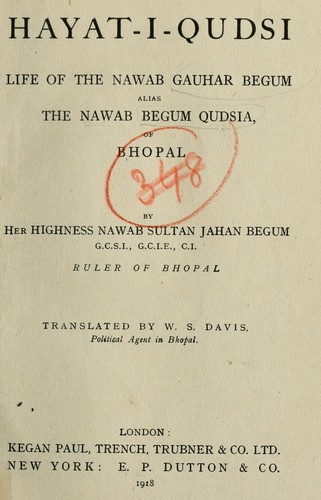
Hayat-i-Qudsi, life of the Nawab Gauhar Begum alias the Nawab Begum Qudsia of Bhopal

Bhopal, MADHYA PRADESH :

Hayat-i-Qudsi, life of the Nawab Gauhar Begum alias the Nawab Begum Qudsia of Bhopal
COVER of the book by Sultan Jahan Begam, Nawab of Bhopal, 1858-1930
Publication date : 1918
Publisher : London Paul, Trench, Trubne
Digitizing sponsor : Univesity of Toronto 
Contributor : Robarts – University of Toronto
Language : English 
source:  https://archive.org/details/hayatiqudsilifeo00sult

Tiger Pataudi’s daughter Saba recasts Auqaf-e-Shahi Board

Bhopal, MADHYA PRADESH :

Bhopal :

Saba Sultan, daughter of Tiger Pataudi, the only women custodian of royal endowment properties in Saudi Arabia, appointed a new secretary and member, here on Monday. With appointment of Azam Tirmizi as secretary and social worker Abdul Tahir as a member, process of completion of six-member executive board came to an end. The board advises Sultan on financial, administrative and legal issues.

Resignation of two members, including former secretary Mohammed Hasim necessitated freshappointments. Sultan heads Rs-1,200 crore Auqaf-e-Shahi, a royal endowment charitable trust of erstwhile Bhopal State with its properties spread across Bhopal and also in the holy city of Mecca and Medina.

Monday’s meeting comes in backdrop of a confrontation between trust advisor Gufran-e-Azam and current MP Waqf board chairman Shoukat Mohammed Khan.

In presence of Sultan, Azam claimed Auqaf-e-Shahi is independent as it only registers its Indian properties with Madhya Pradesh Waqf Board, which is a caretaker and paid chanda nigrani (token amount from rent/earnings).

Azam took on MP Waqf Board over jurisdiction claim on Auqaf-e-Shahi, a royal endowment trust of former Bhopal State.

Saba Sultan reiterated she was ‘mutawalli’ (custodian), a position accepted by Saudi Arabia and MP Waqf Board. She said her agenda was now to augment rent collection and, in return, provide better pay to all Auqaf-e-Shahi workers and imams of mosques under the trust.

source: http://www.timesofindia.indiatimes.com / The Times of India / News Home> Cities> Bhopal / TNN / November 21st, 2014

Ex-Cong leader Ghufran-e-Azam passes away

Bhopal, MADHYA PRADESH :

Former Congress leader Ghufran-e-Azam passed away on Thursday morning at a hospital in Mumbai after a prolonged illness. He was 70. Family sources informed that his Namaz-e-Janaza would be held at Iqbal maidan after the Friday prayers and he would be buried in the Bada Bagh graveyard.

Azam was suffering from a heart ailment. Last week, he was admitted to Mumbai’s Kokilaben Hospital where he died this morning at about 3 am due to multiple organ failure, family sources said. Chief Minister Shivraj Singh Chouhan and Madhya Pradesh Congress Committee (MPCC) president Arun Yadav have expressed grief over the death of Azam.

Azam was elected as a Lok Sabha member from Betul seat in 1980. Last year, he was expelled from the membership of All India Congress Committee (AICC) following his remarks against top leadership and indulging in anti-party activities.

Later, he had filed a defamation suit against Congress leaders for expelling him from the party, allegedly without following rules and procedures.

The State BJP Government had earlier appointed him as the chairman of Madhya Pradesh Waqf Board. He also remained president of the Bhopal Hockey Association and also remained in the national body of Indian Hockey Association.

Chief Minister Chouhan, mentioning the services of Azam, said that he always remained concerned for the issues pertaining to socio-economic status of the minority community. Chouhan has prayed to the Almighty to grant peace to the departed soul and strength to the bereaved family to bear this loss.

MPCC president Arun Yadav has expressed profound grief on the death of senior party leader and former parliamentarian Azam. He has prayed to the Almighty to grant peace to the departed soul and give strength to the bereaved family to bear this loss.

Yadav said that Azam was a tall leader of Muslim community and Congress, he had an impressive personality and he made his special identity in every field. In his death the Congress and the State has lost a tall leader and personality besides the party has suffered irreparable loss.

source: http://www.dailypioneer.com / The Pioneer / Home> State Editions> Bhopal / by Staff Reporter / Friday – April 03rd, 2015

Muslim advocates create forum to fight injustice

Mumbai, MAHARASHTRA :

Mumbai :

Over 300 Muslim advocates from across the state joined hands on Friday to create a forum to stridently fight cases of “injustice” done to the members of community. At a well-attended meet, with participants coming from different districts and talukas of the state, the Muslim advocates resolved to stay united and plead for the rights of minorities as guaranteed in the constitution.

The mood in the spacious Karimi Library’s hall of Anjuman-e-Islam near CST was electric with dozens of young advocates listening with rapt attention to senior legal luminaries, even as the speakers quoted the Quran, Urdu poetry and the minority rights copiously. Two former judges of Bombay high court, Justice Bilal Nazki and Justice Shafi Parkar, were also present. distributed gyaan.

Senior advocates like Saeed Akhtar pressed the need for unity among Muslim advocates. “We must stay united if we want to become an influential force,” said Akhtar, who didn’t find it odd to be associated with an exclusive forum of Muslim advocates. “Advocates can have multiple affiliations and I know many of my non-Muslim colleagues who are members of organizations set up by their respective castes and religions,” added Akhtar.

Many advocates sympathized with the accused of Malegaon 2006 blasts currently languishing in jail despite Swami Aseemanand’s confession that several blasts across India, including those at a Muslim cemetery in Malegaon in 2006, were carried out by activists of Hindutva organizations.

Giving the reason why an exclusive forum of Muslim advocates was needed, advocate Abdul Kalam from Thane said: “After the communal riots, it has been found that Hindu advocates are reluctant to fight cases of Muslim victims or accused. We don’t say that all non-Muslim advocates are biased, but during moments of crisis, many upright advocates have developed cold feet.”

Dr Zaheer Kazi, president of Anjuman-e-Islam, reminded the congregation of the need to be aware of several latches in the recent bills like Right to Education Bill and New Direct Tax Code Bill which will soon be turned into laws. “The New Direct Tax Code Bill has some sections which will harm the interest of minority-run institutions. The institutions which run on donations will be unnecessarily taxed heavily. Muslim advocates must be aware of these shortcomings in the bills and fight to get them removed before they become laws,” said Kazi. The conclave formed an ad hoc committee which will choose the office bearers of the Muslim advocates’ Forum.

source: http://www.timesofindia.indiatimes.com / The Times of India / News Home> City> Mumbai / by Mohammed Wajihuddin / TNN / April 22nd, 2011

‘Spirit of sacrifice is fuelled by patriotism’

Madikeri, KARNATAKA :

Madikeri:

The spirit of sacrificing one’s life for the cause of the nation is fuelled by a high degree of patriotism, Chief Executive Officer of Kodagu Zilla Panchayat Mirza Akbarulla said here on Wednesday.

He was addressing police personnel at the police parade grounds here on the occasion of Police Commemoration Day.

It was everybody’s bounden duty to remember the supreme sacrifice of police personnel in defence of people and property, Mr. Akbarulla said. Police personnel who had laid down their lives fighting for peace in the country should be remembered always, he said and quoted examples of those who sacrificed their lives during the November 26, 2008 terrorist attacks in Mumbai.

Deputy Commissioner K.H. Ashwatha Narayana Gowda, who led others in paying rich tribute to police personnel who had died in the line of duty, said society should remember with gratitude the sacrifice of the police personnel.

Superintendent of Police, Manjunath Annigeri, who welcomed earlier, read out the names of 833 police personnel who had laid down their lives in the line of duty across the nation in the last one year. Three rounds of volleys were fired in the air to pay respects to the police personnel.

Those who laid wreaths at the police memorial included president of the zilla panchayat V.M. Vijaya; Mr. Gowda; Additional Deputy Commissioner K.M. Chandre Gowda; Mr. Akbarulla; Mr. Annigeri; Air Marshal K.C. Cariappa (Retired); Col. Uthaiah (Retd.); Home Guards Commandant, Kodagu, Maj. O.S. Chingappa; Madikeri CMC Commissioner Srikanth Rao; Deputy Superintendent of Police, Madikeri, J.D. Prakash; Somwarpet DYSP M. Narayana; Virajpet DYSP Annappa Naik; Madikeri tahsildar Devaraju; president of Retired Police Officers Association M.A. Appaiah, and journalists K. Thimmappa and Anu Cariappa.

source: http://www.thehindu.com / The Hindu / Home> National> Karnataka / October 22nd, 2009

The abiding fame of Faizabad

Faizabad, UTTTAR  PRADESH :

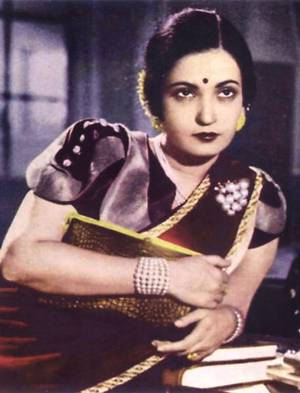
EPITOMISING SYNCRETIC CULTURE Begum Akhtar

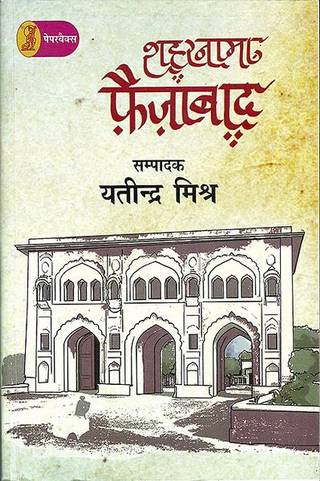
“Shaharnama Faizabad” offers detailed information about the social and cultural life of the historic town

Although Faizabad had acquired prominence during the reign of the early Nawabs of Awadh, it lost some of its lustre when, soon after taking over the reins of the kingdom in 1775, Nawab Asif-ud-Daula shifted the capital from Faizabad to Lucknow.

Yet, it continued to enjoy a lot of influence until the last Nawab Wajid Ali Shah was deposed and banished to Matia Burz near Calcutta (now Kolkata). It was so because of its famed Begums who wielded considerable political and financial clout. However, in the last century, a Begum of a different kind brought the town national recognition when, at the end of every gramophone recording, she would proudly announce: “Mera naam Akhtari Bai Faizabad”. For most of her performing career, Begum Akhtar was known as Akhtari Bai Faizabadi and she truly represented the refined composite culture of Faizabad that abuts the Hindu holy town of Ayodhya.

Last year, Vani Prakashan had brought out an excellent book on Lucknow that offered scholarly research along with useful touristic information. Titled ‘The Other Lucknow: An Ethnographic Portrait of a City of Undying Memories and Nostalgia’, it was edited by Nadeem Hasnain and was based on a research project sponsored and funded by the Ayodhya Shodh Sansthan (Ayodhya Research Institute), an autonomous organisation of the Uttar Pradesh government’s Department of Culture.
FaizabadBookMPOs13jan2018

It’s a matter of rejoicing that this year, Vani Prakashan has published a companion volume on Faizabad with the help of the same Ayodhya Shodh Sansthan. The fact that this volume is in Hindi and it offers very detailed information about the historic town, its social and cultural life, and places of religious and cultural significance would warm the cockles of everybody’s heart. Hindi writer Yatindra Mishra, who recently won the President’s Golden Lotus award for his biography of Lata Mangeshkar, has edited this 640-page tome titled “Shaharnama Faizabad” (A Chronicle of Faizabad). A scion of the erstwhile ruling family of Ayodhya, Mishra’s love for Faizabad is evident in the care and fastidiousness with which he has performed this daunting task with the help of many experts including historians Salim Kidwai, Madhu Trivedi and Yogesh Pravin, Islamic culture scholar Mirza Shahab Shah and Kosala Museum’s Deshraj Upadhyaya, to name only a few. Mishra has not only edited the book but has also contributed a large number of detailed comments on the Faizabad region’s history and culture, making use of painstakingly done research into archival material and other sources.

The book is divided into five sections and opens with the history of Faizabad and the way its architecture and culture took shape under the Nawabs. After Nawab Saadat Khan ‘Burhan-ul-Mulk’ was awarded the Suba of Awadh by the Mughal Emperor, he built a temporary fort called Qila Mubarak near Lakshman Ghat in Ayodhya. After some time, he built a cantonment at a distance of five kms from Qila Mubarak and it was known as Bangla. During the reign of Nawab Mansur Ali Khan ‘Safdarjung’, Bangla acquired the name of Faizabad. This section also tells us a very interesting fact about the royal emblem of the Nawabs as it depicted fish (considered to be auspicious) along with the bow and arrow of Ram, the presiding deity of the adjoining Ayodhya. Detailed information about the arts, architecture, music, jewellery and ornaments, and prominent Nawabs and Begums and their Hindu and Muslim courtiers has been provided in this opening section.

The second section is one of the most interesting and valuable parts of this book as it deals with the events and heroes of the great revolt of 1857, often described as the First War of Indian independence.

Ripple effect

As is well known, the deposition of Nawab Wajid Ali Shah had also played an important role in spreading anger and anguish among the sepoys who hailed from the Awadh region in considerably large numbers. Mangal Pandey belonged to village Dugvan-Rahimpur of Tehsil Sadar in Faizabad district. We also come to know about Maulavi Ahmad Ullah Shah alias Danka Shah who, as early as in February 1857, had started condemning foreign rule in his public speeches. He was imprisoned and sentenced to death. Faizabad remained independent till January 6, 1858 and was defeated by the Nepalese army that attacked its forces and subdued them.

While the third section gives detailed descriptions of important religious places belonging to all the religions present in the region, the fourth section offers invaluable historical information about the writers, poets, courtesans, high-brow as well as folk musicians, folk art, village fairs as well as local festivals, bazaars and traditional haats, instruments and their makers, journalists, newspapers, magazines and printing presses of the region. It’s a fairly long list and offers a glimpse into the cultural richness of Faizabad.

The fifth and final section deals with prominent social workers, sportspersons, educational institutions and public libraries, thus completing a full circle. It’s not possible to discuss such a voluminous book in any detail here. Suffice it to say that those who are interested in knowing the history and culture of Awadh cannot afford to ignore this work.

source: http://www.thehindu.com / The Hindu / Home> Books / by Kuldeep Kumar / June 16th, 2017