The excellence awards ceremony and annual meet – 2025 of the Muslim Educational Institutions Federation (MEIF) of Dakshina Kannada and Udupi districts, held at Barakah International School, Adyar Mangaluru, on May 22.
Speaking on the occasion, Dr Mohan Alva, chairman of Alva’s Education Foundation, Moodbidri, said, “Education institutions should not be limited to one community. Education institutions should not be confined to the community that founded them. Instead, schools should reflect a “mini-India” that transcends barriers of religion, caste, and ethnicity. Everyone should have access to education. An atmosphere must be created where all are included. Just as India is home to various castes, religions, languages, and ethnicities, schools too should represent this diversity and become a mini-India. Schools should be a reflection of society, imparting education that builds communities rather than dividing them”
Praising the achievements of MEIF, Dr Mohan Alva also promised assistance in providing scouts and guides training to students in MEIF schools.
MEIF honorary president Umar T K delivered a keynote address, and MEIF president Moosabbi P Bary presided over the event.
A booklet detailing the federation’s annual programmes for 2024-25 was unveiled by Y Abdulla Javed, director of Yenepoya Group.
President of the Baraka Group of Institutions Ashraf Bajpe and Unni Haji, , along with Bahrain Sinan Zakariya, were honored during the ceremony.
National trainer Rajendra Bhat also shared his thoughts.
The event also included a felicitation ceremony honoring students who achieved outstanding results in PUC and SSLC examinations.
Outstanding SSLC performers from MEIF schools who were felicitated include Sumaiyya Nuha (619), Dakshin S Salian (618), Nidha Khadeeja Noor (617).
PUC toppers honored include Prithvi Acharya (585), Ayesha (584), Ayesha Shamran (584), Farahath M A (591), Maheen Fathima (590), Ayesha Falak (563), Aleemath Sayida (556), and Nafia T N (556).
From MEIF SSLC Kodagu – Fizah V (618), MEIF SSLC Chikkamagaluru – Taheen Fathima (597), and Karnataka SSLC state topper Shagufta Anjum from Sirsi (625) were also felicitated with mementos and cash awards.
Vice president of the Presidency Group of Institutions Suhail Ahmed and president of the Manipal HPR Group of Institutions Hariprasad Rai, were present as chief guests and extended their best wishes.
MEIF East Zone vice president Mustafa Sullia welcomed the gathering. General secretary Riyaz Ahmed K B and secretary Mohammad Sharik announced the names of the award-winning students. Farvez Ali delivered the vote of thanks, and lecturer Abdul Razak Anantadi compered the event.
MEIF Kodagu chapter president K A Shadli, Chikkamagaluru chapter president Zameer Ahmed, vice president Shabih Ahmed Qazi, and treasurer Nisar Fakir Mohammad were also present on the occasion.
source: http://www.daijiworld.com / Daijiworld / Home> Karnataka / by DaijiWorld Media Network – Udupi (TP) / May 23rd, 2025
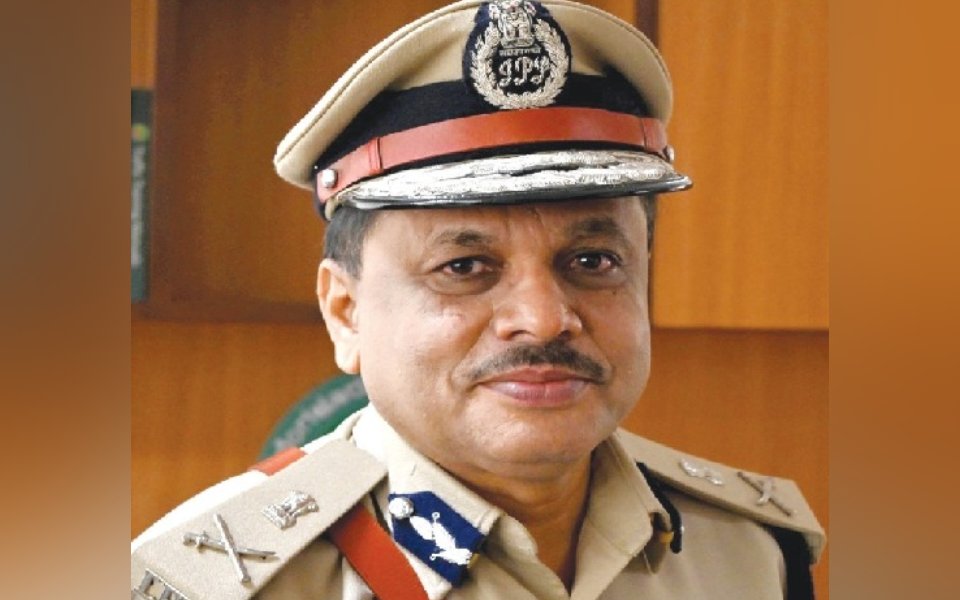
1993 batch IPS Officer M.A. Saleem is new DGP of Karnataka | PC: @Gulbarga Ki Awaaz/FB
Bengaluru :
The Karnataka government on Wednesday issued orders appointing M.A. Saleem, a senior IPS officer from the 1993 batch, as the new Director General and Inspector General of Police (DG-IGP) of Karnataka. He replaces Dr. Alok Mohan, who retired from service today.
Until now, Saleem was serving as the Director General of the Criminal Investigation Department (CID).
There had been speculation over who would succeed Dr. Alok Mohan, with two key contenders in the race — M.A. Saleem and Prashant Kumar Thakur, DGP of Fire and Emergency Services. Thakur, a 1992-batch officer, is senior to Saleem by one year.
Saleem will have a one-year tenure, retiring in June 2026.
A seasoned officer, Saleem is known for his strong administrative skills and has previously served in various key positions across the state, including as Bengaluru City’s Special Police Commissioner.
source: http://www.english.varthabharati.in / Vartha Bharati / Home> Karnataka / by Vartha Bharati / May 21st, 2025
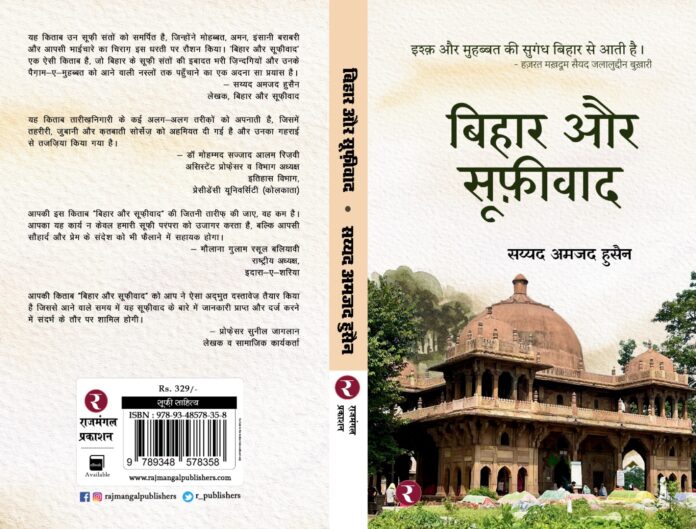
In a time marked by growing communal tensions and polarizing narratives, young author and scholar Syed Amjad Hussain’s book ‘Bihar Aur Sufivad’ arrives not only as a work of history but also as a much-needed spiritual intervention. Spanning more than 300 pages, the book immerses the reader in Bihar’s rich and pluralistic Sufi heritage, offering a profound counter-narrative rooted in peace, love and human dignity.
Bihar is generally remembered for its political agitations and socio-economic challenges, but beneath the surface lies an older, deeper history – a rich tapestry of sufi saints who arrived as early as the 12th century. Through systematic research and a respectful tone, Hussain revives this forgotten spiritual geography.
Beginning with the arrival of Hazrat Peer Shah Mushk Nafah, Hazrat Momin Arif Ansari Yemeni and Hazrat Imam Muhammad Taj Faqih Zubairi Hashmi, followed by the transformative presence of Hazrat Qazi Syed Shahabuddin Suhrawardi Peer Jagjot Kashgari in Fatuha (Patna), the book presents a chronologically overlapping map of Sufi presence in Bihar. These are not mere biographies; they are glimpses into a world where divine love was not only preached but lived, practiced and internalised.
Thematic Depth, Scholarly Rigor
Divided into well-organised sections, ‘Bihar Aur Sufivad’ details the lives of 20 influential sufi saints. Each chapter offers insights into their teachings (taalim), spiritual practices, miracles (karamaat) and most importantly, their social engagements. The saints in Hussain’s work are not passive mystics withdrawn from the world; they are reformers, healers, poets and bridges between communities.
The book also discusses the various sufi orders (silsilas) present in Bihar – Firdausi, Shattari, Husami, Warsi, Chishti, Qadri, Suhrawardi and Naqshbandi – illustrating how each infused its own spiritual philosophy into the soil of Bihar. Of special mention is Hussain’s inclusion of female figures such as Hazrat Bibi Kamal of Kako Sharif, a rare and valuable recognition of women’s contributions to Bihar’s mystic culture.
Language, Tone and Accessibility
Hussain’s writing flows with a gentle rhythm that recalls classical Urdu and Hindi scholarship yet remains accessible to contemporary readers. The prose is rich and poetic without sacrificing academic precision. His background as a researcher is evident in the meticulous citation of works in Persian, Urdu, Arabic, Hindi and English, many of which are obscure or little known to the general public.
This is not a dry academic treatise; it is a living, breathing narrative of spiritual heritage, crafted to engage scholars, young seekers and general readers alike.
Relevance in Today’s India
What makes the book particularly significant is its timing. At a moment when histories are being erased or rewritten to suit political agendas, this book affirms that India’s collective spiritual heritage must not be forgotten. The sufi saints of Bihar transcended caste, creed and religion. Their khanqahs were open to people of all faiths. They preached service, not supremacy.
In this age of ideological divisions, Hussain’s work reminds the bridges that once united communities. It is a call to return – not to nostalgia, but to the ethics of inclusiveness, humility and compassion that the sufis embodied.
‘Bihar Aur Sufivad’ is more than a book; it is a spiritual journey and a historical reclamation. In reviving the voices of Bihar’s forgotten sufi saints, Hussain does more than pay tribute; he builds a bridge for contemporary readers to reconnect with a heritage that offers solutions to some of our most pressing problems.
This book deserves a place not only on library shelves but also in classrooms, living rooms and community discussions. It is an invitation to think, to remember and to heal.
Hussain has not merely authored a book – he has attempted to revive a spiritual legacy and present it afresh to the modern world. This work warrants a place of honour in the study of Indian Islam, Sufism and regional spiritual histories. It is hoped that it will inspire further research, dialogue and, most importantly, personal transformation.
It is strongly recommended for scholars, spiritual seekers and anyone interested in the rich diversity of India’s syncretic traditions.
(Dr. Shujaat Ali Quadri is an Indian journalist, deputy director of the Indo-Islamic Heritage Center and the chairman of the Muslim Students Organisation of India)
source: http://www.twocircles.net / TwoCircles.net / Home> Arts & Culture> Book Review / by Dr Shujaat Ali Quadri / May 07th, 2025
Sathamangalam (Lalgudi Block, Tiruchirapalli ), TAMIL NADU :
Achieving his childhood dream of becoming a police officer became a reality as to the quote of American journalist and author William F Longgood – “Dreams and Dedication are a powerful combination.”
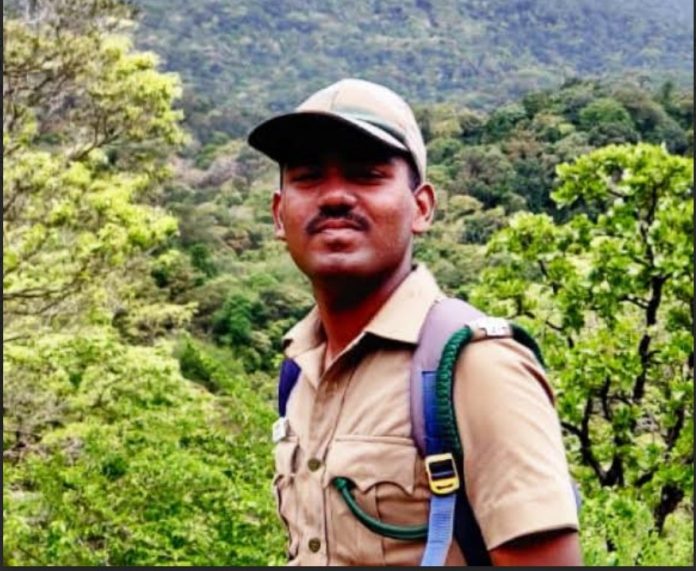
Meet 28-year-old S Mohamed Siddiq, serving as a Forest Guard in the Tamil Nadu Forest and Wildlife Crime Control Bureau (WCCB) based in Rockfort city, who cracked the TNPSC Group I services exam to get his dream job of DSP.
Thanks to Coimbatore based Nature Conservation Society (NCS) president N I Jalaluddin for sharing the info about the promising youngster from Sathamangalam village in Lalgudi, who made the Tamil Nadu Forest Department proud after he romped home to victory in getting a gazetted post in the Tamil Nadu Police Department. Truly speaking, he is all set to don the role of safeguarding the public while enforcing laws similar to his present job of preventing illegal wildlife trade and coordinating the law enforcement agencies besides significantly contributing to the preservation of biodiversity.
Sharing his happiness with this scribe, Siddiq said that he had his school education at Government Higher Secondary School in his native Lalgudi and added that he completed his BE Mechanical from Anna University Trichy campus (2017 batch). Without giving any second thought, he joined the Tamil Nadu Forest Department as Forest Guard and is serving for the past seven years. However, his mind revolved around getting into the police department.
Making his maiden attempt for Group I services through TNPSC in 2019, Siddiq said that he miserably failed and added that he made his second try only to get disappointed. Sadly, he missed in his third attempt too. Putting up a brave face, he tried his fourth attempt with confidence. Hard work with dedication fetched him fruitful results in clearing the TNPSC Group I services exam with Rank 91.
Asked about the interview, he said that the duration was for forty minutes with four members of the board asking him why he chose when he was already in a department service. To his preferred choice of DSP post, he was asked how he would handle a riot like situation for which he gave an impressive answer. Besides, questions related to new laws, Russia-Ukraine war, Saivam and Vainavam featured in the interview.
His parents – Shahul Hameed who is actively involved in farming in Sathamangalam village and mom Tajunnisa, a home-maker – while not to speak of his spouse Kowsar Firdous, a BSc computer science grad were on cloud nine after coming to know about his success in TNPSC Group I services. Likewise, his sister Shamim and Shabir expressed happiness for emerging victorious in getting his dream job of DSP.
While filing this story, this scribe got an info about a Forest Guard Himanshu Pant in Uttarakhand cracking the Uttarakhand Subordinate Service Selection Commission (UKSSSC) as English Language Teacher in the Government school. On the contrary, Pramod from Mandya District, who aspired to become a lecturer after completing his MA Political Science from University of Mysore in Karnataka landed in the post of Forest Guard as he failed to get his dream job. Great are those who, despite being armed with a degree, choose to get into the forest department as Forest Guards. And they kept trying even while serving with confidence to excel in their line of interest.
source: http://www.radiancenews.com / Radiance News / Home> Features> Focus / by M Rafi Ahmed / Radiance News Bureau / May 11th, 2025
Prof. Zakia Siddiqi Honoured with Dr. B R Ambedkar International Award
Aligarh:
Prof. Zakia Ather Siddiqi, a celebrated educationist and former Principal of Women’s College, Aligarh Muslim University (AMU), has been conferred with the Dr. B R Ambedkar International Award (Certificate of Excellence) by the Tirupati Balaji Educational Foundation, honouring her lifelong service to education and social upliftment.
Renowned for her unwavering commitment to women’s empowerment through education, Prof. Siddiqi transformed academic standards and inspired generations of female students. As the OSD of Aligarh Public School, she introduced dynamic pedagogical reforms and steered the institution to national recognition.
Under her leadership, the Aligarh Public School secured the prestigious Digital India Competition Award four times – in 2017, 2018, 2023, and 2024 – reflecting her vision of merging education with technological advancement.
Even after retirement, her dedication remains undiminished. This award not only celebrates her legacy but also serves as a beacon of inspiration for educators and students alike.
source: http://www.radiancenews.com / Radiance News / Home> Pride of the Nation> Awards> Latest News / by Radiance News Bureau / May 09th, 2025
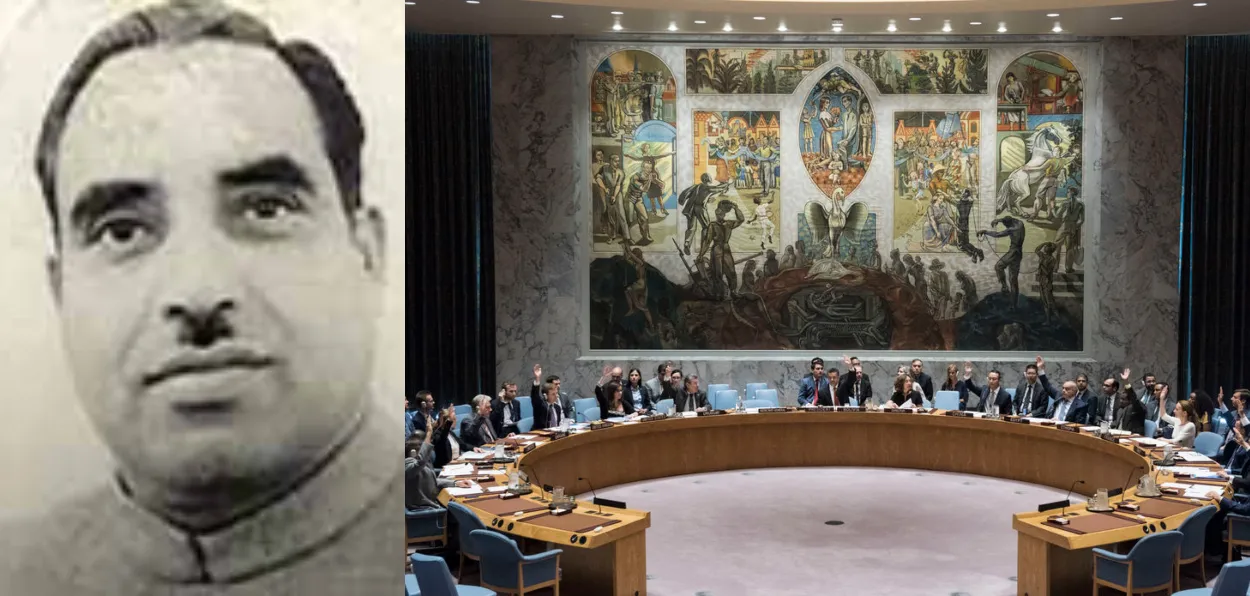
Syed Mir Qasim, former Chief minister of J&K and UN Security Council in session (file)
Since its formation in 1947, Pakistan has tried to portray India as a Hindu country where Muslims are second-class citizens. Each time Pakistan launched an armed attack against India, it was to ‘help’ the Indian Muslims. Not given to learning lessons, Pakistan looked the other way when the Indian Muslims countered its narrative.
In the 1965 war, Pakistan attacked India “to help Muslims in general and Kashmiri Muslims in particular,’ and the propaganda was counter by two Indian Muslims.
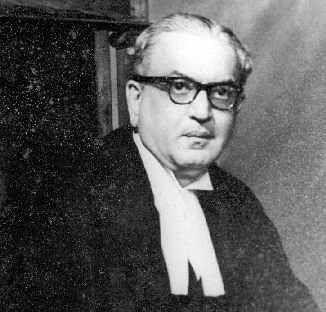
Syed Mir Qasim, a Congress leader who later became the chief minister of J&K, represented India at the UN General Assembly during the 1965 war. He declared, “Perhaps I should mention that I belong to the majority community of Muslims in my home State of Kashmir; in our country, unlike Pakistan, we do not believe that religious distinctions should impinge upon political life. I have played a small part in the political life of our State from the days of princely rule. It is for these reasons that it is my duty, on behalf of our delegation, to set the record straight on the various statements made by the Foreign Minister of Pakistan.”
Indian Army Officers in front of a captured Pakistani tank in the 1965 war
Qasim told the Assembly that a Plebiscite in Kashmir was out of the question. He categorically told the world that the Pakistani claim that Kashmir was acceded to India because of a pact signed by the ruler was wrong. India accepted the accession only after the National Conference, the most popular political organisation in Kashmir, asked the Indian leadership to do so. The Indian leadership was convinced that the ordinary Kashmiris wanted to be part of India. He further told the Assembly that much before the Indian Army reached Kashmir in 1947, it was the local Kashmiri Muslim militia that had resisted the invasion.
On the issue of the Plebiscite, Qasim said, “Referring to my statement that there was no binding commitment on the part of India to hold a plebiscite in Jammu and Kashmir, the representative of Pakistan said: “What an extraordinary statement to come and make to this Assembly?” Was this an extraordinary statement? Let us examine the facts. I can do no better than to quote our late Prime Minister, Jawaharlal Nehru, whom the representative of Pakistan does not wish to forget. When proposals for a plebiscite were submitted to the Government of India by the United Nations Commission, the late Prime Minister made it clear that he was accepting the proposal only on certain conditions.”
He added, “Need I remind the representatives that apart from ratifying the accession to India, apart from supporting the political party which stands for irrevocable association and complete integration with India, apart from reaffirming their wishes at periodic elections, the people of Jammu and Kashmir have twice within eighteen years given their answer in blood to Pakistan. Thus, there is no justification for any further ascertainment of the wishes of the people. The Government of India has made its position clear on this point, and I hereby reiterate it. There will be no plebiscite.”
A Muslim representing India at the General Assembly to call out the lies of Pakistan frustrated the Pakistani representative at the Assembly. He said, “Finally, the representative of India and I find this is a peculiar weakness in Muslims who come to represent or plead India’s case at the bar of international opinion – finds himself, and I sympathize with him, in the position of having to be more Catholic than the Pope.”
Qasim gave a befitting reply when he said, “We Muslims of India are quite used to these cheap jibes. We understand the reason, or rather the frustration behind such insulting remarks, not only from the representatives of Pakistan who speak at the United Nations, but also, more so, from the founders and leaders of Pakistan. The frustrations are there because the founders and leaders of Pakistan failed in their efforts to persuade the great nationalist Muslim leaders of India to accept their favourite theory that religion determines nationality.”
Another Muslim, Mohammedali Currim Chagla, represented India at the Security Council to counter Pakistan’s claim. He told the Security Council (SC), “Pakistan has pretended to show a great solicitude for the Muslims living in India, and the Foreign Minister of Pakistan has stated that hundreds of thousands of Indian Muslims have been pushed out into East Pakistan. When Pakistan talks of the Muslim minority, it gives one the impression that we are dealing with a few thousand or a few hundred of thousands of people in a large country tucked away in some far corner and surrounded by a large mass of Hindu population.
“Now let me inform the Council that Muslims are not a minority in the ordinary sense of the term. They constitute 50 million of the population of India. India is the third largest Muslim State in the world, the first being Indonesia and the second being Pakistan. They are sons of the soil, they are Indian by race, and they enjoy all the rights of citizenship. Every office is open to them, and in fact, many of them hold the highest offices in the land.
“Our civilization is a synthesis of many diverse cultures, and the Muslim contribution is one of the most significant. Ours is a secular State and an egalitarian society where everyone enjoys equal rights and equal opportunities, and equal protection of the law. We have no official religion. Hindus, Muslims, Christians, Buddhists, Sikhs, Parsis, and others have full freedom of worship, and fundamental rights under the Constitution are guaranteed to every citizen. We have no first-class and second-class citizenship.”
Chagla also told the world that India has every right to use its armed forces against Pakistan’s aggression and should redraw the LoC to control infiltration from the other side of the border.
In 2025, when India is again under attack from Pakistan and their propaganda machinery is spreading lies that Indian Muslims are not loyal to their country, they should turn the pages of history to know that these were the Indian Muslims who countered their propaganda during the 1965 war.
source: http://www.awazthevoice.in / Awaz, The Voice / Home> Stories / by Saquib Salim / May 08th, 2025
Dr Wasim ur Rehman UPSC Indian Civil Services, AIR 281 ranking
Dr. Wasim ur Rehman cleared the UPSC Civil Services Examination 2024, without coaching and preparing for this difficult examination for Indian Civil Services while serving as a doctor in a hospital. He scored 281st All-India Rank.
“I used to study for 6 to 7 hours daily. It was not easy. I studied after performing 7-8 hours of duty in the hospital. But I think this experience improved my time management. I mostly studied from online content,” Dr Wasim told Awaz-the Voice.
Dr. Wasim was successful in his fourth attempt. He said in his previous appearances, though he sat in the examination, that he was clear that his performance was below the mark, and he hadn’t done enough to make it. “However, I didn’t give up. Each failure made me stronger. My family has always been my strength. Whenever I would get tired, the encouragement of my parents and siblings would push me forward.”
Dr. Waseem ur Rehman is a resident of Katra block of Muzaffarpur district of Bihar. He was born into an educated and middle-class family. His father Haji Saud Azam Rahmani retired as Block Agriculture Officer in the government and mother Jahan Ara Khatoon, retired as headmistress of a government school.
The family environment was conducive to education and excellence. Waseem was inspired to work hard and was goal-oriented from the beginning.
Wasim did her early schooling at Muzaffarpur. Later, he joined a school affiliated with the Aligarh Muslim University (AMU) till the 12th class.
He studied MBBS from Vardhman Mahavir Medical College (VMMC) and Safdarjung Hospital, New Delhi.
Dr. Wasim’s success lay in the fact that he prepared for UPSC without joining a traditional coaching institute. Although he chose Anthropology as an optional subject and joined an online coaching course, he largely remained focused on self-study and digital resources.
Dr. Wasim achieved this success in his fourth attempt.
According to Dr. Wasim, during the UPSC interview, he was asked questions about the famous litchi of his home district, Muzaffarpur. He impressed the interview board with his medical and administrative knowledge and understanding of the local socio-economic context.
Wasim sees his success as a path to serving society and the nation.
For the youth of India, Dr Wasim has a message, “Work hard and honestly; take advice from your elders; move forward in the right direction with dedication and patience. Every goal is difficult, but not impossible. If you keep trying, one day success will happen”.
Dr Wasim has two brothers: a businessman in Muzaffarpur, and the other is studying in a law college in Patna. One of his sisters is a government school teacher, and the other a homemaker.
source: http://www.awazthevoice.in / Awaz, The Voice / Home> Stories / by Mohammad Akram, New Delhi / May 16th, 2025
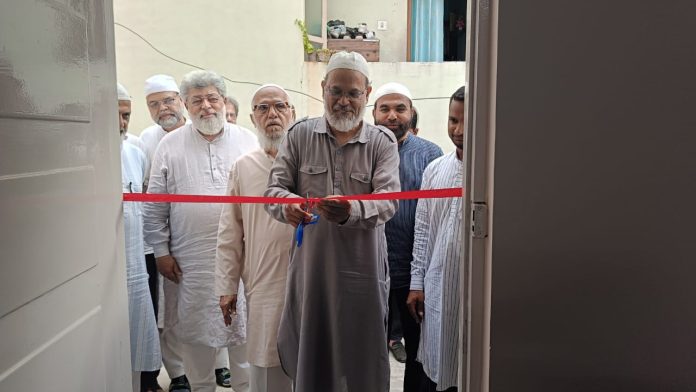
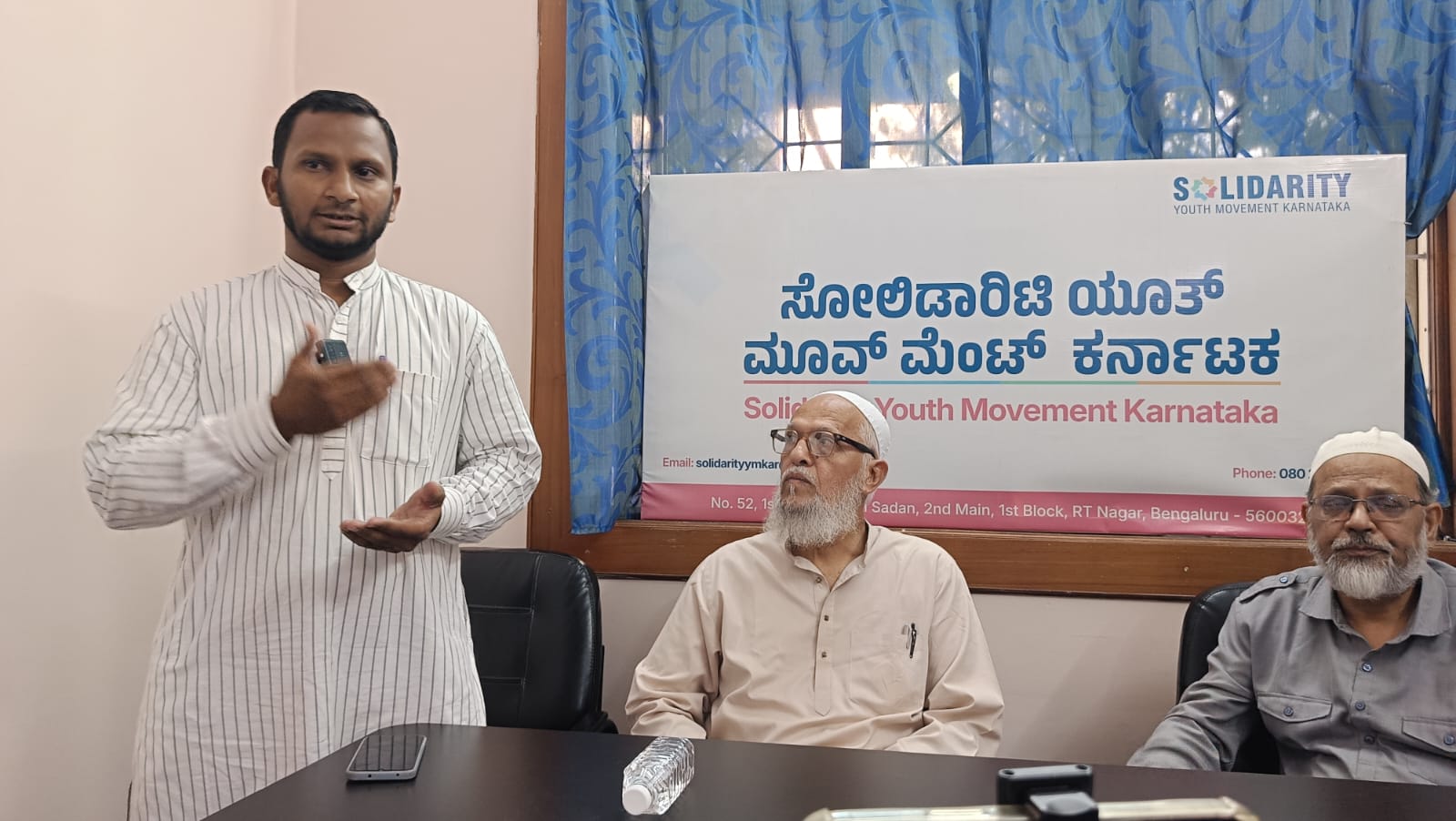
In a bold stride towards structured youth empowerment, the Solidarity Youth Movement Karnataka marked a significant milestone with the inauguration of its new state office in Bengaluru.
The formal opening ceremony was led by Dr. Mohammed Saad Belgami, Ameer-e-Halqa of Jamaat-e-Islami Hind, Karnataka, coinciding with the annual state Shura session.
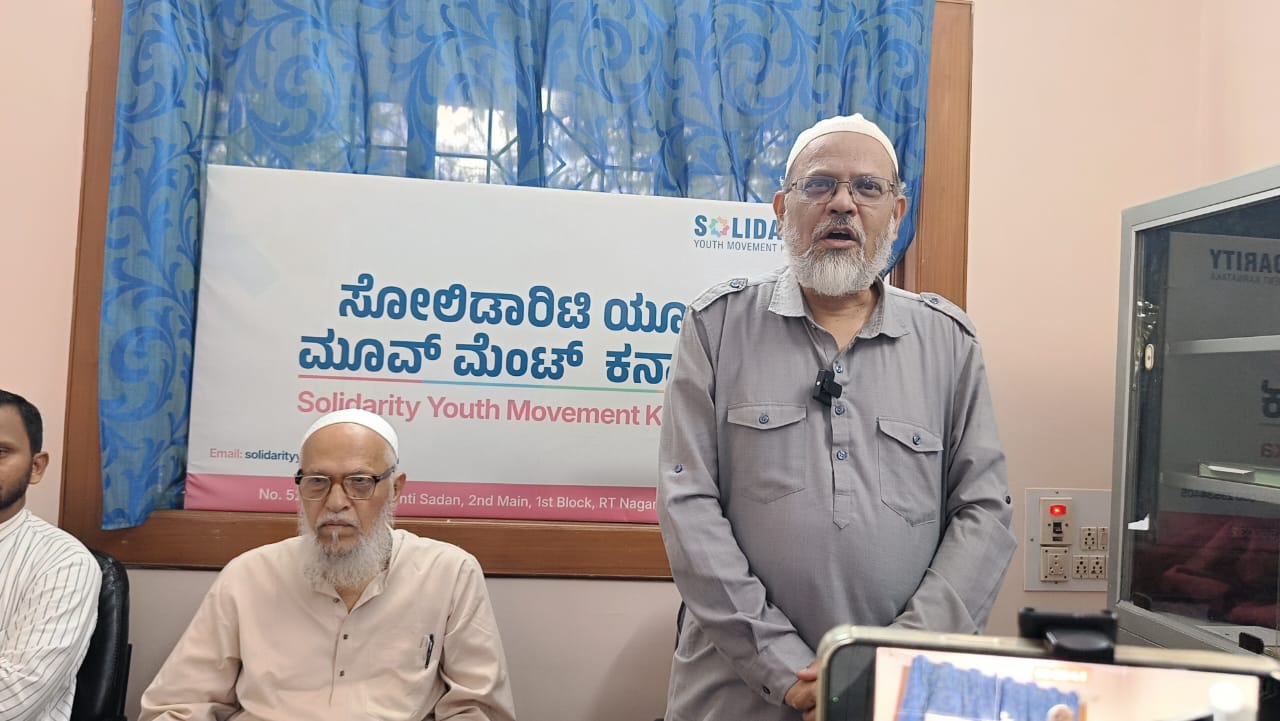
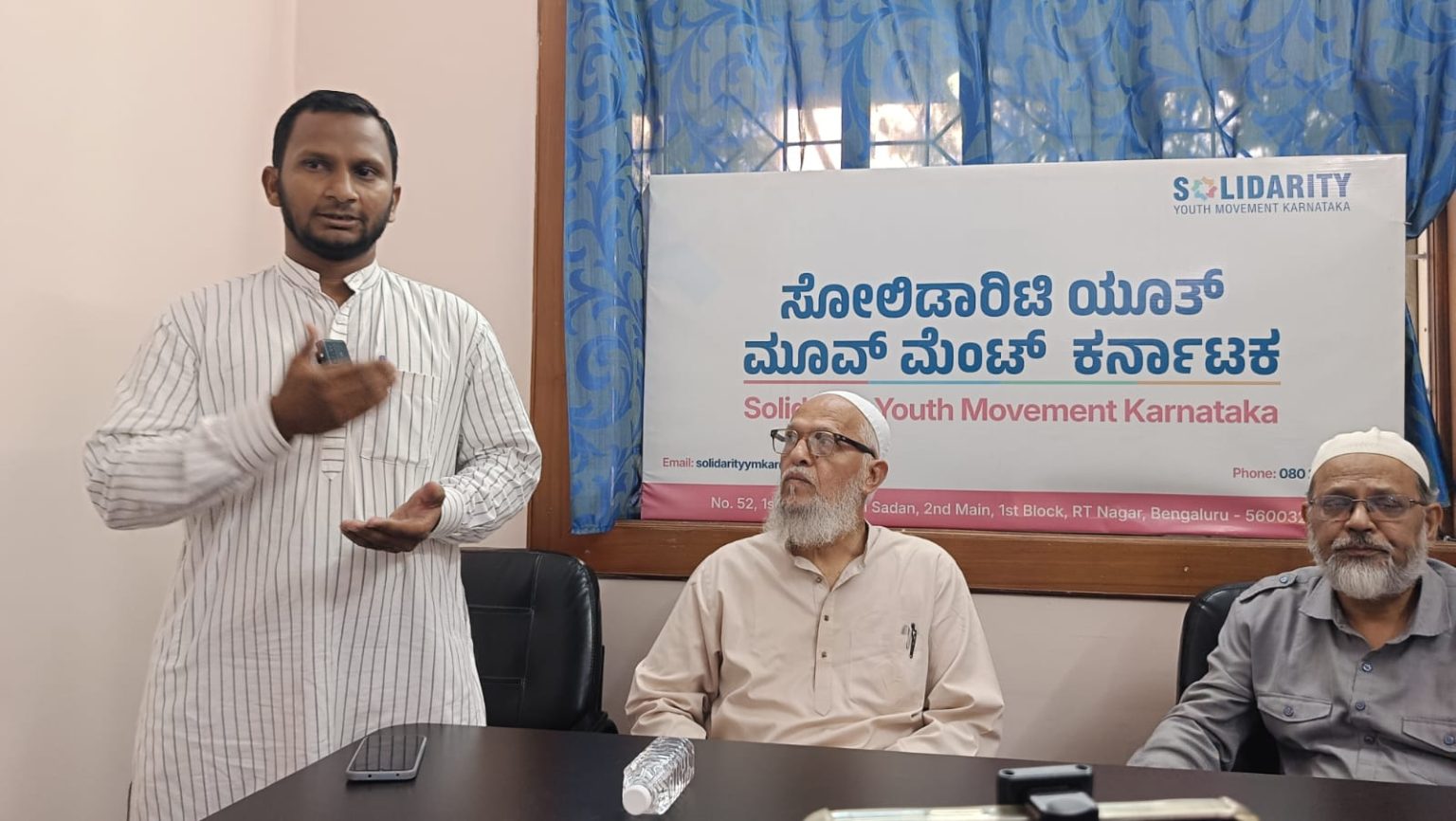
Far from being a mere administrative facility, the new office symbolises the growing institutional presence and ideological clarity of a movement that has evolved from grassroots activism to state-wide influence. Speaking at the event, Dr. Naseem, State President of Solidarity Youth Movement, described the organisation not just as a protest platform, but as “a transformative force for grooming morally conscious and socially responsible youth leaders.”
From a Youth Wing to a Mass Movement What began in 2008 as the “Youth Wing of JIH Karnataka” with just 250 members, formally transitioned into the Solidarity Youth Movement in 2016. Today, it boasts an expansive network across 27 districts with over 80 local units and a membership exceeding 7,000 – out of which more than 900 are actively engaged as trained “Activists.”
According to Dr. Naseem, this journey reflects the urgent need to channel the dynamism of youth towards constructive and long-term social reform. “We envision a generation of youth who are ethically upright and capable of leading society toward peace, progress, and justice,” he said. He emphasised the movement’s focus on skill development, employability training, and intellectual empowerment, aligning with both the constitutional ethos of India and the legacy of Islamic civilizational values.
Leadership Speaks Addressing the gathering, Dr. Saad Belgami remarked, “From its inception, the Islamic movement has placed youth at the centre of its mission. Solidarity Youth Movement is a natural extension of this vision – shaping minds and building character.” He added that the 2022 Youth Convention acted as a catalyst, significantly expanding the movement’s outreach and operational capacity across Karnataka.
The event was also graced by former state presidents of JIH, Mr. Iqbal Mulla and Mr. Atherulla Shariff, along with other senior functionaries from various wings of the organisation.
A Nerve Centre for Change With the establishment of this new state office, Solidarity Youth Movement is poised to further institutionalise its efforts in leadership training, civic engagement, and ideological grounding. The office is envisioned as a nerve centre for nurturing grassroots leadership, mentoring youth activists, and coordinating state-wide programs aimed at social justice and pluralistic harmony.
“This will be more than brick and mortar. It will be a lighthouse for Karnataka’s aspiring youth leadership,” said Dr. Naseem. “And a strategic base for long-term nation-building efforts,” he added with conviction.
As the curtain drew on the inaugural ceremony, the message was loud and clear: Solidarity Youth Movement is not just responding to the times – it is shaping them. And this new office stands as a testament to that mission. A platform today, a movement tomorrow. Indeed, a future-defining institution in the making.
source: http://www.radiancenews.com / Radiance News / Home> Latest News / by Mohammed Talha Siddi Bapa / May 12th, 2025
The Sarojini Naidu Centre for Women’s Studies in collaboration with the Dr Zakir Hussain Institute of Islamic Studies, Jamia Millia Islamia, hosted a special extension Lecture titled, “Unpacking the Myths: Separating Fact from Fiction about Women in Islam” on April 24, 2025, at Mir Anis Hall of Jamia Millia Islamia.
The lecture was delivered by noted British Islamic Scholar Dr Shiekh Mohammad Akram Nadwi. Formerly the Dean of Cambridge Islamic College and currently the Principal of the Al-Salam Institute and famous for his multi volume book Al-Muhaddithat, which documents female scholars in Islamic history, he is a leading authority on Islamic jurisprudence and Hadith, inspiring global audiences with his teachings.
The event opened with a soulful recitation of the Holy Quran, followed by a warm welcome from the honorary director of SNCWS Prof Nishat Zaidi.
The introduction of the speaker was given by Prof. Habibullah Khan, Honorary Director of the Dr Zakir Hussain Institute of Islamic Studies. Prof Habibullah praised Dr Nadwi’s globally recognised contributions to Islamic scholarship, particularly his work on gender and Hadith.
Dr Nadwi’s lecture captivated the large audience present in the hall as the urging open dialogue to dismantle stereotypes about women in Islam.
Referencing his monumental 40-volume work, Al-Muhaddi that: the Women Scholars of Islam that chronicles the contributions of female Islamic scholars.
The speaker presented a compelling case for re-evaluating historical narratives, generalisations, myths and patriarchal notions through rigorous scholarship and proper understanding of Islam. His call for mutual respect and understanding across cultures sparked vibrant discussions among attendees, reinforcing the lecture’s relevance in today’s diverse world.
The lecture was followed by the presidential remarks by the Vice-Chancellor, Prof. MazharAsif, who emphasised Jamia’s commitment to inclusive discourse and highlighted the pivotal role of women in shaping Muslim society.
He urged audience to practice equality of women in their lives and shape a society that respects women.
Among the attendees were Prof Mohammad Muslim Khan (Dean, Faculty of Social Sciences), Prof Iqtidar Khan (Dean, Faculty of Humanities and Languages),Prof Kausar Mazhari , faculties and staff of SNCWS and Dr Zakir Hussain Institute of Islamic studies besides teachers, researchers and students from across the faculties of the Social Sciences, Humanities and Languages and from various Centers of the University.
Dr Tarannum Siddiqui of the Sarojini Naidu Centre for Women’s Studies convened and moderated the program. Dedicated volunteers, including Vaibhav, Zoyba, Gargi Mishra, Shubhangi, RaiyahQamar, and Fatima Zohra from MA Gender Studies of SNCWS ensured a seamless experience.
“Dr Nadwi’s lecture is a clarion call to challenge misconceptions and embrace informed dialogue,” said Prof Nishat Zaidi while thanking the speaker. She further said: “His scholarship inspires us to bridge tradition and modernity in pursuit of equity and understanding.”
The session concluded with pertinent Q&A session in which students satisfied their curiosities by asking relevant questions to the speaker.
A formal vote of thanks was presented by Gargi Mishra, student of MA Gender studies. Students and particularly girls who attended the talk were well impressed to know about the historical contributions of women in shaping society and their contributions in nation building.
source: http://www.theokhlatimes.com / The Okhla Times / Home> JMI-EDU / by theokhlatimes / April 29th, 2025
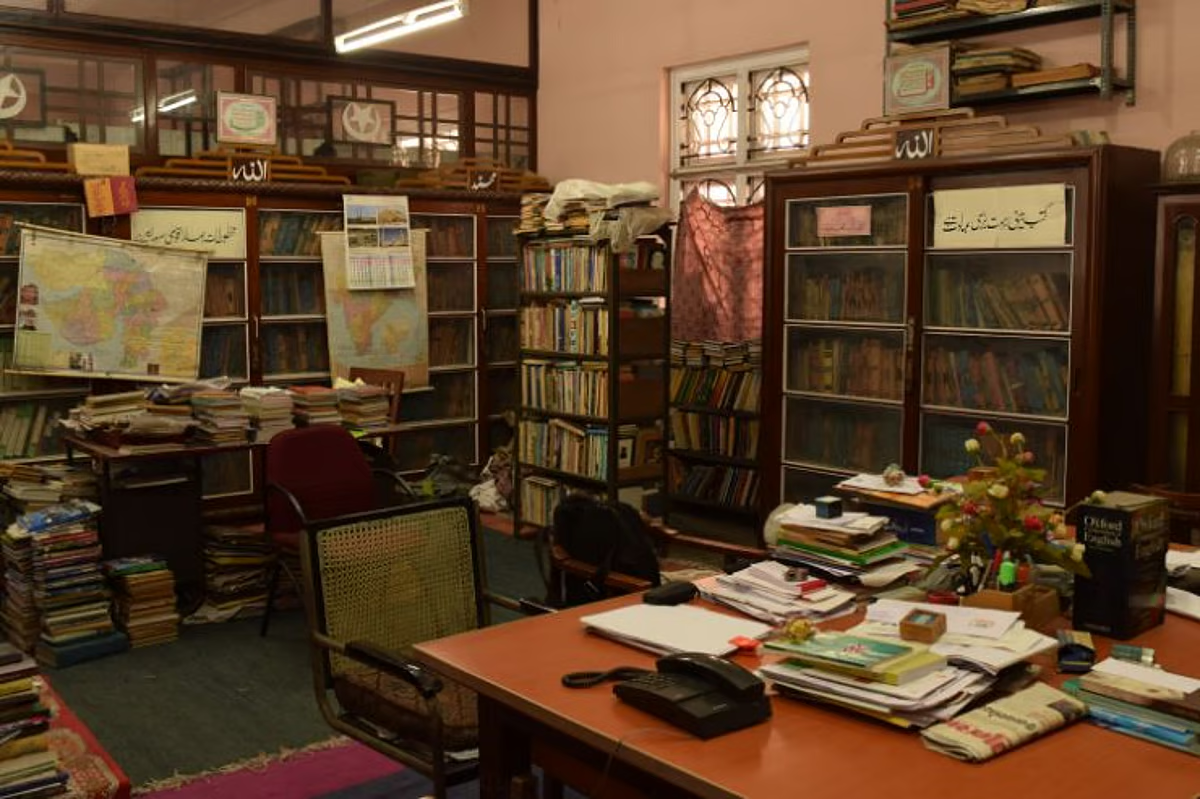
With over 4,000 manuscripts and 25,000 books, Hazrat Pir Mohammad Shah Library is a sanctuary of knowledge and wisdom.
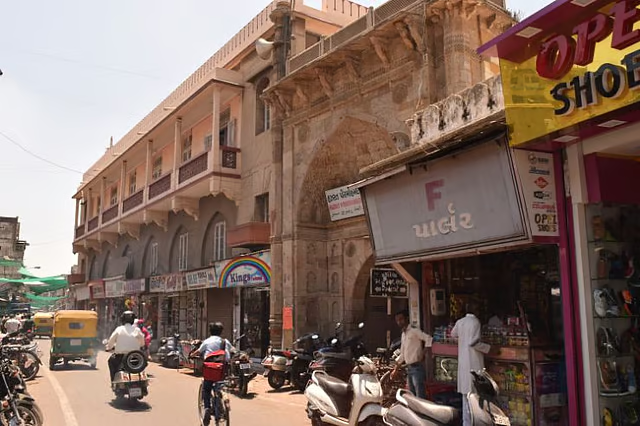
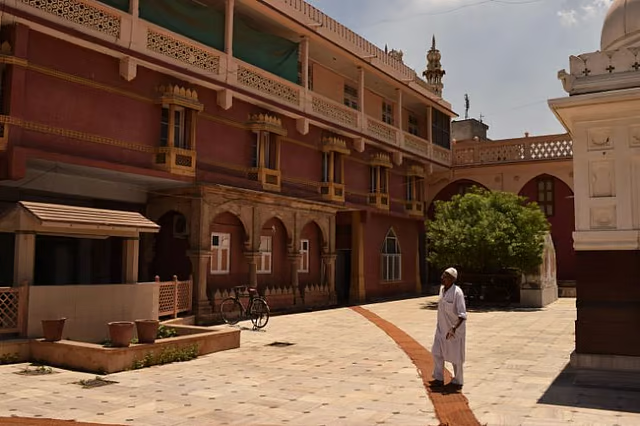
Stepping into the Hazrat Pir Mohammad Shah Library, the oldest library of the city, feels like entering a secret realm concealed within the narrow lanes of Pankora Naka, Ahmedabad. This hidden sanctuary of wisdom resides within the majestic tomb-shrine complex dedicated to the esteemed Pir Muhammad Shah.
The library’s journey commenced over 250 years ago when Pir Mohammad Shah and his devoted disciples gathered a humble collection of 300 manuscripts. Now, this literary haven proudly safeguards an expansive repertoire of over 4,000 manuscripts, establishing its position as such largest collection in Western India. Moreover, it boasts an impressive assortment of over 25,000 books.
About Mohammad Shah
Let us delve deeper into the enigmatic figure of Mohammad Shah, the driving force behind the library. Born in Bijapur in 1688 AD, he embarked on a transformative journey to Mecca, where he immersed himself in the teachings of practical Sufism.
Eventually, he settled in Ahmedabad in 1711, where he would offer his daily prayers in the Jama Masjid and rest in the humble hut of a benevolent elderly woman. It is in this very location that the awe-inspiring mausoleum-mosque-library complex now stands.
A treasure trove of manuscripts and books
During his lifetime, Pir Muhammad Shah, along with his devoted disciples, amassed a treasure trove of manuscripts and books, encompassing a wealth of academic and spiritual wisdom. This invaluable collection finds its residence in the esteemed “kutubkhana”. The Pir himself was a gifted bilingual poet, penning abundant verses in Persian and Dakhani.
Today, the library stands as a testament to its illustrious past, harboring more than 4,000 manuscripts—the largest collection in Western India, alongside a rich trove of over 25,000 books. Its extensive catalog covers diverse subjects such as spirituality, Quran Knowledge, music, literature, history, geography, language, astronomy, astrology, agriculture, and more.
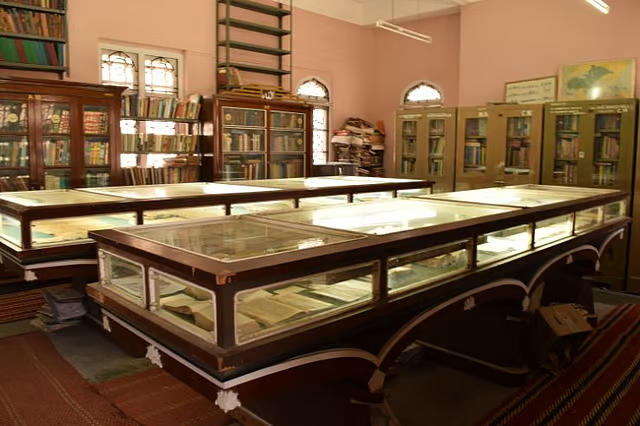
Within its hallowed halls, one can explore literature in Urdu, Gujarati, Arabi, Parsi, Hindi, and English. The library features a special chamber dedicated to ancient manuscripts, some dating back 800 years, as well as a display of Hazrat Pir Mohammad Shah’s personal belongings, carefully encased in glass to ensure their preservation.
Translations of sacred texts and unique manuscripts
The library’s treasures extend beyond its own collection, offering translations of sacred texts such as the Bible, Rigveda, and Geeta. Visitors are also privileged to behold unique manuscripts, including a handwritten Quran by the illustrious Mughal Emperor Aurangzeb.
This historic repository not only embodies a wealth of knowledge, wisdom, and heritage but also exudes an aura of serenity and tranquility. Explore the mosque, wander through the tranquil courtyard, lose yourself in the pages of ancient tomes, marvel at rare manuscripts, and surrender to the enchantment of bygone era. A captivating journey back in time awaits within these hallowed walls.
source: http://www.knocksense.com / Knock Sense / Home> Ahmedabad / by Zeal Jani / June 27th, 2023