Category Archives: Royal Families, PreIndependence -Descendants (wef. Jan 02nd,2022)

Rampur Royals were patrons of art, literature and cuisine

Rampur, UTTAR PRADESH :

The Rampur Nawabi family with former Prime Minister Dr. Manmohan Singh

In December 2021, I came across a report in a newspaper that said, “After almost 50 years of legal battle, the Rampur District Court has ruled in the Rampur Nawab family’s property dispute. The property will now be divided among 16 legal heirs. Raza Ali Khan, the last Nawab of Rampur, died in 1966. After a long legal battle, the court has announced the division of his property worth Rs 2,664 crore.”

The Nawab family of Rampur with its glorious history is still important played in Rampur and its surrounding districts. While the family ruled the state for a long time, its members joined the institutions of independent India like Parliament and legislative Assembly. Former Members of Parliament Mickey Mian and Noor Begum belong to the family. Many members of this Royal family have played an important role not only in politics but also in promoting the culture, patronizing poets, writers, musicians, and other creative artists.

Khandaan

The Nawabi family of Rampur State

Before the independence, India was dotted with small states and one of them happened to be the state of Rampur, located in today’s state of Uttar Pradesh. It was founded by Nawab Ali Mohammad Khan, a Pushtun leader on 7 October 1774. There have been 11 Nawabs in the state including Nawab Faizullah Khan, Nawab Hafiz Rehmat Khan Barish, Nawab Muhammad Ali Khan, Nawab Ghulam Muhammad Khan, Nawab Ahmad Ali Khan, Nawab Muhammad Saeed Khan, Nawab Yusuf Ali Khan, Nawab Club Ali Khan. Nawab Muhammad Mushtaq Ali Khan, Nawab Hamid Ali Khan.

Raza Ali Khan was the last Nawab of Rampur. Rampur was one of the important States of the British in India as its rulers were plaint and supported the Raj even during the 1857 revolt. It was a 15 cannons gun salute State and its rulers owned a lot of wealth.

Before the independence, the Nawabs of Rampur used to have their own railway station with two special coaches always in readiness in the service of the Royal family. Whenever the Nawab family had to travel by train to Delhi, Lucknow, or elsewhere, they would board their coach and that was added to the passenger train. During the tenure of the ninth Nawab, Hamid Ali Khan the railway line was laid in the district. At that time, he had built a separate railway station for his use. It was close to the main railway station.

The Royal Coach full of Luxuries and modern appliance

Interestingly the two railway coaches that have immense historic and antique value today are among the assets sought to be distributed among the progeny of the Raza Ali Khan. These were originally valued at Rs. 117.42 million. However, due to almost no maintenance, the price was halved.

Interestingly, these coaches had so many modern conveniences that even the heads of the state today can’t dream of. The coaches were equipped with 33mm and 16mm cinema projectors, cameras, imported radio transistors, and tape recorders. These provided all the luxuries like Bedding, chair, carburetor pillow, seat, silverware, glass, whiskey, beer bottles, English crockery, large cigarette and cigar box, silver footstep, eagle, silver canteen set, silver hooka, silver bed, sword, and various kinds of guns, etc.

The Nawab family’s properties include 1073 acres of land, mansions, palaces like Khas Bagh, Kothi Benazir, Lakhi Bagh, Kanda, and Nawab Railway Station, and immovable assets like arms, jewelry, etc. The valuables include silverware like six silver beds, 20 silver pandans, six khasdans, and 20 cigar boxes, and four hookas. Former Member of Parliament Begum Nurbano says that when she came to Khas Bagh in 1956 as a bride she slept on a silver bed. Khas Bagh was India’s first air-conditioned palace.

Khas Bagh Palace was the first air-conditioned palace in India.

Khas Bagh Palace, Rampur

The state of Rampur was not only a political state but also a great patron of education, art, and culture. Nawab Yusuf Ali Khan was a friend of knowledge and also gave scholarships to scholars and students. He made Mirza Ghalib his consultant on literary matters and he became a student of Ghalib. He used to send a reasonable amount of money to Mirza as a stipend. In addition, hundreds of poets, including Mirzadagh Dehlavi, were patronized by the Nawabs of Rampur.

The Library

The Nawab of Rampur was a friend of knowledge. The symbol of his friendliness of knowledge is Raza Library which was once the largest library in India and it is still very important today. Thousands of rare books and manuscripts in Urdu, Persian and Turkish languages ​​are available here.

The Nawab of Rampur was also an epicurean. He had a whole army of cooks and chefs. These chefs would spend the whole day preparing high-quality food and experimenting with new flavors. Elders were invited to the Nawabi Dastkhwan. After the dissolution of the state, it became difficult for the Nawab to continue the Dasthar Khan.

The Nawabs of Rampur patronized traditional music at their court. Mehboob Khan was one of the greatest thinkers of the royal court of Rampur state. This tradition was followed by his sons Inayat Hussain Khan and Inayat’s brother-in-law Haider Khan and Mushtaq Hussain. It was here that the Rampur-Sahswan family of Indian classical music was born. Sahswan is in the present Badaun district.

One of the Palaces of rampur Nawab family

After independence, the Nawab family took an active part in politics and Major Nawab Syed Zulfiqar Ali Khan Bahadur was the first from the family to be elected to the Lok Sabha. He was known as Mickey Mian. He was the second son of Nawab Sir Syed Raza Ali Khan Bahadur. In 1984 and 1989, he was elected to the Rampur Lok Sabha seat on a Congress ticket. It is also interesting to note that Mickey Mian represented Rampur in Lok Sabha for a long time but never spoke in the House.

After Mickey Mian, his wife Begum Noor Bano served as Member of Parliament in the 11th and 13th Lok Sabha. She was elected from Rampur on a Congress party ticket. Begum Noor Bano alias Mehtab Zamani Begum was born to Nawab Aminuddin Ahmed Khan who was the last ruling Nawab of Loharo (Bhiwani-Haryana). She was educated at Maharani Gayatri Devi Girls Public School, Jaipur.

She joined the All India Congress Committee in 1992 and was elected to the Lok Sabha in 1996. In the next election, she lost to BJP’s Mukhtar Abbas Naqvi. An aficionado of music and dance, Noor Banu is the patron of the Devi Foundation and the Rampur family. Bano is interested in historical and cultural Persian and Arabic books and research on environment and forest protection. She enjoys reading, painting, gardening, and music and is a member of several sports clubs across the country.

Micky Mian and Noor Bano with their children

Micky Mian and Begum Noor Bano have three children. One of them is Nawabzada Syed Muhammad Kazim Ali Khan Bahadur. He was elected MLA several times and is also a Congress candidate in the current Assembly elections. His son Nawabzada Syed Haider Ali Khan Bahadur is also contesting the Assembly elections 2022.

In the current elections in Uttar Pradesh, the reputation and honour of the Royal family is also at stake. Samajwadi Party veteran Azam Khan, who has been elected an MLA from Rampur city nine times is contesting from inside the jail against his traditional rival from the Royal family Mohammad Kazim Ali Khan. Kazim Khan popularly known by his nickname of Navid Miyan is contesting as a candidate of Congress Party and is hoping to defeat the ‘tainted’ Azam Khan.

Besides, Azam Khan’s son Abdullah Azam is contesting from the Suar constituency where he is pitted against Naveed Mian’s son Hamza Mian.

The Nawab of Rampur

Azam Khan has dominated the politics of Rampur for 42 years. He has also held ministerial positions in the Samajwadi government four times. He has also been Leader of the Opposition and Member of Rajya Sabha. On the other hand, the Nawab family has also a great influence on Rampur. Naveed Mian Sawar has been MLA four times from the Tanda seat. Once he was also elected to Legislative Assembly from Bilaspur and was a minister too.

His father Nawab Zulfiqar Ali Khan alias Miki Mian has been a Member of Parliament five times and his mother Begum Noor Bano has been a Member of Parliament twice. Both the Congress and the SP have given tickets to the members of the Rampur Royal family. This time, Congress has given tickets to former MLA Naveed Mian as well as his son Haider Ali Khan alias Hamza Mian.

source: http://www.awazthevoice.in / Awaz, The Voice / Home> Stories / by Ghaus Siwani / February 04th, 2022

Sarkhej Roza: A cultural and architectural gem, an oasis of calm

Ahmedabad, GUJARAT :

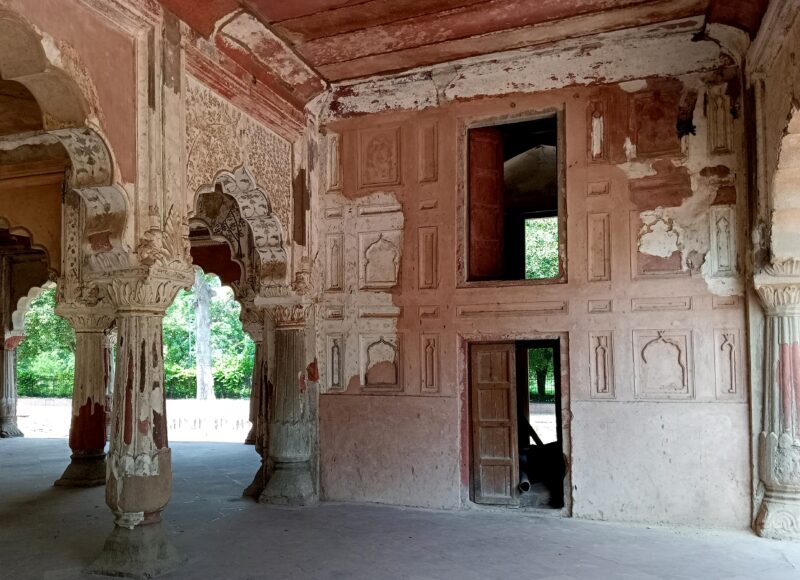
Built in the 15th century, Sarkhej Roza on the outskirts of Ahmedabad holds many different worlds within its vast expanse.

The site comprises a mosque, tombs as well as mausoleums, palaces, pavilions, and noble houses (Express/Bhupendra Rana)

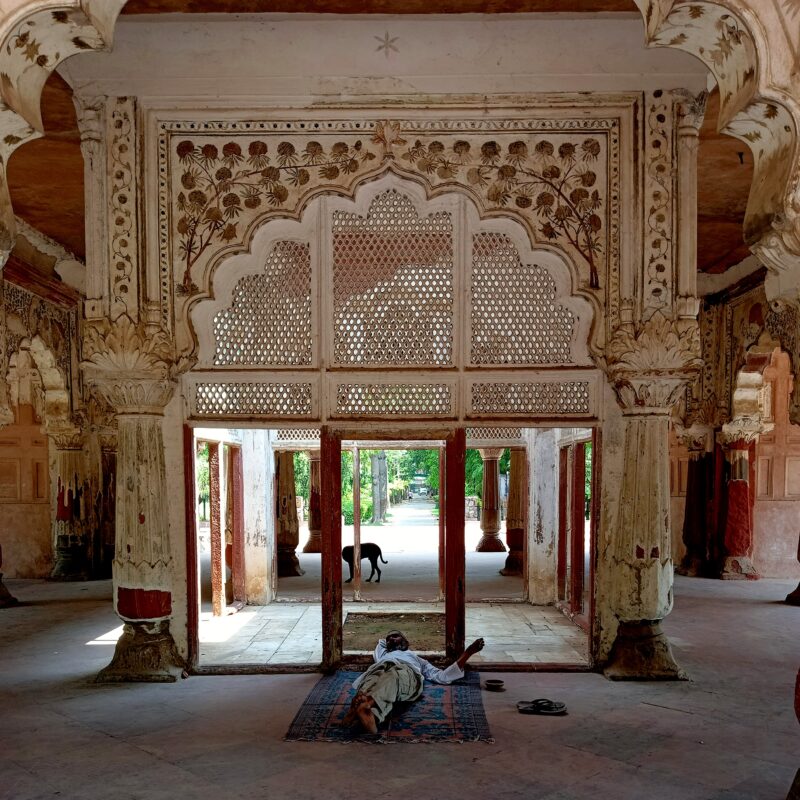
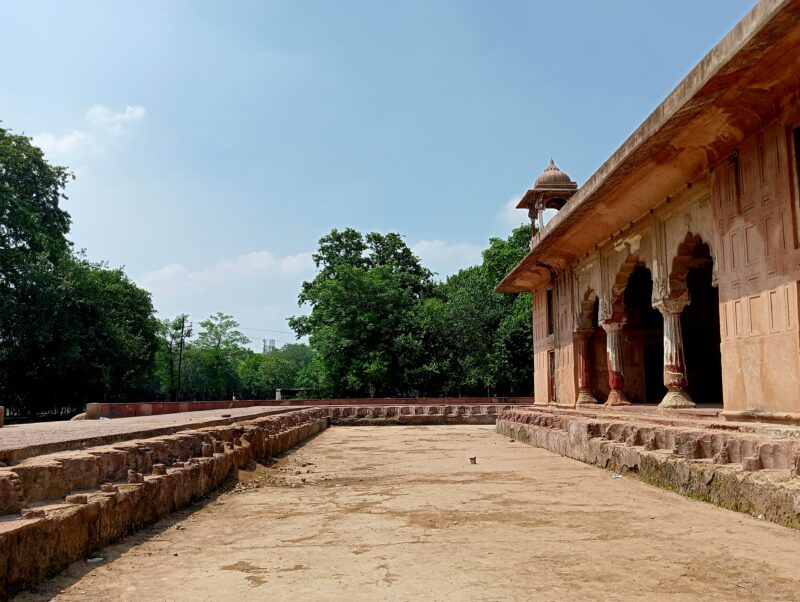
As the sun begins setting behind the domes, the rays filter through the stone filigree splashing a gold hue in the vast compound. The devout makes their way to the vast mosque for the evening prayers; in another corner, a seeker sits in the enclosure housing a tomb, lost in a world of her own. Under the baradari, a weary traveller takes a nap; at the dried-up reservoir beyond the mosque, children play a game of cricket.

Built in the 15th century, Sarkhej Roza on the outskirts of Ahmedabad holds many different worlds within its vast expanse. The monument complex stands as a testament to Gujarat’s rich cultural and architectural heritage.

The site comprises a mosque, tombs of sheikhs, sultans, and the royal family, as well as mausoleums, palaces, pavilions, and noble houses. At its heart lies the famous Ahmed-Sar Tank, a man-made lake excavated in the 15th century by Sultan Mehmud Begada, the great-grandson of Sultan Ahmed Shah, who founded Ahmedabad in 1411.

A protected monument, Sarkhej Roza falls under the Archaeological Survey of India (ASI) and the Sarkhej Roza Committee. Built in a village of indigo dyers and weavers, the monument, said to have been built by Ahmed Shah’s successor and son, Muhammad Shah II, became the repose of the mid-15th century Saint Shaikh Ahmad Ganj Baksh Khattu, one of the four Ahmads who laid the foundation of Ahmedabad in 1411 AD. Following his death in 1446 AD, Sultan Muhammad Shah II commissioned an exquisite tomb and mosque in his memory, which were later completed by his son and successor, Sultan Qutbuddin Ahmad Shah II, between 1451 and 1458 AD. Over time, Sarkhej Roza became a favoured retreat for Gujarat’s sultans and eventually evolved into a Sufi town with the addition of palaces, gardens, pavilions, royal tombs, grand gateways, and a vast artificial lake spanning 17 acres.

Historians and architectural experts consider Sarkhej Roza a unique and unparalleled collection of historical buildings. Its Indo-Saracenic architecture seamlessly blends elements of Hindu, Jain, and Islamic design, creating a masterpiece.

Among the mausoleums of Agra and Gujarat, Sarkhej Roza is believed to be the largest architectural complex of its kind. The site holds deep spiritual significance for both Hindus and Muslims, attracting visitors from all walks of life.

The intricate jali work on the outer and inner walls showcases beautiful geometric patterns, while the exquisite craftsmanship in brass, silver, and enamel enhances its aesthetic appeal. Sultan Mahmud Begada, known for his bravery and vision, decorated the structure in such a way that many believe it contributed to Ahmedabad’s recognition as a Unesco World Heritage City, although it is some 10 km from the walled city that got the tag in 2017.

Beyond its architectural splendour, Sarkhej Roza is home to priceless historical artefacts, including coins from the Sultanate period of Gujarat. The monument also houses incomplete yet beautifully handwritten copies of the Quran, a manuscript of Hidaya, and a printed Quran with Persian and Urdu translations. Additionally, an old handwritten copy of the Quran, completed in 1649 in the elegant Naskh script, remains one of the site’s treasured possessions.

Over the years, Sarkhej Roza has hosted several prominent events and dignitaries. On World Heritage Day (November 18, 2010), the complex welcomed Prime Minister Narendra Modi, who was then Gujarat chief minister.

Last month, during a Sufi event in New Delhi, PM Modi recalled how he had restored Sarkhej Roza when he was the Gujarat CM. “When I was the CM, a lot of work was done on its (Sarkhej Roza) restoration and very few people would know that there was a time when Krishna Utsav was celebrated with great pomp and show in Sarkhej Roza…,” Modi said.

Other notable visitors include the Iran embassy’s Khawaja Piri (August 8, 2006), Bollywood legend Amitabh Bachchan (January 26, 2014), and poet-lyricist Javed Akhtar (December 2, 2010).

A few scenes of Shah Rukh Khan-starrer Raees (2016) were also shot here.

Subamiya Akberali Kadri, a retired national union leader in the banking industry, has been visiting the dargah at Sarkhej Roza since 1974. He said, “Over the years, I have actively participated in various events. One memorable occasion was when a Sufi disciple from the Rumi Sufi Academy in San Francisco performed a Sufi dance. That day, I delivered a speech on Sufism.”

During the holy month of Ramzan, Sarkhej Roza transforms into a vibrant hub of community gathering with people assembling here for evening prayers and iftar, sharing meals as a gesture of unity and harmony.

Bhavna Ramrakhiani, founder of Sarkhej Roza Crafts and Saanjhi Virasat, a community promoting diversity and heritage, said, “People are not permitted to live inside the monument except during the last 10 days of Ramzan when devotees stay inside the mosque for prayers.”

On other days, Sarkhej Roza remains a favoured destination for school trips, vacations, picnics, and family outings – and an occasional seeker looking for solace.

source: http://www.indianexpress.com / The Indian Express / Home> News> India / by Sande Gona (an intern with The Indian Express, Ahmedabad / with inputs from ENS, New Delhi / Ahmedabad, April 19th, 2025.

Haidargarh Basoda: The princely state that survived for two centuries in Central India

Haidargarh-Basoda (Vidisha District) , MADHYA PRADESH :

Bhopal :

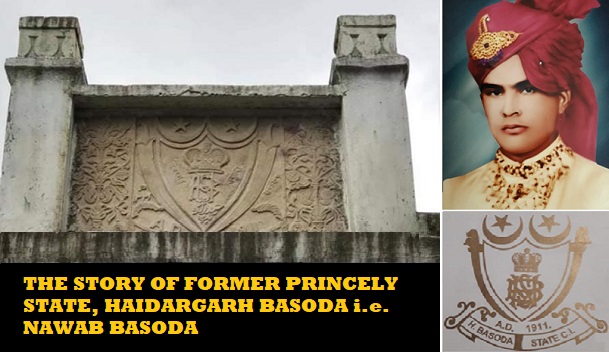
Once it was a princely state, today it’s a dot on the map of Madhya Pradesh. Haidargarh-Basoda, a principality, remained in existence for nearly two centuries in the centre of India.

It was also known as Nawab Basoda and is known for its unique history. However, after independence when the state merged and lost its identity, not even made a district and relegated to the status of a town, the place lost focus and its heritage and traditions could not be properly documented.

However, it’s well known in history that Nawab Diler Khan was the founder of the State that later got divided into Haidargarh Basoda, Kurwai and Muhammadgarh. The original princely state* had come into being in the year 1713 AD, [and was later carved into three separate states]. Mughal power was weakening after nearly 190 years.

It was during the reign of Emperor Farrukhsiyar, the great grandson of Aurangzeb, that Nawab Diler Khan managed to establish his principality in this region. The death of Nawab Diler Khan is recorded in the year 1732. After him, it was his son Nawab Izzat Khan who succeeded.

However, Nawab Izzat Khan and his younger brother Ahsan Ullah Khan had the territory divided. The latter, Nawab Ahsan Ulla Khan also divided his state into two parts, one of which was known as Haidagarh Basoda or Nawab Basoda. The Basoda state came into being in early 1750s. 

After Nawab Ahsan Ulla Khan’s death in 1790, his son Nawab Wakaullah Khan remained the chieftain but he died five years later. His wife was regent and the minor son Nawab Asud Ali Khan became the ruler when he attained the rightful age. It was during this period that the first war of independence or mutiny [as British termed it] took place. 

Nawab Asud Ali Khan passed away in 1864. He was succeeded by his son Nawab Omar Ali Khan who was an author and a traveller. He went across the world and wrote about his visits. He passed away in 1895. He was succeeded by his son Nawab Mohammad Haidar Ali Khan.

It was during this period that the state became known as Haidargarh. Then, Nawab Masood Ali Khan became Nawab and after a three year stint, state got merged when India became independent. The title remained. After 1971, privy purses were abolished. He passed away in 1976.

“After our grandfather Nawab Masood Ali Khan, his son Nawab Kiswhar Ali Khan succeeded him”, says Siddiq Ali Khan, a descendant of the family. ‘My father Anwar Ali Khan is the younger brother of Kishwar Ali Khan”, he further says. How the family coped with the state was merged?

“Most of the members of our clan took care of the lands. Apart from this, some of us are in different professions”, says Khan, who lives in Bhopal. “We had agrarian land and hence the family got engaged in it, though some took jobs and became doctors, engineers. One of our uncles, Bakhtiyar Ali Khan, studied in Cambridge school in Bhopal. My father has also been in politics”, Siddiq Ali Khan, further adds.

The Haidargarh Basoda state [now Haidergarh] was spread over an area of over 103 sq km i.e. 40 sq miles. Now, it is located near Gyaraspur town in Vidisha district adjoining Bhopal. Haidargarh, now spelt Haidergarh Basoda, is a civic body. The fort and the family’s ancestral palace still stand as testimony to the fact that this small panchayat was once was a principality with a rich history. 

[*Originally Nawab Diler Khan established a state in 1713 AD that was later carved into three separate states and Basoda came into being in 1753]

source: http://www.newsbits.in / NEWS Bits / Home> Heritage / by Shams Ur Rehman Alavi / February 15th, 2023

Unraveling The Rich History Of Noor Mahal Palace With Nawab Kazim Ali Khan

Rampur, UTTAR PRADESH :

Nawab Kazim Ali Khan tells the tale of the dynasty, its Raza Library, and years of progressive thinking that expanded the region and its many enterprises.

Luxury realtor Sush Clays takes us to a royal wedding in the Noor Mahal Palace, home to the Nawab of Rampur.

Nawab Kazim Ali Khan tells the tale of the dynasty, its magnificent Raza Library, and years of progressive thinking that expanded the region and its many enterprises.

His obsidian eyes halt you till you reach the twinkle in their midst. You look again, and those deep dimples flanking his wide smile reach right into your heart. And then he speaks: he tells you tales of conquering heroes and lands won and lost; princesses from far lands who made India’s sons and daughters; gemstones and swords that filled coffers; a land, united and forged as one by the many layers of the legacy of the past.

Nawab Kazim Ali Khan, much loved among his friends as Navaid bhai, is one of the most precious custodians of India’s history and some of its invaluable treasures.

Raza library in Rampur is one of the most important repositories of Indo-Islamic learning in South Asia

I met him first as Nawab Sahib, in his full reglia, when he leaned down with his statuesque Pathan grandiosity and said gently, “Call me Kazim.” I was facetiously outraged. “I love calling you ‘Nawab Sahib’,” I spluttered laughing. That didn’t last long. The bonhomie that the nawab exudes makes it hard to retain deference and address him by his title.

This was also the first of many conversations on the history of the Rampur dynasty, rewinding its track through accession and succession, the British Raj and India’s Independence, right back to the Marathas and the Mughals.

The Rampur royal family bedecked in heirlooms at the wedding

The Rampur state was created by the Rohila Afghan Pathans of Kandahar. The Yusufzai clan were originally traders. Their leader had two sons, Dawood and Kaisaf Khan. This was when the Marathas, a Hindu warrior sect, were fighting back the Mughal dynasty in the subcontinent. They had reached up to what is now northern Uttar Pradesh in victory.

By the 1700s, the Mughals engaged the services of the Pathans and the first battle pitted the Marathas against the Pathans in Fatehganj. The Maratha Peshwas were defeated and pushed down to Gwalior. In honour of this victory, the Mughals gave the Pathans eight districts in Rohilkhand. Dawood Khan moved to India, and this marked the beginning of the Rohila family saga in India. Faizullah Khan, one of the eight grandsons of Dawood Khan, inherited the kingdom of Rampur and was established as its first nawab.

The drawing room in Noor Mahal

During the British Raj, as the city of Rampur expanded, a new undertaking of building the Khas Bagh palace was begun. Built over several years and completed in 1930, it marries a variety of architectural styles. With India’s Independence came a new strain of history into the Rampur family. Nawab Raza Ali Khan was the first to merge his state into the Indian Union in May 1949.

The Raza Library is ensconed in acres of manicured gardens

And finally, in 1960, Noor Mahal, formerly the Viceroy’s representative’s palace, was turned into a haveli—as it stands now—for the birth of Nawab Kazim Ali Khan. He grew up there surrounded by his governess and staff, was fed food cooked in copper vessels, and had a daily appointment between 6 pm and 8 pm with his grandfather in Khas Bagh.

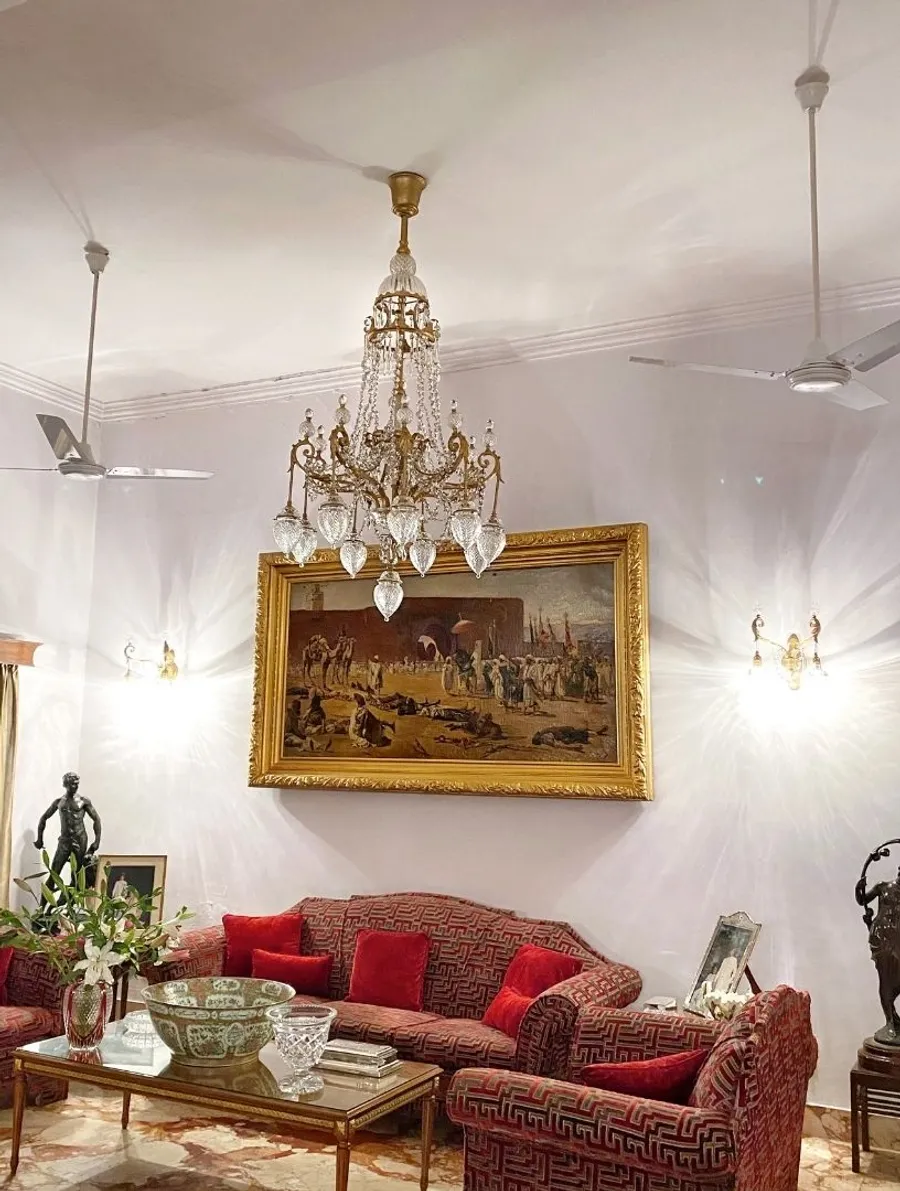
Noor Mahal, where Navaid bhai lives to this day, stands surrounded by his lush never-ending acres of farmland. The haveli holds priceless treasures: intricate vases, jade pieces of pottery, and photographs of the family beautifully installed by Queen Mother Begum Noor Bano and the current queen of Rampur, Begum Yaseen Ali Khan. Built in the classic British Raj style of architecture, with open verandahs circling the palace, Noor Mahal is where the heart of the family resides.

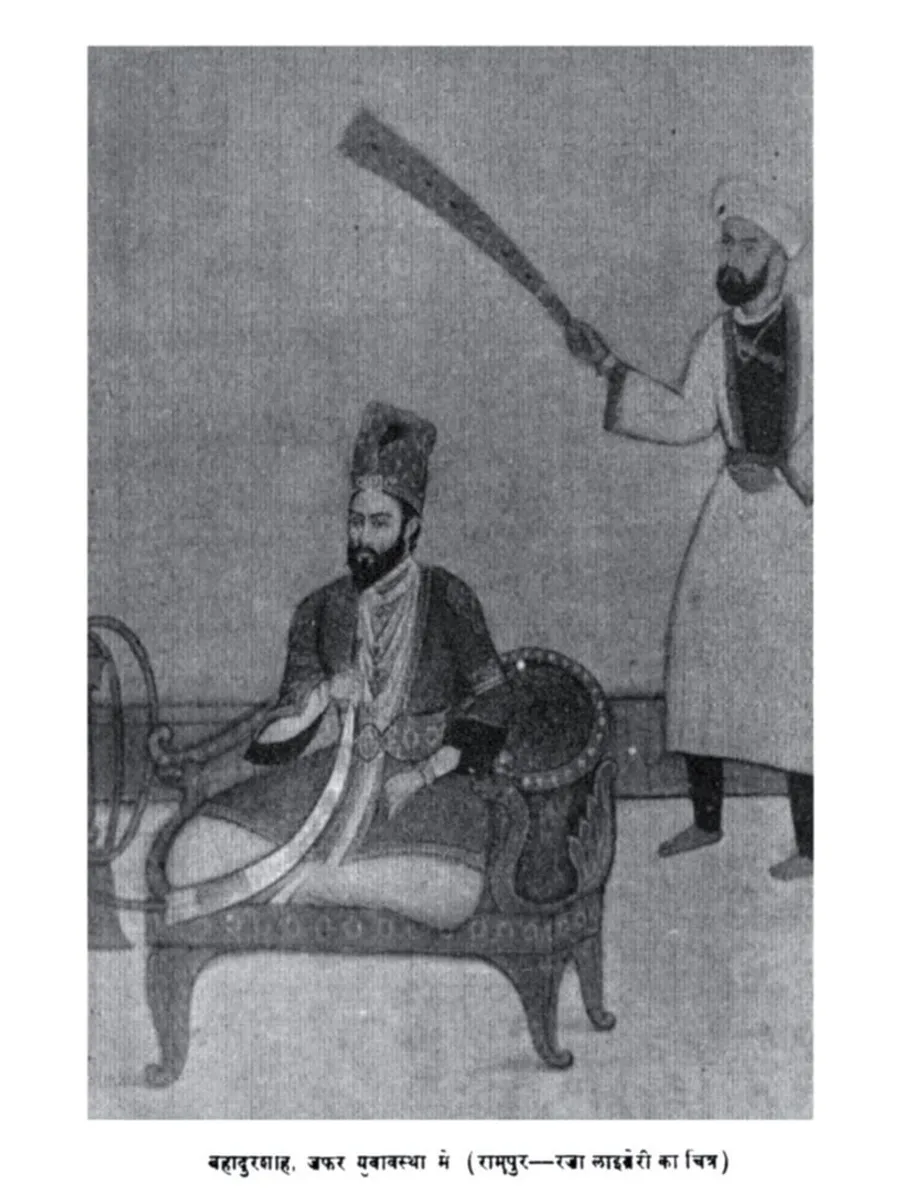
A painting of Bahadur Shah Zafar from the collection of the library

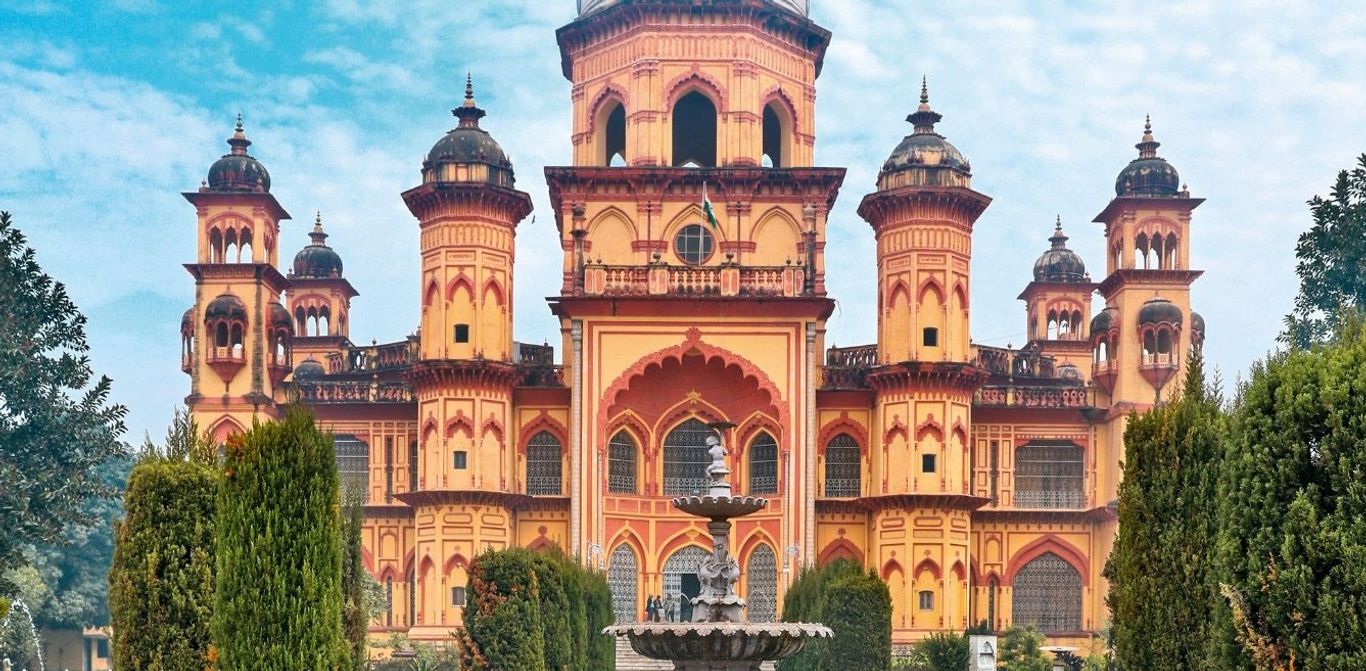
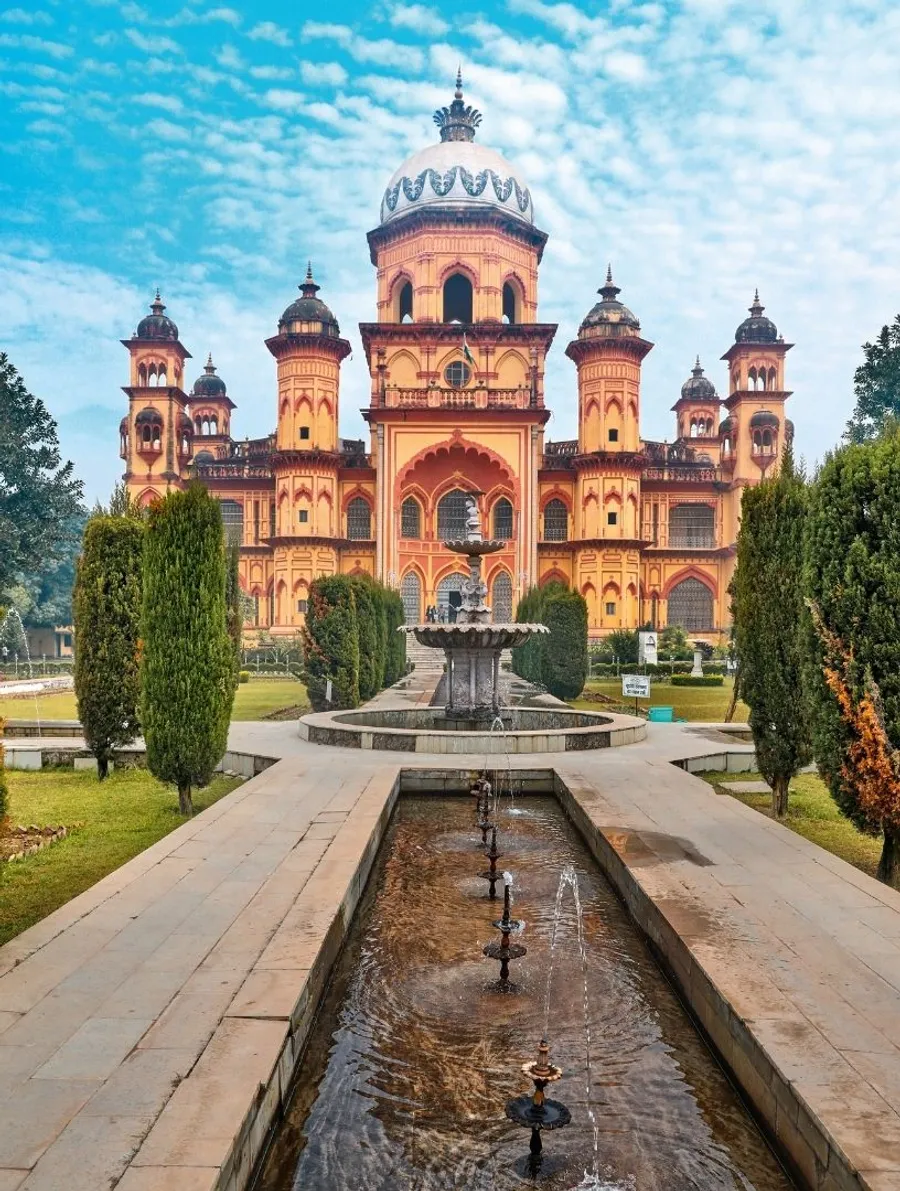
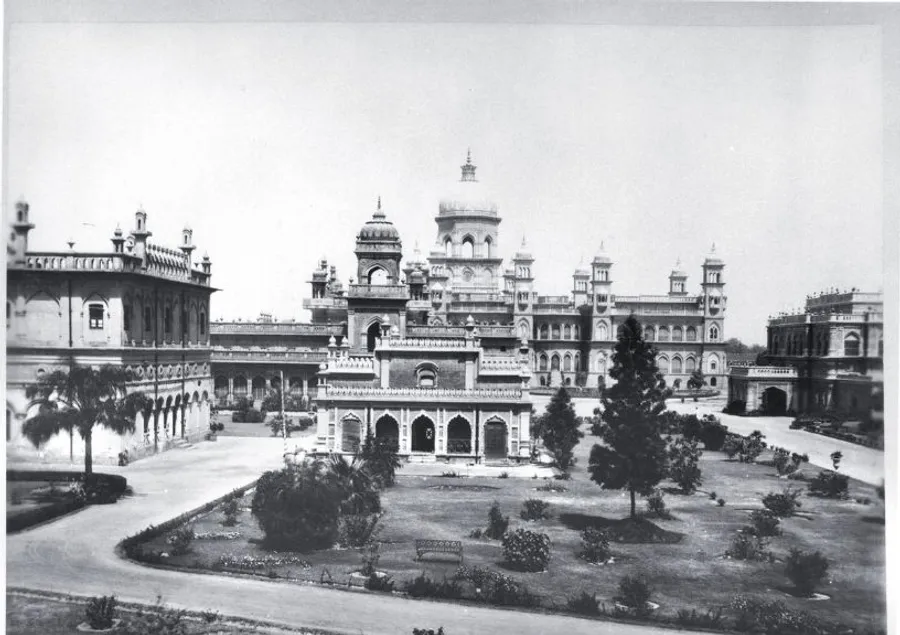
The Raza Library is the crown jewel of the Rampur dynasty. It stands tall and imposing, a precursor to the Indo-Saracenic architectural style, ensconced in acres of manicured gardens. The erudite Rampur nawabs had a passion for learning and collected over 22,000 manuscripts since the library was established in 1774 by Nawab Faizullah Khan.

They were also great promoters of women’s education. Begum Noor Bano, a descendant of Uzbekistan royalty, brought several manuscripts to Rampur as her bridal gift to the family. Today, the Raza Library remains one of the most important repositories of Indo-Islamic learning in South Asia. Its range of manuscripts stretches from Persian to Arabic, Pashto, Sanskrit, and Urdu. The collection includes the al-Qurani Majid, a priceless manuscript dating to the seventh century AD, and an illustrated Ramayana translated to Persian around 1715 AD.

Navaid bhai takes his daughter-in-law on a tour of the treasures of Rampur

Firm believers in the value of secularism and progressive thinking, the Rampur Nawabs were the only Islamic kingdom where the coronation ceremony was performed by a Hindu Brahmin pandit. With the advent of industrialisation, the far-sighted rulers realised that agriculture alone could not sustain the economy. Hence, the land was leased out to several manufacturers, including a distillery that produces the fabulous Rampur Single Malt Whisky today. With the birth of democracy in India, the instinct of the sovereign ruler of the time was to enter politics or the armed forces. Navaid bhai’s grandfather, Nawab Raza Ali Khan, was the honorary colonel of two infantries and an armoured regiment that participated in World War II to protect what was to become Indian territory post Independence.

Nawabzada Haider Ali Khan and his bride Shaukat Zamani Begum

Queen Mother Begum Noor Bano was the first female member of the family to successfully contest elections and win the seat of Rampur. This began a new era in the lives of the Rampur family. The seat of the nawabs was then moved to Noor Mahal so that they could move a little away from the swiftly expanding city of Rampur. This brings us to the present day when I find myself at this stunningly historic haveli to celebrate the wedding of Nawab Kazim Ali Khan’s second son.

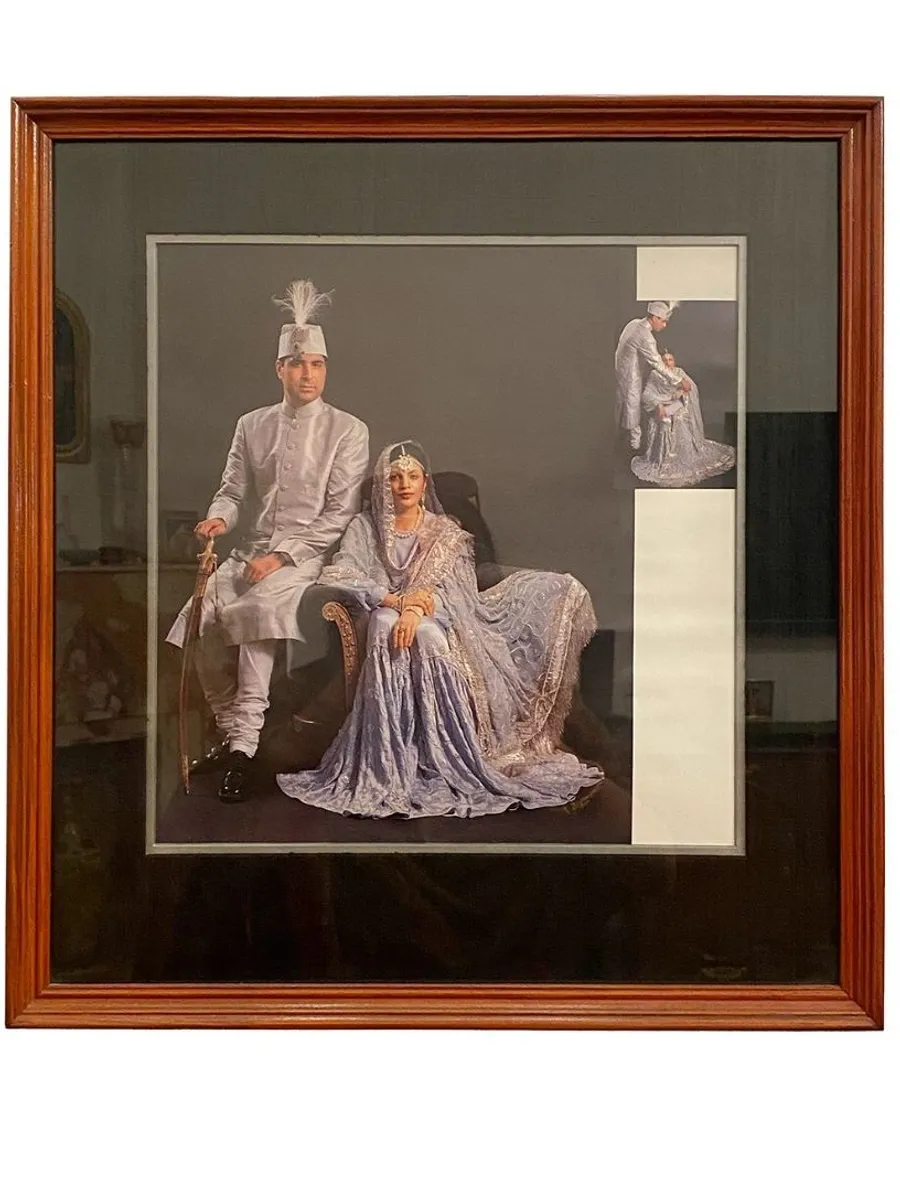
The wedding portrait of Nawab Kazim Ali Khan and Begum Yaseen Ali Khan

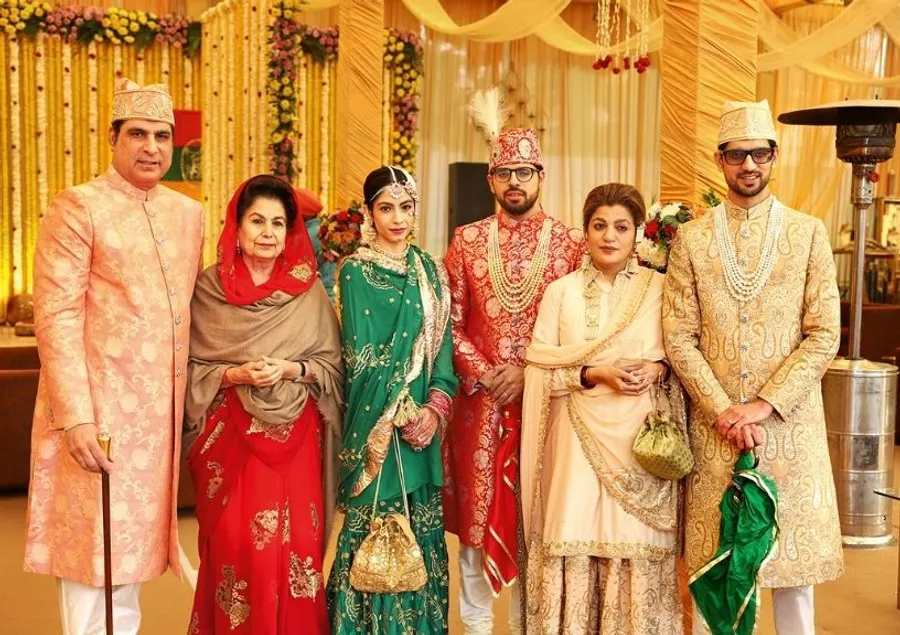
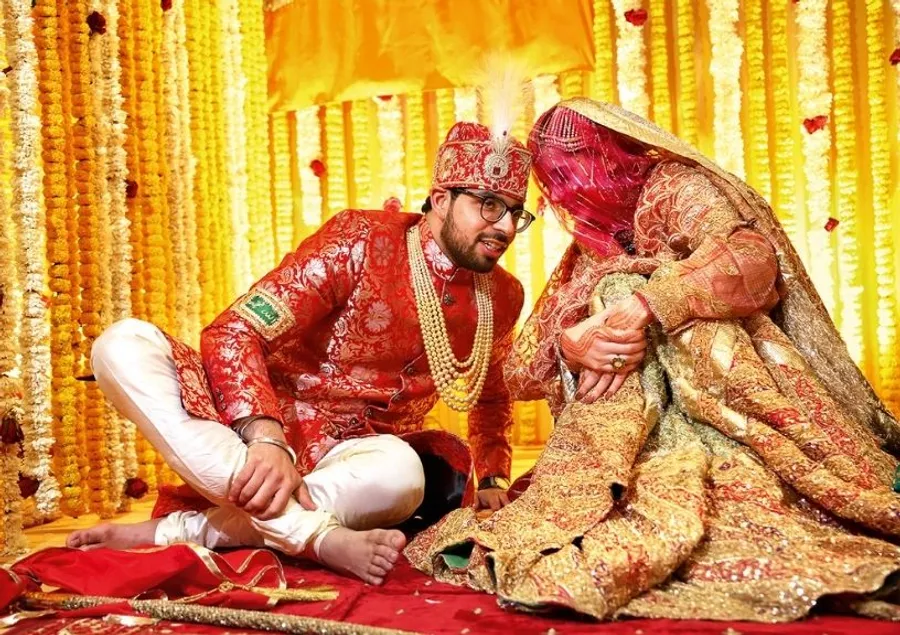
The year 2020, with all its woes, brought this one joyous occasion for Navaid bhai to gather an intimate group of family and friends and celebrate the nikah of his second son, Haider Ali Khan, to the beautiful Shaukat Zamani Begum. Sufi music composed by Navaid bhai’s grandfather fills the haveli. An incredible performance of a whirling Sufi dancer puts us in a delicious trance. The exotic aroma of Rampur’s extraordinary cuisine titillates our olfactory nerves. And the melting flavours of the famous chapli kebab make our palates spiral into ecstasy. As our senses are soothed into sublime languor through three days of feasting, dancing, laughter, and love, we awake to the nikah on the final morning.

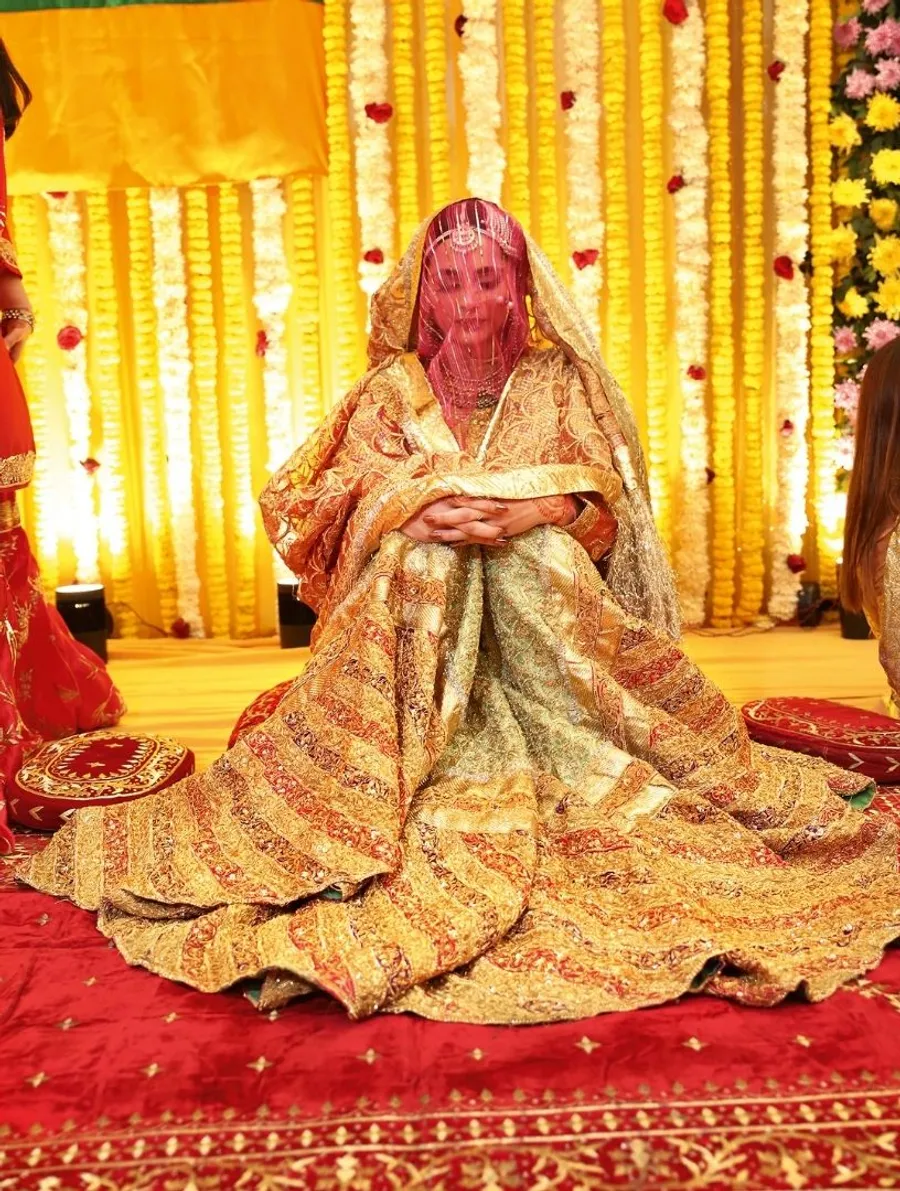
The pure pageantry of the ceremony is a joy to behold. Begum Zamani is clad in an intricately embroidered sharara that requires three bridesmaids to carry it; Nawabzada Haider is dressed up in his Pathan grandeur, with the family’s bejewelled heirloom sword; Navaid bhai is in a stunning rose ensemble and Begum Yaseen in delicate beige—the scene belongs to a different time, a few thousand years before 2020.

The dynasty is inclusive as always, and the rites are performed in Shia and Sunni traditions. And then the gentle, lilting sound of “Qubool hai” from the bride’s veil confirms her assent to the marriage to Nawabzada Haider, sending the guests into raptures.

The Pathani nawabs of Rampur have always adopted the Hindu rituals of their homeland, so they include a henna ceremony and an evening of dancing to celebrate the union.

Begum Zamani clad in intricately embroidered sharara for her nikah

The ceremony verifies everything the nawab has told me about his family, “Of the 300-odd sovereign states of the Union of modern India, there are only a dozen Islamic royal families. Ours has always believed in educating our women, and we have forever held a deep passion for art, literature, and music.” Rampur sparkles as a shining example of myriad traditions evolved into a singular culture, which spans thousands of years and retains a resplendence of its own in modern India.

The writer is the founding partner of  Welcome Home Luxury Real Estate Services in New Delhi.

source: http://www.travelandleisureasia.com / Travel and Leisure / Home> Hotels / by Sush Clays / January 20th, 2021

Tales Of The Dead: Chronicling History Through Patna’s Cemeteries

Patna, BIHAR :

Cemeteries representing Patna’s chronicle of history and heritage are dying a slow death

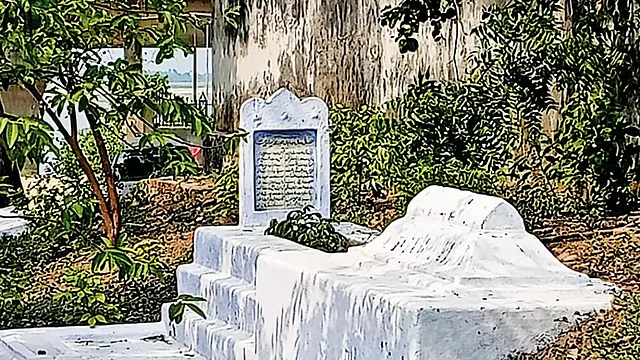
Unkept Legacy: The grave of Shahzada Karim Shah, the great-grandson of Tipu Sultan.

Like every other city, Patna also owes, to an extent, its cultural and literary existence to the courtesans who blended with the local society and provided it with a new dimension. One among them was Allah Jilai, who had settled in Patna from Allahabad. She was considered a gorgeous woman and sported a honey-dipped voice which had an arresting power. While visiting Calcutta, she developed a terminal illness. She was barely 24 when she died in 1918 and was buried in the Pakki Dargah Muslim graveyard. Her tombstone with 12 lines of Urdu couplets helped in figuring out her biographical information. Had there been no tombstone one would have never known her existence in Patna and the services that she rendered to the city.

Patna, other than being the capital of Bihar, served as a home to multiple cultures, identities, art forms and families. Today, the city has almost lost the reminders of its glorious past. But a few graves still stand as reminiscent of a bygone era. These tombs, or time capsules, where hundreds of stories remain buried, are largely deserted, ignored and unknown.

Bihar is home to more than 9,272 graveyards, according to the government’s estimate. The Bihar government planned to fence these cemeteries, and in 2022-2023, a total of Rs 93.74 crore was approved for this purpose, while an additional amount of Rs 1.25 crore was set aside for the same. According to Bihar Finance Minister Vijay Kumar Chaudhary, the fencing of about 7,647 graveyards has been completed, and the remaining will be done shortly.

In addition to the 9,272 cemeteries, Bihar also has a sizable number of privately-owned graveyards maintained by the families of former nobles, aristocrats, zamindars, jagirdars and nawabs. Thus, the overall number of burial grounds in Bihar would be close to 10,000. Moreover, several Christian cemeteries are located in Patna.

Further east on Ashok Rajpath, one can find the Gurhatta cemetery which chronicles the gruesome massacre of the British prisoners at the house of Haji Ahmad Ali in 1763 at the command of Mir Qasim, the nawab of Bengal.

The tomb of Mir Mohammad Naseer, the father of the first Nawab of Awadh Photo: Ali Fraz Rezvi

Padri Ki Haveli is the final resting place of people from Armenia, Portugal, France, Persia, Italy and the UK. In a sense, this place is a symbol of international harmony. Here, one can find a Jewish grave next to a Chinese, and a Greenlander adjacent to a Mozambican.

Near Patna Ghat Railway Station is the Danish Kothi—established in 1775—signifying the presence of Denmark in Patna in the past. It was the house of Jorgen Hendrich Berner (1735-1790), Chief of the Danish Factory in Patna, who was buried on the premises as demonstrated by his tombstone. There are at least three more tombs here which are bereft of inscriptions. Later, the Kothi became the residence of the station master of Patna Ghat, and is at present, the office of the store in-charge of railway electrification.

The Lost Glamour

While Zohra Bai, the queen of thumri, remains buried within the campus of Rauza Masjid at Maharaj Ganj, Haider Jaan, Najban, Ramzu, and Chhottan were also the tawaifs (courtesans) whose presence had made Patna a lively place.

These courtesans participated in religious activities as well, and the existence of the Imambara at Chowk is a living example of their dedication towards such pious endeavours.

As we move towards the eastern corner of the city, another story lies buried in the deadlands of Begumpur.

Father of a Persecuted Son

Popularly known as Nawab Shaheed Ka Maqbara among the locals, is the tomb of Ihteram-ud-Daula Nawab Zain-ud-Deen Ahmad Khan Bahadur Haibat Jung, the father of Nawab Siraj-ud-Daula of Bengal. Nawab Haibat Jung successfully defended Patna during the Maratha attacks but was later murdered by the Afghan rebels. His wife and children were imprisoned when he was killed.

The tomb of this martyr lies deserted in Begumpur, guarded by Dashrath Gope Yadav who comes at dawn and leaves by dusk. “The tomb, mosque and the several acres of land belong to the State Waqf Board which is least interested in the property unless there’s a chance to sell,” says Dashrath, as he cleans the interiors of the tomb. The place also had an Imambara which used to host majlises during the month of Muharram in the presence of Raja Ram Narain, the then deputy governor of Bihar.

Padri Ki Haveli is the final resting place of people from Armenia, Portugal, France, Persia, italy and the UK. it is a symbol of international harmony.

Dashrath has devoted 45 years of his life to this tomb of Nawab Shaheed. “This place had a dense jungle and I cleared it all on my own. No one from the Waqf Board or the caretakers helped me. There was no roof at this tomb, so I went around begging in the streets of Patna so that there could be a roof at the grave,” he says.

Affectionately, he calls Nawab Haibat Jung as Data Sahib—a term usually used for Sufis. Dashrath believes that he is at peace and his children are married because of the blessings of Nawab Haibat Jung.

This is not the only case of a burial place turning into a mazar. While he is aware of Nawab Haibat Jung and the history, another tomb in the city’s centre has been converted into a Sufi shrine by the people unaware of the person buried inside.

Nawab Munir-ud-Daula Raza Quli Khan Bahadur Nadir Jung, a minister of Mughal emperor Shah Alam, was the founder of the Patna Bhiknapahari and Bhagalpuri families. He was instrumental in obtaining a grant from the emperor for the East India Company and assisting the reappointment of Shuja-ud-Daula to the Vizarat. He remained in charge of Korah and Allahabad until a little before his death in Benares on October 11, 1773. Later, his corpse was transported to Patna, where he was laid to rest.

His tomb, embracing a Persian inscription of eight lines, is located west of the Government Hospital in Patna. The vicinity is collectively known as Bawli. The grave is located on a raised platform of about four feet from the ground level and enclosed by intricate lattice designs of stone.

Surprisingly, his grave has lately attained the status of a Sufi shrine where devotees of all faiths converge to venerate him. His followers used to organise a majlis (a religious discourse to commemorate the martyrdom of Imam Hussan, the grandson of Prophet Mohammad) at his shrine during Muharram. It is imperative to observe how the mausoleum of an astute politician is providing spiritual respite to everyone and is acting as a melting pot of different cultural, religious and ethnic affiliations, thereby bridging the communal and sectarian divides.

The Awadh Connection

Mir Mohammad Naseer Nishapuri was the father of the first Nawab of Awadh, Mir Mohammad Amin. Being a descendant of the Seventh Shiite Imam, Musa Kazim—a progeny of Prophet Mohammad—he was considered among the nobles. He along with his eldest son, Mir Mohammad Baqar, reached India in the reign of Mughal emperor Bahadur Shah and settled in Patna, where he was provided with subsistence allowance by Murshid Quli Khan, the governor of Bengal, at the recommendation of his son-in-law, Shuja Khan, who also had his roots in Persia.

When his son, also named Mir Mohammad Amin (Saadat Khan Burhan-ul-Mulk), came to Patna in 1708-09, his father had already passed away and was buried in a cemetery. Subsequently, both brothers, Mir Mohammad Amin and Mohammad Baqar, in search of employment, set out for Delhi in the beginning of 1709.

The tomb of Nishapuri is located to the north of Patna City Railway Station. It borders the Kachchhi Bagh Cemetery and the nearest landmark is the now-defunct Pradeep Lamp Factory. It lies in a roofless rectangular enclosure, supported by ornamental arches and turrets of small heights. There are remains of flower motifs on the walls. The intricate stone lattice work on the arches has disappeared and the horizontal beams supporting the enclosure have also fallen at places due to the absence of proper maintenance. There is a garage in the vicinity which is using the site as its dumping ground, thereby causing further damage to it. Moreover, the overgrowth of trees and shrubs is also playing its notorious role to damage the place. This neglected heritage, which should have been a symbol of Patna’s glorious past and its royal association with Awadh, is counting its final days.

Several tombs are scattered across the city of Patna; some are fortunate to bear a name or a tombstone while the others remain deserted and ignored.

When Safdar Jung visited Patna in 1742 to support Ali Vardi Khan to push the Marathas out, he paid a visit to the grave of his maternal ancestor and recited the Quranic verses or Fatiha to his soul. It was at his instance the walled enclosure and latched screen (carved jaalis) were built around the burial place.

The aforesaid site had an attached Imambara where Muharram majlis were held, but nothing remains now. The disappearance of such heritage is swiftly obliterating the past of the city and disconnecting the cultural thread which joins several eras.

The Prince of Mysore

Among all the legendary personalities buried in the city, there exists a chapter of Mysore’s history in an unimaginable grave at Meetanghat, Patna. In the compound of Khanqah Bargah-e-Ishq Takiya Shareef—where rests the great Sufi mystic and poet of the 18th century, Shah Rukn-ud-Din Ishq Azimabadi—exists the burial place of Shahzada Karim Shah, the great-grandson of Tipu Sultan.

He was a man of mystic inclination and was thus affiliated to the Khanqah of Hazrat Ishq Azimabadi, through his pir, Syed Shah Khwaja Amjad Hussain Saheb. He died in Patna in 1915, and Shamshad, a poet, composed a Persian inscription of 10 lines for his tombstone.

He was a man of mystic inclination and was thus affiliated to the Khanqah of Hazrat Ishq Azimabadi, through his pir, Syed Shah Khwaja Amjad Hussain Saheb. He died in Patna in 1915, and Shamshad, a poet, composed a Persian inscription of 10 lines for his tombstone.

There exists as a cemetery of history in Bihar—the grave of Shahzada Mirza Zubair-ud-Deen Bahadur Gorgani, the grandson of the last Mughal Emperor Bahadur Shah Zafar, at Darbhanga or the tomb of Yusuf Shah Chak, the Sultan of Kashmir who reigned from 1578 to 1586, and was exiled by the Mughal Emp­e­ror Akbar. He along with his family members now rest in Biswak, Nalanda. Furthermore, Mahmud Shah, the fourth king of the Hussain Shahi dynasty of Bengal, died in 1538 AD in Kahalgaon (previously spelled Colgong), Bhagalpur, and was buried there. Similarly, Hussain Shah, the last king of the Sharqi dynasty of Jaunpur, took refuge at Kahalgaon and died there, and Sher Shah Suri, the foun­der of the Sur dynasty, lies buried in Sasaram. Sadly, Bihar’s Chief Minister Nitish Kumar is busy presenting a model of development upon the ruins of Patna’s heritage, while these graves representing the chronicle of history are dying a slow death.

Syed Faizan Raza is the area representative of the British Association For Cemeteries In South Asia

Ali Fraz Rezvi is an independent journalist, theatre artist and a student of preventive conservation

source: http://www.outlookindia.com / Outlook / Home> National / by Syed Faizan Raza and Ali Fraz Rizvi / Novmber 04th, 2023

A manuscript that the Madras government published on the skills of Shahjahan’s cooks

TAMIL NADU :

Nuskha-e-Shahjahani, published by the government under its Oriental Series in 1956, hopes to make readers “eat with their eyes” as there are no photographs in the book to illustrate the dishes. It contains recipes for ‘pulao’, roast meats, pottage and omelettes, puff pastry savouries, sweetmeats, and yogurts.

The unnamed author describes 56 ways of preparing ‘pulao’ in Nuskha-e-Shahjahani.  | Photo Credit: Ruth Dhanaraj

Any mention of the Mughal empire would not be complete without a reference to its rich cuisines. It is interesting to note that as early as 1956, the Government of Madras had brought out a Persian compilation of recipes from the royal kitchen of Mughal Emperor Shahjahan.

Nuskha-e-Shahjahani, published by the government under its Oriental Series, is a cookbook that hopes to make readers “eat with their eyes”, though there are no photographs to illustrate the dishes. The compendium relies on word power to conjure up images of what may have transpired as expert cooks went about creating repasts fit for a king.

Nuskha-e-Shahjahani is based on two source materials. The first is a single Persian paper manuscript described under No. D.596, containing 186 pages with 11 to 14 lines on a page, dated 1263 A. H., from the Government Oriental Manuscripts Library in Madras. The other is from the India Office Library in London, which is incomplete, with nine sections that are written in the Shikista (a ‘broken’ version of the nasta’liq calligraphic script), and titled Nan-O-Namak (Bread and Salt).

Its 10 sections contain detailed recipes for ‘pulao’ (rice and meat dishes), roast meats, pottage and omelettes, puff pastry savouries, sweetmeats, and yogurts. Colouring of food and oil, with natural methods, besides the preparations of jams and condiments from fresh fruit, all find a mention in Nuskha-e-Shahjahani.

The unnamed author is a man familiar with culinary arts. He describes 56 ways of preparing ‘pulao’ and 36 recipes for ‘Qaliah’, a flavourful thin curry.

Love of display

In his introduction to the 1956 volume, editor Syed Muhammad Fazlullah writes, “Shahjahan is considered to be a lover of display in all matters compared to the other Mughal emperors. His reign was a period of peace and plenty… His table was very extensive and displayed a variety of rich dishes. The high degree of excellence of the royal kitchen can be imagined from the study of Nuskha-e-Shahjahani.”

The Mughals were known to pay considerable attention to their food and its presentation. Emperor Akbar, for instance, appointed experienced men to look after the cooking, and also devised rules for the conduct of the royal kitchen, which was administered by the Prime Minister. The officer-in-charge was called ‘Mir Bakaul’, who would oversee the work of subordinate expert cooks appointed from different countries. A separate budget was maintained for the kitchens.

Written down by scribes

“After translating a collection of ‘pulao’ recipes in 2007 from Nuskha-e-Shahjahani, I realised that there may be other manuscripts related to recipes from the Mughal era,” Gurgaon-based food historian and author Salma Yusuf Husain told The Hindu. The Persian language scholar’s English translation of Nuskha-e-Shahjahani was published in 2019 as The Mughal Feast: Recipes from the Kitchen of Emperor Shah Jahan.

Ms. Husain’s search led her to noted libraries and museums in India and abroad. “Most of the recipes were written down by the official scribe known as ‘Munshi’. Besides Nuskha-e-Shahjahani, Ain-al-Akbari, Alwan-e-Nemat and Nimatnama-i-Nasiruddin-Shahi are among the handful of food-related manuscripts from this era,” she said.

The Nawabs of Awadh followed the Mughals by opting for elaborate menus. Editor Fazlullah mentions that the food expenditure in the kitchen of Nawab Shujauddaulah came up to ₹7 lakh per year, apart from the salaries of the cooks and other staff. It is said that Nawab Salarjung’s cook earned ₹1,200 per month.

But what passes for Mughal food is just an Indianised version of the original, said Ms. Husain. “The Mughals used only three to four spices, such as cumin, coriander, and saffron, besides a variety of dry fruits in their dishes, so their dishes would have been bland. The Portuguese brought chillies to the Indian platter during the latter half of Shahjahan’s reign. Mughal food in India today tastes more of spicy gravies cooked in oil rather than the base ingredient,” she said.

Though the taste profile may have changed, some techniques have lingered. The Mughals had a penchant for slow cooking and grilling, allowing ingredients to stew in their own juices.

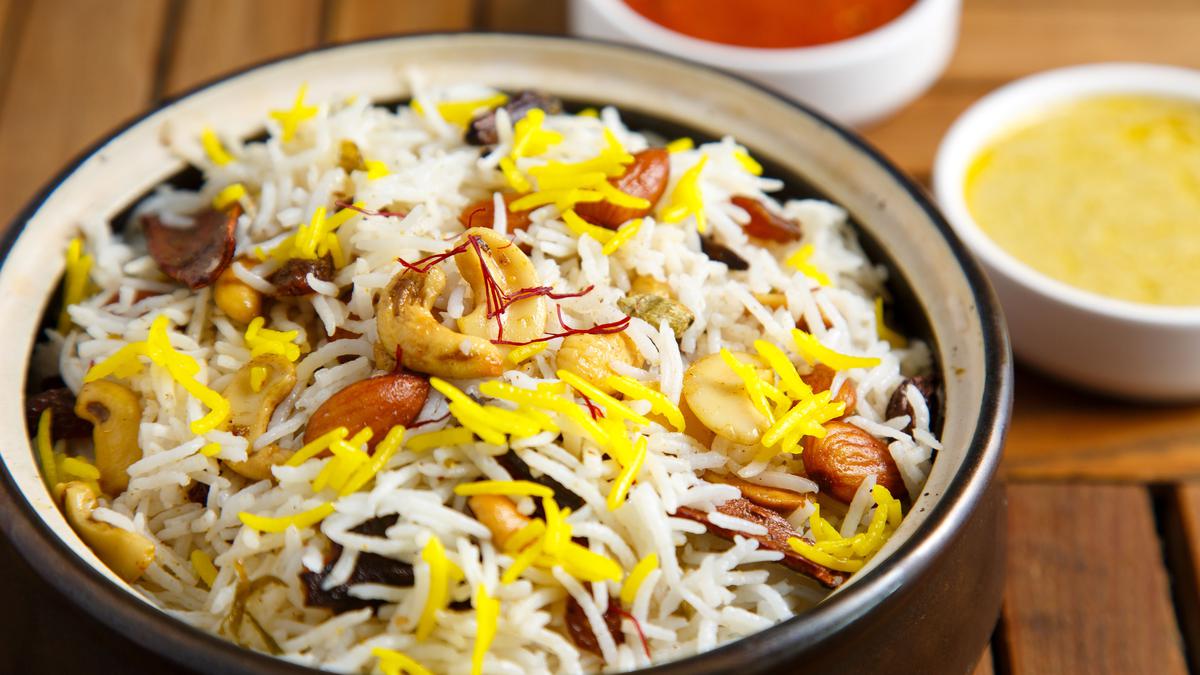
“‘Zer biryan’ was a technique where wooden sticks would be laid out on the base of the pan, and marinated meat would be placed on top. The pot would be heated slowly and the meat would cook without coming into contact with the vessel. When half-done, par-boiled rice would be spread over the meat, and the vessel would be sealed and cooked on dum (heat compress),” said Ms. Husain. Contrary to perception, vegetarian recipes were plentiful. Dishes like ‘navratan pulao’ and ‘pulao-e-anardana’ (made with pomegranate seeds) and gravies with chickpeas were commonly prepared.

Government initiative

Nuskha-e-Shahjahani was among the many rare manuscripts to be taken up for publication by the Government of Madras from early 1948. Lists were made from the collections of Sarasvati Mahal Library in Thanjavur and the Government Oriental Manuscripts Library in Madras and publication was overseen by expert committees drawn from the academia of the time.

The Madras Government Oriental Series published rare manuscripts in Tamil, Sanskrit, Telugu, Malayalam, Kannada, Persian, and Arabic from the Madras institution, while those in Tamil, Telugu, Marathi, and Sanskrit were selected from the Sarasvati Mahal Library. In a world where food is integral to televised entertainment, with nearly everyone a ‘master chef’, thanks to social media, Nuskha-e-Shahjahani harks back to a time when cooking was as much an art as a science.

source: http://www.thehindu.com / The Hindu / Home> News> India> Tamil Nadu / by Nahla Nainar / January 24th, 2024

Sahabzada Shaukat Ali Khan is Now No More

Tonk, RAJASHTAN :

Tonk, Rajasthan :

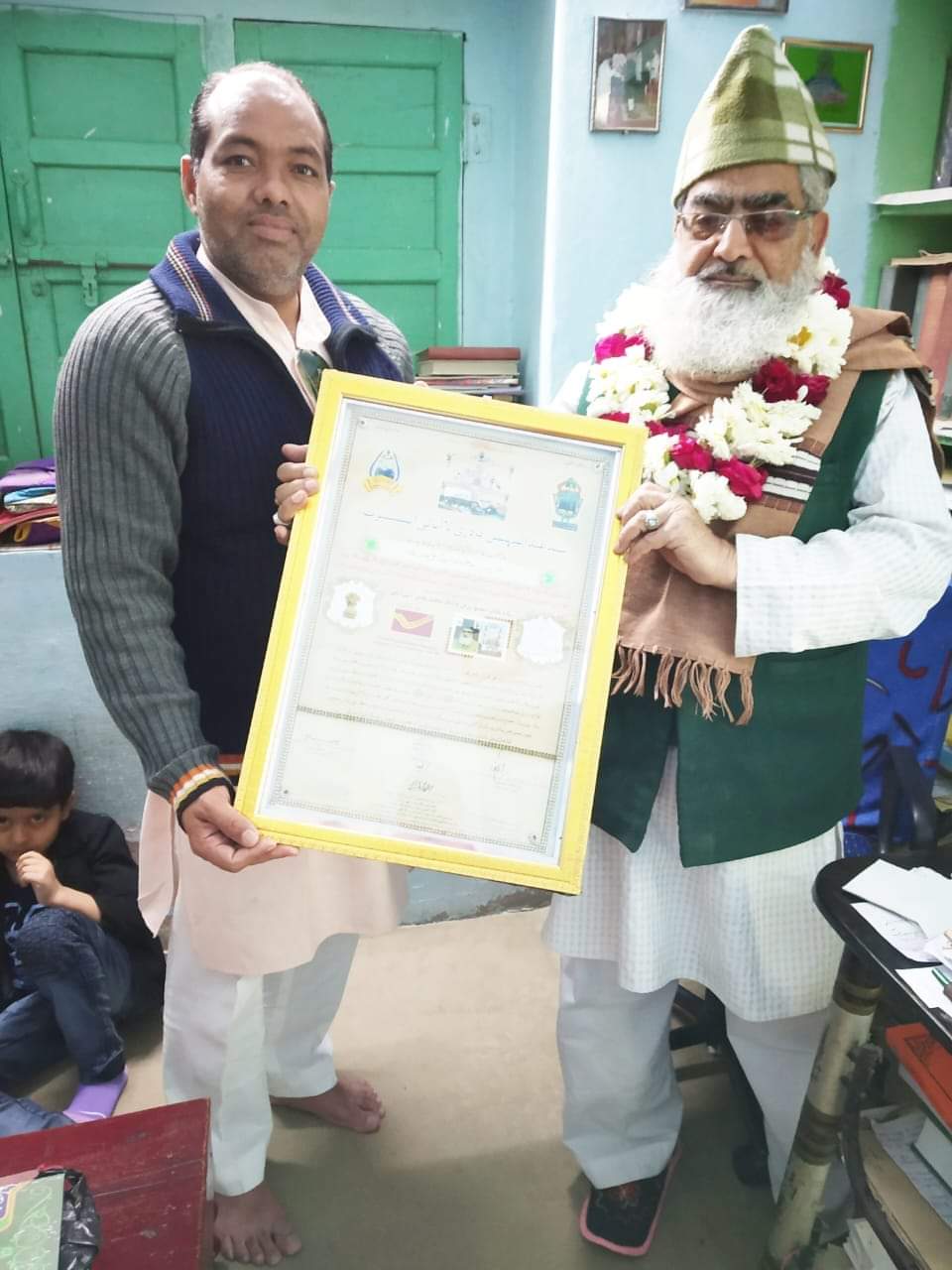
Shaukat Ali Khan, who received the “International Hero in Literature Award” from Cambridge University and was awarded the President’s Award, is now no more. He breathed his last on Saturday night during treatment in Jaipur. He was 87.

Born on 11 July 1936 in the family of Sahabzada Idris Ali Khan of Tonk, Shaukat Ali Khan is a distinguished personality of the Amiriya family. He was the first Director of Maulana Abul Kalam Azad Arabic-Persian Research Institute (APRI).

Sahabzada Shaukat Ali Khan participated in the International Sufism Seminar organized by India in Afghanistan.

In view of this, the then President Giani Zail Singh himself considered him worthy of being honored with the National Award.

Shaukat Ali Khan also received an award in a seminar organized by UNESCO.

Apart from being a writer, historian, translator, and poet, he possessed many salient features rarely found in the world of literature.

Shaukat Ali Khan with APRI team

The APRI, which has its own identity in the country and the world, is also the result of the hard work and dedication of Shaukat Ali Khan.

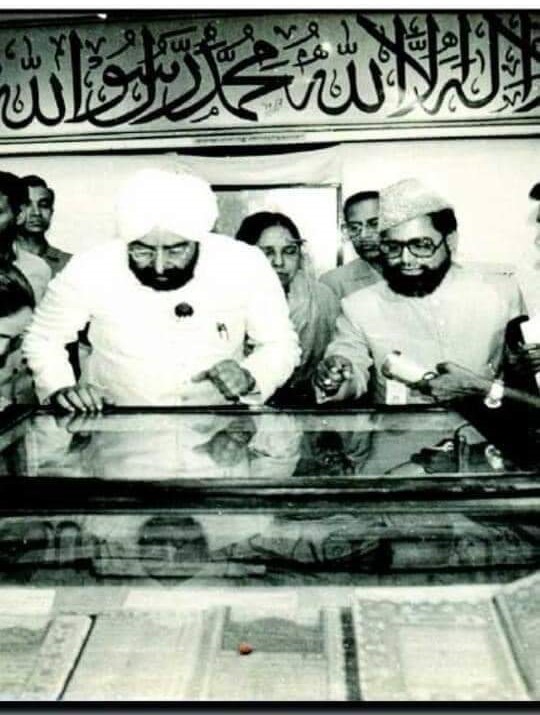
Shaukat Ali Khan with President of India Giani Zail Singh at APRI, Tonk

In 1986, then President Giani Zail Singh visited the APRI. At that time, he wrote, “I am happy that such a director and such an organization exists in Rajasthan, due to which Rajasthan is known in the Arabic-Persian world. This happens very rarely. The idea is that someone should establish a path for the simultaneous progress and development of both the languages. I am extremely proud that a single person has created a platform for the progress of the Arabic and Persian languages and made it popular in the world. For this, its director Shaukat Saheb should definitely get the National Award, which he deserves.”

The life of Shaukat Ali had many forms and colors. With his efforts, he not only converted a nursery into an institute but also brought glory to Tonk. The APRI is proof of his pioneering efforts and wisdom. As long as the APRI continues to exist, the name of Shaukat Ali Khan will be there.

Shaukat Ali Khan was initially appointed Nigran of Nawab Mohammad Ali Khan’s library. He collected about 50,000 Makhtutats and wrote about 60 books in different languages – two books in Arabic, 10 in Persian and about 45 in English.

He had been carrying out research and writing work for about 40 years. He was a scholar of Arabic, Persian, English, Hindi and Urdu languages. He has also served as a member of many national and international government organizations.

Shaukat Saheb, who presented papers at national and international conferences and seminars, also edited and translated 6000 manuscripts, and published about 300 articles in more than 100 journals in English and Urdu. There is a long list of honors received by him at the national and international levels as well as at the state level. After retirement, he was living his life as a Sufi saint.

People across the country, including Mujeeb Azad, Director of Tonk Arabic Persian Research Institute; Sahibzada Mohammad Ahmed Bhayyu Bhai, Chairman of Royal Family Tonk; Retired Research Officer Anwarunnisa Nadira, State General Secretary of Human Relief Society, Tehreek-e-Urdu Rajasthan Advocate Akhtar Khan Akela, Cricket Coach Imtiaz Ali Neelu, have expressed grief over his demise, calling it an irreparable loss for the Arabic-Persian Research Institute, Tonk residents, and the Tonk Royal Family.

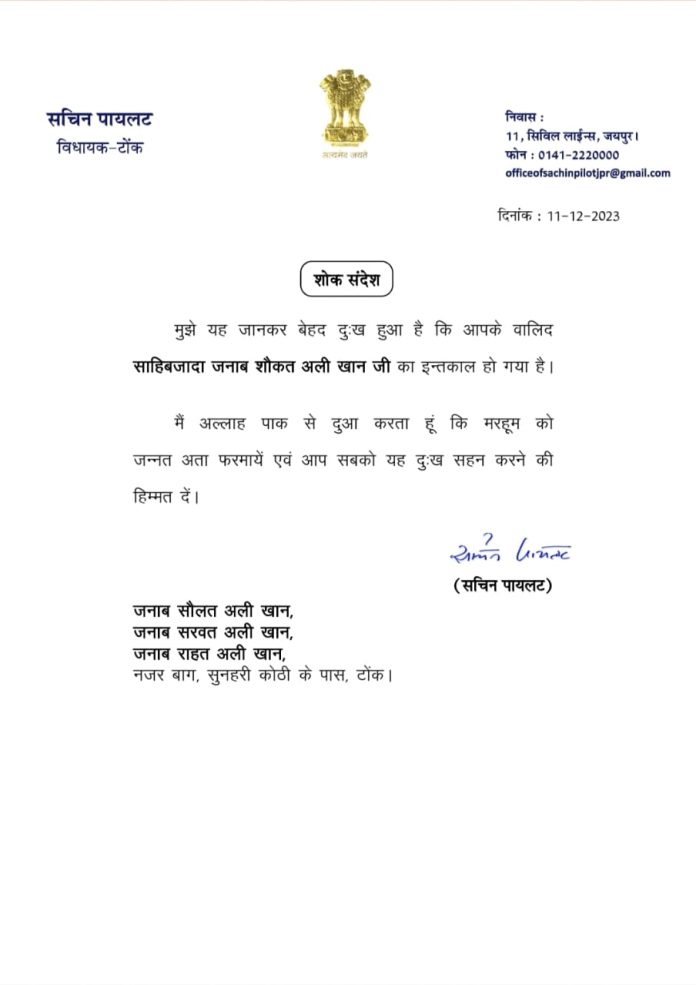
Condolence Letter by Sachin Pilot, MLA of Tonk

Sachin Pilot, MLA of Tonk has also sent a condolence message.

Chaudhary Akbar Qasmi, national convenor of Sanjhi Virasat Manch, has written that Sahabzada Shaukat Ali Khan was a descendant of Tonk Nawab and was one of the great intellectuals of Rajasthan. No one can deny his important role in establishing a big library (Arabic Persian Research Institute) in Tonk City and in raising it from the ground to great heights. As long as he was able to walk, he stood before writers and research scholars as a bright lamp of hope.

He was indeed a man of knowledge and grace.

source: http://www.radiancenews.com / Radiance News / Home> Focus> Markers of Excellence> Obituary / by Raheem Khan / December 12th, 2023

Nawab Shaffan Khan, heir of Nawab Khan Bahadur Khan, passes away – Urdu News Bareilly

Bareilly, UTTAR PRADESH :

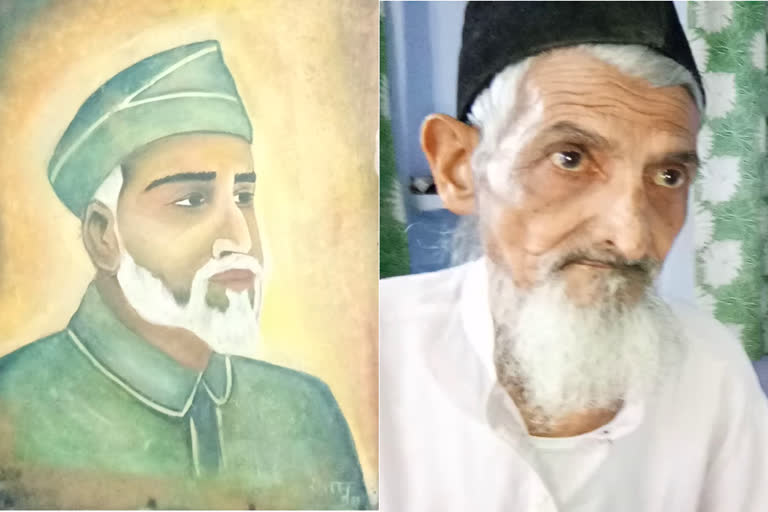
Nawab Shafan Khan, the heir of Nawab Khan Bahadur Khan, who kept the Rohilkhand region free from British rule for eleven months during the 1857 freedom movement, has passed away.

Nawab Shafan Khan breathed his last at the age of 80. The sacrifices of his ancestors are recorded in golden words in the pages of history.

Death of Nawab Shaffan Khan, heir of Nawab Khan Bahadur Khan

Nawab Shafan Khan, a resident of Shahabad area of ​​Bareilly city, has passed away. He was laid to rest in Bhor graveyard near his home after Zuhr prayers. He was the heir to a great family whose ancestors ruled not only Bareilly but also in about 9 surrounding districts. His great-grandfather Nawab Khan Bahadur Khan had set a great example of bravery and sacrifice in the style of his namesake.

He was a hero of the 1857 revolution. He was born in 1791 into a Nawab family. He was the grandson of Rohilla Sardar Hafiz Rehmat Khan.

The slogan of revolution was raised in Meerut on 10 May 1857 and when the news of it reached Bareilly on 14 May, preparations were intensified here too. On 31 May, Khan Bahadur Khan and his generals and soldiers, led by Subedar Bakht Khan, declared a rebellion against the British government.

Tomb of Nawab Khan Bahadur Khan

The then magistrate, civil sergeant, jail superintendent and principal of Bareilly College, “C.Buk”, were killed by the revolutionaries. By five in the evening, the revolutionaries had taken control of the Bareilly division.

On June 1, these revolutionaries took out a triumphant procession. When the procession reached Kotwali, a large number of Bareilly citizens crowned Nawab Khan Bahadur Khan and elected him the Nawab of the Bareilly division.

Heir of Nawab Khan Bahadur Khan

An example of the bravery of Nawab Khan Bahadur Khan is that despite the numerous atrocities and abuses of the British government and being a powerful ruler, he kept the Bareilly division free from the rule of the British government for eleven months.

However, later, the British government arrested Nawab Khan Bahadur Khan while fighting a war at one place. He was brought to the same Kotwali where he was awarded the title of Nawab. He was imprisoned and kept in an unknown place.

Then on February 24, 1860, the hero of the urban people was brought on foot to the Kotwali and hanged on the same day at 7:10 am. A strange silence fell in the city and darkness prevailed.

Heir of Nawab Khan Bahadur Khan

To prevent any unrest in the city after the hanging of Nawab Khan Bahadur Khan, his body was taken to the district jail in an armored police vehicle and buried in the premises of the district jail.

Heir of Nawab Khan Bahadur Khan

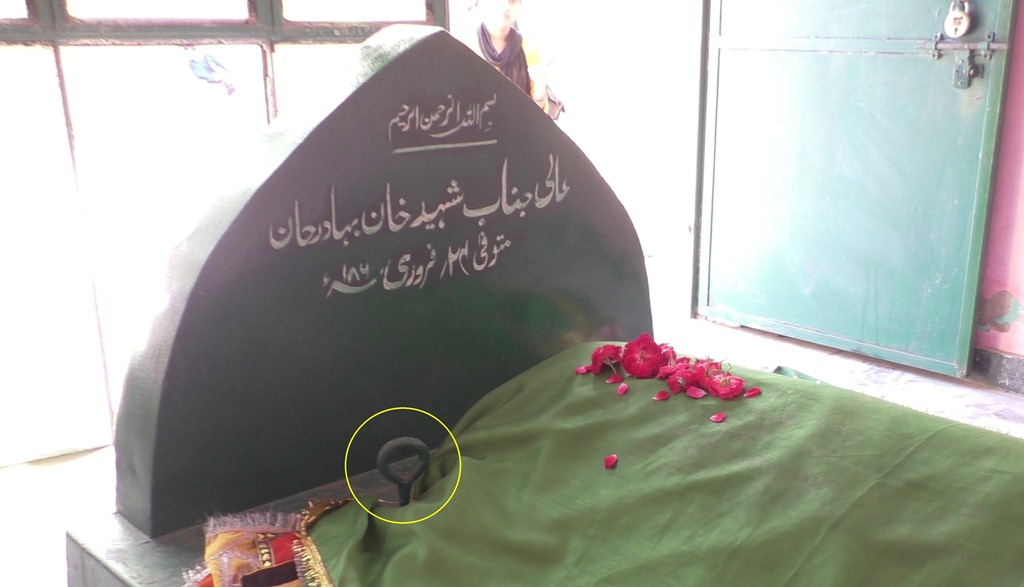
The special thing is that he was buried with irons. Even today, the irons are clearly visible on the head of his grave. The British government had also buried Khan Bahadur Khan in the prison premises so that people could not gather at his grave and there would be no further excitement in the revolution.

Now let us mention Nawab Shafan Khan, the heir of Khan Bahadur Khan. He struggled for life and livelihood till his last breath. Despite belonging to the Nawab family, his family had to face difficulties for years or even their entire lives. Despite this, the struggle did not end in his life till his last breath.

According to his younger brother Nawab Liaquat Khan, Nawab Shaffan Khan’s health had deteriorated for the past five days. He was unable to go to the mosque to offer prayers during those days. Due to the weak financial condition of the family, he was undergoing treatment at home. But in the morning, his health deteriorated further and he died after a few moments.

source: http://www.etvbharat.com / ETV Bharat – Urdu / Home> Urdu> State / by Urdu translation into English / July 02nd, 2021

Roshan Ara Bagh: Where sleeps a princess

DELHI :

Being a heritage site and a monumental garden, Roshanara Park is one of the many gardens Delhi boasts of. With the unmarked tomb of princess Roshan Ara Begum, her elegant palace, and a dense garden, the park narrates a beautiful tale of lost history

All photos: Ali Fraz Rezvi

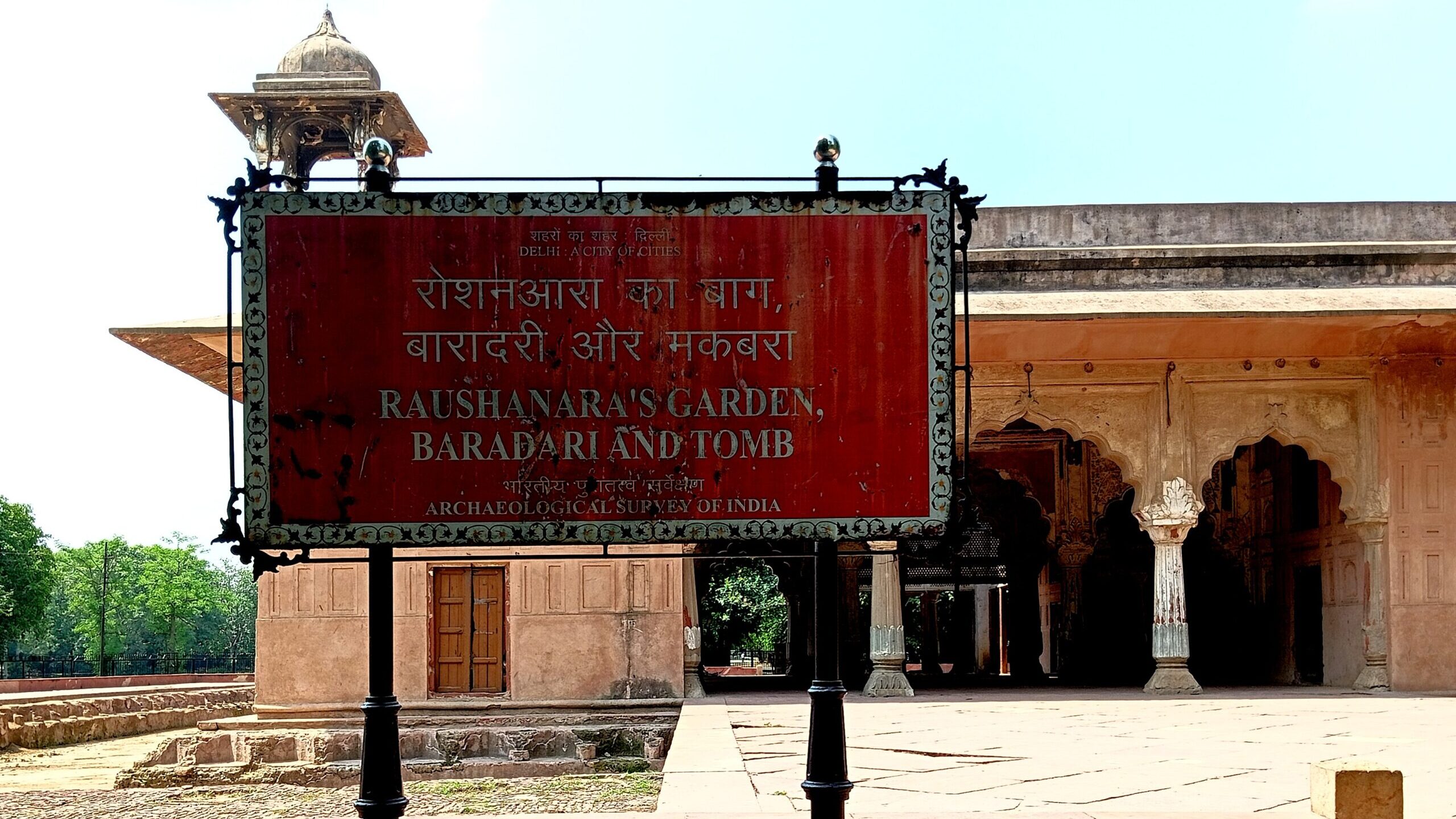
Within a few kilometres from the Pul Bangash Metro Station, and quite near to Delhi University’s north campus, stands Roshan Ara Bagh – a Mughal monument dating back to the 17th century AD.

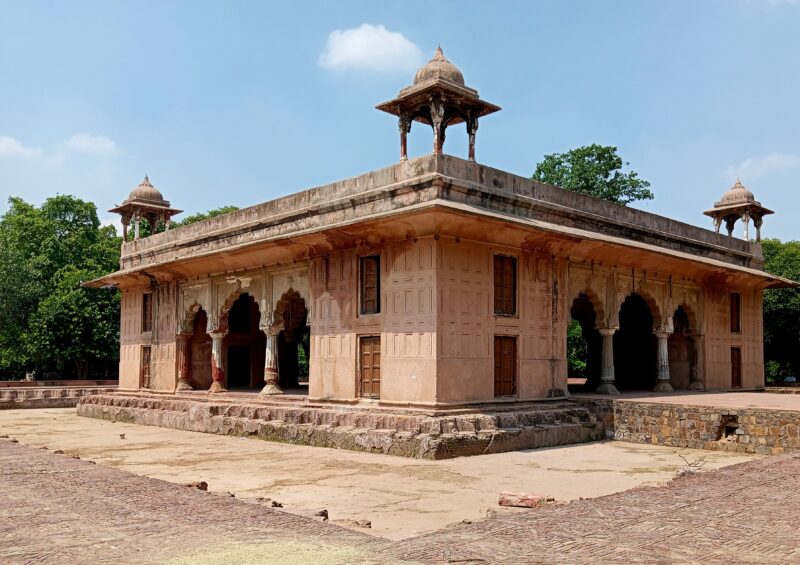
Named after Emperor Shah Jahan’s daughter Princess Roshan Ara Begum, the heritage site was once a palace and then turned into the princess’ tomb. It now serves as a garden under the Municipal Corporation of Delhi (MCD).

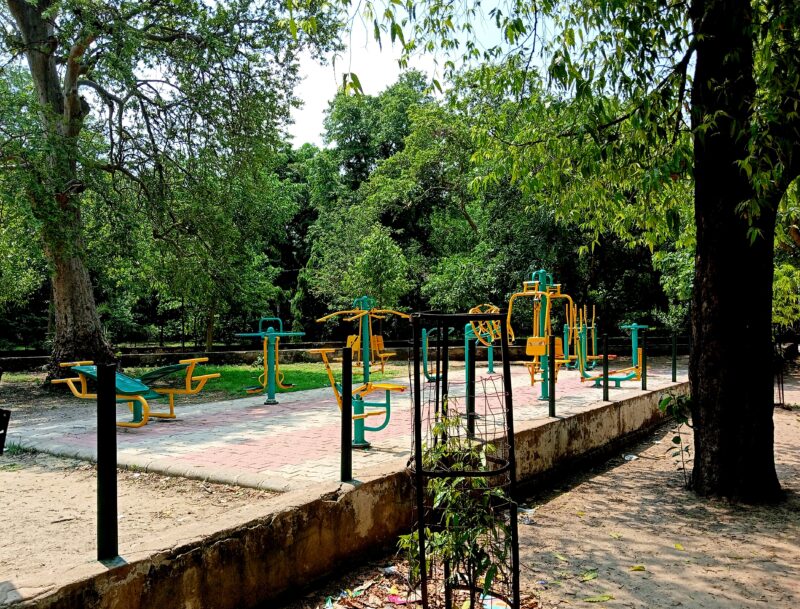
The heritage site spans over a large area of 8.5 acres. It houses an open gym, a playground, a garden and an ignored mausoleum, which is yet to be revamped as a world-class nursery by October 2022.

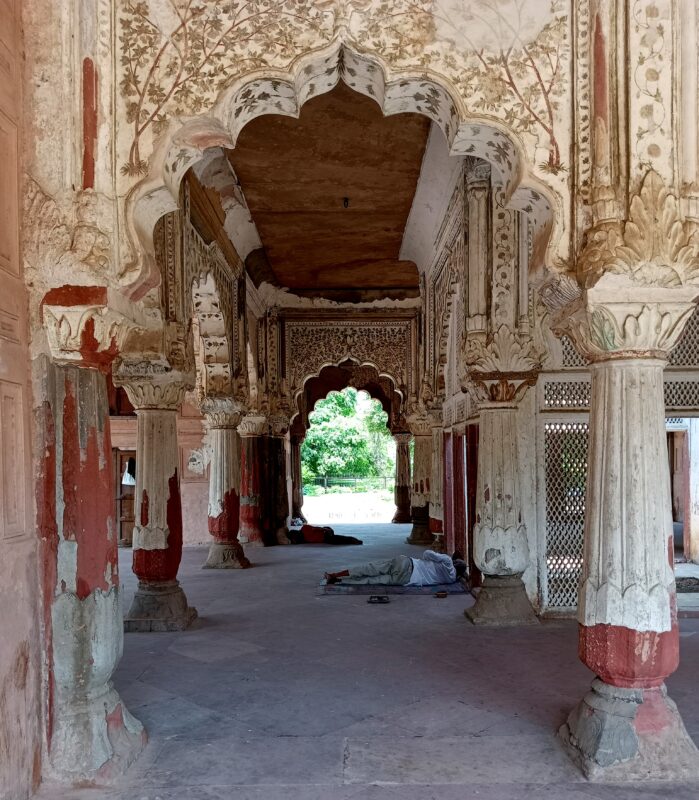
The last surviving memoirs, one being an unmarked grave, lies at the centre of the palace’s garden area. The architecture here is beseeching, with dilapidated walls and pillars, wooden doors and windows.

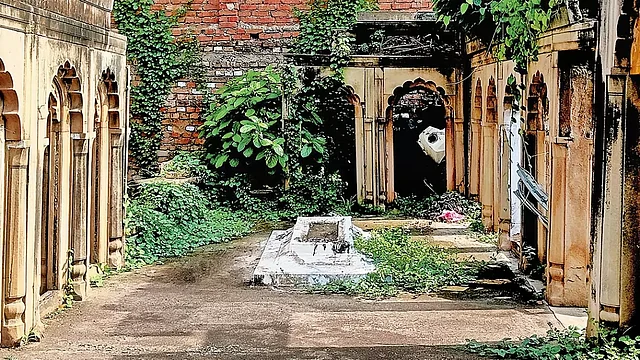
The tomb, where exists the unmarked grave of Roshan Ara Begum, has suffered the most with its marble jaalis crumbling from three sides and broken at the fourth. The marks of repairs by the ASI on the pillars and walls are nothing more than a cemented patch.

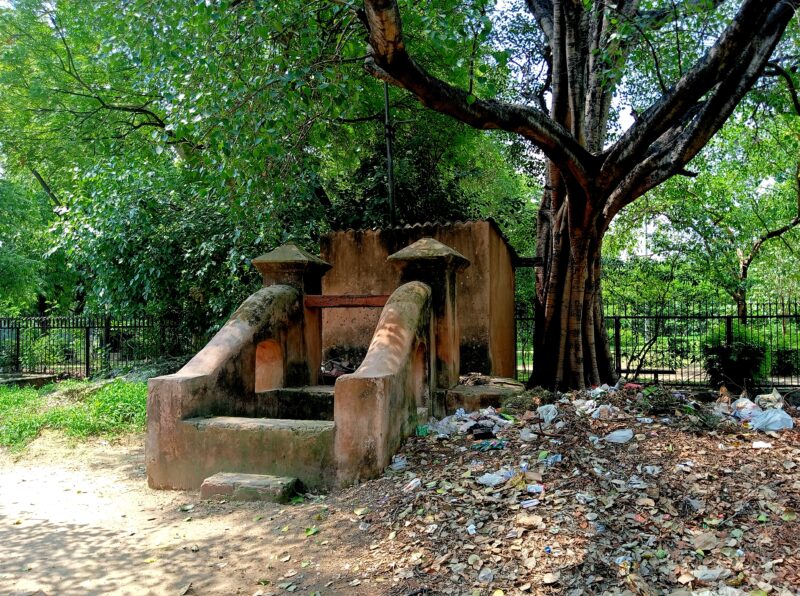
Along with the surviving parts of the palace which includes a bara-dari (a structure with twelve gates) and a well, there exists the last remains of a lake which covers around four acres inside the garden. The lake, enclosing the tomb, was initially a part of the palace of Roshan Ara Begum. But it has now dried up and turned into a garbage dump.

The 372-year-old structure with a garden of Mughal grandeur and architecture was commissioned by Padshah Begum – the First lady of the Mughal Empire in 1650 AD. It is used by the residents and the visitors till date.

Despite being in a distorted condition, the site is still magnificent and stands as a reminder of an ignored past. 

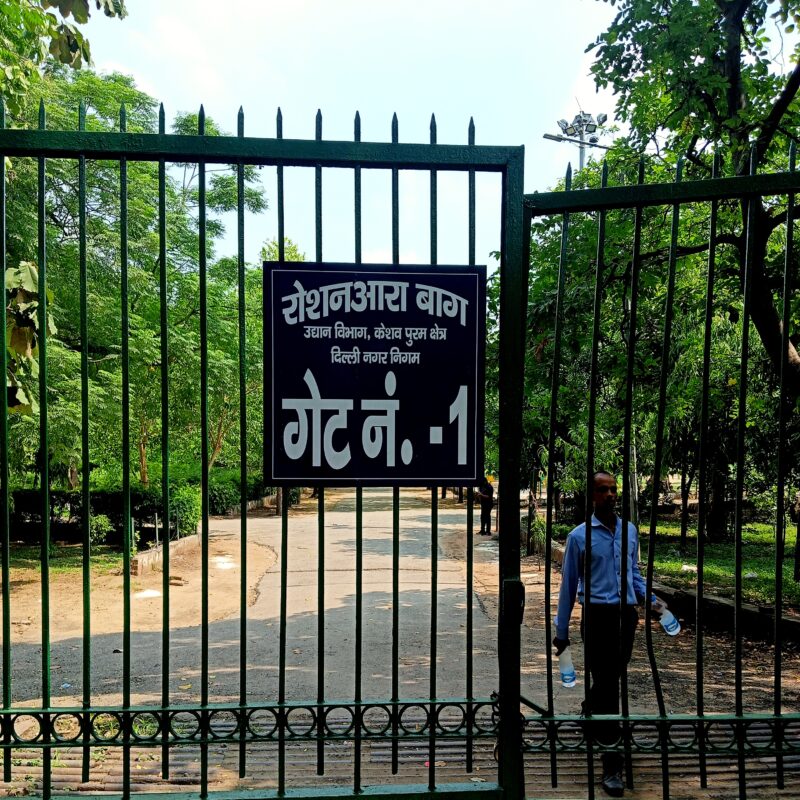
The main entrance to the Roshan Ara Garden.

People chit-chatting after a long morning walk

The open gym in the park area.

A well from the past.

The bara-dari around the tomb often serves as a resting place for visitors in the daytime.

Remnants of the lake.

Structure that survives.

The last breaths of a breath-taking monument.

A man and a dog, on the two sides of the princess’ grave.

source: thepatriot.in / The Patriot / Home / by Ali Fraz Rezvi / All photos: Ali Fraz Rezvi / August 22nd, 2022
Rare prints from Tipu Sultan era acquired by city-based collector

Bengaluru, KARNATAKA :

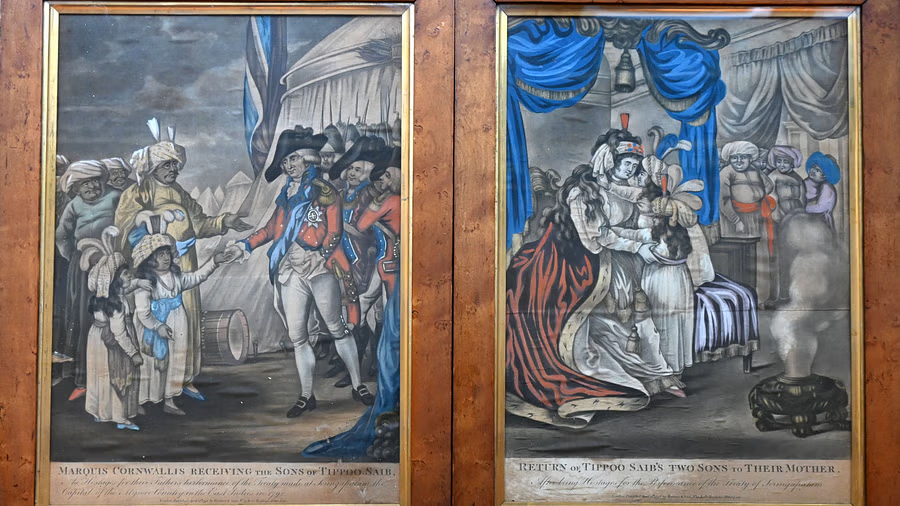
One print depicts Tipu’s two sons being taken hostage by Lord Charles Cornwallis, after the third Anglo-Mysore war in February 1792, and the other is a portrayal of their return to their mother.

The prints were made in 1796 by publisher Haines. / Credit: DH Photo/ B K Janardhan

A city-based art collector, Sunil Baboo, has recently acquired two rare prints of paintings from Tipu Sultan’s era. They capture significant moments in the history of the erstwhile Kingdom of Mysore.

One print depicts Tipu’s two sons being taken hostage by Lord Charles Cornwallis, after the third Anglo-Mysore war in February 1792, and the other is a portrayal of their return to their mother. 

History has it that Cornwallis laid out severe conditions Tipu had to adhere to in the Treaty of Seringapatam. He demanded that Tipu hand over his sons to British custody, until the king carried out all the demands he had agreed upon. 

“While there are multiple artworks depicting the moment of surrender, it is rare to come across one capturing the sons being returned to Tipu’s wife,” says 65-year-old Baboo, who has been collecting historic books, maps, aquatints and documents since 1982.

The creator of the paintings is unknown, but they were turned into prints in 1796 by publisher Haines. This was even before the defeat and death of Tipu during the fourth Anglo-Mysore war in 1799. “Many of these artists never set foot in India. They created these images based on what was described to them. While there was an artistic bent to them, it was more a way for them to document important events,” Baboo explains. Many of these prints were originally etchings and engravings that were coloured by hand, adds the Gangenahalli resident.

He learnt of the prints a few months ago, and was able to edge out some of the biggest auction houses like Bonhams, UK. “They were planning to auction them in June 2024, but I was able to procure them through my contacts,” he explains. Over the years, Baboo has built a wide network of collectors and auction houses that tip him off on new discoveries. Most of this category of prints are found in family collections of descendants of French and British soldiers of the colonial period. 

The prints, once discovered, are restored and framed. Baboo’s 16×14-inch prints came with a lot of archival tape and paper at the back of the frame. “Presumably to reinforce them. They can be kept in this condition for a long time,” he says. 

source: http://www.deccanherald.com / Deccan Herald / Home> India> Karnataka> Bengaluru / by Rashmi Rajagopal / January 24th, 2025