Category Archives: Travel & Tourism

India first country to make entire Haj process digital: Minority Affairs Minister

UTTAR PRADESH / NEW DELHI :

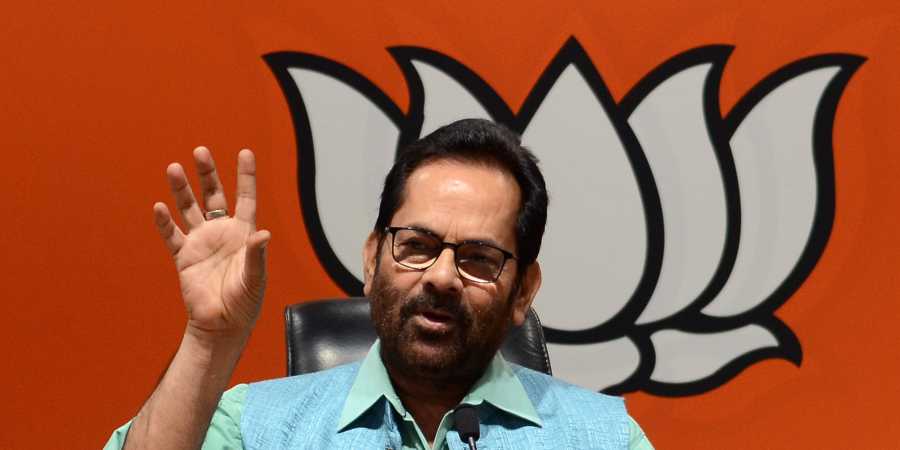
Naqvi made the remarks after signing the bilateral annual Haj 2020 agreement between India and Saudi Arabia with Haj and Umrah Minister of Saudi Arabia Mohammad Saleh bin Taher Benten.

Minority Affairs Minister Mukhtar Abbas Naqvi (File photo | PTI)

Jeddah / New Delhi :

India has become the first country to make the entire process for pilgrims going on Haj completely digital, Minority Affairs Minister Mukhtar Abbas Naqvi said on Sunday after signing the bilateral agreement for next year’s pilgrimage with the Saudi Haj Minister in Jeddah.

An online application, e-visa, Haj mobile app, “e-MASIHA” health facility, “e-luggage pre-tagging” providing all information in India itself regarding accommodation and transportation in Mecca and Madina will be provided to 2 lakh Indian Muslims going for Haj in 2020, he said.

Naqvi made the remarks after signing the bilateral annual Haj 2020 agreement between India and Saudi Arabia with Haj and Umrah Minister of Saudi Arabia Mohammad Saleh bin Taher Benten.

He said for the first time facilities were provided for digital pre-tagging of pilgrims’ baggage.

This will ensure the Indian pilgrims will get information in India itself about the building and the room allotted to them as well as the transportation details for travel after reaching the airport in Saudi Arabia, Naqvi was quoted as saying in a statement issued from his office.

Even the mobile phone SIM card has been linked to mobile App which will ensure pilgrims immediately get all the latest information regarding Haj in Mecca and Madina on their mobile phones.

This year, a 100-line information centre has been established at the Haj House, Mumbai for providing information regarding the entire Haj process.

A health card is being provided to Indian Haj pilgrims in the country, Naqvi said.

E-MASIHA (E-Medical Assistance System for Indian Pilgrims Abroad), an online system to create and maintain the complete health database of Indian pilgrims along with doctors’ prescriptions, medical treatment as well as medicine disbursal, has been developed to deal with any emergency in Mecca and Madina, Naqvi said.

“Haj Group Organisers (HGOs) have also been connected with 100 per cent digital system which has ensured transparency in their functioning and has also ensured better facilities to Indian Haj pilgrims,” Naqvi said.

“A portal of HGOs http://haj.nic. in/pto/ (Portal for Haj Group Organisers) has been developed which contains all the details of HGOs and their packages,” the minister said.

The Ministry of Minority Affairs has taken effective and successful steps during the last four years to make Haj and other programmes completely digital or online as a part of Digital India campaign of Prime Minister Narendra Modi, Naqvi said.

Making the entire Haj 2020 process digital has helped in providing better facilities to people going for Haj and ensured transparency by eliminating middlemen, he said.

The minister said the Indian government – in coordination with the Saudi Arabian government, the Indian Consulate and various concerned agencies in Saudi Arabia – was working to ensure safety, better services and medical facilities for the pilgrims during the Haj.

In 2020, a total 2 lakh Indian Muslims will perform Haj that too without any subsidy, he said.

Naqvi said that till November 30, 1.76-lakh haj applications, including 15,000 online applications from Jammu and Kashmir, had been received.

The last date of submission of Haj application is December 5, 2019.

The Saudi Arabian government has always played an active and effective role to ensure safety and better facilities to Indian Haj pilgrims, Naqvi said, adding that it is a part of strengthened bilateral relations between the two countries.

India-Saudi Arabia relations have achieved newer heights under the leadership and guidance of gulf nation’s King Salman bin Abdulaziz and Prime Minister Modi, Naqvi said.

Both the countries share strong cultural, historical, economic and political relations, he said.

Saudi Crown Prince Mohammad bin Salman’s visit to India and Prime Minister Modi’s visit to Saudi Arabia in October 2019 have further strengthened relations between the two countries, the minister said.

Naqvi thanked King Salman for his guidance and active support to make Haj 2019 successful.

Indian Ambassador to Saudi Arabia Ausaf Sayeed, Additional Secretary Ministry of Minority Affairs Jan-e-Alam, Consul General Mohd Noor Rehman Sheikh, Haj Committee of India Chairman Nabi Jinna Sheikh, Haj Committee of India CEO M A Khan and other senior officials were present on the occasion.

source: http://www.newindianexpress.com / The New Indian Express / Home> Nation / by  PTI / December 01st, 2019

24 Hours In Life Of Rofikul Islam: Quack-Quack, Hoot-Hoot — Of Ducks And Owls

ASSAM  :

Rofikul Islam is a professional wildlife guard and much in demand for his amazing knowledge of birds and animals. Delhi’s Deputy Chief Minister Manish Sisodia is among his top clients.

RofikulIslamMPOs22nov2019

Quack! The gander gives away the nest’s position behind an arbour of foliage. Mrs White-Winged Duck responds with a quick quack-quack. Rofikul Islam raises an arm, winks at his team. And they, finger on trigger, behold Assam’s state bird—so elusive and endangered that perhaps only 200 pairs rem­ain in the wild on this planet—with unabashed sideways glances of looky-loos. They go click, click, click. But the light is low; the sun has just yawned out on this island in the Jia Bhoroli, the livewire of Nameri national park straddling Assam and Arunachal Pradesh.

____________________________________

Will he stop prying into Mr and Mrs DUck’s private moments? He won’t.

____________________________________

Rofikul, a professional wildlife guide with AllIndiaBirdingTours, has prepared well for the sortie. This morning is a long trek—boating, fording, and pushing their trusty legs to their limits. Waking up to a burst of tweets, retweets, pa-chip-chip-pa-tip (sounds like potato chip and dip?), breakfast is hearty in the camp. “By noon, the team logs nearly 80 species of birds,” says Rofikul, a Kaziranga nat­ive who turned 30 this November. Growing up near the fam­ous park helped him hone a guide’s primary asset: like telling a Crested Kingfisher from a finch by their calls. Booked through the year, his adventures are on unplumbed land—jungles on the Assam plains, in the Northeast’s hills and snowcapped Sikkimese mountains. His guest list? Long and impressive; includes Delhi deputy CM Manish Sisodia.

Back to camp, lunch,  another exp­edition (short; sundown gathers pace), tea/cookies/Maggi, and it’s almost time for dinner around a bonfire. The thatch-and-bamboo cottages, the snug beds wait invitingly. But the guardian owl is on his nightly run. Hoot hoot! Everything screeeeeee-s to a halt.

source: http://www.outlookindia.com / Outlook / Home> Magazine> National / by Rituparna Kakoty / November 21st, 2019

India’s top 5 revenue generating monuments were all built by Muslim rulers

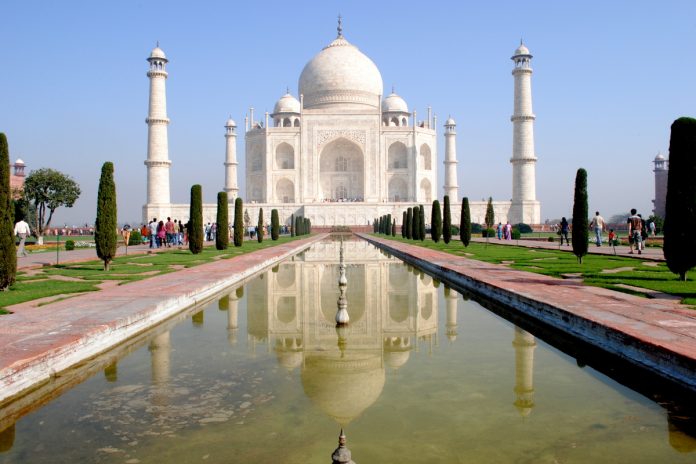
Taj Mahal | Commons
Taj Mahal | Commons

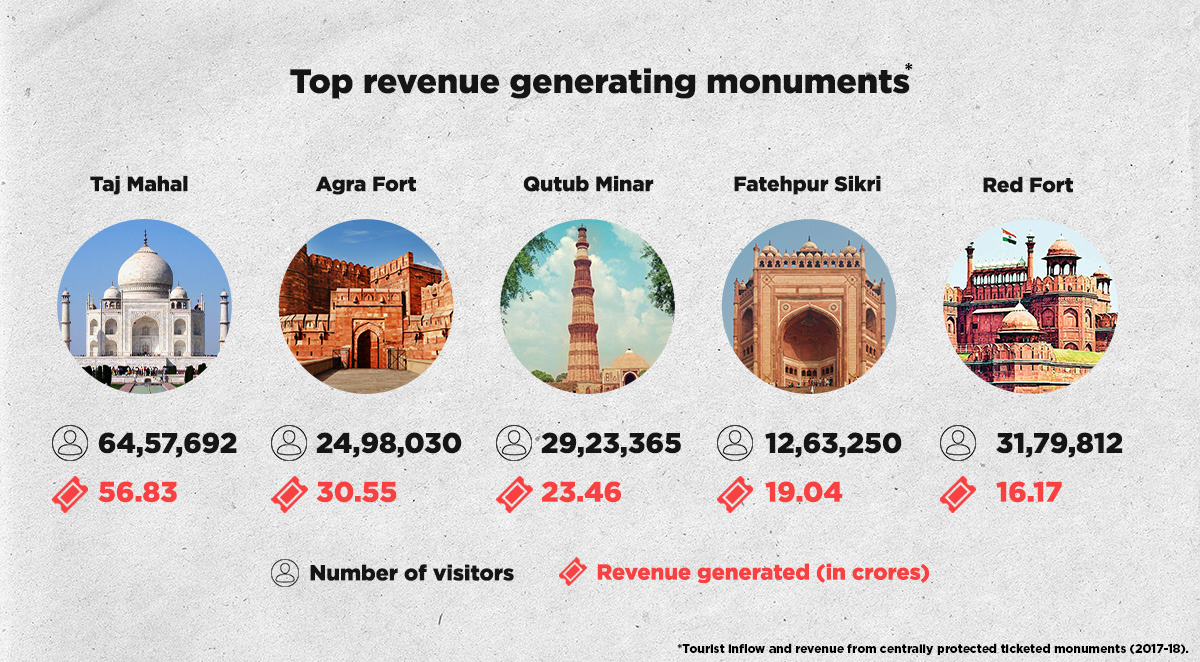
The Taj Mahal and 4 other monuments earned Rs 146.05 crore, more than half the total revenue generated by centrally-protected monuments, in 2017-18.

New Delhi:

 Fringe Hindu groups and even some BJP leaders may have sought to belittle their significance but official data shows that India’s top five revenue generating monuments were all built by Muslim rulers – the Taj Mahal, Agra Fort, Qutub Minar, Fatehpur Sikri and Red Fort.

While Qutub Minar was built by rulers of the Delhi Sultanate, the rest were constructed by the Mughals.

These five monuments together earned the government Rs 146.05 crore in 2017-18, according Archaeological Survey of India (ASI) data. This is more than half the total revenue of Rs 271.8 crore generated by all centrally-protected monuments.

The Print
The Print

The Taj Mahal, which has been in the news for all the wrong reasons in recent years, with the Supreme Court last month pulling up the ASI for its poor maintenance, continued to be the highest earner at Rs 56.83 crore.

While some politicians sparked a controversy last year by arguing that the Mughal-era monument did not represent Indian culture, the number of visitors to it, both Indian and foreign, only increased since 2016-17.

A total of 64.58 lakh people visited the Taj Mahal in 2017-18 compared to 50.66 lakh in 2016-17.

Last year, the UP tourism department had even omitted the Taj Mahal, a UNESCO world heritage site, from a brochure listing the state’s principal attractions.

With total earnings of Rs 30.55 crore, Agra Fort built by Mughal emperor Akbar, another UNESCO world heritage site, was the second highest revenue generator in the last financial year.

While the Konark Sun Temple in Odisha came second after the Taj Mahal in terms of number of visitors (32.3 lakh), it generated only Rs 10.06 crore as revenue. This, officials said, is because the temple is mostly popular only with Indian tourists, with 32.21 lakh domestic visitors making the trip last year.

While Indian tourists are charged Rs 30 per head as entry fee to world heritage monuments across the country, foreign tourists have to pay Rs 500 each.

“It is impossible to communalise the entire Indian population through the meaningless political venom spewed by politicians,” said historian S. Irfan Habib, explaining the increase in visitors to the Taj.

“No matter what they say about the Taj Mahal and Red Fort, Indians will continue going there,” he added.

source: http://www.theprint.in / The Print / Home> India> Governanace / by Sanya Dhingra / June 07th, 2018

Giving wings to children’s imagination, this drone pilot aims for sky

Lucknow, UTTAR PRADESH :

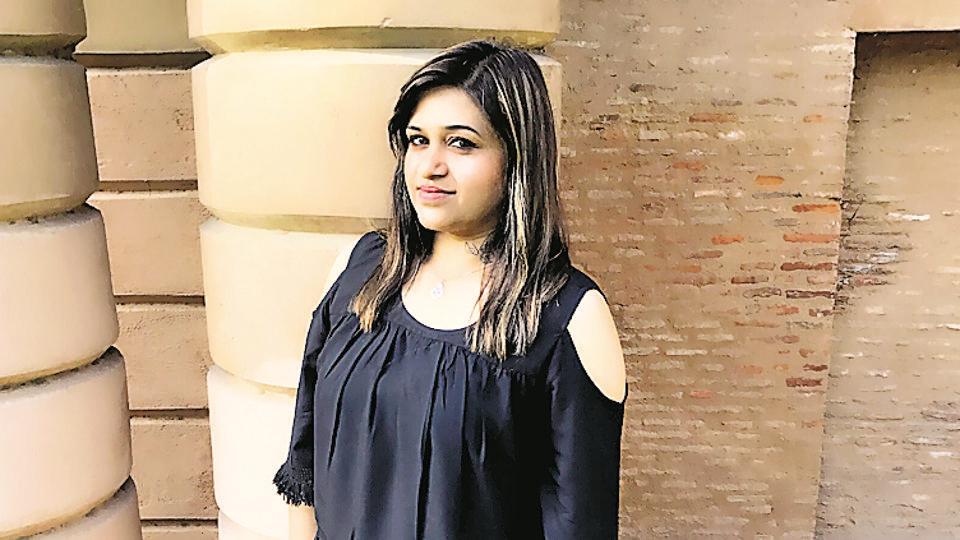
With a master’s degree in innovation and management from UK, Mohsina’s exceptional work has been showcased in a series of coffee table books.

Mohsina Mirza (HT Photo)

Driven by a passion to excel, this teacher by profession wants to give every child wings to fly high.

Meet Mohsina Mirza, a drone pilot who is motivating millions of children across the country. A pioneer in drone piloting, Mohsina has introduced the concept of aviation and flying technology in schools.

Talking about her interest in the field, she says, “When I completed my BTech-PGDBM from UK, I realised that my interest in robotics and drones has increased manifolds. I knew I wanted to do this in future but as I learnt and explored the subject I realised it was time to pass on the knowledge to kids. I knew the concept will be of interest to many children who have nothing but books on the topic. Practical is equally important as theory and this was my mantra.”

Talking about her choice of an out of the box subject, she says, “I always had this in mind that I would do something different. Being a female, I wanted to bring in more girls along with me. I knew this was not something routine and it would be difficult for me to make people understand its importance. But I also had firm belief that with one right step everything will fall into place.”

“I fail to understand why people stick to conventional and routine in any profession. Why do they shy away or are afraid to explore? I decided to deviate from regular teaching stuff and innovate something interesting and think beyond books,” she remarks.

With a master’s degree in innovation and management from UK, Mohsina’s exceptional work has been showcased in a series of coffee table books – ‘Secret of Mart’, ‘Mausoleum of Boulone Lise’ and ‘The Lat’. At present, her passion for aerial photography is taking most of her time other than training children in the subject.

Speaking about her new venture, she adds, “I launched my new dream venture Techno Kids in collaboration with InveroTech. This is a one-of-its-kind robotics and aviation flying club where children in the age group of 6 to 18 years get exposure to aviation and flying technology. Children are trained to pilot their own self-made flying robots and fixed wings, and become future ready.”

With 10 exclusive flying robots and aircrafts of various sizes, she is teaching skills to countless school-going boys and girls of the city who have interest in technology and robotics. She takes regular classes at La Martiniere College that are open to students of all the schools.

“My classes are for all students irrespective of their school or city. My club provides basic knowledge to students who aspire to take up piloting, engineering and aerial photography as their profession after 10+2,” she says. “We use world class drones, variables and more for practical usage. We also use automated drones for all age groups and segments. In senior techno group, we have everything for aero modelling, scratch building of RC models, glider aircrafts, assembling and flying of different aircraft and remote controlled models. I strive to help children develop and pursue their interest in aerial photography or robotics,” says Mohsina.

Speaking about her love for innovation, she says: “I am excited about my new invention, an air selfie chip, which is set to roll out in a couple of months. I am waiting for little support from some company. With this chip in the phone, you can click selfies by lifting your hand and leaving the phone in the air.”

source: http://www.hindustantimes.com / Hindustan Times / Home> India> Cities> Lucknow / by  S. Farah Rizvi , Lucknow, Hindustan Times / April 17th, 2017

From the Nawab’s Kitchen

Murshidabad, WEST BENGAL :

Murshidabad, the seat of Mughal power in Bengal, serves up an impressive cuisine

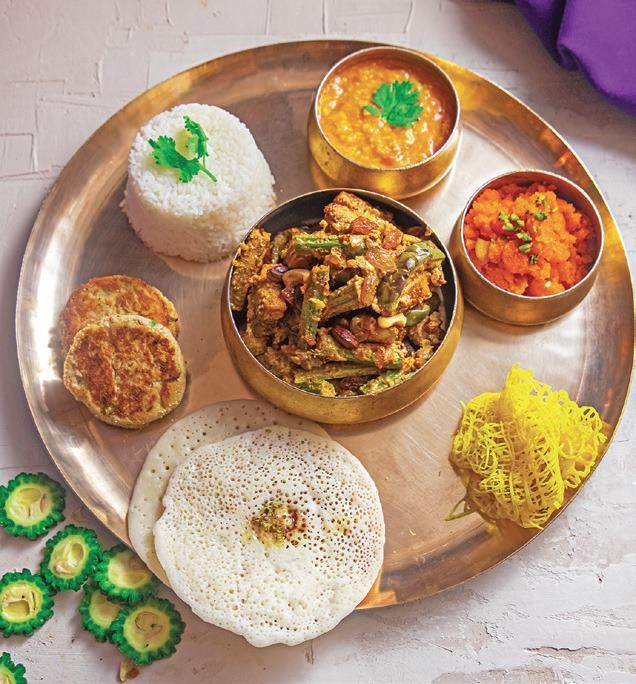
A vegetarian thali; dal bada; bhapa maach; gosht biryani;

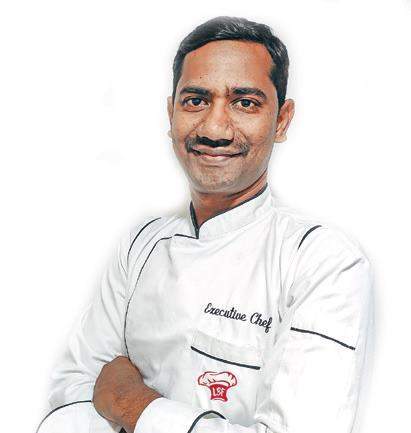
Mention Murshidabadi cuisine, and many foodies would look at you wonderingly. A well-kept secret, this district, which in the 18th century was a Mughal seat of power and ruled over undivided Bengal, Bihar and Odisha, can surprise you with its subtle flavours. Executive Chef Syed Mustaque Murshid, a descendant of one of the earliest settlers in the region, introduced some signature dishes from the Murshidabadi platter to the Delhi palate at Zambar, Ambience Mall, Gurugram, during a weeklong Murshidabadi Utsab this month. Tracing his roots to 23 generations, Murshid learnt cooking from his mother.

ChefMushtaqueMPOs29oct2019

He says, “Murshidabadi cuisine is one of the oldest cuisines of India. Being a chef from Murshidabad, I want the masses to know more about this and reassert that West Bengal is more than just Bengali cuisine. Food has always been known to break barriers between communities and Murshidabadi cuisine is the best example of how we slowly imbibed the Persian culture and married it with our local flavours to come up with something delectable.”

Murshidabadi cuisine is often known as a lighter version of the rich Mughal food and like any Mughal dish, it involves the trademark slow preparation, grounding of the masalas on a sil-batta, etc. It emerged at a time when ‘Mughaliya’ cuisine—or the food that the Mughals brought with them to India—was merging with different Indian tastes and giving birth to newer cuisines. The popular Awadhi and Hyderabadi cuisine were born during this period, as were the cuisines of Rampur, old Delhi, and of course, Murshidabad.

The influence is quite apparent in dishes such as the dalchini gosht (mutton flavoured only with cinnamon), boti seekh kebab, and of course, the trademark biryani—which is actually a poorer version of its richer Mughal cousin. The biryani comes with equal portions of mutton and potatoes and is more rustic in its use of masalas, unlike the subtle aroma of the Mughal version. The tikiyas that come in a variety of kinds—from prawns, to mutton to beetroot—are a firmer version of the typical succulent Mughal kebabs. Unlike its Mughal counterpart, the most sought-after qormas in Murshidabad are vegetarian—the aloo qorma and yam qorma.

The cuisine also boasts a fair amount of Bengali influence. There is the very traditional shukto (a milky mix of vegetables tempered with paanch phoron), albeit with fried nuts and sans the bitters. There is also the bhapa maach (a steamed fish with curd, mustard and coconut). A very subtle dish, Murshid’s version was truly magnificent.

Vineet Manocha, Senior Vice President, Culinary, Lite Bite Foods Pvt Ltd, shares, “At Zambar, we strive to offer local flavours from different regions of India. Murshidabadi Utsab was in line with our philosophy to promote regional cuisines and we received encouraging response from food enthusiasts in the city.” This amazing cuisine also includes tok murgi (a sour chicken curry), savoury rice pancakes, and of course, a host of posto or poppy dishes in keeping with its similarities with the Bengali cuisine.

In fact, they also boast a posto halwa, which is often a crowd-pleaser. Unfortunately, it was not something our palate took to positively when we tasted it. Too sweet, it still retained its distinct ground flavour which goes well with savoury items. But the zarda pulao (sweet pulao) more than made up for the halwa.

source: http://www.newindianexpress.com / The New Indian Express / Home> Lifestyle> Food / by Medha Dutta Yadav / Express News Service / October 24th, 2019

In Conversation With Aaliya Sultana Babi: The Royal Paleontologist

Balasinor (Mahisagar District), GUJARAT :
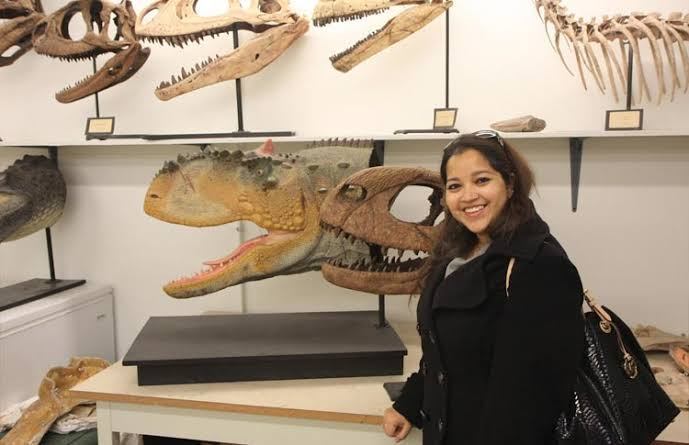
AaliyaMPOs28oct2019

Aaliya Sultana Babi is a princess who, along with her figurative crown, also wears—quite literally—the broad-brimmed hat of a paleontologist! She is the daughter of the Nawab of Balasinor, and traces her ancestry to Sher Khan Babi, the founder of the state of Junagadh, who was bestowed the nawabship by the Mughal emperor Humayun. Tens of millions of years ago, during the Mesozoic era, the lands of Aaliya Babi’s forefathers teemed with ancient reptiles and dinosaurs, and the rocks of Rahioli village (which has earned the moniker of India’s Cretaceous Park) near Balasinor are now etched with the remains of bones, eggs, teeth, and skulls, approximately 67 million years old.

These prehistoric giants include long-necked titanosaurs, an enormous snake, and a crested abelisaur often referred to as “the T-rex of India”—the deadly Rajasaurus narmadensis. Aaliya Babi is an ardent advocate for the protection and preservation of this rare and precious fossil site in Gujarat, which is one of the largest dinosaur fossil sites in the world, and she champions the cause of dinosaur education and conservation in India.  As a dinosaur enthusiast who admires and has closely followed her work, including the Dinosaur Fossil Park and Museum that she has set up in partnership with Gujarat Tourism, I am honored to have been able to interview this Dinosaur Princess!

AALIYA BABI IS AN ARDENT ADVOCATE FOR THE PROTECTION AND PRESERVATION OF THIS RARE AND PRECIOUS FOSSIL SITE IN GUJARAT, WHICH IS ONE OF THE LARGEST DINOSAUR FOSSIL SITES IN THE WORLD, AND SHE CHAMPIONS THE CAUSE OF DINOSAUR EDUCATION AND CONSERVATION IN INDIA.

Bhavika: I really admire your contributions to the field of dinosaur conservation. What sparked your interest in dinosaurs?

Aaliya: As a young girl of about four or five, I was fascinated with dinosaurs, despite the lack of exposure to dinosaurs that we grew up amidst. While learning the English alphabet, I would say “A for Apple” and “D for Dinosaur” instead of for “Dog”! I also knew the spellings of “brontosaurus” and “diplodocus,” which were both my favourite dinosaurs! All this was forgotten when I was shipped off to a boarding school, but when I came back after completing my schooling, the interest was rekindled.

Bhavika: I wish more children in India shared your enthusiasm and fondness! Do you believe it’s important for children to be familiar with dinosaurs? What would be your advice to a child who dreams of becoming a paleontologist? 

Aaliya: Not just children, but, according to me, everyone should know about our prehistoric earth, and the fascinating creatures that inhabited it. Through our museum and fossil park, we are trying our level best to educate the people. I, in my own way, am trying to create awareness through lectures, presentations, and exhibits held across schools, colleges, universities, and museums, both in Gujarat and abroad, and have received favourable responses. If children want to take up palaeontology as a career, it is unfortunate that in India, we currently don’t have much scope in the discipline, as only limited educational institutes offer subjects related to paleontology. But we need to rectify that. There are some talks going on to include geology into school curricula in the future.

Bhavika: That’s lamentable. India has a wealth of fossils, but these are unexplored and undervalued. Why is this so? What are the current challenges? 

Aaliya: There are a lot of challenges which I have faced over the years in trying to get the fossil site protected. First and foremost, we, in India, don’t have any legislations pertaining to fossil protection, and we don’t care for our heritage. It has taken me more than twenty-two years to get the site duly recognized and protected, but still it’s open and vulnerable to vandalism, as we have limited well-trained guards. Secondly, we don’t possess the required funds for excavations and the subsequent studying of fossils, and hardly any good-quality museums exist to exhibit them. We are also lacking in trained professionals.

THERE ARE A LOT OF CHALLENGES WHICH I HAVE FACED OVER THE YEARS IN TRYING TO GET THE FOSSIL SITE PROTECTED. FIRST AND FOREMOST, WE, IN INDIA, DON’T HAVE ANY LEGISLATIONS PERTAINING TO FOSSIL PROTECTION, AND WE DON’T CARE FOR OUR HERITAGE.

Bhavika: Do you believe that there’s potential for dinosaur tourism in India?

Aaliya: There is a huge, huge, HUGE potential for dinosaur tourism in India. You see, in the earlier days, people were not very aware about dinosaurs. The Jurassic Park movie series, based on Michael Crichton’s books, has sparked interest in dinosaurs, and now we also have access to so much information and literature on them. I’ve come across both three-year-olds and eighty-year-olds who want to know about these fascinating creatures that ruled our earth for millions of years! I get children who are so deeply interested in dinosaurs that they want to become paleontologists, and so times are changing!

Bhavika: How does the Garden Palace Heritage Hotel that you run from your royal palace go toward this mission?

Aaliya: The Garden Palace was built in 1883, and we began offering the palace as a homestay around 1997. From having only 1 renovated room, to now 13 rooms, we have come a long way! When we get visitors for the fossil park, we often have them stay at our property or take their meals here, as this is the only place in the area for a comfortable accommodation and a decent meal. We are famous for our cuisine, as my mother, Begum Saheba Farhat Sultana Babi of Balasinor, is a true connoisseur of food, and has carried forward the legacy of the signature Balasinori cuisine.

Bhavika: Can you tell us about the Rajasaurus? Do you believe it should feature in one of the next films from the Jurassic World franchise?

Aaliya: Yes, definitely, the Rajasaurus should feature in the coming Jurassic World movies! The fossilized remains of the Rajasaurus narmadensis were excavated by Dr. Suresh Shrivastav and team in 1983. The dinosaur was approximately 9 meters in length and 2.4 meters in height and weighed approximately 4000 kgs. It is a genus of abelisaurid theropod carnivores from the Late Cretaceous (Maastrichtian) of India, and is represented by one species, Rajasaurus narmadensis. It was formally described in 2003 based on a partial braincase, spine, hip bone, a leg and tail—a first for an Indian theropod dinosaur. The dinosaur had a single horn-like structure on the forehead, which was probably used for display and head-butting. Like other abelisaurids, Rajasaurus was probably an ambush predator and hunted in packs. Numerous theropod eggs and nests have also been found from the Rahioli Balasinor region.

Another similar dinosaur which has been named after the village of Rahioli is the Rahiolisaurus gujaratensis. Rahiolisaurus is another genus of abelisaurid theropod dinosaur from the Late Cretaceous (Maastrichtian) of India. It fossils were excavated by teams from the GSI (Geological Survey of India), Indian Statistical Institute, Kolkata, and Texas Tech University in the USA, between 1995-1997, from the Lameta formation of Rahioli, and it was formally described as Rahiolisaurus gujaratensis in 2010. It can be distinguished from the Rajasaurus by its more slender and gracile build. It is known from a pebbly sandstone containing seven different individuals—from a juvenile to a fully-grown adult. It was 8 meters in length, 3 meters in height, and weighed approximately 2 tons.

Bhavika: Do you believe dinosaurs are linked, in anyway, to the myths and folklore of India?

Aaliya: Yes. We have heard tales of dinosaur eggs being worshipped by villagers, as they resemble shivlings. We hear that ammonite fossils (salagramas) are also worshiped, as they are believed by many to be natural manifestations and divine symbols of Lord Vishnu. The shell’s circular form, with its radial markings, resembles the discus (chakra) of the deity.

Bhavika: Is it especially challenging to be a woman in the field of science and conservation?

Aaliya: I think I am the only woman, as of now, from an aristocratic family in India, who is involved with fossil preservation and conservation. It definitely had its ups and downs, but I think I have used my family name and connection for the protection of the fossils and the betterment of the villagers.

This definitely was a roller coaster ride, but it has been a wonderful ride, nonetheless. Times are changing now, and women, today, are in all fields. I have had the support and blessings of eminent paleontologists like Dr. Ashok Sahni and Dr. Suresh Shrivastava, among others, who have helped and guided me throughout this phase, and have imparted so much of their knowledge to me. And I have a simple motto: that nothing is impossible in life; if we set our hearts and minds to it, we can achieve anything and everything! The word “IMPOSSIBLE” shouldn’t exist in our dictionary!


Featured Image Source: Indian Women Blog

source: http://www.feminisminindia.com / Feminism In India / Home> Society> Environment / by Guest Writer / posted by Bhavika Sicka / October 28th, 2019

Breaking bread between neighbours helps bring down barriers

Kolkata, WEST BENGAL / London , UNITED KINGDOM:

AsmaKhanMPOs27oct2019

Interview

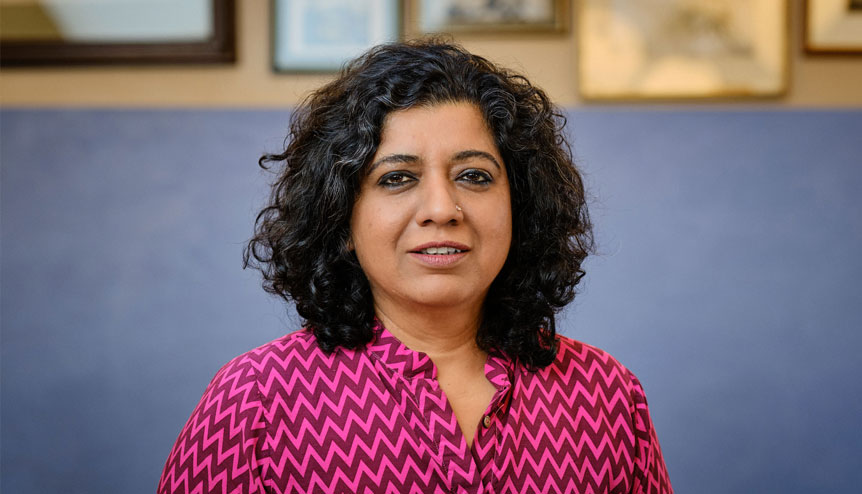
Drawing from her vast knowledge of  Indian cuisine, celebrated British chef Asma Khan dives into how a shared love for food can blur the boundaries of race and gender.

How would you define the soft power of Indian cuisine in the world?

The beauty of food is that you can enjoy and appreciate it without having to understand the language or the intricacies of a culture. It is the first contact many non-Indians have with Indian heritage. Indian food is a doorway to Indian culture and its people. It sparks conversations between people of different ethnicities.

The prevalence of Indian restaurants and food in supermarkets in countries like the UK means that almost every person has a chance to try and taste the country’s food.

What are some transformative business models (and hiring practices) that you feel could harness the potential of Indian food globally

AsmaKhan02MPOs27oct2019

It is important that food from a culture reflects the roots, flavours, and aromas of that cuisine. Given the popularity of street food in big cities around the world, it is one way in which Indian street food can be presented. Street food is complex, but people of all nationalities can be trained to assemble and serve these dishes.

As far as restaurants are concerned, the traditional model of family-owned businesses is deeply under threat as the next generation seldom wants to go into this business. In the UK, this has resulted in the closing down of many restaurants. A radical rethink is required in the way staff are recruited and trained. The first change should be an attempt to increase the number of women working.

Are the nuances of Indian food filtering through alongside its general popularity?

The generic Indian food, which was popular a decade ago, is still favoured by many. There is a greater awareness of regionality of Indian cuisine because of cheap travel to India, and information available on both the internet and television.

Does cuisine have a role to play in wider political debates, such as Brexit?

There isn’t a united cuisine of Europe. The European Union’s biggest role when it came to food was establishing vigorous health and safety regulations for the food industry and for the way we farmed and fished.

In Europe, there is a very strong regional tradition when it comes to food, which was not impacted by the birth and extension of the European Union. There is no doubt that breaking bread between neighbours is helpful, and sharing a meal helps bring down barriers between people.

How would you categorise your vision for gender balance in the workplace?

My vision is one of equality, equality for opportunity and progression in kitchens for men and women. There is an urgent need to establish codes of conduct, which protect the dignity and honour of everyone working in the kitchen. For too long, the dominant position of the head chef, invariably a man, has meant that the culture of a kitchen is very masculine and sometimes toxic and aggressive. This can intimidate and exclude some women working alongside these men. There has to be respect for women in all kitchens.

How can food technology be harnessed to tackle health-related issues such as diabetes?

There is a growth in food items that are low in fat, low in cholesterol, that are targeted to people trying to practice a healthier diet. Additional information in the labelling for diabetics is the way forward as healthy eating is the standard advice given to them. Diabetics do not necessarily need food produced specifically for them as there is already a growth of low sugar, low starch options.

How does being a Global Indian impact your wider worldview?

I have the advantage of being from the east and the west. I feel rooted in two nations. My cultural and culinary heritage is Indian. This is a great advantage in the work I do as I can present the cuisine of my country of origin with a depth and understanding that comes from having lived there for the first 22 years of my life.

Even though I have now lived longer in the UK than in India, I still feel a deep-rooted connection to my motherland. I can, therefore, explain to someone from another heritage who I am, where I come from, and what my country stands for.

source: http://www.indiaincgroup.com / Home> Interviews / October 24 & October 25th, 2019

Food in Indian Muslim households is beyond biryani & kebabs: Recipes are subtle, and include various vegetables

JHARKHAND / NEW DELHI :

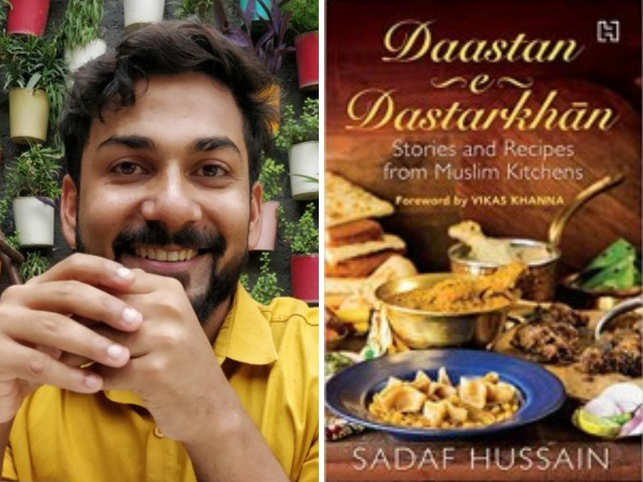
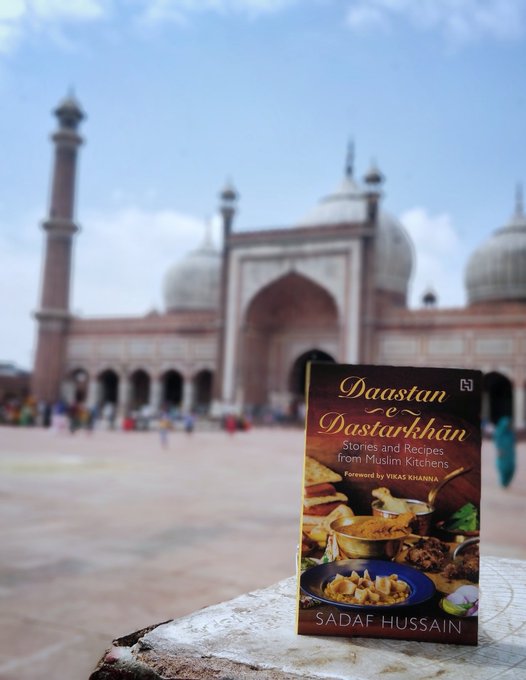
Sadaf Hussain chronicles home-made food in his new book Daastane-Dastarkhan.

​Sadaf Hussain’s charming new, first book Daastane-Dastarkhan​ has been published by Hachette India​.

Sadaf Hussain’s charming new, first book Daastane-Dastarkhan has been published by Hachette India.

Sadaf Hussain’s charming new book Daastane-Dastarkhan starts with the story of a pir who, every Thursday, visited his mother’s family in Sasaram, Bihar. But one day he appeared on a Wednesday, throwing his grandmother into panic because there was no meat for the aloo-gosht she always fed him. She had to be inventive. She used dried figs and poppy seed paste, to make a salan, threw in fried potatoes, balanced it with garam masala and chillies, and served it with rice and besan rotis. The pir was delighted: “May Allah bless you with an abundance of food and may no one ever leave your home hungry.

A recipe like this is not what many would think of as Indian Muslim food. Where is the intense meat focus? Where are the kebabs and biryanis? The problem starts with thinking there is something that can be neatly labelled Indian Muslim food. The fact that people do this might be just another way in which Indian Muslims are diminished by clubbing their many communities into one and ascribing easy stereotypes to them.

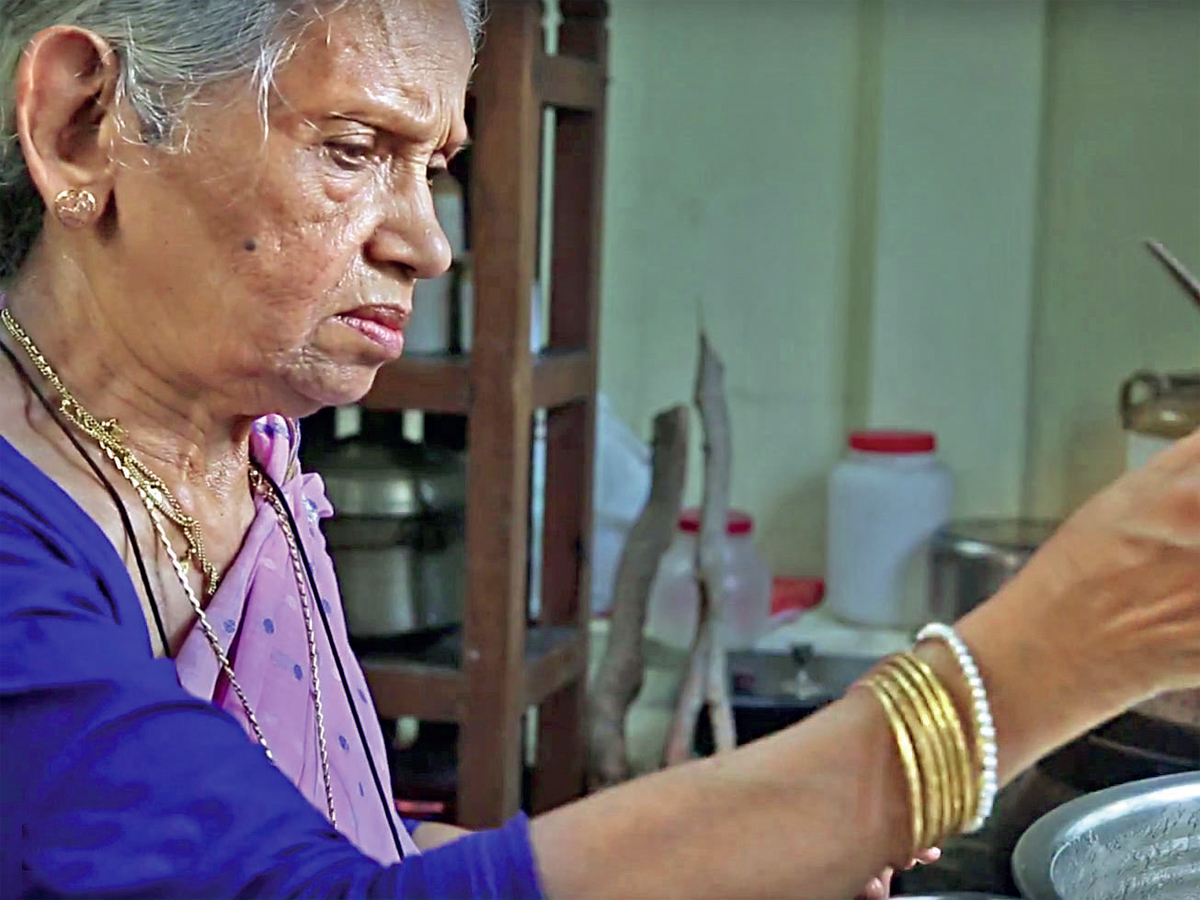
Ummi Abdulla, who has documented the food of Malabar Muslims, makes mutta mala or egg threads.

Part of the problem is that there is a market in catering to such stereotypes. Once a year during Ramzan, many people decide to have an iftar experience and go out — without fasting — to eat the rich food cooked on street sides for the occasion. But this has as little relation to regular home food in Muslim communities across India, as does a Diwali or Christmas feast have for Hindu or Christian home food.

One way people get exposed to home food of different communities is when they share food with neighbours, especially as kids. But as housing becomes increasingly segregated, this is becoming harder.

This lack of knowledge has been compounded by a curious lack of cookbooks from different Indian Muslim communities.

There are cookbooks from cities like Lucknow and Hyderabad where certain types of Muslim food dominate, but what’s presented tends to be street food or special occasion dishes, both mostly made by men. These are important, but it means that the daily, home dishes get left out.

SadafHussainMPOs14oct2019

There have been a few exceptions. Ummi Abdulla made a pioneering contribution by documenting the food of the Malabar Muslim, or Moplah, community, with all its complex interactions between the local ingredients of Kerala and influences from Arab traders.

Bilkees Latif ’s Essential Andhra Cookbook captured similar interactions from Hyderabad. Mumbai’s Inquilab newspaper brought out a collection of booklets, in Urdu and English, on Memon, Kokani, Bohra and Kashmiri food. There were a few other books printed privately or abroad, but little else.

Adil Ahmad’s Tehzeeb chronicles the home food of an upper-class Lucknow family.

Doreen Hassan’s Saffron and Pearls does the same for her husband’s family from Hyderabad, but with roots in both Persia and Uttar Pradesh. Zaiqa e-Kadwai provides a very different perspective. It is a team effort to document the food of a village in Ratnagiri district, where most of the families just happen to be Muslim, but their food is quite typically Konkani. Hazeena Syed’s Ravathur Recipes: With a Pinch of Love shows, in a very impressively produced volume, the food of this Tamil Muslim community.

 These books show the food of these communities to be, as with all communities in a region, primarily dictated by what’s locally available, but with small tweaks. As Hassan’s husband’s family shows, at a more upper-class level there were more likely to be interactions with communities across countries, and recipes travel with daughters-inlaw, who are one of the least acknowledged agents for social change.

 There is certainly a lot of meat eaten in all these communities, but the recipes are much simpler and subtler than what is served up to unthinking eaters as “Muslim” food. Meat is often cooked with vegetables as in the chuqandar gosht, beetroot and mutton; or keema kakdi, cucumbers and mince, given in Tehzeeb. There are inventive egg dishes, like boiled eggs stuffed with mince and then skewered, that Hassan discovers in Hyderabed, or eggs fried in gravy that are a favourite in Kadwai.

Other similarities might be slightly more use of some spices, like star anise, and less of others — hing rarely features since onions are widely used. Chefs will tell you that Muslims in their kitchens are particularly adept at frying, and that copper, with its excellent heat conduction, is the metal of choice for utensils. Many traditional vessels shown in these books are copper, and careful distinctions are made in types of frying: shallow, deep, braising and so on.

Books like these are important because, apart from the problems of unthinking stereotypes, the food of Indian Muslim communities faces another kind of obliterating pressure. Many cooks from the communities have gone to work in the Gulf and have picked up the kind of Lebanese-Arab food that is becoming a standard across the world. It is easy to produce, cheap and tasty enough and has the allure of being modern, rather than old-fashioned, labour-intensive home food. People shouldn’t be faulted for opting for what’s cheap and convenient, but it is important to remember, as these books remind us, that there are also other ways to nourish our roots.

NalliNihariMPOs14oct2019

source: http://www.economictimes.indiatimes.com / The Economic Times / Home> Business News> Magazines> Panache / by Vikram Doctor / ET Bureau / October 13th, 2019

The nihari kulcha you must have if you’re in Lucknow

Lucknow, UTTAR PRADESH :

While in Lucknow’s Chowk area, the quickest way to sate hunger is with a plate of Raheem’s nihari kulcha.

Raheem nihari kulcha, Umar Raza, Azam Hussain

(What’s for Breakfast? (Above) Bilal Raheem Ahmad (in blue) at Raheem’s

When Umrao Jaan was being shot in the early 1980s, the cast and crew of the Rekha-starrer film would visit Raheem’s regularly. “I was too young then, so I don’t have any memory, but my father told me that the entire cast ate at our restaurant on more than one occasion and Farooq Shaikh had loved the nihari,” says Bilal Raheem Ahmad, one of five brothers who run the restaurant now.

At 8 pm in old Lucknow’s Chowk area, Raheem’s hotel is one of the busiest spots in the area. Most customers thronging the restaurant, in a basement near the Tehseen mosque, are there for the nihari kulcha — meat stew with baked flatbread. The nihari, which is traditionally a breakfast dish, is available all day at Raheem’s. In the alley leading to the restaurant, one can smell the kulchas being baked on the tandoor from a distance. After entering the basement, the aroma changes to that of slow-cooked meat.

Raheem’s nihari kulcha.

Bilal says the delicacy has always been the bestselling item at his restaurant, which was started by his great grandfather Haji Abdul Ghani in around 1920. The family belongs to old Lucknow’s Chowk area. The restaurant started selling the nihari kulcha in the 1940s under Haji Abdul Ghani’s son and Bilal’s grandfather Haji Abdul Raheem, after whom the restaurant is named. “It was Raheem sahab who invented the ghilaf kulcha which is served with the nihari,” says Bilal, 48, who generally sits at the restaurant’s counter every day from 5.30 pm to 11 pm.

After Haji Abdul Raheem, who ran the restaurant till 1983, the restaurant was taken over by Raheem’s father Fakruddin, who managed it till 2000, after which Bilal and his four brothers — Manzoor Ahmad (60), Mohammed Usama (47), Mohammed Shuaib (40) and Zaid Ahmad (37) — run it.

“The word ghilaf means a cover. The ghilaf kulcha has two layers which makes it so special. The upper layer has flour, ghee and creamy milk, while the lower layer has flour and yeast which makes the kulcha rise. The nihari is cooked overnight, for 6-7 hours, on very low heat over wood,” says Bilal.

He says, one of the most important aspects of his restaurant is the tehzeeb (etiquette). “We never return a customer without serving them. There are several madrasas for the poor near our restaurant. My grandfather Haji Abdul Raheem had written two points in his will — one was that we must always serve the poor and, second, that we will never ever compromise on the quality of the food. We are doing everything to follow his orders and hence, did not open a single branch,” says Bilal with a smile, while he returns change to 14-year-old Owais, who studies at the Furqania madrasa next to the Tehseen mosque.

The madrasa student says he comes to the restaurant almost every second day. “I get my own tiffin box and get one kulcha and some nihari for Rs 20,” says Owais, who belongs to neighbouring Barabanki district and stays at the residential madrasa.

The mutton nihari and two kulchas are priced at Rs 148, while the buffalo nihari and two kulchas for Rs 83. The paaya nihari, both mutton and buffalo, comes for an additional Rs 20. In between serving the evening crowd karara (crispy) kulchas, Habib Ahmad (62), who has been working at Raheem’s for the last 45 years, says, “The paaya nihari is mostly made with meat from the calf area.” The restaurant also sells mutton biryani for Rs 300 with four “big” pieces of mutton. Another bestseller is pasanda. A plate of nihari and two kulchas used to be sold at Rs 1.40 in the early 1980s when Habib started working there.

Bilal says, till date, the restaurant buys raw spices and uses them only after getting them cleaned and ground. “Our nihari has around 95 types of spices. We put them in a potli (bundle) and drop them into the nihari when the cooking starts. The recipe was given to us by our father, who got it from his grandfather Haji Raheem sahab,” says the co-owner. The meat used to make the nihari is bought daily. No artificial ingredients are used, and “it is only cooked in a copper deg (cauldron) with kalai (a layer of tin) on the outside. The kalai is a must for slow cooking. It doesn’t let the food burn,” he says, with a wry smile, before adding, “I can’t tell you what our spices are.”

Waiting for their “wholesome meal” at the restaurant are childhood friends — Umar Raza (44) and Azam Hussain (42) — both tailors. but Raza is getting annoyed by the delay, their order — two plates of steaming hot paaya nihari with a sprinkling of green coriander and chilli on top and one kulcha each — finally arrives and they start guzzling the food. They say they have been coming together to the restaurant for the past 15 years. “It is a filling meal which is the secret to our great health,” says Hussain, pointing to Raza’s bulging tummy.

Bilal says, people from “far-off” places come during Ramzan, when the restaurant remains open from iftar (meal eaten to break the fast) to sehri (pre-dawn meal before the fast). “Ramzan is when Lucknow and Chowk has the highest number of visitors. All the tables are occupied through the evening and nights,” says Bilal, adding that the next generation will continue to serve the food the way it has been served for almost a hundred years.

This article appeared in the print edition with the headline ‘A Plate of Sunshine’

source: http://www.indianexpress.com / The Indian Express / Home> Eye / by Asad Rehman / October 13th,2019

Maratha blood and Persian veins

KARNATAKA :

A detail of the ‘House of Bijapur’ genealogical painting depicting most of the rulers of the Adil Shahi dynasty of Bijapur. (Photo: Wikimedia Commons)
  • Although the Adil Shahi dynasty of Bijapur was formally Muslim, it was influenced by multiple religions and different identities
  • Such complicated realities were not unusual in the subcontinent, from Vijayanagar in the south to further north in Kashmir

In 1680, a few years before emperor Aurangzeb swallowed up the sultanate of Bijapur, two court artists in that city produced a striking genealogical painting. Rich in quality, with ink, watercolours, as well as gold and silver generously employed, the picture shows all the rulers of the doomed Adil Shahi dynasty, save for one who was blinded and discarded for not being up to the mark.

In the centre, on the throne, for instance, sits Yusuf, the man who sailed from Persia and founded the house with his Maratha wife in the 15th century: In a mark of the kingdom’s allegiance to the Shah of Iran (as opposed to the Mughals), Yusuf is shown receiving a key of sovereignty from the Iranian emperor. Then there is Ali, who appears in armour—a symbol of the role he played in the defeat of Vijayanagar in 1565—just as there is the boy-king Sikander, the smallest figure in the group, who would spend much of his life as Aurangzeb’s dethroned prisoner.

Created on the eve of the kingdom’s demise, the painting is at once a family tree but also, as one scholar puts it, a “painted curtain call” for the extraordinary Adil Shahi dynasty.

But the portrait is significant also in another way, in that it depicts the contrasts that can develop in the same ruling house and in interpretations of its official ideology. The Adil Shahi state was formally Muslim. From the start, however, it was influenced not only by multiple religions but also by different identities. So, for instance, Ismail (reign 1510-34) chose to highlight the family’s Persian heritage—he made his troops wear Iranian uniforms and himself adopted the 12-pointed cap, a reference, as the scholar Deborah Hutton notes, to the 12 imams of Shia Muslims.

Ibrahim II (reign 1580-1627), on the other hand, was Sunni and is depicted in a style associated with the Indian faction at court, a reflection of his own attitudes. He was, for example, not only a lover of Marathi (much to the horror of a Mughal envoy, who found Ibrahim’s Persian weak) but also a great admirer of Hindu traditions. It was he who proclaimed himself son of Saraswati and Ganapati, studied Sanskrit, and went to the extent of renaming Bijapur “Vidyapur” to honour his favourite goddess.

Only two generations divided the orthodox Shia Ismail from Sunni Ibrahim (who was rumoured to be secretly Hindu) but there was a world of difference in their outlook.

The Adil Shahs certainly presented themselves as good Muslim rulers—indeed, even Ibrahim’s grave carries an inscription denying rumours that he was an apostate, affirming that he was a true believer of the Prophet’s message. But as this column showed previously in the case of Hindu Vijayanagar, official identity and self-image did not preclude the absorption of multiple influences, or even contradictory practice. The Adil Shahs, even as Muslims, alternated between Sunnism and Shiism, and it was their latter identity that often supplied the Mughals an excuse to invade in the name of religion—this when even Aurangzeb, who led the final charge against the “heretics”, was himself the son of a Shia mother. Add to this a give and take of culture from not only the Marathas (including Shivaji’s father, who served the Adil Shahs) but also Ottomans, Europeans and African grandees at court, and Bijapur was confirmed as an eclectic, mixed universe—one where the king had a formal identity that he could interpret strictly or with deliberate laxity, depending both on his predilections and official necessities.

But in this the Adil Shahs were hardly unique. The rayas of Vijayanagar shaped their self-image in Sanskritic terms and declared themselves consciously Hindu. And yet, one of them sought a marriage alliance with Catholic Portugal; many of them used the title “sultan”; and their sartorial tastes and everyday lives were influenced visibly by Persian culture. A raya might keep the Quran in court so that his Muslim nobles could prostrate before it, even as he destroyed mosques in enemy territory—policy depended on the context in which the king found himself. Further north, in Kashmir too, as Richard Eaton shows in his India In The Persianate Age, we witness such ironies.

Sultan Sikander (reign 1389-1413), for instance, was a destroyer of Hindu shrines and burner of Sanskrit books. But his son Zain al-Abdin (reign 1420-70), officially as devout a Muslim as his father, implemented the opposite policy: Not only did he resume temple grants, but under him the court also witnessed an unprecedented production of Sanskrit literature, as well as translation of Hindu texts into Persian for the ruler’s edification.

The greatest controversy, of course, arises in understanding Tipu Sultan of Mysore. To some, he is a giver of grants to Hindu temples and a protector of his non-Muslim subjects. Others cite his cruel conquest of Malabar, where Hindus were forced to renounce their religion, their temples demolished. But, simply put, the question is not one of either/or: The same king could act in opposite ways in different settings.

In Malabar, its chiefs and people were “infidels”, but in his settled territories in Mysore, Tipu had no qualms employing “infidel” Brahmins (including the celebrated Purniah) as officials. One was a land of conquest, where destruction of significant shrines was, to him, legitimate, while forced conversions were a method of flaunting to the Islamic world his commitment to their faith; but in his home territory, he was king in a broader sense, accepting of the land’s realities as well as its people. A villain in one reading, he could be a hero in another, employing his religious identity in different degrees, determined largely by the contingencies of politics.

It was this complicated reality that the painters of that Adil Shahi family portrait inadvertently conveyed in their work: a house of Muslim kings with Maratha blood, who cheerfully switched sects as they desired, and whose dynastic roster included all types—those whose faith guided them to extremes, and others for whom religion was more a formality, engaging as they did with a land of diverse realities.

Medium Rare is a column on society, politics and history. Manu S. Pillai is the author of The Ivory Throne (2015) and Rebel Sultans (2018).

Twitter – @UnamPillai

source: http://www.livemint.com / Live Mint / Home> Explore> Medium Rare / by Manu S. Pillai / September 05th, 2019