How two rulers with a common name left a rich history and culture for its people but one is more renowned than the other.
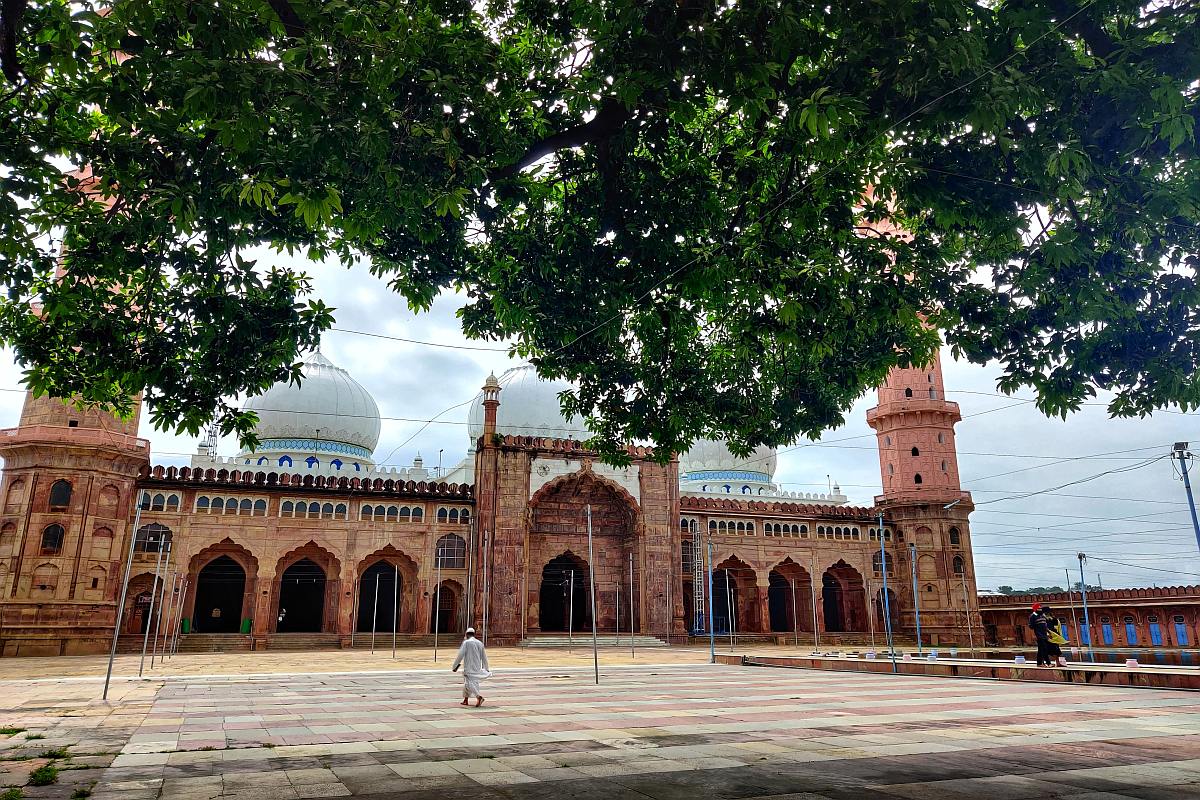
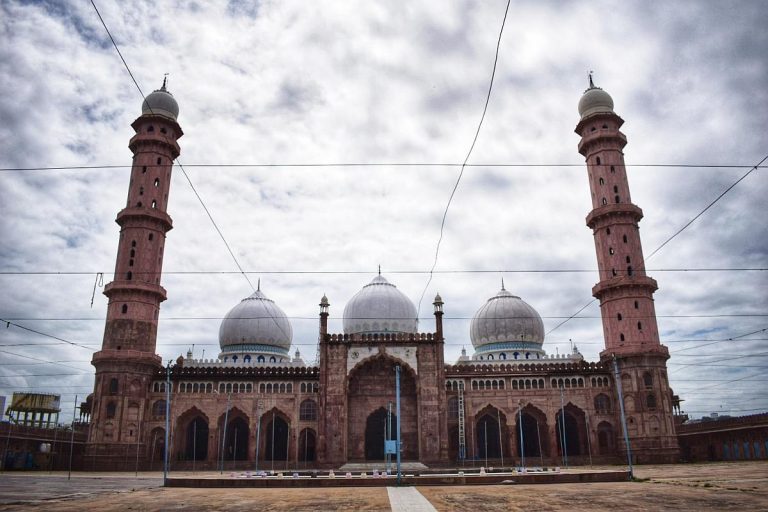
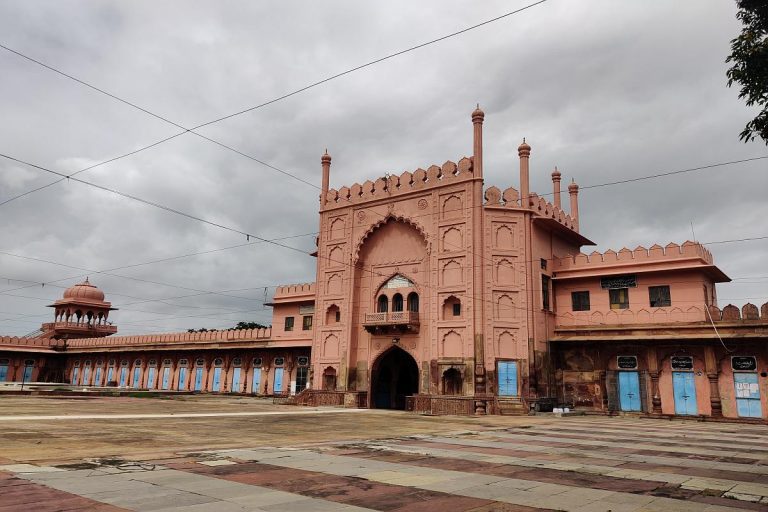
Taj-ul-Masajid, Bhopal (Photo: SNS/Aena Thakur)
In the heart of Madhya Pradesh’s capital city, Bhopal, resides Taj-ul-Masajid which literally translates to the ‘crown of mosques’. The mosque was intended to be the largest mosque in the country and was based on the design of Delhi’s Jama Masjid. In a town called Woking in England stands a mosque called Shah Jahan.
The common denominator between these three mosques is the name Shah Jahan. The fifth Mughal emperor Shah Jahan built the Jama Masjid in Delhi and the third female ruler of Bhopal, Shah Jahan Begum built Taj-ul-Masajid of Bhopal. The Bhopal’s matriarch went a step ahead as she also funded the construction of England’s first Mosque in 1889.
Taj-ul-Masajid (Image: SNS/Aena Thakur)
In the 19th century when India was a British colony, the princely state of Bhopal had a string of female rulers for roughly 107 years. The city was founded in 1707 by Afghan ruler Dost Muhammad Khan. Surrounded by Rajputs in Rajasthan and Marathas in Maharashtra, Bhopal was a vulnerable state yet the female rulers with their loyal allegiance to the British rule survived the turbulent times.
The female dynasty of Bhopal started with the death of young Nawab Nazar Muhammad Khan. His 18-year-old wife Qudsia Begum decided that the legacy of her family shall continue and declared her 15-month-old daughter Sikandar as the rightful heir of the state. In 1819, Qudsia Begum became the first Muslim female who defied the veil and became the ruler of Bhopal. Her rule was legitimised by the British and the clergy.
Both Qudsia (1819-37) and Sikandar (1847-68) were known to be tough rulers who strengthened Bhopal’s military and trained themselves to fight. However, it was the third matriarch of Bhopal, Shah Jahan Begum who brought in the period of flourishing art and culture just like her male Mughal namesake.
Unlike Qudsia and Sikandar, Shah Jahan was not known for her tough training for battles. Shah Jahan followed the system of veil and was more interested in literature, poetry, and arts.
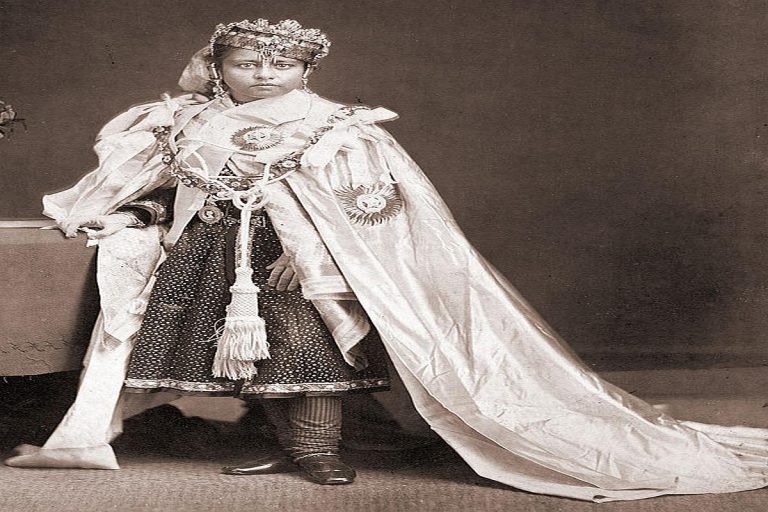
Shah Jahan Begam of Bhopal (Image: Wikimedia Commons)
Interested in Urdu and Persian poetry, Shah Jahan Begum also offered state pensions to poets like Amir Minai, a contemporary of Mirza Ghalib.
Shah Jahan Begum ordered that a dictionary of select terms in Hindustani, Persian, Arabic, Sanskrit, English, and Turkish was compiled to facilitate translation of literature between these languages. A poet herself, Shah Jahan Begum also patronized a group of female poets. According to Siobhan Lambert-Hurley’s book Muslim women, Reform and PrincelyPatronage, these gifted women included “Hasanara Begam ‘Namkeen,’ author of a diwan and two prose publications, Munawwar Jahan Begam and Musharraf Jahan Begam, the daughters of Nawab Mustafa Khan ‘Shefta,’ and several others.”
In her book, Siobhan Lambert-Hurley also mentions, “Shah Jahan’s interest in this area was so great that she charged a male poet at her court, Abul Qasim ‘Muhtasham’, to devote himself to collecting an anthology of female poets writing in Persian. Entitled Akhtar-i-taban, it publicized the work of 81 poetesses when it was printed in Bhopal in 1881 in dedication to the ruling Begam.”
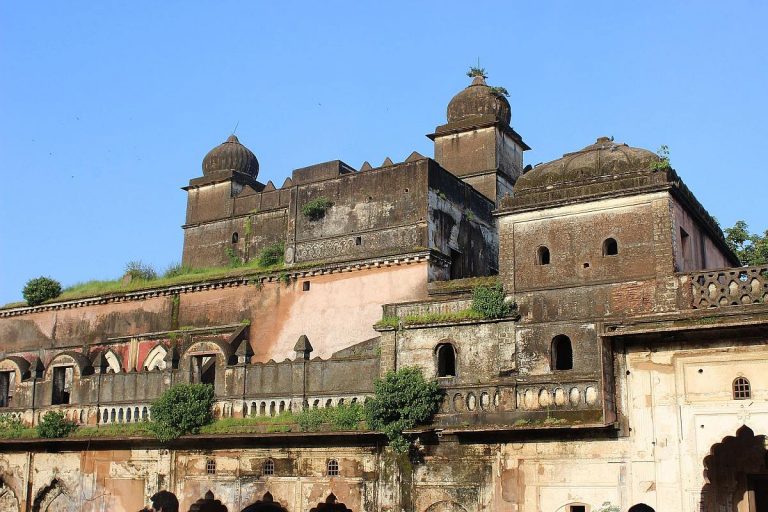
Her ambitions for grand architecture is evident from the fact that her daughter Sultan Begum in her biography mentioned that she has lost count of the number of palaces and buildings, her mother made. Some of the prominent buildings that still remain are Taj-ul-Masajid, Taj Mahal, Ali Manzil, and Benazir.
Taj Mahal, Bhopal (Image: Wikimedia Commons)
Unlike Mughal emperor, Shah Jahan’s Taj Mahal which is a tomb, Bhopal’s Taj Mahal was a palace for the Begum. Shah Jahan Begum also helped orientalist and scholar Dr Gottlieb Wilhelm Leitner in constructing England’s first mosque which is also called the Shah Jahan mosque.
The similarities do not stop here. Just like the Mughal emperor built a planned city named Shahjahanabad, the Begum too built a neighbourhood with the same name. Hurley mentions in her book, “Shah Jahan was also responsible for building an entirely new neighbourhood of homes and offices within her capital that was predictably named Shahjahanabad. Unlike the version at Delhi, however, it was laid out on a uniform plan in-keeping with the latest ideas of town planning in Britain.”
Taj-ul-Masajid, Bhopal (Image: SNS/Aena Thakur)
Shah Jahan Begum of Bhopal encouraged female participation in education, religion, and culture. She was responsible for setting up institutions for female education, she reserved areas in mosques for veiled women to pray on special occasions, she also constructed a Pakka bazaar exclusively for women.
Shah Jahan Begum’s daughter Sultan Jahan Begum was the last Begum of Bhopal whose reign ended in 1926. The reign of female rulers in Bhopal broke stereotypes and brought in various reforms in the princely state. Even though women still continue to fight for their rights it should not be forgotten that the Begums did assert their authority in the 19th century and it can be done again.
source: http://www.thestatesman.com / The Statesman / Home> Features / by Aena Thakur, New Delhi / August 20th, 2019
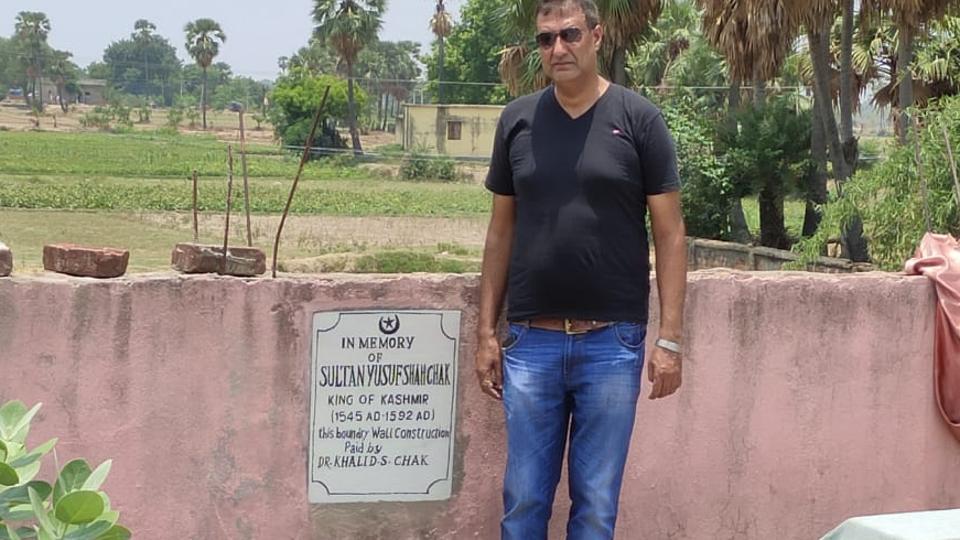
Yusuf Shah Chak, the last independent Muslim Ruler of Kashmir Valley, is buried in Nalanda and his tomb is in disrepair and unprotected.
Yasir Iqbal, a descendant of Yusuf Shah Chak, at the tomb of Kashmir’s last Muslim ruler’s grave in Nalanda. (HT Photo )
With the Centre revoking Article 370 which gave special status to J&K, the Kashmir Valley is once again in focus. But Yusuf Shah Chak. the last independent Muslim ruler of the Valley, has remained obscured and unknown for a long time.
Chak is buried in Nalanda and his tomb is in disrepair and unprotected.
Chak was exiled to Bihar by the Mughal emperor Akbar. The area where he had settled along with his family and relatives in Biswak village in Nalanda and also maintained a cavalry force of 500 horses, was later known as Kashmiri Chak. Though the exiled Kashmiri ruler died in Odisha in 1592, his body was brought to Bihar and has been lying buried along with the tombs of his wife, sons and other relatives at the graveyard at Biswak near Kashmiri Chak.
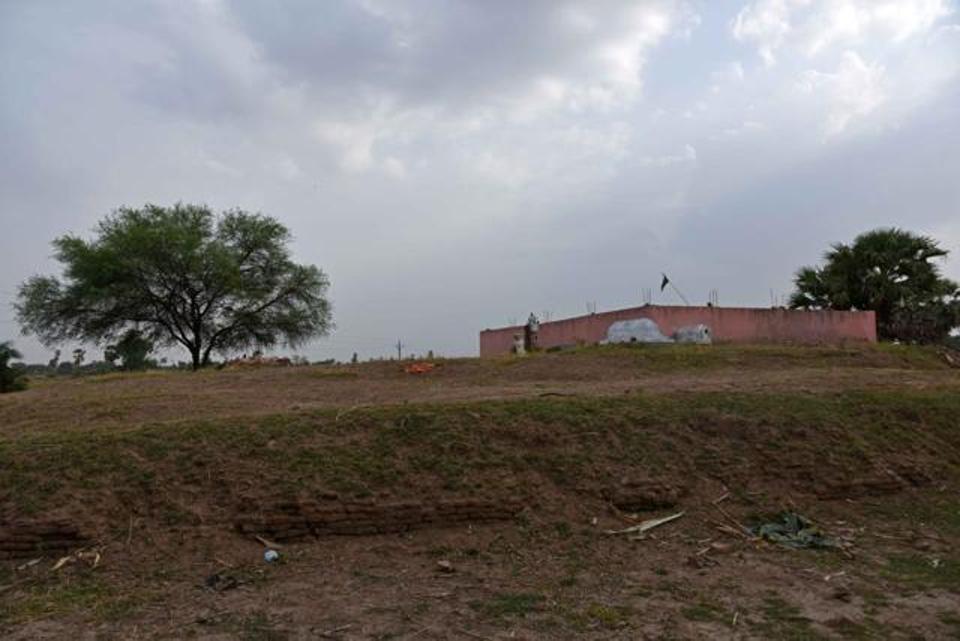
Though his Mazaar is encircled with boundary wall, the land outside this wall at the cemetery is open and has remained prone to encroachments in the past. Some concrete structures and thatched roof hutments too have come up around its periphery.
Earlier, some locals erected a boundary wall around his Mazaar, but the entire area of the cemetery outside this wall is open to encroachment.
A view of the ‘mazar’ of Yusuf Shah Chak, the last Muslim ruler of Kashmir Valley. ( HT Photo )
Recently, Yasir Iqbal, a descendant of the Chak ruler’s relative, wrote a letter to the Minority Welfare Department, Bihar, drawing the attention towards the increasing threats of encroachments at the site of the cemetery .
He has made an appeal to take steps to stop encroachment and has also requested for the boundary wall at the cemetery. In the letter, Iqbal also made requests to preserve this piece of history and to take initiatives to tap tourism potential of the site.
“The minority welfare department has forwarded the request letter to the department concerned which is responsible for creating the boundary walls at graveyards and has directed to take actions as necessary,” SI Faisal, special secretary cum director, minority welfare department, said.
The site has a great tourism potential and it can be tapped. “But it’s the domain of the tourism department. They should take initiatives in this direction and should develop it,” he said.
Yasir Iqbal said many Kashmiris have been eager to come here to pay tribute to their last ruler. “Many intellectuals have also been coming here, but the place lack even basic infrastructure. Even the road to Kashmiri Chak village was developed in 1977 when Sheikh Abdulla, the prominent leader of Kashmir had arrived to witness Yusuf Shah’s tomb” he said. There is also no place at the village to stay. “You have to find the accommodation whether at Islampur or at Rajgir,” he said.
However, the biggest concern has been encroachment of the land. “The cemetery is spread over five acre land area at Biswak and over one acre land at Kashmiri Chak. But the tombs of Yusuf Shah, his wife and sons for decades remained unknown. There was almost a jungle around it and the tombs were hardly visible. Then we got it constructed a few years ago. But the area outside is still open and is being encroached inch by inch. Some concrete structures and thatched roof hutments have also come up on its border areas,” he said.
Yusuf Shah Chak ruled Kashmir from 1579 to 1586. In 1579 he was deceitfully imprisoned by the Mughal emperor Akbar, but was later released and was exiled to Biswak area of Bihar.
“He had a Mansabdaari of 500 horses. In fact, his love and knowledge of art and literature had impressed Mughal Badshaah and that became the reason for his release. He had married Habba Khatoon, the legendary poetess whose verses are still sung by the locals in Kashmir,” he said.
source: http://www.hindustantimes.com / Hindustan Times / Home> India> Cities> Patna / by Reena Sipan, Hindustan Times, Patna / August 07th, 2019
Around 50 residents of Kodagu’s Goodugadde village were stranded in their flooded homes on Friday morning.
Around 50 residents of Kodagu’s Goodugadde village were stranded in their flooded homes on Friday morning, hoping that help would come before the river Cauvery would take away their lives.
Luckily for Goodugadde’s residents, help came in the form of eight Good Samaritans, who ferried them to safe places through small iron-made coracles.
Mustafa, a 32-year-old activist from Kodagu, suspected that people were stranded in Goodugadde and other villages along the banks of the Cauvery river. Mustafa had heard from the local grapevine that many people had not left their homes despite a flood warning.
At around 6 am on Friday, Mustafa and his friends Ranjith Kumar, Afzal, Iliyas, Shafiq and four others from Siddapura, were anxious as the Dubbare Rafting Team was busy with rescue elsewhere.
Mustafa and his friends rushed to the Siddapura Police Station and requested the police to lend them the iron-made coracle lookalikes that the police had kept in the evidence room, which they had seized when they busted an illegal sand mining ring.
“We call it thappe in Kannada. They are circular, iron made vessels sand miners use to transport sand. It’s smaller than a coracle but bigger than the round vessels used to carry sand in construction sites. We wanted those so we could row it and look for stranded people,” Mustafa explains.
When the group reached Goodugadde, they found several senior citizens, children and middle aged people stranded in their flooded homes. Many were sitting on their rooftops, while some of them clung to trees, waiting for help.
“There were about 50 people. We began rescue at 7am and it went on till 11 am. We lost count of the number of trips we made to bring all of them to safety. They were sent to relief camps in Siddapura. By 12 pm, the Dubbare Rafting Team came to help us and we continued rescue operations in Baradi and Kakkattagadu villages,” Ranjith Kumar says.
Mustafa, Ranjith and the team of local rescuers claim that they are experienced swimmers and that they had volunteered during rescue operations in the floods that hit Kodagu in 2018.
“We have lived along the banks of river Cauvery all our lives. We have a very close relationship with the river and swimming is the first thing we learnt as children. We are expert swimmers and if our skill could be put to use to help people in need, then it’s our duty to help them. What is the point of being an expert at something and not helping those who could benefit from it?” Mustafa says.
Mustafa and his motley crew continue their rescue operations even now. “We will help as much as we can. Our people have seen too much damage due to rains and floods. Currently, we are going back and forth Goodugadde and recovering their belongings,” Mustafa adds.
source: http://www.thenewsminute.com / The News Minute / Home> Karnataka Floods / by Theja Ram / August 10th, 2019
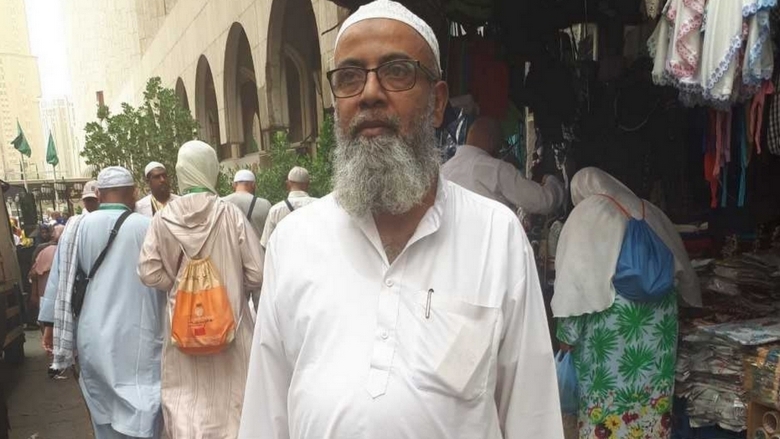
Taqiullah Khan leads at least five Umrah groups to the holy city every year (Photograph: Sahim Salim / Khaleej Times )
62-year-old Taqiullah Khan has also performed Umrah an epic 126 times.
Indian national Taqiullah Khan performed Haj for the first time in 1994. The Bengaluru resident, now 62, has undertaken the journey 25 times in as many years ever since.
Khan is now back in Makkah to perform his 26th Haj.
Khan has also performed the lesser pilgrimage, Umrah, an epic 126 times!
For most Muslims, the holy journey is a once-in-a-lifetime experience due to the costs, difficulties and sacrifices involved. For Khan, it’s an annual affair, thanks to his tours and travels company.
“I have been coming here so many times that I know Makkah and Madina better than Bengaluru,” he quipped.
The first Haj
Interestingly, Khan’s mother had “predicted” that Haj would become an annual journey for him.
A year before he went for his first Haj, he had sent his parents for the journey in 1993.
“I requested that they pray for me to be able to visit the blessed land. When my mother came back, she told she had made this particular dua (supplication) so much that she believed I would perform Haj every year.”
Just like his mother predicted, Khan’s journey began in 1994. “I went as a Haji (pilgrim) like any other Muslim back then. I went back again the next year with my wife.”
He founded Tawakkul Tours and Travels in 1996 and applied for the Haj quota. He has been coming as a Haj guide ever since.
The father of three doesn’t necessarily have to come to the holy city along with the groups that his firm is responsible for. “For me, this is an honour from Allah and I wouldn’t miss it for the world. Most people consider themselves lucky if they are able to undertake the journey once in their lifetime. Allah has blessed me to perform Haj every year.”
Khan also leads at least five Umrah groups to the holy city every year.
He holds something called the Munazzam licence, which is granted to Haj organisers. “So you see, Allah has blessed me so much that this is actually my bread and butter, too.”
The Indian’s wife and two of their three children are Hajis as well.
The ‘missed’ Haj
Khan has just missed the Haj of 1999 since 1994. He had suffered a motorbike accident and his doctor asked him to avoid undertaking the arduous journey.
“But I have still performed Haj 25 times in 25 Gregorian years because I was lucky enough to get two pilgrimages in 1996.”
That year, Dhul Hijjah – the Islamic calendar month in which the journey is undertaken – came twice in 1996: January and December.
Preparations
Khan’s company gets a quota of 100 pilgrims every year. “This time, our quota increased by seven, Alhamdulillah.”
Khan said he starts preparing for the Haj season as soon the fasting month of Ramadan ends. “That’s when the government of India announces the Haj quotas.”
Khan’s biggest strength is his family. “They have been very supportive of my endeavours. Not once have they asked me to depute someone else to lead the groups since they, too, believe that this is an honour.”
Safety guaranteed
Khan is most impressed with the way the annual pilgrimage is organised.
“In the 25 years I have been leading Haj groups, not once have I heard a Haja (female pilgrim) complain about harassment. Not once has anyone complained about robberies or any serious crimes.
“It is amazing how the government manages to organise all this so efficiently year after year despite receiving in excess of two million pilgrims.”
Most memorable Haj
Though Khan maintained that each of his 25 pilgrimages was special, his first Haj in 1994 is the “most memorable”. “Haj season fell in the month of May. It was very hot then. But it remains the most special Haj for me. I remember every single aspect of that maiden trip. I enjoyed it.”
During the Haj of 1997, when a massive fire broke out in the tent city of Mina, Khan and his group of 60 Hajis were just 500 metres away from the tent in which a cylinder exploded. The tragedy had claimed over 200 lives.
“The police evacuated us and we managed to escape. We came back to the holy city. Thanks to the government’s efficiency, we were able to go back to Mina the very next day. That’s another Haj memory that will always remain with me.”
When asked how long he plans to continue the annual journey, pat comes the reply: “As long as my health permits, I don’t plan to give this up.”
1. Photo ban lifted: According to Takiullah Khan, photography was banned in the holy sanctuary till about a decade ago.
2. End of ‘rocket stretchers’: In the 90s, elderly or disabled pilgrims would be taken for circumambulation on a stretcher by four men, who would “speed through the crowds”. “It was a very dangerous practice and people would just move out of the way as they were afraid of getting hurt. Thank God, we have wheelchairs now,” said Khan.
3. Drinking Zamzam from the source: Till about five years ago, pilgrims could descend to the Zamzam well and drink the holy water from its source.
4. Just two ‘mataf’ areas: Masjid Al Haram has four Mataf (areas to circumambulate the Holy Kaabah) floors today. It used to be just two when Khan first went for Haj.
5. Ascending Mount Safa: Pilgrims could previously ascend the Mount Safa and look at the Holy Kaabah while praying. Today, it stands behind a glass enclosure.
source: http://www.khaleejtimes.com / Khaleej Times / Home> Region> Saudi Arabia / by Sahim Salim (reporting from Makkah) / August 08th, 2019
India’s first flight carrying Haj pilgrims took off from Hyderabad On 22nd October 1946. Earlier, pilgrims used to travel by a sea route for performing Haj.
According to the report published in Times of India , the first flight carried 18 Haj pilgrims. Two Deccan Airways Dakota aircrafts took off from the old airport of Hyderabad located at Begumpet in 1946 amid slogans “Allah-u-Akbar”. Khan Bahadur Nawab Ahmed Nawaz Jung was also traveling on that flight.
It may be noted that at that time, there was no flight from other Indian cities to Jeddah.
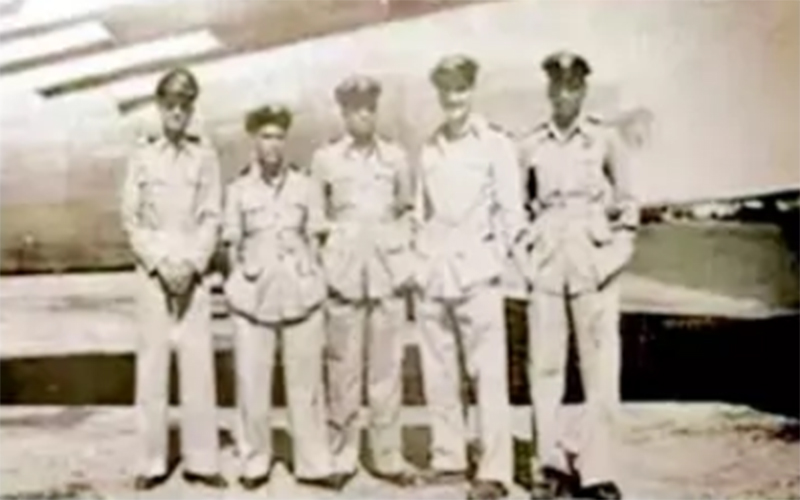
The name of the pilot who took off the first flight was Captain Cox and his junior was Munshi. The technical support was provided by Nasir, Radio Officer and Lord, Flight Engineer.
It may be mentioned that Deccan Airways was the leading airlines at that time. In 1948, the flights of Deccan Airways were discontinued due to uncertain political situation in erstwhile Hyderabad State. It was again started in 1949 after the Police Action.
source: http://www.siasat.com / The Siasat Daily / Home> News> Hyderabad / posted by Sameer / August 08th, 2019
While Mughal rulers like Babar and Bahadur Shah Zafar have been buried on foreign soil, quite a few members of their clan rest at Humayun’s Tomb
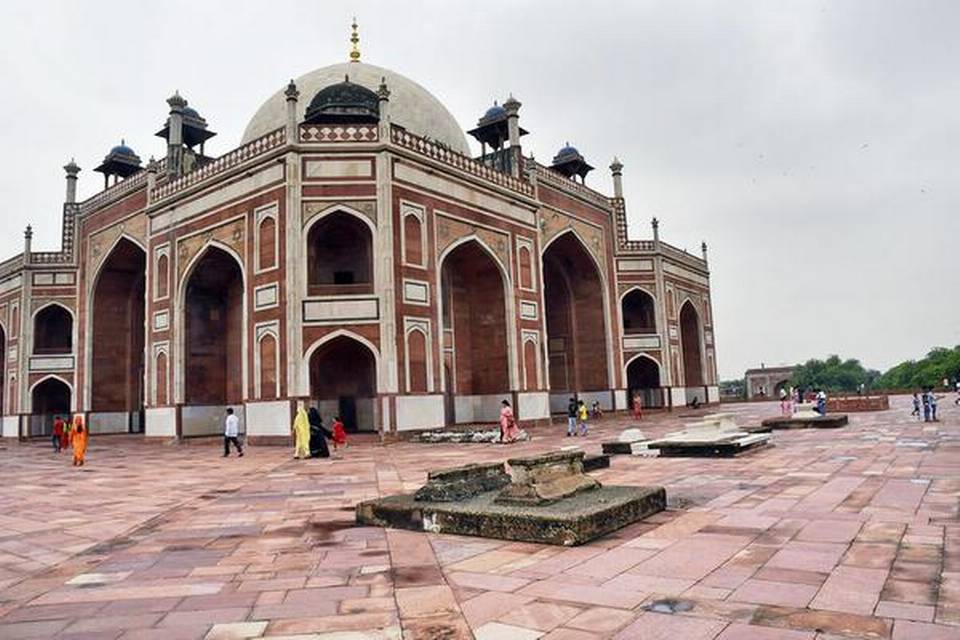
Where do most Mughal kings, princes, and princesses sleep in Delhi? The answer lies in the vaults of Humayun’s Tomb, built with much devotion, by the emperor’s first wife, Haji Begum. Among those buried here are Hamida Bano Begum, the mother of Akbar; Dara Shikoh, Shah Jahan’s heir apparent; Aurangzeb’s once beloved son, Azam Shah; the dandy Jahandar Shah, and his slayer Farrukhsiyar; Ahmed Shah and Alamgir-II.
There are many more, of lesser note, some without inscriptions, gathered within the folds of the mausoleum of their ancestor Humayun. It’s a strange feeling of beds spread out on a summer night with the kind emperor sleeping in glory among many of those who waded to the throne through the blood of their relatives. The last rites of murdered princes were generally adhered to and they were laid to rest in the family graveyard. But there were exceptions like Dara Shikoh, who was denied the ritual funeral bath by his austere brother Aurangzeb.
In Mehrauli, the precincts of the shrine of Hazrat Qutubuddin Bakhtiar Kaki also form the burial ground of many Mughal and other princes. In Agra, Akbar’s tomb at Sikandra is the repository of the remains of a host of princes and princesses. In Calcutta, several descendants of Wajid Ali Shah, the last King of Oudh, lie buried, and in Rangoon, the family of Bahadur Shah Zafar has found a burial place denied to it in the land of its birth.
Babar’s tomb should have been the last resting place of all those descendants whose graves are found in Humayun’s mausoleum. But Babar chose to be buried in Kabul which ceased to be a part of the Mughal empire by the time most of his successors died.
Isn’t it an irony of fate that the first and last emperors could not be buried in India? While Babar loved Kabul, Bahadur Shah Zafar had no choice as the British wanted to stamp out his very memory by burying him in a nondescript grave in Rangoon, which was rediscovered by chance and formed the rallying point for Netaji Subhas Chandra Bose’s INA during World War-II.
Bahadur Shah Zafar died on 7 November, 1862 and was hastily buried by lantern light, with the British officer deputed to escort him from India and look after his stay in Rangoon, supervising the funeral. Zinat Mahal and the other ladies of the harem who had accompanied the king did not attend the last rites, but his young son, Jawan Bakht was present. No tombstone was erected to perpetuate the memory of the star-crossed monarch, but fate willed it otherwise and Bahadur Shah Zafar seems to have had the last laugh as his name and fame survive despite his oppressors’ ill-intentions.
The king’s mazar (shrine) has now become a place of pilgrimage in Myanmar, where the last emperor is worshipped as a Pir. While on the walls are inscribed some of his heart-rending ghazals, like the one bemoaning the misfortune of his not having found even two yards of land in his country of birth “Kitna hai badnaseeb Zafar dafan ke liye / Do gaz zamin bhi na mili ku-e-yaar mein”. But he has acquired enough space in the hearts of his compatriots alright.
Babar’s mausoleum is a modest one, which lay neglected for many years. But it is heartening to note that lately it has been renovated, having somehow escaped destruction during the Soviet occupation of Afghanistan and then the turmoil of the Taliban period. Though demands have been made for bringing back Zafar’s remains to India, nobody has raised their voice for Babar’s reburial, not entirely because of the first Mughal emperor’s dying wish.
So Humayun’s Tomb remains the funeral parlour of the family of Babar. You go from vault to vault and nothing but inscribed stones confront you on which are enshrined a cloak-and-dagger mystery. Death, gruesome death, generally at the hands of an assassin hired by the next of kin, the ambitious prince determined to seize the throne.
Many were done to death by their brothers, uncles, nephews or treacherous wazirs. Some died of poison, administered through a favourite, but faithless, courtesan; others strangled in their sleep, yet others hacked with swords or stabbed through the heart or back. Children weren’t spared. You gaze at these tombstones with awe and pity. How many innocent lives destroyed for the sake of ambition! There is the silence of death all around, with the Grim Reaper gloating over his sickle of time with which he has laid low both those with name and those without fame. Only Clio, the muse of history, understands the secrets of these vaults and it is she who weeps in them through her tresses: Put on your shoes and tip-toe away.
The writer is a veteran chronicler of Delhi
source: http://www.thehindu.com / The Hindu / Home> Society> History & Culture> Down Memory Lane / by R.V. Smith / July 23rd, 2019
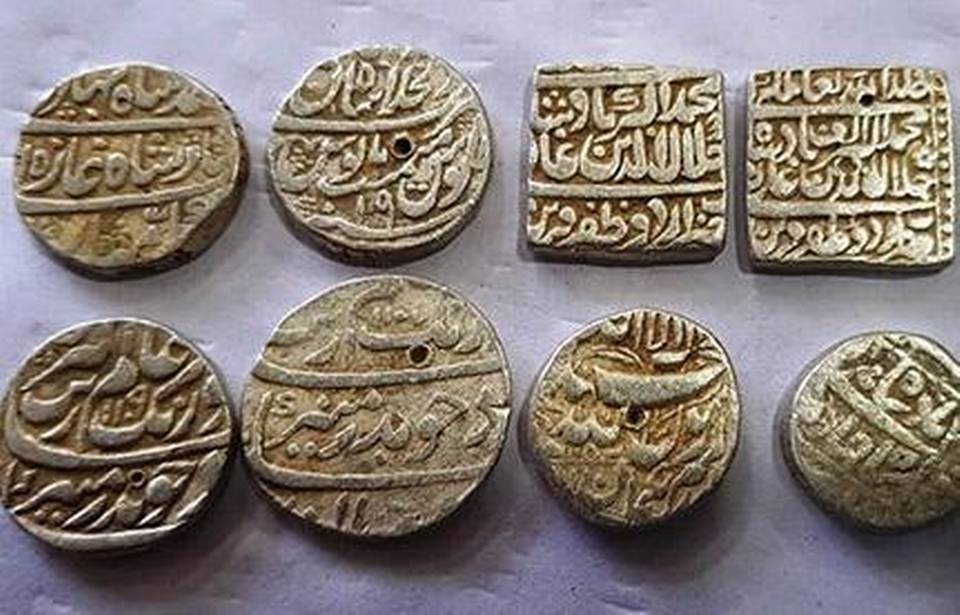
The Uttar Pradesh police on Friday said it had recovered a treasure trove of 698 “rare” Mughal-era silver coins dating back to the 16th and 17th century. A few of the coins are said to be from the eras of emperors Akbar and Aurangzeb.
The coins were found buried in a garden in Shimla, said a police officer from Moradabad district.
A DSP-rank officer from Moradabad Lallan Singh, the circle office of Highway area, said the coins were found by a Moradabad-based contractor named Ghulam Nabi while he was digging at a location in Shimla with three-four labourers.
The police came to know of the coins after Mr. Nabi and the labourers quarrelled among themselves over sharing the coins after they returned to the Mundhapandey area of Moradabad district, Mr. Singh said.
The coins weighed 7.9 kg, the officer said, adding that they had been sent to the Archaeological Survey of India.
“We struck silver!” U.P. police tweeted late on Friday as it released pictures of the recovery.
According to ASI, these are “rare 16th/17th century Mughal-era coins with legends in Persian and kalima in Arabic”, the police said.
The ASI is yet to issue a statement on the recovery or independently acknowledge their historical significance.
source: http://www.thehindu.com / The Hindu / Home> Society> History & Culture / by Omar Rashid / Lucknow – July 27th, 2019
The mosque was built as part of a vision by Dr. Gottlieb Wilhelm Leitner, to include the main religions (Islam, Judaism, Christianity and Hinduism), but he passed away before he could fulfill his commitments. (Everyday Muslim/Tharik Hussain)
Everyday Muslim announced the discovery of a forgotten Arab/British princess directly descended from the Prophet Muhammad
Buried in a Muslim plot at the Brookwood Cemetery near Britain’s first Muslim Cemetery
London :
The grave of a British Muslim, believed to be a direct descendent of the Prophet Muhammad (peace be upon him), has been discovered in a suburban town about 50 kilometers (30 miles) southwest of London.
Nestled in the woodlands of Woking, Surrey, Princess Sharifa Musbah Haidar El-Hasimi (also known as Musbah Khanum and Musbah Haidar El-Ghalib) lies in one of Europe’s oldest Muslim cemeteries, surrounded by the graves of other notable Muslim Britons from the late Victorian period and beyond.
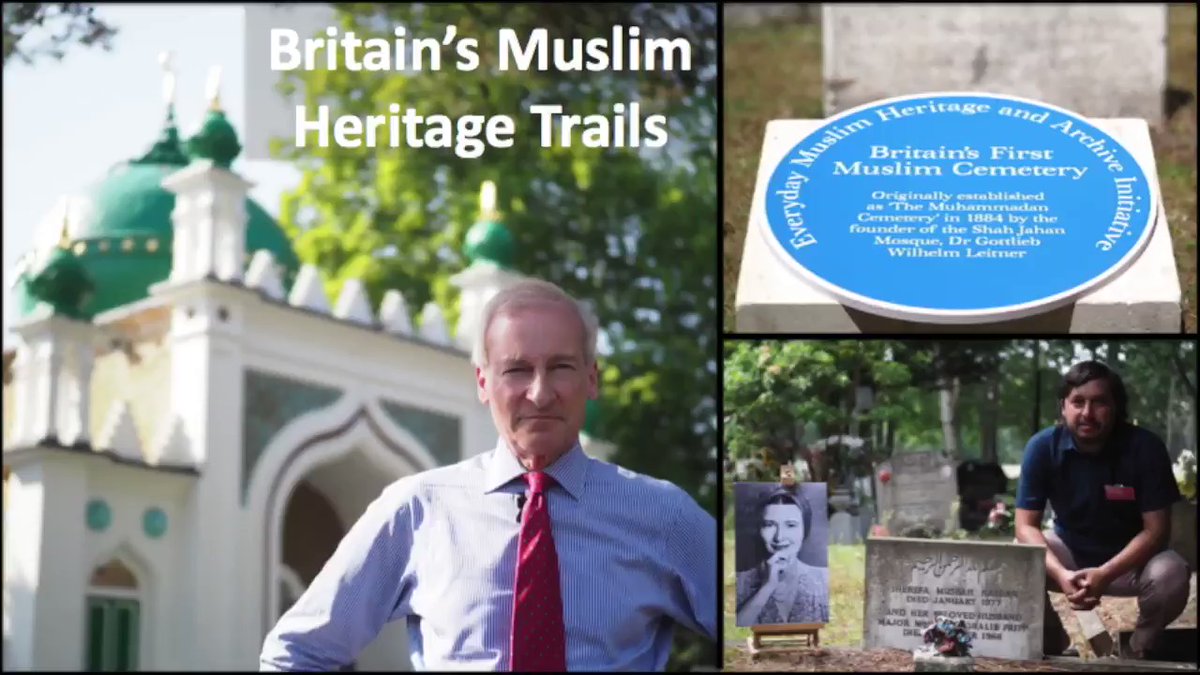
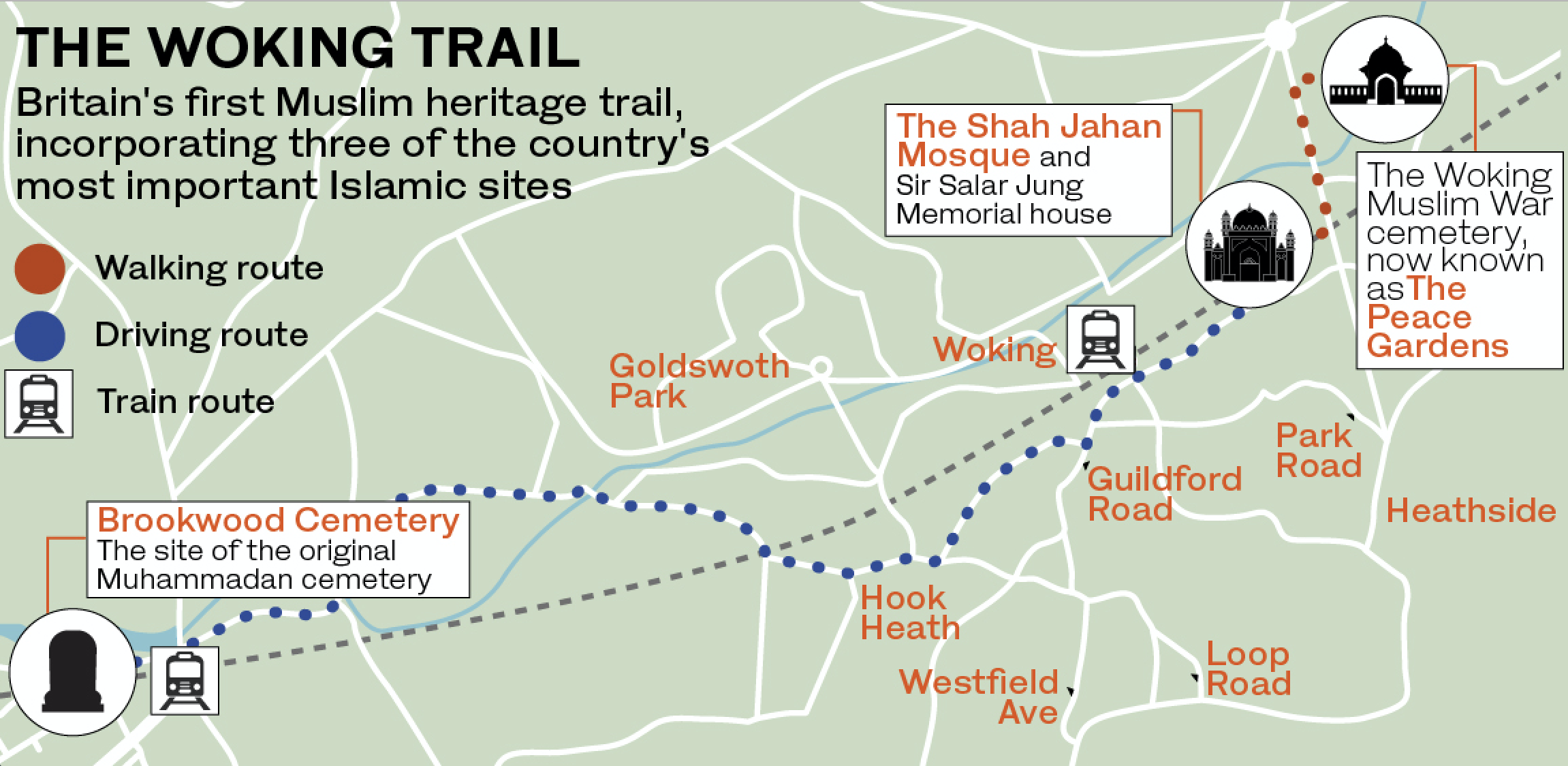
The burial ground, the first Muslim cemetery established in Britain, was unearthed as part of a trail led by Everyday Muslim, a non-profit organization dedicated to documenting Muslim heritage in the UK.
“Fascinating revelations on the history of this particular princess and her final resting place have been unearthed during a self-guided trail that takes visitors to three of Britain’s most important Islamic sites, offering an overview of each one,” said Tharik Hussain, the project’s manager.
It was Hussain who first discovered the story of the Princess when he stumbled across one of her books in a small bookshop in Brighton about six years ago. Captivated by this discovery, he began researching her background.
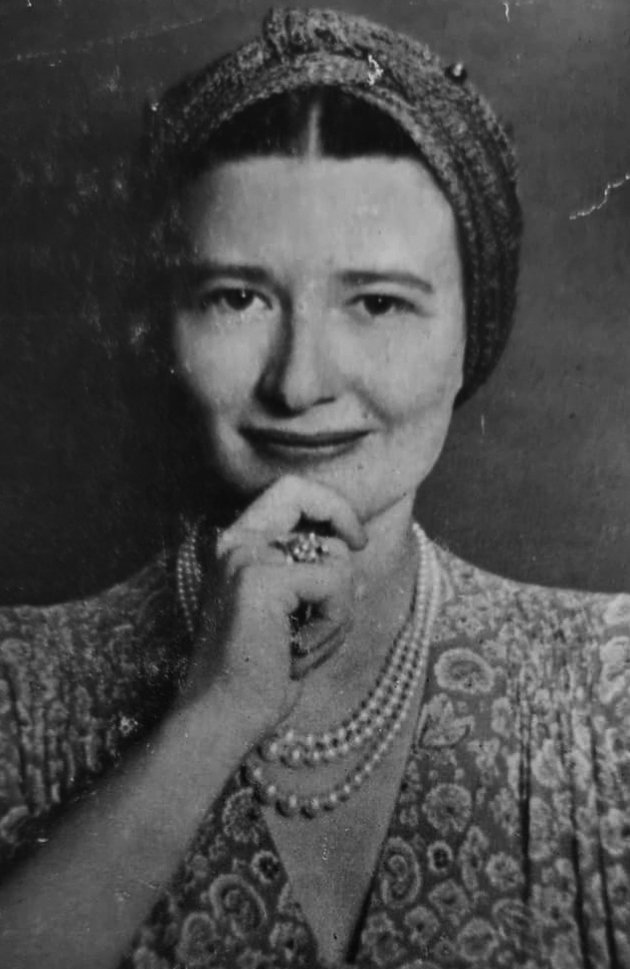
Princess Musbah Haidar, according to Everyday Muslim, was the second daughter of the Grand Sharif of Makkah, Amir Ali Haidar of the family of Devi Zeids, who claim to be direct descendants of the Prophet Muhammad.
Princess Musbah Haidar was the second daughter of the Grand Sharif of Makkah, Amir Ali Haidar of the family of Devi Zeids, who claim to be direct descendants of the Prophet Muhammad. (Supplied, no known copyright)
Princess Musbah’s mother was an Englishwoman of Irish descent called Isabel Dunn, who converted to Islam and became Amira Fatima, the second wife of Haidar. She was employed as an English teacher for the children from his first marriage.
Everyday Muslim reported that Princess Musbah was born at the family retreat, known as Chamlujah, in Istanbul on Nov. 25 1918, and had an older sister called Sfyne and a brother named Faisal.
She was initially brought up in the city, but following the dissolution of the Ottoman Empire, her family was forced to leave.
Later she moved to England, and married Maj. Francis Stewart Fripp, who later converted to Islam, taking the name Ghalib.
The princess’s ancestry is not well known as, at the time, the Ottomans had installed the other side of her family on the throne in Makkah. In 1916, with the encouragement and support of Britain, the then Sharif of Makkah, Hussein bin Ali, led a revolt against the Ottomans to create a united Arab state.
Everyday Muslim states: “Her great grandfather was the late Emir Abdul Muttalib, who was the grandson of Emir Musaad, who was directly descended from the patriarch of the House of Devi Zeid, Muhsin, whose brother Abdullah was the patriarch of the House of Devi-Aoun, which is the family tree of the current monarchs of Jordan and the historic monarchs of Iraq.
“Both houses stem from Emir Hassan, whose lineage is traced directly back eleven generations to Emir Katada of Makkah in 1174 AD. Emir Katada’s lineage traces back a further eight generations to Abdullah, the son of Mohammed Al-Alaoui, who is the grandson of Abdullah, the son of Hassan Al-Mussema.”
Al-Mussema was the son of Hassan, the brother of Hussein, whose father was the fourth caliph of Islam, Ali, the husband of Fatima, the daughter of the Prophet Muhammad.
In her lifetime, the princess authored two books; “Arabesque: an account of Harem Life,” detailing her life as a Makkan princess, and “Dawn Beyond the Tamarisks.” Her death was announced in The Times in January 1977.
According to Hussain, the two other Muslim sites in Woking the organization promotes have also been in the media recently: The Woking Muslim War Cemetery, which was renovated a few years ago and featured in the centenary celebrations of the Great War, and the Shah Jahan Mosque, which became the first in the country to be listed as a grade I historic monument as the first purpose-built mosque in northwest Europe.
The latter of these, named after Sultan Shah Jahan Begum, ruler of the British Raj tributary state of Bhopal, has a significant history.
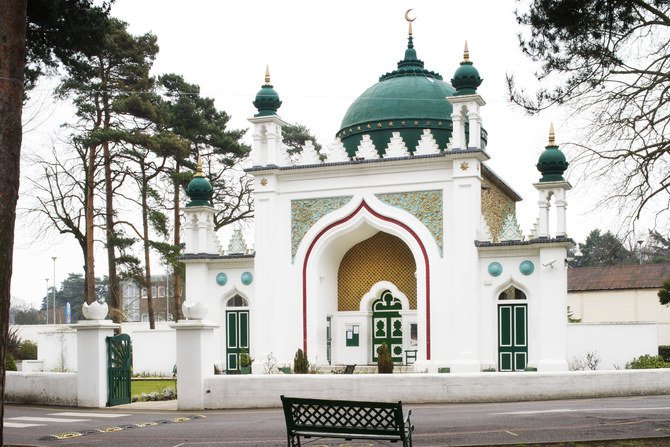
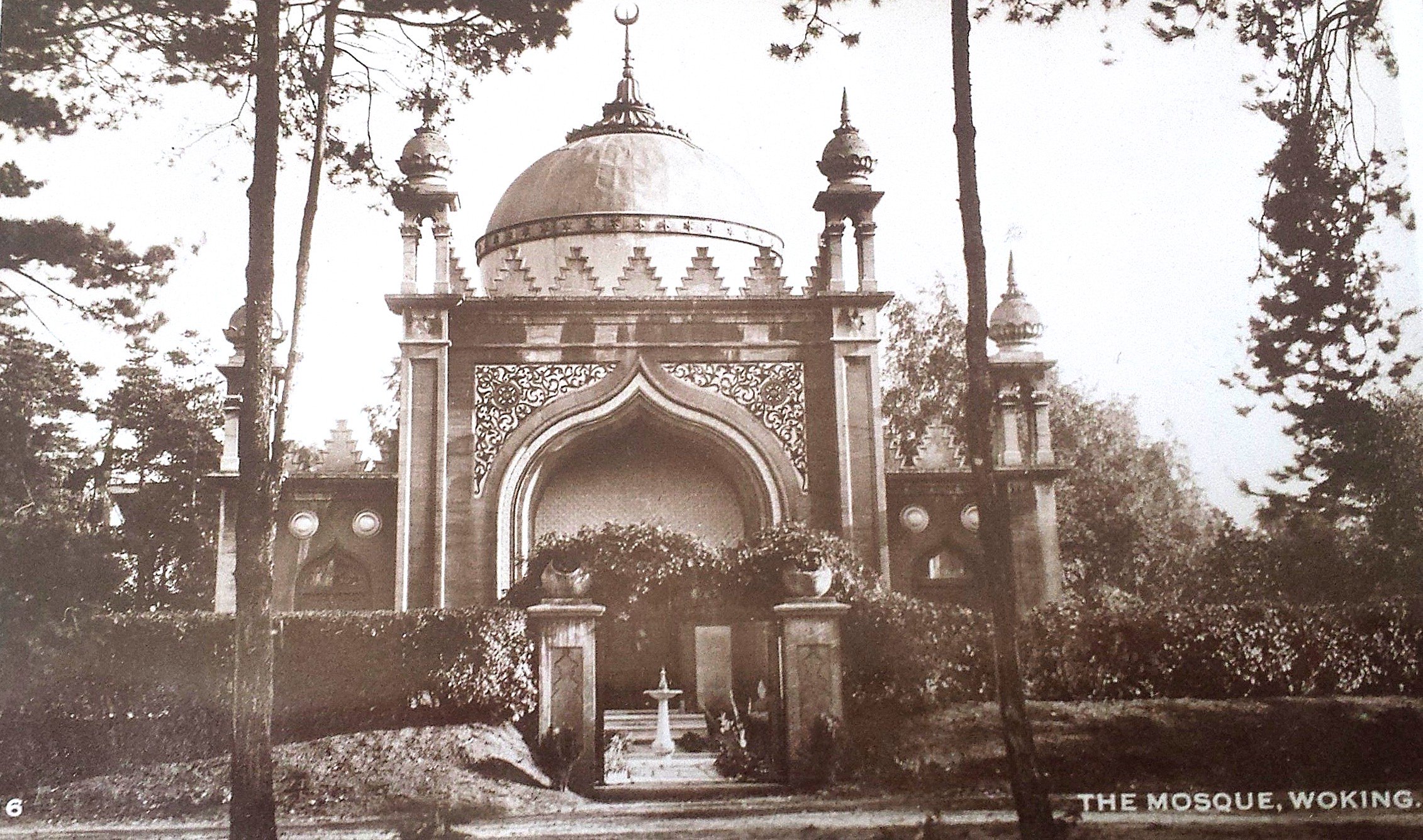
The 130 year-old Shah Jahan mosque, in suburban Surrey, bears the name of its key donor, the Sultan Shah Jahan Begum, ruler of the British-Indian princely state of Bhopal. (Everyday Muslim/Tharik Hussain)
It was the vision of Dr. Gottlieb Wilhelm Leitner, an orientalist born of Jewish parents from Hungary. A remarkable individual, according to the mosque’s website, aged 17 he “took a degree at King’s College, London, by which time it is said he could speak 15 languages.” He later went on to found the forerunner to the School of Oriental and African Studies.
The mosque itself was designed by Anglo-Irish architect William Isaac Chambers in a style that mirrored Indian Mughal architecture from the 16th century.
FUNFACT
In popular culture, the Shah Jahan Mosque was destroyed in H.G. Wells’ novel “War of the Worlds,” which was set in the author’s hometown of Woking.
Why Woking of all places?
Lietner, a religious scholar who lived and worked for many years in India and abroad, wanted to set up a college that would allow people to study the religions of the East.
“He came up with a site just outside London, in Woking, where this beautiful gothic building, known at the time as the Royal Dramatic College, had fallen on hard times and was up for sale. So it was really about convenience. It came with lots of land and it meant he didn’t have to pay the high prices that he would have paid had he found somewhere in London,” Hussain told Arab News.
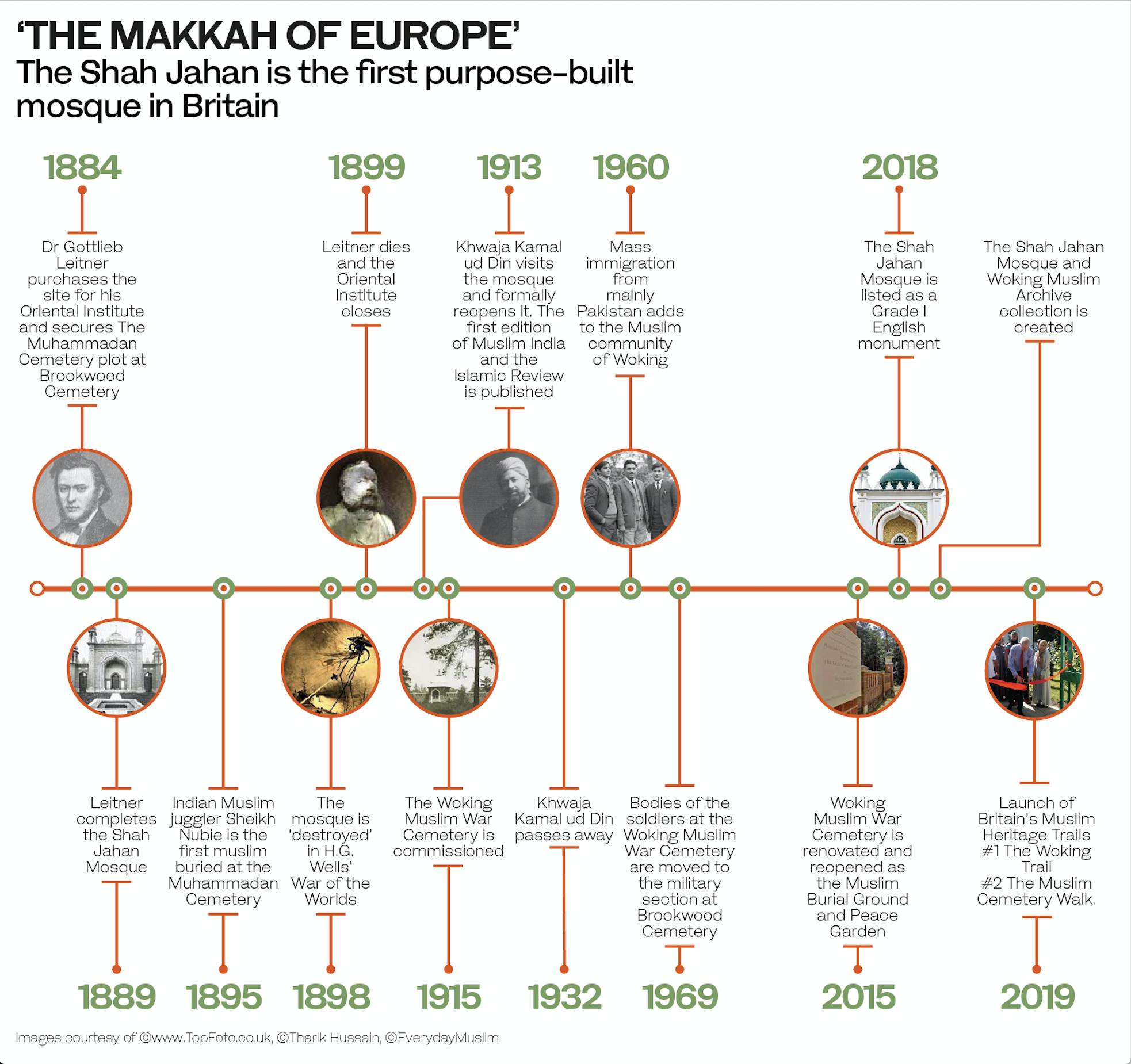
Lietner wanted to build free places of worship there as well, including a Hindu temple, an Eastern Christian church, a synagogue and a mosque. Because he anticipated people from all over the world would come, including Muslims, one of the first things he did in 1884 was secure a plot at the nearby cemetery (Brookwood) exclusively for the use of Muslim burials.
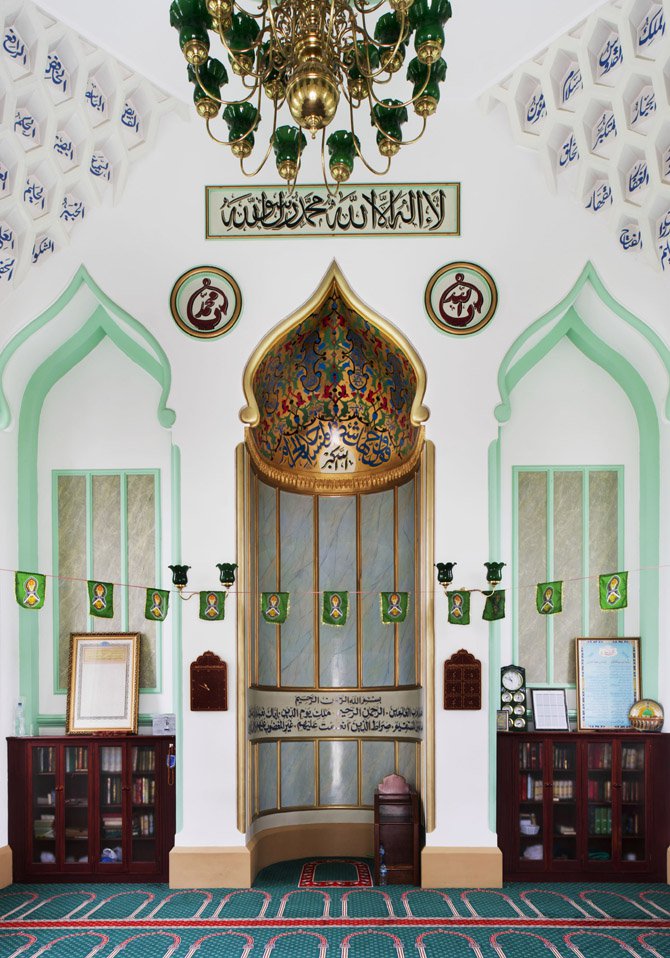
The mosque (interior pictured above with the direction of the qibla) was built initially, along with a Muslim cemetery, as Dr. Gottlieb Wilhelm Leitner understood that burial rites in Islam were a very important rite. (Everyday Muslim/Tharik Hussain)
A stone still stands to this day inscribed with specific instructions on how to bury Muslims, as very few people in Victorian Britain understood the specific procedures.
His institute flourished and after five years he began building the mosque, but passed away before he could fulfill his vision.
The Shah Jahan Mosque was completed in 1889, but according to its website: “Abdullah Quilliam’s Liverpool mosque, opened in 1889, pre-dates Woking by a few months, but the Shah Jahan has the honor of being the first purpose-built mosque in Europe outside of Muslim Spain.”
FASTFACT
The Shah Jahan Mosque in Woking is the oldest purpose-built mosque in northwestern Europe and was known as the “Makkah of Europe” during the early 20th century, when it became the center of Islam in the UK.
Hussain adds: “So this is why Woking, because it had Britain’s first purpose-built mosque and Britain’s first Muslim cemetery, so naturally Muslims were drawn to it.”
Unfortunately, the mosque was neglected after Leitner’s passing for over a decade, but was then restored by an Indian lawyer, Khwaja Kamal-ud-Din, who had befriended influential Victorians curious about Islam, including a Lord who later became a convert.
His name was Lord Headley, also known as Sheikh Rahmatullah Al-Farooq, an Irish peer, and one of the leading members of the Woking Muslim Mission who helped the center flourish, with the aim of bringing it back to life as a platform for promoting islam in Europe, even becoming home to one of the first Muslim publications in Europe, The Islamic Review.
That is why Woking has been dubbed the “Makkah of Europe” by the organizers of the trail.
The Muslim cemetries
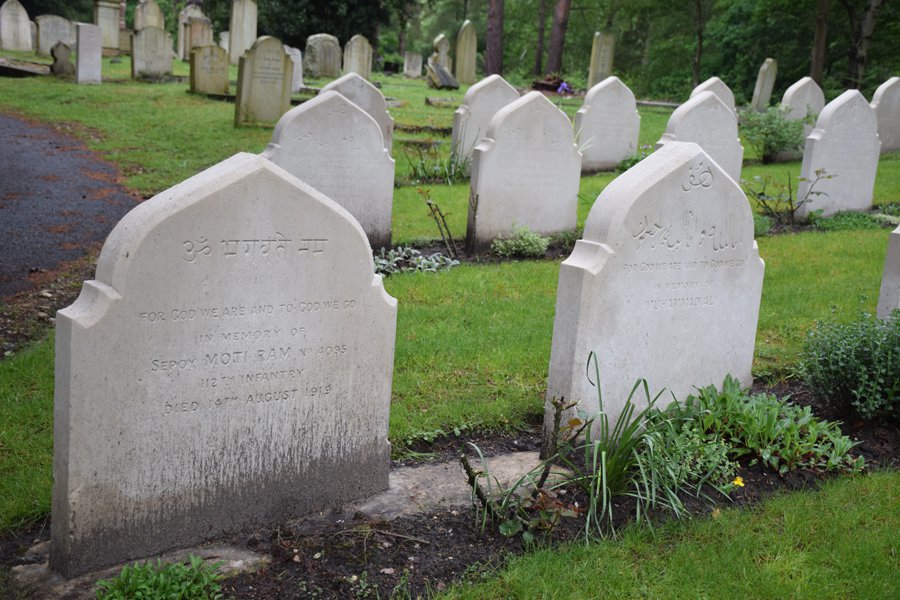
The Woking Muslim War Cemetery, now known as the Peace Gardens, played a prominent part in the remembrance of the centenary of the First World War, between 1914-18. It was the final resting place of 27 Muslim soldiers who fought for the British Empire and Free French Forces during the two great wars..
But it is the other cemetery that Everyday Muslim is keen to highlight, which you could say was the Westminster Abbey of Muslim cemeteries.
“This site is probably the least known and ironically is actually the oldest Muslim space we know of in Britain. It is a plot of land originally known as the ‘Muhammadan Cemetery,’ founded in 1884, within the nearby Brookwood cemetery, by Dr. Leitner,” Hussain told Arab News.
Princess Musbah resides here alongside Abdullah Quilliam (1856‑1932), founder of Britain’s first mosque and Muslim publication, Muhammad Marmaduke William Pickthall (1875‑1936), author of the first ‘native’ English translation of the Holy Qur’an, Naji Al‑Ali (1936‑1987), Palestinian political cartoonist and creator of “Handalah,” Sepoy Ahmad Khan (died 1914), the first British Muslim soldier buried on British soil, and many other famous Muslims, such as Victorians, princes and princesses, sultans and so on.
he cemetery in Woking is home to several important Muslim dignitaries. (Everyday Muslim/Tharik Hussain)
What is the aim?
Everyday Muslim wants to reach a point where sites such as these are not labelled as “British Muslim” heritage, but just “British” heritage.
Hussain, who also develops self-guided trails across the world for Lonely Planet guidebooks, said it should be recognized as a significant part of the island’s history
Sir Laurie Magnus, chairman of Historic England, which is responsible for protecting and championing the country’s heritage, said “Muslim heritage is very much a part of Britain’s heritage and I am delighted to launch this trail,” to celebrate these beautiful sites.
The initiative was aided by the National Lottery Heritage Fund, as part of a bigger project concerning the heritage and history of the mosque and the surrounding area.
Hussain said: “We wanted to put these trails out there so that Muslims and non-Muslims up and down the country could see the potential.”
He said they see this as a start, and hope to receive more funding to highlight Muslim heritage trails across the UK to make Muslim heritage in Britain more visible and a normalized part of the wider narrative.
“I think it’s really cool that in the process of trying to unearth British Muslim heritage, we are not only unearthing all these amazing stories of British people who were doing amazing things as Muslims and converts, but we find someone who has British blood and the Prophet’s blood. I think that’s just pretty fabulous, and something we should celebrate and embrace,” Hussain concluded.
source: http://www.arabnews.com / Arab News / Home> Latest News> Middle-East> Home / by Sarah Glubb / July 29th, 2019
Sheikh Mohammad Munir Ansari conferred with the Star of Jerusalem medal.
Jerusalem (PTI) :
Palestinian President Mahmoud Abbas has conferred Indian-origin Sheikh Mohammad Munir Ansari with the Star of Jerusalem medal – one of the highest honours given to foreign nationals by the Palestinian Authority – for strengthening Indo-Palestine ties. At an event organised to honour 91-year-old Ansari Thursday evening, Abbas thanked him for serving Palestine and Jerusalem with distinction. Ansari, 91, is the Director of Indian Hospice, a unique and historic monument in the heart of Jerusalem, which has become a symbol of India’s heritage and presence in the third holiest city for Muslims going back to over 800 years.
Abbas said the Ansari family’s presence in the old city of Jerusalem reflects the strong traditional ties between Indian and Palestinian people. He called upon for strengthening people-to-people contact between the two sides.
Abbas plans to send Palestinian Prime Minister Mohammad Shtayyeh to India soon to boost tourist inflows from there which can contribute to strong bonding between the two people.
A representative of India, Sunil Kumar, who was present at the event, also appreciated the role played by the Ansari family in strengthening Indo-Palestine ties.
The Indian hospice has been under the direct supervision of a representative from India since 1924. Ansari’s father, Sheikh Nazir Hassan Ansari, was appointed the first Sheikh of the Hospice from whom the mantle passed on to the incumbent who was born in Jerusalem in 1928 and has spent his whole life here.
In 2011, India honoured Ansari with the Pravasi Divas Samman, the highest honour conferred on overseas Indians.
The history of the hospice goes back to about 12th century, when famous Sufi saint from Punjab Baba Fariduddin Ganj-i-Shakar (or Baba Farid, as he is better known) visited Jerusalem on pilgrimage and prayed in seclusion for 40 days at the site.
It later became a pilgrimage site for Indian pilgrims visiting Jerusalem and was dedicated as a charitable Waqf property in trust for a pious purpose.
The place where Baba Farid is said to have prayed has become a major attraction for Indian tourists visiting Jerusalem.
Almost every prominent Indian leader who has visited the region has paid a visit to the site and the hospice continues to host Indians visiting the Holy Land. The hospice also received a grant from the Ministry of External Affairs for its renovation.
source: http://www.caravandaily.com / Caravan / Home> Indian Muslims / by June 15th, 2019
The Buro Saheber dargah has been drawing people of all faiths for centuries
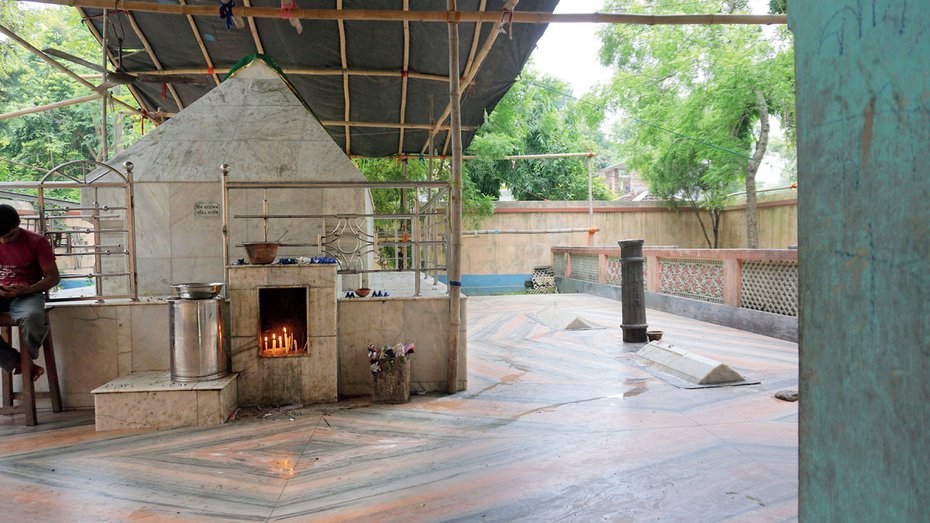
The mazaar of Pir Hazrat Shah Malek Gaus in Matiari / (Prasun Chaudhuri)
Matiari is a village beside the Indo-Bangladesh border, 110 kilometres northeast of Calcutta in Nadia district. It is believed to be the capital of the 16th century zamindar, Bhabananda Majumder, an ancestor of the legendary king of central Bengal, Krishnachandra Roy. A walk across the village today reveals remains of the regal past — a centuries old Shiv temple, a huge water body excavated by the king, relics of the palace and so on.
In the heart of the village stands Buro Saheber Dargah, a shrine built over the grave of Pir Hazrat Shah Malek Gaus, a Sufi ascetic from erstwhile Persia. Legend has it that in the 16th century this village was hit by a severe drought followed by famine. Apparently the pir’s spiritual power brought rain and saved villagers from starvation and death. Since then, starting from the anniversary of his arrival, a month-long fair is held every year at this dargah.
The date usually falls towards the end of June and coincides with the first day of Ambubachi, a three-day-long Hindu festival of fertility. During this period, around two to three lakh people visit the shrine to pay homage. Not just Muslims, people from all faiths visit the pir’s mazaar to pay homage to his soul and pray to have their wishes (mannat) granted.
I visit the dargah on the eighth day of the annual fair on a sultry afternoon. The entry to the mazaar is blocked with lines of makeshift shops of toys, snacks, utensils and sundry items — typical of any fair in the Bengal countryside. As I weave through the crowd, the sound box plays a song — Ke jabi ay choley ei Fakir Maular dorbarey/Niya premer mala re… O come to the shrine of the holy man/ With your garland of love…
The marble frame of the mazaar is adorned with chadars. Two women light candlesticks at the altar mumbling prayers and another is found pouring a bottle of milk on the grave. At the back of the shrine, a couple ties a stone with coloured threads on to a banyan tree.
“Our dargah has been a melting pot for hundreds of thousands of people, irrespective of caste, creed or religion, for centuries. We have visitors from across the border,” says Nitaipada Roychowdhury, president of the Dargah Committee and a resident of Matiari. The committee has 21 members — 11 Hindus and 10 Muslims. Roychowdhury is a retired teacher of the Matiari Banpur High School. He consults a diary and gives me the count: 90,000 people have already visited the shrine in the first week of the annual fair.
According to Roychowdhury, the pir was born Abdullah. He belonged to an aristocratic family. Looking for spiritual enlightenment, he turned fakir, left his home and embarked on a journey all the way to Hindustan. When he reached an ashram by the banks of the Narmada river, the saints initially refused to offer him lessons in Hindu philosophy because he was a Muslim. But his sincerity and perseverance eventually made the seers change their mind and accept him as a disciple. After deep study at the ashram and subsequent enlightenment, Abdullah started his journey eastwards to spread his newfound knowledge of a syncretic God.
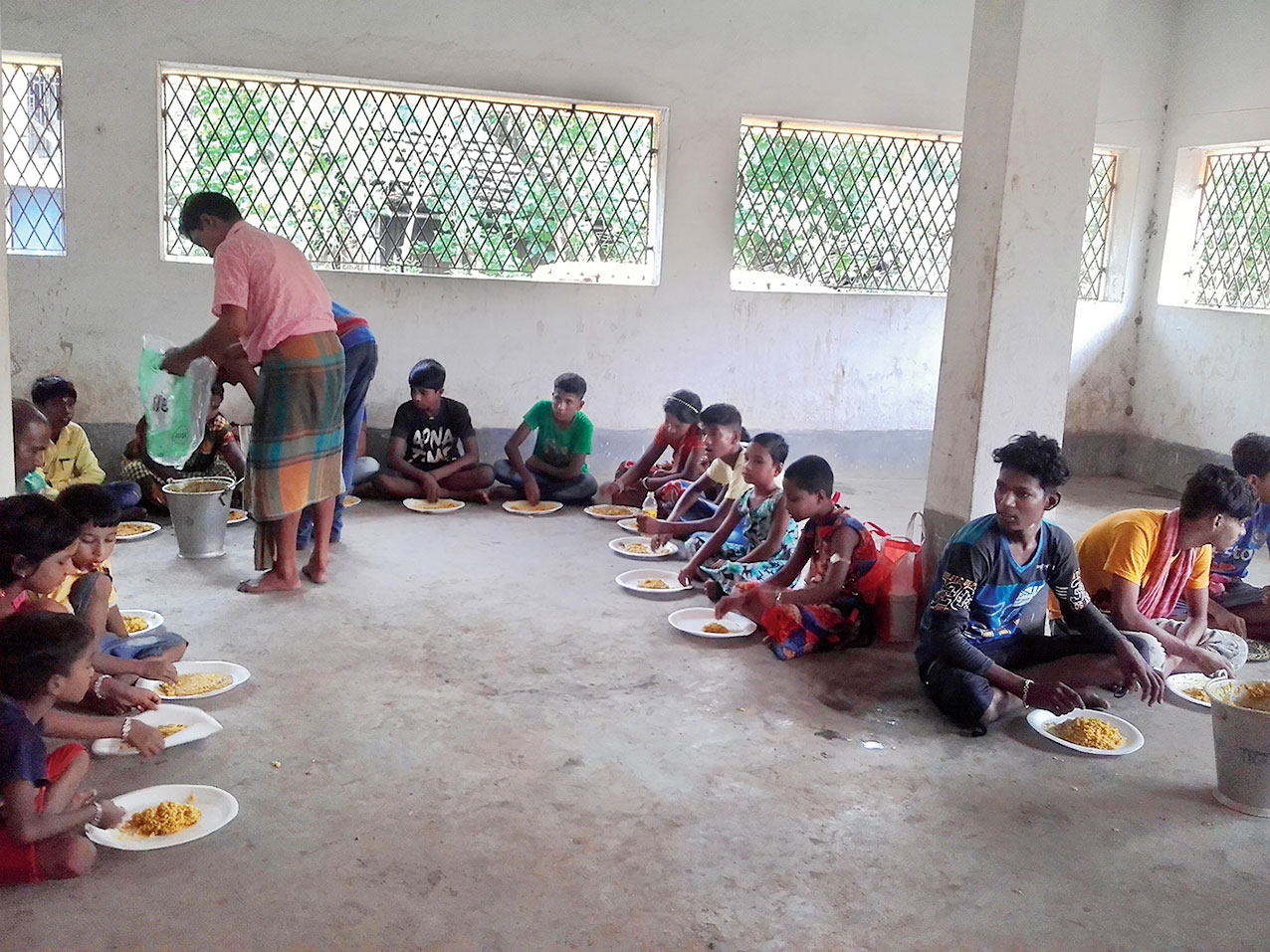
The nongorkhana at the dargah / (Prasun Chaudhuri)
“Buro Saheb reached our village on the first day of Ambubachi,” says Raihan Mondal, a member of the committee. “Since there had been a drought, he asked the local zamindar to organise an annasatra or community kitchen for the starving villagers. Soon after this there was heavy rain and a bumper harvest.” The impressed zamindar bestowed on him the title of Pir Hazrat Shah Malek Gaus and requested him to settle down in Matiari. Today, to commemorate the community kitchen, youths organise a nongorkhana or langarkhana where food is cooked and distributed free.
That day Noor Amin Sheikh, who has come from Ranaghat, offers a fowl at the dargah. “We had prayed for our uncle who had been suffering from a strange illness. Now that he’s cured I have come with the offering,” he says.
Sandhya Das has come from Barrackpore in North 24-Parganas to make a donation of Rs 1,001. Her sister has done well in the board exams. She says after lighting a candle at the mazaar, “If you pray sincerely, Buro Saheb always fulfils your wish.” The walls at the entrance to the dargah display a number of marble plaques commemorating past donations. There are two plaques with the name of one Abdul Hai of Jhinaidaha in Bangladesh. There is one bearing the name of Pappu Sarkar, who donated an entire month’s salary after he got a government job.
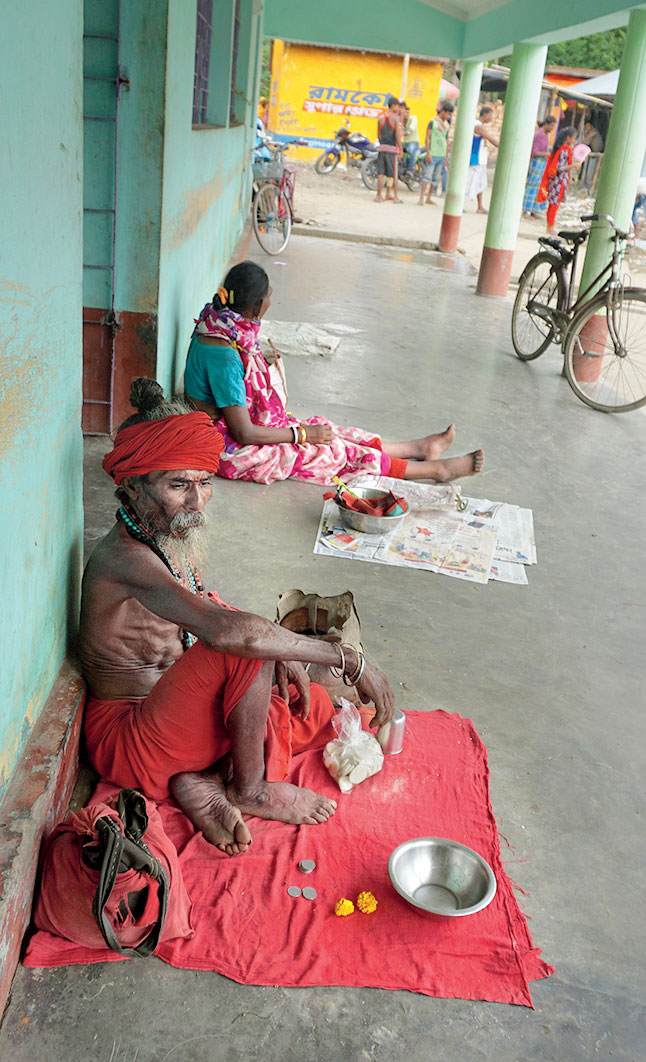
Fakir Mobarak Shah of Titagarh / (Prasun Chaudhuri)
Goats, fowls, shirni, payesh, sacks of rice, batasha and cash are donated to the pir. The dargah committee organises auctions of the goats and fowls. The fund raised is deposited in a bank account along with the cash donated. Says Roychowdhury, “We spend the money for the upkeep of the dargah.” Some visitors offer food and money to the sadhus and fakirs who throng the portals of the dargah. Fakir Mobarak Shah comes from Titagarh in North 24-Parganas every year. The foodgrains and alms he collects at the fair sees him through for half a year. Amal Giri also begs for alms with dozens of other sanyasins and fakirs.
The young people who organise the nongorkhana take me to the kitchen. This is run by a separate committee constituted of Hindu and Muslim youths in equal numbers. Ajay Biswas and Abbas Mondal proudly show me how they have been cooking chicken curry and rice for hundreds of people. They invite me to lunch. Says Ajay enthusiastically, “Yesterday we had cooked khichuri and payesh.”
Roychowdhury reminds me that the dargah attracts visitors all year round. “There’s been efforts by political parties to interfere in the management of the dargah committee, but we have been able to stave them off. We are also confident of fighting all fundamentalist forces should they want to disrupt the harmony created by Buro Saheb 400 years ago.”
Instances of dargahs looked after by more than one community abound across Bengal. Amit Dey, a senior historian and professor at Calcutta University sums up the tradition. He says, “This syncretistic tradition has deep roots in the society and culture of rural Bengal.” According to him, the daily grind of an agrarian society encourages people to co-operate with neighbours and people around them. He adds, “In their struggles for existence there is little demarcation of religion, caste or creed. The dargah is a space shared by members of two communities.”
I sit down for a meal of fowl curry and rice with Abbas, Ajay and others at the nongorkhana. The sound boxes at the dargah start to play the classic song composed by the Sufi minstrel, Lalan Fakir. It goes — Sab lokey koy Lalan ki jaat songsare/Lalan bole jaater ki roop/ Dekhlam na ei nojore… People ask, “What’s Lalan’s religion/Lalan replies, For the life of me I cannot tell.”
source: http://www.telegraphindia.com / The Telegraph, online edition / Home> Heritage / by Prasun Chaudhuri / July 07th, 2019