Police museum houses rare collection of arms and artefacts from Nizam era
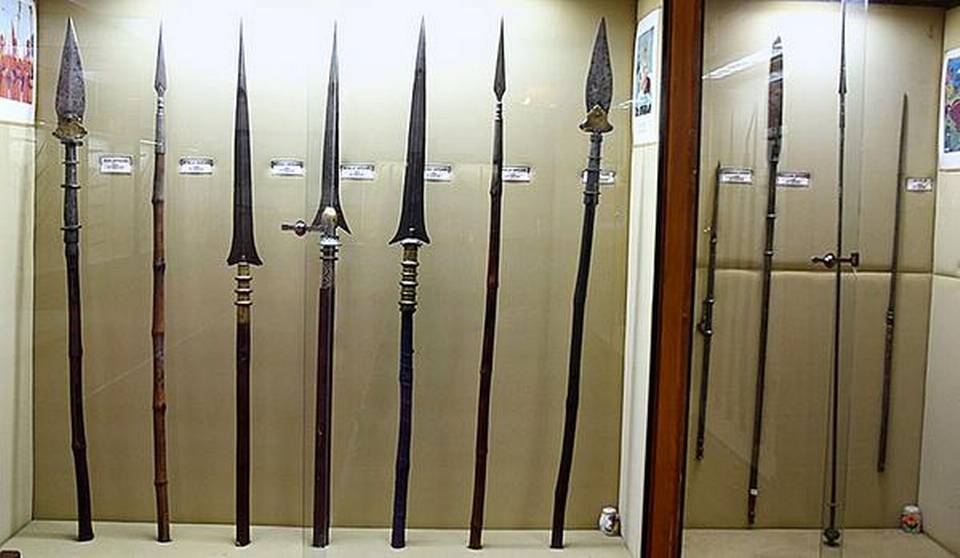
Home to rare and little known police relics from the Nizam era, the Dr. Hankins Police Museum and Discovery Centre at RBVRR Telangana State Police Academy (TSPA) here is a treasure trove for history enthusiasts.
From long-out-of-use police guns to breaking-and-entering tools that burglars depended on many decades ago, the museum is filled with intriguing artefacts that one would hardly find outside its walls. “It is a one-of-its-kind museum in the country with a rich collection of arms, bronze sculptures, artefacts related to communication, forensic science and policing supported by photographs and paintings,” said TSPA director Santosh Mehra.
The museum, which is named after Dr. A.C. Hankin, a European who served as the first Inspector General of Police in Hyderabad Dominions, has an antique collection of arms from the 16th to 20th century, manufactured in Iran, Turkey, England, France, Egypt and China.
One of the major attractions at the museum includes a .2 mm repeating flint pistol with five rounds of storage capacity from the 19th century, also known as ‘Lilliput pistol’. The firearm, which is barely four inches long, was popular in the UK and other European countries.
The collection also includes Shamsheer, Patta, Yataghan, Sosun Patta, Saif, Talwar, Fencing, Adi, Dhup, Dao, Ramdao, Tegha, and Zulfiqar swords, apart from arrows, spears, daggers, tabar, axe and cannons.
A copy of FIR of the assassination of Mahatma Gandhi issued by Tughlak Road police in New Delhi on January 30, 1948, is also on display at the museum, which houses a rare photograph of Rani Lakshmibai of Jhansi.
The police gallery also houses counterfeit coins and currency notes of East India Company, Nizam Government, the British empire and Indian union. In addition, one can have a glimpse of hand-held trans-receiver, transmitters, ECIL receiver, TCS Collins receiver remote control, Webel base repeater set and desk microphone.
Set up in 2007, Dr. Hankin police museum is not open to the public. However, Mr. Mehra said school children can visit the museum to see the impressive collections of arms and communication systems to know the history of policing.
Sources in the police department said the museum is likely to be shifted to the Command Control Centre of Hyderabad police coming up on Road No.12 of Banjara Hills. It is also to be made open to the public once shifted there.
source: http://www.thehindu.com / The Hindu / Home> News> Cities> Hyderabad / by Abhinay Deshpande / Hyderabad – July 07th, 2019
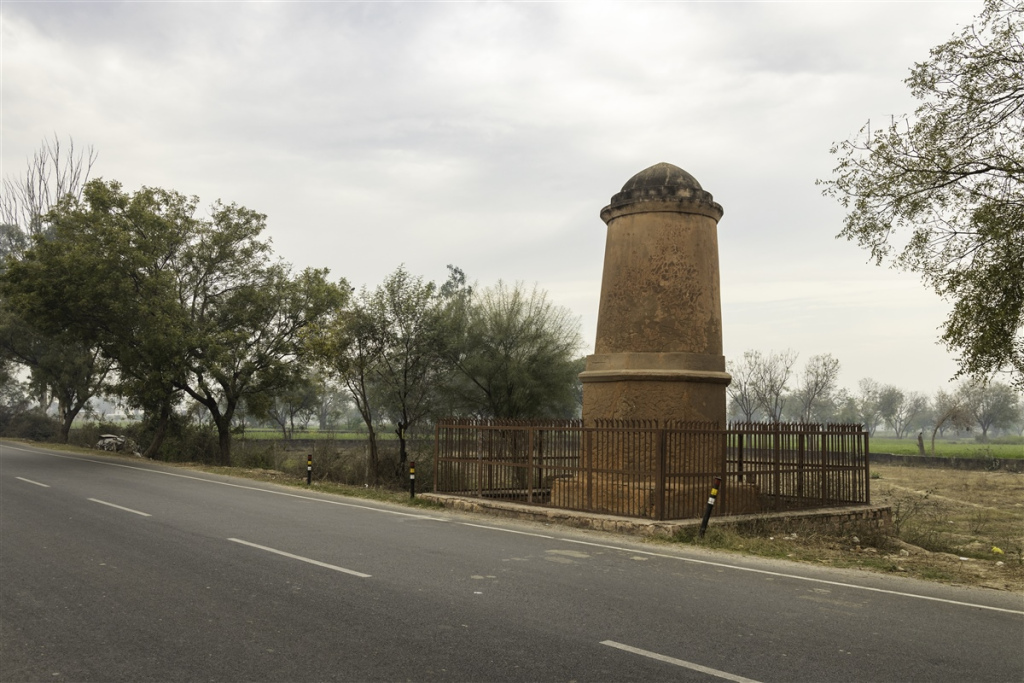
Anyone travelling on India’s road network in the north of the country may from time to time see a curious little structure standing in isolation by the side of the road. Seemingly unassociated with anything else around them, to the casual observer they can probably be best described as enlarged stone salt/pepper pots.
With all the astonishing monuments that still stand today in this amazing country, it would be all too easy to dismiss these humble little constructions as your car passes them by at speed. However, they have their own story to tell, and one for which we can draw so many parallels with life as we live it today in terms of travel and communication. They are also a type of monument that is slowly disappearing from the landscape of India, so they deserve a little time in the spotlight before it’s too late.
These monuments are known as Kos Minars. A Kos is an ancient Indian unit of distance representing approximately 3.22 kilometers (2 miles), and is 1/4 of a Yojana, a vedic measurement of distance. The use of Yojana scratches back to the ancient vedic texts, and was used by Ashoka in his Major Rock Edict No.13 to describe the distance between Patliputra and Babylone. Minar means ‘Pillar’, so the broad translation of Kos Minar is ‘Mile Pillar’, even though one kos is not strictly speaking an exact mile in measurement. Interestingly, elderly people in many rural areas of the Indian subcontinent still refer to distances from nearby areas in kos.
A Short History of the Kos Minar
The first recorded evidence in India of using something in the landscape to specifically denote distances and routes comes from the 3rd century BC. The Emperor Ashoka established routes linking his capital city of Pataliputra to Dhaka, Kabul, and Balkh, and landmarks in the form of mud pillars, trees and wells helped guide the travelers and provide a sense of how far they had traveled and how much further they had to go. In the majority of cases these landmarks were already pre-existing in the landscape, they were not created specifically for this purpose.
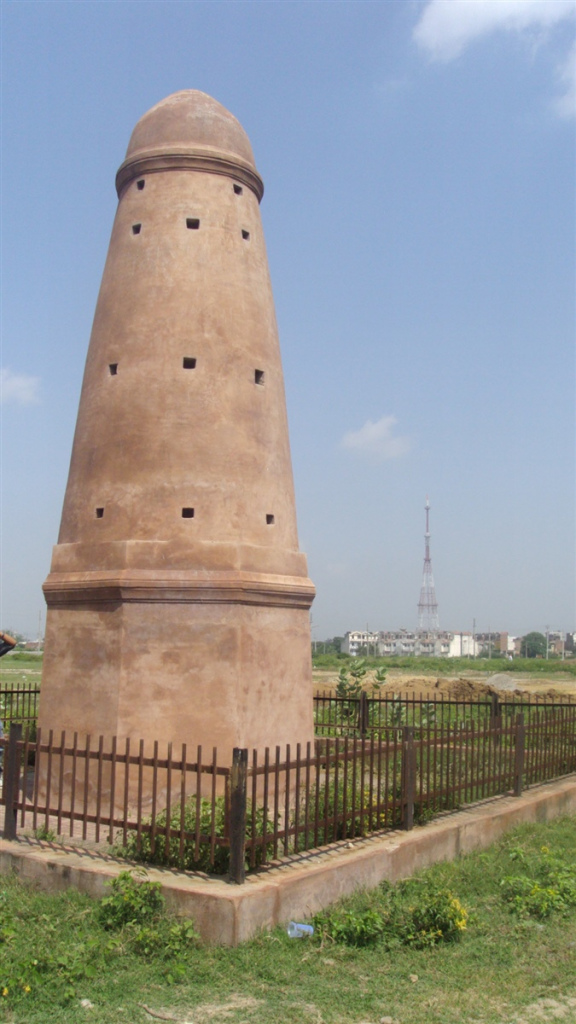
Kos Minar on NH21 near Sahara, between Agra and Fatehpur Sikri, Uttar Pradesh
In India the notion of purposely building structures to physically denote distances in the landscape was first adopted by the Mughal Emperor Babur during his short reign from 1526 to 1530. He ordered one of his central asian nobles, Chiqmaq Beg, to measure the road between his new capital Agra and Kabul in modern day Afghanistan, with the assistance of a royal clerk. He then ordered the raising of distance markers, each twelve yards high and topped with a superstructure having four openings, at every nine kos all along the measured route.
It is not clear how far the builders got with Babur’s instructions, but we do know that the Pashtun ruler Sher Shah Suri who ruled from 1540 to 1555 greatly expanded on this earlier plan. He paid great attention to the development of the road network in northern India, recognising them as arteries to the empire, and erected Kos Minars along the royal routes from Agra to Ajmer, Agra to Lahore, and Agra to Mandu. These three major routes, which were called Sadak-e-Azam, became later known as the Grand Trunk Road.
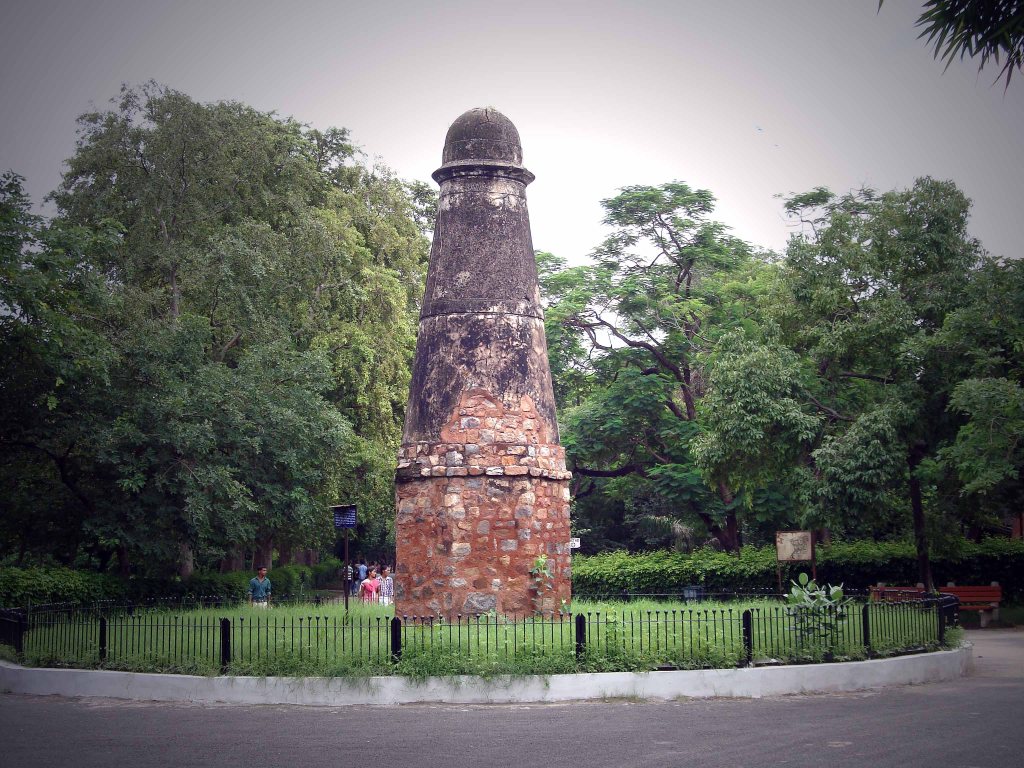
Kos Minar in Delhi Zoo. / (File is licensed under the Creative Commons Attribution-Share Alike 3.0. Source.
Many of the Kos Minars you can see today can probably be attributed to the time of Akbar, who reigned from 1556 to 1605. Abul Fazl recorded in Akbar Nama (the official chronicle of the reign of Akbar) that in the year 1575 Akbar issued an order that, at every kos on the way from Agra to Ajmer, a pillar or a minar should be erected for the comfort of the travelers, so that the travelers who had lost their way might have a mark and a place to rest. Between 1615 and 1618, shortly after Akbar’s reign, early European travelers to India brought back detailed reports of the Kos Minars they had seen, most notably Richard Steel, John Crowther, and the ambassador of King James I, Sir Thomas Roe.
Subsequent Emperors Jahangir and Shah Jahan added to the network of Kos Minars, by now they were an institution. In 1619, Jahangir ordered Baqir Khan, the garrison commander of Multan, to erect Kos Minars from Agra to Lahore. Thirty four of these milestones still exist today in Punjab in varying states of preservation. It is estimated that between 600 and 1,000 minars were erected in total during the Mughal period, but of course today only a fraction of that number still exist.
Construction and Function
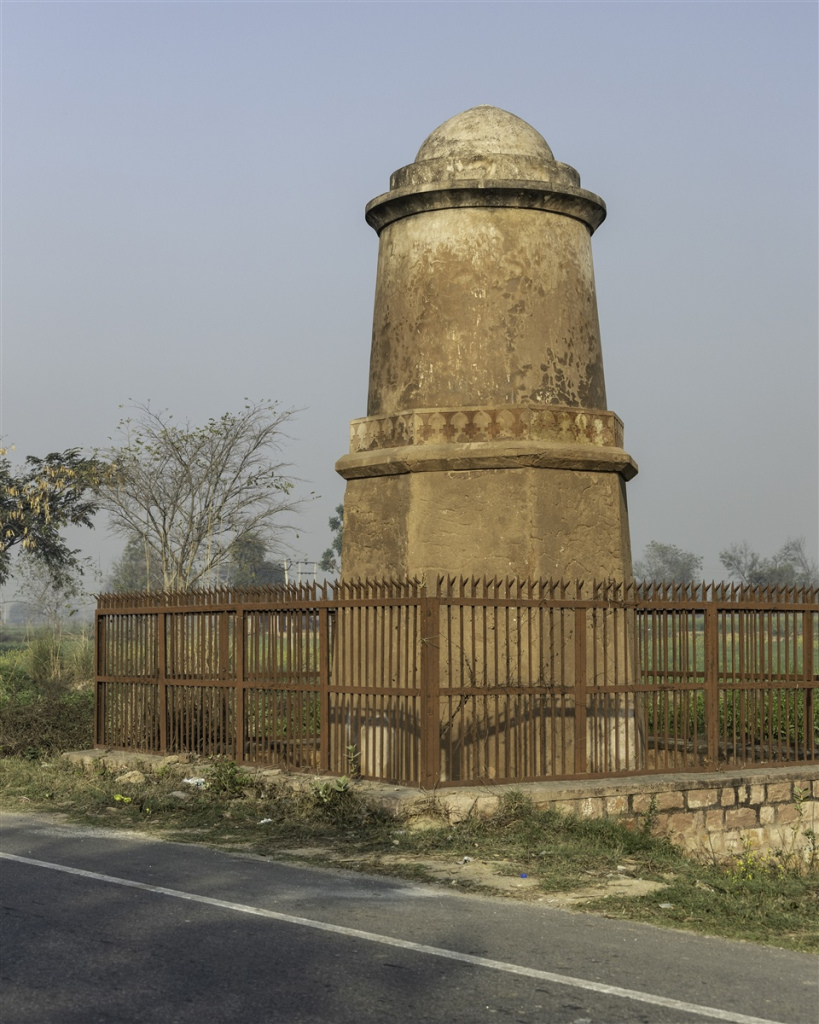
Kos Minars are round pillars around 30 feet high built on a masonry platform. They are completely solid with no stairs or internal rooms, and are mostly made of brick and once covered with lime plaster.
Whilst the features of a Kos Minar generally match each other they are not all identical, there are slight differences depending on location and time of construction/repair.
Kos Minar at Karnal, Haryana
Many of the Kos Minars you can see today stand in isolation, but that was not always the case. As the network of pillars expanded, so did associated structures to complement them and assist the traveler. Scholars believe there were three categories of Kos Minar along the major routes.
The first category is just a standalone Kos Minar with no supplementary infrastructure, erected purely for landmark identification.
The second category of Kos Minar had small associated contemporary buildings, offering limited facilities for the travelers.
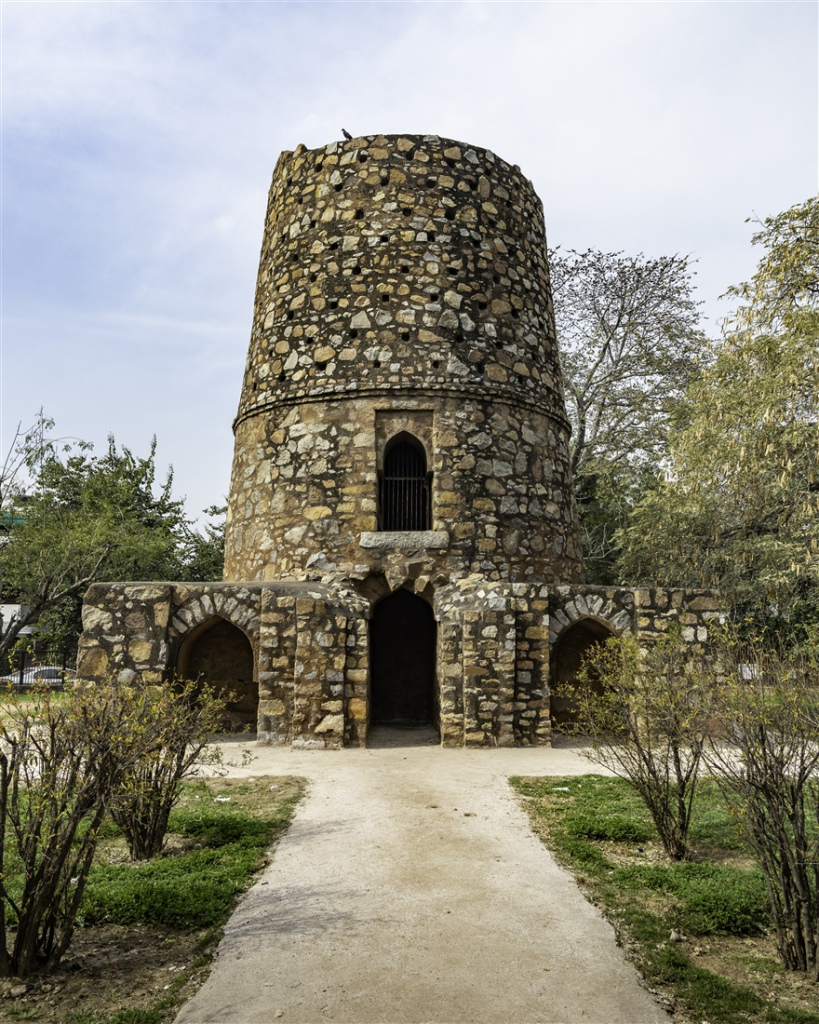
The third category of Kos Minar had substantial additional infrastructure such as sarais (inns), baolis (wells), mosques and other facilities to ensure the safety, security and well-being of the traveler. There is some speculation that Chor Minar in Delhi is one such example, although the passage of time may have blurred that fact and introduced folklore into the narrative for that monument. Throughout most of the world you can see this infrastructure in operation along the major roads of any given country. In the UK we call them “service stations”, which exist at fairly regular intervals along our extensive motorway network.
Chor Minar in the Hauz Khas district of Delhi. / Potentially an example of the third and most extensive type of Kos Minar
These structures not only served to assist the traveler from place to place, but were also instrumental in the day to day governance of the Mughal empire. Horses, riders and drummers were stationed at many of the Kos Minars, relaying royal messages at a much faster speed than would be possible with a single horse and rider from source to destination.
In addition to helping relay messages from place to place, Kos Minars may have also served as a hub of information themselves. Some scholars believe the plastered surface of the Minar would have been covered with information, not just about distances but also recent news and popular slogans. This method of distributing news, information and propaganda throughout an empire was not a new concept. The Roman emperor Caesar introduced a similar model where information he wanted to share with his people was posted daily on wooden boards in the Forum (center) of major cities in the Roman empire.
Today we have technology to help us communicate these things. You can post messages on someone’s “wall”, or provide information to a Facebook group (often geographically centric). For many people, social media began with the advent of Facebook, but this is a modern term that refers to a very old idea that people have been using for thousands of years.
Distribution and Preservation
The passage of time has not been kind to the Kos Minar. Of the approximately 1,000 that once existed in India there are now just 110 examples still standing, the highest concentration is in the state of Haryana, where 49 are to be found.
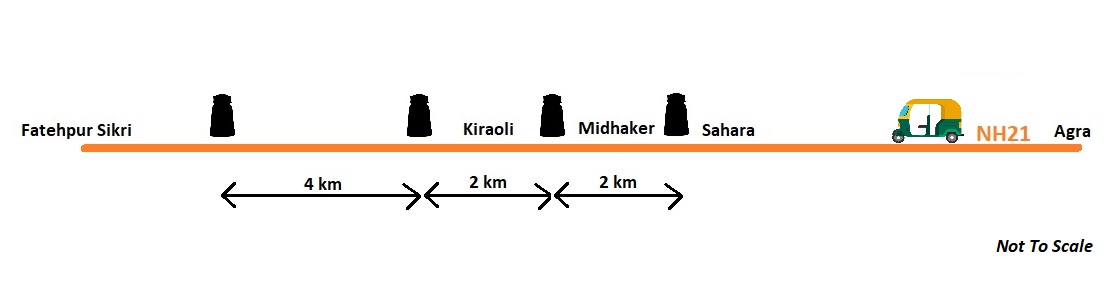
For those who are perhaps traveling to northern India to see the major tourist sites, there is a good stretch of them surviving by the side of NH21 between Agra and Fatehpur Sikri. Hopefully the map below will prove useful for that purpose (click on the image to view larger scale):
Heading away from Agra towards Fatehpur Sikri look out for the following four Kos Minars on the right-hand side of the road :
Kos Minar #1 : Just after the village of Sahara. This Kos Minar (ASI ref: N-UP-A33) is visible and marked on google maps, co-ordinates 27.154760, 77.886290.
Kos Minar #2 : This one (ASI ref: N-UP-A34) is 2 km further on just after the village of Midhaker, and is also visible on Google Maps but not marked, co-ordinates 27.151050, 77.860133.
Kos Minar #3 : (ASI ref: N-UP-A35) is 2 km further on towards Fatehpur Sikri after the village of Kiraoli.
Kos Minar #4 : The final one (ASI ref: N-UP-A36) is after a longer gap of 4 km (clearly we have lost one in middle of these last two).
Although all Kos Minars are now declared protected monuments by the ASI, they remain structures at great risk. What were once meant to show the way to others often now stand in near obscurity, isolated in zoos (Delhi), jungle, car parks, villages, slums, farmlands and even beside railway tracks. Others are being devoured by the rising skyline of rapid development in urban areas, being swallowed up and becoming almost invisible.
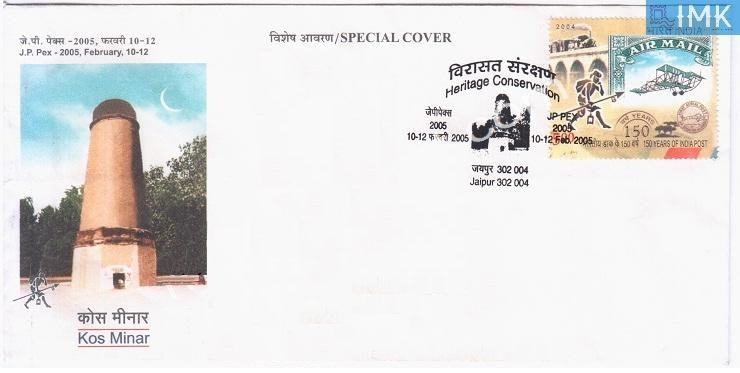
Attempts have been made to increase awareness, most recently in February 2005 when a first day cover was issued depicting a renovated Kos Minar as a symbol for Heritage Conservation.
I hope efforts continue to raise awareness of the Kos Minar, and hopefully ensure they no longer lose their way in the rapidly changing landscape on India.
Please ‘Like’ or add a comment if you enjoyed this blog post. If you’d like to be notified of any new content, just sign up by clicking the ‘Follow’ button.
If you’re interested in using any of my photography or articles please get in touch. I’m also available for any freelance work worldwide, my duffel bag is always packed ready to go…
KevinStandage1@gmail.com
source: http://www.kevinstandagephotography.wordpress.com / Kevin Standage / Home> Agra / by Kevin Standage Photography / May 20th, 2019
The Raja of Mahmudabad has been fighting to claim his inheritance since 1974, despite being branded ‘enemy’ under the Enemy Property Act.
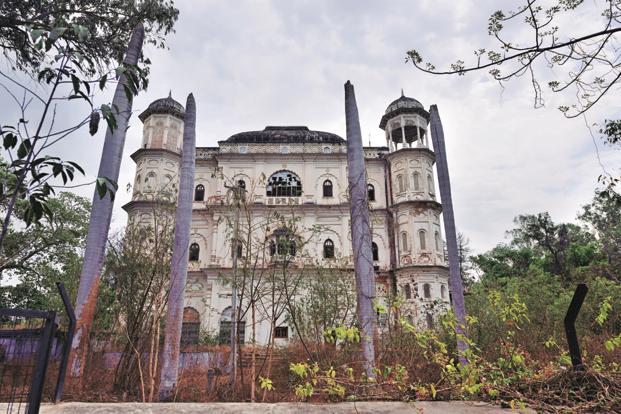
The Butler Palace in Lucknow, one of the ‘enemy properties’ of the Raja of Mahmudabad that is at stake in the court case against the Enemy Property Act. Photos: Pradeep Gaur/Mint
Mahmudabad/Lucknow/New Delhi:
At the entrance of Muqeem Manzil, the sprawling main hall of Mahmudabad Qila (fort), stands a guest table on which is perched a beautiful old world calendar bearing the Mahmudabad crest, two lions flanking a crown. The date card reads 23rd but none of my companions, local Waqf board members and the secretary to the present Raja, can tell me what the day, month or even year is. In many ways the old world calendar stuck on a particular date is an apt metaphor for the current state of the kingdom whose crest it bears.
Since 1974, Mohammad Amir Mohammad Khan, better known as the Raja of Mahmudabad, has been petitioning the government for the return of his properties but apart from a brief respite in 2005, the Raja’s heritage, spread across parts of Lucknow, Sitapur and Nainital, has been mired in litigation with him challenging the highest authority in India; the Indian government itself. It is a heritage that can be traced back to the 16th century and Emperor Akbar’s patronage, but today Khan has to struggle to not be labelled an enemy.
Raja Mohammad Amir Mohammad Khan with younger son Amir Khan.
In 1962 when war broke out between India and China, the government confiscated what it referred to as “enemy properties”, namely properties that belonged to a person or a country who or which was an enemy. This included not just Indian citizens of Chinese ethnicity but also those who had migrated to Pakistan during the partition. The same act was applicable during the 1965 India-Pakistan war. One of the people to migrate was a certain Mohammad Amir Ahmed Khan who had left India in 1947 but for Iraq. He eventually took Pakistani citizenship in 1957. This was the former Raja of Mahmudabad, father of Mohammad Khan, and by all accounts a close associate of Mohammed Ali Jinnah.
“I had just arrived in Cambridge to begin my undergraduate degree when our properties were taken over under the Defence of India Rules in 1965. In those days it took some time for news to travel from here to there and hence I learnt about it only a week after it had actually happened,” the Raja tells us.
An elegant man with just a hint of a British accent, the Raja peppers his conversation with quotes from classical Indian poetry to Western philosophers. Every question posed to him is an opportunity to share an anecdote from his family’s rich history which in modern times overlapped quite a bit with the birth of the nation.
He tells us how it was his uncle, his father’s younger brother, Maharaj Mohammed Amir Haider Khan, a barrister at law who practised in Bombay in the chambers of Sir Jamshedji Kanga, who explained just what the label enemy property meant, and why a huge chunk of his father’s inheritance had been taken over by the government. Interestingly both the Raja’s uncle, Haider Khan and his mother, Rani Kaniz Abid of Bilhera choose to stay on in India after partition and were Indian citizens.
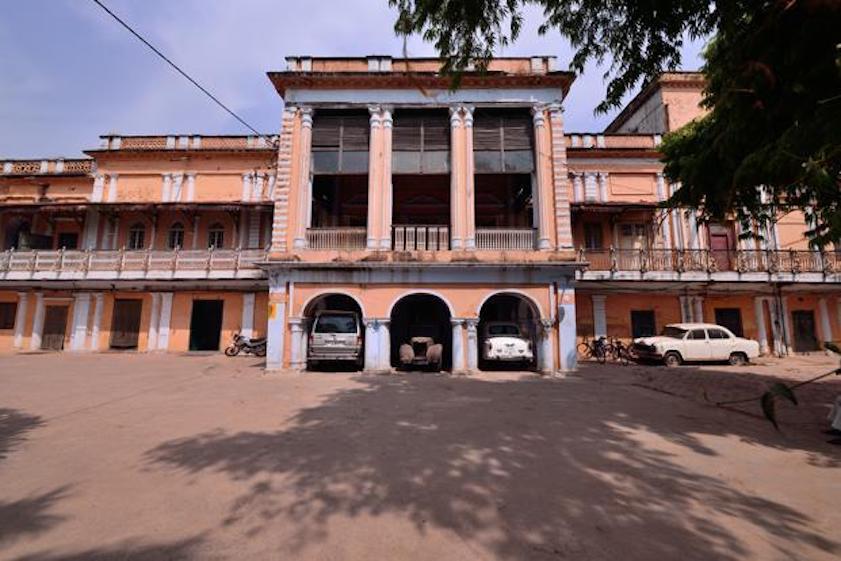
Mahmudabad Mansion in Lucknow.
The seized properties included Butler Palace, Mahmudabad Mansion, Lawrie Building and court in Lucknow’s Hazratganj. All these are prime real estate holdings, the court especially is a sprawling marketplace spread over 200,000 square feet.
Apart from these, the Mahmudabad estate’s holdings were spread over Sitapur, Nainital and of course in Mahmudabad itself. While some properties like those in commercial areas already had tenants staying, others were converted into government offices. In fact, Butler Palace situated smack bang in the middle of one of Lucknow’s toniest government colonies used to house the Indian Institute of Philosophical Research. “But it was the taking over of the Qila at Mahmudabad, the ancestral house, which is the venue of all our religious observances throughout the year for the entire community, where my mother actually lived and that was a big shock to me,” recalls the Raja.
The Qila in question is not just the family’s ancestral seat but also the religious and cultural hub of Mahmudabad, home to a large Shia community. Muharram, the first month of the Islamic calendar when the martyrdom of Imam Husain, the grandson of the Prophet, took place, is observed in all its solemnity by the community with the Qila and the shrines built by the Raja’s family as the focal venues.
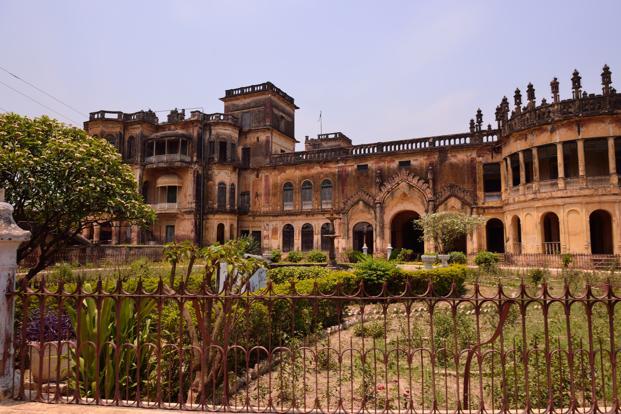
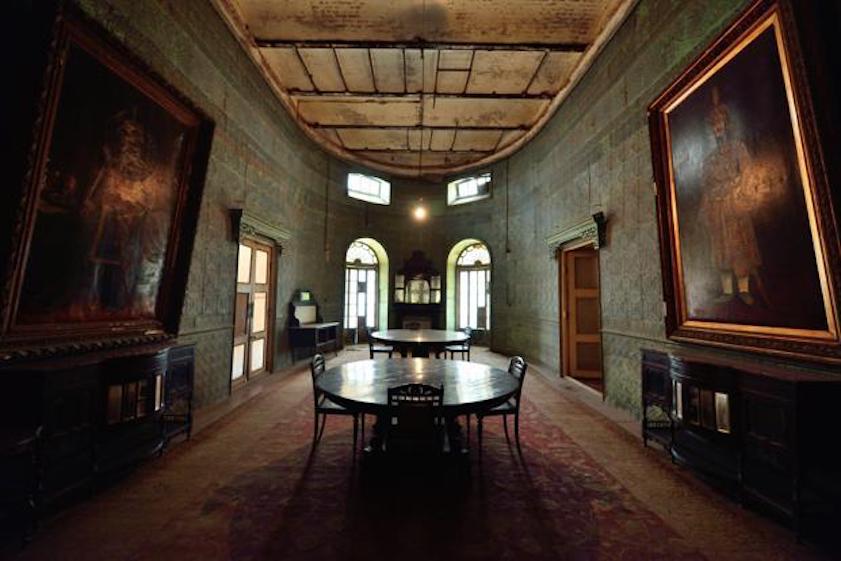
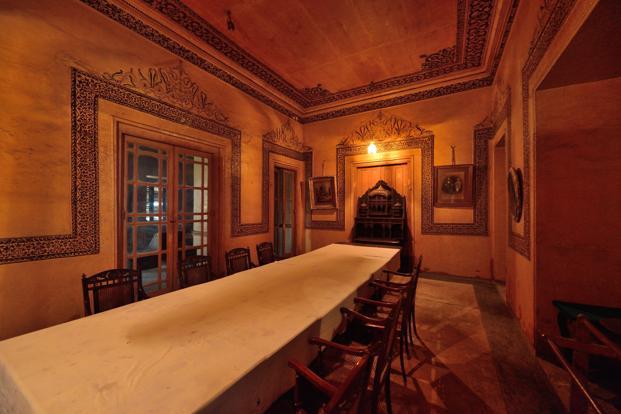
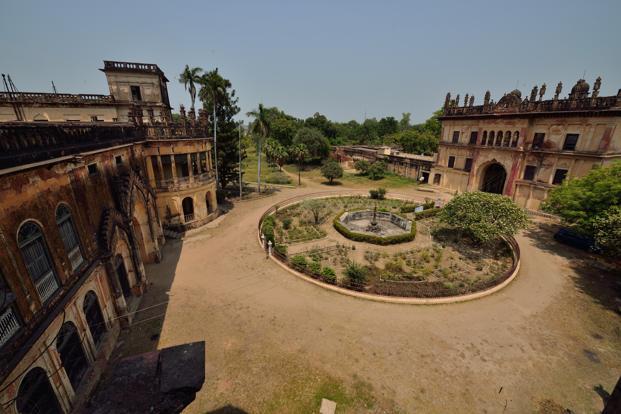
“It is a very important centre for Mahmudabad both culturally and socially. We have scholars who come from far and wide to preach, all local communities, irrespective of their faiths are involved when Muharram is observed. This has been the tradition here for years and nothing can change it,” Ali Mohammad, the Raja’s secretary, explains to us as we walk around the Qila. It is a magnificent structure with colonnaded arches where many rooms still retain their original furniture right down to the beautiful expansive Persian carpets. The Mahmudabad crest shows up everywhere even as portions of the Qila remain locked up, slowly crumbling under the weight of neglect.
The Mahmudabad Qila at Mahmudabad in Sitapur district of Uttar Pradesh.
The Qila was indeed taken over by the government in 1965 but since it is under the Waqf board, under an order of the court it was opened up again in eight months. “During those eight months, my mother, my father’s brother and his wife, who was also my mother’s sister, along with all the retainers, lived in the verandah, enduring what had come to pass. The government knew that substantial parts of the Qila are under the Waqf board and our observances have been taking place for centuries. A place like this could not be used against the disadvantage of the country,” reminisces the Raja.
It is still possible to catch a glimpse of how life would have been at the fort when the kingdom was at its peak. The number of families who live here has greatly diminished but they have all been in the service of the royal family for generations.
Muqeem Manzil, the entrance hall, leads to a library stacked with classics bound to make any book lover’s heart beat faster.
In Mahal Sarah, the ladies section of the fort, a group of women still sits everyday and painstakingly create beautiful chikan outfits under the label Qilasaaz which Vijaya Khan, Rani of Mahmudabad, oversees.
The Raja’s father died in London in 1973 where he moved soon after he took Pakistani citizenship, disillusioned as he was with his experience there.
The interiors of Mahmudabad Qila.
“He was a Shia in a Sunni country, he did not speak any local language and had no roots in the countryside. He had roots only amongst the urban immigrants,” explains the Raja who was 14 years of age when he found out that his father had taken Pakistani citizenship. “I was in school and the term was ending. When I came back, I was told my mother was very unwell. She had a seizure of a terrible sort when she had heard about my father’s citizenship. My father had never asked her to go to Pakistan. It was a foregone conclusion that she would not even countenance it.”
This is a narrative which is slightly at odds with what the current government is pushing with finance minister Arun Jaitley even insisting in a Rajya Sabha debate that the Raja’s father had “sent” his wife and son back to India to claim citizenship.
“I have documentary government proof that we were never anything other than Indians,” claims the Raja.
But why is the Raja’s nationality being discussed in Parliament? The answer to that lies in a process that started in 1974 when he came back to India from Cambridge and petitioned the government to return the properties to the family.
The Enemy Property Act, 1968, categorically defined enemy property as belonging to a citizen of a country which was an enemy and with the passing of the Raja, the properties were bequeathed to his son who was an Indian citizen. Section 18 of the 1968 Act also includes a provision of the properties being returned on a special or general order by the central government, “in such manner as may be prescribed to the owner thereof or to such other person as may be specified in the direction…”
The interiors of Mahmudabad Qila.
The then young Raja met Morarji Desai, the then prime minister, who assured him the file would be examined. The Raja also met Indira Gandhi, the matter was taken up by the Union cabinet and by the end of 1980 he was informed that the properties will be returned to him but then it was said that only 25% of the properties will be returned.
“I was asked to furnish proof that I was my father’s legal heir. A succession certificate was required. The district court in Lucknow in 1986 gave a decision in my favour,” he says.
But the 25% clause remained and it is this that took the Raja to the Bombay high court seeking a return of his property in 1997. In between, there was stint with politics as a two-time MLA from Mahmudabad from the Congress party even though his struggle for his inheritance continued.
The Bombay high court returned the Raja’s entire property to him but the government then took up the matter in Supreme Court. And in 2005, the apex court gave what became a landmark and eventually a very contentious judgement. Declaring that enemy property is only vested with the custodian and that the Raja is a bona fide citizen of the state and not an enemy as defined by the Act, all of the Raja’s properties were returned to him.
It is a day the Raja still remembers clearly because he says that is the day his pride in India and his belief in the nation was reinforced. “It made me proud. I felt an injustice had been reversed,” he recalls.
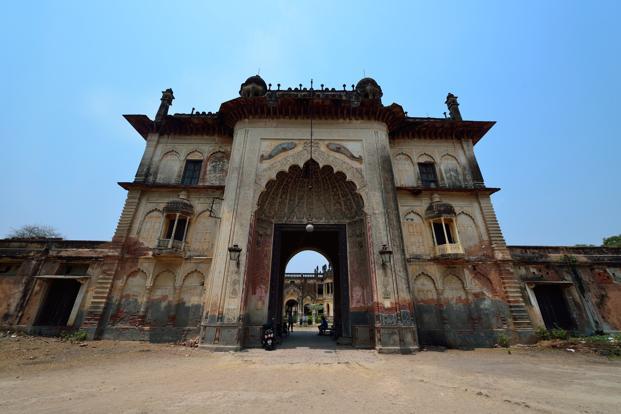
One of the gates of Mahmudabad Qila.
But this was just the beginning of another round of struggle. For while properties like the heritage hotel Metropole in Nainital and Butler Palace in Lucknow were returned to the Raja, the holdings in Lucknow’s prime commercial area were occupied by tenants, most of whom were paying a pittance. Halwasiya court, for instance, which is home to several high-end showrooms, was given out on rent by the Raja’s father on a 90-year lease for a paltry amount of Rs600. After several meetings, perusal of property records, it was decided that the lease will be honoured.
From top brands to iconic restaurants, a lot of big names in Hazratganj, just across the road from Halwasiya court, are housed in Mahmudabad properties and pay rents in the vicinity of Rs500-1,000 per month. In December of last year, the district administration decided to revise the rent of enemy properties. A Hindustan Times report cited a government official as saying that shops run out of enemy property, especially in Hazratganj, will now pay 30% of the market rate which comes to Rs330 per sq. metre. The money will go to the government.
But even as these properties were not returned, work on the others began in full swing. The restoration of Metropole Hotel was undertaken by the Raja’s wife while Butler Palace too was being reimagined in all its previous glory.
“We borrowed from banks, put in our own money, developed Waqf land…and then one fine morning in 2010 I heard that the government is issuing an ordinance that seeks to amend the Enemy Property Act,” he says. It was the Raja’s worst nightmare come true. Overnight his properties were taken back and it was 1965 for the family all over again.
The ordinance which was introduced by the United Progressive Alliance government reportedly amid fears that the Supreme Court judgement will open a Pandora’s box of claims from others across the country, sought to amend the 1968 Act. On 17 March 2017, the amendments to the Act were passed which expanded the definition of enemy from the 1968 Act to include citizens of India who are the legal heirs and successors of the enemy or enemy subject.
The Raja’s family lived in the Mahmudabad Qila before it was seized by the government and handed to the Waqf board.
The amendment also gave the government the right to sell the property, thereby implying that the owner of an enemy property was the state. In effect, all of the Raja’s properties were now the properties of the Indian government, laws of succession, Indian citizenship and the Supreme Court order notwithstanding.
“We fought 40 years for justice. We went to the government, we went to the court…we availed every recourse that is available to the citizen only to be told that it is retrospectively overturned. This is in the teeth of justice inequality,” says Khan, Rani of Mahmudabad.
The daughter of former foreign secretary Jagat Singh Mehta, Khan is a quiet woman who states her family’s disappointment and anger at the ordinance and the subsequent amendment in a definite manner. We are travelling in an ambassador from Lucknow to Mahmudabad as she tells us about the work that had started on all properties and just how cruelly they’ve been allowed to fall apart. Case in point is Butler Palace, which is almost in ruins. Grass as high as an adult’s waist impedes access to the building though it is no deterrent to the vandals who come here as evinced by the empty beer bottles one finds lying next to the gate. “To think there was a time when we would actually come here to have tea in the evening,” says Ali Mohammad, the Raja’s secretary, as he takes us for a walk around the properties in Lucknow.
Every member of the Raja’s family, be it his wife or two sons, is an independent authority on the Enemy Property Act and its amendment. The older son is a professor at Ashoka University who has written several editorials on the Act, while the younger son, who is pursuing his PhD, can discuss every amendment in the new Act threadbare.
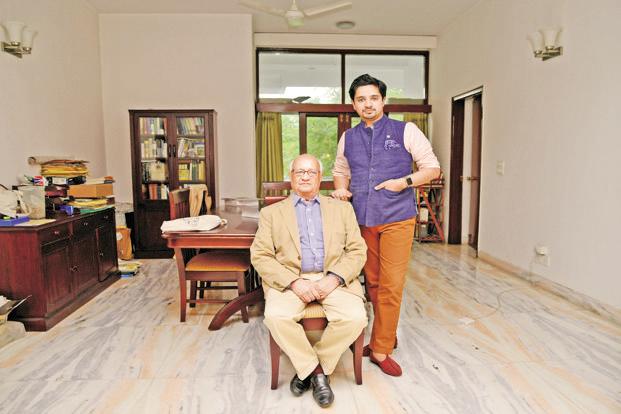
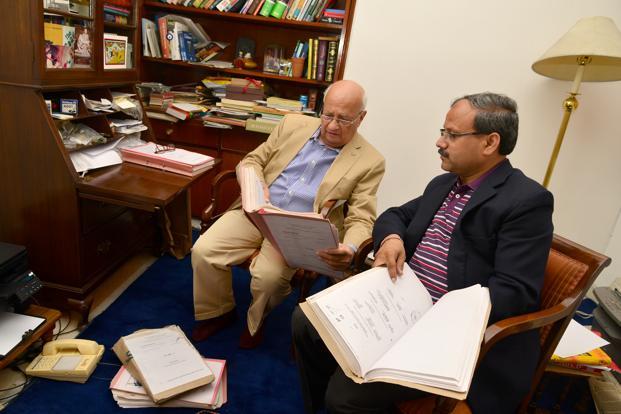
Raja Mohammad Amir Mohammad Khan (left) with the documents of his court case against the Enemy Property Act. Photo: Ramesh Pathania/Mint
There is a palpable sense of anger but what stings most is the usage of the word enemy. “Here I am, sitting next to you and I am an enemy. This Act has created deep distress, especially financial. The only thing we have is the benefit of education which enables us to realize that anger and cynicism are futile,” says Khan, Rani of Mahmudabad.
There is a palpable feeling that the ordinance and the subsequent amendments were brought in to target the family specifically though no one says so outright. In fact, the ruling party’s defence in Rajya Sabha during the debate for the passing of the bill centred mostly around the Raja’s case, with it being said that the former Raja, “who threw his weight behind the idea of a separate Muslim nation” sent his wife and son “back to become Indian citizens and claim Indian property”. Finance minister Jaitley also said that the Raja’s family had lost the title to the properties in 1965 so the question of inheriting these does not arise.
The Raja currently has a writ petition in the Supreme Court but the fate of it remains up in the air. Niraj Gupta, his advocate, worries about the powers vested in the custodian given that the office has come under the radar for some questionable deals. The former custodian of enemy property Dinesh Singh, an IRS officer, was recommended for criminal action by the Central Bureau of Investigation for helping a developer acquire an enemy property.
There have been several cases against enemy properties in Indian courts with few settlements being in the favour of the custodian of enemy property, as neither the rights of the legal heirs of the enemy or the duties of the custodian were ever clearly defined.
However, none of these cases have been as high-profile as that of the Raja of Mahmudabad’s given his family legacy, the association with Jinnah and the sheer magnitude of the real estate at stake. The amendment to the Act, however, removes all ambiguity vis-à-vis ownership while attempting to create a different class of citizens, the children of enemies. This is a clear violation of Article 14 of the Constitution which guarantees the right to equality and it is perhaps on this ground that the amendment can be challenged.
Till then the Raja, who in William Dalrymple’s Age of Kali, had said visiting Mahmudabad brings him “terrible bouts of gloom”, sits in his well-appointed living room in New Delhi waiting to see what new curve ball life throws at him.
“However, I will always be able to say that I did get justice in this country,” he concludes. The semblance of it, in the form of the 2005 Supreme Court judgement is perhaps the only victory he can savour from the fight that has taken over his entire life.
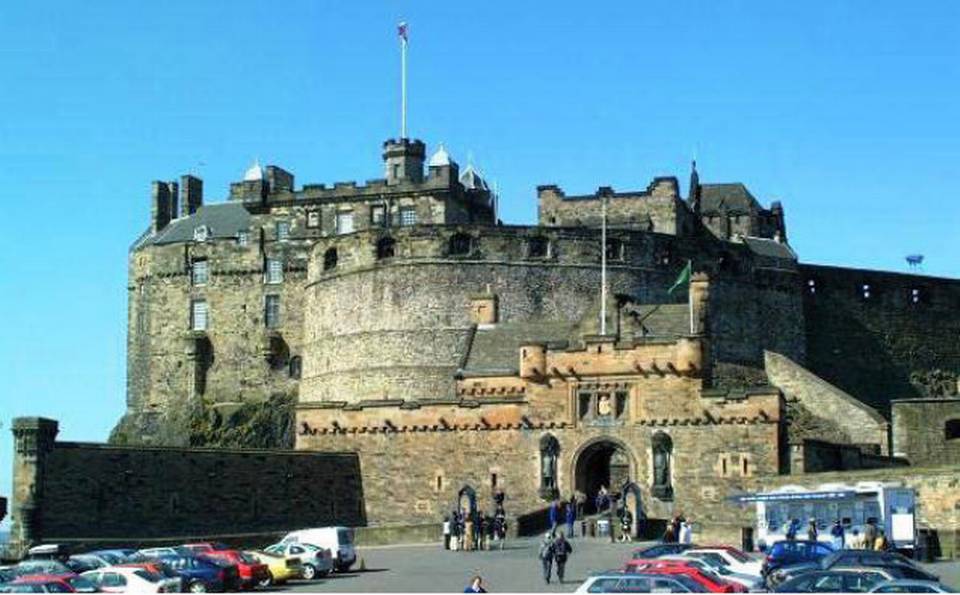
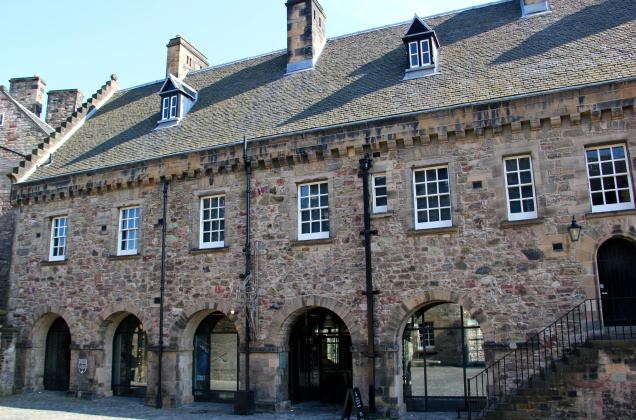
The view of the 12th century edifice at Edinburgh castle that houses the National War Museum.
The legend of Tipu Sultan is still alive in far away Scotland
It is an irony that Tipu sultan, the ‘Tiger of Mysore’, whose birth anniversary celebrations in India became a contentious issue recently, in Scotland whose soldiers and commanders fought for the dissemination of this great warrior king, the only Indian monarch to have died on the battlefield fighting the British, is cherished and commemorated in song, dance, drama, opera, in novel and in paintings. A wealth of personal effects and curiosities of Tipu Sultan have found way to numerous art galleries and museums in Scotland, particularly in its capital Edinburgh.
The participation of the Scots in the affairs of the East India Company began immediately after the unification of Scotland with England through an Act of Union in 1707. Since then Scottish people began coming to India as soldiers, generals, writers, administrators, traders, merchants and missionaries. But they excelled in their service as military generals and commanders. A separate Regiment of foot, the ‘75 Highlanders’ 75th .Highlanders was raised in Scotland to deal with Tipu Sultan. Scottish generals like Sir Hector Munro, Baillie, Beatson, Fraser, Gordon, Dunlop and others participated in the military operations against Tipu. The Scots, more than the English were in the forefront of the British forces in almost all the Mysore wars fought between 1760 and 1799.
After Tipu was finally dismembered by the British under the command of General Arthur Wellesley, the future Duke of Wellington, the images of Tipu Sultan as well as Srirangapatnam proliferated in Britain. No other Indian ruler, against whom the British fought and won, captured the imagination of the average Britisher at home, as much as that of Tipu Sultan. There were tales of mythical proportions in circulation about his valour, reckless energy and merciless acts of tortures meted to the captured British soldiers. It is said that British housewives used to threaten their weeping babies with the ‘arrival of Tipu’ to silence them
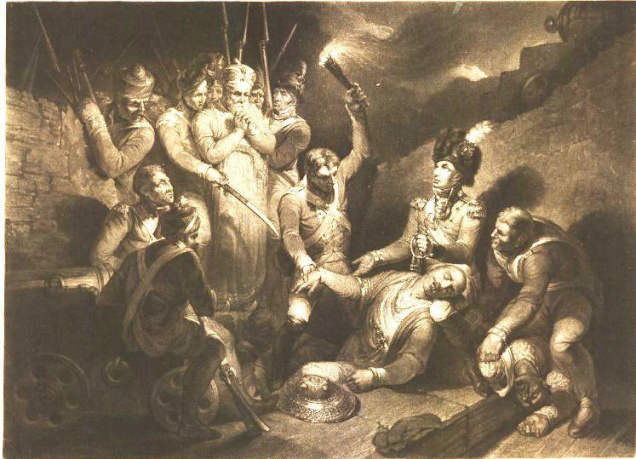
The images of Tipu Sultan and his capital, Srirangapatnam became subjects for paintings and art sketches throughout Britain. When Ker Porter’s Panorama a single large painting of Tipu Sultan was displayed in Edinburgh, there was euphoria among the Scots to have a glimpse of it. The celebrated British painters J.M.W. Turner and J.S. Cotman painted scenes of Srirangapatnam and other places in Mysore besides the portraits of Tipu. Sir David Willkie, the famous painter of the day was commissioned by the widow of Sir David Baird, and his poignant painting Discovering the body of Tipu Sahib on 4 May, 1799, was exhibited in 1838 in the Royal Academy of Arts in London. The Scottish General David Baird had spent several years in Srirangapatnam as a prisoner of Tipu before avenging in the final assault on Tipu.
Alexander Allen an artist of great repute travelled to India to personally see the hill forts in Mysore kingdom before he produced captivating sketches. William Darnell and Beckford also produced several sketches that survive even today. Holmes’ Select Views of Mysore, and Hunter’s Picturesque Scenery in the Kingdom of Mysore also evoked great enthusiasm in Britain. The Mysore wars offered exciting subjects and artists who never even visited India responded to the popular appeal of the Tiger of Mysore. As a result of such prolific paintings, the image of Tipu was so much etched in the collective memory of the Britishers that decades later, when Raja Ram Mohan Roy visited England, he had to confront hostile crowds as he was mistaken to be a descendant of Tipu Sultan. The head gear he wore was similar to the huge turban Tipu wore.
Returning soldiers of Scotland provided Sir Walter Scott with anecdotes for his novels on India. Several dramas and stage plays depicting Tipu and his fall were written and enacted at the Royal Corbug theatre in Edinburgh. Events at Srirangapatnam also appear in the writings of the novelists like Charles Dickens, Wilkes Collins and Jules Verne.
The remnants of Tipu Sultan’s dismantled throne, his numerous swords, daggers, bejewelled sword-belts, hukkas, ivory caskets, and several other artefacts were displayed in Glasgow and Edinburgh besides London.
Tiger in Museum:
In 1999, National Museum of Scotland, Edinburgh, as a part of the bi-centennial celebrations of Tipu’s death, held a special exhibition and decided to make Tipu’s Toy Tiger as a special exhibit along with several other Tipu’s memorabilia. But as the antique Toy Tiger was advised by exerts not to be moved from Victoria & Albert museum, fearing damage in the transit, a replica of it was made for the occasion.
The Toy Tiger is an awesome life size wooden toy seen devouring a European in military uniform. This impressive toy has cast a spell over generations of admirers since 1808 when it was first displayed in the Indian section of Kensington Museum now called Victoria & Albert Museum. The Toy in its body has a mechanical pipe organ hidden and by turning a handle, creates wailing shrieks and a loud roar. The design of this Toy Tiger is said to have been inspired by the death of the son of the Scottish General, Sir Hector Munro, a bête Notre of Tipu Sultan.
Tipu’s Memories at Edinburgh Castle:
The most significant of Tipu’s memories lay at the imposing castle in Edinburgh, Scotland’s capital. This historical castle, perched on a hillock with a commanding site, is a national symbol of Scotland. Inside the castle is located ‘National War Museum’in which the ‘the Battle Honors” of the Scottish Regiments are displayed. Here are seen numerous ornamental swords belonging to the several prominent Scottish Generals who saw action in the Mysore wars. Swords presented to Generals as souvenirs and medals are also on display What is surprising is the words, ‘Carnatic’, ‘Mysore’, and ‘Srirangapatnam’ carved in stone, are seen on the wall of this Museum indicating the importance the Scots bestowed on their combats during the wars against Tipu.
At the Edinburgh International Festival (EIF), held annually in August with several programmes of music, theatre, opera and dance, Tipu’s memories also come alive . The closing ceremony of the EIF held at the Castle is marked by spectacular display of fireworks. The scene is suddenly shrouded in darkness and bellowing smoke as rockets and explosives presents dramatic images of a big hill-fort under siege. This is an imitation of the Mysore wars when Scottish soldiers in India were familiar with such sights when deadly fires were showered on them from the impregnable forts like Nandidurg, Savandurg and Ootradurg in Tipu’s kingdom. It is said that four tons of explosives are used that evening for the celebration of such fireworks. Tipu Sultan, the ‘Tiger of Mysore’ must have died two centuries ago, but his enduring legend continues to be celebrated in far away Scotland with genuine nostalgia.
source: http://www.thehindu.com / The Hindu / Home> Friday Review / by K.S.S. Seshan / Hyderabad – March 17th, 2016
Stories of kings and queens fascinate all children and we were no different.
We never grew tired of hearing Amma tell us stories about the Kashi Naresh (king of Banares) and her life in Ramnagar, in present-day Varanasi. Stories of how my seven-year-old aunt was on the lead elephant in the Ramlila celebrations, because the Kashi Naresh was studying in Mayo College; stories of her roza kushai (celebrations when a child fasts for the first time) which had a 16-year-old Bismillah Khan playing the shehnai; stories of my Nani, Begum Hameeda Khatoon attending state dinners in chiffon saris and brocade blouses with matching brocade shoes and a dash of Tangee, her favourite lipstick. We heard of Khan Bahadur Syed Ali Zamin, MBE, our teetotaller Nana raising the toast to the very senior British dignitaries who came with a glass of water! We heard of Nana ensuring that there was a constant supply of Ganga Jal for the young Kashi Naresh studying in Mayo College, since he could only use that pure water. We often heard stories from my grandmother of the jewels in the state treasury; Nana must have described the jewels to her—the keys to the treasury were kept with him and he discharged his duties with utmost integrity and honesty. Another story, and my favourite, was that Nana personally chose the piece of brocade and silk, which went from Benares as Queen Elizabeth’s wedding present.
The rulers of Benares appointed many of their dewans and other officers from the Syed family of Kajgaon, near Jaunpur… Benares State was the biggest employer of our family!
Our childhood was shaped by these stories of a land where the Ganges flowed and the Ganga Jamuni Tehzeeb, as our syncretic culture is referred to, flourished.
A land where there was a Brahmin king and a Muslim dewan!
The rulers of Benares appointed many of their dewans and other officers from the Syed family of Kajgaon, near Jaunpur. In fact, as my aunt says, back then Benares State was the biggest employer of our family!
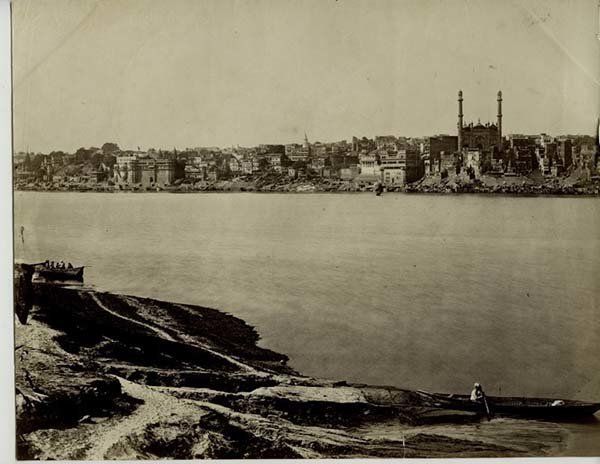
A VIEW OF THE GHATS OF BANARAS FROM RAMNAGAR, IN A PHOTO BY RUST, C.1880’S
Ramnagar, which is 18km from Varanasi, was the capital of the erstwhile princely state under the British Raj. Its history dates back to the ancient Kingdom of Kashi and its Brahmin rulers are said to be the incarnation of Shiva.
Mansa Ram Singh founded the Benares estate and in 1740 his son Balwant Singh became its first Raja. It became a princely state in 1911 under the British government.
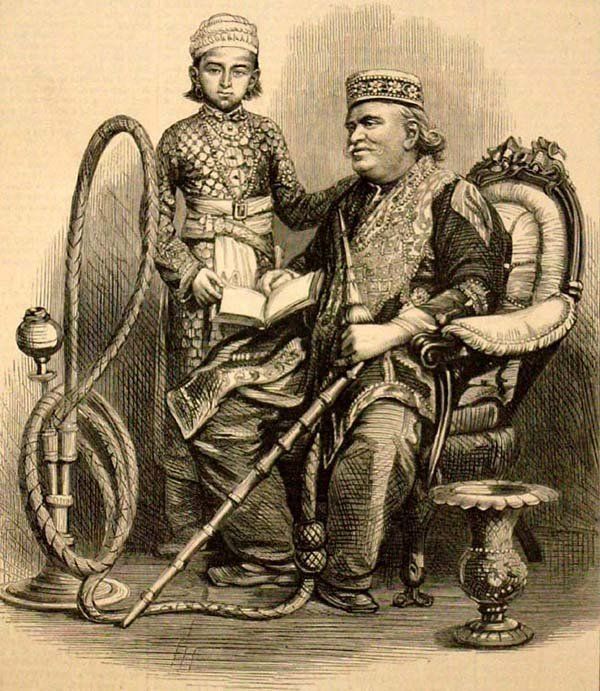
Maharaja Ishwari Prasad Narayan Singh succeeded his uncle and ruled till his death in 1889.
WWW.COLUMBIA.EDU “The Maharajah of Benares,” from the Illustrated London News, 1876
A family tradition begins
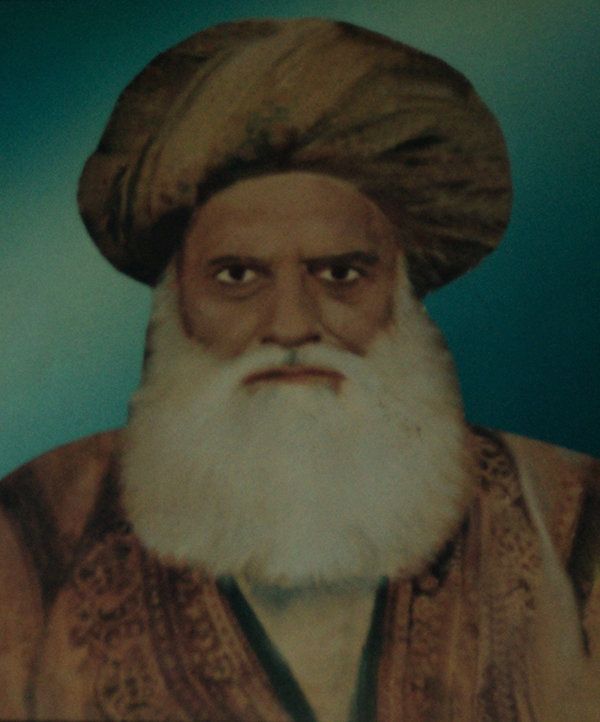
The first dewan from our family was my mother’s great-great-grandfather, Maulana Syed Gulshan Ali, a qualified mujtahid from Najaf in Iraq came in Maharaja Ishwari Prasad Narayan Singh’s reign.
AHMED ZAMIN / Maulana Syed Gulshan Ali
He advised and supported the king’s decision to not get involved in the 1857 Uprising and as chief minister and dewan he was instrumental in getting the estate, which had been confiscated by the British, restored to the Maharaja. According to the family lore, he had the idea of going to England to appeal to the Privy Council for the return of the confiscated land. He took three lakh rupees from the Maharaja and proceeded to the head office of the East India Company in Calcutta (now Kolkata). On the way, he met a British officer associated with Fort William in Calcutta where the head office of the East India Company was located. When the officer discovered that Maulana was a scholar he offered to help him in return for Urdu and Persian lessons. Upon finding out Maulana’s concern, he advised him that there was no need to go to England because the case could be pleaded from India. Maulana stayed in Calcutta for about a year teaching Urdu and Persian to the British officer
His detractors who had spread the rumours that Maulana sahib had decamped with the money were proved wrong when he returned and after deducting his nominal expenses handed over the remaining amount to the Maharaja.
Vignettes to cherish
My cousin Syed Naqi Hasan’s yet-to-be-published memoirs, My Nostalgic Journey, is a storehouse of information and family stories.
His uncle Khan Bahadur Syed Ahmed Hasan CIE was dewan and his grandfather, Syed Ali Sagheer (My Nana’s brother) was a collector in Gyanpur, one of the districts of Benares state. He heard these anecdotes from both our grandfathers and his uncle. Those were the days when elders sat in the courtyard surrounded by the youngsters and told them stories and anecdotes to ensure that family legacies, cultural traditions were carried on. Today’s TV, computers and smart phone have taken this away from us. Oral history will soon die a natural death.
Maharaja Ishwari Parasad Narayan Singh valued Maulana Gulshan Ali’s advice and loyalty so much that when Maulana died, he “wept bitterly and said, ‘Today my father has died.'”
He writes that Maharaja Ishwari Parasad Narayan Singh valued Maulana Gulshan Ali’s advice and loyalty so much that when Maulana died, “Maharaja Ishwari Parsad wept bitterly and said, ‘Today my father has died.'”
Later Maulana Gulshan Ali’s son Syed Ali Mohammad served as Naib Dewan.
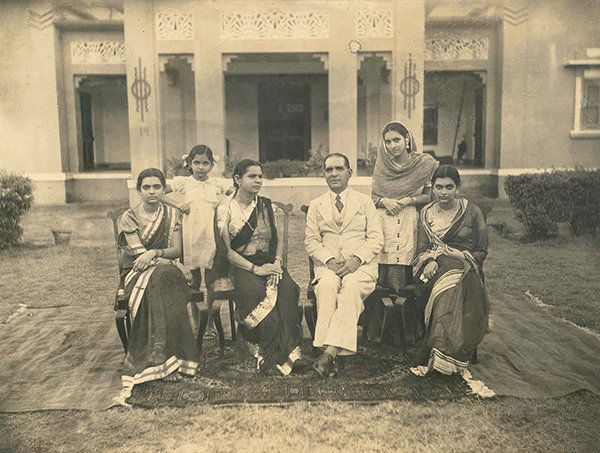
AHMED ZAMIN / My grandparents, mother and aunts in their Ramnagar house
My aunt reminisces that amongst the many privileges granted to Maulana and his family by the Maharaja, the most important one was that until the merger of Benares state with India, two white horses were kept in the royal capital of Ramnagar at the State’s expense, and were sent to Kajgaon to be used as Zuljanah (representation of Imam Hussain’s horse) in the Muharram processions.
My elders kept our family’s oral history intact and I share some here.
HTTP://WWW.COLUMBIA.EDU/ “Benares, Maharaja’s Palace,” a professional photo, 1930’s.
Maulana Syed Gulshan Ali’s extraordinary presence of mind and good judgment during the annexation of Awadh by the East India Company in 1856 is still talked about in our family. When the last Nawab of Awadh, Wajid Ali Shah, was deposed and exiled to Calcutta he halted on his way at Benares. It was customary to offer a nazrana usually in the form of gold coins to a visiting king, which the king sometimes doubled and returned to the giver. The dilemma was that not offering a nazrana meant ignoring the king. Offering gold coins was inappropriate because the king was in no position to double it. Maulana thought of presenting the king with tasbih and sajdigah made of khaak e pak or the dust of Karbala where Imam Hussain was martyred, which the Shias revere. It is priceless in terms of its symbolic value and yet not much in monetary terms, which would make giving something in return unnecessary. What could be a better nazrana for a Shia nawab!
His son Maharaja Prabhu Narayan Singh succeeded Maharaja Ishwari Prasad Narayan Singh in 1889 and was the first maharaja of the newly created princely state of Benares in 1911. He died in 1931, and was succeeded by his only son, Aditya Narayan Singh.
Maharaja Aditya Narayan Singh reigned for a very short time.
AHMED ZAMIN / My grandfather Khan Bahadur Syed Ali Zamin
My grandfather, Khan Bahadur Syed Ali Zamin, MBE joined as Chief Secretary of the State in 1939 and the Maharaja died shortly after that.
As the Maharaja was childless he adopted a distant cousin to succeed him. Vibhuti Narayan Singh, the last Maharaja of Benares, was a minor when Maharaja Aditya Narayan Singh died.
Nana [ensured] that there was a constant supply of Ganga Jal for the young Kashi Naresh studying in Mayo College, since he could only use that pure water.
In My Nostalgic Journey, my cousin Syed Naqi Hasan writes that on his deathbed Maharaja Aditya Narayan Singh summoned my grandfather and his adopted son and placed the hand of his son in Nana’s hand and said, “Syed Sahib, I am placing my son under your protection. Please protect him as well as the throne for him.” There were many claimants to the throne. Against all odds, Nana had Vibhuti Narayan Singh perform the funeral rites as required by the Hindu religion to establish his claim to the throne.
As Maharaj Kumar Vibhuti Narayan Singh, a minor, became the maharaja under regency Council of Administration was formed and C.R. Peters Esq was appointed its President and Nana as the Chief Minister was next in line of authority. Peters had to return to England in 1944 after a sudden illness, and Nana was named to act as President of the Council of Administration.
As the President of the Benares State, Nana was responsible not only for the well being of the state but also of his young charge.
Such was the level of comfort of the Maharaja Vibhuti Narayan Singh with our families that he maintained a friendship with the younger generation and decades later in1979, he stayed in the house of my cousin whose husband S.K.R. Zaidi who was the Chief Officer of Reserve Bank of India in Kanpur, rather than a hotel where he wasn’t sure of the purity of the environment. His young son was very keen on cricket and there was a test match between India and Australia in Green Park, Kanpur.
Their children Atiya and Abid Zaidi have fond memories of his charming manners and how the Maharaja floored the servants with his courtesies.
The Maharaja came with his full entourage and was given the lower floor of their huge house, with a kitchen where he could be comfortable.
Maharaja Vibhuti Narayan Singh ascended the throne, before reaching the full legal age on 11 July, 1947, approximately four months short of his 20th birthday. His ascension was speeded up in view of India’s imminent Independence. Charles Allen and Sharada Dwivedi in their book, Lives of the Indian Princes , quote the young Maharaja Vibhuti Narayan Singh as saying that he wanted to finish his education but was told by the political advisor to the Viceroy, Conrad Corfield, “If you waste a day you may not become a Maharaja.” He goes on to add that that the people of Benares were kind to him and how my grandfather, Syed Ali Zamin, who was presiding over the meeting of the Cabinet of Ministers stepped aside and asked him to preside over the meeting so that he “could play a leading part.”
He succeeded to the throne in July 1947 after becoming an adult, a month before India’s independence. The Council of Administration was dissolved after his ascension and the position of President was abolished. Nana became the Dewan.
End of an era
Maharaja Vibuti Narayan Singh signed the Instrument of Accession to India in Oct 1947, and Benares State was merged with the United Provinces now the Indian state of Uttar Pradesh.
In 1948 my grandfather suffered a heart attack while addressing a meeting in Ramnagar, the capital of Benares State, and had to be carried home on a stretcher. He took voluntary retirement from his position as Dewan because of ill health but after helping the young Maharaja to ensure a smooth merger of the state with India.
The last Muslim Dewan of Benares state passed away on 1 November, 1955 a few days before his birthday on the 5th of November.
The Muslim Dewans of Banares
source: http://www.huffingtonpost.in / HuffPost / Home> The Blog / by Rana Safvi / October 27th, 2016
Tourist Guide Who Saved Five Lives But Unfortunately Lost His Life In A Act Of Bravery
Srinagar
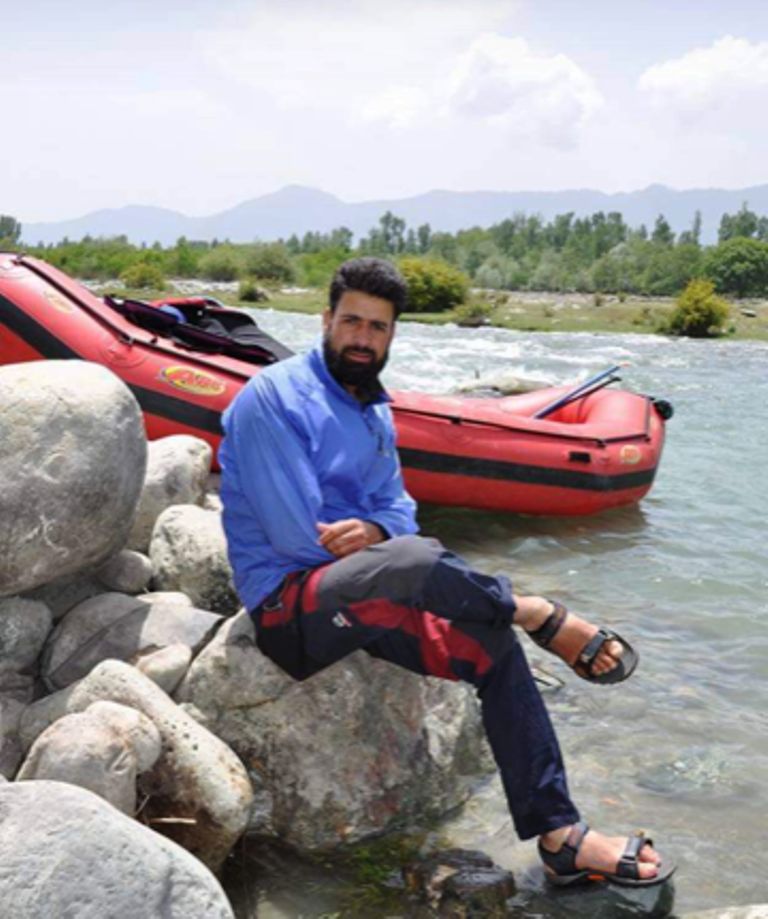
Governor Satya Pal Malik has saluted the bravery of Tourist Guide Rouf Ahmad Dar, who lost his life while rescuing tourists from the Lidder river in Pahalgam. He described Rouf as a real-life hero who sacrificed his life for saving the lives of others.
Governor has prayed for eternal peace to the departed soul and strength to the bereaved family in its hour of grief.
Honouring the exemplary display of selfless action, Governor has announced financial assistance of Rs 5 lakh for the family of Rouf.
Dar saved five tourists, two of them foreigners, after their boat capsized in fast flowing river Lidder near Mawoora area of Pahalgam in south Kashmir’s Anantnag district on Friday evening.
Unfortunately, Dar lost his life in an act of bravery which is being hailed by people and the administration.
source: http://www.kashmirlife.net / Kashmir Life / Home> Latest News / by KL News Network / June 01st, 2019
Sheikh Zuber and ‘master’ Rasool Bhai describe the Ramzan-special haleem they cook that has earned them considerable fame
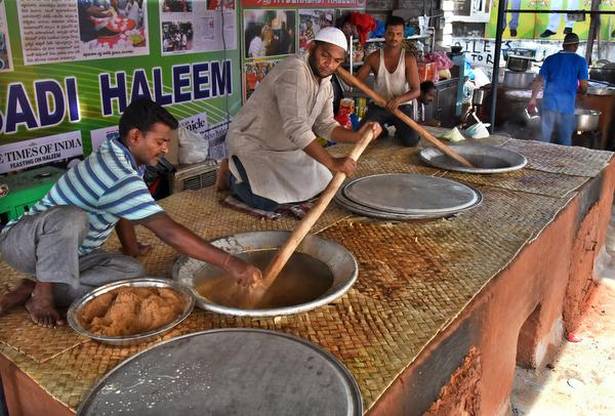
Through the cacophony of Jagadamba Junction one can still hear the call to prayers from the Macca Masjid. I am standing at the ‘Dil Se Hyderabadi Haleem’ stall where Sheikh Zuber and Rasool Bhai with two big wooden ladles stir something aromatic in the two huge cauldrons. It’s the holy month of Ramzan and in less than an hour’s time this stall will be teeming with people, waiting to be served one of the the most sought after haleems in the city.
In the 10 years it has been here, the demand for haleem has only gone up, says stall owner Sheikh Zuber. “We make haleem with 25 kilograms of mutton and 70 kilograms of chicken every day,” he says as he prepares to ladle the creamy haleem from the cauldron into small aluminium containers.
The process of making this Ramzan special dish is laborious and time-consuming. It requires physical strength and an ability to tolerate the fiery heat generated by the cooking food .
When Sheikh first set up his stall, it was not even half the size of what it is today. He says, when he started, all he wanted was to bring the flavour of the authentic Hyderabadi haleem to Visakhapatnam. In the initial four years, he offered just chicken haleem as it was more economical. “I hardly used more than 20 kilograms of chicken every day. At that time the city had just about a handful of haleem stalls. But over the years more stalls came up,” he says. Today, the bylanes around Jagadamba Junction have a festive feel during Ramzan and the celebrations are centred around this delicacy.
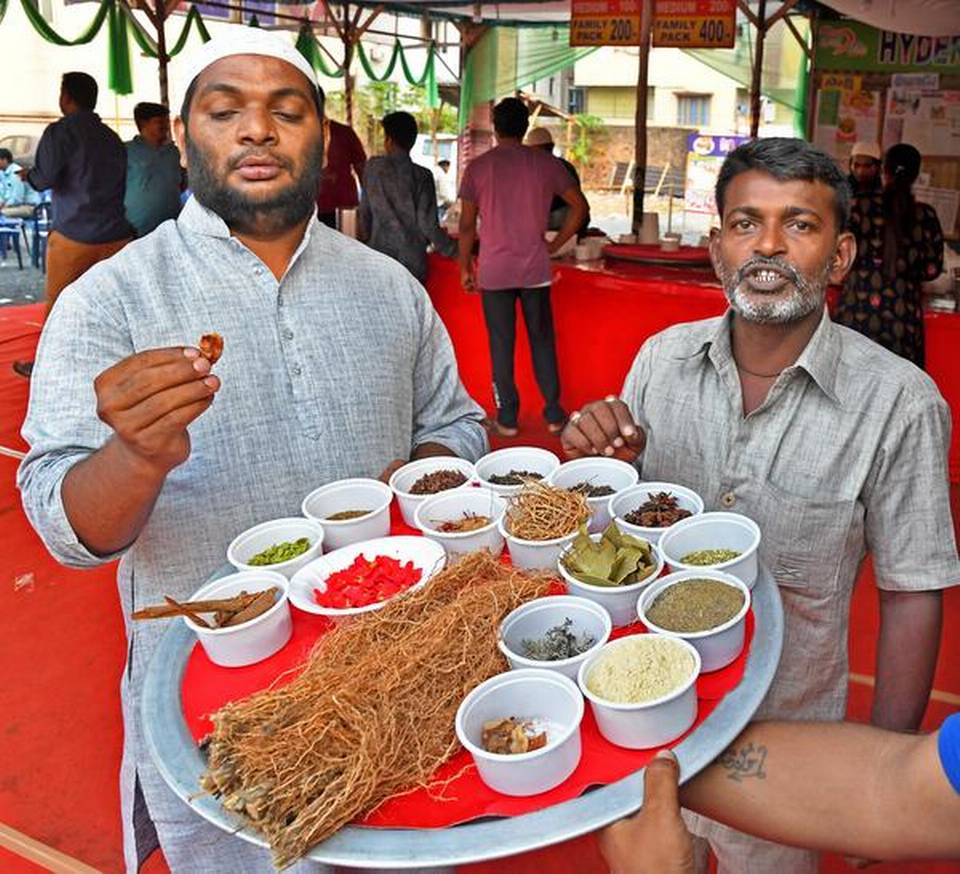
Sheikh attributes the magic of his haleem to haleem master Rasool Bhai who always “wields his magic”. Growing up in Hyderabad, Rasool learnt to perfect this dish from an early age. Even after three decades of experience he is never complacent. His job begins at midnight once the cauldrons are cleaned and prepared for the 28-hour cooking process. Assisting him are two other junior haleem masters and a team of workers who work through the night.
Mutton and chicken, sourced from local vendors, are put to boil with the potlimasala in the cauldrons. “The secret to the best haleem flavour is trapped in this masala,” shares Rasool. Each haleem master has a potli masala, which includes cardamom, black pepper, shah jeera, rose buds and other ingredients.
_________________________
Best flavours in town
Dil Se Hyderabadi Haleem – Jagadamba Junction
Nawabi Haleem – In front of Macca Masjid and Siripuram (opp. HSBC)
Nizam’s Kitchen Haleem – Jagadamba Junction
Ramzan Specialities – Hotel Green Park
_________________________
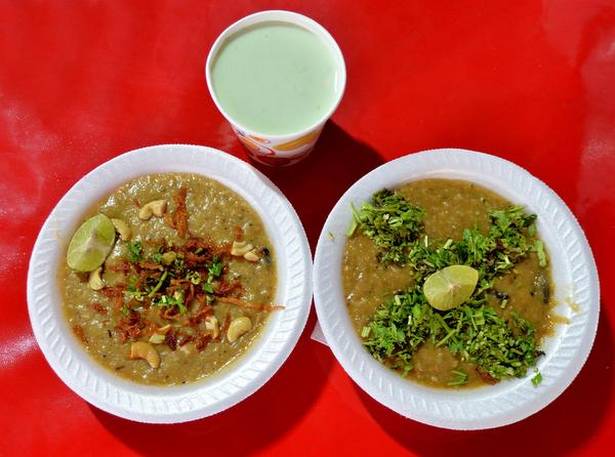
The meat is boiled for about 24 hours and then put on ‘dum’ for a couple of hours. This is accompanied by periodic rounds of breaking up the meat with the wooden ladles. Sheikh and Rasool keep a watchful eye on it and even take turns with the ladles. Once the creamy meat is ready, it is served with a garnish of caramelised onions and cashews. “It is worth all the hard work when we see the satisfied smile on our customer’s face,” says Sheikh. His stall draws people not just from across the city, but even from neighbouring districts. Krishna Chaitanya, an engineering graduate who is a regular at Sheikh’s stall describes it as a “rich and deliciously spicy dish that makes it a great evening snack.” The haleem is served from 4 pm onwards and on most days it is sold out by 7 pm.
Sheikh also serves paya roti in his month-long Ramzan menu and kaddu ka kheer.
(Living Vizag is a weekly column that profiles people who make the city special, and explore it through their eyes.)
source: http://www.thehindu.com / The Hindu / Home> Life & Style> Food / by Nivedita Ganguly / May 15th, 2019
She was one of the most powerful women of medieval India, a Mughal princess like no other. And yet, her extraordinary story remains lost in the pages of history.
In an unassuming part of India’s capital city, amidst winding alleys lined with attar and chadar sellers, lies the 800-year-old dargah of Hazrat Nizamuddin Auliya—one of the most revered saints in Sufism. From dusk to dawn, thousands of devotees throng this bustling complex to pay their respects.
Yet, few know that Delhi’s most famous Sufi shrine is also home to the tomb of one of the most powerful women of medieval India, Jahanara Begum.
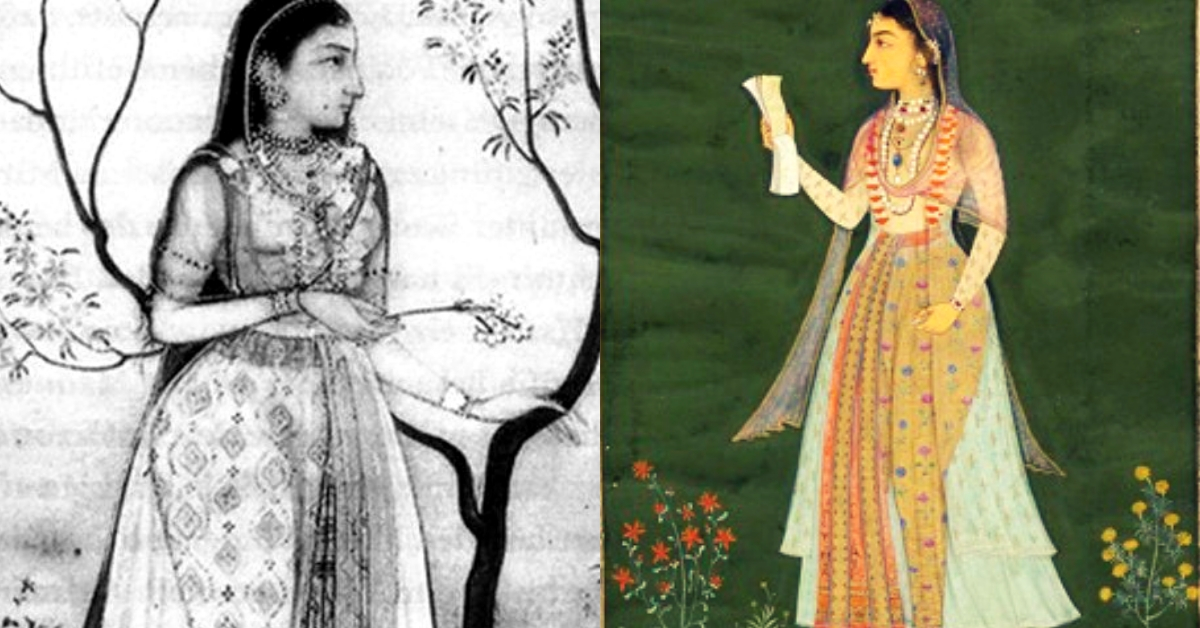
A writer, poet, painter and the architect of Delhi’s famous Chandni Chowk, Jahanara was a Mughal princess like no other.
Portraits of Jahanara Begum. Source: Wikimedia Commons
This is her story.
The eldest child of Emperor Shah Jahan and his favourite wife, Mumtaz Mahal, Jahanara was born in Ajmer in 1614. Growing up in one of the richest and most splendid empires in the world, the young princess spent her childhood in opulent palaces, humming with family feuds, battle intrigues, royal bequests and harem politics.
As such, she was well-versed in statecraft by the time she was a teenager.
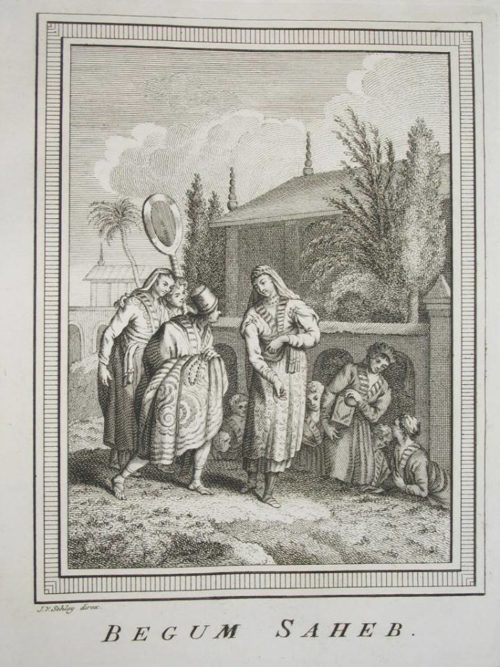
Soon after, Jahanara was appointed Begum Sahib (Princess of Princesses) by her doting parents. She would often spend her evenings playing chess with Shah Jahan, understanding the workings of the royal household, and helping her father plan the reconstruction of other palaces.
As French traveller and physician François Bernier writes in his memoirs, Travels in theMogul Empire ,
“Shah Jahan reposed unbounded confidence in his favourite child; she watched over his safety, and so cautiously observant, that no dish was permitted to appear upon the royal table which had not been prepared under her superintendence.”
Jahanara was also especially close to Dara Shikoh, Shah Jahan’s eldest son and her favourite brother. The two shared a love of poetry, painting, classic literature and Sufism.
In fact, she also wrote many books, including a biography of Ajmer’s Sufi saint Khwaja Moinuddin Chishti, displaying her flair for prose.
The Begum Sahib. Source: Royal India Families/Facebook
But tragedy struck the young princess’s life with the untimely demise of her beloved mother, Mumtaz, in 1631. At the tender age of 17, she was entrusted with the charge of the Imperial Seal and made Malika-e-Hindustan Padshah Begum—the First Lady of the Indian Empire—by the shattered Emperor, whose grief kept him away from his royal duties.
It was only on Jahanara’s behest that the inconsolable Shah Jahan came out of mourning.
In the years to follow, she became her father’s closest confidante and advisor. Highly educated and skilled in diplomatic dealings, her word became so powerful that it could change the fortunes of people. Her favour was much sought-after by foreign emissaries.
In 1654, Shah Jahan attacked Raja Prithvichand of Srinagar. Despairing of success in the battle, the Raja sent a plea for mercy to Jahanara. The Princess asked him to send his son, Medini Singh, as a sign of his loyalty to the Mughal Empire, thereby getting him a pardon from the Emperor.
The following year, when Aurangzeb was the viceroy of the Deccan, he was bent on annexing Golconda, ruled by Abdul Qutb Shah. The Golconda ruler wrote an arzdast(royal request) to the Princess, who intervened on his behalf. Qutb Shah was pardoned by Shah Jahan (against Aurangzeb’s wishes) and secured his safety on payment of tax.
Interestingly, Jahanara was also one of the few Mughal women who owned a ship and traded as an independent entity.
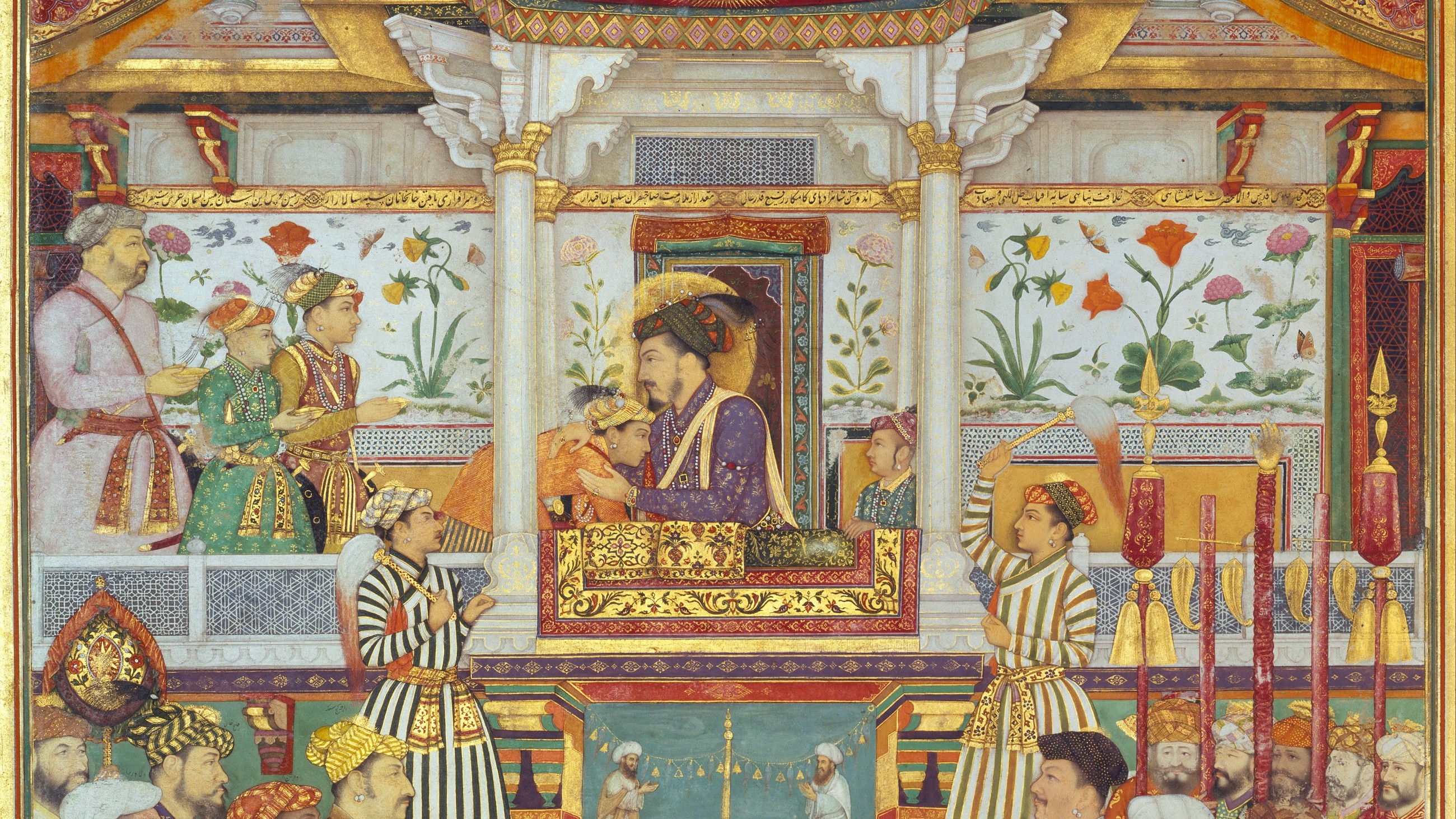
Padshahnama plate 10 : Shah Jahan receives his three eldest sons and Asaf Khan during his accession ceremonies (8 March 1628). Source: Wikimedia Commons
Named ‘Sahibi’ after its owner, Jahanara’s ship would carry the goods made at herkarkhanas (factories) and dock at her very own port in Surat; its revenue and the colossal profits she made via trade significantly boosted her annual income of three million rupees!
In his book Storia Do Mogor, Italian traveller Niccolao Manucci writes, “Jahanara was loved by all, and lived in a state of magnificence.” The book is considered to be one of the most detailed accounts of Shah Jahan’s court.
But Jahanara’s political and economic clout failed to have an impact on the bitter war of succession between her brothers, Dara Shikoh and Aurangzeb. She made several attempts to mediate between them, but as Ira Mukhoty writes in her book Daughters of The Sun , she had “underestimated the corrosive loathing that Aurangzeb has for Dara, whom he blames for his father’s cold criticism throughout his career”.
Aurangzeb ultimately killed Dara Shikoh and placed an ill Shah Jahan under house arrest in Agra Fort’s Muthamman Burj (Jasmine Tower). Faithful to her father, Jahanara set aside her lucrative trade and luxurious lifestyle to accompany him into imprisonment.
A constant presence beside Shah Jahan in his exile, she took care of him for eight years, till he breathed his last in 1666.
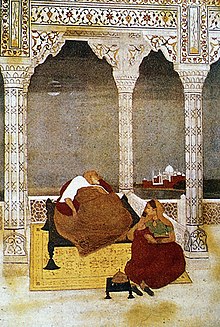
“The Passing of Shah Jahan” (1902), a painting by Abanindranath Tagore. At the foot of the bed is Jahanara Begum, the daughter of Shah Jahan; the Taj Mahal is in the background. Source: Wikimedia Commons
It says much for her stature in the Mughal court that after Shah Jahan’s death, Aurangzeb restored her title of Padshah Begum and gave her a pension along with the new title of Sahibat al-Zamani (Lady of the Age)—befitting for a woman who was ahead of her time.
Unlike other royal Mughal princesses, she was also allowed to live in her own mansion outside the confines of the Agra Fort.
“Jahanara establishes herself in the city as the most influential woman patron[s] of literature and poetry. She collects rare and beautiful book[s], and her library is peerless. She donates money to charity, especially Sufi dargahs, and carries on a genteel diplomacy with minor rajas who come to her with grievances and gifts,” writes Ira Mukhoty in her book.
Spending her last years in the pursuit of her artistic and humanitarian passions, Jahanara passed away in 1681 at the age of 67 but not before she etched her mark in the annals of history in a manner that would have made her father proud.
She commissioned several architectural spectacles, mosques, inns and public gardens across the Mughal empire.
But she is best remembered as the architect of Old Delhi’s legendary bazaar, Chandni Chowk—which translates to ‘Moonlit Intersection’.
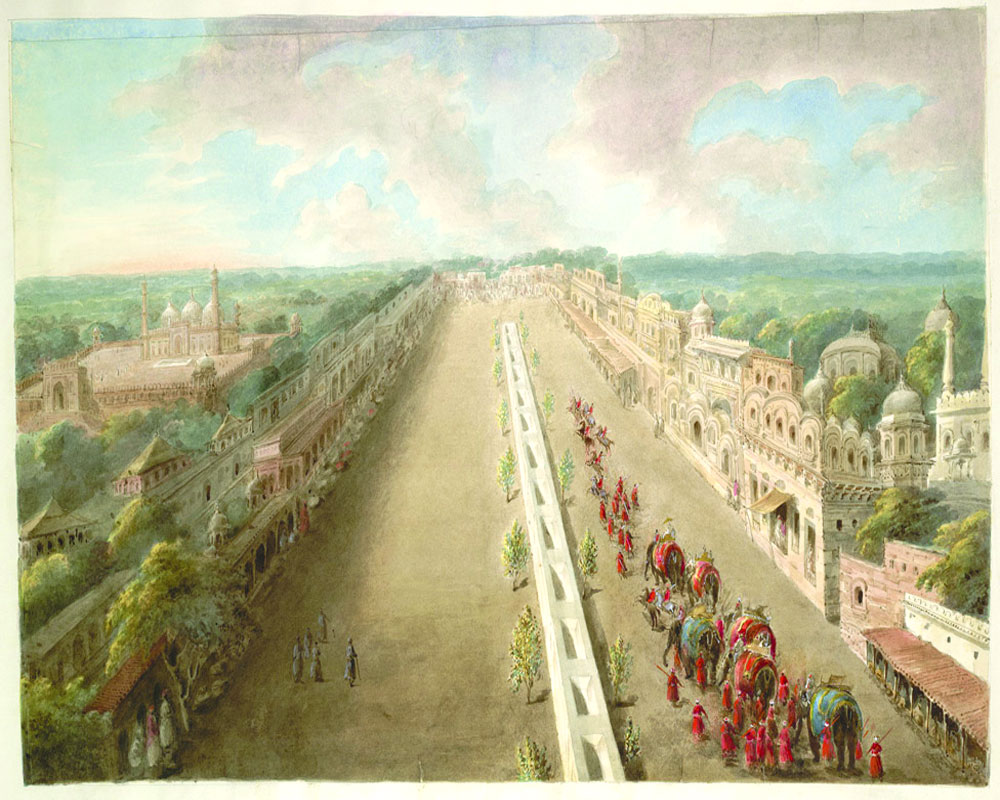
Water colour of Chandni Chowk in Delhi from ‘Views by Seeta Ram from Delhi to Tughlikabad Vol. VII’. Source: British Library
In his book Shahjahanabad : The Soverign City in Mughal India , Stephen Blake writes,
“The chowk was an octagon with sides of one hundred yards and a large pool in its center. To the north, Jahanara built a caravansarai (roadside inn) and a garden and, to the south, a bath. On certain nights, the moonlight reflected pale and silvery from the central pool and gave to the area the name Chandni Chawk (Silver or Moonlight Square). This name slowly displaced all others until the entire bazaar, from the Lahori Gate to the Fatehpuri Masjid, became known as Chandni Chawk.”
Today, many of Chandni Chowk’s ancient buildings have been torn down, as its lanes brim with new shops and colliding crowds. And yet, somehow it manages to invoke the spirit with which Jahanara lived—the same spirit that helped her survive and thrive amidst betrayals and tragedies.
Interestingly, Jahanara’s resting place in the Nizamuddin Dargah is of her own choosing, just like her character.
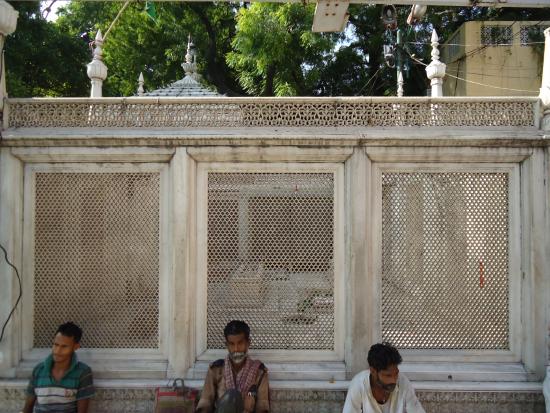
Jahanara’s tomb at the Nizamuddin Dargah. Source
Unlike the giant mausoleums built for her parents, she rests in a simple marble tomb open to the sky, inscribed with her own couplet in Persian:
Baghair subza na poshad kase mazar mara, (Let no one cover my grave except with green grass,) Ki qabr posh ghariban hamin gayah bas-ast. (For this very grass suffices as a tomb cover for the poor.
Perhaps it is poetic justice that green vines grow on the grave of this extraordinary princess of India.
(Edited by Shruti Singhal)
source: http://www.thebetterindia.com / The Better India / Home> History> Women / by Sanchari Pal / May 24th, 2019
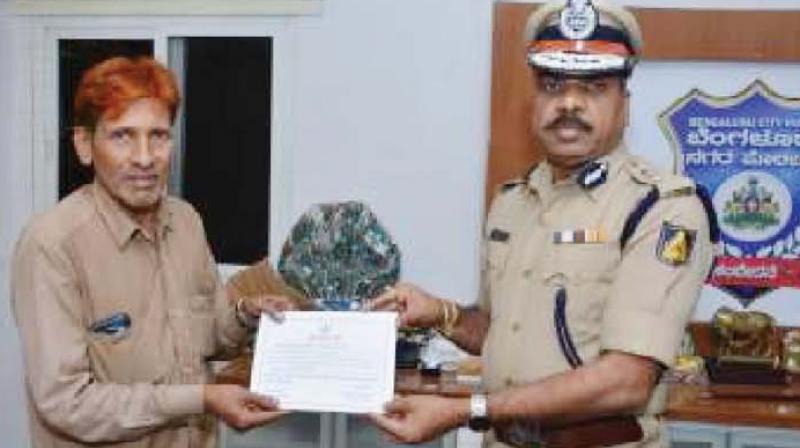
When Syed Ahmed noticed the bag, he waited at the same spot thinking the passenger would return to collect the bag.
Syed Ahmed receives his award from Police Commissioner T. Suneel Kumar.
Bengaluru:
The city Police Commissioner T. Suneel Kumar rewarded a 45-year-old autorickshaw driver for his honesty, when he returned a bag containing cash, ATM cards and an expensive mobile phone which was left behind by a passenger on Wednesday.
The passenger, identified as Pramod Kumar Jain, took the autorickshaw from Majestic driven by Syed Ahmed. When Jain got off at the City Railway Station, he left behind a bag containing cash and other valuables.
When Syed Ahmed noticed the bag, he waited at the same spot thinking the passenger would return to collect the bag.
When the passenger did not return even after hours, Ahmed took the bag to the city Police Commissioner’s office seeking help in returning the bag to its owner. The police checked the bag and found a visitng card of Jain.
The police him to collect the bag, which contained Rs 45,000 in cash, two ATM cards and an i-Phone.
The bag was handed over to Jain in the presence of the Commissioner.
Kumar gave Ahmed a certificate of appreciation and a cash reward.
source: http://www.deccanchronicle.com / Deccan Chronicle / Home> Nation> Current Affairs / May 23rd, 2019
Nahida Manzoor has become first Kashmiri woman to successfully summit the World’s highest peak, Mount Everest.
The news about Nahida’s successful summit was made public by Transcend Adventures, the company with which she had gone for her maiden attempt to scale the Everest.
“The Fourth summit of the day is Nahida Manzoor along with her Sherpa Guide Nima Kancha. Nahida hails from the state of Jammu & Kashmir. The 26-year old lady has been passionate about the snow peaks and took to the mountains at a very young age,” Transcend Adventures posted on their official Facebook page.
Nahida along with her group had left from Everest Base camp for the summit on Saturday and on Tuesday she made successful summit of the peak.
The experienced trained mountaineer had on March 4 started crowd funding to support her dream journey.
source: http://www.thedespatch.in / The Despatch / Home> Chai Khana / by The Despatch Staff / May 22nd, 2019