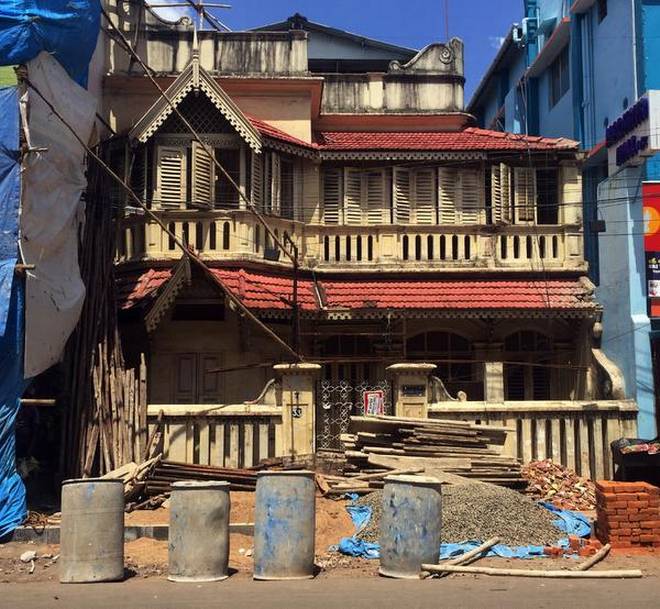
One of the projects taken up by the Triple O Studio
Any mention of Chennai’s architectural marvels instantly brings to mind large, red public structures built in the Indo-Saracenic architectural style. But, there is more to the city’s architectural history in its residential areas.
Madras Inherited, an initiative of a group of architects and volunteers, aims to unravel these hidden architectural gems through heritage walks and document the fast disappearing residential structures in the city.
Spearheaded by Triple O Studio, an architectural firm, Madras Inherited will focus on small residential buildings across the city that have gone unnoticed unlike public heritage structures. While Chennai has some of the finest Indo-Saracenic structures, it is also a confluence of many intriguing architectural styles that the group will research and map through a series of walks.
Tahaer Zoyab, architect and co-founder of Madras Inherited, said a project to document the old houses of Mylapore came as an eye-opener to the vanishing heritage in the city. “The character of the interior lanes is fast changing and we wanted to share the stories with people before residential buildings disappear and also document the rich legacy,” he said.
The team has so far documented architectural designs of about 50 houses in Mylapore. “We have traces of Neoclassical, Gothic and Art Deco styles in structures across the city. We can still find traditional vernacular architecture in some of the Agraharam houses of Mylapore, Tiruvanmiyur and Triplicane,” he said.
Classic example
George Town, one of the older settlements in the city, presents a classic example of a confluence of different styles. Dare House in Parrys Corner, for instance, is designed in the Art Deco style in which there is an emphasis on vertical lines and the distinct design of a ‘sunburst jaali’ for ventilation, Mr. Zoyab pointed out.
Such intricate details imbibed in residential and private building architecture will be documented and shared with heritage enthusiasts in the city. Madras Inherited will focus on cultural tourism and heritage education and management through a series of interactive events like photo walks in historical areas. The initiative will be launched on June 16 with a walk through the lanes of Royapettah, where participants will get to decode the architectural history of the area. The walk that starts at 6.30 a.m. will cost adults Rs. 700 and students Rs. 450. Participants get to take home a bag of custom-made souvenirs, ranging from coasters to bookmarks.
The locality has a range of styles from Agraharam houses, traces of Gothic design and Islamic-style houses. The proceeds from these walks will be used to fund the mapping and documentation of city’s heritage structures. There are plans to expand to areas like Periamet, Vepery and George Town after September.
For details on the walk, send an e-mail to mail@madrasinherited.in or contact +91-8939135048.
source: http://www.thehindu.com / The Hindu / Home> News> States> Tamil Nadu / by K. Lakshmi / Chennai – June 15th, 2018
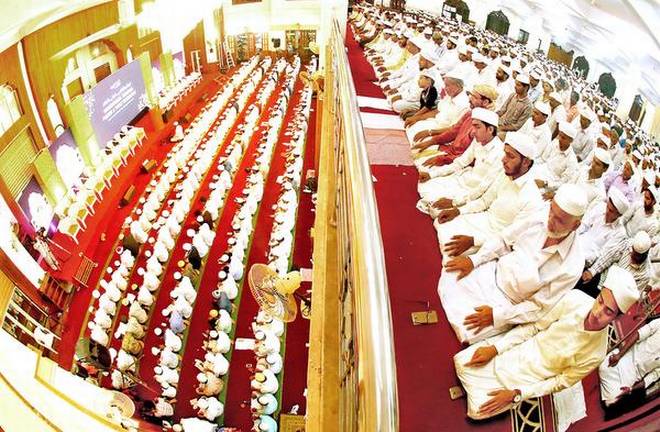
Sunni believers from different parts of the State attend an annual mega prayer gathering organised by the Madin Academy in Malappuram on Monday.
Thousands of Sunni believers from different parts of the State attended an annual mega prayer gathering organised by the Madin Academy here on Monday night.
Although the organisers had cut down the size of the programme by shifting the stage into the Madin Grand Mosque and reducing the publicity for the event in view of the Nipah virus scare, there was no decrease in the turnout of the orthodox Sunnis who reached the Swalat Nagar for the blessings of Lailathul Qadr. Lailathul Qadr or “the night of decree” is the holiest night of the year for Muslims across the world.
According to the Koran, Lailathul Qadr is “better than a thousand months”. In his special message to the people, Madin Academy chairman Sayed Ibrahim Khaleel Bukhari Thangal exhorted the mahals and the community to give extra stress on cleanliness and hygiene.
All India Jamiyyathul Ulama general secretary Kanthapuram A.P. Aboobacker Musliar inaugurated the function. Samastha Kerala Jamiyyathul Ulama president E. Sulaiman Musliar presided. Mr. Bukhari led various prayers such as Thouba, Tahleel and Swalat.
source: http://www.thehindu.com / The Hindu / Home> News> States> Kerala / by Staff Reporter / Malappuram – June 12th, 2018
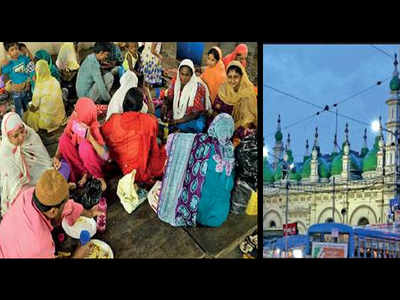
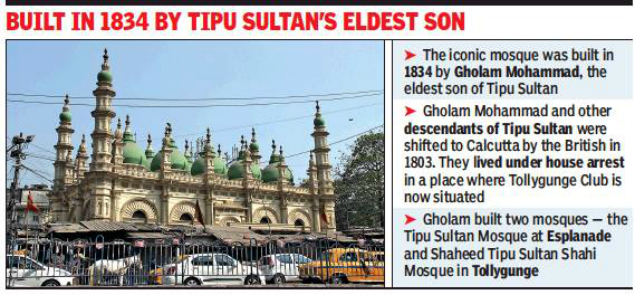
The iconic Tipu Sultan Mosque has, for the first time in its 184-year history, opened its doors for women this Ramzan.
The Esplanade landmark has arranged for iftar and evening prayers for women under a temporary shamiana inside its premises, lending a crucial support system that lets them leave home for shopping in the city’s famed central commercial area without worrying about how and where to break their fast and get some shelter from the sun and, right now, the rains.
The shamiana, with adequate lighting, fans and water, has proved to be a huge relief for women working in offices in the central business district, with the masjid authorities providing the iftari comprising fruits, chhola, sweets and sherbet.
“You do not even have to get your own iftari. We will provide it. Just reach the mosque minutes before iftar and take your seat,” Prince Anwar Ali Shah, the mosque’s mutwali (caretaker) and great-grandson of Prince Gholam Mohammad, Tipu Sultan’s eldest son, said.
The Esplanade landmark has arranged for iftar and evening prayers for women under a temporary shamiana inside its premises, lending a crucial support system …
The mosque was built in 1834 by Prince Gholam Mohammad, when was in exile in Kolkata.
“A lot of women come to Esplanade from far-flung areas for shopping during Ramzan and do not have any proper place to go to when it is time for iftar. Many are forced to break their fast on the road and forgo their evening prayers,” Shah said, explaining the rationale behind the decision.
Women devotees have welcomed the change. Park Circus resident Asma Momin had come to Esplanade to buy essentials on Tuesday. “I was not carrying any food at all,” she said. “The shamiana and the iftari were a godsend,” she added.
Sabrina Yasmin had come to Dharamtala from nearby Wellesley but was caught in the rain; for her, the shamiana provided the much-needed shelter. “It is a great decision and shows the mosque authorities’ inclination to change with the times,” she said. Around 150 women partake of iftar at the Tipu Sultan Mosque daily.
Fasting during Ramzan is one of the five obligatory pillars of Islam, along with the declaration of faith, the namaz, the Haj pilgrimage and giving zakat (an Islamic levy). The conclusion of Ramzan heralds the arrival of Eid, the biggest Muslim festival.
source: http:///www.timesofindia.indiatimes.com / The Times of India / Home> News> City News> Kolkata News / by Zeeshan Javed / TNN / June 13th, 2018
Nellihudikeri Village, Siddapur (Kodagu Distrct), KARNATAKA :
Madikeri:
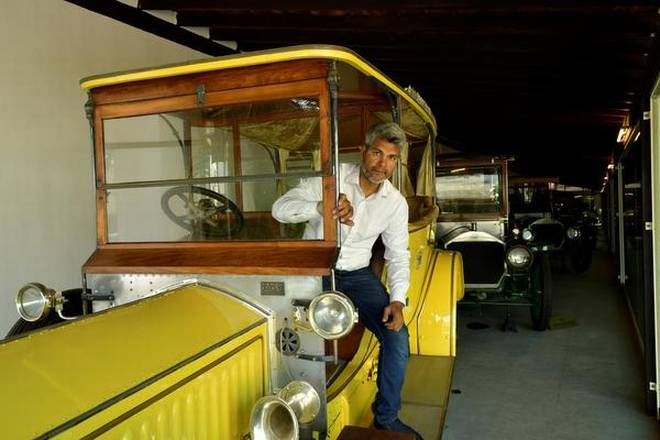
A farmer and a vintage car collector died after a tree branch fell on him at Nellihudikeri village near Siddapura in Kodagu district yesterday.
The deceased, 67-year-old P.C. Ahmed Kutti Haji, was working in his Mubarak Estate along with his son Ashraf at around 11.30 am. Due to heavy rain and wind, a branch of a banyan tree fell on Ahmed Kutti. He was immediately rushed to a hospital. But he succumbed to his injuries in the hospital. Kodagu Deputy Commissioner P.I. Sreevidya has announced Rs.5 lakh compensation to his family. She sent the cheque through the Tahsildar.
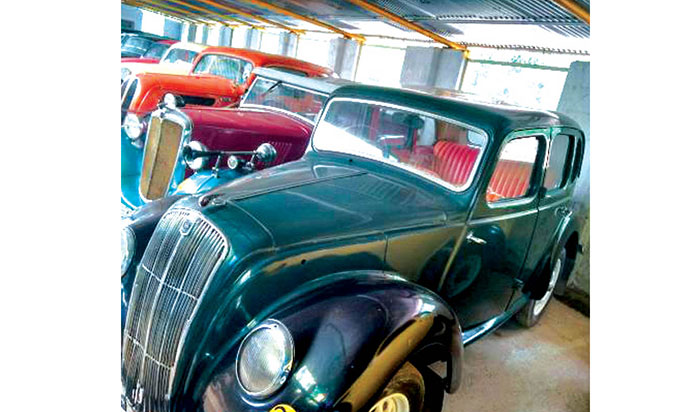
With his death, Kodagu has lost a collector of Vintage ‘beauties
Ahmed Kutti Haji is a coffee planter and also an industrialist. He has a huge collection of vintage cars which he threw open to public. Collecting vintage cars was a hobby for Ahmed who has 86 of them and over 15 vintage petrol jeeps. Not to stop there, he also has 20 old two-wheelers, a 125-year-old bicycle and a 200-year-old bullock cart. The oldest car in the collection is 1925 model.
Normally vintage car collectors eye Bengaluru to add cars to their collection. Changing the trend, Ahmed focussed on old workshops in Kodagu and surrounding areas to hunt vintage ‘beauties.’ After picking them, Ahmed gave old cars a fresh coat of paint and tuned them to working condition.
Almost all foreign cars owned by Ahmed were manufactured between 1925 and 1965. Barring Dharmasthala, no other place in the State has such a wide collection of vintage cars.
With his death, Kodagu has lost a vintage automobile enthusiast.
source: http://www.starofmysore.com / Star of Mysore / Home> News /June 10th, 2018
It is 8am on Saturday and big black cauldrons that will slowly simmer dal in them have been put up on burning embers with the help of two strong men. For the past 179 years, the ritual has been repeated every Ramzan in the bawarchikhana (kitchen) within the premises of the Chhota Imambara.
While it is dal and tandoori roti that is cooked for three days, an Awadhi delicacy called ‘taley hue aaloo ka salan’ (fried potato curry) with roti follows for the next three. The cycle continues for the entire month of Ramzan, feeding around 600 poor people as their dinner the the entire month of Ramzan.
In the same kitchen, a different set of snacks is also prepared for the specific purpose of serving rozedars coming to offer prayers in 15 mosques under Husainabad & Allied Trust (HAT).
Around 2,500 people will receive a plate of gujhiya, phulka, chana, suhaal, dates, a fruit (preferably banana) along with bread-butter and cake outsourced from a bakery, thanks to a king’s commitment to the poor.
The third King of Awadh, Muhammad Ali Shah, had created the Husainabad Endowment Deed in 1839 to feed the poor. Since then, the two massive community kitchens within the Chhota Imambara have been following the tradition of sending out iftari to the 15 mosques under its umbrella.
Every Ramzan, by the end of the day, this kitchen would have fed over 3,000 mouths.
“A sum of around Rs 16 lakh is passed for the iftar and dinner services every year. Two separate dedicated teams of chefs and their assistants are engaged for it. Everyday, activity in the kitchens begins at 8am. By 4.30pm, we send out the first batch of iftar food for the mosques,” said Habibul Hasan, an official from HAT.
The 179-year-old Nawabi tradition saw a break only in 2015. During Ramzan that year, a movement against alleged corruption in the UP Shia Central Waqf Board being spearheaded by Shia cleric Maulana Kalbe Jawad had brought the tradition to a halt. Protesters had locked the entrances to both the Bada Imambara and Chhota Imambara, restricting all entry. Even the kitchens could not function.
However, people from the neighbourhood of the 15 mosques came together to fund the food. HAT had also roped in private bakeries. Even during the mourning months of Muharram, food is served from the traditional kitchens of the Imambara.
source: http:///www.timesofindia.indiatimes.com / The Times of India / Home> News> City News> Lucknow News / by Yusra Husain / TNN / May 21st, 2018
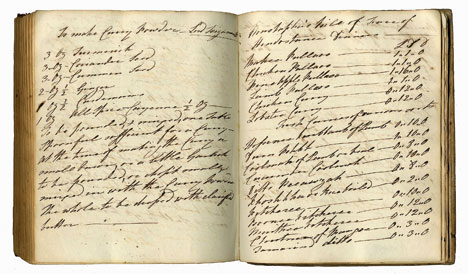
RICH DIET: A handwritten cookery manuscript containing a glimpse of the menu from England’s first Indian restaurant has sold for $11,344 (Rs 7.6 lakh) at a London book fair.
It refers to dishes like “pineapple pullaoo” and “chicken currey” from the Hindoostane Dinner and Hooka Smoking Club, opened in 1809 at Portman Square, London, by Sake Dean Mahomed, whose roots lay in Bihar.
“This is the first known record of a priced menu from Britain’s first Indian restaurant – at a time when printed menus were rarely available,” said Brian Lake of Jarndyce Antiquarian Booksellers in London, which sold the volume at the ABA Rare Book Fair to an American institution last month.
The manuscript, titled Receipt Book 1786 on the front, also contains handwritten recipes and receipts. It includes a two-page “bill of fare” from Hindoostane, listing 25 Indian dishes with prices.
These include makee pullaoo (1.1.0 pounds), pineapple pullaoo (1.16.0 pounds), chicken currey (0.12.0 pounds), lobster curry (0.12.0 pounds), coolmah of lamb or veal (0.8.0 pounds), together with breads, chutneys and other dishes.
It ends by noting that there are “various other dishes too numerous for insertion”.
Towards the end is a recipe “to make a curry powder”, attributed to Lord Teignmouth (1751-1834), who was governor-general of Bengal between 1793 and 1797 and later became a patron of Mahomed’s restaurant.
Mahomed went bankrupt in 1812, and the eatery struggled on as Hindostanee Coffee House under a new management before disappearing in 1833.
source: http://www.telegraphindia.com / The Telegraph,Calcutta,India / Home> India / PTI / June 04th, 2018
Back from the brink: The western wall of the Ashoorkhana shows off tiles with intricate inlays. | Photo Credit: K.V.S. Giri
Telangana government and Aga Khan Trust are working to restore the monument ahead of rains
It is a race against the monsoon as Hyderabad’s 17th century Badshahi Ashoorkhana, famed for its resplendent tile work, is restored to its original finery.
The sprawling structure, which turns into a house of mourning during Muharram, is located in a narrow bylane of the old city. On Sunday, workers were busy plastering a high wall with brownish lime mortar in the blistering sun, using the cover of a blue tarpaulin. .
On another side of the wall where the restoration is taking place, framed by an arched entrance, is the 400-year old Ashoorkhana. It was built sometime in 1611 by Hyderabad’s founder, Muhammad Quli Qutb Shah.
“We are consolidating the structure before the monsoon sets in. The documentation is also being done in parallel. Once that is over, we will decide on a conservation plan. The tile work has very fine detailing. At some points, the tiles have been painted over. This will require painstaking documentation,” says N. R. Visalatchy of the Telangana Department of Archaeology and Museums.
The documentation is being done by the Aga Khan Trust for Culture with which the State government has signed a Memorandum of Understanding. “We have to do the work before the monsoon, because there are points from which seepage might occur and that will affect the tiles,” says Prashant Banerjee of AKTC. The restoration is a challenge, because materials must be moved through a narrow lane.
Heritage recovered
The restorers are using a lime mortar mix for plastering, but that is not their only weapon. “Pulped and cured wood apple is injected into the gaps. It works like a silicone sealant that expands and contracts without letting the water in. Concrete sealants become rigid, and seepage happens,” says Mr. Banerjee.
The Ashoorkhana, turns into a pilgrimage site when alams (battle standards) are installed to commemorate the battle of Karbala in 680 A.D. Ashoora or 10th day of Muharram is when the battle took place. The monument was lost for several decades when Emperor Aurangzeb’s forces turned it into a bandikhanato keep wheeled vehicles. Much later, the September 1908 floods caused havoc, washing away some tiles. In a shocking turn of events, it was turned into a garage and parking space at one time. A legal battle waged by the Moosavi family made the monument accessible again, and conservation moves followed the eviction of squatters.
source: http://www.thehindu.com / The Hindu / Home> News> Cities> Hyderabad / by Serish Nanisetti / Hyderabad – June 03rd, 2018
In a first, an IIT-Kanpur startup, in association with a Lucknow-based food delivery firm, successfully flown in flasks of freshly brewed tea on the doorsteps of its customers in the city of nawabs.
TechEagle Innovations, founded and run by IIT Kanpur graduate Vikram Singh Meena, pilot-tested delivery of two litres of hot tea with the help of battery-powered and GPS-fitted drones on May 23. It has developed the specialised drone to drop-ship a consignment up to 2 kg within a 10-km-radius of its take-off station with just a single click of a mouse. TechEagle has joined hands with OnlineKaka, a Lucknow-based food delivery startup, for these test flights.
“We have successfully delivered world’s first chai via drone. Now, we would provide these mean machines to other food delivery startups like Zomato, Swiggy and Foodpanda. To begin with, we plan to venture out in north India,” Meena told TOI.
Talking about the drone-delivery model, Bilal Arshad, who founded OnlineKaka, alongwith friend Ahad Arshad and Salman, said: “It’s not like the customer will directly receive the order from the whirring gadget. The drones would be flown and received by our executives at different points and because they would not be commuting through the busy streets, it would cut down the delivery time drastically.” Although the cost implications would be known only after a full-fledged launch of the service, both Bilal and Ahad said they would try to ensure that there was no extra burden for the customer as they would be saving on commuting. At present, they charge Rs 59 per delivery.
Although the trial was conducted with DGCA’s permission, the firs is yet to get a nod for the regular service. “The DGCA had said the norms for drone delivery would be specified in January but it hasn’t come through. It is now expected sometime in July. In sync with the Civil Aviation ministry, the DGCA would mark zones for the drone flights and assign altitude, etc, besides issuing licence for each gadget. The pilots hired for the drones would be another factor to determine cost of operation,” said Ahad.
Interestingly, there are no active drone-based food delivery services in the world. UberEats, the largest grub-delivery platform which has recently opened shop in India, has recently tested a similar drone-based delivery in San Diego, US.
In October last year, global e-tail giant Amazon had filed patent for delivery of products via drones in India.
In 2014, an unmanned drone was used to deliver a pizza to a flat in a high rise in Worli, Mumbai. Another drone startup, based out of Kanpur, called Aarav Unmanned Systems, raised a bridge round funding In April 2016.
However, many firms and startups, who are raring to begin unmanned aerial vehicles (UAV) or drone-based commercial operations (like door-to-door delivery, aerial mapping, infrastructure monitoring and product transport) across the country, have hit a regulatory roadblock as India’s sky watchdog, the Directorate General of Civil Aviation (DGCA), hasn’t yet formulated a final official policy for the same. Although, Goldman Sachs has estimated that drone industry will be worth $125 billion globally by 2020.
The founding members of TechEagle Innovations started designing and manufacturing since 2015 in the garage of IIT Kanpur hostel and formed the B2B tech startup only in January 2017.
“Our startup develops custom-made drones of both types — rotary wing and fixed wing — which can carry 500gm to 5kg payload. The wingspan ranges between 60cm and five-meter, flight time varies between 30 min and two hours,” added Meena.
“The drone-based delivery system came to our minds when we saw real-life problems like traffic jams affecting delivery services, especially food transportation. Then, we partnered with Online Kaka,” the TechEagle CEO said.
TechEagle plans to expand its services across the country based on need and resources. “We have analyzed that around 10-15 drones can be deployed in one city. Our drones can traverse 10 metres in one second and one single trip can last up to 20 minutes. So, it can fly up to 6km to deliver tea and come back to its take-off spot. We are doing research on batteries to increase the payload capacity and flight time,” Meena added.
On the likely cost of food or tea to be delivered via drones, Meena signed off by saying, “Quality and price of tea or any food items will be handled and decided by the food delivery firms, who will use our drones, instead of a bike or a motor van. We can’t disclose the exact selling prices of the drones at present. But when the service becomes fully functional, our drone delivery will definitely be cheaper than the current modes of transportation. We are in talks with quite a few food delivery startups.”
There was a time in the city when one could order little from home other than pizza. It was 2016 and while big names like food panda and zomato were foraying into the Lucknow market, a startup with just two delivery boys caught the fancy of locals, whose staple feast is the kabab-biryani fare. “Our shoestring budget did not allow a lavish ad campaign, so we relied more on word of mouth,” said Ahad Arshad, who founded OnlineKaka, along with friend Bilal Arshad, adding.
Founded in 2016, OnelineKaka is a popular service in Lucknow for delivery and is preferred for delivery from iconic joints from crowded Old City. “It saves people the trouble of commuting to the crowded, jammed areas and they could enjoy kabab-paratha, biryani, kulcha-nihari in the comfort of home,” Bilal says. Today, they have a 125-strong army of delivery boys and an equal number of vendors on their panel, with over 500 new joints in queue. From a turnover of Rs 20 lakh in their first year, they have notched Rs 5 crore and recorded a 15% growth per month, said the founders.
“There was a minimum-order rider in the beginning but now we deliver the smallest of orders,” said Ahad, adding that their latest offering was delivery of the city’s favourite chai and bun-makhan, anywhere. “The packing ensures you get your cuppa steaming hot but with a successful run of delivery by drone, we hope to pick up more orders in this segment,” he added.
source: http://www.timesofindia.indiatimes.com / The Times of India / Home> News> City News> Lucknow News / by Sovan Manna / TNN / June 01st, 2018
His was the hand behind the Arabic inscriptions on the Taj Mahal, which have captivated tourists from across the world.
But today, the mausoleum and the dwelling of Amanat Khan, the calligrapher of the Taj Mahal, lies in decay, neglect and encroachment.
Sarai Amanat Khan, about 29 kilometres south-east of Amritsar on Tarn Taran Attari road, was built by Khan in 1640, where he lived a reclusive life following the death of his elder brother Afzal Khan, the prime minister of Shah Jahan.
But here too, Khan, who came to India from Iran in 1609 and whose real name was Abdul Haq before being conferred the title of “Amanat Khan” by Shah Jahan for his impressive calligraphy, has left the imprint of his craft — the sarai has beautiful Islamic calligraphy inscribed on its fading blue and yellow tiles.
Sarai Amanat Khan was also a guest house, where travellers on the Lahore-Agra route on the Grand Trunk Road would stop for rest in the middle of a long strenuous journey. They would live in the small rooms inside the sarai, and pray in the adjacent mosque and large courtyard.
Today, Sarai Amanat Khan is dilapidated — the Nanakshahi bricks are falling off, and the eastern gate is in disarray; some 800 feet below it is Khan’s ruined tomb.
The sarai is in the middle of a densely populated village, also named after Amanat Khan.
With several shops in its immediate vicinity, the Archaeological Survey of India-protected monument is a site of rampant encroachment. Several families live inside the rooms of the sarai illegally, and claim to have been doing so since Partition. “I was born here,” says 50-year-old Ranjit Singh. “People have been living here since 1947. There had been talks about giving us alternative land and compensation, but those have not materialised,” he adds.
source: http://www.archive.indianexpress.com / The Indian Express / Home> Archive / by Navjeevan Gopal, New Delhi / July 29th, 2012
Karim’s had transformed from a local purveyor of aloo gosht into a monument. It was visited by princes and prime ministers, eulogised by journalists, studied by historians, and patronised by tourists.
Haji Zahooruddin (extreme right) with Bollywood star Dilip Kumar.(Image courtesy Zain-al-Abedin,Zaeemuddin Ahmed and family))
When Haji Zahooruddin started working at Karim’s over 70 years ago, the business consisted of a single restaurant run by his father and grandfather. On January 27, when he died at the age of 85, Zahooruddin was the managing director of a small empire, with 26 outlets overseen by around a dozen other family members.
Karim’s had transformed from a local purveyor of aloo gosht into a monument. It was visited by princes and prime ministers, eulogised by journalists, studied by historians, and patronised by tourists.
Much though Karim’s success was the result of adaptation to changing times — with the addition of Punjabi butter chicken to the Mughlai menu, for example, and the establishment of small take-out joints throughout the city — Zahooruddin devoted himself to protecting Karim’s most valuable asset: its heritage.
“This is time-tested Mughlai food and we do it well,” he told an English daily in 2013, “so why should we change?”
Karim’s changed only as much as it had to. Striking this balance enabled Zahooruddin’s “number one contribution”, said Shahid Siddiqui, a regular at the restaurant who has written extensively about Old Delhi. “He introduced the food of the old city to New Delhi and to the public in general.”
The Karim’s family attributes their culinary lineage to Mohammad Awaiz, a chef in the royal court of the last Mughal emperor, Bahadur Shah Zafar. When the British sacked Delhi and expelled the king to Rangoon, Awaiz fled. He settled in Ghaziabad and found other work, but taught his son, Haji Karimuddin, everything he knew about Mughal cuisine. During the coronation of King George V in Delhi in 1911, Karimuddin returned to the imperial city and set up a food stall. In two years, he made enough money to open a restaurant.
Karimuddin’s son, Haji Nooruddin, had four sons of his own, including Zahooruddin, who was born around 1932. He started working at Karim’s at the age of 12. The young boy learned the power of belonging to the Karim’s family when a particularly strict teacher demanded Zahooruddin hand over the food in his tiffin box every day at lunchtime. Zahooruddin may have gone hungry, but he was spared the beatings inflicted on his classmates.
He spent his whole adult life working at the restaurant, learning its traditions zubaani (orally) and mixing spices with his male relatives — the only ones allowed to know Karim’s recipes. In the late 1940s, he married Samar Jahan, also a resident of Old Delhi, and had four children, two of them sons who have spent their careers working at Karim’s. Four of Zahooruddin’s grandchildren now manage branches of the restaurant.
Zahooruddin’s son Zaid-ul-Abedin, his brother Salahuddin, and nephew Zaeemuddin, three of the current directors of Karim’s, say that his focus was always on Karim’s buniyaad, both in terms of values and dishes. (Burhaan Kinu/HT PHOTO)
Clients and business associates found Zahooruddin to be a commanding figure, and heeded his advice. For newlyweds, he recommended nahari; to the sick, thigh meat for its high degree of bone marrow; to one fat customer, Siddiqui remembered Zahooruddin making the suggestion, improbable for a restaurateur, that the man eat a little less. If a customer said something was wrong with their mutton or chicken, Zahooruddin would keep the piece of meat and show it to his butcher in disapproval. “Babu would scold me sometimes,” said Javed Qureshi, whose family has supplied Karim’s with meat for decades, “but he loved me like a son.” Qureshi is one of many people who refer to Zahooruddin as “Babu” (father).
As time went on, Karim’s business grew, and its legend along with it. The family opened a second branch in Nizamuddin in the years before the Emergency. The former Presidents Fakhruddin Ali Ahmed and Zakir Husain became devoted customers, the latter ordering his food to Rashtrapati Bhavan. Indira Gandhi was also fond of Karim’s, but had security guards oversee the meals cooked for her.
The obvious antiquity of Karim’s Jama Masjid alleyway, its family’s claims of royal patronage, their distinctive Old Delhi Urdu, their promotion of old-fashioned dishes such as mutton brains — all this was stimulus for myth-making and myth-debunking. Historians debate whether Karim’s famous ‘istoo’ is authentically Mughal or secretly British. Some trace the family’s origins to a Saudi Arabian soldier who became Babur’s personal cook, but Zaeemuddin Ahmed, Zahooruddin’s nephew, said the family does not know anything about their ancestors prior to Awaiz.
In 1988, when Karim’s registered itself as a company, Zahooruddin was made chairman. When his brother Alimuddin Ahmed died in 2007, Zahooruddin took over from him as managing director. A slim gentleman with a well-trimmed moustache, he became the public face of his venerable restaurant. He attended numerous award ceremonies and made an appearance on the NDTV show Foodistan. At such moments, Zahooruddin smiled with the discomfort of a dignified man in a flamboyant place.
The public image of him as an embodiment of Old Delhi customs was shared by those who knew him personally. When Faiz-ul-Islam, his friend of over 40 years, returned from Haj, Zahooruddin invited 200 of Islam’s friends for a free breakfast at Karim’s, in keeping with his sense of mehmannawazi (hospitality). “He did it without takalluf (hesitation) and without a single line on his forehead,” said Fazl-ul-Islam, Islam’s son.
Zahooruddin performed culinary experiments, sometimes inventing his own dishes, while also sampling the food from different outlets of Karim’s every week to ensure his standards were being upheld. He insisted that the core of the menu — qorma, nahari, mutton burra, kebab — remain untouched.
“Babu used to say, ‘If we let others own a franchise, will they give the same attention to the quality of spices we use?’” said Zain-ul-Abedin, Zahooruddin’s son. “For example, he would say that cloves are something most people don’t eat: they take it out and put it aside on the plate. So another restaurant owner may think, ‘What is the use of putting in the cloves or buying the best-quality cloves?’ But clove adds to the taste, its juices mix with the food and bring out the smell of meat.”
What he was selling, after all, was not just food. Visit Humayun’s Tomb, and you’ll find a silent testament to the dead. Visit Zahooruddin’s restaurant, and you’ll find traces of the past still alive.
source: http://www.hindustantimes.com / Hindustan Times / Home> Delhi / by Alex Traub and Zehra Kazmi, Hindustan Times / February 01st, 2018