Category Archives: Travel & Tourism

Chowmahalla wins National Tourism Award

Hyderabad, TELANGANA :
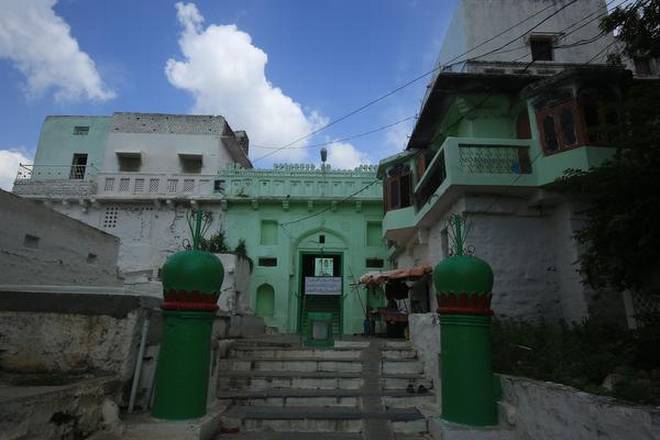
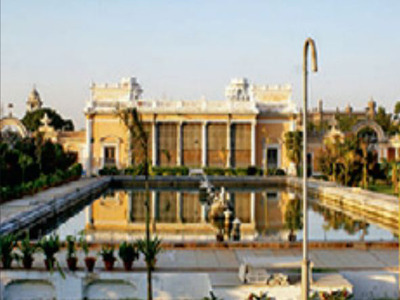
The majestic Chowmahalla Palace

Hyderabad :

The city’s magnificent Chowmahalla Palace has added another feather to its cap, bagging the National Tourism Award for being the best maintained monument. The award was among other honours presented by the Government of India, on the occasion of World Tourism Day observed on September 27.Speaking about the recognition, G Kishan Rao, director of the palace said: “It is a matter of great pride. Earlier in 2012, Chowmahalla received the award of merit from UNESCO.”

Pointing out how the palace is among the most sought-after tourist destinations in the city, Rao said the heritage structure is equipped with all the necessary facilities for visitors, including those who are differently-abled.

On an average 800 to 1,000 tourists visit the 250-year-old Chowmahalla Palace in Khilwat every day . Its construction, ordered during the reign of the third Nizam, was completed during the time of his successor. Since, it was used primarily to hold official functions. Over time, the ex panse of the heritage property, once spread over 45 acres complete with 16 palaces, shrunk to a meagre 12 acres. Yet, the impressive collection of artefacts, including crockery, garments, cars and rare photographs from the Nizam’s era – housed within, are in impeccable condition.

“After the death of seventh Nizam of Hyderabad, the palace was in a deplorable state. It was in 2001 when Princess Esra (first wife of Mukarram Jah) took it upon herself to restore it that things changed for the better. In 2006, we opened the place up for public. Today , the palace is also a central place for mega cultural events in the city,” said Rao, sharing how the paraphernalia on display also comprise items brought in from the King Kothi Palace, where they were in the cellar.

source: http://www.timesofindia.indiatimes.com / The Times of India / News> City News> Hyderabad News / TNN / September 29th, 2017

Jobless village boy built a plane to prove himself!

Muzaffarnagar Village (Meerut), UTTAR PRADESH :

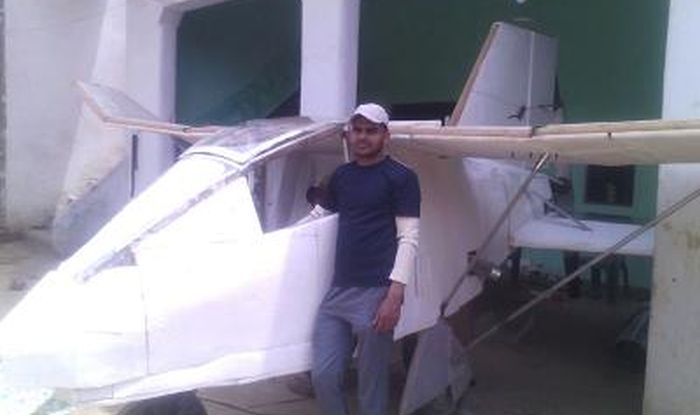
Abdul Wajid, a jobless village boy, built a plane from scratch to prove that he is not worthless!

The youth of this country have to face one huge challenge – that of unemployment. Whatever the government waxes on about all day, the fact of the matter is that the educated and even brightest of the youth sometimes have to settle for less than satisfactory jobs or just stay at home because there are no takers or no vacancies. While for those in metro cities the situation is relatively easier, for those in the rural areas, it is extremely terrible. They do not even have access to technology or means to reach out and if they do not leave their village, the chances of them getting a job in the village itself are negligent. While many disillusioned youth give up and go back to their village and take up the family profession, there are some like Abdul Wajid who decide to take matters in their own hands.

Image Credit: The Times of India

Abdul Wajid is a 26-year old youth residing in Muzaffarnagar village in Meerut, Uttar Pradesh. He completed his National Cadet Corps (NCC) training and since then has been hunting for a job but so far, has been unsuccessful in all his attempts. While training for the NCC, he had completed a course in aero-modelling at Safdarjung airport and used the skills he learned at the course to desgin and fashion his own aircraft! His one-seater plane was built entirely by himself at the cost of Rs 5 lakhs! How did a jobless youth get the amount? With the help of family, friends and the generous villagers! His plane is completely designed and made by him –  from metal scraps and engines of old cars and Abdul Wajid is confident that it will definitely run.

He has already applied for a request and approval from the aviation board to try test-flying the plane. The plane he has created is made of wood and weighs a whopping 350 kgs. The plane is meter long in structure and is supported by steel frames and the engine is that of an old Maruti van he purchased specifically for this purpose. The plane was initially fitted with 2 bike engines but they had to be changed as the engines would not be adequate to give the required thrust. The plane uses petrol for fuel and comes fitted with a 25 litre fuel tank which is expected to carry Wajid Abdul through a distance of up to 10 kms. The only obstruction in front of him is how to get the permission to fly the air-craft!

The first request was placed at the Muzaffarnagar council where just like the villagers, everyone was stumped. The local civic body visited Abdul Wajid and even they were confused as they could not provide the permission. They then asked Abdul to write to the aviation ministry and Abdul has vowed to do just that. Although people in his village earlier mocked him, now everyone is proud of him. He is filled with hope that if he can make a plane all by himself, then he can definitely get a green signal from the aviation ministry! Also, he hopes that once he flies his plane, people will take notice of his abilities and offer him atleast a decent job. He also expects to get some monetary compensation from the Chief Minister for his efforts.

source: http://www.india.com / India.com / Home> News> India / by Rutu Ladage / May 26th, 2016

Restoration of Humayun Mahal to begin soon

Chennai, TAMIL NADU :

HumayunMahalMPOs31aug2017

Estimate to be presented in 2 weeks

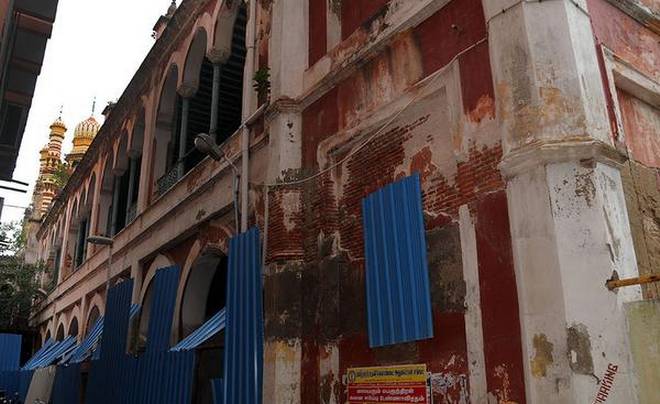
The Public Works Department (PWD) has set the ball rolling for the restoration of the historic Humayun Mahal on the Chepauk palace complex. It is set to submit a detailed estimate of the work necessary to renovate the structure in a fortnight.

After the successful restoration of Kalas Mahal, which will house the National Green Tribunal, Southern bench, from September 2, the PWD is now focussing on renovating the structure located next to it. This is the first structure that the new Building Centre and Conservation Division, formed by the PWD, will restore.

Constructed in 1770, the single-storey structure was once the residence of the Nawab of Arcot. Spread over 66,000 sq. ft., the building also has a connecting corridor to Kalas Mahal. Officials said nearly 50% of the roof has collapsed and needs to be rebuilt. “The estimate we will present will have details on the type of special materials needed, their availability and the special rates for renovating heritage structures,” an official said.

Unlike the other buildings, separate rates have to be arrived at for sourcing special construction material, such as limestone and flooring tiles. “We also need to collate data on places, such as Karaikudi and Virudhunagar, where these materials would be available. Once the estimate is prepared, we will be able to arrive at a uniform rate for the restoration of heritage structures,” the official said.

Based on the work taken up in Kalas Mahal four years ago, the renovation of Humayun Mahal is likely to cost at least ₹35 crore. The dilapidated structure once hosted various government offices, including those of the Agriculture Department, Social Welfare Department and the Directorate of Tamil Development.

Removing rubble

One of the main challenges is to remove the heaps of paper and rubble inside. Besides suffering the impact of the fire that ravaged Kalas Mahal in 2012, a portion of Humayun Mahal was affected due to a roof collapse and a minor fire in 2014. The search for funding is also delaying the project. Once the tie-up for funds is finalised, restoration work can begin in two months, the official added.

Meanwhile, the PWD is coordinating with various government departments to collate data on heritage buildings across the State.

source:  http://www.thehindu.com / The Hindu / Home> News> Cities> Chennai / bu K. Lakshmi / Chennai – August 30th, 2017

18-year-old Ayesha Aziz set to become first Kashmiri woman pilot

Khawaja Bagh (Baramulla District) JAMMU & KASHMIR / Mumbai, MAHARASHTRA :

Mumbai :

Mumbai-based Ayesha Aziz is the youngest girl of Kashmir origin who will soon acquire the Commercial Pilot License (CPL) and is probably set to enter the Limca Book of Records with her feats.

Ayesha has completed a two-month advanced space training course at NASA, being among three Indians picked for it.

She even holds a student pilot license at the prestigious Bombay Flying Club. But Ayesha is clear that it wouldn’t have all worked without her parents’ support.

Having turned 18 on October 3, she is a member of Indian Women Pilot’s Association, besides holding the Flight Radio Telephone Operator’s License (FRTOL). Her Parents hail from Khawaja Bagh in Baramulla district of Jammu and Kashmir. Ayesha did her schooling from Mumbai and presently resides there along with her parents.

Setting an example of a role model for numerous youngsters, Ayesha’s pursuits have brought in a whiff of fresh air and inspired many girls who are following her to realize their dreams. Her achievements are not only being hailed in Kashmir, but all over the country.

She is immensely inspired by Sunita Williams. “I always used to think if she had ability to do such thing why can’t other girls”. Ayesha said Kashmir played a significant role in her life and she was emotionally attached to it. She also told girls in Kashmir not to be bothered by politics and to follow their heart.

source: http://www.muslimmirror.com / Muslim Mirror / Home> Indian Muslim> Youth / by admin / October 18th, 2013

Mangaluru : While on this bus , learn how to file IT returns

Mangaluru, KARNATAKA :

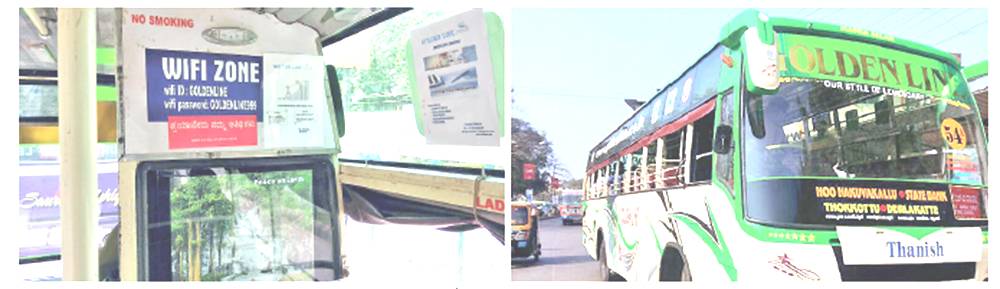
Ibrahim Thabreez, 23, has equipped his bus with WiFi and offers free tax consultation

Owner of a private bus in Mangaluru encourages people to file IT returns by offering information and free consultation

After offering free Wi-Fi services on a private city bus, a Golden Line bus that runs between Mangaluru city (State Bank of India Bus Stand) and Hoo Hakuvakallu near Konaje will offer free consultancy services on several issues such as GST, linking PAN with Aadhaar, filing IT returns and how to go about it.

Ibrahim Thabreez, a 23-year-old MBA graduate working as an export executive at Sharief Marine Product Private Limited decided to spread awareness on the subject. Thabreez‘s family is into transport business and they own about three city buses.

Speaking to Bangalore Mirror, Thabreez said, “People panic when they hear the word tax. Now, with GST, the panic has only increased. I am campaigning so that people come forward and file their returns. I explain to them the benefits of filing returns and how to go about it. For this, I have pasted posters inside the bus. I thought this is the right time to spread awareness as there are few days left to file returns for the last financial year. I addition, I am helping people with getting a PAN card, as well as linking it to their Aadhaar cards and bank accounts,” he said.

The non-salaried class often try to avoid filing returns. “I have provided my mobile number on the posters on the bus. While I guide them for free, in case they want me to take it further and get them a PAN card, I will do so only by charging a fee prescribed by the government. Regarding IT returns, I can guide them on the taxable amount and how to go about filing e-returns. In case they insist that I file it for them, I can provide the services at my office at a reasonable fee,” he said.

When JIOFi was launched earlier this year, Thabreez saw to it that a device was placed inside the bus so that people could use WiFi for free. Though the free offer has ended, they use upto 5 GB data in the bus every day.

source: http://www.bangaloremirror.indiatimes.com / Bangalore Mirror / Home> News> State / by Deepthi Sanjiv, Bangalore Mirror Bureau / July 27th, 2017

Meet Salim Sheikh, Gujarat bus driver who risked his life to save Amarnath yatris; to be nominated for bravery award

GUJARAT  / Amarnath Yatra (JAMMU & KASHMIR )  :

If Salim, the driver of the bus ferrying Amarnath Yatris, had not acted wisely and shown exemplary courage, the brazen terror attack would have certainly claimed more innocent lives.

SalimMPOs11jul2017

Ahmedabad:

If Salim, the driver of the bus ferrying Amarnath Yatris, had not acted wisely and shown exemplary courage, the brazen terror attack would have certainly claimed more innocent lives.

Salim, the Gujarati driver of the bus that was ferrying the passengers, has now emerged as a hero by saving so many innocent lives while risking his own.

According to reports, Salim drove the bus to safety amid continuous firing by a group of heavily armed terrorists who attacked the bus which was returning from the Amarnath Shrine.

Despite being reportedly hit by a bullet, Salim locked the door from inside, refraining terrorists from entering into the bus.

Realising that if he stops the bus, terrorist would kill many innocent yatris, Salim drove for nearly two kilometers before finally stopping near an army camp.

“I spoke to the passengers and they were all praises for the driver. He drove despite the firing and took them to safety. It made a lot of difference and lives were saved. He did not stop. Had he stopped, more lives could have been lost,” Munir Khan, IG, Kashmir, told reporters.

One of the survivors of the attack also praised Salim for his bravery and said, ”We were asleep and were woken up by bullet sounds. He continued to drive and took us to safety. If not for him, it would have been worse.”

Back home in Gujarat’s Valsad, Salim’s family also expressed satisfaction that he managed to save several lives.

“He called me at around 9.30 pm and said that there was firing. Salim did not stop when terrorists fired but only looked for a safer spot for the pilgrims. He could not save seven lives but managed to move over 50 people to a safe place. We are very proud of him,” said Javed, Salim’s cousin.

Later, speaking to reporters, Salim said, ”God gave me strength to keep moving, and I just did not stop.”

Gujarat Chief Minister Vijat Rupani, who announced ex-gratia of Rs 10 lakh to the kin of victims and Rs 2 lakh for injured, said that he will nominate driver Salim for bravery award.

There were initial reports that the bus was not registered for the Amarnath Yatra and the driver had committed some lapses on his part.

However, the Jammu and Kashmir Police has rejected such reports and stated that reports of the bus not being registered were far from the truth.

“The bus was very much registered for Amarnath Yatra and they were also in a convoy. “They had finished their darshan just two days ago and had plans of visiting a few tourist places. Yes, they were on a different route than the yatra route but the bus was registered and in a convoy,” Munir Khan added.

The bus, which came under a dastardly terror attack on Monday evening, was from Gujarat, and all pilgrims were from the same state.

The bus – GJ 09 Z 9976 – was registered in North Gujarat’s Sabarkantha district, but the owner had sold the bus to one Jawahar Desai of Valsad, Gujarat.

Of the seven pilgrims – five women and two men – who lost their lives, two were from Valsad, two from Dharampur, two from Pardi and one from Vansda. Another fifteen sustained injuries, four of them serious wounds.

source: http://www.zeenews.india.com / Z News / Home> News> States> Gujarat / by Zee Media Bureau / Tuesday – July 11th, 2017

Palmyra of the Deccan

Vijayapura (formerly BIJAPUR ) , KARNATAKA :

A view of Gagan Mahal in Vijayapura.

The Adil Shahis made Bijapur (now Vijayapura) a city ahead of its time in terms of infrastructure development and security. This well-planned city had two fortifications, one around the principal Adil Shahi administrative and residential buildings, and a larger one around the rest of the city. Both were roughly circular and had moats and several gateways. To further strengthen the defence of the city walls, the Adil Shahis built many bastions and about 96 gigantic cannons were placed on them. Only a dozen of these canons exist today. Most of them are placed in the Archaeological Survey of India (ASI) museum housed in the Nagaad Khana in front of Gol Gumbaz and some of them still sit atop the surviving bastions.

First line of defence

The fortifications have crumbled due to neglect and the moats are overgrown with thorny shrubs and in some places, they are filled with sewage and garbage. The only gateway that the citadel still has is on the south. This was the principal gateway into the citadel but now wears an abandoned look. Just inside this once splendid gateway are the remains of guardrooms constructed entirely of pillars from Hindu temples mostly belonging to the Vijayanagara period.

One of the surviving bastions is the Sharza Burj or Lion Bastion which is also the largest bastion in the city. It is famous for housing the cannon Malik-i-Maidan or Lord of the Plains, which was a war trophy won after the defeat of the Vijayanagara Empire at the Battle of Talikota. The cannon is made from a special alloy and can fire not only cannon balls but also metal slugs and copper coins.

Nearby is Haidar Burj which is the highest gun platform in Vijayapura and is a very conspicuous solitary structure.

It is also called the Upri or Upli Burj by the locals. It was built in 1583 by Haidar Khan, a general during the reigns of Ali Adil Shah I and Ibrahim Adil Shah II. A spiral stairway leads to the top which houses two long cannons. The tower was most probably customised for the guns which needed to be fired from a height so that they can have a long range.

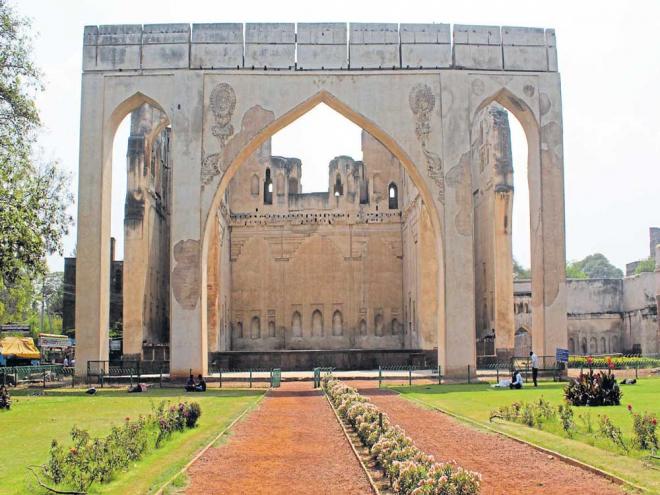
The Adil Shahis wanted to transform their capital city to match the Mughal cities in the North by building imposing courtly structures, gardens, wells, waterways and granaries. While most of the structures have fallen to ruin, some have been converted to government offices and only a handful are open to tourists. The Gagan Mahal was built by Ali Adil Shah I as a palace and an audience hall. Only its structural skeleton remains today. A short walk from the Gagan Mahal is the Sath Manzil (Seven Pavillions) or Haft Manzil built by Ibrahim II as a pleasure pavilion. Only a few storeys survive now and there is no way to go inside. Just opposite this is Jal Mahal or Water Pavilion that has been decorated exquisitely and is crowned by a dome. It is set in the middle of a square pool which is now dry and filled with garbage. Again, there is no way to go inside.

Reservoirs & stepwells

Water was and is a precious resource for Vijayapura and the Adil Shahis built a complex hydraulic system to bring water from distant sources into the city and supplemented this with reservoirs and stepwells. Only a few stepwells and reservoirs survive today and the system of aqueducts and horizontal wells are lost. The Taj Baoli is the biggest stepwell in Vijayapura and was built by Malik Sandal, a Persian architect, in honour of Taj Sultana, the wife of Ibrahim Adil Shah II. Sadly the well, its gateway and the gallery around it are in a very bad state. It won’t survive for long if no action is taken immediately.

Another well-known stepwell present here is the Chand Baoli. The stepwell was built by Ali Adil Shah I in honour of his wife Chand Bibi and it served as the model for Taj Baoli. Chand Bibi is best known for courageously defending Ahmednagar and Bijapur against the attacks of the Mughal Emperor Akbar. She was the regent of both Ahmednagar and Bijapur and was known to be a good warrior, musician, linguist and artist. The structure is now completely cordoned off from the public. One can only see it through the grill gate.

Present-day Vijayapura would have benefited if the administration had preserved the hydraulic system of the Adil Shahis and used the many stepwells and reservoirs instead of letting them turn into garbage dumps. Waking up to this, the Minister for Water Resources, M B Patil announced in April that starting with Taj Baoli, around 20 wells in Vijayapura will be rejuvenated at the cost of Rs 4.25 crore. As a part of the rejuvenation process, the dirty water present in the wells is being pumped out, the garbage is being removed, and the well is being desilted. Additionally, there are plans to repair the structures around them. When fresh water accumulates, it will be pumped and stored in tanks, from which people can collect water for domestic purposes apart from drinking. This will ease the water scarcity the city is facing to a certain extent.

Unless people surrounding these monuments understand their historical importance and realise that a clean baoli can help face water scarcity, all efforts to revive the heritage structures will be futile.

source: http://www.deccanherald.com / Deccan Herald / Home> Supplements> Spectrum / by Rijutha Jagannathan / July 04th, 2017

An 800-Year-Old Piece of Indian Heritage in Jerusalem

JERUSALEM :

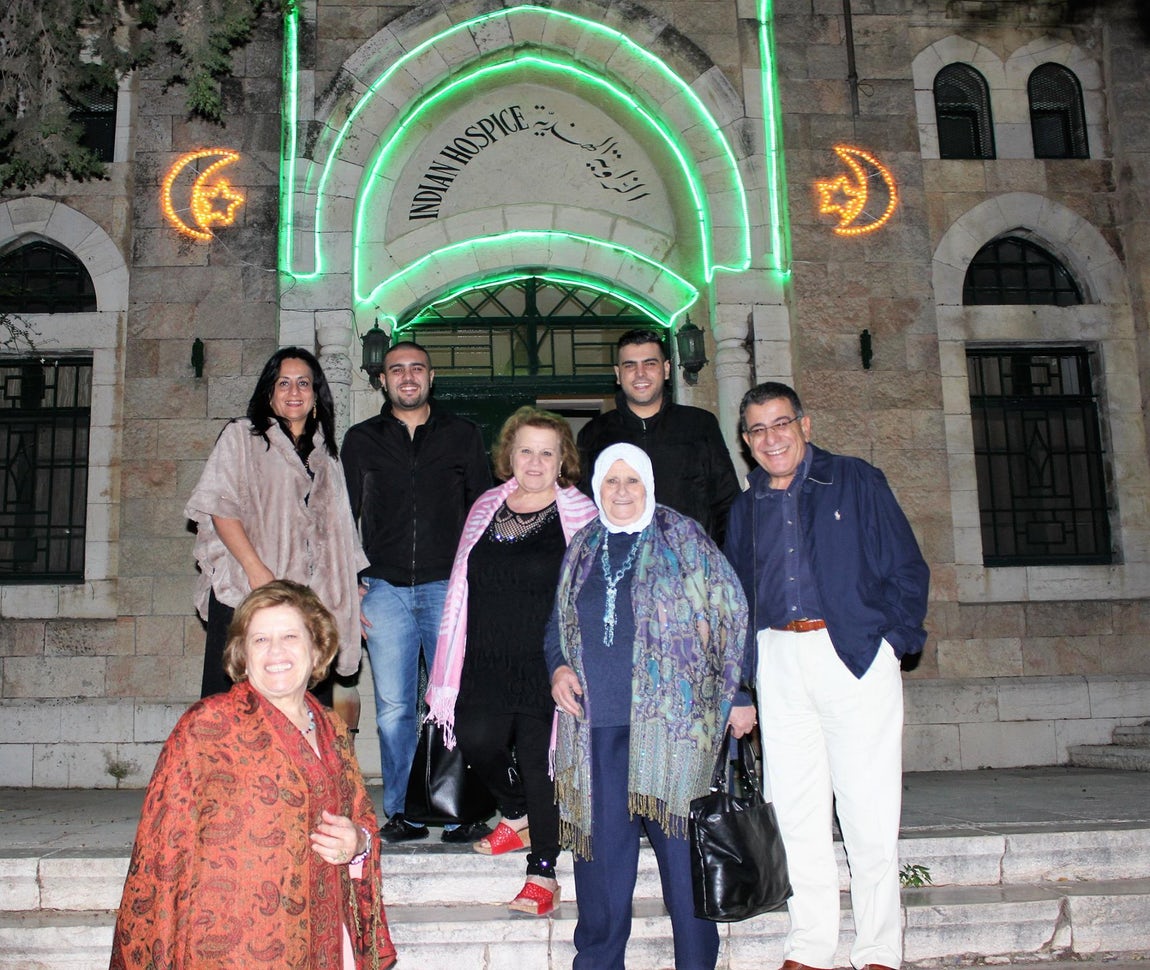
The Ansari family in front of their house in Jerusalem. (Photo Courtesy: Facebook/The Indian Hospice)


Did you know that there is a corner of Jerusalem that has a distinct Indian stamp to it and its various residents wear their Indian origin like a medal?

Next to the Al-Aqsa mosque in the city there is the Indian Hospice in Jerusalem. The hospice is managed by the Ansari family and has a centuries-old connect to India.

The Indian Hospice in Jerusalem. (Photo Courtesy: Facebook/The Indian Hospice)

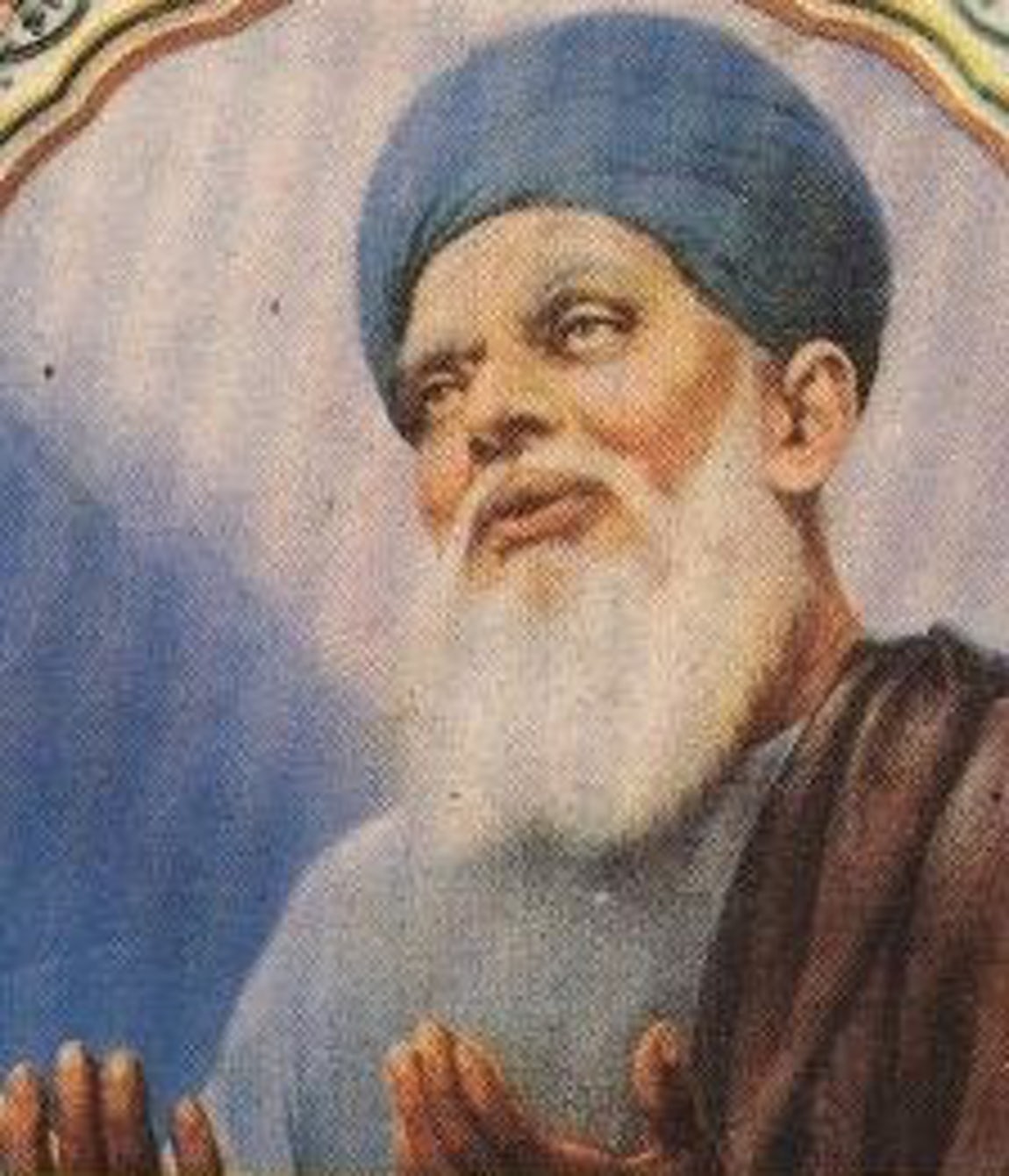
Indian pilgrims to the “holy city” of Jerusalem, can stay at the ‘Indian Hospice’ and pay homage to the Indian Sufi saint Baba Faridudding of Shakar Ganj, who visited the place 800 years ago.

Seen here, celebrated Indian chef Samjeev Kapoor at the Al-Aqsa mosque in Jerusalem. (Photo Courtesy: Facebook/The Indian Hospice)

The Indian Connection Through Baba Farid

The year is 1200, a little over a decade after the armies of Saladin had forced the Christian Crusaders out of Jerusalem. And an Indian Sufi saint from Punjab named Baba Fariduddin of Shakar Ganj travels to the war torn city.

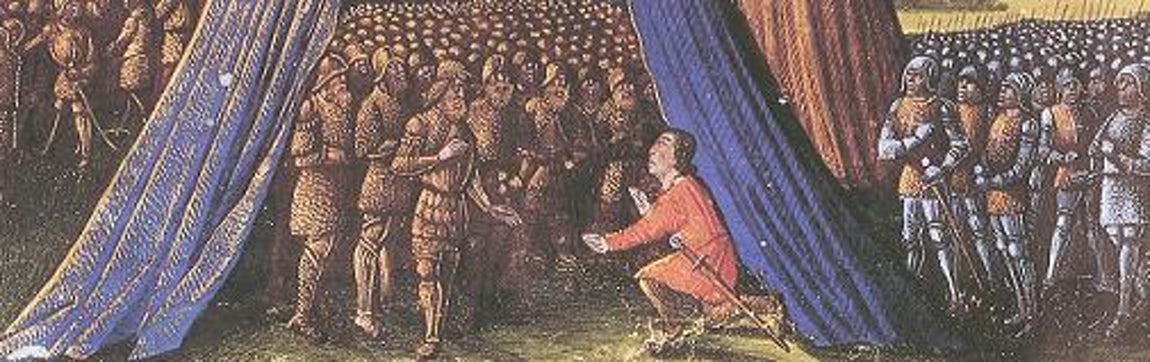
The victory of Saladin against the Crusaders. Balian of Ibelin surrendering the city of Jerusalem to Saladin, from Les Passages faits Outremer par les Français contre les Turcs et autres Sarrasins et Maures outremarins, c. 1490. (Photo Courtesy: Wikipedia)


Sufi saint Baba Farid (Photo Courtesy: Seeker of Sacred Knowledge)

It is said that Baba Farid swept the stone floors around al-Aqsa mosque as a mark of devotion. He is also known to have taken up fasting in the silence of a cave nearby.

Long after he went back to India, Muslims from the sub-continent who passed Jerusalem on their way to Mecca stopped at this spot in memory of Baba Farid. It became a sort of temporary residence for the pilgrims.

Ansaris Deputed To Care For Baba Farid’s Legacy

In early 1920s, Jerusalem’s Supreme Muslim Council requested the leaders of the Khilafat Movement of British-ruled India to nominate someone to care for the hospice. The Khilafat leaders honoured the request of the Supreme Council then headed by Arab nationalist Mohammed Amin Al-Husseini. That is how in 1924 Sheikh Nazir Hasan Ansari – who was also part of the Khilafat Movement – was chosen to go to Jerusalem to take charge of the hospice.

Sheikh Nazir Hasan Ansari (Photo Courtesy: Facebook/The Indian Hospice)


Sheikh Munir Ansari who now heads the place, seen here as a boy. (Photo Courtesy: Facebook/The Indian Hospice)

His son Sheikh Munir Ansari now heads the place. The two have during their respective years as administrator of the hospice, persuaded the rulers of several Indian Muslim states, including Hyderabad, to make contributions for the upkeep of the hospice. Munir’s son Nazeer proudly explains the glorious history of the place.

Not only pilgrims, but Indians from all walks of life who visit Israel like to meet the Ansaris. They are amazed by the way the Ansaris care for that piece of India in the land of Arab-Jewish confluence. Past visitors include famous journalists, presidents, Indian politicians, celebrities and commoners.

The Ansaris have been gracious hosts to many Indian journalists. Seen in this picture, among other journalists is Suhasini Haider of The Hindu. (Photo Courtesy: Facebook/The Indian Hospice)


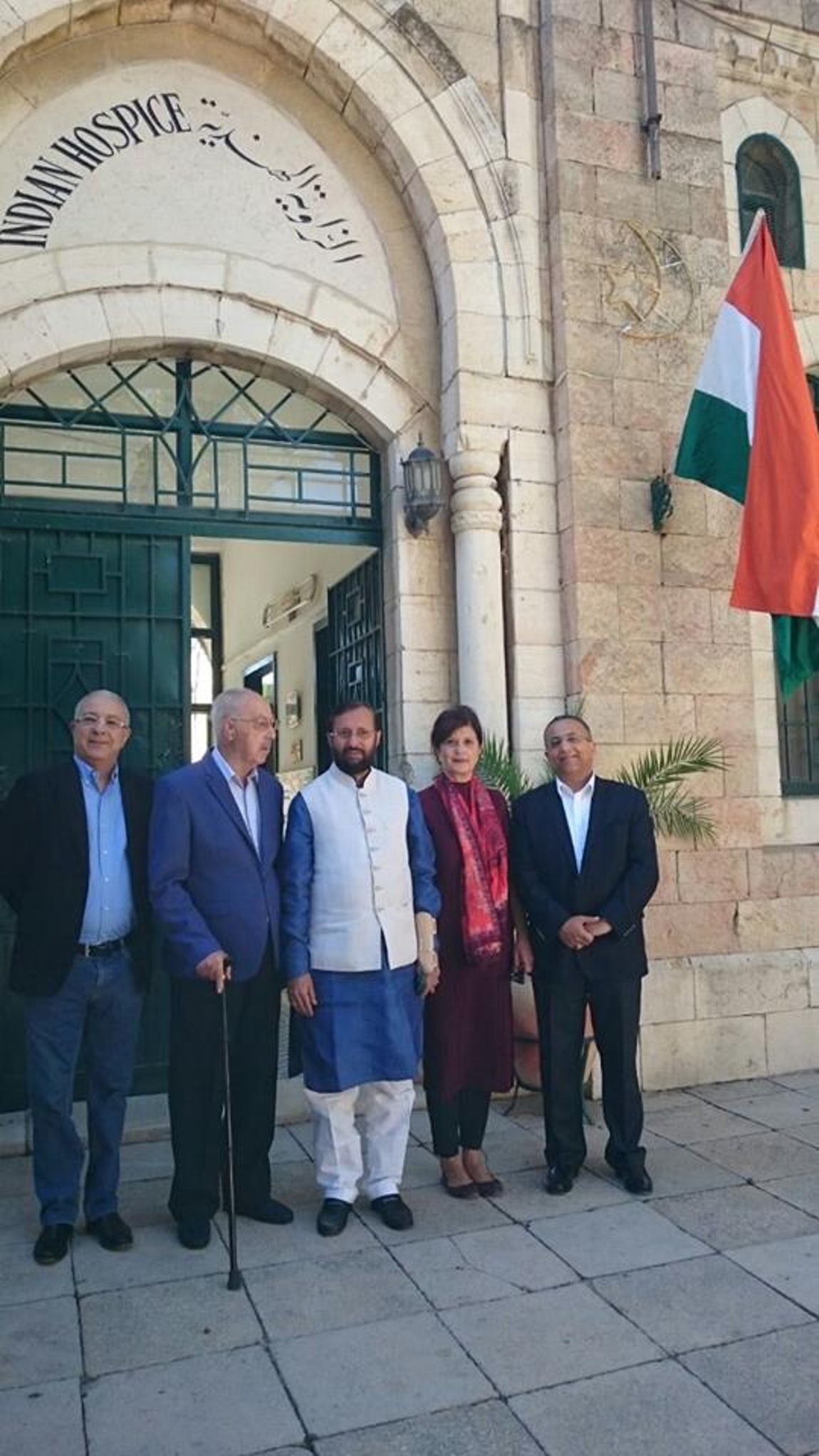
Union HRD Minister Prakash Javadekar at The Indian Hospice. (Photo Courtesy: Facebook/The Indian Hospice)


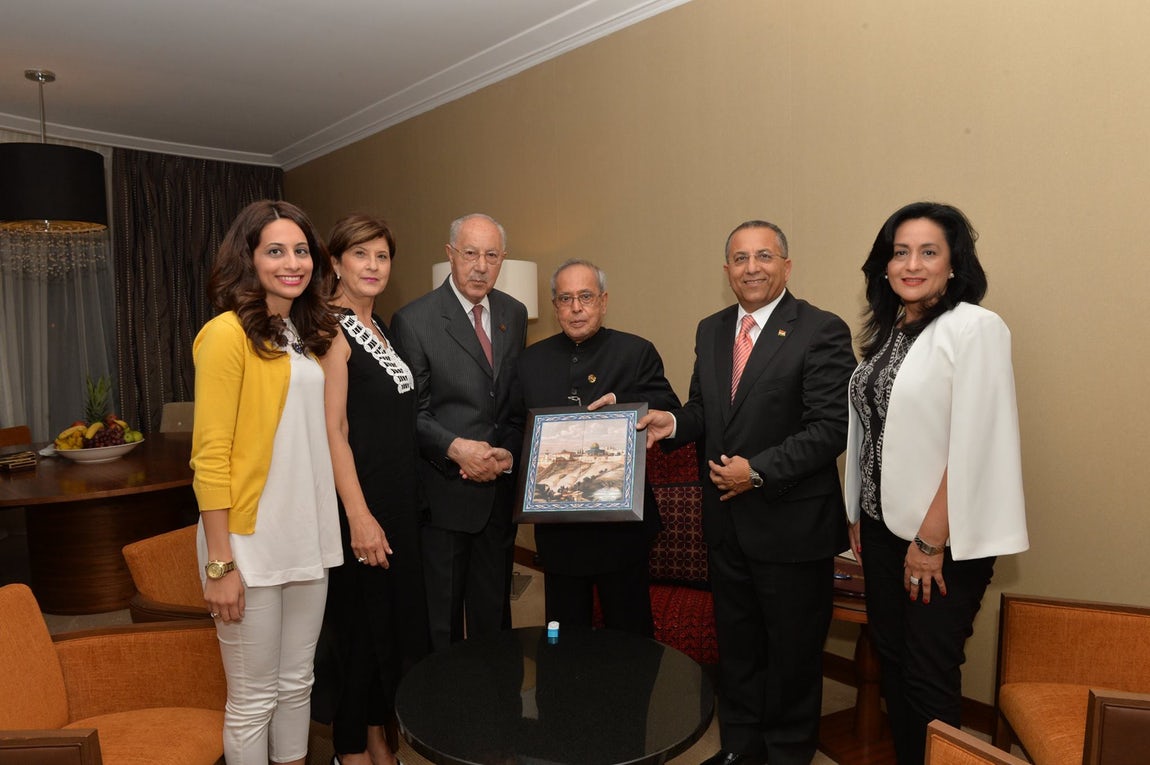
President Pranab Mukherjee too visited The Indian Hospice in Jerusalem. (Photo Courtesy: Facebook/The Indian Hospice)

The Ansaris value the responsibility that comes with the inheritance of the heritage. Their FB page says:

Maintaining and protecting an Indian institution in Jerusalem’s old city is no easy task. But Sheikh Munir has accomplished the impossible with delicate diplomacy and extreme tact.

The Indian Hospice

The Ansaris on a visit to India. (Photo Courtesy: Facebook/The Indian Hospice)

The Ansari family has been a steady presence in Jerusalem ever since and they all still carry Indian passports.

source: http://www.thequint.com / The Quint / Home> News Videos / by Kirti Phadtatre Pandey / July o4th,2017


Gore, Kale and Ghalib

NEW DELHI :

GhalibMPOs01jul2017

THE HAVELI of Kale Sahib is no more but the ahata (compound) still exists, and what a slum it has become since 1847 when Ghalib lived there after his release from prison for debt default! The poet quipped that after being freed by Gore (the British) he had been “imprisoned” by Kale. Kale Sahib was a highly venerated man. Whether he got this name because of his complexion is not known, but it is quite likely that the saint was not as fair as Ghalib. The Moghul emperor was among his devotees and so were Ghalib and his family. As a matter of fact, Ghalib’s sister-in-law, Bunyiadi Begum gifted the ahata to Kale Sahib and the name stuck.

Kale Sahib was a practical minded saint who refused to perform miracles just to please his devotees. He counselled them to pray fervently, pointing out at the same time that in 90 per cent cases prayers went unanswered. But there were instances when he did help people out of their difficulties. He once admonished a man from whom he had driven out an evil spirit that if he went back to his sinful ways he would again become possessed and then even miracles might not help. Apparently Kale Sahib did not have to exorcise him again.

Situated in the Ballimaran area of Delhi, Ahata Kale Sahib forms part of the locality founded by a Persian, Qasim Khan, who first settled down in Lahore about the year 1750 and was befriended by the Governor of Punjab, Moinul Mulk. When Ahmed Shah Abdali invaded Punjab, Moinul Mulk resisted him and was killed. His widow, Mughlai Begum then became the virtual ruler and made Qasim Khan her chief adviser. There were insinuations, but then which young widow is safe from wagging tongues if she befriends a man?

Qasim Khan later came to the court of Shah Alam where he was accepted as a nobleman. The place in which he lived is known to this day as Gali Qasim Jan. Qasim Khan’s son, Faizullah Beg built the ahata. But how Buniyadi Begum came to possess it is not clear.

Congested mohalla

Ahata Kale Sahib now is a congested mohalla. Few of its residents remember Kale Sahib. But the ahata is in the news generally, for whenever BSES resorts to power cuts, Ahata Kale Sahib is as much affected as distant Janakpuri. In fact one finds this link between what was once Asia’s biggest colony and one of the dirtiest amusing. After Ghalib’s joke about Gore and Kale this should surely take the cake for it would have tickled the poet too. But he is long dead and gone.. But one has the feeling that he couldn’t be resting peacefully in Nizamuddin for he was essentially a man of the walled city of Delhi whose charms began and ended within its confines.

The charms are still reflected in a slight difference in speech, the flavour of the kababs and the taste of the water from Hare Bhare Sahib. The breeze that springs from the Jamuna goes past the Red Fort, negotiates the many arches of the Jama Masjid and merges with the smell of the motia and chameli sold at the crossroads before cooling the courtyards of the houses in the narrow gullies.

Ghalib liked to move about in this area of which the Kashmere and Delhi gates were the two extremities, with the fort being the hub and centre and the mosque the cultural bastion of the city. Yes, of course, Ghalib always had a soft corner for Agra, because he was born there and passed his boyhood in Kala Mahal from which the Taj looks just like a building in the next locality.

But his heart had been won over by Shahjehanabad. From Ballimaran to Jama Masjid the walk was long enough via Chandni Chowk. Sometimes one could meet Mir Ashiq who came from the opposite direction and went back to his kucha via Ballimaran. Was the tilt of his cap different from that of the residents of Nizamuddin? People noticed such traits and developed their pet notions.

For a man of such intense likes and dislikes as Ghalib, his grave in Nizamuddin is out of the milieu in which he flourished. It is a small enclosure though beautiful in its own way where sparrows make love in the afternoon. The illiterate take it for another shrine where obeisance must be paid, and budding poets hope to imbibe some of the virtues of the great “shair”.

An old man who sometimes steals up to the mausoleum feels that even a blank page touching the “mazar” would instantly be graced with a ghazal. He has never seen it happen, nor would we surely, but such feelings are the stuff legends are made of.

R.V.SMITH

source: http://www.thehindu.com / The Hindu / Home> MetroPlus Delhi / by R V Smith / Monday – November 29th, 2004

From Fergana to Delhi

NEW DELHI :

BaburMPOs18jun2017

A Babur-focussed Uzbeki cultural project is using a common heritage to create a dialogue.

In July 1501, the great-great-greatgrandson of Timur (Tamerlane), Zahiruddin Muhammad Babur — the founder of Mughal empire — left his home in Fergana Valley in present day Uzbekistan. Five hundred years on, the Uzebki government is tracing his journey to India and his Indian connections as part of Cultural Legacy of Uzbekistan in Art Collections of the World project which began last year.

An effort to piece together the country’s history, researchers are connecting with international museums documenting the antiquity and artifacts connected to them. Till date, the Uzebki government has released 10 volumes and several short films on the cultural legacy of Uzbekistan with the help of information from leading museums in Russia, North America and Australia. “What they are doing is a first. They are not raising a dispute or demanding return of any antiquity. Instead, they are taking a holistic approach — using the common heritage to create a dialogue instead of stoking controversy,” says independent commentator Shashtri Ramachandaran, who participated in a two-day congress on the study organised by the Uzbek government.

An average Indian will be more familiar with United Kingdom, having followed their parliamentary and administrative methods or would be familiar with the cultural milieu of the United States, having developed an appetite for American TV shows. But barring academics, few are aware of the shared heritage between India and Uzbekistan that spans across centuries. A team of researchers from Uzebkistan visited the National Museum this April to piece together this lost history. “Their aim is to document material related to the Mughal era primarily. Once they present a formal proposal which is vetted by the Ministry of External Affairs and Ministry of Culture, they can start documenting work,” said Dr BR Mani, Director General, National Museum, who met with the Uzbekistan’s Ambassador last week to discuss the project.

The Uzbeki interest in the founder of the Mughal dynasty comes at a curious time, given that Babur’s successor Aurangzeb’s name was removed unceremoniously off Delhi’s roads for being an “invader”. Union Minister V K Singh even suggested that his grandfather Akbar should meet with a similar fate. In February this year, the BJP-led government in Rajasthan backed a proposal to rewrite history taught at the university level to attest that Rajput warrior-king Maharana Pratap won the Battle of Haldighati against Akbar’s Mughal army led by general Man Singh, despite historical evidence suggesting otherwise. In the same vein, RSS ideologue Indresh Kumar recently suggested that Babur and his army general Mir Baqi should be tried in court for destroying Ram Mandir in Ayodhya.

History suggests that Babur lived in India for only four years and died at the age of 47 in 1530 after successfully ousting Ibrahim Lodhi (in the Battle of Panipat in 1526). But his legacy lived on. The Babri Masjid demolition in December 1992 triggered the campaign to decry the Mughals as invaders. “Labeling the Mughals as “invaders” is bogus, historically. But Hindu nationalists do not use this label as a historical claim,” says Professor Audrey Truscke, who received severe backlash over her recent book Aurangzeb: the Man and the Myth. She adds that maligning Mughals is only a means to fuel “anti-Muslim sentiment in the present”. “It is a shameful business, especially at a time when vigilante violence against Muslims is on the rise,” she adds.

Babur was not Indian, even less an Uzbeki. He tried at least thrice to win Samarkhand but failed. “Babur took Samarkand one last time with help from the Safavids of Persia in 1513. However, as he had to publicly acknowledge his support for Qizilbash Shiism, his subjects turned against him,” explains Professor Ali Anooshahr from the History Department of the University of California.

During his time in India, Babur influenced architecture, culture, warfare and even introduced Indians to the sweet melons of Fergana. When Babur reached India, he was disappointed that the only fruit available was mango. It is said that he personally monitored planting of watermelons and musk melons. “In Babarnama, Babur writes about the apricots and pomegranates of Marghilan, fruit trees of Isfara, the melons of Bukhara, and the apples of Samarkand. He also recalled with pleasure, the various flowing rivers and brooks in that region,” adds Prof Anooshahr.

At the museum, the Uzbeki experts are particularly interested in manuscripts of the Holy Quran, scribed in Uzbekistan, which were presented to the Mughal emperors, as is evident from the royal seals on the cover page. Also of interest are 15 illustrated folios of the Baburnama. He wrote his autobiography in Chagatai language, the spoken language of the Andija-Timurids. It was during the reign of Akbar that the work was completely translated in Persian. According to Prof Anooshahr, the most comprehensive copy of the original is the Hyderabad manuscript. “Although I do not know where exactly that copy is located right now,” he adds.

The Uzbeki researchers are now looking at sources beyond the National Museum. “It is gratifying to realize that the culture of such a great country is connected with ours. We are planning to publish a couple of albums in India, depending on the results of our work,” said Professor Andrey Zybkin, the Uzbeki project coordinator.

Few sites of the Babur era have stood the test of time. Some of them include, West Delhi’s Babur era mosque, the Babri Masjid and Ram Bagh in Agra. But it is not just the Mughal era that is of interest. India and Uzbekistan go as far back as the Kushan Dynasty. The Kushan Empire, spanning an area of 37 lakh kilometres, extended from Bihar to southern Uzbekistan. It was an era when the Indian sub-continent saw extraordinary exchange of art and ideas. “At present we do not have first-hand information on the Kushan period artifacts found in Uzbekistan. It will be interesting to see how the pottery, social behaviour and culture changed from Fergana valley to Mathura,” Dr Mani added.

Apart from the Mughals and Kushans, there are other points of convergence between the two nations. Gujaratis had close trade ties with Uzbekis, so did Parsis and Armenian Christians. Professor A K Pasha from JNU explains that somewhere this search for their history is part of a “resurgence of old identity”. “For years, the Uzbeki culture was subjugated and overpowered by Russians. The Islamic feeling is growing which is why they want to resurrect their old identity,” explains Pasha.

source: http://www.mumbaimirror.indiatimes.com / Mumbai Mirror / Home> Others> Sunday Read / by Sobhana K Nair, Mumbai Mirror / June 18th, 2017