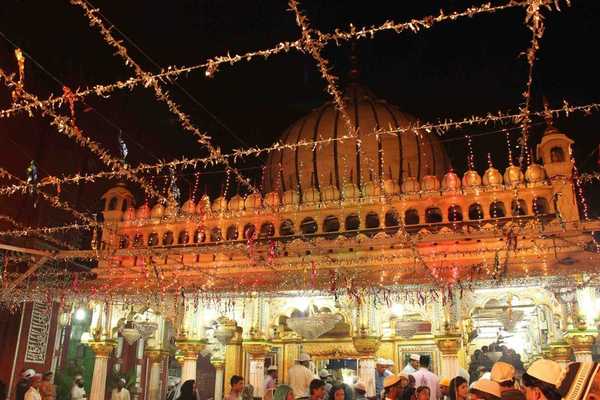
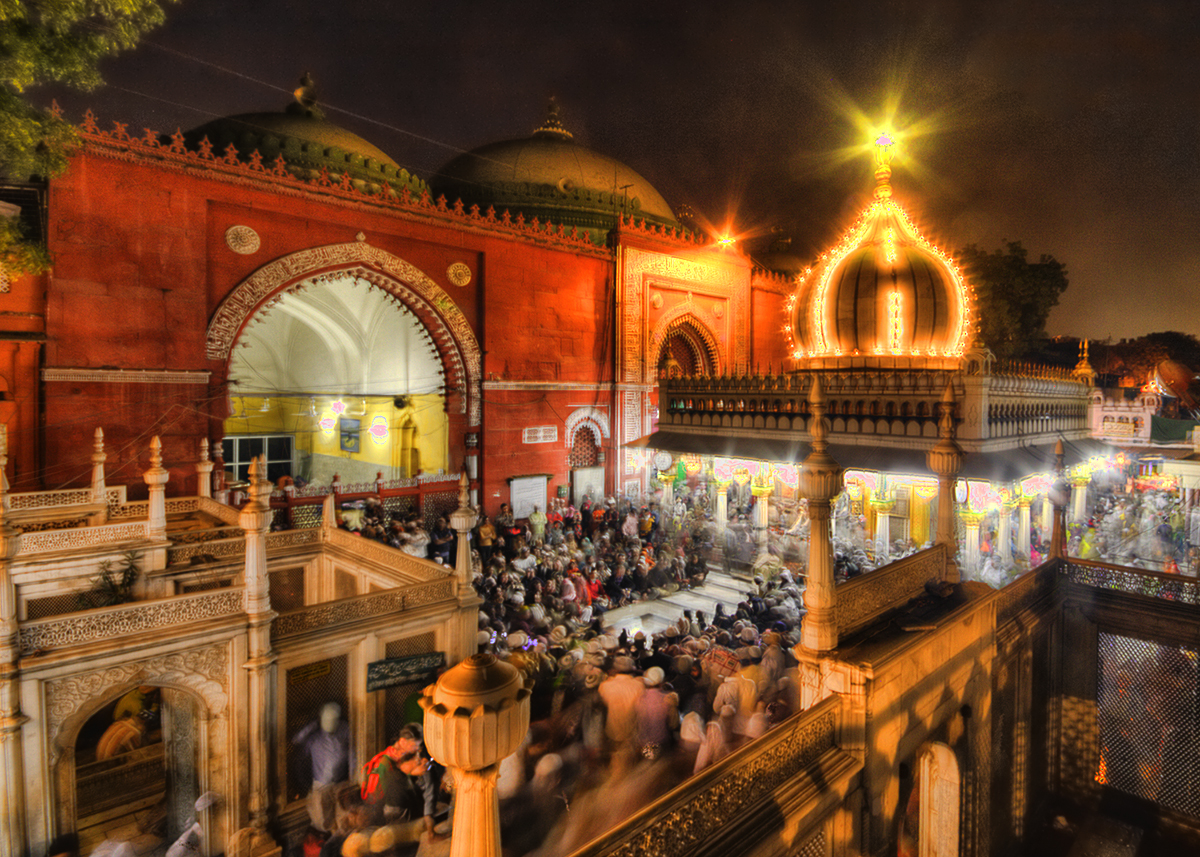
Nizamuddin Dargah in Delhi is the dargah of one of the world’s most famous Sufi saints, Nizamuddin Auliya. Although any day is a good time to visit the dargah, the Thursday night qawwalis, steeped in Sufi devotional music and sung in an an electric atmosphere, should not be missed!
Hazrat Nizamuddin Dargah is renowned all over the country for the unique experience it offers – a chance to hear and enjoy Sufi music up close. The qawwali sessions on Thursday evenings are incredibly popular and people from all walks of life come in huge numbers to be swept up in the magic of the devotional soul-stirring music.
The dargah is located in the Nizamuddin area of Delhi, amidst narrow bylanes and rows and rows of hawkers selling knick-knacks. It was featured in a number of Bollywood films including Rockstar (2011) , Delhi 6 (2009)andBajrangi Bhaijaan (2015).
On Thursday nights, as the scent of rose petals mixes with the searing aroma of chargrilled kebabs, traders sell chaddars to devotees and incense holders send plumes into the air. The rest is music, and music only.
The Niazi Nizami Brothers at the Dargah
Source: YouTube
True to Sufi tradition, love for God is invoked in terms of romance through the music. The lyrics for qawwalis are usually simple, their meaning clear, and the artistes have plenty of room to improvise. The vocalists sit in the front with the harmonium player, the percussionists and the accompanying singers are at the back – there is a convergence of voices, a combined effort that is enchanting to the senses.
The dargah is named after Sheik Hazrat Nizamuddin Auliya (1236-1325). His grave and a hospice are situated here.
The saint was believed to be a Sufi mystic and was revered amongst the rich as well as the poor.
Pic: ibb.in
His teachings, his spirit, his contribution to the world and an unshakeable faith in God are celebrated with regular gatherings of people who pay their respects and hold on steadfastly to a tradition as old as time.
The dargah is visited by thousands of Muslims every week, and sees a fair share of Hindus, Christians and people from other religions too.
Source: Saad Akhtar / Flickr
Best time to go: The sessions take place twice every Thursday, once at 4:30 pm and the other at 6:15 pm. Go slightly early to explore and get a good spot! The dargah is open on all days – 6 am to 10 pm.
How to get there: The nearest metro station is Jawahar Lal Nehru Stadium.
Husainabad picture gallery pond is soon to become venue in the evening for a water screen show with fountains and laser lights depicting the history of the city since Nawab Asaf ud Daula’s arrival at Lucknow in 1775. As part of the beautification work around the Husainabad area, a water screen has been proposed with laser light multimedia projection against the backdrop of the red stoned picture gallery.
Blending technology with history, the multimedia projection will narrate story of the Nawabi era up to the British period and finally the modern Lucknow. Using laser lights projected on an aqua curtain comprising jets of water, the multimedia film would be of around 20 minutes.
“Lucknow will have a water screen show similar to what they have at Akshardham temples in Delhi and Gujarat and while mythological stories are there, the subject of the film here will be historic,” said Tracy, the consulting architect of the project.
With no visible structure in the background, the water screen creates a 3D effect with complete transparency, a fine spray of water jet allowing laser lights to form a graphic image. Apart from the water screen, a musical fountain with 72 effects of light and sound will also be beautifying the picture gallery pond.
Built by the third King of Awadh, Mohammad Ali Shah in 1839, the pond has been renovated with sandstones on the steps and both the zanana (for women) and mardana (for men) hamaam khana (enclosure for bathing and changing clothes) on either side of the pond have been restored to their original form with bricks.
source: http://www.timesofindia.indiatimes.com / The Times of India / News Home> City> Lucknow / Yusra Husain / TNN / May 03rd, 2016
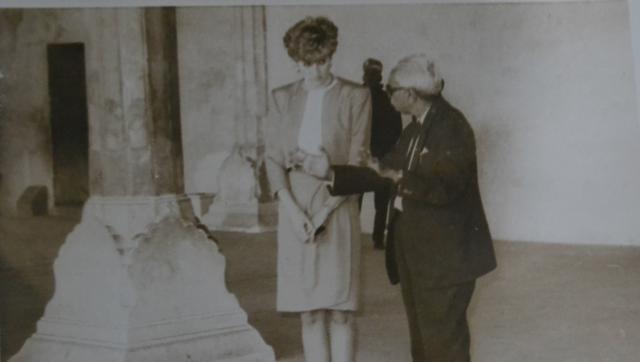
Princess Diana at Deewan-e-Aam at Agra Fort in 1992. (File Photo)
Two guides in Agra have been contacted by British High Commission for the royal couple’s visit on April 16. However, there is still no confirmation as to who will be deputed to guide the Duke and Duchess of Cambridge.
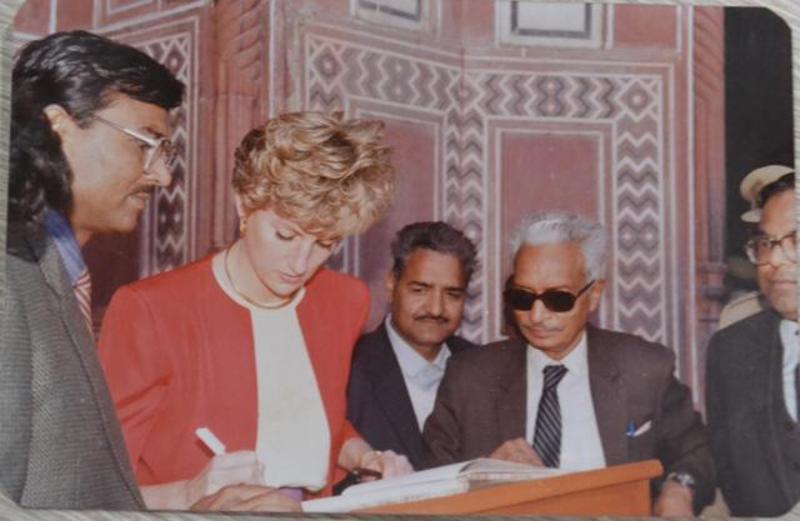
One of them is Varun Rawat, whose father Mukund Mohan Rawat was the official guide to Queen Elizabeth (II) who visited the Taj Mahal in 1961, and Lady Diana in 1992. He was contacted by British embassy about six days ago.
Princess Diana signs the visitor book at Taj Mahal in 1992. (File Photo)
The other guide contacted by British High Commission is Shamsuddin, who is the former president of Approved Guides’ Association.
“My father was the official guide to Queen Elizabeth (II) in 1961 and her daughter-in-law Lady Diana who visited the Taj Mahal in 1992,” Varun said.
“My father used to talk about Lady Diana being a down to earth person with immense interest in the history and architecture of Taj Mahal,” he recollected. “He would tell me how Lady Diana interacted politely with the Taj Mahal ‘khadim’,” Varun said.
Varun had guided former US President Bill Clinton when he visited the Taj Mahal in 2000 and again in 2003.
source: http://www.hindustantimes.com / Hindustan Times / Home / Hemendra Chaturvedi, Hindustan Times,Agra / April 15th, 2016
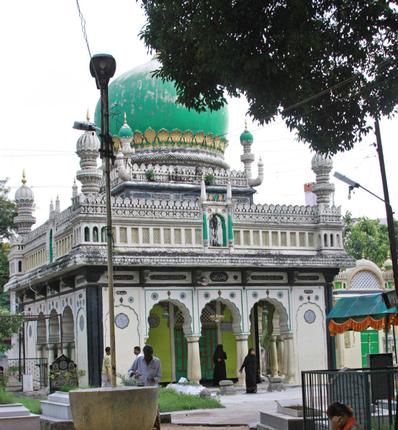
Heritage The luxuriously embellished, richly coloured dargah is a feast for the senses. Serish nanisetti
Hyderabad, TELANGANA :
The real discovery of Hyderabad heritage begins only when you discard your vehicle and trade it for a cycle or a pair of sneakers. Walking on the road between the Charminar and Purana Pul you might discover the Syed Hazrath Musa Qadri’s Dargah. It is a blink and miss structure on the left side between Koka ki Tatti and Purana Pul on the Hussainialam Road.
A huge green door leads you inside and on the left is the kanqah. In a portion of the kankah lives the family of the 28th descendent of Musa Qadri, who was a descendent of Abdul Lateef Laubali, whose dargah draws a number of pilgrims to Kurnool. Laubali was among the seven migrating Shia saints who came from Baghdad.
Spiritual abode – The Syed Hazrath Musa Qadri Dargah near Purana Pul / Photos: Serish Nanisetti
Set amidst age-old tamarind trees, is the double-storey green domed dargah of Musa Qadri. According to the inscription, the construction of the dargah was completed in 15 years. “After Syed Hazrath Musa Qadri passed away in 1800 at the age of 63, his son Ghulam Ali Qadri had a dream and saw the shape of the dargah and he set about building it which he finished within 15 years. It was not very difficult as Musa Qadri had 45,000 followers including people like Ghansi Mian after whom the bazaar is named,” says Syed Shah Fazlullah Qadri, the 28th descendent.
Unlike the bulbous domes of Qutb Shahi nobles, this is a flatter much more graceful structure on a rectangular base but with luxurious decoration on the outside as well as inside. Geometrical patterns, vegetal and floral patterns and skilled Persian calligraphy dominate every nook and cranny of the structure. No space is left uncovered. The deep patterns in stucco, which have been created even in the undulating parts of the minarets, mark them out from the earlier tradition of simple geometric shapes.
The upper storey is reached by climbing an arcane claustrophobic staircase where 10 square stones are jammed in a small space. “Nobody comes here. Very few people can climb this,” says Fazlullah’s son as he shows the chronogrammatic calligraphy about Musa Qadri and the intricately wrought spandrels and minarets.
The calligraphy in stone narrates the names of God or tells us a bit about the structure and its creators.
Unlike others, Ghulam Ali Qadri had a sense of history and he wrote the Mashkwatun Nubuwat, a seven-volume history chronicling the miracles of Musa Qadri as well as tracing the lineage back to Huma (Syria) and Baghdad (Iraq). According to the book, it was Syed Shah Piranshah Mohiuddin Thani Qadri who came to pray at the Quli Qutb Shah mosque which was in an open ground and he settled down there.
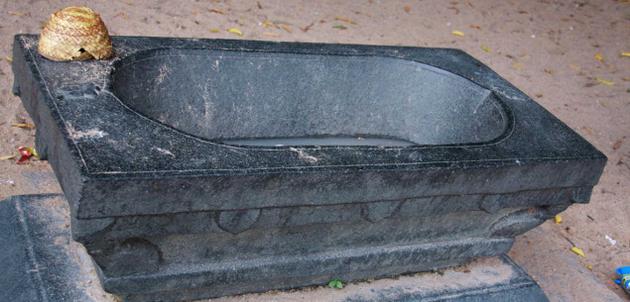
The bowl of wish-fulfilment. / Photos: Serish Nanisetti
Outside the Dargah is a black boat shaped structure carved out of hard granite called qashti hazatmand(ship of wish-fulfilment). “People come here to pray and when their desires are fulfilled the fill this with sherbet and all the people come and finish it off,” says Fazalullah Qadri.
source: http://www.thehindu.com / The Hindu / Home> Friday Review / by Serish Nanisetti / November 19th, 2010
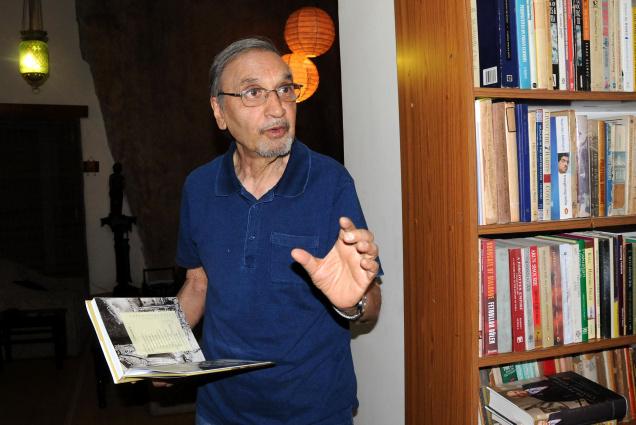
Narendra Luther talks about weaving in amusing legends and fact-filled anecdotes in his new book ‘Legendotes of Hyderabad’
Hyderabad, TELANGANA :
‘Don’t google the meaning of ‘legendotes’ for there is no such word,’ historian Narendra Luther says in the introduction to his new book ‘Legendotes of Hyderabad’ (Niyogi Books; Rs. 995). A combination of legend and anecdotes, ‘legendotes’ is also an encapsulation of nuggets of history, backed by research, presented in the style of a coffee table book illustrated with photographs of people and buildings that provide a window to the past. “To my surprise, the publishers were eager to have more photographs,” he says with a smile, speaking to us ahead of the launch of his book on Thursday in the presence of historian Aloka Parasher Sen.
“During the course of my research on Hyderabad over the years, I came across both legends and anecdotes. Legends are generally considered gossips of history, but some of those are also stuff that makes up history. Former historians, I believe, walked on the highway of history whereas I feel many pieces of history lie scattered in the lanes and by lanes of the city. I collected a few of these and applied tests of historicity and veracity before documenting them,” explains Luther. Narendra Luther focuses both on stories that are now popular knowledge and lesser-known facts that give readers fresh insights into the history of Hyderabad and Secunderabad. “These are not mere ‘he said, she said’ facts put together,” he emphasises.
Luther also prefers to gather information from people than just documents from the archives: “I believe in interviewing people to know about history than merely going through archives; they have given me a wealth of information,” he says, referring to how he got the late Zahid Ali Kamil to share the story of Kazim Razvi, who led the Razakars movement. The author draws our attention to rocks of Hyderabad that are 2500 million years old and as he points out, ‘older than the Himalayas’ and traces the origin of Hyderabad, including the much-debated tale of romance that gave birth to Bhagnagar. “The historicity of Bhagmati has been established beyond doubt,” says Luther, and states his earlier research while penning a biography of Mohd. Quli Qutb Shah that led him to a document mentioning an old seal of ‘qazi of Bhagnagar’. “And in the court of Jehangir, there was a reference to the city of Bhagnagar in the South, established by Quli Qutb Shah in memory of his beloved,” he adds.
The book contains quirky stories of a dog made to sit on a throne by Sultan Tana Shah in recognition of it raising an alarm spotting an intruder, Aurangzeb’s visit to Bhagnagar and Stalin’s orders on the red revolt. There’s also a perceivable effort to make history relevant to the times we live in, in the chapters that detail how the King Kothi got its name, the story of Lal Bazaar in the then Lashkar that later came to be called Secunderabad. “I’ve given historical citations even for amusing stories,” smiles Luther, citing the story of seven kulchas and how the kulcha was represented on the Nizam’s flag. “This was contradicted by the man himself, the first Nizam, who said the ‘circle’ was a moon that denoted his name Kamaruddin (‘Kamar’ in Persian means moon). But later when the sixth Nizam was approving the design of the flag in 1899, issued a written mentioning the big white circle as a kulcha.” Like his previous works, this book too is an ode to Hyderabad.
Hyderabad connection to ‘Jai Hind!’
Did you know that it was a Hyderabadi who coined the slogan Jai Hind? Zain-ul Abideen Hasan was pursuing engineering in Germany at the time when Netaji Subhash Chandra Bose visited Germany and urged Indian students to join his movement to liberate India. Abid Hasan gave up his studies and became Netaji’s secretary and interpreter. ‘Legendotes of Hyderabad’ discloses why Abid came to be called ‘Safrani’ in later years and how he coined the term ‘Jai Hind’ as the greeting for his army and for independent India.
source: http://www.thehindu.com / The Hindu / Home> Features> MetroPlus / by Sangeetha Devi Dundoo / Hyderabad – January 30th, 2014
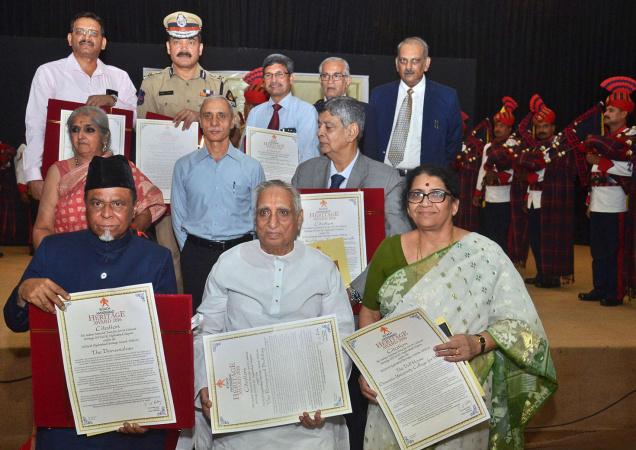
The Indian National Trust for Art and Cultural Heritage (INTACH) on Monday awarded six historic buildings and their managements for efforts to conserve them.
“For its associational value as the birthplace of Hyderabad’s very own magic potion and as memorial to the legacy of Hakeem Farooqui, the Karkhana Zinda Tilismath is acknowledged,” reads the citation of the award given to the historic structure in Amberpet. Five other structures – the St. Francis Xavier church in Yapral, Ramgopal building on M.G. Road, Heritage Artillery Collection and Ranbir Hall at Artillery Centre in Golconda, Equestrian Centre Hyderabad Mounted Police in Saifabad, and the headquarters of AIMIM in Darussalam – were given awards.
A special citation was made for Doll House, a replica of the Residency Building that is now the Koti’s Women College.
The award to Equestrian Centre was in consonance with this year’s World Heritage Day celebrations themed by UNESCO to recognise sports heritage. In this context, the INTACH’s representatives recounted the contributions of noted sports personalities S.A. Rahim, the coach of India’s football team who led the country in Melbourne Olympics in 1956, and tennis player Ghouse Mohammed Khan.
Arjuna awardee Mir Khasim Ali was the event’s chief guest.
INTACH recognised the structures for their restoration and re-use while keeping intact their historic value. Reciting couplets of legendry poet Amir Khusro and Mirza Ghalib to describe importance of history and heritage structures, Air Commodore Suresh Badyal, the guest of honor at the event, said the armed forces have contributed to conservation of heritage structures and that organisations like INTACH should continue to conserve more structures.
INTACH convenor Sajjad Shahid recounted threats perceived to heritage, including the development of Metro Rail opposite the State Assembly and through Sultan Bazaar, while decrying G.O. 183 that allegedly robbed 160 heritage structures, rock formations and other historic precincts of legal protection that was accorded to them. Mr. Shahid informed the gathering that the High Court has stayed the order.
source: http://www.thehindu.com / The Hindu / Home> News> Cities> Hyderabad / by Staff Reporter / Hyderabad – April 19th, 2016
Can you imagine a non-Muslim building a mosque in 21st century India? May sound impossible today. But, two far-sighted Jains built one of the earliest mosques in Gujarat, a state that has seen some of the worst post-independence communal riots.
And, all this for the sake of business. Between 1178 and 1242, Vastupal and Sheth Jagdusha built mosques in Cambay and Bhadreshwar in Kutch to attract Arab and Turkish traders, who would bring in foreign exchange. While Vastupal was the commissioner of Cambay port, Jagdusha was a merchant of Bhadreshwar port in Kutch. Jains have been an important business community from the earliest time till today.
‘History of International Trade And Customs Duties In Gujarat’, a book by historian Makrand Mehta, says Vastupal encouraged Muslims to settle down in Cambay and Anhilwad Patan, the capital of the Solanki-Vaghela rulers of Gujarat.
The accounts of Arab travellers like Masudi Istakhari Ibn Hauqal and others, who visited Gujarat between the 9th and 12th centuries, amply testify to the settlements of Muslims in Cambay and other cities of Gujarat.
“But the Muslims settlements could hardly have developed without the support of the Solanki rulers. In fact, they attracted the Arabs and Persians to Cambay and Vastupal did it by constructing mosques for them,” says Mehta.
Jagdusha was not officially designated as a customs collector but he had cultivated excellent relations with ship captains and customs staff. Although a devout Jain, as a staunch businessman he understood the value of foreign exchange. “For this reason he also constructed a mosque in Bhadreshwar, his hometown,” according to the book.
source: http://www.timesofindia.indiatimes.com / The Times of India / News Home> City> Ahmedabad / by Ashish Vashi & Harit Mehta / TNN / February 10th, 2010
The ancient site of the Madan Kamdev temple was once preserved by a Muslim. The fact that this has been forgotten is a sign of a larger erasure that we should be concerned about.
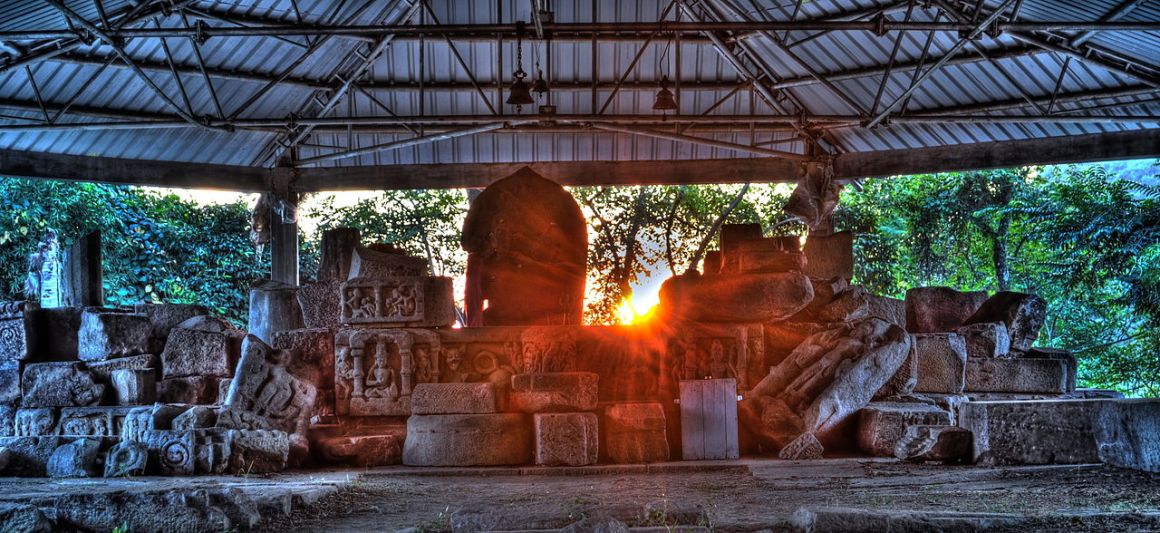
Madan Kamdev in Assam. Credit: Wikimedia Commons/Arup Malakar.
Over a century ago, the incisive colonial historian Edward Gait, who compiled the first compendium of history in modern Assam lamented the fact that “…there is probably no part of India regarding whose past less is generally known. In the histories of India, as a whole, Assam is barely mentioned, and only ten lines are devoted to its annals in the historical portion of Hunter’s Indian Empire.”
Despite the passage of a hundred years, Gait’s observations on the narrativisation of Assam in popular Indian historiography remain true as ever. Timothy Garton Ash writes that recorded history is a history of memories. And when memories are being deliberated upon, can forgetting be far away? The act of peeking into the silences of historical narratives that have developed over centuries in Assam, or anywhere else in the world, becomes a crucial intervention.
Some such silences are palpably becoming more visible in the culturescape of poll-oriented Assam. The state has often been termed as ‘Sankardev-Azaan Ore Dexh’ – the land of Sankardev and Azaan Fakir, two religious and cultural saints of medieval Assam responsible for altering its socio-religious landscape. Srimanta Sankardev inspired the Bhakti movement, while Azaan Fakir established Sufi Islam here. Renowned Assamese geographer and social scientist Mohammed Taher observed that the syncretic relationship between Sankardev’s Vaishnavite religious traditions and Azan Fakir’s Sufi Islam was one of the main reasons that Muslims became a part of Assamese society.
These syncretic traditions have been an intrinsic part of Assamese society, including its political and cultural milieus. They are also reflected in the case of Ismail Siddiqui, one of the main commanders of the great Ahom general Lachit Barphukan. Siddiqui defeated the Mughal Army led by Raja Ram Singh in the historic Battle of Saraighat in the 17thCentury. For his bravado, Siddiqui was given the honorific Bagh Hazarika, or the Tiger commanding a thousand soldiers.
Religious sites have also been a significant marker of this syncretism. There have been many instances where Hindu religious sites have been taken care of by Muslims for years and Muslim sites have had been under the care of Hindus. In fact, Azan Fakir who ventured into Assam around 1636 AD, was known to have married a high-status Ahom woman. His dargah was constructed by the Ahom King Swargadeo Churamfa as an act of penance, at Saraguri Chapori in Sivasagar District close to the Ahom capital.
Madan Kamdev
There are many such stories across the Brahmaputra valley in Assam, and one of them is found in the history of the ancient temple site Madan Kamdev, the mythical place where Kamdev supposedly resurrected himself after being burnt to ashes by Shiva. These magnificent ruins lie 40 kilometres outside Guwahati.
Though the site has been dated to the 11-12th century CE, new scholarship suggests that the place may have been even older. Construction may have started with the ruler Vanamalavarmadeva of the Salasthambha dynasty in the 9th century, and continued by the succeeding Pala dynasty up to the 12th century.
The site is the capital of ancient Assam, which was known as Kamrupanagara. Even today, one of the major districts in Assam which encompasses this area is known as Kamrup, and those staying in this district in Lower Assam are generally referred to as Kamrupiyas.
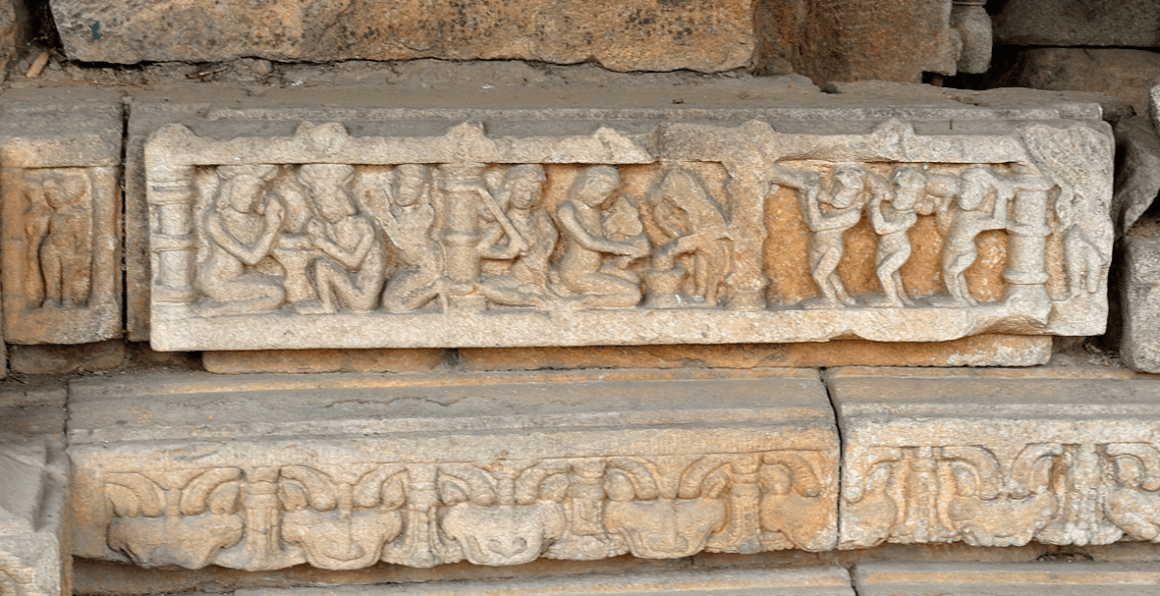
Though the temple is dedicated to Uma-Maheshwar, the site of Madan Kamdev has often been referred to as the Khajuraho of the east due to the numerous erotic sculptures dotting the expansive landscape. Madan Kamdev finds mention in the important 10th century Hindu text, Kalika Purana and in the 16th century Tantric text from Assam, Yogini Tantra. However, this stone temple stretching to around half a km was subsequently destroyed by various earthquakes over the centuries, starting with the earthquake of 1548 CE.
Sculpture at Madan Kamdev temple. Credit: Travelling Slacker/Flickr CC 2.0
The ruins of Madan Kamdev were first excavated in 1855 by the colonial military officer, Captain Dalton. But not much information is available on the kind of preservation or conservation efforts that were undertaken post this discovery. However, records do show that a Muslim land official of the colonial administration, Niyamat Ali Mondol, took the responsibility of preserving this ancient temple. Niyamat Ali belonged to the nearby Piyolikhata Village, around 2 kms from the temple site. He was given the title ‘Mondol’ by the British administration, which meant that he measured land in order to calculate revenue for the colonial administration, and also arbitrated land disputes.
Very little is known or written about Niyamat Ali Mondol, but what is significant is that he became the first doloi or chief administrative officer of Madan Kamdev for 10 years, starting in 1901. The upkeep of Madan Kamdev, as with a lot of similar temple sites was administered by a committee made of locals till either the Government of India or the Assam government or the Archaeological Survey of India (ASI) took over the responsibilities of conservation and restoration. It was only as recently as 1977 that the directorate of archaeology in Assam officially took over the responsibility of the upkeep of this ancient site.
Mondol’s role
When the temple faced a severe scarcity of funds, Mondol paid its khazna or land tax in his individual capacity for about four years. With such a history, one would expect the temple to hold information or the villages around the temple to offer some narratives, oral or otherwise. However, as Garton-Ash writes, ‘…writing history is nothing less than an infinity of individual memories of any person or event’. One can definitely discern a new form of historiography in the making – one that is complicit in the erasure of certain persons or events or even the linear chronological history of a tangible space. The ASI museum at the site of the temple does not offer any narrative on who discovered the site, how was it maintained, and who was associated with the site in modern history.
Mondol’s descendants who still live close to Madan Kamdev feel that there is an effort to do away with this part of the history of the temple, and in the history of Assam in general. ‘In the early 1990s, the temple officials including the thendoloi came to our house and took away the only surviving portrait that we had of Mondol, as they wanted to honour his efforts and install the portrait at the temple office,’ says his grandson, 86-year-old Bhola Chowdhury. ‘But the portrait went missing after a few years. We have tried locating it as that was our only tangible memory of him, but unfortunately we have no trace of it,’ he rues.
Kamal Nayan Patowary, an assistant professor of history whose doctoral thesis was on Madan Kamdev, offers an interesting anecdote on Mondol: ‘The locals did tell me about a person called Mondol who was the first doloi of this temple. But apparently, there was some issue with the locals and he was removed from the post of doloi soon (after). Hence, in anger, he took a tamrapatra or copper inscription from the temple, and threw it into a pond. According to the locals, the history of the temple has thus been lost. I did try to excavate the inscription during my doctoral research, and even employed divers to search in the pond, but it was a futile exercise.’
This narrative is however confounded by the fact that Mondol’s son, Chand Mohammed Chowdhury Kamrupi himself was part of the temple committee for about five years after the death of his father. Chowdhury was also part of the temple committees of other ancient temples in the region such as Goreswar, Pingleswar, and the 200-year-old Patrapur mosque. He was a prominent citizen of the region, who was bestowed the title Kamrupi by the locals because of his avowedly secular nature and love of the land. Kamrupi was also a well-known political figure, as well as a published writer and poet. He authored the book Vivaah Chitra in 1936, and also had his essay Purdah published in the journal Chetana which was edited by Ambika Giri Rai Chowdhury, popularly known as Assam Kesari.
Forgetting
In the temple precinct, there is also a palpable reluctance by the current trustees to talk about the modern history of Madan Kamdev. There is no awareness of the histories or narratives associated with sites such as these among devotees, or even in the villages nearby. Historian Will Pooley exhorts us to engage with the absent narratives and corroborate the voices that are heard.
In 2016, the state is facing elections which many term as a game-changer in the political landscape of Assam. Perhaps this is also a historical moment to critically examine the larger absences that are being created. It is a narrative or an absent presence that seems to haunt the Khilonjia or local Muslim community of Assam, which has always identified itself with its ethnic rather than religious identity.
History and memory are always interlinked. Changing memories involve the process of what Garton Ash has called ‘slow fading or forgetting.’ Whether this forgetting can be contained and lost memories retrieved is a question that the Assamese community as a whole may want to ponder upon this year.
The author is a PhD research scholar at the School of Arts and Aesthetics, Jawaharlal Nehru University.
source: http://www.thewire.in / The Wire / Home> Communities> by Shaheen Ahmed / April 10th, 2016
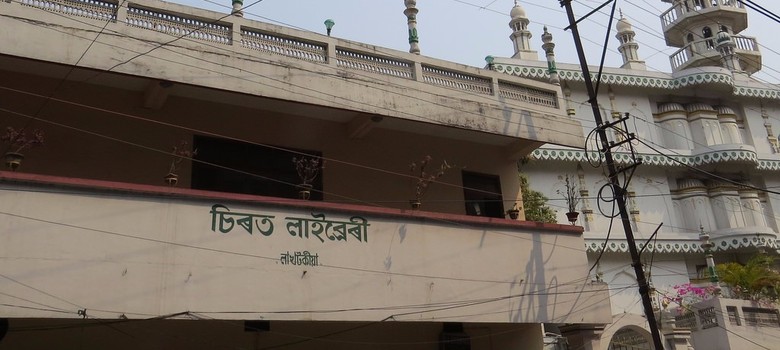
Sirat Library finds few mentions in recorded history and it is even fading from the personal histories of the Khilonjia Muslims who live around it.
Image credit: Shaheen Ahmed
Every time Assam heads into an election, the political discourse in the state invariably veers towards the issue of indigeniety. Who is an original inhabitant (and who is not) becomes a central question, with all the political parties nudging the electorate’s collective memory to recall real and imagined injustices.
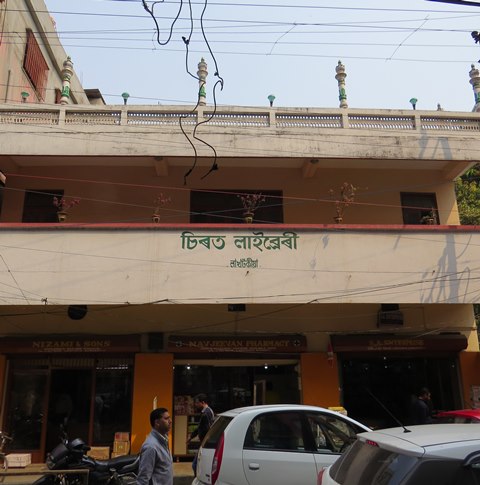
With elections having kicked off in Assam again, my thoughts returned to something else, to my childhood when I would accompany my parents to a concrete structure in Guwahati’s Lakhtokia area. The structure was architecturally nondescript, but the images and the experiences of it still coalesced to form fragments of my memory. Known locally as Sirat Library – although the Assamese pronunciation Sirot often rendered the name incomprehensible – it was located within the precincts of a mosque called Lakhtokia Masjid No. 1.
I vaguely recall public meetings being held in the small library. And till the early 2000s, it moonlighted as a voting booth. For a child, it was an unusual sight to see so many people of different religions line up to cast their votes and even more unusual to see them do so in a library inside a mosque.
The structure still stands today. But the only sight that greets a visitor is of a small room bereft of books or readers. Its holdings are restricted to a small glass cupboard and a few Islamic texts in it.
Legacy of the past
The history of the library is really important to the Khilonjia Muslims or ethnic Assamese Muslims living in Guwahati. Khilonjia Muslims have been in Assam since before the Ahom invasion in the 13th century and they have always been known to relate to their ethnic, rather than their religious, identity.
Shehabuddin Talish, the official scribe of Mir Jumlah, the Nawab of Bengal who invaded Assam in 1662, described their encounter with the Muslims in Assam: “The Muslims whom we met in Assam are Assamese in their habits, and Muhammadans but in name.”
The famous colonial historian Sir Edward Gait, in his monumental work A History of Assam published in 1905, extensively employed Talish’s descriptions to map out a definitive chart of Assam’s history. Nevertheless, historical narratives of Khilonjia Muslims remain sketchy. The same fate is shared by the library in Lakhtokia.
There are no written records of when or who constructed the library. It is, however, believed that the structure is among of the oldest libraries in Guwahati, and the mosque it is a part of is among the three oldest mosques constructed in the colonial period.
The mosque finds a mention in an article in 1885 in the journal Assam Bandhu, which was edited by the Assamese intellectual Gunabhiram Barua. The land for the mosque was donated by Col. Jalnur Ali Ahmed, the father of the fifth President of India, Fakhruddin Ali Ahmed. Col. Ahmed was a distinguished Assamese of his time: he was the second Assamese associated with the Imperial Medical Services and the first Assamese to receive an M.D. degree from London.
Personal histories
Writer-lawyer Akdas Ali Mir, one of the inhabitants of the locality, points to a letter written in 1915 by AHW Benting, the then Commissioner of Assam, which is probably one of the earliest and only clues to tracing the history of the library. “Benting had issued directions in an Order Letter to shift the Makhtab (primary Islamic school) established by the British from the mosque to the present location, where the Junior Madrassa High School is in Guwahati.”
Mir continued: “We can surmise that Sirat Library is the spot where the Makhtab was and then got converted into a library.” This may be true as Sirat is an Arabic word meaning a “way of life”.
As with all public libraries in the state, Sirat Library too was awarded a monthly grant from the government for its upkeep. But the actual running was done by the area’s Assamese Muslims, with people taking turns as librarians. Renowned Assamese filmmaker Altaf Majid remembers his childhood days spent in the library reading in the quiet. “My uncle used to be the librarian for many years. Every Friday afternoon he would take me to the iconic Lawyers’ Book Stall in nearby Pan Bazaar to buy books. In fact I read the Mahabharata in Bengali in Sirat Library in the 1960s.”
Majid continued: “This library was also a repository of well-known pulp fiction of the period. They were in English, Assamese and Bengali. In fact, I also read my first English novel in this library as well as the famous Bengali Mohan Detective Series and the Assamese adventure series Pa-Phu.”
Credit: Shaheen Ahmed
Mukimuddin Ahmed, another resident, talks of the days in the late 1950s when he would act as the librarian in the evenings. “I was paid Rs 5 every month as the librarian and I worked for a year. Every afternoon after school I would go to the residences to collect the newspapers for the library. In the evenings after the readers had finished reading them I would then return them to the respective households.”
Assamese Muslim women had a strong role to play in the library’s upkeep. In the late 1960s, the only Assamese Muslim women’s social organisation, Anjumaan-E-Khawaateenein Islam, contributed Rs 10,000 to construct the new building for the library from the earlier Assam-type house construction. Noted Assamese woman writer Alimun Nessa Piyar donated furniture to the library in 1960.
As Helena Barranha and Susana S. Martins poignantly observed , “Memory has become both an intellectual challenge and a commodity for easy consumption.” This is true for contemporary India in general, and Sirat Library epitomises the trend. The erasure of the library from popular memory testifies to the erasure of cultural traditions that were once so integral to the Assamese society.
source: http://www.scroll.in / Scroll.in / Home> Memory Lane / by Shaheen Ahmed / April 05th, 2016
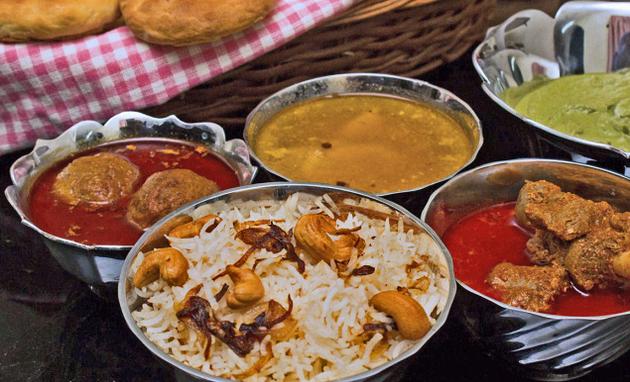
All things Mughlai Biriyani, kebabs and more / Photos:Special Arrangement
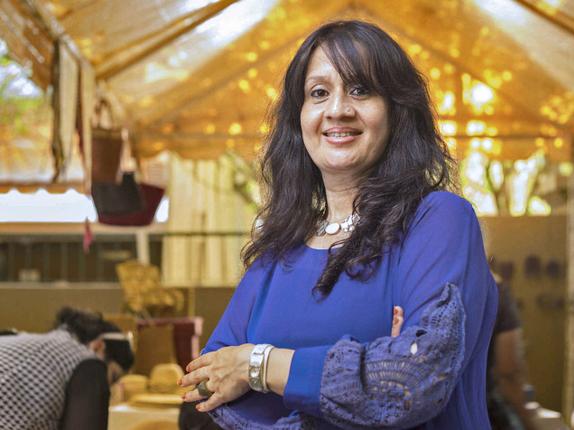
Tasneem Ayub Khan will tell you how to make it, writes K. JESHI
Fourteen ingredients. “That’s all you need to make Dhakni biriyani,” says Tasneem Ayub. “One has to know the right proportion of ingredients, the order in which they have to be added, the time and, most importantly, the confidence. Anyone who loves cooking can easily learn,” she says.
A home chef and home baker, Tasneem runs Ammee’s Kitchen in Chennai. She conducts workshops on how to make biriyani.
“Everyone loves biriyani and so they are eager to make the yummy mughlai biriyani. It is not as difficult as it is made out to be. Keep it simple is what I tell them,” explains Tasneem.
Tasneem draws her inspiration from her mom. “She was a fabulous cook. She worked full-time, as the principal of Ethiraj College, yet she ensured that she made tasty food before she stepped out for work. I have learnt all my recipes from her.”
While Tasneem’s father’s ancestors come from Pakistan, her mother is from Kozhikode in North Kerala, a foodie’s paradise. “I love my mom’s meen moily, a Kerala special; the fish curry, appam and stew. I haven’t changed a thing from my mom’s recipes. ”
Tasneem says it’s a misconception that Mughlai dishes are high on spices. “The Mughals didn’t use spices. It was all about rich, creamy bases made from cashew or almond paste, inspired by Persian and Turkish style of cooking. They never use lime in any of the preparations. I follow the same style.”
She calls herself a traditionalist.
“I stick to the original recipes. Cooking gives me the utmost joy. Even when I am unwell, I crawl to the kitchen and cook. I try out Italian, and Mediterranean cuisines, but there is nothing to beat the versatility of Indian cuisine. I tell people at my classes to try and buy organic ingredients. And, don’t buy anything readymade, even curd or yoghurt. Make them at home. I make my own ginger-garlic paste,” she says.
Tasneem is currently working on a book, a compilation of recipes collected from friends and family members.
“I want to give it a personal touch with the recipes in their own handwriting,” she says.
And, what is her favourite food? “Dal chawal. I love to have it with the pickles I make at home as well!”
To know more about her recipes visit: www.facebook.com/ Ammees
Kitchen Or mail her at ammeeskitchen @gmail.com
source: http://www.thehindu.com / The Hindu / Home> Cities> Coimbatore / Coimbatore – April 06th, 2016