Tag Archives: Abdur Rahman

Who Is IPS Officer Abdur Rahman? Supreme Court Orders Fresh Review of His Voluntary Retirement Plea

West Champaran District (BIHAR) /MAHARASHTRA :

Supreme Court Gives Relief to IPS Officer Abdur Rahman, Asks Centre to Revisit VRS Rejection.
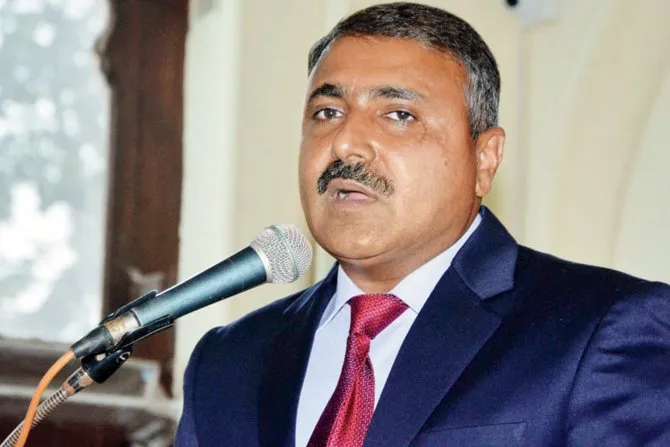
New Delhi:

In a significant ruling, the Supreme Court has set aside the Union Home Ministry’s decision rejecting the voluntary retirement request of former Maharashtra cadre IPS officer Abdur Rahman and directed the Central Government to reconsider his application afresh within three months.

A Bench comprising Justice P.S. Narasimha and Justice Alok Aradhe held that the Centre had failed to adequately examine the complaints and disciplinary issues cited while rejecting Rahman’s Voluntary Retirement Scheme (VRS) application in 2019.

The court’s decision comes after a prolonged legal battle initiated by Rahman, who had sought voluntary retirement from the Indian Police Service in August 2019 but was denied permission by the government due to pending disciplinary proceedings and complaints against him.

Supreme Court Sets Aside 2019 Rejection Order

Abdur Rahman had submitted a notice seeking voluntary retirement under Rule 16(2A) of the All India Services (Death-cum-Retirement Benefits) Rules, 1958, in August 2019.

The Ministry of Home Affairs subsequently rejected the request on October 25, 2019, citing pending complaints and disciplinary matters.

Allowing Rahman’s plea, the Supreme Court observed that the Central Government had not undertaken a detailed examination of the complaints before rejecting the VRS application.

“In view of the above discussion and analysis, we are of the opinion that the Central Government has not examined the complaints in detail before taking the decision dated October 25, 2019, of not accepting the notice for voluntary retirement,” the Bench noted.

The Court directed the Centre to reconsider the request in light of all available material and take a fresh decision within three months.

Court Asks Centre to Consider Subsequent Charge Sheets

The Supreme Court also took note of developments that occurred after the original rejection order.

The Maharashtra Government subsequently issued charge sheets against Rahman in three separate matters, including a 2022 case linked to his participation in protests against the Citizenship Amendment Act (CAA).

However, the Court observed that despite the passage of several years, disciplinary proceedings in these cases had not reached a conclusion.

Taking this into account, the Bench directed the Central Government to evaluate both the original complaints and the subsequent disciplinary proceedings while reconsidering the VRS application.

The Court stated that the inability of the authorities to conclude disciplinary proceedings despite the passage of time was an important factor that warranted a fresh review of the matter.

Complaints Against the IPS Officer

According to records placed before the Court, Rahman faced multiple allegations during his service.

These included:

  • Allegations of torturing a person in 2014.
  • Contracting a second marriage in 2016 without obtaining the consent of his first wife.
  • Delivering a public speech in 2019 allegedly in violation of service conduct rules.
  • Subsequent disciplinary proceedings related to his participation in anti-CAA protests.

The Court did not examine the merits of these allegations but emphasized that the Centre must properly evaluate all relevant facts before arriving at a decision on his retirement request.

Who Is IPS Officer Abdur Rahman?

Abdur Rahman is a former 1997 batch Indian Police Service (IPS) officer of the Maharashtra cadre who served the state police force for more than two decades before emerging as a prominent public voice on issues related to governance, constitutional values, minority rights, and social justice.

Born on January 8, 1973, in West Champaran district of Bihar, Rahman comes from a farming family.

Educational Background

Rahman completed his schooling at Bipin High School in Bettiah and later pursued higher studies in Patna.

He graduated with a Bachelor of Technology (B.Tech) degree in Civil Engineering from the Indian Institute of Technology (IIT) Kanpur in 1995 before qualifying for the Civil Services Examination.

Career in the Indian Police Service

Rahman joined the Indian Police Service on September 7, 1997, and was allotted the Maharashtra cadre.

Over a policing career spanning more than 22 years, he held several important assignments across Maharashtra.

His major postings included:

Assistant Superintendent of Police, Latur

One of his earliest assignments after joining the service.

Superintendent of Police

He served in districts such as:

  • Dhule
  • Yavatmal
  • Chandrapur

During his tenure in Dhule, he reportedly led several anti-dacoity operations targeting criminal gangs operating along national highways.

Principal, Police Training School, Solapur

Rahman later headed the Police Training School in Solapur, contributing to police training and capacity building.

Additional Commissioner of Police, Pune

He served as Additional Commissioner of Police (Administration) in Pune City Police.

Inspector General of Police

His final posting in service was as Special Inspector General at the Maharashtra State Human Rights Commission (MSHRC).

Resignation During Citizenship Amendment Act Protests

Rahman gained national attention in December 2019 after publicly opposing the Citizenship Amendment Act (CAA).

On December 11, 2019, shortly after the Citizenship Amendment Bill was passed in Parliament, he announced his resignation from service, describing the legislation as unconstitutional and discriminatory.

He stated that his decision was an act of “civil disobedience” and a protest against what he viewed as a threat to India’s pluralistic and secular character.

However, by that time, his earlier request for voluntary retirement was already under consideration and later became the subject of legal disputes.

Long Legal Battle Over Retirement Status

Following the rejection of his VRS application, Rahman challenged the government’s decision before judicial forums.

The dispute continued for several years, creating uncertainty regarding his formal separation from government service.

The Supreme Court’s latest order does not automatically grant voluntary retirement but requires the Central Government to reassess the application and take a reasoned decision after examining all relevant facts and subsequent developments.

Author, Public Speaker and Social Activist

After stepping away from active policing, Rahman increasingly focused on public engagement, research, and writing.

He has authored several books examining issues related to governance, social inclusion, and political representation.

His notable works include:

Denial and Deprivation: Indian Muslims after the Sachar Committee and Ranganath Mishra Commission Reports

A study examining socio-economic challenges faced by Indian Muslims.

Absent in Politics and Power: Political Exclusion of Indian Muslims

An analysis of minority representation in political institutions.

Communal Crimes and National Integration

A work exploring governance, communal harmony, and national integration.

Brief Foray into Electoral Politics

Ahead of the 2024 Lok Sabha elections, Rahman briefly entered electoral politics.

He was announced as a candidate for the Dhule parliamentary constituency by the Vanchit Bahujan Aghadi (VBA), led by Prakash Ambedkar.

However, legal uncertainty surrounding his retirement status reportedly affected his candidature, and he did not emerge as a major electoral contender.

What Happens Next?

Following the Supreme Court’s ruling, the Ministry of Home Affairs will now be required to conduct a fresh examination of Abdur Rahman’s voluntary retirement application.

The Centre has been given three months to take a final decision after considering the original allegations, subsequent charge sheets, and the prolonged pendency of disciplinary proceedings.

The outcome of the review will determine whether Rahman’s long-pending request for voluntary retirement is finally accepted or rejected once again after detailed scrutiny.

source: http://www.indianmasterminds.com / Indian Masterminds / Home> News> IPS>News / by Indian Masterminds Bureau /June 03rd,2026
Silk Letter Movement: Name of all 59 charged by the British for waging war against the Crown

INDIA :

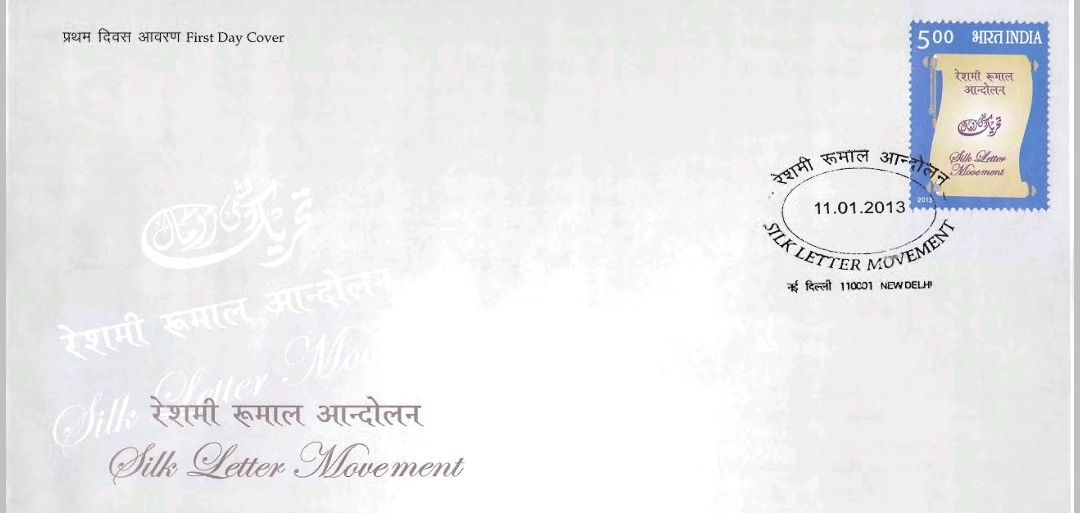
During the First World War, Maulana Mahmood Hasan, and other Islamic scholars planned an armed attack on British India from the Afghanistan frontier. The ambitious plan did not succeed because of the changed geo-political scenario (defeat of Turkey and Germany) and the British getting hold of three silk letters, which gave away the whole planning. After this, 59 people were charged for waging the war against the crown. I am sharing the names of these 59 forgotten heroes of the Indian freedom struggle.

During the First World War, Maulana Mahmood Hasan, and other Islamic scholars planned an armed attack on British India from the Afghanistan frontier.  The ambitious plan did not succeed because of the changed geo-political scenario (defeat of Turkey and Germany) and the British getting hold of three silk letters, which gave away the whole planning.

After this, 59 people were charged for waging the war against the crown. I am sharing the names of these 59 forgotten heroes of the Indian freedom struggle.

Silk Letter Movement : A freedom struggle woven in silk

  1. Abdul Aziz Molvi, son of Haya Gul from Itman Zai, Peshawar
  2.  Abdul Bari B.A., son of Ghulam Jilani from Lyallpur
  3. Abdul Hai Khwaja, son of Khwaja Abdur Rahman from Gurdaspur 
  4. Abdul Haq Shaikh alias Jeewan Das from Shahpur district. He was an official witness.
  5. Abdul Haq Molvi from Rifah-e-Aam Press Lahore. 
  6. Abdul Majeed Khan, son of a Risaldar Manager from the 15th Cavalry Battalion of the army.
  7.  Abdullah Molvi, son of Nihal Khan from Sukkur district. He was an official witness.
  8. Abdul Qadir B.A., son of Ahmad Deen from Lyallpur. 
  9. Abdur Rahim Sindhi Shaikh, son of Lala Bhagwan Das from Hyderabad, Sindh
  10. Abdur Rahim Molvi, son of Rahim Bakhsh, Masjid Cheenian Wali, Lahore.
  11. Abdur Rashid, a migrant student of Mardan and Lahore.
  12. Abdur Razzaq Ansari Hakim, son of Abdur Rahman of Delhi.
  13. Abdul Waahid, son of Siddiq Ahmad from Tanda, United Provinces.
  14. Abul Kalam Azad Molvi, nickname Mohiuddin, son of Maulana Khairuddin from Calcutta
  15. Abu Muhammad Ahmad Molvi alias Molvi Ahmad, son of Ghulam Hussain from Lahore and Chakwal
  16. Ahmad Ali Molvi, son of Habibullah, from Gujranwala district. He was an official witness.
  17. Ahmad Miyan Molvi, son of Abdullah Ansari from Ambetha, district Saharanpur (United Provinces). He was an official witness.
  18. Allah Nawaz Khan, son of Khan Bahadur Rab Nawaz Khan honorary magistrate of Multan, Punjab
  19. Anees Ahmad, B.A. Molvi, son of Idrees Ahmad, assistant secretary at Anglo-Oriental College Aligarh , United Provinces.
  20. Ozair Gul Molvi, son of Shaheed Gul of Durgayee, Northwest Frontier. 
  21. Barkatullah Molvi Muhammad of Bhopal and Japan
  22. Fatah Muhammad Sindhi from Rok, Sindh
  23. Fazlul Hasan Molvi alias Hasrat Mohani from Aligarh .
  24. Fazl Elahi Molvi, son of Meeran Bakhsh from Haripur, thana Wazirabad, district Gujranwala, Punjab.
  25. Fazl Mahmood Molvi, son of Molvi Noor Muhammad from Charsadda, Northwest Frontier.
  26. Fazl Rabbi Molvi from Peshawar.
  27. Fazl Wahid Molvi, son of Faiz Ahmad, alias Haji Turangzai, from Northwest Frontier.
  28. Habibullah Ghazi, the son of Ruhullah from Kakori, district Lucknow, United Province.
  29. Hadi Hasan Syed, from Khan Jahanpur, district Muzaffar Nagar, United Province.
  30. Hamdullah Molvi, son of Haji Sirajuddin from Panipat. 
  31. Hussain Ahmad Madani Molvi, son of Molvi Habibullah from Faizabad and Medina .
  32. Ibrahim Sindhi, M.A. Shaikh, son of Abdullah from Karachi.
  33. Kala Singh, a migrant from Ludhiana (Punjab) 
  34. Khan Muhammad Khan Haji from Peshawar. (died)
  35. Khushi Muhammad, son of Jan Muhammad from Talauli, district Jalandhar, Punjab.
  36. Mahendra Pratap Kunwar, son of late Raja Ghanshiam Singh from Mursan, United Province.
  37. Mahmood Hasan Maulana, former head-teacher at Deoband Madrasa, United Province.
  38. Matloobur Rahman Molvi of Deoband, an employee of the Agricultural Department, UP Govt.
  39. Mohiuddin alias Barkat Ali Molvi from Kasur. 
  40. Mohiuddin Khan Molvi from Moradabad. (Qazi of Bhopal)
  41. Muhammad Abdullah B.A., son of Shaikh Abdul Qadir, Secretary Mianwali District Board.
  42. Muhammad Ali B.A. son of Abdul Qadir from Kasur.
  43. Muhammad Ali Sindhi, the son of Habibullah from Gujranwala.
  44. Muhammad Aslam Attar from Peshawar.
  45. Muhammad Hasan B.A. from Lahore whose father was an employee in the Paisa newspaper.
  46. Muhammad Hashim Molvi Syed from Kora, Jahanabad, Fatahpur. 
  47. Muhammad Masood Molvi, son of Mazhar Hussain from Deoband, United Province. (Official witness)
  48. Muhammad Miyan Molvi, son of Molvi Abdullah Ansari from Ambetha, district Saharanpur, United Province.
  49. Muhammad Mubeen Molvi, son of Muhammad Momin from Deoband. (Official witness)
  50. Muhammad Murtuza Molvi Syed, son of Bunyad Ali from Bijnor, United Province. (Official witness)
  51. Noorul Hasan Syed from Ratheri, district Muzaffar Nagar U.P.
  52. Obaidullah Molvi alias Buta Singh from Sialkot, Punjab.
  53. Sadruddin alias Dr. Abdul Karim Barlasi, son of Amir Ali of Banaras. 
  54. Saifur Rahman Molvi, son of Ghulam Khan from Peshawar district, Northwest Frontier.
  55. Shah Bakhsh Haji, son of Imam Bakhsh Ansari from Hyderabad, Sindh. 
  56. Shah Nawaz Khan, son of Khan Bahadur Rab Nawaz Khan, honorary magistrate, Multan, Punjab.
  57. Shujaullah, son of Habibullah from Lahore.
  58. Wali Muhammad Molvi from Futuheewala, district Lahore.
  59. Zahoor Muhammad Molvi from Roorkee, son of Inayatullah of Saharanpur.

source: http://www.heritagetimes.in / Heritage Times / Home / by Mahino Fatima / August 04th, 2024

Anjuman Taraqqi E Urdu’s debate competition marks Badria Centenary celebrations in Mangaluru

Mangaluru, KARNATAKA :

Mangaluru:

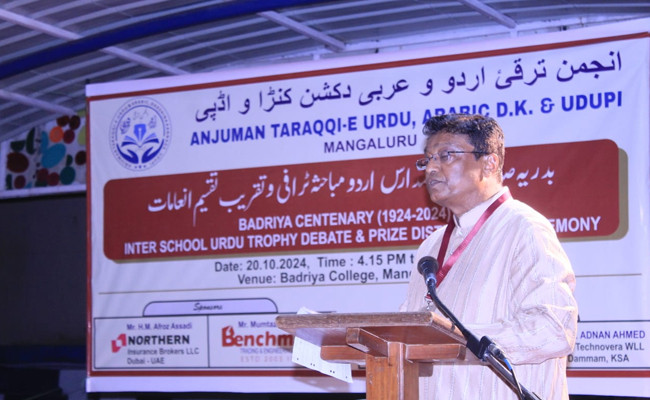
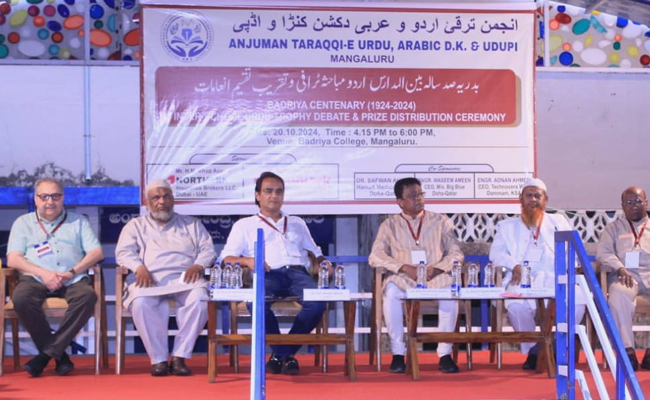
Anjuman Taraqqi E Urdu, an NGO promoting the Urdu language in Dakshina Kannada and Udupi districts, organised a debate competition on 20th October at the Badria College campus as part of the Badria Centenary celebrations (1924–2024). The competition featured the Badria Centenary Urdu Debate Trophy.

The event, divided into morning and evening sessions, saw a debate competition in the morning followed by a trophy award ceremony.

Chief Guest P.C. Hashir, Managing Director of Peecy Group of Companies and Correspondent of Badria Institution, alongside Keynote Speaker Abid Ulla Athahar Shimogavi, a retired principal and president of the State Organization, Secretary of Urdu Taraqqi Hind and H. M. Afroz Assadi, Managing Director of Northern Insurance LLC, Dubai, who sponsored the event, were present at the event Mumtaz Hussain, an NRI entrepreneur from Qatar, chaired the proceedings.

Both sessions commenced with a recitation from the Holy Quran. In his address, P.C. Hashir highlighted the role of debates and educational activities in fostering intellectual growth among students, suggesting that such competitions could help shape future lawmakers.

Keynote Speaker Abid Ulla Athahar stressed the importance of primary education in one’s mother tongue, citing the example of countries like Japan, Germany, and France, which educate children in their native languages. He noted that studying in the mother tongue allows for better comprehension compared to learning in foreign languages like English.

Mumtaz Hussain, an alumnus of Badria Institution, shared the brief history of the institution, founded in 1924 by Marhoom C. Mehmud as AL MADRASATHUL BADRIA, initially offering religious education to local children in Bunder and Kudroli. The relationship between Badria and the Urdu language is profound; it was the first school to offer Urdu studies in the undivided Dakshina Kannada and Udupi districts since 1947. After C. Mehmud’s passing, various presidents led the organization, with Marhoom Thumbe Ahmed Hajee serving the longest from 1975 to 2020. Hussain recounted that, in the past, students were required to speak Urdu within the institution or face punishment for using other languages.

The junior-level debate competition saw participation from seven higher primary schools in Dakshina Kannada.

Mohammed Ghouse from Higher Primary School Kandatpalli won first place, with Rifa and Fathima Suzana from Government Urdu Higher Primary School, Kawalkatte (Bantwal Taluk), securing second and third places, respectively.

At the senior level, five high schools from Dakshina Kannada and Udupi districts participated. Abdul Baari and Abdur Rahman from Thouheed English Medium High School, Gangolli, Udupi district, took first and second places, while Khadeejatul Farzana from Sayyed Madani Urdu High School, Ullal Taluk, D.K., came third.

The junior-level Badria Centenary Championship Trophy was awarded to Government Urdu Higher Primary School, Kawalkatte (Bantwal Taluk), and the senior trophy went to Thouheed English Medium High School, Gangolli, Udupi district. Twenty other participants received consolation certificates.

Five 10th standard students, Mohammed Meraj Khan, Fouzia Banu, Moulana Mohammed Uzaim, Sabiya Naaz, and Aysha Ruha were also felicitated for excelling in Urdu in the Karnataka State Board Examinations (2023–24).

The event began with a welcome address by Mohammed Hanif Master, Secretary of Anjuman. A.S. Madani, President of the organisation, outlined its objectives and future plans for promoting the Urdu language. Engineer Khaleel, Assistant Secretary, provided logistical support, and Rahmathulla, an active member of the Anjuman, gave the vote of thanks. The event was hosted by Badria alumnus and international emcee, Sahill Zahir.

source: http://www.english.varthabharati.in / Vartha Bharati / Home> Karavali / by Vartha Bharati / October 21st, 2024

Professor Badiur Rahman – An Exemplary Personality

Hooghly / Kolkata, WEST BENGAL:

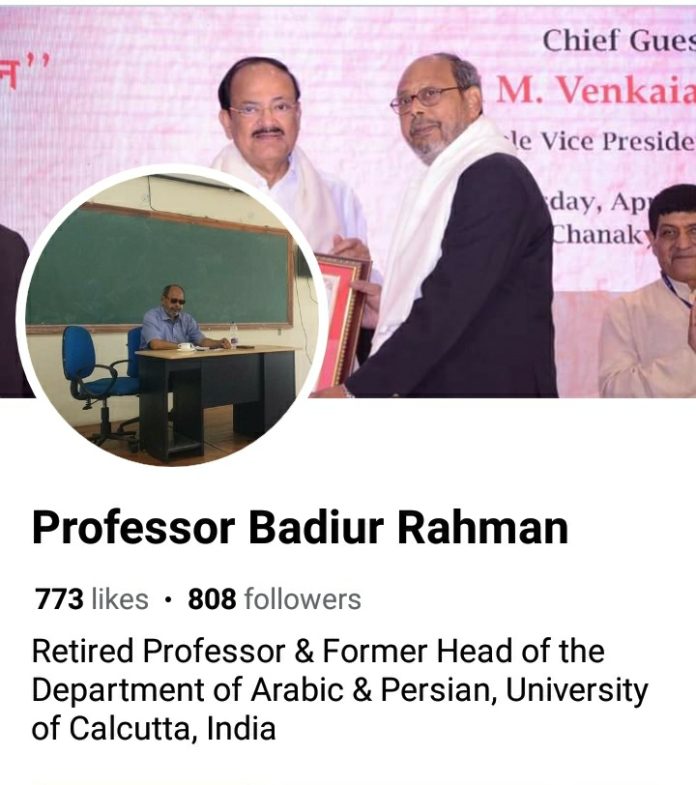
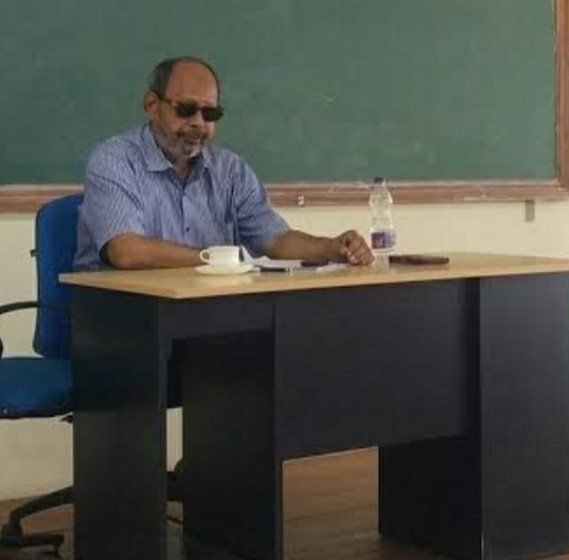
Professor Badiur Rahman, former Head of the Department of Arabic and Persian, University of Calcutta, a well-known educationist, celebrated writer, accomplished journalist, prominent Islamic scholar and a beloved teacher passed away in Kolkata on September 19, 2023.

He was scion of an illustrious and religious family of district Hooghly of West Bengal. His father Abdur Rahman was also an MBBS and associated with Tablighi Jamat.

He got his basic education at Darul Uloom Pandua, Hooghly, West Bengal. Thereafter, he did Alim in 1967 and Fazil in 1969 respectively from Madrasa Alia, Calcutta. He derived considerable benefits from a galaxy of eminent Islamic scholars over there. Especially, he achieved immense academic gains from noted Islamic scholars like Maulana Abu Mahfuz Karim Masumi and Maulana Rahatullah Azhari. After that, he did his B.A. (Hons) in 1974 and M.A. in 1976 respectively from University of Calcutta. He also did L.L.B and Ph.D therefrom.

Professor Badiur Rahman was an institution in himself. He was a familiar figure among the intellectual circles throughout India. Due to his extraordinary knowledge and being a paragon of morality, he carved a niche in the temple of fame. He had a say at the University of Calcutta. Despite being an Islamic scholar, he considerably impressed all faculty members, including VCs of University of Calcutta. Because of his profound knowledge of different languages, noble qualities and sublime norms everyone held him in high esteem.

Visiting Professor of Alia University, Kolkata, Dr. Rahman was also on the Senate and Syndicate of Calcutta University and Ph.D. Communities, Calcutta University and Alia University. He was also Ex-Chairman of PG Board of Studies in Arabic, Calcutta University, and U.G.B.O.S in Arabic, Kalyani University.

My acquaintance with Professor Badiur Rahman
I think it was during the summer of 2009 when I first met him. The meet was actually regarding my Ph.D admission at University of Calcutta. Dr. Masihur Rahman, now professor at Alia University, Kolkata introduced me to him. Since then till his last breath, I remained in touch with him. I am fortunate enough to have done my Ph.D. under his supervision and guidance. He always treated me like his brother. Whenever I met him, I gained immense inspiration from him. Despite being a celebrated scholar, he was devoid of arrogance.

As a Teacher
Professor Badiur Rahman started his teaching career as a lecturer at the University of Calcutta in 1983 and retired in 2016. Even after his retirement, he kept on teaching as a visiting faculty in the University of Calcutta and Alia University, Kolkata. He always proved himself as a selfless and dedicated teacher. He was an embodiment of all sublime qualities and virtues necessary for a good teacher. His method of teaching was unprecedented. It was his sword which he wielded so effectively that very few persons could match him. During lectures he pointed out such subtle points as students could not help without being impressed with him. He left an indelible mark in the domain of the teaching profession.

Undoubtedly, he was a beloved teacher. He was fondly described as B.R. Sir by his students. Scores of students quenched their thirst for knowledge from him. His talk was very touching. He met everyone cheerfully. His deep knowledge of comparative studies made him popular among his contemporaries. His learning was varied and profound. His personality was many-sided and balanced.

Right from the beginning, he was laborious and punctual. He was a man of transparent heart. No doubt, his extraordinary scholarship and erudition brought him wide reputation and fame. His main mission was to spread education. He left a galaxy of pupils behind him who impart education and work in various fields in and out of India. In fact, it is an everlasting tribute to him.

Dr. Badiur Rahman and Dr. Taha Husayn
Dr. Rahman was an ardent admirer of Dr. Taha Husayn. He had vast knowledge about Dr. Taha. He did not only study all his books but he digested them. He also wrote a book titled, “Essays On Dr. Taha Husayn” published by Mazhar Education and Welfare Society, Malda.

Maulana Alauddin Nadwi, Head of the Department of Arabic, Darul Uloom Nadwatul Ulama, Lucknow wrote in the Preface of the said book, “To a great extent Dr. Badiur Rahman tried to introduce Dr. Taha Husayn in the Introduction to his book. The author regards Dr. Taha as a born critic. He presented Taha’s thoughts in a lucid way. To clear his viewpoints, he propounded various references from Dr. Taha’s books. Besides, he holds Taha as a moderate critic to the core.”

He had also done several research works on the first Nobel Laurate in the Arabic language Dr. Naguib Mahfouz.

Dr. Badiur Rahman and Rabindra Nath Tagore

Like Dr. Taha, Dr. Rahman was also a fan of Rabindranath Tagore. He wrote various articles and short stories on Tagore’s life and works in Arabic. And thus he introduced him in the Arabic World.

It should be noted that Dr. Rahman participated in different national and international seminars and exhibited his scholarly caliber there.

Because of his outstanding and remarkable services to the Arabic language and literature, he was conferred the President Award in 2018.

As a Writer
Dr. Rahman was a prolific writer. He wrote several books on different subjects. Some of his major publications are:

  • History of Arabic Literature (Pre-Islamic Period)
  • Textbook for B.A. Arabic (Hons.) Calcutta University
  • Textbook for B.A. General, Calcutta University
  • Essays On Dr. Taha Husayn

Besides, he had 31 research articles in Arabic, English, Urdu and Bengali published in different literary journals. He had earned distinction in Belles Letters, short stories, poetry in English, Arabic and Bengali. He had long experience of research guidance in Arabic. He had examined about 26 theses and 15 M.Phil dissertations of various universitas of India and abroad.

Truly speaking, the comprehensive knowledge and intellectual brilliance of Dr. Rahman had been acknowledged by his contemporaries.

Describing his yeomen services, Professor Mohammad Noman Khan, former Head of the Department of Arabic Delhi University stated that the passing away of Dr. Badiur Rahman was a personal loss to him. He played a leading role in spreading the Arabic language in West Bengal. He gave new impetus to the students of W.B.

Professor Sanaullah Nadwi, Head of the Department of Arabic said, “Dr. Badiur Rahman was a highly qualified person and he was an emblem of morality. Everyone who observed him very closely would testify it. He also described his outstanding contribution in the field of education.

Similarly, Professor Ashfaq Ahmad Nadwi Head of the Department of Arabic Banaras Hindu University stated that Almighty Allah bestowed upon him different qualities. His personality was a marvellous amalgamation of teacher, writer and guide par excellence. Besides, he was a righteous, God-fearing and pious personality.

Dr. Rahman’s death caused a great vacuum. His myriad contributions to promotion and propagation of the Arabic language and literature will always be remembered. He is survived by his wife.

Thousands of his admirers thronged to attend the last rite of the departed soul. He was buried at Ghobra-1 Graveyard, of Park Circus Kolkata. May Allah adorn his grave with luminosity and refulgence and grant peace to his soul. Aameen!

[The writer is Faculty Member, Darul Uloom Nadwatul Ulama, Lucknow]

source: http://www.radiancenews.com / Radiance News / Home> Latest News / by Dr. Obaidur Rahman Nadwi / Radiance News Bureau / September 24th, 2023

Malegaon’s Abdullah selected for National Basketball Team

Malegaon, MAHARASHTRA :

One of the prominent cities in Maharshtra, Malegaon knwon for its textile industry, has regularly sent players to state and national level competitions

AbdullahMPOs18dec2018

Malegaon:

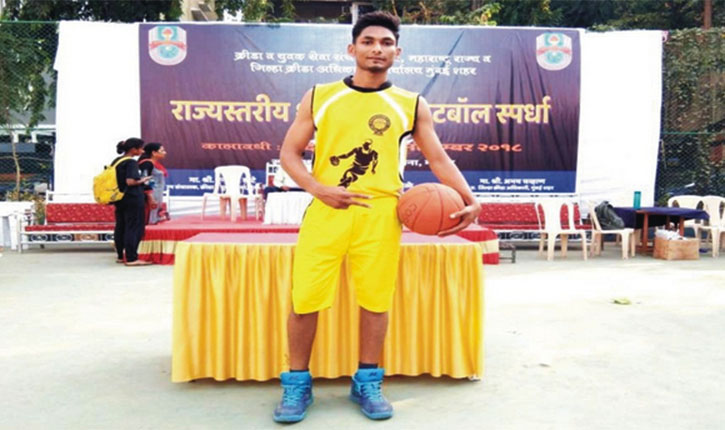
 Abdullah Khaleel Ahmed, a 12th standard student of Malegaon High School and Junior College, has been selected for the National Basketball Team Delhi.

According to a report published by UrduCity, a total of 05 students from each district of Maharashtra were selected for a trial game. Out of them 16 players, (12 + 04 reserved), were selected for the final game. 17-year-old Abdullah was the only player from the team of 16 selected for the National Basketball Team.

Abdullah is likely to play in an upcoming match in New Delhi.

Abdullah had in May 2018 played for Nashik district team representing Maharashtra at the YMCA National Invitational Basketball tournament held in Goa. He was accompanied by 03 other players – Ansari Urooj Ahmed, Ansari Fahad and Abdur Rahman, all from the textile city.

Earlier, Abdullah’s team had defeated Dhule district’s basketball team at district level tournament to qualify for the state level competition. At the state level tournament, Abdullah’s team could not win. But, because of his personal performance, Abdullah was able to get the selectors’ nod to play in the trial game held for selection to the National Basketball Team.

One of the prominent cities in Maharshtra, Malegaon knwon for its textile industry, has regularly sent players to state and national level competitions. In 2009, Zubair Ansari, Zahid Akhter and Ziya Nisar of the city had participated in the National Level Shooting Ball Championship. The three players were representing Maharashtra in the finals and won the under-19 National School Games Shooting Ball Championship against Karnataka.

Again in 2009, Azhar Ahmed, a young cricketer from Malegaon was selected for the State Ranji Test Cricket Team. before that Azhar Ahmed had represented the Maharashtra Cricket Association’s (MCA) under-19 cricket team visiting Sri Lanka in 2008 for the Challenger Trophy.

source: http://www.ummid.com / Ummid.com / Home> India> Sports / by ummid.com Staff Reporter / November 27th, 2018