KARNATAKA :
Six more books from the period of Adil Shah have been released
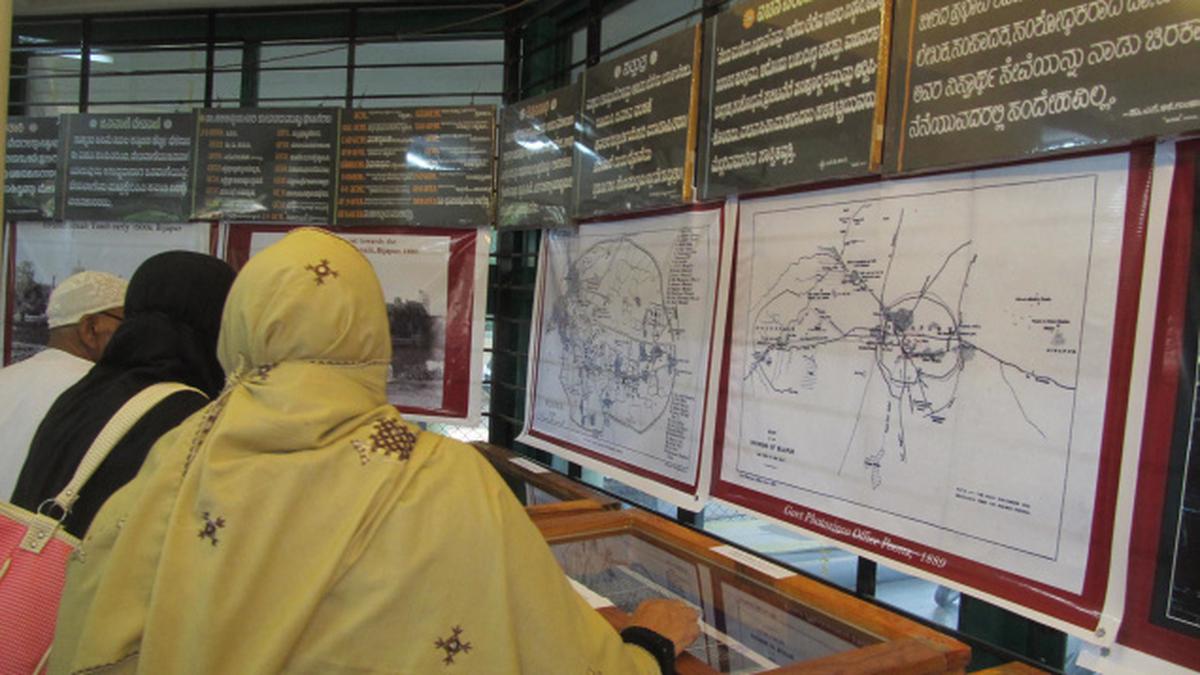
A GLIMPSE OF… the books, manuscripts and maps
The ambitious work of translating Adil Shahi literature in Kannada, has now achieved another milestone. Six more rare books of that era written in Persian and Dakhani Urdu have been released and are available for the readers.
The Adil Shahi Literature Translation Committee which was earlier headed by the late M. M. Kalburgi, is rapidly doing its work to complete the entire project by the end of this year.
Writer Krishna Kolhar Kulkarni, director of the committee, who now heads the project after the demise of Prof. Kalburgi, said that last year the committee came up with six books, this year, as the second instalment, the committee has released six more rare books after translating them into Kannada.
It was a difficult task to collect these books, since they are rare and hard to find. Names of the books that will be released and their brief description:
Mohammad Naama: The book written by Zahoor Bin Zahoori in Persian is gives demographic details of Karnataka and the expansion of Adil Shahi dynasty into southern parts of the country. The writer offers critical information about the life of Mohammad Adil Shah (1636-1656) who got the historic Gol Gumbaz built. The book has been translated by Dr. Mehnoor Zamani Begum, Prof. A.H. Masapati, Fakir Mohammad Katpadi and Moulana Rashid Al Khashmi.
Ali Naama and Tarikh-e- Sikandari: The books written in Dakhani Urdu by Mulla Nusrati, are primarily poems in which writer gives illustrated description of Ali Adil Shah-II (1656-1672) and Sikandar Adil Shah (1672-1686). The book meticulously writes about the historic Umarani war between Maratha King, Shivaji and Ali Adil Shah-II in which Shah humiliatingly sends Shivaji back from the battle field.
The books are translated by the late, Dr. Mohammad Sibkhatullah and Dr. Vithalrao Gaikwad.
Urus-e-Irfan: The book written by Hazrat Kazi Mehmood Behri in Persian, is about contemporary details of religious and historical moments. The book is translated by Bode Riyaz Ahmed Timmapuri.
Tazkirat-ul-Mulk: The book written by Rafiuddin Ibrahim Shirazi in Persian, is one of the best books on ancient Bijapur history of the famous Rakkasaki-Tandagi war in 1565.
The writer gives an eye-witness account of the war and mentions the fall of Vijayanagar Empire. The book is translated by Fakir Mohammed Katpadi.
Kitab-e-Nouras: Written by Ibrahim Adil Shah-II in Dakhani Urdu, who adored art and music. In his books, the king introduced Indian music to Persian people. The book is translated by Dr. Krishna Kolhar Kulkarni.
Rouzat-ul-Auliya: The book written by Mohammed Ibrahim Zuberi in Persian is about some 105 men and eight women Muslim Saints who lived in Bijapur district.
The writer visits each tomb and collects details of all the saints before compiling a book on their lives. The book is translated by Dr. Amiruddin Kazi.
While six book are translated now, previously, another six books that were translated and released are: Tareekh-e-Farishta, Basateen-e-Salateen, Guldasta-e-Bijapur, Ibrahim Naama, Tareekh-e-Haftakursi and Futuhat-e-Alamgeer .
Meanwhile, Dr. Kulkarni said that the team of experts is busy working on the final volume of eight books to be released by the end of this year.
“It is surely a painstaking and labour-intensive job. It has to be translated without distorting the originality,” he said.
Maps and manuscripts
He said that during their search of books, the team laid hands on some of the rare maps of ancient Bijapur district prepared between 1763 and 1909.
“This is no less than a treasure for us . We also got hundreds of manuscripts and ‘Farmaans’ (official correspondents between Kings and landlords).
We have decided to display them in a museum to be established in future,” he said.
source: http://www.thehindu.com / The Hindu / Home> Features> Friday Review / by Firoz Rozindar / October 18th, 2016