Tag Archives: Muslims of Bihar

The Freedom Fighter and Labour Leader Abdul Bari Still Beloved in Jamshedpur

Shahbad District / Patna, BIHAR :

This May Day, remembering Abdul Bari.
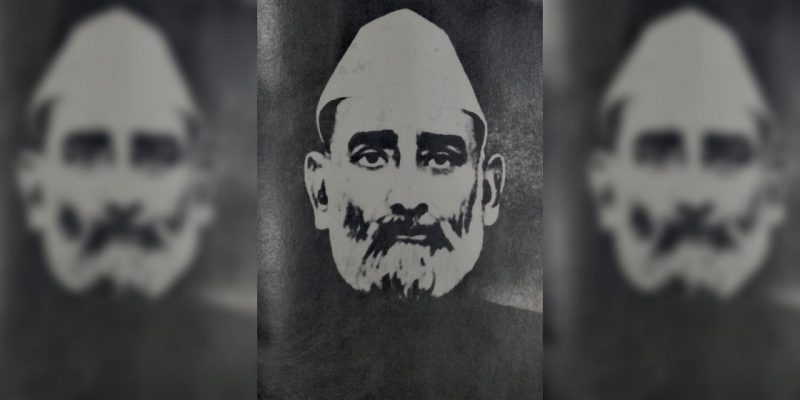
Abdul Bari.

Abdul Bari is not a name that many Indians remember, but Munawwar, a committee member of the Tata Motor Workers’ Union in Jamshedpur, Jharkhand, holds the name in high esteem.

“I don’t see a leader like Abdul Bari [coming up] in the near future,” he said. “It is because of his efforts that we still get high tea at just six paisa.”

“Once, Bari went to the Tatas and he was offered tea. He asked them to first offer it to the workers, and then made an agreement which is still benefitting us. Upmaaloo chaapsamosa all for six paisa in the company’s canteens.”

Asked how they pay six paisa when currency that small no longer exists, he says, “We get token of Rs 2 or more and keep using it for weeks.”

Munawwar visits Bari’s grave every year on March 28, the death anniversary of the pre-independence labour leader, to offer flowers. This duty, he says, was assigned to him by the Tatas.

Thinking of labour in the days of capital

Despite the large numbers of workers who struggle to earn a square meal a day, major political parties remain hostile towards them. In the 55-page Congress manifesto, the words ‘worker’ or ‘workers’ appear 15 times; in the BJP’s 45-page manifesto, the words appears only five times – four while referring to Asha and anganwadi workers. ‘Labour’ figures 21 times in the Congress manifesto, and only twice in the BJP’s.

The Congress does talk about ending the workers’ exploitation and improving working conditions. The party’s manifesto details new schemes and promises to implement old ones related to organised, unorganised and contractual labour. But it is anyone’s guess how schemes that have been on hold for so long will suddenly spring to life.

Dilip Simeon, a founding member of the Association of Indian Labour Historians and former professor of history at Ramjas College, says that nobody talks about labour now because “in today’s context, the labour movement is influenced by communal sentiments”.

“If labour is with the BMS [Bharatiya Mazdoor Sangh] and Shiv Sena, then this is the weakness of the movement; if the labour movement wants to regain its power, then it has to face this challenge.”

Before independence, Simeon says, regardless of community, “leaders came together to advance the struggle of workers in India. Abdul Bari, Maneck Homi and Hazara Singh were their leaders. A Muslim, a Parsi and a Sikh could all be leaders of a workers’ movement.”

“Abdul Bari was so trusted that workers would start their protest first and then ask –what’s our demand?”

Bari was born in 1882, in Bihar’s Shahabad district. He was a student at Patna University in 1919 and was later appointed as a professor of history there, before he started studying law.

He quit to join the Khilafat movement, and actively participated in Gandhi’s civil disobedience movement and salt satyagraha. Bari did not restrict himself to the cause of one social group; he supported several political parties, including the Socialist Party and Swaraj Party, in parallel with the Congress. In addition, he was the voice of the labour movement in India and president of the Jamshedpur Tata Workers’ Union.

What Gandhi said about Bari

The journalist Afroz Alam Sahil has written a book on Abdul Bari, Professor Abdul Bari: Azaadi ki Ladaai Ka Ek Krantikaari Yodhha (Professor Abdul Bari: A Revolutionary Warrior of the Freedom Struggle). The author reveals several stories which won’t be found Indian history books. One such story is around Bari’s mysterious murder, and Gandhi’s reaction to it.

According to a report published by the Times of India on March 31, 1947, Bari was shot dead in the evening of March 28 while on his way home from Khushrupur, 24 miles from Patna. He was then the president of the Bihar Provincial Congress Committee. Following his death, a complete strike was observed, and Tata closed all its plants except essential ones.

Gandhi, in a speech on March 29, 1947, mentioned that he was struck by Bari’s simplicity and honesty. Gandhi added that he was planning to be more closely associated with Bari, and make an appeal to keep his short temper in check as it was not befitting of the highest office in Bihar. Gandhi referred to Bari in the same speech as “a very brave man with the heart of a fakir”. He declared that Bari’s death was the result of an altercation that had ensued between Bari and one Gurkha member of the anti-smuggling force, who was a former member of the Indian National Army.

The author mentions in this book that Bihar’s first Prime Minister (Premium) Barrister Muhammad Yunus had disclosed in an interview to the Orient Press of India that Bari had threatened to disclose the names of some prominent Congress leaders who were involved in the Bihar carnage – just three days before he was killed.

Yunus also said that Gandhi’s statement was given in haste. In his speech, Gandhi had told the audience that there was no politics of any kind in the death, and that it would be unjustified to associate the whole Indian National Army with Bari’s killing just because of one man’s actions.

In another incident discussed in the book, Gandhi arrives at Fatuaha station near Patna in the early morning of March 5, 1947. He travelled from Calcutta to Patna. Bari, chief minister Srikrishna Sinha and others welcomed him on the platform. As soon as Gandhi saw Bari, he laughed and said, “How is it that you are still alive?”

“This book is an attempt at bringing back his identity not just as a leader of the labour movement but a prominent leader of the freedom struggle of India,” the author says. “Professor Bari was one of the biggest leaders of the labour struggle in India. But limiting his role to even that would be unjust, because he was present in every chapter of the independence movement….The speciality of Abdul Bari is that he questioned his own party Congress when it came to the rights of workers.”

In a speech, Bari said, “We are in Congress to serve the poor of this country not to respect Gandhi, Rajendra Babu and Shri Krishna Babu…Lakhs of Indians who walk with them are not there to make them kings but to achieve freedom for this country.”

According to Sahil, “He criticised Gandhi and Rajendra Prasad many times because he was wholeheartedly committed to this struggle. He wanted to organise an all India conference for workers. He had formed the All India Mazdoor Sevak Sangh. He mentioned this in a letter written by him to Sardar Vallabh Bhai Patel on 22 June 1946.”

Why commemorate leaders like Bari today? Sahil has the answer. “Today when Muslim youth talk about Muslim representation, they must read more about Bari, the symbol of Hindu-Muslim unity, in order to understand their own political history and determine how it influences their future.”

Afshan Khan is a Delhi-based freelance journalist.

source: http://www.thewire.in / The Wire / Home> Analysis> Labour / by Afshan Syed (headline edited) / May 01st, 2019
114 years old freedom fighter dies in Kolkata

Kumrava, Nawada District) BIHAR / Kolkata, WEST BENGAL :

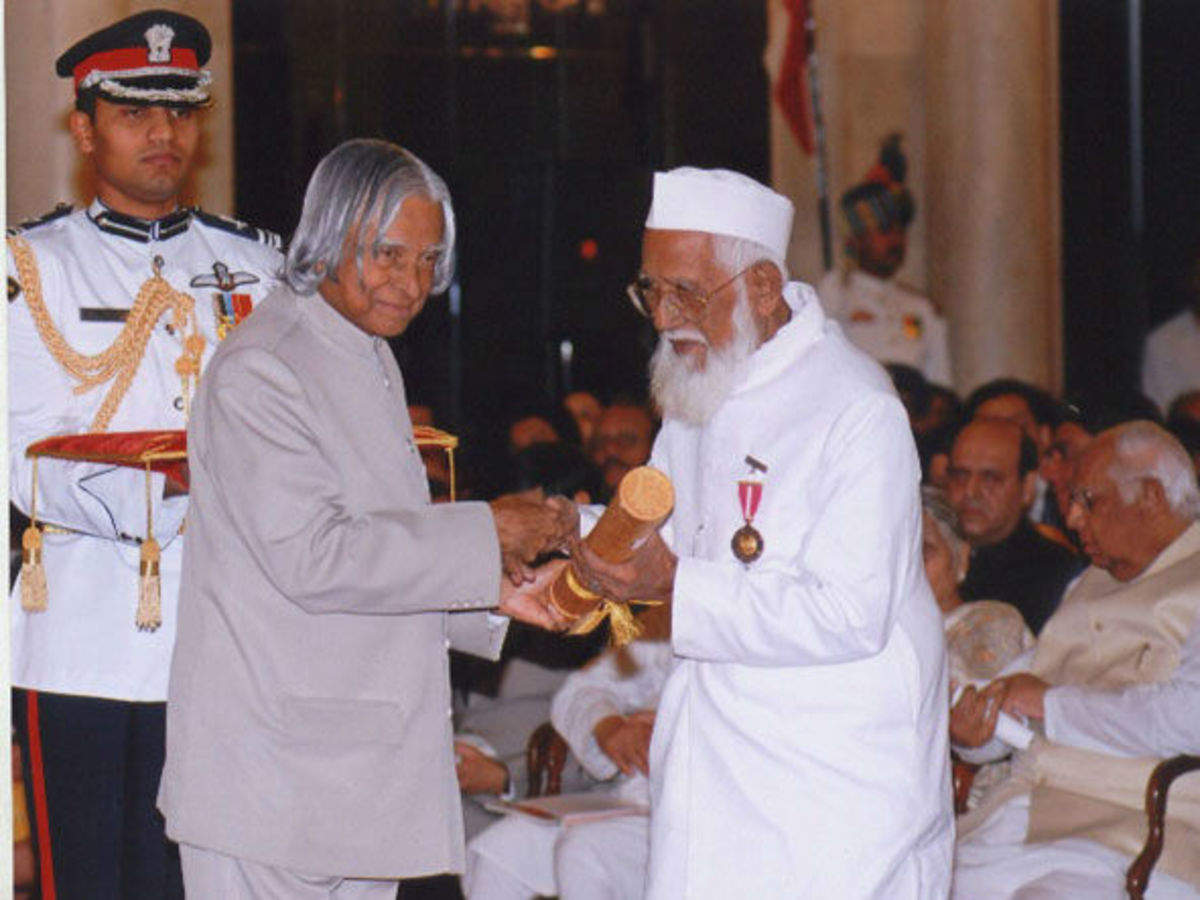
He had accompanied Mahatma Gandhi on the Dandi March and later spent several days with him in a prison in Cuttack. In 2007, he was conferred with the Padma Bhushan for his fight against the British rule in India.

114 years old freedom fighter dies in Kolkata | The Times of India
Syed Mohammad Sharfuddin Quadri being conferred with the Padma Bhushan by the then President APJ Abdul Kalam.

Late on Monday night, Syed Mohammad Sharfuddin Quadri, who was affectionately referred to as hakim sahab in his neighbourhood in Rippon Street, passed away three days after celebrating his 114th birthday.

Quadri, a renowned Unani practitioner who was instrumental in founding the Unani Medical College and Hospital in Abdul Halim Lane in central Kolkata, was born on December 25, in 1901 when Kolkata was still the capital of the country and Mahatma Gandhi had not returned to India.

“My father was imprisoned with Gandhiji by the British in Cuttack. He would accompany him everywhere during the Civil Disobedience Movement,” said son Manzar Sadique in the family’s home in 84/9 Rippon Street.

“In October, abba had travelled to Lucknow where he was the chief guest at a conference of Unani practitioners. Chief minister Akhilesh Yadav had invited him over to his house,” informs Sadique.

Quadri was born in the remote village of Kumrava in Nawada district of Bihar on Christmas Day in 1901. His family moved to Calcutta in the mid-1930s. Hakimji would begin his day with Fajar (the morning namaaz) at the break of dawn followed by his visit to his chamber, Swadeshi Dawa khana on Haji Mohammed Mohsin Square, where patients would already be waiting for him. He would examine more than 100 patients every day free of cost, says son Sadique.

“Unani was his passion and he could identify the ailment just by feeling the pulse of the patient,” says Sadique.

The centurion who specialized in treating infertility would never miss his customary walk after work. “He suffered from arthritis which is why he took special care of his fitness,” said Sadique.

Quadri who began an informal school for children and triggered an adult literacy campaign in Rippon Street was the founder member of the

Once Quadri once revealed the secret behind his fitness and longevity to his friends. “I drink two glasses of neem juice every day,” he has said. This fitness mantra was handed over to him by his father Mohammad Mohibbudin who had died at the age of 121 years!

Hasnain Imam, a teacher and resident of Rippon Street fondly recalled the time he had spent with “hakim sahib” when he was in college. “He was a treasure trove of knowledge. From politics to medicine to Sufism, we would discuss a wide range of topics. They don’t make people like them anymore,”  said Imam.

source: http://www.timesofindia.indiatimes.com / Times of India / Home> News> Kolkata News / by Zeeshan Javed / TNN / December 30th, 2015

Meet Naziya & Shabrun, two Muslim nurses from Bihar awarded by President Murmu for meritorious service

BIHAR:

The young nurses believe that more Muslim girls across the country should opt for the nursing profession to serve society.

Patna (Bihar) :

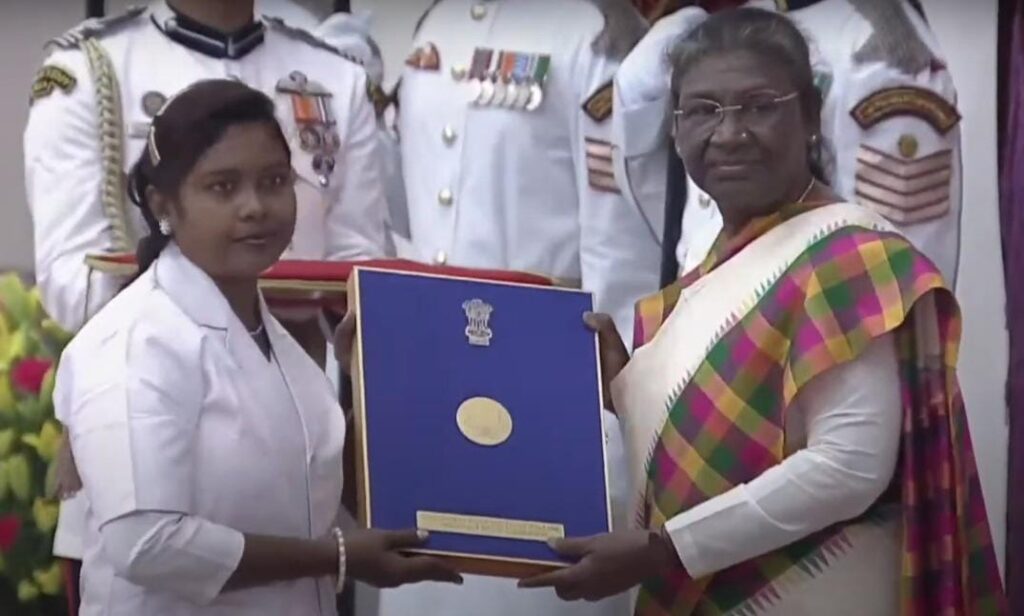
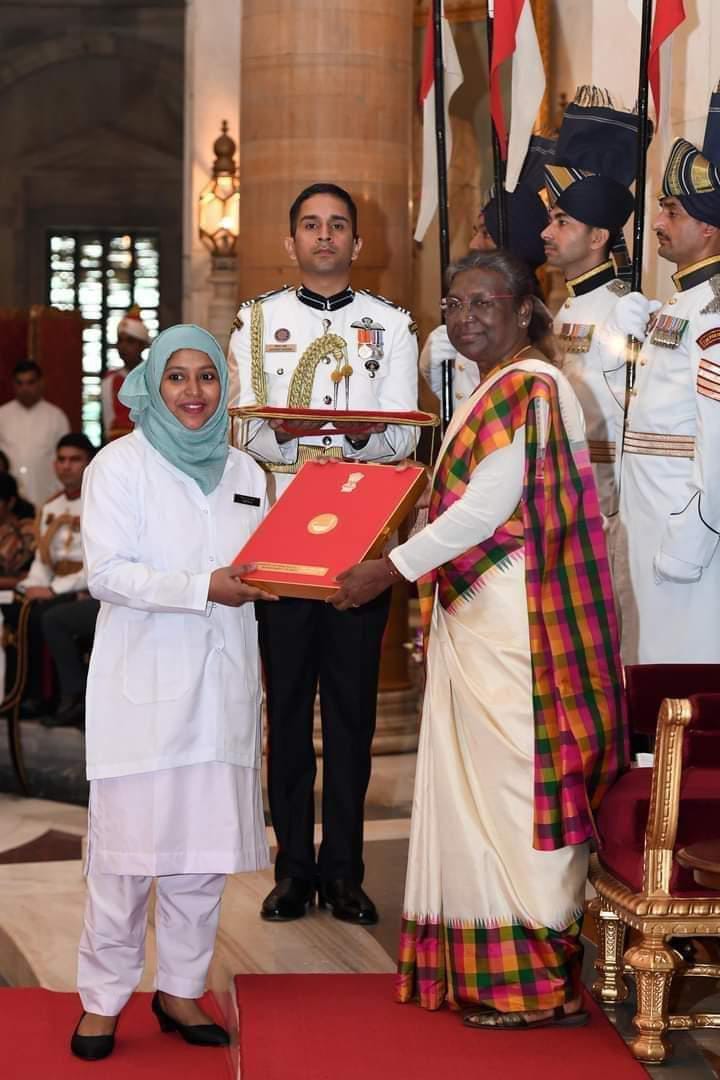
Two Muslim nurses Naziya Parveen and Shabrun Khatun from Bihar were awarded this year’s National Florence Nightingale Awards (NFNA) by the President of India, Droupadi Murmu at Rashtrapati Bhavan earlier this month. 

The National Florence Nightingale Awards (NFNA) were instituted in 1973 by the Government of India’s Ministry of Health and Family Welfare as a mark of recognition for the meritorious services rendered by nurses and nursing professionals to the society.

Sajeeda Banu of Karnataka, Ahmedullah Wani of Jammu & Kashmir, and Mohammed Kasim AB of Lakshadweep are the other Muslims who were awarded this year. 

She was among 51 people from around the country who were awarded in different categories by the President. Her citation states that she has contributed to the establishment of the labor room and for helping in preparing the standard operating procedure.

Meet Naziya & Shabrun, two Muslim nurses from Bihar awarded by President  Murmu for meritorious service – TwoCircles.net
32-year-old Naziya Parveen receiving the award from the President Murmu. | Picture by arrangement

Hailing from Sultanganj, Bhagalpur, Naziya is the eldest of three sisters. She is married to a microbiologist Mohammad Shams of Gaya. After completing her high secondary education in Dumka, Jharkhand she studied nursing for GNM at JawaharLal Medical College, Bhagalpur, and worked with Jamia Hamdard in New Delhi for six years. It was challenging to move from Delhi to Araria but her family supported her as “there isn’t much scope of work in Sadar Hospital.” 

“I feel quite proud to be awarded as our society does not recognize the work of nurses. I am elated for being a Muslim awardee as we don’t get nominated for such awards. I was asked if I was from Kashmir as I was wearing a hijab,” she said.  

Mother of two kids, Naziya has inspired other Muslim girls to take admission to nursing courses. Local newspapers in the state ran stories featuring her. 

“We need to change our attitude towards this profession. It is a good job and one can draw good income from it. The nursing course is such that even if one does not opt for a job, they can get the chance to serve from home and earn. I am of the view that more Muslim girls should study nursing as a profession,” she said. 

28-year-old Shabrun Khatun was awarded in the ANM (Auxiliary Nurse and Midwife) category. | Picture by arrangement

28-year-old Shabrun Khatun was awarded in the ANM (Auxiliary Nurse and Midwife) category. She works at Darbhanga Sadar primary health center. She had applied for the award previously but it was her work during Covid-19 that won her an award this year. She recalled how she went for a door-to-door screening of Covid-19 in April 2020 while being on fast and continued to work in 2021. 

Shabrun told TwoCircles.net that receiving the award from President Murmu was quite encouraging. 

Her journey to success has not been smooth. She had to work in local hospitals to support her family but this experience helped her. “I was good at studies in school and got prizes for my co-curricular activities. I wanted to be a medical doctor. I was selected for MBBS at a private medical college but did not have enough money to take admission. I also wished to be an officer in administration but my father’s proximity to doctors got me into nursing.”

Shabrun’s father Mohammad Akhtar is a tailor who would stitch clothes for operation theaters of hospitals nearby. She had cleared the preliminary test for selection in the police department but finally settled for a nursing course after her graduation in Zoology from her hometown of Rosera Bazar in Samastipur district in Bihar. 

Shabrun said that she had to face unfriendly treatment in society after she chose to become a nurse. “But seeing my success now, everyone is happy,” she said. 

She is of the view that Muslim girls who are not able to qualify for MBBS should consider nursing as a career as “it gives the satisfaction of serving humanity in one small way.” 

In December this year, she would be felicitated on the foundation day of the Darbhanga district. 

Sami Ahmad is a journalist based in Patna, Bihar. He tweets @samipkb

source: http://www.twocircles.net / TwoCircles.net / Home> Lead Story / by Sami Ahmad, TwoCircles.net / November 25th, 2022

Israil Mansuri: From Mukhiya to a Minister

Mathurapur, Patahi (Muzaffarpur District), BIHAR :

The new information technology minister of Bihar Mohammad Israil Mansuri belongs to a socially backward Dhuniya community.

Mohammad Israil Mansuri. | Photo: Facebook/Israilmansuriofficial

Patna (Bihar) :

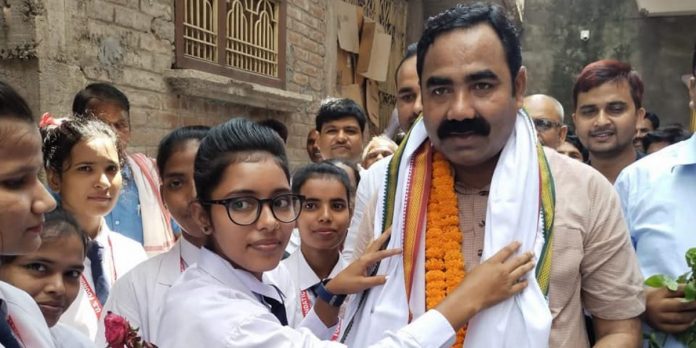
Mohammad Israil Mansuri, a Rashtriya Janata Dal (RJD) MLA is the new minister of Information Technology in the government of Bihar. 

Mansuri, 46, belongs to the Dhuniya community and uses Mansuri as a surname. In Bihar, the Mansuris are primarily involved in quilt making. He is considered to be the first in his community to become a minister in the government. 

Mansuri started his political career in 2001 as a Mukhiya (village head). Though he calls himself a “servant of all communities,” in political terms he is a Pasmanda (socially backward). 

Mansuri completed his early education in his village Mathurapur, Patahi in the Muzaffarpur district. He studied up to I.Sc. and later joined politics.

His father Mohammad Usman does not have prior experience in politics and his wife Zubaida Khatoon is a homemaker. His only daughter Neha Tarannu is studying Unani medicine. Mansuri used to work with his father in litchi gardens and at his grocery shops. He is the third among six siblings of four brothers and two sisters. One of his brothers runs a fruit shop while the other is a teacher. He wanted to be a teacher but could not clear the main examination in 1994 while he had also passed the preliminary test for T.C. in Railways after passing his 12th board examination the same year. 

He first joined Nitish Kumar’s party Janata Dal in 1996 and was part of the party till Kumar joined hands with the Bharatiya Janata Party in 2017. He resigned from JD (U) and joined RJD.

Talking to TwoCircles.net, Mansuri thanked the Almighty and his party leaders Lalu Prasad and his son the deputy chief minister of Bihar Tejaswhi Yadav for choosing him to be a minister. “For me being a Mukhiya too was a big dream. Then in 2020, I got a ticket from RJD and got elected as an MLA in my first attempt from the Kanti seat. I was extremely surprised when I got a call to take the oath as a minister. It seems that my struggle in politics has impressed my leaders Lalu and Tejashwi,” he told TwoCircles.net. 

“To struggle and strive for something comes naturally to me. I studied in a school where we had to take our Bora (Jute bag used as a mat) and did not have a pen and notebook but slates to write on. I used to cycle 10 to 15 kilometres to bring the grocery items for our shop while I was in school. As I had an interest in social work, I got a chance to meet people. Though I come from the Mansuri community, my popularity in all communities is equal,” he said. 

Mansuri was caught in controversy soon after he became a minister. He travelled with the chief minister Nitish Kumar to the Hindu holy city of Gaya as he was the in-charge minister of that district. When he entered the Vishnupad temple accompanied by Kumar, a huge controversy erupted as “non-Hindus were not allowed to the sanctum sanctorum of the temple. “I used to visit all places of worship without caring for the religion. I was not made aware of the restriction at that temple. I entered without any intention to breach the rule.”

When asked what his focus would be as a minister of the IT department, he said, “IT is a fast-changing sector. We would try to keep our state updated in this field. We would also see how many jobs we can provide to the youths from our department as this government aims to give ten lakh jobs.” He checks his emails and runs his Facebook page by himself and has his own website.

All India Pasmanda Muslim Mahaz President and former Rajya Sabha member Ali Anwar told TwoCircles.net that as Mansuri belongs to Pasmanda Biradari his election as MLA and now elevation to a minister is a great morale booster for the downtrodden section of the Muslim community. “Lalu and Tejaswhi took the right decision to induct Mansuri as a minister and many more such steps are needed for the society,” he said.  

Former Director of Jagjivan Ram Institute of Parliamentary Studies and Political Research – Srikant sees it as a necessary step to bring upward mobility to the people who belong to the lower strata of society. “Since Mansuri belongs to the most backward section of the society his empowerment in politics is in accordance with the theory of Ram Manohar Lohia and Mahatma Gandhi,” Srikant said. 

Srikant added that it was a time taking process to empower the Pasmanda section but a positive step has been taken. 

www.israilmansuri.in

Sami Ahmad is a journalist based in Patna, Bihar. He tweets at @samipkb

source: http://www.twocircles.net / TwoCircles.net / Home> Careers / by Sami Ahmad, TwoCircles.net / August 30th, 2022

Five Muslims Get Ministerial Berths in Bihar – Operation Lotus Fails

Patna, BIHAR :

Meanwhile, BJP is deliberating upon the reasons for the failure of operation lotus in Bihar and the future course of action in the changed situation there

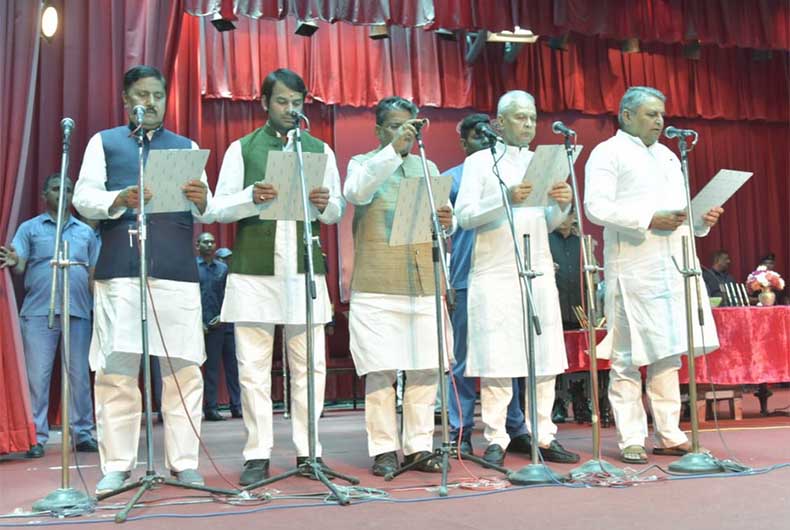
Bihar Chief Minister Nitish Kumar after the expansion of his cabinet has made public that there will be 5 Muslim ministers in his cabinet of 31 Ministers that took oath on August 16, 2022.

The JD-U broke away from the BJP and was successful to retain power in the newly formed government with the RJD and other allies. The JDU gave only one ministerial berth to its member from the minority community from its quota. Jama Khan was made Minister of Minority Affairs.

In Contrast, the RJD gave three Ministerial berths to the minority community from its quota. Shamim Ahmed made sugarcane minister, Shahnawaz Alam got disaster management, and Mohammad Israil Mansoori got information technology.

Congress, the alliance partner of the JDU-RJD combined government has given only one ministerial berth to a member of the minority community. Afaq Alam has become the animal husbandry and fisheries minister of Bihar.

If we compare 2022 with 2020 when the JDU aligned with the BJP to form the government in Bihar, there was not a single Muslim Minister in Nitish Kumar’s cabinet. Even the Minority Affairs Ministry was held by Ashok Chaudhary, a close confide of the Bihar CM. This was worse than in Uttar Pradesh where the lone BJP Muslim MLA was made Minister of Minority Affairs.

In the cabinet expansion, the Rashtriya Janata Dal (RJD) got 16 ministerial berths. The Janata Dal-United (JDU) got 11, the Congress got 2 ministerial berths. Jitin Ram Manjhi’s Hindustani Awam Morcha and an Independent MLA Sumit Kumar Singh also found a place in the new cabinet.

It is learned from the sources that 5 ministerial berths are kept reserved for future expansion of the Bihar cabinet that can have up to 36 ministers, including the Chief Minister.

The Grand Alliance in Bihar has a strength of 163. Now it has climbed to 164 after Sumit Kumar Singh an Independent MLA extended his support to the JDU-RJD alliance and got a ministerial berth in the new government. The RJD- JDU government in Bihar is likely to prove a majority in the Assembly on August 24.

Earlier Chief Minister Nitish Kumar pulled the rug below the BJP’s feet when the saffron party was set to launch a surgical strike code-named operation lotus. Buoyed by the success of its operation in Maharashtra last month with his man Friday Eknath Shinde the BJP propped up RCP Singh the former Union minister who was to plot a coup by taking JDU MLAs to some safe haven in the BJP-ruled state.

However, before he could make any moves, the Chanakya of Magadha got the wind of the ‘Gujarati trap.’ He first exposed RCP Singh’s ill-gotten wealth and sought his explanation. This made BJP’s ‘Mohra’ resign from the primary membership of JD(U). This happened on August 7.

Even before the BJP could launch a strike on Nitish Kumar with the help of RCP Singh, the Vikas Prush of Bihar parted his ways with the BJP. He hems a new alliance with the RJD and other political parties and took oath on August 10 with RJD’s Tejashwi Yadav as his deputy. This is how Nitish Kumar becomes the Chief Minister of Bihar for the seventh time.

The BJP got the taste of its own medicine in Bihar. Now the BJP top brass is holding meetings with the party’s leaders in Bihar. The saffron party is to deliberate upon the reasons for the failure of operation lotus in Bihar and the future course of action in the changed situation there.

[Syed Ali Mujtaba is a journalist. He can be contacted at syedalimujtaba2007@gmail.com]

source: http://www.ummid.com / Ummid.com / Home> India / by Syed Ali Mujtaba / August 18th, 2022

Medal winning girl credits father for success

Siwan, BIHAR / Baramulla, JAMMU & KASHMIR / Lucknow, UTTAR PRADESH :

Shafia Khursheed

Lucknow :

She could leave her hometown Baramulla in Jammu & Kashmir to get quality education at a reputed institute in Lucknow only because her father supported her dreams.

Shafia Khursheed could not have expressed gratitude to her father in a better way than by winning a silver medal for BA (Hons) in Urdu.

“I owe it all to my father,” she said, while walking confidently to collect the medal during the convocation ceremony on Tuesday.

Like Shafia, Bihar’s Sumaila Ayub, the gold medal winner in BA (Hons) in economics and Lucknow’s Insha Rizvi, the silver medal winner in BA (Hons) in English, also owe their success to their father who fought against the conservative mindset which stop girls from going to far-flung places for studies.

“My father Khursheed Ahmad Lone is my pillar of support. To attain good education, he sent me not only outside the city but to a different state. I stayed back in the hostel, was regular with classes and visited home only once a year so that I can score high and make my father proud,” said Shafia, who wears hijab with pride, and aspires to become an Urdu professor.

Sumaila said, “I came all the way from Siwan, Bihar to Lucknow to achieve my goal of becoming an economics professor. This was not at all possible if my father Mohd Ayub had not given me the freedom to run after my dreams. I am the first gold medal winner of my family.”

“We are three sisters and our father Achchan Ali Rizvi not only gave us the best education but also stayed awake with me late at night to help me study,” said Insha.

Meanwhile, the winner of two gold medals, BA (hons) in computer science Deepali Singh’s from Malihabad said she had the support of both her father Satyapal Singh and her husband Sanjeev Singh to pursue education.

“I come from Malihabad daily to attend classes. My hard work paid off as I have won two gold medals,” said Deepali.

source: http://www.timesofindia.indiatimes.com / The Times of India / Home> News> City News> Lucknow News / by Mohita Tewari, TNN / March 23rd, 2022

Senior journalist Zeya Saheb has left us, as well

Badharwa Fateh Mohammad Village, BIHAR / Lucknow, U.P. / NEW DELHI :

New Delhi :

Mohammad Zeyaul Haque, a senior journalist, well known in journalistic and intellectual circles of Delhi, Bihar and UP, passed away on Thursday after a short hospitalisation, the end came around 7:30 pm today. He was 72.

Born in 1948 in a remote village of Bihar called Badharwa Fateh Mohammad, under Dhaka subdivision of East Chamapran district, he received his early education in Dhaka. After schooling, he went to college in Motihari and later joined LS college, Muzaffarpur, from where he graduated with English Literature. Inclined towards Journalism and writing from college days, he went to Lucknow to pursue his Journalistic career, first joining Urdu daily, Qaumi Awaz, published by the associated journals limited which also published National Herald and Navjeevan in Hindi. His journalistic acumen, writing skills and intellectual calibre soon attracted the attention of the Editor of English daily, the pioneer of Lucknow who offered him a job as a reporter for his newspaper.

It was a big jump for a person who started out as a Journalist in an Urdu Daily. From there, there was no looking back for Mr Haque who was affectionately called Zeya Saheb by his friends and journalist colleagues. In Lucknow, he worked National Herald and Times of India which he left to join Russian Embassy to work for its publications as the consultant editor in Delhi. Later, Mr Haque took up the stewardship of a fortnightly, Nation and the World, as its Executive Editor, though he piloted it as its de facto Editor.

He was executive editor of The Milli Gazette and edited a number of books published by Pharos Media. Currently, he was editing the English translation of the Quran by Zafarul-Islam Khan.

He also edited the Magazine ‘The Encounter’, with distinction. Zeya saheb was a trilingual journalist who was a regular columnist of Rajasthan Patrika published from Jaipur and used to contribute articles to the multi-edition Hindi daily The Hindustan. At the time of his death, Zeya saheb was working for an NGO group, Institute of Objective Studies, New Delhi, which he served for long years, as its strongest pillars.

Coming from a rural background, Zeya saheb compared well with many of city-bred and public school educated peers. He had trained and inspired generations of Journalists. Apart from qualities of Head, he was also known for his qualities of heart. He was a thorough gentleman, kind and compassionate, helping people with his right hand without his left hand knowing it.

A gentleman to the core, he had exceptional grasp of English and was highly well-read. Always had a story to share from his treasure.

He is survived by two sons and one daughter and a lot of grandchildren and relatives. His eldest son Waqas is Senior Journalist with India Today and the other son Arafat, is a Senior Manager in an MNC, while his daughter Naila teaches English in Delhi University. May Zeya Saheb’s soul rest in peace.

source: http://www.milligazette.com / The Milli Gazette / Home> News> Community News / by The Milli Gazette Online / April 22nd, 2021

Credit society run by Muslims offers respite for low-income wage groups

Patna, BIHAR :

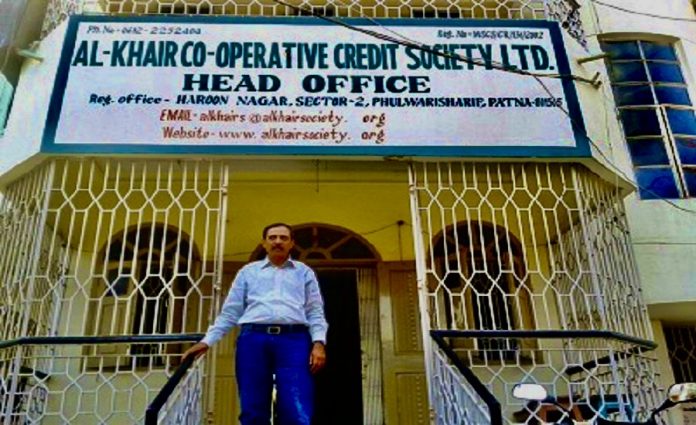
Head office of Al-Khair Society in Patna, Bihar. | Picture: Clarion India

Headquartered in a small building in the state capital Patna, Al-Khair Co-operative Credit Society, with thirteen branches in four states, has transformed lives by loaning money to low-income groups at zero interest rate. 

Patna (Bihar) :

For 18 years, 51-year-old Kamala Devi used to sell vegetables at her small shop in Patna, Bihar, to support her family. The business wasn’t doing well and when in need of cash she would borrow money from a local lender at a 20 percent interest rate per month. Paying back this money at this interest rate was an extra burden. She found a way out when she came to know about the Al-Khair Co-operative Credit Society, a registered society based in Patna that loans money to low-income groups at zero interest rate. 

In 2012, she borrowed Rs 10,000 from Al-Khair with zero interest and a one-time nominal service charge. With this money, which she had to repay by easy installments of Rs 50 per day, Devi started selling readymade garments at her shop. Her business improved. She paid back the loan amount in one year. Happy with the result, she took two more loans to expand her business. 

“I am planning to borrow Rs five lakh from Al-Khair after repaying a loan of three lakh twice in the last three years. My goal is to further expand my business with the help of my elder son,” Devi told TwoCircles.net. 

Besides lending her money to help her business, Al-Khair also loaned her money to buy a laptop for her younger son, who works in a private company. 

“My family is settled now and our days of hardships are over,” she said. 

Devi is one among 29,000 members of Al-Khair Co-operative Credit Society, a registered body under the Multi-State Co-operative Society (MSCS) Act 2002. 

The society has 13 branches across Bihar, Jharkhand, Uttar Pradesh and New Delhi. Its beneficiaries include vegetable vendors, ready-made garments shopkeepers, medicine shop owners and Dhaba (eatery) owners etc. 

Launched in 2002 by Arshad Ajmal (then chairman of Al-Khair Charitable Trust), Dr Badurl Hoda, Syed Shamim Rizvi and a few others, it employs 125 people as its staff. The need for such a society was felt after a detailed survey in 2001 conducted by S.B. Sinha, a Harvard University expert, revealed that “only 10% of people who were in need of loans had access to commercial banks.”

In order to become a member, one is required to buy at least 10 shares of Rs 10 each. 

Managing Director of Al-Khair Naiyer Fatmi told TwoCircles.net that “Al-Khair has disbursed loans of Rs 113 crores since its inception.” 

Fatmi said that they levy a one-time service charge ranging from 3.5 to 8.5 per cent. 

Helping hand to low-income women during pandemic
Nearly 35 percent of Al-Khair’s members are women. In 2012, Al-Khair started a branch in Mahendru, Patna that is run entirely by women. 42-year-old Shama Parween of Dargah Shah Arzan neighborhood is a member at this branch. She runs a small eatery near a school in Sultanganj, Patna.

In 2019, she became a member of Al-Khair by depositing Rs 500 per month from her husband’s savings.

“During the countrywide Covid-19 lockdown in March 2020, managing our household expenses became difficult as there was no work,” Parween, a mother of two daughters, told TwoCircles.net. As she was a member of Al-Khair, it only took a week for her to avail a loan of Rs 25,000.

She said she found it easier to repay the loan as the field staff from Al-Khair collected Rs 100-200 every day from her.

The hassle-free loans offered by Al-Khair, which take around two weeks to disburse after submitting basic documents, are popular among low-income groups. Its door-to-door system of collection is also found to be a matter of ease for its members.

Rajesh Sahu, from the Madhubani district of Bihar, is a vegetable vendor in Gomti Nagar, Lucknow in Uttar Pradesh. In 2012, he started his small shop with a loan of Rs 3000 from Al-Khair. 

Sahu told TwoCircles.net that he was introduced to Al-Khair by his brother-in-law who was a beneficiary. “There is no hassle with Al-Khair. They don’t ask for too many documents and their charges to disburse loan is reasonable unlike where interest is charged which gets compounded,” he said. He is currently repaying his loan of Rs two lakhs, which he had taken in March this year, by depositing Rs 800 to 1000 every day. 

Despite its popularity, Al-Khair is finding it difficult to increase its number of branches. The last branch was opened in 2014 at Jamia Nagar, New Delhi which remains its only branch in the national capital. 

Fatmi said they have been waiting for almost five years for approval to open their five new branches, which include three in Bihar and two in Jharkhand. Earlier, the decision to open any new branch under MCMS Act lay with the Board of Society, Government of Bihar but after the demonetisation in 2016, the authority was delegated to Registrar, Co-operative in New Delhi under the Central government.  

“Our application is lying with them from 2016. We just hope that it gets approved,” Fatmi said.

Sami Ahmad is a journalist based in Patna, Bihar. He tweets at @samipkb

source: http://www.twocircles.net / TwoCircles.net / Home> Lead Story / by Sami Ahmad, TwoCircles.net / May 26th, 2022

U.S. Special Coordinator for Tibet Uzra Zeya to visit India and Nepal

Bihar,INDIA / North Carolina / Washington, U.S.A. :

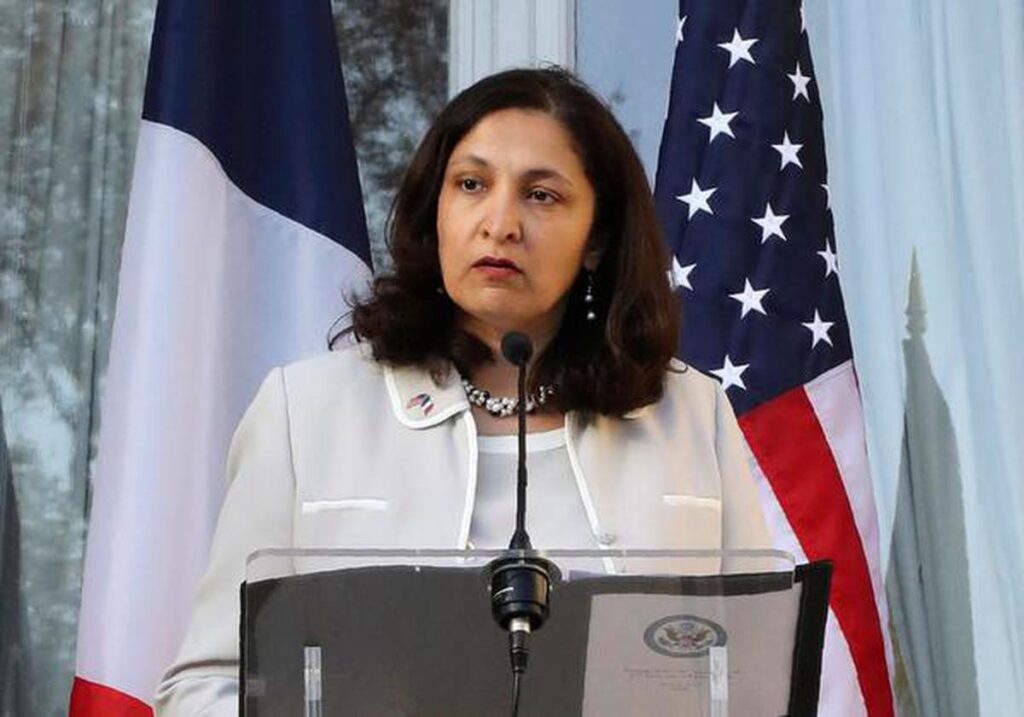
U.S. Special Coordinator for Tibetan issues Uzra Zeya. File | Photo Credit: AFP

U.S. Special Coordinator for Tibetan issues Uzra Zeya will travel to India and Nepal this week to deepen cooperation on human rights and democratic governance goals with the two nations, the State Department has announced.

Ms. Zeya, the Under Secretary for Civilian Security, Democracy and Human Rights and an India-American, is expected to visit Dharamsala in Himachal Pradesh during her visit to India.

Dharamsala is home to the Dalai Lama and the Tibetan Government-in-exile.

“Under Secretary for Civilian Security, Democracy and Human Rights and U.S. Special Coordinator for Tibetan Issues Uzra Ms. Zeya will travel May 17–22 to India and Nepal to deepen cooperation on human rights and democratic governance goals, and to advance humanitarian priorities,” the State Department said on May 16.

“She will also discuss partnering with India and Nepal during this Year of Action for the Summit for Democracy. The delegation will include U.S.AID Deputy Assistant Administrator for Asia Anjali Kaur,” it added.

It will be the first high-level contact between the U.S. and the Tibetan leadership after Joe Biden became President in January last year.

In New Delhi, people familiar with the development said last month that Ms. Zeya will hold talks with the Dalai Lama and other senior leaders of the Tibetan Government in exile in Dharamsala, signalling the Biden administration’s commitment to the Tibetan cause.

Last month, Tibetan exile leader Penpa Tsering paid a visit to Washington D.C. and met Ms. Zeya. Tsering — the elected head of Tibet’s India-based exile Government the Central Tibetan Administration — had also met House Speaker Nancy Pelosi and other congressional leaders.

China considers the 14th Dalai Lama as a political exile who has attempted to split Tibet from China under the guise of religion.

According to the people cited above, key issues relating to the Tibetan cause are likely to figure in the talks.

As the U.S. Special Coordinator for Tibetan issues, Ms. Zeya has been coordinating the Biden administration’s policies, programmes and projects relating to the Tibetan cause.

Ms. Zeya was sworn-in as the Under Secretary for Civilian Security, Democracy, and Human Rights by Secretary of State Antony Blinken on July 14 last year.

On December 20, she was concurrently appointed as the U.S. Special Coordinator for Tibetan issues.

The U.S. has been consistently supporting the Tibetan cause notwithstanding China’s strong objection.

In 2020, the U.S. came out with legislation reaffirming the absolute right of Tibetan people to choose a successor to the Dalai Lama and the preservation of Tibet’s environment.

After the U.S. Congress passed the legislation, China had accused Washington of meddling in its internal affairs.

China has been insisting that the selection of the next Dalai Lama has to be decided within Chinese territory and that it has to have a say in the matter.

The issue of a successor to the 14th Dalai Lama, who has been living in exile in Dharamsala since 1959, gained traction as he turned 86 in July last year.

Mr. Blinken had met a representative of the Dalai Lama during his visit to New Delhi last year.

source: http://www.thehindu.com / The Hindu / Home> News> International / by PTI / Washington, May 17th, 2022

Stranded in Ukraine, Rashid Rizwan one of Ivano-Frankivsk national medical university students’

Kapoorpoor Village (Gopalgang District), Bihar, INDIA / UKRAINE :

Rashid was one of the countless students stuck in Ukraine, without any government aid, when the war broke out.

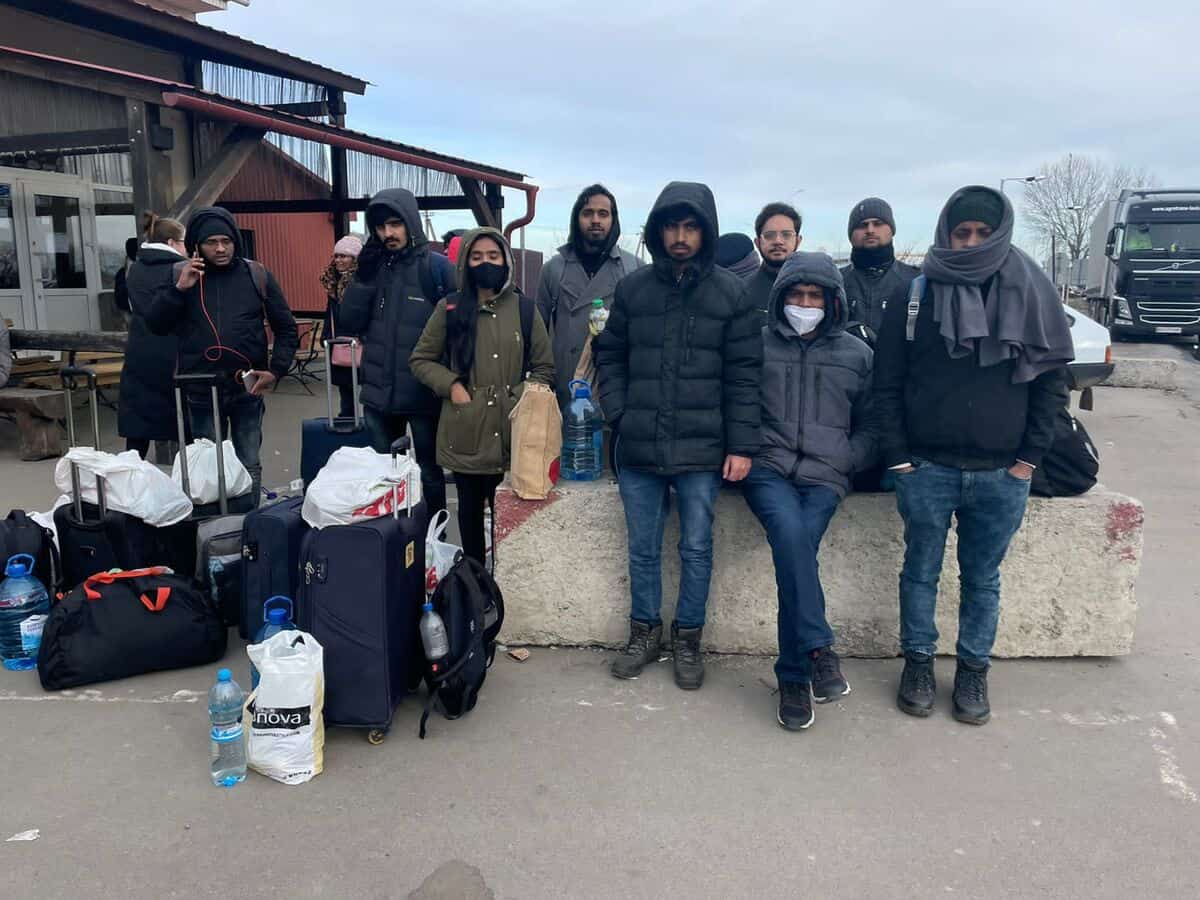
 Rashid Rizwan and other Indian students at the Ukraine-Hungary border. (Special arrangement)

Over the last few weeks, users of social media have sifted through, cross-checked and reshared posts and videos of Indian students stuck in Ukraine. However, one video, in particular, stood out. The subject of the video, Rashid Rizwan, a student of medicine in Ukraine’s Ivano-Frankivsk national medical university, can be seen remarking in a video posted a few days ago, “Isse acha toh mar hi jaate,” (We might as well have died instead of suffering this way.)

Even a superficial viewing of the video makes it clear that Rashid was distraught. His eyes, still glassy with leftover tears speak volumes. He asks how long he can cope. (Kitna sambhale khud ko?) As the video progresses, Rashid says, in a shaky, fearful tone that “yahan par puchne wala koi nahi hain. (There is no one here to enquire after our well-being)”

Rashid, who is a native of Gopalganj district of Bihar, was critical of the Citizenship Amendment Act introduced by the Union government in 2019 and in fact protested against it in his university in Ukraine. He also stood in solidarity with the countless victims of the 2020 northeast Delhi riots.

Further, Rashid clarified that he was open to the Citizenship Amendment Act but was uneasy with one community alone being sidelined. “Constitution toh WE the people se shuru hota hain na ma’am? Ab woh WE main Muslims nahi aate kya? (The Constitution starts with We the people no? Does that not include Muslims?)” he asks.

Victim-blaming students stuck in Ukraine

When asked about why he stayed put in Ukraine, when the advisory asked them to leave, Rashid stated that universities in Ukraine demand 100% attendance. If they left without coordinating with the universities, they would lose out on an entire year of education and further waste a huge sum of money.

This was made worse by the fact that Turkish visas were not readily available and the students could not book tickets to India directly. “The flight ticket prices kept soaring. At a point it was between 80,000 and 1,20,000 INR,” says Rashid.

After countless hours of debilitating panic (nearly two days), embassy officials approached Rashid and his companions at the Hungary border, to aid their return to India.

“We were asked to go to the nearest west Ukrainian border and so we obeyed. I, along with a few others was at the Ukraine-Hungary border. Then a new advisory stated that only students who could arrange for cars or buses should move towards the borders of the country. If we knew this in advance, we would have stayed put. Why are we being judged and maligned?” asks Rashid.

Rashid also tried to coordinate with the embassy and the university from February 14 but was met with either a tepid response or no response at all. He also wrote letters to the District Magistrate of Gopalganj and MP Alok Kumar Suman for aid the day Ivano-Frankivsk city was attacked.

A Doctor’s dream:

Towards the end of his narration, this reporter asked Rashid why he chose to become a doctor. He said that there was no doctor in his village for a very long time. “In Kapoorpur village (in Gopalganj district of Bihar), we don’t have a readily accessible doctor. Anyone seeking treatment has to travel 12 kilometres to the nearest dispensary. I wanted to relieve some of the distress caused by poverty,” he simply remarked.

At the time of writing this article, only 3,352 Indian students have returned to India from Ukraine as per government estimates.

source: http://www.siasat.com / The Siasat Daily / Home> News> India / by Anjana Meenakshi/ March 04th, 2022 (edited )