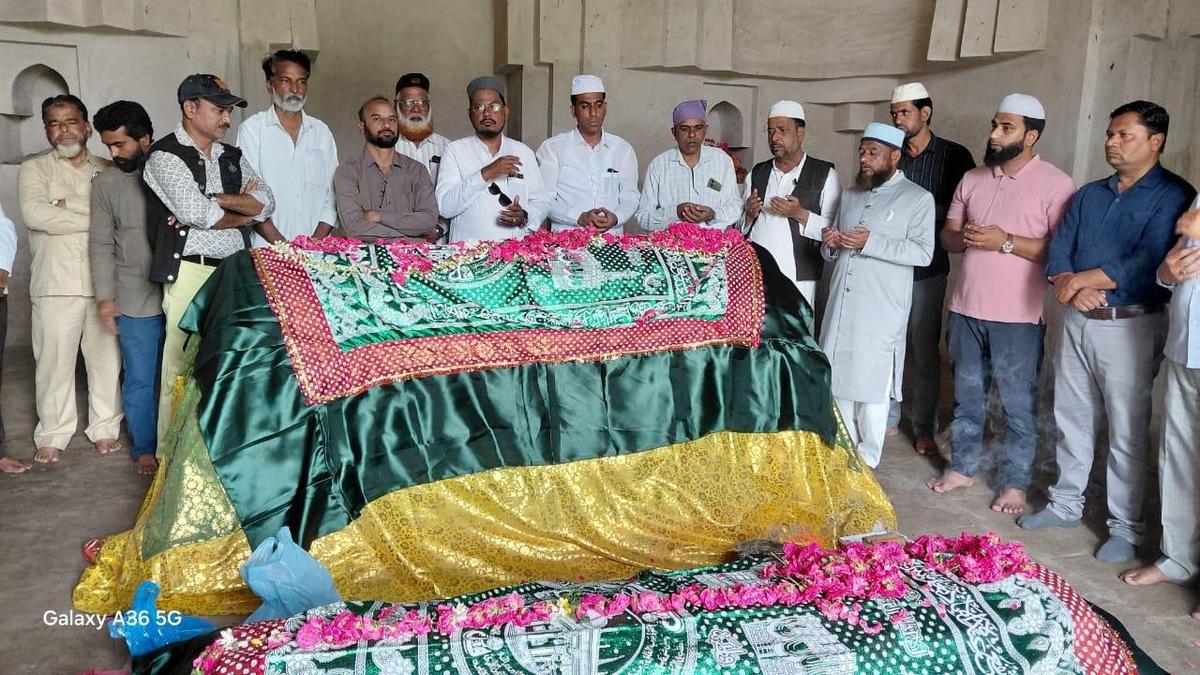
The 679th Foundation Day of the Bahmani Empire was observed at the tomb of Alauddin Hasan Bahman Shah, the founder and first ruler of the Sultanate, in Kalaburagi city on Monday.
The event, organised by the Bahmani Foundation, brought together historians, artists, intellectuals and social activists, who recalled the contributions of the Bahmani Sultanate to the cultural and architectural heritage of the region during its nearly two-century rule from 1347 to 1527 AD.
Speaking on the occasion, advocate Jabbar Gola said the Bahmani rulers played an important role in promoting art, culture and architecture, leaving behind a rich legacy reflected in the monuments and traditions of the region.
Bahmani Foundation president Qazi Rizwan-Ur-Rahman Siddique said the organisation has been commemorating the Foundation Day for several years through seminars, cultural programmes and competitions aimed at creating awareness among students about the history and heritage of the Bahmani period.
Artists Mohammed Ayazuddin Patel and Rehaman Patel, Numismatist Mohammad Ismail and others were present.
source: http://www.thehindu.com / The Hindu / Home> News> India> Karnataka / by The Hindu Bureau / August 18th, 2026
A survey covering more than 30 colleges across seven districts linked with Chhatrapati Shahu Ji Maharaj University shows a significant rise in female Muslim students
New Delhi :
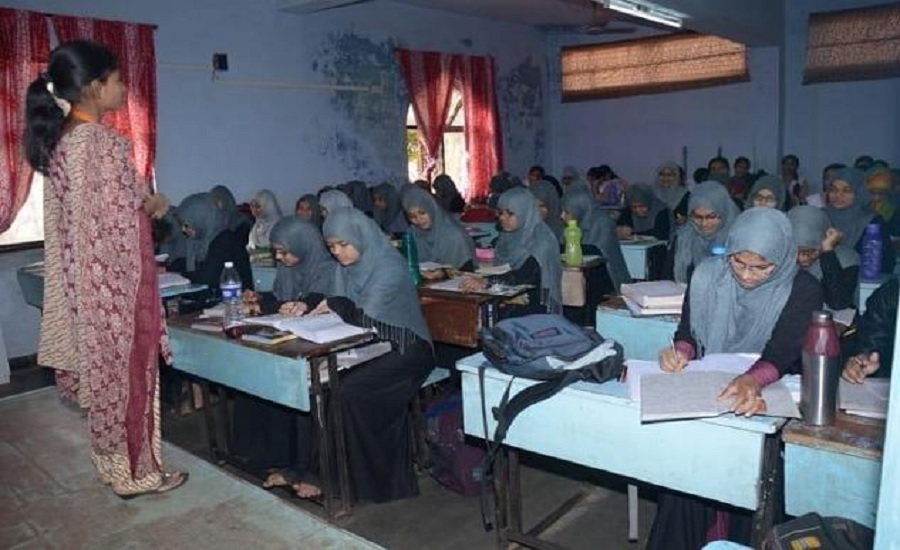
The number of Muslim girls pursuing higher education in Kanpur and nearby districts in Uttar Pradesh has increased significantly over the past five years, according to a survey conducted by a senior academic. The study shows that the share of Muslim female students in colleges has risen from around five per cent in 2021 to more than 21 per cent during the current admission process.
The survey was prepared by Prof B D Pandey, a senior teacher at PPN College and president of the Kanpur University Teachers’ Association (KUTA). The study was based on admission data collected from more than 30 colleges spread across seven districts of Uttar Pradesh.
The colleges included in the survey are located in Kanpur Nagar, Kanpur Dehat, Unnao, Kannauj, Farrukhabad, Etawah and Auraiya. All these colleges are affiliated with Chhatrapati Shahu Ji Maharaj University (CSJMU), Kanpur.
Prof Pandey said the data was collected from admission coordinators appointed in different colleges during the ongoing admission process. The survey looked at students enrolling in undergraduate courses such as Bachelor of Arts (BA), Bachelor of Science (BSc), Bachelor of Commerce (BCom) and other professional programmes.
According to the findings, Muslim girls accounted for around five per cent of female students enrolled in colleges in 2021. This figure increased to nearly 12 per cent in 2023 and has now crossed 21 per cent during the latest admission cycle.
The rise indicates a growing interest among Muslim families in sending their daughters for higher education. The survey also highlights that many of these students come from economically weaker sections of society.
Prof Pandey said one of the notable findings was that a large number of Muslim girls entering higher education belong to families with limited financial resources. In many such families, sons are also present, but instead of continuing studies after school, they often move towards employment or skill-based work.
“Many Muslim girls who are entering graduation and postgraduate courses belong to families where their brothers have studied only up to high school or intermediate level and then started working according to their skills,” Prof Pandey said.
The data suggests a changing attitude among some Muslim families towards women’s education. While economic challenges continue to remain a concern, more families are now supporting their daughters’ efforts to continue their studies beyond school.
The increase has been visible across different courses, including traditional degree programmes and professional courses. Teachers associated with these colleges believe that awareness about education, career opportunities and financial independence may be among the reasons behind the rise.
The trend also reflects a wider change in the participation of women from minority communities in higher education. More young women are seeking college education to improve their career opportunities and become financially independent.
Prof Pandey said the increase in Muslim girls’ admissions is a positive development and shows that educational aspirations among families are changing.
The survey, however, does not represent all colleges across Uttar Pradesh or the entire Muslim community. It is based only on admission figures from selected colleges affiliated with CSJMU.
Education experts say that continued support through scholarships, better awareness programmes and improved access to colleges will be important to maintain this growth.
The increasing presence of Muslim girls in colleges in the Kanpur region shows a gradual shift in educational choices, with more young women from the community moving towards higher education despite economic and social challenges.
source: http://www.clarionindia.net / Clarion India / Home> Big Story> India>Indian Muslims / by Mohammad Alamullah / August 04th, 2026
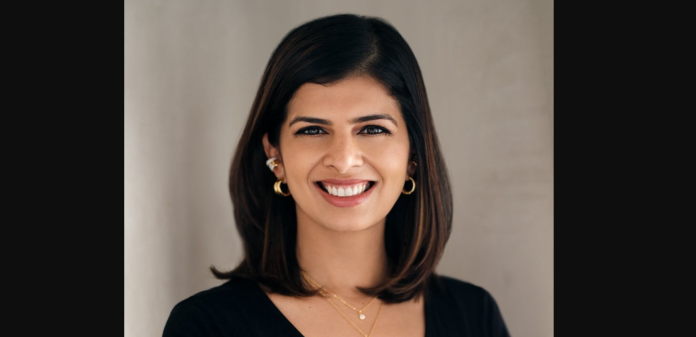
Sarah Sham, a fourth-generation Muslim entrepreneur from Mumbai and co-founder of Dubai-based luxury interior design firm Jea, has sparked widespread praise after sharing how she enforces strict work-life boundaries at her company, even at the cost of losing clients.
Sham, whose family business Essajees traces its roots back 130 years to her great-grandfather Abdul Kadir Essajee Sham, a trader of fine Iranian art tapestries, took to LinkedIn to outline the firm rules she applies across her design operations spanning 18 cities.
“We start at nine and close by six, five days a week. No weekend calls. No Sunday deadlines,” she wrote. “When a project runs behind, I hire another designer instead of asking my team to give up their weekend.”
Sham, a graduate of Art History from Duke and Oxford universities, admitted she once believed that good design required working through the night. Over time, she changed her approach after noticing that the best creative output came from well-rested designers, not exhausted ones.
“I started comparing creativity to a well instead of a tap,” she wrote. “Push too hard without rest, and it runs dry, no matter how skilled the person is.”
She acknowledged that the policy carried a real financial cost. Several clients left her firm in favour of teams willing to answer calls on weekends or work late nights. Sham chose to let them go rather than compromise her team’s working conditions.
“A tired designer does not run out of ideas all at once. The work slowly gets less interesting, and nobody notices until a client points it out,” she added.
Sham comes from a storied Muslim business family. Her ancestor Abdul Kadir Essajee Sham opened his Mumbai store in 1890, building a clientele that included Maharajas and royal families from India, Qatar, the UAE, Oman, Kuwait and Saudi Arabia. Today, Essajees serves a new generation of buyers including venture capitalists, consultants and young couples.
Her LinkedIn post drew strong responses from professionals across industries. Many praised her for holding firm on boundaries when revenue was on the line, calling her approach a model for sustainable creative work.
Sham co-founded Jea after serving as principal designer at Essajees Atelier for 12 years, carrying forward a family legacy built on craftsmanship, honesty and respect for the people behind the work.
source: http://www.radiancenews.com / Radiance News / Home> Features / by Radiance News Bureau / August 11th, 2026
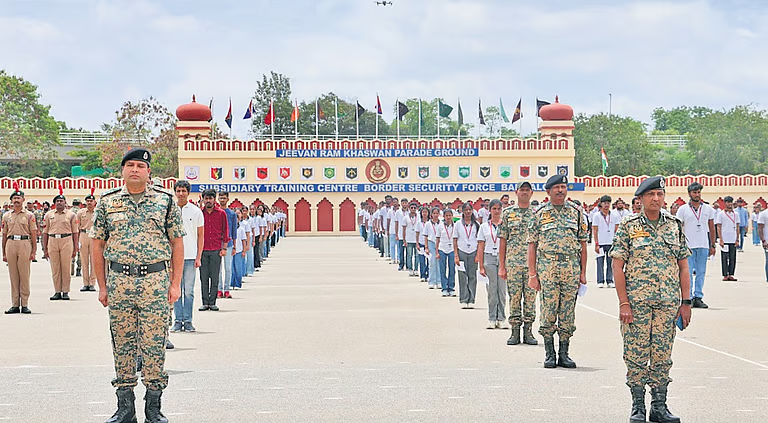
A mass singing of Vande Mataram was organised on Friday at the Subsidiary Training Centre (STC) at Border Security Force (BSF) Bengaluru as part of the nationwide commemoration of 150 years of the national song. The programme was organised under the directions of the union Ministry of Home Affairs and the BSF headquarters Photo | Express
Bengaluru :
The list includes 18 police personnel: one selected for the President’s Medal for Distinguished Service and 17 for Meritorious Service.
The government will honour 22 personnel from Karnataka Police, Fire and Emergency Services and Home Guards and Civil Defence departments with service medals on the occasion of the 80th Independence Day.
The list includes 18 police personnel, of whom one has been selected for the President’s Medal for Distinguished Service (PSM) and 17 for the Medal for Meritorious Service (MMS).
Assistant Commissioner of Police (Central Crime Branch) HN Dharmendra has been selected for the President’s Medal for Distinguished Service. Two personnel from the Fire and Emergency Services – Regional Fire Officer Shivakumar Swamy H M and Assistant Fire Station Officer Basavaraju M – have been selected for the MSM.
Similarly, two Home Guards and Civil Defence personnel – Senior Platoon Commander Meerasab Maboob Sabmulla and Platoon Commander Raghavendram – have been selected for the MMS.
17 cops to get MMS
Sara Fathima, SP, Railways, Bengaluru
Thomas Mathew PM, Commandant, 9th Battalion, KSRP, Bengaluru,
T Mahadev, ACP, Southeast Traffic Sub-Division, Bengaluru City.
Pramanand P Ghodke, DySP , Raichur District
K Shanmuga Varma, Inspector, Police Training School, Mysuru
Bavuddin Rukmuddin Gaddekhar, Inspector, Malmaruti PS, Belagavi City
Guruprasad Gopal Nayak, Inspector, CID, Bengaluru
Nayeem M, Reserve Police Inspector, Lok Bhavan, Bengaluru
Srinivasa M, SI, KP Agrahara Police Station,
Mahadevaswamy, Head Constable, Vidhana Soudha Security
Mariya Joseph Dinesh Kumar, Head Constable, KSRP
Jnanadev Naval Tarase, Special ARSI, 3rd Battalion, KSRP, Bengaluru
Chandrashekar G Chikkanavar, SRHC, 4th Battalion, B’luru
Abdul Kamal Abdul Hameed,Head Constable, Tarikere Sub-Division, C’magaluru
Nagesh Manchayya, APC, CID, Bengaluru
SA Manohar, Police Constable, Hunsur Town Police Station, Mysuru District
Abdul Rabbani, Armed Police Constable, Chikkamagaluru
source: http://www.newindianexpress.com / The New Indian Express / Home> Karnataka / by Express News Service / August 15th, 2026
Major (Retd) D.M. Nizamuddin, a respected former Indian Army officer, war veteran and long-time Treasurer of Bolar Juma Masjid, passed away on Monday. He was 86.
Born on October 6, 1939, Major Nizamuddin was the son of late D.M. Shamshuddin and a resident of Faiq House at Yemmekere Cross Road in Bolar, Mangaluru.
Major Nizamuddin had a distinguished career in the Indian Army and served the nation during the Indo-Pak wars of 1965 and 1972. He sustained injuries while fighting in the 1972 war.
After retiring from the Army, he remained actively involved in community service. He served as the Treasurer of Bolar Juma Masjid for many years and was known for his commitment and sincerity in carrying out his responsibilities.
The mortal remains will be kept at his residence, Faiq House, Yemmekere Cross Road, Bolar, for the public to pay their last respects until 11 a.m. on Tuesday.
The Janazah (funeral prayers) and burial (Tadfeen) will be held after Duhr prayers on Tuesday at Bolar Juma Masjid.
source: http://www.english.varthabharati.in / Vartha Bharati / Home> Karavali / by Vartha Bharati / August 03rd, 2026
It is a great privilege for me to accept this honour from the Shah Waliullah Institute. Honestly, I was reluctant at first and had declined this recognition multiple times.
New Delhi :
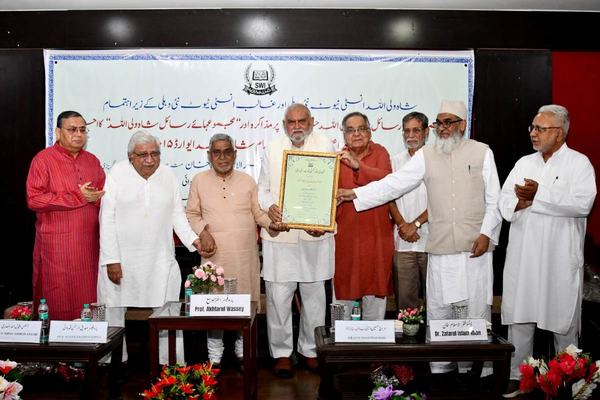
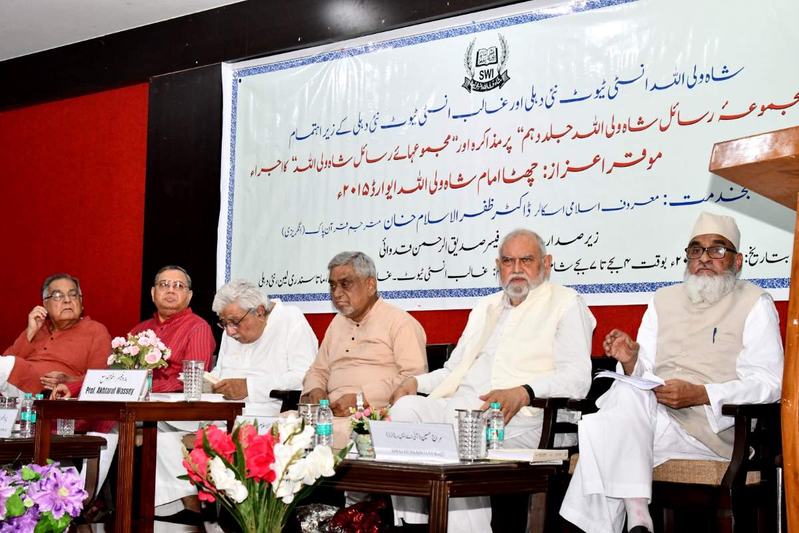
In a momentous event, renowned Islamic scholar, author, senior journalist, and former Chairman of the Delhi Minorities Commission, Dr. Zafarul-Islam Khan, was awarded the prestigious Sixth Imam Shah Waliullah Award here on Monday. The ceremony took place amidst a distinguished seminar on the theme of ‘Epistles of Shah Waliullah’ at the Ghalib Institute here.
Jointly organized by the Shah Waliullah Institute and the Ghalib Institute, the seminar sought to celebrate and highlight the scholarly and intellectual legacy of Imam Shah Waliullah. A special highlight of the event was the launch of the tenth volume of his acclaimed series of epistles, offering attendees an intimate glimpse into his teachings and enduring contributions to Islamic sciences.
A diverse assembly of eminent scholars, intellectuals, and thinkers from across the country participated in the event, engaging in profound discussions about the contemporary relevance of Shah Waliullah’s message, writings and teachings.
Senior journalist Suhail Anjum introduced the Shah Waliullah Institute and provided an overview of the newly launched the tenth volume of Shah Waliullah’s epistles, sharing insights into the publication process, ongoing scholarly discussions and past and future programmes of the Shah Waliullah Institute.
Anjum also felicitated Mufti Ataur Rahman Qasmi highlighting his unwavering dedication to research and publish the scholarly legacy of Shah Waliullah. He highlighted Mufti Saheb’s long-standing scholarly pursuits, first as a teacher for fourteen years at the Dargah Shah Waliullah madrasah near Shah Waliullah’s shrine in Delhi’s Mehdiyan area.
During this period, Mufti Saheb developed a deep spiritual and intellectual bond with the great scholar, gaining profound insights into his contributions to Quranic sciences and other fields. Inspired by this connection, Mufti Saheb established the institute to make Shah Waliullah’s invaluable legacy accessible to all. Some of these writings were published long ago or still lie as manuscripts in libraries. Under this initiative, Mufti saheb has already published ten volumes of Shah Waliullah’s writings. The tenth volume of this series was released during the event.
Expressing humility and honour, Dr Zafarul-Islam Khan said, “It is a great privilege for me to accept this honour from the Shah Waliullah Institute. Honestly, I was reluctant at first and had declined this recognition multiple times. However, I succumbed in the face of Mufti saheb’s insistence for a number of reasons. Paramount among these is my nearly forty-year-long association with Mufti Saheb, dating back to 1984 when I returned from abroad.
At that time I visited Mehdiyan and made a spiritual bond with Shah Waliullah and with Mufti saheb who at the time taught at the madrasah there. He said that another reason is that this award is associated with Shah Waliullah, the greatest Islamic scholar produced by India. In fact, he may be regarded as the greatest non-Arab Islamic scholar of all ages. He said that long ago he wrote a modest book in Arabic on Shah Waliullah trying to attract people’s attention to the ocean of knowledge which he was and remains till this day. He said that Shah Waliullah’s monumental work Hujjatullah al-Balighah stands out as an unparalleled masterpiece in the Islamic literature. It is printed, reprinted and studied in the Arab World till this day. Dr. Khan underscored the importance of Hujjatullah al-Balighah as a treasure trove that provides a deep, balanced and comprehensive understanding of Islamic sciences.
Dr Khan commended Mufti Saheb’s tireless efforts in unearthing and publishing many of Shah Waliullah’s manuscripts and texts that were hidden and forgotten. The current tenth volume stands as a testament to this scholarly dedication. He stated that his personal and scholarly bonds with Mufti Saheb and Shah Waliullah motivated him to accept this award. He added that there is a third reason for accepting the award and that is the fact that the award is given in recognition of the Glorious Quran, his translation of the Islamic holy text which tries to offer an authentic version of the Quran based on most authentic Arabic sources.
Dr Khan said there is a great responsibility on our shoulders: to try to understand and disseminate Shah Waliullah’s teachings and present them in modern language and style. Reflecting on Shah Waliullah’s revolutionary impact, Dr. Khan highlighted his translation of the Quran into Persian—a daring act at the time, which many scholars at the time considered a blasphemy. Even today, some argue that the Quran cannot be translated into any language. But if that was true, how would the 85% of Muslims outside the Arab world understand the divine message? Therefore, it is imperative that the Quran be translated into all languages—be it Assamese, Burmese, Chinese, or any other so that the common Muslim and non-Muslim could read and understand Allah’s last message to humanity. He pointed out that Western scholars, despite their scholarly rigour, often distorted the meanings of the Quran in their translations. Therefore, it is the duty of Islamic scholars to offer correct and accurate rendering of the divine text. Dr. Khan said he dedicated eleven years to accomplish his translation of the holy Islamic text. He said he fully devoted the three years during the COVID19 pandemic to complete this work. He regarded the award as a motivation to himself and all scholars to continue scholarly pursuits.
Mufti Ataur Rahman, chairman of the Shah Waliullah Institute, addressed the gathering sharing insights into how the idea of an institute dedicated to Shah Waliullah was conceived and narrated the journey since founding the institute. He took a moment to acknowledge the previous recipients of the Shah Waliullah Award: the first was given to Maulana Abdul Karim Parekh from Nagpur in 2007; the second and third to Maulana Akhlaq Hussain Qasmi and Maulana Faqihud-Din in 2010; the fourth to Maulana Muhammad Salim Qasmi in 2013; and the fifth to Maulana Qamaruz-Zaman Ilahabadi in 2014.
The event was enriched by the presence of distinguished speakers including Muhammad Adeeb, former Member of Parliament, Mr. Siraj Hussain, former vice chancellor of Jamia Hamdard, Justice Iqbal Ahmad Ansari, former Chief Justice of Patna High Court, Prof. Khalid Mahmood and Khwaja Muhammad Shahid among others.
The proceedings were presided over by the chairman of the Ghalib Institute Prof. Siddiqur Rahman Kidwai who lauded Mufti Ataur-Rahman’s exemplary work and extended warm felicitations to Dr. Zafarul-Islam Khan for his well-earned recognition.
source: http://www.milligazette.com / The Milli Gazette / Home> News> Community News / by Zillur-Rahman Haider / June 30th, 2026
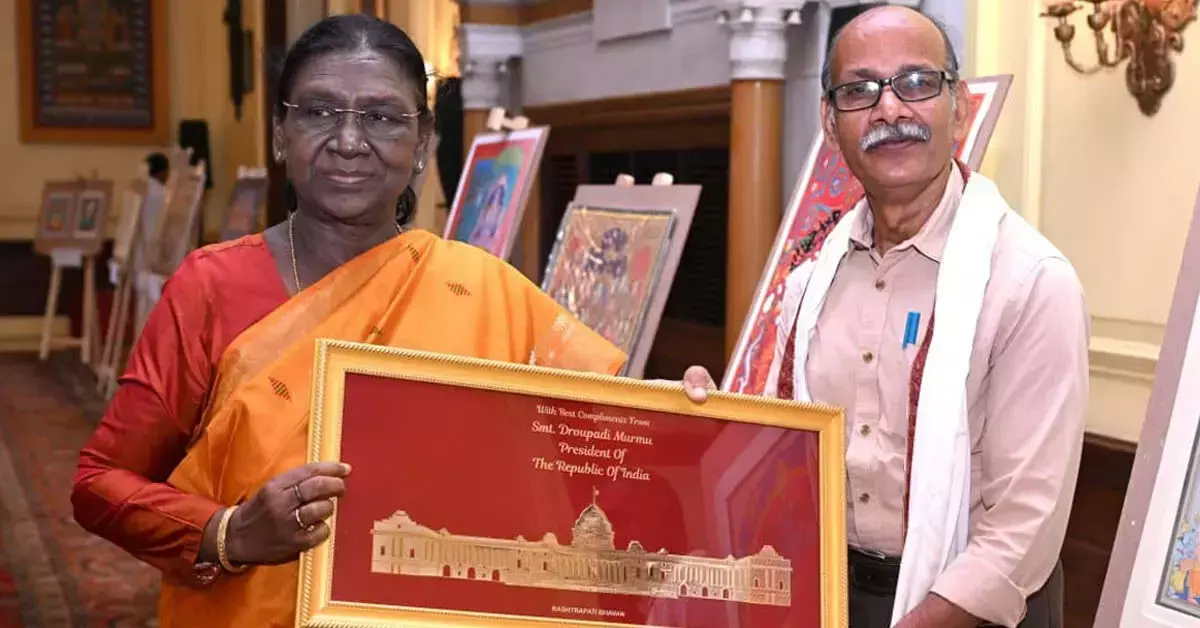
Renowned miniature painter Kamal Ahmed Malekoppa, a native of Gadag district and currently residing in Karkala, was honoured by President Droupadi Murmu after participating in the Artist-in-Residence programme held at Rashtrapati Bhavan in New Delhi.
The 10-day programme brought together 12 artists from across India, representing traditional art forms such as Banaras mural, Thangka, Nayak, Kerala mural, Basohli, Surpur and Mysuru styles.
Kamal Ahmed has been practising miniature painting for nearly three decades. He has drawn inspiration from the Vijayanagara Garudadri style and has developed a distinctive style of his own.
As part of the programme, he created an artwork at Rashtrapati Bhavan and displayed two artworks in total. One of the works was based on stories from the Panchatantra.
President Droupadi Murmu interacted with the participating artists and viewed their works. She appreciated their contribution towards preserving India’s traditional art forms and passing them on to future generations.
The Artist-in-Residence programme was organised to celebrate India’s artistic heritage and promote traditional art forms while strengthening the country’s cultural identity. Malekoppa’s selection has also brought national recognition to the Vijayanagara Garudadri-inspired painting tradition.
Kamal Ahmed previously worked as an art teacher for 18 years at Government High School in Shivapura, Hebri taluk, Udupi district. His artworks are displayed on the walls of government office buildings in Hebri and at various institutions.
Speaking about his selection for the programme, Malekoppa expressed happiness at getting the opportunity to participate in the prestigious event at Rashtrapati Bhavan. He described the experience as an unforgettable moment in his life and said the recognition had brought national attention to the Vijayanagara Garudadri-inspired painting style and its place in India’s artistic heritage.
source: http://www.english.varthabharati.in / Vartha Bharati / Home> Karavali / by Vartha Bharati / August 20th, 2026
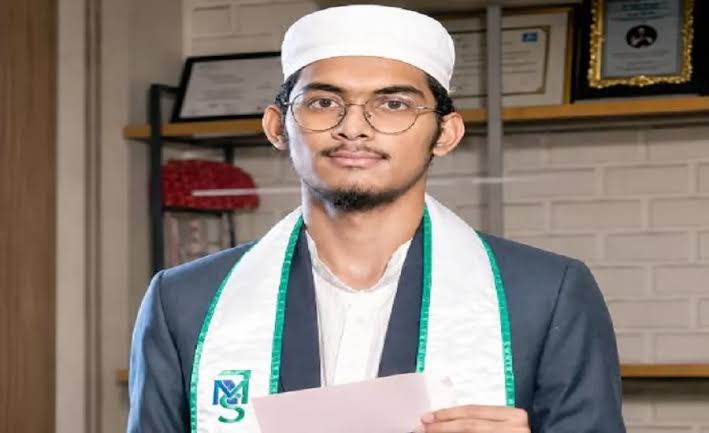
Mohammad Taqi Ahmed Ali Shams secured the highest rank among minority students in Telangana with 666 out of 720 marks and an All India Rank of 652.
Hyderabad :
Mohammad Taqi Ahmed Ali Shams, a student of MS Junior College of the city, has secured the first rank among minority students in the Telangana NEET 2026 State Merit List, delivering another major achievement for MS Education Academy.
Taqi Ahmed scored 666 marks out of 720 in the NEET 2026 examination and secured an All India Rank (AIR) of 652, making him the highest-ranked minority student in Telangana.
The academy also announced that 34 students scored 500 marks or more in NEET 2026, describing the result as another reflection of its consistent academic performance and quality teaching.
Several other students from MS Junior College also secured prominent positions in the Telangana Minority Merit List.
The successful students include:
Daniya Mirza – 23rd State Minority Rank
Mohammad Misbah Ali – 27th
Asid Tabish Antule – 28th
Shafia Begum – 43rd
Kausar Fatima – 48th
Liza Hussain – 57th
Zeba Rouheen – 68th
Sana Fatima – 73rd
Kausar Mirza – 75th
Fauzia Khanam – 98th
Sadia Sanobar – 102nd
Fakhra Tasneem – 105th
Bilal Shaikh – 106th
Sidra Jabeen – 108th
Syeda Amina – 109th
Congratulating the successful candidates, the management of MS Education Academy extended its best wishes to the students, their parents and teachers for their contribution to the outstanding performance.
The academy said the results reflected the dedication of students and the continued support of parents and faculty members.
The institution also expressed confidence that more than 200 students from the academy would secure free MBBS seats in leading government and private medical colleges across Telangana and other parts of the country through the NEET 2026 admission process.
The latest results further strengthen MS Education Academy’s record of producing successful medical aspirants and maintaining a strong presence in the Telangana State Merit List year after year.
source: http://www.clarionindia.net / Clarion India/ Home> Editor’s Pick> India> Indian Muslims/ by Team Clarion / August 03rd, 2026
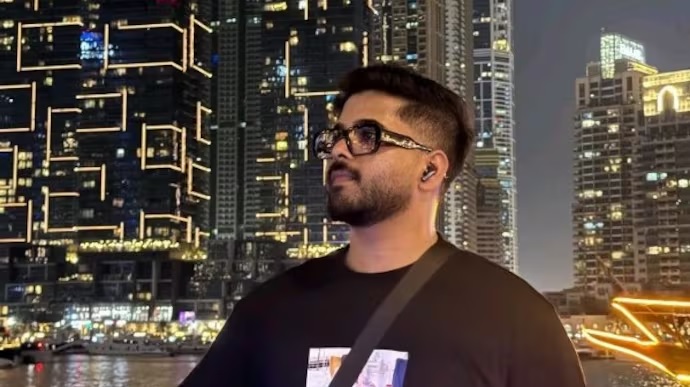
At 25, Zaid Khan is already running a business worth an estimated Rs 5 crore while pursuing his MBA at the Indian Institute of Management (IIM) Bangalore. The founder of Zedital Media Private Limited, a branding and media company, Khan recently shared his entrepreneurial story on The Crore Club podcast, hosted by Shreya Hegde.
His classmates at IIM Bangalore are preparing for annual job packages of Rs 25 to 40 lakh. Khan, by contrast, already leads a company offering Online Reputation Management, Content Distribution Management, and LinkedIn Profile Amplification Management services.
For students hoping to launch their own ventures, Khan offered two clear pieces of advice. The first is to start selling something, no matter how small. “Start selling something, whether it is a skill, a piece of advice, or any service, even if it is just for Rs 100 or Rs 200. It helps build confidence,” he said. The second is to build a strong online presence. “Content is the digital currency. Build your online presence because that is what creates opportunities,” he added.
Khan grew up in a middle-class family where conventional careers were strongly encouraged. “Everyone told me to become a doctor. The second option was engineering,” he recalled. During Class 12, he faced pressure to prepare for the NEET medical entrance examination. He chose a different path instead.
He began working with YouTube creators and took up freelance projects. A turning point came when he secured a freelancing assignment with a California-based influencer, earning Rs 1.24 lakh, his largest payment at the time. That experience convinced him a career outside traditional professions was possible.
Khan later completed a Bachelor’s degree in Communication and Journalism at Graphic Era Hill University between 2019 and 2022 before joining IIM Bangalore’s Business Administration programme in September 2024.
His recognitions include Youngest Entrepreneur of Uttarakhand, Innovative Entrepreneur 2024, and Trailblazer in Digital Marketing Solutions.
His journey demonstrates that starting early, gaining real-world experience, and consistently building a digital identity can open professional doors well before graduation.
source: http://www.radiancenews.com / Radiance News /Home> Features> Pride of the Nation>Markers of Excellence/ by Radiance News Bureau / July 29th,2026
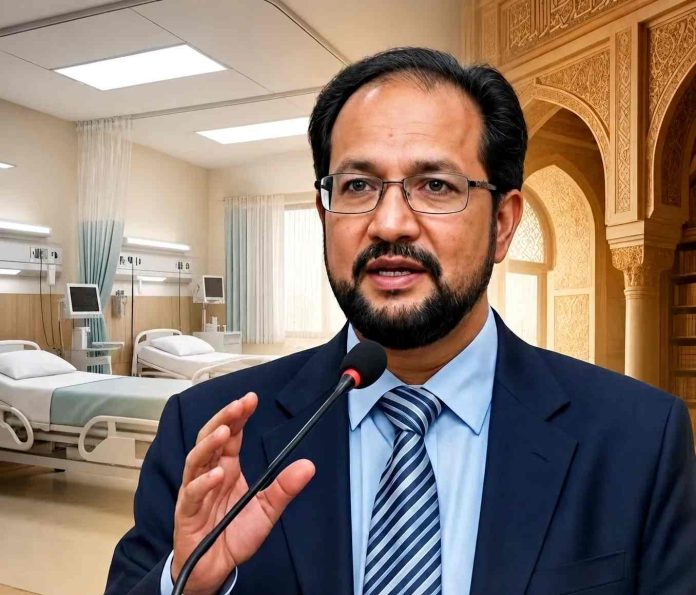
What is the true measure of a life well-lived? In an era obsessed with global mobility and material acquisition, the life of Dr. Muhammad Qutbuddin offers a compelling counter-narrative. An internationally acclaimed psychiatrist, academician, and philanthropist, Dr. Qutbuddin has spent more than 40 years in the United States, navigating the highest echelons of Western medicine. Yet, the glittering lights of America have done nothing to dim his devotion to his birthplace, Narayanpet. While his clinical practice operates within the high-tech medical landscapes of the West, his heart remains firmly tethered to the soil of Telangana.
Shattering the Vernacular Glass Ceiling
Long before he became the Director and Chief Psychiatrist at Star Psychiatric Services in Indiana, or taught the next generation of doctors as a professor at the University of Missouri, Dr. Qutbuddin was a young boy in Narayanpet, studying entirely in the Urdu medium from Class 1 to 11.
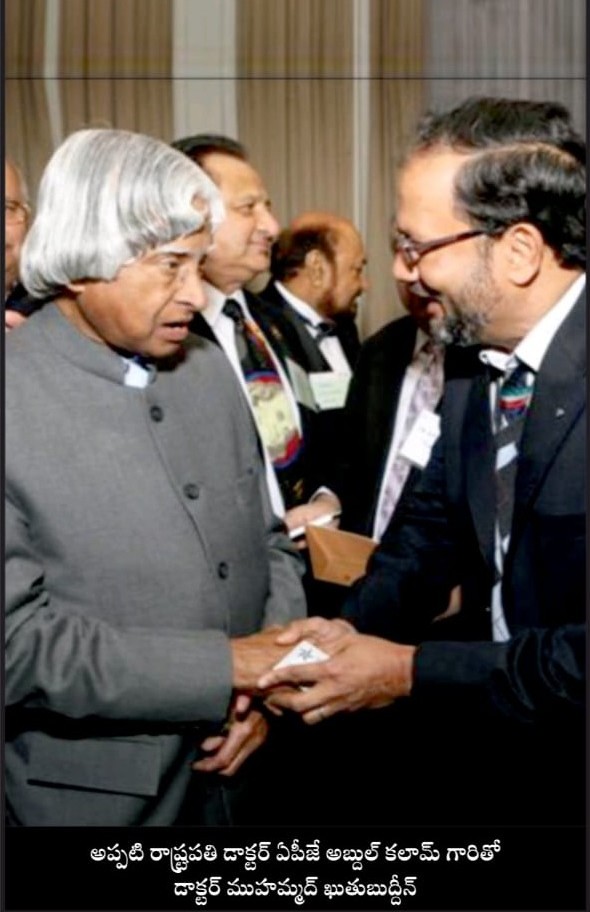
Dr. Muhammad Qutbuddin (R) with former President of India APJ Abdul Kalam
In today’s socio-educational climate, where vernacular schooling is often unjustly equated with limited horizons, Dr. Qutbuddin’s trajectory is a masterclass in resilience. Instead of letting language be a barrier, he turned it into a bridge, mastering five languages – Urdu, Hindi, Kannada, Telugu, and Marathi – during his childhood. He independently conquered English by devouring international periodicals like The Herald and Reader’s Digest.
His academic brilliance eventually earned him a highly competitive merit seat at the prestigious Osmania Medical College in Hyderabad for his MBBS and MD. He then transitioned to the United States for advanced training in Child and Adolescent Psychiatry, later earning a Ph.D., bridging Western Medicine and Islamic Studies from the Graduate Theological Foundation, an institution affiliated with Oxford University.
Confidant to a King
Among the many extraordinary chapters of his life is a deep, 27-year friendship with the legendary heavyweight boxing champion and civil rights icon, Muhammad Ali. Dr. Qutbuddin was not merely a casual acquaintance to ‘The Greatest’; he was a trusted personal advisor and confidant. Together, they walked through international philanthropic missions and social reform programmes across the United States, bound by a shared, fierce commitment to human equality, dignity, and social justice.
Healing the Homeland
Despite his high-profile life in the American Midwest, Dr. Qutbuddin never turned his back on the community that raised him. He was a critical, quiet catalyst in the socio-political movement that successfully advocated for Narayanpet to be recognised as a distinct district. Utilising his intellectual standing, he actively engaged with senior state leadership to bring vital development to the region, including a state-of-the-art medical college.
His philanthropy rejects the temporary band-aid of charity in favour of institutionalised empowerment. In honour of his lineage, he established the ‘Noor Jahan Library’ (named after his mother) and the ‘Muhammad Qasim Library’ (named after his grandfather), which fund free computer literacy centres and academic competitions for rural youth. Furthermore, he regularly returns to hold medical camps, providing free, specialised psychiatric evaluations and modern pharmaceutical supplies to impoverished communities that would otherwise suffer in silence.
The Clinical Lens on Gen-Z
As a seasoned clinician, Dr. Qutbuddin views the modern digital landscape with deep professional alarm. He writes extensively on the psychological warfare facing today’s youth, warning against the twin epidemics of internet addiction and substance abuse. From a strict neurological standpoint, he notes that persistent exposure to explicit digital content and excessive screen time fundamentally alters basic brain chemistry, weakening cognitive systems and eroding long-term willpower.
Similarly, he views the rising crisis of drug abuse not just as a social vice, but as a severe neurotoxic emergency that shatters families and robs the younger generation of their immense potential. To offer practical interventions, his organisation, American Youth for Positive Living, works globally with adolescents. Through structured mentorship, digital fasting, and goal-setting, he helps teenagers build the moral resilience and psychological armour needed to navigate the modern world.
A Dastarkhwan in the West: Foundations on the Floor
Walk into the private domain of this global medical expert, and you will not find the cold detachment of luxury. Despite his affluence, Dr. Qutbuddin maintains an unyielding adherence to simplicity. Rejecting the formal distance of modern dining, his family continues the sacred custom of sitting together on the floor around a traditional dastarkhwan (cloth-spread) to share meals. For him, this is not just a habit; it is a profound cultural anchor. It ensures that while his mind touches the peak of global achievement, his feet remain firmly planted on the ground.
In an age characterised by rapid cultural erosion and individualistic detachment, Dr. Qutbuddin stands as an inspiring testament to an eternal truth: true success is not measured by how far you travel, but by what you give back to the soil that nurtured you. He remains a living, breathing bridge between two worlds – proof that you can embrace global knowledge without ever losing your local soul.
source: http://www.radiancenews.com / Radiance News / Home> Focus> Pride of the Nation> Personality / by Mujahid Md / June 08th, 2026