It’s not a small number and there are very few who could match the sacrifices of Ahle Hadees for this country, Qasmi says.
Malegaon (Maharashtra):
In the strongest ever rebuttal of baseless allegations raised against Ahle Hadees, Jamiat Ahle Hadees Maharashtra on Sunday reminded the country of the sacrifices made by the group during the freedom struggle of India.
“Over five lakh (500,000) Ahle Hadees had sacrificed their lives during India’s freedoom fighter. People travelling in villages and towns saw their corpses hanging on trees all around”, Jalaluddin Qasmi, an alumnus of Darul Uloom Deoband, said quoting Tara Chand.
Renowned archaeologist and historian, Tara Chand, who taught at Allahabad University and also served as its Vice Chancellor in 1940s, is the author of ‘History of Freedom Movement in India’.
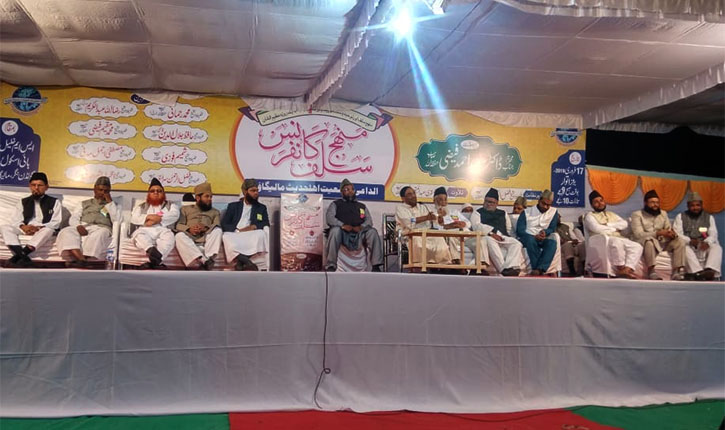
“It’s not a small number and there are very few who could match the sacrifices of Ahle Hadees for this country”, Jalaluddin Qasmi addressing the day-long Manhaj e Salaf conference jointly organised by Jamiat Ahle Hadees Maharashtra and Jamiat Ahle Hadees Malegaon Sunday.
“Nothing can be more shameful and condemnable than the act of some people and a section of media who despite such a glorious history of Ahle Hadees level unfounded allegations against them just to fulfill their vested interest”, he added.
To further draw his point, Jalaluddin Qasmi quoted Jawaharlal Nehru, former Prime Minister of India and one of the frontal leaders of India’s freedom movement, who praised the sacrifices of Ulema of Sadiqpur Patna, Bihar for the country as extraordinary and unmatchable.
“Nehru had said if sacrifices of the Ulema of Sadiqpur Patna Bihar are put on one side of a balance and our entire efforts are put on the other, their’s will be heavier and our’s will be worthless in comparision”, Qasmi said.
Qasmi also said that it is because of the strong and firm stand taken by Ahle Hadees against terrorism and extremism because of which terrorist organisations hate Ahle Hadees the most.
Taking forward Jalaluddin Qasmi’s assertions, Mohammad Rahmani Sanabili, President of Jamia Islamia Sanabil, New Delhi, while addressing the valedictory session of day-long Jamiat Ahle Hadees Manhaj e Salaf conference shared of historical evidence to prove the contributions of Ahle Hadees during the Indian freedom movement.
“It is Ahle Hadees who called terrorists and violent groups Khawarij and ran campaigns to exposed them”, he said.
In his keynote speech of the conference, Mohammad Rahmani Sanabili condemned once again Pulwama terrorist attack and reiterated Jamiat Ahle Hadees’s stand against all kinds of violence,.
At the same time, he urged the Ahle Hadees, especially the youth, to focus more on practices based on the path laid down in the Holy Quran and Sunnah of the Prophet Mohammad (peace be upon him).
Earlier in the morning, the day-long national conference organised by Jamiat Ahle Hadees Maharashtra opened with a strong condemnation of the terror attack on the CRPF convoy in Pulwama district of Kashmir in which more than 40 CRPF troopers were killed and a large number of others were left injured.
“Terrorists will never succeed in their evil design to weaken our country by such cowardly attacks”, Razaullah Abdul Kareem, senior cleric of Jamiat Ahle Hadees Hind, said while opening the day-long conference.
“We want to make it very clear that the Indian Muslims and Jamiat Ahle Hadees are with the country in its fight against terrorism and violence”, he said while condemning the Pulwama terrorist attack.
Presided over by Dr Saeed Ahmed Faizee, president of Jamiat Ahle Hadees Maharashtra, the day-long conference was held at the SM Khaleel High School in Malegaon and was attended by a large number of delegates from all over Maharashta and the neighboring states.
source: http://www.ummid.com / Ummid.com / Home> India / by ummid.com staff reporter / February 18th, 2019
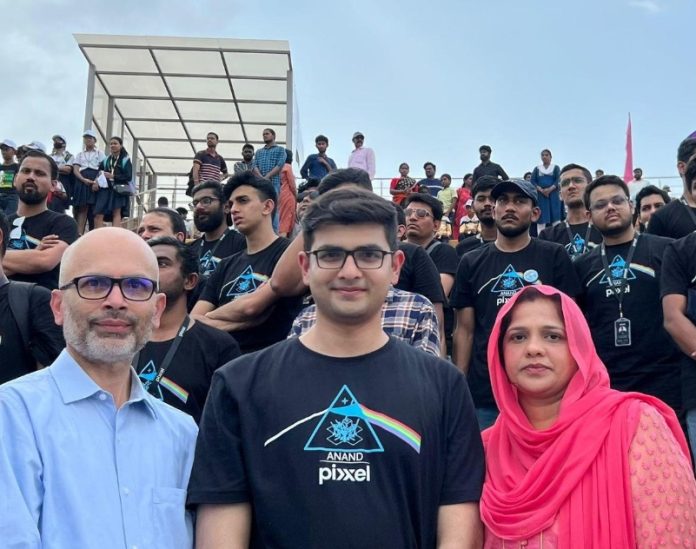
Awais Ahmed, a young entrepreneur from Aldur in Karnataka’s Chikkamagaluru district, has emerged as one of India’s leading figures in the private space sector after his company, Pixxel Space Technologies, became the first Indian space start-up to secure a NASA contract for supplying hyperspectral Earth observation data.
The 28-year-old founder and Chief Executive Officer of the Bengaluru-based company attributes his journey to a childhood shaped by curiosity, encouragement from his parents and a lifelong fascination with space science.
Growing up in Aldur, Awais spent hours reading children’s science encyclopaedias on planets, nebulae, black holes and the solar system. His father, Nadeem Ahmed, who runs a pharmacy in the town, regularly bought him science books from local libraries and bookshops. His mother, Ghazala Tashfeen, also encouraged him to pursue the subject that interested him most.
After completing his schooling in Aldur and Sangameshwar Pete, he moved to Mangaluru for pre-university education before joining BITS Pilani, Rajasthan, where he studied mathematics and manufacturing engineering. During his engineering years, he participated in a student satellite programme alongside ISRO scientists, an experience that deepened his interest in satellite technology.
A defining moment came in 2017 when Awais led Hyperloop India at the SpaceX Hyperloop Competition in Los Angeles. The team qualified among the finalists and presented its project before visiting SpaceX facilities. Meeting Elon Musk and witnessing private space innovation strengthened his resolve to build a career in space technology.
Before completing his degree in 2019, Awais founded Pixxel Space Technologies. The company has launched nine hyperspectral satellites, including six in 2025. The satellites collect detailed Earth observation data that supports agriculture, environmental monitoring, energy and natural resource management through advanced imaging technology.
Awais said the company has raised ₹960 crore from investors. He credited policy support for private participation in India’s space sector for helping young companies grow. Today, Pixxel employs 275 people, with most of its workforce based in India and others working in the United States and Europe.
His father recalled the family’s sacrifices to support his education, including taking education loans and pledging gold. He said watching his son’s dedication and achievements has filled the family with pride. Awais, who is now married to a doctor, continues to pursue his goal of building space technology that serves humanity while contributing to India’s growing presence in the global space industry.
source: http://www.radiancenews.com / Radiance News / Home> Latest News> Markers of Excellence> Personality> Report / by Radiance News Bureau / July 20th, 2026
Razee Anwer said the Software was successfully run for the students of J.A.T. Campus for demonstration purpose.
Malegaon:
As different government departments with the help of top IT firms race with time to make India go Digital and paperless, an engineer based in Malegaon has developed a Software that if implemented can halve the burden of Sub District Magistrates (SDMs), also called as Prant Officers, and Tahsildars across India.
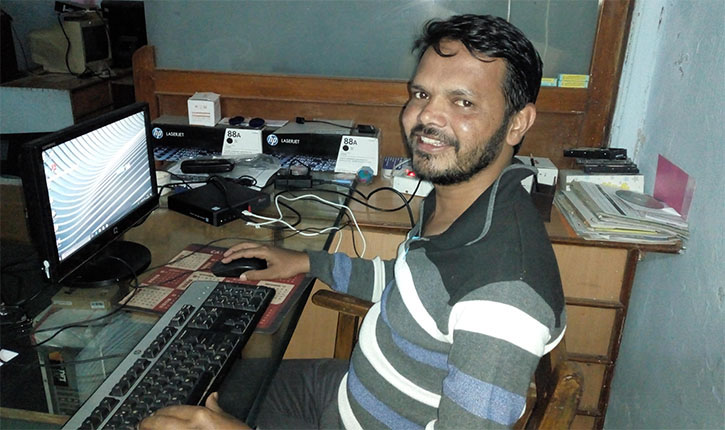
Razee Anwer Faizee, an expert who runs a Software Development and Consultancy firm in Malegaon, has come out with an IT solution that connects the Prant Office in a City or Tahsil with schools and colleges and makes issuance of Caste, Domicile and Nationality certificates fast, smooth and more secure.
While domonstrating the Software, Razee Anwer showed how students’ data is imported with the help of the Software developed by him, accessed online by the SDM and Tahsildars, Digitally signed and then distributed to students through the respective schools and colleges.
“The entire Software works online”, he said.
“An authorised person in a school or college needs to import students’ data using our Sofware, take printout of the list of students, sign and stamp an undertaking saying the students in the list are registered and bonafide students of his or her school or college, and click on a button to send the data to SDM or Tahslidar for further verification and issuance of Caste, Domicile and Nationality certificates”, he added.
“The SDM or Tahslidar using his or her User ID and Password will log in to our Software, verify the list of the students available online with the one signed and stamped by school authorities and Digitally Sign the certificates – one by one or in bulk, if satisfied”, Razee said.
“In case the SDM or Tahsildar has any doubt regarding the data of any student or if supporting documents have any error or are incomplete the officer can send such data back to the respective school or college with his or her remark”, Razee said.
Explaining the reason behind developing the Software, Razee Anwer said, “The idea came to my mind when I visited Malegaon Prant Office for some work few months before. During every visit, I found the Prant Officer and Tahsildar busy signing thousands of certificates utilizing most of their time which could have been otherwise used for some other administrative work.”
“I also came across many parents who for not knowing the exact procedure to get these certificates issued for their wards fall prey to the middlemen and agents who charge them hefty amount”, he added.
“I thought linking the schools with the Prant Office will not only save valuable time of the officers but also help these poor students who are paying huge amounts for a ceritifcate which is actually issued by paying nominal processing fes”, he added.
Razee Anwer, who is also Head of the Department (HoD) of Computer Science of J.A.T. Arts, Science and Commerce College, Malegaon, said the Software was successfully run for the students of J.A.T. Campus for demonstration purpose.
“Using the data of the students of J.A.T. Campus a demonstration was done in front of the top government officials. On their advice, some changes were also incorporated to make the Software user friendly and secure so as to block any misuse from unauthorised access”, he said.
“The same Software with a little tweaking can also be used by Civic and Municipal bodies for issuing Birth Certificates and by schools and colleges for issuing Leaving Certificates”, Razee Answer who has recently launched a School and College Management Software, said.
SDM Malegaon Ajay More, who saw the demonstration of the Software and also helped with useful tips to make the Software a success, said it will reduce the burden of the officials by more than half if implemented at Prant Offices.
“The Software really makes our job simpler. I am talking with the concerned department at the State Headquarters in Mumbai to see how it is implemented”, he said while talking to ummid.com.
source: http://www.ummid.com / Ummid.com / Home> Science & Technology / by Zohair M Safwan Faizee / January 17th, 2019
For thousands of visitors who gather along the waterfront near the Gateway of India, Mohammad Nazim Shaikh is an ordinary pav seller. For people caught in the powerful tides of the Arabian Sea, he has become a lifesaver whose courage has saved hundreds of lives over the past three decades.
Nazim, 51, spends his mornings selling pav in Colaba to support his family. Once his work ends around noon, his attention shifts to the sea. Whenever the tide rises, he remains alert, watching tourists and local visitors who often venture dangerously close to the water. According to Nazim, many people underestimate the force of the waves until it is too late.
He says he began rescuing people at the age of 16 and has continued the mission ever since. Over the years, he estimates that he has saved more than 300 people from drowning and recovered between 25 and 30 bodies, most of them men. His long experience has exposed him to accidents during festivals, risky behaviour by thrill-seekers and emergency situations requiring immediate action.
One of his most memorable rescues took place in 1996 when he swam across floodwaters during high tide, an effort that earned him recognition as “Best Swimmer.” In 2022, he rescued two men during the Ganpati immersion celebrations, adding another chapter to his long record of service. He also assisted rescue operations following the 2003 Gateway blast by helping recover bodies from the site.
People working around the Gateway of India describe Nazim as the first person they contact whenever someone falls into the sea. Hawkers, photographers and local workers say he responds immediately, often reaching the victim before emergency services arrive. Many believe his presence has prevented numerous tragedies at one of Mumbai’s busiest tourist destinations.
Despite his decades of public service, Nazim says he has received little official recognition. He revealed that he had written to the Prime Minister and Maharashtra Chief Minister seeking acknowledgement of his work, although no formal action followed. Adding to his disappointment, many certificates and newspaper clippings documenting his rescues were lost during renovations at his home.
Senior Police Inspector Pramod Bhovte of Colaba Police acknowledged Nazim’s contribution, describing him as an active and dependable lifeguard whose assistance has proved invaluable in numerous rescue operations. Police officials said they remain grateful for his commitment and bravery.
Nazim remains humble about his role. He says he does not fear the sea and believes God has given him the strength to help others. While crowds continue to gather along Mumbai’s famous waterfront every day, the city’s quiet guardian stands ready whenever another life needs saving.
source: http://www.radiancenews.com / Radiance News / Home> Latest News> Pride of the Nation> Markers of Excellence> Personality> Social Service> Report / by Radiance News Bureau/ July 08th, 2026
Dr. Fahmeeda Zeenat, Department of Niswan wa Qabalat, Faculty of Unani Medicine, Aligarh Muslim University
Aligarh:
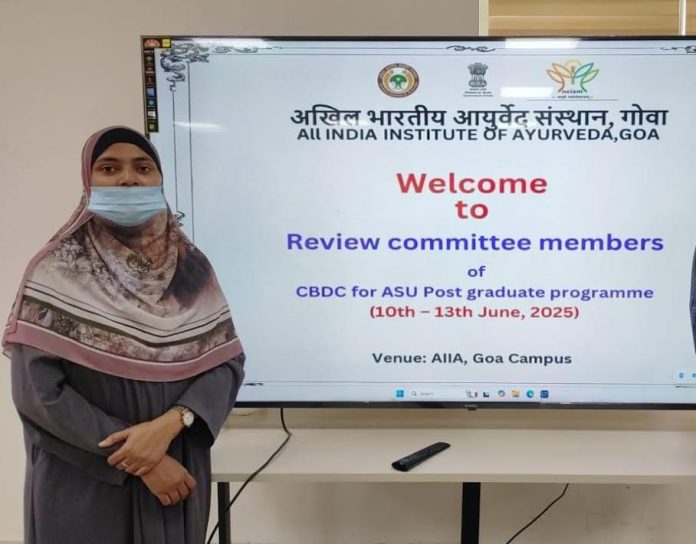
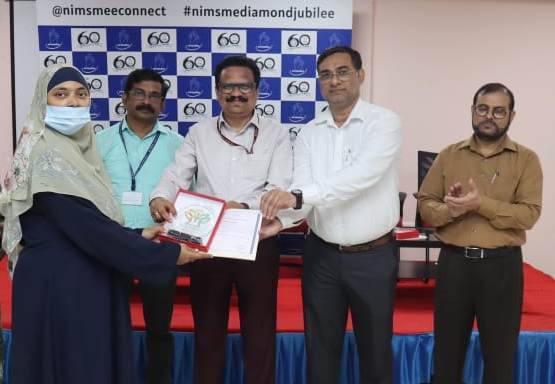
Dr. Fahmeeda Zeenat, Department of Niswan wa Qabalat, Faculty of Unani Medicine, Aligarh Muslim University (AMU), has been recognised for her significant contributions to the development of a competency-based postgraduate curriculum in Gynaecology and Obstetrics under the Unani system of medicine.
Dr. Zeenat was recently selected as an expert for the framing, reviewing, and finalisation of the curriculum. She participated in a three-day national workshop organised at the All India Institute of Ayurveda, Goa, held from June 11 to 13, 2025. This event marked a key milestone in the ongoing effort to align Unani medical education with outcome-driven academic standards.
Earlier, she played a pivotal role in the final curriculum framing workshop held at the National Institute for Micro, Small and Medium Enterprises (Ni-MSME), Hyderabad, from November 14 to 16, 2024.
She also actively participated in the two-day curriculum review workshop conducted by the National Commission for Indian System of Medicine (NCISM) in New Delhi on April 4 and 5, 2025.
source: http://www.radiancenews.com / Radiance News / Home> Latest News> Markers of Excellence / by Radiance News Bureau / June 17th, 2025
Riyazuddin Mansouri is a Living Example of Love, Harmony and Human Service in an Atmosphere of Hatred: Salimullah Khan
New Delhi:
Following the tragic fire incident at a hotel in Malviya Nagar, a delegation from Jamaat-e-Islami Hind Delhi visited the site to assess the situation and express solidarity with those affected. The delegation was led by Mohammad Salimullah Khan, Ameer-e-Halqa, JIH Delhi. The delegation also included Kamal Ahmed (Convenor, Sadbhavna Group, NFC and Zakir Nagar), Saquib Yaseen (Karkun, JIH Hauz Rani), Sajid Umair (Nazim, South Delhi District, JIH), and Mohammad Naushad Khan (Sub-Editor, Radiance Viewsweekly).
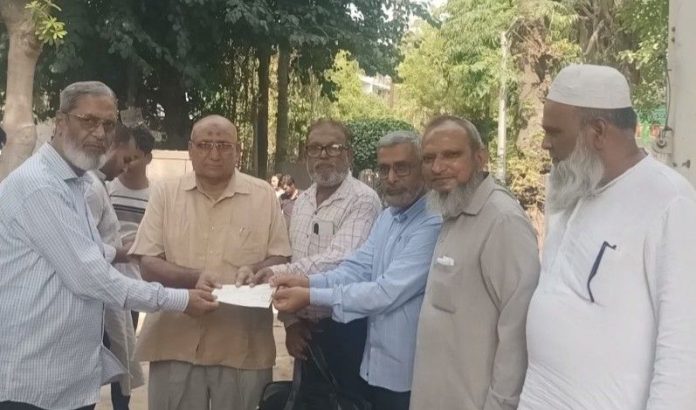
The delegation inspected the site of the tragedy and met Riyazuddin Mansouri, appreciating his extraordinary courage, compassion, and commitment to saving lives. On behalf of JIH Delhi, he was presented with a special award of ₹1 lakh in recognition of his exemplary humanitarian service.
It is noteworthy that when the fire broke out and several people were trapped inside the hotel, desperately calling for help from windows and rooftops, Riyazuddin Mansouri, who owns a mattress shop nearby, displayed remarkable presence of mind and bravery. He immediately spread all the mattresses from his shop across the road and, with the help of his family members and associates, encouraged those trapped inside to jump onto them in order to escape the flames. His timely intervention helped save the lives of approximately 14-15 people.
Speaking on the occasion, Mohammad Salimullah Khan said that Riyazuddin Mansouri had demonstrated that in times of crisis, barriers of religion, caste, and community become meaningless, and that humanity and compassion remain the true identity of a person. He observed that at a time when forces of hatred, division, and social discord are attempting to weaken the fabric of society, individuals like Riyazuddin Mansouri emerge as shining examples of India’s composite culture, communal harmony, and shared human values.
He further noted that Riyazuddin Mansouri did not hesitate despite the financial loss involved, laying out mattresses worth nearly ₹2 lakh and risking his own safety to protect others. Such selflessness, sacrifice, and dedication to humanity, he said, represent the highest ideals of public service and deserve widespread recognition.
Members of the delegation also described Mansouri’s actions as exemplary and inspiring. They stated that such individuals strengthen the values of love, mutual trust, and social harmony within society. The award presented by JIH Delhi, they said, is not only a recognition of one individual’s courage but also a tribute to the spirit of humanity itself.
The delegation expressed hope that Mansouri’s noble act would inspire future generations and contribute to the promotion of compassion, brotherhood, mutual respect, and humanitarian values throughout society.
source: http://www.radiancenews.com / Radiance News / Home> Pride of the Nation> Awards> Latest News / by Radiance News Bureau / June 06th, 2026
AMU-RCA students succeed in cracking prestigious national-level examinations
Aligarh:
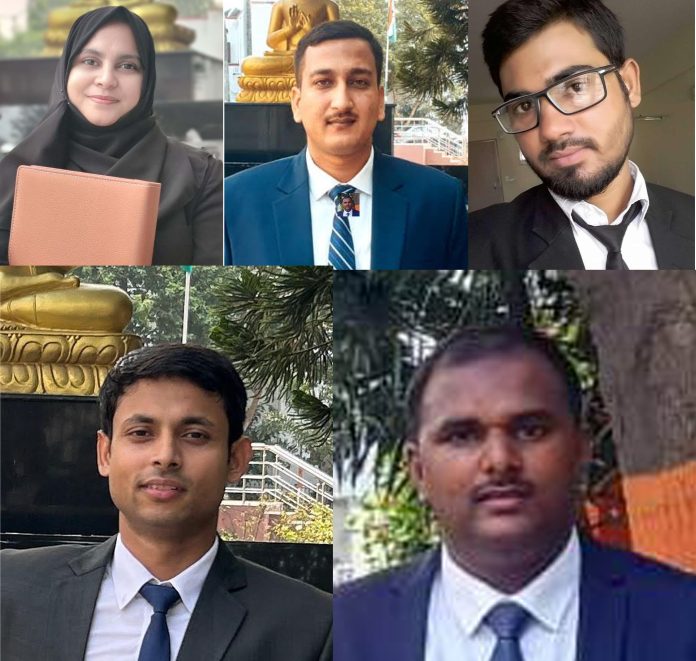
Mohd Faisal Khan, Mohd Zaid Masab and Manawwar Hussain, who have been preparing for the civil services examination at the Residential Coaching Academy of the Aligarh Muslim University, have been selected for the post of Revenue Officer, Supply Inspector and Finance Administrative Officer, respectively, through the integrated 69th Combined Competitive Examination conducted by Bihar Public Service Commission (BPSC). The result of this examination was declared on November 26.
Meanwhile, another two students of RCA, Mohd Shams Raza and Habiba Bukhari have succeeded in cracking the 32nd Bihar Judicial Services Examination to become Civil Judge (Junior Division), with a ranking of 30 and 176, respectively at the coveted examination conducted by the BPSC, Patna. The result of the examination was made public on November 28.
AMU Vice Chancellor Prof Naima Khatoon and the Registrar, Mr Mohammad Imran (IPS) have congratulated these students on their selection, adding that their success will serve as an impetus to other students who are preparing for national-level examinations.
The RCA Director, Prof Saghir Ahmad Ansari thanked Mr Mohibullah Ansari (IPS, Bihar Cadre) for sparing his valuable time to provide counselling to the RCA students, taking motivational classes and participating in mock interviews at the Academy conducted by experts.
source: http://www.radiancenews.com / Radiance News / Home> Focus> Markers of Excellence / by Radiance News Bureau / December 03rd, 2024
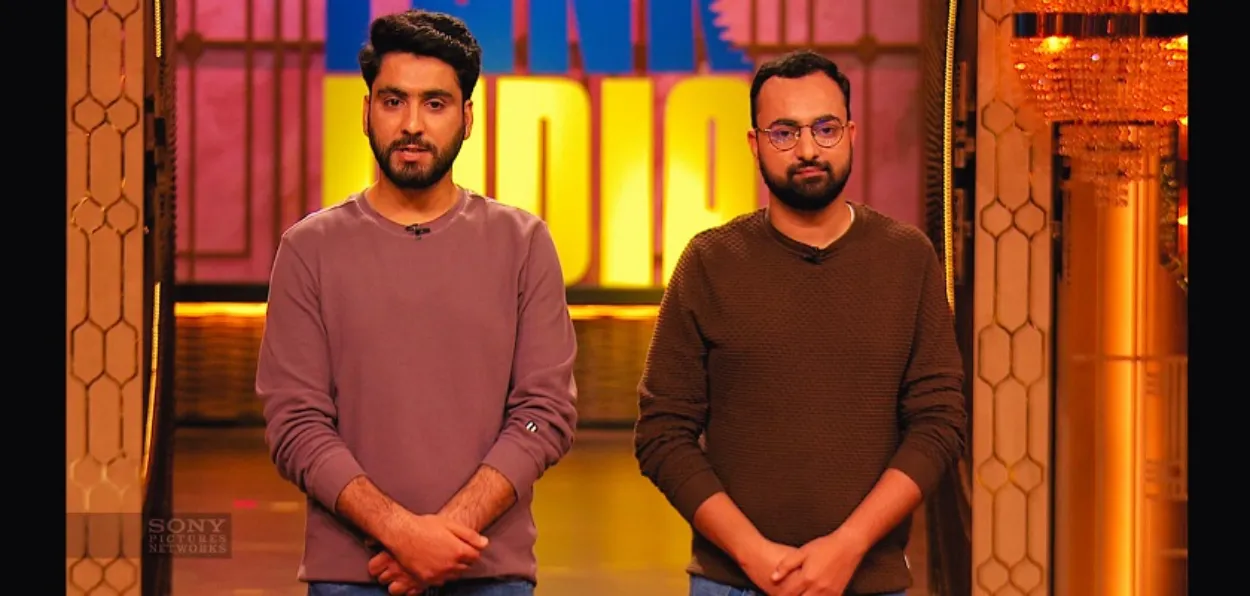
Sheikh Yameen, and Zubair Bhat, Co Founders of Zubair Curve Electrics at Shark Tank India- 4 Show
Two young Kashmiri men’s startup of providing eco-friendly urban transportation solutions may not have won them funding from the judges of Shark Tank India-4, a business reality show on Sony Television, but it won their immense admiration and exposed their successful business model to a larger world.
Sheikh Yameen, and Zubair Bhat, co-founders of Curve Electrics, got many heads nodding in appreciation when they said at the show in two years, their startup has helped environment by saving 145 metric tonnes of carbon emissions.
The mission Curve Electrics, launched in the summer of 2023, began with 50 e-bikes in Srinagar from 11 docking stations, in collaboration with the Srinagar Smart City Limited (SSCL). The number of e bikes has since grown up to 150 in Srinagar.
They also provides these services In the neighbouring Ganderbal district’s Central University of Kashmir (CUK), and the Hindu shrine of Mata Kheer Bhawani, Tulamulla.
“We have already completed 55,000 rides, 720,000 km and have saved 145 metric tonnes of carbon emissions….it is equivalent to the planting of 7200 trees”, during the last one and a half years, said Sheikh Yameen, Managing Director of Curve Electrics.
At the show, Sheikh Yameen, and Zubair Bhat said though at present their operations are limited to Kashmir Valley, they wanted to expand operations to other mountain towns such as Shimla and Mussoorie.
They also spoke about do business in college campuses across the country. They have shortlisted 1,400 campuses where they can expand their business. The entrepreneurs said that they have devised their bikes, and these are available through a mobile application and the users are not asked for seudirty deposits.
Yameen said, “Shark Tank India gave us an incredible platform to share our dream of revolutionizing urban mobility. Coming from Srinagar, this journey represents not just Curve Electric, but the untapped potential of Kashmiri youth. We’re excited for what lies ahead”
Sheikh Yameen and his friend, Mohsin Bashir are the co-founders of this startup. Yameen had completed his MBA in Finance and Marketing from The University of Kashmir, while his friend Mohsin Bashir was studying Management in the US.
The two pitched their sustainable e-bike service Curve Electric to the panel of ‘sharks’, which included Anupam Mittal, Vineeta Singh, Aman Gupta, Peyush Bansal, and newcomer Kunal Bahl.
Peyush was “very impressed” by the entrepreneurs’ ability to erase all the onboarding issues that customers might have. Vineeta explained, “There is a little complexity here. There is a lot of dependence on governments, and from what I’ve seen in all the other companies, the setting that you have to do with governments and local bodies, becomes a make-or-break situation. Your expansion will not depend on your ambition; it will depend on where you get the local support”.
Yameen nodded in agreement, and said that they haven’t had any losses yet, and have raised a round of investment already, valuing their company at Rs 8.5 crore.
Each of them backed out of the deal, but Peyush bid the founders farewell at a positive note. Addressing Yameen, he said, “It’s like looking at a mirror, you are me. You are saying everything I would have said 10 years back. The detailed customer-focused obsession you have, I have not seen in Shark Tank in four years.” In the end, the two entrepreneurs walked away with no deal, but loads of positive wishes.
Curve Electric’s pitch stood out not just for its business potential but also for the pride it brought to Kashmir. The team’s efforts reflect the entrepreneurial energy brewing in the Valley, proving that innovation knows no boundaries, Sheikh Yameen observed.
He said that the overwhelming response from the sharks and viewers alike has bolstered Curve Electric’s vision and opened doors for new opportunities. By fusing modern solutions with the rich cultural backdrop of Kashmir, the startup is paving the way for a cleaner and more sustainable future, leaving an indelible mark on India’s entrepreneurial landscap
source: http://www.awazthevoice.in / Awaz, The Voice / Home> Stories / by Ehsan Fazili, Srinagar / January 11th, 2025
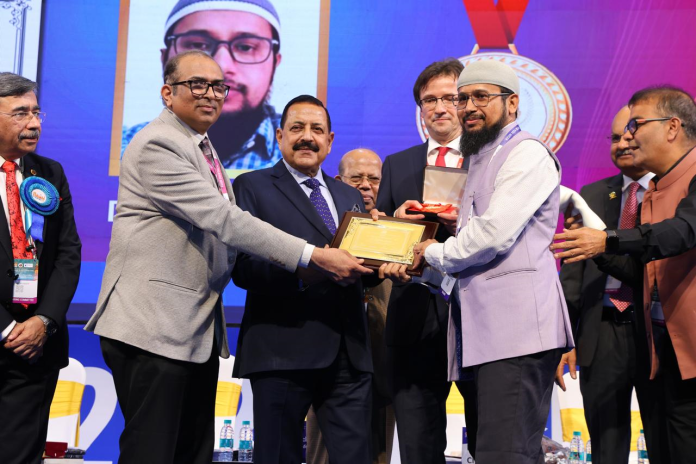
Dr. Hamid Ashraf, Associate Professor and former Director, Rajiv Gandhi Centre for Diabetes and Endocrinology, Aligarh Muslim University, has been honoured with the Best Innovation in Diabetes Care award at the annual conference of the Research Society for the Study of Diabetes in India (RSSDI).
The award was presented by Dr. Jitendra Singh, Minister of State for Science and Technology, Government of India during a ceremony held at Yashobhoomi, New Delhi.
Dr. Ashraf got the recognition for his ground-breaking research on “Machine Learning Techniques for Diabetes Detection Using Iris and Conjunctival Images.” He said that this innovative approach leverages artificial intelligence to enhance early diagnosis and management of diabetes by analysing subtle ocular changes linked to the disease.
He expressed gratitude to his co-investigators Dr. Nadeem Akhtar and Mr. Ehtesham Sana from Department of Computer Engineering, AMU for their contribution.
source: http://www.radiancenews.com / Radiance News /Home> Pride of the Nation> Awards> Latest News / by Radiance News Bureau / November 22nd, 2022
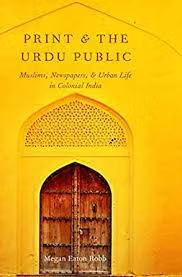
In ‘Print and the Urdu Public’, Megan Eaton Robb writes about the impact and role of popular Urdu newspaper Madinah and how it pushed back against censorship.
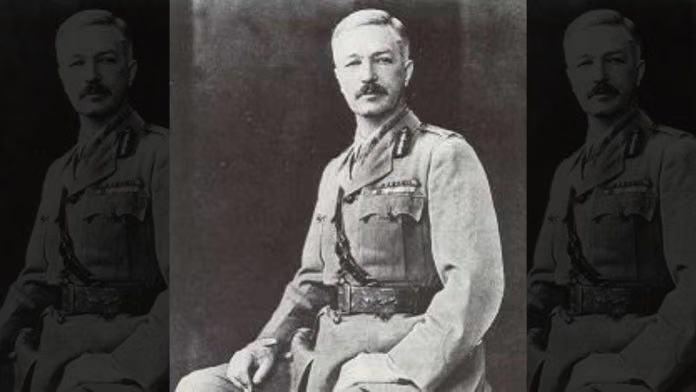
File photo | Gen. Reginald Dyer | Wikimedia Commons
Madīnah’s community of editors, subeditors, and proprietors illustrate the interconnected network of professionals working on newspapers across North India, with a shared commitment to confounding censorship laws. Editors of Madīnah were products of qasbahs and lived in Bijnor or nearby while employed by the publication. At least one assistant editor, Ḥamīd Ḥasan “Fakīr” Bijnorī (1903–1991), was a relative, having married Majīd Ḥasan’s daughter in the 1910s before he became the editor of Madinah Press’s children’s magazine Ghunchah after 1922. Ḥamīd Ḥasan would later be listed as an assistant editor from 1930 to 1935 and even take over as editor for several months when the need arose in 1945. When a new editor took over the work of Madīnah and was not already resident in Bijnor, he would move into the Ḥasan compound, which acted as the administrative office of the paper. Several small apartments attached to the main verandah, so editors could live in comfort with their families, remaining accessible to the newspaper office while maintaining privacy. Maulānā Majīd Ḥasan’s name, along with the name of the current chief editor, always appeared on the paper’s title page. At any given time there could be up to three editors of the paper, with the chief editor being referred to as “mudīr-i mas’ūl.”
Although Majīd Ḥasan’s proprietorship provided continuity for the newspaper, its different editors influenced the paper’s tone and focus. The turnover between editors could be rapid when legal troubles emerged. For instance, in 1924, when the editor Qāẓī Badrul Ḥasan Jalālī (1891–1956) was prosecuted by the British Raj for an article, he resigned his editorship, but he stepped back into his position once the dust of government scrutiny had settled. If Majīd Ḥasan attracted too much scrutiny from government surveillance, he could retreat from view behind the shadow of his prominent editors, continuing to exert the same influence behind the scenes. This allowed his outfit to survive draconian censorship measures while retaining the continuity essential to the newspaper’s success.
When he launched the newspaper in 1912, Majīd Ḥasan had little local influence. The only person of significance attached to the newspaper initially was a prominent journalist of the period, Nūr ul-Ḥasan Zahīn, who wrote for Ṣaḥīfa as well. Colonial censors initially dismissed Madīnah as a “bigoted Muhammadan organ, inclined to make trouble between Hindus and Muhammadans.” Madīnah first earned the ire of colonial administrators by criticizing the headmaster of Bijnor High School for complying with the British Educational Code. This was only the first of many encounters with censorship legislation.
April 1917 marked the beginning of Editor Mazh̤ ar ud-Dīn Shairkoṭī’s tenure, and the newspaper’s shift to publishing more explicitly political, anti-British stances. Shairkoṭī, a novelist as well as a journalist, was born in the Shairkoṭ qasbah of Bijnor in 1888. Initially educated by Maulānā ‘Abdul Qayūm Arshāq and Miyānji Sa‘ad Allah Sahib, he had attended Deoband as a pupil of Maulānā Mahmud ul-Ḥasan Asīr Mālṭā, known as Shaikh ul-Hind. After completing his education at Deoband, Mazh̤ ar ud- Dīn returned to Shairkot, where he worked on the newspaper Dastūr under the management of Ḥakīm Asrār ul-Nabī and on the newspaper Nagīnah.
Maulānā Majīd Ḥasan saw Maz̤har ud-Dīn’s affiliation with the newspaper as the beginning of a new period of commitment to the Muslim community and wrote an illustrious introduction for his new editor. Majīd Ḥasan’s message in his introduction was clear: he had brought in a power player to man the ship of Madīnah, a man who indubitably linked the paper to a network of powerful publications and individuals. The new editor transformed Madīnah into a more explicitly political entity. Maz̤har ud-Dīn associated with prominent political Muslims of the period, including Syed Ḥasan Imām, who presided over the Indian National Congress’s consideration of the Montagu-Chelmsford Reforms in Bombay in 1918. His other associates included Nawab Muḥammad Ismā’il Khān. He was, along with Khalīquzzamān, a key organizer of the UP Muslim League, and a prominent member until 1947; he remained in India after independence.
After the end of World War I in November 1918, discussions of independence and postwar reality in India began in earnest. The state of Islam, and the progress of both national and local branches of organizations such as the Muslim League and Congress, became matters of intense concern. Mohandas Karamchand “Mahātmā” Gāndhī (1869–1948) featured in several articles musing on the way forward for political Muslims. In addition, discussions of the fall out of World War I in Turkey and the caliphate took center stage. Under Mazh̤ ar ud-Dīn’s leadership, the newspaper emphasized the connection between the fate of Indian Muslims and of those in Turkey and other nations with significant ties to Islam.
Mazh̤ ar ud-Dīn presided over Madīnah’s publication of an article critical of the government’s role in the Jallianwallabagh massacre, which led to a dramatic conflict with the British Raj. In April 1919 Madīnah published an article criticizing Lieutenant Governor Sir Michael O’Dwyer’s (1864–1940) endorsement. Putting Madīnah on the Muslim Map of the actions of Colonel Reginald Dyer, who had overseen the disproportionate response at Jallianwallabagh. The article minced no words:
His honour O’Dwyer’s government of Panjab, from the very beginning, kept as the foundation of its policy a despotic course of action [ . . . ] This was his honor O’Dwyer’s last period of government; therefore it was necessary that he make amends for his past course of actions. This was the time when, instead of extinguishing the fire with the water Of gentleness and kindness, he inflamed the hearts of the ahl-i Punjab. Perhaps it could be said that he did not put out the fire with water, but instead doused it with oil. If that were not the case, then why would he at the conclusion of his reign, give orders that were so repellent, so far from resembling affection that they approximated hate?
It was actually illegal at this point in time to question the motives of the colonial government; thus, the final statement of the quotation accusing O’Dwyer of “hate” fell afoul of censorship laws. The government banned Madīnah from circulating in Punjab as a result of this piece. Mazh̤ arud-Dīn and Majīd Ḥasan’s response was defiant: in August 1919 they renamed the newspaper Yasrab, an Arabic synonym of Madīnah, as a bid to evade censorship.64 On the cover of each issue of Yasrab an Iqbal couplet appeared, a knowing wink to its readership base:
The dust of Madinah is better than both worlds. How wonderful is the city where the beloved is.
Khāk-i yas̱rab az do ‘ālam khūshtar ast Ā’e khunak shahre ke ānjā dilbar ast.
The couplet hinted at the paper Yasrab’s true identity, offered praise for the paper’s unpretentious popularity, and emphasized the link between the newspaper and the city Madīnah. Madīnah’s proprietor and editors were men who wore their few educational laurels lightly. More important than formal education was the ability to use that knowledge in the service of Indians generally and Muslims particularly. Unsurprisingly, the attempt at flouting the circulation ban was quickly detected. The paper reverted back to the title Madīnah after a few weeks, and the ban on circulation was lifted eventually.66 Madīnah was a space offering a figurative point of access to the community of Islam, the qaum, and it was a space increasingly under siege of colonial censorship laws.
Madīnah had been only one of many significant voices in the press commenting on the Jallianwallabagh fiasco. As the UP fortnightly report complained, “[The] occurrences in the Punjab [ . . . ] practically absorbed the entire attention of the press.” Along with Madīnah/Yasrab, the British excluded from Punjab al- Khalīl of Bijnor, The Independent of Allahabad (a Nehru paper), Hamdam and Akhuwat of Lucknow (Farangi Mahalli papers), Swadesh of Gorakhpur, and Amrita bazar patrika of Calcutta. The government demanded securities, or large sums of money as surety against future crimes of sedition, from papers in Bengal, Nagpur, Lucknow, and Madras. Madīnah’s inclusion in this censorship was a testament to its growing influence; its subterfuge demonstrated a growing sense of urgency in its mandate to reach readers and an emerging resolve to flout British restrictions.
In the 1920s, Madīnah focused on coverage of the Muslim League and the Indian National Congress, showing a preference for Congress.
It was per- haps Maz̤har ud-Dīn’s affection for the League that motivated him ultimately to resign from Madīnah in 1921. It is also possible that Mazh̤ ar ud-Dīn’s taste for politics pulled him closer to Delhi and toward the League after the political awakening accompanying the Khilafat Movement.
It was common for editors to move around among different qasbah-based newspapers, and after leaving Madīnah, Mazh̤ ar ud-Dīn joined Munshī Safīr Aḥmed’s Naginah-based paper Almān as its first editor; he was instrumental in relocating that paper to Delhi. He later became close to the leadership of the All-India Muslim League, including Muḥammad ‘Alī Jinnāh. In the 1930s he founded a paper entitled Vaḥdat (Unity) in order to assist the propagation of Muslim League ideals. When Maulānā Shabbīr Aḥmed ‘Usmānī, a Deobandi who supported the creation of Pakistan, resigned from the pro-Congress Jam‘īat ‘Ulamā and declared his allegiance to the Muslim League and Jinnah, he did so from Mazh̤ ar ud-Dīn’s office. This demonstrated Madīnah was one node in an important network of political power and publishing prestige in this period and had to make considered choices when it came to balancing shifting political alliances.
This excerpt from Print and the Urdu Public: Muslims, Newspapers, and Urban Life in Colonial India has been published with special permission from Oxford Univerity Press.
source: http://www.theprint.in / The Print / Home> Page Turner> Book Excerpts / by Megan Eaton Robb /May 15th, 2021