All posts by mpositiveone@gmail.com

The political implications of a renewed interest in the Dakhni language

INDIA :

A still from the music video of Pasha Bhai, a song written and sung by Bengaluru-based artist Mohammad Affan Pasha. It is in Dakhni, a language of home and hearth, the one Pasha speaks on the streets and with his friends and family. COURTESY PASHA BHAI

The official video of Pasha Bhai, a new hip-hop song written and sung by Bengaluru-based artist Mohammad Affan Pasha has over 30,000 views on YouTube. In it he is rapping on the streets, not in any upmarket part of the IT city, but in its underbelly on Bazaar Road, surrounded by other young men of the neighbourhood. They are grooving to a catchy tune in the vocabulary of their locale—not Kannada, nor Urdu or English. The song is in a language of home and hearth—Dakhni.

Often called proto-Urdu or Qadim-Urdu which means old Urdu, the Dakhni language is having a contemporary moment with songs, dances, appearances on Instagram reels, and plenty of comedy. Dakhni literally means “of the Deccan” and is spoken in large parts of Telangana, Andhra Pradesh, Karnataka and Maharashtra. The dialect sounds like an amalgamation of Hindustani, Telugu, Marathi. Those not familiar with its sound outside the region would recognise it instantly as how the actor Mehmood Ali often spoke in Bollywood films or most recently, what artist Danish Sait uses for his satirical videos.

Dakhni is an Indo-Aryan language that dates back to the 14th century. There were many waves in which Dakhni is said to have evolved, but its key origin is dated to Mohammad bin Tughlaq’s migration of the capital of the Delhi Sultanate from Delhi to Daulatabad, carrying townspeople thousands of kilometres into the Vindhyas. Gradually, the language they spoke in the north developed into a local version with many inputs from the south.

The language is sometimes mistakenly seen as limited to Hyderabad, and Hyderabadi Urdu. “Dakhni died as a written language, but remained a spoken language, even till today,” Yunus Lasania, a journalist and history enthusiast, told me, as he read a couplet off his iPad. “The creation of Dakhni in the 14th or 15th centuries resulted in Dakhni, Urdu and also some Persian and Arabic words entering vocabularies of regional languages like Telugu.” Lasania pointed to the word roju which means day in Telugu and comes from the word roz with the same meaning in Persian. “Today, in Hyderabad and the Deccan, we speak in Dakhni, but read and write in the standardised modern Urdu, which we mostly don’t speak in.” 

Pasha told me of the time when he would write in “straight Urdu” but the lines sounded flat and left him cold. It was only when he began expressing himself in his own language—the one he spoke on the streets and to his friends and family—that it lit up the studio. The enthusiastic response he got when recording on the streets or from fans has completely surprised him. “They say north Indian languages are assertive and can convey aggression better,” he said. “Sure, Dakhni is not aggressive, but it is vibrant, playful and informal. Our idiom is personal and it has a twist which these other languages do not have. It is energetic, sounds rooted and the metaphors we use come straight from our everyday lives.”

In the current moment, Dakhni is seeing a sort of resurgence, an awareness of it not witnessed in popular culture since actor Ali livened up the Hindustani and straight-Urdu speaking Bombay cine-world with his sprinkling of nakko, hallu, jaatu, kaiko in films like Padosan. It was so entwined with comedy in his rendition that few realised that the language has the evolution and history of India embedded within it. The renewed interest in Dakhni today stands as a counter to the political casting of Urdu as a “foreign” language and the insistence on the supremacy of Hindi as the only truly Indian tongue. Dakhni, a coalescence of many linguistic strands and a blend of cultures, stands a bulwark against this singular political narrative.

Rida Tharana is a Bengaluru-based Instagram influencer, who presently makes content in Dakhni and has 600,000 followers. She told me that she makes it a point to write a caption, or a few lines under the Dakhni content that talk about the language itself. “I am keen that my followers love the language like I do,” she said. Tharana’s series of Mom reels are popular on Instagram, riffing on mothers and expectations of their children. The language the mother-daughter characters speak in is Dakhni. Both Pasha and Tharana told me that Dakhni speakers have often experienced a degree of shame while conversing in Dakhni, hesitant that they may be mocked for it. Slowly, they have ventured to wear it on their sleeves. They told me that radio jockeys in Bengaluru, artists like Danish Sait and even popular jockeys in Chennai like Zoha Sanofar make it a point to use the language and deliver the punch in their lines in Dakhni.

Zoe Woodbury High is a doctoral scholar at the University of Chicago, researching culture during the reign of Ibrahim Adil Shah II, part of Bijapur’s Adil Shahi dynasty. She reckons that with its unique place on the Indian map, Bijapur can be termed the centre of present-day Dakhni. The city in northern Karnataka has infused the language with Urdu, Hindi, Marathi, Kannada and Telugu. She told me that what she finds fascinating is how Dakhni transcends the linguistic boundaries of the states. “It travels far and its map can be placed right above the boundaries meant to demarcate Marathi-speaking, Kannada-speaking and Telugu-speaking people,” she said. “It creates its own zone of usage, defying the political boundaries of states.”

At present, Dakhni is a language that has no script associated with it and no codified dictionary or grammar. It is seen as informal and provides a classic instance of what the writer and critic UR Ananthamurthy called a language of the backyard, languages used extensively in homes or by women to communicate with family, children or others they needed to interact with. These languages were evocative and intimate. But it was something people did not write in or use in formal interactions with the world. The languages of the front yard were ones in which official business was conducted and in which you interacted with the state when you needed to. “Women played a big role in keeping Dakhni alive for hundreds of years,” Sajjad Shahid, a visiting professor at the University of Hyderabad, told me. “It was not the language of officials and scholars who would straighten up and use the more formal Persian, Urdu or later Telugu.”

Dakhni is not recorded as a language by the Indian Census and several Dakhni speakers record Urdu as their mother tongue. The 2011 Census recorded 5,07,72,631 Urdu speakers in India, which is a drop of 1.5 percent since 2001. Other than Konkani, Urdu is the only other scheduled language to show a drop. Interestingly, the number of Urdu speakers in the south—that is Telangana and Karnataka—have risen and they outnumber their northern counterparts. At a time when Urdu is under a concerted political attack, more so in northern states, with it being labelled as a language of Muslim invaders, Dakhni opens a new frontier in this debate. Dakhni may have been the petri dish that allowed Urdu, as we know of it now, to have blossomed.

The founder of Hyderabad, Mohammad Quli Qutb Shah, wrote in Dakhni and was a great contributor to Dakhni literature. However, Dakhni suffered after the 18th century, when, due to the Mughal conquests of the Deccan and the creation of modern Urdu, poets started shifting to Urdu for patronage. The nizams came as Mughal-appointed governors of the Deccan in 1724 and made Persian and then Urdu, official languages in the region.

Over the years, as patronage to Persian and Urdu was stepped up and literary work stopped in Dakhni, the importance of Dakhni shrank and it was reduced to being seen as a mongrel language. It found itself reduced to a dialect just like Braj Bhasha or Awadhi in the north. “This change-over was complete by the middle of the 18th century when Dakhni-Urdu ceased to be a literary medium except in the far off Karnatak and Mysore regions,” the historian HK Sherwani wrote.

“The tragedy is that with the advent of so much entertainment on television flooding homes for nearly 30 years now, a certain kind of language has been uniformly spread across the country,” Shahid said. “This may have had some advantages, but the downside is the disappearance of so many words, variety, vocabulary and idiom of many minor languages and Dakhni too. That is a big loss.” Lasania is not so gloomy. In the new and young and spirited Dakhni music and popular usage, he sees a new route for a revival of the language. “Dakhni is not pure or hung up about being straight,” he said. “It has elements of Kannada, Marathi, Telugu, Hindi, Urdu and has seen so many ebbs and flows.”

When an ill-informed debate on Urdu being “foreign” is conducted routinely in an attempt to brand it as an outsider tongue, the vintage of Dakhni acts as a counter to this disinformation. It is Dakhni which is the precursor of what we now know as Urdu. To appreciate how it developed in the bazars of the Deccan centuries ago, continuing to retain its links with a host of other Indian languages is not just cultural trivia, but a fact with political implications. The Bharatiya Janata Party government’s thrust in the cultural sphere is on characterising the past as homogenous and Hindi and Hindu alone as truly native. Dakhni, in which we find Urdu, Sanskrit, Telugu, Hindi, Kannada and Marathi blended in one language, is a counter symbol reminding us that so many diverse cultures that constitute India are equally indigenous, old, and born of confluence and not exclusion.

Dakhni’s greatest quality is that it is a capacious bowl of words, similes and styles, borrowing from multiple languages and always being open to absorbing new influences. This will ensure it thrives, as it has over centuries. With more artists curious about it and choosing to perform in Dakhni, its afterlife is significant, especially in today’s political context. Dakhni’s re-emergence and its spirited and assertive embrace by younger speakers, may well be a metaphor of the impossibility of one singular narrative dominating and being imposed on the country. India’s pluralism is rooted in its many backyards. Ask any of the Dakhni rappers. They are singing it loud on the streets.


SEEMA CHISHTI is a writer and journalist based in Delhi. She was formerly the Delhi editor for BBC India and a deputy editor at the Indian Express. She is the co-author of Note by Note, The India Story (1947-2017) and the author of Anees and Sumitra, Tales & Recipes from a Khichdi Family.

source: http://www.caravanmagazine.in / The Caravan / Home> Culture> Commentary / by Seema Chishti / October 18th, 2022
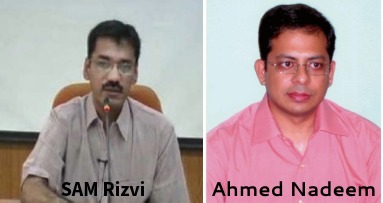
Two Muslim IAS officers appointed in-charge VCs

Hyderabad, TELANGANA :

Hyderabad :

Two Muslim IAS officers in Telangana have been appointed in-charge Vice-Chancellors of two state universities.

Syed Ali Murtaza Rizvi has been appointed as the in-charge Vice-Chancellor of Dr. B.R. Ambedkar Open University, Hyderabad. The government has also appointed Ahmed Nadeem as the Vice-Chancellor of Palamuru University, Mahabubnagar.

Syed Ali Murtaza Rizvi is Indian Administrative Service (IAS) officer of 1999 batch. He is currently serving as the Principal Secretary to Government, Energy Department. Ahmed Nadeem is the Principal Secretary to Government, Planning Department. He is an IAS officer of 1997 batch.

They are among IAS officers appointed as in-charge Vice-Chancellors of 10 state universities.

As existing Vice-Chancellors demitted their office on May 21, the bureaucrats were appointed as in-charge Vice-Chancellors.

As per the orders issued by the government, the in-charge Vice-Chancellors will hold these offices till regular vice-chancellors are appointed or till June 15, 2024, whichever is earlier.

Dana Kishore, Principal Secretary, Municipal Administration & Urban Development, has been appointed as in-charge Vice-Chancellor of Osmania University, Hyderabad, the oldest and most prestigious university in the state.

In-charge VCs have also been appointed for Jawaharlal Nehru Technological University (JNTU), Hyderabad; Kakatiya University, Warangal; Telangana University, Nizamabad; Potti Sriramulu Telugu University, Hyderabad; Mahatma Gandhi University, Nalgonda; Satavahana University, Karimnagar; and Jawaharlal Nehru Architecture and Fine Arts University, Hyderabad.

The government has already invited applications for the posts of regular VCs. A total of 1,382 applications have been received, including those from 312 teachers. Most of them applied for multiple universities.

source: http://www.radiancenews.com / Radiance News / Home> Latest News / by Radiance News Bureau / May 25th, 2024

Architect Imran Abbas Shaikh: The visionary behind India’s finest Mosques

Pune, MAHARASHTRA :

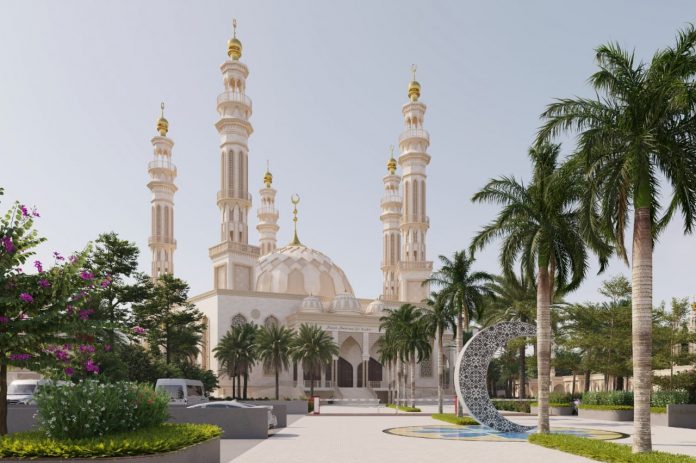
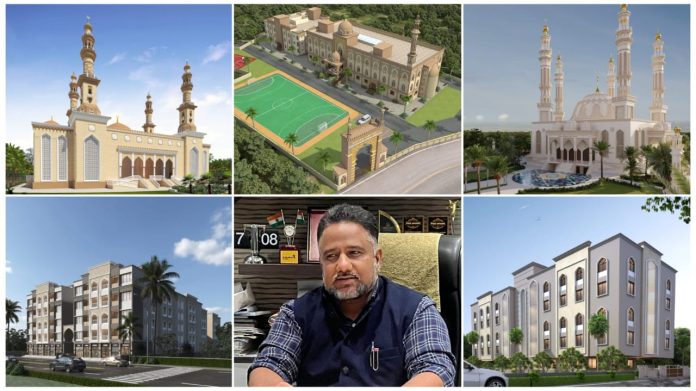
Architect Imran Abbas Shaikh and some of the mosques he designed.

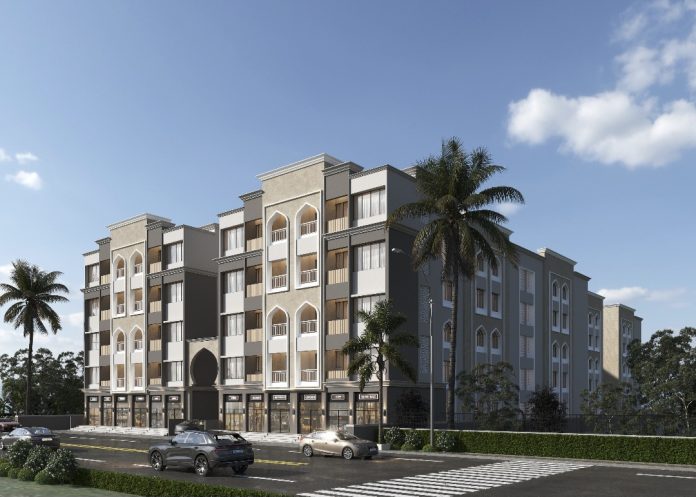
Architect Imran Abbas Shaikh, a visionary based in Pune, Maharashtra, exemplifies the transformative power of architecture. With a passion for blending modern design with cultural heritage, Imran has developed a diverse portfolio ranging from innovative urban projects to iconic cultural landmarks. Renowned for his distinctive approach, he has redefined architectural design, particularly in the creation of mosques. His designs for these sacred spaces often include facilities like hospitals, museums, libraries, and community kitchens, showcasing his dedication to empowering the community. Through his work, Imran Abbas Shaikh has set a new standard for integrating functionality with tradition, earning widespread acclaim for his contributions to architecture.

Muhammad Bin Abdullah Mosque’ in Dhannipur, Ayodhya district, Uttar Pradesh.

The Early Years

Mr. Mohammad Imran Abbas Shaikh, hailing from Pune, Maharashtra, has traversed an extraordinary journey from his roots to emerge as one of the most prominent architects of our time.

His architectural firm, Cubix Architects, situated in his hometown, reflects his deep-rooted connection to the place that nurtured his talents. Growing up, Imran was distinguished by his unique approach and a penchant for creative thinking, qualities that would later define his illustrious career as a visionary architect. However, it was the unwavering support and belief of his father that truly ignited Imran’s passion. His father instilled in him the notion that architecture was not merely about envisioning structures, but about crafting an unwavering future that could bring about positive change. This paternal guidance became the driving force behind Mr. Mohammad Imran Abbas Shaikh’s relentless pursuit of architectural excellence.

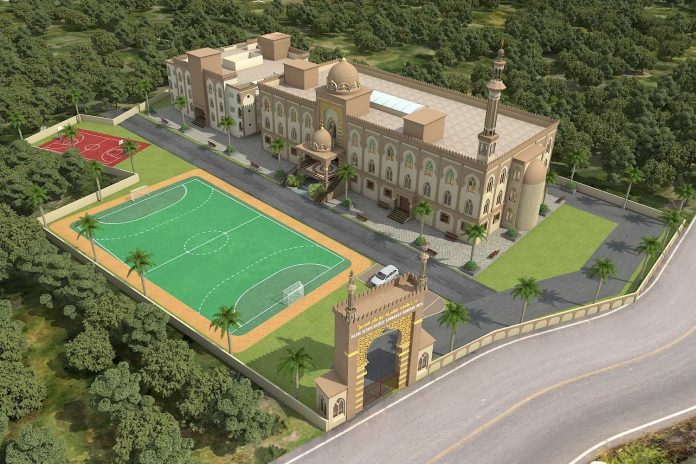
Islamic School and Institutional Campus, Phaltan, Maharashtra.

Educational Background 

Imran Shaikh’s educational journey was marked by a pursuit of excellence from the outset. Beginning with his early schooling split between SSPM and Children’s Academy in Shivaji Nagar, Pune, he demonstrated a thirst for knowledge and innovation. His high school years at Poona College laid the groundwork for his academic prowess, setting the stage for his subsequent achievements.

Imran’s passion for architecture led him to Bharati Vidyapeeth, where he honed his skills and emerged as a consistent topper throughout his degree. Even after completing his formal education, Imran’s dedication to his field remained unwavering. He continues to share his expertise and insights by delivering lectures and guiding Ph.D. aspirants, leaving an indelible mark as an inspirational figure for aspiring architects and youngsters alike. His contributions as a guest lecturer have not only enriched the minds of his students but have also sparked a newfound enthusiasm for architecture among many.

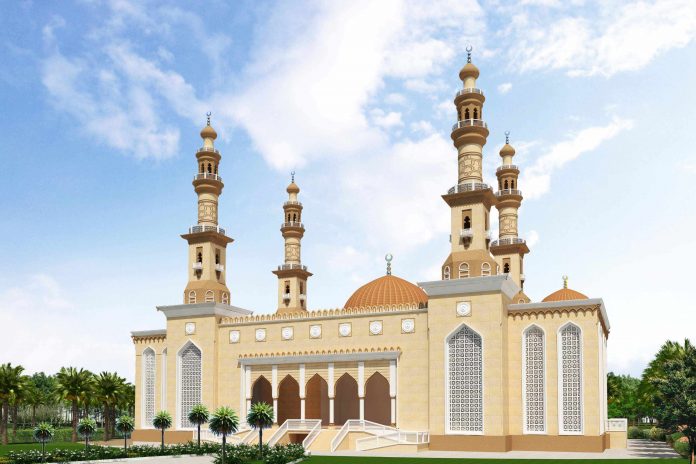
Islamic Spiritual Centre of Maulana Sajjad Nomani – Neral, Maharashtra

Inspiration Behind Choosing Architecture as Career 

Imran Shaikh always had a keen interest in travelling, exploring, and various forms of art. After high school, he decided to pursue architecture as a career, a field that had always intrigued him. Imran often spoke about how his father was his biggest motivator, playing a significant role in his journey to becoming a successful architect. During Imran’s college years, his father would proudly share his accomplishments with everyone. Imran’s fondness for art and his unique, abstract perspective on things have been evident throughout his career. Each of his projects bears a distinctive touch, showcasing his artistic vision and innovative approach.

“Modern technologies have made the youth increasingly dependent, resulting in a lack of motivation and original ideas. To foster change, it is essential to reduce dependency on readymade materials and encourage wholehearted engagement in learning, exploration, and hands-on activities. As long as a person is away from mental pollution, they can do wonders”

How Does Imran Shaikh See Architecture 

Imran Shaikh states that architecture is a profession that has existed since the dawn of mankind, tracing its origins back to Adam (AS). Since the beginning, people have sought shelter, making architecture an integral part of human existence. This concept is not limited to humans; some of the best architectural forms can be seen in birds and animals. According to him, architecture starts with a dot, which evolves into a line, then a triangle, and gradually forms complex shapes and designs. The journey beginning with a simple dot encapsulates the essence of architecture.

His favourite works

The ‘Muhammad Bin Abdullah Mosque’ in Dhannipur, Ayodhya district, Uttar Pradesh, is under construction and spans 4,500 square metres.

Dar e Arqam

This mosque will include various facilities such as a hospital, community kitchen, library, and research centre.

Remarkably, it will be the first mosque in India to feature five minarets, symbolising the five pillars of Islam: profession of faith (shahada), prayer (namaz), almsgiving (zakat), fasting (roza), and pilgrimage (hajj). The mosque will be pentagon-shaped, further reflecting the significance of the five pillars. Additionally, it will boast a water and light show and house the world’s largest Quran, measuring 21 feet in height and 36 feet in width.

Architect Imran Abbas Shaikh

Some of architect Imran’s finest works include:

1-KAUSAR BAUGH MASJID – PUNE, MAHARASHTRA

2-ISLAMIC SPIRITUAL CENTRE OF MAULANA SAJJAD NOMANI – NERAL, MAHARASHTRA

3-ISLAMIC SCHOOL AND INSTITUTIONAL CAMPUS – PHALTAN, MAHARASHTRA

4-ISLAMIC SCHOOL AND INSTITUTIONAL CAMPUS – NEPAL

5-MASJID MUHAMMAD BIN ABDULLAH INDO ISLAMIC CULTURAL – BABRI MASJID, UP AYODHYA

5-ISLAMIC SCHOOL AND INSTITUTIONAL CAMPUS – BANGLADESH

Building a Better Society

Apart from his architectural achievements, Imran Shaikh is actively involved in education through his nonprofit ‘Human Embrace Foundation’, based in Pune. This foundation is dedicated to educating children from financially disadvantaged backgrounds, ensuring they have access to quality education and opportunities. Imran’s commitment to this cause has made a significant impact, inspiring many young people. His dedication and success serve as a powerful role model for youth, encouraging them to strive for excellence and make a positive difference in their communities. Through both his architectural work and his educational initiatives, Imran Shaikh exemplifies the values of innovation, compassion, and community empowerment.

source: http://www.muslimmirror.com / Muslim Mirror / Home> Indian Muslim> Positive Story / by Fiza Memon / May 25th, 2024

Rummana Hussain and the ghost of female Muslim heroes

Bengaluru, KARNATAKA / New York, U.S.A / Mumbai, MAHARASHTRA :

Rummana Hussain’s conceptual artistic imprint on the state of India is relevant now more than ever. Dealing in the currency of feminist expression, postcolonial thought and perennial ideas, Rummana’s India is both doubly colourful and doubly dark.

In an inaugural show in its new West Village location, New York’s Institute of Arab and Islamic Art presents The Tomb of Begum Hazrat Mahal an exhibition encapsulating Rummana Hussain’s artistic ruminations about the space our bodies occupy in present and past through one of India’s most prominent Muslim woman.

Bangalore-born Rummana Hussain (1952-1999) was a pioneer in conceptual and performance-based political art in India during the 1980s and 1990s.

She was part of the Sahmat collective, a platform for liberal, secular engagés multidisciplinary artists including Safdar Hashmi, Bharti Kher, and Manjeet Bawa among others.

In this recreation of The Tomb of Begum Hazrat Mahal (1997), the respectful visitor enters a one-room shrine.

“In seeing The Tomb of Begum Hazrat Mahal today, I remembered Hussain’s bold feminist reclamation of her Muslim body through the reincarnated aura of Begum Hazrat Mahal to question monolithic identity, national narratives, and systemic marginalisation”

Various objects signify a site of lamentation, pride, and remembrance.

On the floor, occupying a central location, 12 votive-like papaya halves sit atop a mattress of uncooked rice, evoking both an altar to womanhood and fertility, and a symbolic funerary pyre.

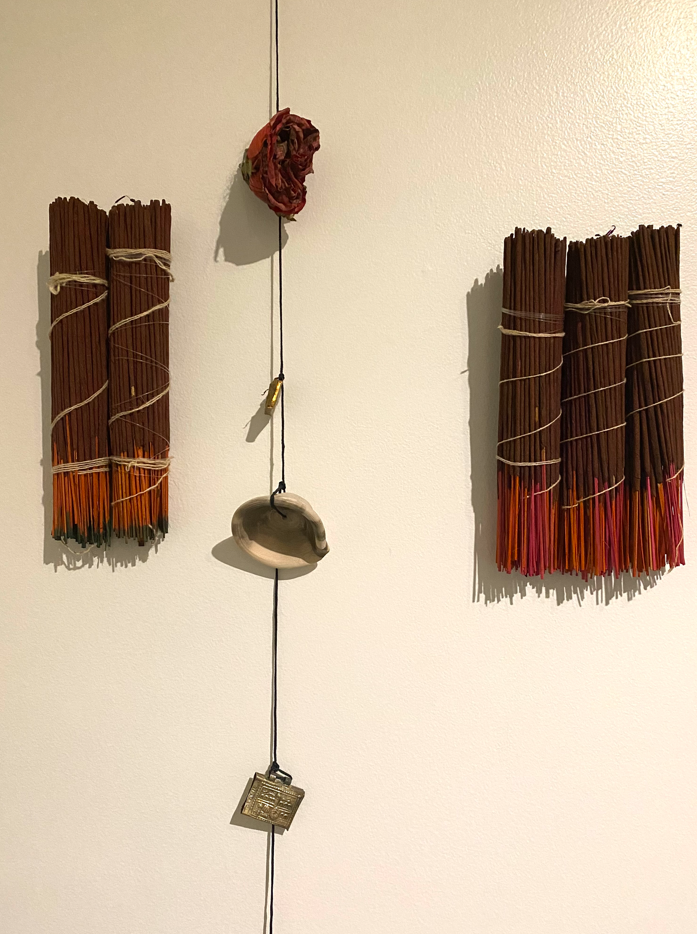
In front of them stands an installation of offerings comprising amulets, dried roses, shells, and incense sticks, tied in a rope.  

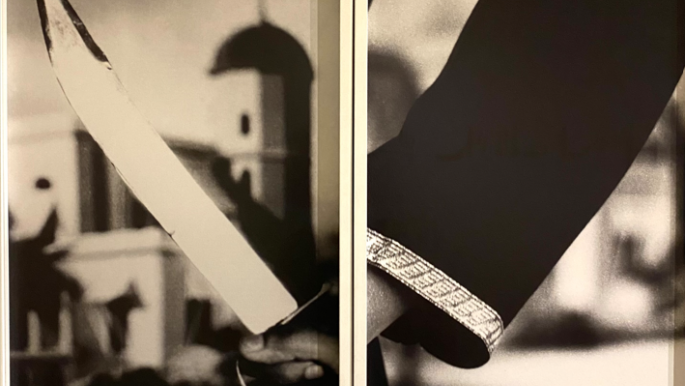
Against the three other walls is a calligraphic sculpture from rusty metal that reminds of a sacred spell and the embodiment of time, and an image frieze of detailed black and white triumphant photographs showing a woman’s arms, wrists, and hands.

In one of these frames, a woman raises her fist up as if calling others to join in. In another, she holds an ominous knife. Images of flames are interjected between the simulacra of archives.

Rummana Hussain, Tomb of Begum Hazrat Mahal (Detail) 1997 © Estate of Rummana Hussain. Image Courtesy Talwar Gallery

The room is devoted to a woman, an invisible physical body which radiates from each of the static objects. Begum Hazrat Mahal (1820-1879), née Muhammadi Khanum, was born into a poor family.

She was sold and entered the royal harem of art-loving Wajid Ali Shah, the last king of Awadh, a kingdom that occupied the area of the present-day northern Indian state of Uttar Pradesh. Trained as a harem attendant, she would eventually rise to become the king’s concubine – one of his favourites. Beyond her charms, Begum Hazrat Mahal owes her entrance on the historical stage foremost to her political prowess and courage.

The British-owned East India Company operated in Awadh since the early 19th century. The Company increased its grip in 1856, when it directly seized control of Awadh, citing poor governance and the need to uphold the rule of law to justify their annexation (an excuse known as the “Doctrine of Lapse”).

A Chief Commissioner was rapidly appointed. This caused the king to leave Lucknow and seek refuge in Calcutta. The Queen Mother of Awadh petitioned Queen Victoria in person for her son’s rights, in vain. Wives, including Begum Hazrat Mahal were left behind in occupied Lucknow.

Rummana Hussain, Tomb of Begum Hazrat Mahal (Detail) 1997 © Estate of Rummana Hussain. Image Courtesy Talwar Gallery

After this brutal annexation, discontent grew in several parts of India against the British and the interference of the Company, culminating in a mutiny and revolt in May 1857. Rebels looked to Awadh’s Crown Prince as a successor to his absent father when they captured Lucknow.

But Birjis Qadr, the son of Begum Hazrat Mahal and Wajid Ali Shah, was still a child then, too young to assume power. In his stead, Begum Hazrat Mahal took over Awadh’s revolutionary affairs, actively leading the armed revolt during her regency, towards the reinstatement of Indian rule over Awadh in July 1857.

She continued resisting British rule well after the retaking of Awadh by the occupying troops in 1858, as she refused various offers of collaboration. She died in exile in Kathmandu, Nepal, as an unwavering freedom fighter. Today, a humble stele near Kathmandu’s Jama Masjid marks her tomb.

Rummana Hussain, Living on the Margins, 1995, performance at the National Centre for Performing Arts, Mumbai

When Rummana Hussain first showed The Tomb of Begum Hazrat Mahal to the public in 1997, it was during a period marked by the tragic aftermath of inter-communal violence.

During the 1980s, radical Hindu nationalists campaigned to build a temple on the site believed to be the birthplace of Rama, where a mosque had been erected since the 16th century.

They took to the streets of Ayodhya, Uttar Pradesh, en masse in 1992. Security lost control of the crowd which eventually stormed into the site, demolishing the mosque.

This ignited weeks of violent clashes between Hindu and Muslim communities, causing the deaths of thousands. A later investigation on the destruction of Babri Masjid in Ayodhya pointed out the responsibility of leaders and supporters of the right-wing Bharatiya Janata Party (BJP), the political party of India’s incumbent Prime Minister, Narendra Modi.

Babri Masjid launched a turning point in Hussain’s artistic journey towards a more intimate, politically-conscious form of expression. In Dissected Projection (1993), she explored the multilayered meaning of ruins and dislocation through an allegorical work that exposes a fracture, a shattered piece of terracotta.

In her show Multiples and Fragments (1994), Hussain engaged with historical and domestic oppression in an installation of pigmented pieces of fabric on a clothesline, to denounce the colonial extraction of indigo in India and unpaid housework traditionally performed by women and girls. Labour is always physical and violence first hurts the most vulnerable.

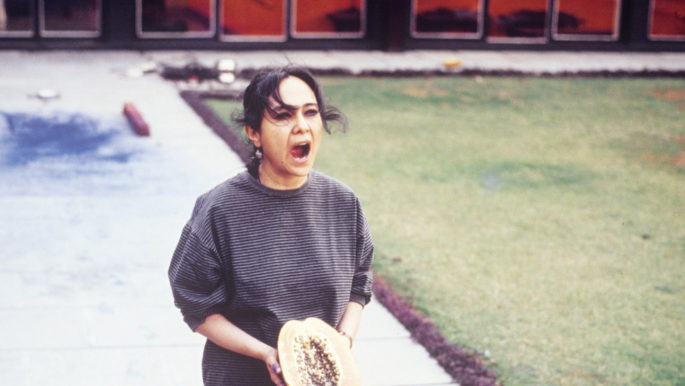
In her 1995 performance Living on the Margins, Hussain screamed while holding papaya halves, shapes that represent a universal vessel and the female anatomy.

Her works have been exhibited in the India Pavilion of the Venice Biennale in 2019, and in multiple institutions across India, Canada, Australia, Mexico, the United Kingdom and the United States during her lifetime and posthumously.

In seeing The Tomb of Begum Hazrat Mahal today, I remembered Hussain’s bold feminist reclamation of her Muslim body through the reincarnated aura of Begum Hazrat Mahal to question monolithic identity, national narratives, and systemic marginalisation. She wanted to say, we can turn the hate in love, we can turn the oppressed, the victims, into heroes they will one day celebrate. We can tell our own stories. They matter.

Outside, scores of brunch-goers live, love, laugh. If it’s dissonance we are meant to acknowledge, I acknowledge it. I closed my eyes in the silent white cube of the Institute of Arab and Islamic Art and saw images of the relentless violence and bullying Muslim women continue to face in Narendra Modi’s India.

In this reconstituted tomb, it’s hard to feel alone. Around me swarmed many other ghosts, of ordinary Muslim women – from Afghanistan to Iran and beyond – crushed and slain in their contemporary defence of freedom and justice against oppressors. Many have been killed in their fight.

A shrine calls for a quiet prayer, I realised.

Farah Abdessamad is a New York City-based essayist/critic, from France and Tunisia.

Follow her on Twitter: @farahstlouis

source: http://www.newarab.com / The New Arab / Home> Features>Culture / by Farah Abdessamad / December 08th, 2022

Azra Nalatwad on her weaver-turned-doctor father’s inspirational life

Kurnool, ANDHRA PRADESH / Bengaluru, KARNATAKA:

Dr. Azra Nalatwad’s forefathers were from a tiny town named Karnul in Andhra pradesh and had migrated to Karnataka. Behind her success of becoming a doctor is an incredible story of hard work and grit that lifted a poor family of weavers to a family of doctors. Dr Azra Nalatwad shared her and her parents’ inspirational story with Awaz-the Voice.

“My parents were extremely hardworking, poor, and struggled to make ends meet, particularly my father, Abdul Khader Karnu used to manually weave traditional saris through wooden looms, as machines had not yet arrived at that time.  During his early 20s, after a lot of labour, he would make one saree.”

His family was living hand-to-mouth existence. Though Abdul Khader struggled with poverty, he dreamed big – he was determined to become a doctor. Without any prodding or help, he studied by himself while weaving sarees. Back then, there was no societal help, counselors, or family push to improve his lot.  With sheer grit, he started to excel in his studies. He was so brilliant that he was sponsored for his studies in a boarding school.  During holidays, he would return home and help with the business of his father and brothers. 

“With great tenacity, he finally finished his studies to complete his MBBS and achieved his goal of becoming a doctor, specializing as an ENT physician.  He was the first in the family to be so. Our father paved the way to help us all come up as a family.” 

Her mother was a schoolteacher when she married Abdul Khader, who persuaded her to complete her MBBS and she became a gynecologist.  

Dr. Azra who teaches anatomy at Karnataka Medical College says, “On seeing my parent’s hard work and toil, I resolved to study hard as well. Early in my school days, I wanted to become a doctor. So, I focused on getting admission to MBBS, which I managed to get in the area without going to a hostel to my relief.” Dr. Azra says that her life was made smooth due to the hard work of her parents. 

Describing the life around her, she explains, “Around my neighbourhood, most of the girls would do some BST course, and then get married, but my parents spurred me on to do something significant and not hurry to get married.  My parents always had a vision that we as a family should not just study and stay at home to be engrossed and wrapped up only in our lives but use our enlightenment to serve the community.”

Dr Azra Nalatwad during her PG course

Azra’s family is a family of doctors. “My eldest sister is a dentist, her husband is a Pathologist (MD) and younger brother Dr. Adil is a neurosurgeon, his wife is a doctor with MBA and MBBS degrees.”

Interestingly, Azra’s husband is the only non-doctor in the family and it was deliberate. She explains: “When it was time for me to get married, my father told me that since there are many doctors in their family, it was better to find my prospective husband in another field. As a family, our conversations revolved around patients and their cases, so my father felt it would be better to get a non-medical groom.”

She married an engineer who working with one of India’s leading software companies.

To follow their father’s advice to his children that they must pay it back to society, Dr. Azra says, The siblings often organize free health checkup camps at Gulbarga.” (Gulbarga is now known as Kalaburagi and has developed to become a city).

She continued, “After writing my entrance test for the post-graduation, my father encouraged me to take the course wherever I get it. He taught me never to throw away opportunities. I was selected for anatomy and it took me to teaching.  I did a course to learn ultrasound technology, and in the hospital where my mother was working, I was appointed as a sinologist.”

Dr. Azra Nalatwad’s father died during the COVID surge. “He continued to see patients even during the pandemic; never isolated them and eventually caught the virus and succumbed to it while during his duty in Gulbarga.”

Azra worked at different places like Kadapa in Andhra Pradesh, Ernakulam in Kerala and now she is in Bengaluru.  Mother of two growing-up boys, she travels in her car from Bengaluru to Kolar daily for her anatomy teaching classes.

She explains, “I took up the teaching line in anatomy and was interested in ultrasound, so I went towards the clinical side for one and a half years, I also worked in Manipal Hospital as a senior resident doctor. Night duties in the hospital became problematic with my son as my mother-in-law was not there with me, so I quit that job and came back to teaching.” 

She however loves her teaching job, “The new generation of doctors do not talk to their patients because of the long queues of people waiting to see them and they want to see as many patients as possible in a day, so impatiently, they quickly write something out for the patients and push them out to directly go for CT scans, ultrasounds without noting the signs and symptoms in the patient.  There is no personal touch or caring.  Once again, after their illness is diagnosed, they do not convey to the patient properly what was the problem and what steps to take, nor do they serve the patients their options.  The doctors need to show them different modalities of treatment which and required them to communication properly.

“Therefore, I encourage my students to develop doctor-patient communication skills with more empathy and compassion, some emotional attachment is necessary.  A patient needs to feel trust in a doctor to return to them. In the early days, a patient would only go back to their favourite doctor holding him in great esteem. These days it is sad to see patients changing the doctor midway during the treatment while complaining that the previous one was noncommittal and indifferent or even rude.  These days, most of the doctors are cold and detached.

Dr Azra Nalatwad at the hospital (wearing a black Abayya)

She says her students are becoming aware of the bad doctor-patient cases as newspapers report about incidents of people assaulting doctors. “We guide them so that they will not learn through bitter experience but rather as we say, prevention is better than cure, so we teach them that when they are checking female patients, they need to take their consent and explain why they need to touch her body.” 

I tell students, “You suddenly cannot ask her to lift her clothes without her consent, even if one is checking the wrist, the patient needs to be informed what the doctor is doing.”  Thus, we teach our students to inform the patient before doing even a tiny procedure or even checking the pulse or temperature as a form of respect between the doctor and the patient and leave the lines open for good communication.  Just directly touching the patient does not work nowadays.  Teaching is a great responsibility where one does not just teach and go but has to inculcate empathy, sensitivity, communication skills, and other qualities in our students.” 

Brightening up, she said, “One thing I am looking forward to is I am going to open my clinic very soon working as a family physician, serving my residents, and treating small illnesses, which do not require complicated procedures.”

She continued, “Why I want to start my clinic in Bengaluru is to ease the burden of the poor in a modest area.  Nowadays, for simple sicknesses, people are going to big hospitals and get embroiled in unnecessary expenses and procedures. The OPD fees will be more than Rs. 500 or Rs. 750, an outrageous amount not required for small illnesses which is ripping the pockets of the poor.  Things like a common upper respiratory tract infection, ear pain, or other little illnesses do not need an OPD visit but rather a small affordable clinic with a small fee such as Rs. 50 or Rs. 100 to make it very light and easy for them.”

She explained, “In big health centers, there is a lot of corruption going on where they hoodwink patients into paying large amounts of money for unnecessary tests, procedures, and treatment.  I feel if I can help the poor in a smaller way such as this evading all the bribing that happens in big clinics and enabling health care at their doorsteps, figuratively.  I want to ensure that they get immediate help and cure for their illness without running to mega hospitals to give large amounts of money which they cannot afford, to get treated.” 

To pay tribute to the man who worked hard and changed his destiny, Dr Azra says she would name her hospital after her father. That she says would take a little time. Right now, besides taking care of her parents-in-law and husband, she has to look after her 12-year-old son and four-and-a-half-year-old daughter. 

Rita Farhat Mukand is an independent writer

source: http://www.awazthevoice.in / Awaz, The Voice / Home> Stories / by Rita Farhat Mukund / May 14th, 2024

.

Athletics: B&S Kurpfalz Gala: Jyothi and Afsal wins gold, silver for Tejas

KERALA / INDIA :

Jyothi Yarraji and Mohammed Afsal won the women’s 100m hurdles and men’s 800m title respectively at B&S Kurpfalz Gala.

Jyothi Yarraji and Mohammed Afsal won the women’s 100m hurdles and men’s 800m title respectively at B&S Kurpfalz Gala.

Indian hurdler Jyothi Yarraji delivered another outstanding performance this year by securing the women’s 100m hurdles title at the B&S Kurpfalz Gala, while Mohammed Afsal claimed victory in the men’s 800m race with a season-best time in Weinheim, Germany on Saturday.

Yarraji began her campaign by winning the first heat of the women’s 100m hurdles with a time of 13.36 seconds, earning her spot in the final. She then improved her time in the final to 13.06 seconds, clinching the title.

This marks her second title of the year in the women’s 100m hurdles, following her victory at the Harry Schulting Games earlier this month. Additionally, she competed in the women’s 200m time trial final at the event, finishing third with a time of 23.83 seconds, behind two Dutch players.

In the men’s 110m hurdles, Tejas Shirse secured the silver medal with an impressive time of 13.60 seconds, just 0.4 seconds shy of his personal best set earlier this month.

Mohammed Afsal triumphed in the middle distance event (800m), claiming the title with a season-best time of 1:47.05 in his first outdoor international event of the year. This time also propelled him to the second position in the list of Indian best timings of the year, behind Parvej Khan’s 1:46.12.

Amlan Borgohain kicked off his season with an impressive time of 10.66 seconds in the 100m sprint, securing a spot in the top five list of the fastest 100m sprinters in India this season.

Meanwhile, Animesh Kujur, who shone at the Federation Cup last week, maintained his excellent form by clocking a time of 20.96 seconds to claim second place in the men’s 200m at his inaugural international tournament.

Pavana Nagraj, the Asian U20 champion, participated in the women’s long jump event at the same competition, achieving a respectable leap of 6.15m in the final. While she achieved this mark on her first attempt, she couldn’t surpass it in subsequent jumps and finished in seventh place.

source: http://www.thebridge.in / The Bridge / Home> Athletics / by The Bridge Desk / May 18th, 2024

Nikhat Zareen, Minakshi strike gold as Indian boxers conclude Elorda Cup campaign with 12 medals

Hyderabad, TELANGANA / INDIA :

Besides Nikhat and Minakshi’s gold medals, Indian boxers won two silver and eight bronze medals to better their last edition’s record of five medals.

File image of Indian boxing star Nikhat Zareen. Image credit: BFI

Astana, Kazakhstan:

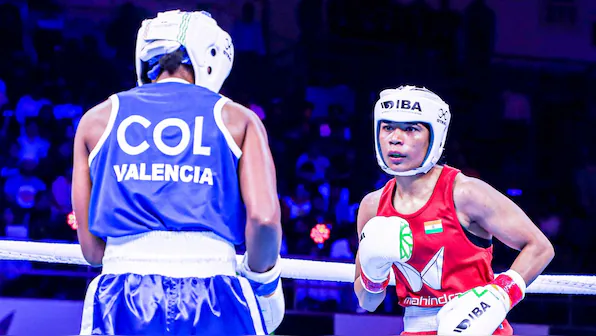
Reigning world champion Nikhat Zareen and Minakshi clinched gold medals as the Indian team concluded their Elorda Cup 2024 campaign with 12 medals in Astana, Kazakhstan on Saturday.

Besides Nikhat and Minakshi’s gold medals, Indian boxers won two silver and eight bronze medals to better their last edition’s record of five medals.

Nikhat (52kg) continued her dominance in the ongoing prestigious tournament as she outclassed Zhazira Urakbayeva of Kazakhstan with an unanimous 5-0 scoreline to add yet another gold medal to her coveted medal tally.

Minakshi started the day for India with a bang when she defeated Uzbekistan’s Rahmonova Saidahon 4-1 in the women’s 48kg final to give India its first gold medal of the competition.

Meanwhile, Anamika (50kg) and Manisha (60kg) suffered losses to end their campaigns with silver medals.

Anamika fought valiantly but conceded a 1-4 loss against reigning world and Asian champion China’s Wu Yu while Manisha faced a 0-5 defeat against Kazakhstan’s Viktoriya Grafeeva.

Medallists:

Gold: Minakshi (48kg) and Nikhat Zareen (52kg)

Silver: Anamika (50kg) and Manisha (60kg)

Bronze:
(men) Yaiphaba Singh Soibam (48kg), Abhishek Yadav (67kg), Vishal (86kg) and Gaurav Chauhan (92+kg); (women) Sonu (63kg), Manju Bamboriya (66kg), Shalakha Singh Sansanwal (70kg) and Monika (81+kg).

source: http://www.firstpost.com / First Post / Home> FP Sports / May 18th, 2024

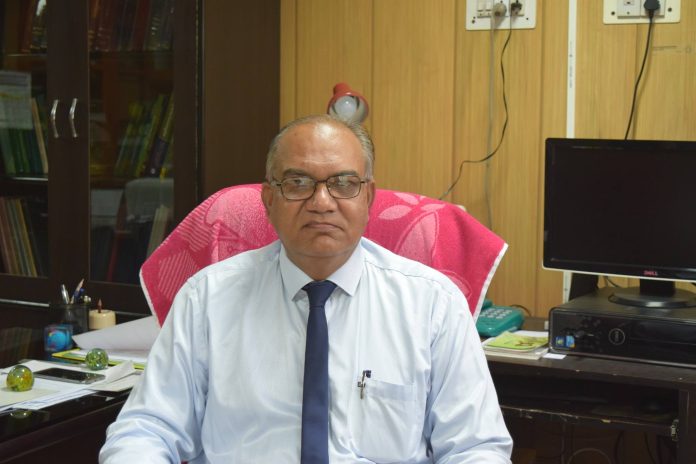
AMU’s Prof. Nafees Ahmad Khan Achieves Top Ranking for Contributions to Plant Science and Food Security

Aligarh, UTTAR PRADESH :

Aligarh :

Prof. Nafees Ahmad Khan, a distinguished scholar in the Department of Botany at Aligarh Muslim University (AMU), has been recognized as the top researcher at AMU, 9th in India, and 577th globally by Research.com, a leading academic platform for researchers. This recognition comes from the 2024 edition of the rankings for the best scientists in Plant Science and Agronomy.

Prof. Khan’s groundbreaking research focuses on the mechanisms of plant hormonal and nutritional regulation to optimize photosynthetic machinery using ionomics and metabolomics for sustainable development. His work aims to mitigate the adverse effects of abiotic stress factors such as salinity, heavy metals, and temperature variations by enhancing nutrient-use efficiency through the synergistic action of signaling molecules like ethylene, nitric oxide, abscisic acid, and hydrogen sulfide. These advancements promise to create abiotic stress-resilient plants, significantly improving food security in India.

Expressing his gratitude, Prof. Khan told Radiance, “I feel highly elated and delighted to receive such recognition for the second consecutive year. I am thankful to Almighty Allah for blessing me with much more than I deserve and for the responsibility that I have been able to fulfill successfully. Congratulations to all the research students of the lab, collaborators, and well-wishers for believing in me.”

With around 200 research papers and 22 edited books to his name, Prof. Khan has received numerous accolades, including the UGC-Research Award, Fellowships from the National Academy of Sciences, the Linnean Society of London, the Indian Botanical Society, and the Indian Society of Plant Physiology. He has been recognized as a Highly Cited Researcher from 2019 to 2023 and received the India Research Excellence Citation Award-2023 by Clarivate Analytics (Web of Science), along with the Plant Science and Agronomy in India Award for 2023 and 2024 by Research.com.

Prof. Khan’s research outcomes not only highlight his contributions to the scientific community but also present viable solutions for creating resilient agricultural practices to ensure food security in the country.

source: http://www.radiancenews.com / Radiance News / Home> Focus / by Radiance News Bureau / May 16th, 2024

Vartha Bharati reporter Ismail Kandakare gets prestigious PaGo award 2024

Karavali, KARNATAKA :

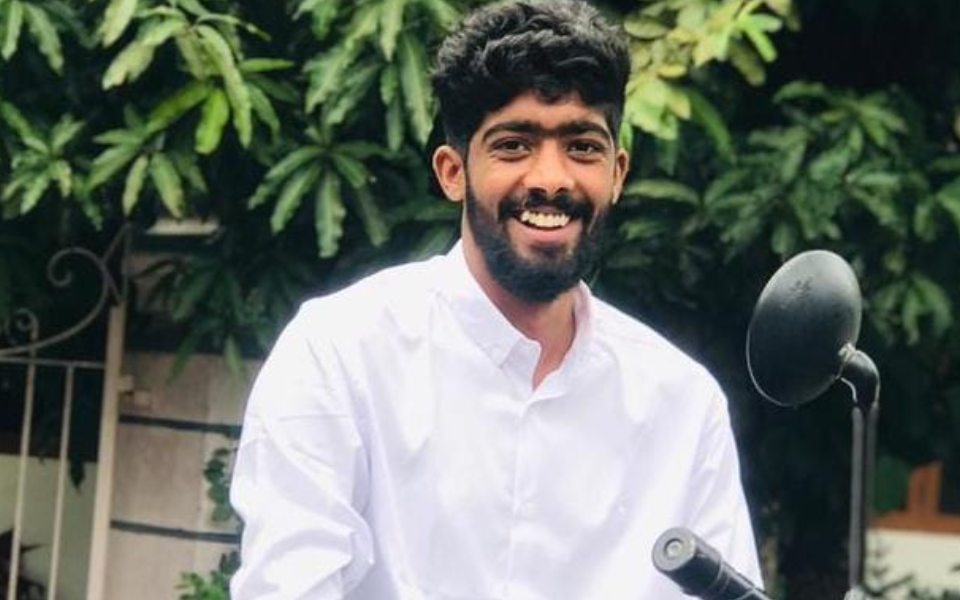
Vartha Bharati reporter Ismail Kandakare

Vartha Bharati Kodagu District Special Correspondent K.M. Ismail Kandakare has been selected as the recipient of the prestigious PaGo award by the Dakshina Kannada District Working Journalists Association this year. The award-winning report, titled ‘Give way or give way to death,’ was published in the ‘Vartabharati’ newspaper on April 6, 2023.

The selection committee, comprising Senior Journalist Keshav Kunder and Journalism Lecturer Guruprasad T.N., chose Kandakare’s report for its quality and impact. The award includes a cash prize of Rs. 10,001 along with a souvenir.

Kandakare, who holds a certificate course in Diploma in Journalism from Karnataka Open University, has previously been recognized for his journalistic contributions. He has received the Best Sports Reporting Award from both the Kodagu District Working Journalist Association and the Kushalanagar Taluk Working Journalist Association. Additionally, Kandakare’s debut work, ‘Mariam,’ was published in 2021.

Apart from his journalistic endeavors, Kandakare is also involved in football, serving as both a player and coach. He currently works as a referee for the Karnataka State Football Association.

The award ceremony is scheduled to take place on May 9 at 11 AM at the Mangalore Press Club. Mangalore University Vice-Chancellor Prof. P L Dharma will present the award, while senior journalist Chidambara Baikampadi will deliver a speech as the guest speaker. The event will be presided over by Srinivas Naik Indaje, the president of DK District Working Journalists’ Association, with Jitendra Kundeshwar, the general secretary of the association, coordinating the proceedings.

source: http://www.english.varthabharati.in / Vartha Bharati / Home> Karavali / by Vartha Bharati / May 04th, 2024

Bhatkal: AITM students bag championship at MIT Kundapur’s Savishkar Fest

Bhatkal, KARNATAKA :

Bhatkal: 

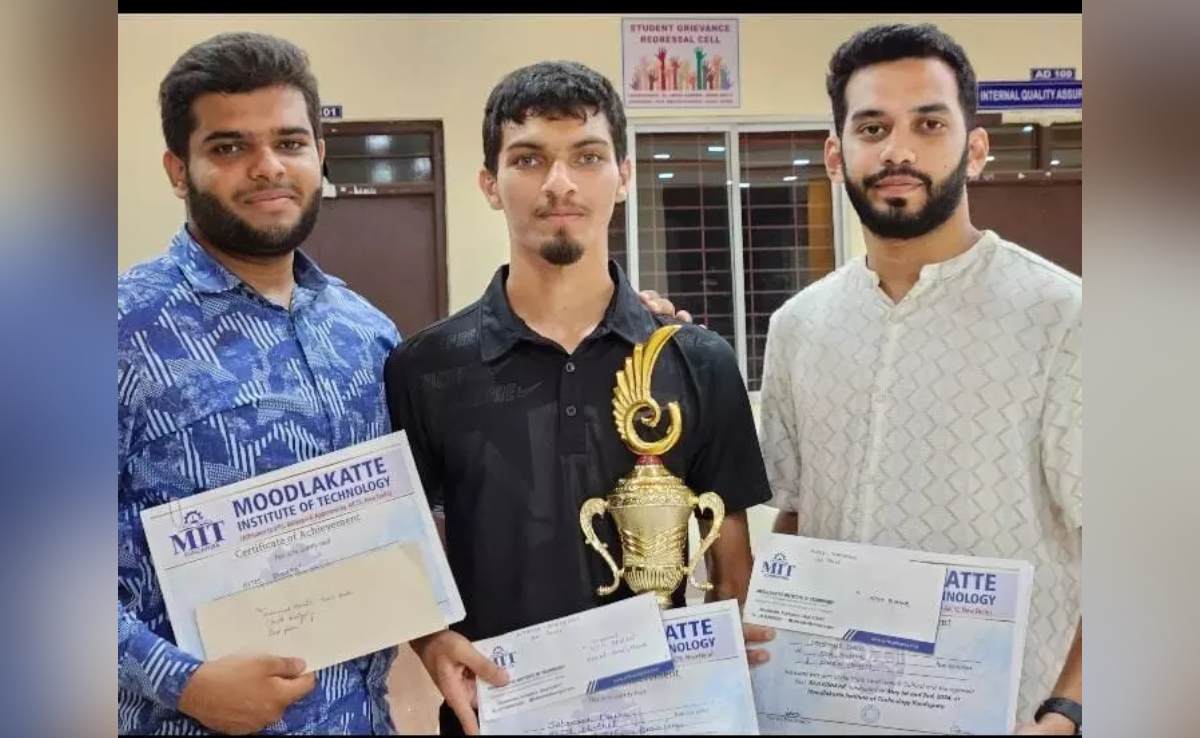
Students from the Anjuman Institute of Technology and Management (AITM) showcased their talents and brought laurels to the institute by participating in the Savishkar Fest held at MIT Kundapur.

Mohammad Ismail, a fourth-year Mechanical Engineering student, along with Zuraif Ahmed and Mohammad Meeran Mohtisham, both second-year Electronics Engineering students, represented AITM in the competition and emerged victorious, securing the championship title.

In a press release, AITM announced the success of its students in the fest, highlighting their outstanding performance. The institute’s Principal, Dr. Fazalur Rahman K, Registrar Prof. Zahid Kharuri, Media Coordinator Prof. Subrahmanya Gajanana Bhagwat, and other faculty members expressed their appreciation for the students’ remarkable achievement. The students secured the first prize in three different competitions during the fest, showcasing their talent and dedication.

source: http://www.english.varthabharati.in / Vartha Bharati / Home> Karavali / by Vartha Bharati / May 09th, 2024