Sunari Village (Nuh District) , HARYANA / WEST BENGAL :
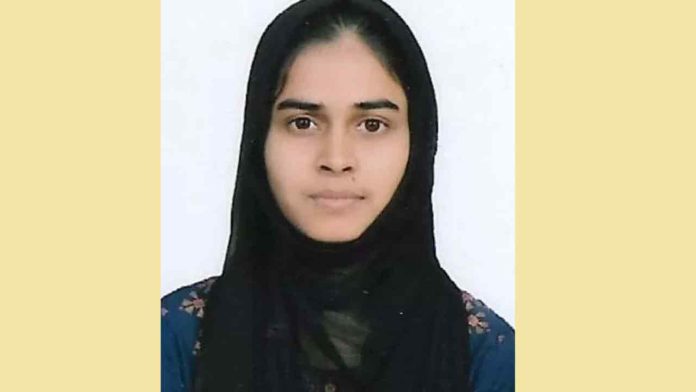
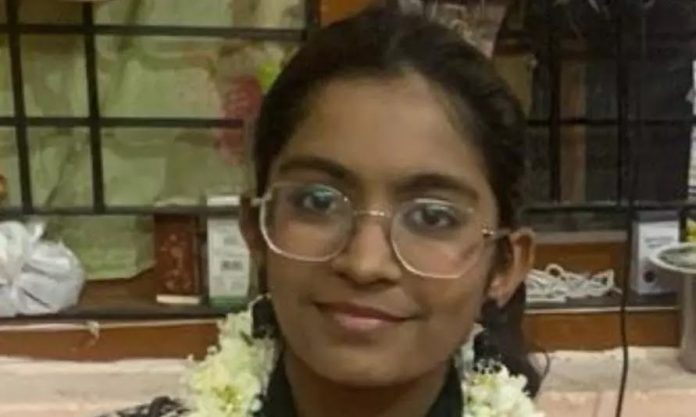
Rukhsana, a resident of village Sunari in Nooh district (Haryana) has qualified West Bengal Public Service Commission Judicial Exam. She brought laurels back home by securing third place and made people in the Nooh proud of her achievement.
Rukhsana studied till 10th from Model School in Tawadu before going to Aligarh Muslim University to study intermediate. After passing the 12th examination from AMU, Rukhsana took LLB and LML degrees from Jamia Millia Islamia.
Rukhsana’s father Mohammad Ilyas, who has retired as a manager from Sarva Haryana Gramin Bank, is very happy with the success of his daughter. According to him, after passing the 12th examination, Rukhsana’s mother insisted on getting her daughter married but Rukhsana turned down her mother’s proposal and today everyone is happy and proud of her.
According to Ilyas, the decision taken at that time is making not only the whole family but the entire region proud today. There is a queue of people coming to their house to congratulate them and their daughter on becoming a civil judge.
source: http://www.radiancenews.com / Radiance News / Home> Latest News> Pride of the Nation> Markers of Excellence / by Radiance News Bureau / May 18th, 2024
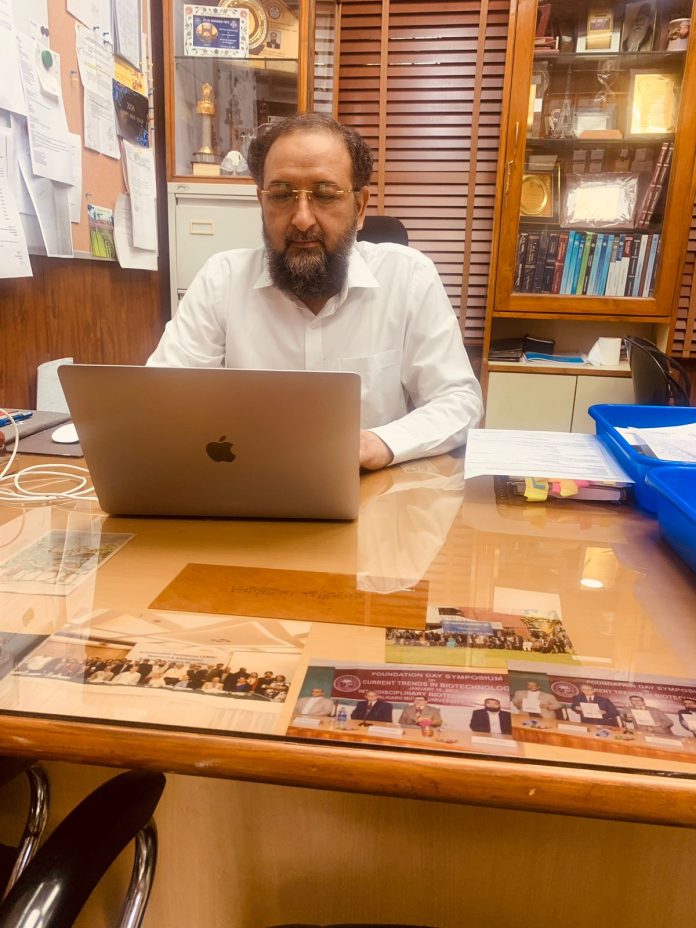
Prof Asad U Khan, from the Interdisciplinary Biotechnology Unit at Aligarh Muslim University, has achieved a significant milestone in the realm of Microbiology, securing the 39th position globally, according to ScholarGPS, the world’s foremost scholarly analytics platform. This platform utilizes advanced computational techniques such as data mining, artificial intelligence, and statistical analysis to evaluate scholarly impact comprehensively.
Named as an “Inaugural Highly Ranked Scholar,” Prof Khan joins an elite group of scholars, with only three Indian researchers ranking in the top 0.05% globally in Microbiology. His recognition among 67 scholars worldwide underscores his exceptional contributions to the field.
Expressing his elation, Prof Khan shared, “I was truly thrilled to discover my global standing. Being passionate about research and dedicating two decades to antimicrobial studies, this recognition surpasses my expectations.” He expressed gratitude to his family, mentors, and supporters for their encouragement throughout his journey.
Highly Ranked Scholars like Prof Khan are distinguished by both productivity (number of publications) and impact (citations), as well as the quality of their work (h-index). ScholarGPS’s extensive database, comprising over 30 million scholar profiles and 200 million scholarly publications, enables precise identification of scholars within specific specialties, disciplines, and fields.
Prof Khan’s accolades extend beyond this recent recognition, with previous honors from national and international scientific bodies, including the Ministry of Science and Technology, Government of India, acknowledging his outstanding contributions to combating Antimicrobial Resistance.
In summary, Prof Asad U Khan’s global ranking in Microbiology signifies not only his individual achievement but also highlights the excellence of research conducted at Aligarh Muslim University, reaffirming India’s presence on the global scientific stage.
source: http://www.radiancenews.com / Radiance News / Home> Pride of the Nation> Markers of Excellence / by Radiance News Bureau / May 09th, 2024
A joint study conducted by a Delhi-based think tank – Centre for Study and Research (CSR) and NOUS Network Private Limited – has busted the myth that Muslim-run institutions cater to Muslims only.
The study titled “A Survey of Muslim-managed Public and Private Institutions of Higher Education in India” reveals that Hindu students outnumber Muslim students in higher education in Muslim-managed institutions across the country.
The percentage of Hindus, according to the report, is about 55 percent in these institutions against 42 percent of Muslim students.
However, the report is silent about the reasons behind Hindu students exceeding their Muslim counterparts in Muslim-run institutions.
But the higher number of Hindu students is an indicator that the Muslim institutions do not discriminate against non-Muslims and are open to all religious communities against the prevailing misconception that Muslim institutions serve only Muslim students.
This is also a proof that the standard of education in Muslim-run institutions are at par with institutions run by other communities. Had the quality of education in Muslim institutions been poor, Hindu students would certainly have avoided it and not enrolled en mass as is happening currently.
The study provides empirical evidence against the prevailing false notion among certain sections of society regarding Muslim-managed educational institutions.
The report reveals a surprising trend: in Muslim-run universities, Hindus constitute the majority of students (52.7%), while Muslims make up 42.1%. This pattern holds true for colleges managed by the Muslim minority as well, where Hindus are the largest student group (55.1%), followed by Muslims (42.1%) and other minority groups (2.8%).
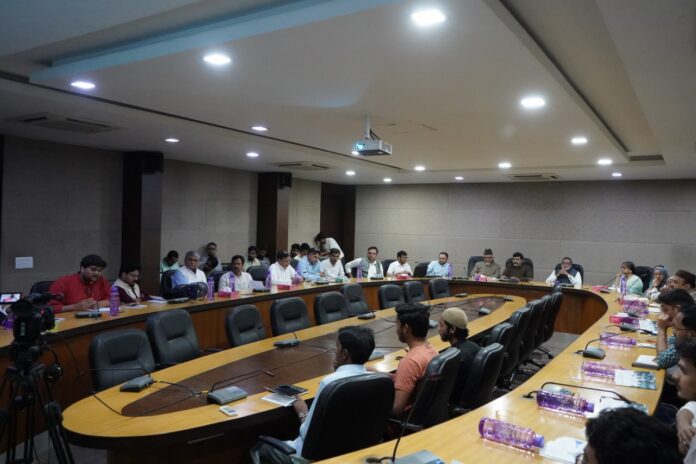
The findings of the report were discussed at a roundtable event attended by educators, policymakers and stakeholders. They applauded the report as a valuable resource for addressing existing challenges faced by the Muslim community in the realm of higher education.
Concerns were also expressed over the grim situation of the community, particularly their meagre share in higher education and their sharp dropout rates.
CSR director Dr. Mohammed Rizwan presented the vision of CSR, which aims to evolve a purposeful, holistic, and value-based knowledge ecosystem. He asserted that the report is a “myth-buster” that provides empirical evidence against the prevailing misinformation among certain sections of society.
“To our knowledge, no such study has been conducted to date, and there is currently no data available on the number of institutions for higher education affiliated with the Muslim minority group, while this research represents the first attempt of its kind to address this critical gap,” Dr. Rizwan stated.
Elaborating that despite consistent efforts from the community, empirical evidence suggests a need for even more concrete efforts, Dr. Rizwan said that those efforts should particularly focus on areas like gross enrolment in higher education, decreasing the dropout rate, and other aspects of higher education.
Dr. Rizwan believes that this report sheds light on the challenges and opportunities within higher education by meticulously analyzing various facets. These facets include the number and types of educational institutions, the gender ratio within them, their affiliation status, their academic productivity, their NAAC accreditation standing, student demographics, and more.
“The report’s findings underscore the importance of recognizing the unique needs of the Muslim minority in higher education and advocating for targeted interventions to address those needs,” he added.
Speaking at the roundtable, Jamaat-e-Islami Hind (JIH) Vice President Prof. Salim Engineer commended the CSR and NOUS team for conducting such an important study. However, he cautioned that the findings regarding the community’s education situation are not encouraging.
Prof. Salim highlighted that the study serves as a roadmap for improvement, identifying areas where the community needs to focus its efforts while acknowledging its achievements.
Emphasizing the need to encourage the community, not discourage it, by recognizing its accomplishments and contributions in the past 75 years of independence, he pointed out the community’s resilience in the face of continued communal riots and a challenging post-partition atmosphere.
Criticizing the apathy of successive governments towards the Muslim minority, Prof. Salim lamented that numerous studies, including the noteworthy Sachar Committee report, have been conducted on the community’s socio-economic and educational status. However, these reports have been largely debated without any significant implementation of their recommendations.
Acknowledging the community’s progress in education despite these hurdles and the negative attitudes of some governments, the JIH leader commended, the establishment of numerous educational institutions and the achievements of students in higher education and civil services.
Stressing that the country’s progress hinges on the advancement of the Muslim minority, Prof. Salim urged the community to avoid self-blame and instead celebrate its achievements in the face of adversity. He concluded by referencing the Quran, stating that the Muslim community is meant to serve others.
Ali Javed, CEO of NOUS Network Pvt. Ltd., a Delhi-based think tank and media house, asserted that this report stands out as a truly unique attempt, as there is currently no existing comprehensive overview providing insights into the status of higher education in institutions catering to Muslims.
Ali Javed expressed the hope that this report would be an indispensable resource for academics, policymakers, and anyone interested in educational advancement. He believed it would significantly contribute to our understanding of Muslim-affiliated higher education institutions, paving the way for further discussions and initiatives in this area.
Emphasizing the importance of collective action, NOUS CEO explained that the purpose of convening this roundtable of experts, educators, academics, and stakeholders is to collaborate and find solutions to the community’s problems. He stressed that joint efforts are necessary for progress.
Expressing concern about the “extreme deprivation” faced by the community, not just in education but across various indicators, Javed proposed a multi-pronged approach, including data collection through surveys in Muslim-dominated areas, gathering disaggregated data, and developing the community’s own policy documents for negotiation with policymakers. He also emphasized the need for an evidence-based strategy for societal reform and infrastructure development.
Highlighting the study’s findings, researcher Abid Faheem, who played a key role in compiling the data, pointed out that Muslims constitute over 14% of India’s population. However, their representation in higher education remains low. According to the latest All India Survey of Higher Education (AISHE-2021-22), only 4.8% of students enrolled in higher education are Muslims. This is even lower than the enrolment rates for Scheduled Castes (SC) and Scheduled Tribes (ST), which stand at 15.3% and 6.3% respectively. SCs and STs comprise 16.6% and 8.6% of the total population, respectively.
Faheem used a PPT to show that the gross enrolment ratio for Muslim students in colleges affiliated with Muslim institutions is 1.23. This ratio is significantly lower in universities, at just 0.23. The combined gross enrolment ratio for Muslim students is 1.46. However, the situation is even worse in institutions of national importance like IITs, IIITs, IISERs, NITs, and IIMs, where only 1.72% of students are Muslim.
Faheem expressed concern that despite the Sachar Committee report on the socio-economic and educational status of the Muslim community released 17 years ago, there has not been much progress. He noted that in 2006, when the Sachar report was published, Muslim enrolment in higher education was 3.6%. While efforts have been made to improve this ratio, the first AISHE report in 2012-13 showed only a 0.6% increase after six years. A decade later, the AISHE report indicated another modest increase of 0.6%. In contrast, other disadvantaged groups like SCs and STs have made significant progress. Their enrolment rates have risen from 2.4% in 2006 to 15.3% and 6.3% in 2021-22, respectively.
However, the enrolment rates for SCs and STs have shown a much sharper rise compared to Muslims. Their share in higher education has climbed from a combined 2.4% in 2006 to 15.3% for SCs and 6.3% for STs in 2021-22.
It’s important to note that the Sachar report initially reported a combined enrolment rate of 2.4% for SCs and STs.
Speaking on the occasion, Prof. Sanghmitra, Chairperson of the Centre for Social Medicine and Community Health at Jawaharlal Nehru University, appreciated the CSR and Nous Networks team. She also appreciated their work in clarifying some widely held misconceptions about the Muslim community.
Prof. Sanghmitra emphasized the importance of inclusivity in policymaking. However, she expressed concern about the gap between policy and reality. She pointed out that the Sachar Committee report had already documented the disadvantaged state of Muslims and provided evidence. She further noted that the Amitabh Kundu Committee report, which followed the Sachar Committee report and received less attention, showed minimal progress in the community’s status despite the evidence and recommendations presented earlier.
Prof. Sanghmitra also recommended collecting data on the Muslim community at the secondary level in addition to the primary level.
Dr. Kamal Farooqi, spokesperson for the AIMPLB and former chairman of the Delhi Minority Commission, emphasized the importance of shifting the Muslim community’s fundamental attitude and mindset towards education.
Prof. Sadia Halima, an economics professor at Jamia Millia Islamia University, asserted for a shift in focus from mere literacy rates, ratio, enrolment figures and the number of students or institutions to prioritizing knowledge and quality education.
Prof. Majid Jameel, an electrical engineering professor at Jamia Millia Islamia University, commended the CSR-NOUS Network for the study. He shared his experiences motivating students in his hometown Saharanpur, UP, to pursue higher education, while also expressing concern about the high dropout rate within the community.
Former civil servant Akhtar Mahboob Syed stressed the importance of data collection and studies to understand the socio-economic state of the Muslim community. He pointed out that while the Sachar Committee report receives much attention, the Amitabh Kundu Committee report and Professor Mattu reports are less discussed.
Having worked with various government departments, he questioned the impact of existing schemes aimed at improving education for minorities, such as pre and post matric scholarships and the Maulana Azad Foundation and Ministry of Minority affairs. He argued that the community itself needs to gather data on the effectiveness of these initiatives, as the government is unlikely to do so. In addition to data collection, he suggested addressing the “fear complex” within the community.
Mr. Nizamuddin Shaikh of the Institute of Objective Studies and the All India Milli Council highlighted three key points: Islamization of knowledge, changing the community’s attitude towards education, and establishing more educational institutions.
The Millat Time editor Shams Tabrez Qasmi also spoke on the occasion. In the open session, various noted participants expressed their views on the study.
The report illuminates the number and growth trajectory of Muslim-affiliated institutions, along with their demographic characteristics. It underscores the pressing need for policymakers to address the under-representation of Muslims in higher education. The report also provides valuable insights into the educational quality, programme offerings, and research output of these institutions.
Other Key Results of the Study:
Universities:
Out of the total 1113 universities in India as per AISHE 2020-21 data, 23 universities belong to Muslim Minority. The share of Muslim managed universities is just 2.1%.
2. Uttar Pradesh has the highest number of universities, followed by Karnataka.
3. Of the 23 Muslim universities, the majority (43.5%) are privately managed, followed by public state universities (26.1%), deemed private universities (13%), and central universities (13%).
4. Around 69.9% of Muslim universities are located in urban areas.
5. Out of the total 97,928 students enrolled in the academic year 2021-22, 42.1% are Muslims, 52.7% are Hindus, and 5.2% belong to Other Minority groups.
6. Regarding Muslim students, there were 26,039 (63.09%) male students and 15,236 (36.91%) female students enrolled in Higher Education.
7. Among the 41,275 Muslim students enrolled, less than 1% represent Scheduled
8. Tribes, 34% were belong to Other Backward Classes, 42.8% were from the Unreserved Category, and the remaining 16.4% are from the Economically Weaker Sections (EWS).
COLLEGES:
1. Out of the total 43,796 colleges in India as per AISHE 2020-21 data, 1,155 colleges are managed by Muslim minority community. It means that the share of Muslim managed colleges is just 2.6%.
2. Of these 1,155 colleges, 141 (12.2%) are technical colleges registered with the All India Council for Technical Education.
3. Despite making up 73.4% of all minority groups, Muslim minority communities only have a 16.6% share in technical colleges. In contrast, other minority groups, comprising 26.6% of the population, hold an 83.4% share in technical colleges.
4. 6.4% of Muslim colleges in India are exclusively for girls.
5. The top 10 states in terms of the number of colleges in India are Kerala, Uttar Pradesh, Maharashtra, Karnataka, Telangana, Tamil Nadu, Andhra Pradesh, West Bengal, Bihar, and Jammu & Kashmir. These states account for 90.47% of the total colleges in the country.
6. Of the 1,155 Muslim minority colleges, 85.5% are private (unaided), 10.6% are private (aided), and 3.9% are government colleges.
7. Kerala has 24.9 colleges per lakh population while UP has 4.9 colleges and West Bengal has a mere 1.8 colleges per lakh population. The national average of colleges per lakh population stands at 6.4%.
8. Of the 1155 Muslim minority colleges, 85.5% are private (unaided), 10.6% are private (aided), and 3.9% are government colleges.
9. About 57.8% of Muslim minority colleges are located in rural areas.
10. The majority of colleges (93.16%) offer Undergraduate level programs, while only 6.32% offer PhD level programs.
11. Kerala has the highest number of colleges offering PhD programs, followed by Tamil Nadu and Maharashtra.
12. Around 51% of colleges only provide undergraduate level programmes.
13. Out of the total 524,441 students enrolled in the academic year 2021-22, 42.1% are Muslims, 55.1% are Hindus, and 2.8% belong to Other Minority groups.
14. In terms of Muslim students, there were 104,163 (47.18%) male students and 116,622 (52.82%) female students enrolled in Higher Education.
15. Among the 220,785 Muslim students enrolled, less than 1% represent Scheduled Tribes, 48.1% belong to Other Backward Classes, 50.7%
16. come from the Unreserved Category, and the remaining 0.9% are from the Economically Weaker Sections (EWS).
17. 96.4% of colleges did not participate in the NIRF ranking of 2023.
18. None of the colleges secured a position in the top 100 in the NIRF 2023 college rankings.
source: http://www.indiatomorrow.net / India Tomorrow / Home> Education / by Anwarulhaq Baig / May 15th, 2024
Gastroenterologist Dr. Mohammad Sultan Khuroo of Sopore was the Director of Kashmir’s super specialty hospital and research center, Sher-e-Kashmir Institute of Medical Sciences (SKIMS) when the Pakistan-sponsored terrorism had turned parts of Kashmir into ‘liberated zones’ in the early 1990s.
Khuroo’s fellow villager and eminent CVTS surgeon Dr Abdul Ahad Guroo was abducted and shot dead. The terrorists brandishing AK-47 rifles and rocket launchers had removed ‘SK’ (acronym of its founder Sheikh Mohammad Abdullah’s name) from SKIMS sign boards to leave the hospital signboards with just IMS.
Terrorists had set up hideouts inside, and taken possession of rooms and wards to control the place. Its walls were covered with posters of ‘azadi’ and ‘jihad’.
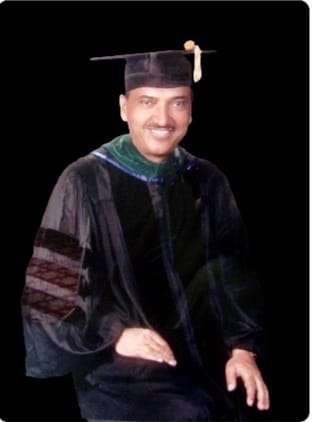
Dr M S Khuroo at his graduation ceremony
Dr Khuroo lived and moved around under a thick security cover in Srinagar. A senior IPS officer and a neighbour Veerana Aivalli advised Khuroo to ‘disappear’ for some time. “Aivalli told me that he could deploy 500 Policemen but still I was not safe,” he told Awaz-the Voice.
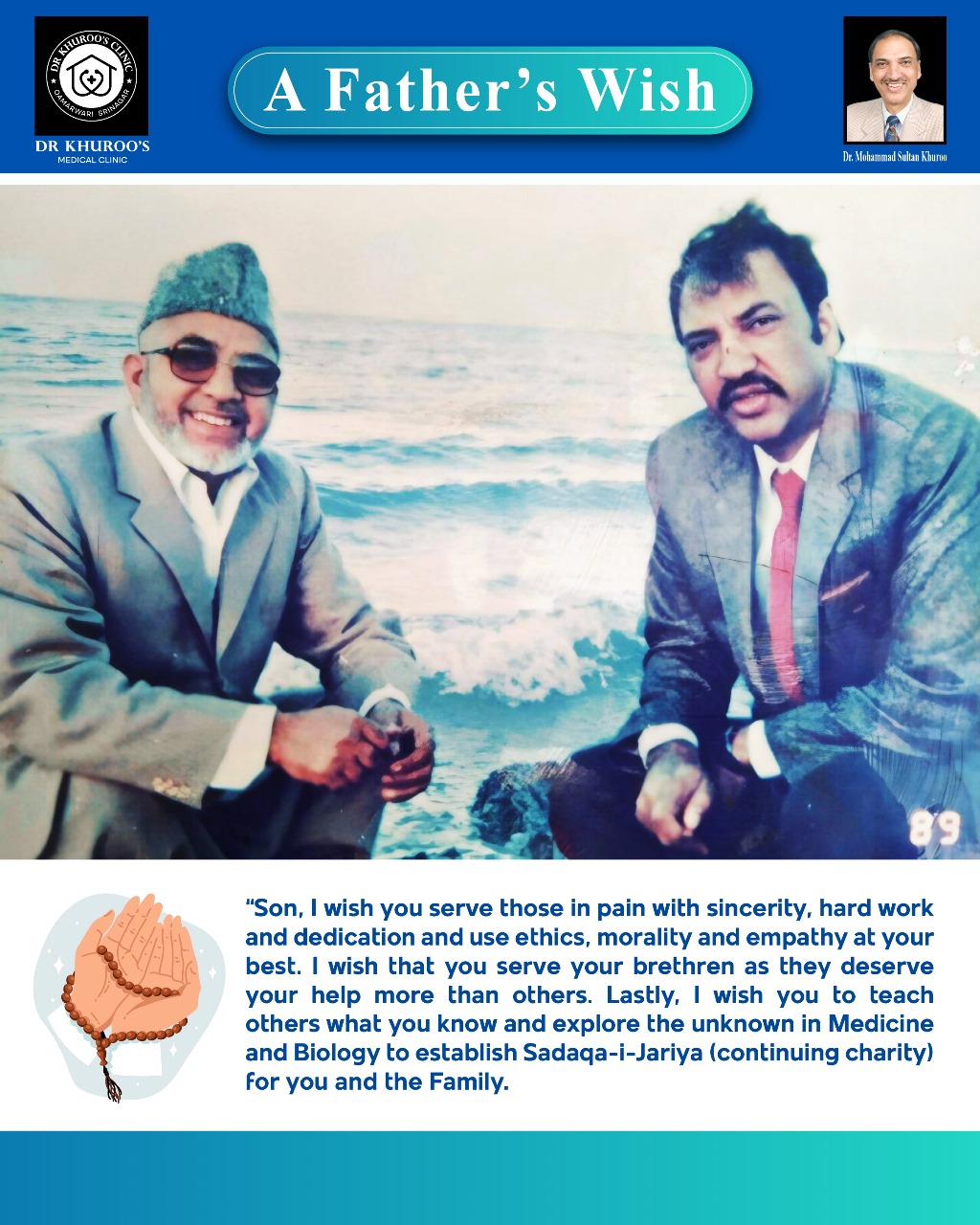
“My father had made me take a pledge that I would serve my people. He told me that he was releasing me from the bondage of the promise as my life was in danger in Kashmir. I proceeded on a year’s leave and in the next couple of weeks I was in Saudi Arabia along with my wife Haleema”.
He joined the King Faisal Specialist Hospital & Research Centre (KFSH) at Riyadh. He was appointed a consultant of hepatology and rose to the position of Professor and Head of the Department of Gastroenterology.
Clipping from an article in which Dr MS Khuroo is seen with father
After seven years, Khuroo established a Department of Liver Transplant at KFSH and supervised more than 100 critical surgeries. He also managed the KFSH clinic and the post-operative care of more than 300 patients whose liver transplants had been conducted at different hospitals in Europe and America. After 10 years of service, Khuroo returned to his home town Sopore.
“In Saudi Arabia, I got incredibly wonderful respect and recognition. While working at SKIMS, I had no time for my family and children. I worked seven days a week, 24 hours a day. In the beginning, my salary was Rs 300 a month. When I left as Director, my total salary was Rs 18,000. I would take home not more than Rs 9,000. I would borrow money from my colleagues to make ends meet. In Riyadh, I was supposed to work for just 6 to 8 hours a day; five days a week. It allowed me to raise my family meticulously. I have a son and two daughters and all are doctors. They are doing well, touchwood”, Khuroo said.
He added that his salary in Riyadh ranged between Rs 4 lakh and Rs 10 lakh.
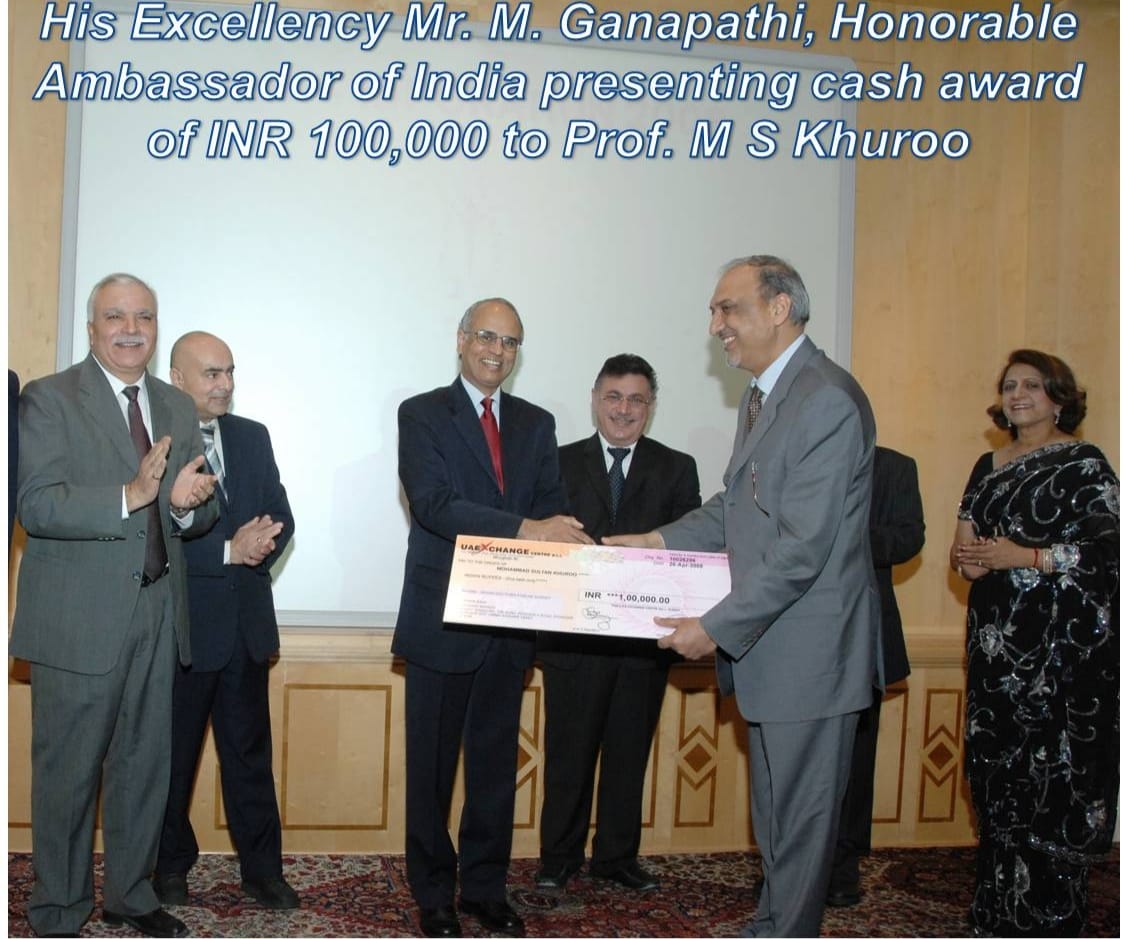
Dr MS Khuroo receiving an award from the Indian Ambassador in Riyadh
“Unlike my peer clinicians, I had a passion for medical research, and money was no consideration but a good earning helps you give your best to society if you have a will”, Khuroo added.
“All through my studies and training in Srinagar, I faced tough times. I used to stay in Srinagar, travel to my home in Sopore on Saturday, and return on Monday morning. For five years, my uncle gave me Rs 10 for my week’s expenditure. I would keep one Rupee and six annas for my weekly travel home and manage things within the remaining eight Rupees and ten annas”.
Khuroo’s real satisfaction, however, flows not from the money he earned as one of the world’s top gastroenterologists and liver transplant experts but from having been the Saudi royal family’s physician.
“I handled the healthcare of the kings Abdullah and Fahad. We used to visit only the King. All other members of the royal family would come to us at the KFSH. Once I had to undergo surgery there. When I regained consciousness, I saw the Director of KFSH carrying me to my room”, Khuroo recollected.
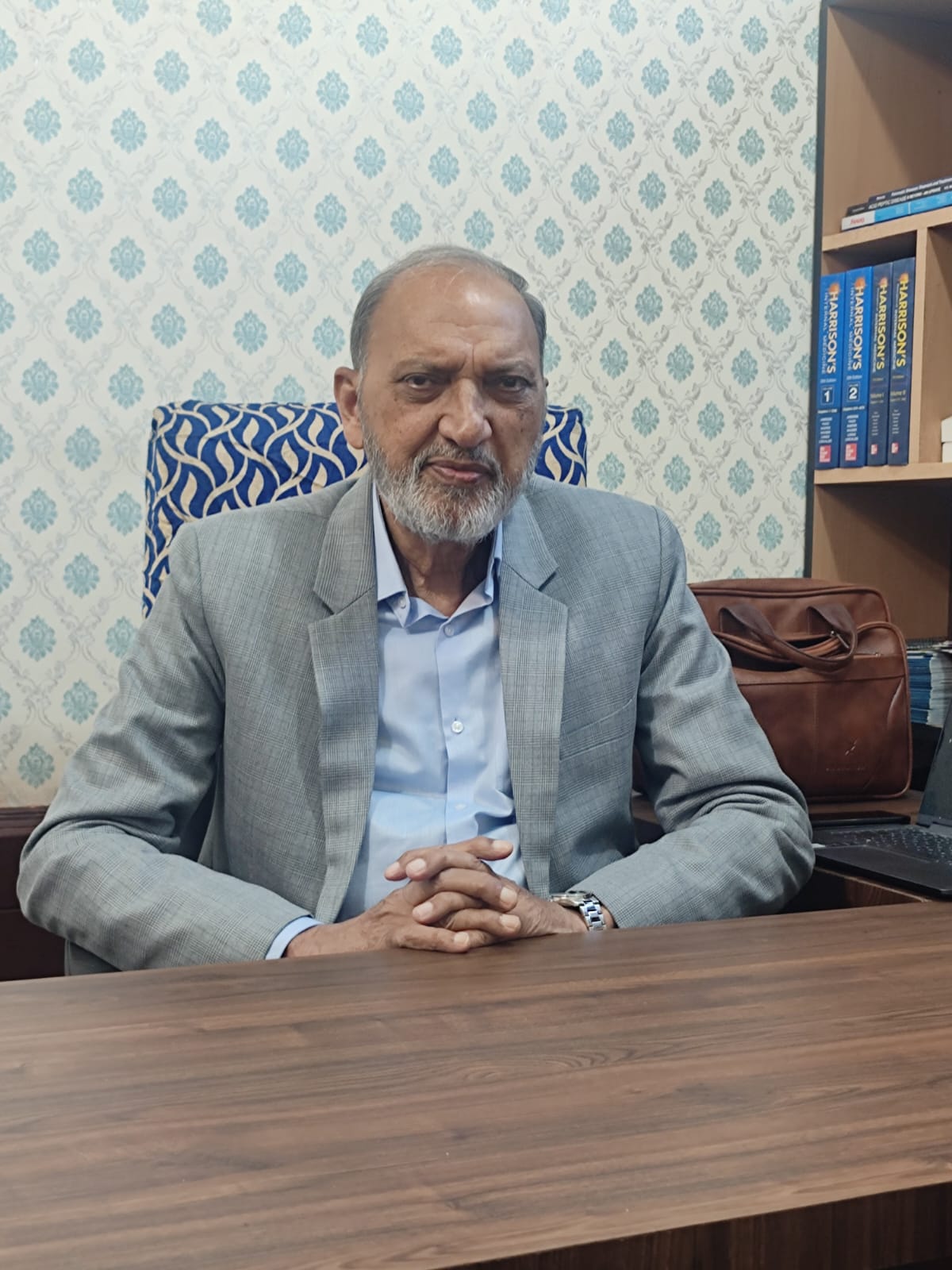
Dr MS Khuroo at his home in Sopore
Even in Riyadh, the unsettling conditions at home didn’t leave Khuroo in peace. His son Yasir, an MBBS trainee at the Government Medical College (GMC) in Srinagar, was abducted. Khuroo had to return; somehow the crisis was resolved and he returned.
Born in 1944, Khuroo was admitted for elementary education at the Maharaja’s compulsory education school in Sopore. He also finished High School and FSC (10+2) in Sopore and MBBS from GMC Srinagar in 1967, stood first in order of merit, and got a gold medal. Later, his specialist studies and work earned him over a dozen medals.
Khuroo is the man who discovered the virus Hepatitis ‘E’ while dealing with an epidemic that infected over 57,000 people in a population of 600,000 in 200 villages in 1978. As many as 1,600 people, including many pregnant women, died.
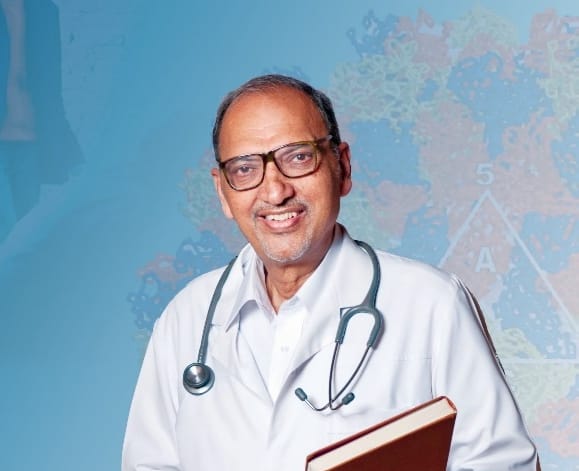
Dr MS Khuroo in Riyadh
“I was a faculty at GMC Srinagar. As the pandemic began spreading to menacing proportions on either side of the Ningli Nallah from Gulmarg to Wular Lake, I virtually jumped into the fire with a small team. I got infected with other members of my family but we didn’t rest until we established that it was an altogether new hepatitis virus. I named it Hepatitis ‘E’. No other virus of the series has been found in the last 45 years”, Khuroo said.
Khuroo completed DM in gastroenterology at Chandigarh’s Post Graduate Institute of Medical Education and Research (PGIMER) followed by fellowships in the UK and the USA.
Prof Khuroo has the distinction of being the first Indian medical scientist whose research article was published by the New England Journal of Medicine (NEJM). Of the 300 of his research publications, three have been published in the numero uno of peer-reviewed journals NEJM, six in The Lancet, three in the American Journal of Medicine, and many in the American College of Physicians, Gastroenterology, Hepatology, and GI Endoscopy.
Khuroo recalled how he discovered new diseases and medical protocols, including the one related to portal hypertensive colopathy, to the world in the 1980s. “I was the first to tell the world how some diseases could be cured with non-invasive medical procedures. The world universities and hospitals followed”, Khuroo said.
Khuroo, nevertheless, has his regrets. “When we set up the gastroenterology department at SKIMS in 1982, it was arguably India’s best. Today, it’s no match to many of its junior centers. I regret that Kashmir’s politicians did not let the liver transplant facility come up at SKIMS in the last 45 years”.
source: http://www.awazthevoice.in / Awaz, The Voice / Home> Stories / by Ahmed Ali Fayyaz, Srinagar / May 15th, 2024
Hiba Fatima Khan, a student from Hyderabad, has been awarded the prestigious Outstanding Cambridge Learner Award for achieving the highest marks in India for the Cambridge IGCSE English as a Second Language (Speaking Endorsement) examination.
Cambridge Assessment International Education recognized Hiba’s remarkable performance, formally announcing the award via email and honoring her at a felicitation event with an official certificate and letter of appreciation.
Hiba’s journey from Dubai to India during the Covid-19 pandemic brought significant challenges, including adapting to new languages such as Hindi, Telugu, Sanskrit, and French. Despite these hurdles, she maintained a strong focus on English.
Her father, Shaji Khan, expressed immense pride in her achievement, noting her dedication to English and her academic interests. Initially inclined towards automobile engineering until the 8th grade, Hiba later shifted her focus and excelled in her chosen subjects.
Hiba achieved a perfect score of 100/100 and A+ grades in her Cambridge IGCSE exams, which included subjects such as English, Special English, Economics, and Environmental Management. Reflecting on her success, Hiba emphasized the importance of understanding the marking scheme, practicing past papers, and constant revisions.
She also credited her parents for their unwavering support and encouragement. “My parents have been my biggest support. Their encouragement and belief in my abilities kept me motivated throughout my preparation,” she said in an interview with DC.
Looking forward, Hiba, a student at Solitaire Global School, aspires to further her education in psychology and teaching, with a particular interest in studying in Finland, known for its top-rated education system.
source: http://www.radiancenews.com / Radiance News / Home> Latest News> Markers of Excellence / by Radiance News Bureau (headline edited) / May 15th, 2024
Chahalka Village (Tanadu Kasba, Mewat District), HARYANA :
Parvez Khan on the track
Nuh, a Meo Muslim dominated district of Haryana burst in celebration as the son of the soil Parvez Khan won a major sports title in the USA on Saturday.
Parvez won the 1500m title at the SEC Outdoor Track and Field Championship 2024 of Collegiate Athletics held in Louisiana, USA.
Parvez, 19, hails from the Chahalka village of Tawadu Kasba, and is studying in the US on scholarship from the University of Florida. On Saturday, he clocked 3 minutes and 42.73 seconds to win the race at the LSU Bernie Moore Stadium in Baton Rouge. His personal best is 3:38.76, which he achieved in California last month.
Parvez said, “Yes, representing India in the Olympics is on my mind. But qualifying for Paris is difficult because I am far behind others. However, I will give my 100 percent to reach there.”
Nuzhat Gull, secrertary of J&K Sports Council posted this video of Parvez Khan’s race to victory on X:
“I do my workout every day. People believe in me, so I am doing well day by day to execute my plans well and hopefully, I will achieve the Olympic standard.”
Later, Parvez competed in the 800m race and finished third with a time of 1:46.80, just seven-tenths behind his personal best in Florida in March.
Parvez is the National Games 2022 champion in the 1500m during which he broke the 28-year-old record of sports.
The locals are ecstatic and proud of Parvez’s achievements and are pouring in at his home to congratulate his parents.
Parvez’s brother Khalid said that in the SEC Track and Field Outdoor Championship 2024 held in Florida, America, Parvez participated in the 1500 m and 800 m competition on behalf of the University of Florida, in which more than two dozen athletes from different zones of America participated.
As soon as he got success in the 1500 meter heat event on Saturday, the people of the area expressed happiness and congratulated his family members on becoming the champion.
Growing up in Chahalka, a village in Haryana’s Mewat district, about 50 kilometers south of New Delhi, Khan was raised with limited financial resources.
His father, Nafees Ali, supports the family by cultivating wheat and fodder on the five acres of land he shares with his brothers.
Despite adverse financial conditions, Khan had aspirations beyond the limits of his village. His parents didn’t attend school.
His parents initially dissuaded him from sports and they thought there was no future for him there. “There are no players in my village, but I have always been someone who wants to do things differently.
Khan was inspired to run during physical preparation for army recruitment. He didn’t have a coach. Often even in adolescence, he used to outshine his older competitors.
Realizing the need for better training opportunities, Khan moved to New Delhi at the age of 13. He joined the coaching at the Jawaharlal Nehru Stadium and thus started his athletic journey.
Despite doubts about meeting academic standards, Khan’s talent as a sprinter continued to blossom. His notable achievements include winning gold in 800 meters at the Under-16 Nationals and a bronze medal at the Under-18 Khelo India Games.
However, it was Khan’s victory in the 1500m at the Open National Championships in Warangal in 2021 that brought him into the spotlight. He got selected for the Indian Navy.
In 2022, Khan won the gold medal in 1500m at the National Games where he clocked his personal best of 3:40:89. This win paved the way for him to join the Indian national camp and subsequently train at the Olympic Training Center in Colorado, USA.
source: http://www.awazthevoice.in / Awaz, The Voice / Home> Story / by Yunus Alvi, Nuh / May 13th, 2024
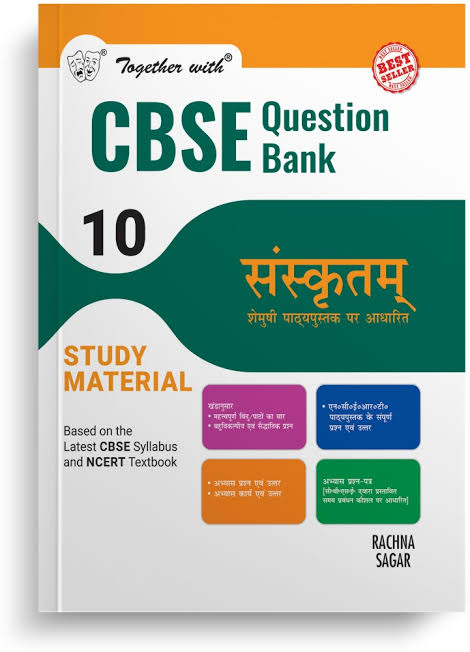
The 2023-24 ESL results have been unveiled, showcasing Fatima Samiha’s remarkable achievement. Hailing from Chikkamagalur district, Fatima, a student of Sri Sadguru Vidyamandir in Basarikatte, chose Sanskrit as her primary language and achieved a perfect score of 125 out of 125 marks in the subject.
Her exceptional performance extends across other subjects as well, with scores of 99 in Kannada, 94 in English, 83 in Mathematics, 69 in Science, and 100 in Social Science, resulting in an impressive overall score of 590 out of 625 marks, equivalent to 94.4%.
Fatima is the daughter of Muhammad Rafiq from Chikkamagaluru and Selikhat Begum from Panemangalore.
source: http://www.thehindustangazette.com / The Hindustan Gazette / Home> News> Latest News / by The Hindustan Gazette / May 12th, 2024
Like it or not, modern Indian culture is still heavily indebted to the legacy of the Mughals and the nawabs.
Stamps of both tangible and intangible heritage of India’s prosperous Muslim reign are still vivid, despite more than two centuries of indifference, ingratitude and insolence that followed.
From language and art to cuisine and architecture, every aspect of Indian cultural landscape has strong traces of Muslim sounds, flavours and colours that continue to trickle down from an era that drew the world to India.
Like it or not, modern Indian culture is still heavily indebted to the legacy of the Mughals and the nawabs. The Persianate culture that was dominant well into the decline of the Muslim dynasties, continues to influence our customs and traditions.
Intangible heritage Whether we call it Hindi or Hindustani, the language that is spoken by most Indians, especially in North India, took shape in the hallowed halls of the Mughal Delhi and Nawabi Lucknow.
Though, it’s been nearly two centuries since the sun set upon the fortunes of the Mughals, their cuisine is still in the ascendancy and gaining in popularity everyday. Can a party be complete without the biryani and kebabs?
Urdu may not be a particularly favoured language of our times, but no Urdu basher could be averse from the influence of its sweet melody. Despite some serious attempts at its erasure from the public consciousness, Bollywood or Hindi Cinema still has some strong strands of Urdu in its rapidly morphing personality.
The indelible Urdu legacy lies at the very heart of ‘Hindi’ cinema’s golden era, with some of the best dialogues and songs that most of us swoon over being still its biggest treasure trove.
As much as its intangible legacy, the tangible legacy of the Muslim architects still remains the biggest tourist attractions in India. Not just the Taj Mahal and the Jama Masjid of Delhi, Muslim architects have left towering symbols of aesthetic excellence in architectural marvels such as the Qutub Minar and the Charminar.
Besides Delhi, Agra and Lucknow, cities such as Ahmedabad, Hyderabad, Aurangabad and Bijapur wouldn’t have existed without their Muslim patrons. Their Muslim character is hard to miss despite consistent attempts at altering their nature.
The magnificent monuments, among the greatest landmarks of the tangible human heritage, are so deeply etched on the landscape and the psyche of India, that they have become synonymous to the grandeur of the Muslim ascendancy in India.
Artisanal legacy But, more than the glowing architecture, it is the enterprising artisanal traditions that continue to have the greatest traces of Muslim influence. Importantly, Muslims continue to preserve this legacy against all odds.
From the Pashmina Shawls and Banarasi Sarees to the Rogan Art and Bidriware, some of India’s best known handmade traditions are painstakingly preserved by Muslim artisans, maintaining a living heritage that can be traced to the patronage of the Great Mughals, the Bahamanis, the Adil Shahis, the Nizams and others.
It is no secret that the Mughals were the great patrons of art, craft and industry, with creativity, innovation and industry flourishing during their rule, making India the most prosperous country in the world.
Their generous patronage and facilitation meant artisans from different parts of the world made a beeline to India, adding new forms of craft to a landscape that was already full of life.
From muslin and brocade to diamonds and jewellery, the artisans of India produced some exquisite handmade goods that drew traders from all over the world to India.
Mughal India – World’s biggest economy
During the peak of the Mughal rule in India, when Aurangzeb Alamgir was at the helm, India accounted for 27 per cent of the world’s economy, greater than the GDP of the entire Europe combined.
Until the mid-18th century, when British started gaining greater control over some parts of the country, India was the biggest exporter of manufactured goods across the world.
Despite the unparalleled rapacity and depravity of the colonial administration that had led to the near extinction of the Indian craft traditions a century ago, Indian handicrafts survived largely through the resilience and industry of the artisans.
Though, the policy of erasure continued even after the British left India and continues till this day, Indian artisanal communities have shown remarkable resilience against the onslaught of monopoly, ruthlessly cruel economic policies and unfavourable terms and conditions.
Many craft clusters have also faced communal apathy, discrimination and prejudice.
Under such extreme conditions, it is nothing short of a miracle that ancient handmade craft traditions survive in India.
Story of Bidriware The tale of the Bidriware, primarily practised by Muslims, is one such story of skill, struggle and survival.
Bidriware is poetry crafted in metal
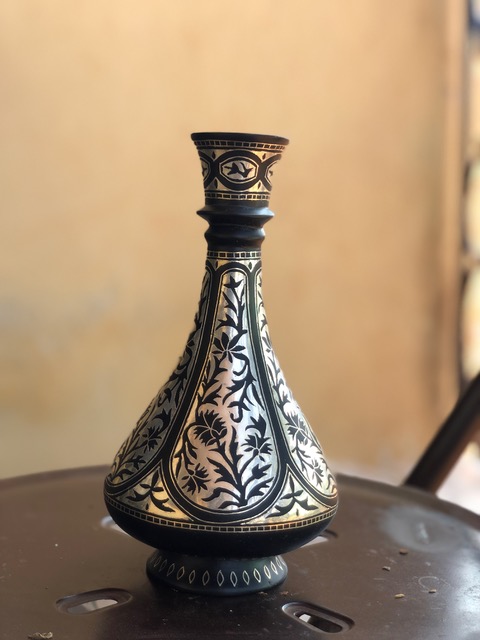
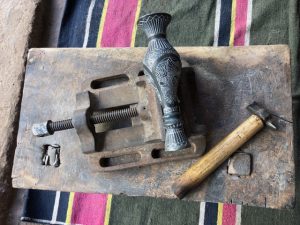
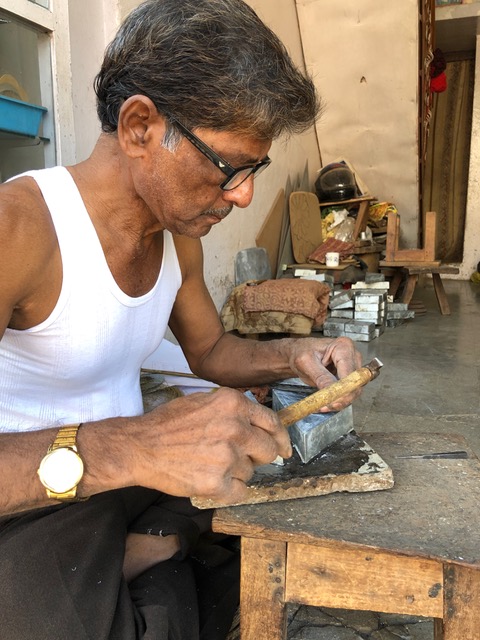
Cast in an alloy of copper and zinc, with silver and gold wires or sheets inlaid or overlaid, a Bidriware artefact is so graceful in its appearance that an indulgent heart longs to feel and touch it, if not wear it!
For more than five centuries, Bidriware objects have been must have pieces of adornment among the royalties and nobilities such as Mughal emperors, Rajput kings and Nawabs of Bengal to Bahmani, Adil Shahi and Vijayanagara Sultans (yes, the Vijayanagara kings loved to call themselves sultans!).
In the pre-modern era, the Nizams of Hyderabad have been the biggest patrons of this magical craft, not only collecting the artefacts such as hookahs (sheesha), vases, vanity boxes, ewers and pitchers, but also relocating several artisans to Hyderabad.
However, despite the early 20th century migration of artisans and losing patronage, Karnataka’s northern town of Bidar continues to remain a hub of Bidriware.
With all of the kingdoms and fiefdoms gone, ancient Bidriware items along with other surviving royal antique pieces are a collector’s treasure now, gracing the leading museums across the world.
The Origin Though, the Bidri metal craft has its origins in medieval Persia, Bidriware in its distinct Indian form blossomed in the capital of the early 15th century Bahmani Empire.
The tale of Bidriware, primarily practised by Muslims, is a story of skill, struggle and survival
The Bahmanis were renowned for their exquisite sensibilities for art and architecture, hence it is no surprise that a complex and intricate enterprise such as the Bidri metal craft originated in their royal atelier.
This, perhaps, is among the last few influences that the medieval Bahamanis continue to have on modern India.
Reinvention Despite the spell Bidriware has on art aficionados and connoisseurs of craft, the enterprise has seen a steady decline over the last few decades, with only a few masters working their magic.
Currently, the city of Bidar has around 150 registered artisans, but only a handful of artisans in the town have the depth of knowledge and the deftness of skills required to be called a master.
MA Rauf Siddiqui is a national-award winning master craftsman who is reinventing Bidriware, catering to the modern aesthetic sensibilities
Among the few masters is the national award-winning artisan MA Rauf Siddiqui.
Even as the overall scene of the Bidriware tradition is not particularly encouraging, the Shilpi Guru-winner is quietly reinventing the traditions, ably-assisted by his young and enterprising children.
Modernising the techniques, motifs and methods, the family has several generations involved in the craft, adopting latest softwares to come up with new patterns and using social media to reach new frontiers.
However, the traditional expression of the art-form continues to find patrons, even as the newer expressions in wearable forms give the craft a new lease of life.
Empowering the community Many Muslim communities in India sit on a huge treasure trove of craft traditions that have been part of the country’s cultural, economic and political legacy for centuries.
Many of these traditions are withering away due to multiple factors, including lack of upgrade or inability to adapt to the changing landscape, little government support and poor marketing.
With necessary attention and support we can not just preserve this precious legacy of India and Indian Muslims, but can also make hundreds of these craft clusters economically independent and sustainable.
source: http://www.radiancenews.com / Radiance News / Home> Arts & Culture> Forces / by Shafaat Shahbadari / Radiance News Bureau / September 26th, 2023
Dr. Ayesha Sultana stands as a beacon of innovation in the realm of Islamic education, particularly for youth and women, through her pioneering online initiatives. Armed with a profound grasp of both Islamic studies and psychology, Dr. Sultana is on a steadfast mission to imbue moral values and Islamic teachings in the hearts of the youth, with a special focus on empowering women, through accessible and dynamic courses.
Her latest endeavor, the “Taalimul Islam Certificate Course,” stands as a testament to her unwavering dedication to delivering high-quality education. Tailored for children up to 14 years old, this comprehensive 10-week online program provides an interactive platform to acquire fundamental Islamic knowledge. Transitioning seamlessly from physical to online classes, Dr. Sultana, former assistant secretary of the Women’s Wing of Jamaat-e-Islami Hind Telangana, has impacted over 1500 women during the pandemic.
Under the esteemed banner of Al Huda, Dr. Sultana established the Ayat Al-Fariya Islamic Academy, a sanctuary of knowledge catering to women and children alike. Here, hundreds of women benefit from Quranic teachings and personality development courses, while children engage in interactive sessions on Quranic memorization and Islamic principles.
In her pursuit of holistic development, Dr. Sultana organizes summer short courses for children, blending physical activities with essential Islamic values. Moreover, she offers initiatives such as the “Fahm e Quran” course and “Talaash e Qadr” series for women, enriching their Ramadan experience.
Dr. Sultana’s commitment to empowering youth extends to organizing online competitions for children, where participants are recognized and awarded certificates and trophies for their accomplishments in various categories, including video competitions, speech contests, and oral exams. With 300 children joining the course and 100 already certified, the impact of her initiatives is palpable.
The journey of Al Huda Islamic School began in 2013 in Khammam, Telangana, under Dr. Sultana’s guidance. Initially offering offline classes for women, complete with free transportation facilities, the school provided courses such as Certificate in Islamic Studies, Diploma and Memorization of Quran, Basic Arabic Grammar, Tafseer, Seerah, and Personality Development until 2018. Hundreds of women benefited from these courses, with many now actively involved with Jamaat-e-Islami Hind as volunteers and members.
Dr. Sultana’s dedication to education led her to conduct motivational lectures in numerous colleges, including medical and engineering institutions, and to organize moral classes for school children. Despite her busy schedule as the assistant secretary and Dawah secretary of Telangana, she spearheaded various women empowerment programs throughout the region. With the onset of the pandemic in 2019, she seamlessly transitioned to online classes, offering a plethora of courses and short programs for women, including Akse Furqan, Dawah classes, Qasal ul Ambiya course, Qurb e Ilaahi, and numerous quiz and exam series, engaging over 1500 women.
In 2023, Dr. Sultana expanded her online educational initiatives with the establishment of Ayat Al Fariya Online Academy under the auspices of Al Huda Islamic School. Introducing short courses for women, such as Tafseer and Memorization of Surah Mulk, Surah Rahman, and Surah Yaseen, the academy continued to positively impact hundreds of women. Additionally, pre-Ramadan courses like Shahru Ramadan, along with courses during Ramadan such as Fahm e Quran and Talaash e Qadr series, were conducted, benefitting a vast number of participants.
Despite her demanding schedule, Dr. Sultana remains resolute in her commitment to providing education free of charge.
Her recent accolades, including the Rastra Ratna Puraskar Award from the Veniyl Foundation, attest to her dedication to nurturing young minds. Additionally, she has been recognized with the Best Educator and Academician Award from the Book of Excellence and the Worthy Well Foundation, earning her a place in the prestigious Book of World Records.
Beyond her educational initiatives, Dr. Sultana is also an accomplished author, with titles such as “Beyond Ramadan” and “Embodied Wisdom” under her belt. As the Assistant Editor of Radiance News Portal and a member of the Aware Trust at Jamaat-e-Islami Hind Markaz, she continues to inspire and empower individuals through her tireless efforts in education and community development.
In line with her commitment to continuous improvement and advancement, Dr. Sultana announces the upcoming launch of the Taalimul Islam Level 2 advanced course for children from May 16th to May 31st. This 15-day program will further enrich the educational journey of young learners under her guidance.
Dr. Ayesha Sultana’s tireless dedication to Islamic education and community development continues to leave an indelible mark, inspiring countless individuals to pursue knowledge and virtue.
source: http://www.radiancenews.com / Radiance News / Home> Features> Pride of the Nation> Markers of Excellence / by Radiance News Bureau / May 11th, 2024
Oomerabad Village (Tirupathur District, Ambur Taluk), TAMIL NADU :
Renowned Islamic scholar and Chancellor of Jamia Darussalam Oomerabad, Maulana Kaka Sayeed Ahmed Oomeri, has passed away on Saturday, May 11, 2024, in Oomerabad, Tamil Nadu. He also held the esteemed position of Vice President of the All India Muslim Personal Law Board (AIMPLB).
Maulana Kaka Sayeed Ahmed Oomeri hailed from the distinguished Kaka family of Oomerabad, renowned for their enduring contributions to education and philanthropy. The family’s legacy dates back to his great-grandfather, the esteemed philanthropist and hides and skins merchant, Kaka Mohammad Oomer Sahib. In 1924, Kaka Mohammad Oomer Sahib founded Jamia Darussalam College, a testament to his commitment to education. The college’s location, Oomerabad, was named in honor of his invaluable contributions.
Jamia Darussalam, now a part of a broader educational society, remains a beacon of education and service. It encompasses a Tamil medium primary school, an Urdu medium primary school, a technical institute focusing on computer education, and Jamia Hospital, a comprehensive healthcare facility catering to the community’s healthcare needs.
The passing of Maulana Kaka Sayeed Ahmed Oomeri leaves a profound void in the scholarly and educational spheres. However, his enduring contributions and teachings will continue to inspire generations to come. The entire community extends heartfelt condolences to his family, friends, and associates during this period of mourning.
source: http://www.muslimmirror.com / Muslim Mirror / Home> Obituary / by Muslim Mirror Desk / May 11th, 2024