The unit is being run under medical supervision of Dr Shoeb Ali Khan, leading consultant nephrologist and a kidney transplant surgeon.
A patient undergoes dialysis at the unit
Hyderabad :
Probably for the first time in the world, a mosque in Hyderabad has allotted space on its premises for establishing a full-fledged haemodialysis unit. Masjid-e-Mohammadia, located in Langar Houz area now houses a state-of-the-art free dialysis centre that mainly caters to the weaker sections of the society, regardless of caste and creed.
The centre, set up by two NGOs – Helping Hand Foundation and SEED US, has five latest Fresenius brand machines and will acquire five more machines in the next three months. The swanky centre, designed like a corporate hospital, has a separate access for dialysis patients and it is equipped with high quality equipment, clinical care as well as facility to manage onsite emergencies.
The unit is being run under medical supervision of Dr Shoeb Ali Khan, leading consultant nephrologist and a kidney transplant surgeon.A medical doctor, ANMs, dialysis technicians and an ambulance will be available at the centre from 8 am to 8 pm on any given day. “We have invested about Rs 45 lakh for the initial setup of this unit. About Rs 2 lakh per month will be managed by Helping Hand Foundation,” said Mazhar Hussaini of SEED.
To register for free dialysis, one can call Ph: 9603540864.
source: http://www.newindianexpress.com / The New Indian Express / Home> Good News / by Express News Service / July 22nd, 2022
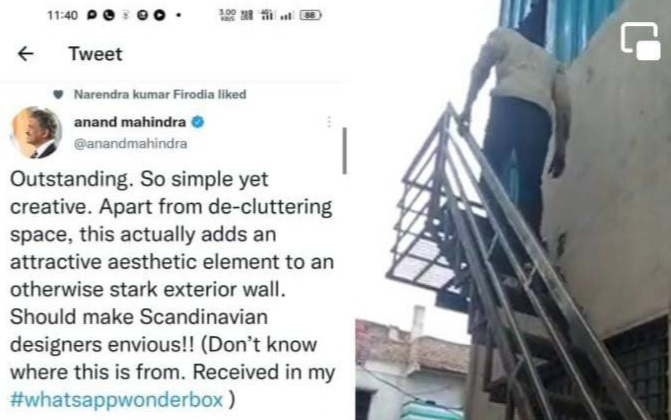
As soon as the construction work began at site, people started complaining about the ladder which was an obstacle for padestrians and
Considering the site conditions sameer decided to make a 14 x 12 size foldable ladder and he within ten days at the cost of only 25 thousand rupees he made the staircase.
Sameer Ishaque Bagban a 31 year old fabricator is originally from Ahmed Nagar city. Interestingly this skilled young man has no relevant qualification, diploma or certification in the field of fabrication, however he managed to complete education till 10 th std.
Sameer is running his firm “Darbar Fabrication” since 5 years.
During conversation with Muslim Mirror Sameer said that our fixed stair case was obstructing padestrians, owner of the firm requested us resolve the issue by doing some Jugad, I took it as a challenge, after four days work and discussion with my partners Eijaz Khan and Asif Pathan we decided to make this staircase foldable.
As we make and design foldable tables and other items, we thought we should try foldable staircase too, and Alhamdulillah we did it. Now it is functioning normally, Sameer added.
Sameer thanked Industrialist Anand Mahindra for his tweet and expressed happiness, he says, I am feeling myself fortune that such high profile person of the country and renowned industrialist has taken note of my work and praised the idea.
He further said after Mahindra sir’s tweet I started receiving calls continuously from friends, relatives and media persons.
source: http://www.muslimmirror.com /Muslim Mirror / Home> Indian Muslim> Positive Story / by Imran Inamdar / July 17th, 2022
Nai Manzil gives school-dropouts from minority communities a second chance to complete their education and learn a marketable skill.
Sameera was just 14 years old when she dropped out of school. Soon afterwards, her impoverished parents arranged her marriage, after which she stayed at home to cook and clean for her husband’s family, like all the other women in her small fishing community in Kerala’s Malappuram district.
When the Government of India’s Nai Manzil – New Horizons – program came calling, offering school-dropouts from minority communities a second chance to complete their education and learn a marketable skill, her husband let her join.
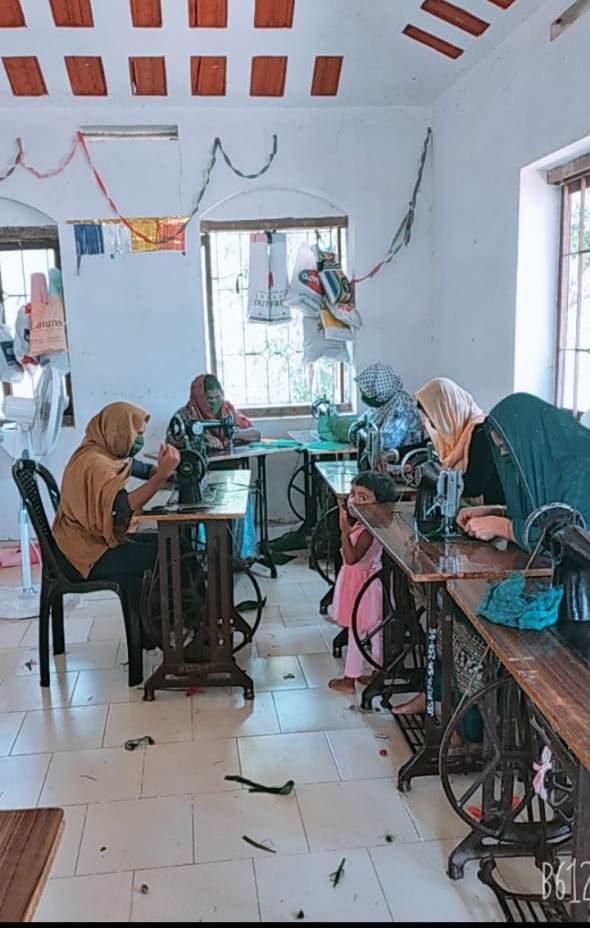
A year and a half later, Sameera, along with three other women from the program set up Bismil Tailoring, a home-based venture that took in sewing assignments from the community. “Our customers appreciated our work, and we were earning good money,” recalled Sameera.
However, barely a few months after they had started, a lockdown was imposed to contain the COVID-19 pandemic. Orders dried up, taking a heavy toll on the nascent enterprise.
A tailoring unit run by women from the Nai Manzil program in Malappuram, Kerala.
The women’s earnings help their families weather the crisis
When we spoke to Sameera four months later, we were naturally surprised to hear an optimistic young voice at the other end of the line. Confidence bubbled out of her, and although not everyone in her unit was able to resume work, they had received several orders for masks, and she was sure that their tiny unit would bounce back as soon as the lockdown was lifted.
Her education and training, as well as her exposure to the outside world, had instilled in her a new self-assurance that she could make a go of things, despite the temporary setback. This was bolstered by the fact that she was able to keep her small family afloat during the crisis, even though her fisherman husband had been unable to go out to sea since the pandemic started.
Sameera’s story is echoed in 32-year old Kausar Jahan, mother of three, who lives with nine other family members in the eastern city of Hyderabad. Although Kausar was just 17 years old when she got married and had to drop out of school. Nai Manzil’s training enabled her to get a job at a government hospital providing bed-side care to patients.
Today, while millions of lives and livelihoods have been severely impacted by the pandemic, Kauser is able to help support her family with the Rs 4,000 she still receives, even though her employers have asked her to stay at home until the worst is over. While this is just half her earlier salary, it has proved to be a lifeline for her 9-member household, more so since her electrician husband has been unable to get work during the crisis.
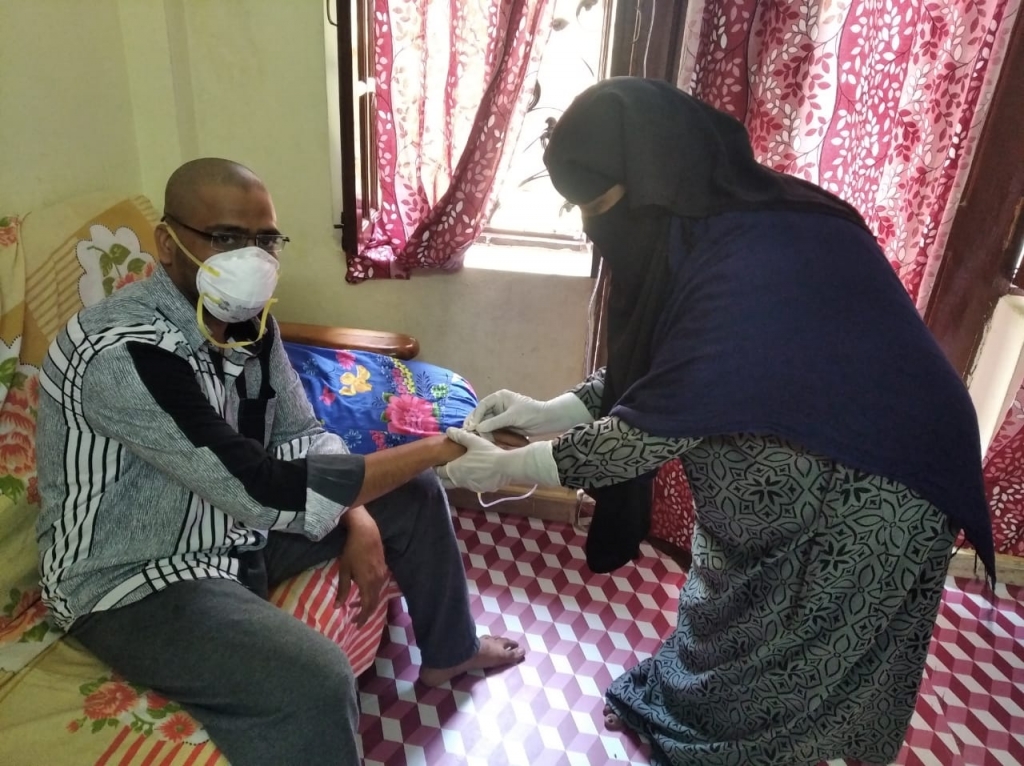
Kausar is now using her training to provide free health services to her community in the old city of Hyderabad, administering injections and checking blood pressure.
Both women look at the plight of others in their communities and shudder to think what would have become of their families had they not received Nai Manzil’s life-changing education and training.
And, it’s not just their families who have benefitted. Kausar is now using her training to provide free health services to her community in the old city of Hyderabad, administering injections, checking blood pressure, interpreting test reports, and nudging those who are seriously unwell to visit a doctor.
Sameera too is deeply involved in promoting the welfare of her small fishing community in Kerala. She is also supporting the wider population by helping with the common kitchen that has been set up to feed out-of-work migrants and other poor individuals affected by the pandemic.
A woman trained by Nai Manzil providing health care in Hyderabad.
Education, skills and exposure brings life-changing empowerment
Having seen her peers transform into co-founders of their tailoring unit – many of whom had never stepped out of their homes before or were the regular victims of domestic abuse – Sameera firmly believes that education, skills and exposure can herald life-changing empowerment, enabling the women to blossom and bring out their full potential.
While Sameera plans to study further and become a better entrepreneur, she wants the other women to grow along with her. Aware that not all her peers enjoy the same level of family support that she is fortunate to have received, she believes that religious leaders – who wield great influence within her community – can be a powerful force for change. In fact, it was these religious leaders who inaugurated the classes she attended.
More than half of Nai Manzil’s beneficiaries are women, with Muslim women constituting the majority. The first batch of beneficiaries completed their training in 2017, after which many have moved on to salaried jobs or self-employment. So far, more than 50,700 minority women have benefited from the educational and skilling provided by the program.
More than half of Nai Manzil’s beneficiaries are women, with Muslim women constituting the majority.
India’s Ministry of Minority Affairs is now hard at work to reduce the impact of the pandemic on minority communities across the country by expanding their opportunities for education and employment.
Over the last five years we have repeatedly witnessed the game changing nature of the Nai Manzil program. Given the huge demand for platforms that integrate education and skilling, the program marks the start of something truly transformational for minority communities across the country.
The World Bank is supporting the Nai Manzil program run by India’s Ministry of Minority Affairs, with a loan of $50 million. The program provides school dropouts from minority communities in 26 states and 3 union territories with six months of education and three months of skills training, followed by a further six months of support to help them establish themselves.
source: http://www.blogs.worldbank.org / World Bank Blogs / Home> Covid 19 / by Marguerite Clarke & Pradyumna Bhattacharjee / August 21st, 2020
A community historically considered to be “half Hindu” and “half Muslim” has lost its vibrant tradition in the city of Amritsar.
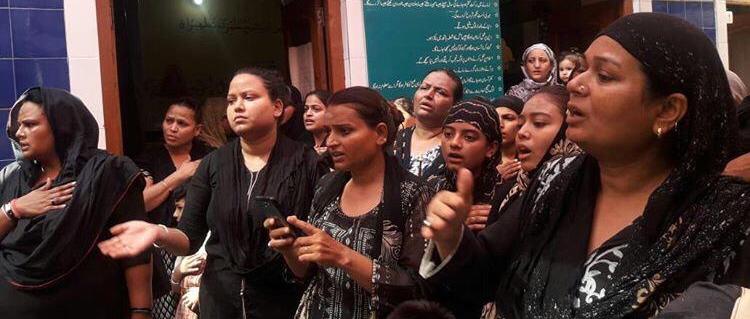
Matam in Amritsar on September 10, 2019. Photo: Nonica Datta
Amritsar :
As battle lines are being redrawn and strengthened over borders, many shared and eclectic cultural practices and spaces in the subcontinent are forgotten. Certain stories are being gradually erased from the shards of memory and history.
In the month of Muharram this year, on the day of Ashura, I decided to recover the lost narrative of Hussaini Brahmins – also known as Dutt/Datt/Datta Brahmins – and their intimate connection with the taziya procession in the city of Amritsar. In the pre-Partition days here, the taziya juloos, a grand public commemoration, would not start without the presence and participation of Hussaini Brahmins.
Before 1947, my grandfather, Padma Shri Brahm Nath Datta ‘Qasir’, a Hussaini Brahmin and a well-known Urdu-Persian poet, would initiate the taziya procession in Farid Chowk, in Katra Sher Singh, in his beloved city of Amritsar. There was a prominent Shia mosque in the area from where the taziyas were commenced and brought to the historic Farid Chowk.
The grand procession would then move towards the Imambara and Karbala maidan, near the Kutchery, which was a meeting point for all the processions coming from several imambaras. The final convergence of the taziyas was momentous. It is believed that this was close to the pivotal site, known as Ghoda pir, where the legendary steed, Zuljanah, of Imam Husain was said to have been buried.
Hussaini Brahmins: bringing two cultures together
In pre-Partition Amritsar, the taziya procession would start only after the Hussaini Dutt Brahmins lent their shoulder to carry the taziyas forward through the city. In 1942, Dr Ghulam Nabi, a prominent dentist of the city who had a clinic in Hall Bazar, rushed to the first floor of my grandfather’s house in Katra Sher Singh at Farid Chowk. He was from the Shia community and a close friend of my grandfather. He said with urgency, “Dutt Sahib, we are all waiting. Aap kandha doge tab taziya uthengee.”
A community which was historically considered to be “half Hindu” and “half Muslim”, the Hussaini Brahmins traditionally brought two cultures together. Often referred to as either Shia Brahmins or Hussaini Brahmins, phrases such as “Wah Dutt Sultan, Hindu ka dharm, Mussalman ka iman’; and ‘Dutt Sultan na Hindu na Mussalman” became a part of folklore.
Mohammad Mujeeb, the distinguished historian writes, “they [Hussaini Brahmins] were not really converts to Islam, but had adopted such Islamic beliefs and practices as were not deemed contrary to the Hindu faith.” Family narratives reveal that the name of Imam Husain was recited during mundans of young Dutt Brahmin boys, and halwa was cooked in the name of bade (Imam Husain) at weddings. Until the Partition in 1947, the Dutts were commonly called Sultans in different parts of the subcontinent.
Ashura in Amritsar on September 10, 2019. Photo: Nonica Datta
The genealogical map of Hussaini Brahmins covers their settlements in Kufa in Iraq around the time of the historic Battle of Karbala (680 A.D.), and later in Balakh, Bokhara, Sindh, Kandahar, Kabul and Punjab. Their scribal and military traditions and commercial and marriage networks attached them to regional courts during the 17th and 18th centuries and they were mostly found in Gujarat, Sindh, Punjab and Northwest Frontier.
It was in this context that many Hussaini Dutt Brahmins expanded their influence into the city of Amritsar. For instance, historical evidence testifies that before the accession of Maharaja Ranjit Singh, Mai Karmon Dattani, the wife of a leading Dutt, was appointed the ruler of Katra Ghanaiyan in Amritsar. She was reputed to have presided over her court, dispensing even-handed justice at a public place which has been immortalised by her name, and is known as Mai Karmun ki Deohri, later a prominent bazar (known as Karmon Deori) in the city. She is remembered as the “Joan of Arc” of Amritsar.
However, what is most remembered in history is the historic link of the Hussaini Brahmins with Karbala in Iraq, as underscored by British ethnologist Denzil Ibbetson. T. P. Russell Stracey in 1911 provides a fascinating account:
“From the Kavits of the clan, it is evident that the ancestors of the Datts were once in Arabia. They participated in the Karbala War between the descendants and followers of Hazrat Ali and Yazid Sultan, the son of Amir Muaviya. They were friends of Hasan and Hussain, the martyred grandsons of the Prophet, the incidents connected with which furnish the material for the passion play of the Shias at every Muharrum.
When these princes fell, a brave warrior of the Datts named Rahib, resolutely but unsuccessfully defended the survivors. The slaughter of his band, however, compelled him and the small remnant to retire to India through Persia and Kandahar.”
Legend has it that on his return from Arabia, Rahib Dutt brought with him the Prophet’s hair, which is kept in the Hazratbal shrine in Kashmir. Nohas and Kavits, recorded in local vernacular histories, oral narratives and British ethnographic literature, endorse the glorious appeal of Karbala and Muharram among Hussaini Brahmins:
“Laryo Datt [Dutt] dal khet ji tin lok shaka parhyo Charhyo Datt dal gah ji Garh Kufa ja luttyo.”
(The Datt warrior alone fought bravely in the field, and plundered the fort of Kufa.)
“Baje bhir ko chot fateh maidan jo pai Badla liya Husain, dhan dhan kare lukai.”
(When they won the field, the drum was beaten; Husain was avenged and the people shouted “bravo”, “bravo”.)
“Rahib ki jo jadd nasal Husain jo ai Diye sat farzand bhai qabul kamai.”
(The seven sons of Rahib (Datt) throwing in their lot With the faithful few on hapless Husain’s side, Died as Datts fighting, deeming their death But friendship’s welcome sacrifice.)
Finally:
“Jo Husain ki jadd hai Datt nam sab dhiyayo, Arab shahr ke bich men Rahib takht bathayo.”
(Off-spring of Husain! forget not thy father’s friend Rahib, once enthroned in Arabia’s city ere thy father’s end. Wherefore the name of Datt recite In thy prayers to Allah, at morn and night.)
Muharram as late as the 1940s was a moment to commemorate the sacrifice of the sons of Rahib Dutt for Imam Husain. The Hussaini Brahmin was an indispensable presence on such a sombre occasion of collective and shared mourning. Partition sealed the fate of this community, as they were left abandoned on both sides of Punjab.
In Pakistan Punjab, they were seen as non-Muslims, in Indian Punjab they were perceived as being closer to Muslims. The horrific politics of the border entered the portals of my ancestral home, too. Brahm Nath Datta Qasir’s house at Katra Sher Singh in Farid Chowk, Amritsar, was set on fire by Hindu fanatic groups in 1947.
It seems there was no Muharram procession in Amritsar in 1947. At least, it didn’t happen in Farid Chowk. In the tragic transformation of Amritsar as a border city, Hussaini Dutt Brahmins were amongst its worst victims. Their fluid identity came under siege as the politics of aggressive religious identities shattered their porous cultural world.
The Dutts’ enduring link with Imam Husain, Karbala and Muharram came under threat. But all was not lost. Some of them did openly identify with their Hussaini Brahmin heritage.
Not very long ago, Indian actor Sunil Dutt, while making a donation in the Shaukat Khanum Hospital in Lahore, recorded his commitment to Karbala and said :
“For Lahore, like my elders, I will shed every drop of blood and give any donation asked for, just as my ancestors did when they laid down their lives at Karbala for Hazrat Imam Husain.”
Needless to say that Sunil Dutt was intimately connected with the cultural landscape of Amritsar too.
Ashura in Amritsar
I reached Amritsar early on the morning of Ashura, on September 10. My first instinct was to visit the Imambara at Farid Chowk in Katra Sher Singh and to trace some crucial sites connecting the gaps between Hussaini Brahmins and Amritsar. This was like looking for a needle in a haystack.
However, I was lucky to find locals who knew about the city’s pluralistic culture and gladly directed me to a lone surviving Imambara, Anjuman-e-Yadgaar Husain, in Lohgarh, just about five minutes away from Farid Chowk. Currently known as the Kashmiri Imambara, it stands on Gali Zainab (named after Imam Husain’s sister), and now renamed as Gali Badran.
As I walked into this self-enclosed, small inconspicuous structure, which houses the Raza Mosque inside its precincts, I saw a large number of policemen and the Rapid Reaction Force.
I was warmly welcomed by the caretaker of the Imambara, Syed Abdullah Rizvi, popularly called Abbuji. He told me that the structure is nearly 110 years old, and was built by Syed Nathu Shah and was regularly maintained by local Shia and Hussaini Brahmin families of Amritsar before 1947.
Abbuji was touched to meet me as a Hussaini Brahmin in the majlis. He enquired whether I had a mark of a cut on my throat (in folklore, the Hussaini Brahmins are known to have a faint line across their throats as a symbol of having sacrificed their lives for Imam Husain). The story of Dutt Brahmins was shared in the assembly (majlis):
“It was Rahib’s mother, who instructed him to sacrifice his seven sons for Imam Husain. Rahib’s mother had been blessed with seven boys by Imam Husain. As a token of her gratitude to Maula Husain, she implored Rahib to sacrifice his own sons. So he did.”
A mourner, Amit Malang, told me, “Unfortunately, Hussaini Brahmins left for Delhi and Bombay. What did they do for Amritsar?” He said sarcastically, “Aj kisi Hussaini Brahmin ki himmat hai ki voh haath kharha kare (Can any Hussaini Brahmin dare to raise his hand today?).”
His angst was shared by many who felt that the community which could have probably preserved the vibrant tradition of the city had abandoned them. Abbuji, a cementing force, a favourite amongst Hindus, Muslims and Sikhs in the congregation, said, “Imam Husain means haq (rights) and aman (peace). We want to convey this message to Amritsar.”
I then awaited the taziya procession.
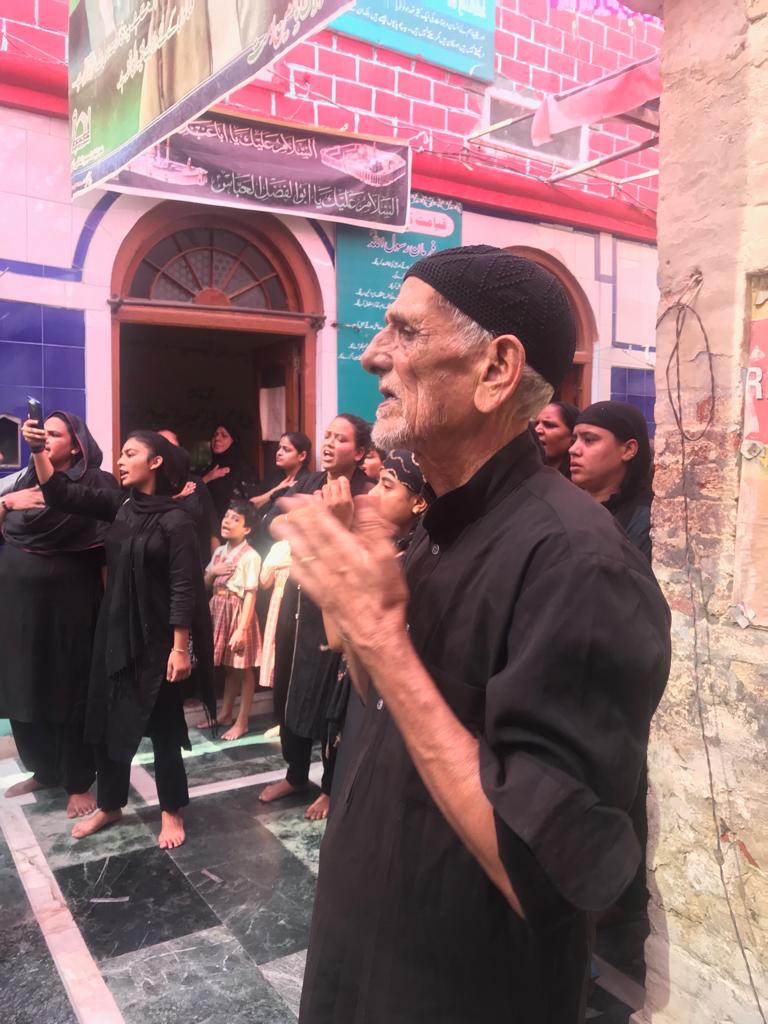
Muharram within the four walls at Imambara Amritsar on September 10, 2019. Photo: Nonica Datta
A lost narrative of Juloos-e-Ashura
“Ab koi juloos nahi nikalta. Juloos-e-Ashura Imambare ke andar hi hota hai. Muharram yahin Imambara ki chardiwari mein hota hai (Now there is no procession. Muharram is confined to the four walls of the Imambara),” Abbuji said. Zaheer Abbas, a Shia from Lucknow who has been living in Amritsar since 1980, added: “The grand shared tradition of Muharram in Amritsar was destroyed by successive wars: 1947, 1965, 1971. Partition didn’t end in 1947.”
Abbas said that the Shia mosque in Farid Chowk had been razed to the ground in 1948-49. Almost all the imambaras, over a hundred in number, were taken over (kabza) or dismantled. Abbuji added:
“Although the government took over the Karbala maidan, until recently the most prominent route for the Muharram procession was via the famous Sikri Banda Bazar to the present Imambara; taziya and alam would be brought there with much passion. But Bajrang Dal stopped it. Sunnis also didn’t support us. Now there is no procession: Ab ham darwaze diware band karke matam karte hain (Now we perform the mourning ceremony by shutting the doors and walls).”
Farhat, a sole Punjabi Muslim mourner, said that with the exodus of Hussaini Brahmins and Shias, the matam had lost its Punjabi flavour.
Abbuji asked me to write about the lost narrative of Hussaini Brahmins in Amritsar.
The openly public commemoration of Muharram in Delhi, Lucknow, Saharanpur, and even in nearby Malerkotla, Patiala, Jullundur and Jammu contrasts sharply with the slow erasure of this inclusive tradition in Amritsar. A city where Muharram was associated with the sacred geography of Imam Husain and Shia beliefs, such as Ghoda pir, Hussainpura, Gali Zainab and Yadgaar-e-Husain Imambara, the marginalisation of this vibrant cultural practice is heartbreaking.
I was shocked to see that the performance of Muharram and carrying of taziyas was confined to the four walls of a tiny Imambara under the watchful eye of the police. Perhaps, if the Hussaini Brahmins had stayed on, this would not have happened!
Around 5 pm, after “Alvida Ya Husain”, and a solemn meal of masar dal and rice – no meat is served on the day of martyrdom– I left the Imambara, lost in thoughts. I wanted to revisit Farid Chowk in remembrance of my grandfather and the eclectic community forged via the taziya procession that has now disappeared from the open spaces of the city.
I stood on the edge of Farid Chowk in Katra Sher Singh. Karmon Deori was close by; a street named after the famed warrior woman, from the Hussaini Dutt Brahmin clan, in 18th-century Amritsar, and a significant route for the pre-Partition Muharram juloos. There was no sign of any commemoration whatsoever.
As I returned to Delhi, leaving behind the taziyas and alam in the Yadgaar-e-Husain Imambara, the lament of the community of mourners almost crying for the shoulder of the Hussaini Brahmins continues to haunt me.
The reality is that the community, whose ancestors are believed to have sacrificed their seven sons for Imam Husain, has migrated to different parts of the world as global citizens. Many have simply discarded their Hussaini Brahmin identity and started to represent themselves as “Brahmins” – a construct that is miles away from what the community originally represented.
Nonica Datta teaches history at Jawaharlal Nehru University.
source: http://www.thewire.in / The Wire / Home> Religion> Culture> History / by Nonica Datta / September 30th, 2019
This IAS officer held a career counselling camp at the recent Islampur Book Fair.
This IAS officer held a career counselling camp at the recent Islampur Book Fair.
In the few months following her first posting at Goalpokhar-I in November 2014, Shama Parveen, “BDO Mam” as she is addressed by many, has become a source of inspiration to several, especially young women belonging to the minority community.
She is the first woman IAS officer in North Dinajpur district from the minority community.
Shama, a 2013 batch officer from Kanpur, had wanted to do something for the underprivileged. At Goalpokhar-I, one of the most impoverished areas of North Dinajpur, she began to act on her dreams.
Goalpokhar is largely agriculture-based. There are no industries here and not a single college in the block. People from the minority community comprise roughly 80 per cent of the block’s population.
During her short stint — she is waiting for a transfer order — Shama has, on her own, held career counselling sessions by visiting schools in her area. She told the young girls as well as their parents that if she could make it, these girls could too.
“The main impediment for the girls from my community are members from their own families. It is a popular belief that we cannot do well in higher studies. Whenever I meet the guardians, I tell them their daughters have the capacity to do well in higher studies. Please stand beside them. I tell them, let them shine. I am a woman from a humble background and if I can achieve what I have, so can these girls,” said Shama, who hails from a middle-class family. Her father is a businessman and her mother a homemaker.
Shama said her younger sister is studying civil engineering and her brother is a schoolteacher. She said her father is proud of both his daughters.
“When I started preparing for the civil service exams, I went to a tutorial in Delhi. But I realised that it was not the proper way, it was a kind of cheating. I left the tutorial and began preparing at home. I concentrated on reading media reports and hunting up events and data on the Internet. I had done my masters in history and that remains my favourite subject. I tell young people to read books as they are the cornerstone of success,” Shama added.
Choudhury Abdul Karim, minister for library services and mass education and Islampur MLA, could not praise the young bureaucrat enough. “She is an inspiration for the women of our community,” Karim said.
Rashid Alam, resident of Lodhan in Goalpokhar, said that this year’s Madhyamik exams were being conducted smoothly mainly because of the efforts of the BDO. Examinations have often been conducted here among allegations of cheating and violent reactions.
Shama’s interactions with school students have prepared the way for peaceful examinations. “She has been keeping a watch. My daughter is sitting for her Madhyamik and all arrangements are being overseen by the BDO. We know that she will be promoted and leave the block. But she will remain an inspiration for all of us,” he said. The students of the schools that Shama has visited fondly recall her quiet manners and gentle way of persuading them to carry on their studies.
“Once she came to our school. The manner in which she spoke to us was very impressive. I do not know about the others but I am determined to pursue higher studies. I used to be convinced that higher secondary would be as far as I would be able to study. Almost all girls here do not go to college as the two colleges are far away in Islampur or Dalkhola. But BDO Mam has kindled a tremendous urge in me to study,” said Arjuna Khatun, a resident of Goagaon, a village in the block.
Shama’s formula of success is simple. “If you have nek irada (honest resolve), it can help you achieve anything,” she said.
source: http://www.telegraphindia.com / The Telegraph Online / Home> West Bengal / by Mehdi Hedaytullah / March 09th, 2015
Khatija Begum (75) over the past 40 years has written thousands of poems and has compiled hundreds of books. It was not an easy job for her to do so, being illiterate she could not pen it down by herself. Whenever some verse come to her mind she would call somebody to write it. It was through her dedication to poetry that she was able to compile her couplets into books successfully.
The narrow allies of Zaina Kadal area of Srinagar lead to her house. Every day she looks at the pile of her poetry collection placed on a desk in her room with a deep sigh hoping that her books will be published someday.
“While I was into the journey of my poetic life, It was not easy for me to memorize each verse of my poetry so I asked my son to bring a tape recorder for me”. Heemal (pen name) recalls how she used to wake up at night to offer prayers and on the same prayer mat record the verses that would come up to her mind.
When Khatija took bundles of those recorded cassettes to a writer for transcription he asked for 70 ₹ per page which was a huge amount at that time so she start doing hand embroidery to earn some money. And spend all that money to preserve her poetry.
It took her 7 years to get her first book published through J&K State Cultural Academy by the title “Ser e-Asraar” which means “The secret of Mysticism”.
Khatija says that the journey of her poetic life started when she was 35 years old. At that time she was busy with her ill mother spending all her time with her, praying for her recovery. One day when she brought her mother to visit a doctor she encountered something unusual, some verses came up to her mind but she was not able to apprehend what was happening to her. After returning home she told her niece about it who wrote those verses for her.
She believes that poetry came into her life because of the prayers she got from her ill mother during her ailment. She dedicates her poetry to a Sufi saint whom she was very close to and consider like her father.
“When I took my books to show him, he was overwhelmed and he told me to endure a lot of patience so that I can bear all the hurdles that will come to my path in this journey. Moreover, he told me that what I have achieved is priceless” with teary eyes she said.
When she recites her poetry, everything around gets blurred and one gets lost in those mystic verses. She is a poetess who needs love and support so that she will be always remembered among the great poets of Kashmir.
source: http://www.milligazette.com / The Milli Gazette / Home> Community News / by Urvat Il Wuska / The Milli Gazette Online / April 10th, 2022
Jamia Millia Islam faculty member, Dr. Shama Parveen, to receive prestigious Sayeeda Begum Women Scientist Prize 2018 to be presented by Hon’ble Vice President of India.
Dr. Shama Parveen, Assistant Professor at the Centre for Interdisciplinary Research in Basic Sciences, Jamia Millia Islamia (JMI) has been selected for the prestigious “Sayeeda Begum Women Scientist Prize 2018”, instituted by Jamia Hamdard (University).
pix: @ Twitter
Dr. Parveen is actively involved in research in the area of Molecular Biology of human viruses and focuses on Dengue, Chikungunya, Zika and respiratory viruses (human metapneumovirus, influenza and respiratory syncytial virus). Her research articles published in journals of international repute are being well cited.
The award is given annually in the memory of Late Mrs. Sayeeda Begum, wife of Late Hakeem Abdul Hameed, founder of Jamia Hamdard. The award aims at recognizing the academic excellence of women scientists working at any minority institution of the country in basic and applied research in the areas of biosciences, biotechnology, biomedical, pharmaceutical and environmental sciences. Scientific contributions of the candidate during last 5 years are evaluated for the award. The award carries a citation and prize money.
The award was announced on 14th September 2018 at the Founder’s Day of the Jamia Hamdard University and it will be presented to Dr. Shama Parveen during the forthcoming Convocation of the University on 23rd October 2018 by the Chief Guest, Hon’ble Vice President of India. (PRO, JMI)
source: http://www.milligazette.com / The Milli Gazette / Home> News> Community News / The Milli Gazette Online (headline edited)/ by PRO, JMI / September 21st, 2018
Making entry in Madhya Pradesh (MP) politics, Asauddin Owaisi’s AIMIM won local elections in Khandwa and played a spoiler for Congress in Burhanpur Mayor Elections 2022
Bhopal :
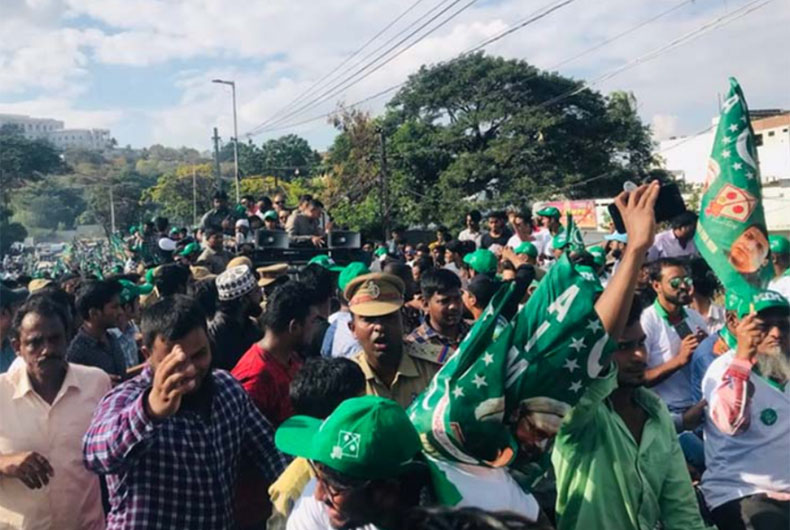
Making entry in Madhya Pradesh (MP) politics, Asauddin Owaisi’s AIMIM won local elections in Khandwa and played a spoiler for Congress in Burhanpur Mayor Elections 2022, results of which were announced Sunday.
Khandwa and Burhanpur both have considerable population of Muslims. Khandwa was recently in news for the exodus of migrant labourers for lack of jobs.
The AIMIM candidate, Shakira Bilal, won the election from ward number 14 of the Khandwa Municipal Corporation by defeating her nearest Congress rival Noorjahan Begum by a margin of 285 votes.
Besides fielding its nominee Kaniz Fatima for Khandwa Mayor Election 2022, the AIMIM had fielded candidates in 10 wards of the Khandwa Civic Body that has a total of 50 seats.
Burhanpur Mayor Election Result
In Burhanpur Mayor Elections, AIMIM candidate polled a total of 10,274 votes – a huge number if compared with the margin of 542 votes by which the BJP Mayoral candidate defeated her nearest rival of Congress.
Madhuri Patel got a total of 52,823 whereas Shahnaaz Bano of Congress got 52, 281 votes in Burhanpur Mayor elections 2022.
AAP Debut in MP
Meanwhile, the debutant Aam Aadmi Party (AAP) also made its entry in Madhya Pradesh politics after winning mayoral post of Singrauli Municipal Corporation, the district which is filled with coal mining and also called – ‘energy capital of India’.
AAP candidate Rani Agrawal has won the election for mayoral post against BJP’s Chandra Prakash Vishwakarma.
Polling was held for mayoral posts in 11 municipal corporations, including Bhopal, Indore, Gwalior, Jabalpur, Sagar, Satna, Singrauli, Chhindwara, Khandwa, Burhanpur and Ujjain. A total of 101 candidates are fighting for the mayoral posts.
The counting of votes for the second phase of the MP municipal elections will be held on July 20.
source: http://www.ummid.com / Ummid.com / Home> India / by Ummid.com with input from Agencies / Jujly 17th, 2022
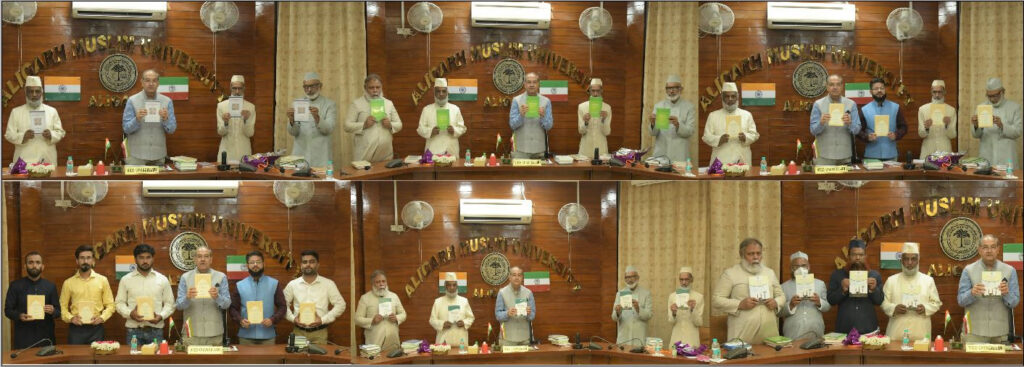
Eight books published by the K A Nizami Centre for Quranic Studies, Aligarh Muslim University (AMU) addressing key themes on the history of South Asian Muslims, diverse responses to the scholarly contributions and rationalist traditions of Islamic scholarship were released today at the Vice Chancellor’s Office.
They are ‘Contemporary Islamic Scholarship in South Asia: An Assessment’, ‘Humanness of Prophets: The Quranic Prophetology’ and ‘Contribution of Dar-ul-Uloom Deoband to Tafasir’ by Dr Abdul Kader Choughley; ‘Dil Jo tha Zulmat Kadah, Ma’ah-e-Munawwar Hogaya’ by Dr Mohammad Haris Mansoor; ‘Qurani Ulum ka Irtiqa Ahd-i-Islami ke Hindustan Mein’ by Prof Zafarul Islam; ‘How to Promote the Study of Quran among Women’, edited by Dr Nazeer Ahmad Ab. Majeed and Dr Arshad Iqbal; ‘Tarjumani Rahmani’ by Prof A R Kidwai and ‘Allah ki Kitab ki Paanch Mangay’ by Prof Fazlur Rahman Gunnouri.
“These books will answer some of the most frequently asked questions about traditions in Islamic faith, offer a new understanding on the works of Islamic scholars, explore key Islamic events and provide an understanding of important traditions in Islamic philosophy and the intellectual movement that emerged from South Asian Islam”, said AMU Vice Chancellor, Prof Tariq Mansoor while releasing the books.
Prof A R Kidwai (Honorary Director, K A Nizami Centre for Quranic Studies) pointed out: “The K A Nizami Centre has published over 80 titles on Quran-related scholarship since 2013. Publications of the Centre represent contemporary literature on furthering Quranic understanding and research in Hindi, English and Urdu by authors from various disciplines including translations from various languages”.
source: http://www.amu.ac.in / Aligarh Muslim University / Home / by Public Relations Department / Aligarh, July 13th, 2022
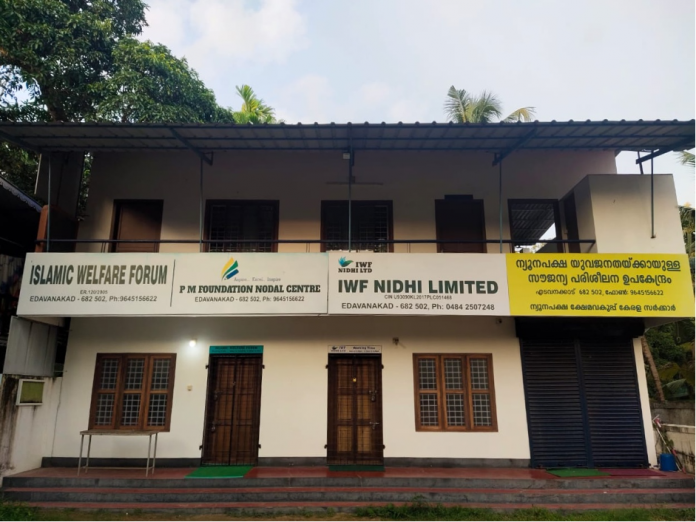
Edavarakad Village (Vypin Island) Ernakulam District, KERALA :
Photo Courtesy: Muhammed Shahabas
Muslims of Edavanakad in Vypin island of Kerala have set a vibrant example of empowerment by building community institutions that provide education, and interest-free loans to local farmers.
Kerala :
Edavanakad is a village in Vypin Island of Ernakulam district in Kerala. Surrounded by the Arabian sea and Vembanadu lake, the main livelihoods of the people here is fishing and agriculture. Muslims, Ezhavas, Arayas, and Latin Christians constitute the major communities of the place. Traditionally engaged in fish trade and agriculture, Muslims have set examples of community empowerment through various institutions.
Empowerment through education Hidayathul Islam primary school was run by one Vadakkeveettil Muhammed Haji, where children are taught modern education and Islamic principles.
Currently, a school and a madrasa are being run from the village. “After their primary education, teenagers had to go to the outskirts of the town to obtain higher education. It was far for them. This became a big concern for the elders in the town, and they decided to do something about it,” said Mahin PM, a local activist.
Irshadul Muslimeen Sabha [IMS] was established in 1850 to administer the madrasa. Later in 1922, Hidayathul Islam Primary School also came under IMS. Thus, the school and madrasa system came under one body and devised a comprehensive syllabus to provide religious and secular education. In 1979 the school got the status of a high school, and by 2000, it became Hidayathul Islam Higher Secondary School [HIHSS].
Mahin, the editor of the school’s jubilee souvenir, believes HIHSS sets the best example in the state for an effective model of success in public education. “Students from different backward communities study here. The school has continuously maintained a 100% success rate in the examinations.” Mahin said.
He said that IMS was active during relief activities after the 2004 tsunami that hit the coastal community. “Muslim traders came forward to open the gates of institutions and competed to help the affected as much as possible. Those were days that reflected the place’s fraternity,” he recalled.
Effective redistribution of wealth Zakat, a form of almsgiving in Islam, is considered obligatory for Muslims. Muslims in Edavanakad used to give the zakat in a dispersed manner. Many didn’t participate in it because of a lack of awareness of its importance. “It was Ali Kunju Mash who changed this situation by establishing an institution to distribute the zakat,” said Mahin.
Kunju, who came to Hidayathul Islam school as its headmaster, wanted to structurize the zakat distribution system. With the help of two other people KM Abdulla and PA Muhammed, he founded Al-lajnathul Islamiyathu Li-baithulmaal [AIL] in 1983.
AIL is the state’s first centralized community wealth redistribution system. “After Ramadan, we open applications to provide support for self-employment using the remaining zakat share. We also offer monthly scholarships to students and a weekly ration for widows,” said a committee member.
Towards a moral economy The people of Edavakannad, primarily farmers and fishers, depended on loans with heavy interest rates from moneylenders. The fluctuations in produce resulted in them falling into a debt trap. Understanding the pressing need to provide an alternative, five youths Abdussamad MK, Mahin PM, Aboobacker, Illyas, Rasheed, and Umar Khayyoom decided to form an interest-free credit society. In 1999, they invited people from the community to a general body meeting and presented their Islamic microfinance scheme.
Abdussamad, one of the founders, narrated how they convinced people to pool one rupee daily. “In this way, Islamic Welfare Fund got formed, and we approved its first loan of 3000 rupees to buy a boat and fishing net,” he said.
“We don’t work like ordinary credit societies. We form our working capital by pooling small amounts from every member. There will be a collective responsibility, and it becomes everyone’s duty to ensure the repayment of loans,” Abdussamad said.
The financing schemes provided by IWF do not promote consumerism in any way. They approve loans to the needy only after conducting a detailed investigation into the case, and one of the members will have to stand as a guarantee.
IWF’s activities have grown into many areas now. “Our headquarters facilitates an entrance coaching centre for applicants from minority communities to public services (PSC), and the nodal centre of the PM Foundation provides necessary information regarding educational scholarships,” one of the board members said.
Basil Islam is an independent journalist and researcher based in South India. He tweets at @baasiie
source: http://www.twocircles.net / TwoCircles.net / Home> Lead Story / by Basil Islam, TwoCircles.net / July 14th, 2022