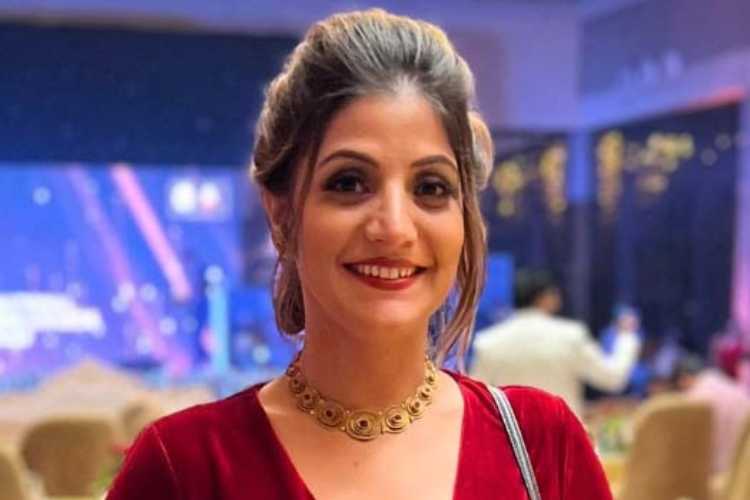
Enso Wellness – A Platform for Mental and Emotional Health of Bangalore has been awarded the best online platform by International Business Awards 2022-2023.
Mental and emotional health needs and deserves more and more recognition in today’s era to remove the stigma attached to it, says Arouba Kabir Founder, Enso Wellness.
Born in Kashmir, Arouba Kabir setup her organisation in Gurgaon in 2015 with an aim to spread more awareness and become a one-stop solution for those who have been struggling with the issues and challenges of emotional and mental health.
“Pandemic changed the definition and made it globally possible for people to ask for help by using online platforms keeping their identity anonymous as reaching out to a mental health professional is still a stigma,” Arouba said.
Her organization is known for hosting many online series- like Stand up to Stigma, One-minute Mental Health, Ask the Doctor with eminent personalities from across the globe and conducts various online and offline workshops for Kashmiris in the last five years.
“Mental health is as important as physical health-one definitely impacts the other. We need to start talking about mental health as we do talk about physical health and make it normal for people to reach out for help when they need it.”
“And if you want to see the change, we have to be the change, so talking about your emotions, challenges, struggles and visiting a professional definitely does help make it normal,” she said.
source: http://www.awazthevoice.in / Awaz, The Voice / Home> Stories / by ATV, posted by Nakul Shivani / December 13th, 2022
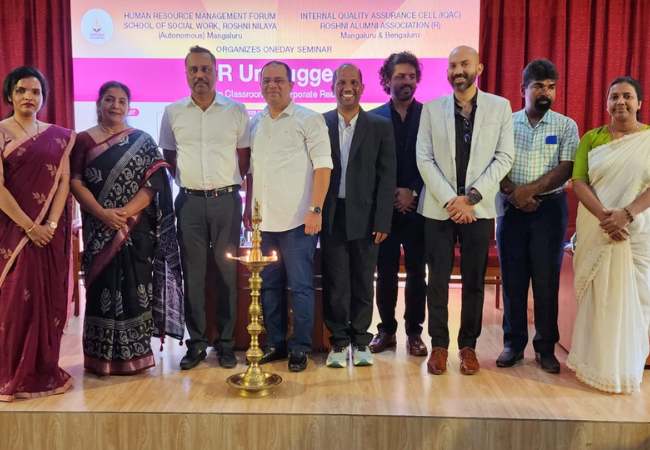
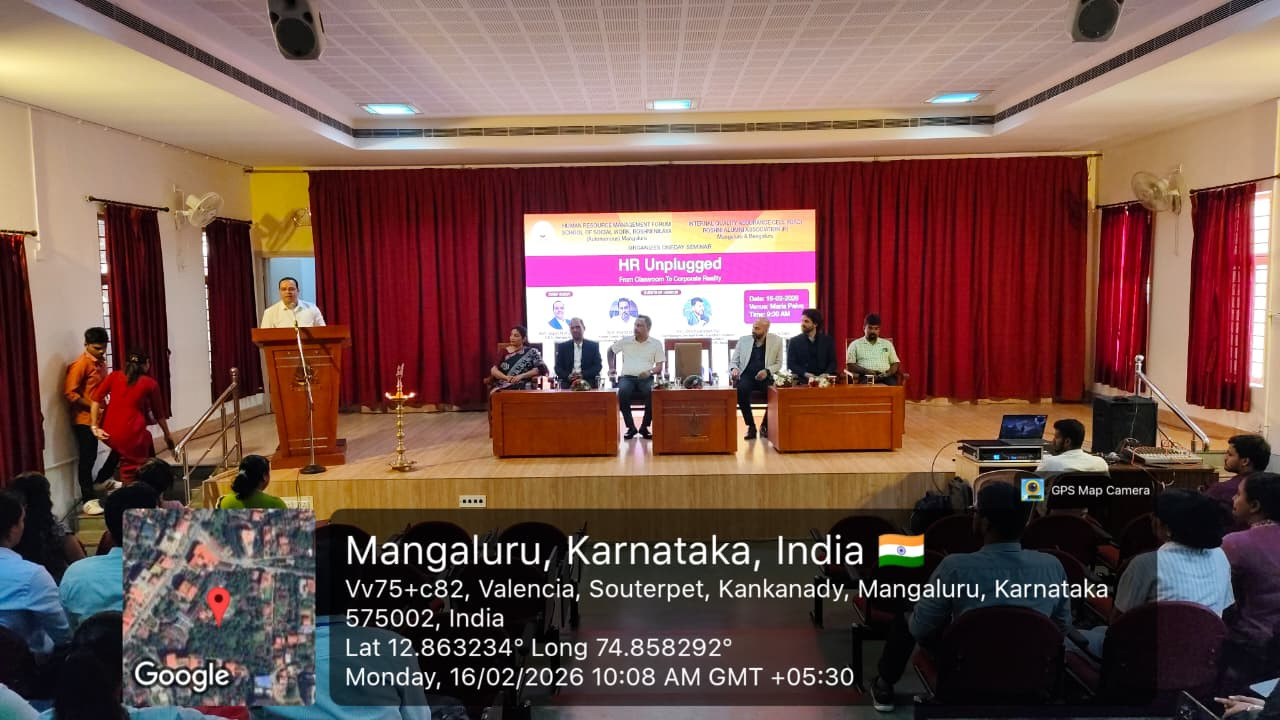
The HRM Forum, in association with the Roshni Alumni Association, organised a seminar titled “HR Unplugged: From Classroom to Corporate Reality” at the School of Social Work, Roshni Nilaya (Autonomous), Mangaluru, on 16th February 2026.
Sujah Mohammed, CEO of Marhaba Group, Mangaluru, delivered the inaugural address, sharing insights from his personal and professional journey. He spoke about the challenges he faced and the determination required to succeed.
Emphasising the importance of communication and interpersonal skills, he urged students to continuously upgrade their knowledge to remain relevant in a fast-changing corporate environment.
Sujah also highlighted professional ethics, leadership qualities, teamwork, and practical exposure through internships as key factors in bridging the gap between theory and practice. He advised aspiring HR professionals to stay confident, adaptable, solution-oriented, and committed to their long-term career goals.
Anand D’Silva encouraged students to make the most of every session, reminding them that life experiences often teach lessons beyond textbooks. He emphasised the value of hard work, genuine knowledge, and dedication, urging students to uphold the values and reputation of Roshni Nilaya in their professional journey. He also advised them to focus on their unique growth paths, remain patient, consistent, and positive, and avoid comparing themselves with others.
Adv. Ganesh Poojary, Partner at KG Pai & Co. and Director at Coreimpact Corporate Services Ltd., conducted an interactive session on labour laws. He started with an activity that required students to categorise various labour laws under the four Labour Codes, promoting critical thinking and engagement. He then explained the codes in detail, especially the Code on Wages, and discussed its implications for employees, employers, and organisational compliance.
During the panel discussion on “Who is HR?”, Ganesh Poojary, Ranjit Christopher Picardo, Associate Director, HR and Global Shared Services Leader, Brady Company India Pvt. Ltd., and Dolfred Norbert D’Souza, Director – Human Resources and Site Leader, APAC, Flexera Software India LLP, highlighted HR as a strategic partner that bridges management and employees. They stressed the role of HR in ethical decision-making, legal compliance, talent development, and shaping organisational culture.
Ranjit Christopher Picardo also led a session on “The Effective Interviewer”, focusing on structured interviews as a tool for effective talent acquisition. He demonstrated a practical framework for interviews and conducted an interactive mock interview with students. He emphasised the high cost of poor hiring and the need for discipline, consistency, and professionalism in recruitment.
The event was attended by over 100 HR students and professionals. Dr. Meena Monteiro, Dean – PG Studies; Dr. Sebastin K V, Dean – Research; Prof. Jinsa Joseph; Prof. Deepika Sanil; Dr. Anuradha Shetty; and Prof. Ramya were present. The session was compered by Saifana Sheik, the welcome address was given by Nagashree, and Prof. Deepika Sanil proposed the vote of thanks.
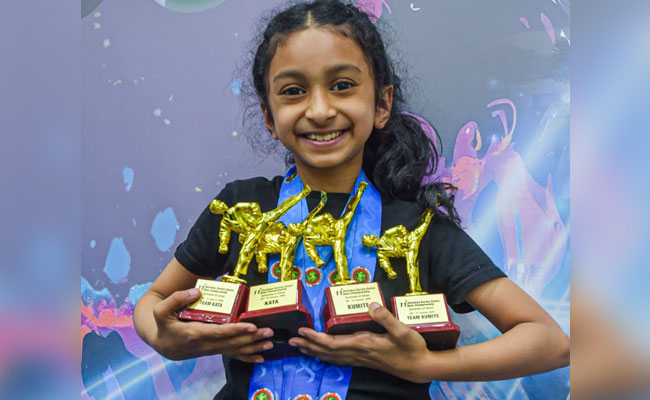
Indian karateka Zaara Vasim Assadi emerged as the standout performer at the International Karate Open Championship held as part of the Muscat Night Festival, clinching four gold medals in a remarkable display of skill and consistency.
The prestigious tournament saw participation from around 400 athletes representing 24 clubs across multiple countries. Amid intense competition, Zaara, aged just 10, created history by becoming the only girl at the championship to secure gold in all four categories she competed in individual Kata, individual Kumite, team Kata, and team Kumite.
Zaara’s achievement adds to her already impressive record. She has remained undefeated in Kata since the age of five, underlining her long-standing dominance in the discipline. Her performances were widely praised for technical precision, discipline, and composure well beyond her age.
Training at The Champ Sports & Arts in Muscat, Zaara’s journey has become a source of inspiration for young martial artists, reinforcing the idea that dedication and passion can overcome age-related barriers in competitive sport.
The championship also served as a platform for cultural exchange, bringing together athletes and spectators from diverse backgrounds and celebrating the unifying spirit of karate.
Zaara Vasim Assadi is the daughter of Vasim Assadi and Hasra Sana and hails from Udupi. She is the granddaughter of Zikriya Assadi.
source: http://www.english.varthabharati.in / Vartha Bharati / Home> Gulf / by Vartha Bharati / February 02nd, 2026
In a land shaped by upheaval—where countless dreams were long overshadowed in remote corners—a silent revolution is underway. Far from the spotlight, a group of remarkable individuals is reshaping the social fabric of Kashmir. They are quietly overcoming obstacles, challenging norms, and inspiring countless others with their unwavering commitment to progress.
Sakeena Akhtar
Sakeena Akhtar is a trailblazer who has shattered deep-rooted gender norms in Kashmir, where women in sports—particularly cricket—have historically faced stigma and exclusion. From being the only girl playing cricket in the narrow lanes of Munawarabad to becoming India’s first female National Cricket Coach from Jammu and Kashmir, her journey is a powerful testament to resilience, courage, and transformation.
Seerat Tariq
At just 19, Seerat Tariq has turned her personal journey of artistic expression into a movement for empowerment and cultural revival. With national records and international accolades to her name, she uses her platform to amplify the voices of others—especially young women in conflict zones—helping them discover their strength and creativity through art.
Shabnam Kausar
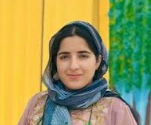
In a conflict-ridden region, Shabnam Kausar stands as a beacon of purpose-driven leadership. Starting with just four students and no infrastructure, she transformed the Army Goodwill School in Bandipora into a nationally recognized educational institution. Her story exemplifies the transformative power of education, vision, and resilience.
Suhail Saeed Lone
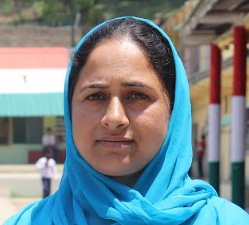
Born in Bandipora and scarred by the violence of militancy, Suhail Saeed Lone could have succumbed to disillusionment. Instead, he channeled his trauma into storytelling through cinema. Now working in Mumbai’s film industry, he uses the medium to share narratives of courage, sacrifice, and patriotism, turning pain into powerful, purposeful expression.
Sarwar Bulbul
Sarwar Bulbul is preserving and redefining Kashmir’s spiritual and cultural legacy through the timeless medium of music. As a celebrated Naat Khwan and founder of the Bulbul Academy of Performing Arts (BAPA) in rural Rafabad, he mentors underprivileged youth in Kashmiri classical, Sufi, and devotional music—ensuring that age-old traditions are passed on with reverence and relevance.
Irtiqa Ayoub
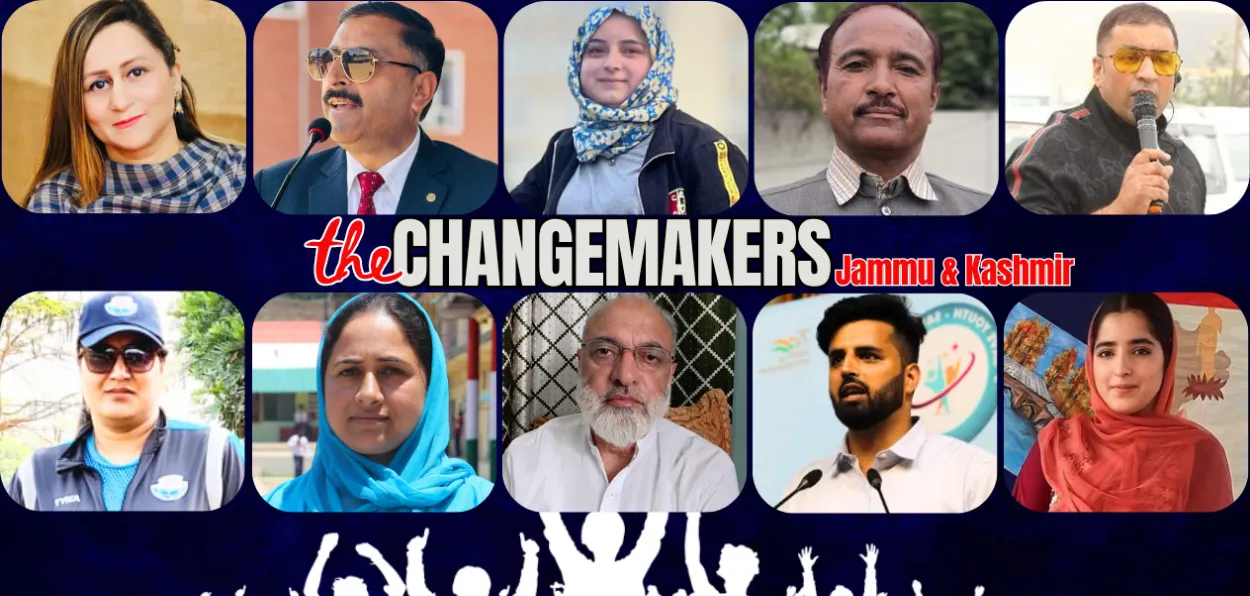
Irtiqa Ayoub is changing the game—literally—for women in Kashmir. As the region’s youngest Rugby Development Officer, she challenges patriarchal norms in a male-dominated sport. Her work promotes empowerment, equality, and confidence among young women, showing that sports can be a powerful platform for social change.
Anissa Nabi
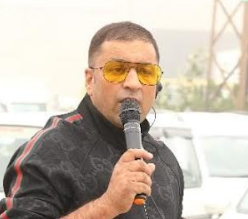
Anissa Nabi seamlessly fuses public service with personal passion. As a JKAS officer and Chief Sports Officer, she champions grassroots sports development across Jammu and Kashmir. A marathoner and fitness advocate, she founded the Wondrous Women community and serves as an ambassador for the Fit India Movement—proving that leadership thrives on action, inclusivity, and inspiration.
Ghulam Nabi Tantray
Ghulam has launched educational institutions such as a B.Ed. college in Bandipora and the Doon International School in Jammu to mentoring rising sports stars like Tajamul Islam, Ghulam Nabi Tantray has made community empowerment his life’s mission. In times of crisis, he has stepped up with compassion and aid. Despite accolades at the national and international levels, he remains deeply rooted in his community—proving that true leadership begins with purpose, not position.
Mohammad Hafeez Furqanabadi
Mohammad Hafeez Furqanabadi has dedicated his life to transforming society through education and compassion. In an environment where girls’ education was often discouraged, he visited homes personally to shift mindsets and advocate for equality. As a teacher and founder of a charitable trust, he has provided free education and resources to countless underprivileged children—regardless of religion or background—promoting communal harmony and opportunity.
Wajahat Farooq Bhat
Once a stone-pelting teenager driven by rage and radical ideologies, Wajahat Farooq Bhat’s life took a transformative turn after an unexpected encounter with SSP Imtiyaz Hussain in Baramulla in 2018. As a young man from Sheeri village near Baramulla, Wajahat grew up amid narratives of jihad, revenge, and martyrdom, reinforced by mosque sermons and community glorification of violence. However, a deeply personal moment, witnessing the hypocrisy of a local cleric, and later, a heart-to-heart with the soft-spoken SSP during his NCC stint, triggered his awakening. Imtiyaz’s message. Today, he leads Jammu and Kashmir Save Youth Save Future, a grassroots organisation that has helped deradicalise over 3,000 Kashmiri youth. Wajahat aspires to take his mission global, to inspire hope where despair once reigned.
These changemakers may not often make headlines, but their impact is undeniable. Through courage, creativity, and conviction, they are not only rewriting narratives in Kashmir but also illuminating a path for others to follow. Their stories are a reminder that even in the most challenging environments, transformation is possible—quietly, steadily, and powerfully. In the days to come Awaz-The Voice will bring their detailed stories for our readers.
source: http://www.awazthevoice.in / Awaz, The Voice / Home> Stories / by ATV, posted by Aasha Khosa / June 22nd, 2025
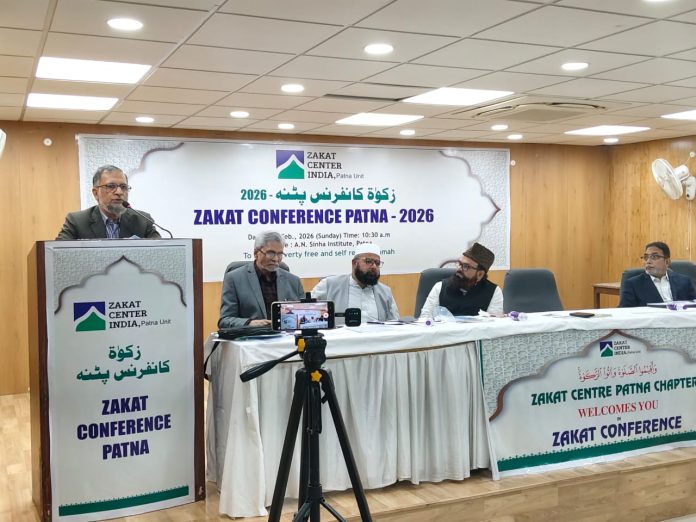
The Zakat Centre India (ZCI), Patna, hosted a high-profile conference at the A.N. Sinha Institute of Social Science, bringing together community leaders, scholars, and financial experts to discuss the transformative potential of organized Zakat. The event highlighted a shift from individual giving to a structured “social security” model aimed at empowering marginalized sections through transparency and professional management.
Chief guest Amir Subhani, retired IAS officer and former Bihar Home Secretary, said Zakat is a core element of the Islamic economic system and a guarantee of social security for the weak and poor. He observed that economic inequality exists in every society and cannot be erased by force, noting that the collapse of communism proved such models unsustainable. A degree of inequality, he suggested, can foster mutual dependence, gratitude, cooperation, and empathy among social groups.
Subhani compared faith-based welfare with state-led systems in Europe, Canada, Australia, and the Netherlands, where governments provide extensive social security through taxes. While India has welfare schemes, he said they remain inadequate given widespread poverty. He noted that the estimated Zakat pool forms a significant “corpus”, yet is largely distributed informally, often without verification.
An institutionalized system, he stressed, ensures proper assessment of eligibility, scale of need, and appropriate assistance. Students, aspiring entrepreneurs, and destitute individuals such as widows and the elderly all require tailored support. Organized networks can investigate cases effectively, making collective Zakat more impactful than isolated charity.
Reflecting on ZCI’s work, Subhani said many of his initial concerns about fund allocation and beneficiaries were addressed during the program. He expressed confidence in the Centre’s transparency, especially as it is led by a Chartered Accountant, and suggested issuing payment receipts to strengthen donor trust.
He emphasized coupling financial aid with mentorship. Many poor recipients, he noted, spend business funds on urgent consumption needs and lack entrepreneurial skills. Recalling government Entrepreneurship Training programs for street vendors—where he observed strong Muslim participation—he highlighted practical guidance such as customer interaction, negotiation, body language, repeat business strategies, and digital payments. Financial assistance, he concluded, should be paired with structured guidance.
Keynote speaker Maulana Rizwan Ahmad Islahi described Zakat as central to maintaining social balance in Muslim society. Dr. Rizwan Ahmad Rafiqui of ZCI Delhi stressed organized collection and distribution to maximize impact. CA SS Quadri outlined management protocols and transparency measures, while Advocate Mohammad Naushad presented the annual report. The program opened with Quran recitation and concluded with a vote of thanks by Quamar Warsi.
source: http://www.radiancenews.com / Radiance News / Home> Latest News> Report / by Sami Ahmad / February 16th, 2026
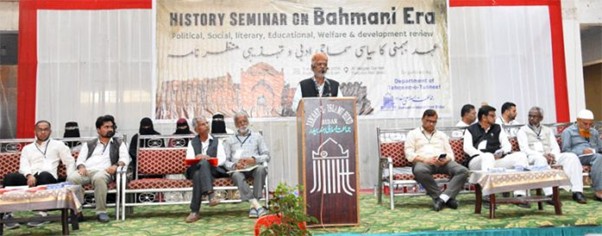
Scholars at a historical symposium in Bidar highlighted the inclusive governance, educational focus, and cultural contributions of the Bahmani kings. The event examined political, social, literary, educational, and developmental aspects of the Bahmani era.
Speaking at the symposium, Muhammad Naseemuddin Faris, retired dean of Maulana Azad Urdu University, Hyderabad, said the Bahmani rulers worked for the welfare of all sections of society. He said the kings governed by building trust across religions and social groups. He added that they maintained cordial relations with neighbouring states and ensured peace and stability.
Faris said the Bahmani rulers established several educational institutions and promoted learning. He noted their encouragement of the Urdu language and literature. He also said the rulers supported spiritual growth by inviting Islamic scholars from Iran, Iraq, and Syria. He highlighted the implementation of the Kharej system, which helped strengthen water conservation practices.
Jamaat e Islami Hind State Secretary Labid Shafi said knowledge of history remained essential for shaping society. He said certain communal groups were misusing history to spread hatred and distort facts. He described the symposium as an important step toward informed understanding of the Bahmani legacy.
Several scholars delivered thematic lectures. Muhammad Fahimuddin spoke on religion and Sufism. Dr Rais Fatima discussed economic prosperity. Dr Manzoor Ahmed traced the development of Urdu literature. Dr Abdul Majeed addressed architecture. Dr Muhammad Samiuddin focused on education. Dr Maimuna Begum examined coinage. Dr Muhammad Majeed spoke on the decline of the kingdom. Dr Ismail Khan discussed Mahmud Gavan. Dr Mushtaq Ahmed analysed political conditions.
Shamshuddin delivered the introductory address. Muhammad Mauazzam presided over the inaugural session. Hafiz Syed Atiqullah recited the Quran. Muhammad Arifuddin proposed the vote of thanks.
source: http://www.radiancenews.com / Radiance News / Home> Latest News> Report / by Radiance News Bureau / February 07th, 2026
As the year draws to an end, we have compiled a brief list of the Indian Muslims who have been in news during 2021.
Danish Siddiqui :
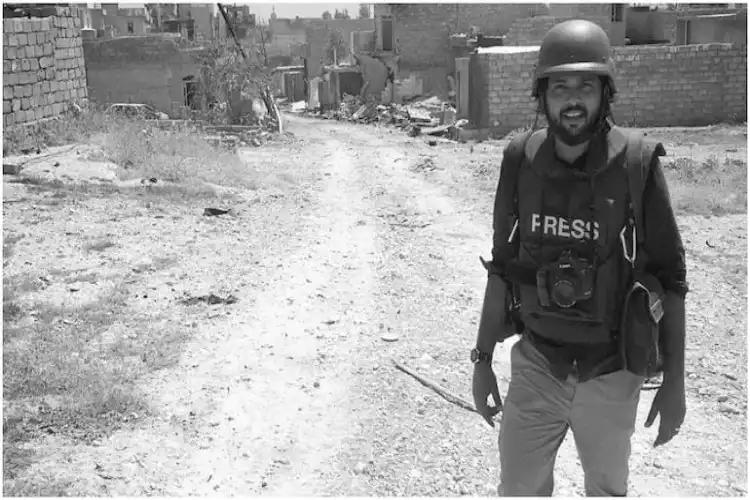
Danish Siddiqui was a Pulitzer Award winning photojournalist from New Delhi, who was killed by Taliban while covering the war in Afghanistan. An alumnus of Jamia Millia Islamia, Siddiqui was one of the country’s most well known photographers who documented the Rohingya refugee crisis, Covid deaths and the Delhi riots to win several awards. In July 2021, Reuters assigned him documentation of the Afghanistan War as an embedded journalist with Afghan Special Forces. On July 16, Siddiqui was killed in action. Governments of India, USA, Afghanistan and United Nations expressed grief and shock on his death and thousands joined his funeral procession in DelhI.
Dr Shahid Jameel :
Dr. Shahid Jameel is a world renowned virologist and is one of the leaders of India’s fight against Covid-19. The Covid-19 outbreak has thrown new challenges to the scientific community. When the Government of India set up an Indian Sars-Cov-2 Genomics Sequencing Consortium (INSACOG), which consists of 38 laboratories to monitor the genomic variations in the SARS-CoV-2, Jameel was appointed as the head of its scientific advisory group. He served the INSACOG in this position till May, 2021 and still advises different government and non-government bodies in strategising the war against Covid-19.
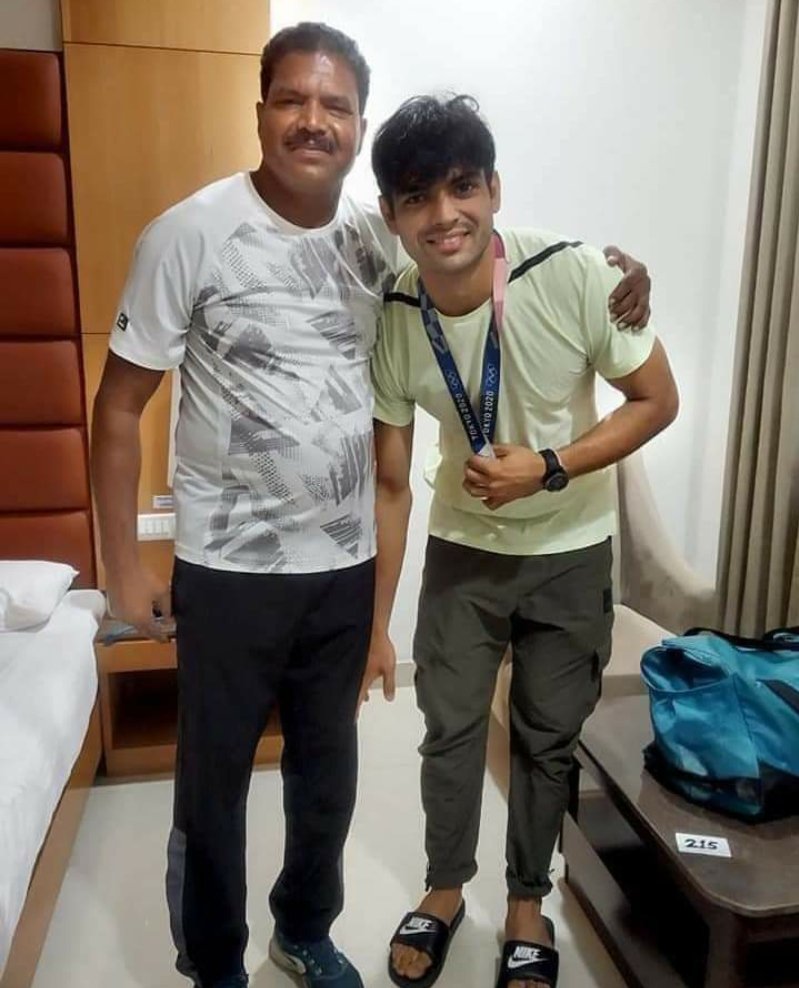
Coach Naseem Ahmed with Olympian Neeraj Chopra
Naseem Ahmed :
Naseem Ahmed: On 7 August, 2021, Neeraj Chopra threw Javelin for 87.58 mts. and became the first Indian to win an Olympic Gold in track and field events. With this success, Naseem Ahmed of Panchkula also hit the headlines. Ahmed was his first coach, who coached Chopra for almost six years at Tau Devi Lal Sports Complex in Panchkula. It was under his guidance that Chopra turned into an athlete from a chubby child. After returning to India, Chopra went to meet and receive blessings from his coach.
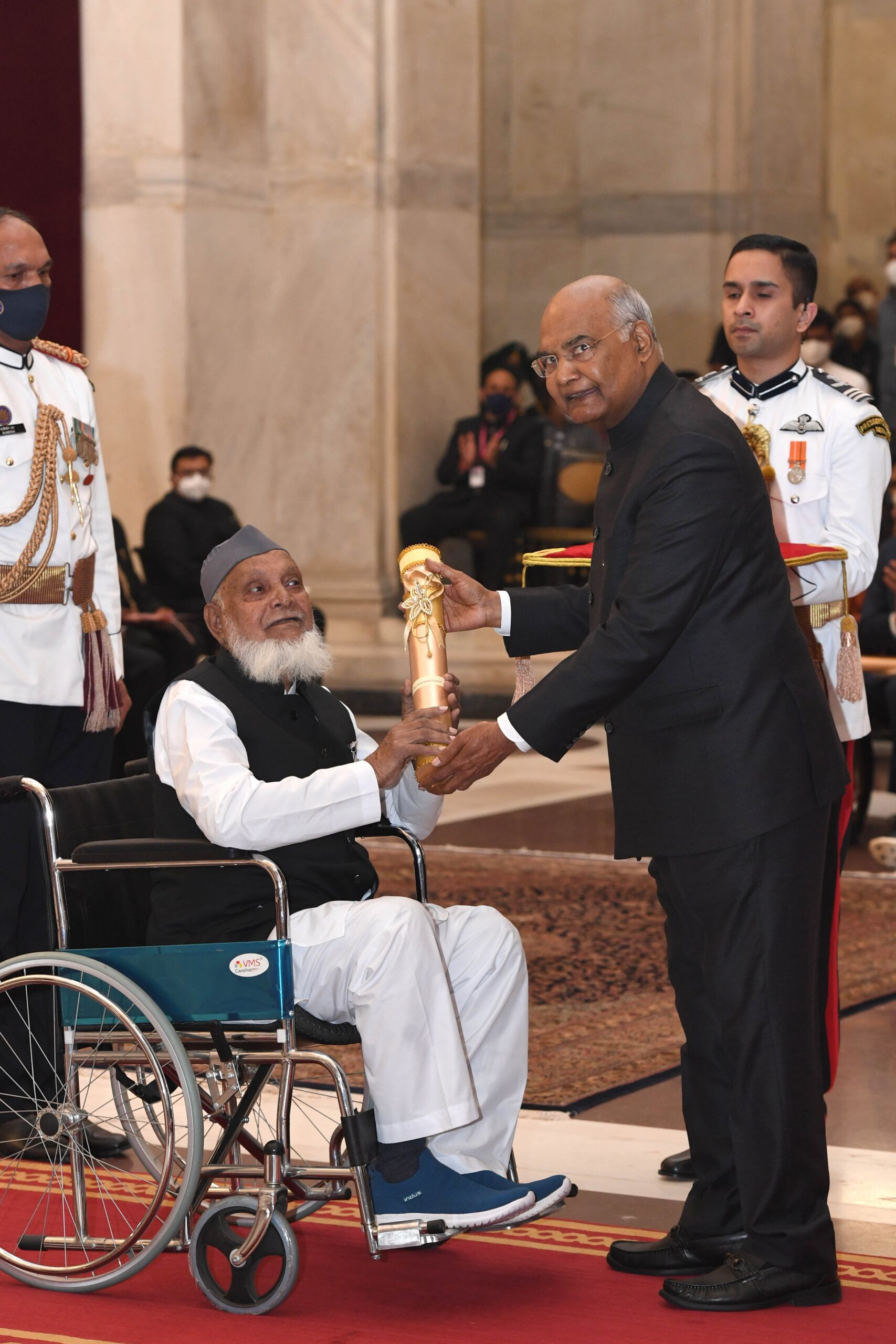
Mohammad Shareef alias Shareef Chacha receiving Padma Shri from President Ran Nath Kovind
Mohammad Shareef :
Mohammad Shareef is a bicycle mechanic from Faizabad, Ayodhya and hit the news headlines this year for receiving Padma Shri, the fourth highest civilian award in India, from the President Ram Nath Kovind. In 1992, his son was murdered and was eaten by animals as nobody claimed it. This incident moved him so much that he took it upon himself to perform the last rights of unclaimed dead bodies. In the last 28 years, he has performed the last rights of more than 25,000 unclaimed dead bodies according to their religions.
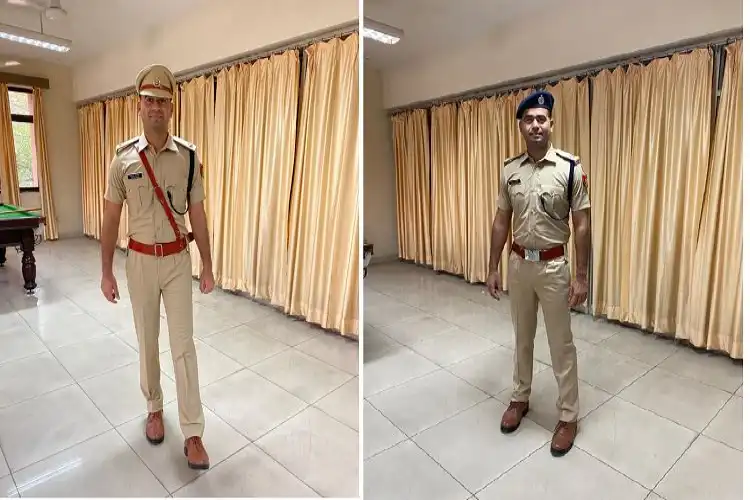
Firoz Alam as an IPS officer (Left) and as a Constable of the Delhi Police (Right)
Firoz Alam :
Firoz Alam’s story is straight out of a fiction, where his character bears resemblance to those played on screen by several film stars. Alam, a resident of Hapur in U.P, was a constable with Delhi Police since 2010. In 2014, he started preparing for UPSC CSE. The work pressure and family responsibilities did not allow him to devote full time to the studies, like many availing coachings could do. After five unsuccessful attempts, in his sixth attempt he qualified UPSC CSE and joined as an IPS officer. His inspiring journey from a constable to IPS had taken the nation by a storm when he joined the training after leaving the job as constable.
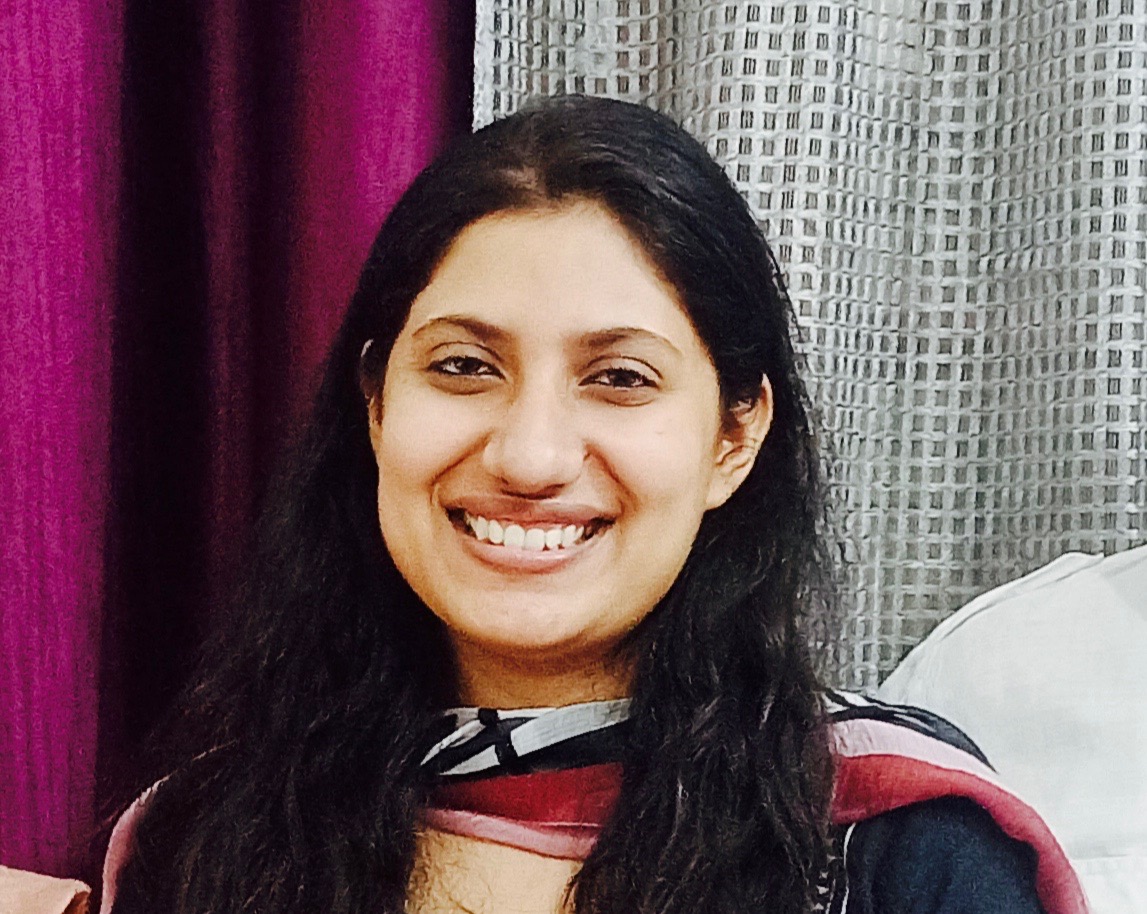
Sadaf Choudhary
Sadaf Choudhary :
Sadaf Choudhary came into limelight when the UPSC CSE results were declared in September and she secured 23rd rank. She was the highest rank holder among Muslims this year and will become an IAS officer. It must be kept in mind that since independence only 179 Muslims have secured ranks to get IAS allotted to them.
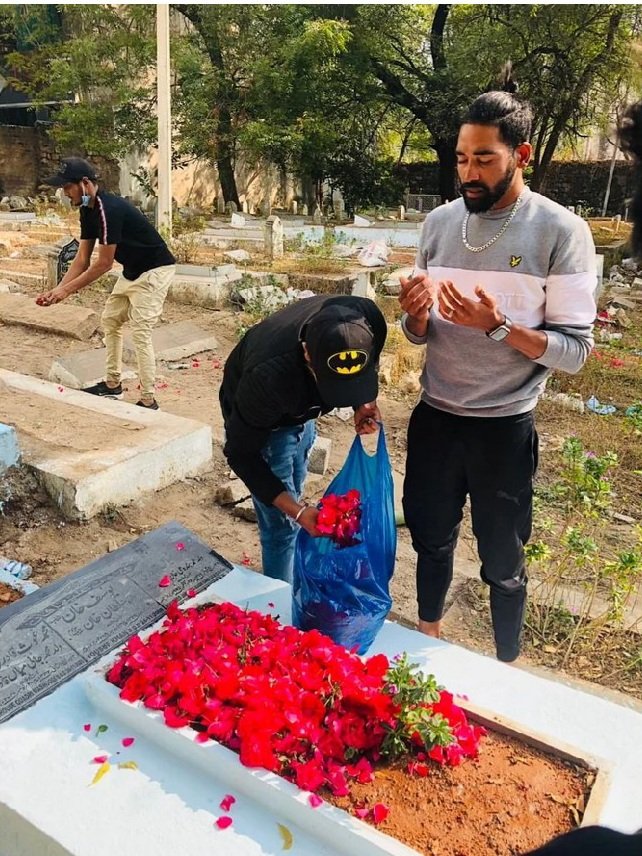
Mohammed Siraj praying at the gave of his father
Mohammed Siraj :
Mohammed Siraj is an Indian cricketer from Hyderabad who made it to the headlines in January by becoming the highest wicket taker from India during the India – Australia Test Match Series in Australia. To claim his 13 scalps, he played only three of the four tests in the series. The fact that his father had died just before the series and he was given an option to return to the country, which he declined citing his commitment to the nation made it even more special.
In the last test match at Brisbane, he bagged five Australian wickets to script a historic win and became a national hero. The headlines of the sports column were filled with his heroics, commitment and ability. Since then he has been a regular feature of the Indian Cricket team as a pacer.
source: http://www.awazthevoice.in / Awaz, The Voice / Home> Stories / by Saquib Salim / December 30th, 2021
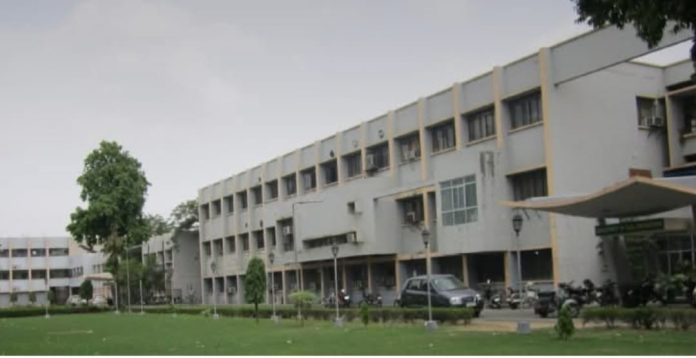
Engineers at Aligarh Muslim University have developed a Ferro Cellular Insulated panel to reduce indoor heat during peak summer. The innovation comes from the Civil Engineering Department and offers an energy efficient alternative to brick walls.
The research team includes Prof Abdul Baqi, Dr Mohammad Rehan Sadiq, and research scholar Yasir Khan. They designed the 90 mm corten cement panel using cement and cardboard. A gap between two layers traps air, which works as insulation. The panel keeps indoor temperatures at 25 to 27°C when outdoor heat reaches 40 to 42°C. This means a drop of nearly 15°C.
Researchers say the panel reduces the need for air conditioners and coolers. It also blocks external noise, improving indoor comfort. Dr Sadiq said the team focused on durability and structural strength while introducing a material not widely used in India.
Cost comparisons show long term savings. Building a 10×10 foot room with bricks costs around ₹1 lakh. Using the insulated panel raises the cost to about ₹1.15 lakh. However, annual electricity expenses for a brick room reach around ₹22,651 due to cooling needs. A panel built room requires about ₹10,251 per year. This results in savings of nearly ₹12,400 annually.
Researchers also found electricity use remains lower throughout the year in panel built rooms. The lighter panels reduce structural load, which improves building safety.
The team plans to introduce the technology to the market. With rising temperatures and higher energy demand, this panel offers a practical option for heat prone regions. It also reduces dependence on bricks and mortar, lowering environmental impact.
source: http://www.radiancenews.com / Radiance News / Home> Uncategorized / by Radiance News Bureau / February 12th, 2026
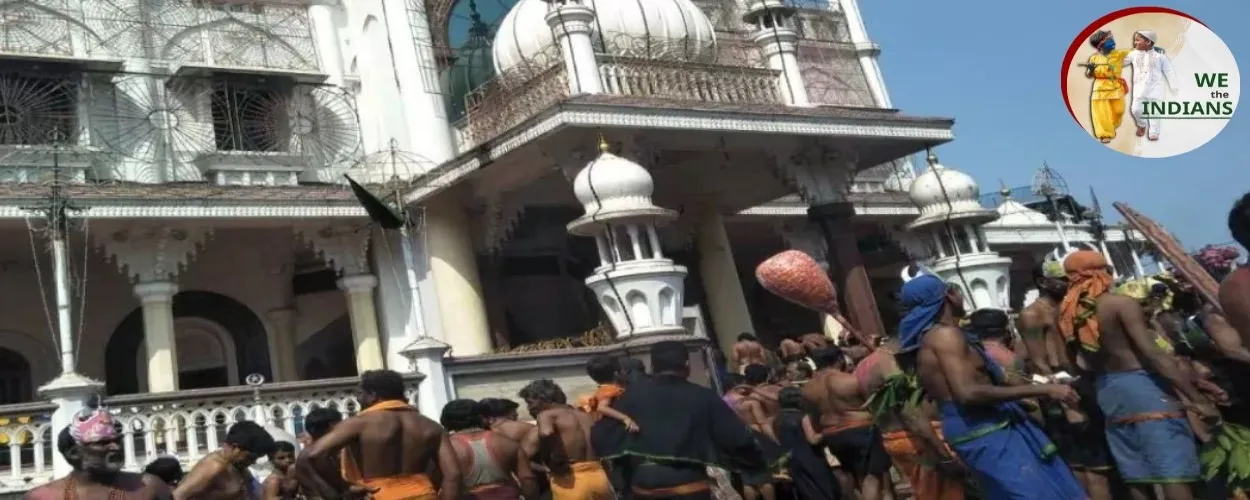
Pilgrims on way to Ayyappa shrine in Sabrimala at Vavar mosque, Erumeli, Kerala
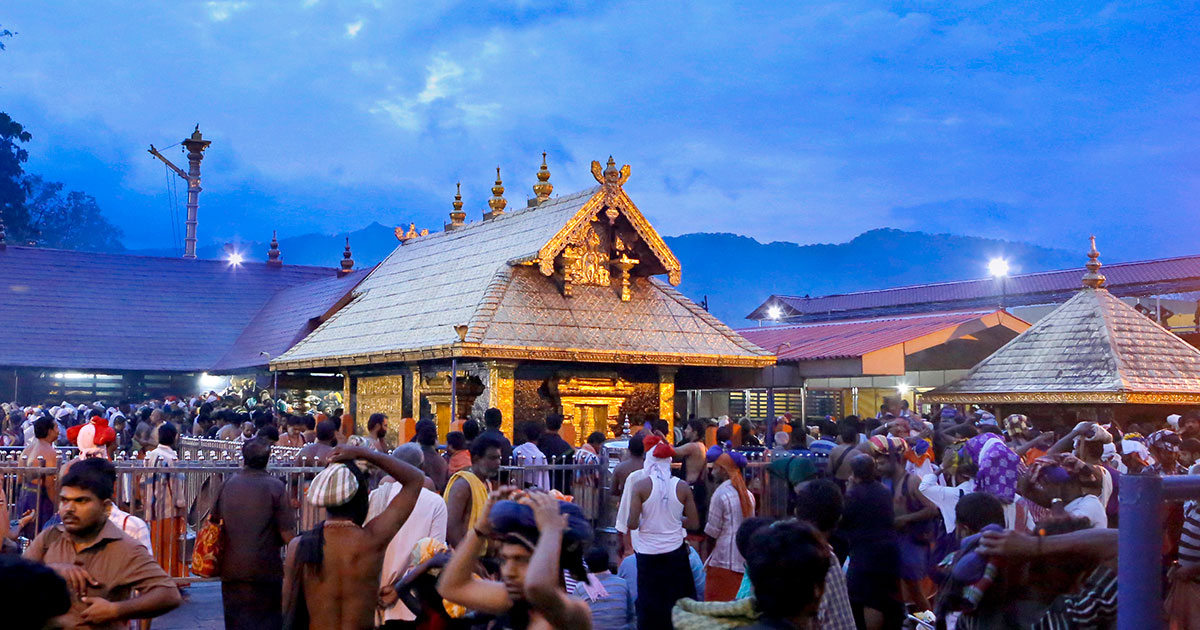
I had waited to go to Sabarimala, a hilltop shrine dedicated to Lord Ayyappa in Kerala’s Pathanamthitta district, for a long time. Lord Ayyappa, the deity of truth and righteousness, is described as the son of Shiva and Mohini (the female avatar of Vishnu). He was said to have been adopted by the local king of Pandalam.
Ungorgettable Experiences
As a youngman, Ayyappa abdicated the crown and renounced the palace to vanish into the forests of Sabarimala to live a celibate and ascetic life. It’s in deference to Ayyapa’s celibacy that women are not allowed there till they turn 55.
After a 41-day mandatory fast, I joined my sister and her husband for the pilgrimage. The pilgrims wear black clothes and carry a bundle containing a couple of coconuts filled with ghee and other offerings for the deity.
We carried the bundle on our heads at the start of the four-kilometre uphill trek. We were not supposed to remove it before reaching the shrine.
At the crack of dawn, after breaking coconuts at the local shrine to ward off all obstacles, we left for the shrine.I was thrilled at the thought of visiting some of my favourite temples and shrines on the route, some of which I had only heard of but never visited.
Lord Ayyapa temple at Sabrimala
Holding our heavy bundles (kettu) on our heads, we stopped at Chottanikakara, Vaikom, and Ettumanoor shrines.
Soon we were at Erumeli. According to legend, Ayyappa defeated the demoness Mahishi (sister of Mahishasura) here. The name Erumeli is comes from Eruma-kolli—“the place where the buffalo-demon was slain.”
At Erumeli, the road streamed with pilgrims, mostly men and children, all clad in black. They had bright colours smeared on their faces, held colourful feather arrows, and danced to drum beats as part of a ceremonial dance called Petta thullal to mark the victory of the warrior Ayyappa over enemies and bandits.
We too swayed lightly, trying to shake off our inhibition-clad egos.
Holding arrows, wild leaves, and smeared in bright colours, we walked towards a temple there dedicated to a deity called Shastha. Shastha is an ancient protective warrior deity worshipped in Kerala even before the incarnation of Ayyappa. Ayyappa is considered a modern avatar of Sastha and is now almost synonymous with Sastha.
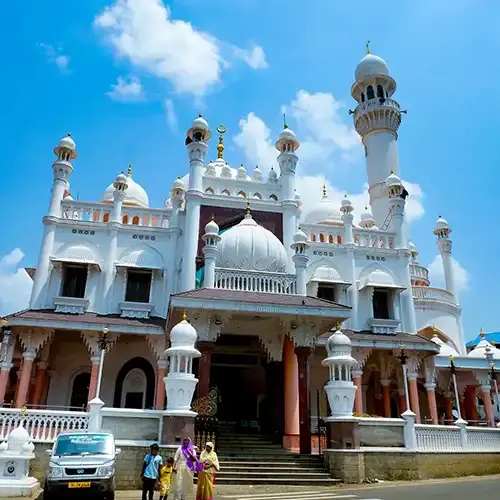
Vavar Juma Mosque, Erumeli
As we walked towards the temple, I was surprised. Were we at the threshold of a temple or a mosque? I saw taps for the ritual cleansing ceremony (wuzu) and a handful of Muslims saying namaz through the glass windows. It was a mosque.
We lined up respectfully outside the mosque. It was Vavar Palli (Vavar mosque), my brother-in-law explained.
Vavar was a close associate of Ayyappa. Their friendship is celebrated in folklore and devotional movies. Vavar was a Muslim, and thus the story gets significant.
“Vavar Swami may have worshipped at the mosque. That is why he is associated with the mosque,” Nasruddin Musaliyar, who traces his lineage from Vavar, explained to me when I spoke to him a few days later.
I felt pure joy at seeing Hindus offering respect outside a mosque and making offerings before worshipping the Shastha temple. After breaking a coconut at the Shastha temple, we began our long trek towards the Ayyappa shrine on Sabarimala.
It took us four or five hours, followed by a long five-hour wait in the crowd. Anyway, we had darshan in the morning. When we came out of the temple, another surprise awaited.
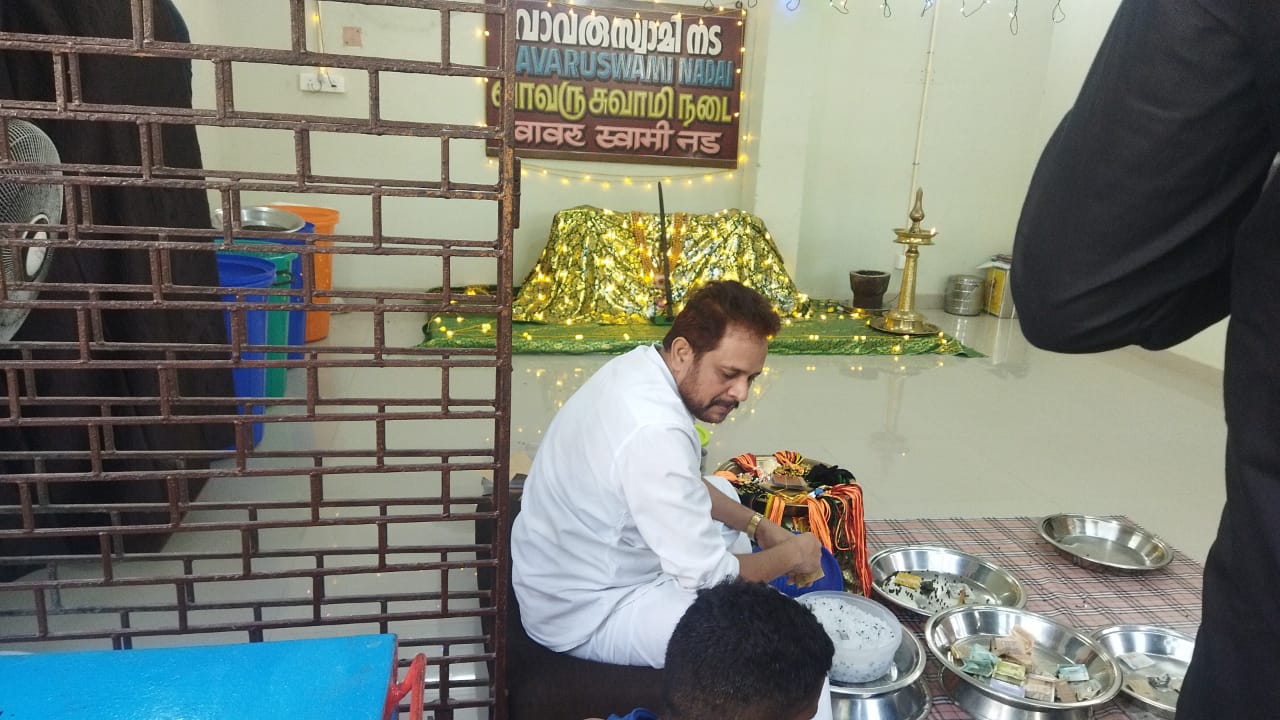
The shrine dedicated to Vavar Swamy
I found myself standing outside a small shrine just outside the Ayyappa temple. It was like a dargah, but I was told that it was called Vavarpadi, or the threshold of Vavar, a memorial to Ayyappa’s friend.
Pilgrims stopped to offer prayers and accept prasad of sugar candy and pepper. The man giving the prasadam said he was a descendant of Vavar and managed his tomb. He gave me his father’s number and asked me to speak to him for details about the shrine.
Nasruddin Musaliyar said that Vavar was part of a group of Arab settlers who were close to Lord Ayyappa.”This shows that the highest authority at that time accepted Vavar despite his different faith or origin,” Musaliyar said.
“Vavar Swami’s tomb and a mosque at Erumeli, where Vavar is said to have prayed, just cry out loud to us today that two faiths can co-exist and respect each other. All religions believe that there is one God. And that almighty wants to tell us that Hindus, Christians, and Muslims can co-exist in harmony,” he added.
Emotions well up as Mursliyar says that neither Ayyappa nor Vavar had asked anyone to build shrines and pray to them. These shrines represent the principle that they did not see any difference between man and man.
Author (left) with her sister and brother-in-law on the way to Sabrimala
Shrines and differences are man-made. “The Muslims don’t worship at Vavars shrine as they believe only in Allah,” he said.
There is no evidence that Vavar was buried there, though the royal records claim so. This shrine is symbolic, he says.
Ayyappa is believed to have renounced the throne, family, and palace to live as an ascetic in Sabarimala’s forests and merged with Sastha. He loved and honoured Vavar, expecting his devotees to do the same. In these times of religious tensions, such traditions continue thanks to a deity who rejected differences of caste and religion and loved everyone as human beings.
After darshan at Sabarimala, pilgrims feel lightheaded as they have all offered their heavy burdens at the shrine.
Perhaps they have removed something else also besides the kettu —the thought of differences itself.
They go as Hindus to worship a Hindu god but return feeling more than just a Hindu…a more complete human being, who embraces all differences.
source: http://www.awazthevoice.in / Awaz, The Voice / Home> Stories / by Sreelatha Menon / December 29th, 2025
Parbhani has elected its first Muslim mayor from the Shiv Sena since the party’s formation in the 1960s. Shiv Sena UBT leader Syed Iqbal Syed Khwaja won the mayoral post in the 65 member Parbhani Municipal Corporation. He secured 39 votes, defeating BJP candidate Tirumala Khilare, who received 26. The majority mark stood at 33.
This marks the only municipal corporation where the Uddhav Thackeray led Shiv Sena faction has formed a civic government. The party won 25 seats, emerging as the single largest group. Congress and BJP secured 12 seats each, while the Ajit Pawar led NCP won 11. Together, Shiv Sena UBT and Congress held 37 members in the House.
Parbhani holds political history linked to religious division. In the 1990 Assembly election, the slogan Khan viruddh Ban framed the contest along religious lines. The Shiv Sena then consolidated its base in the region.
Today, the political equation has shifted. Around 42 percent of Parbhani’s population is Muslim. In the recent civic polls, 13 of the 25 elected Shiv Sena UBT corporators were Muslims, including Syed Iqbal.
A first time corporator, Syed Iqbal is a local activist. His brother, Syed Abdul Khadar, has influence in Muslim localities and maintains close ties with party MP Sanjay Jadhav.
After his win, Syed said he would focus on development and serve all communities. BJP leaders criticised the decision, while Congress stated it backed the candidate to keep the BJP out of power and honour alliance commitments.
source: http://www.radiancenews.com / Radiance News / Home> Latest News> Report / by Radiance News Bureau / February 13th, 2026