The complexity of a human body has been unraveled yet again, this time from an Oral & Maxillofacial surgeon from Faculty of Dentistry(FOD), Jamia Millia Islamia(JMI).
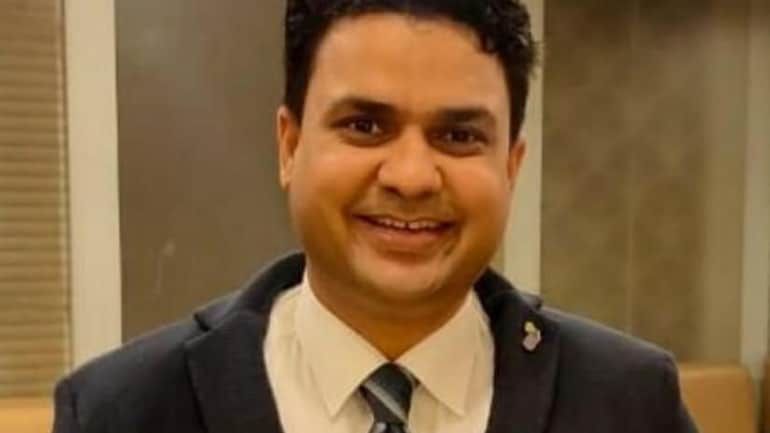
Dr Imran Khan / WhatsAp
Dr. Imran Khan who is currently working as a Professor in the Department of Oral & Maxillofacial Surgery, FOD, JMI has recently published this interesting case report in a U.S based Scientific Journal “Oral & Maxillofacial Surgery Cases” September-2020 edition.
His discovery is about a Novel Anatomical opening in the human lower jaw which generally are referred as Foramen in anatomical/medical terminology. This New opening or foramen has been named as Novel Aberrant Mandibular Angle Foramen (NAMAF).
As per the report published NAMAF was masquerading a fracture in the lower jaw, since no one else has ever reported any foramen in the described area of lower jaw it was only during the surgical procedure itself.
Dr.Imran and his team could identify and record this novel finding. These Foramens in the human body serve as passages through which various blood vessels and nerves supply different structures and organs of the human body.
The published novel report also involves Dr Deborah Sybil (Professor, Faculty of Dentistry, JMI), Dr Mandeep Kaur (Professor & Oral & Maxillofacial Radiologist, Faculty of dentistry, JMI), Dr. Nikhat Mansoor (Professor, Department of Biosciences, JMI), Dr. Ifra iftikhar (Maxillofacial surgeon, New Delhi) Dr Rizwan Khan (Orthopedic Surgeon , Jamia Hamdard) & Dr Shubhangi Premchandani (Trainee Intern, Faculty of Dentistry, JMI).
The Dean, Faculty of Dentistry, JMI Prof(Dr) Sanjay Singh who himself is also a vastly experienced Oral & Maxillofacial Surgeon has congratulated the research team on this novel finding and has expressed his pleasure on this unique discovery.
Prof (Dr) Sanjay Singh said that novel structures like the one reported here will make surgeons more alert to exercise utmost precaution while operating on the prescribed area. It will also help other surgeons & anaesthetists executing precise treatment protocols and avoid unexplained local anaesthesia failures.
The FOD, JMI has been ranked 19th best dental college in the country by the MHRD’s NIRF2020.
source: http://www.jmi.ac.in / Jamia Millia Islamia / Home / Ahmed Azeem , PRO, Media Corodinator / August 10th, 2020
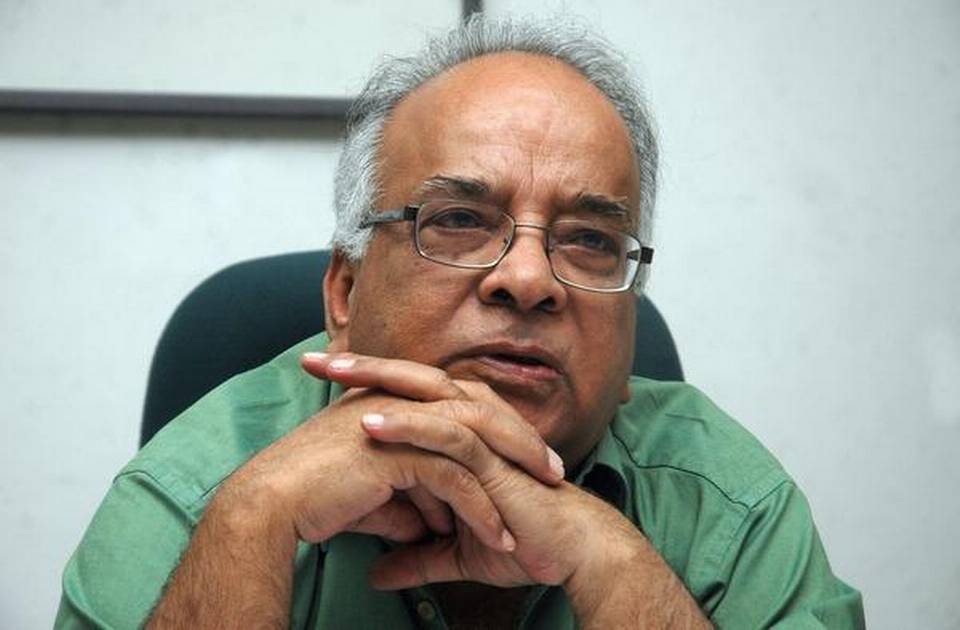
Mushirul Hasan in 2009 | Photo Credit: Sandeep Saxena
Jamia Millia Islamia on Friday announced the establishment of the “Mushirul Hasan Endowment”, through which annual post-doctoral fellowship and two post-graduate merit-cum-means scholarships would be given. An annual seminar on contemporary history, society and politics in India would also be organised.
“As a mark of respect for Professor Mushirul Hasan’s commitment to Jamia Millia Islamia and to the pursuit of academic excellence, Prof. Zoya Hasan — wife of late Prof. Mushirul Hasan, former Vice-Chancellor of Jamia Millia Islamia, wishes to establish a Mushirul Hasan Endowment for which she proposes to donate ₹1.50 crore for the creation of this endowment,” said a university notification.
The principal sum donated would be invested by the university to earn an annual return, which would be spent on the scholarships and the seminar.
source: http://www.thehindu.com / The Hindu / Home> News> National / by Special Correspondent / New Delhi – August 14th, 2020
On the eve of August 15, the Ministry of Home affairs, government of India has announced President’s Police Medals for distinguished service, for meritorious service and for gallantry. Ninety four Jammu and Kashmir police officers and Jawans have been honoured with these medals. The force has been honoured with the highest number of Gallantry medals this year.
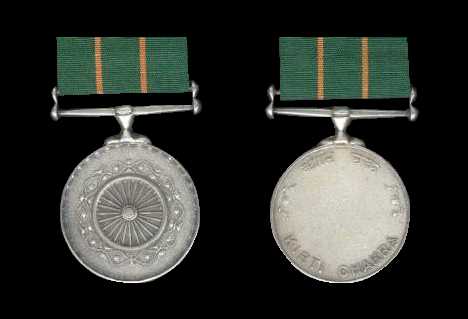
Meanwhile, the Ministry of Defence, Government of India has honoured Head constable Abdul Rashid Kalas with Kirti Chakra (Posthumously) and DIG Amit Kumar with Shaurya Chakra.
Director General of police, Dilbag Singh has congratulated Jammu and Kashmir police officers and personnel who have been awarded different medals by Ministry of Defence and Ministry of Home affairs (Government of India). He has expressed his happiness and pleasure on this feat of officers and personnel of the Jammu and Kashmir police. “Untiring and relentless efforts of the officers and jawans of J&K police have been recognized, the DGP said adding that recognition will go a long way to boost the morale of men and officers of police force. The DGP has also congratulated the martyr and awardees families. He has said that these officers/personnel will continue to serve the nation with the same zeal and zest in future.
Among the 94 awardees, 12 have been awarded with President’s Police medal for meritorious services, one officer has been awarded with President’s Police medal for distinguished service and 81 officers and jawans have been awarded with Police medal for Gallantry.
Those who have been awarded with President’s Police medal formeritorious services are SSsP , Randeep Kumar, Tahir Saleem, Romesh Chander Kotwal, Manoj Kumar Pandit, Inspectors, Vikram Sharma, Manjeet Singh, Shashi Kumar, SIs Ghulam Ahmad, Gulzar Hussain Khan, ASI Suran Singh, HC Smt. Rukhsana Kosar, Sgct. Milap Chand.
Aijaz Rasool Ganie has been awarded with President’s Police medal for distinguished service.
Besides, 81 officers and jawans including DIG, Atul Kumar Goel and DIG V. K Birdi have been awarded with Police medal for Gallantry.
source: http://www.risingkashmir.com / Rising Kashmir / Home / by RK News / August 15th, 2020
Thirty five Delhi Police officers have been conferred police medal for their services during Independence Day celebrations. Out of all, 16 officers were awarded police medal for gallantry, three received president’s police medal for distinguished service and 16 got police medal for meritorious service.
Deputy Commissioner of Police (DCP) Manishi Chandra, Assistant Commissioner of Police (ACP) Govind Sharma, Inspector Vinay Kumar, Inspector Sanjay Gupta, Inspector Rajesh Kumar, Inspector Kailash Singh Bisht, and Dharmendra Kumar, Inspector Ravinder Joshi and Vinod Badola, ASI Shiv Yadav, SI Ajaibeer Singh, SI Devender Singh, Sub-Inspector (SI) Banay Singh and Late Inspector Mohan Chand Sharma (posthumously) have been awarded president’s police medal for gallantry.
Special Commissioner of Police (Intelligence) Rajesh Khurana, ASI Mahesh Singh Yadav and ASI Bhupender Singh have been awarded president’s police medal for distinguished service, while the DCP Amit Roy, DCP Anil Kumar Lall, DCP Mohammad Irshad Haider, ACP Nirmala Devi, ACP kailash Chandra, ACP Rajesh Gaur, ACP Chandra Kanta, Inspector Narender Kumar, Rakesh Kumar and Pramod Kumar, ASI Manju Chauhan, SI Nirmala Devi, ASI Rakesh Kumar Sharma and ASI Sita Ram Yadav, HC Sudhir Kumar and Mukesh Kumar have been conferred police medal for meritorious service.
DCP Manishi Chandra along with Inspector Ravinder Joshi, Inspector Vinod Kumar Badola and SI Banay Singh have been awarded for their bravery while encounter with dreaded criminal Surinder Malik alias Neetu Dabodha on October 24, 2013.
Inspector Mohan Chand Sharma, who was killed during ‘Batla House’ encounter in 2008, has been awarded a police gallantry medal posthumously for the seventh time on the occasion of Independence Day. Inspector Sharma was conferred with Ashok Chakra, India’s highest peacetime gallantry award, in 2009. He was also a part of an operation in Jammu where he and his team confronted JEM militants in 2007.
IPS Rajesh Khurana, recently posted as Special Commissioner of Police (Intelligence), in Delhi, has been awarded president’s police medal for distinguished service. He joined Indian Police Service in 1994 and began his professional career as ACP in Central District, Delhi.
source: http://www.bharatdefencekavach.com / Bharat Defence Kavach / Home> Homeland Security / by IANS / August 15th, 2020
The Railway Ministry statement said that President’s Police Medal for Distinguished Service has been awarded to DB Kasar, Principal Chief Security Commissioner of South Eastern Railway.
A total of 16 officials of Railway Protection Force and Railway Protection Special Force have been awarded the Presidents Police Medal for Distinguished Service and Police Medal for Meritorious Service on the occasion of Independence Day, an official statement said Friday.
The Railway Ministry statement said that President’s Police Medal for Distinguished Service has been awarded to DB Kasar, Principal Chief Security Commissioner of South Eastern Railway.
The President’s Police Medal for Meritorious Service has been awarded to 15 railway officers, including Santosh N Chandran, DIG/R&T, Railway Board; Rajendra Rupnawar, Senior DSC/Northeast Frontier Railway; Sarika Mohan, Senior DSC/ Northern Railway; Shaik Karimullah, Assistant Security Commissioner/South Central Railway; Himanshu Shekhar Jha, Assistant Security Commissioner/Railway Board; and Gurjasbir Singh, Assistant Security Commissioner/ Northern Railway.
Nepal Singh Gurjar, Sub-Inspector/2BN RPSF; AB Rashid Lone, Inspector/6BN RPSF; M Mohammed Rafi, Head Constable/South Western Railway; Shailesh Kumar, Inspector /Northern Railway; Sudhendu Biswas, Assistant Sub-Inspector/ Eastern Railway; Kawal Singh, Sub Inspector/ 2BN RPSF; K Ventateswarlu, Inspector/ South Central Railway; Ashraf Siddiqui, Inspector/ North Eastern Railway; and Surender Kumar, Assistant Sub Inspector/ Northern Railway have been awarded the President’s Police Medal for Meritorious Service.
–IANS
source: http://www.newsd.in / Newsd. / Home> India / by IANS / August 14th, 2020
“Alas, this world was never a companion to anyone; look at the people, the graveyards they have finally landed in.”
These lines from the poetry of Sufi poet, Rajab Hamid, are immortalised in Kashmir’s memory through the famous song Afsoos Dunya, sung in the powerful voice of the famous Ghulam Hassan Sofi. The rendition was recorded under the label, Music Tape Industry (MTI), back in the 1990s when audio cassettes were in vogue.
A small music label, the MTI has produced several songs that have made a mark in Kashmir. Allah Ti Hoo Hoo and Vaadh Sariyo by Gulzar Ahmad Ganie, Madan Waras Bah Pyaras by Abdul Rashid Hafiz, were among the songs that became an instant hit in the Valley.
As folk and sufi music became accessible–Kashmiris no longer needed to wait for these songs to be played on the radio–the demand for these records increased and MTI’s reach spread to several households across the Valley, that was simultaneously in the throes of a deadly conflict.
By the 2000s, the MTI diversified to produce music videos, updating their music styles and changing their formats to cater to the public’s taste and demands. Decades later, its journey has forayed into the online media but MTI doesn’t fail to ring in nostalgia of a bygone Kashmir.
Immortalising Kashmiri music
Zahoor Ahmad Shah started the MTI in 1988, when he was 33-years-old, after a song by sufi singer Abdul Gaffar Kanihami, recorded on a small tape recorder, became a huge success. The MTI, gauging the public response, focussed on the Sufi genre.
Their collection included traditional music forms like chakri, folklore sung by a singer with a hoarse voice and supported by a chorus, and wanvun that is traditionally sung by women at festive occasions like marriages. Over the years, the MTI added more genres and forms.
Among MTI’s songs that were popular with the older generation of Kashmiris were an album based on the poetry of Habba Khatoon, the original soundtrack for a movie of the same name, sung by Jameela Khan and songs like Lala Zula Zaliyo sung by Manzoor Shah–now part of weddings, sung by women performing folk dance for the bride or the groom. The song was also appropriated in a 2018 Bollywood movie set in Kashmir, Laila Majnu.
Over the years, MTI roped in most of Kashmir’s famous artists of the time—such as Ghulam Hassan Sofi, Rashid Hafiz, Manzoor Shah, Wahid Jeelani, Deepali Wattal, among others. “We used to work with the artists of Kashmir as well as with Jammu and Pahadi artists. “We even went to border and hilly areas to find the artists,” said Mr. Shah.
The motive was commercial but to also preserve the traditional music and language of Kashmir though its music. “When people used to listen to songs in different languages, I wanted them to listen to the songs in their own language as well,” said Mr. Shah.
Being the first music label in Kashmir, MTI filled a void and gave the artists of Kashmir a platform to record their own songs and reach a larger audience, making their songs available on-demand for the public and reducing the artist’s dependence on radio.
The devotional music MTI recorded also made Mr. Shah feel closer to divinity. “I miss the vibe of being closer to God while recording the sufi music. The vibe was magical. Also, when we started shooting the videos, we used to live in mountains and woods for days,” said Mr. Zahoor Shah.
Their audience comprised all age groups. “I would buy cassettes and listen to it on a device which would play cassettes,” said Aabid Rah, who was ten-years-old when he started listening to the plethora of MTI songs. “I still love listening to Gulzar Ganie, Rashid Hafiz, Hassan Sofi etcetera on their YouTube channel.”
Gradual downfall
With the emergence of newer technologies, MTI switched to CDs in the late 2000s. However, the emergence of flash drives also meant the label’s gradual downfall. “When we started the label, the market was audio then we had to upgrade according to trend and market demand,” said Shah Umer, son of Mr. Shah, who handles the business now.
Piracy became a global concern and the MTI was no exception. Now, it has become easier for music lovers to access music without paying for it, resulting in losses for MTI. “Our business was doing well but with new formats, it faced a sudden fall and then we decided to change our business,” said Mr. Umer Shah.
The father-son duo still remember the older times and miss the vibe of their studio. “I remember singers coming to our studios for one to two weeks and doing rehearsals for recording the audio. I have really good memories of that studio,” he said, adding that he has seen his father recording music in the studio all his childhood.
Mr. Umer Shah was always fond of music and loved being in the MTI’s studio, then located in Srinagar’s Bemina area, as a child. He started working in the studio when he was sixteen-years-old. “I used to spend all the time in the studio and go there from my school. I wanted to handle MTI so I left studies after passing class 12,” he said.
Slowly, guitar and rabab came together and created a different sound and feel but MTI, said Mr. Zahoor Shah, made music according to the taste of Kashmiris. “We never added spices to it but kept it as real as we could,” he said. “Our business was successful as people loved our content.”
However, for some long time listeners, the MTI had also begun losing its essence. According to Mr. Rah, earlier content was meaningful and “the lyrics went down the drain and MTI started producing anything and everything around 2007-2010. There were no more cassettes and the mixing and mastering was eventually replaced by auto-tune”.
Keeping the name alive
The MTI has reduced its footprint in the market and its outlet is now used to sell electronics. It also lost most of its original recordings in the devastating floods of 2014, the few that were not washed away with the water remain stacked in a corner of the electronics store. “I started a YouTube channel last year to keep the name of MTI alive,” said Mr. Umer Shah.
Besides, the MTI has also tied up with prominent music label T-Series and MTI’s collection till 2010 is available on another YouTube channel, T-series Kashmiri Music, said Mr. Umer Shah.
Their YouTube channel, called MTI Studios, has more than fifteen thousand subscribers, and continues to give Kashmiri artists a label and a platform, featuring new artists like Waseem Shafi, Kaiser Hussain, Zuhaib Bhat, Sanam Basit, and the famous Reshma among others.
On 27 May 2020, amid the lockdown prompted by the coronavirus pandemic, the MTI released, a duet by popular wedding singers Ms. Reshma and Mr. Basit, who shot to popularity after his Kashmiri rendition of Champion, “dedicated to the people depressed due to Covid-19”.
The song is a mashup of Ms. Reshma’s popular wedding song, Hay Hay Wesiyee, and other popular Kashmiri songs. The video’s aesthetic cinematography focuses on Ms. Reshma grooving to the music.
It has been more than three decades and MTI is still trying to keep their name and Kashmiri music alive. “We used to get good responses back then and the responses are still the same but I miss the old times,” said Mr. Shah Umer.
source: http://www.thekashmirwalla.com / The Kashmir Walla / Home> Culture> Music / by Gafira Qadir / July 07th, 2020
Livo develops three products for analysing blood samples
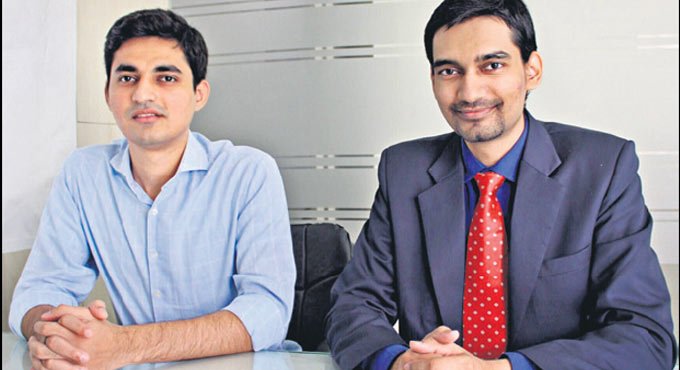
Dr Junaid Shaik (CEO) and Faisal Ahmed Sheikh (CTO) of Livo.
Hyderabad:
To help pathologists get access to high-end devices for their daily blood tests, Hyderabad-based startup Livo has developed three products in this space.
These devices include scanner, smearer and stainer which helps in getting a complete blood picture (CBP). The Livo A-1000 is a pathology scanner that scans the sample and also produces digital reports, thus helping pathologists to work remotely. “The scanner uses machine learning features and super resolution technology and is low priced when compared with the scanners available in the market,” said Dr Junaid Shaik, co-founder, Livo.
In addition, the AutoSmearer (A-700) is a device that is used to collect blood samples and smear to get a morphology report. The other product, Haematology Stainer, helps in staining the sample in to provide microscopy results in 90 seconds.
All the three devices have been developed by the company in-house and have been in the research and development for last two years. “We were planning to launch our product A-700 in April and A-1000 in August. However, due to the pandemic-led lockdown our whole supply chain broke down and we had to postpone our sales. We are getting a lot of interest from doctors and have received 25 pre-orders for A-700 and 11 for A-1000. Recently, we also closed a distribution deal for 800 devices in the South India region,” said Dr Shaik.
The other founders of the company include Faisal Sheikh and Professor Prasanth Kumar, head of mechanical department, IIT-Hyderabad. It recently raised Rs 1 crore from angel investors and industrialists Ravi Reddy, Dr Praveen Kumar and others. It is looking to raise another Rs 5 crore in the coming months which will be used to fund manufacturing of the devices
While moderate rains are very likely to occur at many places, thunderstorm accompanied with lightning will also occur at isolated places.
source: http://www.telanganatoday.com / Telangana Today / Home> Business / by Sruti Venugopal / August 14th, 2020
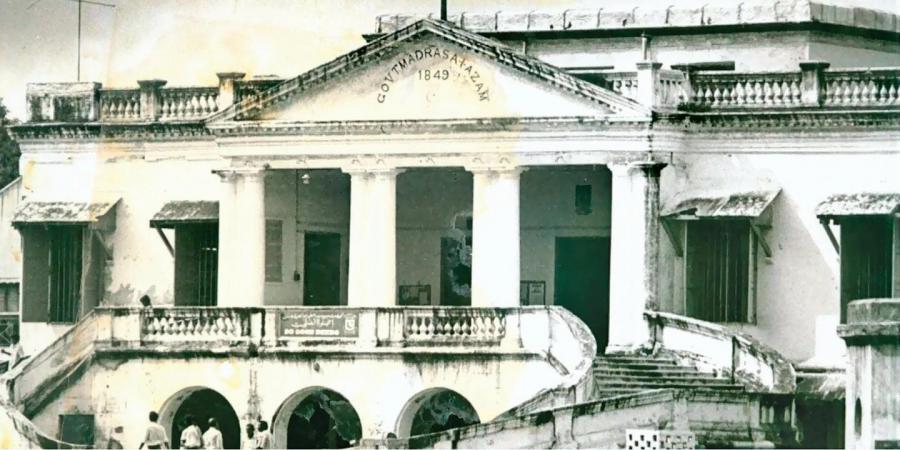
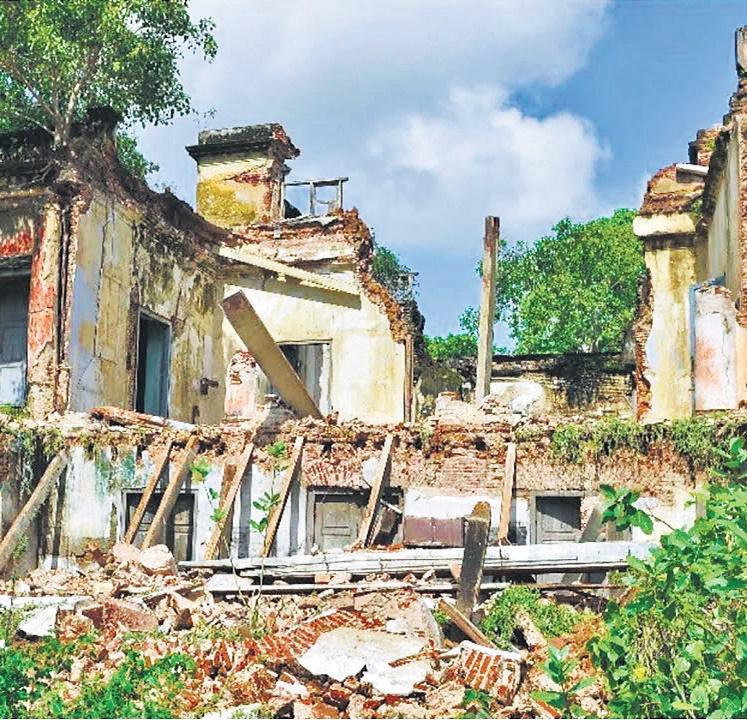
Behind the crumbling facade of the Government Madrasa-e-Azam Higher Secondary School, there is a rich history of academics, and tales of friendship.
The majestic doublewinding staircases that lead to the splendid balcony and upper deck; the steps to the headmaster’s office on the first floor and the huge plaque outside the room, with the history of the structure chiselled on it; the jamun trees in the backyard and the numerous other trees dotting the campus, under which I spent several afternoons — I have fond memories of my school.
Looking at the grandeur of the structure and the greenery, I often used to ponder ‘The seeds for these trees were planted over a century ago…’ It used to feel surreal, it still does. But unfortunately, these very trees are taking over the structure now,” says Sharfu Khan, an alumnus of the Government Madrasa-e-Azam Higher Secondary School, who was also the SSLC topper of the institution in 1992.
The 200-odd-year-old magnificent campus — with a Madras terrace, tiled verandahs, and semicircular arches — spread over 15 acres in the heart of Chennai, used to have over 4,000 students on its rolls. But today, barely 200 schoolboys study at the campus, which was initially owned by Colah Singanna Chetty, a dubash. Since 1816, the building has been acquired by many prominent individuals including Edward Samuel Moorat, an Armenian millionaire; Ghulam Ghouse Khan, the last of the titular Nawabs, after whose death in 1855, the property was passed on to Azim Un Nissa Begum, the nikah wife of the Nawab. According to historian Sriram V, the property, though owned by her, was rented by the principal wife of the Nawab, Khair Un Nissa and became the social epicentre of the Muslim aristocracy in Madras.
“This was where luminaries such as Sir Syed Ahmed Khan, founder of the Aligarh Muslim University, and His Exalted Highness Mir Mahbub Ali Khan Bahadur, the Nizam of Hyderabad, stayed when they visited Madras,” he writes, in When Mercy Seasons Justice, a book on jurist Habibullah Badsha, a prominent alumnus of the school. Today, the historic estate, with corporate offices, heritage buildings like the Taj Connemara and Spencer Plaza, and the buzzing traffic necklacing its perimeter, bears a deserted look, is crumbling under the thick foliage and yet, is resiliently waiting to be restored to its former glory. “Our school used to be the exam centre for schools in and around Triplicane and Mount Road.
Several hockey and sports tournaments used to take place here. It’s been over two decades since I graduated from there, but the memories are still fresh. I very recently became acquainted with an old friend, a batchmate from the Madrasa and we are hoping to pay a visit to the school or at least what’s left of it once the COVID-19 situation eases,” shares Sharfu.
A modern transformation
When the British took control of all the properties of the Nawab, Edward Balfour, an agent of the East India Company in the court of the Nawab of Carnatic, persuaded the Nawab to transform the family’s Madrasa into a modern school. He suggested it could be called the Madrasa-e-Azam, after his father Nawab Azam Jah, who had first favoured a proposal by Balfour. “As early as 1846, the first proposal was sent to the government regarding the starting of a school for the orphaned children of Carnatic territories. The proposal materialised, and the school was soon started.
At that time, there were only three teachers,” says Ashmitha Athreya of Madras Inherited, about the institution, which until 1849 was functioning at Chepauk, before moving to its current premises. Historians Kombai Anwar and Venkatesh Ramakrishnan, while sharing glimpses of the structure’s early glory, also note that much before Muslim institutions in north India took up modern education, this school introduced the study of English, Tamil and Telugu besides Arabic, Persian and Urdu. Abdul Jabbar Suhail, son of Habibullah Badsha recalling the anecdotes shared by his father about his days at the Madrasa, tells us that his father “had an enriching experience at the school.
My father studied at the Madrasa-e-Azam during the 1940s, at the time of World War II. For someone who until then had studied in an Anglo-Indian establishment, the change was stark. But, on the persuasion of his maternal grandfather, he enrolled at the Madrasa. Despite there being issues like inadequate staff members, I remember my father telling me that he had a good time there.
He did very well in school. And as far as sports was concerned, the school was a powerhouse and produced stalwarts including Muneer Sait, Abdul Jabbar, Badiuddin and Mohamed Ghouse. Muneer even went on to represent India in the Olympics in hockey. Father was in touch with most of his friends from school till his final days…he loved the place,” he shares.
Mohammud Karim, Zeeshan Bismil, Basha Shareef and several other alumni, who are now spread across the globe, tell CE that they miss the campus for all that it has given them. “A common thread of sadness has now tied us together. After the 1970s, I never visited the school. I didn’t know of its condition. Recently, I came across a few pictures and I was crushed to look at its current plight. I hope the government takes steps to preserve the building,” shares 67-year-old Karim, who currently lives in the US.
An appeal
In 2017, if the government had had its way, the collapsing building, would have perhaps hosted grand weddings at its age-old premises instead of conducting classes. But thanks to the voice of the city’s heritage enthusiasts and alumni, a division bench of the Madras High Court announced that the building shall not be demolished until further orders. But with growing apathy and neglect, its future remains uncertain. In an appeal to the government, Prince of Arcot, Nawab Mohammed Abdul Ali tells CE, “The Madrasa- e-Azam was founded by my ancestors for the primary purpose of providing education to children from Muslim communities and other minority communities.
After it was handed over to the British, from being an exclusive Urdu medium school, it also included English in its curriculum. Over the decades, the quality of education and the standard has been very minimal. Several parts of the structure have collapsed and as a result, the student strength has also alarmingly dwindled. As the Prince of Arcot, the direct descendent of the founders of the Madrasa, I appeal to the government to hand over the management and administration to us.
I do not ask for the ownership but only the administration wherein, under the Prince of Arcot endowments, we can take care of the structure, and provide quality education. We will not only keep the legacy of our ancestors alive but will also be enabling the conservation of the original vision and mission of the Madrasa — to provide education,” he says.
SLICE OF HISTORY
Balfour, the government agent at Chepauk, and Garstin, his predecessor, framed the rules for the administration of the school. With the establishment of the school, the Nawab also had in mind a secular education that would help the Muslims to secure employment in government service.
The main aim of establishing the school was that it would be a means of encouragement to the students to educate themselves and be fully qualified and competent for getting their livelihood by being employed in public offices, after obtaining certificates of proficiency at a final public exam.
The Diwan Khana of Firuz Hussain Khan Bahadur, principal-agent of the Begum Khair Un Nissa, became the residence of the school principal.
A mosque was built on the campus in 1909. In the same compound, the Government Mohammedan College was set up in 1919.
Source: Madras Inherited and ‘When Mercy Seasons Justice’
source: http://www.newindianexpress.com / The New Indian Express / Home> Cities> Chennai / by Roshne Balasubramanian / Express News Service / August 05th, 2020
Muslims formed the human chain to show they are ‘here for all’, but, at the same time, say they cannot tolerate insult to Prophet Mohammed and are seeking justice for it.
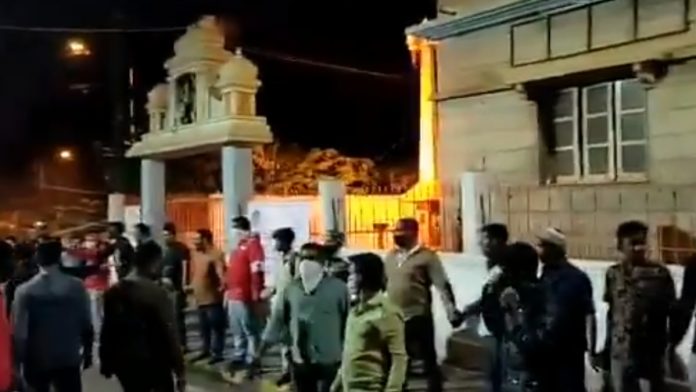
Muslims form human chain to save a temple from rioters in Bengaluru | Videograb | Twitter
Bengaluru:
A viral video showing Muslim youth forming a human chain to guard a temple during the violence that erupted in Bengaluru Tuesday night has emerged on social media.
The video shows young men holding hands and ensuring that rioters didn’t attack the temple located in Pulakeshinagar.
A group of Muslim youth gathered and formed a human chain around a temple in DJ Halli police station limits of Bengaluru city late last night, to protect it from arsonists after violence erupted in the area. (Video source: DJ Halli local)
____________________
In the video, one can hear people appealing to the protesters and saying — “For God’s sake… Please stay away from here.”
Two areas, D.J. Halli and K.G. Halli, in the Pulakeshinagar limits of Bengaluru saw widespread violence as an angry mob went on a rampage to protest against a Facebook post, allegedly put up by P. Naveen, nephew of Pulakeshinagar MLA Akhanda Srinivasa Murthy of the Congress.
Three people were killed and as many grievously injured after the Bengaluru Police opened fire to control the riots.
“We have formed this chain to show how we are here for all, but again we do not accept those who are trying to force RSS ideologies on people,” said one of the men who formed the human chain.
“We all live as brothers and sisters. We do not have anything against any religion. We are not fighting against any individual or any caste or community. We are only seeking justice as the nephew of MLA Srinivas Murthy has insulted our Nabi (Prophet Mohammed). We can not tolerate that.
“This has happened several times earlier. We respect this temple, we respect Hindus. But we are fighting against those who have extremist views against us,” he added.
A local vendor, Yasir, whose family has been running a grocery store for three generations in the D.J. Halli area, said: “It (the post) hurt our sentiments, but we condemn those who resorted to burning vehicles and attacking others.”
Meanwhile, police said Naveen has been arrested. This apart, 160 people have been arrested for indulging in arson.
Rizwan Arshad, MLA of Shivajinagar, which is adjacent to Pulakeshinagar, told ThePrint he was proud to see such acts of kindness.
“We are so proud of our brothers, who think of such acts of kindness even during such testing times. They told me that they stand for peace and unity, and they will try and ensure such incidents do not recur,” he added.
Congress MP Shashi Tharoor tweeted that the rioters should not be equated with an entire community.
“Those who incited and perpetrated the #bangaloreriots must be found, arrested & given exemplary punishment. But they are not to be equated with an entire community any more than thugs & vigilantes represent all Hindus. This also happened in Bangalore.”
Those who incited and perpetrated the #bangaloreriots must be found, arrested & given exemplary punishment. But they are not to be equated with an entire community any more than thugs & vigilantes represent all Hindus. This also happened in Bangalore:
___________________
𝗠𝘂𝗵𝗮𝗺𝗺𝗮𝗱 𝗡𝘂𝗮𝗺𝗺𝗶𝗿
( نُعَمِّرْ )@iam_nuammirThat’s the beauty of India Muslims created human chain to guard a Temple in #Bengaluru during violence. Stay calm make peace #BengaluruViolence https://twitter.com/ZakiyakINC/status/1293284847687880704video/1
___________________
source: http://www.theprint.in / The Print / Home> India / by Rohini Swamy / August 12th, 2020
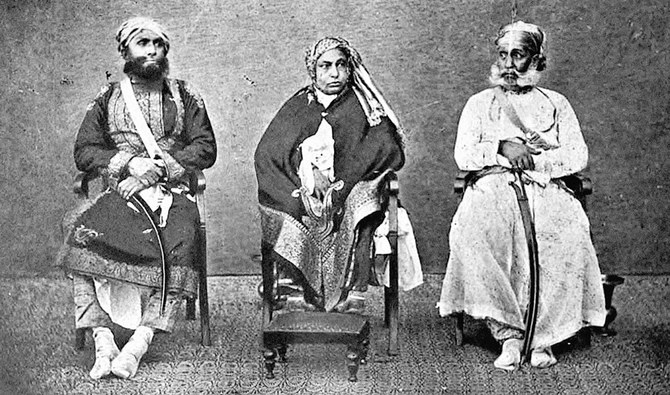
Sikandar Begum with her prime minister, left, and second minister. The photo was published in “A Pilgrimage to Mecca” (1870). (The Asiatic Society of Bombay via AN)
One of the most interesting aspects of Sikandar Begum’s account is her open criticism of Ottoman governance in Makkah
Imprecise library records obscured access to the original Urdu manuscript for decades
Warsaw :
History recently came to life in a manuscript with royal stamps discovered in the archives of SOAS University of London. The historic find? A tantalizing insight into the journey of the first ruler from the Indian subcontinent to set out for Hajj.
In November 1863, the ruler of the princely state of Bhopal, Sikandar Begum, began the sacred pilgrimage many other sovereigns of her time could not make for fear of losing power — in the 19th century, sea travel from India to Makkah meant long months of absence from the throne. Unlike them, Sikandar was safe. Her Hajj included a mission to compile a travelogue for those who guaranteed her reign.
Bhopal had gained independence from the declining Mughal Empire under Dost Mohammad Khan, a Pashtun warrior who, in the early 18th century, founded the Muslim state in today’s Madhya Pradesh. Under British rule, for more than a century the country was led by four women. Sikandar, who ruled from 1844 to 1868, was the most reform-oriented of them. She reorganized the army, appointed a consultative assembly and invested in free education for girls. She was also the first Indian ruler to replace Persian with vernacular Urdu as the official language.
In late January, SOAS librarians came across a title recorded in their archives’ catalogue as “‘Journal of a trip to Mecca’ by Skandar Baigam, Ra’isah’ of Bhopal. Bound manuscript in Urdu. Written at the suggestion of Major-General Sir Henry Marion Durand, 1883.”
“I was really intrigued that such a beautifully bound-in-silk manuscript with obvious royal stamps in its colophon could be linked to such an opaque and short library record,” SOAS Special Collections curator Dominique Akhoun-Schwarb told Arab News.
“It quickly became obvious that there was a bit more story and depth behind the note ‘written at the suggestion of Major-General Sir Henry Durand,’ when the author was a queen herself, a pioneer, since she was the first Indian ruler to have performed the Hajj and authored an account of her pilgrimage.”
The imprecise note had for decades obscured access to the text for researchers. A deformed transliteration of Sikandar’s name had compounded the issue.
Until the chance discovery a few months ago, all scholarship on the Bhopal ruler’s pilgrimage had to rely on two translations of the text as the original Urdu version had been missing for some 150 years. One was the abridgment of Sikandar’s account in Persian, compiled by her daughter, Shah Jahan Begum. The other one, “A Pilgrimage to Mecca, was an English translation by Emma Laura Willoughby-Osborne, wife of a British political agent in Bhopal, which was published in 1870, two years after Sikandar’s death. The two texts are quite different.
In the English version, Sikandar quotes a letter she received from Durand, the British colonial administrator mentioned in the SOAS record, and his wife: “He was anxious to hear what my impressions of Arabia generally, and of Mecca, in particular, might be. I replied that when I returned to Bhopal from the pilgrimage, I would comply with their request, and the present narrative is the result of that promise.”
The letter is nowhere to be found in the Persian text.
A preliminary reading by Arab News of the Urdu manuscript, which has been digitized by SOAS, reveals that Durand’s letter is mentioned in the very first pages of the text. The correspondence and accuracy of other parts, however, are not immediately obvious.
In the preface to “A Pilgrimage to Mecca,” Osborne said that the Urdu manuscript consisted of “rough notes” demanding some arrangement. According to Dr. Piotr Bachtin, from the Department of Iranian Studies of the University of Warsaw, who studied female pilgrimage of the era and translated the Persian version of Sikandar’s account, the English translator’s note immediately raises questions regarding Osborne’s interference in the text.
Osborne’s assurance that the only license she had allowed herself had been the “occasional transposition of a paragraph” seems to be an understatement. It appears that the text was heavily edited. Bachtin suggested that Sikandar might have been a “reporter” entrusted with a specific task and became an “incidental informer” in the service of the British Empire.
The most interesting aspect of the travelogue, which the manuscript may verify, was Sikandar’s political involvement with and open criticism of Ottoman governance in Makkah. One of the most prominent instances of Sikandar’s criticism is the following:
“The Sultan of Turkey gives thirty lakhs of rupees a year for the expenses incurred in keeping up the holy places at Mecca and Medina. But there is neither cleanliness in the city, nor are there any good arrangements made within the precincts of the shrines,” Sikandar wrote, adding that had the money been given to her, she would have made arrangements for a state of order and cleanliness. “I, in a few days, would effect a complete reformation!”
Sikandar’s political commentary is completely missing from the Persian version of her text. “Only in the English translation did she openly criticize both the Pasha and the Sharif of Makkah, going as far as to say that she would have managed Makkah better herself!” Bachtin said, “However, we must remember that her book was commissioned by Sir Henry Marion Durand. For me, this paradoxical dynamic is particularly interesting.”
With the original manuscript now available to researchers, further study should soon reveal how much of the Hajj account was informed by the colonial circumstances Sikandar faced at home, and to what extent it was guided by her own ambitions to be a modern and reformist Muslim ruler.
source: http://www.arabnews.com /Arab News / Home> Latest News> Middle East / by Natalia Laskowska / August 02nd, 2020