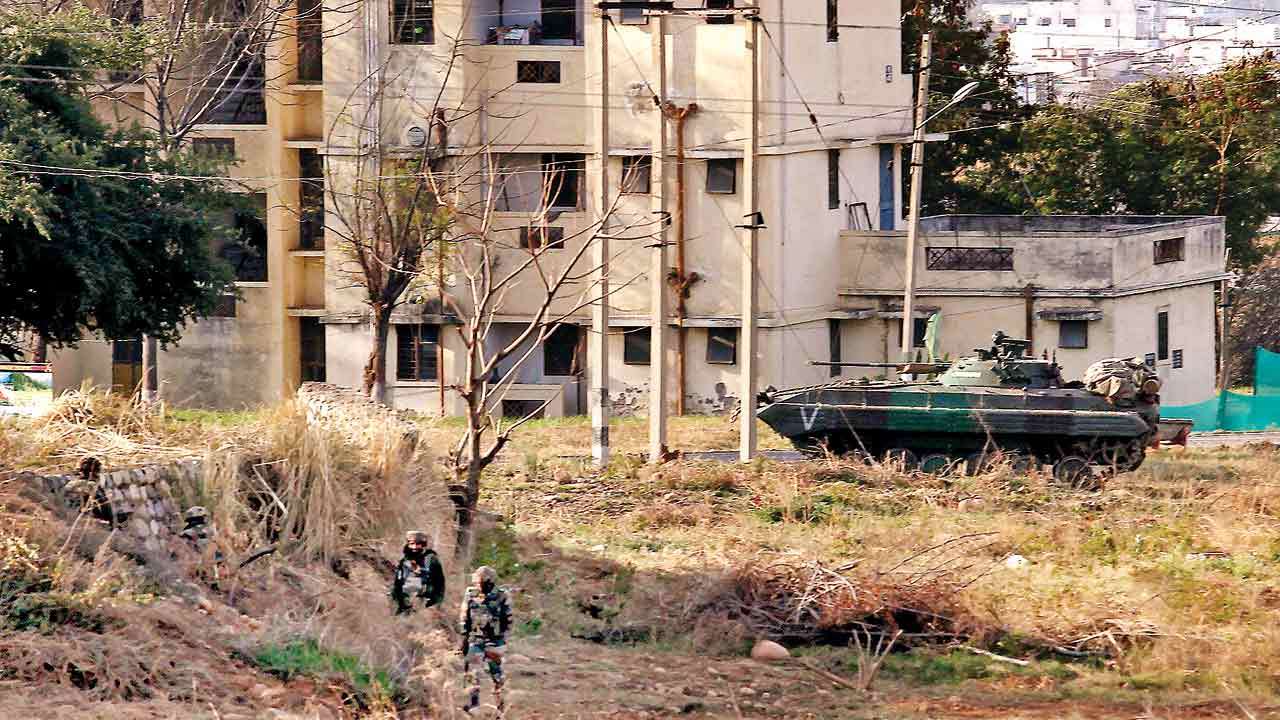
Soldiers take positions outside the residential quarters on the second day of the attack at Sunjuwan Army camp in Jammu on Sunday , AFP
The death toll in Saturday’s fidayeen attack carried out by JeM terrorists on an Army camp in Jammu’s Sunjuwan climbed to six after three more soldiers were found dead, while the body of a slain Lance Naik’s father was recovered on Sunday.
Security forces also reportedly killed a fourth terrorist on Sunday, as Army Chief Bipin Rawat reviewed security with his top commanders in Jammu. On Saturday, two soldiers had been reported dead.
Ten soldiers, including a Lieutenant Colonel and a Major, have been wounded in the strike. A National Investigation Agency (NIA) team also reached Sunjwan on Sunday to take stock of the situation.
Lieutenant Colonel Devender Anand, Defence Spokesperson at Jammu, said the bodies of one Junior Commissioned Officer (JCO), two jawans and a soldier’s father were recovered by Indian Army commandos from residential quarters. All of them were killed by the terrorists in initial stages of the attack on Saturday.
“So far, six fatal casualties have occurred. They include two JCOs, three jawans and one civilian dependent — all residents of Jammu and Kashmir. In addition, 10 people have been injured, of whom six are women and children. They include one pregnant lady. A 14-year-old boy with gunshot wounds in the head remains critical”, said Lieutenant Colonel Anand.
The slain soldiers have been identified as Subaidar Madan Lal, Subaidar MohommadAshraf Mir, Havaldar Habibullah Qureshi, Naik Manzoor Ahmad and Lance Naik MohammadIqbal — all from the First Jammu and Kashmir Light Infantry (JAKLI). The slain civilian has been identified as Ghulam Mohi-ud-din Sheikh, the father of Lance Naik Iqbal.
The injured officers have been identified as Lieutenant Colonel Rohit Solanki and Major Avijit Singh — both from the Sixth Mahar Regiment.
The gunfight has ended, but Army troops are busy in combing operations to sanitise the area before formally calling it off. “Sanitisation and search operations are continuing”, said Lieutenant Colonel Anand.
The Indian Army confirmed the death of only three fidayeens in the operation so far. “The third terrorist was also found wearing Army combat dress and was heavily armed, like the other two killed previously. Arms and ammunition have been recovered from them”, said Lieutenant Colonel Anand
Heavily armed fidayeens of Jaish-e-Mohammad’s Afzal Guru Squad (AGS), donning combat fatigues, had stormed the 36 Brigade Headquarters of the Army and took shelter in residential blocks meant for JCOs at Sunjuwan in the Jammu division on Saturday morning.
Most of the 150 houses were cleared and occupants moved to safer places. Special forces were also flown to Jammu to help flush out militants.
Rawat flew to Jammu on Saturday evening to take stock of the situation. He reviewed the security situation with his top commanders who briefed him about the operation.
Sources said the General was given a detailed briefing about the attack and the operation launched by the forces to flush out the militants.
source: http://www.dnaindia.com / DNA / Home> India / by Ishfaq-Ul-Hassan / February 12th, 2018
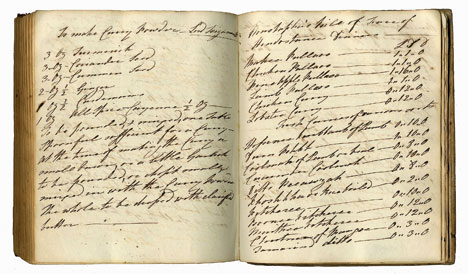
RICH DIET: A handwritten cookery manuscript containing a glimpse of the menu from England’s first Indian restaurant has sold for $11,344 (Rs 7.6 lakh) at a London book fair.
It refers to dishes like “pineapple pullaoo” and “chicken currey” from the Hindoostane Dinner and Hooka Smoking Club, opened in 1809 at Portman Square, London, by Sake Dean Mahomed, whose roots lay in Bihar.
“This is the first known record of a priced menu from Britain’s first Indian restaurant – at a time when printed menus were rarely available,” said Brian Lake of Jarndyce Antiquarian Booksellers in London, which sold the volume at the ABA Rare Book Fair to an American institution last month.
The manuscript, titled Receipt Book 1786 on the front, also contains handwritten recipes and receipts. It includes a two-page “bill of fare” from Hindoostane, listing 25 Indian dishes with prices.
These include makee pullaoo (1.1.0 pounds), pineapple pullaoo (1.16.0 pounds), chicken currey (0.12.0 pounds), lobster curry (0.12.0 pounds), coolmah of lamb or veal (0.8.0 pounds), together with breads, chutneys and other dishes.
It ends by noting that there are “various other dishes too numerous for insertion”.
Towards the end is a recipe “to make a curry powder”, attributed to Lord Teignmouth (1751-1834), who was governor-general of Bengal between 1793 and 1797 and later became a patron of Mahomed’s restaurant.
Mahomed went bankrupt in 1812, and the eatery struggled on as Hindostanee Coffee House under a new management before disappearing in 1833.
source: http://www.telegraphindia.com / The Telegraph,Calcutta,India / Home> India / PTI / June 04th, 2018
Nawabuddin, the oldest town crier of Delhi’s Walled City, roams the streets at night during Ramzan to wake devotees for the pre-dawn meal and to reconnect with his neighbours and the community
It’s 2:30 am in Old Delhi’s Sheesh Mahal area, a cricket match in being played to an audience looking out from their balconies. Further away, young men on motorbikes, a flea market and food stalls hum away. For Nawabuddin, 75, or ‘Peer ji’ to do his job as a town crier—of waking people up for sehri in the month of Ramzan— he must remain oblivious to the fact that the Walled City is actually awake. (Burhaan Kinu / HT Photo)
At 2.30 am, more than two dozen two-wheelers have been pushed aside to make space for a cricket match being played under halogen floodlights in a boundaried compound in Old Delhi’s Sheesh Mahal area. Its audience: women from balconies of cramped flats overlooking the compound. And some street dogs. The match will continue for the next one hour but break as the boys retreat for sehri (pre-dawn meal) followed by namaaz.
Nawabuddin, 75, or ‘Peer ji’ doesn’t intend to acknowledge the game, or the young men performing stunts on motorbikes in the next street, the overcrowded tea stalls, or the flea market that is still serving its last customers.
For him to do his job as a town crier— that of waking people up for sehri in the month of Ramzan— he has to indulge in a minor self-delusion, be oblivious to the fact that the Walled City is actually awake.
Wearing a white pathani suit, skull cap and a keffiyeh spread across his left shoulder, all Peer ji can see in the darkness is a maze of match-box like buildings. He limps to each structure, carrying a wooden stick which he lifts to bang on the doors. “Rozedarooo, uth jao (Those fasting, awake),” his hoarse, throaty call encircles the street.
Peer ji is perhaps the last generation of Old Delhi’s town criers. Intrinsic to Muslim culture around the world, people like him are known by various titles –– Nafar (in Morocco), Musarati ( Egypt), Hil hiwai (UAE) and Seher Khan (Srinagar). In most of these regions, they roam the neighbourhood donning traditional attire, blowing trumpets or beating drums to draw people’s attention. In Delhi’s Walled City, they don’t have any such name and they don’t carry musical instruments.
Peer ji knows the occupants of most houses by name or profession. “Doctor sahab”…“Master ji”… “Vakeel sahab,” he calls out. Standing beneath tenements in closed alleys, he positions himself in certain areas that are most likely to echo his call, rather than go to each house.
Who is awake at this hour? “The men are either in deep sleep or are idling away their time when I do the rounds. It is the women who usually pray at this time,” he says, making his way through the labyrinth of passages. Men hardly respond to his call, he says. But those who do, are usually not welcoming. “You don’t have to be so loud. Kids are sleeping,” shouts back a voice, leaving Peer ji despondent for a moment.
Around 3.30 am, when he is done with the rounds, Peer ji is back at his house for sehri. (Burhaan Kinu/HT PHOTO)
“That was Rameez tailor’s son. As a child, he used to be very fond of me. Now he is all grown up and talks back to me. Perhaps he didn’t get adequate sleep,” says Peer ji with a grimace, murmuring to himself. By 2:45 am, he breaks for a quick tea at a makeshift shop. He notices that someone is pulling his shirt. It’s a little boy. “Aap uthane waaley hain na? (You wake people up, don’t you?),” he inquires. “Yes, my son,” says Peer ji, happy with the recognition. “Everyone in the locality knows me. No other profession would have given me such popularity,” he says. Those who acknowledge his efforts, reward him with cash and delicacies on Eid.
Mahtab Rahi, Peer ji’s neighbour, greets him next. “I have seen him since my childhood. Every passing year, the job of people like him become irrelevant. Still, undeterred by such factors, he is offering his service in a selfless manner. It is unfortunate that we don’t value him as much as we should,” says Rahi.
Peer ji’s job begins at 2 am, but he hardly sleeps post dinner. He spends his time at a neighbourhood mobile recharge shop. After midnight, he goes home for tea, and collects his stick and torch before leaving.
BECOMING PEER JI
Peer ji faces no competition, compared to 40 years ago, when he first began to volunteer for the task. Every Muslim neighbourhood used to have one man designated for this duty. There are, at present, only three left in Old Delhi.
At night, Peer ji would encounter various groups of hymn singers carrying lanterns; each group visited a different locality each day. They are not found anymore. “While the neighbourhood people would tip me only on Eid, the singers were paid each time they ventured out. Now they are a rare sight. Most of them have died,” he says.
As a young lad, Peer ji would spend time with his uncle who was a peer or spiritual guide to many in the neighbourhood. (The family association got him the title, Peer Ji.) He was a 20-year-old vegetable vendor when Mohammad Umar, the town crier in his locality, died. People requested him to carry forward the responsibility because he would be awake early in the morning due to his trade. None of his three sons are inclined to take up the job after him.
“It is alright. Today, people want to invest their time and energy only when they see monetary returns. People of my generation did a lot of things simply for sawaab (spiritual reward),” he says. He says he never pushed his sons though. “This task has its own complexities. One may encounter thieves on the streets. One also has to be wary of households in which only women live and consider their privacy. I don’t want my sons to land in trouble,” he says. Although the job seems simple, the town crier does follow a protocol. For instance, Peer ji waits beneath the house of heavy sleepers, till they respond to his call. He has to ensure not to intrude into another town crier’s area. And he never calls out the names of those who are dead even if theirs was the name he would call out earlier. “You never know, family members may get emotional,” he explains.
To make sure that he does not miss his duty, he avoids consuming oily snacks and chilled water, during Ramzan. Around five years ago, during Ramzan, he had a sore throat, so he took his son-in-law with him for the rounds so that he could call out.
By 3.15 am, having covered multiple lanes on more than a 2- km-long stretch, Peer ji heads back home. His wife and sons await him with the sehri platter — buff curry, rusk and tea.
Peer ji is well aware that every passing year, with people using clocks and mobile phones to set alarms, his job is becoming obsolete. “They will realise my importance once I am gone. Yahi duniya ka dastoor hai (This is the way of the world),” he says. It is time for the morning prayers. From the neighbourhood mosque, the muezzin is calling.
source: http://www.hindustantimes.com / Hindustan Times / Home> Lifestyle> Art and Culture / by Danish Raza, Hindustan Times / June 04th, 2018
In Odisha, Rumana Jafri who was born and brought up in Bhubaneshwar is working tirelessly for the service of others.
Rumana Jafri happens to be the first female and the 46th Block Development Officer, at Madanpur Rampur, at Kalahandi district in Odisha. She has taken it upon herself to work towards the betterment of the region, and its people.
Born and brought up in Bhubaneshwar, she topped her Class 12, and graduation exams. She appeared for the civil services exams and even taught students who aspired to be in the service. She cleared the Odisha Administrative Services exams, and is a 2015 batch cadre.
Barely a month since she took office, but Rumana Jafri has been tirelessly working for the upliftment of others, in Odisha.Image Credit: Partha
It all started within a week of her joining office when she decided to remodel the grievance procedure of her block. She decided to appoint a grievance redressal coordinator, who registered any complaints of the people. Within eight days, the complainants would get the status of their grievances/applications. Time, money and energy were saved, as the public was prevented from making repeated trips to the block office, only to be harassed by middle-aged men.
But Rumana Jafri did not stop there. Her true moment came, when an elderly woman in a remote village in Madanpur Rampur, required assistance. Her land encroached, the poor lady was distressed. Rumana Jafri attended to the lady herself, at midnight, and arranged for an ambulance to shift her to the district hospital around 60 kms away.
This was the first time any BDO from Madanpur Rampur, had visited a patient, that too at such a late hour. Further, it was a Sunday, so the officer even succeeded in breaking the myth that there is no work on Sundays for civil servants.
For Odisha’s Rumana Jafri, no hour is too late, when it comes to helping those who need it.Image Credit: Partha
The OAS Officer has been braving issues that come her way, unwilling to back down, and continuously working 24X7 for the betterment of the people. According to her, it is never the question of a working or a non-working day, as every day is a day of performing your duty.
She has made sure all the complaints are taken down in writing, so accountability and transparency are maintained constantly. This ensured that not only were the complaints noted, but they were also resolved, and followed up.
It is indeed commendable, because Rumana Jafri has been in office for just a month, but is bent on giving her best and pushing the barrier for good work.
Madanpur Rampur, in Kalahandi, is lucky to have an OAS officer who actively looks after the needs of people, placing them before any personal priorities.
Edited by Shruti Singhal.
source: http://www.thebetterindia.com / The Better India / Home> Civil Services> Inspirational> Odisha> Women / by Rayomand Engineer / June 06th, 2018
In the heart of Hazratganj, at the cut which turns into Lalbagh, stands a large bank. The cars and two-wheelers parked there spill onto the road. There are vendors, mechanics, and just people waiting to go back into the bank when the clerk beckons them. The atmosphere looks like any bland public sector office.
However, a few steps into the compound will lead you to a large colonial-era house. The exterior is yellowing, the plaster is coming off but the sheen of its wooden door frames is intact. The windows, too, retain the same glass, broken at several places but reflecting, literally, the charm of what the house must have seen through the years.
Called No. 2 Mall Road by the family that lived there and generations after it, the house did not belong to ordinary people. It was the abode of one of the finest writers Lucknow has produced.
Author Attia Hosain was born in that house in 1913 and lived there for the first 19 years of her life. Traces of the house are found in her only but much acclaimed novel, ‘Sunlight on a Broken Column’. It is also part of the Masters’ in English syllabus at Delhi University.
“The front part was my grandfather’s domain — a big study filled with books. Here he entertained visitors. The rear part of the house was my grandmother’s domain. Behind the house was a garden. There was a second house, called the small house, but in fact two stories high, and each of the children had their own rooms,” says Shama Habibullah, Attia’s daughter, now 75 years old. She is a filmmaker and lives in Mumbai. She spent a large part of her childhood there.
The house was sold to government in 1956. Attia’s older brother sold it because zamindari was abolished and no one had the means to maintain a house of that size. Besides, he was nominated for foreign service and had to leave India. “No matter how much we miss it, at that time, selling the house was the best solution and it was the right thing to do,” says Shama.
Eighty-six year-old Shahid Mushir Kidwai was born in No. 2 Mall Road in 1929. “I lived there for the first 10 years of his life. I used to go to La Martiniere College from there,” says Kidwai, the son of Attia’s eldest sister. Attia khala is special to him. “She loved me dearly. When my mother was carrying me, she felt it would be a daughter but Attia khala said she would have a son. When I was born, Attia khala was delighted.”
Kidwai vividly remembers Attia’s wedding in 1933. “Her husband Ali Bahadur Habibullah’s family lived across the street in Hazratganj. He was my aunt’s son. We used to have lot of fun running across both houses. It was a beautiful wedding.” Many characters in Attia’s stories are people Kidwai saw in his childhood. “From a servant we had to a pet dog, many have figured in her stories on some form or the other,” he says. Not only the family, but several homeless and destitute people lived in that house, that had exquisite Carrara marble floors. “After it was sold, whenever my mother, her siblings or their children passed by that side in Ganj, they never looked at the house. Such was the pain of losing it,” he says. “It is a period piece. It could have been a heritage building. Now, there is a garbage heap in front of it. People spit against the walls. It is sad,” says a family member.
Attia left India in 1947 when her husband was sent on an assignment to England. However, they never knew they wouldn’t come back. “The Partition of India was a major setback to her. She was distraught. She didn’t want to see the pain of partition in India. Hence, she stayed in Britain.
But Lucknow never left her,” says Shama. There is a poem, The City, by CP Cavafy. That best describes her bond with Lucknow, she says. The memories of Lucknow that Attia instilled in Shama are what brought Shama back to India. In the 1990s, when she was not in the best of heath, there were restrictions on her food. However, during a trip to Lucknow, she asked for kebabs and they did her no harm. Instead, she gained healthy weight and felt much better. “It wasn’t disease but the atmosphere that made her unwell. The atmosphere of Lucknow cured her,” says a member of the family.
Attia died in January 1998 in England.
In 2013, Shama and her brother filmmaker Waris Husein organized a small function to mark her centenary year. That was their last visit to Lucknow. There were films, book readings and recordings at the event. About the house, Shama says, “The house is a symbol of a Lucknow kept alive only in writings and memories. Attia took these memories to the world. She made the story of her displacement a story of everyone else.”
Attia’s works Phoenix Fled, 1953 Sunlight on a Broken Column, 1961 Cooking the Indian Way, 1967 Distant Traveller: New and Selected Fiction, 2013 (Chapters from an unfinished novel and unpublished stories)
The last work The last literary piece Attia created was not written but recorded by her. It was for a compilation called “Voices of the Crossing”. It was about the impact of Britain on writers from Asia. Due to ill-heath and failing eyesight, Attia recorded the chapter “Deep Roots” and it was transcribed and printed in big fonts for her to verify. She spoke of Partition in it. “This can be termed her last work,” says Shama
Shakespearean Urdu at BBC Attia was a born actor, Shama says. Working for the Urdu Service of BBC in England, Attia was once playing Lady Macbeth. The iconic dagger scene, Shama says, is one she can never forget. “Khoon, khoon”, she went. This was Shakespearean Urdu I was listening to on BBC.” She adds in the same breath that it was unfortunate that AIR, in 1995, could not record her when she visited Lucknow. “My mother and I went to AIR for a possible recording show but they said their tape recorder wasn’t working!”
source: http://www.timesofindia.indiatimes.com / The Times of India / Home> News> City News> Lucknow News / TNN / January 17th, 2016
He was the only one from Congress elected from this region
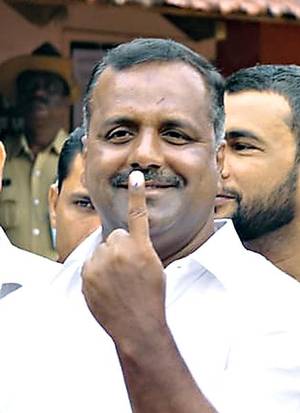
Undivided Dakshina Kannada, which had elected just one Congress MLA from out of the 13 constituencies, got a Cabinet berth in U.T. Khader, when he was sworn in Minister in the H.D. Kumaraswamy-led Janata Dal(S)-Congress coalition government in Bengaluru on Wednesday.
A fourth-term MLA representing Mangaluru (formerly Ullal), Mr. Khader had been a Minister in the erstwhile Siddaramaiah government, initially holding Health and Family Welfare portfolio, followed by Food and Civil Supplies Ministry. Seen as being close to Congress president Rahul Gandhi, Mr. Khader had earned a name as a Minister in both the departments.
While the BJP swept the entire southern coast riding the Hindutva-Modi wave in the May 12 elections to the Legislative Assembly, Mr. Khader held on to his turf thereby providing a saving grace to the erstwhile ruling party. He defeated BJP’s Santosh Kumar Rai Boliyaru with a margin of 19,739 votes. He had won the 2013 Assembly elections with a margin of 29,111 votes.
Mr. Khader entered the Legislative Assembly in 2007 when by-elections were held for Ullal after the death of his father and MLA U.T. Farid. Thereafter, he registered victories in successive elections in 2008, 2013 and 2018.
While Mr. Khader has the responsibility of ensuring orderly development of his constituency which is getting urbanised very fast due to its proximity to Mangaluru, the Ministerial berth has added to his responsibilities.
source: http://www.thehindu.com / The Hindu / Home> News> Cities> Mangaluru / by Special Correspondent / Mangaluru – June 07th, 2018
Attia Hosain, writer: born Lucknow, India 20 October 1913; married Ali Bahadur Habibullah (one son, one daughter); died London 23 January 1998.
The people who came to see Attia Hosain honoured at a book launch a few weeks ago could have been forgiven for expecting a subdued and fragile old lady. After all, Hosain was 84, had had a long and turbulent life and for years had been in poor health. The launch demanded nothing of her but that she sit on stage as a sort of icon and accept the homage of her admirers, while her daughter – the film producer Shama Habibullah – read from one of her mother’s early World Service pieces.
But Hosain was not one to sit back passively letting encomiums wash over her. Despite her physical difficulties, she immediately engaged with her audience, vividly sharing her emotions and memories. Her indomitability and eloquence swept problems aside, with a degree of hauteur and a magnificent sense of style.
Those qualities must have stood her in good stead. She was born in 1913 into an aristocratic family in Lucknow – a city that is a byword for Muslim scholarship and culture. From her father she inherited a keen interest in politics and nationalism. From her mother’s family of poets and scholars she drew a rich knowledge of Urdu, Persian and Arabic. Her knowledge of English came from an English governess, and subsequently as one of the few Indian girls at an English medium school. She was the first woman from her background to take a degree at Lucknow University.
From early on she was a communicator, first through feature articles for Indian papers, the Pioneer and the Statesman, and membership of the radical Progressive Writers’ Movement. The fiction came later, as a result – she recently speculated – of politics and dislocation.
In 1947, when India was partitioned into India and Pakistan, Hosain was in London with her husband, who had been posted the year before to the High Commission. The division of the two countries and the separation of two religious communities caused her great pain. Immensely proud of her heritage as both a Muslim and an Indian, she chose to remain in England and bring up her daughter and son – now the film director Waris Hussein – on her own. The change brought her a career as a regular broadcaster with her own women’s programme on the BBC World Service and a new perspective.
But the sense of damaged cultural roots never fully died away. “Here I am, I have chosen to live in this country which has given me so much; but I cannot get out of my blood the fact that I had the blood of my ancestors for 800 years in another country.” It was that, she said in her last piece – to be published in an anthology later this year – that drove her to write.
In 1953, Chatto and Windus brought out her book of short stories Phoenix Fled. Eight years later came Sunlight on a Broken Column, an evocative and carefully detailed novel which traces, via the story of young Laila, a society in transition. It was over 20 years, however, before the book was widely recognised. Brought out of oblivion by Virago in their splendid Modern Classics in 1988, it re-established Attia Hosain in the public eye and gave her a platform which she embraced with zest.
– Naseem Khan
source: http://www.independent.co.uk / Independent / Home> News> Obituaries / by Naseem Khan / February 05th, 1998
Muslim women who were at the forefront of the nationalist and feminist discourse in the country, during and after the independence movement, were eventually overlooked or excluded from the mainstream narrative.
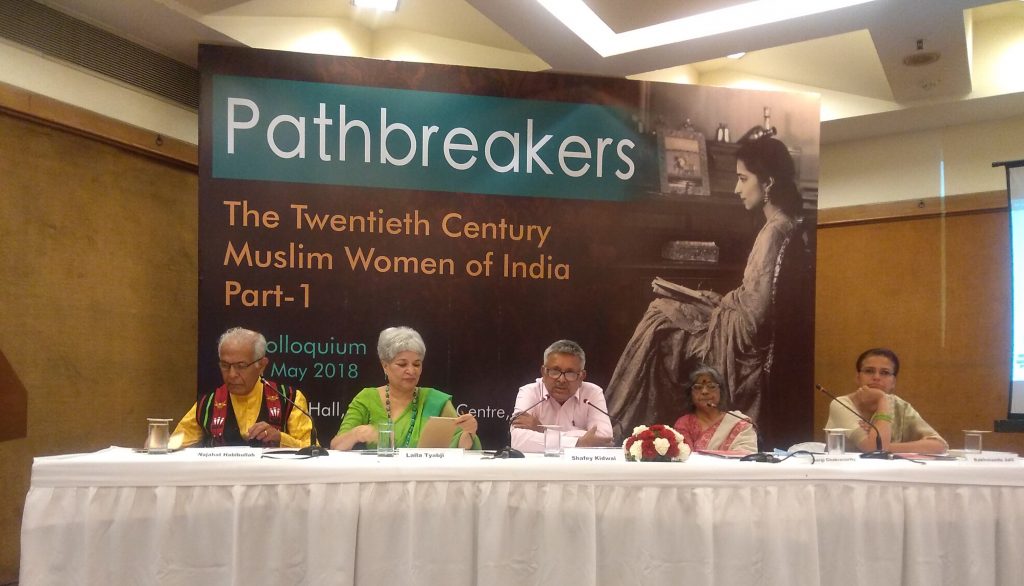
MWF exhibition featured 21 Muslim women who contributed to nation-building during and after the independence struggle. Credit: Khushboo Kumar
New Delhi:
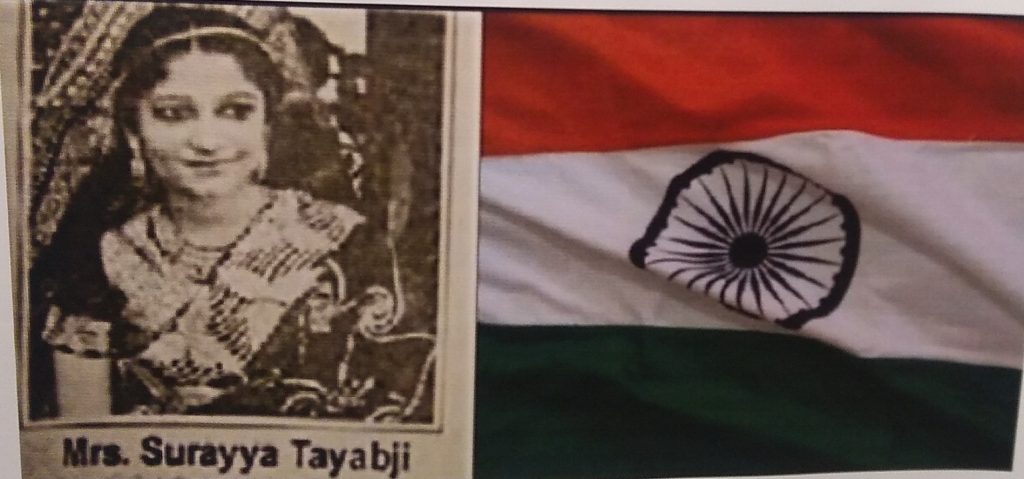
Most Indians today may not be aware that the national flag was designed by a Muslim woman, Surayya Tayabji, an active member of the Indian National Congress. Jawaharlal Nehru assigned this task to Tayabji, and it was her idea to replace the symbol of the charkha used and popularised by Mahatma Gandhi with that of Ashoka Chakra at the centre of the flag. Tayabji felt that the charkha, a symbol of the Congress party, might appear partisan.
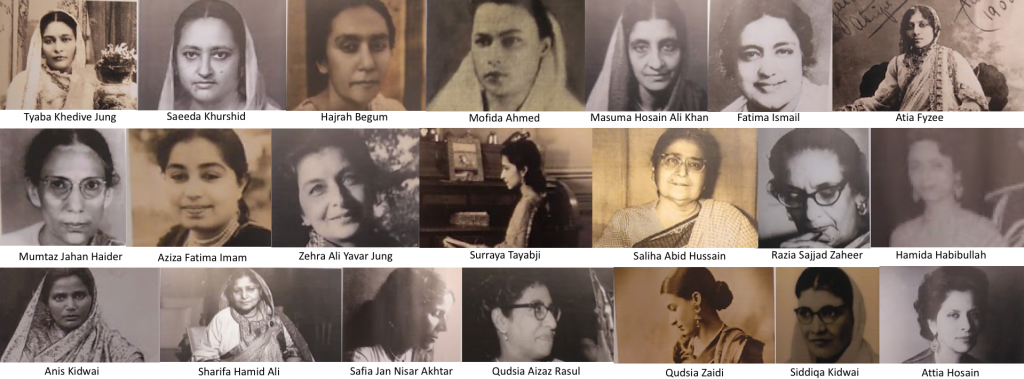
Narratives like this – often forgotten or lost in public memory – were the central theme of a colloquium that was organised by the Muslim Women’s Forum (MWF), an organisation engaged in the advocacy of Muslim women’s rights. Titled ‘Pathbreakers: The Twentieth Century Muslim Women of India’, the colloquium held in partnership with UN Women showcased the achievements of 21 Muslim women in various spheres of public life during and after the independence struggle.
Other women who featured in the exhibition included Saeeda Khurshid, Hamida Habibullah, Aziza Fatima Imam, Qudsia Zaidi, Mofida Ahmed, Zehra Ali Yavar Jung, Razia Sajjad Zaheer, Tyaba Khedive Jung, Atiya Fyzee, Sharifa Hamid Ali, Fathema Ismail, Masuma Hosain Ali Khan, Anis Kidwai, Hajrah Begum, Qudsia Aizaz Rasul, Mumtaz Jahan Haider, Siddiqa Kidwai, Attia Hosain, Saliha Abid Hussain and Safia Jan Nisar Akhtar.
The speakers participating in the discussion talked about the need to reclaim the lost narratives of Muslim women and take control of their representation.
Speaking on the occasion, Seema Mustafa, an Indian print and television journalist, pointed out that these women would not fit even the current stereotypical representation of hijab-clad, oppressed and orthodox Muslim women, who need a messiah to rescue them. Mustafa, in her keynote address, said that these women had broken barriers and challenged patriarchal order in their time; they followed Islam in its liberal spirit, refusing to be shackled by societal norms. Most of them abandoned the purdah system, she said.
Speakers panel for the session ‘Recognising and Nurturing Pathbreakers’ at Muslim Women’s Forum colloquium. Credit: Khushboo Kumari
Stereotypes in modern India
The speakers insisted that the reality was and still is that Muslim women, just like women belonging to any other socio-cultural group in India, do not constitute a monolithic, homogenous entity. They come from diverse backgrounds and subscribe to varying ideologies. Muslim women have been and still are writers, teachers, artists, scientists, lawyers, educators, political workers, legislators in parliament and in assemblies. The speakers said clubbing them under the generic rubric of backwardness was a misrepresentation.
As the regular use of terms like triple talaq, halala and purdah has come to demonstrate subjugation of Muslim women, Islam has acquired the status of the most oppressive religion for women, the speakers said. Muslim women have become an object of pity.
Commenting on Islam and feminism, Farida Khan, former dean of education at Jamia Millia Islamia and former member of the National Commission for Minorities, pointed out that gender oppression is common to all religions. “Why should Islam have the burden of taking on feminism?” asked Khan. She further explained that Islam should be perceived and understood in the social and historical context of the day. Every religion has to and does evolve with time.
Referring to the exhibition, Khan said, “It makes me sad to think that you need to have an exhibition and you need to project these women in a country where they should be well known, where they should be part of the mainstream, where everybody should know their names and know the work they have done.”
Gargi Chakravartty, former associate professor of history in Maitreyi College and author, said, “Muslim women’s political and social contributions in the pre-independence period during the major Gandhian movements or in the field of spreading education, or in the sphere of literary activities, cannot be erased from history.” She shared many anecdotes that came up in her own research about largely unknown Muslim women who have extensively worked among the poor throughout the 20th century and still continue to do so.
An eminent speaker at the colloquium, Rakshanda Jalil, recently wrote a book A Rebel and Her Cause on the life of Rashid Jahan. Jalil spoke of the inspiring life of Jahan, who was a doctor, writer, political activist and member of the Communist Party of India.
Farah Naqvi, member of the Post-Sachar Evaluation Committee (Kundu Committee) 2013-2014, summed up the purpose of the colloquium and the exhibition. “This colloquium is a response. There is a nostalgia about it. But it is not just about the nostalgic nawabi Muslim. It has a political purpose, the colloquium, which is that you cannot allow any one strand of history to be obliterated from this country. Any strand. It could be Muslim women today. It could be someone else tomorrow,” Naqvi said.
Questioning if Muslim women needed to be forced into a separate constituency, Naqvi said it was indeed a tragedy that these women’s contributions were not a part of mainstream knowledge – and that reflected failure on the part of Indian historiography.
Naqvi also pointed out that the undercurrent of the entire exhibition was nation-building because they were “also responding to a moment when Muslims are repeatedly being told that they are ‘anti-national’”. She further explained that against such a background, the Muslim community in general should not take the bait of proving that they are ‘good’ nationalists. Instead they should take pride in the achievements they have made in their respective spheres of work – especially for those who stayed on in India after the Partition.
Wajahat Habibullah, India’s first chief information commissioner and the son of Hamida Habibullah, one of the 21 women featured in the exhibition, talked about Partition and how it divided his family. He said, “It is necessary to remember and nurture the memories of all those Muslim women who then very consciously, despite family pressure and contradictions within the family, opted clearly to be a part of India”.
Contribution to literature, politics and education
The exhibition showed how extensively Muslim women have contributed in the spheres of politics, literature, education and social work.
Many like Saeeda Khurshid, founder of the Muslim Women’s Forum, actively campaigned for the Congress party. Hamida Habibullah was the the president of the Mahila Congress. Few like Aziza Fatima Imam, Fathom Ismail, Anis Kidwai, Siddiqa Kidwai and Qudsia Aizaz Rasul were members of the parliament and legislative assemblies for years.
Rasul was also the only Muslim woman member of the constituent assembly.
Sharifa Hamid Ali founded the All India Women’s Conference (AIWC), with the likes of Sarojini Naidu, Rani Rajwade and Kamaladevi Chattopadhyay, and was involved in its work alongside others like Masuma Hosain Ali Khan and Hajrah Begum – who also founded the National Federation of Indian Women.
These women actively worked with the poor and marginalised sections of society, trying to improve their access to health and education.
Zehra Ali Yavar Jung, who was awarded the Padma Bhushan in 1973, worked to improve the condition of women detainees in Hyderabad’s prisons and presided over a women’s workshop that trained and provided employment to destitute women. Fathom Ismail helped in opening rehabilitation clinics for children suffering from polio. Anis Kidwai worked tirelessly in refugee camps after Partition.
Surayya Tayabji and the Indian national flag displayed at the MWF exhibition. Credit: Khushboo Kumari/The Wire
Mumtaz Jahan Haider, who was appointed the principal of the Aligarh Women’s College in 1937, worked for women’s education her entire life.
Sharifa propagated legal reforms for Muslim women, including raising the age of marriage and drafting a model marriage contract ‘nikahnama‘.
In the field of literature and arts, these women won multiple awards. Razia Sajjad Zaheer, the recipient of the Nehru Award and Uttar Pradesh State Sahitya Academy Award, wrote novels like Sar-e-Sham, Kante and Suman. Anis Kidwai recieved the Sahitya Kala Parishad Award.
Attia Hossain used to write for Pioneer, Statesman and Atlantic monthly and wrote several novels, most notably Sunlight on a Broken Column and a short story collection Phoenix Fled. Aliya Fyzee wrote Indian Music (1914), The Music of India (1925) and Sangeet of India (1942) with her husband.
Qudsia Zaidi wrote and translated books for children, with Chacha Chakkan ke Draamae among the most loved ones. She also founded Hindustani Theatre in 1954, the first urban professional theatre company in independent India.
Khushboo Kumari has a BTech in information technology and is pursuing an MBA in marketing from MICA, Ahmedabad. She is an intern at The Wire.
source: http://www.thewire.in / The Wire / Home> History> Religion> Women / by Khushboo Kumari / May 30th, 2018
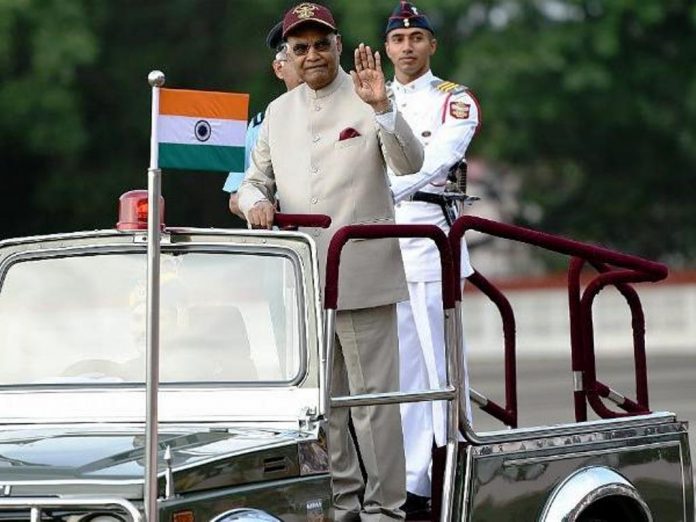
The President of India Shri Ram Nath Kovind took the salute at the 134th passing out parade at the National Defence Academy (NDA), Khadakvasla on May 30. The passing out parade, a sombre occasion always, was especially more poignant this time. The man who put it together for the Supreme Commander’s inspection, the Subedar Major Drill of the NDA, Subedar Major Rajeev Kumar Rai, had only a few days earlier been felled by a heart attack, testifying to the pressures of performing in front of the highest constitutional authority in the land. A veteran who served in the Siachen, Kashmir and the North East, Rai was the head drill ‘ustad’ of the Academy, credited with instilling discipline into cadets. In tribute to him, cadets had resolved to put up such a show as had never been witnessed before on the Khetarpal parade ground, named after Lieutenant Arun Khetarpal one of the alumni and posthumous Param Vir Chakra awardee.
With the Subedar Major departed, the onus to deliver the message of reassurance that the future of the armed forces and the defence of the country, was in safe hands fell on the Academy Cadet Captain (ACC). It is no secret that the Academy Adjutant, who supervises the parade usually has his attention on the horse he is riding than on the parade because controlling the horse is as important as the parade. This responsibility fell on ACC Mohammad Sohail Islam a strapping Muslim youth from Assam.
Academy Cadet Captain Sohail Islam was selected for the honour from among 344 cadets who passed out of the course. Captain Sohail Islam was clearly a cut above the rest as he was an all-rounder excelling in academics, physically tough, mentally robust and importantly spiritually upright.
To achieve this position is not an easy task. Consider the hundreds of thousands of youth appearing for the Union Public Service Commission’s (UPSC) NDA entrance exam of which only 6000 clear the exam and qualify at the services selection boards. And finally, only 300 make it. It needs immense hard work.
Now to the parade, as President Kovind alighted from the horse-drawn carriage, he was received by the Commandant. At the far end of the parade ground, 854 cadets wearing white patrols were lined up in their squadrons on either side of the Nishan Toli, bearers of the President’s Colours, conferred on the Academy by President Neelam Sanjeeva Reddy. Standing tall, right in front was their sword-bearing leader, ACC Mohammad Sohail Islam. As he sprung to attention on the arrival of President Kovind at the Quarter Deck, the commentary paused and the chatter of the parents and siblings of the cadets stopped. And a hush fell over the ten thousand odd spectators.
After his reverberating word of command for a general salute, sword in hand, Sohail Islam marched up to the dais to report the Academy present on parade for inspection by the Supreme Commander of the Armed Forces. Thereafter, Islam mounted the ceremonial jeep alongside the Supreme Commander for the circuit of the parade ground as the Rashtrapati inspected the smartly turned out cadets. Islam then led the parade in its march past, doing an electric ‘eyes right’ while lowering his sword in salute as he strode past the Quarter Deck, as the podium is called, styled as it is after a ship’s deck in deference to the jointness between the three services that the Academy lays the foundations of. The President was escorted by the Commandant to present the most coveted awards, to the three deserving passing out cadets. Among the three was Sohail Islam, winner of the President’s Silver Medal awarded for standing second in the overall order of merit.
As President Kovind proceeded with his very pleasant duty of inspiring the young lads, the next cadet he had to pin a medal on was Ali Ahmed Chaudhury, a Squadron Cadet Captain, winner of the President’s Bronze Medal. The President received Ali’s salute, shook Ali by the hand and pinned the medal on his white patrol tunic.
As squadron cadet captain, Ali had led his squadron march past, belting out the command of ‘eyes right’ at the Quarter Deck. A squadron cadet captain is among the top-drawer appointments, leader of over a hundred cadets of all six courses assigned to the squadron. He is responsible for steering the squadron’s showing in the competitions for the overall championship banner for the best squadron, an annual life-and-death battle at the Academy. That the contest is so fierce is because the squadron is where the cadets learn that they must be ready to die for their outfit; squadron today, a platoon, flight or a ship tomorrow. He has to be a role model in preparation for the traditional, and historically validated, the manner of leading Indian soldiers in battle; where leading means just that: from up front and ahead. Obviously, Ali measured up and how.
Son of a retired army Subedar from Karimganj in Assam, his twin brother is due to receive the president’s commission from the Indian Military Academy, Dehradun, this term. Ali is a Georgian, as the graduates of Rashtriya Military Schools, earlier named after King George, are called.
The one who pipped both Sohail and Ali to the top post was Battalion Cadet Captain Akshat Raj, on whom the President pinned the Gold Medal.Sohail, like Ali, is the son of an ex-serviceman, a Havaldar from West Bengal; while Akshat is a school teacher’s son. All three are from humble backgrounds, society’s bedrock that continues to offer India’s best stock for its most onerous duty. The three typify the quintessential warriors – Karmyogis of yore – trained as the nation’s warriors from a tender age.
Both Sohail and Ali exemplify the words of President Kovind in his speech ‘The parade comprises cadets from all parts of India and from a variety of communities. Its harmony speaks for our essential unity as much as our pluralism as a society.’ He had just had lined up before him Akshat, Sohail and Ali. This is what the line up suggested to him.
Sohail and Ali were right up there inspiring the Rashtrapati and rest of nation to reflect on India’s essence. That’s where Muslim youth need to be, all the time. Sohail and Ali tell that us that it is within reach, doable and, is indeed, a glass ceiling already breached. Just like the remarkable performance of Muslim youth taking the civil services exam and topping the exam, the avenue of an armed forces’ officership – ‘a calling’ for a ‘rare breed’ according to President Kovind – is open for Muslim youth to aspire and achieve. Thanks to Sohail and Ali, the President’s Gold Medal – not having a Muslim inscribed on it since the mid-seventies – is now ours to grasp next.
The author was a Squadron Cadet Captain at the National Defence Academy in the mid-80s.
source: http://www.sabrangindia.com / Sabrang / Home / by Ali Ahmed / June 06th, 2018
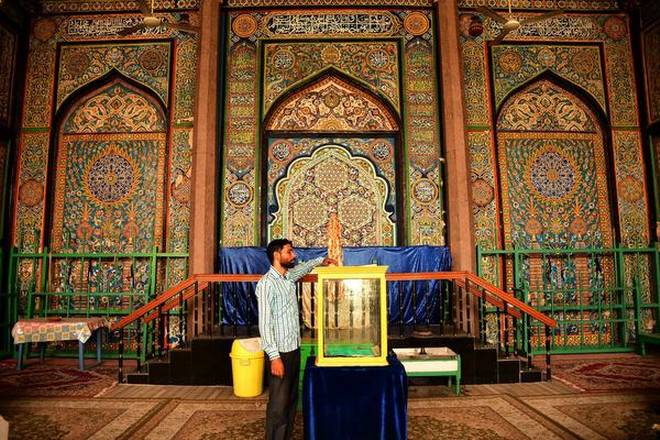
Back from the brink: The western wall of the Ashoorkhana shows off tiles with intricate inlays. | Photo Credit: K.V.S. Giri
Telangana government and Aga Khan Trust are working to restore the monument ahead of rains
It is a race against the monsoon as Hyderabad’s 17th century Badshahi Ashoorkhana, famed for its resplendent tile work, is restored to its original finery.
The sprawling structure, which turns into a house of mourning during Muharram, is located in a narrow bylane of the old city. On Sunday, workers were busy plastering a high wall with brownish lime mortar in the blistering sun, using the cover of a blue tarpaulin. .
On another side of the wall where the restoration is taking place, framed by an arched entrance, is the 400-year old Ashoorkhana. It was built sometime in 1611 by Hyderabad’s founder, Muhammad Quli Qutb Shah.
“We are consolidating the structure before the monsoon sets in. The documentation is also being done in parallel. Once that is over, we will decide on a conservation plan. The tile work has very fine detailing. At some points, the tiles have been painted over. This will require painstaking documentation,” says N. R. Visalatchy of the Telangana Department of Archaeology and Museums.
The documentation is being done by the Aga Khan Trust for Culture with which the State government has signed a Memorandum of Understanding. “We have to do the work before the monsoon, because there are points from which seepage might occur and that will affect the tiles,” says Prashant Banerjee of AKTC. The restoration is a challenge, because materials must be moved through a narrow lane.
Heritage recovered
The restorers are using a lime mortar mix for plastering, but that is not their only weapon. “Pulped and cured wood apple is injected into the gaps. It works like a silicone sealant that expands and contracts without letting the water in. Concrete sealants become rigid, and seepage happens,” says Mr. Banerjee.
The Ashoorkhana, turns into a pilgrimage site when alams (battle standards) are installed to commemorate the battle of Karbala in 680 A.D. Ashoora or 10th day of Muharram is when the battle took place. The monument was lost for several decades when Emperor Aurangzeb’s forces turned it into a bandikhanato keep wheeled vehicles. Much later, the September 1908 floods caused havoc, washing away some tiles. In a shocking turn of events, it was turned into a garage and parking space at one time. A legal battle waged by the Moosavi family made the monument accessible again, and conservation moves followed the eviction of squatters.
source: http://www.thehindu.com / The Hindu / Home> News> Cities> Hyderabad / by Serish Nanisetti / Hyderabad – June 03rd, 2018