Category Archives: Amazing Feats

APJ Abdul Kalam’s memorial is the new pilgrimage site in Rameshwaram

Rameshwaram, TAMIL NADU / INDIA:
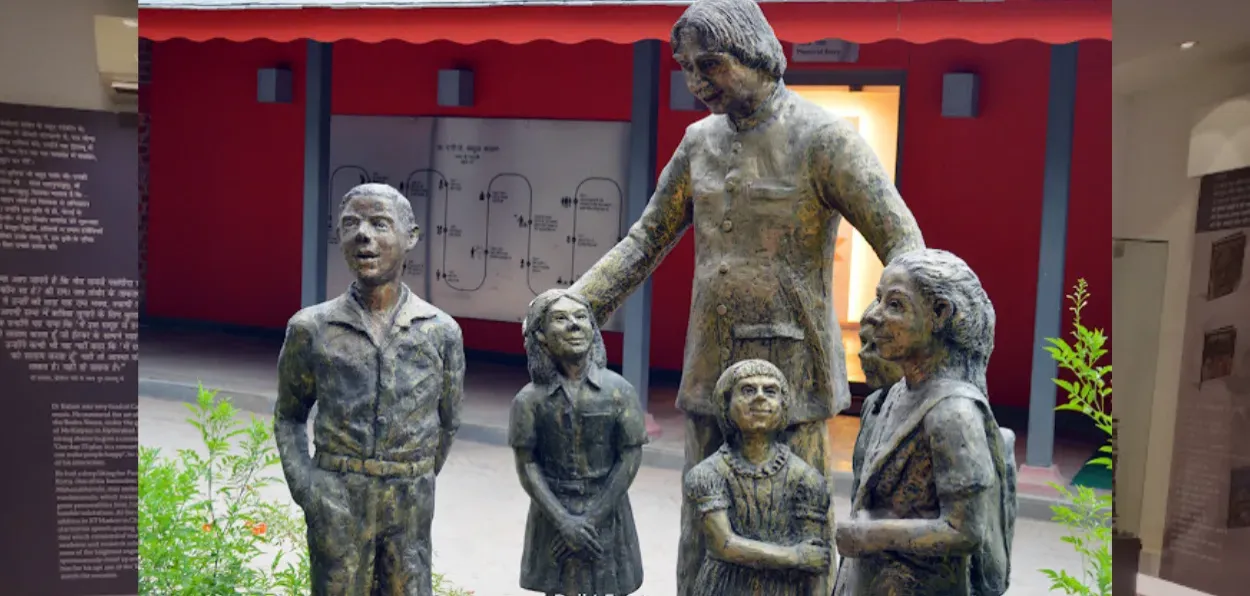
A P J Abdul Kalam with children: an exhibit from the National memorial at Rameshwaram

In mid-December, when Suman and her husband Diwan Arora of Sonepat, Haryana, left for Rameswaram in Tamil Nadu, for performing the pilgrimage to one of the holiest sites of Hindus, little did they know that their journey would also take them to another sacred place – a memorial to the son of the soil Avul Pakir Jainulabdeen Abdul Kalam aka Dr. A P J Abdul Kalam.

“I didn’t feel like leaving the place,” said Suman, a retired central government official of her experience of visiting the National Memorial for the 11th President of India A P J Abdul Kalam, located in his native city of Rameshwaram.

Suman said that the moment she removed her shoe to enter the National Memorial she experienced a surge of positive energy inside her. She and other tourists paid obeisance to the People’s President at his resting place inside the memorial.

 “I was visiting the place after I visited the temple; there I felt I had entered another sacred place,” she told Awaz-the voice.
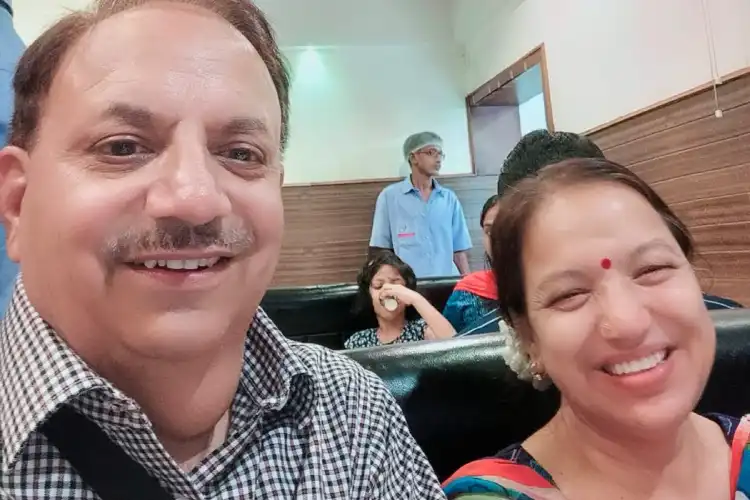
Suman and Diwan Arora in Rameshwaram

On her maiden journey to South India, Suman said she was as much awestruck by the grandiosity and architecture of temples – Rameshwaram, and Meenakshi at Madurai as with the simplicity and grandeur of the life of the great Indian –  A P J Abdul Kalam.

“Seeing the incredible architecture of the temples was a great experience. Visiting the Museum of President Abdul Kalam was no less. It was also like a pilgrimage.”

Though not hyped as much as many other places, the museum is on the Tourism map of Rameshwaram city. According to Aroras, even the local auto-rickshaw drivers who offer tour packages to visitors, recommend the museum as the first place.

Suman said although their tour was in connection with the seven-day Bhagwad Gita path (Narration of the Bhagwad Gita) and was organized by a religious group, a friend had advised her to visit the museum at any cost. “After visiting the place, I can never thank my South Indian friend enough,” Suman said.
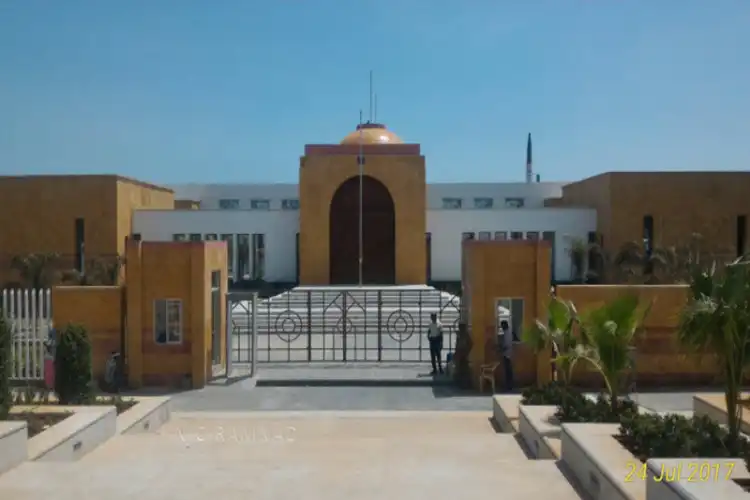
Dr. A P J Abdul Kalam’s memorial, Rameshwaram

Kalam’s grand-nephew APJMJ Sheik Saleem told Awaz-the voice that so far one crore people have visited the museum that was set inaugurated by Prime Minister Narendra Modi on July 27, 2017.

Sheik Saleem who recently joined the BJP runs his business and a Foundation for social work. He says he is privy to people’s devotion and love for his ancestor as they visit his memorial.

“The museum is visited by at least 7,000 visitors per day and so far about one crore have paid their obeisance to the people President,” Saleem told Awaz-the Voice.

“Earlier people came to our city for pilgrimage to the (Rameshwaram) temple but now the pilgrimage is combined with the visit to the national memorial for APJ Abdul Kalam,” he said.

“I have seen people coming to the place and feeling there is something great there. Many visitors do stand silently in front of the memorial, some bow their heads, and others simply go in the prayer mode as if they are seeking His blessings,” the former President’s grand-nephew said.
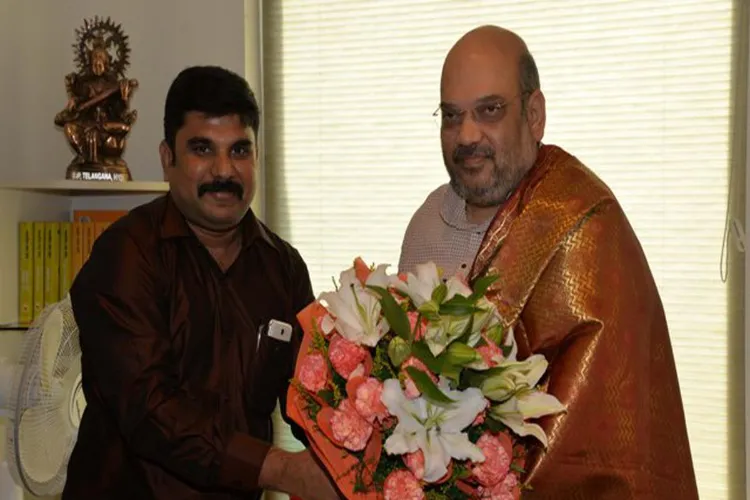
APJMJ Sheik Saleem with Home Minister Amit Shah

He said it’s touching and a humbling experience to see how much Indians cutting across religions or other barriers loved Dr. Kalam.

Suman, her husband, and many in their group spent nearly two hours inside the memorial. Visitors must enter barefoot and not use cameras or mobiles to click the pictures. All this adds to the sacredness of the space.

Saleem said since the place sees a high footfall, the cameras are forbidden simply because if everyone starts clicking there will be chaos.

Diwan Arora said the pilgrimage jatha comprised 300 people from Punjab and Haryana who visited Rameshwaram for “Bhagwat sapthah’ the weeklong narration of the Bhagwat Gita.
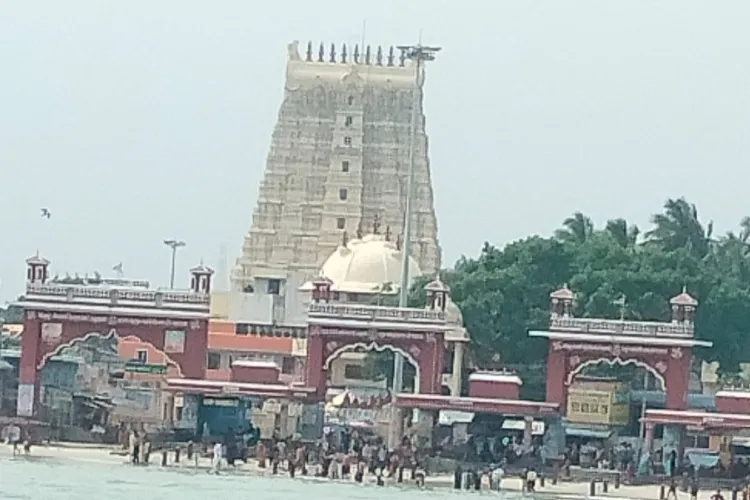
Meenakshi Temple and the Sea at Rameshwaram

Besides the museum, A P J Abdul Kalam’s childhood home has also been converted into a museum that his elder brother maintains. “It’s a smaller collection of photos and family memorabilia. The place is visited by at least 4,000 persons per day,” Sheik Saleem said.

The national museum maintained by the DRDO narrates the story of the life of India’s missile man from a newspaper hawker in the coastal city to India’s missile man and the most popular President. It showcases pictures and models of missiles, rockets, and the Pokhran Nuclear test that Kalam was involved in. His favourite Veena which he played every morning sitting on the bare floor even in Rashtrapati Bhawan is also displayed in the museum.

Dr. A P J Abdul Kalam lived in the Rashtrapati Bhawan from 2002 to 2007. He became the most loved and respected head of the nation to get the sobriquet of People’s President.

 Kalam was a respected scientist specializing in aerospace engineering. His simplicity and dedication to serving the country motivated many youths to follow his path and he became an inspirational figure for the youth of India.
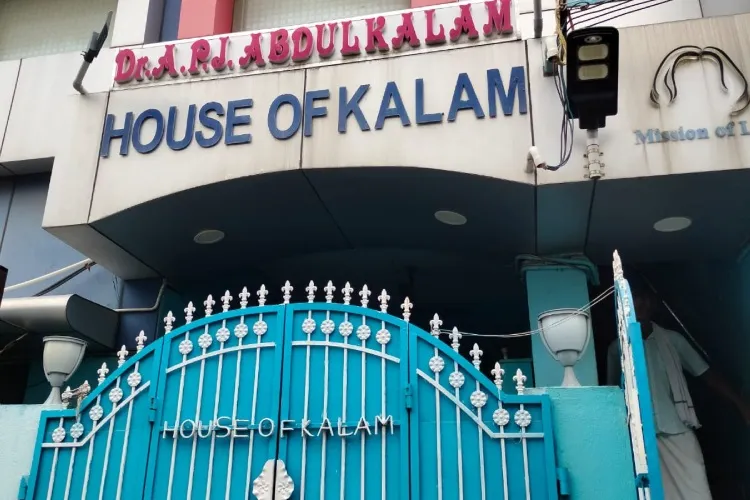
House of Kalam: the private Museum dedicated to the memory of Dr. APJ Kalam inside his ancestral house in Rameshwaram

Inside the memorial, one can see the selected photos, paintings, miniature models of missiles, etc. The memorial is less than 1 km from Rameswaram.

The museum’s exhibits narrate the story of his life and achievements. It’s located on Mosque Street and is open from 8 a.m. to 7 p.m.

 A. P J Abdul Kalam was born and brought up in Rameswaram and became a scientist and worked for DRDO and ISRO before being chosen to become India’s 11th President by the then NDA government headed by Atal Bihari Vajpayee.

He passed away suddenly while attending the IIT Shillong convocation on July 27, 2015, and was laid to rest at Pei Karumbu, Rameswaram on 30 July.

According to the statement of the Museum, Dr. Kalam always reflected the simplicity, depth, and calmness of Rameshwaram throughout his life, and it’s showcased in his memorial. Dr. APJ Abdul Kalam National Memorial was inaugurated by Prime Minister of India Narendra Modi on 27th July 2017.

The memorial is spread over 2.11 acres of land, the memorial is constructed on the gravesite of Dr. Kalam, where his mortal remnants were put to rest on July 27, 2015. To pay tribute to India’s missile man, The Defence Research and Development Organisation (DRDO), with which Dr. Kalam had been associated for several years of his life, came up with an initiative to construct his memorial.

pix07

The memorial was constructed in a record time of nine-month at the cost of Rs 120 crore,

The Museum is also included in the recommended place in Rameshwaram by the Trip Advisor company.

On its website, people who visited the place have rated it very highly. Their comments in the review section show that the People’s President continues to be in the heart of Indians even after his passing away. For example, Saurabh from Patna, Bihar, says:

 ..must visit place for everyone. I’m a huge follower of Bharat Ratna Late APJ Abdul kalam sir. It was inaugurated by Our prime minister in 2017. Here you can learn many things about Bharat Ratna APJ Abdul Kalam sir.

I visited this and will recommend every people to visit this place and should remember the person who shape and sculpt the Indian defense and space research organisation.

A Tourist from Bangladesh wrote in the same section:  “A scientist and leader has been honoured in the best way in his birthplace “

Another tourist to the museum from Hyderabad wrote:

.. A fitting tribute to the great son of India. Amazing that a man with such humble origins and from a very small town rose to the highest office in this country. A must-visit for students and youth who can take inspiration from the great man’s life. Plenty of Photographs, a peek into the life of Dr. A.J.P. Abdul Kalam.

A visitor from the NCT of Delhi wrote on Trip Advisor’s website :

Not only a memorial but a temple or place of worship where you can motivate yourself how an innocent boy who was used to distributing newspapers in a nearby area has become India’s first citizen. The place is full of photographs, a replica of missiles, statues, Samadhi, and many more … a calm environment despite of rush of school children.. A must-visit place at Rameshwaram.

source: http://www.awazthevoice.in / Awaz, The Voice / Home> Story / by Aasha Khosa, New Delhi / July 27th, 2023
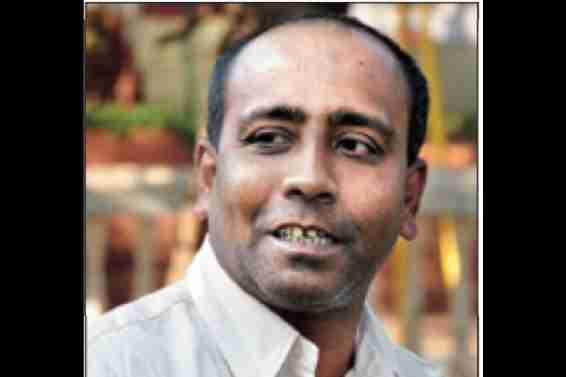
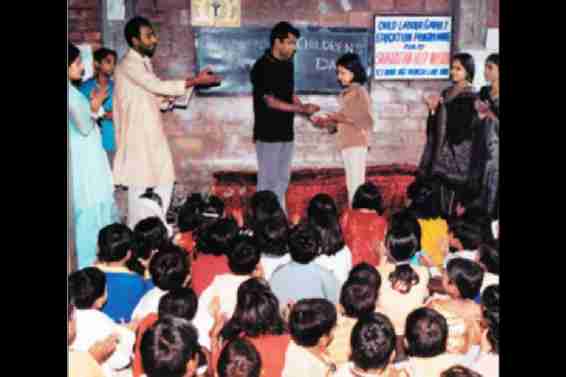
The DropOut: The man who built uncountable schools for poor children in Howrah

Howrah, WEST BENGAL:

Moumita Chaudhuri meets Mamoon Akhtar, the good samaritan of Howrah’s Tikiapara and gets to know a lot about his social moves and motives.

Mamoon Akhtar / Photos, courtesy Akhtar

Tikiapara is a downtown area in Bengal’s Howrah district, off NH22. Narrow lanes full of pedestrians and vans dangling dangerous iron rods and bars trundling through them, cars and bikes honking incessantly, piles of garbage and small iron manufacturing units. Amidst all of this stands Rebecca Belilious English Institution.

The English medium school is for the poor children of Tikiapara, Pilkhana and the neighbouring Bankra town.

Mamoon Akhtar is the principal and founder of the school. That day he is not in his office. He is attending to an elderly woman who is seeking a fee waiver for her ward. “The school fees are highly subsidised — Rs 100-150. Mamoon Sir believes that education should not be free. But if someone cannot pay, he will never turn a student down,” says Tapan Mandal, a member of the school staff.

The principal’s room has a single bed, a small sofa, a table and a chair. “Sir, spends his days and nights here,” says Mandal. “I have often spotted him sweeping the school premises at daybreak,” he adds.

Akhtar himself is a school dropout. After Class VII his father could not afford to pay the fees. However, he did not give up studying. “I started teaching primary students in my area and with that money completed my Class XII,” he tells The Telegraph.

Tikiapara in the 1990s and early 2000s was apparently a den of criminal activities.

Akhtar started his school with six children in 1999. “A room in my house a few hundred metres away from here, that was it,” he says. The story goes thus. One day, Akhtar was passing a slum when he saw a man was beating up a woman; she was refusing to sell drugs and he was egging her on. A little boy stood watching. When the brawl ended, Akhtar went up to the boy and told him he shouldn’t idle away his time and the boy said he would have liked to go to school except that nobody seemed keen to send him to one.

Akhtar asked the little chap to come to his house and he became his first pupil. Akhtar says, “The next day he came back with his friend. The third day, two more; on the sixth day, there were six children who wanted to study. I felt God was saying something to me. I cleaned up the front room of my mud house and started a school.”

There were no funds. Akhtar asked his students to bring old newspapers, broken items and discarded things from their homes or their neighbours’. He says, “I would sell the rags to the kabadiwala and with the money buy books, notebooks and stationery. I also requested the educated youth in the area come and teach. I paid them a small salary — Rs 100 per month.” The first funding for the school came from Lee Alison Sibley, the wife of the then US Consul General George Sibley. “I had seen her photograph in the newspaper and wrote to her asking for help for the school. Initially, she refused but she sent me a note appreciating my efforts. I wrote to her again and asked if she could help with some notebooks and pencils.” A few days after that, Lee visited the school with a journalist. She gifted a cheque of Rs 10,000 with which the school got its first toilet for the girl students.

Akhtar continues, “The journalist reported my story and one day I got a call from a Mumbai-based man called Ramesh Kacholia. He sent Rs 12,000 for cement flooring and windows. On completion, Akhtar found that he had spent Rs 8,000. He returned the rest to Kacholia.

The school was formally registered in 2007 as Samaritan Mission School High. By then, many organisations had come forward with grants. The Kacholia family stood by and connected Akhtar to Vidya Shah of Edelweiss Capital, an international investment company. These two associations have stood by the school and Akhtar through all these years. Once the school was in place, Akhtar turned to improving the living conditions of the people of Tikiapara. The students were from the nearby slums, children of labourers from Bihar and Uttar Pradesh. Their parents were auto drivers, domestic help, property dealers and so on. Most of the children were first-generation learners.

LIGHT HOUSE: The first school started by Mamoon Akhtar

Once the school was in place, Akhtar turned to improving the living conditions of the people of Tikiapara. The students were from the nearby slums, children of labourers from Bihar and Uttar Pradesh. Their parents were auto drivers, domestic help, property dealers and so on. Most of the children were first-generation learners.

Akhtar started a vocational training programme for women. The Howrah police and the administration too supported his endeavours.

In 2014, the wheels turned for Akhtar. The Rebecca Belilious English Trust of Howrah handed over their school building and clinic to him. “It belonged to a Jewish family by the name of Rebecca Belilious,” he says.

The building was renovated with funds from corporates. Akhtar named the five floors of the school building after Savitribai Phule, C.V. Raman, Swami Vivekananda, Ishwarchandra Vidyasagar, B.R. Ambedkar and Baba Amte. The clinic at the Rebecca Institute has now been turned into a small hospital that caters to the people of Tikiapara. Soon there will be a hostel for girls; Akhtar feels the slums in the neighbouring area are not safe for girls. A galpo ghor or storytelling room will start for the children of the primary school as they still do not have a library.

Akhtar’s first school has also gotten better — smart classrooms, science and computer labs, sports such as archery, basketball, football are encouraged. Children can also opt for NCC training. In 2015, Akhtar opened a third school named Samaritan Public School in the slums of Bankra in Howrah.

Students from his first school cracked the 2022 NEET examinations and one student qualified in the WBJEE exams last year. From six students, the number of children attending these three schools is now 6,300.

source: http://www.telegraphindia.com / The Telegraph Online / Home> Culture / by Moumita Chaudhuri / July 23rd, 2023

Manipur: Muslims Emerged as Peacemaker; Offered Food, Shelter to Warring Meities and Kukis

MANIPUR :

New Delhi:

In Manipur, the Muslim community has emerged as a crucial peacemaker amidst the ongoing conflict between the two largest groups: the majority Hindu Meiteis and the minority Christian Kukis.

Meities account for about 53.5 percent of Manipur’s total population while 42 percent of the population belongs to Kukis. The rest are Muslims and other groups. The clashes between the two groups began when Kukis, who are Scheduled Tribes and live in hilly areas of the state, protested against the Manipur high court order granting ST status to Meities. Kukis felt that privileges available to them by virtue of being ST would be grabbed by Meities who are in majority and have control over the state government.

When the violence between the two communities began on May 3, Meities living in Kuki dominated and Kukis residing in Meitie-majority areas began fleeing to protect their life and property. There was so much hatred that in many cases, it were the neighbour attacking their neighbour of the opposite group.

Manipuri Muslims, who are called Pangals and are converts from the Meitie community, were targeted by Meitie Hindus in May 1993. About 140 Muslims were reported to have been killed in the 1993 violence. Muslims also suffered huge loss of their properties.

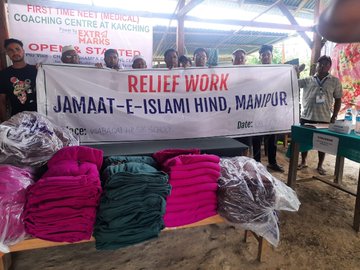
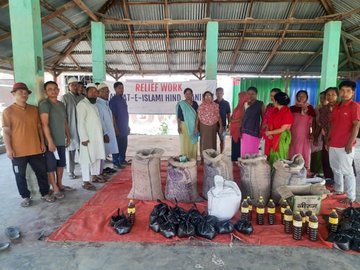
But the Muslims forgot what had happened with them in the past and came forward to offer a helping hand to Meities as well as Kukis at the risk of their own safety because both the groups had warned Muslims not to give help to their opponents. Ignoring the threats, Muslims offered, food, shelter, clothes and other relief materials to the victims irrespective of the group they belonged. In the process, many Muslims were attacked and sustained injuries. However, no Muslim was killed.

An incident worth mention occurred on May 4 when Kuki individuals sought shelter in the Muslim-dominated area of Hatta Golapati in the state capital of Imphal. The Meitei Muslims bravely opened their doors, risking their safety, to save the lives of more than 3000 Kuki people. Subsequently, the Meitei Muslims handed them over safely to the security forces. In this endeavour, men, women, and children from Hatta Golapati played a significant role. Women cooked food for the refugees, while men and children provided clothes, food, and other necessities.

Similarly, in the neighboring Churachandpur district, the Meitei people rushed to KWAKTA Village, where approximately 20,000 Muslims reside. Although the local Muslims are not financially well off,  the they collected grains, vegetables, and other essentials from their homes and mosques to feed the victims. The Kwakta Muslims prevented the Kukis from attacking nearby Meitei villages and also stopped the Meitei from attacking Kuki villages near Kwakta. Tragically, many Kwakta Muslims were injured in crossfire and bomb blasts.

Throughout their relief efforts, the Muslim civil society and Muslim student organizations have been diligently collecting relief material from Muslim families and distributing it in the refugee camps.

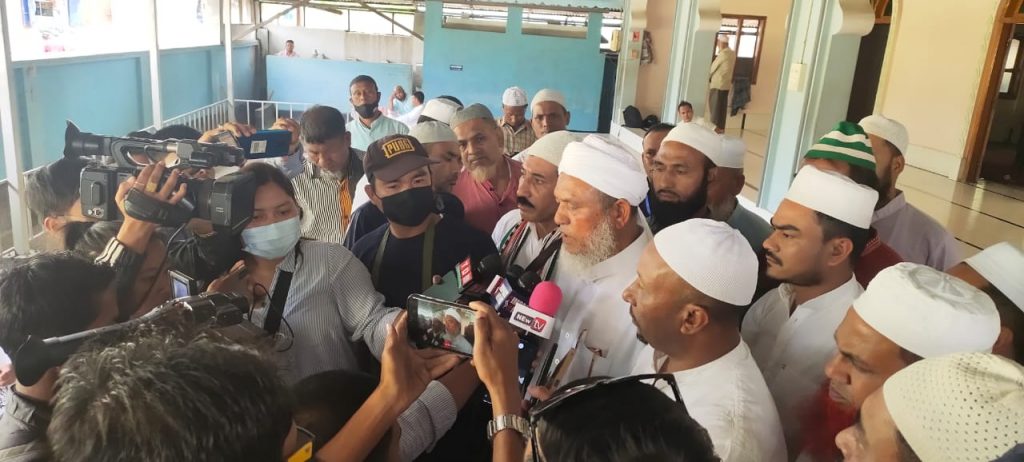
Moulana Syed Ahmad, President of Jamait Ulama-i-Hind, Manipur, and SM JALAL, President of All Manipur Muslim Organisations Coordinating Committee, an apex body of all Muslim Civil society in Manipur, addressed the media recently. Speaking to the media, Moulana Syed Ahmad, President of Jamait Ulama-i-Hind, said, “We have always lived in brotherhood, as children of one father and mother.” The violence has targeted the co-existence and peace of both communities, which have been living peacefully since the inception of the state of Manipur.

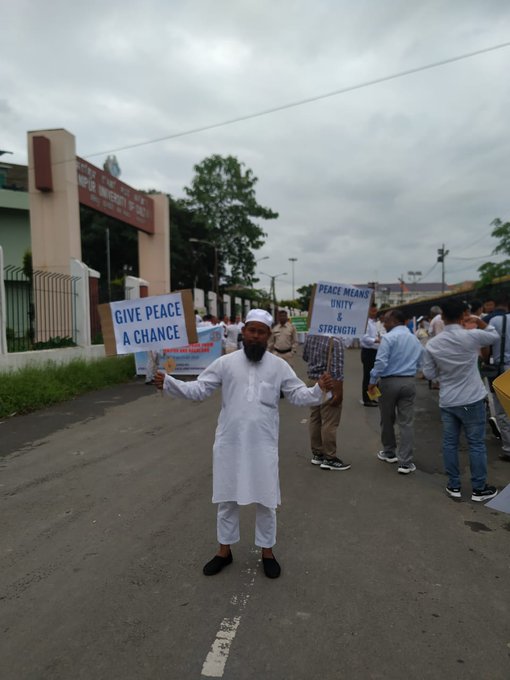
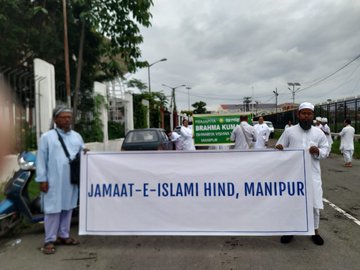
Notably, many interfaith groups have also stepped forward to promote peace and harmony under the banner of “INTERFAITH FORUM FOR PEACE AND HARMONY.” This forum has organized meetings, rallies, and prayers, appealing for peace, with participation from various groups, including Jamaat-e-IslamiI Hind, Catholics, Baptists, Federation of Madrasa Sana Mahi (Meitei religious group), International Society for Krishna Consciousness, Brahma Kumaris, and Vishnu Gaurav, etc.

In this time of crisis, the collective efforts of the Muslim community and interfaith organizations are providing a glimmer of hope for peace and reconciliation in Manipur.

At least 150 people are reported to have lost their lives, 400 are wounded, and more than 60,000 have been displaced from their homes. The authorities, including the army, paramilitary forces, and police, are still struggling to quell the escalating violence even after more than two and a half months when the violence began.

source: http://www.indiatomorrow.net / India Tomorrow / Home> Human Rights> Communalism / by Syed Ahmed Ali / July 26th, 2023

Zarina Hashmi: Google celebrates Indian-American artist’s 86th birthday with doodle

Aligarh, UTTAR PRADESH , INDIA / USA :

https://economictimes.indiatimes.com/magazines/panache/zarina-hashmi-google-celebrates-indian-american-artists-86th-birthday-with-doodle/videoshow/101794393.cms

Today, Google Doodle commemorates the birthday of Zarina Hashmi, an influential Indian American artist who would have turned 86 today.

The doodle, designed by guest illustrator Tara Anand from New York, pays homage to Hashmi’s artistic style by incorporating her signature geometric and minimalist abstract shapes.

source: http://www.economictimes.indiatimes.com / The Economic Times / Home> English Edition> Business News> Magazine> Panache / by ET Online / July 16th, 2023

KEF Holdings’ Chairman Faizal E. Kottikollon appointed to SRTIP Board of Directors

Bengaluru / SINGAPORE / Dubai, U.A.E :

Sharjah: 

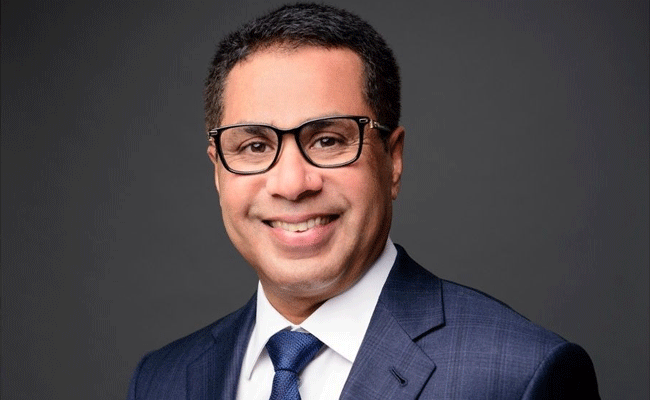
Faizal E. Kottikollon, Founder and Chairman of KEF Holdings, has been appointed to the prestigious board of directors at the Sharjah Research, Technology, and Innovation Park (SRTIP). This appointment represents a significant milestone for KEF Holdings, with Faizal Kottikollon bringing his expertise and entrepreneurial vision to contribute to the development of SRTIP under the leadership of Sheikha Bodour Bint Sultan Bin Mohammed Al Qasimi.

SRTIP is poised to become a leading hub for cutting-edge research, technological advancements, and innovation in the region. The inclusion of Faizal Kottikollon on the board of directors reinforces KEF Holdings’ commitment to innovation and sustainable impact in the fields of offsite construction, healthcare, education, and clinical wellness.

The esteemed board of directors comprises distinguished individuals such as His Royal Highness Prince Khaled bin Alwaleed bin Talal bin Abdulaziz Al Saud, Sheikh Dr. Majid bin Sultan Al Qasimi, Dr. Abdulaziz Saeed bin Butti Al Muhairi, Dr. Hamid M.K. Al Naimiy, Hussain Mohammed Al Mahmoudi, Dr. Susan Mumm, Najla Ahmed Al Midfa, Ahmed Obaid Al Qaseer, Khaled Issa Al Huraimel, Dr. Aisha Bint Butti Bin Bishr, Adel Abdullah Ali, Samer Salim Al Sayegh, Abdulaziz Basem Al Loughani, Mudassir Sheikha, and Alisha Moopen. Together, they will shape the strategic direction of SRTIP.

Faizal Kottikollon expressed his enthusiasm for the collaboration with SoiLAB, a venture within SRTIP, which aims to cultivate an environment conducive to creativity, technological advancement, and lasting impact on innovation, entrepreneurship, and technological progress not only in Sharjah but also beyond.

Faizal is the son of renowned Malayali entrepreneur and philanthropist PK Ahammed, Chairman of Peekay Group of Companies. He is married to Shabana Faizal, daughter of Late B Ahmed Haji Mohiudeen, Founder of B A Group, Thumbay, and a prominent business and community leader.

About KEF Group

KEF Holdings invest in businesses that are innovative, sustainable, cost-effective, and deliver positive disruptive solutions across core business sectors encompassing infrastructure, healthcare, and technology, to benefit society and build a better tomorrow.

It has a 20-year legacy of building successful businesses. It began its journey in 1995 with the opening of Al Ahamadi General Trading in Ajman, following this it launched a world-class Foundry, and a valve trading company JC Middle East. It then created Emirates Techno Casting, an integrated facility incorporating cutting-edge engineering and design lab, the world’s largest automatic molding line, steel refining furnace, machine shop, and research and development lab, rated among the top 3 technologically advanced foundries in the world.

In 2012 Tyco International, bought the business for USD 400 million, becoming the impetus for the launch of KEF Holdings’​ two new verticals KEF Investments and KEF Infra. KEF Investments, have built a global investment portfolio by capitalizing on low-risk, high-income opportunities in growing markets.

In the year 2018, KEF Infra announced a strategic merger with Katerra, the Menlo Park US-based technology company, revolutionizing the design and construction industries.

Staying true to its belief of being a social enterprise the company, in close collaboration with stakeholders in the public and private sectors, actively drives, funds, and supports high-impact social activities undertaken by the  Faizal & Shabana Foundation.

source: http://www.english.varthabharati.in / Vartha Bharati / Home> Gulf / by Vartha Bharati / July 18th, 2023

Dr. Syed Nooruzzuha Barmaver becomes first Bhatkally Ph.D. recipient in Neurogenetics

Bhatkal, KARNATAKA:

He completed his Ph.D from Tsinghua University, Taiwan

Bhatkal: 

In a momentous achievement, Dr. Syed Nooruzzuha Barmaver, son of Syed Nurulhuda Barmaver and son-in-law of Fazal Jukaku, has been awarded a doctoral degree in Neurogenetics from Tsinghua University Taiwan. This remarkable milestone not only marks Dr. Barmaver’s personal success but also brings pride and recognition to the entire Bhatkal community.

As the first Ph.D. recipient in Bhatkal in the field of Novel Molecular Mechanisms, Dr. Barmaver has embarked on a groundbreaking journey in advancing the understanding of complex neurological diseases. His research has uncovered novel molecular mechanisms that underlie these conditions, significantly contributing to the scientific community’s knowledge in this area. Dr. Barmaver’s work has gained global recognition, with his first study gracing the cover of the esteemed MBoC journal published by the American Society of Cell Biology.

The impact of Dr. Barmaver’s research does not stop there. His second discovery research has been selected as the cover feature of the prestigious Traffic journal from Denmark, further solidifying his position as a trailblazer in the field of neurogenetics. Additionally, his third study has been successfully published by the renowned Nature Publishing Group, emphasizing the significance and quality of his contributions.

To add to his remarkable achievements, Dr. Barmaver has received eight prestigious awards, highlighting his outstanding academic excellence and research accomplishments. Among the accolades bestowed upon him are the Phi Tau Phi award, the Muming Poo award in neuroscience, and the Shen culture award. These honors serve as a testament to Dr. Barmaver’s dedication, brilliance, and unwavering commitment to making impactful contributions to the field of neurogenetics.

source: http://www.english.varthabharati.in / Vartha Bharati / Home> Karavali / by Vartha Bharati / July 18th, 2023

Engineer Yousuf’s inspiring journey to empower the disabled community

Hyderabad, TELANGANA:

Engineer Mohammad Yousuf founded the Help Handicap Foundation in 2001

Hyderabad:

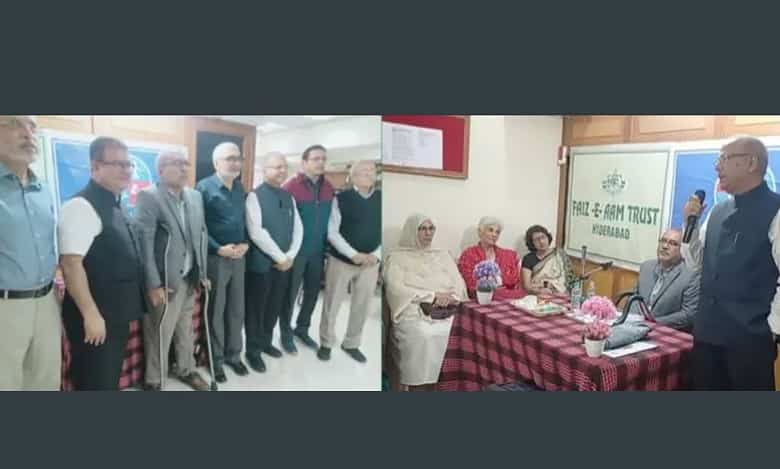
Faiz-e-Aam Trust, Hyderabad organises a special gathering in the honour of Engineer Mohammad Yousuf, Director, Federal Transit Administration, Office of Infrastructure, Safety and Asset Innovation on Saturday. The event was by prominent personalities of Hyderabad. Yousuf emphasized that strong thinking and high intentions can overcome even the biggest challenges, and disability should not hinder a person’s path to success.

The event commenced with a warm welcome by Mr. Rizwan Hyder, Trustee, Faiz-e-Aam Trust, who also conducted the proceedings. Engineer Muhammad Yousuf, who contracted polio at the age of two, narrated his journey of overcoming obstacles. Despite facing numerous challenges, he pursued BS degree in Electronics and Communication Engineering plus an MS degree in Computer Engineering from USA with the timely financial assistance from Faiz-e-Aam Trust, marking a significant turning point in his life.

Engineer Mohammad Yousuf founded the Help Handicap Foundation in 2001, which later became the EquallyAble Foundation based in Michigan USA. The foundation operates in 12 countries, including India, providing extensive support to the disabled community. Through Faiz-e-Aam Trust, the foundation extended financial assistance of Rs 35,58,710 to 142 individuals, including students and patients, and facilitated employment for 1,000 disabled people. Additionally, the foundation grants $5,000 to students with disabilities pursuing higher education abroad.

Expressing his admiration for Engineer Mohammad Yousuf, Mr. Zaheeruddin Ali Khan, Managing Editor of Siasat, commended his relentless efforts in empowering disabled individuals worldwide. He emphasized that Engineer Yousuf’s determination and commitment have made a significant impact on the lives of disabled people across 120 countries.

Dr. Naseeruddin paid tribute to the invaluable services of Engineer Muhammad Yousuf and Iftikhar Hussain, Secretary of Faiz Aam Trust. Mr. Iftikhar Hussain shared how the trust assisted Mohammad Yousuf during his pursuit of higher education in America. He expressed his delight in witnessing Mohammad Yousuf’s success and his return of the financial assistance to the trust.

Mr. Iftikhar Hussain highlighted Faiz-e-Aam Trust’s journey, which started with Late Zulfiqar Hussain’s vision in 1982 and has grown into a strong force of aid and support. The trust annually provides more than Rs 1 crore to help meritorious students and those in need. He also acknowledged the trust’s collaboration with Siasat Millat Fund, contributing to the assistance of victims of communal riots and disasters across Hyderabad, Telangana, and various parts of the country.

The gathering was organized in honor of Engineer Mohammad Yousuf and was attended by prominent personalities of the city, including Zaheeruddin Ali Khan, Rizwan Hyder, Ali Hyder Amir, Syed Haider Ali, Khalil Ahmed, Ayub Salahuddin, Ms. Zainab, Ms. Rubina, Ms.Shahnaz, Shaheed Hussain, Ms. Marwat Hussain, Mr. Salman Tayyabi, M.A. Siddiq, Dr. Ibrahim, Qazi Zainul Abedin, Prof. Khwaja Nasiruddin, Haroon Zai, Qari Siddiq Hashim, Ahmad Bashiruddin Farooqui, and other members of Faiz Aam Trust. The event witnessed a large gathering of staff and attendees who were moved by the inspirational stories and noble efforts of Engineer Mohammad Yousuf and the trust.

source: http://www.siasat.com / The Siasat Daily / Home> News> Hyderabad / by Zahed Farooqui / July 21st, 2023

‘Gaj Gaurav’ Award For Bandipur Veterinarian Dr. Mirza Vaseem

KARNATAKA:

Bengaluru:

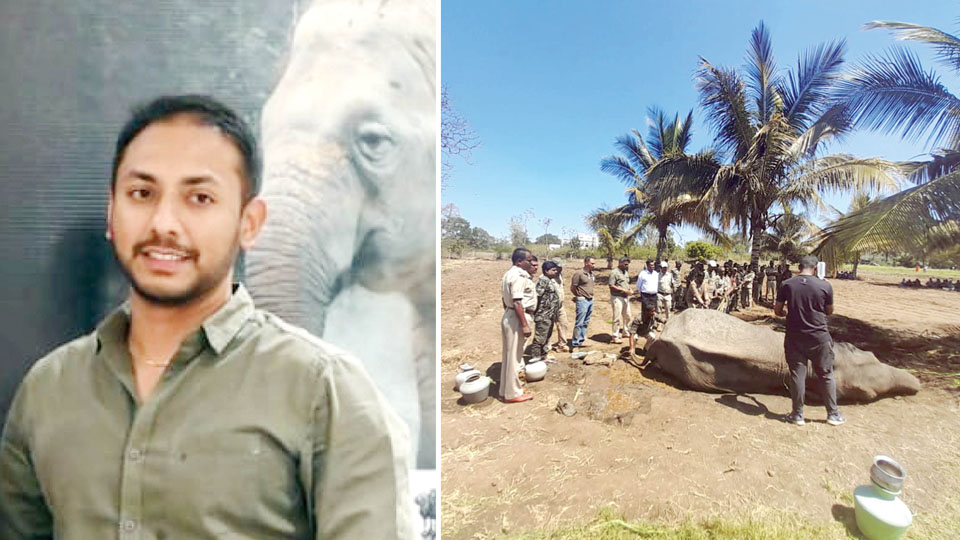
Dr.  Mirza Vaseem, Veterinarian at Bandipur National Tiger Reserve, has been selected for the prestigious ‘Gaj Gaurav’ Award for his outstanding service in wildlife conservation.

The award is presented by the Ministry of Environment, Forests and Climate Change, Project Tiger and Elephant Division on the occasion of World Elephant Day to honour frontline workers in wildlife conservation.

“This is for the first time that an Officer from Karnataka is receiving this award which is encouraging,” said Principal Chief Conservator of Forests (PCCF-Wildlife) Subhash K. Malkhede.

In February 2023, Dr. Mirza Vaseem had put in a lot of efforts to save the life of an elephant which was electrocuted and recognising his service, Additional PCCF Kumar Pushkar had nominated the name of Dr. Mirza Vaseem for the award.

World Elephant Day will be celebrated on Aug. 12 at Angul in Mahanadi Elephant Reserve at Odisha.

source: http://www.starofmysore.com / Star of Mysore / Home> News / July 14th, 2023

Presidency University Chancellor Nissar Ahmed awarded honorary doctorate by B’luru City University

Bengaluru, KARNATAKA:

Bengaluru:

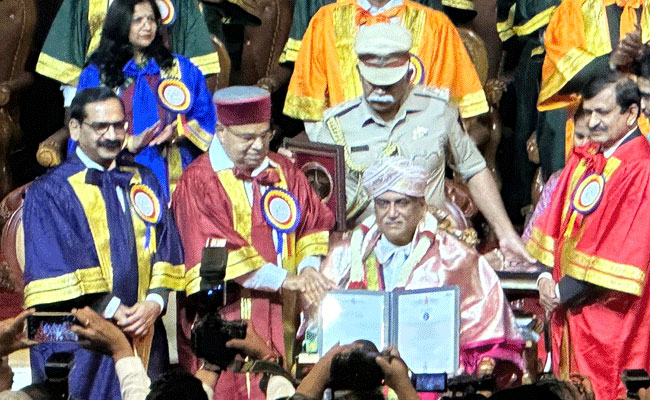
Presidency University Chancellor Nissar Ahmed and two other achievers were awarded honorary doctorates by Karnataka Governor Thaawar Chand Gehlot at the 2nd convocation ceremony of the Bengaluru City University on Monday.

During the program organized at the Jnanajyothi auditorium of the Bengaluru City University, Nissar Ahmed, who is a native of Mangaluru and also chairman of the Presidency Group of Institutions, was awarded a Doctor of Literature (D.Lit) degree.

Writer Tarini Chidananda and social activist Dr. Wooday P Krishna were also awarded D.Lit degrees by the Bengaluru City University during the convocation ceremony on Monday.

Renowned cardiologist and director of the Sri Jayadeva Institute of Cardiovascular Sciences and Research Dr CN Manjunath and Vice-chancellor of the Bengaluru City University Prof. Lingaraja Gandhi were present on the occasion.

source: http://www.english.varthabharati.in / Vartha Bharati / Home> Karnataka / by Vartha Bharati / July 10th, 2023

Bangalore Medical College Gets First Muslim Woman Principal

Bengaluru, KARNATAKA:

Dr Asima Banu has taken charge as the principal of Bangalore Medical College and Research Institute (BMCRI), becoming the first Muslim woman to hold this position at the institution. Dr Banu, with 23 years of service at BMCRI, assumed her new role on Wednesday, marking a significant milestone in the college’s history.

Dr Asima Banu’s journey at BMCRI began in the 1990s when she completed her undergraduate and postgraduate degrees at the institution. In 2000, she joined as a faculty member in the microbiology department and has since held various key positions, including quality in-charge, infection control officer, head of the microbiology department at Bowring Hospital, convenor of the medical education unit, and nodal officer of the simulation and skills centre at BMCRI.

Her contributions during the challenging times of the COVID-19 pandemic have garnered widespread appreciation. In 2020, Dr Banu served as the nodal officer of the Covid ward at the Trauma Care Centre, Victoria Hospital. Her dedication to patient care and well-being was evident as she implemented innovative measures to ensure the comfort and recovery of COVID-19 patients.

Dr Banu’s efforts to make patients feel at home and ease their recuperation included providing essential facilities and amenities in the isolation wards. She personally ensured that patients had access to juice tetra packs, nail cutters, toiletries, kettles, and pedestal fans. In an interview, she emphasized her commitment to meeting the diverse needs of patients, even when language barriers made it challenging. Dr Banu’s compassion and determination to ensure patient satisfaction have been instrumental in creating a positive healing environment.

Despite the immense responsibilities as the overall in-charge of the facility, Dr Banu consistently prioritized the patients’ well-being. She went above and beyond by catering to their specific requirements. Whether it was arranging for clothes and essentials or fulfilling requests for games, cakes, and chocolates, Dr Banu spared no effort to bring happiness and comfort to the patients. She established a WhatsApp group where patients could message her directly, creating a channel for communication and ensuring their needs were met promptly.

As Dr Asima Banu assumes the position of principal at BMCRI, her appointment serves as an inspiration to aspiring medical professionals, particularly women from minority communities.

source: http://www.thecognate.com / The Cognate / Home> News / by The Cognate News Desk / July 06th, 2023