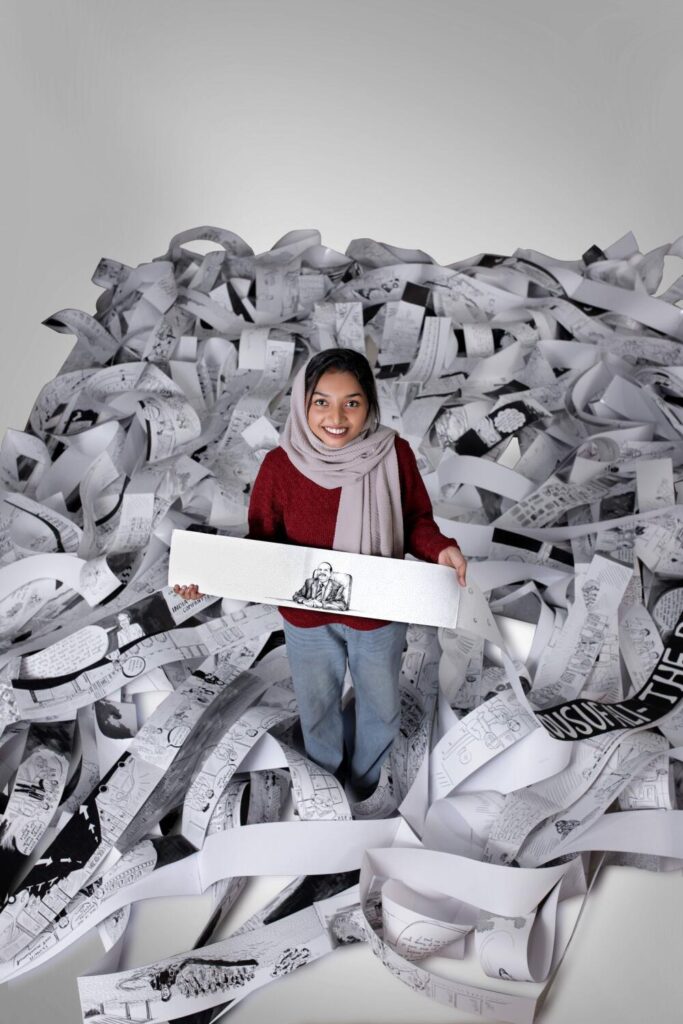
20-year-old Roshna created the longest cartoon strip measuring 430m, titled ‘The Billion Dollar Journey’ honouring businessman MA Yusuff Ali
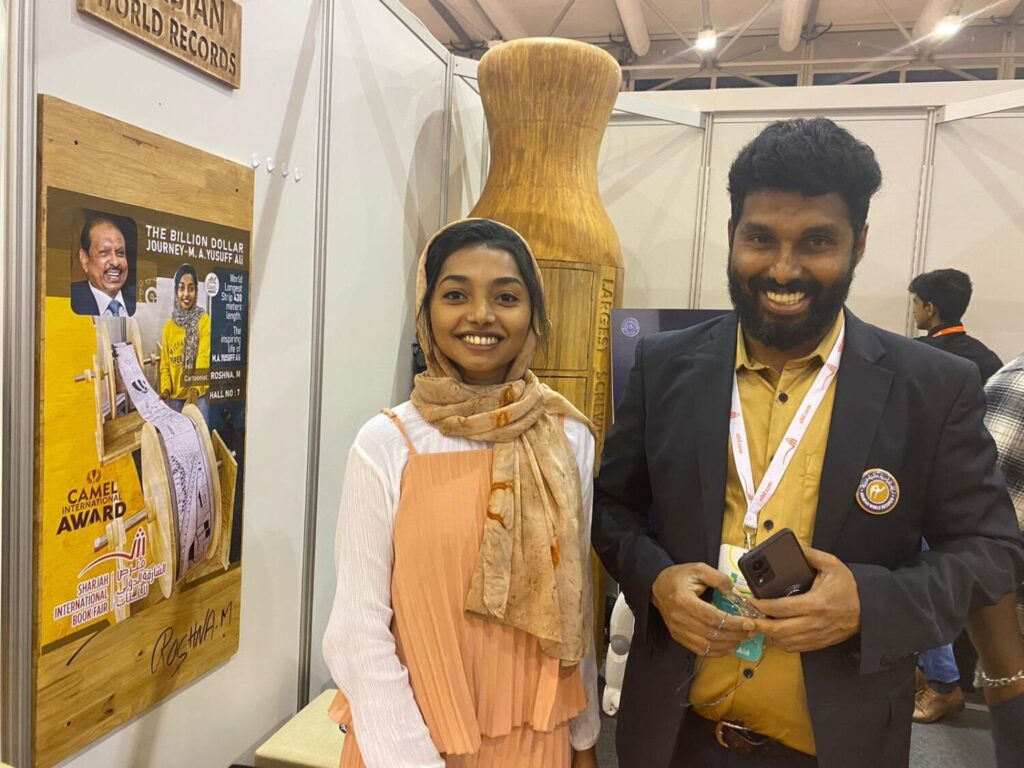
Father and daughter duo M Dileef and Roshna M. Photo: Nasreen Abdulla
The ongoing Sharjah International Book Fair (SIBF) houses two record-breaking installations — tucked away in Hall 7, the world’s largest screwdriver is displayed and right next to it is the world’s longest cartoon strip depicting the inspirational story of UAE-based businessman MA Yusuff Ali.
Both of these Guinness world record-holding creations have been made by Indian expat father-daughter duo M Dileef and Roshna M. “It feels great to be exhibiting here,” said 20-year-old Roshna, who broke her own record for the longest cartoon strip established in 2021 with her latest creation. Measuring 430m, the new strip titled ‘The Billion Dollar Journey’ is stretched across two wheels and can be read by rotating the hand.
On Sunday, the illustrious Indian businessman from Kerala, MA Yusuff Ali, visited the stall and commended Roshan’s efforts.
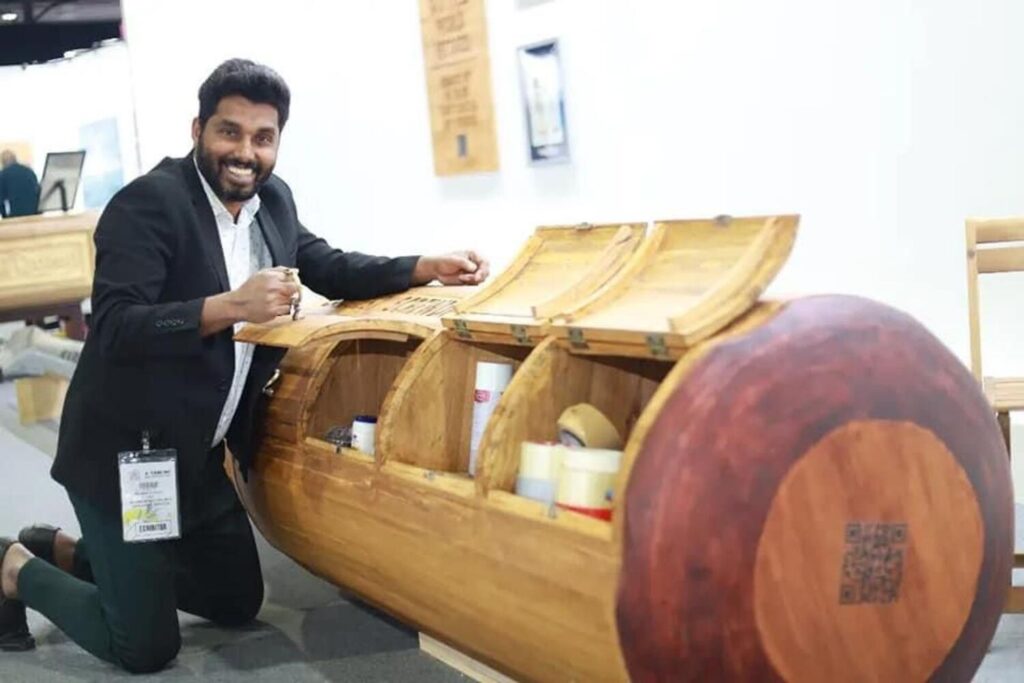
Roshna’s father, M Dileef, a seasoned record-setter, said this is his third Guinness World Record. “Due to space constraints, I could only put the head of the screwdriver on display,” he said. Completed in March, the tool measures a whooping 6.6m in length. The artist was recently granted a Golden Visa in the UAE.
The longest cartoon strip
The cartoon strip charts the journey of businessman MA Yusuff Ali, from his childhood in a village in Kerala to his meteoric rise as one of the most influential businessmen in the world.
“I have always looked up to him,” she said. “I want to be an entrepreneur; he is my role model, so I wanted to make something to honour him.”
It was in 2021 that Roshna set her first world record with a cartoon strip measuring 404 metres in collaboration with Global Village. This year, she has broken that record. According to the youngster, who recently graduated with a bachelor’s in fine arts, making this strip took her 8 months, five months of which was just for research.
“I had a team of six classmates,” she said. “We had decided that we wanted to do something to make our mark, and this is the idea we came up with. They helped me in the entire research process and aided me when drawing the cartoon strip as well.”
The graduate now dreams of pursuing a master’s degree in Europe and hopes to raise funds for her education with her artwork.
Largest screwdriver
The masterpiece by Dileef was first displayed at World Art Dubai in March of this year. “I wanted to pay tribute to the working-class population in the city,” he said. “No other country has honoured and valued the contribution of the working class like the UAE has. So many lives were transformed because of Dubai. This piece was a homage to that.”
Made out of mahagony wood and mild steel, the screwdriver was constructed in Dubai. The handle, which has a diameter of 70cm, also has storage space for knickknacks.
Dileef has earlier set two world records- one for curating the world’s longest Quran and another for the largest badminton racket.
www.dileefartgallery.com
source: http://www.khaleejtimes.com / Khaleej Times / Home> UAE / by Nasreen Abdulla / November 06th, 2022
“My name is Nabeela Syed. I’m a 23-year old Muslim, Indian-American woman. We just flipped a Republican-held suburban district,” she tweeted.
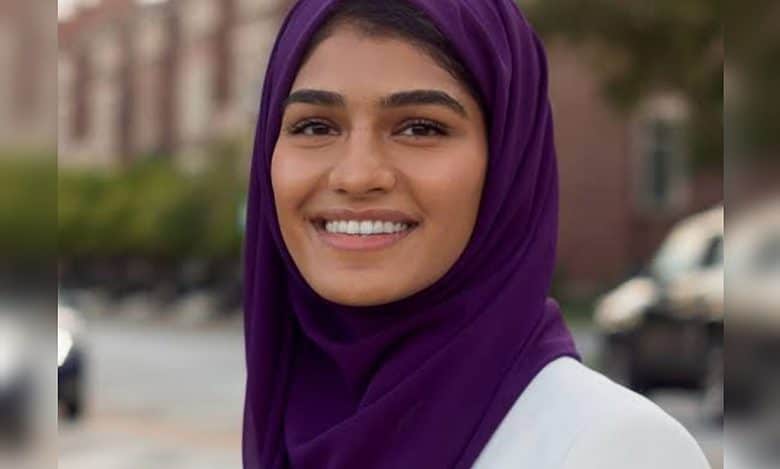
Nabeela Syed (Photo: Instagram)
A 23-year-old Indian-American Muslim woman Nabeela Syed, the candidate of the Democratic Party, has won a significant victory in the United States (US) mid-term elections.
Nabeela has written history as the youngest representative to have won the election for the 51st House district of the Illinois state legislature in US.
On Wednesday, Nabeela took to Twitter and shared her happiness of being elected to the General Assembly as a representative of the Democratic party.
“My name is Nabeela Syed. I’m a 23-year old Muslim, Indian-American woman. We just flipped a Republican-held suburban district,” she tweeted.
She further wrote, I will be the youngest member of the Illinois General Assembly.
Nabeela took to Instagram and wrote, “When I announced for State Representative, I made it a mission to genuinely engage in conversation with people – to give them a reason to get involved in our democracy and hope for better leadership that represents their values. We won this race because we engaged in that conversation.”
“We talked to seniors about the rising cost of prescription drugs. We talked to working families about the growing burden of property taxes. We talked to women, pledging that I would protect their right to reproductive healthcare. We spoke with parents about their desire to strengthen commonsense gun safety laws,” she adds.
Nabeela continues, “We won this race because the people of the 51st District want a representative who is ready to fight for them and their families.”
“I knocked every door in this district. Tomorrow, I start knocking them again to thank them for placing their trust in me. I’m ready to get to work,” she added.
In June 2022, Nabeela Syed had won the Democratic primary and has now flipped a Republican district against incumbent Chris Bos.
Syed, who becomes the first South Asian in the Illinois state legislature, will also be the youngest member of the state assembly.
Born and raised in Illinois, Nabeela Syed graduated from the University of California with a degree in Political Science.
In her election manifesto, Nabeela Syed has promised to consider and address public issues such as equal rights, health care, education and taxation.
According to her website, Syed is running “to build a better Illinois for residents today and tomorrow – an Illinois with a strong economy, sustainable infrastructure, and affordable healthcare, and higher education.”
Syed currently works for a non-profit, helping them in digital strategy and supporting a myriad of civic engagement initiatives, for example, mobilising voters, curbing sexual assault on college campuses, and enhancing gender equity, according to her official website.
Having graduated from the University of California, Berkeley, with a degree in Political Science and Business, she served as the president of a pro-bono consulting organisation that helped local businesses.
Syed is active in her religious community at the Islamic Society of Northwest Suburbs and advocates interfaith dialogue and aims to empower young Muslim women to lead.
source: http://www.siasat.com / The Siasat Daily / Home> News> India / by Sakina Fatima / November 10th, 2022
Nellore, ANDHRA PRADESH / Kozhikode, KERALA / SAUDI ARABIA:
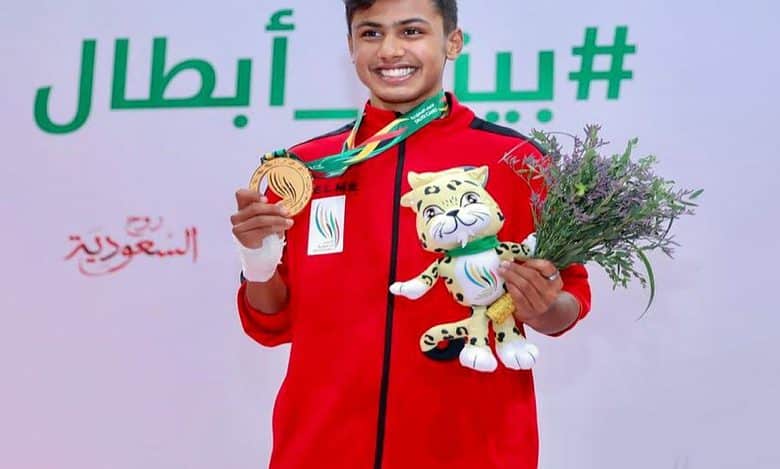
Mehad performed Umrah along with his parents immediately after winning the Gold Medal.
Mohammed Mehad Shah
Jeddah:
The juvenile Andhra badminton player made a strong impact at the ongoing Saudi Games, the prestigious national games of oil rich Saudi Arabia known for its passion for football.
Mohammed Mehad Shah, a native of Nellore in Andhra Pradesh has won a gold medal and one million Riyals in the men’s single category in badminton competition as part of the first edition of the Saudi Games, the largest national sports event of its kind, took place on Friday at King Fahd Stadium in Riyadh in the presence of Prince Faisal bin Bandar bin Abdulaziz, Governor of the Riyadh region, as well as the Saudi public in a grand ceremony filled with lights, fire, and music.
Mehad Sha along with other winners were honored by Prince Fahd bin Jalawi bin Abdulaziz bin Musaed, vice president of the Saudi Olympic Committee and director of the Saudi Games. He was also greeted by Muqrin Al-Muqrin, chairman of the Saudi Badminton Federation, and Mai Obaid Al-Rasheed, vice president of the Saudi Badminton Federation.
Participants competing for a grand total of more than SR200 million: Gold-medal winners to receive SR1 million, and silver-medal winners awarded SR300,000 and SR100,000 respectively. This is the highest prize money dedicated to the sports sector in the history of the region.
The 17-years old native of Nellore district in Andhra Pradesh, who was born and brought up in Riyadh and a student of 11th class at New Middle East International School, has told this correspondent that his aim is to win medals for Saudi Arabia in Olympics and other international tournaments.
Mehad Shah said that the coaching which he takes at Gopichand Badminton Academy in Hyderabad is helpful to achieve success. Gopichand is known as Dronacharya of Indian Badminton. He also expressed his gratitude towards his school principal and PT and Tah, Ralf –both Philippine nationals- coaches who trained him.
Excited Mehad who performed Umrah along with his parents immediately after winning the Gold Medal also thanked his school sports director and trainers.
“When I was receiving the gold medal from Prince Fahd, I remember the days when I was struggling to find a partner to play with me in the badminton court”, he said.
He has been playing the game from 5th standard and his elder brother Faisal Sha also used to play the sport in Riyadh. Faisal is now pursuing medicine in India. Mehad’s sister Khateeja is also studying medicine back home in India. Mehad Sha’s parents, Shahid and Shakera Begum both are engineers.
Muzzamil Shaikh, coordinator of APNRT, AP state government body to look after NRI affairs in Saudi Arabia and noted social worker, has congratulated Mehad.
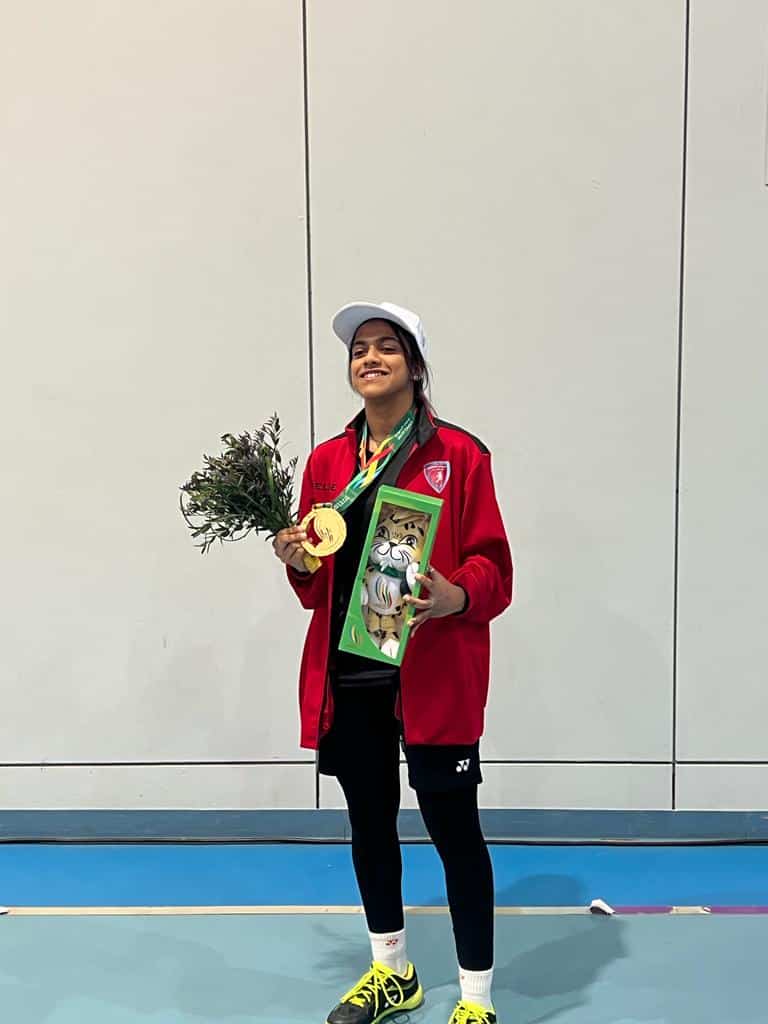
The only other Indian winner is Kadeeja Kothoor, who also won the gold medal and a million-riyal prize money in women’s single category of badminton. She is also 17 years old and studying in the same school as Mehad.
Kadeeja, native of Calicut in Kerala also born and brought up in Riyadh in a family of full badminton athletes. Sinmar Badminton Academy and Indian Academy- set up by a group of NRIs including her father Latheef – trained her. Coaches Sanjay, Shahin and Wahid shaped her gaming skills.
When she started playing at the age of eight years everyone was expecting that she would make a difference in the game one day which she did, said Latheef, father, who himself is a badminton player. Kadeeja’s other siblings are also badminton players. Her brother Mohammed Nzami is Kerala champion and 6th ranker in All India rating under 13 category; while sister Raya Fatima is Calicut’s St. Joseph Devagiri college team member of badminton team.
“My wife, Shanitha, has encouraged all children into sports” said Latheef.
source: http://www.siasat.com / The Siasat Daily / Home> News> Andhra Pradesh / by Irfan Mohammed / posted by Sameer Khan / November 07th, 2022
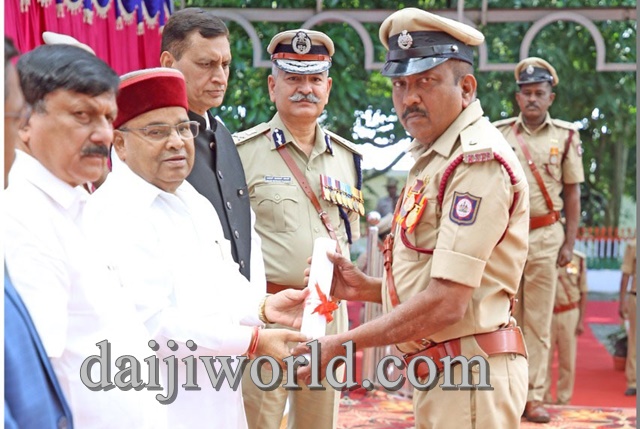
Meer Mohammed Ghouse, assistant fire station officer, Udupi received the President’s medal for his meritorious service from Karnataka state governor Thawar Chand Gehlot at the Raj Bhavan, Bengaluru on November 7.
Ghouse had joined the fire service in 1992.
He had received promotions during his service period of the last 30 years and is serving as an assistant station officer at present.
The department has presented cash prizes to him 33 times and two certificates of excellence.
He was felicitated with the chief minister’s gold medal in 2012.
source: http://www.daijiworld.com / DaijiWorld.com / Home> Top Stories / by Daijiworld Media Network – Udupi (JS/EP) (headline edited) / November 09th, 2022
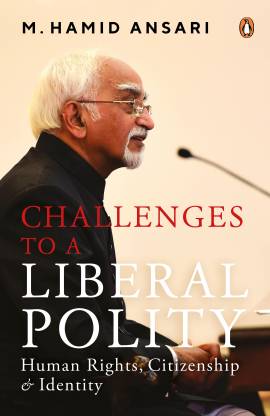
A collection of speeches and articles by former vice-president Hamid Ansari, offering engaging insights into our democracy.
Challenges to a Liberal Polity: Human Rights, Citizenship & Identity / by M Hamid Ansari / Publisher Penguin / Pages 277 /Price 799 INR
For the past decade, public discourse in India has remained sharply focused on challenges to the liberal polity and the threats that have grown to human rights. Issues of citizenship and identity are entwined inextricably in this. It is in this context that Challenges to a Liberal Polity: Human Rights, Citizenship & Identity assumes not only topicality but also a significance that can be overlooked only at the readers’ own peril.
Hamid Ansari is a distinguished diplomat, academic, statesman and also, the often misused word, a public intellectual. He has, in his long career, worn many hats. He has served as the Indian ambassador to Afghanistan, Vice-Chancellor of the Aligarh Muslim University (AMU), Chairman of the Minorities Commission and the Vice President of India. Throughout his life, Ansari has never shied away from speaking his mind—bluntly if need be.
The author has, at times, been exposed to unfair criticism and deliberately humiliated by persons in high office who should have known better. When bidding him farewell, PM Narendra Modi was unnecessarily sarcastic—some thought gracelessly—by mentioning that Ansari had spent most of his diplomatic career in Islamic countries and perhaps he would be more comfortable now that he was relieved of the burden of the constitutional position to freely voice criticism of whatever he didn’t agree with. The PM conveniently forgot that the former vice-president served with distinction as India’s permanent representative in the United Nations and as Chief of Protocol when Indira Gandhi was the prime minister in an era of dynamic Indian diplomacy. But, let us not digress.
This volume is a collection of speeches, forewords and articles contributed by the author on subjects that overlap and cover a vast time span from the turn of the century to the present day. The introduction is stimulating and thought-provoking. It presents a distilled essence of state-of-the-art research in political science and Indian society. This prepares the readers for what is to follow.
The book is divided into three sections. The first section deals with human rights and group rights. The subsections or mini-chapters can be read profitably as independent essays. Of particular interest are the ones titled––‘India and the Contemporary International Norms on Group Rights’, ‘Minorities and the Modern State’ and ‘Majorities and Minorities in Secular India: Sensitivity and Responsibility’.
The second section is titled ‘Indian Polity, Identity, Diversity and Citizenship’. This is more substantial than the preceding segment and covers a range of topics that should engage readers with different interests and ideological orientations. Examples include ‘Identity and Citizenship: An Indian Perspective’, ‘Religion, Religiosity and World Order’, ‘Two Obligatory -isms: Why Pluralism and Secularism is Essential to our Democracy’. There are shorter pieces like ‘The Ethics of Gandhi’ and ‘The Dead Weight of State Craft’, ‘India’s Plural Diversity is Under Threat: Some Thoughts on Contemporary Challenges in the Realm of Culture’. How one wishes that these themes had been explored in greater detail.
To some it may appear that this is nitpicking, but this is the hazard of compiling a collection of comments and observations made on commemorative occasions such as inaugurating or concluding a seminar, a workshop or writing a short preface. Ansari is primarily a scholar, who is deeply distraught by the happenings around him and is restless to share his constructive thoughts and not just the distress and despair. The tone is always cautiously optimistic.
The concluding section deals with ‘Indian-Muslim Perception and Indian Contribution to Culture of Islam’. The essays on ‘Militant Islam’, ‘Islam and Democratic Principle’ and ‘India and Islamic Civilisation: Contributions and Challenges’ deserve to be read by all Indians, particularly the young. One may disagree with the author, but it is impossible to imagine that any meaningful dialogue can take place between the majorities and minorities in India without an understanding of how the ‘other’ thinks and perceives the world.
His convocation addresses delivered at Jamia Millia Islamia (where he taught) and the AMU (his alma mater) have a different flavour. The tone is personal and evokes shared nostalgia. The final essay is a review of India and muslim world.
The book has substantial end-notes that provide useful bibliographical information. One can flip through these pages to pursue the themes dealt in the book according to one’s own inclination and at leisure.
This book is for all. The general reader, who has no scholarly pretensions, too can turn the pages of this book with great pleasure. Many a time, the author peppers the prose with Urdu couplets that hook the reader to his line of arguments. One such piece is his Fakhruddin Ali Ahmed Memorial lecture. Most people remember this vice-president as the supine individual who signed on the dotted line with dimmer when Indira Gandhi declared Emergency at midnight. Ansari, however, has used the book brilliantly to make some hard- hitting comments that are im- possible not to take on the chin.
The chapter begins with: Yaad-e-maazi azaab hai yaa rab/ Chheen le mujhse hafiza mera (The memory of the past is torturous, O God/Take away my memory from me), and concludes with: “Can the amnesia, the compromises and the misconceptions of recent and not-so-recent past be overcome?” Yes, only if meaningful alternative is offered. We do stand at the crossroads.
source: http://www.newindianexpress.com / The New Indian Express / Home> Lifestyle> Books / by Pushpesh Pant / Express News Service / November 06th, 2022
At a time when little is known about one of India’s greatest social reformers and educators, widely believed to be India’s first woman Muslim teacher, the Andhra Pradesh Government introduced a lesson on the contribution of Fatima Sheikh in the text-books of eighth class.
The reformer is known to have given shelter to Jyotirao Phule and Savitribai Phule, the well-known social reformer couple, when they were shunted out from their families.
It was in 1848 that Phule couple had taken initiative against caste system and male chauvinism. Fatima Sheikh is credited with allowing the Phule couple to start the first all-girls school at the former’s house in erstwhile Poona in Bombay Presidency.
Fatima Sheikh taught at all the five schools which were run by Phules.
At the same time she founded two schools on her own in 1851 in Mumbai.
Fatima Sheikh underwent teacher’s training along with Savitribai Phule at an institute run by Cynthia Farrar, an American missionary.
Born on January 9, 1831, she has not received the recognition she deserved. She remains a little known activist in various parts of the country. Prior to Andhra Pradesh, Maharashtra had introduced a brief lesson on her in school curriculum.
On the other hand, Google had honoured her with a Doodle on its homepage in connection with her 191st birth anniversary.
“We believe the children, who are the future of the country, should know about the reformers, freedom fighters and others who contributed significantly for building the nation. We are very happy that a lesson has been introduced in eighth class book. More awareness is required on the contribution of Fatima Sheikh,” Kaki Prakash Rao, State general secretary of AP Primary Teachers’ Association, told Siasat.com on Monday.
AP United Teachers’ Federation leader D. Ramu hailed the initiative of the AP Government and said that time, moving out of home by women was considered a big sin. Still, Fatima Sheikh along with Phules was instrumental in teaching Dalit and Muslim girls ignoring threats by many conservative, casteist and fanatic outfits and individuals.
source: http://www.siasat.com / The Siasat Daily / Home> News> Andhra Pradesh / by Santosh Patnaik / November 04th, 2022
The 52-year-old Devanahalli farmer grows Avocados, Macadamia nuts, Rambutan, Bush Orange, Water Apple, Star Fruit and Lychee Thai Guava among others in his one-acre nursery.
Avocados. (Photo|Associated Press)
Bengaluru :
Eleven years ago, Mohammed Adil bid adieu to his 20-year-old gemstone business and turned to his interest in growing tropical fruit plants full-time. The decision helped him reap rich dividends as now his turnover by selling exotic saplings in Bengaluru is over Rs 1 crore annually.
The 52-year-old Devanahalli farmer grows Avocados, Macadamia nuts, Rambutan, Bush Orange, Water Apple, Star Fruit and Lychee Thai Guava among others in his one-acre nursery.
“I had 4 acres of land where I had many Jamun trees. But, since the yield was less, I searched for exotic fruit trees and my journey as a farmer began 11 years ago. I converted one acre into a nursery where I grew all the mother saplings. In Avocado alone, I have 13 types with four types named after Bengaluru nursery,” said Adil.
In the last five years, he has sold over lakh Avocado saplings. “This tropical fruit is easy to grow with zero maintenance and the yield is just in three years. All one has to do is ensure good care for the first two years,” said Adil.
source: http://www.newindianexpress.com / The New Indian Express / Home> Cities> Bengaluru / by Mohammed Yacoob , Express News Service / November 04th, 2022
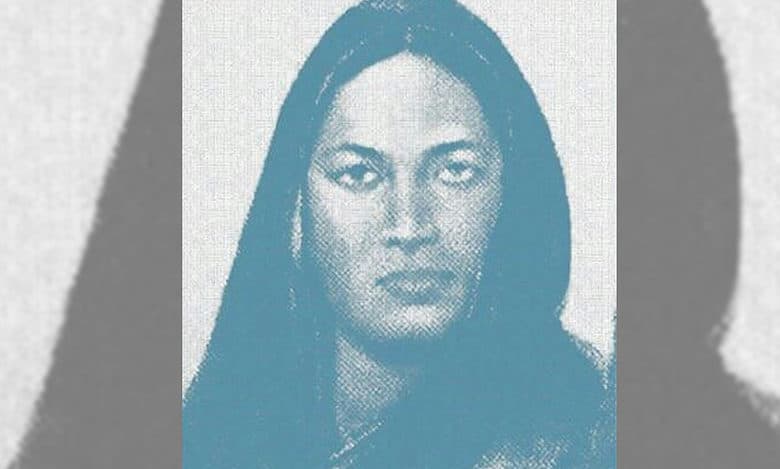
Muhammadi Begum was a student of Osmania University, Hyderabad, where she topped the Bachelor’s examination in 1932.
Highlights
Having received a scholarship from the Nizam for higher education, Muhammedi Begum, a young woman from Hyderabad, travelled to Oxford University in 1934.
What makes her story even more remarkable is that she maintained an extensive record of her four years abroad.
Her diary has been translated from Urdu into English, and published, by her daughters
In 1934, a young woman from Hyderabad travelled to Oxford University in England to study, accompanied by her husband. She had received a scholarship from the Nizam of Hyderabad to pursue her higher education (for which she studied French, Arabic and English). During the nearly four years she spent in the UK, she had two children, travelled around Europe and established a pattern of living that would hold her in good stead her entire life.
The young woman was Muhammadi Begum, student of Osmania University, Hyderabad, where she topped the Bachelor’s examination in 1932. She was married to Delhi-born, Syed Jamil Husian, an alumnus of the Aligarh Muslim University.
Those days, women travelling abroad to pursue education was a rarity; although what made Muhammadi Begum’s story remarkable is a diary that she maintained at Oxford which recounted everything from her day-to-day concerns to reflections on the state of society.
Muhammadi Begum’s diary remained under a shroud till the year of her passing, in 1990. The little note-book, where she detailed her daily life as she lived across continents, was eventually a precious find. It went to her cousin first and meandered in the family, till it caught the attention of her eldest daughter towards the end of the decade.
“I was pleasantly surprised and was taken aback by it,” said Zehra Ahmad, Muhammadi Begum’s eldest daughter. “I came across the diary after she passed away. I would’ve asked her many questions if I knew about its existence.”
What followed over the years was translation (as Muhammadi wrote in Urdu), editing, followed by COVID-induced delays in publishing, before A Long Way from Hyderabad saw the light of the day in 2022. Zehra translated the book along with her sister Zainab Masud.
Translating the diary was no mean feat, as Muhammadi Begum made detailed records, even writing in the margins. The sisters read it multiple times, transcribed it, and then translated it – all of it laborious and time consuming.
Kulsoom Husein, her youngest, who came out of retirement to edit and rework her mother’s diary said, “The tone of the diary is true to her experience. It was a new experience for her to travel to England as few women did so in those days.”
Charting new paths
Muhammadi Begum belonged to a well-known family of writers. Her mother, Qaiseri Begum, was the granddaughter of famous writer Moulvi Nazeer Ahmed, who’s work Mirat-ul-aroos is often dubbed as Urdu’s first novel. Qaiseri Begum, herself was a prolific writer whose memoirs Kitab-i-Zindagi details changes in Indian social history from the 1880s to the 1960s.
The diary successfully encapsulates the journey of a young couple making their way in the London of 1930s. Her observations are detailed, precise and provide an invaluable peek into the world at the time – be it shopping at Harrod’s, visiting the Victoria and Albert Museum, eating ice-cream at a restaurant in Elliston & Cavell or taking walks in University Parks in Oxford, it paints vivid vignettes of pre-World war- II London.
The diary, according to Ahmad, who also spoke for her other sister and co-translator Zainab, brought her mother alive. “Everything she wrote was an accurate account of herself; her worries for her baby or exams, her management of the household and juggling her studies with a baby. She was on the move all the time and led a full and active life,” said she.
The writing is assured and confident. It stays true to what it is intended to be — a record of its keeper’s time in a foreign land. It comments on the English way of life (an interesting nugget is the usage of blackcurrant jam to treat colds), the trials of learning French and the easy camaraderie between students from India. Her letters to her mother Qaisari Begum were even published in a Hyderabad Urdu daily, Ismat.
It also showcases Muhammadi Begum as an independent woman with agency. Travelling in Europe along with a toddler can be a daunting task at any time, but she managed it with a remarkable spirit. It is in fact this spirit that would hold her in good stead later in life, when at 42 she lost her husband and had to look after many children.
A Long Way from Hyderabad can be nostalgic. It’s all about an era gone by, of Urdu publications in Hyderabad which have long ceased to exist (Rahbar and Tehzeeb) or local traditions like Kalzana, a medicine made from chalk and calcium, and given to pregnant women.
What she wrote holds relevance even today, as her struggles (with food, culture and money) are similar to ones faced by many students studying abroad. The diary also strikes a balance between everyday details of life, reflections of the time and personal observations.
A record of the time
Records of women travellers are rare. The few accounts which exist are those of Sikandar Begum, the ruler of Bhopal who wrote of her pilgrimage to Mecca in 1869, Maimuna Sultan who wrote an account of London in 1911 and Atiya Fyzee who published her travel writings in Zamana-I Tehsil in 1921. Typically, the women who published at the time were queens, politicians or activists; Muhammadi Begum was none of them and hence her account stands out because of its simplicity and honest rendition of her life.
Her writing is as much a record of her own life as it is of the times she lived in. The Independence movement was on in full throttle and she along with her husband eagerly took part in discussions with friends. She actively participated in cultural exchanges even though she was reluctant to lend her sarees to curious British women.
“My mother was very stirred by the experiences she had. Technology, in the form of planes and ship liners, was just coming up and when she visited the science museum she was struck by the difference in Indian and British kids. While rote learning was accepted in India, the children there were curious to explore scientific apparatus and experiments. She makes a mention of all these in her daily jottings,” observed Husein.
Indeed, the travel account shows that concerns have not changed much between 1935 and 2022. The author lamented the state of Indian museums on a visit to the V and A Museum and was entranced by a Buddha statue. She worried about land prices shooting up in Hyderabad and wondered if the family could afford to buy a house — valid concerns even after a century.
She throws light on the comfortable relationship between her and her husband. Muhammadi Begum’s husband, Jamil, took leave of absence from his work as a civil servant in Hyderabad to travel with his wife. According to Ahmad, her father was a hands-on parent. “He looked after the baby with her, which was unusual for the time. Also, they shared an equitable relationship,” she said. “He was an admirer of Gandhi and she looked up to Iqbal, which led to many discussions around each. They both liked exploring places and had a wide circle of friends.”
The years in Oxford had a lasting impact on her, as throughout her life she remained fond of open air, long strolls and staying independent. In fact, later in life, she took in paying guests in Lahore when she retired from her job and needed to supplement her income.
A nod to the past
In producing the book, Muhammadi Begum’s daughters became closer, as Husein noted, “We exchanged information about relatives mentioned and forgotten. My elder sisters have translated and I reworked the text — so it was a collaborative effort. My daughter, Amena, helped with research on key figures who were at Oxford at that time, such as educationist Sir Michael Sadler and GM Sufi, a retired University of Delhi registrar and historian, and Miss Bharti Sarabhai, who hailed from a prominent Indian civil rights activist family.”
With an account of food, state of women, culture, feelings and a life well lived, A Long Way from Hyderabad, is a perfect addition to the archives of writing from pre-Independent India. It provides a reliable record of the times gone by. It also shows the lasting impact of the written word and its ability to transcend time.
source: http://www.news9live.com / News Nine / Home> Arts & Culture / by Mallik Thatipalli / June 03rd, 2022
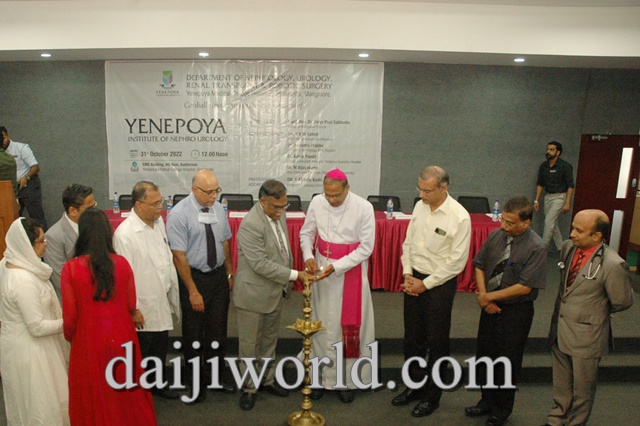
“The Yenepoya organization, which backs grief-stricken people and is in the forefront of humanitarian service, is model to all. Organ donation is very important is present times as many are dying due to organ failure. All have to think about organ donation,” opined Bishop of Mangalore Diocese Dr Peter Paul Saldanha.
The bishop was speaking after inaugurating the Yenepoya Nephro Urology organization under the aegis of Nephrology, Urology, Renal transplant and Robotic surgery departments of Deralakatte Yenepoya Medical College.
The bishop further said, “Yenepoya organization has recently given honorary doctorate to president of Gulbarga University recognising his humanitarian service. This is really appreciable. There is a possibility of giving life to five people from a person who is brain dead. Many make their death a fruitful one. We have to learn a lot from the people who are dying. Greek believed the whole world as one life. It is important to save lives.”
Prof Dr Ravindra Prabhu of Nephrology department, KMC Manipal said, “There was time when anyone with kidney ailment was going to die for sure. Very few were coming to hospital with kidney disease. Many have died due to heart attack because of psychological pressure of kidney ailment. Others were not even taking any medicine. Now many are getting cured due to innovative technology. Let the Nephro Urology department which has begun in Yenepoya, give good training to students.”
Vice chancellor of Yenepoya University Dr M Vijayakumar said, “The corporate zone is ruled by the renal department treatment method. The organ donation when one is alive shows the highest form of humanitarian values.”
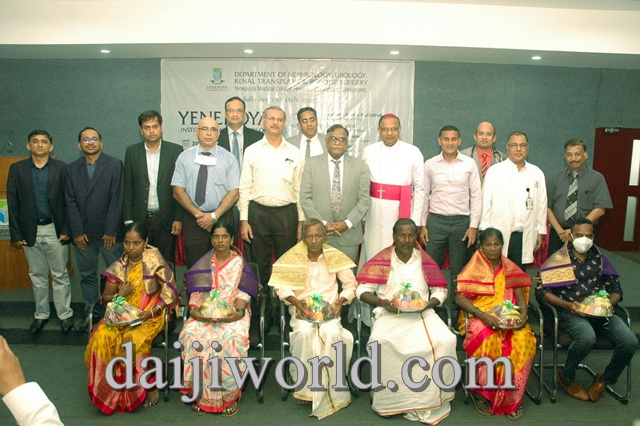
Seven people who donated kidney to relatives were felicitated on the occasion. Farhad Yenepoya, Associate vice chancellor of Yenepoya deemed university, Dr Gangadhar Somayaji, registrar, Dr M S Moosabba, dean of Yenepoya Medical College, Dr Prakash R M Saldanha, medical superintendent of Yenepoya medical college were the chief guests.
Senior urologist of Yenepoya Speciality Hospital Dr Ashok Pandit, head of Nephrology department of Yenepoya Dr Santhosh Pai gave details of the felicitated people.
Dr Altaf Khan welcomed the gathering. Dr Mujib Ur Rehman did the introduction. Dr Nishchith D’Souza proposed a vote of thanks.
source: http://www.daijiworld.com / DaijiWorld.com / Home> Top Stories / by Mohan Kuthan / Daijiworld Media Network – Mangaluru (MS) / October 31st, 2022
“I have great respect for the Nizam of Hyderabad. He stood by us when it mattered most and donated millions of pounds to help Britain’s air force. It was because I have a deep regard for the Nizam that I am making this trip to Hyderabad. Now that I am here I feel a sense of happiness and satisfaction.”
These words were spoken by Raymond George Rees-Oliviere, a former air force officer of the 110 Squadron in Britain. This squadron was one that was set up during the First World War in 1917 with the money donated by the Nizam.
It was called the Hyderabad Squadron and retained that name after the Royal Flying Corps was merged with the Royal Naval Air Service to form the Royal Air Force. During the Second World War, the Nizam donated more funds and two more squadrons were set up. But the 110 Squadron was the first of these and it was the one in which Raymond served in the 1960s.
“I want to relate a very unusual coincidence that happened before I came to Hyderabad,” continued Raymond. “I live in the city of Bath. For my Visa application to travel to India, I had to go to Cardiff because the processing is done there. It turned out that the Indian gentleman, who was the Visa officer, was from Hyderabad. He asked me why I wanted to travel to Hyderabad and that is when I told him my story. How the Nizam had donated a sum of money which set up the 110 Squadron in which I had served. The gentleman was overjoyed when he heard these facts. He granted me a Visa in no time. Moreover, although I had asked for two months, he granted me six months,” said Raymond.
Raymond belongs to a family of Englishmen who lived in India for generations. His father and grandfather lived in India and Raymond was born in India in 1937. He studied at the Goethals Memorial School in the town of Kurseong in Darjeeling district. When he was ten years old the family moved back to England. There he completed his education and then joined the Air Force.
During his air force career he served as a gunner and as helicopter crewman during the Malaysian Confrontation of 1962 to 1966. He had many hair raising tales to relate but all of these cannot be retold in this article.
After retiring from the air force, he continued to work in the aviation sector. He worked in aerospace and defence in the UK and in Oman and France. He then served as Principal Airworthiness Specialist in Saudi Arabia for seven years. His dedication was given respect and recognition in Saudi Arabia. He received a letter of recommendation from the Ministry of Defence and Aviation, Civil Aviation Presidency in Jeddah. Later he worked in Norway and Germany. He worked for well known companies such as Rolls Royce, BAE Systems, Raytheon and British Airways.
He was also a keen sportsman. During his service he played hockey, boxing and rugby. In boxing he was coached by the famous Harper brothers. His fellow boxers included Jack and Brian London. The latter became world famous and was the top challenger to Muhammad Ali in 1966. However he was defeated by Ali. Another of Oliviere’s boxing teammates was Dick McTaggart who took part in the 1956 and 1960 Olympic Games and won a bronze and a gold medal.
In this hectic journey of life, he got married to Margaret and had four children. His first child was a daughter whom the couple named Tracy. She was born in Singapore in 1964. Next came Lee, Alison and Alexandra, all born in the UK. He and his wife remained married for 61 years until she passed away last December.
But for many years Raymond also cherished another dream. He wanted to visit Hyderabad and see for himself the land which was once ruled by the 7th Nizam. That dream finally materialised when he landed at the Rajiv Gandhi International airport on 28th October 2022. During a brief stay in Hyderabad he took the opportunity to visit the historical landmarks and sample the Hyderabadi cuisine.
“My life has come full circle. What began with the connection to the Nizam at the beginning of my air force career has now been completed with my visit to Hyderabad. Although my stay here was brief, I have enjoyed myself thoroughly and made very good friends. I have found that the people of Hyderabad are excellent hosts. I will carry back with me fond memories of this delightful city,” concluded Raymond who will also be going to Kurseong to catch up with his old school mates.
source: http://www.siasat.com / The Siasat Daily / Home> News> Hyderabad / by Abhijit Sen Gupta / October 31st, 2022