Jasovar Village (Mirzapur District), UTTAR PRADESH :
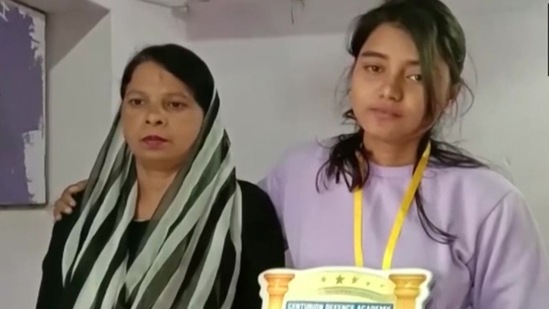
Sania Mirza of Uttar Pradesh’s Mirzapur district earned this position by passing the National Defense Academy 2022 examination (NDA) exam.
On December 27, Sania Mirza will join NDA Khadakwasla in Pune.(ANI)
Sania Mirza, daughter of a TV mechanic from Mirzapur, has been selected to become a fighter pilot in the Indian Air Force and would be the country’s first Muslim girl and the state’s first IAF pilot.
Sania Mirza is a resident of Jasovar village under the Mirzapur Dehat Kotwali police station area. She secured this position by passing the NDA exam. She has brought laurels not only to the district but also to the state and the country.
Sania, who studied in a Hindi medium school, said that Hindi medium students too can achieve success if they are determined. On December 27, she will join NDA Khadakwasla in Pune.
The parents as well as the villagers are feeling proud at her.
Sania’s father Shahid Ali said, “Sania Mirza considers the country’s first fighter pilot Avni Chaturvedi as her role model. From the beginning, she wanted to be like her. Sania is the second girl in the country who has been selected as a fighter pilot.”
She studied from primary to Class 10 at Pandit Chintamani Dubey Inter College in the village itself. After that, she went to Guru Nanak Girls Inter College in the city. She was the district topper in the 12th UP Board. She started her preparations at Centurion Defense Academy.
She gives the credit for success to her parents as well as to the Centurion Defense Academy.
She said that only two seats were reserved for women in fighter pilot in National Defense Academy 2022 exam . “I could not grab a seat in the first attempt but I have found a place in my second attempt.”
Sania’s mother Tabassum Mirza said, “Our daughter has made us and the entire village proud. She fulfils the dream of becoming the first fighter pilot. She inspired every girl in the village to follow their dreams.”
In the National Defense Academy 2022 examination, there were a total of 400 seats including male and female. In which there were 19 seats for women, and two seats were reserved for fighter pilots. In these two seats, Sania managed to get a place on the strength of her talent.
source: http://www.hindustantimes.com / Hindustan Times / Home> India News / by ANI / posted by Lingamgunta Nirmitha Rao / December 23rd, 2022
December 19 is celebrated as ‘Mewat Day’, for it was on this day in 1947, soon after the partition of India, that Mahatma Gandhi’s appeal to the Meo Muslims living in what is today the border areas of Haryana, UP, and Rajasthan, made them shun their desperation to move to Pakistan.
The community members were all packed with some belongings after facing harassment and violence at the hands of officials in the post-partition mayhem that had gripped both India and Pakistan. Lakhs of Mewatis got together and declared they would go to Pakistan when Mahatma Gandhi came on the scene. He assured to protect the life and property of Mewatis and give them full respect.
At the time of the partition of India, Mewat, Gurgaon, and Faridabad of Haryana were ruled by the British, and Alwar, Bharatpur of Rajasthan by the kings. At the time of partition, like other parts of the country, Mewat also saw communal violence.
At this stage freedom fighters Abdul Hai, Himmat Khan, and a few other Muslim leaders came to know of a conspiracy to force Mewati Muslims to leave India for Pakistan and they met Mahatma Gandhi and invited him to visit Mewat.
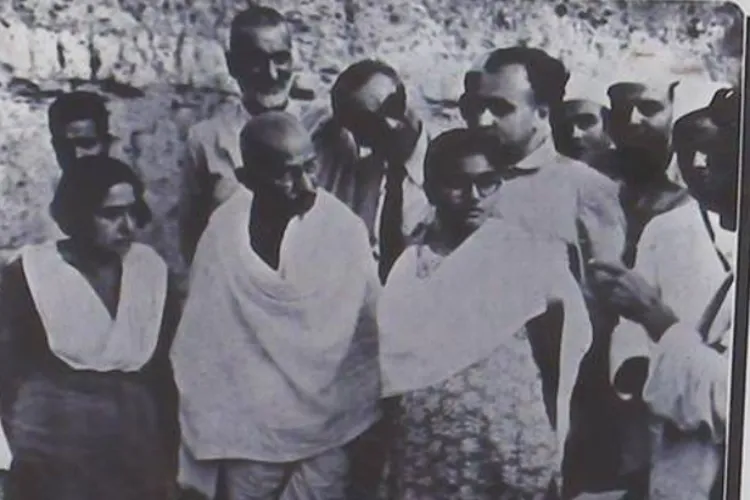
Mahatma Gandhi reached Ghaseda village of Mewat on 19 December 1947. He was accompanied by many leaders including the then Chief Minister of Punjab Gopi Chand Bhargava, Ranbir Singh Hooda, father of former Chief Minister Bhupinder Singh Hooda.
Mahatma Gandhi’s speech on 19th December 1947 in the village of Ghaseda before lakhs of Mewatis is historic. He said, “Today my sayings do not have the same power as it would have earlier.
“But what I say any as much impact as it would have earlier, today not a single Muslim would need to leave the Indian Union, nor would any Hindu-Sikh be required to leave their homes in Pakistan and seek refuge in the Indian Union.
A sorrowful Bapu said: “My heart is filled with sorrow after hearing what is happening here. All around arson, looting, killing, coercive religious conversion and kidnapping of women, and demolishing temples, mosques and gurudwaras is madness. If this is not stopped, both communities will be annihilated.”
Historian Siddiq Ahmed Meo, who has 10 books on the history of Mewat to his credit, says, “Gandhiji also read out the complaints sent to him by Mewati Muslim representatives to the assembled crowd.”
He assured the Mewatis that they would be given full respect. If any government official commits any atrocity with the Mewatis, then the government will take strict action against him. Gandhiji said, “I will be happy if my words can console you a little.”
He expressed grief over the Muslims who were expelled from the princely states of Alwar and Bharatpur.
Gandhiji said in his speech, “A time will come in India when all hatred will be buried in the ground and both societies will be able to live in peace.”
Mewat’s social worker Fajruddin Besar says, after Gandhiji’s assurances, the Muslims reversed their decision. “If they were not stopped at that time, there would be not a single Muslim in Haryana and Rajasthan today.” He says Gandhiji did a big favour to the Muslims by stopping them from going to Pakistan. “Today, Muslims in India are living a life of more peace and respect than in Pakistan. In Pakistan, there is always fighting among Muslims.”
In 2007, chief minister Bhupinder Singh Hooda declared Ghaseda an ideal village and renamed it Gandhi Gram Ghaseda. He also released about Rs 10 crore for development works in the village.
This year Congress leader Rahul Gandhi will also reach the village on December 22 and celebrate Mahatama Gandhi’s visit to the village on that day.
source: http://www.awazthevoice.in / Awaz, The Voice / Home> India / by Yunus Alvi, Nuh (Haryana) / December 19th, 2022
Dr. P.G. Halakatti Research Centre of Vijayapura in north Karnataka has spearheaded the project that is historically significant.
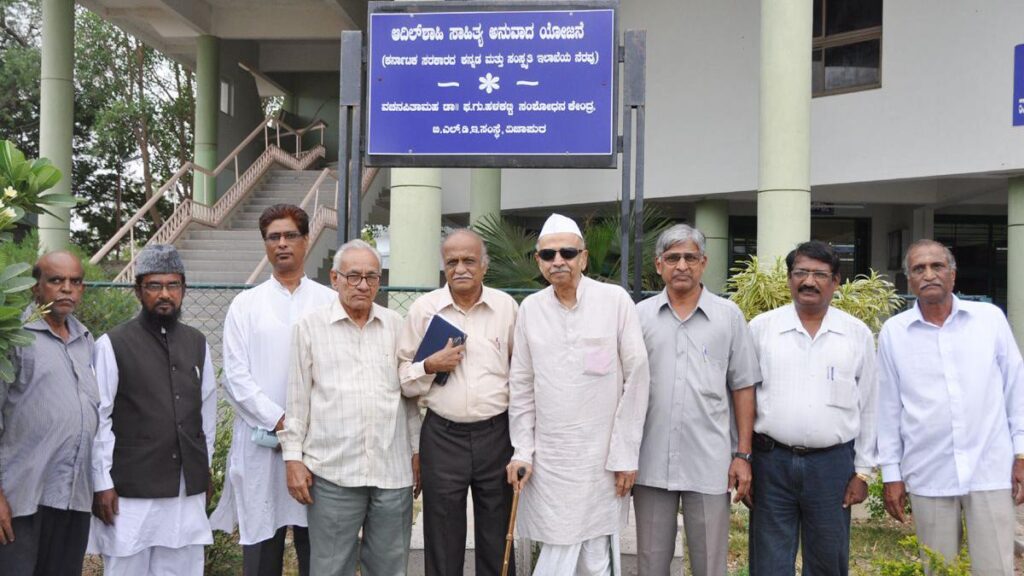
Members of the Adil Shahi Literature Translation Committee at Dr. P.G. Halakatti Research Centre in Vijayapura. | Photo Credit: File photo
Vijayapura-based BLDE Society’s Dr. P. G. Halakatti Research Centre has just completed the ambitious task of translating literature and documents pertaining to the reign of Adil Shahi kings in the 15th and 16th century. The work was carried out in association with the government of Karnataka.
Books in Persian, Arabic and Dakhani have been translated to Kannada. The project generated around 4,500 pages in 19 volumes.
The translated books include epics like Tareekh-e-Farishta, a history of the kingdom by Mohammad Kasim ‘Farishta’, Basateen-e-Salateen by Ibrahim Zuberi, Ibrahim Nama by Ibrahim Dehelvi in Dakhani, Guldasta-e-Bijapur by Mir Ahmed Ali Khan, Hafta Kursi by Fitur Khan Lari, and Futuhat-e-Alamgeer by Eshwar Das Nagar.
Challenge of finding experts in Persian language as well as Kannada
“This is a milestone in the cultural history of Karnataka,” says Krishna Kolhar Kulkarni, director of the centre. “It has been completed after painstaking work by scholars and translators who are good in both the original language and the target language. It was not easy to find them, as there are few persons who are well-versed in Persian or Dakhani. It also took us a lot of time to visit libraries and research centres to gather the books and documents.”
Procuring the books was not easy. Committee members visited Hyderabad, Delhi and Kolkata, to get copies of various books. The books were collected from the Salar Jung Museum in Hyderabad, the archives of Andhra Pradesh, and the Archaeological Survey of India (ASI) headquarters in New Delhi, and some individuals.
“It was tough work, but we persisted. For example, we got one of the only two copies of ‘Mohammad Nama’ by Kazi Nurallah. Even these copies are reproductions, and not originals,” he said.
Important historical project
“Though there have been a few books in English and Kannada about the history of medieval Karnataka, a lot of work needs to be done. The translation project hopes to fill that void. It will tell us not only about the history of Karnataka and the Deccan region, but also about India in those times,” he said. “Apart from documenting the life and times of medieval India, the translation project will help us drop our prejudices and dispel misconceptions about this phase of history.”
The project has been in the works for several years, says Dr. Kulkarni who is also the director of Adil Shahi Literature Translation Committee set up by the Ministry of Kannada and Culture. He worked for several years with M.M. Kalburgi who was vice-chancellor of Kannada University in Hampi.
M.B. Patil, BLDE Society chairman and founder of the research centre, recalls the contribution of Irrigation Minister Govind Karjol, who supported the project during his tenure as the minister for Kannada and Culture Minister.
The volumes were released in Bengaluru on December 18 in the presence of former Union Minister Salman Khurshid, writer Sudheendra Kulkarni, former Minister M.B. Patil, literary critic Devu Pattar, Mansoor Ali Khan of Centre for Research and Communication, G.K. Patil, president of Dr. P. G. Halakatti Research Centre.
source: http://www.thehindu.com / The Hindu / Home> News> India> Karnatkaka / by B. Rishikesh Bahadurdesai / December 19th, 2022
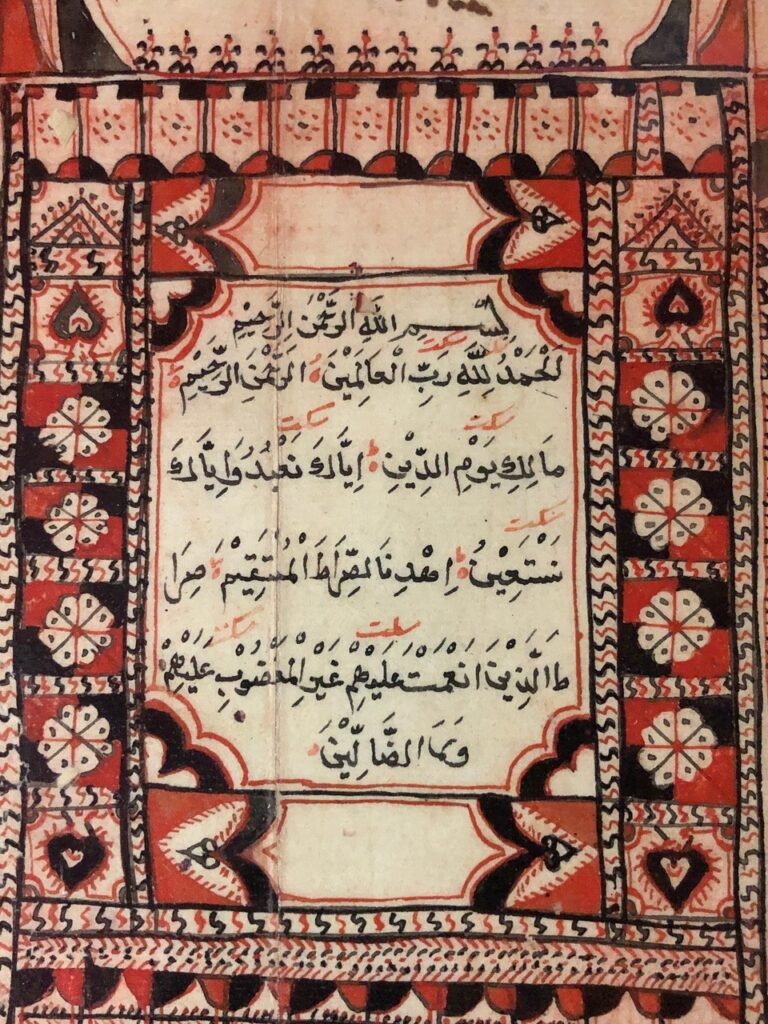
The dargah Hazrat Syedina Shaikh Badruddin Shah Arif Chishti is in possession of several archival records, but its real claim to fame is a copy of the Holy Quran calligraphed by Mughal Emperor Aurangzeb Alamgir.
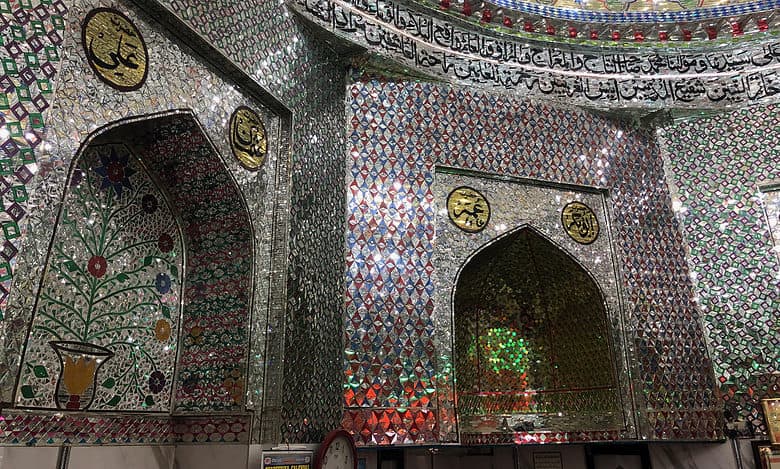
The shrine of Shaikh Badruddin Chishti in Belgaum recently underwent renovation with some scintillating Persian glass work. (Image: Shafaat Shahbandari).
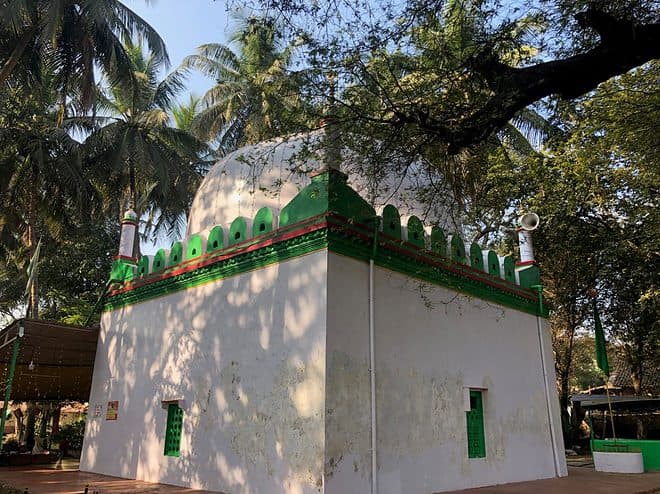
The historic town of Belgaum is home one of Karnataka’s oldest Dargahs. Located within the ancient fort of Belgaum, the dargah Hazrat Syedina Shaikh Badruddin Shah Arif Chishti is believed to be more than eight centuries of old.
Among the first sufi saints to settle in the region, Shaikh Badruddin travelled across south India spreading the message of peace and harmony. The historic tomb in Belgaum is still a great symbol of harmony in the city.
“Hazrat Syedina Shaikh Badruddin Shah Arif Chishti arrived in Deccan more than 800 years ago. He travelled extensively across southern India to spread the message of peace and love. He was among the first sufi saints to settle down in this region,” said Rafeeq Ahmed Ghawwas, caretaker of the Dargah in Belgaum.
Located in the historic Belgaum Fort, the mausoleum of Shaikh Badruddin Chishti was revered by rulers from various dynasties irrespective of their faith. (Shafaat Shahbandari)
Origins
Originally from Delhi, Shaikh Badruddin he was a disciple of Hazrat Shaikh Qutubuddin Bakhtiyar Kaki, who was a 12th century saint and scholar based in Delhi. According to Ghawwas, Shaikh Badruddin migrated to the Deccan in Belgaum on the advice of his spiritual master. He was the one who introduced the Chishti order of the revered saint Khwaja Muinuddin Chishti in the south.
“Our ancestors were the disciples of Shaikh Badruddin and we have been in the service of this place since the earliest times. I took over as the caretaker of this dargah from my uncle Khattal Ahmed, who had taken over from my father Abdur Raheem Mujawar. Before him our grandfather Ebrahim Ahmed was the caretaker, who took over from his father Shaikh Jangu Mian,” said Ghawwas, who has been the caretaker of the dargah for more than 30 years.
Venerated by kings, ministers and commanders of all faiths, the dargah and the saints of this order have had close ties with several dynasties across its history of almost 800 years.
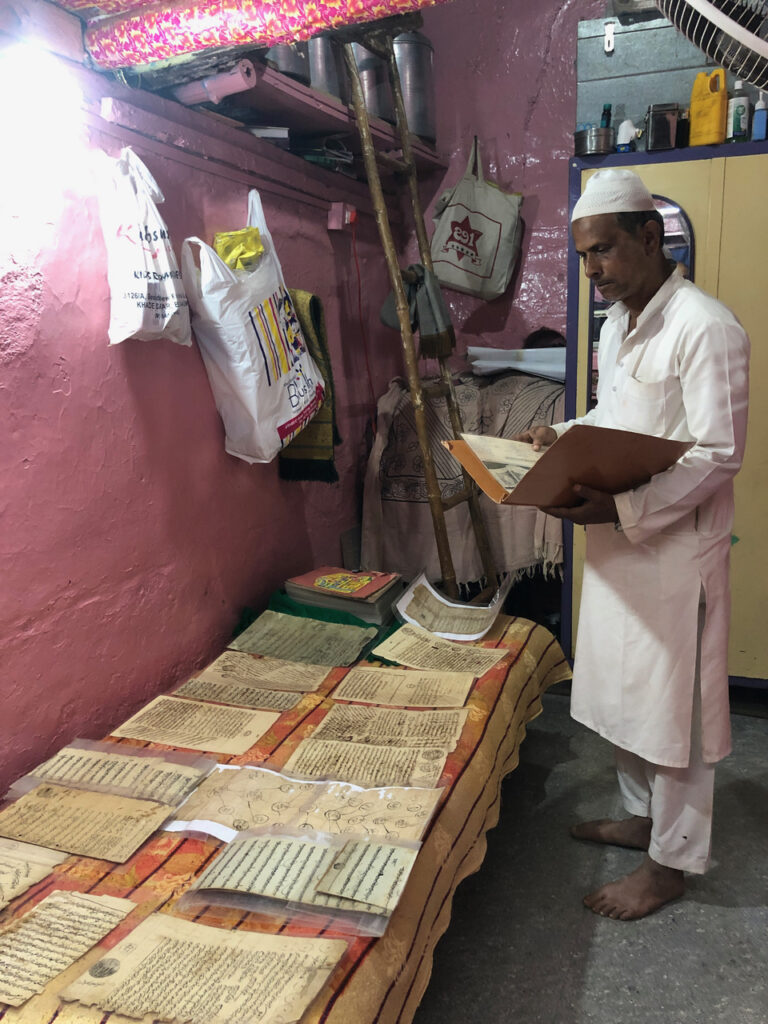
Ghawwas with some prized remnants of Maratha, Mughal and Adil Shahi heritage. (Shafaat Shahbandari)
The Aurangzeb connection and the Quran
More interestingly, the dargah Hazrat Syedina Shaikh Badruddin Shah Arif Chishti is in possession of several archival records that reflect its rich and vibrant history. And among its biggest inheritances is a 16th century copy of the Holy Quran that was calligraphed and gifted by the sixth Mughal Emperor Aurangzeb Alamgir.
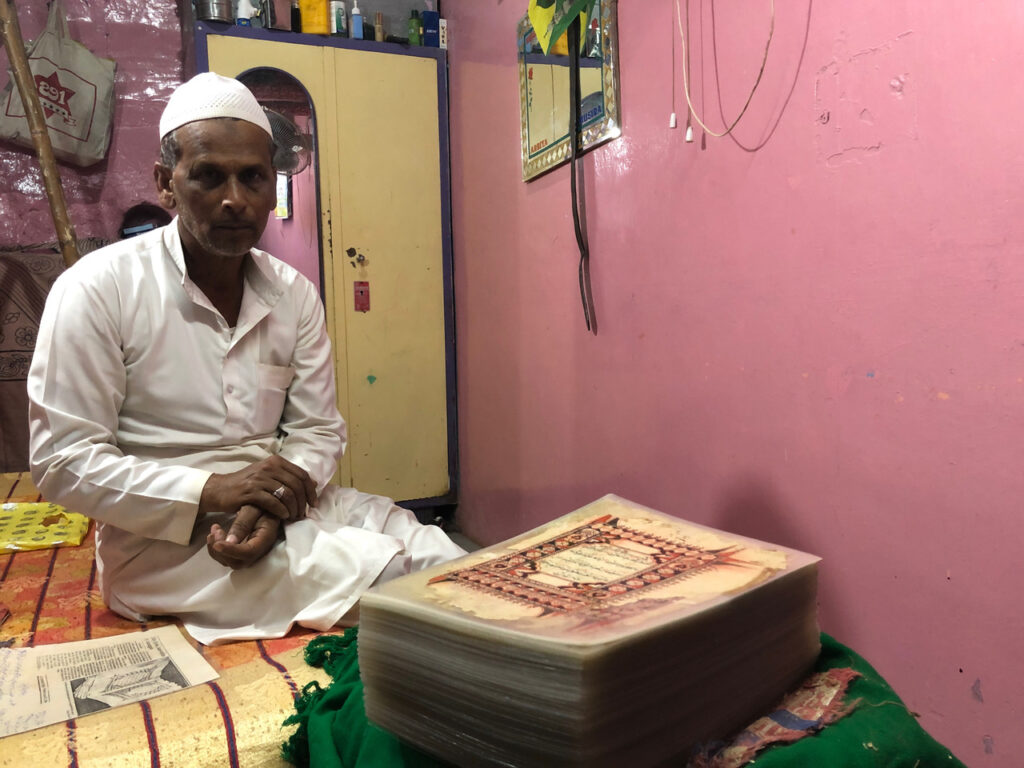
Rafeeq Ahmed Ghawwas with his prized possession – a 17th century calligraphed copy of Quran. (image: Shafaat Shahbandari)
“The emperor had actually gifted the copy to the dargah of Khwaja Muinuddin Chishti in Ajmer, but we are not sure how and when it reached into the possession of our ancestors. We feel fortunate to have this blessed copy and we are doing our best to preserve it for posterity,” added Ghawwas, who has preserved the copy with great care.
According to local history, after his travels across South India, Shaikh Badruddin arrived in Belgaum and settled within the premises of the then newly built fort. The fort was originally built in 1204 AD by Raja Jaya Raya of the Ratta Dynasty and Shaikh Badruddin lived here until his death in 1251 AD.
This mausoleum was built in the early 16th century by the Adil Shahi general and the then governor of Belgaum Asad Khan Lari. The structure has been preserved with some renovation and restoration. Recently, the interiors of the dargah went through a facelift with Iranian glasswork adorning the walls, the dome and the ceilings.
Throughout its long history in Belgaum, the has received patronage from the rulers irrespective of their faith. The caretaker is in possession of several firmans and sanads issued by the Maratha rulers who venerated Shaikh Badruddin and offered their patronage.
The ornamented page of the calligraphed work representing the first chapter of the Holy Quran. (Image: Shafaat Shahbandari)
“This dargah has always been the abode of peace and harmony and we are continuing with our age-old motto of love for all,” added Ghawwas.
source: http://www.siasat.com / The Siasat Daily / Home> News> Bangalore / by Shafaat Shahbandari / December 13th, 2022
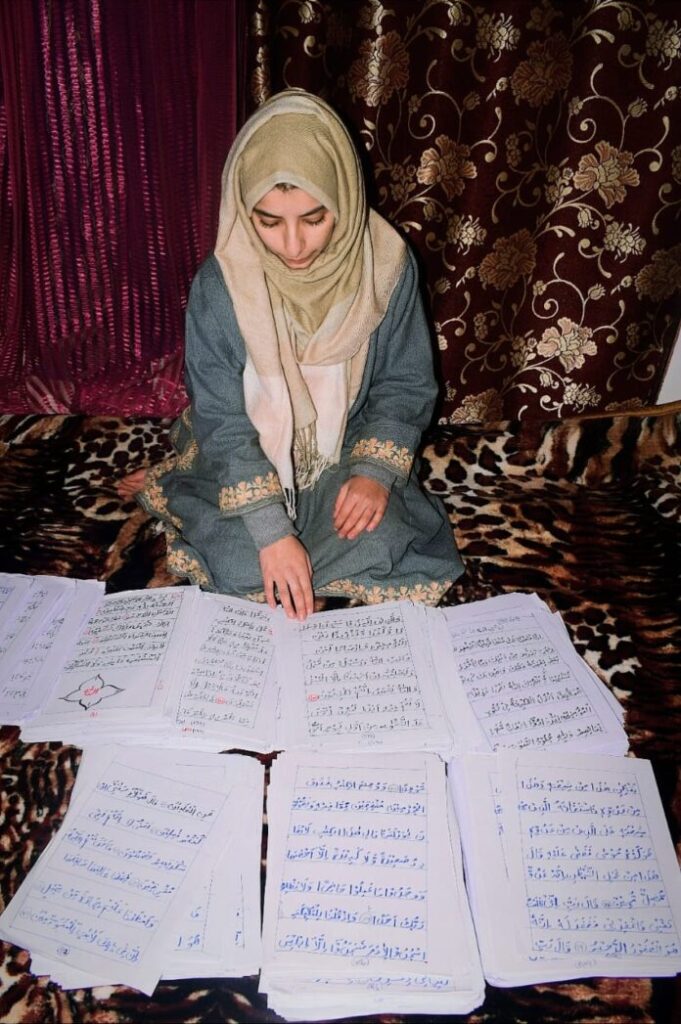
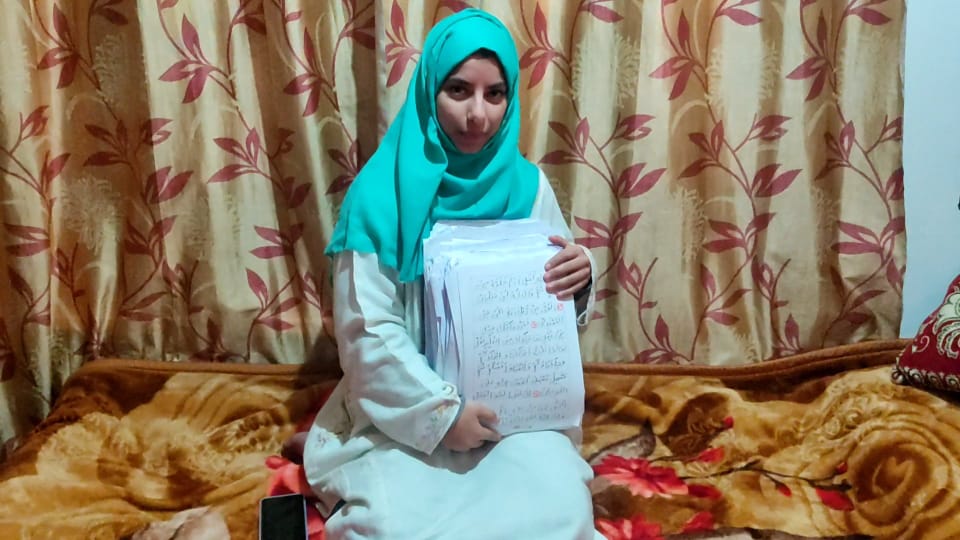
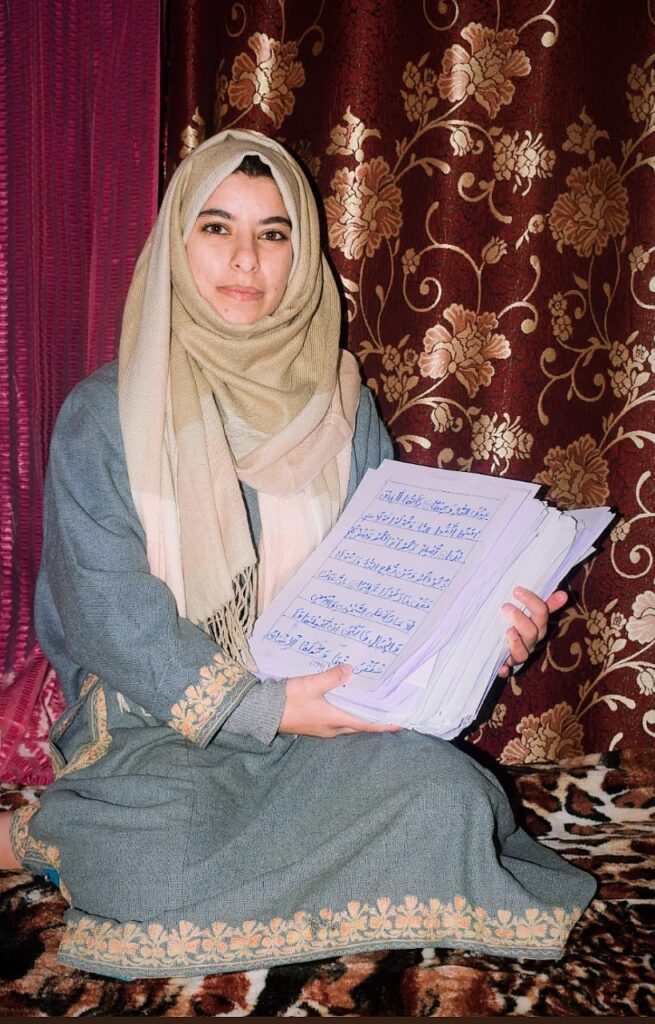
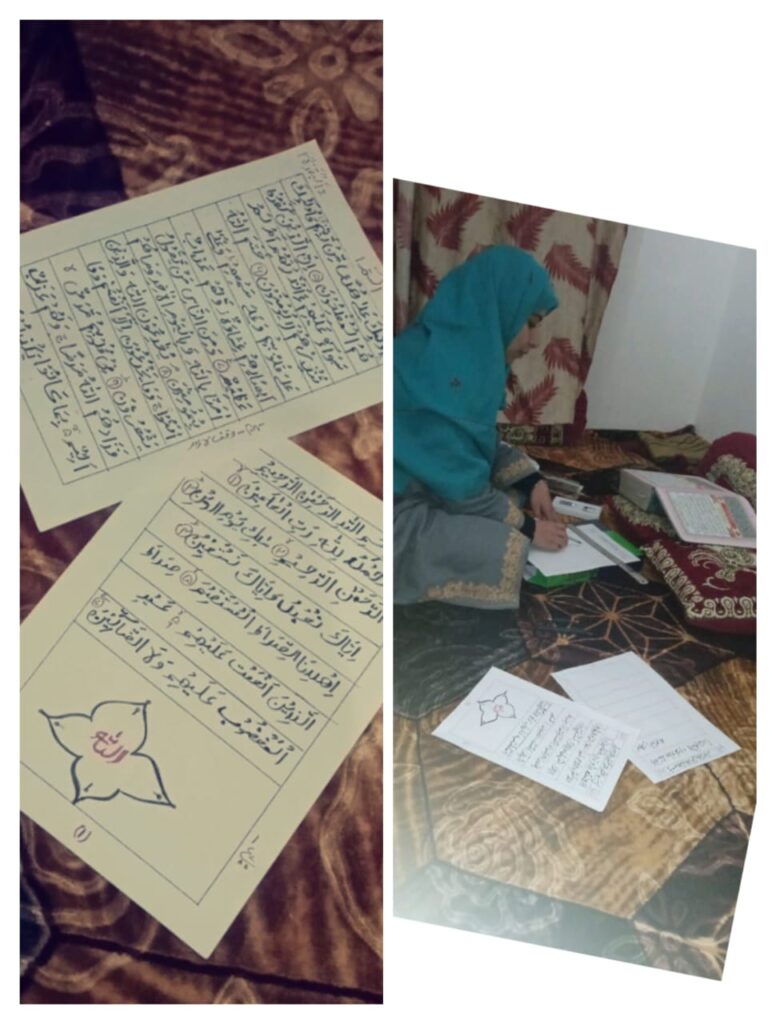
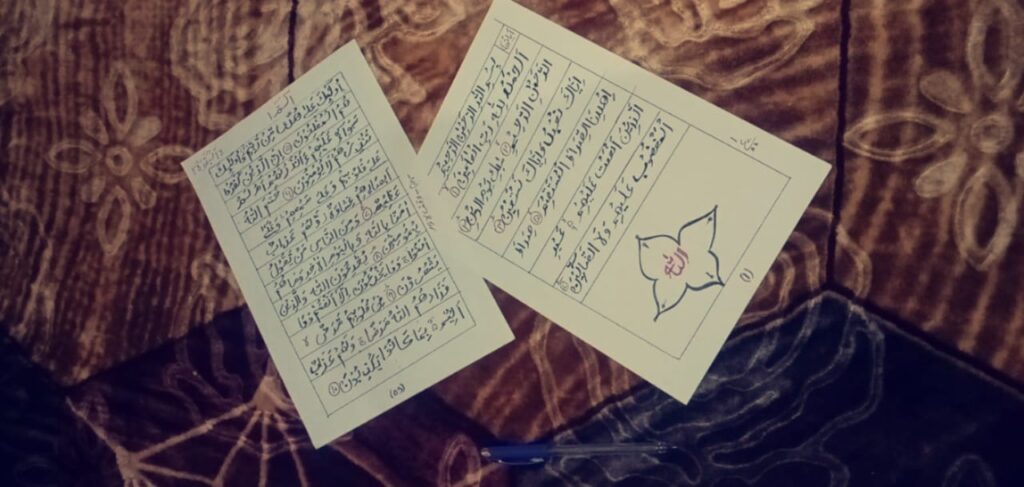
Phones have not stopped ringing at Tahir Ahmed Parray’s home in North Kashmir Hajin after his daughter Arbeen Tahir completed handwriting Holy Quran.
It took Arbeen six months to write the Quran using her calligraphic pen. With no formal training, she learnt calligraphy by watching YouTube videos before she tried her hand at writing the Quran.
“It was my childhood dream to write the holy Quran. I had no experience or training in calligraphy. I started watching videos and trying scribbling on paper before I learnt the art. I started writing the holy Quran in June and completed it in November. I was regularly showing manuscripts to my cousin for any correction,” she said.
Coming from a religious family, Arbeen’s father is a businessman dealing with fruits. She has a younger brother who studies in Class 10. Arbeen is living in a big joint family with all her uncles and cousins under one roof.
Arbeen received religious education from her childhood. Well versed in different languages, she developed an interest in reading theology and religious scriptures.
“I have written the manuscript on 900 pages. Now I plan to preserve this copy for posterity. I plan to bind it and keep it in my study. It is the prized possession,” she said.
Arbeen has become a role model for her clan and society. A student of class XII, she is now preparing for NEET and wants to become a doctor to serve humanity.
“I am working hard to crack NEET. My cousin is a doctor and she is my inspiration. I too want to become a doctor to serve mankind. I am preparing hard to achieve my goal,” she said.
The 18-year-old is also working on her debut book. “I am writing a book. `Tragedy of Innocence’ will soon hit the stands,” she said.
Arbeen is not the first student who has handwritten the Quran in Kashmir. Last year, Adil Nabi Mir of Srinagar completed writing the Holy Book in 58 days. Mir said he wrote the Quran in his handwriting purely for the ‘sake of Allah’ and to inspire the youth to follow Islamic teachings.
Coming from a humble background, Mir’s father is a mason. Mir said he received a lot of encouragement from his father and other family members.
He started writing on January 27, 2021, and it took him 58 days to complete the work. He used to write in his free time and spend 6-7 hours doing this. His fingers would ache a lot, but he persisted. Mir would rarely move out of the house barring visits to the mosque so that he could finish his task.
source: http://www.indiatomorrow.net / India Tomorrow / Home> Religion / by Ishfaq-ul-Hassan (headline edited) / December 13th, 2022
Ayeera Chisti, the first Kashmiri girl to win a medal at the World Wushu Championship
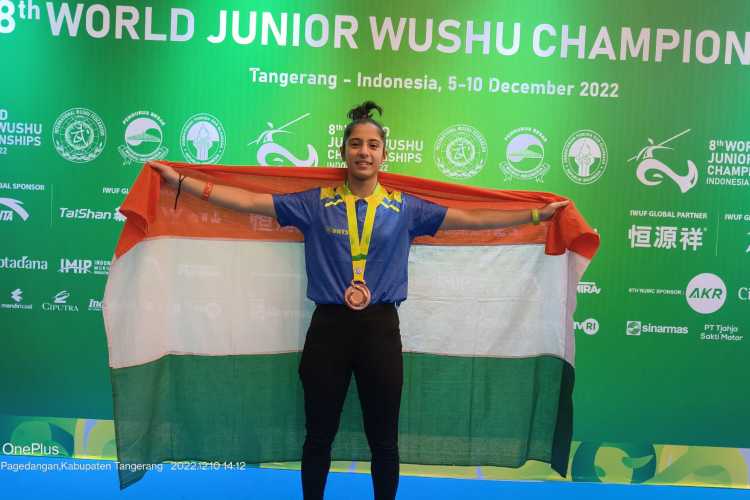
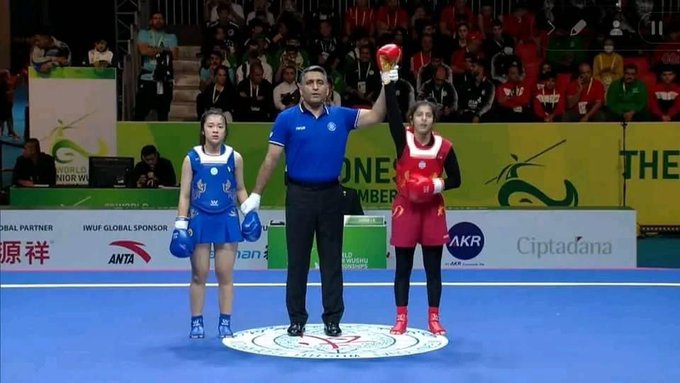
Ayeera Chisti, the Wushu wonderkid from the Kashmir valley added another feather in her rising career by winning a bronze medal at the World junior Wushu championship this weekend.
With this achievement she has become the first girl from Jammu and Kashmir to win a medal at this prestigious championship.
Among the first to congratulate her was JK Sports Council.
The 8th world junior Wushu championship was held in Banten, Indonesia from December 2 to 11.
Speaking to Awazthevoice.in, Ayeera’s coach, Asif said, “This is just the beginning. This is the result of years of hardwork, dedication, patience and discipline. There are many targets we have to achieve”.
Before departing for the championship, Ayeera had exuded confidence of doing well at the event. “I will come back with a medal”, she had told Awazthevloice.in.
The 11th class student of Amira Kadal Higher Secondary School, Srinagar had already etched her name in history books by becoming the first girl from Srinagar to represent the country in the world championships.
Khelo India congratulated Ayeera on becoming the first girl from JK to win a medal at this level.
Ayeera had lost to Malak Ossama of Egypt in the semifinal.
She had earlier defeated her rival from Macau in the last-eight stage.
The Indian contingent finished with a record eight medals, including three golds in the championship. Apart from the yellow metal, India also won three silvers and two bronze medals.
source: http://www.awazthevoice.in / Awaz, The Voice / Home> Sports / by Nakul Shivani, New Delhi (headline edited) / December 12th, 2022
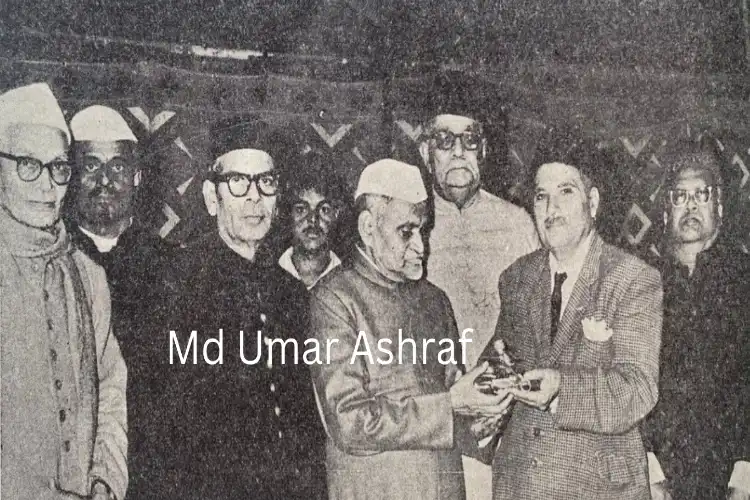
Administrator of Ajmer Sharif Aley Mohammad Shah donating gold to the minister (Courtesy: Md Umar Ashraf)
If I tell you that the Dargah of Khwaja Moinuddin Chishti at Ajmer, Rajasthan, played a role in the war against China when India was invaded in 1962, will you believe it?
In October 1962, the Chinese Army invaded India which had gained freedom 5 years ago. Such national crises test the character of a country. Indians of all creeds, castes, races, and social groups joined hands to fight the mighty enemy.
After 200 years of British colonialism, the Indian economy was in shambles when the colonial rulers left in 1947. When China invaded, India was not as big an economy as it is now. Prime Minister Jawaharlal Nehru appealed to his compatriots to donate gold and money to the defence funds.
Responding to the call, Dargah at Ajmer opened its vaults for the country’s defence forces. The management of the shrine of Hazrat Khwaja Moinuddin Chishti believed that national service comes before any other service. The administrator of the committee handed over 2 kilograms of gold and invested Rupees one lakh in Defence Saving Certificates to the Union Minister of Irrigation and Power at a meeting held at the Dargah. It also announced holding special prayers for the success of the Indian Army daily.
The administrator who handed over the gold, to the minister was Aley Mohammad Shah. His elder son Zameruddin Shah rose to become the Deputy Chief of Army Staff in India while his other son Naseeruddin Shah is a popular film actor.
The episode is a testimony to the fact that for Indian Muslims following Islam and serving the nation are not contradictory.
source: http://www.awazthevoice.in / Awaz, The Voice / Home> Culture / by Saquib Salim / December 14th, 2022
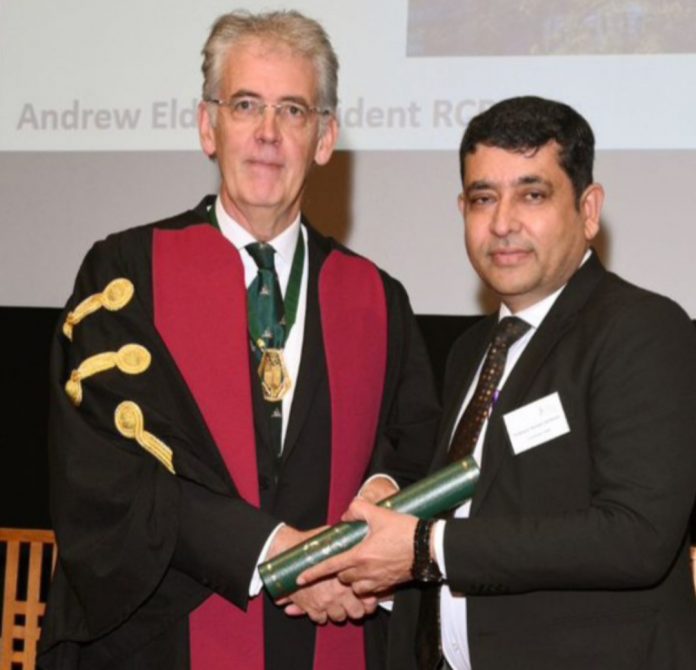
At a meeting of the Urdu Scientific Society, attended by prominent Doctors of Lucknow, Dr. Kausar Usman of King George Medical University, Lucknow was felicitated for the honor he received as a Fellow of the Royal College of Physicians, Edinburgh.
Presently working as a Professor of Internal Medicine at one of the prestigious medical institutions of India King George’s medical university, Dr. Usman is known for his expertise in the field of Medicine in general and Diabetes in particular. In 2016, Dr. Usman became the first Muslim Professor in the medicine department of King George’s Medical University, Lucknow.
Dr. Usman has participated actively in several national and international investigations and has a very solid foundation in research. Numerous national and international publications have published his work. He has more than 70 Publications to his name.
Prior to joining King George’s Medical University as a teaching faculty member, he worked in reputable medical institutions like Indraprasth Apollo Hospital in New Delhi.
In 2017, Dr. Usman had received a Fellowship Award FACP (Fellow of American College of Physicians) in San Diego, California.
Senior Urdu Scientific Society office bearers Padma Shri Dr. Mansoor Hasan, Maulana Khalid Rasheed, Dr. Iqtedar Farooqi, and Dr. Shakir Hashmi congratulated Dr. Usman for his extraordinary achievements.
source: http://www.muslimmirror.com / Muslim Mirror / Home> Indian Muslim> Positive Story / by Muslim Mirror Network / December 13th, 2022
Nusrat Noor from Jamshedpur not only cleared the Jharkhand Public Service Commission (JPSC) examination but also secured the highest rank in the list of successful candidates
Ranchi:
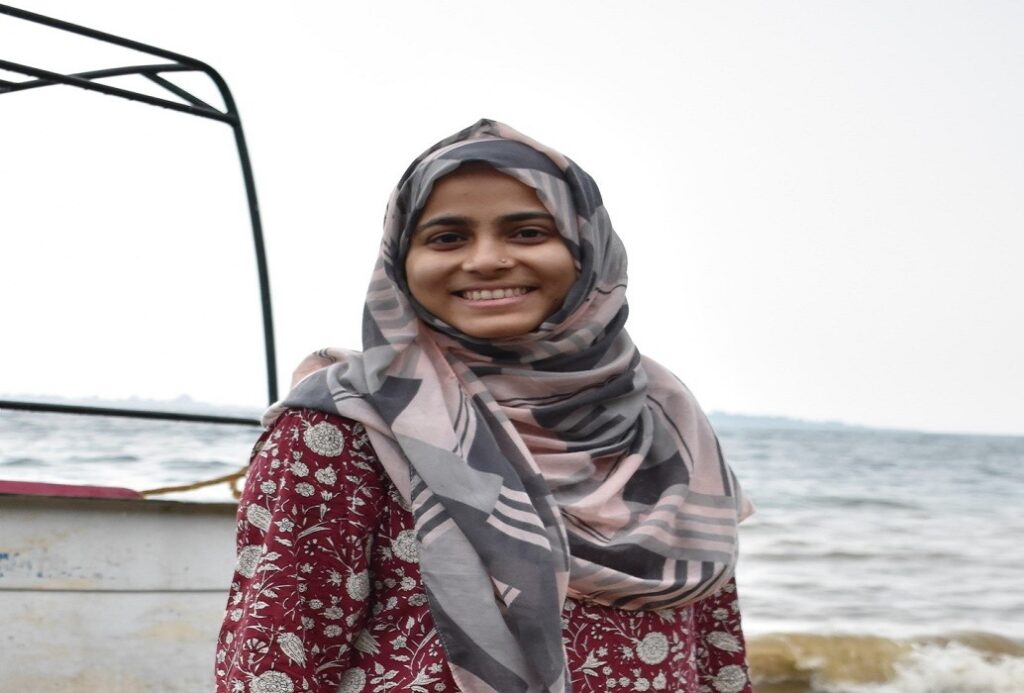
Nusrat Noor has become the first Muslim woman to top the Jharkhand Public Service Commission examination 2022 securing the first rank. She not only cleared the Jharkhand Public Service Commission (JPSC) examination but also secured the highest rank in the list of successful candidates who cleared the coveted examination the result of which was declared two days ago.
Nusrat Noor, 27, applied for the examination a year ago under the medical category soon after application forms were made available on the website. She prepared for the exams with due diligence, appeared for an interview last month, performed brilliantly in the exam and eventually came out with flying colours to become the first Muslim woman to ever top the JPSC examination.
On the empowerment of Muslim women, Nusrat Noor said, “Participation and initiative are key to increasing women’s representation. It doesn’t matter what the result might be, Muslim women should come forward to get into civil services. This is how we can increase our representation and benefit our community and the nation at large.”
The Jharkhand Public Service Commission conducts the state-level civil services examinations to make recruitment for top governmental posts in various departments, including teaching, medical, and healthcare, in the state. It is also responsible to conduct written and verbal examinations to appoint candidates for these prestigious government positions.
On being asked what motivated her to go for civil services, she said, “I noticed that the representation of Muslim women in the government workforce is negligible. It’s high time Muslims got highly educated. Especially our women should be in the forefront when it comes to grabbing the opportunities that come our way from every sector.”
Born and brought up in the Jamshedpur city of Jharkhand, Noor, a mother of one is a medical practitioner with a specialisation in neurology.
After completing her primary education at Sacred Heart Convent School in Jamshedpur, she moved to Ranchi to pursue her degree in medical sciences from the Rajendra Institute of Medical Science.
She completed her degree of MBBS in the year 2020, and consequent to this, she was posted in the same medical college to practice what she refers to as a junior residentship.
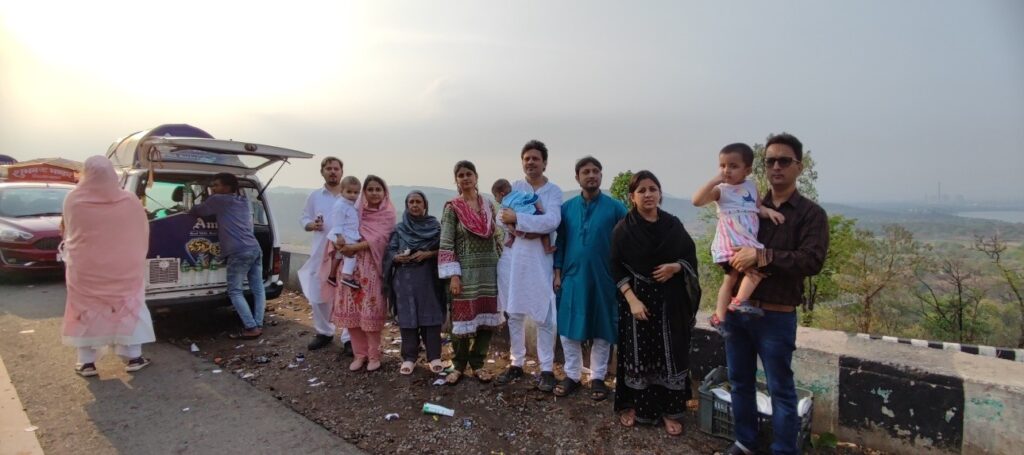
During her residentship, she got married. But her marriage has not come in the way of her studies and her dedication to pursue her goals. She lives in a joint family where, she says, everyone is very supportive. Her in-laws never discouraged her from pursuing her dream and goals.
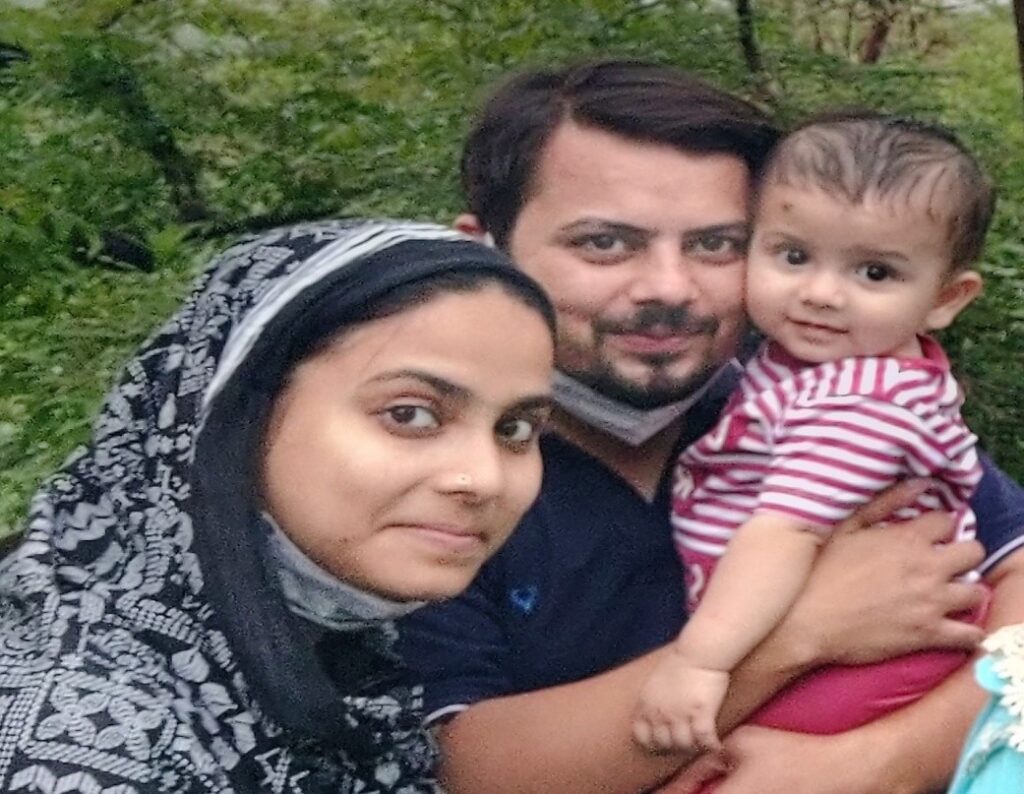
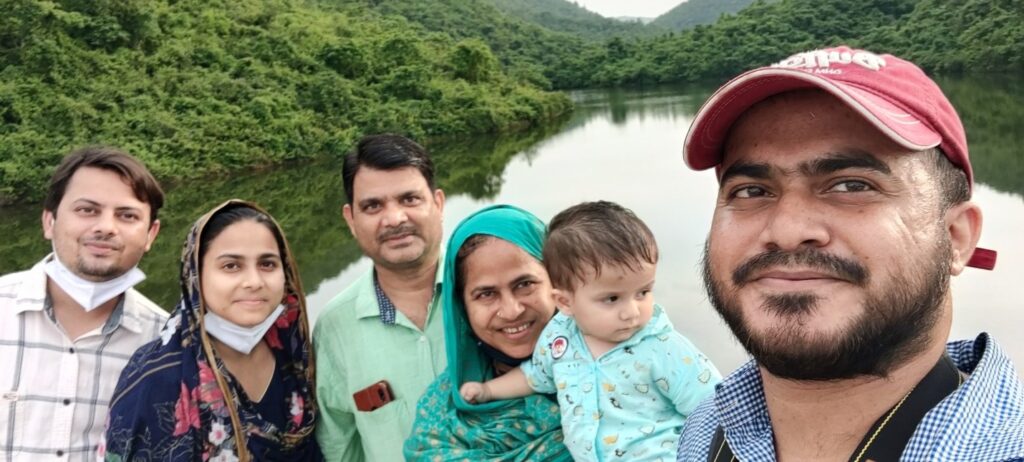
During an outing with her in-laws
She says, “My husband and in-laws are very encouraging and supportive, I am lucky in a way, but this is how it should be in every household. I would say my family is a role model for every other family which treats its daughter-in-law as someone who is no more than a person whose job it is to do all the household chores.”
She looks at her family of more than 10 members as her strength and backbone. “I have a very big family, but it never has been a setback in doing whatever I wanted to do”.
Her husband, Mohammad Umar, is also a doctor and a consultant surgeon. He has always been by her side during her entire journey.
“My husband has always motivated me; he switched roles and helped me in my household chores. He did everything possible to make me achieve my goal, from setting up the timetable for me to study to taking care of our two-year-old child,” she recounts with a sense of gratitude.
With husband Dr. Mohd Umar and son Mohd Saad
Noor’s father, Md. Noor Alam, is in a managerial post at Tata Steel, Jamshedpur while mother Seerat Fatima is a homemaker. She is the youngest in her family. The news of her becoming the first Muslim woman in the entire state to top the JPSC examination makes them proud.
Her elder brother, Mohammad Faisal Noor, is pursuing his research in industrial engineering at the National Institute of Technology, Jamshedpur.
He says, “We were quite confident about her selection, but the news of that she got the first rank was, Alhamdulillah, a pleasant surprise.”
With her elder siblings
The one thing that she will never forget about in her entire journey, right from her school days to becoming a doctor to now cracking the JPSC, is that people and society even in the 21st century don’t consider a woman’s approach to her career as a personal achievement. Society still believes that a woman’s well-being lies in her traditional role as a homemaker.
She recalled the moment she got married, she was told by a friend that getting married ‘on time is an achievement in life and she has achieved it.
She said, “Personal life can be an aspect to achieve the ‘progress’, but there is much more to it. For me, apart from my personal life, achieving goals set by myself counts as progress. Society still needs to evolve to address the needs of today’s generation. My husband’s family, which is mine too, present an example of a ‘just’ and ‘progressive’ society which looks at the woman more than someone whose responsibility is confined to looking after the household.”
Nusrat now aims to start preparing for her post-graduation while taking charge as a medical officer in one of the government hospitals as appointed by the administration. She also looks forward to encouraging and facilitating other women to take up professional and administrative positions.
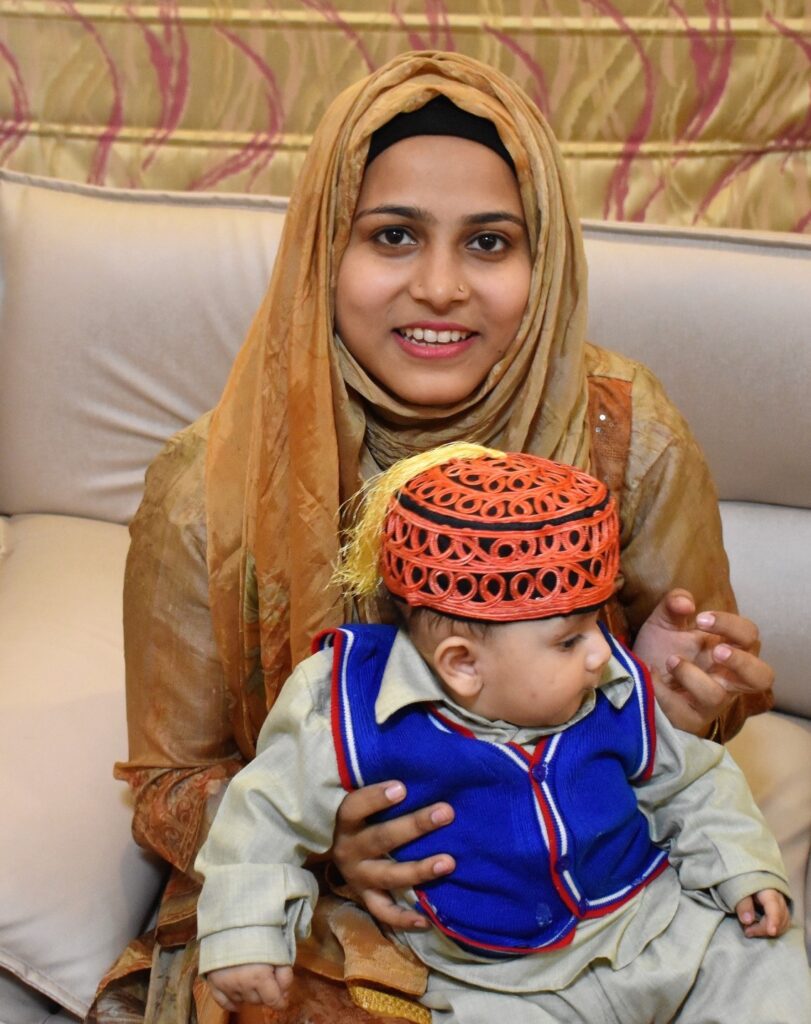
Proud mother of a two-year-old Mohd Saad
“Women should participate more to come into the mainstream. I also make an appeal to families to encourage their daughters to educate themselves as much as possible, as this is the only way to make them economically independent and socially self-sufficient.”
source: http://www.clarionindia.net / Clarion India / Home / by Ghazala Ahmad, Clarion India / December 11th, 2022