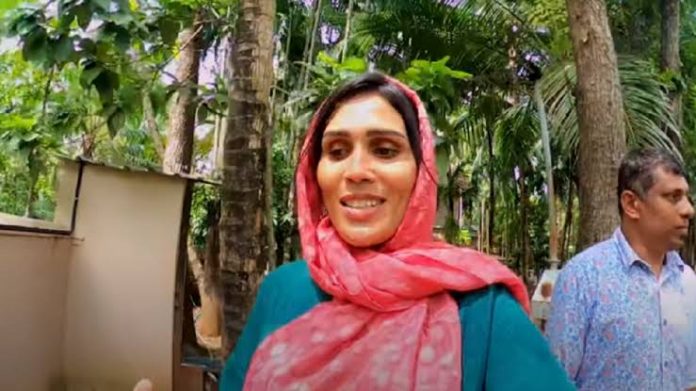
A Muslim woman from Kerala, Naaji Noushi’s decision to travel solo in her four-wheel car to watch the FIFA World Cup in Qatar shows her craziness towards the game of football and of course her madness towards travelling behind the wheel on hitherto uncharted routes.
As the World Cup fever is slowly gripping people and football fans, Noushi, an avid traveller, YouTuber and vlogger, commenced her journey to Qatar by driving a Mahindra Thar from Kannur, Kerala the other day.
Transport Minister Antony Raju flagged off the trip in the presence of village panchayat authorities, reports PTI. It was a dream come true for this soccer crazy woman who has always loved to take adventurous trips.
After reaching Mumbai via Coimbatore, she and her Thar, which is fondly named “olu” (means woman in local parlance), would land in Oman by ship. From there, she would travel via road and would cover Arab countries including UAE, Bahrain, Kuwait and Saudi Arabia before reaching Qatar, which plays host to the FIFA World Cup this time.
Noushi said it may be for the first time that a woman from Kerala was undertaking an overlanding trip to the GCC nations and that too to watch the football world cup. “My plan is to enter Qatar by December 10 and watch the finale.
I am so excited about this trip. I am a hardcore Argentina fan and Lionel Messi…really want to see my favourite team lifting the cup,” she said. She will continue her stay in Qatar till December 31, according to the report.
Noushi said the trip was expected to be a complete van-life experience as all essential cooking articles were stocked in the vehicle. It is also planned to park the vehicle near toll plazas and petrol pumps and stay within it during nights.
She said she has an Oman driving licence, which has already been converted into an international one.
“I am a person who has been dreaming to see an Indian team playing the FIFA World Cup. Through this innovative trip, I am trying to be a part of the gala by reaching there in an Indian-made vehicle,” she said.
Noushi, who has completed her Plus-Two, married Noushad, an NRI, at a young age and became a mother at the age of 19. Describing the family as the pillar of support, she said her husband and children were her actual cheerleaders and were encouraging her to travel more.
Noushi has already completed four travel series including an all-India trip to Ladakh and shared the photos and videos through her social media pages. Noushi said her youngest child is just two years old but her mother is taking care of her children when children when she is away for travel.
“If a woman like me- a homemaker, a wife and a mother of five- can realise my dreams, any ordinary woman in Kerala can chase her dreams confidently,” she said. — PTI
source: http://www.muslimmirror.com / Muslim Mirror / Home> Indian Muslim> Women / by PTI / October 20th, 2022
As a sweet little six-year-old, when Zain Samdani saw his mother taking care of the household like a pro, he decided to lend her a robotic hand. In all his innocence, he went up to her and said, “I will build you a robot that can do everything.” Today, the same boy has grown into an entrepreneur whose invention goes behind the peripheries of any household.
Meet Zain | (Pic: Zain Samdani)
He won the Young Entrepreneur Award from the Indian Business Forum, Riyadh in January 2018
But before the result came the hard, gruelling work of learning everything there is to learn about robotics.
Born in Hyderabad and brought up in Saudi Arabia, Zain started by reading. And then some. Then came a series of instruction videos and only after he turned 14 came his first robotics kit. In 2013, he pursued the PSSO Robotics Programme at the King Salman Science Oasis in Riyadh apart from participating in international competitions. He topped it off with pursuing online courses leading up to the summer of 2015.
But it is usually when pain hits home that you really put your power into play. And that’s what happened with Zain. “A distant uncle of mine was paralysed and what upset me was that there was hardly any technological help that could be rendered to help him move around. In a quest to help my uncle, I decided to create ExoHeal,” says the youngster.
Zain with Sundar Pichai
Started in May 2016, this start-up offers a modular robotic device based on the concept of neuroplasticity. There are two gloves — one that is sensory and one that is robotic. The sensory one goes on the good hand and the robotic on the other. When you move the good hand, the paralysed hand is almost forced to mimic the action which actually tricks the brain into believing that the paralysed hand is actually okay, forming new neural connections. With consistent usage, movement may gradually be restored in the paralysed hand.
In 2016, his working prototype helped his uncle and since then, the Ashoka Young Changemaker has been trying to perfect the device. He has been adding little touches and enhancements like going wireless, with the help of Bluetooth and radio waves, and the latest, launching an app. “Because of the lockdowns, patients are unable to travel to their physiotherapists and hence, the app helps the doctor track the progress of their patients in real-time,” he explains. The app has a list of exercises the patient can choose from. With the team of five and machine learning, they are trying to adjust the level of assistance offered with the involvement of the doctors so that the latter puts only that much effort as is required from him.
Selected as a Global Teen Leader by We Are Family Foundation in New York, USA in March 2019
Dr KV Rao Scientific Society in Hyderabad has also been of mighty help to this entrepreneur who is pursuing his Higher Secondary Course from the National Institute of Open Schooling due to medical reasons.
The Society started supporting his project in November last year. Currently, the 3D printed model is ready and they hope to conduct clinical trials for further validation. By the way, this innovation has been to the Google Science Fair twice (2016 and 2019) and both times, Zain was the Global Finalist. Even Google’s CEO Sundar Pichai has tried them out too. Now, how’s that for some validation?
www.zainsamdani.org
source: http://www.edexlive.com / edexlive, The New Indian Express / Home> Start-Up / by Seema Rajpal, EdexLive / June 09th, 2021
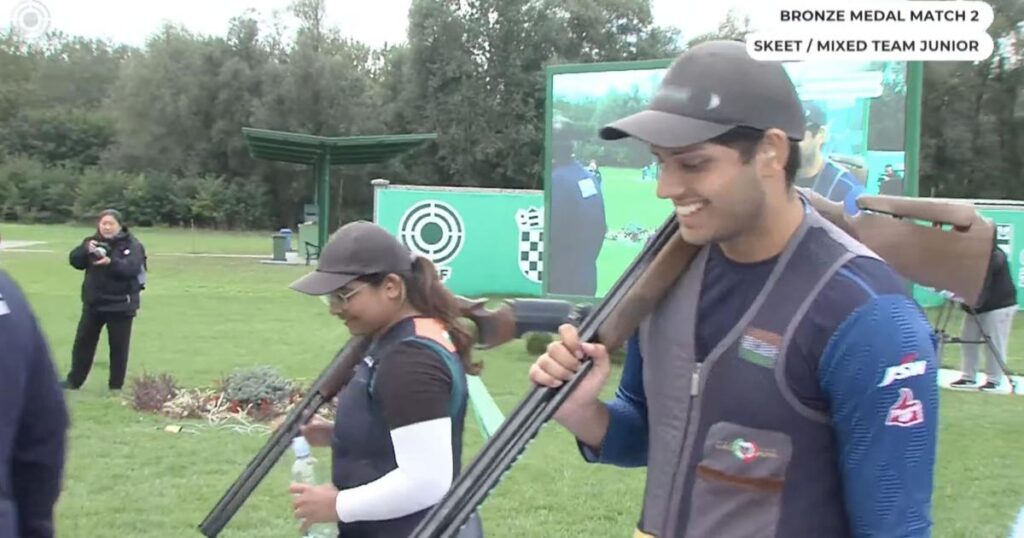
Muffadal Zahra Deesawala and Bhavtegh Singh Gill won India’s third medal of the International Shooting Sport Federation Shotgun World Championship in Osijek, Croatia. The duo picked up a bronze in the Skeet Mixed Team Junior event here at the Olympic Shooting Range ‘Pampas’ on Tuesday.
They beat the American pair of Aidin Burns and Mikena Grace Fulton 5-1 in the second bronze medal match. They were declared winners by Golden Hit after Bhavteg and Mufaddal shot seven out of eight targets in the last series, enough to ensure that the Americans cannot win the series after Burns missed one out of his four targets.
The first pair to six points usually wins the match but the Indians were up 5-1 already and a tied last series would have given the Indians the point needed to win.
Deesawala and Gill finished sixth in the qualifiers shooting a combined 132 out of 150 targets. Deesawala shot 62 out of 75 and Gill shot 72 out of 75 shots to secure the last position for the bronze medal matches.
The British pairing of Mitchell Brooker Smith and Sophie Herrmann won the Gold in the event beating Haolei Zhao and Dan Wang of China 6-4.
Areeba Khan, on Tuesday, had won India’s second medal of the World Championship after the Junior Men’s Trap Team had won a gold.
Bhowneesh Mendiratta had also won a Paris Olympic quota, India’s first for the 2024 Games, earlier in the championship. He finished fourth in the event.
source: http://www.scroll.in / Scroll.in / Home> The Field> Shooting World Championships / by Scroll Staff / October 04th, 2022
At the 2022 International Shooting Sport Federation (ISSF) Shotgun World Championship, which was held on Monday in Osijek, Croatia, Indian shooter Areeba Khan took home the silver medal in the individual women’s junior skeet event.
Areeba Khan hit 29 of her 40 shots in the final, missing her final attempt, while Sophie Herrmann of Great Britain scored 30 shots to win the gold.
Raveca-Maria Islai of Romania took home the bronze medal after striking 20 shots, while Muffaddal Zahra Deesawala of India placed fourth after hitting 12 targets.
After Shapath Bharadwaj, Shardul Vihan, and Arya Tyagi won gold in the junior trap men’s team competition, this is India’s second medal in the shotgun competition.
After a shoot-off, Areeba Khan came in third place in the qualifying round. She then won her ranking match to advance to the final.
The 19-year-old Indian shooter competed for India’s junior women’s skeet squad in 2021, which won a gold medal.
No Indian shooter qualified for the ranking matches in the junior men’s individual skeet later in the day.
In qualifying, Bhavtegh Singh Gill, Abhay Singh Sekhon, and Ritu Raj Bundela came in at positions 32, 33, and 36, respectively. The ranking matches are limited to the top eight competitors.
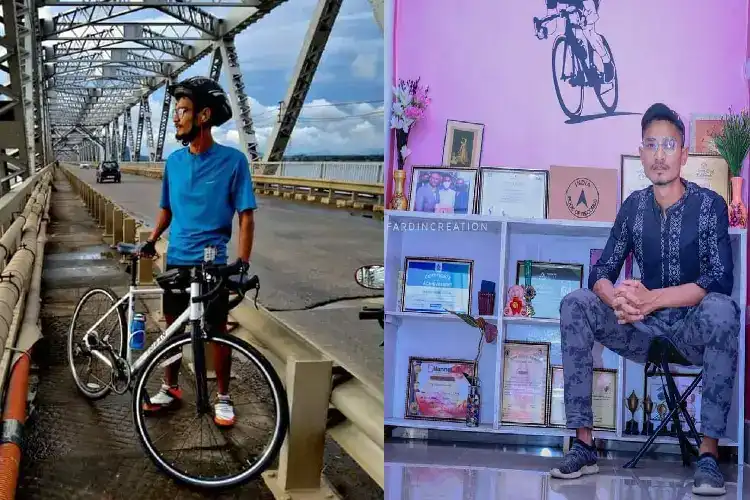
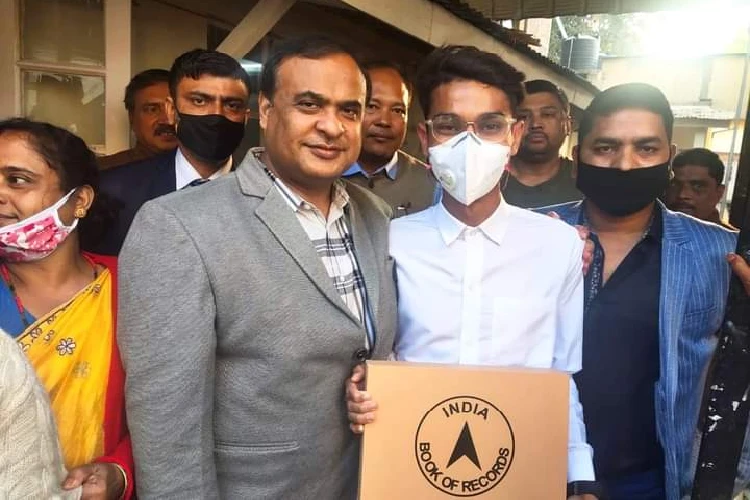
Albert Einstein once said, “Life is like riding a bicycle, you just have to keep moving to keep the balance.” This has been proved right by cyclist Tanveer Firdous Hussain, a resident of the Goalpara district of Assam. He has crossed several hurdles to ink his name in the Assam Book of Records and the India Book of Records for cycling.
“I love sports and cycling. I started cycling when I was seven years old. I had a dream of setting a record by cycling. But my mother and father did not support me. Like other parents, they insisted that I pay more attention to my studies. My parents didn’t like me playing sports. They wanted me to study and have a good career,” Tanveer has told Awaz-The Voice.
Tanveer, son of Sabibor Hussain and Laila Muskura Begum, was interested in athletics from his very childhood. While in school, he won a prize for finishing 100 meters in 11:35 minutes in a State-level competition. However, Tanveer failed in the district-level race competition. This harmed Tanveer’s studies. Tanveer got another opportunity from Khelo India but lost it due to a lack of support from his father.
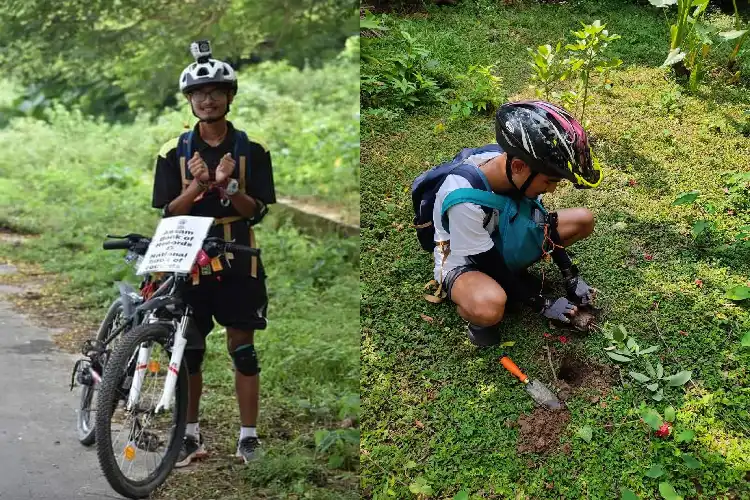
Tanveer Fidous Hussain planting trees during his cycling expedition
“My father admitted me to a hostel to focus on my studies. But I left the hostel after staying there for a few days. Then, my father was very angry and completely stopped me from leaving home to play sports. One day I thought of setting a new record by cycling, but I didn’t tell my parents about it.
One fine morning in 2021, I left home alone on my bicycle and started riding from Alsalam Hospital in Goalpara at 5 am and reached my destination at Solace Nursing Home premises at 6.55 am. I cycled 3.92 km in about 1 hour 55 minutes for which I could include my name in the Assam Book of Records,” Tanveer said.
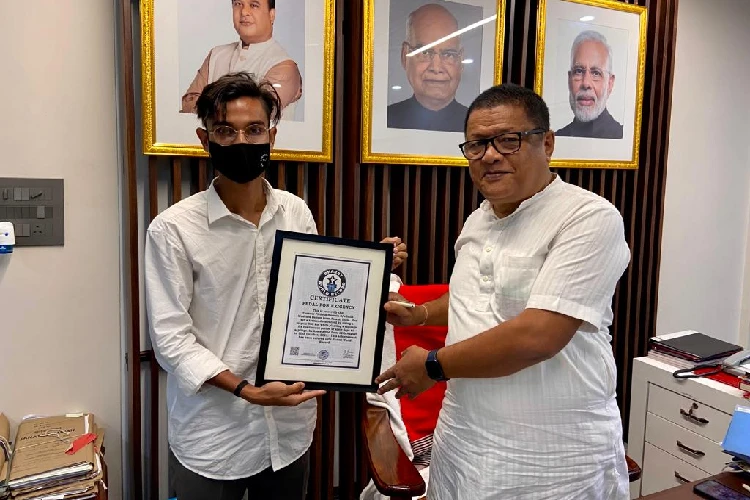
In the same year, Tanveer also inked his name in the India Book of Records for cycling. “In November 2021, I started my cycling journey from Naranarayan Setu (bridge) in Goalpara at 4 am and crossed 129 km to Barpeta in 6 hours and 10 minutes without holding the handlebars. That journey helped me enter my name in the India Book of Records,” he said.
Tanveer Hussain with Chief Minister Himanta Biswa Sarma
After winning the Assam Book of Records and India Book of Records titles, Tanveer has been cycling and studying well.
Recently, Tanveer started a tireless journey by cycling under the banner of ‘pedal for exigency’ to protect the green environment and protect the earth.
“I started my cycling journey under the banner of ‘pedal for exigency’ to protect the environment and the earth. I cycled for 60 consecutive days. I cycled 15 km daily and planted one tree. I planted more than 200 trees in different districts. I want to encourage people to do their daily activities by using cycle,” Tanveer said.
Tanveer Hussain receiving the certificate for his record
Nowadays, the use of bicycles has declined. People go out with petrol and diesel-powered two-wheelers and four-wheelers for any purpose. This causes massive pollution, which threatens the environment, he added.
“I am trying to convince people to maintain cleanliness and balance in the environment by using bicycles instead of petrol-diesel vehicles. If petrol or diesel vehicles get caught in a traffic snarl, carbon monoxide is released from such cars which causes a risk of cancer in our bodies. On the other hand, cycling increases blood circulation in our body, increases IQ level, and boosts our immune system,” Tanveer said.
source: http://www.awazthevoice.in / Awaz The Voice / Home> Sports / by Munni Begum , Guwahati / October 10th, 2022
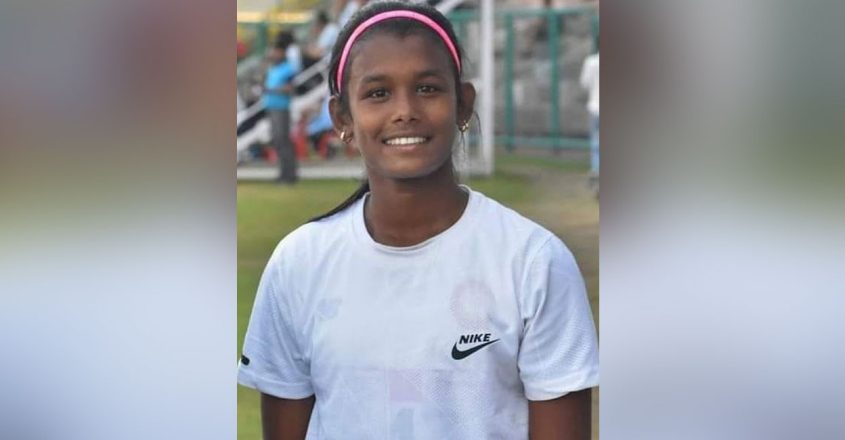
Mubssina Mohammed, a 16-year-old from Lakshadweep, has won India a silver medal in the girls’ Long Jump event at the 4th Asian U18 Athletics Championships that began Thursday in Kuwait.
It is the first-ever Asian-level athletics medal won by an athlete from Lakshadweep.
Mubssina jumped 5.91m to finish second behind Uzbekistan’s Sharifa Davronova (6.06m) and ahead of Hong Kong’s Wai Yin Jia (5.81m).
Last month, the talented athlete from the Minicoy islands created history by winning Lakshadweep’s first-ever national-level medal in athletics.
She had clinched gold in Long Jump (5.90m) at the Youth National Championships held in Bhopal.
Mubssina is coached by Ahmed Jawad Hassan, who discovered her at a local sports festival.
India also clinched a pair of gold medals and a bronze on the opening day.
In boys’ shot put, Akash Yadav (19.37m) took gold while his teammate Siddharth Choudhary (19.00m) claimed silver.
In boys’ 1500m, Amit Chaudhry of India was placed first after clocking 4:04.59.
source: http://www.onmanorama.com / OnManorama / Home> Sports / by Onmanorama Staff / October 14th, 2022
Urdu writers and literary critics at the university have contributed in their own meaningful ways to keep the Persio-Urdu literary culture alive.
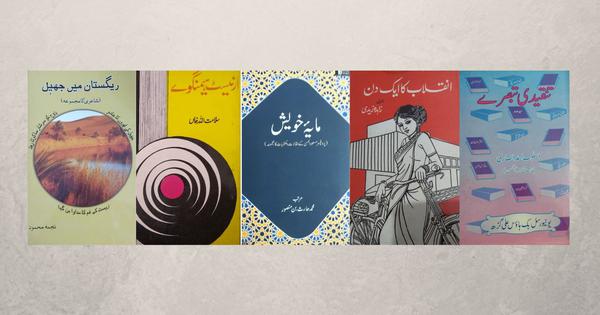
Some of the Urdu books written by the professors of the Department of English, Aligarh Muslim University.
Bilingualism, in many cases even multilingualism, being a special quality of most Indians, it comes as no surprise that many scholars working in various English Departments of Indian universities and colleges have produced work of considerable merit in several Indian languages. Often this work, both creative and critical, has not been sufficiently acknowledged because the English Departments in India were mostly concerned with the canonical study of English literature. The work done on the English canon and on Indian languages belonged to two different domains, with a separate group of readers.
With a drastic change in the nature of English studies in India in the last two decades or so, the broadening of the English canon following a decolonising process, the introduction of literatures in Indian languages through English translations and their inclusion in university curricula, and a renewed confidence with which to view local and indigenous traditions of literature and criticism, these two domains are beginning to converge.
Urdu literature in an English department
While taking stock of the work produced in English Department at Aligarh Muslim University on the occasion of the Azaadi ka Amrit Mahotsav celebrations, it was heartening to note that many scholars, otherwise well-known as hard-working teachers of English and sound scholars of English literature, contributed in a big way to Urdu literature and criticism. Their grounding in the Persio-Urdu literary culture and knowledge of English literary and critical traditions gave them a distinct identity, which also offered a position of advantage in many ways for approaching English literary texts.
These academics were often straddling two worlds without getting sufficient acknowledgement from either. For the western critics and academics they pretended to know what they were not fully entitled to and were hence treated with a degree of condescension, and for their counterparts in Indian languages English professors were trespassers into a territory to which they had forfeited the rights when they opted for a foreign language and literature.
Three important categories of the AMU English Department’s contribution to Urdu can be identified. First, those who joined the Department as faculty members, spending a great deal of their time in Aligarh writing in both Urdu and English. Second, members of the English Department who read in Urdu but wrote in English, either translating from Urdu to English or writing academic articles and books using Urdu sources. Third, those who studied in the Department of English but moved out to different places, doing substantial work belonging to either of the two categories: creative work, literary criticism, and translation into Urdu from English.
The association of the first two categories of people with Urdu also tells the story of the gradually changing status of the language in India. Most of the people, or rather all, belonging to the first category were born in undivided India, when Urdu had a vibrant presence in the country. The generation born before Independence also had the advantage of being familiar with Persian, which made their Urdu impeccable. The second category, born after Independence, was generally more proficient in reading Urdu than in writing in the script, and have mostly written in English.
Mapping out the work of the faculty members of English Department since independence, it emerges that a good number of them, beginning with Professor Khwaja Manzoor Hussain (1904-1986), had a substantial output of Urdu literature and literary criticism. Well-versed in English, Urdu and Persian, Khwaja Manzoor Hussain, chairman of the Department from 1946 to 1948, was a man of immense learning, much sought after for his insights into literature.
Asloob Ahmad Ansari, an eminent Urdu critic mentions in his profile of Hussain in his book Aina Khane Mein that leading Urdu writers and poets like Rasheed Ahmad Siddiqui, Firaq Gorakhpuri, Faiz Ahmad Faiz, Pitras Bukhari, Ahmad Nadeem Qasmi, Wiqar Azeem, Intizar Husain, and Shan ul Haq Haqqi have acknowledged Manzoor Hussain’s range of scholarship and critical insights into literature.
Ansari also writes that Faiz sent his famous nazm “Ye daagh daagh ujala ye shab guzida sahar” to Khwaja Manzoor Husain before its publication, and he read it in many gatherings in Aligarh. Another incident relates to English novelist EM Forster – he was a close friend of Sir Ross Masood, Sir Syed’s grandson and AMU’s vice chancellor from 1929 to 1934, and an inspiration for the character of Dr Aziz in Forster’s modern classic A Passage to India – when he was in Aligarh’s historic Union Hall Building to deliver a lecture on Charles Dickens, organised by the Raleigh Literary Society of the Department of English. Introducing the speaker, Khwaja mentioned some of the forgotten writings of Forster, which even the novelist probably did not remember. Forster remarked in wonderment, “You are slandering me”.
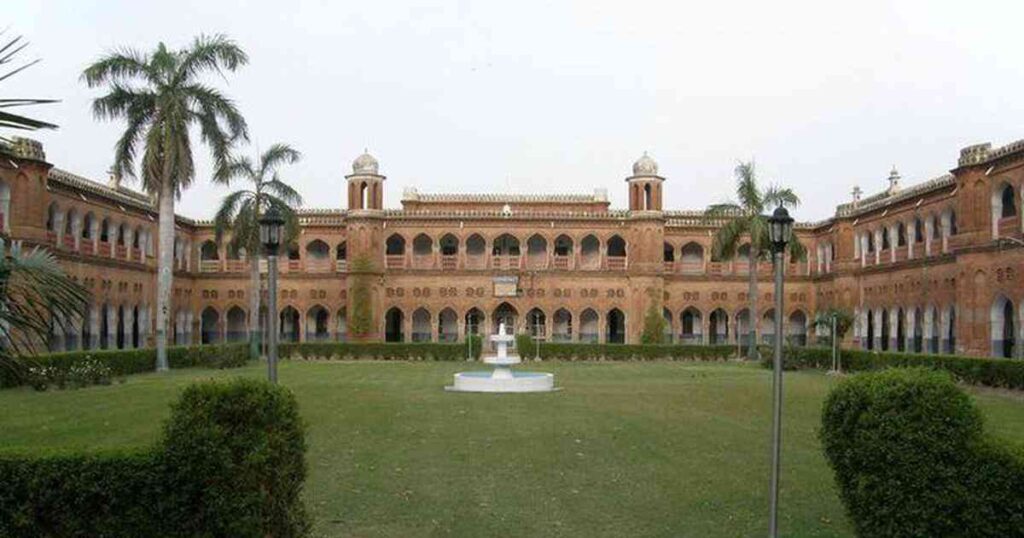
Aligarh Muslim University | Credit: PTI
How world literature inspired modern writings in Urdu
A cultured, soft-spoken and self-effacing person, Khwaja did not publish much while in Aligarh, though he was known to be translating some Russian short story writers into Urdu and working on different aspects of Urdu ghazals. It was only in the late 1970s that he published his book of Urdu translations of Russian stories with a preface written by Faiz Ahmad Faiz. Ansari is of the opinion that Hussain’s translation of the stories of writers like Chekhov influenced the course of the Urdu short story significantly.
In other words, Ansari suggests that Urdu writers of short stories were made familiar with Russian greats through Hussain’s translation. Treating some difficult and controversial literary and critical issues with frankness, his book titled Iqbal aur Baaz Dusre Shayar tries to assess Iqbal’s status vis-à-vis other important Urdu and Persian poets. His longstanding interest in the genre of the ghazal, especially its relationship to contemporary social and political movements, yielded two very important books in 1970s: Tahreek Jado Jihad Bataur Mauzu-o- Sukhan and Urdu Ghazal ka Khariji Roop Bahroop. Presenting a new proposition, and receiving bouquets and brickbats in equal measure, he argued that ghazal poetry has a political and social dimension which may not be directly visible on the surface, but is very much a part of this genre.
Salamatullah Khan, another important name in this context who joined the English Department in 1945 and retired as a reader (promotions were difficult at that time), was one of the pioneers of American literature in the northern part of India at a time when American literature hardly had any presence in universities and colleges. He can be spotted in a group photograph of the delegates who met in Mussoorie in 1962, a meeting which led to the establishment of the American Studies Research Center in Hyderabad (ASRC), at one time the best resource for books and journals on American studies.
Though Khan worked on Emily Dickinson for his doctoral thesis, a lesser-known aspect of his work is the publication of his three books in Urdu titled Majaz ka Almiya aur Doosre Mazameen (1969), Amriki Adab ka Mukhtasar Jayeza (1978), and Ernest Hemingway: Hayat-o-Fan ka Tanqidi Mutaala (1980). Majaz ka Almiya includes his essays on Mir Taqi Mir, Ghalib, Sauda, Faiz Ahmad Faiz, some rebel poets of Urdu, and the genres of ‘azad nazm’ and ‘inshaiya’. His history of American literature follows the method of literary history popular at that time, introducing first the pioneers like Jonathan Edwards, Benjamin Franklin, and Thomas Jefferson, and then discussing different trends and movement in American literature. His crisp and analytical style, not a very common feature of Urdu prose, makes his book on Hemingway, which covers all his important works, a good read even today.
How Aligarh Muslim University nurtured contemporary Urdu literature
The most prolific of all academics associated with the department was undoubtedly Asloob Ahmad Ansari (1925-2016), who wrote extensively in both English and Urdu. A bilingual critic, Ansari joined the department in 1947, headed it for almost two decades, and influenced a whole generation of his students and colleagues to read closely and write carefully.
An established Shakespeare and Blake scholar, he has a huge corpus of work in Urdu, mostly literary criticism, but also sketches and memoirs, and many edited volumes. Ghalib and Iqbal were his favourite poets, but he has written on almost all important Urdu poets. His books on Ghalib include Naqsh-e-Ghalib (1970), Naqsh Hai Rang Rang (1998) and on Iqbal Iqbal ki Terah Nazmein (1977), Iqbal ki Muntakhib Nazmein and Ghazlein (1994), Iqbal Harf-o-Mani (1998). Among the many books he edited, his two-volume GhazalTanqeed: Vali Deccani se Iqbal aur Maabad Iqbal Tak (2002) is especially remarkable for its comprehensiveness and variety.
Though he has written more on Urdu poetry, a dominant genre in Urdu literature, Ansari’s work does cover his analysis and evaluation of all canonic Urdu novels and other genres of prose. His books Urdu ke Pandrah Novel (2003) discusses, among others, important novels like Umraojan Ada, Maidan-e-Amal, Udas Naslein, and Aag ka Dariya. His book Aitraf-e-Rasheed Ahmed Siddiqui (1977) unravels the personality and art of Rasheed Ahmad Siddiqui, a master humorist and satirist. His articles on different literary issues are included in Adab aur Tanqeed (1968) and Andazey (2008).
An excellent prose writer, Ansari has also written a delightful book of sketches, Aina Khane Mein, which includes his sketches and assessments of some of his contemporaries, such as Dr Zakir Husain, Rasheed Ahmad Siddiqui, Khwaja Manzoor Husain, Maulvi Zia Ahmad Badauni, Dr Abdul Aleem, Syed Hamid, Malik Ram, Khaleeq Ahmad Nizami, Ale Ahmad Suroor, and Mukhtaruddin Arzoo.
Ansari brought out a literary journal in Urdu, Naqdo Nazar, which provided a platform to many of his colleagues to write on a regular basis. Among his colleagues in the Department of English, Professor ZA Usmani, Zahida Zaidi, Amin Ashraf, Mohd Yasin, Maqbool Hasan Khan, S Wiqar Husain, Abdul Raheem Kidwai, and Syed Asim Ali wrote for the journal regularly, often at his persuasion. He also motivated many young scholars from other disciplines, including people like Shafey Kidwai, now a Sahitya Akademi award winner in Urdu, to write for Naqdo Nazar.
Ansari himself contributed articles, analyses of poems and book reviews to the journal on a regular basis. In fact, often the major portion of the journal comprised his own contributions. He also brought out a collection of his editorials and obituaries published in Naqdo Nazar in his book Harf-e-Chand (2005). Many of Ansari’s articles, written over a long period of time, were published in book form in his last phase, largely due to the practical help he received from his former student Abdul Raheem Kidwai.
The work of Zahida Zaidi (1930-2011), a poet, dramatist, novelist, translator and above all a liberal face of Aligarh all through her career, will surely enjoy an afterlife as more and more English translations of her Urdu plays appear on the scene. Known for nurturing the talent of Naseeruddin Shah and introducing him to many Continental playwrights, Zaidi was one of the pioneers of Urdu drama. She translated the plays of Chekhov, Pirandello, Sartre, Beckett and the poems of Eugenio Montale, Garcia Lorca, and Pablo Neruda into Urdu. Full of elaborate stage directions, her Urdu plays are heavily inspired by absurdist theatre, where often there is minimalist use of stagecraft. Departing from the technique of realism, they have, however, been inspired by many real events and topical issues.
Woh Subah Kabhi Toh Ayegi (1990) a feminist play in many ways, responds to the issue of domestic abuse. In Doosra Kamra (1990) a play in which the line between dream and reality appears blurred, all characters meet in one room while another room becomes a frightening place, with dead bodies appearing in it one by one. Jungal Jalta Raha (1990) probes the complexities of human character and Kyun Kar Us But se Rakhoon Jan Azeez (1998) laments the loss of culture and values in academic spaces.
Responding to the tragedy of the Gulf War, she wrote Sahra-e-Azam (1991), an anti-imperialist play where she is critical of American bombing in Iraq. She also responded to the tragedy of Gujarat in her play Bahut Door Tak Raat Hogi (2006) and dedicated it to “the martyrs and persecuted people of Gujarat; those persecuted women who were victims of the lust of cruel beasts; those innocent people languishing in jails for their innocence; those innocent children who are in search of their lost paradise.” Like George Bernard Shaw, Zaidi wrote long prefaces to her plays which provide a rich commentary on the context, making it easier for her readers to appreciate the technique and thematic concerns.
Zahida Zaidi’s lone novel Inquilab ka Ek Din (1996) is a campus novel, talking about one day in the life of its young female protagonist, but its canvas is wider because her use of stream of consciousness narration in certain parts of the novel. Zaidi also has seven collections of poems, two in English titled Broken Mirror (1979) and Beyond Words (1984), and five in Urdu titled Zahr-e-Hayat, Dharti Ka Lams, Sang-e-Jan, Shola-e-Jan, and Sham-e-Tanhai.
A poet of ghazals and nazms, her poetry has different shades, topical, symbolic, experimental, and philosophical and spiritual; especially in her final collection Sham-e-Tanhai (2008). Defining the nature of her poetry in the preface of her book Shola-e-Jan (2000) she writes, “For me poetry is a practice of transforming deep and intense experiences into insights through the vehicle of creative rhythm and potential of language.” Her important write-ups on Urdu literature written in English are included in the book Glimpses of Urdu Literature: Select Writings (2011).
Syed Amin Ashraf (1930-2013), who joined the Department in 1963 and retired in 1991, was better known for his light-hearted conversation, bursting with anecdotes, and his Urdu couplets than for his scholarship. His three collections of poems, Jadah Shab (2000), Bahar Ejaad (2007) Qafs-e-Rang (2011), and a single collection of prose writings and translations Burg-o-Vabaar, were published many years after his retirement. Hailed as a poet of love, especially the sufic concept of love, his poetry, using very few words, holds an appeal for both heart and mind.
Amin Ashraf’s khanqahi background also colours his poetry. Jadah Shab, containing both nazms and ghazals, was written over almost half a century. In his introduction to Bahar Ejaad, a collection of his ghazals, eminent Urdu critic Shamsur Rahman Faruqi expresses the view that reading just a few ghazals of Amin Ashraf’s makes the reader not only a confidant of the poet’s, but also in posses himself composed those couplets.
Jadia Asjad, a research scholar at Aligarh Muslim University working on Amin Ashraf’s poetry, is of the view that there appears a conflict sometimes in Amin Ashraf’s mind between classical and modernist (jadeed) models of poetry but he was too devoted to classical tradition of poetry to try modernist poetry. Burg-o-Vabaar includes his explication of many nazms and scholarly essays on various poets and writers like Iqbal, Fani, Shamsur Rahman Faruqi, Majrooh Sultanpuri, Muzaffar Hanafi and a comparative view of the conception of Satan in Milton and Iqbal. His Urdu translations of Wordsworth’s Preface to Lyrical Ballads (1800) titled Shayri aur Shayri Zabaan-o-Bayaan, American critic Mark Schorer’s famous essay “Technique as Discovery” titled “Takneek Daryaaft ki Hasiyat Se” and an essay of French critic Paul Valery greatly benefited his Urdu readers.
Mohd Yasin (1932-2010), a hard working teacher, authored two very important books in Urdu titled Angrezi Adab ki Mukhtasar Tareeq and Naqoosh-o-Afkaar aur Nazaryat: Muntakhib Mazaamin (2010) in addition to his articles and book reviews published in Naqdo Nazar. First published in 1971, Anjuman Taraqqi Urdu Hind, at the insistence of famous Urdu critic Ale Ahmad Suroor, had its revised and expanded second edition in 1990 (Uttar Pradesh Urdu Academy) and a third revised edition in 2009 (Educational Book House, Aligarh). This book, indebted to Legouis and Cazamian’s famous A History of English Literature, was written with an awareness that Urdu readers not only need to know English literature in order to assess the limitations or the special features of their literature, but they can also approach world literature through a window provided by the ideas, forms and philosophy contained in English literature.
His essays in Naqoosh-o-Afkar, written over a long period of time, include his sketches of Rasheed Ahmad Siddiqui, Majnoo Gorakhpuri, Amelendu Bose, Maulana Saeed Ahmad Akbarabadi, Ale Ahmad Suroor, Ateeq Ahmad Siddiqui, and Syed Amin Ashraf, including his observations on different literary issues and his point of view on many social and political problems faced by Aligarh Muslim University and Indian Muslims. He also familiarised Urdu readers by writing essays on French novelists Balzac and Flaubert in Naqdo Nazar.
Najma Mahmood’s collection of poems Registan mein Jheel (2014) reflects the modernist sensibility of an accomplished poet of nazms and songs. Drawing upon the images from nature like lake, river, water, rains, waves, sea, lightening, moon, sky and many others, her work touches on, among other subjects, themes of creativity, beauty, gender-relations and problems of existence. There is not only an element of restlessness in her poetry, noted by Syed Hamid, or shades of romanticism, noticed by Waheed Akhtar, there is also a deep psychological and spiritual probing in her nazms. Her feminist concerns are most visible in her famous poem Mother Goddess.
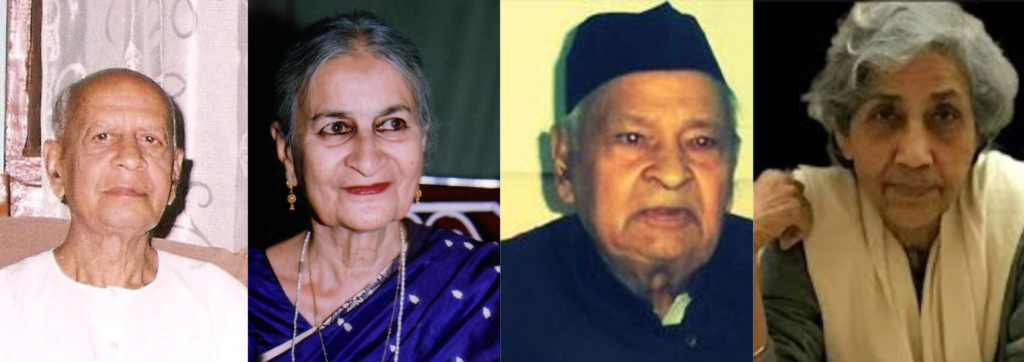
(From L to R): Asloob Ahmad Ansari, Zahida Zaidi, Syed Amin Ashraf, Najma Mahmood.
Many other members of the Department wrote and published in Urdu. Masoodul Hasan(1928-2019), a prolific writer in English till his last days, wrote interesting and critical reviews of all books sent to him as presents. His articles, reviews and creative pieces in Urdu are included in Maya-e-Khewesh (2019), ably compiled and edited by Mohammad Haris Bin Mansoor.
Maqbool Hasan Khan’s writings on Ghalib, Iqbal and Qurratulain Hyder were greatly appreciated. In fact, Khan disagreed with the largely held view of Urdu critics about Hyder’s stream of consciousness technique in her novels. ZU Usmani, widely praised for his insights into difficult literary texts, wrote on Ghalib, Fani, Premchand, and Rasheed Ahmad Siddiqui in Naqdo Nazar. S Wiqar Husain, a very well-read person, wrote insightful essays on Rasheed Ahmad Siddiqui’s symbolic characters, features of Moin Ahsan Jazbi’s poetry and analyses of ghazals of Iqbal, Bahadur Shah Zafar, Nasir Kazmi, Asghar Gondvi, and Fani.
Raza Imam’s collection of stories in Urdu titled Shor aur Sannata, which has a foreword written by noted Urdu critic Shamim Hanafi, was published after his death. AR Kidwai, a celebrated translator of difficult philosophical and religious texts, has written a number of books in Urdu. Syed Asim Ali, who has written substantially in Urdu and translated important works, is also a poet of ghazals. He has written essays on Iqbal’s criticism, Shelley’s intellectual evolution in his poetry, analyses of the ghazals of Mir Taqi Mir, Khwaja Mir Dard and other Urdu poets apart from incisive book reviews in Naqdo Nazar.
Urdu poets, creative writers and literary critics at the Department of English at Aligarh Muslim University have contributed in their own ways to make Azadi ka Amrit Mahotsav a meaningful affair.
Mohammad Asim Siddiqui is professor in the Department of English at Aligarh Muslim University, Aligarh.
source: http://www.scroll.in / Scroll.in / Home> Language of Literature / by Mohammad Asim Siddiqui / October 09th, 2022
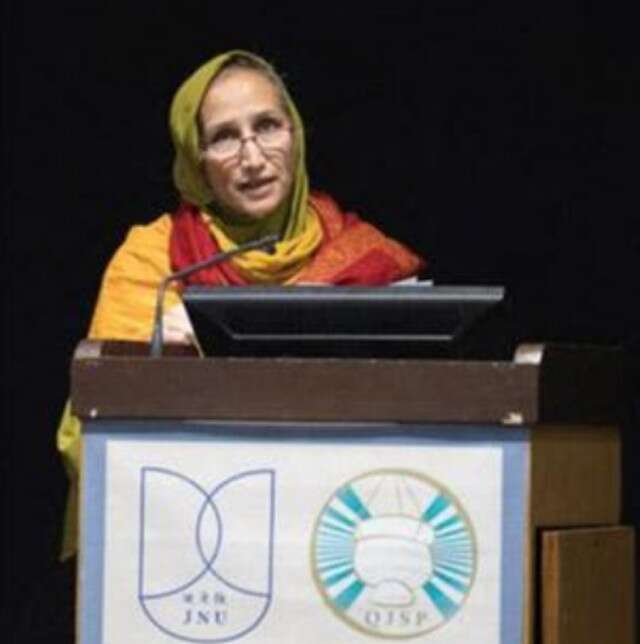
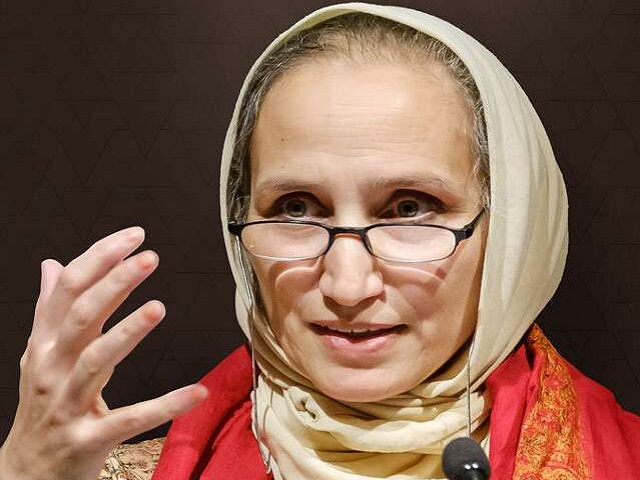
Dr Tahera Qutbuddin, a professor of Arabic Literature at the University of Chicago, recently became the first person of Indian-origin to win the 15th Sheikh Zyed Book Award. The award is considered to be the Nobel Prize of the Arab world.
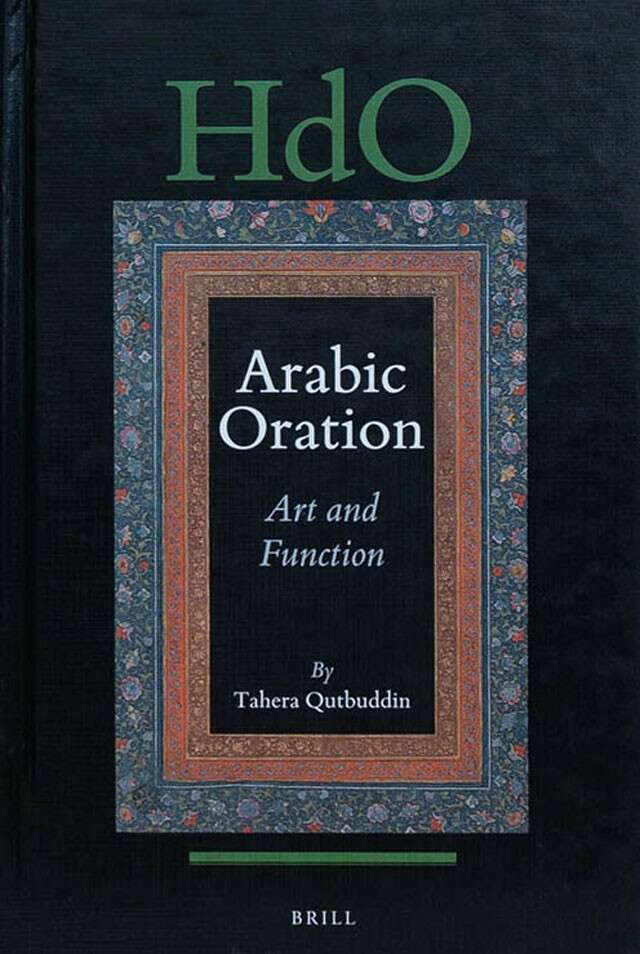
Dr Qutbuddin, who was born in Mumbai and was educated until class 12 in India, also serves on the editorial board of NYU Abu Dhabi’s Library of Arabic Literature. She won the award for her latest book, Arabic Oration – Art and Function, published by Brill Academic Publishers of Leiden in 2019.
In the book, she puts forth a comprehensive theory of Arabic literature in its foundational oral period dating the seventh and eighth centuries AD. She discusses it’s influence on modern-day sermons and lectures as well.
Having completed her higher secondary from Sophia College in Mumbai, Dr Qutbuddin pursued her BA from Ain Shams University, Cairo and got her PhD and MA from Harvard University, USA.
In a recent interview with a portal, she said that although she has lived away for many decades in Egypt and now the US, her roots are vital to who she is, and Indian culture is part of the fabric of her being.
“It (Mumbai) is the place of my childhood memories, of playing in the monsoon rains and eating mangoes in the summer. I come back to Mumbai often. I love my Mother India, and pray for her security and progress, and for harmony and love between the many beautiful communities that call her home,” she said.
According to her bio, her research “focuses on intersections of the literary, the religious, and the political in classical Arabic poetry and prose.”
She is the recipient of several prestigious fellowships, including support from the Franke Institute of Humanities, the American Council of Learned Societies, the Carnegie Corporation of New York, and the John Simon Guggenheim Foundation.
source: http://www.femina.in / Femina / Home> Trending> Achievers / by Shraddha Kamdar / April 30th, 2021
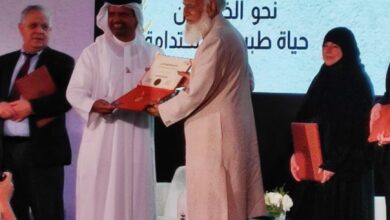
Prof. Wazahat Hussain, a leading professor from the Aligarh Muslim University (AMU) has won an international award for Traditional, Complementary, and Alternative Medicine.
Husain, a retired chairman of the Department of Botany at the AMU, won the Second Sheikh Zayed International Award on Monday in an event arranged by the Zayed Charitable and Humanitarian Foundation.
pix: thenortherngazette.com
The Foundation is a UAE-based non-governmental, non-profit organisation that invests in developing human capital to improve the quality of life, according to the Foundation’s website.
The award aims to give recognition to eminent academics and scientists of Traditional Complementary and Alternative Medicine (TCAM ) globally, and TCAM physicians from the UAE, for enhancing TCAM knowledge and practices, and contributing to the improvement of quality of life for humanity, the organisation said.
A plant taxonomy expert, Husain has been conferred Lifetime Achievement Awards twice, once jointly by the University Grants Commission (UGC) and the AYUSH ministry and then by the Wildlife Institute of India and Department of Wildlife Sciences, AMU.
Speaking to PTI, Prof. Husain stated that he was honoured to be representing AMU and India at the pinnacle of his academic career.
Academics do not work for recognition, but when they come, they must be accepted with humility. I dedicate this award to my university and my country, Prof Husain said.
According to WHO, traditional medicine is the sum total of the knowledge, skill, and practices specific to indigenous experiences and beliefs which are used in the maintenance of health, while alternative or complementary medicine refers to a broad set of healthcare practices that are not part of a country’s own tradition or conventional medicine and are not fully integrated into the dominant healthcare system.
source: http://www.freepressjournal.in / The Free Press Journal / Home / by PTI (headline edited) / October 11th, 2022
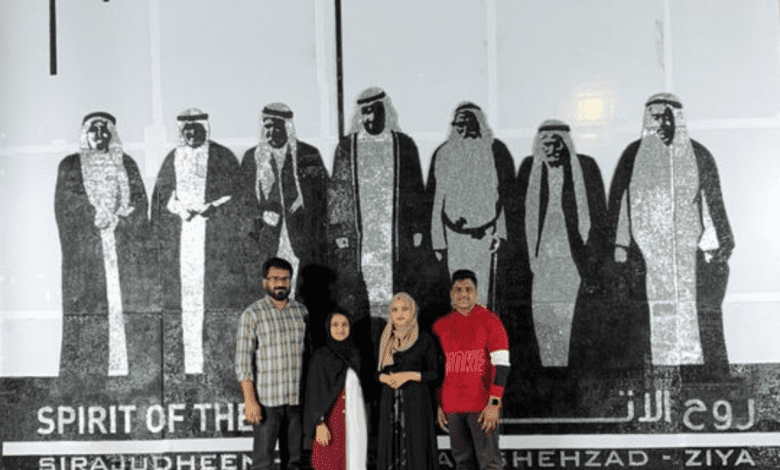
The art was created with plywood sheets, screws, and spray paint. It is constructed of 20 frames and three lakh screws. The installation weighs 460 kilogrammes, is 444 centimetres tall, and is 555 centimetres wide.
Giant screw art piece featuring the UAE’s ‘Spirit of the Union’ picture, as well as the Expo 2020 Dubai emblem.
An Indian family in the United Arab Emirates (UAE) has created a giant screw art piece featuring the UAE’s ‘Spirit of the Union’ picture, as well as the Expo 2020 Dubai emblem. The three lakh screw art piece has been inscribed in the Arabian Book of World Records as the world’s largest screw art.
According to Gulf News, EA. Sirajudheen, a 45-year-old and his 39-year-old wife Badariya, both from Kerala, chose to make the massive art piece as a homage to the UAE on its 50th National Day.
Sirajudheen was a former aeronautical engineer who transitioned to business after moving to the UAE 24 years ago and is now the owner of Brightway Tyres and Auto Service in Abu Dhabi.
The art was created with plywood sheets, screws, and spray paint. It is constructed of 20 frames and three lakh screws. The installation weighs 460 kilogrammes, is 444 centimetres tall, and is 555 centimetres wide.
According to the couple, the Guinness World Record was for a piece of art that used 250,000 screws. They said that they first utilised sticker printouts of the photos to adhere to various portions of the boards, and then used hand drills to repair the screw. After being spray-painted with black, red, green, and gold paints, the boards were assembled to form the full-frame.
The couple has two children, 14-year-old Shehzaz and 11-year-old Zia, who helped their parents in the massive screw art. The family finished the project in one month.
Zenith Wheel Alignment, the art piece, is now on show at the Abu Dhabi Malayali Samajam in Musaffah, after the National Day exhibition. The duo stated that they wanted to show their artwork to a larger audience at the Sheikh Zayed Festival in Al Wathba.
source: http://www.siasat.com / The Siasat Daily / Home> Kerala / by News Desk – Sumaya Junaid Ahmed / January 07th, 2022