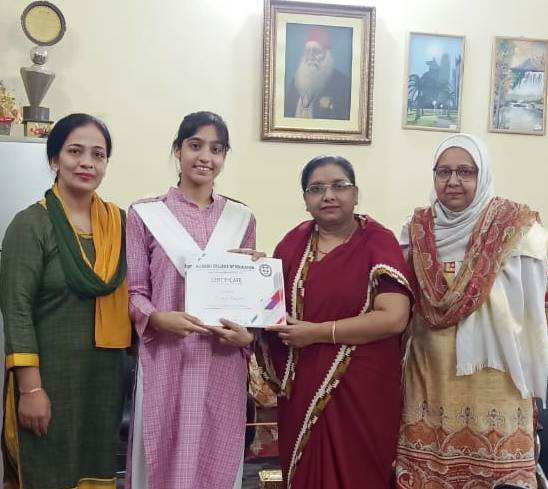
23-year-old Aamna Kausar, an MSc Medical Anatomy student at the Manipal Academy of Higher Education in Udupi has topped the university in the final year examinations.
Aamna, who is also the President of the district unit of the Girls Islamic Organization, scored 8.6 CGPA, the highest in this year’s examinations.
Daughter of Mohammad Iqbal, a businessman and Wajida Tabassum, a homemaker, the hijabi student wants to pursue a PhD in Human Anatomy.
She told The Cognate, “I am planning to do PhD next year on a topic related to human anatomy. Meanwhile, I will be working for a year.”
Aamna who has secured a job as a faculty to teach anatomy to medical students. However, she aims to get into the research field.
Notably, Aamna is a hijabi student from Udupi which was the hotbed of the hijab controversy a few months back.
“Being a hijab-wearing student in our university, I have seen difficult times during the controversy. I was actively participating in discourses surrounding the hijab row through GIO,” she said.
“The way hijabi students were treated in the district was really bad. But now, moments like these prove to them that education is the right of everyone and if students are given proper education, they will reach heights,” she added.
source: http://www.thecognate.com / The Cognate / Home> Education / by Rabia Shireen / September 26th, 2022
The Moti Masjid in Bhopal. | Photo Credit: FARUQUI A. M.
Tracing the history of a city where four Muslim women ruled for over 107 years
As the capital of one of the largest States, Bhopal has flown under the radar. It has little of the financial muscle associated with Mumbai, even less historicity to rival that of Kolkata. It has neither the earthiness of Patna nor the niceties of Lucknow. Yet, Bhopal in its own understated way has enough accomplishments to fill up a mantelpiece.
Among all the States, cities and towns of imperial and modern India, Bhopal has done more for women empowerment than probably all States put together. True, back in the 13th century Delhi had a woman ruler, Raziya Sultan, who ruled from 1236 to 1240, but little else.
Bhopal has been ruled by four Muslim women for 107 years. The Begums of Bhopal did not shy away from calling themselves the Nawabs of Bhopal.
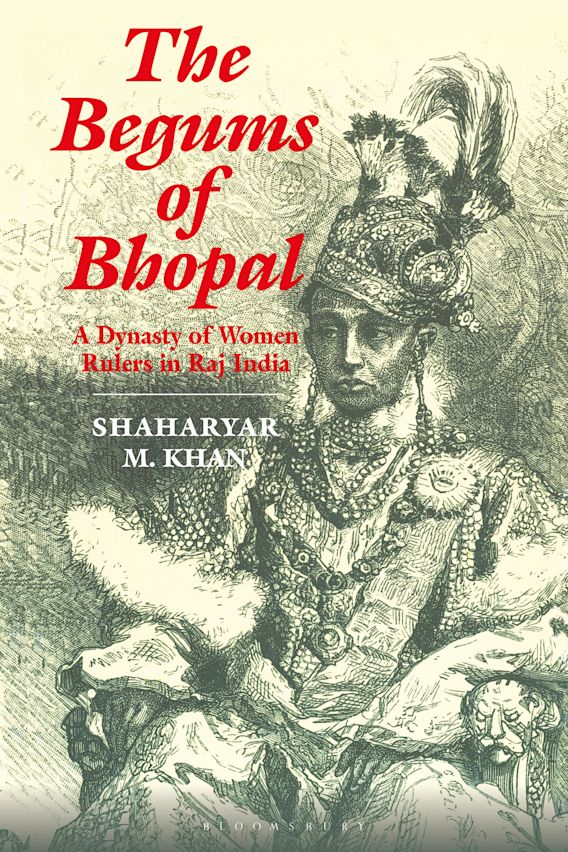
Shaharyar Khan, Shobhan Lambert-Hurley and Vertul Singh have authored or edited books on the city, which on the one hand capture its history, and on the other reveal the streak of women dominance for more than a hundred years.
pix: bloomsbury.com
Khan’s The Begums of Bhopal is the most detailed work. Like an artist fills his canvas with colour, Khan fills his pages with details of the city, its illustrious history, and its formidable Begums, now reduced to a faint memory. Khan’s Bhopal was founded by Dost Mohammed Khan. As the author reminds us, “In 1707, before Dost Mohammed Khan arrived in Malwa, central India, Bhopal was a small village on the banks of the River Banganga. An old fort, lying in ruins, was a testimony to Bhopal having known more prosperous times in the distant past.”
Tales of Bhojpal
The earliest reference to Bhopal though dates back to 640 AD when it was ruled by the Parmar dynasty. Its name is derived from that of Raja Bhoj who, as legend has it, contracted leprosy and was advised to build a lake with water from 365 rivers and bathe in it. Raja Bhoj did as advised. The lake was called Bhoj Tal (or Bhoj’s lake). Over time, it got corrupted to Bhojpal, then Bhopal.
The State was formed in 1715. It was the second largest Muslim princely state in pre-Independence India, wherein 90% of the population was Hindu. Interestingly, the Begum of Bhopal, Nawab Sikandar Begum, as Lambert-Hurley writes in the introduction to A Princess’s Pilgrimage, supported the British during the Revolt of 1857.
After the Revolt had been suppressed, this loyalty was rewarded in the Queen’s Proclamation of 1858 in which Sikandar was granted the title of Nawab to rule over Bhopal in her own right as well as given a 19-gun salute, the return of territory lost to a neighbouring prince and the Grand Cross of the Star of India. “This honour made her, at the time, the only female knight in the British Empire besides Queen Victoria, a position that underlines her unique status, as well as her close relationship with the British,” writes Lambert-Hurley.
The story of Bhopal though began not with Sikandar Begum’s rise or the reign of her mother Qudsia Begum or her own daughter Shah Jahan Begum, but with an intrepid young man called Dost Mohammed Khan. As Shaharyar Khan writes, “The story of Bhopal begins with Sardar Dost Mohammad Khan, founder of the state and of the Bhopal dynasty. Born in 1672, Dost was a strapping, handsome, brash and ambitious young man. Like all Pathan noblemen, he had been brought up in the warrior tradition of his clan…Dost’s only ambition was to enlist in Aurangzeb’s army and make his future in the service of the Mughal Empire. Around 1697, Dost was in his mid-20s and a brash, dare-devil, buccaneer of a character. He was restless and ready to seek his fortune by crossing the Khyber Pass into India.” Head to India he did, but it was far from an easy ride.
As he traversed through Jalalabad, Karnal and Delhi, on more than one occasion, he almost kissed death, but he proved a survivor, qualities which came in handy when he got to play a pivotal role in Bhopal.
Though he arrived in Bhopal practically a brigand, he worked his way up, working with a number of local kingdoms and fiefdoms — Rani Kamlapati is said to have sought his protection after the death of her husband Nizam Shah and even tied a rakhi on his hand.
He built the famous Fatehgarh Fort in 1716, including the famous Dhai Seedi ki Masjid, as Vertul Singh writes in BhopalNama: Writing a City. Incidentally, Fatehgarh was probably named after Fateh Bibi, a Rajput princess he married. Fateh was no ordinary woman; she paid ransom for her husband’s release when he was held captive by his own troops in Gujarat, Singh writes.
Khans to Begums
How did Bhopal transition from the Khans to Begums? After Khan’s death, Bhopal was attacked by many mercenaries when Mamola Bai, said by some to be the first Begum, took the help of British General Goddard to repel such forces. Then came Qudsia Begum whose perseverance and wisdom saved the “state from being gobbled up by the Scindias and the Bhonsles”, as Singh states. Her daughter Sikandar took statecraft to another level. Sikandar’s daughter Shah Jahan Begum added fine touches of poetry, art, music to turn Bhopal into a throbbing centre of the arts. Yet, the most maternal approach towards the subjects was displayed by the fourth Nawab, Sultan Jahan, known for administrative reforms, including several measures for the welfare of her subjects. So much so that she came to be addressed as Sarkar Amma.
This succession of matrilineal rulers gave Bhopal a unique identity. They did what a man could never have dreamt of.
For instance, Sultan Shah Jahan Begum initiated the building of a hospital exclusively for women, with women doctors, nurses and other staff. The facility came to be known as Sultania Zenana Hospital.
Likewise Sikandar Begum started the practice of schools for girls, inviting scholars from Yemen, Turkey and Arabia.
Incidentally, she penned her own experience of Hajj to Mecca and Medina in ‘A Pilgrimage to Mecca’ which now forms part of Lambert-Hurley’s A Princess’s Pilgrimage. Sikandar Begum’s was no ordinary trip as Hajj those days was a life-challenging exercise with possibilities of being robbed, injured or killed by marauders along the way.
After Sikandar, Sultan Jahan concentrated on girls’ education. As Singh writes, “Sultan Jahan’s contribution to women’s education is in no way lesser than that of Sir Syed Ahmed Khan.”
Incidentally, she was the only woman chancellor of Mohammedan Anglo-Oriental College which was to become the Aligarh Muslim University.
All the Begums worked well and lived long. Once, all the four queens of Bhopal were alive at the same time with Qudsia living to breathe alongside three of her successors. That’s an interesting footnote in the history of a city where male heirs have been few and far between. Their absence was seldom felt.
source: http://www.thehindu.com / Hindu / Home> Books / by Ziya Us Salam / book cover pix: by bloomsbury.com / September 12th, 2022
The idea for creating the app came to Hana while watching a documentary about the importance of the parent-child relationship.
Abu Dhabi:
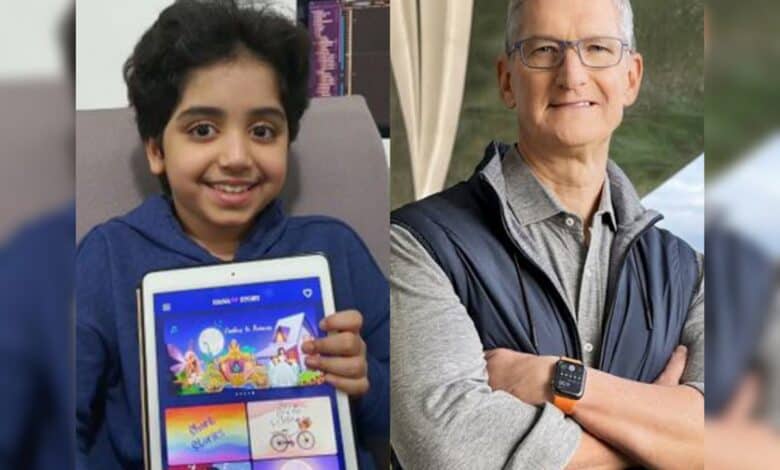
A 9-year-old Dubai-based Indian girl who developed an iOS app receives appreciation from Apple CEO Tim Cook for her achievement at such a young age.
Hana Muhammad Rafeeq had initially emailed Tim Cook claiming to be the youngest iOS developer.
In his reply, Tim Cook wrote to her “Congratulations on all of your impressive achievements at such a young age. Keep at it and you will do amazing things in the future.”
Hana Muhammad Rafeeq, when she was 8-year-old developed ‘Hanas’— storytelling app, which allows parents to record stories in their voices for their kids, Hana handwrote more than 10,000 lines of code.
The idea for creating the app came to Hana while watching a documentary about the importance of the parent-child relationship. “If the parents are busy with work, they can record the stories so that the children can listen to them before bed,” Hana told Gulf News.
source: youtube.com / Hanas iOS Mobile App preview
Hana and her 10-year-old sister Leena are both self-taught coders who got inspired by their parents.
As per reports, sisters are now experts in coding languages HTML, CSS, C, C++, Swift and the latest SwiftUI. They are also learning human languages English, Spanish German, Arabic, Hindi and Malayalam.
source: http://www.siasat.com / The Siasat Daily / Home> News> Middle East / by Sakina Fatima / September 24th, 2022
Aliah University is a state government-run autonomous university having three campuses in New Town in West Bengal. | Picture by arrangement
The inaugural batch of the nursing course in a university in West Bengal, designed especially for women, has achieved this success.
West Bengal:
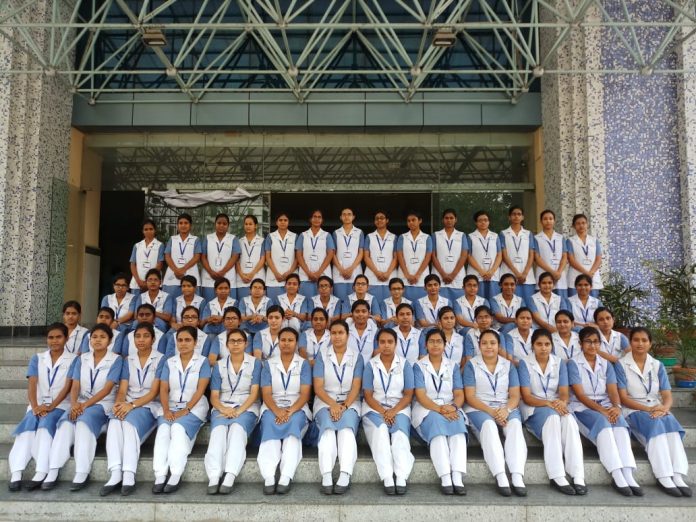
Almost the entire batch of this year’s graduates of the B.Sc Nursing course at Aliah University have got job placements. Fifty-three out of fifty-four graduating students, mostly Muslim women have been selected as nursing staff in various medical colleges and hospitals run by the government of West Bengal.
This is the inaugural batch of the nursing course designed especially for women. It is for the first time that almost an entire batch of a program in Aliah University has gotten placement.
Aliah University is a state government-run autonomous university having three campuses in New Town in West Bengal. It offers undergraduate and postgraduate programs in different Engineering, Arts, Science, Management, and Nursing subjects. Previously known as Mohammedan College of Calcutta, it was elevated as a university in 2008. It is a minority institution and hence a majority of its students come from marginalized groups and communities like Muslims and lower castes.
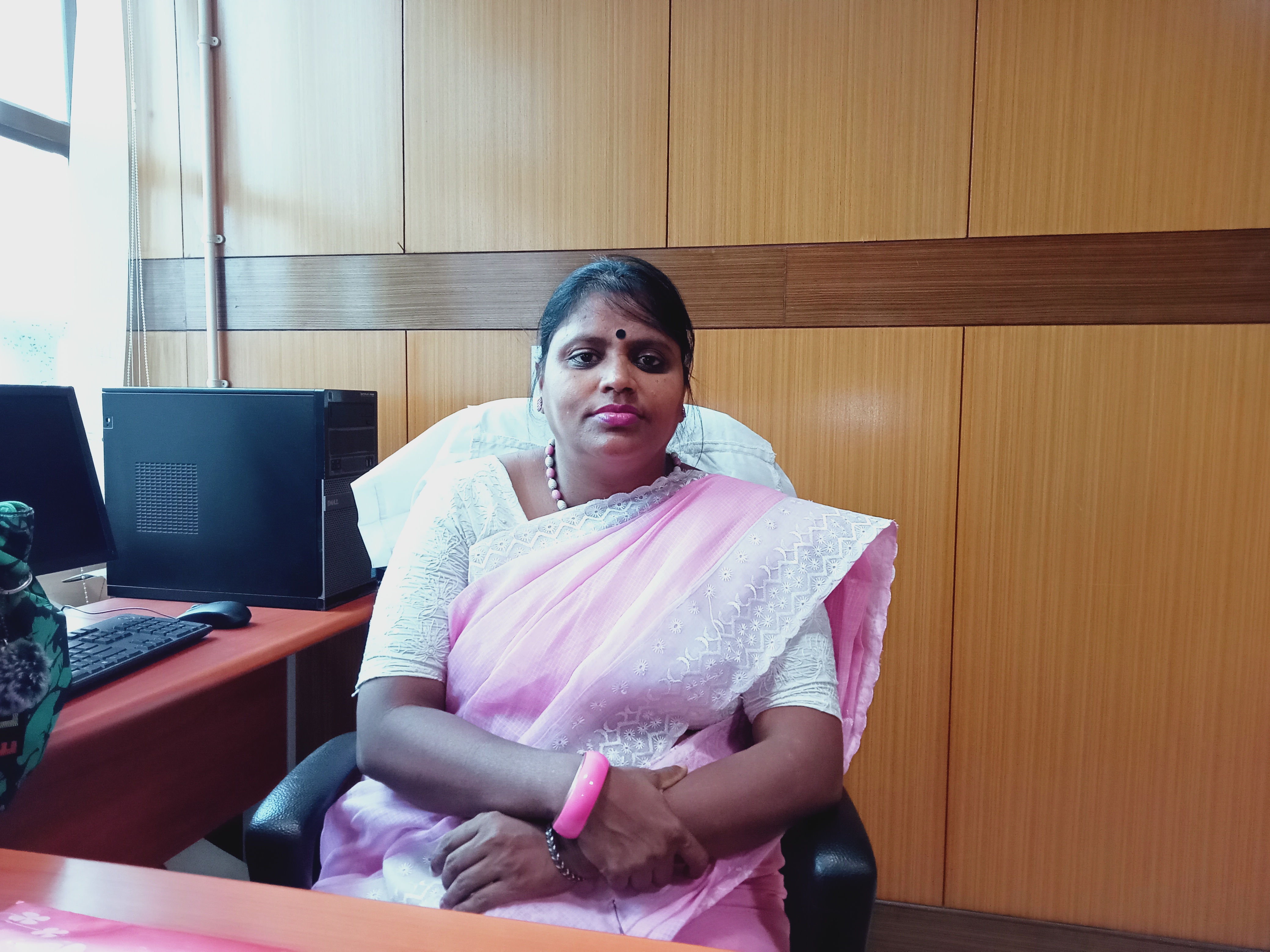
Usha Mallick, the head of the department of nursing told TwoCircles.net, “This is an unprecedented success for the department of nursing because these are the first batch of graduates. We at Aliah University are extremely proud of our graduates who worked hard.”
“This kind of placement will get us a great standing in the state as well as the country. This is great news also because all the girls in this department, like most students of Aliah university, come from extreme socio-economically backward families living in remote rural districts of West Bengal,” she added.
Usha Malick is head of the department of nursing at the university. | Photo by author arrangement
“We are thankful to the Mamata Banerjee government for helping the university start the course, and to the National Medical College for providing practical training for nursing students,” she said while adding that Aliah is the only state university that runs a nursing course without its medical college and hospital facilities.
Educating kids from extremely backward districts like Murshidabad The news brought cheers to several young women. Lutfa Khatoon is from Murshidabad, a densely Muslim populated area (67%) where the state of education is extremely poor. According to Census 2011, the literacy rate of the district is 66.60%, which is far below the national average of 74.04% and the state’s average of 77.08%. The district holds the bottommost position in the rank of literacy rates since the Census 1951.
“In Murshidabad education is not the priority in general, let alone education of girls. When I got admission to the course, people in my area said I am getting training to become a nursemaid. My placement has broken that impression,” Khatoon told TwoCircles.net. She is posted in Murshidabad medical college and hospital.
Firoja, Lutfa’s batchmate, told TwoCircles.net that studying was not the only thing she invested hard work in. “These four years of the course people would come to my house in Murshidabad and taunt my parents that your daughter will be ruined because they gave me the freedom to move to Calcutta to study,” said Firoja who is posted at Anup Nagar primary hospital, Murshidabad.
She mentioned that she faced financial hardships but thanked the university for providing her scholarship.
Aatika, Lutfa’s classmate told TwoCircles.net that people in the rural areas of West Bengal say that “sending girls to the city for education is like providing them with opportunities to be spoiled.” But her getting a nursing job has broken the patriarchal mindset and inspired many parents to send their daughters to study.
“In my village, most people marry off their daughters after they pass the tenth class. I am very lucky that my family supported me. It is because of them that I got a very respectful job,” she added.
Oldest modern style educational institute in Asia The university is one of the oldest educational institutes in Asia. Established by Warren Hastings, the British governor-general of East India Company in 1780. Calcutta Mohammedan College, as it was called by Hastings. Established in the form of a madrasa school, it is one of the oldest modern-style educational institutions in Asia and the first of its kind in India. It taught Natural Philosophy, Grammar, Logic, Arithmetic, Astronomy, Geometry, Arabic, Persian, Theology and Islamic Law, and Theory and Rhetoric.
Good career placement not new for Aliah University Dr Mohammad Reyaz, assistant professor of journalism at the university told TwoCircles.net that good career placements are not new to the university.
“Earlier it used to be a Madrasa. Not many people know that it has been turned into a university which offers courses in Engineering, Electronics and Communication, Business Management and nursing among other subjects. So these kinds of placements do help break the stereotype which tries to reduce the image of this premier institution as a madrasa. Not only do the students of nursing and engineering departments get good placements but students of the Arabic department also get jobs in prestigious firms like Amazon,” said Dr Reyaz.
Sufi Parween is a fellow at SEEDS-TCN Mentorship Program. Shentweets at@sufiparween84
source: http://www.twocircles.net / TwoCircles.net / Home> Lead Story / by Sufi Parween, TwoCircles.net / August 08th, 2022
Zahra Hashmi, a Class XII-Arts student of the Aligarh Muslim University (AMU) Girls’ School was declared the ‘Best Debater’ of the debate contest on ‘Online Education is better than Offline’ held at the AMU Girls’ School.
She has also received a cash prize of Rs 5, 000, informed Amina Malik (School Principal).
source: http://www.amu.ac.in /Aligarh Muslim University (AMU) / Home> AMU News / by Public Relations Office, AMU / September 17th, 2022
Hoovakuvakallu (Belepuni Village, Bantwal ),Mangaluru, KARNATAKA :
Mangaluru :
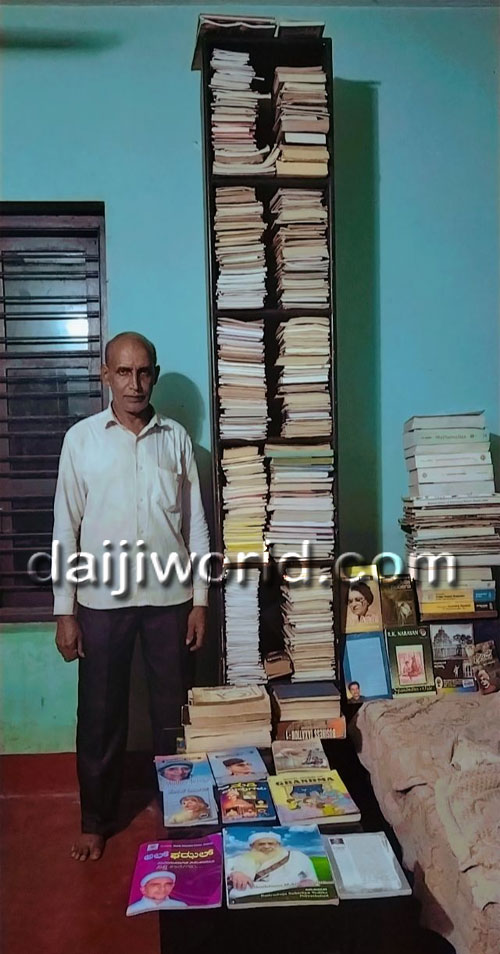
Ismail Kannathur (50) is the finest epitome in the society who has proven that being not educated is not a curse, but there is a scope to share knowledge.
Ismail, a scrap dealer by profession, has a collection of over 2,000 books at his residence. He runs a scrap shop at Hoovakuvakallu in Balepuni village in Bantwal. Ismail is not well-educated and studied only up to the first standard. But, he knows the importance of education and knowledge. Knowing the importance of books, Ismail has built a small library at his residence. He has been in the scrap dealing business for 25 years. When he gets good books in his business, he collects and preserves them. Initially, Ismail was a fruit vendor, but due to his helping nature, his business incurred loss. Later, he turned into a scrap dealer as per the suggestion of one of his friends. In the beginning, though he had no experience in scrap dealing, later through hard work, he gained experience.
Ismail is an active social worker. He has helped several people in distress. Whenever an accident occurs in the vicinity, Ismail has rushed several victims to the hospital. Moreover, he has helped poor girls in their marriage by raising funds.
Speaking to daijiworld.com, Ismail said, “I have collected several good books. My intention is to set up this library. I am not educated, but let others be educated by reading books. In the past, I have given over 2,000 books to several people. Some take it by paying a small amount, and though I refuse, they thrust a few currency notes into my shirt pocket. But, many take books free of cost. Some teachers and students also take books from me. As I am not well-educated, I have educated my five children.”
He also said that a person had motivated him to set up a library with the books available.
Ismail has arranged books on wooden shelves at his residence. The public can borrow them.
Ismail is also known as ‘Gandhi’ for his social service. He has been felicitated by many organizations and institutions for his active cleanliness drive. Ismail, for several years, has been involved in the cleanliness drive in the locality. He has helped several poor and downtrodden people. Ismail also actively works for various social causes including helping the police department in tracing thieves who rob offering boxes of temples and masjids.
source: http://www.daijiworld.com / DaijiWorld.com / Home> Top Stories / by Deekshith DV / by Daijiworld Media Network – Mangaluru / September 22nd, 2022
SEED has been an active organization providing education to 15,000 students studying in 58 schools and has provided around 2 crores of scholarships to school-going students.
Hyderabad :
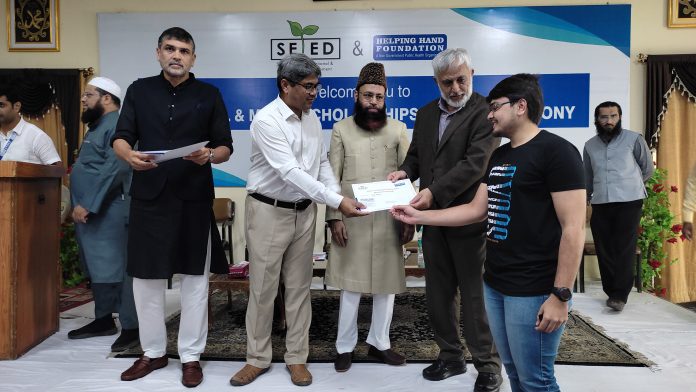
Two philanthropic organizations SEED-USA and Helping Hand Foundation provided scholarships worth Rs 24 lakh to several meritorious students in Hyderabad.
“Education is our top priority and we have spent approximately 5 crores on education this year,” said Syed Mazhar Hussaini, founder of SEED-USA.
SEED, which stands for Support for Educational and Economic Development USA, was founded in 2009.
SEED has been an active organization providing education to 15,000 students studying in 58 schools and has provided around 2 crores of scholarships to school-going students.
On August 14, SEED and Helping Hand Foundation held a memorial and Merit Scholarship Award for students across India at the MESCO Convention Centre, Hyderabad. Students from Hyderabad and other parts of the country attended the award function. The 57 award recipients were from different backgrounds, including 11 MBBS Students, 13 PhD Students and 33 Master’s students from different streams.
“The services of the SEED organisation are also being extended to provide mentoring services to the widows & destitute families and provide placement assistance to vocational training graduates; around 757 widows and single mothers got support from seed recently,” Husaini said in his speech.
The donors of the SEED include philanthropists and helping Non-Residential Indians (NRIs). These donations are dispersed through various activities conducted by Foreign Contribution Regulation Act (FCRA) permitted NGOs based in India.
SEED is working to provide modern education to poor children in slum areas of cities in India and aims to increase scholarships in states in North India. They aspire to increase vocational training in other states (other than Telangana).
Chief guest Prof. Amirullah Khan, who is a Development and Trade Economist emphasized the need for education to build a prosperous nation. He highlighted that only a small percentage of students make it to school and even fewer numbers manage to go to college because of financial constraints.
Mujtaba Hussain Askari, who is the founder and managing trustee of the Helping Hand Foundation, was also present at the occasion.
source: http://www.twocircles.net / TwoCircles.net / Home> Lead Story / by TCN News / September 09th, 2022
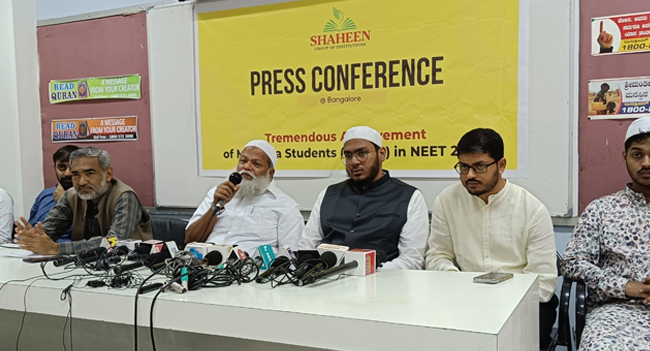
Dr. Abdul Qadeer, chairman of the Shaheen Group of Institutions, Bidar, has expressed pride in the excellent performance of the Hifzul Quran course students at the Shaheen College in the NEET 2022.
Dr. Abdul Qadeer said that 12 students who had completed the Hifzul Quran Plus course at the Madrasa have gotten ranks in NEET and expect to be selected for the MBBS course in government medical colleges.
He was addressing a press meet at the Darussalam Hall of the Bangalore Islamic Foundation Trust, Queen’s Road, on Tuesday.
“The ‘Academic Intensive Care Unit (AICU)’ of the Shaheen Group provides a three-month foundation course of Mathematics and Language for students who have completed the Hifzul course through Madrasa education, without attending school, and for school dropouts. After this, a one-month bridge course is conducted in Science for the students to get admitted to Class 10. Next comes a year-long education with state syllabus or NIOC syllabus for the Madrasa-educated students to answer the Class 10 examinations. The intermediate course for two years, after this, prepares students for examinations like JEE, UPSC and NEET,” said the chairman.
He added that the Shaheen Group has been working for 12 years at getting Madrasa-educated students into the education mainstream. “With a view to ensure that all gates of education and career, including IAS, IPS, MBBS and Engineering, are opened for the Madrasa students and not restrict them to the religious field, we have started 35 AICU centres all over India. For the benefit of the Hafiz near Bengaluru, an AICU was started last year in Bannikuppe. More such centres will be opened at Darul Umar in Srirangapatna and Kanakapura. The Hafizes who have scored more than 350 marks in the NEET 2022 will be trained for free in our 12 residential complexes.”
Dr. Qadeer also said that, of the 1,800 Shaheen Group students who answered NEET this year, 450 students are expected to get free medical education seats, adding, “Of the government seats, students of our institutions expect to get 14 per cent.”
Hafiz Muhammad Ali Iqbal, who scored 680 in NEET, said that the four-year-long Hifzul course had helped him a lot. “I had quit my schooling to become a Hafiz. Studying with the Shaheen Group helped me score 68 in SSLC and 96 per cent in PU examinations,” he said and stated that he wished to become a doctor.
Jamia Ulum Shaheen Hifz Plus Academy director Syed Tanveer Ahmed, Falcon Shaheen Education Institutions director Abdul Subhan and the Madrasa students who had topped NEET were among those who attended the press meet.
Madrasa Students among NEET toppers (with marks) :
Hafiz Muhammad Ali Iqbal: 680
Hafiz Gulman Ahmad Zerdi: 646
Hafiz Mohammad Abdulla: 632
Hafiz Huzaifa: 602
Hafiz Muhammed Saifullah 577
Hafiz Sheikh Abdul Rafi: 567
Hafiz Mohammed Faiz Akeel Ahmad: 562
Hafiz Ghulam Waris: 560
Hafiz Mohammad Suhaib Sajid Hussain: 533
Hafiz Mohammad Asif: 504
Hafiz Muhammad Ishaq: 489
Hafiz Moumin Abdulla 484
Further information may be obtained from the Shaheen Group website https://shaheengroup.org/. Toll-free number 1800-121-6235 may also be contacted.
source: http://www.english.varthabharati.in / Vartha Bharati / Home> Karnataka / by Vartha Bharati / September 13th, 2022
Bridlen, a family owned business from Chennai, on its Indo-Japanese collaboration to craft Goodyear welted shoes
Leather shoes, made to order, that fit like a glove, and look like a dream.
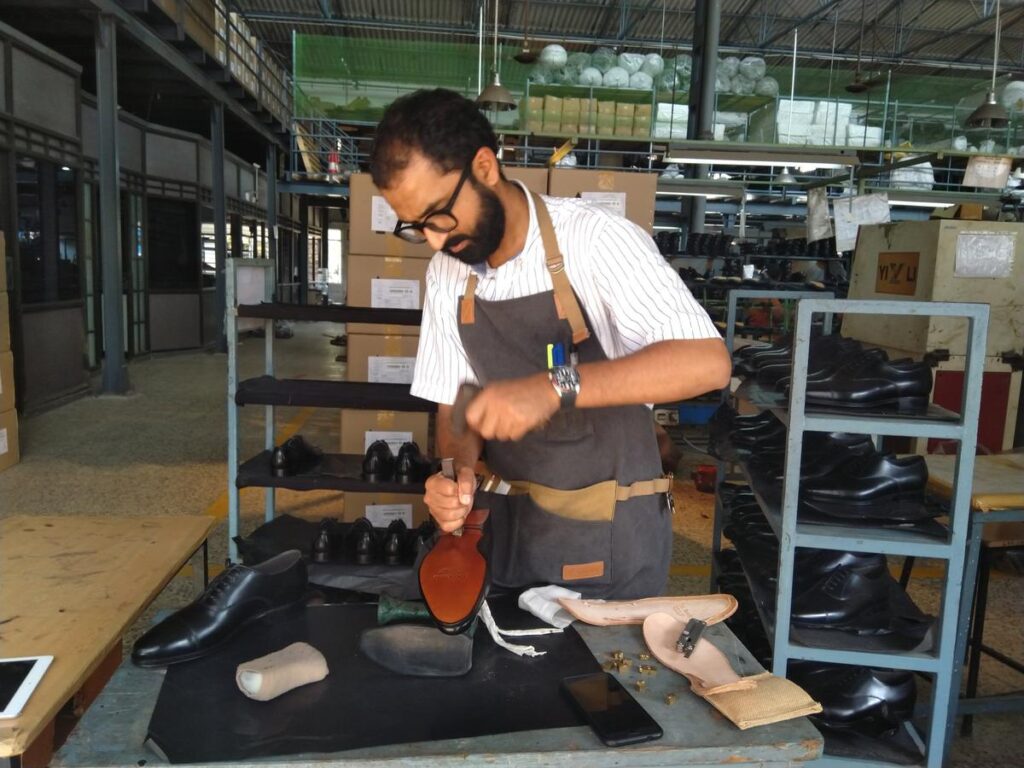
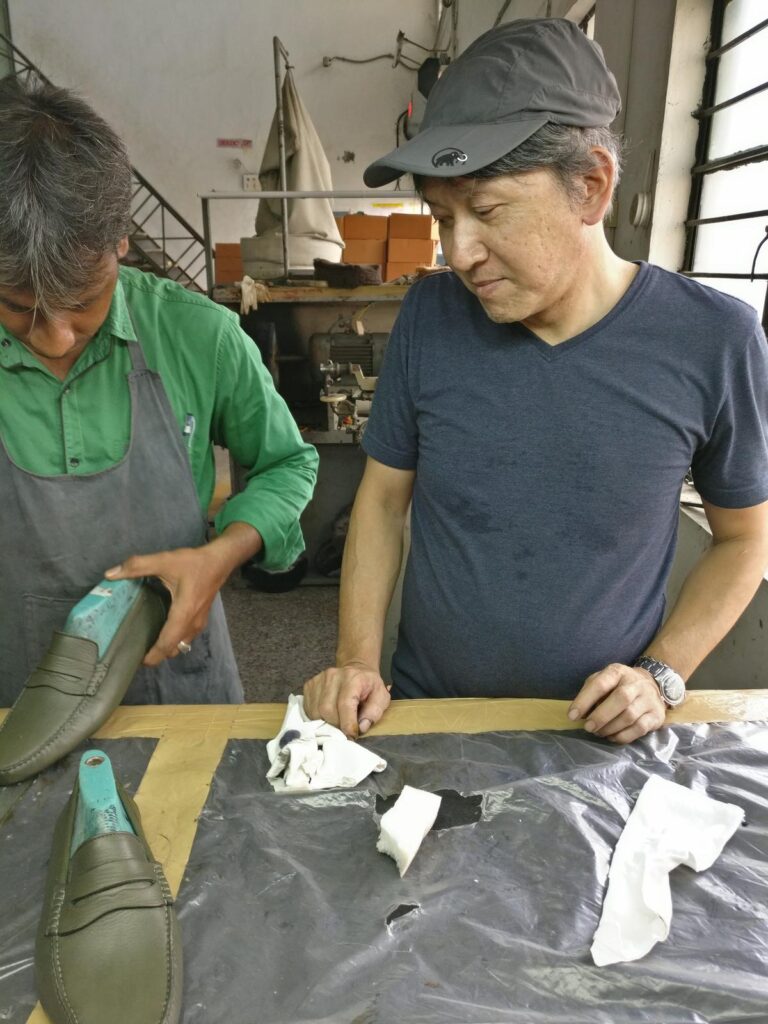
That is a rare luxury in a market dominated by e-commerce, where even designer brands are churning out collections by the season. For the true shoe connoisseur, only a customised product, can fashion a sartorial statement. So following slow food and slow fashion, now there’s a focus on slow manufacturing. At Bridlen, a shoemaking enterprise in Chennai that started in 1986, making Goodyear welted shoes the old-school way is a rich legacy that has continued into the 21st Century.
Started by the late K Mohamed Hasan, who began his career in shoemaking with solely creating uppers , he then turned his eye to create not just custom shoes, but footwear that would please, whom he considered the most discerning customers — the Japanese. As a first-generation shoemaker with clients in the UK, France, Italy, Germany, Switzerland, Spain and Portugal, he found a friend in Jose Maria Watanabe, a Japanese shoemaker with four decades of experience in the business. What started as a unique friendship, then turned into a partnership that coalesced the best of Japanese design and Indian craftsmanship.
Founder of Bridlen shoes K Mohamed Hasan
_____________________
How its made…
A Goodyear welt is a strip of leather, rubber, or plastic that runs along the perimeter of a shoe outsole. The machinery used for the process was invented in 1869 by Charles Goodyear Jr., the son of Charles Goodyear, American engineering manufacturer and inventor of vulcanised rubber. Charles’s son followed in his father’s footsteps and came up with a manufacturing process that could be used to assemble various parts of a shoe. Using a process called hand welting the upper portion of the shoe would be sewn together with the sole using a boar’s bristle needle and waxed thread.
__________________
The Japanese connect
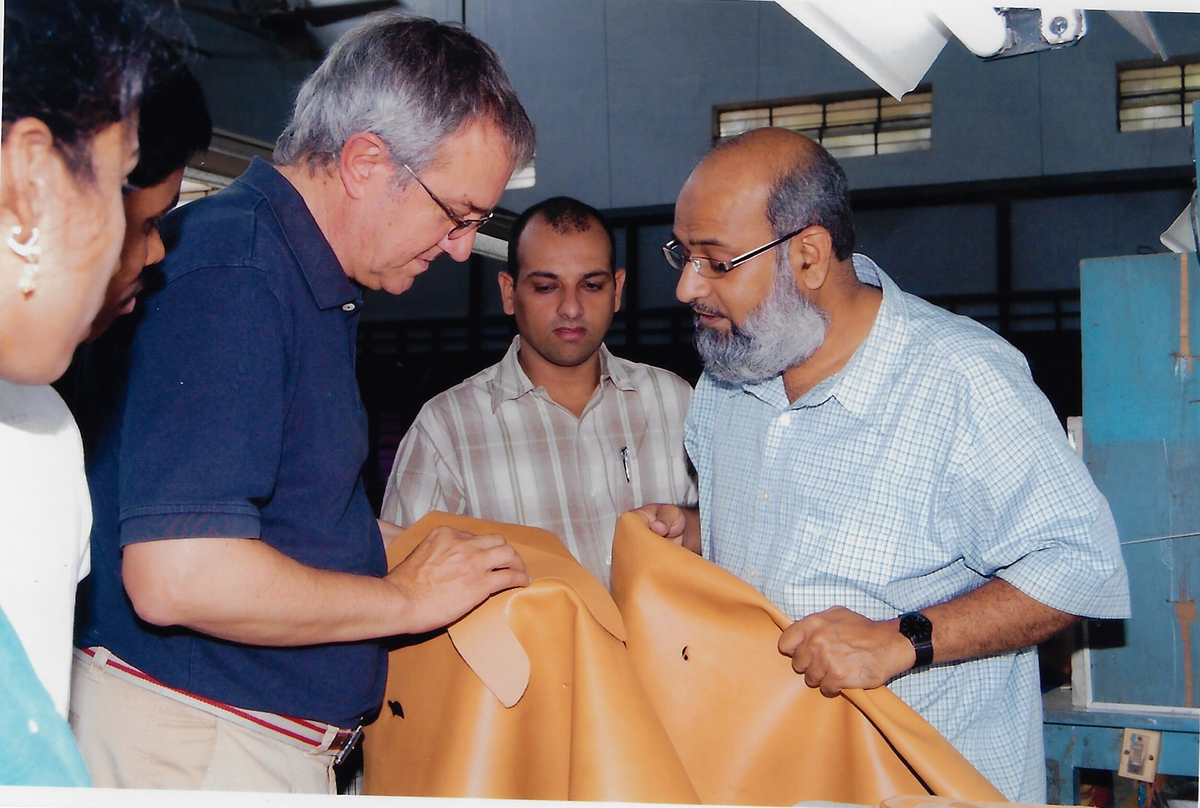
Following the untimely demise of its founder in 2019, Bridlen is now managed by his son, Mohamed Affan Kolandaiveedu. Affan explains why their Goodyear welt design is a cut above the standard, “ We don’t attach a cotton rib to the insole. We take a channel on a much thicker insole and stitch the welt to that. This is what separates us from most other brands at our price point or even a few brackets above. A search on the authorities of the classic shoe world from Simon Crompton at Permanent Style or Jesper of shoegazing.com have singled out this feature as a point of strength, something that you don’t normally find on factory made shoes,” explains Affan.
The story of Bridlen is fashioned by an Indian team guided by Watanabe. A Goodyear welted shoemaker based in Spain, he worked with a European partner, and was looking for a manufacturing capacity closer to Japan, when he heard about a small factory in India and came to visit. “Watanabe and Hasan really hit it off with their philosophy for quality, ethics in business and demeanour that they decided to do something together even though the original plan to move the Spanish production to India did not work,” states Affan.
Watanabe looked to pass on his skills, to Indian craftsmen who were serious about preserving the trade. “My project with Affan Shoes was the production of a finished shoe, something they had never experienced before, and at the same time it was a quality standard that was accepted worldwide.” Explaining how his mentor acclimatised to the new workspace, he adds, “Watanabe took great pains in the early days to get along with the workforce in our factory. He learnt a bit of Tamil and taught basic Japanese to some of the staff and their children on weekends. He would spend half the year in Chennai, and loved to partake in social gatherings, our festivals, and cultural practices.”
Mohamed Affan Kolandaiveedu at the factory
Pandemic pivot
Watanabe has continued his association with Bridlen, even during the pandemic. Until three days before the first lockdown came into effect in March 2020, Watanabe was in Chennai, and managed to get one of the last scheduled flights out of New Delhi to Tokyo. “We were in touch with him at least once or twice a week through video calls,“ says Affan, adding how the pandemic forced Bridlen to look at doing fittings remotely. The brand took to e-consultations where a potential client could book a video consultation to understand fitting. For clients who ordered a pair of Goodyear welted shoes online, a pair of fit-trial shoes would be shipped to them, to ensure the sizing was right before making it in their preferred style/ colour. “This gave clients a much needed boost in confidence to try a new brand and to speak with someone from the team about the intricacies of wearing them, the break-in period, shoe care etc,” states Affan. Post lockdown, the styling at the brand has pivoted as well, from classic to casual classics, bringing sustainable Goodyear construction to a wider variety of footwear styles: chukka boots, derbies, or semi-formal loafers.
Watanabe, who is currently in Tokyo, says working in India has been a rewarding journey. “Even though we made small batch production runs, it was important for Watanabe that these shoes should be available to a wider audience in terms of affordability.”
While the goodyear welted shoes range between ₹15,000 ($200) and ₹25,000 ($310) depending on specification, the construction remains the same.
A pair by Bridlen
All eyes on India
The craft on display at Bridlen, has kept the shoemakers competitive in the luxury shoe segment in India and Japan, followed by USA, France and Germany, a testament to the foresight of its founder, Affan states. Affan, who calls himself a shoemaker at Bridlen, has carried forward his father’s legacy and is optimistic of his business prospects across the globe, adding, “Our economy and labour market, now, and going into the future, are geared more towards higher value-added manufacturing or services. If you want good quality production, limited batch runs, attention to detail, then India could still prove to be a good place for international brands.”
With international travel picking up steam, Bridlen has been showing its collections at trunk shows in New Delhi in March and London in May. The tour continues with Mumbai in July, Bengaluru and Hyderabad in August, Stockholm and Paris in September and Amsterdam and Kolkata in October.
Japanese shoemaker Jose Maria Watanabe training a staff member
As India’s upwardly mobile middle class looks to buy custom footwear, with wearability, quality, sustainability and longevity guiding purchases, Affan wants his shoes to be the natural choice. “In Australia, you have RM Williams as a rights-of-passage bootmaker. In England, there are Crockett and Jones, Churchs, in the USA, there is Alden; that when you come of age, get to a certain job profile or income level then you aspire to own a few pairs of these shoes. We want to be that brand for Indians!
Box- ALL ABOUT THE LEATHER
Almost all the leathers used at Bridlen are imported from France, Italy or the UK “where strict norms for effluents are followed, source-tracing is available, and all compliance norms are met. Where made locally, like the lining leathers, we use LWG (Leather Working Group) certified, owner- driven micro tanneries where we know they are serious about meeting our local statutory environmental and sustainability laws.
“In Europe, the demand for high quality shoes, by extension for high quality leather has been there for a long time. So tanneries have been catering to this demand for quality for decades. Minimum order quantities are not as high when compared to the good tanneries in India where their expectation is much higher. In India it’s an uphill task to convince a tanner to do smaller quantities of higher quality because the industry is geared towards making more volumes to feed the bulk production shoe factories,” says Affan.
source: http://www.thehindu.com / The Hindu / Home> Life & Style> Fashion / by Anisha Menezes / September 17th, 2022
Saba is the only candidate of Indian origin among 19 elected members from the state of Illinois. She came to the United States in 2007 and after initially working as an employment consultant, began promoting yoga in America by training yoga teachers.
Uttar Pradesh :
Saba Haider, an Indian-Muslim woman from Ghaziabad in Uttar Pradesh, has been nominated by US president Joe Biden for the state board member election from DuPage County in Illinois and given a ticket by his Democratic party.
Her website describes Saba as a community organizer, small business owner, a wife and a mother to a 14 and an 10-year-old. She has been running her business in the health and wellness area for over a decade. She provides wellness consulting services to corporate clients and local businesses and organizations from the Chicago-land area.
Biden appreciated Saba’s social work, especially during the worst phase of Covid-19 pandemic in the US.
More than one million voters will vote to elect their board members in this election, which is to be held on November 6 this year. The election is an important one as this state-level board directly makes public welfare policies in the state. There are a total of 19 members on the state-level board and 11 of them are democrats.
Saba is the only candidate of Indian origin among 19 elected members from the entire state. She came to the United States in 2007. After initially working as an employment consultant, began promoting yoga in America by training yoga teachers. She continued doing this for nearly 10 years.
Saba has described the opportunity as “a very important one”. She said that she is an ordinary citizen who has been playing the role of a mother, sister, wife and small business-woman until now. “Being given this opportunity in politics is a completely new and huge responsibility,” she said.
Saba is considered a strong candidate who is getting support from her Democratic party allies Sadia Covert and Don Dessert, who are contesting the same election from other districts. Being a Yoga trainer, she has emphasized mental health in her campaign and commended the American people for showing mental strength during the worst periods of the Covid-19 pandemic.
If Saba wins the election, she will replace Amy Shavez, a democrat whose term ends in December.
Family elated at her success Her family lives in Vijay Nagar, a posh area of Ghaziabad in Uttar Pradesh. She is the eldest daughter of her family. Her father was an engineer in Uttar Pradesh Water Department and her mother runs a school in Ghaziabad.
Her two younger brothers, Abbas Haider and Zeeshan Haider are elated with their sister’s achievements.
Expressing happiness during an interview, Saba’s younger brother Abbas Haider said that “Saba has always been active in social work as she believes in helping people.”
“In America, she has always stood with people who needed help of any kind. It didn’t matter whether the person was Indian, American or of any other country, she has always stood with others,” he said.
Abbas said that Saba was active during the Covid-19 pandemic period. “She helped people in many ways during Covid. She feels that politics is a good way to improve the society and help the people as a whole and hopefully she will win the elections,” he said.
He called her nomination a matter of great pride for the family and the entire country
www.sabahaider.com
source: http://www.twocircles.net / TwoCircles.net / Home> Lead Story / by Aas Mohammad Kaif, TwoCircles.net / September 12th, 2022