Category Archives: Amazing Feats

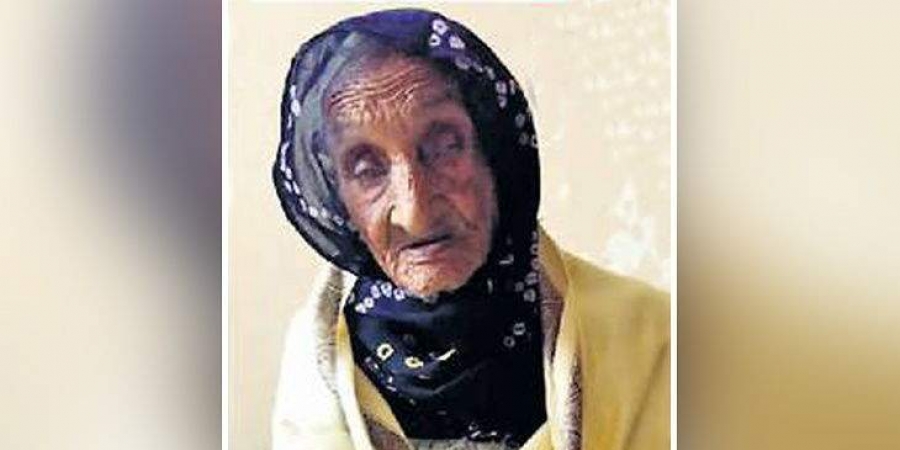
Oldest war widow Saira Bano, who never saw husband, dies at 103

Dhanuri Village (JhunJhunu District), RAJASTHAN : 

She passed away in Dhanuri village of Jhunjhunu district which has given the most number of war soldiers to the Indian army.

Saira Bano waited for six years for her husband's return only to find out that he was martyred
Saira Bano waited for six years for her husband’s return only to find out that he was martyred

Jaipur :

A chapter of sacrifice and dedication came to an end with the death of the country’s oldest, 103-year-old war widow, Saira Bano.  She did not see the face of her husband after marriage, yet dedicated her life to him after his martyrdom.

She passed away in Dhanuri village of Jhunjhunu district which has given the most number of war soldiers to the Indian army.

District Soldier Welfare Officer Parvez Ahmed, Alsisar SDM Dr Amit Yadav arrived to pay homage to her on behalf of the administration.

Although Sair did not go to war, her fight was not less than that of a soldier’s.

Saira Bano got married to Taj Mohammad Khan during the second world war in 1939. The procession reached Dhanuri village on the day of Nikah. But Taj had to immediately go on duty which he never returned from.

After 6 years of waiting, she came to know that he was martyred. Even after this, Saira did not go to her own home. She did not marry because she loved him so much that she wanted to keep his martyrdom alive.

In an interview given a while back, she had said that her husband, Saeed Taj Mohammed, went to fight in World War II and while they were married, her ‘gauna’ did not happen.

“What did my husband’s face look like,  I do not know till date, because I had never met him, had not even seen his face. After receiving the news of my husband’s death, my family and in-laws asked me to go for a second marriage, but I did not, because I wanted to remain in love with his martyrdom “, she had said.

Dhanuri village of Jhunjhunu is called the land of soldiers as there are soldiers in every household. Saira Bano was the Panch of Dhanuri village for 30 years.

The pension she received from the government was spent on teaching girls. In Dhanuri village, like Saira, there are 17 more bravehearts, whose husbands sacrificed their lives while fighting for the country.

Brigadier Ajit Singh Shekhawat, the General of the Kargil War, had recently visited Dhanuri village in Rajasthan, where he came to know about Saira’s story.

When he returned to Surat, he told his unit about her. It was then decided to honour her. In March 2019 Paramveer Shaheed Sahai Trust welcomed her. This was her first honour in Gujarat, with hundreds of people saluting her sacrifice.

source: http://www.newindianexpress.com / The New Indian Express / Home> Nation / by Rajesh Asnani / Express News Service / November 12th, 2019

‘Ulema’s Role in India’s Freedom Movements’: An Academic Bid to Stop Saffron Eraser in its Tracks

NEW DELHI :

UlemasRole01MPOs13nov2019

New Delhi :

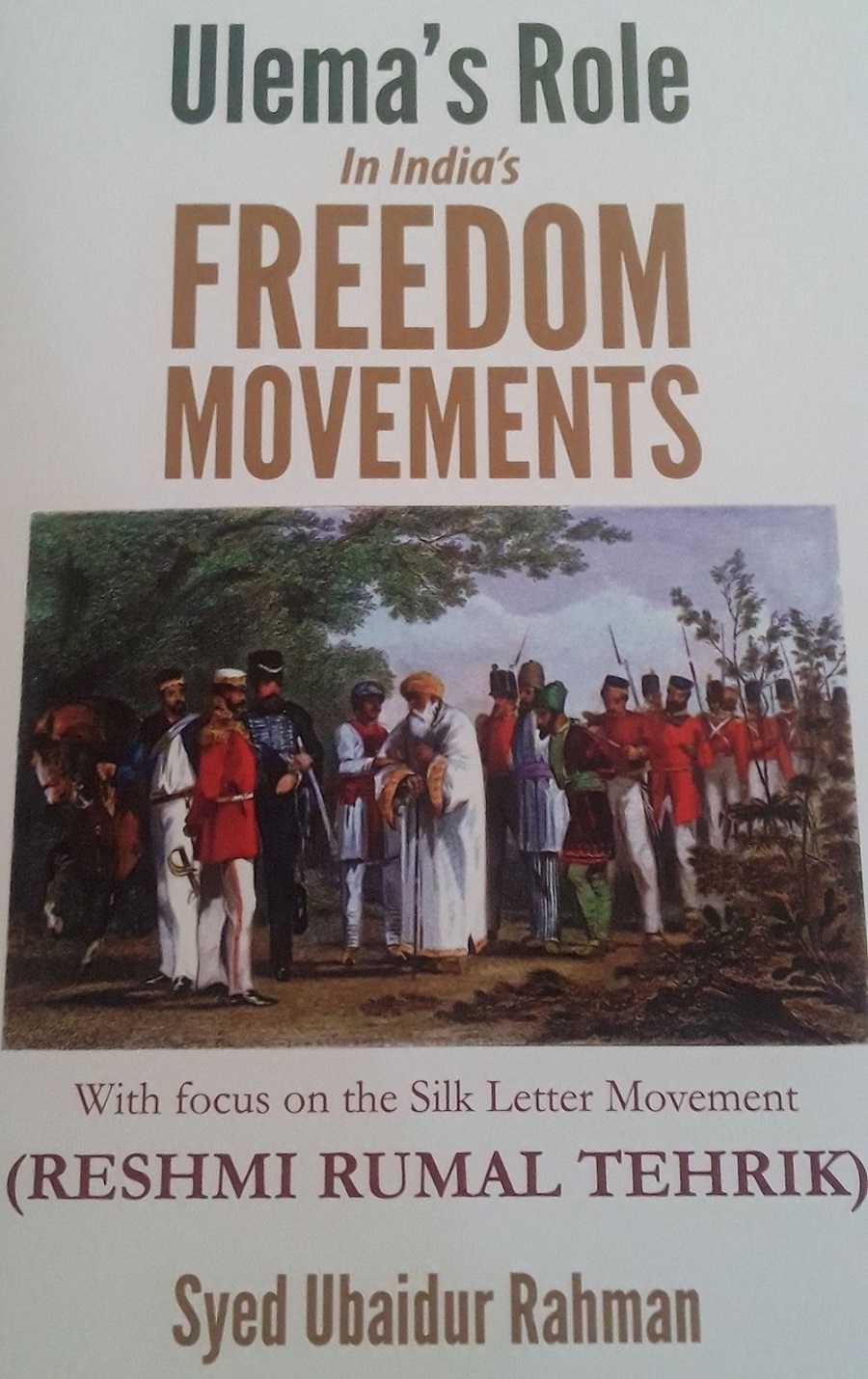
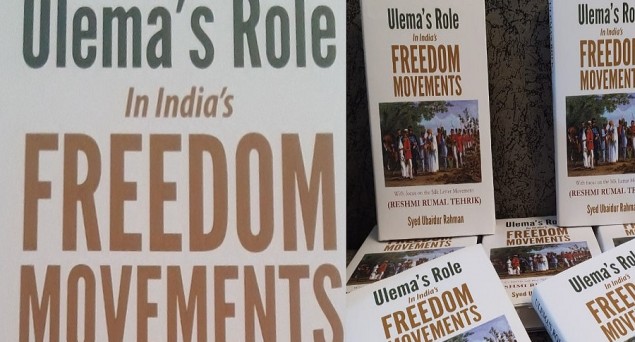
Amidst well-organized and power-backed attempts to erase M-word from the history of India’s freedom movement, has come out a humble academic bid to preserve in black and white the key role of Ulema or Muslim clerics in the ‘bloody’ freedom struggle spreading over around one century. Written by a young writer Syed Ubaidur Rahman, who is just 44, the book ‘Ulema’s Role in India’s Freedom Movements: With focus on Silk Letter Movement (Reshmi Rumal Tehrik) captures Ulema’s sacrifices in the Mutiny of 1857 and 1858, Faraizi Movement and Sayyid Ahmad Barelvi’s movement besides mainly focusing on the Silk Letter Movement as the title declares.

“The word ‘Ulema’ has become a rather very misunderstood term in the present day Indian society. Like everything Muslim, a conscious effort has been made to malign and ridicule the Muslim clergy…Over the last few centuries, the Muslim scholars have contributed immensely in seeing to it that the nation remains a single, united and cohesive unit and have made significant contributions to this end,” writes the author in the introduction of the book.

While admitting that “Ulema’s role in the society has considerably shrunk over the last several centuries,” he says that Ulema “used to have a very important place in the Indian society during Muslim rule in the country and even after the dismantling of the Mughal empire…over the centuries, on many occasions, they have led not just on spiritual front but on temporal front as well.”

“Every time in the past, when the country found itself in challenging situations, they stepped in and tried to play a much bigger role than what is usually anticipated from them. This was seen during different phases of freedom movements beginning with the first war of independence of 1857,” writes Rahman, a journalist by career who has penned several books in the last one decade, besides regularly writing articles and columns for various periodicals.

The 280-page book deals with different phases of India’s freedom struggle “with special focus on Silken Letter Conspiracy, better known as the Reshmi Rumal Tehrik.”

Highlighting the need and relevance of the book, the author says: “Not much has been written on Reshmi Rumal Tehrik or the people behind it and thus it remains shrouded in mystery. The book also discusses at length the Mutiny of 1857 and 1858, Faraizi Movement that was anti-colonial movement launched and sustained by Islamic scholars, besides Tehrik-e-Jihad of Sayyid Ahmad Barelvi in North Western Frontiers and Kashmir.”

The author says: “Despite the slide of the Muslim empire and the subsequent dismemberment, first between Muslim nawabs in the North, Deccan and South India, and later the annexation of these territories by the East India Company, Muslim scholars remained instrumental in trying to keep the Muslim empire intact. They were at the forefront in trying to stop the slide, and in posing challenges, first against those who fought the Mughals and later against the British East India Company. Shah Waliullah, the legendary Islamic scholar and reformist, did everything to stop the Mughal Empire from going to dogs. But, when despite all his efforts nothing happened, he sent a later to Ahmad Shah Abdali and also to Nawab of Oudh and Hafiz Rahmat Khan, the shrewd Ruhella chieftain. The rest is history.”

Deliberating on the core topic of the book, that is the role of Ulema in India’s freedom movement, the author writes: “Muslim ulema’s role was not limited to merely giving advice to the rulers and then become mute spectators of what was taking place. On the contrary, when they realized that there was no one coming forward to lead the masses, they took up leadership role, and fought off the invaders. From Bengal to Balakot and from Delhi to Lucknow, Muslim ulema played prominent roles in all the uprisings against the British (mis)rule. Be it Faraizi Movement, first war of independence of 1857 or the Reshmi Rumal Tehrik, they were instrumental and took leadership role. During the Mutiny of 1857, ulema were at the forefront and paid heavy price for their leadership role.”

UlemasRole02MPOs13nov2019

The book highlights the contributions of some Ulema during the Mutiny of 1857 and subsequent fights.

The author says: Maulavi Ahmadullah Shah was one of the most prominent leaders of the entire freedom movement, who led on many war fronts and collaborated with all other renowned freedom fighters. Despite being among the most prominent leaders of the 1857 Mutiny, Maulavi Ahmadullah Shah remains a rather unknown figure in the country. He was a stalwart, a shrewd military planner, a great scholar of Islamic sciences and above all a unifier beyond any iota of doubt. He allied with almost all the leading actors of the 1857 revolution, be it Tantia Topi, Nana Sahib, Begum Hazrat Mahal, Bakht Khan Ruhilla, Khan Bahadur Khan Rohilla of Bareilly or any other freedom fighter of repute. It is an irony that despite his military successes against the British East India Company in 1857 from Lucknow to Bareilly and Shahjahanpur, his name is not even mentioned. His military planning unnerved the colonial rulers and his bravery won praise from the British generals like George Bruce Malleson and Thomas Seaton.

Haji Imdadullah Muhajir Makki was another alim of repute, known for his personal piety, scholarship, courage and military exploits during the Mutiny of 1857. A father figure among ulema of his time, his most renowned disciples include Maulana Qasim Nanotwi and Maulana Rasheed Ahmad Gangohi who not just fought alongside him in Thana Bhawan and Shamli but later went on to launch Darul Ulum Deoband. Maulvi Liaqat Ali, another alim was behind the uprising in Allahabad and evicting the East India Company out of the major North Indian town. It was his personal charisma and shrewd military planning that first brought together the mutineers and later successfully beat back the Company forces. Many more ulema played prominent roles during the uprising and paid dearly when the Company came back with a vengeance. Tens of thousands of ulema were hanged to death. Even those ulema who had nothing to do with the Mutiny were implicated, jailed, sent to kalapani and unceremoniously killed. However, this dance macabre didn’t stop them from taking to the same means to defeat the colonial rulers later.

Silk Letter Movement

The author says: “Reshmi Rumal Tehrik is a freedom movement that remains largely unknown. Not much has been written on it and both its top leaders, Mahmud Hasan and Ubaidullah Sindhi, despite their stellar roles and sacrifices, remain rather unknown. While Shaikhul Hind spent three years in trying circumstances in Malta, Ubaidullah Sindhi spent more than three decades in exile, first in Afghanistan and then in Turkey and Hejaz.” 

Silk Letter Movement, known more widely as the Reshmi Rumal Tehrik, was launched by ulema of Deoband, particularly Mahmud Hasan and his renowned disciple Ubaidullah Sindhi, who later went on to become the Home Minister in the first provisional government established in Kabul. Raja Mahendra Pratap Singh was its President and Maulana Barkatullah Bhopali was its Prime Minister. The Reshmi Rumal Tehrik had a two-fold objective, one to incite the tribal people in North Western Frontier region and then forging alliance with other world powers including Afghanistan, Turkey and Germany. While Mahmud Hasan headed to Hijaz to seek help from Turkish officials, Ubaidullah Sindhi went to Kabul to forge alliance with Afghan amir. Both were very successful in their planning, but while Mahmud Hasan was still in Hijaz, Ottomans suffered heavy reverses against Sharif of Mecca who was being propped by Britain. At the same time, the entire planning of Ubaidullah Sindhi was discovered when the Silken Letters, sent by him to Mahmud Hasan were unearthed by the British CID. Hundreds of their supporters across Punjab, United Provinces and Delhi were arrested by British police.

In the introduction of the book, author Rahman says: “The pages that follow unravel a history that has been often suppressed and not much has been written on it. To many people, this side of the history may seem rather bewildering as I examine it and try to make sense as to what happened in our part of the world and how those brave men, despite the failure of 1857 mutiny rose repeatedly to defy the British Raj.”

How Important Is This Book when saffron eraser is moving fast on the canvas of freedom history of India?

Talking to India Tomorrow, the author responded to the question: “History needs to be preserved. It is the responsibility of the people, communities and the nations to preserve their histories and present right perspectives to what happened in the past. Indian Muslims have done precious little when it comes to presenting their perspective in right context. On the contrary, the Sangh Parivar, bent upon distorting the history of the last few centuries, has made strides in this field. Despite the fact they were never part of the freedom movement, they have claimed an important role for them, and have tried to co-opt major historic figures as part of their narrative. This began with Patel. Now they are trying to claim Gandhi and Ambedkar as their own, despite both being fiercely opposed to their ideology of hate. On the contrary, the Muslims have ignored this part completely. Hope this book serves its purpose and creates awareness among masses about what Muslim scholars and ulama did for the nation in the freedom struggle.”

The book has come out at a time when the BJP government in Karnataka has decided to scrap the state’s official celebrations around Tipu Sultan’s birth anniversary. Going one step ahead, the government announced to remove the lesson on the 18th century Mysore ruler from school history books.

Author Syed Obaidur Rahman

Given the communal hatred widening the gulf between Hindus and Muslims, the author wants the book reaches the masses.

“While this is of paramount importance to render this book in Hindi and other vernacular languages, this seems a hard nut to crack due to want of resources. God willing, I would definitely like to bring it in Urdu, Hindi and other regional languages,” says Rahman who has several other books to his credit, including Muslim Freedom Fighters: Contribution of Indian Muslims in the Freedom MovementUnderstanding Muslim Leadership in India and Muslim Mujahideen e Aazadi, aur Tehrik e Azadi mein unki khidmaat (Urdu).

Book: Ulema’s Role in India’s Freedom Movements: With focus on the Silk Letter Movement (RESHMI RUMAL TEHRIK)

Author: Syed Ubaidur Rahman   /  Price: Rs 595  /  Pages: 280

Publisher: Global Media Publications  /  D-204, 4th Floor, Abul Fazl Enclave, Jamia Nagar, New Delhi-110025

Email: syedurahman@gmail.com, gmpublication@gmail.com / Contact: 9818327757

source: http://www.indiatomorrow.net / India Tomorrow / Home / by Mumtaz Alam, India Tomorrow / November 11th, 2019

Forgotten Muslim soldiers of World War One ‘silence’ far right

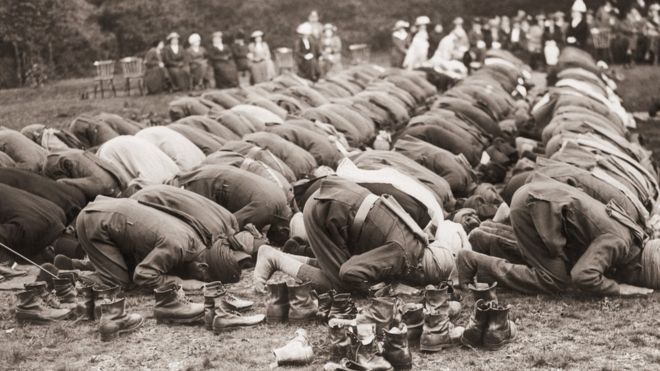
FPG/HULTON ARCHIVE/GETTY IMAGES Image caption Indian troops serving with the British army pray outside the Shah Jahan Mosque in Woking, Surrey

FPG/HULTON ARCHIVE/GETTY IMAGES
Image caption
Indian troops serving with the British army pray outside the Shah Jahan Mosque in Woking, Surrey

A hundred years since the end of World War One, historians think recognising the contribution of Muslims can help tackle contemporary issues such as Islamophobia.

“Muslim soldiers have been forgotten about over time,” Hayyan Bhabha, from the Muslim Experience, says.

“The core far-right narrative is that Muslims have never done anything for us.

“Well, actually, with facts that are over 100 years old, we can say Muslims fought and died for the history and security of Europe.”

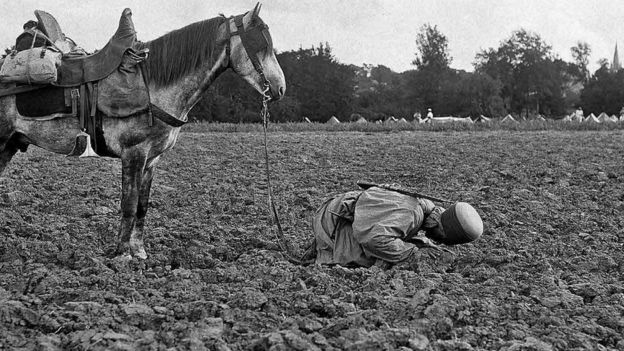
It is estimated that 1.5 million Indian troops fought to defend Britain. Of those, 400,000 were Muslim soldiers.

The Muslim Experience is working to highlight the global contribution of Muslim soldiers to World War One and says raising awareness could silence anti-Muslim rhetoric by far-right groups in Britain today.

Mr Bhabha says his team is now opening up documents and discovering new information about their role in the War.

“Accessing archives from 19 countries, we have discovered that more than four million Muslims either fought or served as labourers during the War, from around the world,” he says.

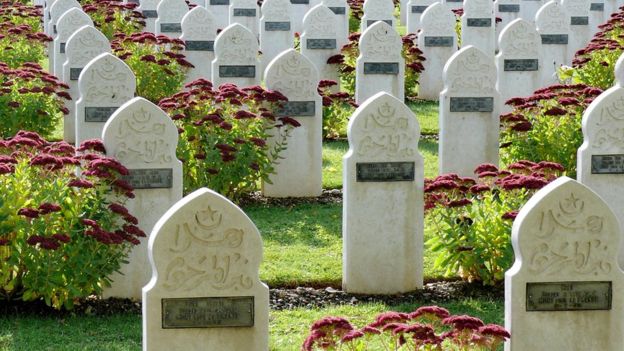
Image copyright FORGOTTEN HEROES 14-19 Image caption Muslim graves in French military cemetery Notre Dame de Lorette.
Image copyright FORGOTTEN HEROES 14-19
Image caption
Muslim graves in French military cemetery Notre Dame de Lorette.

One of those was Sepoy Khudadad Khan, an Indian soldier who fought alongside British troops.

He was the sole survivor of a team assigned to defend vital ports in France and Belgium from German forces.

According to accounts, Khan managed to hold off the enemy advance long enough for British reinforcements to arrive.

On 31 October 1914, Khan, of the 129th Duke of Connaught’s Own Baluchis Regiment, became the first South Asian to receive the Victoria Cross, Britain’s highest military honour.

‘Feel more British’

Groups such as the Muslim Experience want stories of soldiers to be heard.

They also want more British Muslims to find out if they have a personal connection to World War One.

Just as a local GP in Nottingham, Dr Irfan Malik, did after he had a chance conversation with a patient that led him to discover two of his great-grandfathers had fought for Britain.

Image copyright FORGOTTEN HEROES 14-19 Image caption It is estimated that millions of Muslims fought for the Allied forces globally
Image copyright FORGOTTEN HEROES 14-19
Image caption
It is estimated that millions of Muslims fought for the Allied forces globally

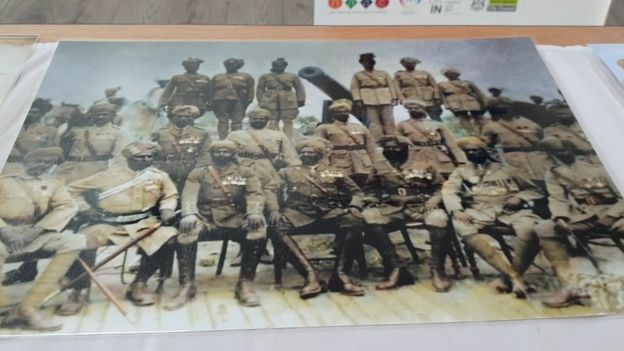
Dr Malik’s great-grandparents, Capt Ghulam Mohammad and Subedar Mohammad Khan, were two of 460 soldiers from a tiny village called Dulmial, in modern-day Pakistan, sent to fight in the 1914-18 conflict.

“One of my patients is a researcher of Commonwealth contribution to World War One and I told him about a village in modern-day Pakistan where I’m from that has a cannon commemorating the Great War,” he says.

“From that point four years ago, my journey began and I found out my two great-grandparents fought for Britain.

“I’m very fortunate to have images from 100 years ago. It means a huge amount to me. It’s made me feel more British as we have this shared history in common and I believe it helps community cohesion.”

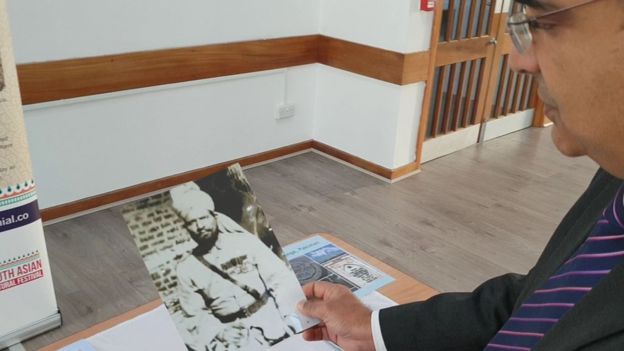
Dr Irfan Malik has collected pictures of his great-grandfather Subedar Mohammed Khan

But how connected do British Muslims feel to the War and how aware is the community itself of its links to British military history?

Mr Bhabha thinks some young Muslims in particular are not engaged with British military history.

“Most Muslims are not engaged with military history because they can’t relate to it,” he says. “The way it is taught currently is very European-centric.

“The history that is taught doesn’t show the true diversity of everyone that took part in the First World War.”

Indian Muslim soldiers in the village of Dulmial, modern-day Pakistan

study by think tank British Future found just 22% of people in Britain knew Muslims had fought in the Great War.

So, it has launched a campaign, Remember Together, to raise awareness in schools.

Steve Ballinger, from British Future, says: “Finding out that Muslim soldiers fought and died for Britain to protect us and to protect the freedoms we enjoy today, that’s an important history for everyone to know.”

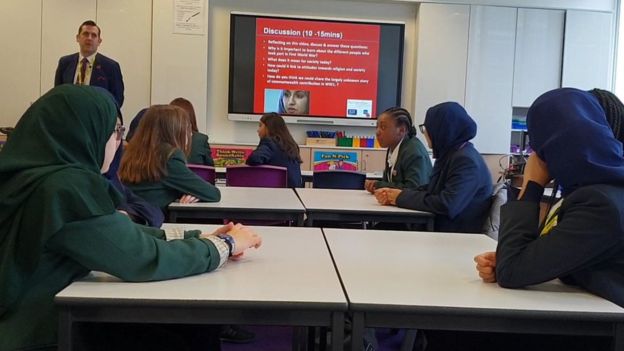
Pupils at Eden Girls School learn about the Muslim contribution to World War One

It has certainly meant a lot to Daleesha Naz, 14, of Eden Girls School, in east London.

“Today I learned that 400,000 Muslims fought in the British Indian army and it has made me feel closer and more connected to British history,” she says.

As the 100th anniversary of the end of World War One is remembered, historians, campaigners, and descendants of the soldiers are making sure the contribution of Muslims is never forgotten.

Luc Ferrier, who chairs Forgotten Heroes 14-19 – the umbrella group for the Muslim Experience – says: “If the world really wants to reach out to the international Muslim community, then they need to know the enormous contribution these people have made, fighting a war none of their making.

“Only by recognising and honouring the global Muslim sacrifices, not only these of the British colonies, we are reaching out to them and saying a genuine thank you”.

source: http://www.bbc.com / BBC News / Home>  UK / by Rahil Sheikh / BBC Asian News Network /  November 09th, 2018

From naming ‘IIT’ to setting up of UGC: Initiatives by Maulana Abul Kalam Azad

Mecca, SAUDI ARABIA / New Delhi   :

Homeschooled for the early part of his life, Azad is considered to be the father of the Indian Institutes of Technology (IITs). Here is a look at some of the major initiatives taken by him in setting up the Indian education system.

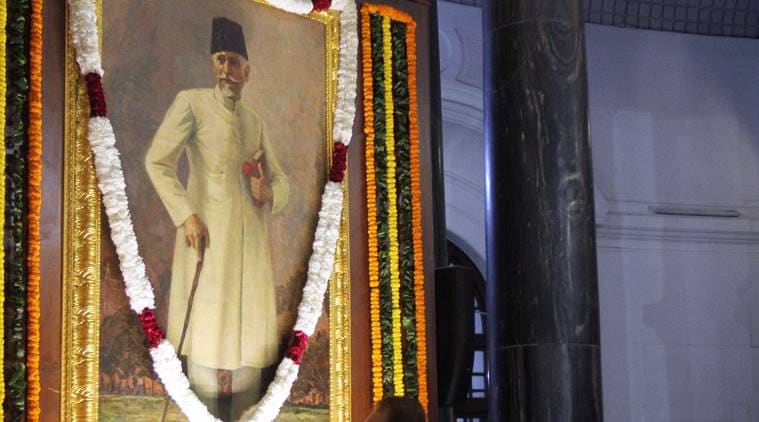
Maulana Abdul Kalam Aazad, HRD Minister of India, JMI, jamai, DU, IIT, National education day, education news

Maulana Abdul Kalam Aazad (File Photo)

Bharat Ratna awardee and India’s first Minister of Human Resource Development (HRD), Maulana Abul Kalam Azad was not only an educationalist but also a journalist. Homeschooled for the early part of his life, Azad is considered to be the father of the Indian Institutes of Technology (IITs) which are still considered among the best Indian educational institutes. Here is a look at some of the major initiatives taken by him in setting up the Indian education system.

Naming IITs – When India was looking to set up higher educational institutes which would impart knowledge in the field of science and technology, a Massachusetts Institute of Technology-like (MIT) model was thought of. The name ‘Indian Institute of Technology’ was adopted by Maulana Abul Kalam Azad before the inauguration of the institutes. The first Indian Institutes of Technology – IIT Kharagpur came into establishment in 1950.

Establishing UGC – A committee headed by S Radhakrishnan under the leadership of Azad as HRD Minister suggested extending the Universities Grant Commission (UGC)’s role to supervise work of all Indian varsities, make recommendations and grant funds. Earlier, UGC looked after three central universities, namely Aligarh, Benaras and Delhi.

DU and IISc – He laid the foundation stone of the Indian Institute of Science (IISc) in 1909, then known as the Tata Institute and granted deemed university status in 1958. Azad also oversaw the setting up of the ‘Central Institute of Education, Delhi’, which later became part of University of Delhi (DU) as the Department of Education. He was also a member of the foundation committee to establish Jamia Millia Islamia at Aligarh in UP.

Minority community – A supporter of education for poor, women and minority communities, Azad had said, “It is a birthright of every individual to receive at least the basic education without which he cannot fully discharge his duties as a citizen.”

To honour his efforts, Ministry of Minority Affairs of the Central Government of India set up the Maulana Azad Education Foundation to promote education among educationally backward sections of the society. The Ministry also provides the Maulana Abul Kalam Azad National Fellowship, an integrated five-year fellowship in the form of financial assistance to students from minority communities to pursue higher studies. The education institutes include Maulana Azad National Institute of Technology, the Maulana Azad College among others.

source: http://www.indianexpress.com / The Indian Express / Home> Education / by Education Desk , New Delhi / November 11th, 2019

Tipu, legend in the West

Srirangapatnam, KARNATAKA :

TipuSultanMPOs07nov2019

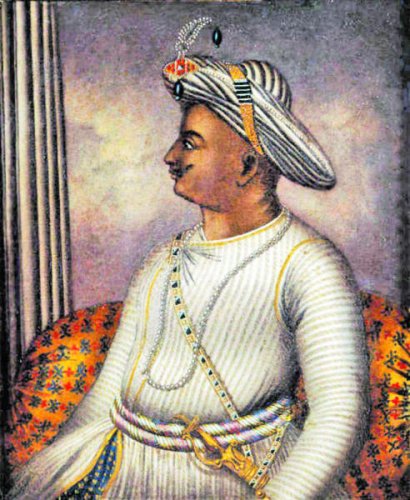
It is an irony that Tipu Sultan, the Tiger of Mysore, whom the current government in Karnataka wants to remove from its history, is celebrated in Britain, France and the US in song, drama, opera, novel, poetry and paintings. A wealth of Tipu’s  personal effects, curiosities and artifacts have found way into numerous art galleries and museums in many countries in the West. There’s not a major museum in the UK that does not exhibit some artifact related to Tipu.

The 75th Highlanders were a regiment raised in Scotland to exclusively fight Tipu. Scottish generals like Sir Hector Munro, Baillie, Beatson, Fraser, Gordon, Dunlop and others participated in the wars against Tipu. The Scots, more than the English,  were in the forefront of the British forces in all the Anglo-Mysore wars fought by Tipu as well as his father Hyder Ali. That explains the importance of the display of Tipu memorabilia in Edinburgh and Glasgow.

After Tipu was finally defeated and killed in 1799 by the British, under the command of Arthur Wellesley, the future Lord Wellington who 16 years later defeated Napoleon Bonaparte in the Battle of Waterloo, images of Tipu, his capital Srirangapatam (Srirangapatna) and his numerous impregnable forts and fortresses, proliferated throughout Britain. No other Indian ruler ever captured the imagination of the average Englishman as Tipu did. It is said that British housewives would quieten their babies by whispering “else, Tipu Sultan will come and get you.” Even three decades after Tipu’s death, his name was such a terror that when Ram Mohan Roy visited England on a mission from the then Mughal emperor, hostile crowds confronted him in London, mistaking him to be related to Tipu because his headgear resembled Tipu’s iconic turban.

Tipu Sultan, his capital city Srirangapatam, and the wars he fought against the British became favourite subjects for paintings, sketches and etchings by some of the most famous artists of the day in England and Scotland. When Ker Porter, the famous  Scottish painter’s Panorama — a single large painting of Tipu — was displayed in Edinburgh, there was euphoria among the public as they rushed to have a glimpse of it. JMW Turner, the renowned British painter, painted portraits of Tipu  and scenes of Srirangapatam and other places in Mysore kingdom. Sir David Willkie, another famous painter, was commissioned by the widow of David Baird to paint the poignant “Discovering the body of Tipu Sahib on 4 May, 1799”.  It was exhibited in 1838 in the Royal Academy of Arts in London. David Baird had spent several years in Srirangapatam as Tipu’s prisoner, and had his revenge in the final assault on him.

Alexander Allen travelled to India to personally see the hill forts of Mysore kingdom and produced captivating scenes in his paintings. William Darnell Beckford, Holmes, Hunter and many others made several stunning paintings of Tipu and his palaces. Sir Walter Scott, the great Scottish novelist, wrote works of fiction based on Tipu and his times. Charles Dickens, Wilkes Collins and Jules Verne have all depicted themes from Tipu’s life in their novels.

The numerous artifacts of Tipu Sultan, pilfered, looted and spirited away by the British after the fall of Srirangapatam, became collectors’ items. Tipu’s dismantled throne, his numerous swords, daggers, bejeweled sword belts, hookahs, ivory caskets , nutcrackers, gold watches, precious jewels and many other priceless items occupy the pride of place in museums in London, Glasgow, Edinburgh and Wales.

The most awesome of these artifacts is the life-size toy tiger depicted devouring a British soldier. It has cast a spell over generations eve since it was spirited away by Wellesley to England where it was displayed at the Kensington Museum, now  known as Victoria and Albert Museum (V& A Museum). This toy tiger in bright yellow strips has in its belly a mechanical pipe organ hidden, which creates wailing shrieks and a loud road when its handle is turned. There was near stampede for months in front of the museum when people flocked to see the wonder toy of Tipu Sultan. The fact that it is kept in an exclusive large room in the otherwise crowded V&A Museum, and with separate security, speaks of the importance that is accorded to this curious Mysore object. A replica of it is at the Scottish National Museum in Edinburgh. It was commissioned in 1999, when the bi-centenary of Tipu’s death was commemorated, as the original one at V&A could not be moved for fear of damaging it in transit.

The most significant of Tipu’s artifacts are at the Edinburgh castle. Inside the castle is the ‘National War Museum’, in which the battle honours of the Scottish Regiments are displayed. Here are seen several swords and arms used by the Scottish generals against Tipu and his Mysore armies. What is interesting are the words Carnatic, Mysore, and Srirangapatam engraved on the granite slabs displayed on the walls.

At a private museum in Powai Castle in Wales, one can see Tipu’s camp tent, made of silk and heavily embroidered, his camp cot made of sandalwood, his hookah and many other personal items, besides two large cannons.

A painting of Tipu with his war rockets hung on a wall at NASA’s Wallops Flight Facility in Virginia in the US was seen by young APJ Abdul Kalam when he was on a visit there in his early years at ISRO, about which he wrote as an inspiration many years later.

At the Edinburgh International Festival (EIF), held annually in August, Tipu’s memories come alive during the closing ceremony’s fireworks display when the Scots burst explosives and fire rockets around the castle to create scenes of their soldiers encountering deadly fires around Tipu’s forts in Nandidurg, Savandurg and other places.

Tipu Sultan, the Tiger of Mysore, died 220 years ago, but his legend continues in the lands of those he fought fiercely against, who appreciate his valour, unyielding spirit and reckless courage. In the land that he defended from them, his memory  is sought to be erased from school textbooks.

(The writer is a former Professor of History at the University of Hyderabad)

source: http://www.deccanherald.com / Deccan Herald / Home> Opinion> Comment / by K S S Seshan / November 07th, 2019

Roti Bank: Unique effort to fight hunger, provide food to the poor in impoverished region of UP

Mahoba ,  Bundelkhand Region , UTTAR PRADESH :

RotiBankMPOs04nov2019

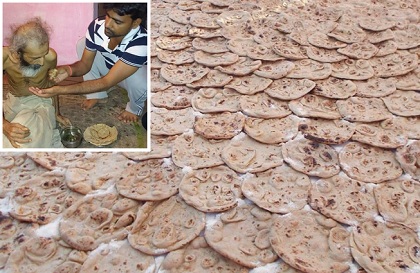
Everyone in Mahoba knows Haji P Mohammad alias Haji Muttan and can guide a visitor to his home.

After all, he is the man who had opened the first Roti Bank, a unique initiative to ensure that no one stays hungry in the town. It has been a huge success story and similar Roti Banks were late opened in different parts of the country & even outside India.

But it was not an easy journey when Haji Muttan started the Roti Bank. The beginning was in the year 2014. It was decided that rotis would be collected–volunteers would go from house to house and collect them, in order to provide food–rotis and sabzi for the needy, so that no one went to bed with an empty stomach in the town.

In the backward and impoverished Bundelkhand, which often suffers from drought, lack of employment opportunities and extreme poverty, everyone was aware that there was a need for a public participatory movement to tackle the level of hunger and malnutrition.

However, he managed to form a team of such people–like Jaspal Singh and Pankaj Anuragi, who were ready to dedicate themselves for the cause. ‘Many households were eager to provide at least two rotis and sabzi. The request was just to ensure the food was fresh”.

There were so many needy people who had no one to look after them, some had to be provided food at their home. But people realised that it was a cause that was worth an effort. Youngsters came and joined him. “I always wanted to do some social service, something for the sake of humanity”, says Haji Muttan.

Over the years, the Roti Bank became a symbol of pride for the town. After all, hundreds were getting benefited everyday. Later, others got inspired and more Roti Banks were opened in the region and in other cities of Uttar Pradesh from Varanasi to Rampur and Gorakhpur, and then across India.

Om Narayan, who has been associated with the work from the beginning, says that the aim was service. “People from all religious communities came together, joined the movement”, he says. “After Roti Bank’s success, similar projects started in Banda, Chhatarpur and other cities in Bundelkhand”, he added.

“Apart from Haji sahab, Jagannath Prajapati and Father L Masih are also part of the team. There are many volunteers who do it with dedication”, he further said. After Tsunami, when Indonesia witnessed destruction, and there were large number of destitutes and orphans, Roti Banks was started at different places there also.

Haji Muttan also visited Indonesia. A non-governmental initiative that is being run with public support by dedicated inviduals, it has set an example how to fight hunger, especially, when a huge population still suffers from extreme poverty and the country needs to wage a war against hunger and malnutrition.

source:  http://www.newsbits.in / NewsBits.in / Home> India / by Shams Ur Rehman Alavi

India’s youngest athletics coach eyes glory on the tracks

Coonoor (Nilgiris), TAMIL NADU :

Azarudeen01MPOs02nov2019

Living in a world where most dreams crash before they can take flight, the journey of Mohamed Azarudeen  sketches a trajectory that has vaulted him to the place he always aspired to be in!

Nearly a year back when this 24-year-old athlete turned coach had spoken to The Bridge about his potent dreams of opening his own Academy and promoting home-grown talent in athletics, little did he know that success would come knocking on his door so soon.

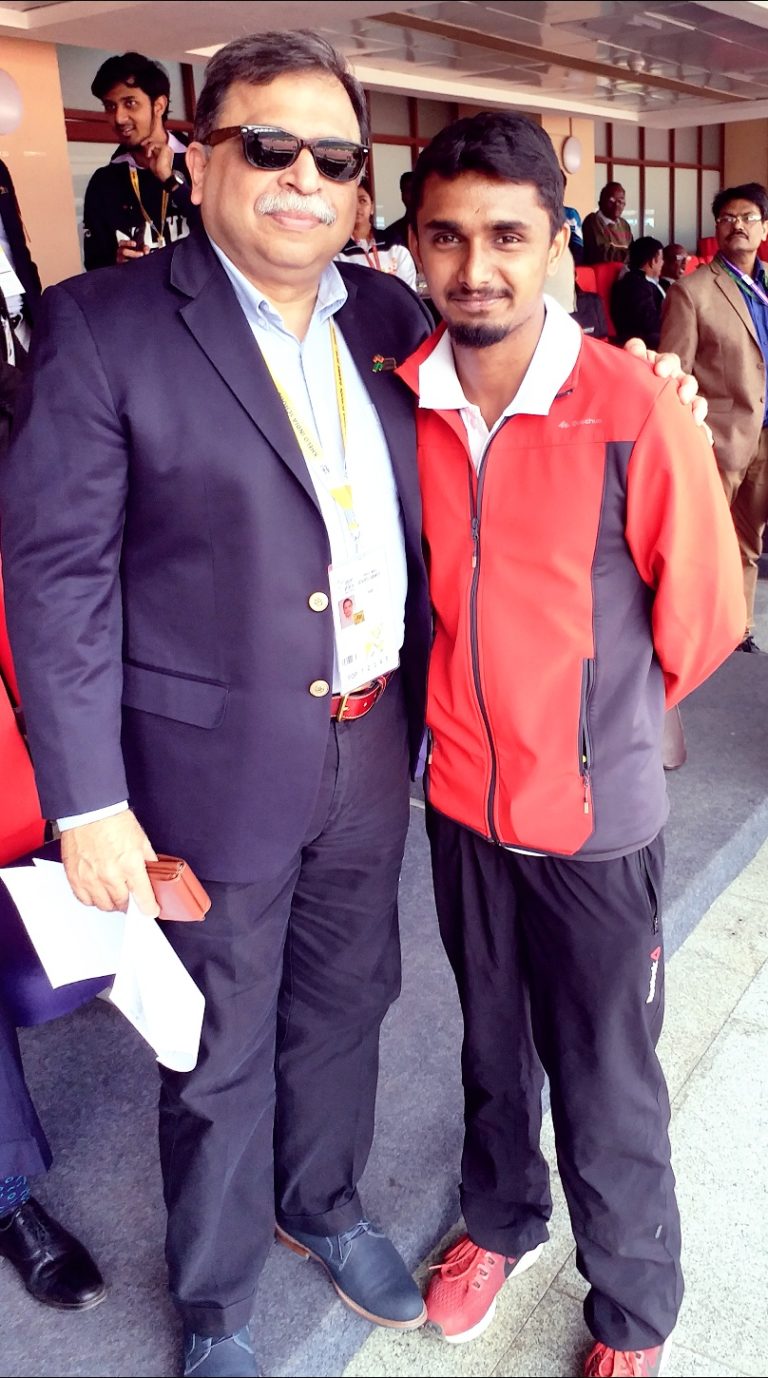
Azarudeen with AFI President Adille Sumariwalla

Exhilarated at how brilliant the last two years have been for him, Mohamed Azarudeen, who is now the youngest coach in the field of athletics in the country is a torchbearer for the future generation of athletes.

Partnering with Sreekiran

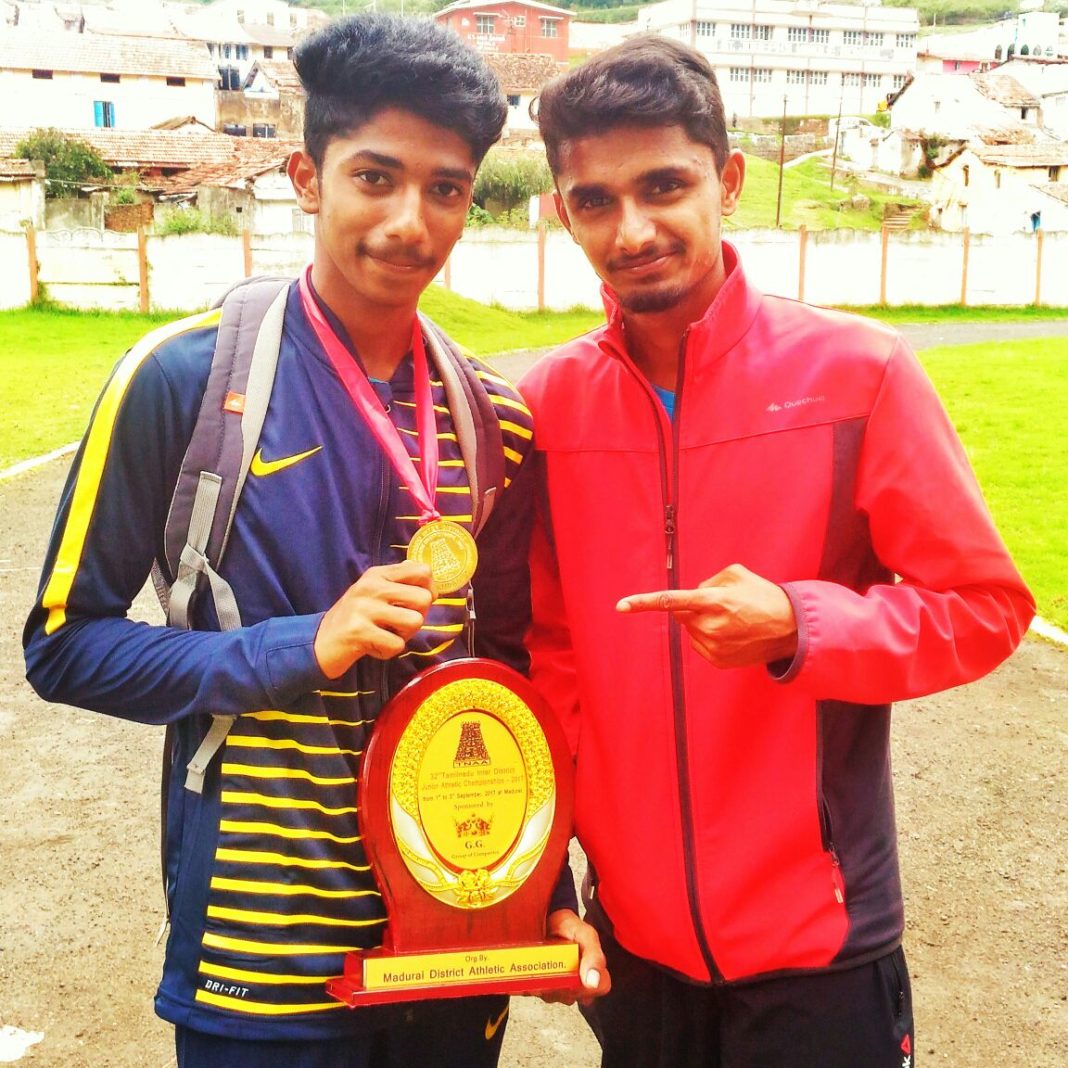
Hailing from the blue-mist shrouded region of the Nilgiris in Tamil Nadu, Azarudeen has been dedicated in his goal for forwarding the position of India on the tracks. Scouting for a ‘big break’ in the January of 2017, Azarudeen spotted teen sensation Sreekiran  Nandakumar, who he inspired and took under his wing. Sreekiran and Azarudeen struck an instant bond, and the 16-year-old from the Southern hills stunned the country by winning gold at the Youth Olympics Qualifications Meet at Bangkok, clocking the win in 1:50:93 seconds.

Sreekiran & Azarudeen

Speaking to The Bridge and reflecting on his journey so far and the coming first anniversary of the Aspire Academy which he ably runs amidst the scenic landscape of Coonoor, the youngest coach of Indian athletics inspired us with his words.

“The Academy was started after the Youth Olympics qualification meet and Sreekiran Nandakumar’s gold medal win,” informed Azarudeen. Since then he proudly claimed, “We have produced two-three national athletes over the last year and State Champions.”

The journey from athlete to coach

There was a major pull at the Aspire Academy right after this sensational win by his star pupil, and currently, Azarudeen is working hard with 15 talented athletes. A year back, Azarudeen had told The Bridge that he wanted the cloudy fog to lift from the Nilgiris and reveal itself wholly and a year later, the dream is alive and burning. Azarudeen, himself has been an athlete first and a coach later. He tells us, “It was in late 2009 that I started my career when I was in my ninth standard, as a professional athlete.” He was coached by Mr Jaychandran, who was to become a very key figure in his life. A silver medalist at the State Junior Championships in 2011 and a medalist at the 2012 University Games, Azarudeen has been to several national level tournaments and won several accolades before injury tolled the bell to bring his career to an end.

The year 2016 was exceptionally hard for Azarudeen. “I got injured in my knee in 2016 due to all the hard training, and since I come from a financially weak background it was difficult for me to get back on the tracks full-fledged again,” he explains. However, the feisty coach made sure that he turned this obstacle into a major boon.

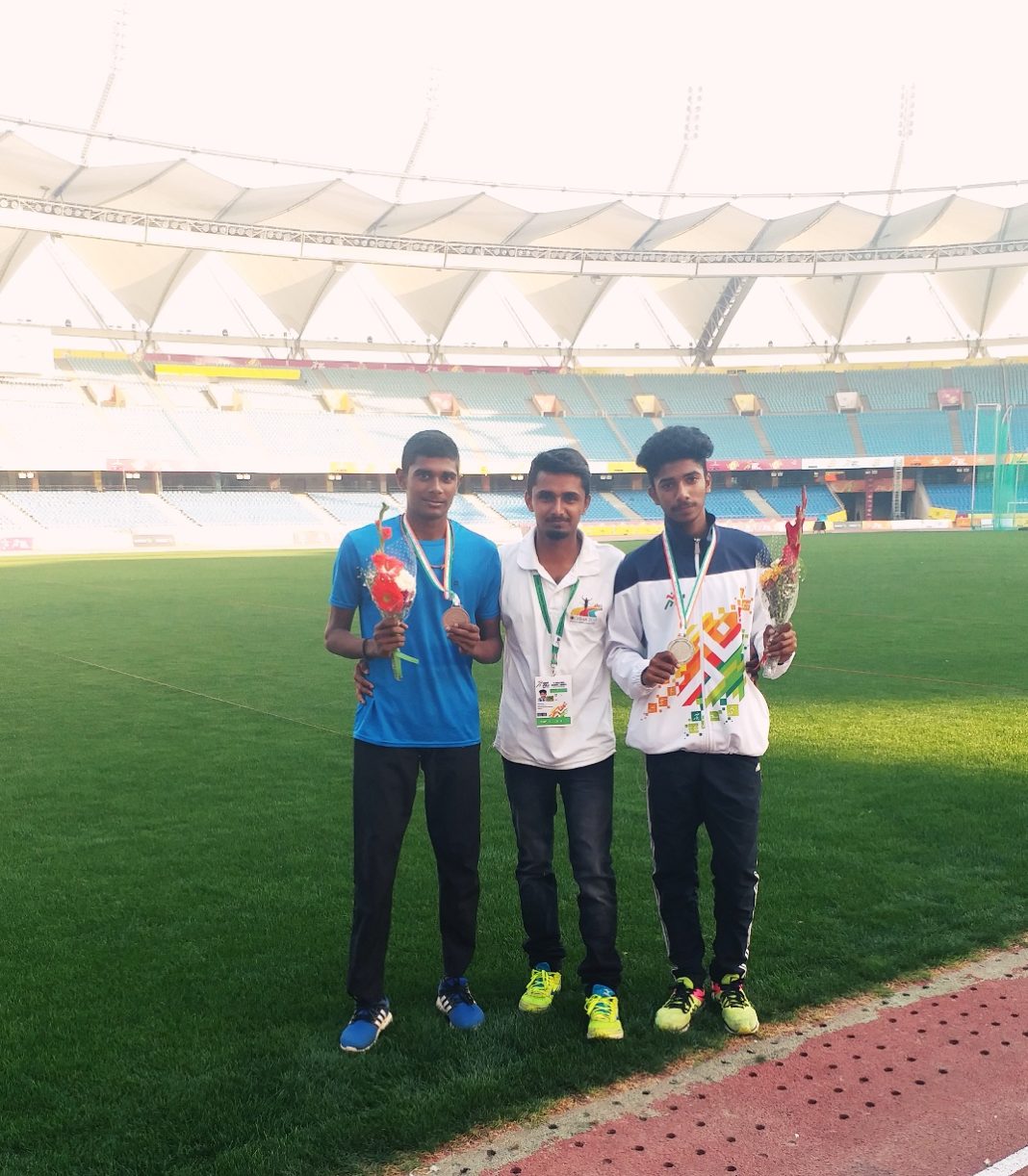
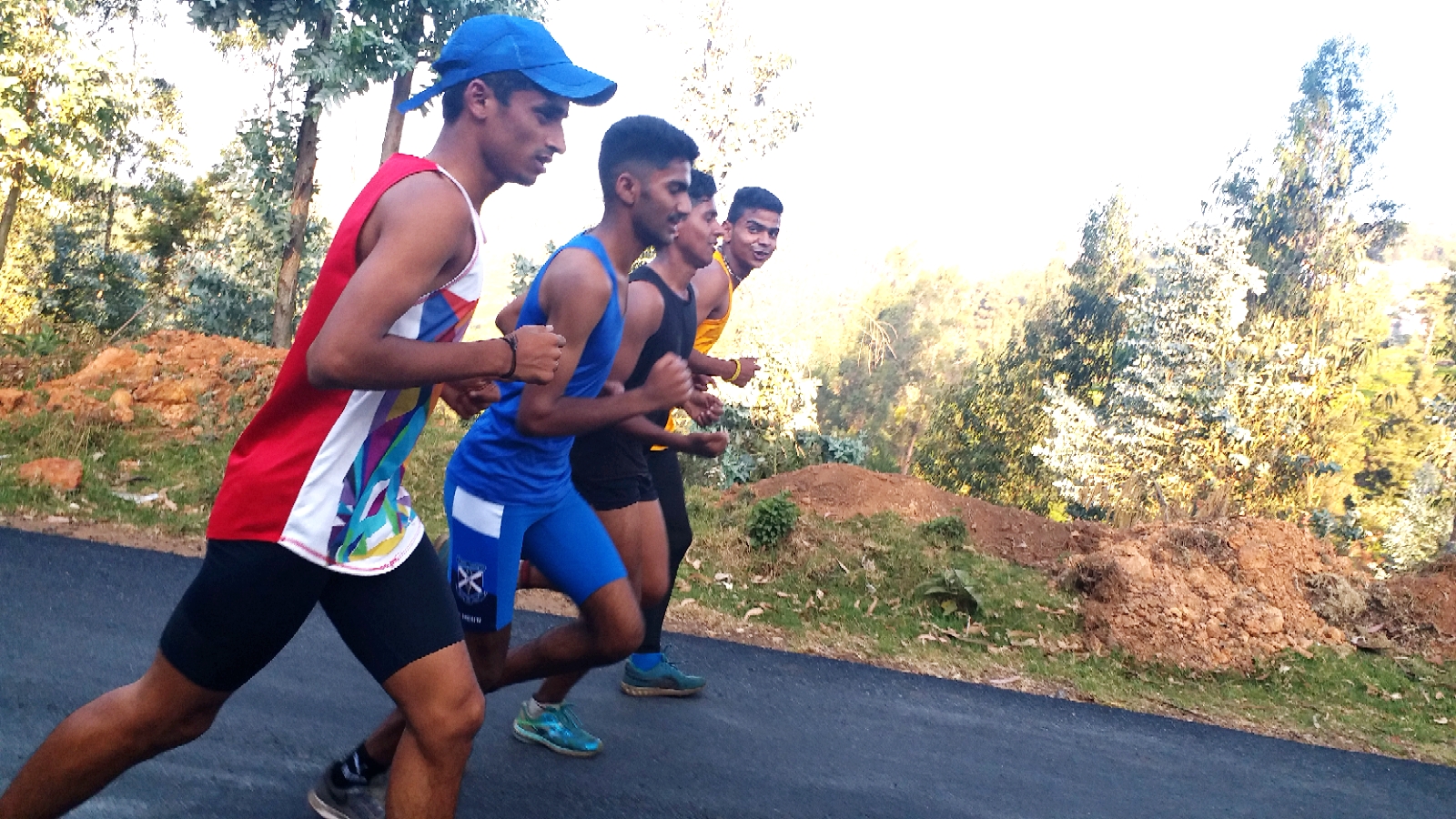
Azarudeen with a group of young athletes

Instead of brooding over his stunted career, Azarudeen refocused, “Injury made me sit back and think about the coaching facilities in India. Back then, I had met and worked with middle-distance coach Kunhi Mohammed who also trained Jinson Johnson,” which matured into a turning point in his career.

“It was in 2016 that I met Jinson. Currently, he holds the national record for 800m and 1500m. His coach, Kunhi Mohammed was away in France, and Jinson had come down here for high-altitude training before the Olympics qualifications meet which was to be held in Bangalore,” Azarudeen categorically explained.

Jinson Johnson met Azarudeen, and yet again, the army man casually asked the injured athlete if he would like to assist him in his training for the Olympic trials. Azarudeen governs himself by the philosophy of, “If I’m not able to play for the country, then I must ensure somebody else does. Jinson was playing for the country. My assistance will always be there for the nation,” as he readily embarked on a 6-month long training program with Johnson.

His interest in coaching piqued from this activity as he helped out Jinson and Azarudeen’s coach, Jayachandran also explained how the world of coaching works to him. Azarudeen says, “I was an assistant coach for Jinson Johnson during the 2016 Olympics qualification and that time I started learning about coaching. What it’s like to be a coach…the gap between junior and elite athletes and how to train them. I researched a lot and looked out for potential athletes,” he remarked.

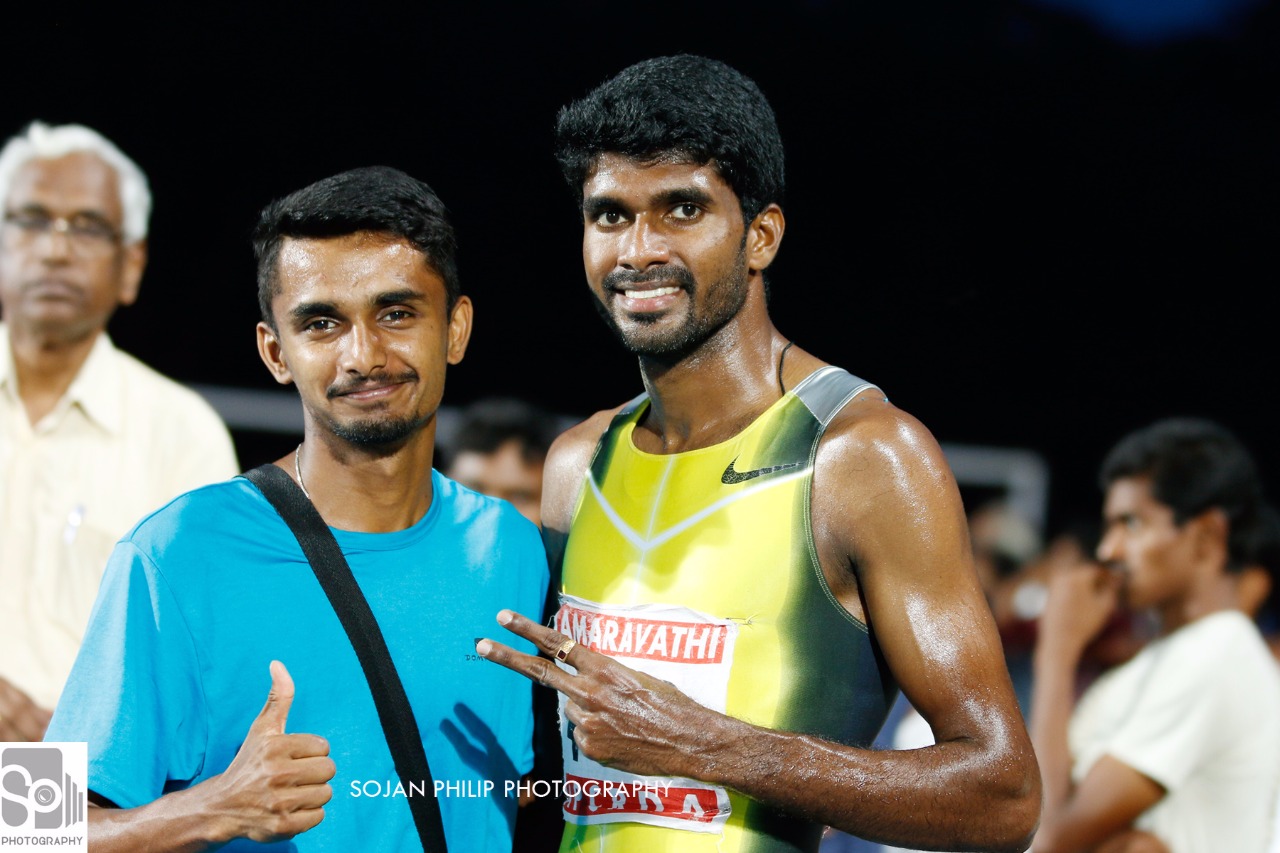
Azarudeen with Jinson Johnson

The final inspiration for Azarudeen came when Jinson broke the national records when he qualified for the Olympics, clocking a timing of 145.98 seconds in the trials. “I was very happy when that happened. This motivated me to get into coaching. I should give back to the sport what it has given to me, I decided,” he tells us.

A go-getter attitude

There were a lot of challenges that had come his way, but he always had an “I can do it!” attitude from the get-go. However, being a coach, this young is not an easy task, and people often tend to criticize it. Azarudeen reflects on that and says, “I started coaching at a very early age. I was just 22. Many people would wonder how I do this. They would say a lot of things. But I always ignored it.”

To put all the questions to a stop, in 2018, Azarudeen decided to take the Certification course. “I did my Level 1 U-16 coaching certification training for the international level, and I was the class topper of that batch!”, he exclaimed. “I am eagerly waiting for Level 2 of Coaching Certification now. It’ll be held in November,” an enthusiastic Azarudeen revealed.

Azarudeen06MPOs02nov2019

“When you start producing medallists and seeing good performances, it feels incredibly good, and you feel responsible for the sport then,” he tells us which reveals his true love for the job as a coach to budding athletes.

Several questions have been raised about why senior athletes fail to perform at the international level and Azarudeen the coach offered a different perspective, “The basic thing is people don’t see the performance. They only see the medals at this stage. As a coach, I look at the performance of the athlete. There is a lack of facilities here, and if an athlete gets those in and around India, then it will be very helpful in the tournaments they compete in.”

India’s athletics is making big strides

However, India has introduced a lot of new schemes, and the Khelo India initiative is the most brilliant one. Azarudeen applauds that and admits, “But right now we are stepping up, the government is doing a lot for the athletes. Hima Das is doing so well, and so is Dutee Chand.”

Back at this Academy in Coonoor which is helped by the Madras Regimental Centre, Wellington, Azarudeen has been able to train athletes efficiently for a year now almost. Although his Academy does not have the spick-and-span quality of high-end training centres, it boasts of a rigid training program at 3000 meters above the sea level.

Azarudeen07MPOs02nov2019

Specialising in middle-distance running, Azarudeen explains, “At the Aspire Academy, we have everything required for middle-distance running requirements. The high altitude helps immensely. We are focussing on my program here. Also, all the basic facilities are available here. I am an 800m and 1000m athlete coach, and I am inspired by that. My goal lies in getting achievements there.” In his training centre at Coonoor, bright athletes are waiting to take on the world. There is a budding athlete Mujamil among the boys and Gowthamee among the girls whilst Vikas, Arvind and Sudhir are all male athletes with a lot of promise who are practising hard at the Aspire Academy.

Challenges for an athlete

The challenges in the field of athletics are several with the most dangerous one being that of doping. Doping had been a major issue for India during the 2018 Commonwealth Games, but Azarudeen, who feels for the cause voiced that,

“A lot of awareness needs to be created. At Aspire Academy, we take all the measures required to keep doping in check. Nowadays, athletes don’t trust their coaches, and they look for fast results. Training is a long process, usually. You should believe yourself. Trust the coach and follow what he says,” he recommends.

In this fast-paced world where everybody is in the quest for instant results, it’s difficult to explain the value of a lengthy training process. “The problem is, nowadays, the athletes are concerned with short-term performance rather than long-term performance. The awareness should be created through coaches,” Azarudeen feels. He also recommends the organization of awareness camps against doping before any tournament-be it small or big, so that the information precipitates to the grassroots level too. Other than that, Azarudeen feels “There should be high-performance training centres in every State so that athletes from all over can come there and train.”

The journey ahead is long for the youngest coach for athletics in India, and he has no plans of stopping any time soon. “Any opportunity which comes to me, I’ll want to make my country proud all the time,” he urgently tells us showing his love for the nation which is rapidly becoming a strong force in the field of athletics. With his students from the Aspire Academy, Azarudeen has his eyes set on 2022. Affectionately he says, “My little champs are training for the 2022 Youth Olympics now! Next year the Junior World Championships is also there,” he tells us excitedly.

Azarudeen firmly believes that with the right funding and sponsorship as well as strategic training programs, any talented athlete can be elite and win the elusive medals. In a country which is slowly, reluctantly learning to turn their eye away from cricket and football and rest it briefly on athletics in the burst of Hima Das, Jinson Johnson, Dutee Chand, Gomathi Marimuthu on the international sphere, Mohamed Azarudeen cuts out an important figure for India’s future. He is on the road to becoming the face behind the medals we are about to see in the coming years! The youngest coach for Indian athletics, Azarudeen, who is on a self-proclaimed mission to bring glory to India on the tracks and serve the nation in every possible way promises to be a torchbearer for budding athletic talents and aspire newer heights through his tireless dedication to the mother-of-all sports, athletics.

source: http://www.thebridge.in / The Bridge / Home> Athletics / by Sohinee / July 25th, 2019

In Conversation With Aaliya Sultana Babi: The Royal Paleontologist

Balasinor (Mahisagar District), GUJARAT :
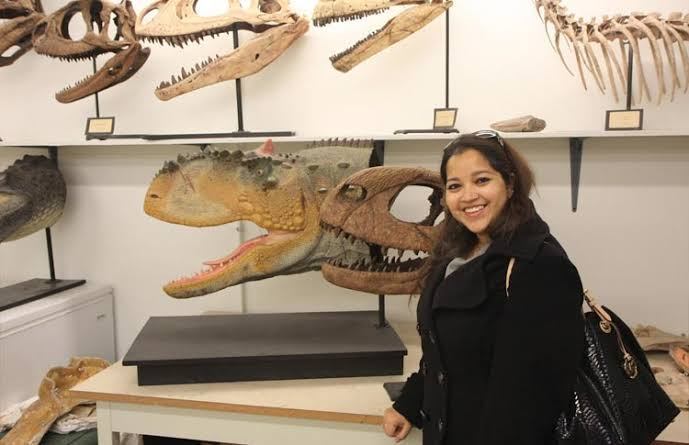
AaliyaMPOs28oct2019

Aaliya Sultana Babi is a princess who, along with her figurative crown, also wears—quite literally—the broad-brimmed hat of a paleontologist! She is the daughter of the Nawab of Balasinor, and traces her ancestry to Sher Khan Babi, the founder of the state of Junagadh, who was bestowed the nawabship by the Mughal emperor Humayun. Tens of millions of years ago, during the Mesozoic era, the lands of Aaliya Babi’s forefathers teemed with ancient reptiles and dinosaurs, and the rocks of Rahioli village (which has earned the moniker of India’s Cretaceous Park) near Balasinor are now etched with the remains of bones, eggs, teeth, and skulls, approximately 67 million years old.

These prehistoric giants include long-necked titanosaurs, an enormous snake, and a crested abelisaur often referred to as “the T-rex of India”—the deadly Rajasaurus narmadensis. Aaliya Babi is an ardent advocate for the protection and preservation of this rare and precious fossil site in Gujarat, which is one of the largest dinosaur fossil sites in the world, and she champions the cause of dinosaur education and conservation in India.  As a dinosaur enthusiast who admires and has closely followed her work, including the Dinosaur Fossil Park and Museum that she has set up in partnership with Gujarat Tourism, I am honored to have been able to interview this Dinosaur Princess!

AALIYA BABI IS AN ARDENT ADVOCATE FOR THE PROTECTION AND PRESERVATION OF THIS RARE AND PRECIOUS FOSSIL SITE IN GUJARAT, WHICH IS ONE OF THE LARGEST DINOSAUR FOSSIL SITES IN THE WORLD, AND SHE CHAMPIONS THE CAUSE OF DINOSAUR EDUCATION AND CONSERVATION IN INDIA.

Bhavika: I really admire your contributions to the field of dinosaur conservation. What sparked your interest in dinosaurs?

Aaliya: As a young girl of about four or five, I was fascinated with dinosaurs, despite the lack of exposure to dinosaurs that we grew up amidst. While learning the English alphabet, I would say “A for Apple” and “D for Dinosaur” instead of for “Dog”! I also knew the spellings of “brontosaurus” and “diplodocus,” which were both my favourite dinosaurs! All this was forgotten when I was shipped off to a boarding school, but when I came back after completing my schooling, the interest was rekindled.

Bhavika: I wish more children in India shared your enthusiasm and fondness! Do you believe it’s important for children to be familiar with dinosaurs? What would be your advice to a child who dreams of becoming a paleontologist? 

Aaliya: Not just children, but, according to me, everyone should know about our prehistoric earth, and the fascinating creatures that inhabited it. Through our museum and fossil park, we are trying our level best to educate the people. I, in my own way, am trying to create awareness through lectures, presentations, and exhibits held across schools, colleges, universities, and museums, both in Gujarat and abroad, and have received favourable responses. If children want to take up palaeontology as a career, it is unfortunate that in India, we currently don’t have much scope in the discipline, as only limited educational institutes offer subjects related to paleontology. But we need to rectify that. There are some talks going on to include geology into school curricula in the future.

Bhavika: That’s lamentable. India has a wealth of fossils, but these are unexplored and undervalued. Why is this so? What are the current challenges? 

Aaliya: There are a lot of challenges which I have faced over the years in trying to get the fossil site protected. First and foremost, we, in India, don’t have any legislations pertaining to fossil protection, and we don’t care for our heritage. It has taken me more than twenty-two years to get the site duly recognized and protected, but still it’s open and vulnerable to vandalism, as we have limited well-trained guards. Secondly, we don’t possess the required funds for excavations and the subsequent studying of fossils, and hardly any good-quality museums exist to exhibit them. We are also lacking in trained professionals.

THERE ARE A LOT OF CHALLENGES WHICH I HAVE FACED OVER THE YEARS IN TRYING TO GET THE FOSSIL SITE PROTECTED. FIRST AND FOREMOST, WE, IN INDIA, DON’T HAVE ANY LEGISLATIONS PERTAINING TO FOSSIL PROTECTION, AND WE DON’T CARE FOR OUR HERITAGE.

Bhavika: Do you believe that there’s potential for dinosaur tourism in India?

Aaliya: There is a huge, huge, HUGE potential for dinosaur tourism in India. You see, in the earlier days, people were not very aware about dinosaurs. The Jurassic Park movie series, based on Michael Crichton’s books, has sparked interest in dinosaurs, and now we also have access to so much information and literature on them. I’ve come across both three-year-olds and eighty-year-olds who want to know about these fascinating creatures that ruled our earth for millions of years! I get children who are so deeply interested in dinosaurs that they want to become paleontologists, and so times are changing!

Bhavika: How does the Garden Palace Heritage Hotel that you run from your royal palace go toward this mission?

Aaliya: The Garden Palace was built in 1883, and we began offering the palace as a homestay around 1997. From having only 1 renovated room, to now 13 rooms, we have come a long way! When we get visitors for the fossil park, we often have them stay at our property or take their meals here, as this is the only place in the area for a comfortable accommodation and a decent meal. We are famous for our cuisine, as my mother, Begum Saheba Farhat Sultana Babi of Balasinor, is a true connoisseur of food, and has carried forward the legacy of the signature Balasinori cuisine.

Bhavika: Can you tell us about the Rajasaurus? Do you believe it should feature in one of the next films from the Jurassic World franchise?

Aaliya: Yes, definitely, the Rajasaurus should feature in the coming Jurassic World movies! The fossilized remains of the Rajasaurus narmadensis were excavated by Dr. Suresh Shrivastav and team in 1983. The dinosaur was approximately 9 meters in length and 2.4 meters in height and weighed approximately 4000 kgs. It is a genus of abelisaurid theropod carnivores from the Late Cretaceous (Maastrichtian) of India, and is represented by one species, Rajasaurus narmadensis. It was formally described in 2003 based on a partial braincase, spine, hip bone, a leg and tail—a first for an Indian theropod dinosaur. The dinosaur had a single horn-like structure on the forehead, which was probably used for display and head-butting. Like other abelisaurids, Rajasaurus was probably an ambush predator and hunted in packs. Numerous theropod eggs and nests have also been found from the Rahioli Balasinor region.

Another similar dinosaur which has been named after the village of Rahioli is the Rahiolisaurus gujaratensis. Rahiolisaurus is another genus of abelisaurid theropod dinosaur from the Late Cretaceous (Maastrichtian) of India. It fossils were excavated by teams from the GSI (Geological Survey of India), Indian Statistical Institute, Kolkata, and Texas Tech University in the USA, between 1995-1997, from the Lameta formation of Rahioli, and it was formally described as Rahiolisaurus gujaratensis in 2010. It can be distinguished from the Rajasaurus by its more slender and gracile build. It is known from a pebbly sandstone containing seven different individuals—from a juvenile to a fully-grown adult. It was 8 meters in length, 3 meters in height, and weighed approximately 2 tons.

Bhavika: Do you believe dinosaurs are linked, in anyway, to the myths and folklore of India?

Aaliya: Yes. We have heard tales of dinosaur eggs being worshipped by villagers, as they resemble shivlings. We hear that ammonite fossils (salagramas) are also worshiped, as they are believed by many to be natural manifestations and divine symbols of Lord Vishnu. The shell’s circular form, with its radial markings, resembles the discus (chakra) of the deity.

Bhavika: Is it especially challenging to be a woman in the field of science and conservation?

Aaliya: I think I am the only woman, as of now, from an aristocratic family in India, who is involved with fossil preservation and conservation. It definitely had its ups and downs, but I think I have used my family name and connection for the protection of the fossils and the betterment of the villagers.

This definitely was a roller coaster ride, but it has been a wonderful ride, nonetheless. Times are changing now, and women, today, are in all fields. I have had the support and blessings of eminent paleontologists like Dr. Ashok Sahni and Dr. Suresh Shrivastava, among others, who have helped and guided me throughout this phase, and have imparted so much of their knowledge to me. And I have a simple motto: that nothing is impossible in life; if we set our hearts and minds to it, we can achieve anything and everything! The word “IMPOSSIBLE” shouldn’t exist in our dictionary!


Featured Image Source: Indian Women Blog

source: http://www.feminisminindia.com / Feminism In India / Home> Society> Environment / by Guest Writer / posted by Bhavika Sicka / October 28th, 2019
Meet M Nurul Islam, the ‘Sir Syed of West Bengal’

WEST BENGAL :

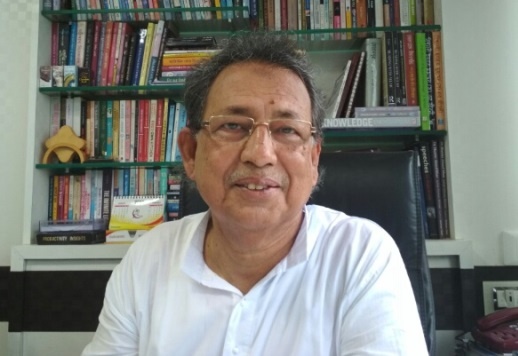
M Nurul Islam, the founder of Al-Ameen Mission

Education advocate M Nurul Islam, who started coaching seven students in small room of a madrasa where he was a teacher, never knew he would be once compared to great education reformer Sir Syed Ahmad Khan.

Through hard work and a commitment towards his moral compass, he was able to set up a learning center which is credited to have produced more than 2400 doctors (MBBS & BDS) and 2500 engineers so far apart from scores of researchers, administrative officers, teachers and professors.

Islam’s journey began in 1986 when he started teaching a group of seven students in a small room of a madrasa in Hawrah district of West Bengal. Now his Al-Ameen Mission has produced more than 2400 doctors (MBBS & BDS) and 2500 engineers apart from scores of researchers, administrative officers, teachers and professors.

Today Al-Ameen Mission has over 17000 residential students and more than 3000 teachers as well as non-teaching staff in their 56 branches across 15 districts of the state.

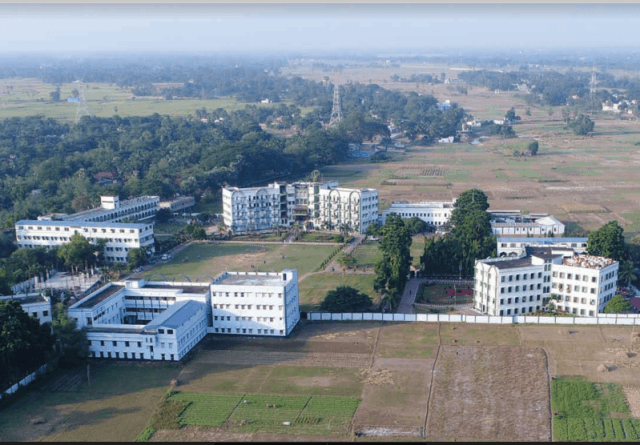
The main campus of Al-Ameen Mission located at Khalatpur village in Howrah district of West Bengal

It was in 1976 that Nurul Islam, Secretary General of the Al Ameen Mission, set up the Khalatpur Junior High Madrasa when he was still studying his 10th standard. The idea was  educational empowerment of poor and backward minority sections.

The journey was tough and tiresome.  In May 1984, he started the Institute of Islamic Culture, setting up a hostel for the institute in 1986 in the Madrasa building itself with the help of door to door collections of fistful rice in his village, Khalatpur. In January 1987, it was renamed as Al-Ameen Mission.

“I started coaching with 7 students of fifth class in 1986. In 1993 there were 11 students, four became doctors, four became engineers. Then came a feeling of satisfaction that I am doing the right thing. I never looked back,” reminiscences Islam who had revolutionized the concept of education among one of  the most unprivileged community  in one of the most backward region in India.

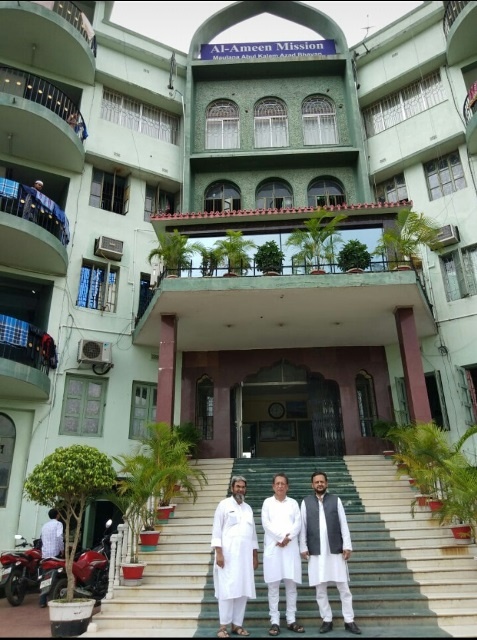
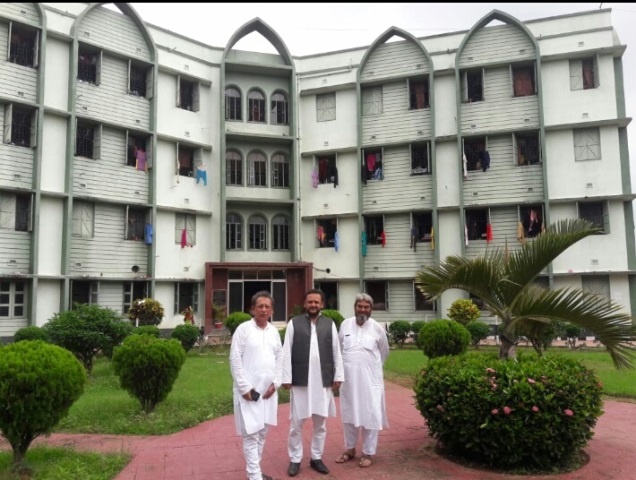
L-R, Inamul Haque, Nurul Islam and Syed Zubair Ahmad at Khalatpur campus .

“The motto was to give modern education with moral values in a fully residential system where students from all strata of the society, irrespective of their financial condition, would live, learn and grow together,” adds Islam.

The mission of the institute is to “achieve quality and excellence in the field of education and to support meritorious students who are socio-economically disadvantaged, following the principles of Fairness, Equality, Equity and Transparency.”

The main campus of  Al-Ameen Mission is located at Khalatpur (Udaynarayanpur) in Howrah district of West Bengal. It has 56 branches  spread across 15 districts of the state. It has 12000 residential students now. It also runs residential coaching classes for engineering and medicine aspirants across West  Bengal and in neighboring Assam, Bihar, Jharkhand and Tripura.

The Al-Ameen Mission also has a facility for girls at Khalatpur, Howrah from class fifth to 12th.

Girls hostel at Khalatpur campus

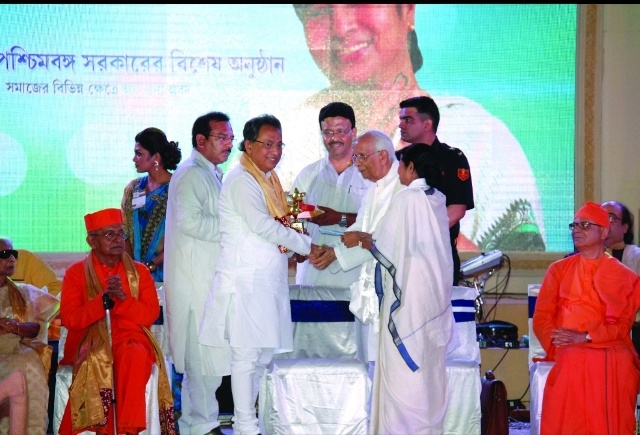
Al- Ameen Mission has bagged many awards for their excellent work in the field of education in West Bengal. They have been winners of The Telegraph School Award for Excellence in 2002 & 2009. The Mission has also been awarded The Telegraph School Award for the best academic performance in competitive examinations in the year 2004 and the Certificate of the Honour in the year 2005, 2006 & 2008. In 2018  Mr. M Nurul Islam also  received  the prestigious ” Banga Bhushan Award” from Mamata Banerjee,the  Chief Minister of West Bengal.

M Nurul Islam receiving the prestigious ” Banga Bhushan Award” from Mamata Banerjee , the chief minister of West Bengal and Governor Keshari Nath Tripathi

The Mission is mostly run by donation and zakat. Muslims throughout the country contribute their zakat to the Mission, which takes care of 25% of seats reserved for poor, destitute and orphans.

A part from education Al-Ameen Mission does charitable works for the Muslim community. It has helped unemployed Muslims with loans and has scholarship programs to help other communities’ needy students.

Al-Ameen gives full financial support up to six months to those needy students of Al-Ameen who get admission in medical colleges.

The Mission has a unique feature of having different fee-structure for the students of different categories depending upon their financial conditions. The students from well to do families pay their fees in full whereas remittance is given to those who can’t pay the full amount. Those, who can’t pay at all, are exempted of all kinds of fees. Moreover, a considerable number of seats are reserved for meritorious orphan students.

At present 5338 students (42%) enjoy half-free studentship and 3432 students (27%) enjoy full free studentship facilities from the Mission.

The flexible fee –structure of the Mission had made it possible for many students from most poor background to achieve their dream and become doctors and engineers.

This year too Al-Ameen Mission has broken all its previous records as its   422 students  cracked NEET,  out of which 128 (30.5%) students are from poor and BPL families, 133 (31.5%) are from middle and upper middle income group and 161 (38%) from lower middle income group.

Above all 62 students of the Mission got AIR within 1500, 147 within 25000, 246 within 35000, 367 within 45000 and 422 within 55000.

Most surprisingly 105 students from Murshidabad and  80 from Malda who were enrolled in different branches of Al-Ameen Mission among those who cracked NEET this year.

Out of 422 qualifiers 360 were boys and 62 girls.

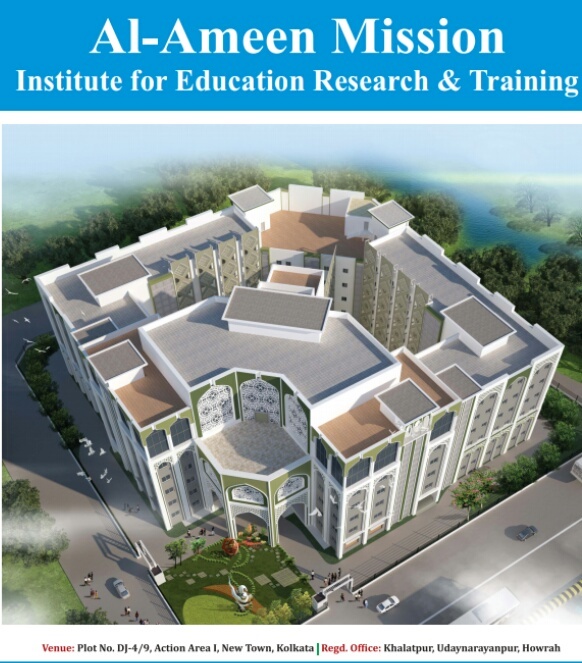
This year in February Al-Ameen Mission Trust has taken up a new project, ‘Al-Ameen Mission Institute for Education Research and Training’. This foundation stone of the institute has been laid in the Newtown. Here, under one roof there will be facilities to provide coaching for the Medical post-graduation course and Residential Training Centre for competitive examinations like IIT,IIM, CLAT,CAT,MAT,UPSC and WBCS. Besides, there will be facilities to train teachers as well as non-teaching staff. Moreover, there would be provision for higher research in different fields of social sciences. In future , it will be the leading center of the Al-Ameen Mission; the Centre  of Excellence, said Islam about his future plan.

NurulIslam06MPOs21oct2019

Proposed Al-Ameen campus.

source: http://www.muslimmirror.com / Muslim Mirror / Home> Editor’s Pick> Education> Indian Muslim> Interviews> Positive Story / by Syed Zubair Ahmad / October 08th, 2019

A retired official’s intensive research on Holy Quran

Coimbatore, TAMIL NADU :

Dr M Ameer Althaf
Dr M Ameer Althaf

Coimbatore:

Retired, but not tired of working for former NTC official Dr M Ameer Althaf, who took up intensive research on Holy Quran for well over three decade. And in his seven yearlong untiring effort, he has penned the book ‘Athaatchigal Thirukkuran Kalai Kalanjiam’ in a four part series, which is close to his heart. Undoubtedly, this is a magnum opus for the author.

Notably, Ameer Althaf had won the heart of Kovaiites for his different avatars in Thirukkuran Arakkattalai, Coimbatore District United Jamaath, AIMMS Muslim Women Community College. Adding another feather to his cap, he brought out the book ‘Pettagam’, a compilation of 300 long history of Coimbatore Muslims which was released at a gala function in 2014.

As to the adage ‘Hardwork pays rich dividends’, his research papers on Holy Quran were presented and published in global forum like Umma-al Qura University in Mecca, King Fahad University in Madina, University Malaya, Islamic Science University Malaysia besides universities in Istanbul, Jordan, Qatar, Mali.  His four decade central government service and three decade research on Holy Quran made him go places across the globe. Significantly, he became to be known as International Holy Quran researcher.

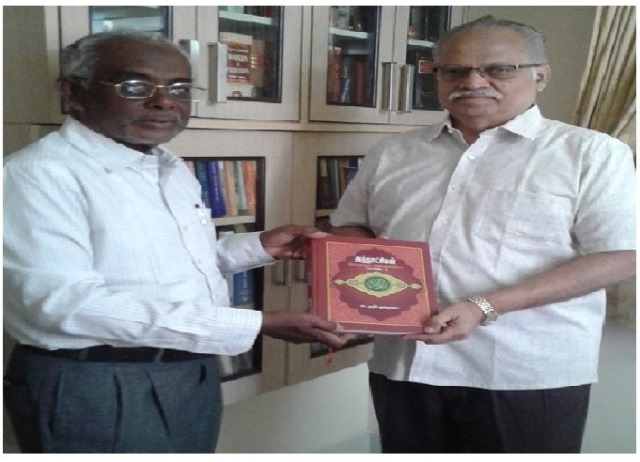
A function is being organised under the aegis of Dhaanish Ahmed Institute of Technology (DAIT) and Al Azhar Educational Trust on October 20 at Podanur Thendral mahal to release the book ‘Athaatchigal’ by former supreme court judge Fakir Mohamed Ibrahim Kalifullah and former High Court judge K N Basha in the presence of leading luminaries Alhaj K Moosa, chairman, DAIT group, Alhaj UAK Jailani, managing trustee, Al Azhar Education Trust.

Sunnath Jamaath Federation general secretary Alhaj M A Inayathullah will preside while Ranipet Additional District and Sessions Judge A Mohamed Ziyavudeen will felicitate at the event.

Moulavi Alhaj M A Abdur Rahim, president, Coimbatore-Nilgiris-Tirupur district Jamathul Ulema Sabai, Moulavi Alhaj M A Mohammed Imdhadi, president, Coimbatore city Jamathul Ulema Sabai, social activist Aloor Shanavas, Coimbatore district United Jamaath president Alhaj A R Basheer Ahamed, Tamil Nadu Haj organisors association president Alhaj A Mohamed Rafeek, Iqra Educational Trust president Alhaj H E Iqbal Sait, Project Manager in Kuwait Haji M A Azad will address the audience at the book release event. Himayathul Muslimeen Sunnath Jamaath, Podanur secretary Haji KTS Riyas Kapoor will propose the vote of thanks. Other dignitaries who will speak at the event include Holy Quran translator Prof Mohamed Khan baqavi, TN state Jamathul Ulema deputy general secretary Moulavi Alhaj  K M Ilyas Riyaji, Chennai Anna Salai Makkah Masjid chief imam Moulana M Mohammed Mansoor Kasimi, Madras University HoD Arabic,  Persian and Urdu Dr A Zakir Hussain Baqavi and senior network consultant, Abudhabi Dr Mohamed Ibrahim.

source: http://www.muslimmirror.com / Muslim Mirror / Home> Indian Muslim> Positive Story> Religion / by M. Rafi Ahmed / October 10th, 2019