Category Archives: Amazing Feats

How the British Empire abandoned its most vocal Muslim supporter

Surat , GUJARAT / Bombay (now Mumbai) MAHARASHTRA / London, ENGLAND :

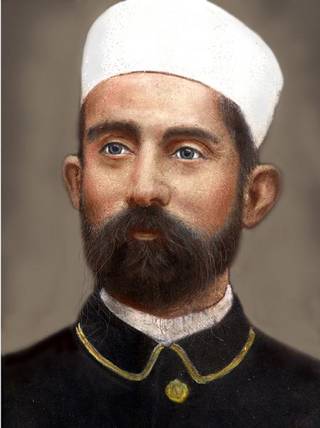
AbdullahYusufAli01MPOs05sept2019

Abdullah Yusuf Ali wrote perhaps the most famous translation of the Quran but he also supported the British against the Ottomans and died a lonely man.

On a frigid December morning in 1953, a policeman found a half-conscious old man slumped on a street bench in the Westminster area of London. He was in a delirious state and died a day later on December 10. Ali

That man was Abdullah Yusuf Ali, the famous 20th-century translator of the Quran. He died alone, homeless, and with no one by his side. When the news reached Pakistan’s embassy in London, it dispatched someone to pay for his last rites.

“It pains me to think that so able and eminent a gentleman should have met with so pathetic an end,” Mirza Abul Hassan Ispahani, Pakistan’s High Commissioner in London, wrote in a letter to his prime minister two days later.

Generations of Muslims in English-speaking countries have grown up reading Yusuf Ali’s interpretation of the Quran. More than 200 editions of it have been published so far, making it perhaps the most read commentary in any non-Arabic language.

“Ask any English-speaking Muslim what translation and commentary of the Quran they originally studied, and the chances are that it was the one by Abdullah Yusuf Ali,” writes a commentator.

Yusuf Ali’s work and affiliations solidify his place as a giant of his time. He was one of the most senior Muslim civil servants during the British Raj, rubbed shoulders with the likes of Mohammad Ali Jinnah and the Aga Khan, inaugurated the first mosque in Canada, represented India at the Paris Peace Talks in 1919, was a trustee of London’s oldest mosque, and a known educationist. He was also a prolific writer on Islam.

But how did a prominent Muslim like him meet such a terrible end? Why was he forgotten so quickly?

A child of his time 

In 1915, during World War I, the British faced a dilemma. Nearly half a million soldiers were Muslims from the Indian Subcontinent — modern-day India, Pakistan and Bangladesh — which was then under colonial rule. Some refused to fight the Turkish Ottoman soldiers who had joined the war against the allied army.

A mutiny broke out in November of that year in Singapore where Indian Muslim soldiers turned their guns on officers and took control of the island. The uprising was quickly crushed and 70 Muslim men were lined up against a wall and executed.

The events shook British officials. Many Muslims considered the Ottoman Sultan Mehmed Reshad as their Caliph. Their personal affinity and strong connection led to the Khilafat Movement in India that called for boycotting the British.

Abdullah Yusuf Ali thought otherwise.

“Fight ye glorious soldiers, Gurkha, Sikh or Muslim, Rajput or Brahman!” he said in a November 1914 speech at a London event in front of top British military officials. “You have comrades in the British army whose fellowship and lead are a priceless possession to you.”

In his talks and articles throughout the war, he urged fellow Muslims to side with the British, at times doing it so effusively that his rhetoric appeared jingoistic.

“The Ottoman Caliph announces Jihad against the British and what does Yusuf Ali do? He goes around European countries asking Muslims to fight for the British,” Humayun Ansari, a professor of Islam at the University of London, told TRT World.

“He was consistently loyal to the British and considered the British Empire to be a blessing. In his understanding of Islam he was very liberal. He wanted a reconciliation between the Muslim and Western philosophy.”
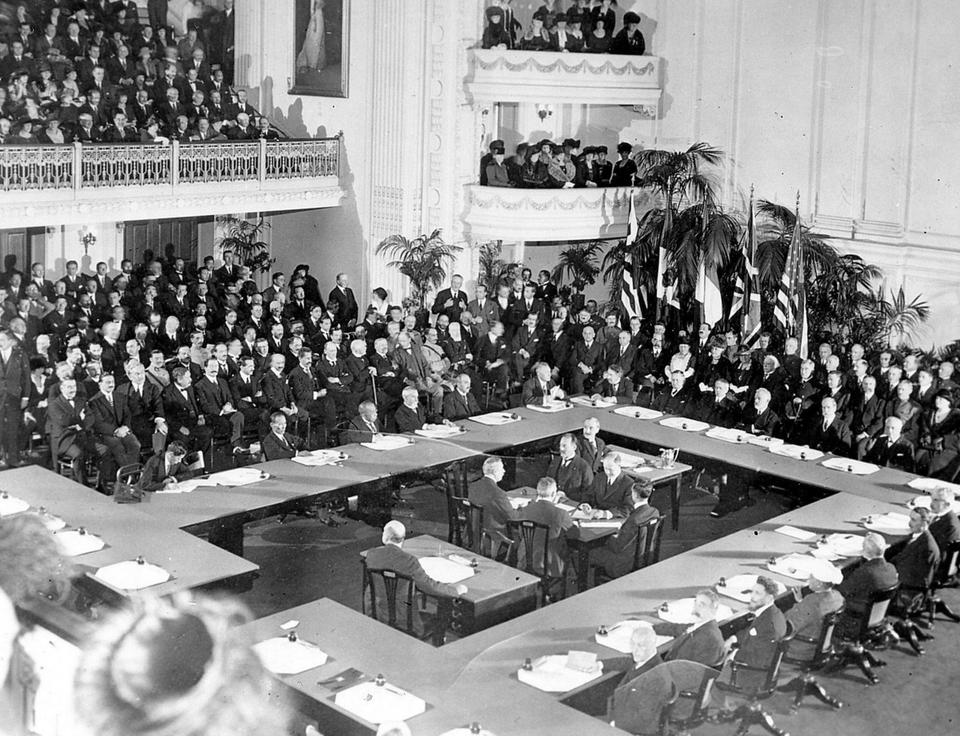
Abdullah Yusuf Ali attended the all-important Paris Peace Conference in 1919. (Getty Images)

Yusuf Ali was born in 1871 in Surat, western India, during a period of great introspection for the Muslims of India as their rule over the region for centuries came to an end and they were at the mercy of the English and a more politically organised Hindu majority.

Among the Muslims there was a realisation that they would have to study English, attain a modern education and learn British ways to get government jobs and regain their lost social status.

Yusuf Ali, who came from a middle-class family, proved to be an exceptional student throughout his school years and after matriculating from a missionary school, he won a scholarship to study at Cambridge University in London. The scholarship was given to only nine Indian students each year.

“We have to look at him in the context of his times. That was a generation when the British claimed superiority over the natives. And then you have somebody who can emerge and beat them at their own game,” says Jamil Sherif, who wrote Yusuf Ali’s biography titled Searching for Solace.

“Yusuf Ali’s approach was to show through his writing that Islam had made major contributions through the ages. But I think his compromise was that he saw religion mainly in spiritual terms and he saw socio-political dimensions of Islam as not really relevant in the days of empire,” he told TRT World.

At Cambridge, Yusuf Ali excelled in English composition, Arabic and other subjects. He also cleared the intensely competitive exam for the elite Indian Civil Service (ICS). In subsequent years, he rose to become perhaps the highest-ranking Muslim civil servant in India when he worked under Cabinet’s member of finance.

He was a devout Muslim, making sure he offered daily prayers, attended religious congregations and led prayers at the Shah Jahan Mosque in Woking, a town near London.

At the same time, he was against political Islam and insisted that Muslims could do better under British rule and that they should focus on educating themselves as opposed to agitating for independence.

Over the years, he remained affiliated with different institutions and also served as the principal of Lahore’s Islamia College – he was invited to take the position by the venerated poet Allama Muhammad Iqbal.

But behind the veneer of his intellect, busy schedule and scholarly importance, he was a man suffering from internal conflicts.

When the east meets west 

Yusuf Ali was a troubled man. He married twice and both relationships ended bitterly.

In 1900, just a few years into his role as a civil servant, he married Teresa Mary Shalders, in a ceremony at the St. Peter’s Church in England.

“It was a bold and uninhibited act by the young couple, who may have looked at the dawn of the new century and thought everything possible – including the harmony of races, religions, and continents,” Sherif, who uses M.A. Sherif as his pen name, writes in his book.

But any hope of making a statement with this marriage of two different cultures faded in a few short years. They had four kids over the years but Yusuf Ali spent most of this time in India as a government officer while Shalders, who was in England, fell in love with another man.

Their divorce in 1911 was particularly painful for Yusuf Ali and he might have hinted at that period in the preface of his Quranic commentary when he wrote: “A man’s life is subject to inner storms…which nearly unseated my reason and made life meaningless.”

He won custody of their children but became estranged from them over time.

“These children by their continued ill-will towards me have alienated my affection for them, so much that I confer no benefit on them by this will,” Yusuf Ali later wrote in his will.

As an ICS officer, he rose swiftly from an assistant magistrate to more important positions, and the British government increasingly relied on him as its key propagandist.

Yusuf Ali was not entirely oblivious to the systematic discrimination that Muslims faced under British rule.

“He wrote about how Britain was using Indian revenue in the Great War. That’s a very subtle way of criticism. He also made references to discrimination suffered [by locals] on the basis of colour,” says Sherif.

In the early 1920s, Yusuf Ali married Gertrude Anne Mawbey, who he liked to call Masuma (innocent). That marriage didn’t work out either.
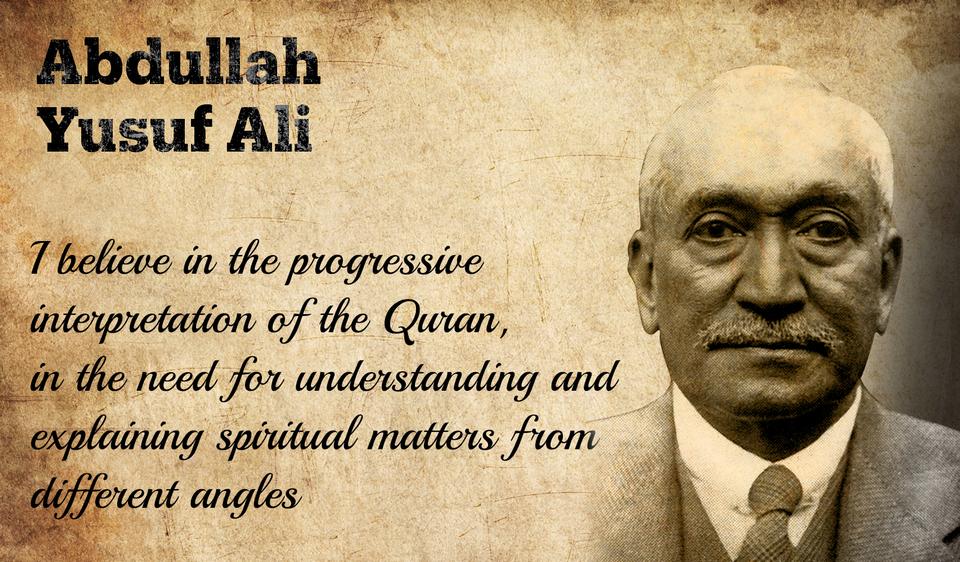
(TRTWorld)
(TRTWorld)

It was during this personal crisis that Ali began the monumental work of writing an English translation of the Quran, often working on solitary ocean liner journeys which he took at the behest of the British government.

“Yusuf Ali’s bond with the Quran was forged in these times of anguish when searching for solace,” writes Sherif.

Prominent scholars such as Marmaduke Picktall and others had already done a lot to introduce the West to Islam’s holiest book but Yusuf Ali did it with humility and open-mindedness which set his work apart.

“His interpretation is very balanced. It doesn’t force you to any particular corner, it can be read by all the schools of thought. It’s a very broadminded, compassionate approach to studying religion,” Sherif tells TRT World.

Yusuf Ali was a Dawoodi Bohra, a strain of Shia Islam, but he garnered enough respect across the spectrum to lead congregations at Sunni mosques.

“In his translation of the Quran, published between 1934 and 1937, Yusuf Ali expounded the spiritual side of Islam more than its worldly view,” writes A R Kidwai, a prominent researcher.

His excellent command over the English language lends a poetic touch to the thousands of footnotes and he didn’t shy away from using English poets such as Longfellow and Milton to explain the word of God.

Besides dealing with his matrimonial failures, he had a hard time coming to terms with what happened to Arab Muslims after World War I.

“Unlike many of his contemporaries, he did not criticise the League of Nations when it dismembered the Ottoman empire,” says Sherif. “But what really shook him was the proposal to partition Palestine.”
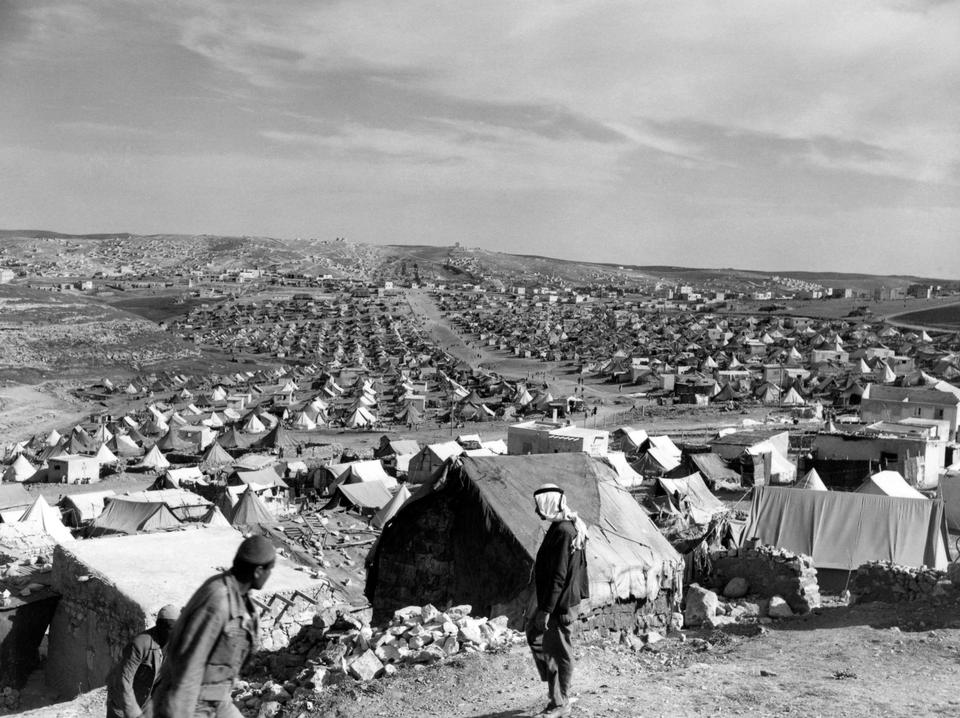
Hundreds of thousands of Palestinians were forced to live in camps in neighboring countries after Israel pushed them out of their homes. (TRTWorld)

For someone groomed to believe that the English people were true to their word, the haphazard division of the Ottoman Empire and the creation of Israel was unsettling for Yusuf Ali.

In 1937 he attended many meetings and conferences fighting the case of Palestinians and warned Western powers about creation of a Jewish state on Muslim land.

“One way alone can bring thee peace: 

That ancient rights be not suppressed, 

That aliens from encroachments cease, 

And Quds be given its rightful rest,” he wrote in the poem Palestine published in January 1938.

However, Palestine’s tragedy wasn’t enough to deter his loyalty to the British as he travelled to India at the urging of England’s Ministry of Information to rally Muslim support after it declared war on Germany in 1939.

In Delhi, he met Sir Sikandar Hayat Khan and spoke to students about the need for India’s support for the British. That was a time of turmoil in India as both Muslims and Hindus had begun rallying for independence.

Upon his return, he wrote articles and gave speeches, asking Indians to unite in defence of the empire and drop their demand for political reforms. But his appearance as an important player in international events quickly faded after the war ended in 1944.

We might never know what broke him in the end. But as the British pulled out of the subcontinent in the days of its waning global status, so did Yusuf Ali slowly recede from the newspapers, his powerful friends no longer found a use for him.

Yusuf Ali spent his last years living in the National Liberal Club on a monthly pension that he received against his government job.

“How did the British treat him? There’s certainly a question mark there. They didn’t recognise his contribution as much as he probably expected,” says Humayun Ansari.

His powerful friends in the Muslim community including Pakistan’s then ambassador Ispahani had also lost track of Ali’s whereabouts, not bothering to check on him.

“That is an indictment of the Muslim society that we were not able to honour and care for someone of his stature,” says Jamil Sherif.
Source: TRT World
source: http://www.trtworld.com / TRT World / Home> News> Magazine / by Saad Hasan / September 04th, 2019

Allauddin of CSJMU in Kanpur make Guinness World Record by continuously reading for 27 hours

Kanpur, UTTAR PRADESH :

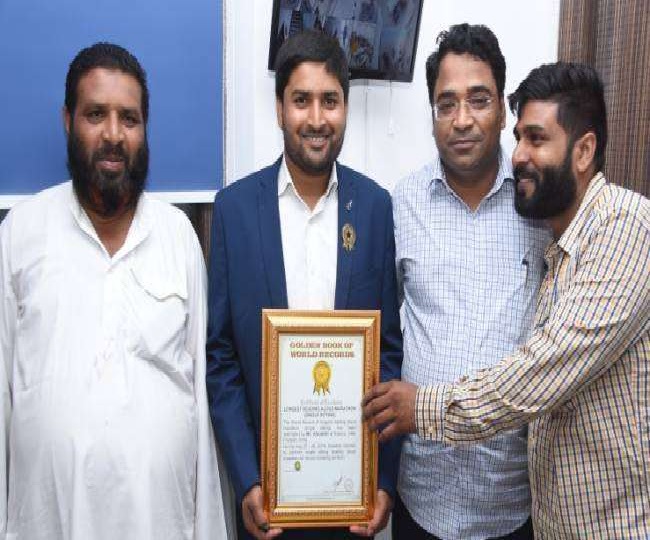
A student from Chhatrapati Shahu Ji Maharaj University (CSJMU), Kanpur created a world record for continuously reading books for 27 hours and five minutes.

Kanpur | Jagran Trending Desk:

A student from Chhatrapati Shahu Ji Maharaj University (CSJMU), Kanpur created a world record for continuously reading books for 27 hours and five minutes. His feat was acknowledged by the Guinness Book of World Records on Monday.

The 22-year-old boy, Allauddin, broke the previous record of continuous reading for 24 hours which was held by Yatish Chandra Shukla of Lakhimpur Kheri, who achieved this feat two years back.

His teacher, Dilip Gangwar, who helped him achieving this milestone said that the executive officers of the Guinness Book told him that he could break the earlier record if he could read for 24 hours and five minutes, but Allauddin said he would continuously read for 27 hours.

The Gangwar coaching made subsequent arrangements for Allauddin and a judge Mahesh Vishnoi, from Guinness Book of World Record was assigned to monitor the reading feat.

According to the rules to set this record, Allauddin could only take breaks of 30 seconds to sip water or to take some edibles and he would not be allowed to go to the washroom during the reading time.

Allauddin, standing firm on his desire to break the record started reading at 10 am on Sunday and finished on Monday. He took less than three breaks of less than 30 seconds to sip small quantities of water, said Dilip Gangwar.

Several eminent people, including former union minister Sri Prakash Jaiswal, MLC Arun Pathak and Satish Nigam witnessed the challenging task.

source: http://www.english.jagran.com / Jagran English / Home> English News> Trending / posted by Talib Khan / August 27th, 2019

Ultra, SPO killed in Baramulla gunfight

Baramulla, JAMMU & KASHMIR :

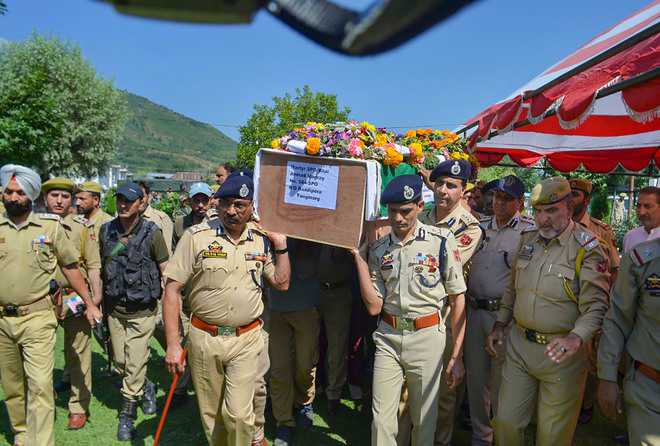
Police officers carry the coffin of SPO Bilal Ahmad in Baramulla. PTI

Srinagar :

In the first encounter between militants and security forces in Kashmir since the restrictions were imposed on August 5, a militant and a policeman were killed and a police officer injured while no major law and order situation was reported on Wednesday.

The encounter took place in Ganai Mohalla of Baramulla town in north Kashmir which concluded early this morning, DIG Police, Central Kashmir, VK Virdi said at media briefing here this evening. The militant has been identified as Momin Gojri of the Lashkar-e-Toiba. An SPO, Bilal Ahmad, was also killed in the encounter while SI Amardep Parihar was injured, who is undergoing treatment.

The police had declared Baramulla as a militant-free town in January this year.

“No major law and order situation was reported from any part of the Valley today while relaxations were further eased in many areas,” the DIG said. There were some minor incidents of stone pelting in some areas, he said, and added that the situation was being monitored closely by the authorities at the ground level.

A law and order situation was reported from the Telbal area on the outskirts of Srinagar late last night and dealt, he said.

On the functioning of other facilities, Director of Information, J&K Government, Syed Sehrish Asghar said all hospitals, banks, ATMs and healthcare services were functioning normally in the Jammu region as there were adequate stocks of medicines and other supplies.

In view of the upcoming harvest season, the preparations for transportation of horticulture produce were reviewed at the Kashmir Divisional level, she said.

She urged people not to believe in rumours about unavailability of transport facilities.

source: http://www.tribuneindia.com / Tribune India / Home> J &K / by Ehsan Fazili / Tribune News Service / Srinagar, August 21st, 2019

Humanity First : In Kodagu, a Hindu and Muslim donate 1.5 acres land to flood victims

Kondangeri ( Kodagu ), KARNATAKA :

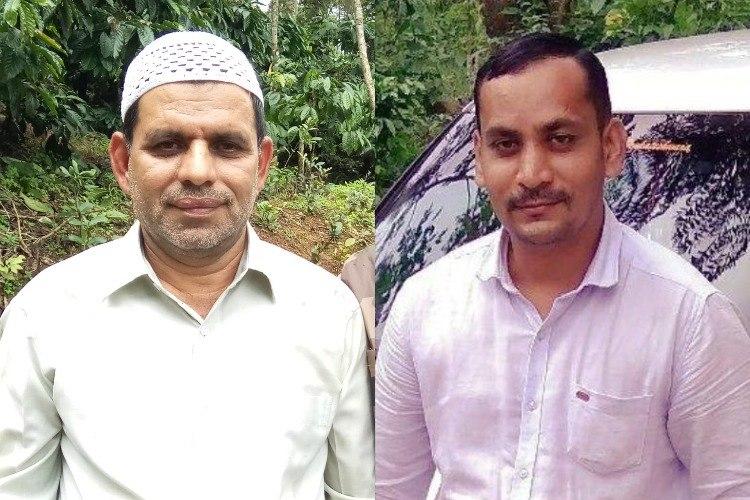
While Haji gave the land for the new houses, Lokesh pledged his for an accessible road that can be built towards the plot.

HajiMPOs29aug2019

In the face of terrible tragedy, the only glimmer of hope is often people coming together in solidarity and healing each other with love. Placing humanity ahead of religious differences, a Muslim man and his Hindu counterpart from Kodagu district have united to donate over 1.5 acres of agricultural land for the rehabilitation of flood victims.

According to Kodagu Deputy Commissioner Annies Kanmani Joy, the recent rains accompanied by flood in the Kodagu region have washed away over 5000 homes in several villages close to the Kaveri river, including Kondangeri.

It was then that 55-year-old Abdulla Haji came forward with an offer to part with 1.5 acres of his 6-acre agricultural land and donate it to the Kondangeri Masjid Committee, so that the government can put it to use.

“When a person sees the people around him suffering so much, it is only natural that he would go and help others. Although I’m a not a rich farmer, I’m in a position to help them. I hope that the bereaved people get some strength from God to overcome their losses and grief,” Haji said.

As per Haji’s proposal, the land is suitable for building permanent houses for the flood victims. But while the Masjid committee was considering the housing proposal, they soon realised that the construction site will face the problem of an inaccessible road.

“But without any hesitation, another Kondangeri resident, Lokesh, approached the Masjid committee and pledged that the Masjid may attach his part of land to the charitable cause and lay down a road towards the residential project,” said Yusuf Haji, President of Kondangeri Muslim Jamath.

According to the Masjid authorities, most of the flood victims are labourers who’ve lost whatever little they had.

“Almost all the flood victims whose houses have been destroyed are labourers from coffee plantations. They had to forcibly leave their homes as the water level rose and in the process, they also lost their possession and valuables along with their home,” said Yusuf.

While government authorities are engaged in the rehabilitation process, there is a lack of temporary relief centres built by the government at Kondangeri village. Hundreds of victims, including women and children, irrespective of their religious beliefs, have taken shelter in relief centres at the Kondangeri Masjid while mourning their losses.

“Haji was thoroughly involved in serving the needy at the Masjid when they had started coming to this shelter. We think he was overwhelmed by their losses and felt that it was necessary to look into providing the people with long-term solutions,” Yusuf said.

This duo’s decision was hailed by the local authorities who confided that the district was facing a shortage of land to rehabilitate the victims of floods and landslides.

“There is already an ongoing process undertaken by the district administration to identify government land that has been encroached by a few agriculturists. The process of its recovery will commence. In the meanwhile, the generosity of people like Lokesh and Haji is really commendable,” Assistant Commissioner T Javare Gowda said.

This is not the first time that ordinary people in the flood and landslide prone coffee belt have rushed to help others. Last year, Abdul Latif of Suntikoppa had come forward and donated 2 acres of his estate land for the rehabilitation of victims.

Story by Story Infinity  (Subs and Scribes Media Ventures LLP.)

source: http://www.thenewsminute.com / The News Minute / Home> Karnataka Rains 2019 / by Mubarak / August 20th, 2019

KLETU students shine in Aero Design event

KARNATAKA :

The AeroKLE team with their working models. | Photo Credit: Special Arrangement

They come first in regular class and third in micro class in national tournament

AeroKLE, a team of 17 students of KLE Technological University (KLETU), has secured the top place, in the regular class, at the national-level SAE India Aero Design 2019 competition held in Tamil Nadu.

In the recent competition, organised by SRM Institute of Science and Technology, they also secured the third rank in the micro class. As many as 146 teams from across the country took part in the competition.

The team comprised Vineet Anand Bedarman (captain), Amit Allimatti, Sayyed Ahmed Zuhair, Rohit Anvekar, Rahul Pattar, Shridhar Hadimani, Om Prakash Patel, Yajnesh Poojari, Koustubh Annigeri, Sujay C, Nilesh Bandekar, Mallikarjun Pattanshetty, Yeshwanth Kumar, Ajey Joshi, Alex Steven Dharmdas, Calvin Lobo, and G.V. Srikar.

The team was guided by Head of School of Mechanical Engineering, KLETU, B.B. Kotturshettar; Head of Centre of Material Sciences Nagaraj Banapurmath, and faculty coordinator G.M. Hiremath.

They were involved in designing and testing different prototypes in Hubballi.

They also optimised the final aircraft designs and submitted the technical design report at the event.

The report too was praised by judges and was has adjudged the ‘best technical design report’ at the event.

The students have bagged a purse of ₹1.35 lakh.

At the contest, the regular class demanded the highest payload to be lifted, whereas the micro class demanded the highest payload fraction.

The teams had to conform to the mechanical and electrical limitations as prescribed by Society of Automotive Engineers (SAE), India.

Experts from the Indian Space and Research Organisation, the Defence Research and Development Organisation, Hindustan Aeronautics Limited, and National Aerospace Laboratories were the judges for the event.

source: http://www.thehindu.com / The Hindu / Home> News> States> Karnataka / by Special Correspondent / Hubballi – August 02nd, 2019

Son-of-the-soil diplomat does nation proud

Hyderabad, TELANGANA / New York, U.S.A :

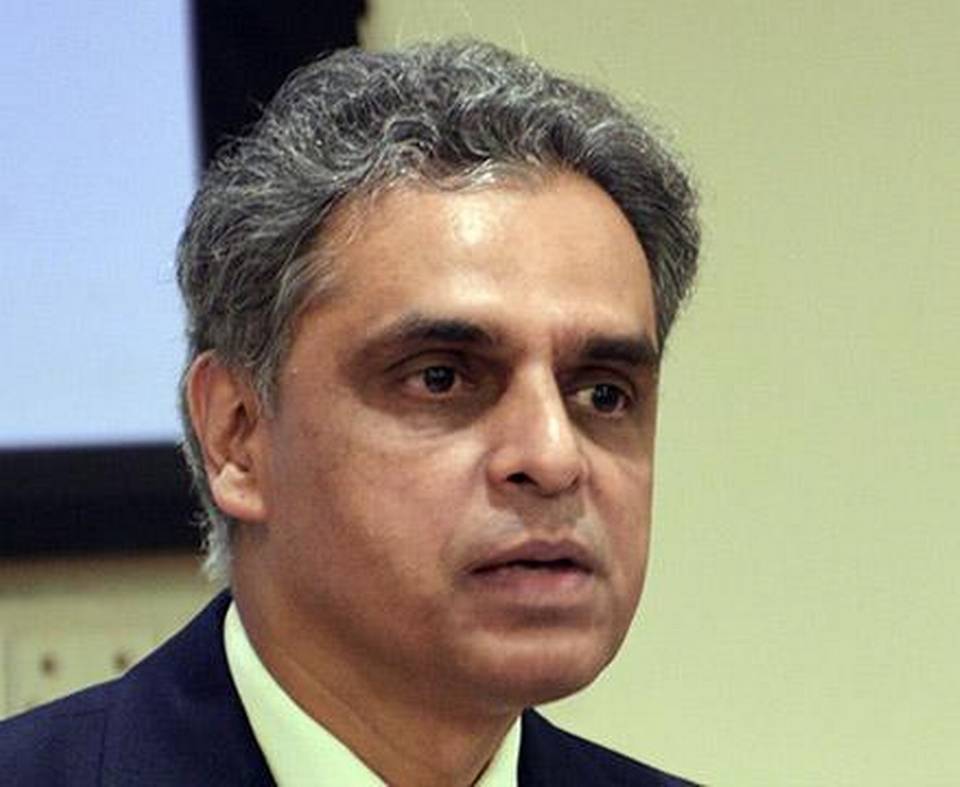
Syed Akbaruddin
Syed Akbaruddin

Syed Akbaruddin’s friends describe him as a thorough professional

India’s Permanent Representative to the United Nations, Syed Akbaruddin, won accolades from Twitteratti after he extended his ‘hand of friendship’ to Pakistani journalists and reportedly asserted at the U.N. Security Council’s closed consultation on Kashmir that Article 370 was an internal matter of the country. But unbeknownst to many, the suave diplomat has a strong Hyderabadi connection, including that of serving as joint secretary of Nizam College Students’ Union.

Those who have been acquainted with Mr. Akbaruddin describe him as ‘focussed’, ‘articulate’, ‘soft spoken’ and with ‘no enemies’.

“He was a degree student at the Nizam College from 1977 to 1980. His father S. Bashiruddin was head of the Department of Journalism from the early 70s to the mid-80s and then moved to Dr. B.R. Ambedkar as its Vice-Chancellor. He also served as Ambassador to Qatar,” says his friend and journalist M. Somasekhar, who met the diplomat around six months ago. “He was active in student politics in the college and was very popular. He continues to be articulate and soft spoken.”

Mr. Akbaruddin’s school, Hyderabad Public School at Begumpet, tweeted its appreciation on Tuesday, “We are proud to recognize the man of the moment, Syed Akbaruddin who is the permanent representative of India at the United Nations, an alumnus of the HPS @IndiaUNNewYork @AkbaruddinIndia @UN #HPSBegumpet #HPS #Alumni #Hyderabad #Begumpet”.

Managing editor of Siasat Daily, Zaheeruddin Ali Khan, who was the diplomat’s junior in Nizam College, describes Mr. Akbaruddin as ‘truly secular’ and ‘highly efficient’ with a deep understanding of not just diplomatic issues, but also those connected to the culture of the country.

“We had organised an exhibition of Indian calligraphy exhibits in Delhi in 2013. It was there that he understood its potential and wanted to project it as India’s contribution to global Islamic culture. A thorough professional, one can never find him in controversies and has always maintained a clean record,” Mr. Khan says.

source: http://www.thehindu.com / The Hindu / Home> News> Cities> Hyderabad / by Syed Mohammed / Hyderabad – August 22nd, 2019

Khaki dream comes true

Gaya, BIHAR / NEW DELHI / Hyderabad, TELANGANA :

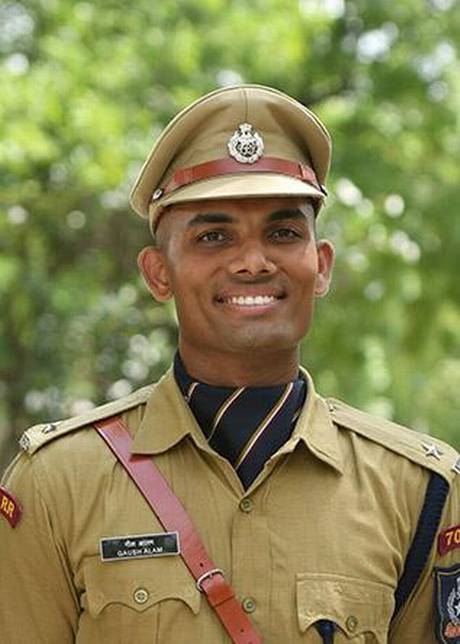
Gaush Alam
Gaush Alam

Gaush Alam, an IPS probationer allotted to Telangana cadre, has been adjudged the best all-round probationer.

An alma mater of IIT-Bombay, Mr. Alam would receive the Prime Minister’s Baton, Home Ministry’s Revolver and the Vice President of India’s Trophy for exemplary performance, apart from six other trophies during the Dikshant Samaro.

A native of Gaya district in Bihar, Mr. Alam was brought up in New Delhi. He worked with a multinational company in Bengaluru after completing his B.Tech in Mechanical Engineering from IIT-Bombay. “A year after working with a private company, I started preparing for civil services examination and got selected in my first attempt. Soon, I joined the academy in 2017,” he said. His father served in the Indian Army as Subedar.

“I have completed two years of training at the NPA and will join the Telangana cadre soon. I am quite excited about my new posting,” he said adding that he would miss the training days. Another IPS probationer Richa Tomar, who bagged 1973 Batch IPS Officers’ Trophy for the Best All-round Lady IPS probationer, was a nursing mother when she got selected for the services and joined the premier police academy.

“Shivansh (her son) was one year old when I joined the academy. I have struggled a lot to fulfil my dream of joining the civil services,” she said.

Hailing from Hassanjiwani, a small village near Baghpat in Uttar Pradesh, Ms. Tomar completed her M.Sc (microbiology). “Before clearing the UPSC examination, I worked in DANIPS (Delhi, Andaman and Nicobar Islands Police Service) and my husband is also an ACP in New Delhi,” said Ms. Tomar, who has been allocated to Rajasthan cadre.

“The training here is rigorous and challenging and my major focus after joining the cadre would be to prevent crime against women and children,” she said.

The Second Best All-round IPS Probationer of 2017 batch, Palash Chandra Dhali, is still wondering how his parents got the courage to enrol him in English-medium school, even being daily-wage labourers.

“My father, Pravhas Dhali, was a construction worker, and we used to live in Odisha. He enrolled me in an English-medium private school, which I believe has helped me in completing my engineering and clearing the civil services examination,” he said.

The IPS probationer hails from West Bengal and has been allotted home cadre. He worked with the NTPC and Indian Telecom Service before joining the NPA.

source: http://www.thehindu.com / The Hindu / Home> News> Cities> Hyderabad / by Abhinay Deshpande / Hyderabad – August 22nd, 2019

How Shah Jahan connects Bhopal, Delhi, and England

DELHI / Bhopal, MADHYA PRADESH :

How two rulers with a common name left a rich history and culture for its people but one is more renowned than the other.

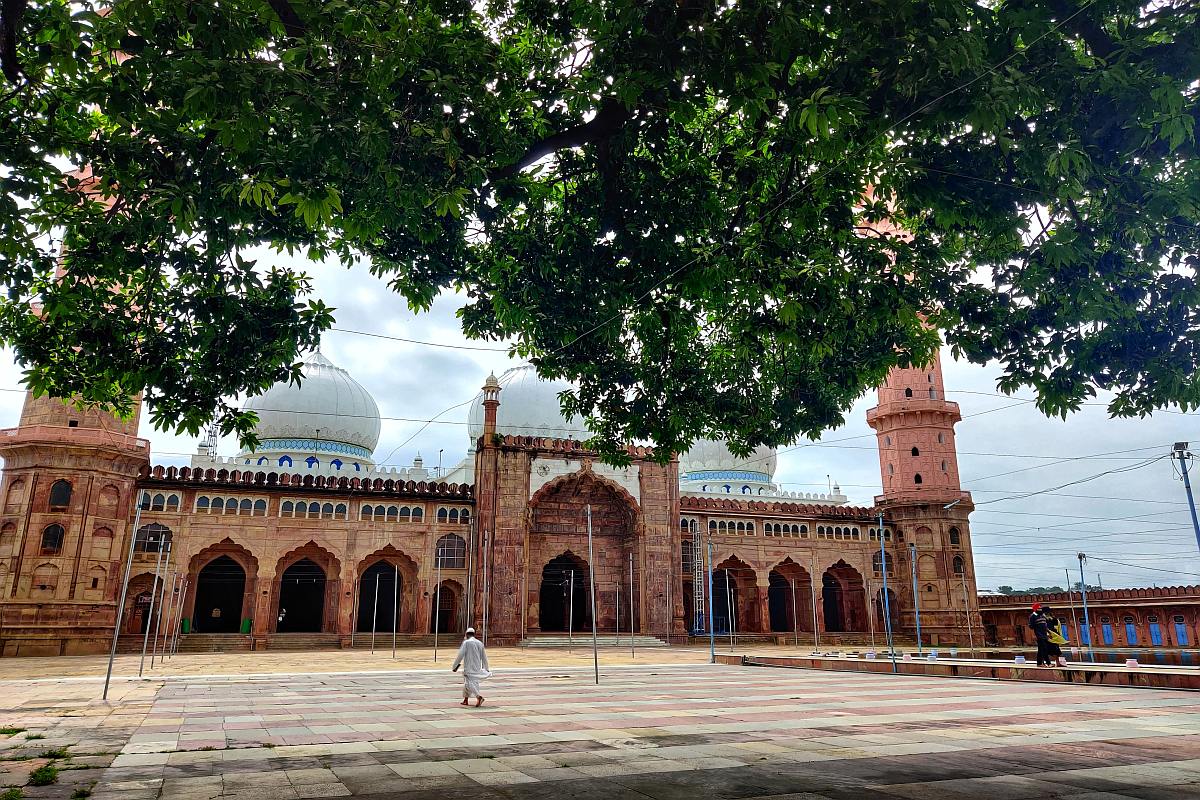
Taj-ul-Masajid, Bhopal (Photo: SNS/Aena Thakur)

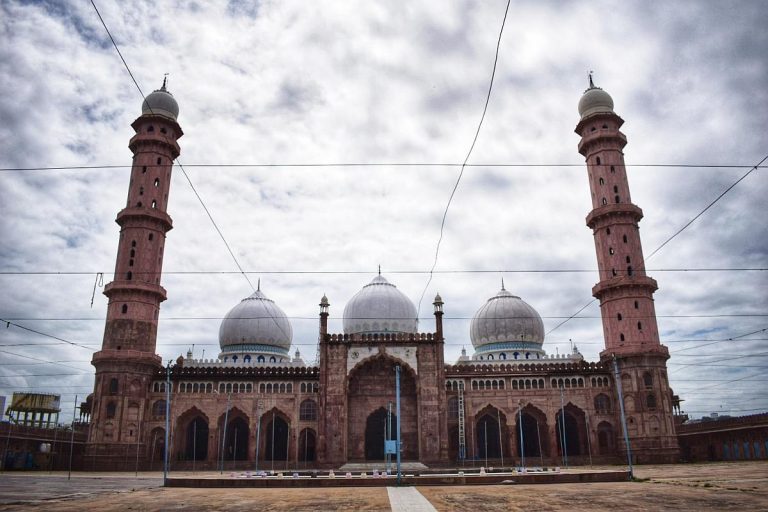
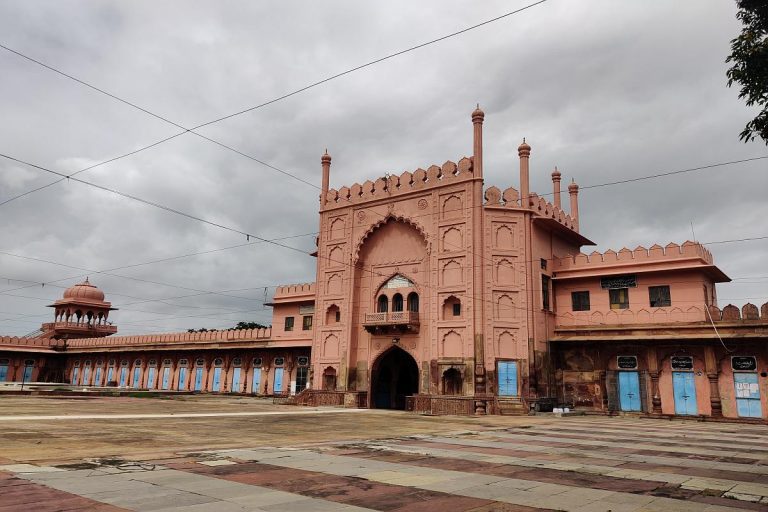
In the heart of Madhya Pradesh’s capital city, Bhopal, resides Taj-ul-Masajid which literally translates to the ‘crown of mosques’. The mosque was intended to be the largest mosque in the country and was based on the design of Delhi’s Jama Masjid. In a town called Woking in England stands a mosque called Shah Jahan.

The common denominator between these three mosques is the name Shah Jahan. The fifth Mughal emperor Shah Jahan built the Jama Masjid in Delhi and the third female ruler of Bhopal, Shah Jahan Begum built Taj-ul-Masajid of Bhopal. The Bhopal’s matriarch went a step ahead as she also funded the construction of England’s first Mosque in 1889.

Taj-ul-Masajid (Image: SNS/Aena Thakur)

In the 19th century when India was a British colony, the princely state of Bhopal had a string of female rulers for roughly 107 years. The city was founded in 1707 by Afghan ruler Dost Muhammad Khan. Surrounded by Rajputs in Rajasthan and Marathas in Maharashtra, Bhopal was a vulnerable state yet the female rulers with their loyal allegiance to the British rule survived the turbulent times.

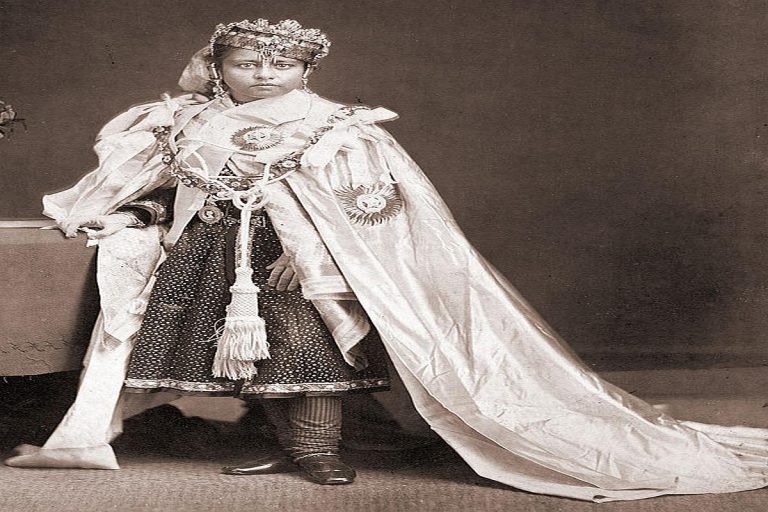
The female dynasty of Bhopal started with the death of young Nawab Nazar Muhammad Khan. His 18-year-old wife Qudsia Begum decided that the legacy of her family shall continue and declared her 15-month-old daughter Sikandar as the rightful heir of the state. In 1819, Qudsia Begum became the first Muslim female who defied the veil and became the ruler of Bhopal. Her rule was legitimised by the British and the clergy.

Both Qudsia (1819-37) and Sikandar (1847-68) were known to be tough rulers who strengthened Bhopal’s military and trained themselves to fight. However, it was the third matriarch of Bhopal, Shah Jahan Begum who brought in the period of flourishing art and culture just like her male Mughal namesake.

Unlike Qudsia and Sikandar, Shah Jahan was not known for her tough training for battles. Shah Jahan followed the system of veil and was more interested in literature, poetry, and arts.

Shah Jahan Begam of Bhopal (Image: Wikimedia Commons)

Interested in Urdu and Persian poetry, Shah Jahan Begum also offered state pensions to poets like Amir Minai, a contemporary of Mirza Ghalib.

Shah Jahan Begum ordered that a dictionary of select terms in Hindustani, Persian, Arabic, Sanskrit, English, and Turkish was compiled to facilitate translation of literature between these languages. A poet herself, Shah Jahan Begum also patronized a group of female poets. According to Siobhan Lambert-Hurley’s book Muslim women, Reform and Princely Patronage, these gifted women included “Hasanara Begam ‘Namkeen,’ author of a diwan and two prose publications, Munawwar Jahan Begam and Musharraf Jahan Begam, the daughters of Nawab Mustafa Khan ‘Shefta,’ and several others.”

In her book, Siobhan Lambert-Hurley also mentions, “Shah Jahan’s interest in this area was so great that she charged a male poet at her court, Abul Qasim ‘Muhtasham’, to devote himself to collecting an anthology of female poets writing in Persian. Entitled Akhtar-i-taban, it publicized the work of 81 poetesses when it was printed in Bhopal in 1881 in dedication to the ruling Begam.”

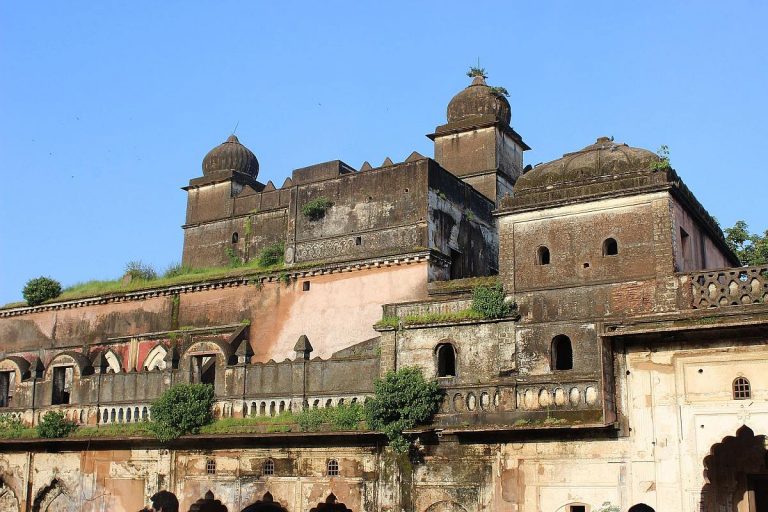
Her ambitions for grand architecture is evident from the fact that her daughter Sultan Begum in her biography mentioned that she has lost count of the number of palaces and buildings, her mother made. Some of the prominent buildings that still remain are Taj-ul-Masajid, Taj Mahal, Ali Manzil, and Benazir.

Taj Mahal, Bhopal (Image: Wikimedia Commons)

Unlike Mughal emperor, Shah Jahan’s Taj Mahal which is a tomb, Bhopal’s Taj Mahal was a palace for the Begum. Shah Jahan Begum also helped orientalist and scholar Dr Gottlieb Wilhelm Leitner in constructing England’s first mosque which is also called the Shah Jahan mosque.

The similarities do not stop here. Just like the Mughal emperor built a planned city named Shahjahanabad, the Begum too built a neighbourhood with the same name. Hurley mentions in her book, “Shah Jahan was also responsible for building an entirely new neighbourhood of homes and offices within her capital that was predictably named Shahjahanabad. Unlike the version at Delhi, however, it was laid out on a uniform plan in-keeping with the latest ideas of town planning in Britain.”

Taj-ul-Masajid, Bhopal (Image: SNS/Aena Thakur)

Shah Jahan Begum of Bhopal encouraged female participation in education, religion, and culture. She was responsible for setting up institutions for female education, she reserved areas in mosques for veiled women to pray on special occasions, she also constructed a Pakka bazaar exclusively for women.

Shah Jahan Begum’s daughter Sultan Jahan Begum was the last Begum of Bhopal whose reign ended in 1926. The reign of female rulers in Bhopal broke stereotypes and brought in various reforms in the princely state. Even though women still continue to fight for their rights it should not be forgotten that the Begums did assert their authority in the 19th century and it can be done again.

source: http://www.thestatesman.com / The Statesman / Home> Features / by Aena Thakur, New Delhi / August 20th, 2019

Syed Husain Bilgrami: An English scholar in Nizam’s court

HYDERABAD :

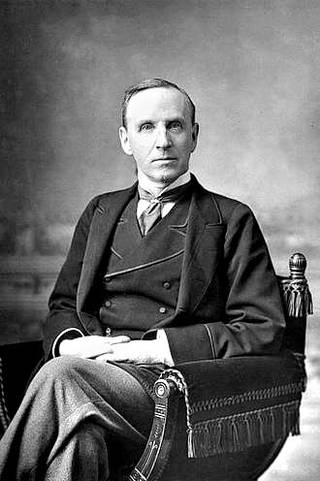
Torch bearer Syed Husain Bilgrami, Special arrangement

Apart from holding high ranking positions in Nizam’s dominion, Syed Husain Bilgrami was also made a member of the Secretary of State’s Council, in London.

Nawab Imad-ul Mulk is a familiar name in the annals of Hyderabad’s 19th century history. He was a noted educationalist, civil servant, prominent administrator and a noted scholar in the Nizam’s dominions. He was private secretary to Salar Jung I, the then Prime Minister of Hyderabad State; also a tutor and conscience keeper of the Nizam — Mahboob Ali Pasha — whose government he served with great distinction. For his dedication for work, strength of character and extraordinary mastery over English language and literature, the British government also utilised his services on many occasions. He had the rare honour of having served as member in the Secretary of State’s Council .He also had the distinction of having met along with Salar Jung I, Queen Victoria at Buckingham Palace in London.

Nawab Imad ul Mulk was the title that the Nizam bestowed in recognition of the services he rendered, with which he was well known in Hyderabadi circles; but his actual name was Syed Husain Bilgrami.

Syed Husain Bilgrami was born in 1844 at Gaya, where his father held high position under the East India Company administration. He was educated at the Presidency College, Calcutta from where he graduated in English literature. In 1868 he became a Professor at the Canning College in Lucknow before joining the service of the Nizam of Hyderabad in 1873. It was the time when Salar Jung I the Prime Minister of Hyderabad state was looking for English educated young men to be appointed in Hyderabad to modernise the administration and to improve educational facilities in the dominions. In 1872, Salar Jung while on a visit to Lucknow, met young Syed and was attracted to his intelligence and demeanour. He was invited to join the Hyderabad service, which he did the next year. For his impeccable English, both spoken and written, Syed Husain was taken as the private secretary to Salar Jung. The rest of his long career was irrevocably bound with Hyderabad.

The story goes that when Salar Jung asked Syed where his family originally hailed from, he answered, ‘Bilgrami’ (in the then United Provinces). The Prime Minister in a lighter vein suggested that Bilgrami could as well be added to his name and thus he became Syed Husain Bilgrami.

Bilgrami’s rise to prominence in Hyderabad was due to his sheer work as an educationalist. As the first Director of Public Instruction (1875- 1902) he initiated several reforms to improve the educational set up in the state. He was instrumental in the establishment of the Nizam College with English medium, with Dr Aghoranath Chattopadhyay, (father of Sarojini Naidu) as its first Principal. It is said that Bilgrami was the person who discovered the genius in Chattopadhyay, the first Indian to obtain D. Sc in Biochemistry from Edinburgh University. The College was affiliated to Madras University as there was no University in the Hyderabad dominions by then. Bilgrami was for some years taken by the government of India, as a member of the Universities Commission, a forerunner of the present UGC. In Hyderabad, he established Madarsa- i- Aizza, a school exclusively for the children of the nobles with a view to make them cultured and more responsible towards society. A crowning achievement of Bilgrami in the furthering of education in Hyderabad was the establishment of a girls school in 1885 with his personal funds. This was hailed as one of its kind in the country as the girls were taught besides usual subjects, needle work, household duties etc. English, besides Urdu and Arabic, was made the medium of instruction. To make girls from traditional families attend school, bullock carts with curtains were arranged to fetch them to school and back home.

In Hyderabad state, with a view to foster industrial growth, Bilgrami established three Industrial Schools at three important towns in the state, Aurangabad, Warangal and Hyderabad, which later grew to be Engineering Colleges. The State Central Library in Hyderabad also owes its establishment to the untiring efforts of Syed Husain Bilgrami.

Bilgrami was also a prolific writer in English and his books include Historical and Descriptive Sketches of His Highness, the Nizam’s Dominions, in 2 volumes, and A Memoir of Sir Salar Jung I. Besides, he had also composed several poems.

Lord Morely, the Secretary of State for India, who took Bilgrami as a member of his council.

The career graph of Syed Husain Bilgrami reached its zenith when he was made a member of the Secretary of State’s Council, in London. After the Liberal Party came to power in Great Britain in 1906, the new Secretary of State for India, Lord Morley, along with Lord Minto, the Viceroy of India wanted to initiate certain administrative and legislative reforms which ultimately resulted in the passing of India Councils Act of 1909 ( popularly known as Morley-Minto Reforms). For the task of formulating the reforms, Morley took two Indians as members to his council. The first was Syed Husain Bilgrami, who from the days of his first visit to England accompanying Salar Jung way back in 1876, had maintained friendship with several high ranking British political leaders of his time like Disraeli, Lord Salisbury, Gladstone etc. The other Indian appointed to the council by Morley was Krishna G Gupta, a senior ICS officer. Bilgrami thus played a key role in the passing of the first ever Constitutional Act of 1909.

Indian ayahs

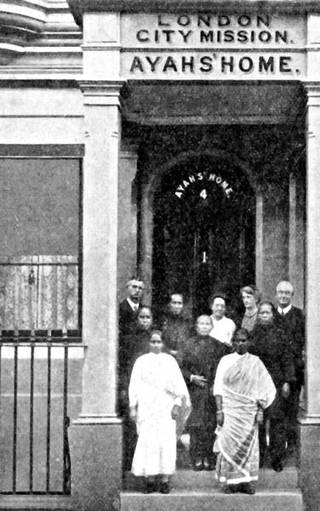
As a member of the Council of the Secretary of State for India, Bilgrami once made history by protesting the pitiable and callous attitude to Indian ayahs and other caretaker women who had been abandoned by their British employers. Many British officials in those days, employed Indian ayahs to look after their children on the long voyage from India to Britain and the employer was to provide for their passage home. But many a time those ayahs were dismissed once they reach Britain and left to fend for themselves. Such conditions led even to the founding of a ‘Ayahs Home in East London’, where such abandoned destitute ayahs were temporarily provided with food and shelter.

Ayas House / special arrangement

In May 1908, an Indian ayah Meera Sayal from Bombay arrived in London with a British family that was returning home. But she was abandoned by the family on the busy Kings Cross road in Central London, with a mere one pound in hand. The matter was brought to the notice of the India Office in London by the manager at Ayahs Home. The British authorities were of the opinion that Indian ayahs had no legal remedy in the absence of any written agreements that they would be taken back to India and quoted a precedent when the India Office in London in a similar case in 1890 had declined to take any action.

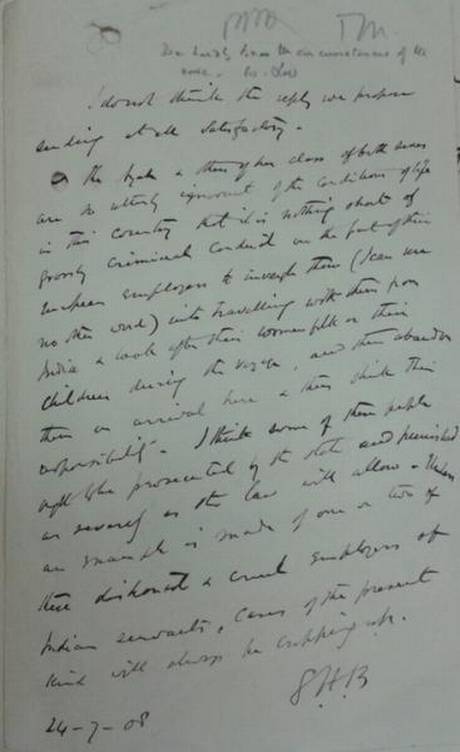
The protest note Bilgrami wrote as a member of the council of Secretary of State for India.

But Syed Husain Bilgrami, as a member of the Secretary of State’s Council felt hugely outraged and immediately wrote a strongly worded resentment on “the dishonest and cruel European employers inveighing Indian servants to travel with them and abandoning them on arrival in Britain”. This bold stand of Syed Husain Bilgrami reflected how he was a man of lofty principles and high ideals with a strong sense of duty and impeccable uprightness. This letter dated July 14, 1908, had been quoted in many future complaints of the Asian caretakers against British employers that ultimately led to the betterment of Indian ayahs going with British families to London.

After returning from England in 1909, Bilgrami spent his retirement in Hyderabad in a villa on the slopes of the iconic Naubath Pahad, overlooking the waters of Hussain Sagar and died in 1926, aged 82. Bilgrami had four sons and all of them were brilliant as they excelled in their different chosen fields. Nawab Sir Mehdi Yar Jung Bahadur, the Education and Finance member in Nizam’s administration and who led a delegation to the Round Table Conference in London in 1930 -31, as a representative of the Nizam, was one of Bilgrami’s sons. Yar Jung as the Vice-Chancellor of Osmania University, had hosted the 5th session of the Indian History Congress (IHC) in 1941. Today Bilgrami’s progeny has a network that is spread across all the continents. Prof. Akeel Bilgrami, the California=based renowned academic intellectual, is one among the high-profile, large Bilgrami family.

source: http://www.thehindu.com / The Hindu / Home> Society> History & Culture> Hyderabad Heritage / by K S S Seshan / August 19th, 2019

I have no regrets: Indian tennis great Akhtar Ali

Kolkata, WEST BENGAL :

A member of India’s Davis Cup teams from the late 1950s to the mid 1960s, Ali holds an enviable 9-2 win-loss record in the tourney – rated as the World Cup of the sport.

Akhtar Ali (R) at a club event in Kolkata. (Photo | Twitter)

Kolkata :

Notwithstanding his failing health and advanced age, India’s celebrated tennis player and legendary coach Akhtar Ali still keeps a keen eye on the courts of the eastern metropolis to spot and guide budding talent. Now a 80-plus veteran, Ali leads a simple life, spending time with his grandchildren and has little hesitation in saying: “I have no regrets”.

A member of India’s Davis Cup teams from the late 1950s to the mid 1960s, Ali holds an enviable 9-2 win-loss record in the tourney – rated as the World Cup of the sport. Proficient in both singles and doubles, he has played alongside the country’s legends like Ramanathan Krishnan, Naresh Kumar, Premjit Lall and Jaidip Mukerjea.

Later, as a coach, he guided the creme de la creme of Indian tennis — Ramesh Krishnan, Vijay Amritraj, Anand Amritraj and Leander Paes. Even Sania Mirza once publicly expressed her indebtedness to Ali for having set her on the right track during her formative years.

As a player, Ali grabbed the limelight in 1955, when he first claimed the Junior national title, and continued his wonderful show to reach the semi-finals of the Junior Wimbledon.

The Davis Cup stints till bring tears to his eyes as Ali turns emotional and nostalgic.

“In 1964, I went to Lahore to play the Davis Cup. Myself, S.P. Misra and Gaurav Misra. Four matches we won, one match could not be completed due to bad weather,” he recalled during an interview with IANS.

But it is India’s 3-2 victory over Brazil in 1966 on his South Club home ground that Ali cherishes the most, though he did not get to play any of the matches.

“The Davis Cup was a big thing in those days. I was a member of the Davis Cup squad. When India beat Brazil, that was a big moment and that is the lasting memory I have. That was the first big tie we won and we reached the final,” he said.

The Brazil victory and his son Zeeshan Ali’s success as both a tennis player and coach keeps coming back as one converses with him.

“I have no regrets. I am very attached with the 1966 Brazil win. My son is also a national champion and Davis Cup coach. There is no other family in the world which has a father-son duo to have played and also coached Davis Cup teams”.

In fact, the International Tennis Federation confirmed this in 2013.

Talking about his success as a coach, Ali said: “I enjoy coaching and I work hard. I have produced the maximum national champions and Davis Cup players. I also coached Belgium and Malaysia. I went to the best coaches to learn,” said Ali, who got the coveted Arjuna Award in 2000.

He leads a disciplined and routine life in a nicely done-up South Kolkata flat.

“After I wake up, I do my namaaz. Then I go to the club (South Club). I go to the Saturday Club also. Then I come home, have my lunch and if there is bank work, I do that.

“I lead a simple life. I go to South Club again and help the players. I am not coaching anybody at the moment because I am not well. But I help BTA (Bengal Tennis Association) in finding promising players. That keeps me busy. I love coaching. I enjoy it.

“I go to bed early. Sometimes my grandchildren come over and I spend time with them. It’s good fun,” he recalled, satisfaction ringing in his voice.

However, notwithstanding his high spirits, Ali has recently had his bouts of illness.

“I had lost eight kilos. My hand was shaking and it was tough for me. I took a lot of medicine. I saw the doctor. Doctor told me this was due to old age.

“I am much better now. I am pulling on. I am fit. I train light and can run a little bit” he said.

India’s recent performance in Davis Cup, a tournament in which the country finished runners-up thrice in the past, may not be that noteworthy, but Ali is optimistic.

“We have talented youngsters, but they have to work very hard,” he maintained.

source: http://www.newindianexpress.com / The New Indian Express / Home> Sport> Tennis / by IANS / August 18th, 2019