Category Archives: Amazing Feats

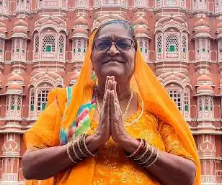
Mysuru’s Bibi Fatima: A Kickboxer’s Journey of Determination

Mysuru, KARNATAKA :

HIGHLIGHTS

Overcoming a childhood marked by hardship and societal rejection, 20-year-old Bibi Fatima has emerged as a formidable kickboxer, winning multiple accolades at the national and international levels.

Mysuru:

Overcoming a childhood marked by hardship and societal rejection, 20-year-old Bibi Fatima has emerged as a formidable kickboxer, winning multiple accolades at the national and international levels.

Fatima, who has been training in kickboxing for 12 years, has secured 29 gold medals in district, state, and national championships. Despite a hand injury, she recently won two silver medals in an international tournament held in New Delhi.

Fatima’s journey is a testament to perseverance. Her father abandoned the family two decades ago due to the absence of a male heir. Left destitute, Fatima’s mother attempted to end her life, but the family was taken in by Akram Pasha, a transgender beggar in Mysuru. Pasha adopted Fatima and supported her education and training, earning a living through alms to sustain the family.

Currently pursuing her secondary education, Fatima dreams of representing India in the Olympics. However, financial constraints hinder her aspirations. She hopes to open a kickboxing training centre to support herself and provide for Pasha, who continues to pay rent for both their accommodations.

Recognising her achievements, members of the M. Friends Charitable Trust from Mangaluru, led by Rashid Vitla, visited her home to extend financial assistance and encouragement. Social organisations and sports enthusiasts have been urged to come forward and support Fatima in achieving her dreams.

source: http://www.thehansindia.com / Hans India / Home> News> State> Karnataka> Bengaluru / by Rasheed Vitla / Hans News Service / March 12th, 2025

Private Breeding Farm in Telangana Rears Goats of Imported Breeds

Bhoothpur Town (Mahbubnagar District), TELANGANA :

Anwar, a native of Bhoothpur town in the Mahbubnagar district, opened a private goat breeding farm in his native town in 2018, with the intention to rear goats of different breeds.

A private goat breeding farm in Telangana has been rearing goats of different breeds with utmost care. Anwar, a native of Bhoothpur in the Mahbubnagar district, opened a private goat breeding farm in his native town in 2018, with the intention to rear goats of different breeds.

They include African Boer, a breed developed in India after being imported from South Africa, Mewati of Haryana, Hyderabadi and other domestic and foreign breeds of goats.

The farm has been developing new breeds by mating a male goat of one breed with a female goat of another breed.

In a first of its kind in the state, the farm has implemented a cage system, where the goats are kept in cages according to their breed. The cage system is built on a plastic floor with holes three to four feet height from the ground for the disposal of waste from the goats. The cage system is built in a way that helps keep the cages clean and the goats safe from diseases, Bhoothpur animal husbandry development officer Madhusudan said.

In order to develop a new breed, one male goat has to mate with female goats of three generations. The process takes almost two-and-a-half years depending upon the preparedness of the female goat to mate with the male.

“We bought goats and sheep from different places and performed some experiments in which we succeeded. We are not selling them as we aim to supply the best breeds to the farmers. It is a costly procedure but we are doing it for the farmers,” Anwar told News18.

The farm has been mating breed couples such as Mewati – Sojat, Mewati – Hyderabadi, Domestic breed – African Boer and so on.

Anwar told News18 that he has spent Rs 25 lakh on the farm so far. Currently, the farm has 160 goats, but Anwar aims to rear as many as 10,000 goats on his farm.

source: http://www.news18.com / News18.com / Home> English edition / by Mohd Rafi Ahmed Ahmed / April 01st, 2024

Small Traders Emerge as Models of Financial Discipline in Bidar

Bidar, KARNATAKA :

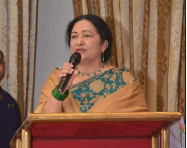
Abdul Jabbar Siddiqi, a key leader of Karunya Society, addressing the event titled Community Connect Mission & Vision in Bidar

Bidar:

In a remarkable example of ethical finance and grassroots development, small and medium traders in Bidar have demonstrated exemplary financial discipline by repaying their loans promptly and in full. This achievement, driven by the Karunya Society’s interest-free microfinance programme, was celebrated at a recent city event titled Community Connect Mission & Vision.

Abdul Jabbar Siddiqi, a key leader of Karunya Society, revealed a striking figure – 98% of loans issued to small traders have been repaid on time. To him, the statistic is more than a financial milestone; it reflects the honesty, sincerity, and perseverance of the beneficiaries.

“These traders were once trapped in debt cycles with exploitative moneylenders,” Siddiqi said. “Today, they are finally enjoying the full rewards of their hard work.”

Karunya Society operates 47 branches nationwide, disbursing nearly ₹1.25 crore in loans each day and supporting around 1.25 lakh families.

Branch head Mujtaba Khan detailed the local outcomes: over the past seven years, around 3,500 families in the district have benefitted from ₹60 crore in business loans and ₹2.4 crore in emergency hand loans. Beneficiaries – such as Panchsheela Garments, Pramila Tailor, Ravi Kani Footwear, Shiv Kumar Udaygir, and Faheem Qureshi – shared heartfelt testimonies of how the programme transformed their livelihoods.

Karnataka Minister for Municipal Administration and Hajj, Rahim Khan, praised the effort, admitting he had doubts when the society launched seven years ago.

“Many banks were struggling back then, and I wondered whether this interest-free model could survive,” he said. “But its growth and impact are nothing short of a miracle.” He commended the society’s volunteers for their selfless service, noting none take personal profit.

Former Managing Director of Bidar District Credit and Cooperative Bank, S. Kudre, underlined the programme’s significance, pointing out that many interest-based microfinance institutions are now in crisis. “An interest-free society with 3,500 active members thriving like this shows the model works – and India needs it now more than ever,” he said.

Dr. Abdul Qadeer, Chairman of Shaheen Group of Institutions, urged affluent community members to deposit surplus funds into Karunya Society to enable more interest-free lending. Similarly, Jamaat-e-Islami Hind’s city president, Mohammed Muazzam, proposed opening of a new branch in Bidar’s New Town to widen the reach.

Karunya Society’s model is proving to be more than a financial service – it is a movement built on trust, compassion, and shared prosperity. By empowering small traders to escape debt traps and build sustainable businesses, it offers a credible, humane alternative to conventional interest-based finance.

source: http://www.radiancenews.com / Radiance News / Home> Latest News / by Mohamed Atherulla Shariff / August 13th, 2025

Jahangir Shaikh: A guardian of unclaimed dead bodies

Solapur, MAHARASHTRA :

For most people, social activities is defined as work carried out by people with the aim of alleviating the living conditions of those people in a community suffering from social deprivation. They strive for helping the poor and deprived people to live a better life. By this definition, it also implies that social work is for the living.

But what about people who are dead?

This question, and the answer to it, is what makes Jahangir Shaikh, a 47-year-old resident of Solapur, an exception. His social activity starts after he finds an unclaimed dead body. Once he discovers an unclaimed body, he assumes its guardianship and lays the body to its final abode.

“Initially I started to give gusl (bath) to unclaimed Muslim bodies on the request of Police. Later, I started doing it for people of other religions too”, Jahangir shares his journey of the past ten years; about a cause rarely undertaken by people.

Jahangir, a devout Muslim, first received a phone call in 2007 from a Muslim policeman who knew he can give gusl to unclaimed dead body. Jahangir had rushed to the spot and completed funeral right of a fellow Muslim.

“That was the first instance after which devotion for performing last right of unclaimed body arose inside me and thereafter I made it a duty to attend such bodies”, he recalls.

Jahangir’s strange choice of social work iniitally caught people by surprise, but he never doubted his commitment. “People disliked my work and they would treat me as an inferior individual but that did not stop me from carrying out the work that I supposed as my duty. I would pray to the almighty to strengthen me so that people’s objections do not hold me back,” Jahangir says, when talking about the initial days.

His family also strongly objected to this kind of work but he managed to convince them to allow him to continue doing it.

“I told them that I don’t do it for earning money; burying these bodies gives me pleasure as I became a guardian for them. They felt awkward initially, but gradually they got accustomed “, Jahangir explains how he convinced his family.

Till today Jahangir has performed last rites of as many as 1,600 people, out of which 1,400 were non Muslims. As he is used to of giving gusl, he is also called by people for giving gusl to their relatives. In return, they give him hadiya (gift).

But one might wonder; what is his main profession and source of living? For that, he cooks food in social functions. However, he is always on his toes when he gets to know about any unclaimed dead body either at a hospital or the police station.

Jahangir’s dedication to what he called his ‘duty’, and his sincerity towards this soon made him famous in Solapur. He started receiving phone calls from police stations and hospitals for burying unclaimed bodies. His amazing sense of kindness towards the unattended also moved many people; a few years ago, a young Muslim businessman Salman Shaikh took notice of his noble service and donated a second-hand Ambulance to help him carry out the work more efficiently.

“I was impressed with his dedication towards the work. The charred and blood-soaked bodies that a normal man don’t even look at, he would offer them a bath and bury them”, a bewildered Salman explains why he donated ambulance to him.

However, a couple of years after he got the ambulance, it met with an accident while carrying a body of little girl. This damaged the vehicle substantially and Jahangir too was injured in the accident. However, this did not break his determination and he bought two ambulances on loan and again started his service to the community. He got support from his son, who took a loan to buy an ambulance for Jahangir.

With some likeminded friends, he also formed the Baitul maal Shifa Committee through which he raises fund by collecting zakat (compulsory charity) or sadqa (voluntary charity) from people. However, he does not use this fund for performing last rites. Instead, he and friends pay money from their pockets for funerals and use the fund raised for poor patients admitted in hospitals.

“We use collected fund to help patients in buying medicines and other medical expenses”, Jahangir says with cheerful face.

When asked if police or hospitals pay him for carrying and burying bodies, he says, “They give Rs 300 but we give this money to the boys who help in carrying bodies to ambulance and dig holes for burial.”

For other expenses related to performing last rites: kafan (white cloths) and attar (perfume), Jahangir and his friends spend money from their own pocket.

His dedication has led to many people offering him voluntary service whenever needed. Currently, his Shifa committee has some active members: Gulam Shaikh, Zainuddin Nadaf, Sameer Shaikh, Daula Kumthe, Babulal Phaniband, Rashid Chaudhari and Shakila Shaikh are always ready to join hands with Jahangir.

Irfan S.M, a social activist and an educational personality from Solapur has nothing more than praises for Jahangir for his distinguished work.

“He is into this task of voluntary work and selfless service to humanity, it is really remarkable. Thousands of people are engaged in different social and religious activities but this is unique. There should be one Jahangir in every city”, Irfan says.

Imran Inamdar contributed to this story

source: http://www.twocircles.net / TwoCircles.net / Home> Indian Muslim> Youth / by A Mirsab, TwoCircles.net / October 07th, 2016

Khalid Jamil becomes Indian men’s football team coach on two-year contract

PUNJAB / KUWAIT / Mumbai, MAHARASHTRA :

After confirming his appointment a few days back, AIFF has announced that Khalid Jamil has signed a full-time two-year contract to be the Indian football team coach.

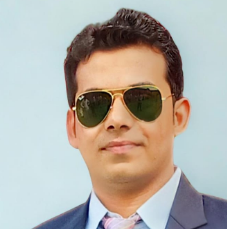
The AIFF has announced that Khalid Jamil will be a full-time coach for the Indian men’s football team. Image: AIFF

Former midfielder Khalid Jamil has signed a full-time two-year contract to be the new Indian men’s football team coach, the All India Football Federation (AIFF) confirmed on Wednesday. Jamil, who was Jamshedpur FC’s coach in the Indian Super League (ISL), was picked as the top candidate by the AIFF Executive Committee on 1 August , but both parties were yet to agree on terms.

“I am both deeply proud and immensely privileged to have been entrusted with the responsibility of leading our national team,” Jamil said in an AIFF media release on Wednesday. “Over the years, I’ve had the opportunity to train Indian players, and I’ve grown to understand their strengths and weaknesses intimately.

“These insights will be fundamental to everything we do as we prepare for the CAFA Nations Cup and the upcoming crucial Asian Cup Qualifiers against Singapore.”

Jamil to start tenure with CAFA Nations Cup

Jamil was picked by the AIFF ahead of India coach Stephen Constantine and Slovakian tactician Stefan Tarkovic. He will be the first Indian to coach the men’s national team after Savio Medeira in 2012.

The first training camp for the Indian football team under Jamil will start on 15 August at the Dravid-Padukone Centre for Sports Excellence in Bengaluru. The list of probables is expected to be announced soon.

Jamil’s first assignment as India coach will be the CAFA Nations Cup, where India are set to face hosts Tajikistan (August 29), IR Iran (September 1) and Afghanistan (September 4) in Group B.

In the October FIFA Window, India are scheduled to play AFC Asian Cup 2027 qualifiers against Singapore (October 9 and 14).

Jamil’s coaching and playing career

While he doesn’t have the experience of coaching a national team, the 48-year-old has had an extensive management career at the club level, coaching Jamshedpur FC, NorthEast United FC, Aizawl FC, East Bengal FC, Mohun Bagan AC and Mumbai FC. With Aizawl FC, he won a historic I-League title in 2016-17.

He also helped Jamshedpur reach the Kalinga Super Cup 2025 final and the semi-finals of the ISL play-offs 2024-25.

As a player, he played 15 times for India, after making his debut in the 1997 SAFF Championship in Nepal, which the Blue Tigers won.

In his club career, Jamil won the National Football League, two Federation Cups and two IFA Shields with Mahindra United.

He also played for Air India and Mumbai FC. In the Santosh Trophy, Jamil represented Maharashtra, with whom he won the title in 1999.

source: http://www.firstpost.com / FirstPost. / Home / by FP Sports Desk / August 13th, 2025

AMU Scholar to Receive Kerala State Literary Honour

Valanchery Munnakkal (Malappuram District), KERALA /Aligarh, UTTAR PRADESH :

Dr Munawar Hanih, an ICSSR post-doctoral researcher under the mentorship of Professor T.N. Satheesan, Dean, Faculty of Arts, Aligarh Muslim University, has been selected for the 2023 Mahakavi Moinkutty Vaidyar Mappila Kala Akademi Literary Award

Aligarh:

Dr Munawar Hanih, an ICSSR post-doctoral researcher under the mentorship of Professor T.N. Satheesan, Dean, Faculty of Arts, Aligarh Muslim University, has been selected for the 2023 Mahakavi Moinkutty Vaidyar Mappila Kala Akademi Literary Award, instituted by the Mahakavi Moinkutty Vaidyar Smarakam under the Department of Culture, Government of Kerala.

He is being honoured for his scholarly work Malayala Sufi Kavitha, a significant contribution to the study of Mappila literature and arts.

The award will be presented at a ceremony in September 2025.

Dr Hanih holds an MA and PhD in Malayalam from AMU’s Department of Modern Indian Languages and has served as Assistant Professor of Malayalam at Sir Syed College, Taliparamba, Kerala.

source: http://www.radiancenews.com / Radiance News / Home> Pride of the Nation> Awards / by Radiance News Bureau / August 14th, 2025

AMU students develop innovative delivery drone prototype

Aligarh, UTTAR PRADESH :

Students of AMU with their delivery drone prototype

Aligarh :

Showcasing creativity and technological ingenuity, a team of final-year students from the University Polytechnic, Faculty of Engineering and Technology, Aligarh Muslim University (AMU), has developed a Delivery Drone Prototype, a promising step towards autonomous aerial delivery systems.

Guided by former Principal of University Polytechnic, Prof. Arshad Umar and Dr. Tanveer Hasan, Associate Professor at the Polytechnic, the student team comprising Saubaan Ahmad Siddiqui, Ehtesham Ahmad, Shabab Khan, Ankit Tomar, Anas Khan, Muzaffar Hussain, and Omaan Ahmad Ansari successfully carried out six autonomous delivery missions within the university campus over a span of two months.

Equipped with real-time video streaming, autonomous navigation, gesture-controlled backup, and a custom dashboard to track flight data and delivery paths, the drone highlights the university’s commitment to hands-on, interdisciplinary learning.

This initiative is part of AMU’s larger vision to promote student-led innovation and applied research in emerging technologies. The project has received wide appreciation in academic circles for its relevance to real-world logistics, emergency response, and smart campus solutions.

Although this is a prototype for academic use, the team plans to enhance the system with AI-based object detection and an expanded operational range, reflecting the university’s emphasis on innovation-driven education and future-ready skills.

source: http://www.awazthevoice.in / Awaz, The Voice / Home> Stories / by Aasha Khosa, ATV / July 28th, 2025

Afrin becomes 1st from AMU to cross English Channel

Aligarh, UTTAR PRADESH :

In a momentous first for Aligarh Muslim University (AMU), Afrin Jabeen, a B.P.Ed. student, has scripted history by becoming the first-ever AMU student to successfully swim across the English Channel.

Aligarh Muslim University: 

In a momentous first for Aligarh Muslim University (AMU), Afrin Jabeen, a B.P.Ed. student, has scripted history by becoming the first-ever AMU student to successfully swim across the English Channel.

Afrin braved the frigid waters at 11°C and fierce currents on July 29, 2025 to complete the solo one-way swim from Dover (UK) to Cap Gris-Nez (France) at a stretch of 34 kilometers in 13 hours and 13 minutes, beginning at 3:45 AM London time.

This remarkable feat places her in the elite ranks of international endurance swimmers and brings immense pride to AMU, her home state West Bengal, and India at large.

Who is Afrin Jabee?

Rising from a modest background in Paschim Medinipur, Afrin’s journey is a stirring testament to perseverance, discipline, and unyielding ambition. Even before this feat, she had already distinguished herself as a formidable open-water swimmer.

She represented Vidyasagar University three times at the All-India Inter-University Aquatic Championships, competed twice for West Bengal at the national level, and conquered demanding long-distance swims spanning 13 kms, 21 kms, and 24 kms.

Her most remarkable pre-AMU achievement was securing 2nd position among girls in the world’s longest swimming event—an 81 kms marathon in the Ganges.

“Historic Milestone”

As a student of AMU, Afrin’s triumph is not only personal but also a historic milestone for the university.

Flanked by her proud brother, Adil Mohmmad (a PhD student in the Department of Chemistry at AMU) and her sister-in-law, Rizwana Yasmeen (a Gold Medalist in Nanotechnologty at AMU), Afreen, holding the Indian flag, expressed with thrill, “I am happy to have brought joy to my nation, University and family, who always support me in pursuing my dreams.”

AMU Vice Chancellor Prof. Naima Khatoon hailed her achievement as a moment of “collective celebration and pride.”

She said that Afrin’s extraordinary spirit will inspire generations of AMU students. “She has initiated a journey that will be taken up by many more talented students at AMU”, she said.

“Remarkable Achievement”

Prof Ikram Husain, Dean, Faculty of Social Sciences and the Chairperson, Department of Physical Education congratulated Afrin Jabee for her remarkable achievement and expressed hope that her education at AMU will ensure many more such laurels in her life.

Prof Vibha Sharma, Member Incharge, Public Relations Office, said that Afrin and her brother are still in the UK and they will be back to Aligarh soon. She congratulated them on phone and conveyed the best wishes on behalf of the university fraternity.

In Afrin, AMU has found a new icon, a daughter of Aligarh who swam into history, carrying the university’s name across nations and into global acclaim and offers great promises for future in sports.

source: http://www.ummid.com / Ummid.com / Home> Education & Career / by ummid.com news network / August 02nd, 2025

Kerala-born entrepreneur Shaikh Mohammed is Kyrgyz major general

Kozhikode, KERALA / KYRGYZSTAN :

Man from Kozhikode left state at young age, visited last in 2007.

Kozhikode:

Kerala-born entrepreneur Shaikh Rafik Mohammed, 42, has been appointed Major General of Kyrgyzstan, in a first for an Indian in the Central Asian country.

Mr Mohammed assumed the prestigious post in the presence of defence minister Ali Mirza at an official ceremony held in Kyrgyzstan. He holds Kyrgyzstan nationality, conferred by former President Kurmanbek Saliyevich Bakiyev, whom he had met in his late-20s while working in Iran.

Mr Mohammed, who heads Gammon Middle East in Saudi Arabia, used to be an adviser to Kyrgistan President and the latest appointment is in recognition of his contributions to the country, sources in Dubai said.

Rafik, known as Rafi here is the son of Late Abdul Hameed and Fathima of Eravannur, 12 km from Kozhikode. He had studied up to Class VII at local AMPL School, Eravannur. According to his sister Rukhiya K.M, Rafik left for Mumbai at the age of 20 and then to Gulf. “We are all elated by his elevation to the prestitgious post. He called us on Saturday and we spoke a lot. Mr Mohammed’s last visit to Kozhikode was in 2007,” Ms Rukhiya told this newspaper. Mr Mohammed, who has an Iranian wife, has made it big from a humble background. His father was a fisherman and struggled to make two ends meet.

Mr Mohammed’s neighbour and distant relative, Mr Azis Master U.P., says he maintains a warm relation with his birthplace. “It was Rafik who gave ’25 lakh for the construction of a madrasa recently. Similarly he will reach out to anyone in time of need,” Mr Azis master said.

Sources said that Mr Mohammad keeps cordial relations with major political leaders of Kerala. He holds Kyrgyzstan nationality conferred by its former President Kurmanbek Saliyevich Bakiyev whom he casually met in his 20s while working in Iran. Later, he became the adviser to Mr Bakiyev.

Dubai reports said Mr Mohammed, after selling the successful project to the Iranian government, went to Kyrgyzstan and presented a similar project to Mr Kurmanbek, then a governor who was preparing to contest presidential elections.

After Kurmanbek won the election, he appointed young Rafik as his chief adviser – a milestone in his career.

He developed wide network of friends in the Central Asian country, which has witnessed a rapid flow of foreign investment and reversal of socialist mode of development to a capitalist mode of production, reports said.

source: http://www.deccanchronicle.com / Deccan Chronicle / Home> Nation / by Amiya Meethal / January 02nd, 2017

1965 War: A Tale of War and Three Brothers

Mangrol (Gandhinagar District), GUJARAT :

About 28 years ago, I learnt one of the most fascinating tales of what military rivalry between India and Pakistan has meant for some families.

At a dinner party in New Delhi, an elegant gentleman walked up to me and asked if I was serving in the Indian Army. My haircut perhaps gave this away, as I answered in the affirmative (I was then an instructor at the Indian Military Academy, Dehradun). When I enquired if he had any military connections, he replied ‘yes’; his two elder brothers had both been officers. To this, my natural response was, “What were their regiments?” He then said with a sad smile, “Let me tell you a story.”
 
And this was the story he narrated to me:

Several years earlier, he had run into the Pakistani military attaché, Brigadier Beg, in India at a circuit house (Dak Bungalow) while driving on the Delhi-Ahmedabad highway. Apparently the attaché had upset him earlier in the day with his lack of road manners, and when informed of the same, to make up, the Pakistani Brigadier invited him for a drink. During the course of their conversation, and on learning that his guest (the gentleman who was narrating the incident to me) was an Indian Muslim, the Pakistani Brigadier said to him that it was only in the 1965 war that he learnt that Muslim officers were also serving in the Indian Army.
 
(The Indian Army’s armoured (tank) units had made substantial gains in fierce battles in the Sialkot sector of Pakistan’s Punjab. Many well known armoured regiments were part of India’s 1st Armoured Division’s thrust lines, such as Poona and Hodson’s Horse, 2nd Lancers, 3rd, 16 and 18 Cavalry. Many thought it was only a matter of time that Sialkot would fall to Indian troops, as Pakistan’s Armoured Division, despite its apparently superior tank units, was in retreat. Pakistan’s commanders desperately needed a tactical break to regain some of the momentum of battle.)
 
It was at this stage of the war—around 8 September 1965—that the Pakistani Brigadier, then a young Lieutenant, was summoned by his Brigadier Commander. He was asked plan and undertake a commando raid that would take him into Indian frontline positions around Sialkot. His task was to eliminate one or more Indian tank commander(s). This would leave that Indian unit briefly without a commander and give Pakistan that brief window of opportunity to break through India’s formidable frontline.
 
So this Pakistani officer (then a Lieutenant, now a Brigadier) set about preparing for the raid, to sneak in amongst Indian tanks, during darkness, and kill an Indian tank commander who was giving Pakistani troops a rough battle. So, on 8/9 September before dawn, Lieutenant Beg sneaked into his target area as Indian tanks were preparing for another day’s battle around Sialkot. (In those days, in the absence of night vision devices, tank battles were largely fought during day light). He soon identified a Squadron Commander’s tank, and climbed atop it unnoticed in the loud roar of tank engines as they were warming up for battle.
 
Peering inside the open cupola, he saw a Major in his radio headset who was poring over his maps, planning for another day’s battle. With no time to lose, Lieutenant Beg shot the Indian Major through the head. But before leaving the wounded Indian officer, Lieutenant Beg decided to take along some proof of having accomplished his mission. He quickly unbuttoned the shoulder flaps of  the Indian Major, and pulled out the cloth epaulets of his ranks from his shoulders. On this was also embroidered ‘16 CAV’, the title of his regiment. And in the breast pocket of the Major, he also found a holy pendant that some Muslims carry on them as a good luck charm. His job done, this young Lieutenant with his raid party then quickly crossed back over into the territory that Pakistani troops were still holding onto, before dawn broke.

Lieutenant Beg then immediately went to see his Brigade Commander, who had sent him on the raid. He met him in the early hours of the morning, where he proudly reported that he had accomplished his mission. His Brigade Commander asked him if he had any proof of it. The young Lieutenant pulled out the epaulettes of the rank badges of the Indian Army Major he had shot, and handed it over to his Brigade commander. Then he suddenly saw the Brigadier become tense. Lieutenant Beg said to the Brigadier that he had possibly killed an Indian Muslim officer, as he handed over the holy pendant he had recovered from the dead Major’s pocket. As an afterthought, he added that he was quite surprised that India’s army also had Muslim officers who were fighting with such commitment and valour against Pakistan.

At that point his Brigade Commander’s hands began to shake and he couldn’t control his emotions any more. His voice became heavy and his eyes filled with tears as he slumped into a chair. Lieutenant Beg asked the Brigadier, with due respect, what the problem was. In a voice choked with emotion, he replied: “Young man, I have just realised from the evidence you have provided that I had tasked you to kill my younger brother.” The Commander kept shaking his head and then went on to add, “I hadn’t the foggiest idea that it was the 16 Cavalry that was directly pitted against us, because Major MAR Sheikh, whom you have just killed, was my younger brother and one of its squadron commanders. And he was their only Muslim officer.” Lieutenant Beg could say little else, as he saluted and took his commander’s leave.

And when Lieutenant Beg finished telling this story to the man who had related it to me, this gentleman told the Pakistani officer, “Brigadier, it may surprise you to know that the two brothers you have spoken about were both older to me… I am the youngest of the three brothers.”

And as the Brigadier stared at him in disbelief, the narrator of this tale requested Brigadier Beg to visit his family home—which was only a few hour’s drive from where they were—to meet his aged mother, who had always wanted to meet someone who had fought against her son! When the Pakistani Brigadier met the old begum the next day (who didn’t know that her son had died of wounds inflicted by the Brigadier), she seemed pleased that the enemy thought well of him!

Records show that Major Sheikh died of wounds in his head sustained in battle near Sialkot on 10 September 1965. He was posthumously awarded the gallantry award of a Vir Chakra. His brother, the Brigadier, rose on to become a General in Pakistan.

source: http://www.openthemagazine.com / Open / Home> Web Exclusive / by Maroof Raza / August 27th, 2015