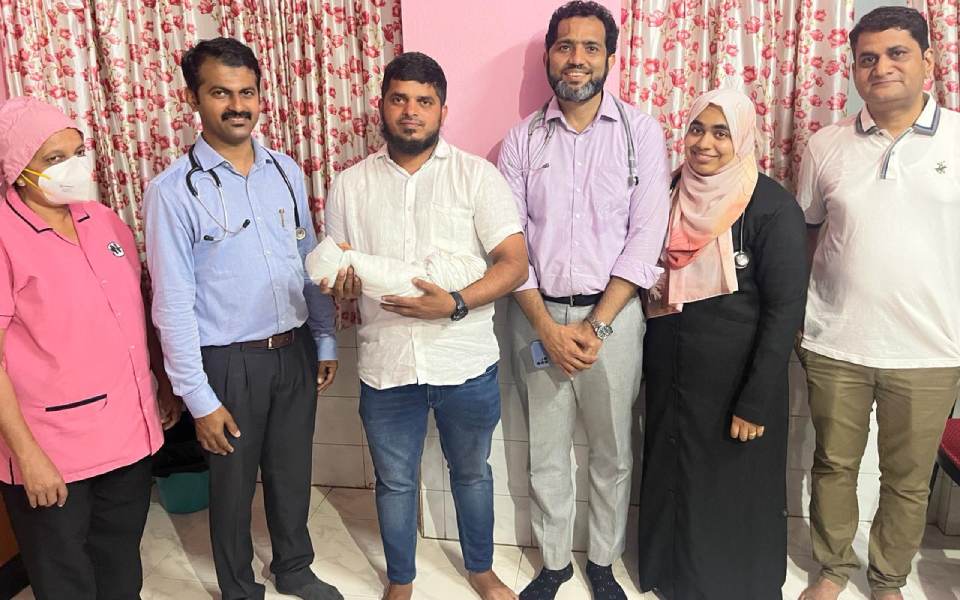
Dr Ayshath Safoorah Gynaecologist, Dr Muralidhar G K.. Fetal Medicine Specialist, Dr Abdul Bashith Pediatrician and Dr Preetham Tauro Pediatrician
Mangaluru:
In a remarkable medical achievement, an Rh ISO immunised baby was successfully discharged after undergoing multiple blood transfusions , including rare intrauterine blood transfusion.
Dr. Ayshath Safoorah,consultant obstetrician and gynaecologist at Lifeline Health Care plus falnir, recognizing the complications of the case, referred the expectant mother to Dr. Murlidhar( fetal medicine ) at Father Muller Hospital for ultrasound evaluation of foetal anemia.
After a thorough evaluation, Dr. Murlidhar carried out the intrauterine blood transfusion when the patient was in her 31st week of pregnancy.
The expectant mother, who came to Dr Ayshath Safoorah at 28th week of her pregnancy, faced complications due to antibodies present in her blood against the fetal blood cells ,along with increased blood pressure.
Three weeks following the intrauterine blood transfusion, the mother was induced at 34 weeks and delivered vaginally a preterm girl baby weighing 2.2 kg at Manglore Nursing home on 29th February . Both the mother’s health and the baby’s condition were closely monitored by the team of doctors at the hospital.
On Sunday, March 10, the newborn has been discharged.
What does positive Indirect Coombs Test mean?
When an Indirect Coombs Test is positive, it means that antibodies against red blood cells are present in the patient’s blood serum. The test detects these antibodies indirectly by mixing the patient’s serum with red blood cells of a known blood type. If antibodies in the serum react with the red blood cells, it indicates a positive result.
“In the context of pregnancy, a positive Indirect Coombs Test suggests that a pregnant woman has developed antibodies against the red blood cells of her unborn baby. This situation is often associated with Rh incompatibility, where the mother is Rh-negative, and the baby is Rh-positive.Injection Anti D is given after delivery to all Rh negative mothers to prevent this kind of iso immunisation,” Dr. Ayshath Safoorah told Vartha Bharati.
What is Intrauterine blood transfusion?
Intrauterine blood transfusion is a complex medical procedure performed during pregnancy to address severe fetal anemia. Through the procedure, the baby in mother’s womb is transfused blood.
Before the procedure, the mother undergoes thorough assessments, including ultrasound scans and blood tests. Continuous ultrasound guidance is used throughout the procedure to visualize the fetus, placenta, and the specific blood vessels involved. A thin, specialized needle is carefully inserted through the mother’s abdomen and into the amniotic sac, guided by real-time ultrasound imaging. The goal is to reach the umbilical vein of the fetus.
Once the needle is correctly positioned, compatible blood is slowly transfused into the fetus through the umbilical vein. The amount of blood transfused is carefully controlled to avoid overloading the fetal circulation.
“Prior to the intrauterine blood transfusion,the hemoglobin of the foetus was just 4 g/dl. While this situation presented complications of cardiac failure , our medical team implemented measures to ensure a smooth transfusion ,” Dr. Murlidhar who has handled cases of intrauterine blood transfusion during his practice abroad, told Vartha Bharati.
“Once the baby was delivered , she needed 2 exchange transfusions and one blood transfusion to combat the rising bilirubin levels due to hemolysis. Throughout the exchange blood transfusion, our medical team comprising Dr Preetham , faced challenges associated with the fluctuating and rising hemoglobin levels of the baby. The unexpected variations required vigilant monitoring and immediate responses to ensure the baby’s stability,” Dr. Abdul Bashith said while also adding that the team was overjoyed with the successful procedure and to see the baby and mother healthy.
Dr. Abdul Bashith also added that both mother and baby would require follow up at the hospital with their first visit being scheduled after 1 week .
Dr. Abdul Basith thanked and appreciated other members of the team including Manglore Nursing home NICU staffs and management, for their care and support.
source: http://www.english.varthabharati.in / Vartha Bharati / Home> Karavali / by Vartha Bharati / March 10th, 2024
Rahil Habibulla-led team trounce Hong Kong, China by 100 runs in the final of ICC Men’s U19 CWC Asia Division 2 Qualifier in Bangkok.
Muscat :
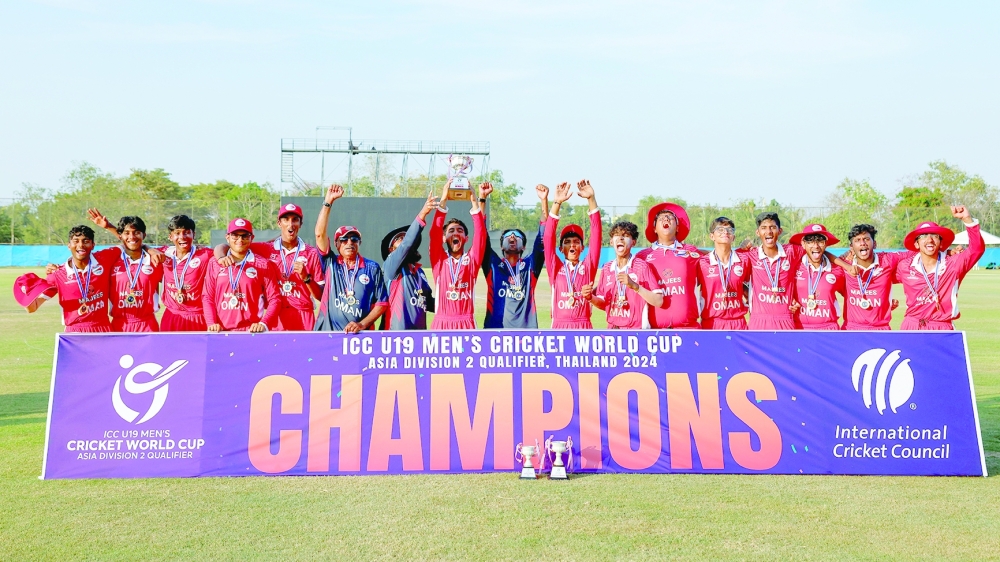
A dominating performance by Oman boys was capped with a spectacular victory in the final of the ICC Men’s U19 Asia Division 2 Qualifier as they routed Hong Kong, China by 100 runs at the TERD Thai Cricket ground in Bangkok, Thailand, on Tuesday.
Both Oman and Hong Kong, China, had already qualified for the ICC Men’s U19 Asia Division 1 ahead of the final. Tuesday’s victory for Rahil Habibulla-led Oman meant that the boys kept a clean slate in the tournament, winning a total of five games on the trot.
Rahil Daniyal Habibulla Of Oman receives the winning trophy during the Final of the ICC U19 Men’s Cricket World Cup Asia Division 2 Qualifier match between Hong Kong China and Oman held at the Terdthai Cricket Ground, Bangkok, Thailand on March 5, 2024. Photo by: Deepak Malik / Creimas RESTRICTED TO EDITORIAL USENitish Nadendla Of Oman receives Player of the Tournament award during the presentation of the Final of the ICC U19 Men’s Cricket World Cup Asia Division 2 Qualifier match between Hong Kong China and Oman held at the Terdthai Cricket Ground, Bangkok, Thailand on March 5, 2024. Photo by: Deepak Malik / Creimas RESTRICTED TO EDITORIAL USESaumya Bhavin Sampat Of Oman receives Player of the Match award during the presentation of the Final of the ICC U19 Men’s Cricket World Cup Asia Division 2 Qualifier match between Hong Kong China and Oman held at the Terdthai Cricket Ground, Bangkok, Thailand on March 5, 2024. Photo by: Deepak Malik / Creimas RESTRICTED TO EDITORIAL USE
In the final, Oman’s Saumya Sampat stood out with his all-round performance as he missed a half-century (48 off 80 balls) in the team’s total of 249/5 in the allotted 50 overs.
Saumya then excelled with the ball as he picked up three wickets for 25 to be deservingly named the player of the final as Hong Kong, China, were restricted to 149/9.
Opting to bat first, Oman, coached by Syed Aamir Kaleem, rode on two century partnerships to set up a total to defend.
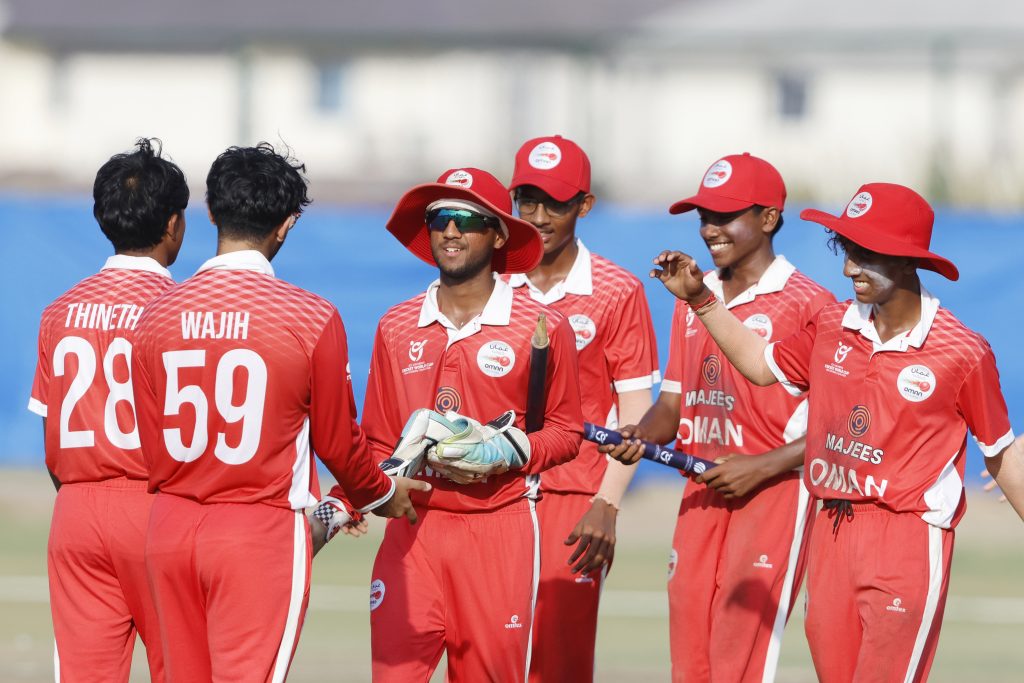
Oman players celebrate after winning the Final of the ICC U19 Men’s Cricket World Cup Asia Division 2 Qualifier match between Hong Kong China and Oman held at the Terdthai Cricket Ground, Bangkok, Thailand on March 5, 2024. Photo by: Vipin Pawar / Creimas RESTRICTED TO EDITORIAL USE
First, it was a 108-run second-wicket stand between Jeet Shah (50, 99 balls) and Saumya and then it was the unbroken 104-run sixth-wicket partnership between Nitish Nadendla (51 n.o., 35 balls) and Rohan Ramachandran (49 n.o., 53 balls) that saw Oman post a total of 249/5.
Both Rohan and Nitish took over the run-charge after the fall of Rahil in the 37th over and slammed more than 100 runs in the next 13 overs with ten boundaries and a six.
Harry Hodgson and Arya Panjwani claimed two wickets each for Hong Kong.
Chasing a tough target, Hong Kong stumbled early on as they were down to 17/2 in the fourth over. Two quick wickets by the tenth over had Hong Kong reeling at 45/4 with Saumya, Varshieth Dinesh, Puladith Ralalage and Prathiesh Ramesh among wickets.
Mathew Clayton fought a lone battle with a half-century (50) as Oman bowlers picked wickets at regular intervals to restrict their rivals to 149/9 in 50 overs.
Aarez Dar (28), Arya Panjwani (15), and Rishan Shah (18) were the only other batters to get to double digits.
Oman tried out as many as eight bowlers and seven of them were successful with Saumya taking three. Varshieth, Puladith, Arya Sampat, Prathiesh, Gaurav Dinesh and Rohan Ramachandran claimed a wicket apiece.
Earlier, Oman had topped Group B with three straight wins as they beat Saudi Arabia, Hong Kong, China and Bhutan to make it to the semi-finals. In the semi-finals, Oman got the better of Malaysia before coming up with yet another stellar display to keep their winning streak.
Oman’s Nitish Nadendla was adjudged Player of the Tournament for scoring 164 runs in 5 innings.
Brief scores: Oman 249/5 in 50 overs (Jeet Shah 50, Saumya Sampat 48, Rohan Ramachandran 49 n.o., Nitish Nadendla 51 n.o.; Harry Hodgson 2/45, Arya Panjwani 2/51) beat Hong Kong, China 149/9 in 50 overs (Aarez Dar 28, Mathew Clayton 50; Saumya Sampat 3/25).
source: http://www.thearabianstories.com / The Arabian Stories / Home> Sports News / by TAS News Service / March 05th, 2024
Oman’s cricket team, led by Rahil Habibulla and coached by Aamir Kaleem, clinches a significant win, eyeing greater successes in Division 1 competitions.
Oman Triumphs in Cricket: Rahil Habibulla’s Leadership and Aamir Kaleem’s Coaching Celebrated
Oman’s cricket team, under the stellar leadership of captain Rahil Habibulla and the strategic coaching of Aamir Kaleem, recently clinched a significant victory, marking a triumphant moment in their cricketing journey. This win not only celebrates the team’s collective effort but also highlights individual accolades such as Malaysia’s Mohammad Akram being named Batter of the Tournament and Kuwait’s Janath Herathliyanage winning Bowler of the Tournament.
Strategic Leadership and Team Dynamics
The victory was a result of meticulous planning, unwavering dedication, and the seamless execution of strategies developed over months of hard work. Rahil Habibulla, reflecting on the journey, emphasized the blend of youth and experience within the team. Leading a team with a majority of players facing their first international tournament, Habibulla’s leadership was pivotal in navigating through the challenges and steering the team towards victory. The support from the Oman Cricket Board was instrumental, providing the necessary resources and belief in the team’s potential.
Coaching Excellence and Team Performance
Aamir Kaleem, expressing pride in the team’s achievement, highlighted the adverse conditions under which the tournament was played. The hot and humid conditions posed a significant challenge, yet the team’s character and resilience shone through. Kaleem’s commendation of the team’s unbeaten streak underscores the comprehensive preparation and the adaptability of the players across all departments. The acknowledgment of Rahil Habibulla’s decisive leadership on the field further illustrates the symbiotic relationship between the captain and the coach, enhancing the team’s performance.
Looking Ahead: Ambitions and Gratitude
With this victory, Oman sets its sights on future glories, aiming to replicate and surpass their current achievements in Division 1 competitions. The team’s ambition is fueled by the support from the Oman Cricket Board and the guidance of Head Coach Duleep Mendis. The gratitude expressed by both Rahil Habibulla and Aamir Kaleem towards the board, the coaching staff, and the management underscores the collective effort and the supportive ecosystem that has been pivotal in reaching this milestone.
As Oman cricket celebrates this remarkable achievement, the journey ahead promises even greater challenges and opportunities. The dedication, talent, and spirit displayed by the team signify their readiness to face future competitions with the same zeal and determination. This victory not only marks a significant milestone in Oman cricket’s history but also lays the foundation for aspiring to greater heights in the international cricket arena.
source: http://www.bnnbreaking.com / BNN / Home / by BNN Newsroom / by Salman Akhtar / March 05th, 2024
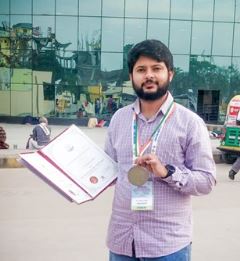
Rizwan Ahmad, a research scholar, working under the supervision of Prof. Moinuddin in the Department of Biochemistry at the Faculty of Medicine, Aligarh Muslim University has won the “Young Innovator Award-2023” from the Indian Academy of Biomedical Sciences, held at AIIMS, Patna.
Ahmad’s outstanding poster presentation, titled “Modified Fibrinogen Entraps Blood Cells and Induces Oxidative Stress, Leading to Deposition of Arterial Clot: Possible Pathway in Metabolic Disorder and Development of a Novel Biomarker,” secured the second prize.
His research sheds light on the effects of fibrinogen protein under diabetes-induced stress, potentially aiding in the early detection of metabolic diseases.
Ahmad also attained first prize in an oral presentation at a symposium organized by the Endocrine Society of India and third prize at the Hematology conference organized by the Department of Pathology last year.
source: http://www.indiaeducationdiary.in / India Education Diary / Home> National News> University News / by India Education Diary (headline edited) / March 05th, 2024
Prof Towqueer Alam, Department of Sunni Theology, Aligarh Muslim University has been appointed Editor of Fikr-o-Nazar, a quarterly literary and scholarly magazine published by the university, for a period of one year or until further orders, with immediate effect.
Prof. Falahi joined the Department of Sunni Theology as a lecturer in 1993 and became a professor in 2010. He has published about 35 books in Urdu, Arabic, English and Hindi, and more than 200 research papers in the journals of national and international repute.
He visited Mercer University, Atlanta USA in April 2016 as a Visiting Professor and travelled to UK, Iran, Kuwait, and USA to present lectures at international conferences.
The research areas of his interest are Quraniyat, Arabic Literature and Comparative Study of Religions.
source: http://www.radiancenews.com / Radiance News / Home> Latest News / by Radiance News Bureau / March 05th, 2024
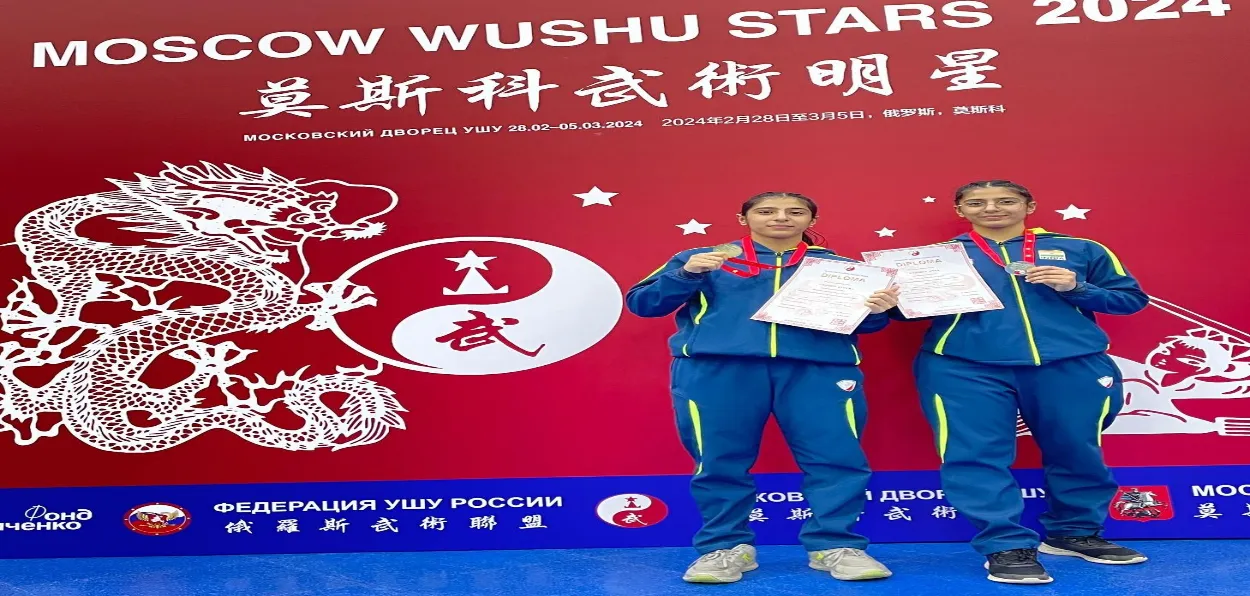
Kashmir’s Wushu Sisters, Ansa Chishti and Ayeera Chishti brought laurels to India by clinching Gold medals in the Russian Moscow Stars Wushu International Championship.
The ongoing championship started in Moscow on 28 February and will conclude on March 5, 2024.
Both players performed exceptionally in their respective weight categories of 52 and 56. They beat their Russian opponents in the finals and made their fans proud as well as the entire sports fraternity of J&K.
J&K Sports Council Chief Nuzhat Gull asked people to cheer the two bright women sportspersons fromthe Valley on X:
Both players performed exceptionally in their respective weight categories of 52 and 56. They beat their Russian opponents in the finals and made their fans proud as well as the entire sports fraternity of J&K.
This is the 3rd International medal for Ayeera as she won Gold in Georgia and Bronze in the World championship in Indonesia earlier. Now it’s 3rd consecutive medal in the international Wushu Championship and last year she was also shortlisted for the State Award.
Ayeera is the 1st Wushu Female Athlete who was shortlisted for this prestigious award. Similarly, Ansa, who won the 2nd Medal in the international Wushu Championship, had won Silver in the Georgia International Wushu Championship.
With today’s medal, she has won her 1st Gold medal in an international championship. Notably, both players are National Champions in their weight category as they won many medals in National championships.
source: http://www.awazthevoice.in / Awaz, The Voice / Home> Story / by ATV / March 04th, 2024
Shabnam Shabbir Shaikh of Aambijalgaon, Maharashtra, trashes stereotypes of Indian women. Having picked wrestling as her field, this 28-year-old woman has broken all the shackles that a girl child faces while growing up in a small village.
Hailing from the village Aambijalgaon, Karjat, of the district Ahmednagar Shabnam was born in Jammu where her father Shabbir Sarabhai Shaikh was posted in the Indian Army. She is the third child of her parents and she grew up seeing her mother Rizwana Begum looking after the house and the family. However, Shabnam’s father always wanted his daughter to be brave, self-reliant, and break social stereotypes.
A great votary of women’s education Shabbir Shaikh encouraged his wife Rizwana Begum to complete her MSc degree after their marriage.Due to her father’s frequent postings across the country, Shabnam did her schooling mostly at the Army schools in Ambala, Udhampur, Srinagar, and Ahmedabad. After her father’s retirement, the family settled in their native village and Shabnam joined the local school.
She joined the 11th class in the Dada Patil College, Karjat, in the science stream. despite an irregular and sluggish bus service to Karjat, she somehow managed to study and also attend coaching for wrestling.
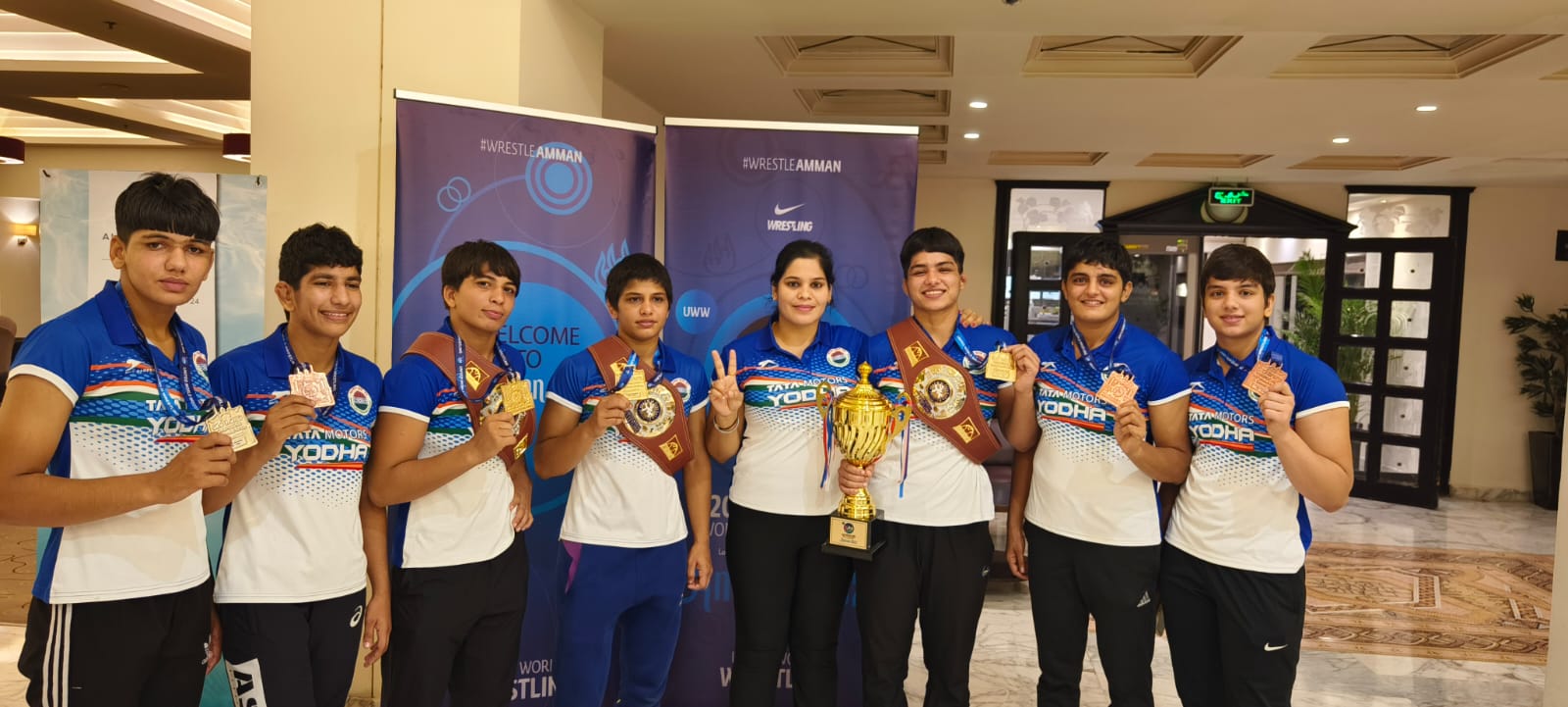
Coach Shabnam with her team
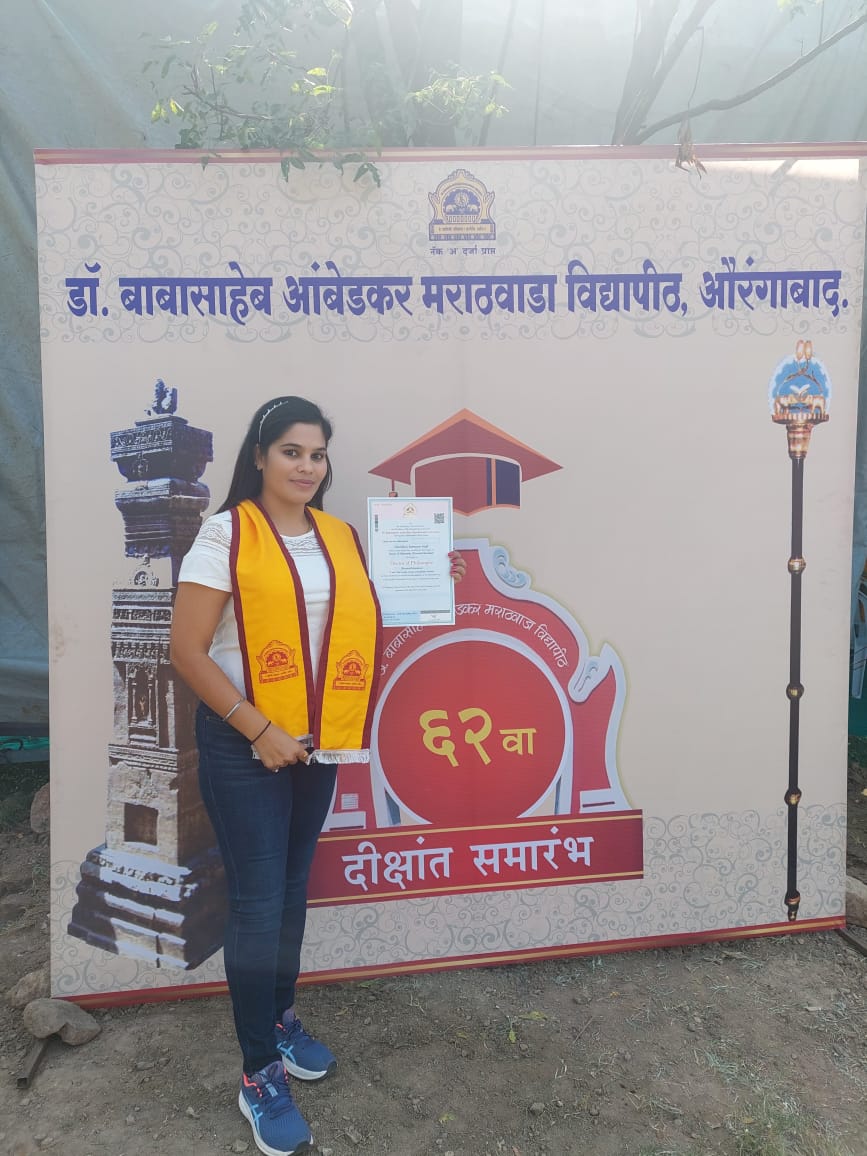
Shabnam completed her Bachelor of Physical Education (BPE) from Aurangabad (Sambhajinagar). She also got a diploma certificate in Coaching from the National Institute of Patiala, Punjab, and later did her Master’s from Babasaheb Ambedkar Marathwada University and then registered for her PhD studies.
Shabnam’s wrestling career began at the age of seven with her father as her coach. Shabnam says, “’My father is my first guru.”
Shabnam came from a family of wrestlers: her grandfather Sadarbhai Shaikh and great-grandfather were well-known wrestlers in the area. Their ancestral house has a wrestling arena where she watched male members of her family and neighbours practice wrestling.
Shabnam had to face the scorn and disapproval of her extended family and relatives when she started practicing wrestling. People even asked her family why she was allowed to wear shorts.
Shabnam at the convocation of the University
Shabnam started with Kabaddi, a game that requires a lot of alacrity and stamina.
Initially, she did not get to enter the arena where her brothers wrestled, so she took to Kabbadi. “I used to think that if I wrestle and win that will be my victory. Even if I lose, it will also be my failure. Will happen… I expressed my desire to wrestle to my father. He responded positively.”
Shabnam’s father had a precondition for training her. He wanted her to concentrate on training and practice for the first two years. She started receiving training from her father and two elder brothers.
Every morning at 4 o’clock she was sent to pick lemons from their farm located about 10 km away. She learned the nuances of wrestling and participated in her first competition in Ludhiana (Punjab). She bagged a silver medal and there started her winning streak.
Shabnam says, “Once in my village, my father came to know about a competition in Delhi. I was just 10 years old at that time. He gave me a paper with the address written on it and a train ticket and wished me good luck for the journey.”
At that time she wondered why she was going alone, ‘Why don’t my parents come with me? But my father always used to tell me that some battles in life have to be fought alone,” she says going down memory lane.
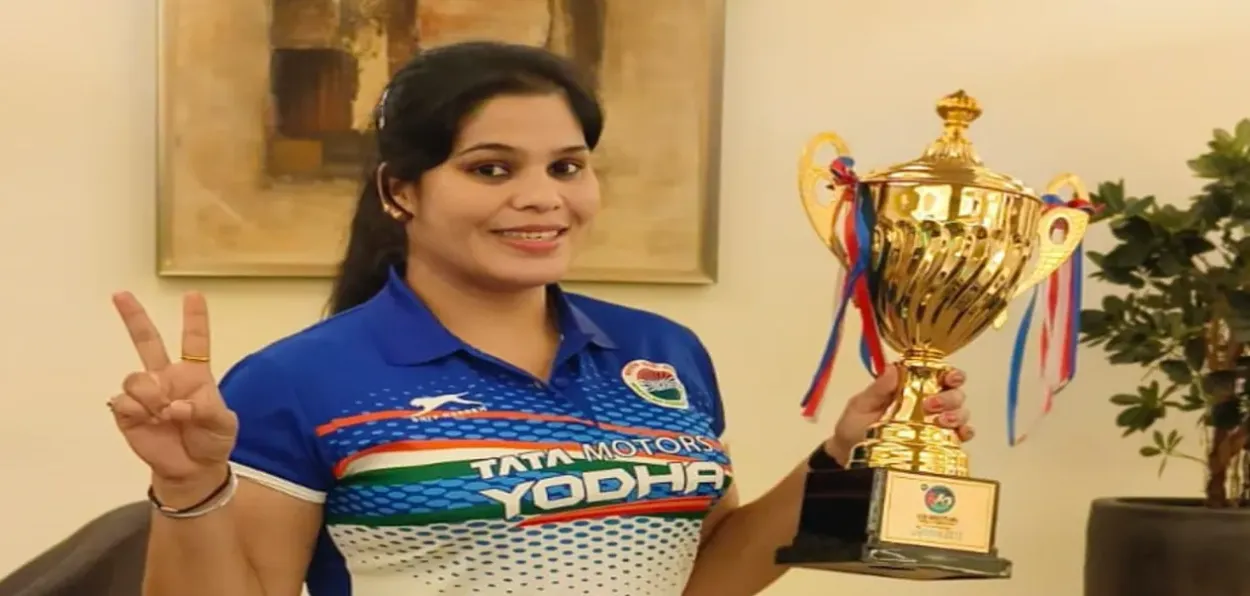
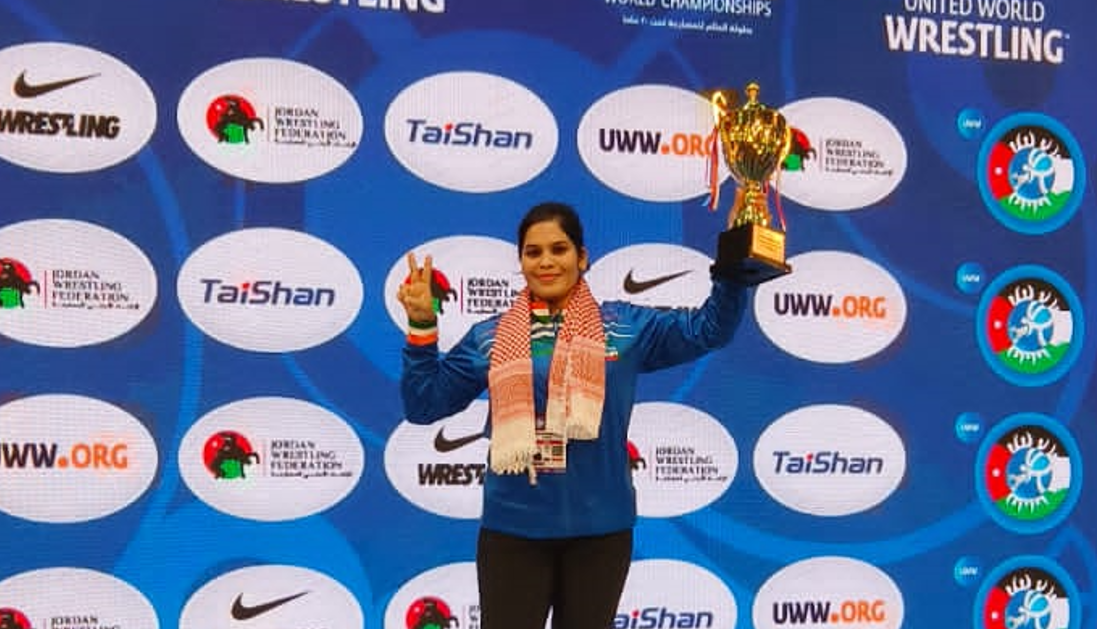
Shabnam Shaikh with her trophy
Shabnam won the title of ‘Women Maharashtra Kesari’ in 2010. She has won the gold medal in ‘Shirdi Kesari’ for three consecutive years since 2009, the gold medal in ‘Latur’ in 2011, gold medal in the ‘Maharashtra State Kustigir Parishad’ competition for six consecutive years.
She has also participated in four inter-university competitions, 10 national competitions, and more than 15 state-level competitions. In the national level ‘Great Bharatkumari Wrestling Competition’, Shabnam is the first winner not only from the Muslim community but also from Maharashtra.
Shabnam says her father taught her that one doesn’t need an outer veil. “Always keep the veil that differentiates between good and bad people in front of your eyes!” he told her.
Shabnam says, “People used to question my parents’ ways. A girl should not play sports like wrestling. Teach her to fast (during Ramazan) and pray. Don’t you want only boys to play wrestling? Hundreds of questions were asked but my parents did not let the pressure of society affect me.
“My father never changed his opinion under the pressure of society. He never let these things affect my game. I always got the support of my parents and my elder brothers.”
Shabnam’s mother Rizwana Begum says, “I have not two, but three ‘sons’! My brothers did not give me a share of our parents’ property. But, I will not let this injustice happen to my daughter. I will give her everything she deserves. Shabnam has brought glory to us. As a mother, I will always be proud of her.”
Shabnam’s thesis for her Ph.D. degree is ‘Comparative study of emotional maturity of rural and urban women wrestlers in Maharashtra’. She toured the entire state for research.
Shabnam is the first woman in India to do a doctorate in sports studies. While doing her Ph.D. in Wrestling, there were often deliberate attempts to embarrass and thwart her effort to earn a doctorate.
In the year 2017, Shabnam was selected as the junior coach of the Wrestling Women’s Association of India; she imparted wrestling training to Anushka Sharma and Salman Khan for the film ‘Sultan‘. Shabnam has represented India in Kazakhstan, and Uzbekistan.
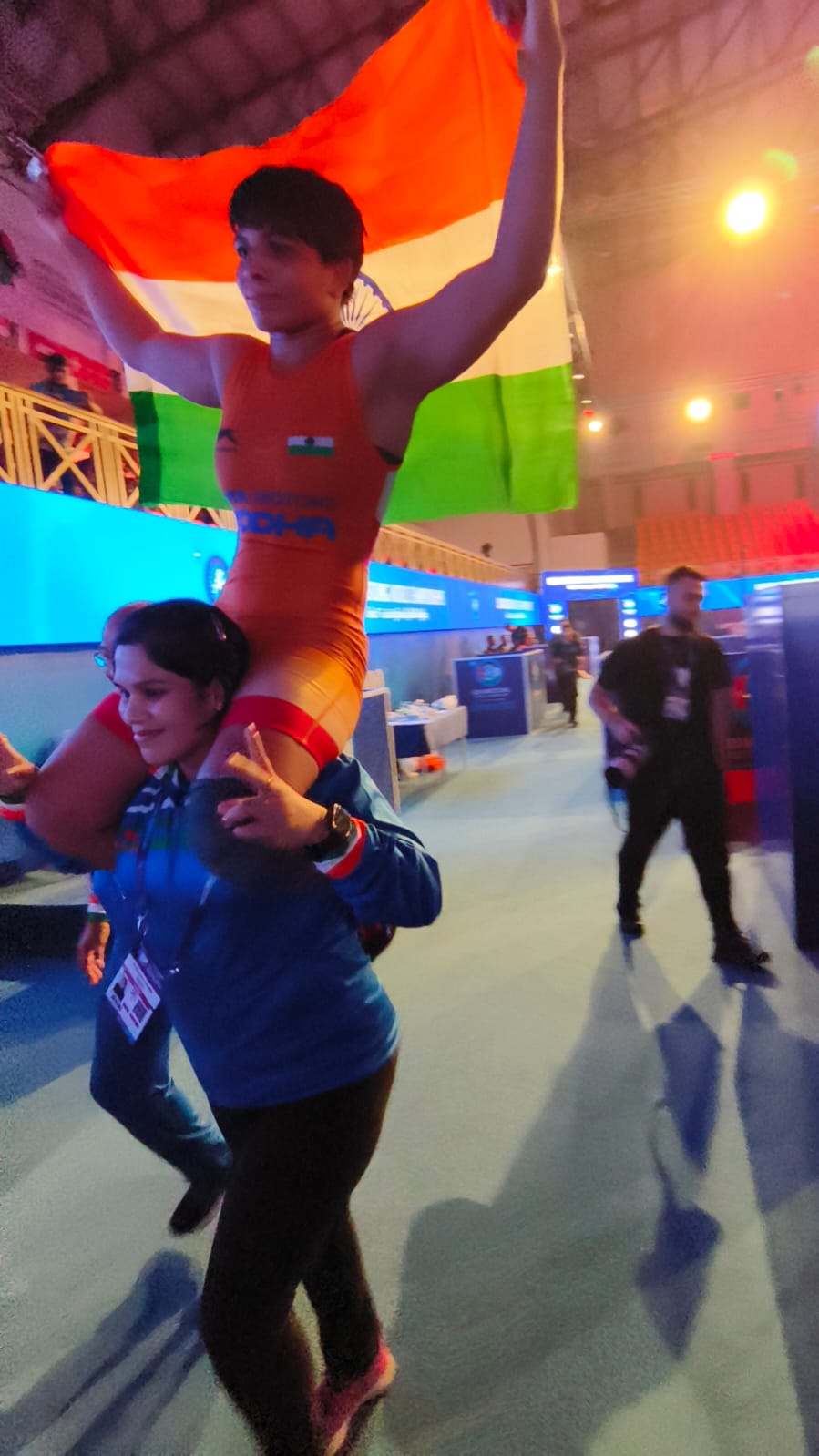
She currently works as a ‘Senior Trainer’ in the ‘Wrestling Women’s Association’ of India. India has never had success in the ‘World Women’s Wrestling Championship’ till now. However, in the ‘Under-20 World Championship’ of 2023 India won seven medals in ‘Women’s Wrestling’. Out of these, three are gold medals.
Shabnam Shaikh after her victory in a foreign location
Dr. Shabnam Shaikh is today known as the ‘International Wrestling Coach.
Shabnam says, “I was selected as the coach of ‘Maharashtra Team’ for the national tournament held in Gujarat last year. Twenty-four hours ago, my name was canceled! I was not given any idea about this.”
“Many times, despite having the right credentials and qualifications, I am not given a chance. Probably, because I live with self-respect! I always think that when someone asks me, “How did you get all this?’ I should proudly tell him, ‘I have earned it through my hard work.’
Shabnam says, “Wrestling gave me identity. Sometimes I wonder, ‘Is wrestling a curse or a blessing for me?’ Initially, relatives and other people of the society hated seeing me wrestle.
“Later, when I started winning competitions, people would post the news of my success on their ‘status’ on various social media platforms and write the caption, ‘Congratulations and best wishes to our sister or relative.’
After reading the news of my winning, I became everyone’s relative at that time! But, they speak against me on behind my back! However, now they hesitate to speak against me openly!”
Shabnam says, “Most of the time I am rejected for marriage. I play wrestling. The suitors who come to see as a potential candidate for marriage, see my trophies and see ‘Doctor’ written next to my name. When they go home their answer is, ‘We don’t want such an educated girl.'”
Shabnam continues to work hard to ensure that other girls do not face what she has.
Her advice to the youth: “No matter what happens, do not get tired. Do not give up the fight.” Her dream is to build a wrestling center for girls.
source: http://www.awazthevoice.in / Awaz, The Voice / Home> Story / by Chaya Kaveri / February 29th, 2024
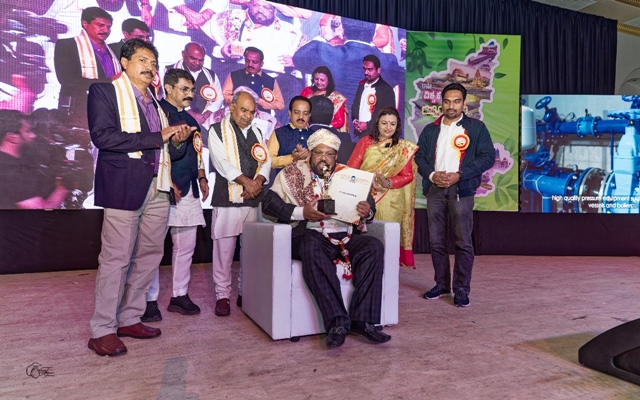
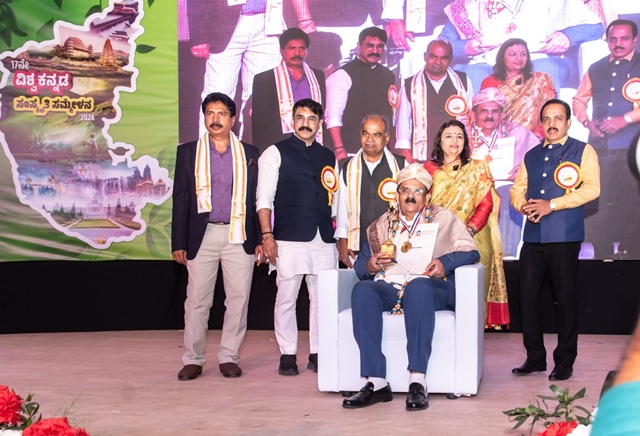
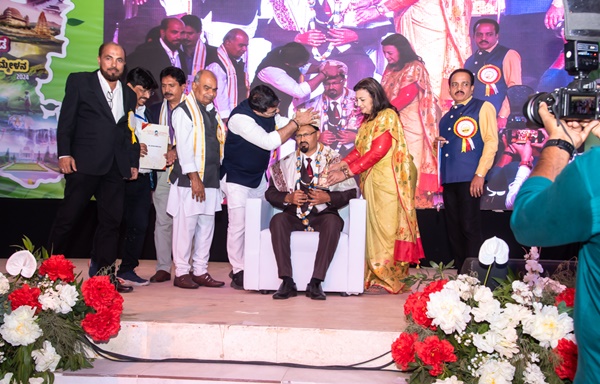
In a ceremony held on February 10 in Saudi Arabia, notable figures Zakaria Bajpe, CEO of Almuzain Gulf Saudi Contracting Co, K A Sheikh Karnire, director of operation at Expertise Contracting Co Ltd, and entrepreneur-social worker Sathish Kumar Anchan Bajal were honored with the Vishwa Manya 2024 award.
The recognition was part of the 17th World Kannada Convention, spearheaded by Sathish Kumar on February 8.
Zakaria, Sheikh Karnire, Rafeeq Soorinje, along with numerous workers, played pivotal roles in ensuring the success of the convention. Sathish Anchan, hailing from Pakkaladka Bajal Anchan’s House Kankanady, has been a compassionate figure, extending support to numerous financially disadvantaged families.
Born to the late Chandrashekhar Kundar Kodialbail and the late Sharada Anchan, Sathish faced early challenges, losing his mother at the age of three and being raised by his grandmother and uncle Raghava Anchan.
Sathish’s educational journey included primary schooling at St Joseph’s Higher Primary School in Bajal, secondary education at Rosario High School, PU at St Aloysius College, and a degree from St Aloysius Evening College.
source: http://www.english.varthabharati.in / Vartha Bharati / Home> Gulf / by Vartha Bharati / February 16th, 2024
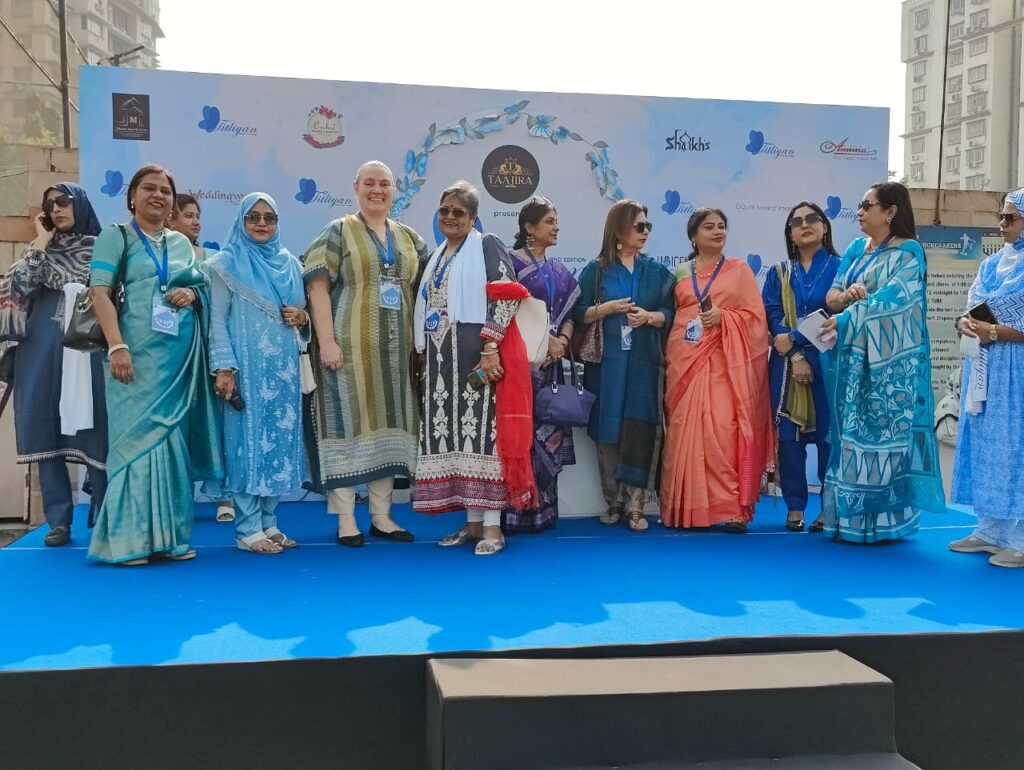
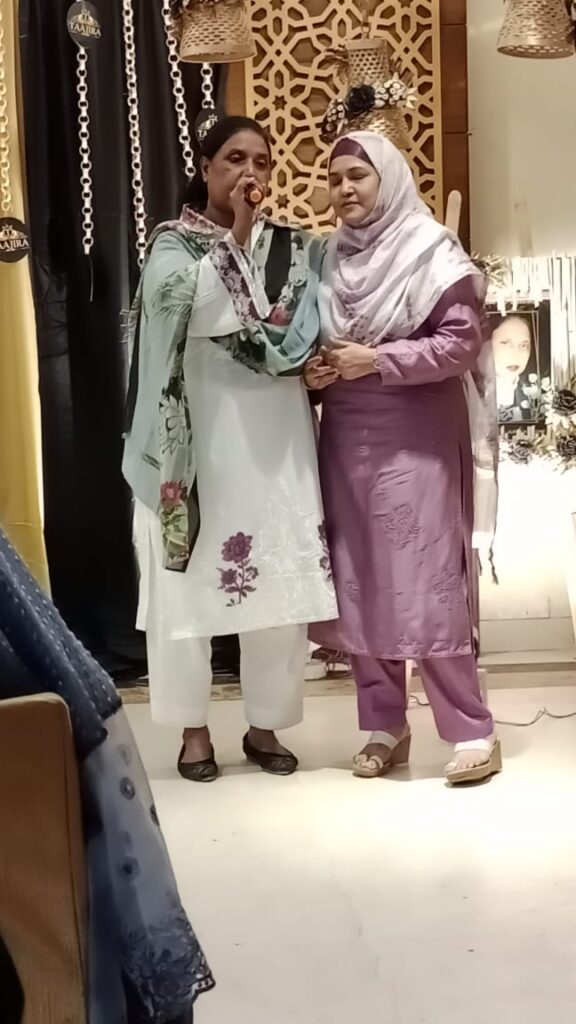
Rukhshi Kadiri Elias (Third from left) with her team of Taajira
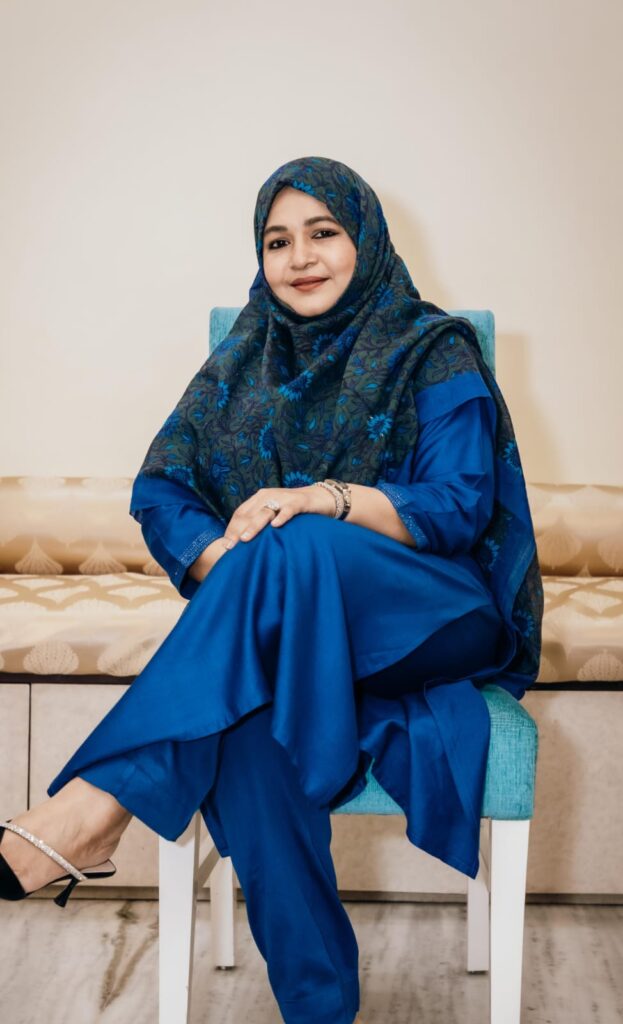
“Empower the men to empower the economically empowered women,” jokes Rukhshi Kadiri Elias, an articulate lady with her mellow voice igniting the conversation. She is the founder of Taajira – (The Businesswoman), a massive network of entrepreneurial women creating a revolution, not only in Kolkata but in other places bringing two different kinds of women together, to work together and empower each other.
Warm eyes, glowing skin with her royal demeanour, and her energy kindles hearts, which is probably why she was able to garner a massive community of thousands of women that all started in 2019.
Born and brought up in a caring home, Rukhshi helped her father with his business, looked after his office in his absence attended to his phone calls, and set up his appointments. At that time she was in the college. During her school and college days, she always stood up for friends.
Good at maintaining humans relationships, she remains in touch with her schoolmates at the Loreto School in Bowbazar and today 35 of her childhood friends are joined in by a WhatsApp Group.
Since 1974, the friends have encouraged each other, and met each other’s emotional needs, and financial difficulties, where some were going through midlife crises. Rukhshi made a special effort to initiate these get-togethers.
At the Taajira exhibition Titliyaan
Speaking to Awaz-The Voice, she recounts one of Taajira’s inspiring stories, “One incident shook me. One day, a girl reached out to us on Facebook. She was a victim of domestic violence and in a state of shambles. As I shared this with some of the administrators in our group “Taajira-The Businesswoman”, having now reached over 32,000 members, I was hesitant to approve her post publically. Some of the legal advocates said she needed immediate legal help. While that was right, I said that she presently needed strong emotional support, because she would have to pay a lawyer if she went the legal way.
“We decided to reach out to her and we reached her home and counseling made the husband realize his mistake. I finally approved her Facebook post and I was stunned to find a rush of support for this girl from hundreds of other women with similar stories. This was a big eye-opener to me that domestic violence is a huge unspoken issue in many homes. Most of the women do not know their legal rights and continue to live in abusive situations for years, incapacitating their ability to even work.
“After this incident, Anuradha Kapoor who founded Swayam, a feminist organisation dedicated to advancing women’s rights did an online talk on Taajira’s Facebook group which was a great success. The happy end of this girl’s story is through Taajira, she got into a flourishing resin art business and her husband changed realizing his failings, and supports her now, and she is a transformed woman – what a miracle!”
I asked her who her greatest inspiration to start Taajira was, she replied, “Way back then in my college days, Noor Jahan Shakil, President, of All Bengal Muslim Women’s Association used to take me along with her on her outreaches to the slums of Kolkata which jolted me out of my comfort zone. I suddenly realized there was a big world out there where millions were still suffering and living in deplorable unhygienic conditions. She had two centers – one for vocational training, tailoring, and fashion designing, actively involved with Muslim women, bringing them out of the four walls of their homes into the world, and teaching them about hygiene and health. I still connect with them helping them to create events.
“Noor Jahan Shakil is an amazing lady, now way beyond 90 years, still very agile and interested in what we are doing, coming forth with suggestions and it was her life that inspired me to think beyond the limitations of my home.”
Rukhshi Kadiri Elias
The story of the inception of Taajira was set in 2019 when Rukhshi Kadiri Elias found herself being added to many WhatsApp groups all seeking some sort of sense of identity apart from their homes. It was at that point that Rukhshi said, “Instead of adding me to different WhatsApp groups, let us get together on one platform, let’s set up a Facebook group.” The group aimed to help women set up businesses that networked together because the seller is also the consumer, so in some way, they all needed each other. The biggest challenge of this group was getting women, who were not tech-savvy to learn to use social media and basic skills.
Their first meetings started in Rukhshi’s home, later, went on to be hosted in their newly formed restaurant, and later, also others offered their halls.
There was a conglomeration of all kinds of women from different strata of society with different needs, from restaurant owners to maids.
There are two groups in Taajira, one group is an elite group who made brand names for themselves through Taajira, and the other group is the economically deprived.
The Elite group helps the economically weaker women with startups, not with money but with goods to the other group to help launch their businesses and out of the profits of the retail rates, they pay back the elite group only at the wholesale rates so that they make a large marginal profit.
There are also intense training programs at the Tajara Elite Club where makeup artists, teams, stylists, bridal packages, ladies who make their organic herbal products, sari drapers, henna designers, masseurs, seamstresses, and even taught driving, grooming, polishing, and other crafts.
At their monthly meet, they pair up, and here the weaker women are imparted skills. During the pandemic, garments were sold online, but they now have their showrooms and stores, so the elite group needed salesgirls, managers, accountants, chefs, and other staff.
She said,”50% of our staff from our restaurant Shaikh’s is from Taajira. While we started as a group to financially empower women, even men were getting jobs. Husbands, sons, and brothers as chauffeurs, chefs, cooks, and other such help so the entire family gets help.”
She said, “We have a legal panel with lawyers and advocates, another panel for counselling for those who need emotional help, doctors who help women with their illnesses, lady police officers who help women with their paperwork, food licenses, and advice.
We have a marvelous doctor who runs The Soul Clinic, Dr. Shabtab Elahi who unlocks the healing power of yoga, with her set of yoga trainers, and focuses on weight loss.
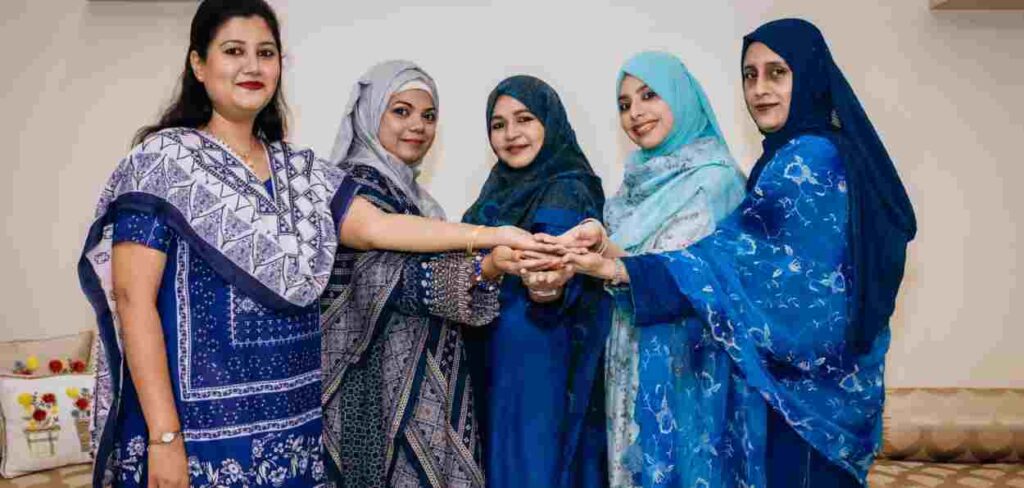
Rukhshi Kadiri Elias with Taajira members
Taajira members from the Wellness Center hold nutritious tea parties with healthy snacks. The focus on hygiene, health, mental well-being, and financial stability is a big boost to Taajira’s growth because we are not just a workforce but a caring community and like a large family with a very personal touch.”
Mysteriously, as Taajira was established in 2019, it seemed a divinely appointed timing as they helped hundreds of families during COVID-panic-driven days in 2020 and beyond to tide through this rough season and come across safely. She says that Taajira was the only online portal open those days for help to the public. Food was the biggest need during COVID-19, and home-cooked food was delivered directly to homes. Since there was no bread in the markets, the ladies in Taajira started baking bread, making thalis (meals) supplying the ones trapped at home and without food.
In one instance, a member of Taajira from the UAE send an SOS message to Taajira to reach out to her septuagenarian parents stranded without food. The Taajira chef delivered food for free until a maid could look after them. Incredibly, the Taajira team delivered not only food, but also medicines, and other assistance to families, and college students were given money and food. In this great season of caring, Taajira grew to be a more community-focused and family-hearted organization.
Taajira’s recent big venture was Titliyan, an annual big exhibition, held once a year, with 111 stalls in the year 2022 and 175 stalls in 2023 and close to 10,000 people visited it.
Rukhshi said with a note of pride that many exhibition curators are now getting their ideas drawn from Taajira members getting 90% of their income through their wares in these exhibitions. She said, “I am, after this appointment on my way to an exhibition in Khidirpur.”
Rukhshi’s journey to create Taajira also required her supportive family, husband, and two sons, who incidentally are great sportsmen, swimmers, footballers, and hockey players, and her wonderful daughter-in-law. She proudly shares the addition of her grandson to the home, now six months old whom she is very involved in taking care of while her daughter-in-law, who is a counsellor in Loreto, goes to school.
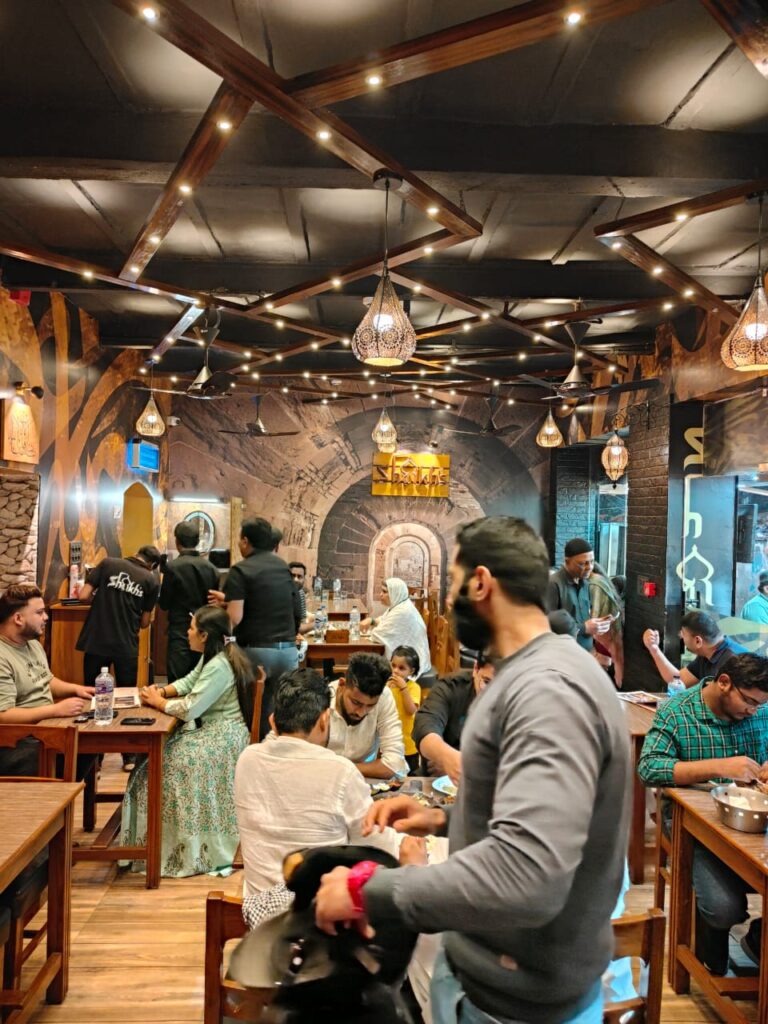
All family members proudly pat each other’s backs for their accomplishments. Their recent achievement was their famous restaurant, Shaikh’s, a 42-seater lavish but affordable restaurant launched three years back by her sons, with its cutting-edge culinary excellence seated in the Park Circus area in Beckbagan, near Quest Mall, famed for its aromatic rich Indian, Middle Eastern flavors drawing flocks of people.
As a graduate of Fine Arts and a diploma holder in fashion design, she honed her skills to help the processing of Taajira smoothly. Rukhshi says that the journey to making Taajira a reality has only been possible with the assistance and dedication of her panel of moderators, such as Zainab Saigal, Shumaila Khalid, Ifra Nadeem, Sujata Latif, and Sumaiya Munir applauding the strength of networking together. She said, “We have a strength of 33000 women, now, so we need at least six women to herd them!”
An encouraging moment arrived when the globally connected Calcutta University asked Taajira to suggest a few names of their women to train guide and support them technically. These ladies were picked up and it was a good venture of collaboration to bring profit to both.
Shaikh’s restaurant
On another occasion, a lady who makes chocolates got a huge order from the American Consulate to supply them with 500 boxes of chocolates during Christmas, another lady got a massive order for jute bags and a lady who makes momos and other delicious nutritious snacks now gets regular orders from The American Consulate, business avenues that transformed their incomes and lives.
Recounting one amusing incident, Rukhshi said, “One day, I received a call from a lady announcing that she wanted to work on an online business, but she was not tech savvy. The lady also mentioned that due to her arthritis and other problems, she was unable to work outdoors but needed the money to maintain herself and pay for her medicines. After giving her some ideas, I asked her, “Ma’am, how old are you?” and she replied brightly, “I’m only 73!” I visited her and got her in touch with an Anglo-Indian seamstress who used to stitch nighties, so the lady was able to get into an online trading business and sell nighties to meet her financial needs.”
While membership to Tajeera is free, there is a fee to join the talk shows. She mentioned that there are women who broke away from Tajeera and started their businesses for their reasons, but this was never the aim of Taajira whose power lay in massive networking to support thousands to lakhs together. She said, “Everything is changing fast. Eating habits changed where people now are more into fast foods, apparels changed from saris to most women now in jeans and kurtis, society is transforming quickly.”
She said, “In a strange twist of fates, the men who once mocked the efforts of Tajeera exclaiming it was a taboo for their women to work outside the home are now accepting women working outdoors, and even standing alongside and helping them, and some are even staying at home and looking after the children while their wives are out selling their wares at grand exhibitions,, isn’t it incredible! Things have changed so much in just a few years. Each day, we are moving towards a brighter light and now society is changing so much that when women don’t work, people ask, “How come you’re not working?”
She said emphatically, “Taajira has two ideologies – to help the poor and to economically empower women and we are starting to network a revolution!”
The day is too short for her and she said, “I still have not arrived, we are still on the way, one target is related to another and then it opens another dimension.”
Rita Farhat Mukand is an independent writer.
source: http://www.awazthevoice.in / Awaz, The Voice / Home> Story / by Rita Farhat Mukund / February 24th, 2024
At The Hindu Lit fest 2024, Sudhanva Deshpande recalls the making of Habib Tanvir’s company Naya Theatre and his plays that are regarded as masterpieces.
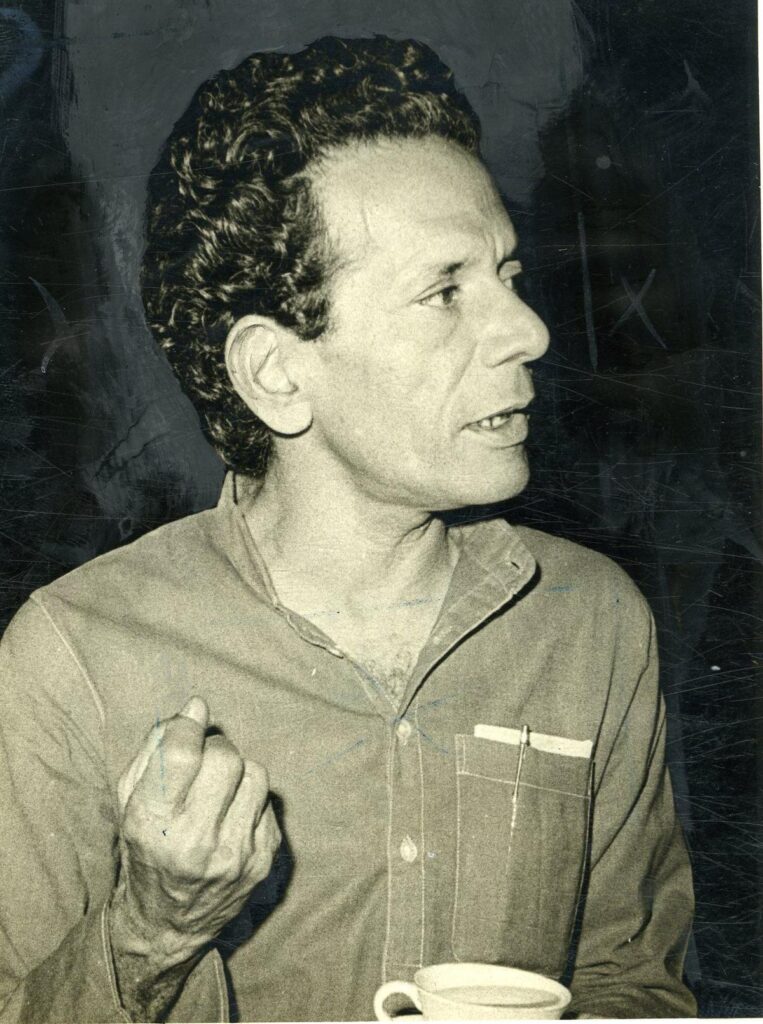
Habib Tanvir | Photo Credit: The Hindu Archives
To make theatre that was authentic to its cultural milieu and history while also being thoroughly modern, both in content and form — this was Habib Tanvir’s life’s achievement. His theatre was exuberant, festive, celebratory, funny, moving, thoughtful and reflective. It was progressive and secular, and because it was created by a man with a Muslim name, it was reviled and attacked by Hindutva forces. He worked with rural actors to create plays that appealed to audiences far beyond the rural. In the history of Indian theatre, Habib Tanvir was a singular presence.
Born in Raipur in 1923, he went to Bombay to pursue a career in films in the mid-1940s. But the decisive influence on him at the time was his entry into the Indian People’s Theatre Association (IPTA), where he met and befriended artistes such as Balraj Sahni, Dina Gandhi (later Pathak), Zohra Segal, and M.S. Sathyu. The left-wing perspective of IPTA was to stay with him throughout his life, even though he forged his own unique path in theatre.
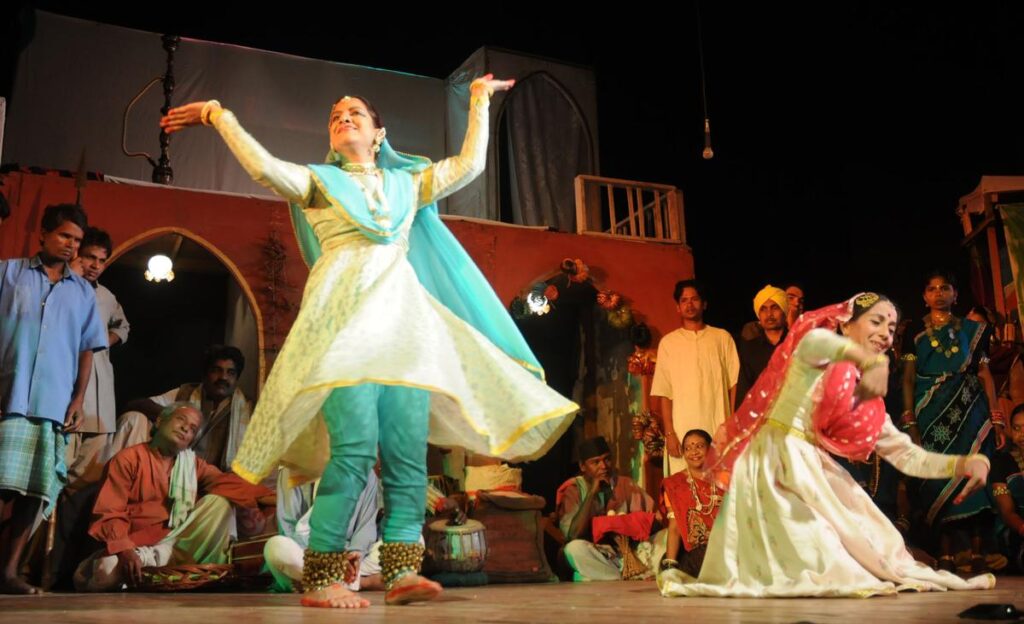
A scene from Habib Tanvir’s Agra Baazar staged at ‘Habib Utsav’ in Bhopal on November 21, 2009. | Photo Credit: A.M. Faruqui
The film industry disillusioned him. It worshipped money, not art. He came to Delhi, where he joined Hindustani Theatre, where he met Moneeka Misra, a theatre director trained in the U.S. They fell in love and got married.
In 1954, Habib Tanvir wrote and directed his first masterpiece, Agra Bazaar, on the life and art of the plebeian 19th-century poet Nazir Akbarabadi. It was an astonishing production, for two reasons. One, the protagonist Nazir never appears in the play — because no biographical information about him was available, even as a large corpus of his poetry had survived, passed on orally from generation to generation. Two, Habib Tanvir asked residents of Okhla village on the outskirts of Delhi to act in the play — his first attempt to make theatre with rural folk.
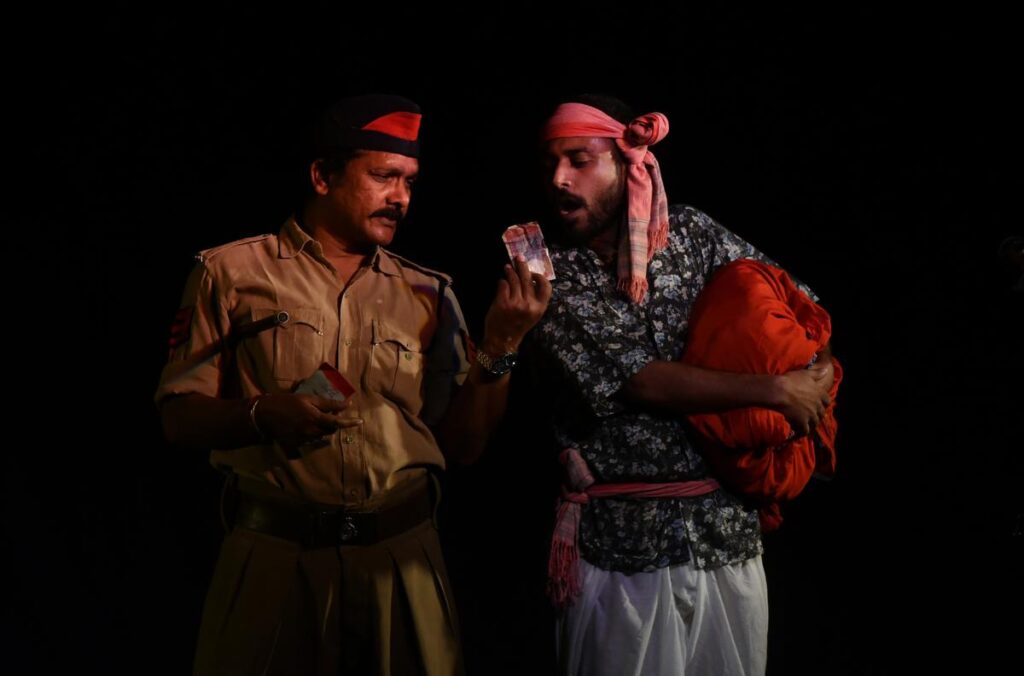
From Charandas Chor by Naya Theatre. Staged in December, 2019 as a curtain- raiser to the first state conference of Network of Artistic Theatre Activists Kerala (Natak) in Ernakulam. | Photo Credit: Thulasi Kakkat
Soon after, he left for Britain to get formally trained as a director, at the Royal Academy of Dramatic Arts (RADA), and the Old Vic. He was in his thirties, with over a decade of theatre work under his belt. What he learnt in Britain, most of all, was what he needed to reject — the overly regimented theatre of the time, realistic in a photographic sort of way, about middle-class life. He longed for the free-flowing, delightful, irreverent theatre that he had enjoyed as a child in Chhattisgarh. He returned to India and set out to find rural actors.
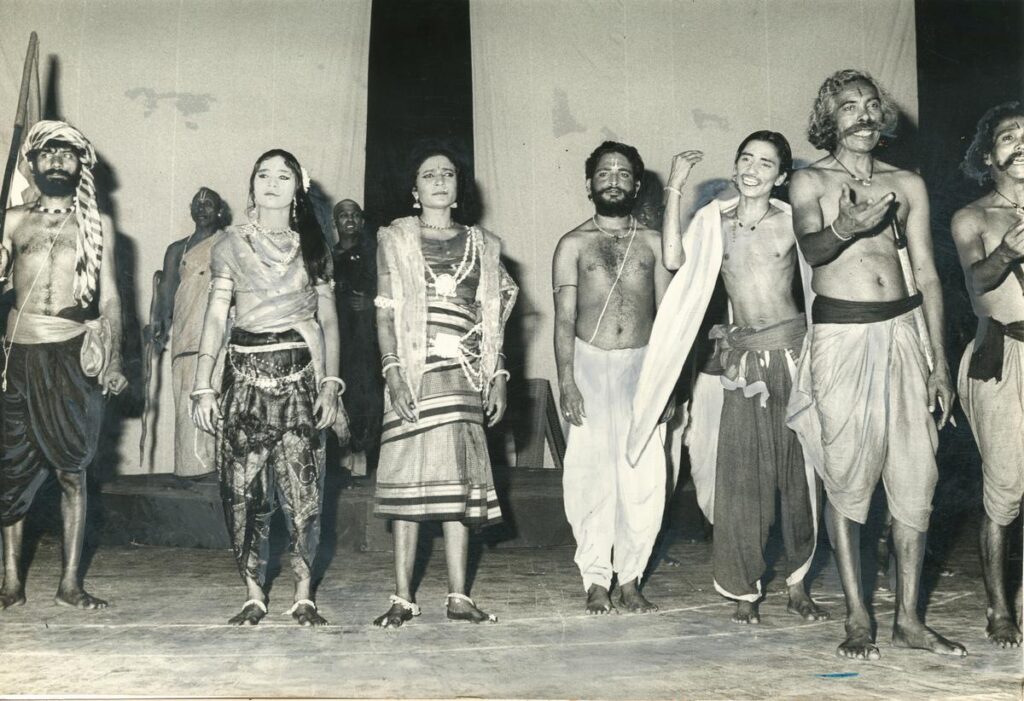
A scene from Habib Tanvir’s play Mrichchakatika. | Photo Credit: The Hindu Archive
The first lot of six rural actors he picked came with him to Delhi in 1958. They were all more or less unlettered, but masters of the Nacha, the rural theatre of Chhattisgarh. They acted and danced with abandon, sang melodiously in their open, strong voices, were masters of farce, and could also move you to tears. With them, and with Moneeka as his companion, he founded his own company, Naya Theatre, in 1959. They produced play after play, touring the country extensively, but while his plays of the time had spark, real success eluded him.
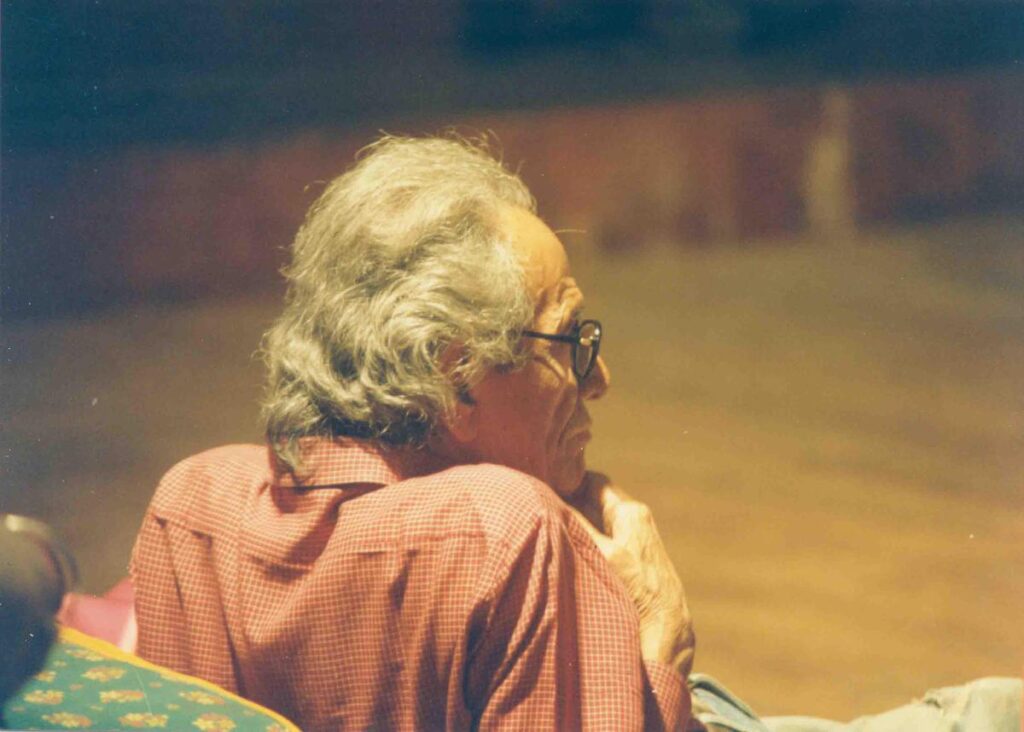
Habib Tanvir watching a play rehearsal. | Photo Credit: Sudhanva Deshpande
It was befuddling. Why were these great actors, who were so delightful when they performed in the villages, so stiff and rigid on the urban stage, he wondered. It took him 15 years, from 1958 to 1973, to figure it out. He was forcing them to speak in Hindustani, a language that was alien to them, and he was ‘directing’ them, telling them where and how to stand, where and when to move, what gestures to use. When he melded together three rural farces into a single play in Gaon ke naon sasural mor naon damad (‘I’m the son-in-law and my in-laws’ house is my village), he asked his actors to speak in Chhattisgarhi and improvise their moves.
It was magic. With their tongues and bodies unshackled, the actors were magnificent. Remarkably, urban audiences, most of whom had no familiarity with Chhattisgarhi, embraced the play. A string of hits followed, many recognised as masterpieces of modern Indian theatre — Charandas Chor (Charan the thief), Mitti Ki Gaadi (Sudraka’s The little clay cart), Bahadur Kalarin, Shajapur Ki Shantibai (Bertolt Brecht’s Good person of szechwan), Hirma ki amar kahani (The immortal tale of Hirma), and Kamdev ka apna, basant ritu ka sapna (Shakespeare’s A midsummer night’s dream).
Habib Tanvir, an artiste-activist, he was committed to the values of secularism and social justice. | Photo Credit: Special Arrangement
Habib Tanvir was a formidable intellectual with deep insights about the Natyashastra and Indian performing traditions, a sophisticated aesthete who soaked up influences from all over the world, and a citizen-activist committed to values of secularism and social justice.
“In India, the economically poorest are the culturally richest, and the economically richest are the culturally poorest,” he would often say. He devoted his life and his art to uplift the culture, and the voice, of India’s poorest. And he did it with unparalleled verve, beauty, and joy.
Sudhanva Deshpande is an actor, director, and organiser with Jana Natya Manch and Editor with LeftWord Books. He has co-directed two documentary films on Habib Tanvir and is the author of Halla Bol: The Death and Life of Safdar Hashmi.
Session at Literature festival
Sudhanva Deshpande’s session at The Hindu Lit Fest, 2024 is titled ‘Recalling Habib Tanvir: Excerpts from the film and a talk’. It will be held on January 26, 3.15 p.m. at Sir Mutha Concert Hall, Harrington Road, Chetpet, Chennai.
source: http://www.thehindu.com / The Hindu / Home> Lit Fest / by Sudhanva Deshpande / January 16th, 2024