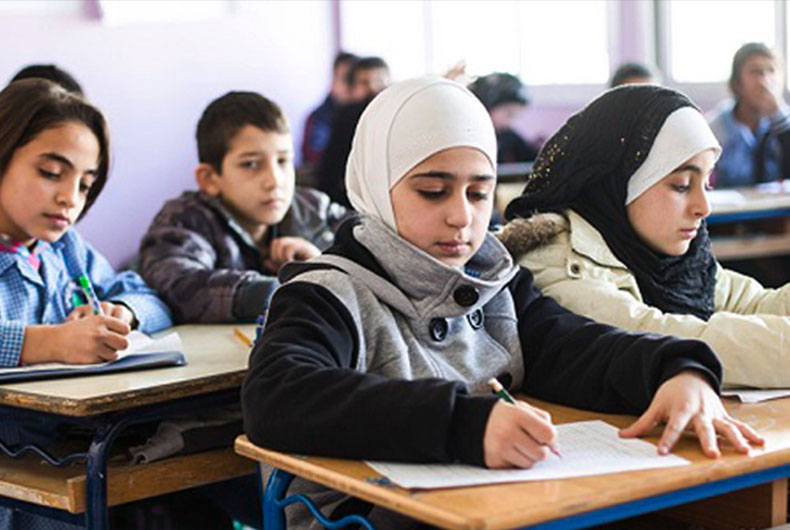
A total of 33 students from various districts of Uttar Pradesh have found their place in the Class Xth 2020 list of top ten.
Uttar Pradesh 10th Result 2020:
Three Muslim students – Alisha Ansari, Arshad Iqbal and Arshima Sheikh, have cracked the 2020 UP Matric High School Class 10 exam 2020 and have been included in the list of Top Ten.
A total of 33 students have found their place in the 2020 list of top ten. While Alisha Ansari secured 9th rank, Arshad Iqbal and Arshima Sheikh have bagged the 10th rank in Uttar Pradesh Class 10 Merit List 2020.
Alisha Ansari Mohd Rizwan Fazli of Bal Nikunj Inter College Lucknow has got 564 marks (94%) out of the total 600 marks and jointly shared the 9th rank with five other students
Arshad Iqbal Iqbal Hussain of PT RN MHSS Shahjahanpur and Arshima Sheikh Aftab Ahmad of St Xaviers School Kanpur have got 563 marks (93.83%) and secured the 10th rank with 02 other students.
Uttar Pradesh Class 10 result was Uttar Pradesh Madhyamik Shiksha Parishad (UPMSP) Saturday at 12:30 pm by Dy CM and UP Education Minister Dinesh Sharma.
The overall pass percentage of Uttar Pradesh board Class 10 this year is 83.31 percent – an improvement by more than 3% as compared to last year. In 2019, the overall pass percentage was 80.07%.
Riya Jain Bharat Bhushan of Shri Ram SM Inter College Bagpat has topped the Uttar Pradesh board in 2020 High School or Class 10 (UPMSP Class X) exam result of which is declared today.
Ria Jain has secured 96.67 percent marks to secure the 1st position in the 2020 Merit List.
Abhimanyu Verma Ramhut Verma of Shri Sai Inter College Barabanki came 2nd with 95.83% marks and Yogesh Rajendra Pratap Singh of Sadhbhavna Inter College Barabanki came 3rd with 95.33%.
“All toppers will get laptops and cash rewards”, Dy CM Dinesh Sharma and UP Education Minister said while declaring the result.
source: http://www.ummid.com / Ummid.com / Home> Education & Career / by Ummid.com News Network / June 27th, 2023
Long before India became the first country to introduce mid-day meals to children in government schools to supplement their nutritional needs and to encourage poor families to send their children to school, Anjuman-e-Islam, a Muslim institution had started the scheme in Mumbai.
Ajmunan-e-Islam ursu school was established some 150 years ago. It was the brainchild of a group of progressive Muslim intellectuals of Mumbai.
The initiative for this was taken by Badruddin Tyabji, the first Indian barrister of the Bombay High Court, Qamaruddin Tyabji, the third president of the Indian National Congress, his elder brother and lawyer Nakhuda Mohammad, Ali Roge, businessman and social activist, Ghulam Mohammad Munshi, The school came up at Babula Tank near Umarkhadi in the then Bombay province and started as a small place.
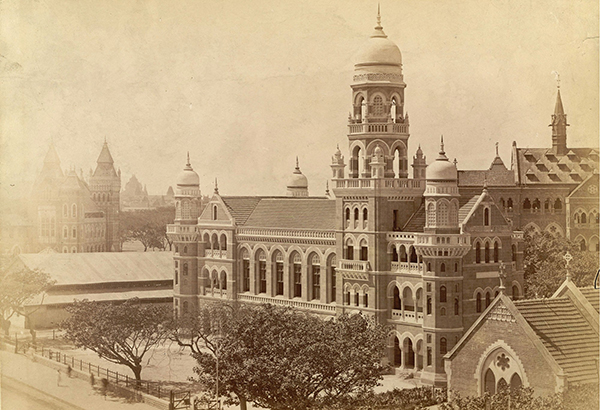
An old picture of the Anjuman-e-Islam in Bombay
In 1893, ‘Anjuman-e-Islam’ was shifted to a building opposite Victoria Terminals (presently ‘Chhatrapati Shivaji Maharaj Terminus’) from where it continues to operate.
At that time many facilities were provided to the students coming to study in ‘Anjuman’. The facilities included a mid-day meal comprising boiled eggs, bread, and bananas.
It was established a year before the establishment of ‘Aligarh Muslim University’ (AMU) in Aligarh by Sir Syed Ahmed with the sole motive of providing modern education to Muslims.
‘Anjuman’ school initially ‘only admitted boys and it was much later that it opened the doors to girl students. In 1936, a separate school for girls was also started by the name ‘Saif Tayyabji Girls High School’ on Bellasis Road.
The students of Anjuman e islam taking part in a cultural programme
This school, which started on 21 February 1874 with three teachers and 120 students, has now transformed into 97 institutions. Today more than 1.1 lakh students are studying right from nursery classes to PhD – are enrolled in its educational institutions. Interestingly, 70 percent of students enrolled are the first ones from their families to receive education.
Anjuman-e-Islam played a major role in India’s freedom struggle. Many people including Moinuddin Harris and Mustafa Fakih of ‘Anjuman’ were sentenced to imprisonment during the freedom struggle. Many policy meetings for the freedom struggle were held on its premises.
‘Anjuman’ has a long history in nation-building.
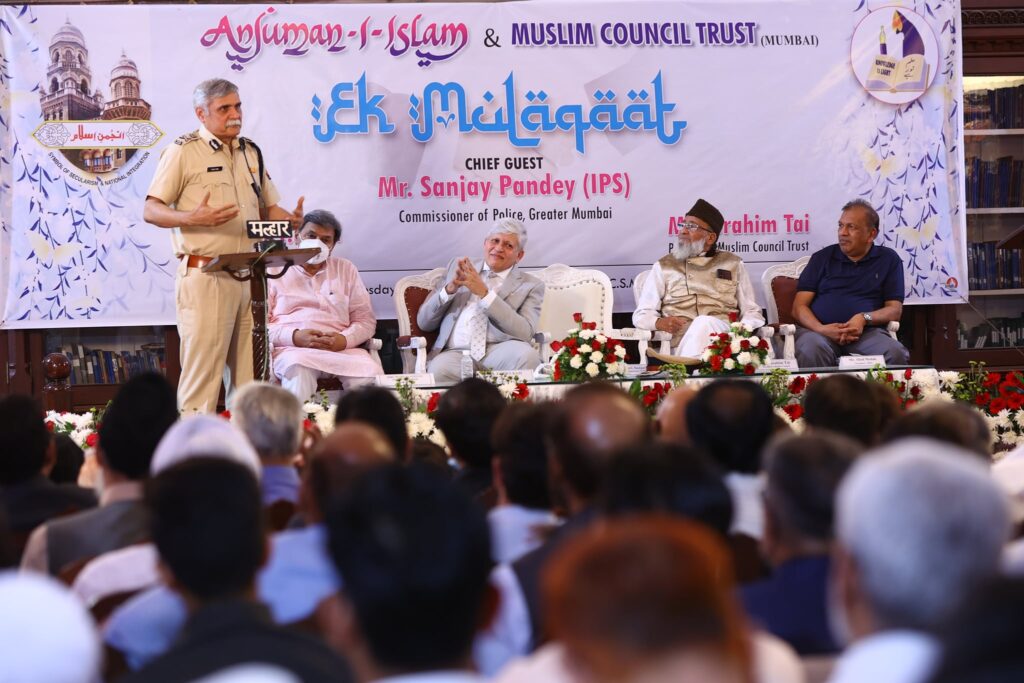
Mumbai police commissioner Dr Sanjay Pandey addressing the students of Anjuman-e-Islam
Today the main administrative office of the organization is located at the same place where the seed of ‘Anjuman’ was sown. Five colleges – two catering colleges, a business-management college, a home science college, and a law college – have been established on the institute’s three-acre campus. In addition, there is a polytechnic, a junior college for women, and two schools in both English and Urdu medium.
The campus also has a large library and a research center.
Sir Karimbhoy Ibrahim, Haji Yusuf Haji Ismail Sobani, Justice A. M. Qazi, Justice Faiz B. Tayyabji, Sardar Sir Suleman Kulsoom Mitha, Hussain B. Tayyabji, Usman Sobani, Mohammad Haji Ahmed, A. I. Maskati, Hadi C. Tayyabji, Saif F. B. Tayyabji, Akbar A. Pirbhoy, A. K. Hafeez, A. R. Persons like Antulay, Moinuddin Harris, Dr. M. Ishaq Jamkhanwala, Sami Khatib made special efforts. Presently Dr. Zaheer Kazi is its President.
`Anjuman’ has two main objectives, first – ‘to provide quality education at minimum cost’ and second – ‘to prevent any student from being deprived of education due to lack of funds’
More than 50 percent of the students in ‘Anjuman’ come from economically weaker sections. Anjuman has created a ‘Special Zakat Fund’ to enable these students to complete their education. The economically weaker students are given a 50 to 100 percent discount in education fees.
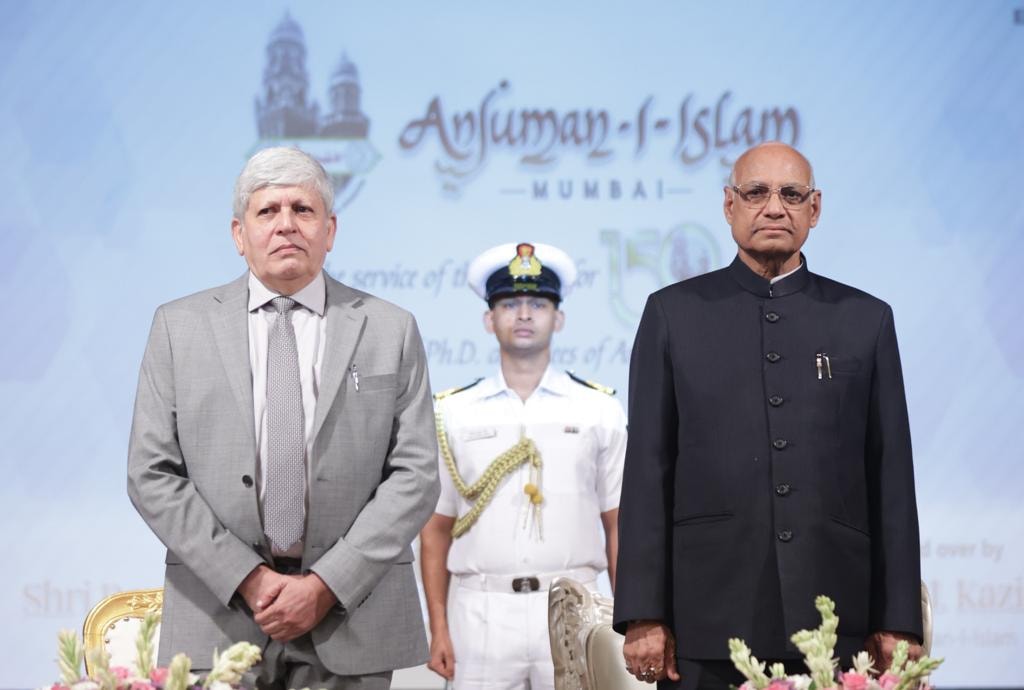
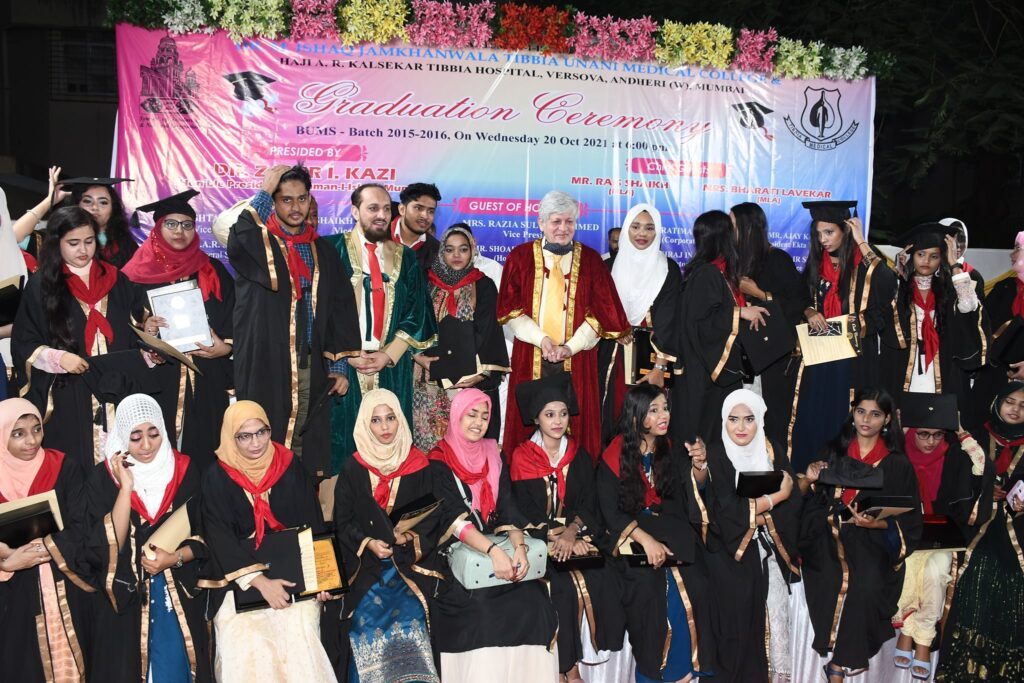
Vice Chancellor of the Amjuman-e-islam Dr Sahir Qazi and Governor of Maharashtra
The Anjuman is inspired by Maulana Abul Kalam Azad’s message that ‘Education given from the heart can bring revolution in the society’, the organization has been doing this work. The ‘Anjuman’ has more than 40 percent girls on roll.
Today the institution offers courses like Engineering, Medicine, Architecture, Pharmacy, Hospitality, Catering and Hotel Management, Law, Business Administration, Home Science, and Teacher’s Training.
Some, 3000 employees work in the Anjuman institutions. In the year 2000, `Anjuman’ was awarded the ‘Best Educational and Social Institution in Maharashtra’ by the State government. Recently the institution has been awarded the ‘Sir Syed Award of Excellence’ of AMU, Aligarh University.
The alumni of `Anjuman’ are today working in high positions in various fields like business, technology, arts, sports, media, medical science, and politics in many countries. Former Chairman of Fortune Company and Indian Oil Corporation, M.A. Pathan, former Chief Minister of Maharashtra A. R. Antulay, famous actor Dilip Kumar, Ismail Merchant of `Merchant of Merchant Ivory Productions’, former Deputy Editor of `Illustrated Weekly’ Fatima Zakaria, former editor of `Mumbai Mirror’ and `Sunday Times’ Farida Naik and famous cricketer Salim Durrani. Celebrities have been alumni of ‘Anjuman’.
Students at the Convocation of Anjuman-e-Islam
Dr. Zaheer Kazi, current president of ‘Anjuman’, says, “We are constructing a state-of-the-art building in the Sabu Siddiqui College campus in Byculla. There will be an incubation center as well as post-graduation and PhD courses taught there. “Besides, there will also be an integrated center.”
Apart from this, a health education campus will be built in Kalyan-Bhiwandi or Panchgani, in which MBBS courses, Dental College, College of Nursing, Physiotherapy, and Homeopathy will be started. Pharmacy, law college, degree college, and high school for girls will be started in the Solapur campus. Also, land acquisition for catering, pharmacy, and high school-cum-college in Panaji, Goa is in the final stages.
He said, “’Anjuman-e-Islam’ has partnered with MIT University in Cambridge, England, and its five Faculties of Engineering, Master of Business Administration (MBA), Pharmacy and Elementary Education. In addition, ‘The Kalsekar School of Pharmacy’ (Panvel), and The Maryland School of Pharmacy’, Baltimore, (Washington DC) have been approached for collaboration with Anjuman-e-Islam. Philadelphia’s ‘Temple University’ asked ‘A. of Anjuman-e-Islam’ for cooperation. R. Antulay College of Law has also been contacted.”
‘Anjuman’ has 97 educational institutions including schools and colleges. These include pre-primary schools (15), primary schools (15), secondary schools (20), junior colleges (10), polytechnics (4), degree colleges (15), other institutions (10), proposed institutions (2), Consists of hostels, auditorium (3), support units (2) and orphanage (2).
source: http://www.awazthevoice.in / Awaz, The Voice / Home> Story / by Chaya Kavire, Pune / November 22nd, 2023
In a story that blends Ripley’s Believe It or Not with Mission Impossible, Musaif Shaan Mohamed and his family have kickstarted their incredible adventure that could potentially earn them a place in the Guinness Book of World Records or the Limca Book.
Bengaluru-based Advocate Musaif Shaan Mohamed, known for his extensive road trips in India and neighboring countries, has crossed Dubai and is currently in Oman with his family on a Mission Impossible-style Road tour of 55 countries spread over 3 continents and 57000 km starting November 12th, 2023.
What makes this journey truly exceptional is that it includes not only Musaif but also his 62-year-old father, mother, sister, and his 6-month-old nephew, Wildan Ezlin Adaam. Musaif has traveled the length and breadth of India by road multiple times in the past 10 years and across Nepal, Bhutan, and Myanmar too!
Musaif, a legal professional and Chairman of Campus Continent, is also a motivational trainer who guides MBBS students seeking better growth prospects. Inspired by Jules Verne’s “Around the World in 80 Days” from his school days, he nurtured the dream of traveling around the world, albeit in a slightly extended timeframe.
An Inspiring Tale of Determination:
Musaif’s travel saga is a testament to determination and living life to the fullest. Over the years, his passion for travel grew, leading him to yearn for more adventure. His latest expedition commenced on November 12th this year from Dubai and is a journey that spans several countries, including Dubai, Turkey, Iran, England, Spain, Belgium, France, Germany, Greece, Portugal, and some rarely heard of exotic countries with beautiful landscapes such as Georgia, Albania, Romania, Kyrgyzstan, Moldovia, Azerbaijan, Belarus, Latvia, Austria, Ireland, Russia, Tajikistan, and Kazakhstan. This incredible journey will conclude in India via China, China (Tibet), and Nepal next year.
Customized Ford Endeavor for the Family:
Recognizing the unique needs of his aged parents and an infant, Musaif made the thoughtful decision to customize his Ford Endeavor to make it an all-terrain SUV. A capable team from The Wrench Virtuoso having branches across India and Germany undertook the challenge of customizing the SUV to ensure the family’s comfort, safety, and protection in varying weather conditions, be it rain, shine, hail, sandstorms, or snow. This custom-built vehicle took nearly three months to complete.
Notably, Mr. Nitin Dossa, Chairman, Western India Automobile Association (WIAA) and Federation of Indian Automobile Association (FIA) along with Mr. Edil Katrak flagged off the journey in Mumbai on the 26th of October 2023.
You name it, this SUV has it
Musaif’s commitment to safety is evident as the vehicle includes a side tent, a main tent, foldable chairs, a portable toilet, and a kitchenette. Incidentally, an extended fuel tank is also built-in to ensure there are no stoppages. Every detail has been meticulously planned to ensure the family’s well-being throughout their journey.
A Collaborative Family Effort:
Musaif’s family plays a significant role in this extraordinary expedition. His sister, Dr. Muneefa A.K., a doctor, is responsible for caring for her son and her mother, Mrs. Nafeesath A.K. While Musaif and his father, Mr. Mohammed Kunhi K.M., a retired businessman, manage the driving and handle entry and exit formalities in each country.
For the family, this journey isn’t just about sightseeing; it’s a profound opportunity to learn about diverse cultures, history, and nature. It’s a way to step out of their comfort zones and explore new places.
A Mission of Peace:
While the initial intention of their tour was exploration, their plan evolved in light of recent global conflicts. The primary goal of their world tour is to spread the message of living in peace and harmony.
This is the first part of the five-part series that the family has planned out. The 2nd part will witness Musaif covering 47 countries in Africa, followed by Australia in the 3rd part, and the 4th part of the globe will be the Americas and Canada.
Musaif and his family intend to share their experiences and promote the importance of peace in their travels, reinforcing the belief that travel has the power to transcend borders and foster understanding.
For further information, please contact Mr.Musaif Shaan Mohammed at +91-8884421111 or mail him at info@campuscontinents.com
Disclaimer: This article is a paid publication and does not have journalistic/editorial involvement of Hindustan Times. Hindustan Times does not endorse/subscribe to the content(s) of the article/advertisement and/or view(s) expressed herein. Hindustan Times shall not in any manner, be responsible and/or liable in any manner whatsoever for all that is stated in the article and/or also with regard to the view(s), opinion(s), announcement(s), declaration(s), affirmation(s) etc., stated/featured in the same.
source: http://www.hindustantimes.com / Hindustan Times / Home> News> Brand Stories / November 16th, 2023
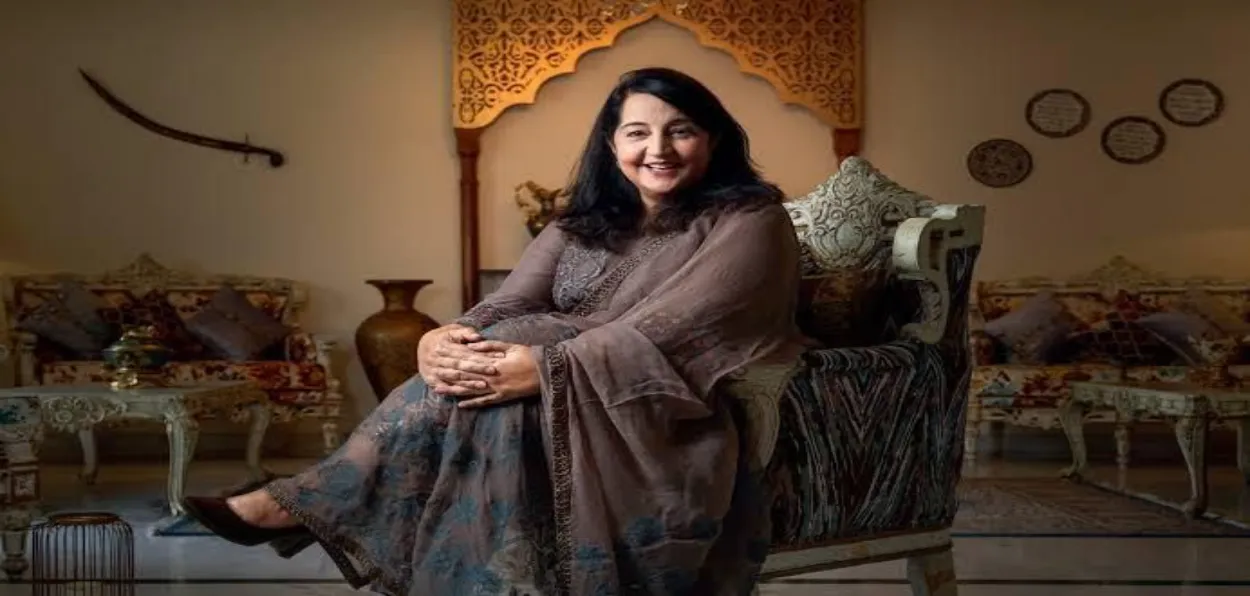
Coming from a modest family of furriers in Srinagar’s Chattabal area, Dilafroz Qazi laid the foundation of the Srinagar School of Management (SSM) in 1988—exactly when the seeds of separatism and violence were sprouting across the Kashmir valley. Investing in management, engineering, and technical education was virtually sailing against the wind.
With a bachelor in Law—and no money in hand—Dilafroz set up a small training center of short-hand, typing, cutting, and stitching at Rajbagh. Soon it grew into the valley’s first private polytechnic operating from a tiny space of a hotel. Parallel to the militancy’s meteoric rise, SSM spiraled into Kashmir’s first private engineering college in 1996. It is now a full-fledged engineering college alongside its school of management and a polytechnic.
Thirty-five years later, SSM boasts an impressive alumni base of more than 30,000 students—a number of them have reached top positions in management, corporate, and government sectors. They include Bisma Qazi of Indian Administrative Service (IAS), Naveed Tramboo of Indian Revenue Service (IRS), Ursilla Tabassum, Iqbal Hassan Mona, Abidah, Wajeeza, Adeel Aslam and Gowhar Shamim Mir of Jammu and Kashmir Administrative Service (JKAS) and many others like Auditing Officer Sheikh Muzammil and Executive Engineer Umar Jan.
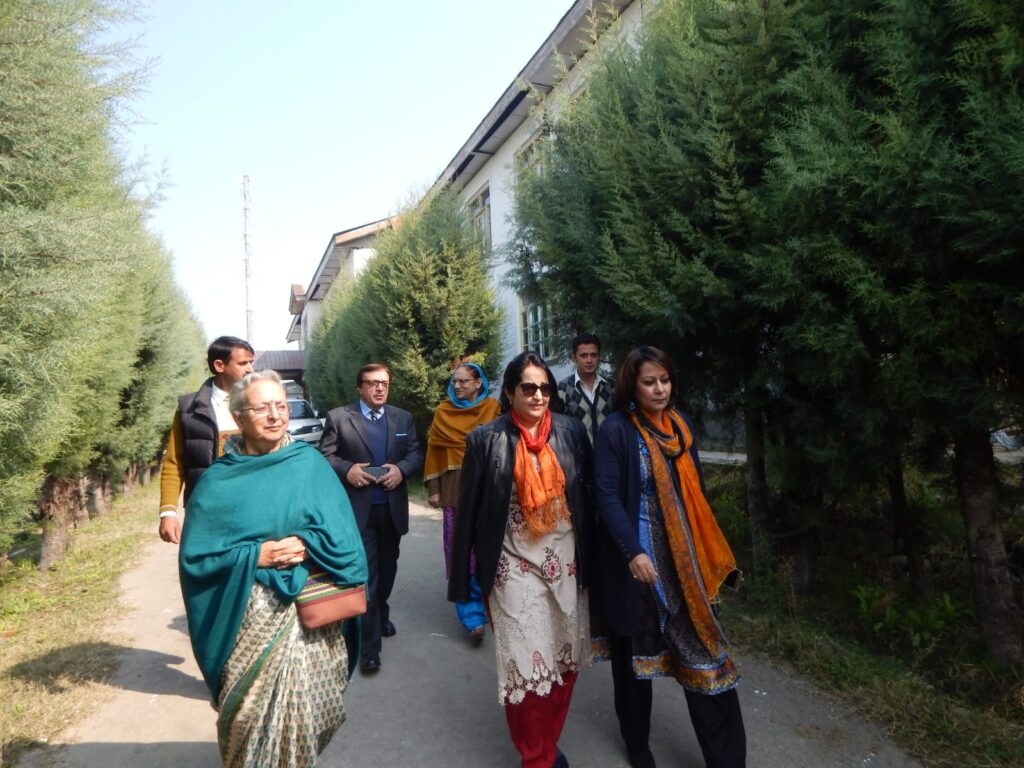
Dilfaroz Qazi (Extreme left) in her college
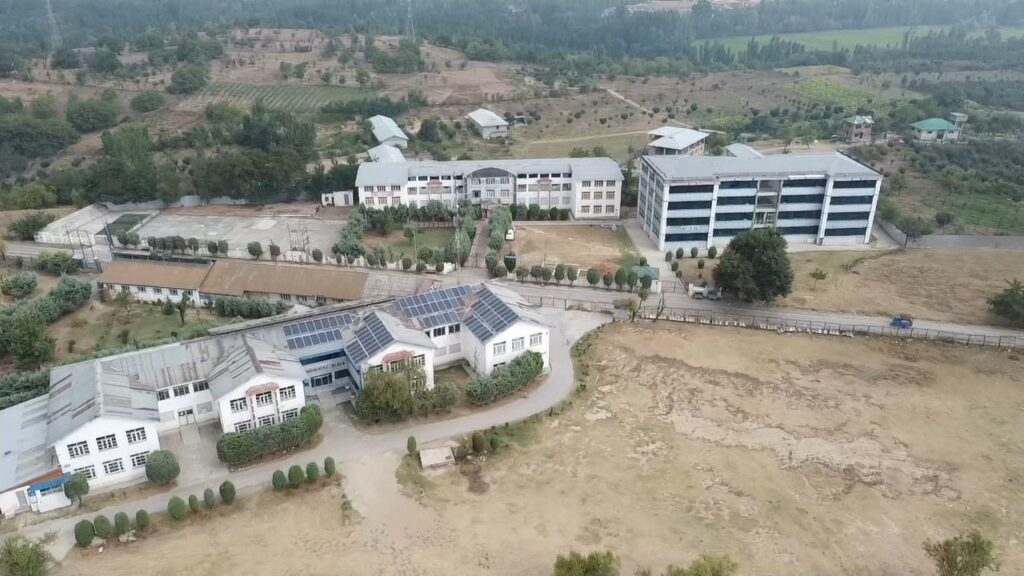
Established on a plateau close to the archaeological site of Parihaspora, SSM still carries the distinction of being Kashmir’s only private engineering college imparting technical education at both undergraduate and postgraduate levels. It conducts degree courses in civil, mechanical, computer, electrical and electronics, and communication engineering and postgraduate courses (M.Tech) in mechanical engineering and electronics and communication engineering.
SSM also conducts the courses of Masters in Computer Application (MCA) and Business Administration (MBA) besides Bachelors in Business Administration (BBA). Diploma courses in six engineering disciplines are conducted at the SSM Polytechnic which, in 1988, was the first step towards privatization of technical education in the erstwhile State of J&K.
A massive infrastructure, including teaching blocks with smart classrooms, libraries, computer and science laboratories, playfields, auditoriums, and two hostel blocks have come up at the campuses, 20 km from the capital city of Srinagar.
The governing council of the institute comprises eminent educationists, administrators, technocrats, and professionals. Similarly, the faculty comprises highly qualified and trained teachers. SSM has to its credit several awards and recognitions in capacity building, education and communication, sports, and cultural activities.
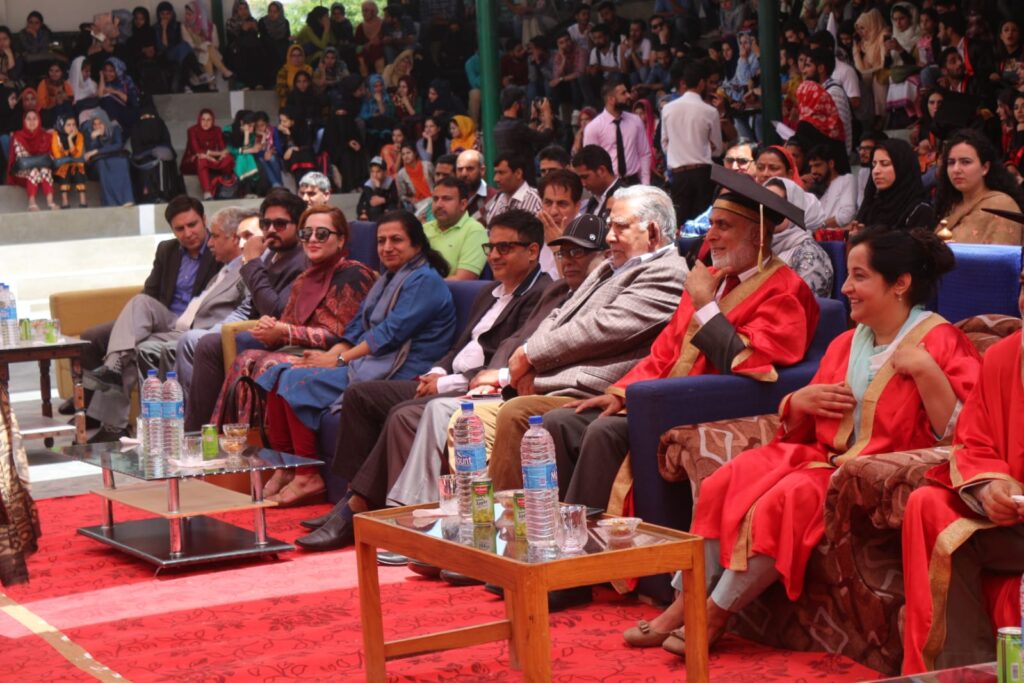
Dilfaroz Qazi (in Red gown) at the convocation of her college
The embryonic stage of Dilafroz’s ambition ran parallel to an era of death and devastation across the valley. She got married to the Srinagar resident Qazi Shabir who came in as a support in the early 1990s but the environment of education was hugely disturbed by curfews, hartals, encounters, and operations by the security forces. These were the days when militants burned down a large number of the valley’s educational institutions, including schools and colleges.
As the situation began to show some semblance of improvement, Dilafroz acquired a chunk of land at the hillock of Parihaspora to set up her dream college of engineering. But she landed in an unexpected trouble.
“Ironically, the biggest hurdles were created by a prominent mainstream leader who perceived my college as a threat to his conventional vote-bank even as I had nothing to do with politics. He engineered and encouraged several attacks on my construction workers; his musclemen torched a number of our structures. I put up resistance by way of refusing to surrender and got FIRs registered over every single attack. It was not easy those days to file an FIR over a grenade attack”, Dilafroz narrated to Awaz-The Voice.
After the 1996 elections, the said leader was back in power – this time as a minister -. Dilafroz claimed that the entire administrative and Police machinery acted on his instructions. “There was never an action over the FIRs we filed. The official machinery sabotaged our plans. Everyone from DC’s and SP’s office to Tehsildar and SHO sided with the politician and created untold hurdles. I am sure any other man, let alone woman, would have abandoned it and bought peace. But I thought I must fight it out until I break completely”, Dilafroz added.
The campus of SSM College, Parihaspura
When we applied for the University recognition and affiliation and t officers, deans, and registrars from the University of Kashmir and the State-run Regional Engineering College (REC) visited our infrastructure, their behaviour was completely hostile and demoralizing.
“I experienced male chauvinism and misogyny. They raised irrelevant and irrational questions. They asked how a woman with no engineering background and qualification could operate an engineering college. But, notwithstanding all these adversities, I managed to get recognition and affiliation to the SSM as I set up the best infrastructure and employed the best possible faculty”, Dilafroz added.
“One day, while I was shuttling between the government offices in Srinagar for the recognition of my college, I came across a local lady IAS officer namely Tanvir Jehan. I learned from her that the entire government machinery and bureaucracy was pitted against me. Are you the woman, she asked incredulously. When I narrated my story of ambition and struggle to her, she empathized and provided every possible support. By the grace of Almighty, I am now heading a full-fledged engineering college with management courses and I am struggling to set up J&K’s first University in the private sector”, Dilafroz asserted.
Over the years, the competition as well as the procedure of admissions has changed drastically. When Dilafroz began to raise the valley’s first private engineering college, even the government had only one—the REC which subsequently became the National Institute of Technology (NIT) Srinagar. Now, in addition to several private engineering colleges, six engineering colleges are run by the University of Kashmir, the Islamic University of Science and Technology (IUST) Awantipora, the Central University of Kashmir, and the Cluster University Srinagar. The Union Territory government operates one more engineering college at Ganderbal.
Dilfaroz Qazi with eminent educationist Prof Neerja Mattoo
“With the expansion of the private and government polytechnics and engineering colleges, our roll of students has fallen phenomenally from 3,000 to just 1,300. Until recently our intake limit was around 666 seats. Now we can’t admit more than 115 students in a year. And, contrary to the procedure outside J&K, all admissions here are done by a State-run authority. We are also barred from taking the students under the Prime Minister’s special package for the J&K students. All the beneficiary students of J&K are distributed among the colleges outside. The stepmother’s treatment is still unabated”, Dilafroz added further.
Dilafroz pointed out another irony. According to her, the University of Kashmir is charging a fee of Rs 80,000 for B.Tech courses. IUST is charging Rs 75,000. Her SSM is charging only Rs 38,000 to Rs 40,000 per student. “Still our allocation of seats is reduced and we are made to renew the University affiliation every year”, she lamented.
“We have two times B+ NAAC accreditation and we figure in the top 10 engineering colleges in India. Still, the University of Kashmir didn’t grant us permanent affiliation in the last 25 years. There are biases and prejudices which can’t be explained. J&K is the only State/UT in the country where engineering admissions are done by a government-run authority called BOPEE. Whatever I have earned, I have invested in this institution. I don’t have dreams of making billions for my luxurious life. I am just pursuing my dream of establishing a full-fledged private university in J&K in which the Union and the UT government should support me”, Dilafroz said.
According to her, as many as 18,000 J&K students of her college have got high-salary jobs in the government sector and the private sector across India and abroad.
source: http://www.awazthevoice.in / Awaz, The Voice / Home> Story / by Ahmed Ali Fayyaz, Srinagar / November 18th, 2023
Not only did she break gender barriers, but she also became the inaugural Muslim woman to ascend to such a position within the nation’s higher judiciary.
Justice M. Fathima Beevi died on Thursday. She was 96. ( Photo | Wikimedia commons)
Kollam:
Justice M. Fathima Beevi, the trailblazing pioneer who etched her name in India’s judicial history as the first female judge to grace the Supreme Court, passed away in Kollam district on Thursday. She was 96.
She had been receiving treatment for age-related issues at Travancore Medical Hospital in Kollam, where she took her last breath at around 12:30 p.m.
Born in Pathanamthitta district in 1927, she commenced her educational journey at St. Joseph’s Convent School. She pursued a BSc degree in chemistry from the University of Kerala, and she furthered her studies in law at the Government Law College, Thiruvananthapuram. In 1950, she achieved the distinction of becoming the first woman in Kerala to earn a law degree.
Her professional trajectory included noteworthy roles as the Chief Judicial Magistrate and Judicial Member of the Income Tax Appellate Tribunal before her elevation to the bench as a judge of the Kerala High Court in 1983.
In 1989, she became a female judge of the Supreme Court of India. Not only did she break gender barriers, but she also became the inaugural Muslim woman to ascend to such a position within the nation’s higher judiciary. She retired from the Supreme Court in 1992.
Later in 1997, she was appointed as the Governor of Tamil Nadu, and she became the first Muslim woman to hold the governor’s office. Additionally, she contributed significantly as the Chairman of the Kerala Commission for Backward Classes and served as a member of the National Human Rights Commission.
Justice M. Fathima Beevi’s mortal remains have been transported to Pathanamthitta, where the final rites will be conducted.
source: http://www.newindianexpress.com / The New Indian Express / Home> States> Kerala / by Express News Service / November 23rd, 2023
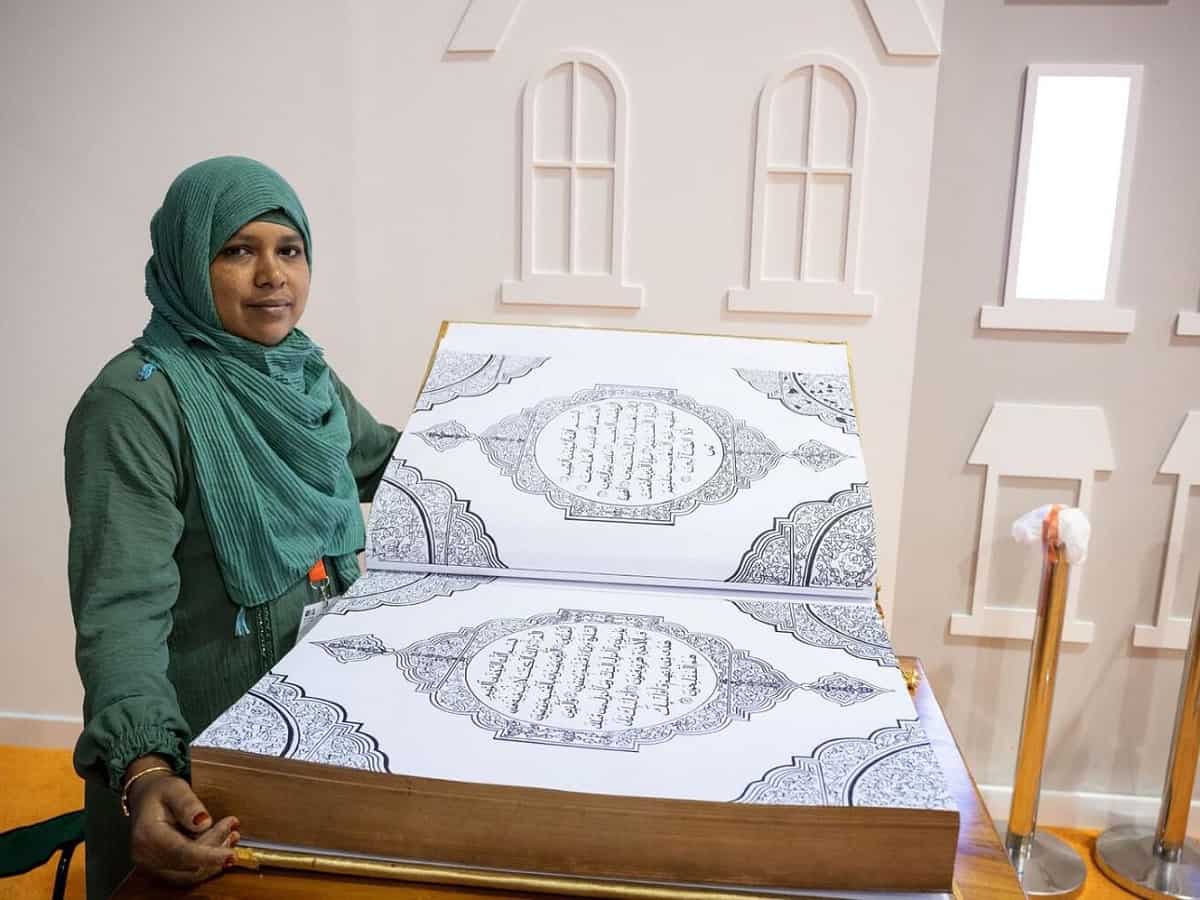
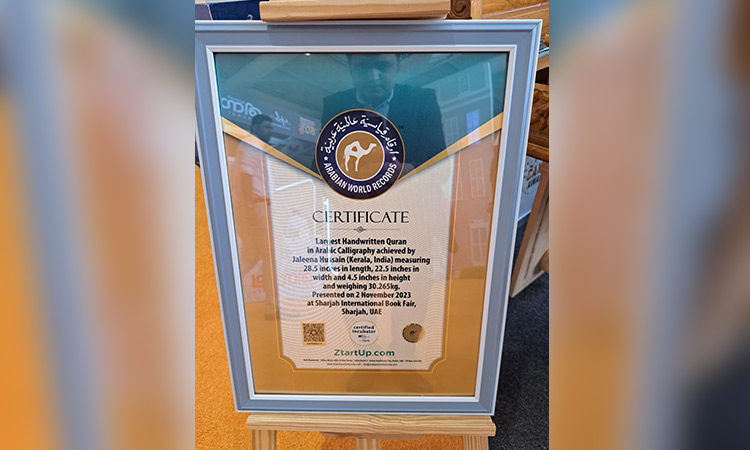
The holy book, which weighs 54 kg with the cover, measures 28.5 inches long, 22.5 inches wide, and 4.5 inches high.
Abu Dhabi:
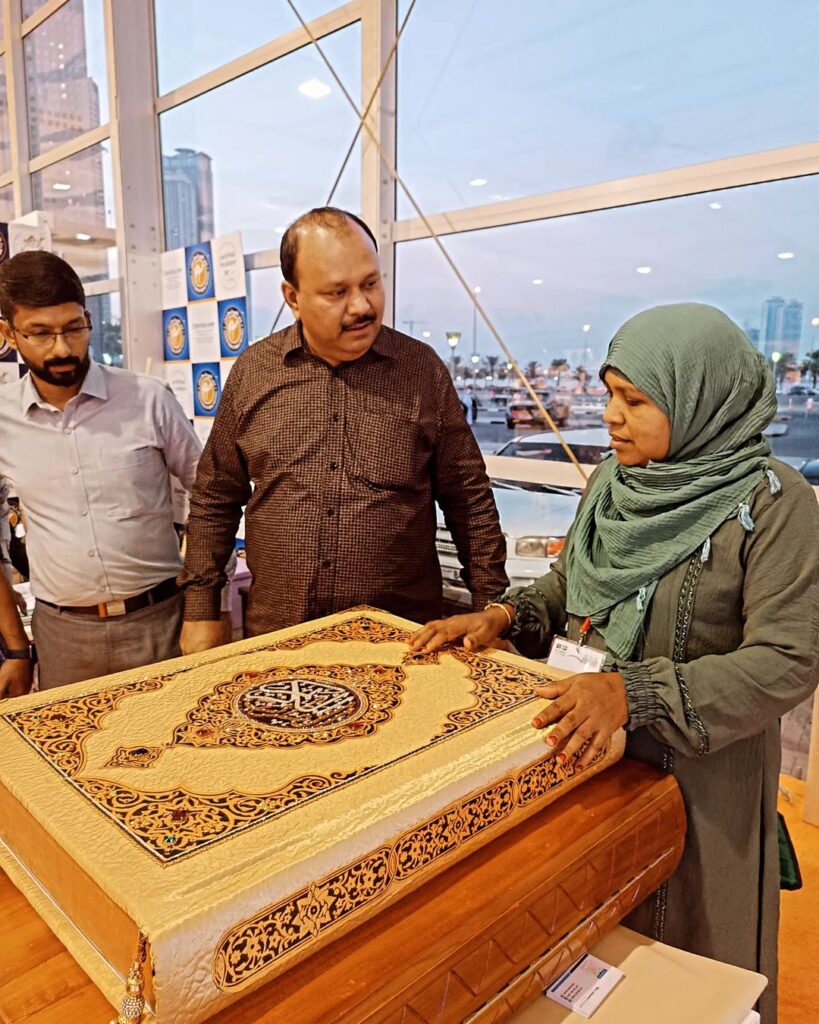
A 46-year-old Indian woman has displayed her handwritten Holy Quran in Arabic calligraphy weighing over 30 kgs at the 42nd Sharjah International Book Fair (SIBF).
Jaleena Hussain, who hails from Indian state of Kerala, has spent over a year creating a unique edition of 114 surahs, covering 604 pages.
Speaking to Sharjah 24, Jaleena said writing the Quran was her way of fulfilling her desire to memorize the Holy Book.
She expressed gratitude to the Sharjah authorities for allowing her to showcase her talent.
Jaleena, a former rubber plantation worker and Urdu teacher, has been recognized by the Arabian World Records and the India and Asia Book of Records for her handwritten Quran.
source: http://www.siasat.com / Siasat.com / Home> News> India / by Sakina Fatima X / November 12th, 2023
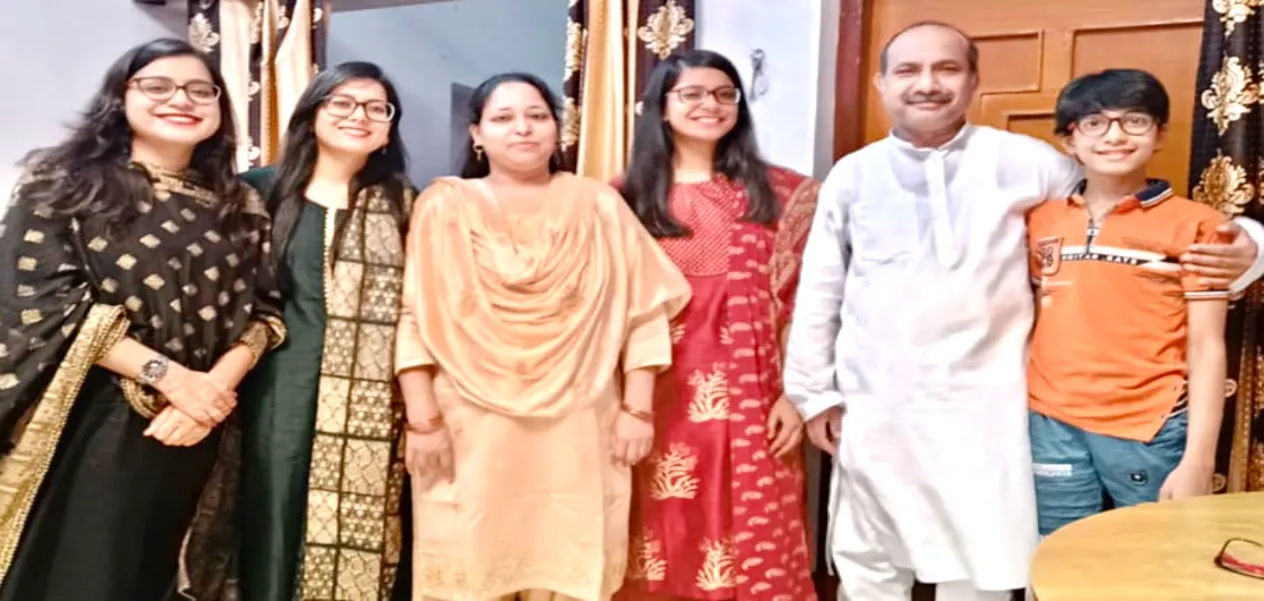
Sherghati, a small town in the Gaya district of Bihar which till recently was known for the Naxal insurgency is in the news for good reason. Three daughters of a local artist Imran Ali – Bushra, Saadia, and Anam – are studying to become doctors.
The three sisters are perhaps the first ones from a middle-class Muslim family in the district to have achieved this distinction.
In the recent NEET examination Bushra, the youngest of Ali’s daughters was declared successful and she followed in the footsteps of her sisters, Saadia and Anam, and joined the Medical College.
Aman Imran, the firstborn of Imran Ali and Zareen Kausar, is pursuing her doctorate from the National Institute of Homeopathy (NIH), Kolkata, one of the country’s top medical colleges. The second daughter Sadia Emala is studying in her final year of degree course at Mahesh Bhattacharya Homeopathic Medical College and Hospital, Kolkata.
Bushra Kausar has also been admitted into the Government Homeopathy Medical College and Hospital. The sisters have chosen homeopathy.
People in Sherghati are proud of the three sisters and everyone speaks about them.
Imran Ali and Zareen Kausar live in the Urdu Bazaar locality. On May 21, Imran Ali was awarded the Rajiv Gandhi Global Excellence Award 2023 in New Delhi.
Imran Ali and Zareen Kausar withtheir daughters and son
He runs an advertising agency and undertakes projects for publicity painting and advertising flex hoardings.
He is also a musician and given his music for the Bhojpuri films. He also performed the official functions on Republic Day and Independence Day for two decades.
Anam, Saadia, and Bushra grew up in a middle-class family, and through hard work reached this position.
The Sherghati sub-division was once highly infested with Naxal violence.
While studying at DAV, Bushra Kausar became the state topper in the inter-school slogan writing competition and was awarded ₹ 10,000 by the then Deputy CM of Bihar Sushil Kumar Modi.
She cleared her medical entrance examination on her second attempt and got admitted into the Medical College. She is planning to sit again for NEET to join the MBBS course in a medical college.
Imran Ali and Zareen Kausar believe that daughters are born to lucky parents.
Zareen Kausar said that along with becoming doctors, her daughters have set their eyes on the civil services. “You should not ignore your daughters but give them enough opportunities to move forward,” she said.
source: http://www.awazthevoice.in / Awaz, The Voice / Home> Story / by Seraj Anwar, Patna / November 09th, 2023
India’s Mohammed Shami became the fastest bowler to 50 ODI World Cup wickets, during his side’s semifinal encounter against New Zealand at the Wankhede Stadium in Mumbai on Wednesday.
India’s Mohammed Shami celebrates after taking the wicket of New Zealand’s Devon Conway. | Photo Credit: Reuters
India’s Mohammed Shami became the fastest bowler to 50 ODI World Cup wickets, during his side’s semifinal encounter against New Zealand at the Wankhede Stadium in Mumbai on Wednesday.
Shami removed Kane Williamson in the 33rd over after the New Zealand’s skipper failed to clear the deep square leg fence with a flick.
Shami got to the landmark in his 17th ODI World Cup innings, going two faster than Australia’s Mitchell Starc, who achieved the feat earlier in the tournament.
The 33-year-old Shami is the seventh bowler to get to 50 ODI World Cup wickets and the first Indian.
The right-arm pacer was initially not part of the Indian lineup. But ever since his return to the fold against New Zealand in the group stage, he has been unstoppable, picking up wickets for fun.
He secured fifers against the Kiwis and Sri Lanka, as he became India’s top-wicket taker in ODI World Cups.
Fastest to 50 wickets in ODI World Cup (Inns)
Player
Editions played
Innings
Mohammed Shami (IND)
2015-2023* (3)
17
Mitchell Starc (AUS)
2015-2023* (3)
19
Lasith Malinga (SL)
2007-2019 (4)
25
Glenn McGrath (AUS)
1996-2007 (4)
30
Muttiah Muralitharan (SL)
1996-2011 (5)
30
Wasim Akram (PAK)
1987-2003 (5)
33
source: http://www.sportstar.thehindu.com / Sportstar / Home> Cricket / by Team SportStar / November 15th, 2023
Twenty years ago, at the instance of my cousin late Shakil Ahmad Khan, our whole extended family donated its houses and vast lands in our ancestral village of Badharia in Azamgarh for a grand dream: to build a world-class school in a rural setting.
Today that school is a reality. After visiting this school sometime back, Prof. Vipin Tripathy of IIT Delhi told me that this school is at par with DPS Mathura Road! What an apt compliment!
Today, this school is flourishing in a rural setting attracting students even from Azamgarh city! With dedication and doggedness, miracle can happen even today.
This world-class school in a backwater village in eastern U.P. is a living proof.
Please watch this documentary prepared by the son of one of the founders of this school.
source: http://www.zik.in / Zafarul Islam Khan / Home / by Zafarul Islam Khan / August 20th, 2023
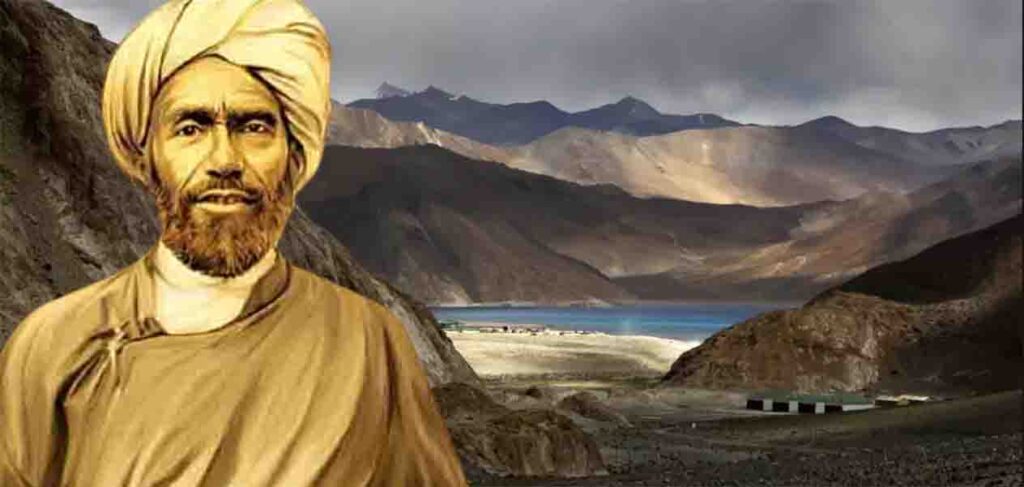
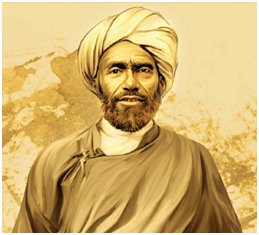
Once an explorer had lost his way in the rugged and bland mountains of Ladakh and he could not find his way out. As luck would have it, a 14-year-old boy helped him out of the landlocked hilly region through a river. The explorer was so thankful and impressed by the boy’s bravery that he named the river after the child, Rasul Galwan. Gradually, the surrounding valley became famous as the Galwan Valley.
Rasul Galwan continued to guide famous explorers from England, Italy, Ireland, and America.
The story of the life of Rasul Galwan who hailed from the Pasmanda tribal community – from a pony-boy to the Chief Assistant to the British Joint Commissioner – is fascinating.
His name was Rasul Galwan. He added Ghulam before his name on the advice of a Sufi saint. Galwan is a name of a family, which means the horse keepers. His ancestors used to take care of horses and ponies, so his family was named Galwan. Walter Lawrence in his book The Valley of Kashmir describes Galwan as a tribe.
Warisul Anwar, a Ph.D. scholar from Aligarh Muslim University, wrote on a Kashmiri news portal that, Rasul’s ancestors belonged to the famous tribe, the Galwan.
His great-grandfather Kara Galwan was a famous dacoit; he looted the rich and shared it with the poor. Poor people considered him as a guardian and the rich saw him as a constant threat. His grandfather Mahmood Galwan went to Baltistan from Kashmir and later the family settled in Leh.
Rasul was born in Leh around 1878. As a child, he painted the walls of his house with beautiful motifs. People admired his art and told his mother that one day her son would be very successful. He had a creative mindset and wanted to study. he stayed away from sports and games. There were no schools in Leh at that time and the rich people used to hire private teachers for their children. He would prod his mother to send him to a tutor. His mother told him, “We are poor people, I have no money to afford your teacher, reading and writing is the work of the rich people, not ours, our fathers were not educated, They were hard-working people, you should do the same, it will be good for you.”
He replied, “Yes, our ancestors worked very hard for their livelihood, but I want to study.
“Maybe if I have good luck I will learn a few good things which will be good for the future, I want to study, if you think it is good, then let me go to the teacher. I’ve heard that despite being costly study is the best, and we can earn with it in the future.”
His mother said, “You will work in a tailor shop, it will be better for your future and it won’t be costly”.
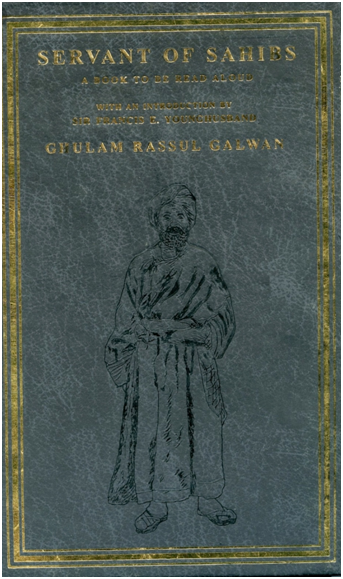
This conversation if in the book Servant of Sahibs.
His mother sent him to a tailor but he wasn’t interested in it. He had been remain sad and always thought that if I was rich, I could have studied. The shopkeeper used to beat him a lot and within a month, he got fed up and fled from there.
Biography of Ghulam Rasul Galwan
At a very young age when he went on an exploration trip with Dr. Trall, his mother stitched three rupees in his kurta and asked him to use this money only when the money given by the sahibs spent out but first tell his sahib how much money you have and where is it kept. Otherwise, when the sahib is looted and he sees money with you, then he might consider you a thief.
Before leaving for the journey, his mother hugged him and both cried a lot and he cried too with her, at last, he touched his mother’s feet and paid salam, and paid salam to his neighbours after that he went to his sister’s home and paid salam to her too. (page 25, Servant of Sahibs)
After some time a missionary priest opened a school in Leh, and Galwan’s passion for reading again started to oscillate but he knew his mother, so after getting a recommendation from his sister he enrolled in school, he quickly moved forward, leaving the other boys behind due to this the priest became very happy, He deeply praised Galwan, which further strengthened Galwan’s faith in studies.
Rasul’s exploration with sahibs and his studies continued. During the long journeys, Galwan kept memorizing the lessons he was taught in school. He knew languages like Ladakhi, Turkish, Urdu, Kashmiri, Tibetan, and English.
In a letter to his wife Catherine, the American traveler Robert Barrett writes, “Rasool’s manners are perfect, the most policed gentleman could do not more than equal them. He is a very good person and a guardian to his men. He is a very black and very handsome man, graceful in all his movements, his smile most charming. His voice is the sweetest man’s voice I ever heard. The woman lives not who would not fall in love at first sight, but his standard of morality is very high. The Women are afraid of him as a saint.”
According to Lieutenant Colonel Sir Francis Younghusband, Rasul had a strong faith in God. It was his stand-by in all hardship, trials, and disappointment. And this habit of reverence was undoubtedly what made him the gentleman he was. He came from the very poorest. He started as a simple village lad. But in every situation, he behaved like a gentleman. He was a born storyteller, clearly a popular singer, and had, also, a great delight in banjo-playing.
Pasmanda has been inhabiting this land for centuries, which is why they have a natural attachment to this land and it is obvious that everyone loves his country as his mother. This has been a big reason why Pasmanda has always been on the front line in sacrificing their life for India.
Pasmanda has never been bothered as to which party or person is ruling the country; they give importance to the country and its protection. Notwithstanding the lack of resources, the Pasmandas have been making supreme sacrifices to defend their nation. This is unlike many Ashraaf, who claim their Arab origins and consider India as a conquered state.
Rasul Galwan
In Servants of Sahibs, there is another incident related to Rasul galwan’s life. “Once when he returned to the camp in the evening, he found that some Chinese soldiers had assaulted Major Sahab and the Head-Man. Rasul Galwan was very angry, he beat the Chinese troops with his friends Kalam and Ramazan, later Chinese came and apologized to Major Sahab.
On the second day, Kalam suddenly came and told us that the Chinese were killing our people in the market, Rasul Galwan reached there immediately and saw that the whole market was full of Chinese soldiers and they were killing the people, he immediately jumped into the fight, Chinese soldiers broke his stick and injured him badly. He fell to the ground, yet they kept hitting him and ran away thinking that he was dead.
After some time, Major Saheb came with the headman, he told Ghulam Rasul, who was lying in a half-dead situation, “Rasul you don’t have to be sad, here you have fallen alone and there are seven Chinese soldiers and one of their military officers have fallen”. A triumphant smile streamed on his face. His friend Ramadan was also injured badly in this event.’
Even though the British themselves were foreigners and occupying India, Rasul thought it was more important that the morale of Chinese soldiers be broken so that they could never look at our borders. For this, he put himself and his companions’s lives in danger. A year after the publication of his autobiography, in 1925, at the age of 47, he passed away.
Today, once again, Rasul Galwan is posthumously playing an important role in protecting the border of India. The discovery and naming of the valley by an Indian is further strengthening India’s claim.
The author is a leading Pasmanda Rights activist
source: http://www.awazthevoice.in / Awaz, The Voice / Home> Story / by Fayaz Ahmed Fyzie / November 05th, 2023