Category Archives: Arts, Culture & Entertainment

These photographers are ‘wild’ and loving it

TELANGANA :

Snow leopard | Photo Credit: Ismail Shariff

For World Wildlife Day on March 3, photographers speak of what attracts them to the wilderness

March 3 is World Wildlife day, as declared by the United Nations. A day dedicated to celebrate and raise awareness of the world’s wild fauna and flora.” Images go a long way to celebrate wildlife and foster love and concern for it.

But for the wildlife shows on TV, most of us haven’t seen animals in the wild. The beauty of the wilderness would have been lost to us had it not been for the photographers who spend enormous amount of time in waiting patiently to capture that one shot that will make us fall in love with nature and the jungle. Wildlife is a subject of interest to many photographers because they feel it is their way of capturing the beauty in their most natural mood and habitat.

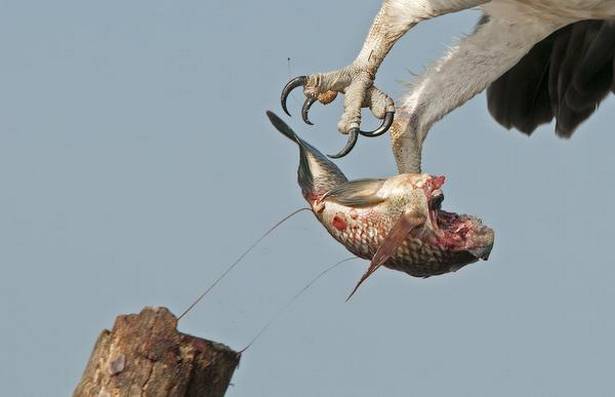
An eagle flies away with her next meal, a piece of fresh fish | Photo Credit: MASOOD HUSSAIN

Phani Krishna Ravi of Hyderabad Birding Pals, feels birds don’t bother humans if we just let them be. “It is the pattern that we need to learn. Wild birds have a pattern for everything — for eating, breeding, nesting and resting. Understanding their pattern needs patience. The process of understanding actually brings us peace of mind. To be a part of the wild, we need to sync with it. That is when we can understand them better and work to protect them.”

This year’s theme for World Wildlife Day 2019 is: ‘Life Below Water: For people and planet.’ Overfishing, acidification and pollution threaten life below water. The battle to clean our rivers and oceans is a long one. Activities are taking baby steps beginning with a ban on plastic straws, sunscreen lotions and finding the best solution to save marine lives.

Many examples of sea clean up and conservation of marine life can be seen the world over. A few efforts have paid dividends; a good example of this is the return of the sea turtles to Versova beach. The Versova cleanup came to be known as ‘world’s largest beach clean-up project’ by the United Nations. The beach’s dramatic transformation soon saw return of the sea turtles to the beach after 20 years. Naturally that news and videos went viral.

Photographer Masood Hussain | Photo Credit: Irfan Intekhab

Does that mean we can overlook our forests this year? Are things any different on land? With shrinking habitats, our wild animals are an endangered lot and sanctuaries are the only spaces that provide them with a safe haven. ? Masood Hussain interest in wildlife photography stems from his dissatisfaction with his pictures when he was shooting people, places and festival moods. “I was only repeating what others have already done, I wanted different,” he says.

He adds, “Wild animals need their space. In the wild you can see them in their element. It’s very different from what one sees in a zoo. The wild is their natural habitat, they aren’t used to cages and small confinements. After going to the wild for photos, I feel sick if I don’t go back and spend a few days there; it is my medicine. When I go to the jungle I go with preconceived ideas of my shots. I go with the wish to capture a bird or an animal in a particular place. The only way to achieve that is to sit patiently and come back with an almost-there shot. The photo gives joy no doubt, but it also makes viewers want to be a part of it, to take care of it. It makes me happy when I see people enthusiastic about going to witness the wild. When one sees an animal in its natural habitat a sense of responsibility for their conservation comes in, it a natural thing to happen.”

Masood cannot pick a favourite photo from his own collection because each photo comes with a story to narrate.

Every photographer who goes to the wild says its beauty is fascinating and not even the hardships they face in the wild can stop them.

Photographer Ismail Shariff | Photo Credit: Vijay Sirdesai

Professional wildlife and nature photographer Ismail Shariff who just returned from an expedition to photograph snow leopards at Spiti in Himachal Pradesh says, “When you are scouting for a snow leopard in the vast mountains and huge gorges of Kibber, completely disconnected with everyone but the ones around you, there is a sense of attainment, which get extrapolated when you actually see one. While sitting at the top of the mountain ridges surrounded and covered in all white, its not just about the fauna around you, but the feeling of calmness and satisfaction to the soul, for just being there. It’s an unexplainable feeling to be associated with such pure nature.”

source: http://www.thehindu.com / The Hindu / Home> Sci-Tech> Environment > World Wildlife Day / by Prabalika M. Borah / March 01st, 2019

The rise of Miss Khan

Kolkata, WEST BENGAL / London, UNITED KINGDOM :

From the desk of Sunday magazine to a celebrated chef now on Netflix’s Chef’s Table, Asma Khan’s story is one of strength, confidence and ambition

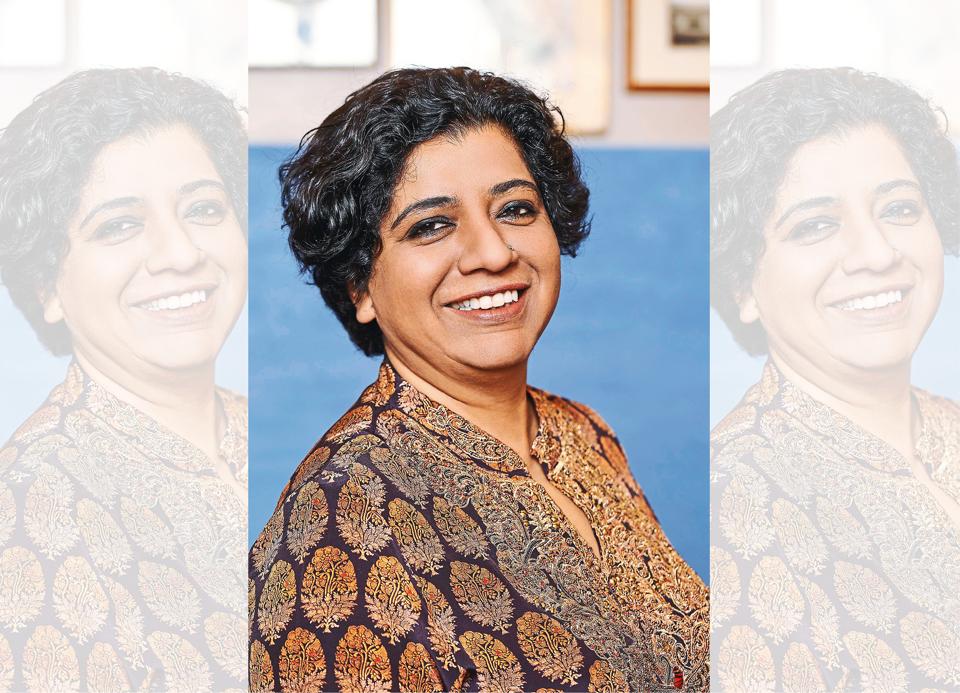
The first British chef to make it to Chef’s Table, Asma Khan is also opening all-women kitchens in conflict zones in Syria(Ming Tang-Evans)

It is a funny feeling when a colleague from decades ago becomes a success in a totally different field. And it feels even stranger when you find yourself writing a profile of somebody you once knew as a sub-editor.

In 1990, when I edited Sunday magazine, a young girl came to see me to ask if she could try her hand at journalism. She worked at Lintas, the ad agency, she said, and wanted to do something different but not entirely unrelated.

I hired her on the spot and all of us in the office thought she was very bright and articulate. Then, a few months later, she announced that she was getting married, resigned from her position and went off to live in Cambridge with her new husband.

And that, I thought, was the last I would hear of Asma Khan.

Wrong, very wrong.

A few years ago, she sent me an email. She was now a chef in London, she wrote. Not only did she organise private dinners at home but she was also running a pop-up in a pub in Soho. Why didn’t I drop in and try her food?

I had to search my memory to remember Asma (time to be candid!) and when I asked old colleagues from the Sunday days, they said that they found it hard to believe that she was now a chef.

Then, in 2015, my friend Fay Maschler, London’s most influential critic, wrote about Asma’s pop-up. It was an unqualified rave review and she rated Asma’s little restaurant serving Kosha Mangsho and Kathi rolls ahead of most of London’s fancy Indian places.

The day the review came out, there was a line outside the pub where Asma ran her pop-up. It began raining but the people still continued queuing. Asma and her cooks were stunned. But like good Indians, they felt bad for the crowds. So they made little bowls of rice with dal and distributed them for free to those lining up. The gesture did not go unnoticed and every night after that, the small restaurant was packed. It became the cool place to go for people who wanted real Indian food.

“Fay Maschler changed my life,” says Asma now. And indeed, the changes have been dramatic. A year and a half ago, the owners of Kingly Court, a new development off Carnaby Street in the centre of London, offered her a dream deal on a site for a full-fledged restaurant. The restaurant opened to glowing reviews and became a symbol of the new London. Nigella Lawson came. Sadiq Khan, the Mayor of London, praised it. And Asma appeared on the list of the 100 most influential people in food in the UK.

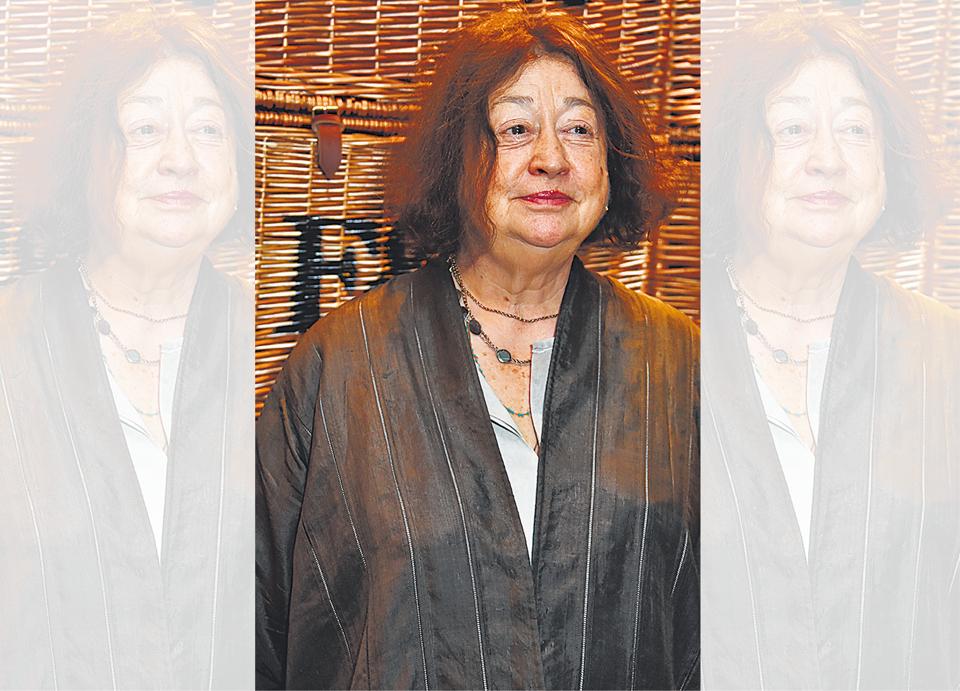
Fay Maschler, London’s most influential critic, discovered Asma

But a few months ago, Asma received her biggest accolade yet. The Netflix series Chef’s Table has featured some of the world’s greatest chefs. It has the power to turn a chef’s life around. Gaggan Anand says that even more than all the honours and awards he has earned (two stars from Michelin, number one restaurant in Asia for an unprecedented four years in a row etc.), it is Chef’s Table that made people from all over the world fly in to Bangkok to eat at his restaurant.

____________________________________________________________

Asma Khan is Kolkata’s second contribution to the global food world

____________________________________________________________

There has been much heartburn in the UK that no British chef has ever made it to Chef’s Table.

So when Netflix announced that it had finally selected a British chef, there was much anticipation. To everyone’s surprise, they chose Asma.

The show airs later this month and as I told Asma, her life will never be the same again. She will soon be one of the world’s most celebrated chefs, the best known Indian chef in the UK and perhaps globally, with the exception of Gaggan.

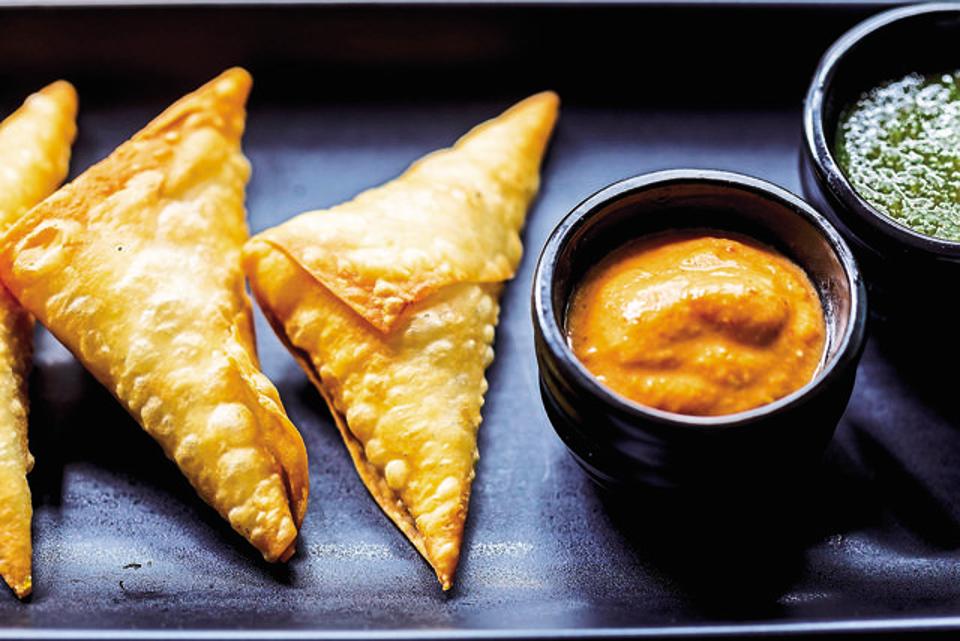
Chicken samosas served with spicy sesame and red chillies chutney, and tamarind chutney ( Ming Tang-Evans )

As wonderful as all this is, a little voice inside my head kept asking, “How did Asma, the same old Asma from the Sunday desk end up becoming one of the great chefs to be featured on Chef’s Table? Had she been a secret cook all along even as she laboured over copy? Had she worked at some of the world’s best restaurants? Had she reinvented classic Indian dishes?”

The answer: none of the above.

The Asma story is so incredible that if you made a movie with this plot, you would be accused of asking too much of the viewer. Suspension of disbelief is okay, but Asma’s life takes us far beyond that.

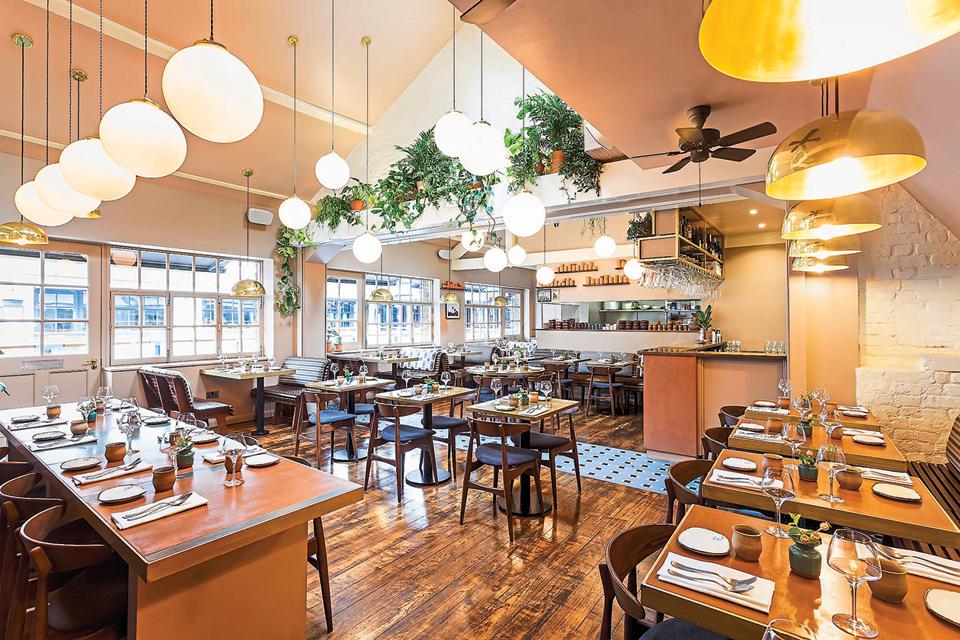
Darjeeling Express started as a dinner for 12 guests at home and is now a hugely successful restaurant ( Ming Tang-Evans )

She was born in Calcutta to a family with roots in nawabi culture (what we would call landed gentry, I guess). She had a standard middle-class upbringing (La Martiniere and Loreto) before going out to work (Lintas and then Sunday). Her parents introduced her to Mushtaq, a brilliant Bangladeshi economist who was a don at Sidney Sussex College in Cambridge. Asma and Mushtaq had, what was for all practical purposes, an arranged marriage and she moved to Cambridge.

Beetroot chops, Bengali spiced croquettes made with British beetroots ( Ming Tang-Evans )

She was miserable. “I thought the Quran had it wrong when it described hell,” she recalls. “Hell was Cambridge.” She hated the cold, the greyness, the drab English environment (especially after the sights, smells and sounds of Calcutta).

Asma’s book, a collection of authentic Indian recipes

Though her mother had run a catering business in Calcutta, Asma did not know how to cook. She could read copy, she could give clever headlines. But she had no kitchen experience. Fortunately Mushtaq had no interest in food.

So she turned to studying. She got a law degree, and then decided to do a PhD in law. By then, Mushtaq had shifted to the School of Oriental and African Studies in London so she applied to King’s College at London University. She talked the dons at King’s into letting her go directly to a doctorate without a Masters.

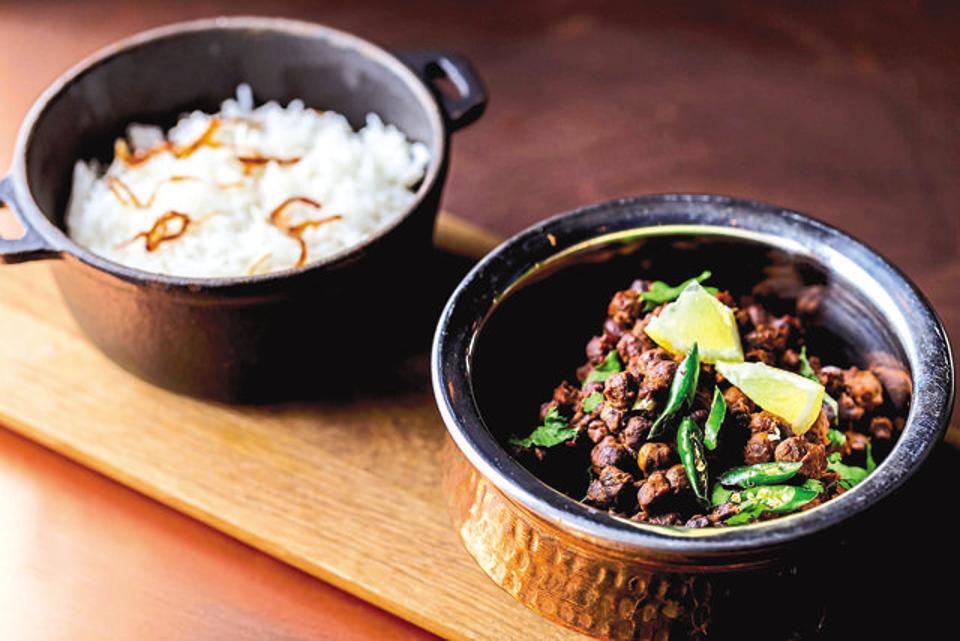
Black chickpeas (kaala channa) cooked with ginger and dried red chilies at Darjeeling Express ( Ming Tang-Evans )

She chose, for her thesis, a subject that was as far removed from Calcutta as possible: how the UK handles the separation of Church and State. But even as she was discussing whether the British monarch should be ‘defender of the faith’, a hitherto undiscovered cooking gene deep inside her reasserted itself.

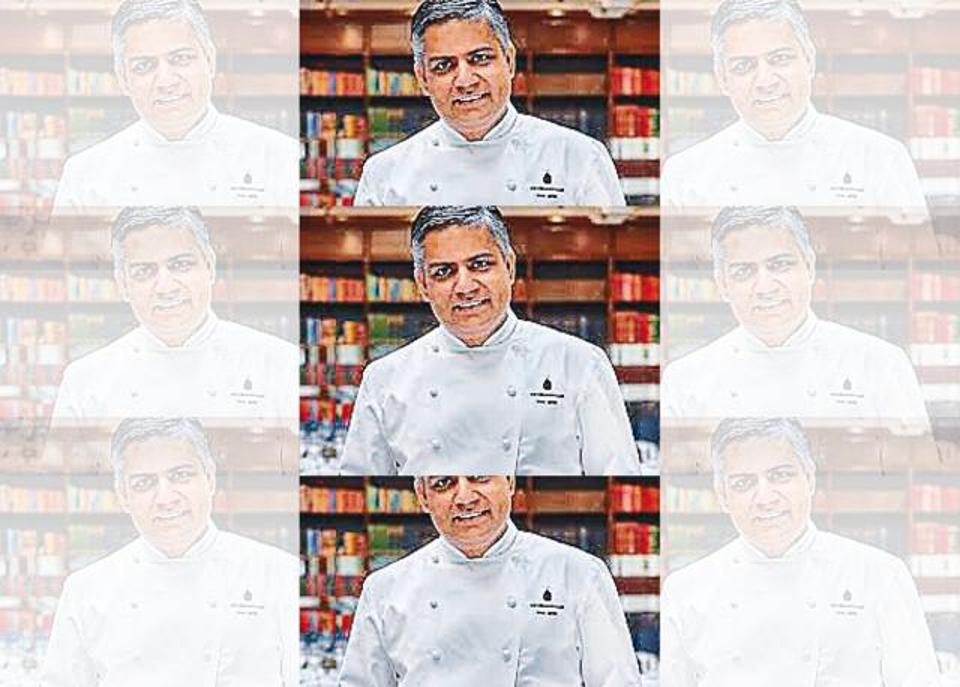
Chef Vivek Singh offered Asma a pop-up at Cinnamon Club

She began to make the food of her ancestors, going back to old family recipes. Eventually, cooking became such an obsession that she started hosting pop-up dinners. Her husband disapproved of the idea so she cooked the dinners when he was travelling. (“We cleared up the house so well,” she laughs “that usko pata hi nahi chala!”)

But her two children, who were not happy with having the house taken over by strangers, complained to their father and soon the jig was up.

Asma is nothing if not super confident, so she called such famous London chefs as Cyrus Todiwala and Vivek Singh to her house for dinner to try her biryani. Even though none of them knew her, they came anyway. They were kind and encouraging. Vivek Singh was so impressed that he offered her a pop-up at his The Cinnamon Club restaurant. She took her all-women team of cooks and won over the all-male Cinnamon Club kitchen team. (“I will always be grateful to Vivek for that,” she says.)

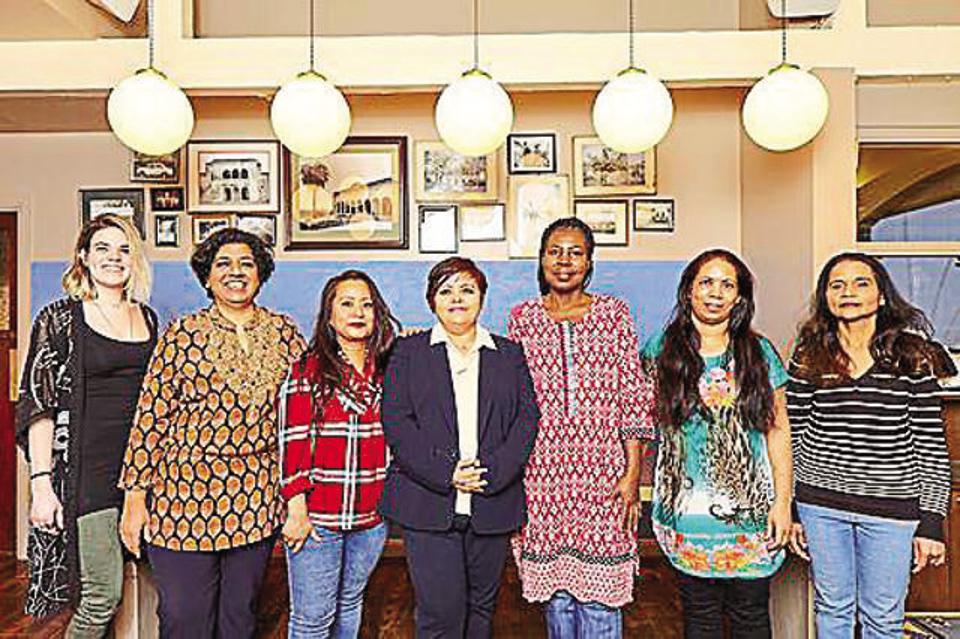
The all-women kitchen team at Darjeeling Express, London

That gave her the credibility to do a full-time pop-up. Word of her skills got out. Fay discovered her. And the rest is the stuff Chef’s Table episodes are made of.

Now, with the success of Darjeeling Express, Asma is well-known in London. People make much of her nearly all-women team. (My wife, who came to lunch at Darjeeling Express with me, loved the female energy; she was sold on the restaurant even before the first dish arrived.) Asma is overtly political, speaking out about sexual harassment in restaurant kitchens, breaking the conspiracy of silence that women in the business have gone along with and has become a symbol of the success that Asian women can find if they overcome prejudice and their own apprehensions.

But ultimately, I judge chefs by their food not by their stories. And Asma’s was terrific. We had puchkas, Bihari phulkis (like pakoras), Kosha Mangsho, a Calcutta mutton chaap, kaalachanna, chicken samosas, beetroot chops and so much more. None of it was molecular or clever, clever. It was just excellent.

You will hear more about Asma in the months ahead.

After Gaggan, she is Kolkata’s second contribution to the global food world.

And you will hear about her in non-food contexts. She is opening all-women kitchens in conflict zones in Syria. As she says, “I don’t want to be remembered as a great chef. I want women to come to my grave and say ‘she changed my life’; that’s what matters.”

She is not short on confidence and ambition, our Asma. And I have a feeling that she will end up being the most successful person to ever emerge from the offices of Sunday magazine!

From HT Brunch, February 24, 2019 / Follow us on twitter.com/HTBrunch /Connect with us on facebook.com/hindustantimesbrunch

source: http://www.hindustantimes.com / Hindustan Times / Home> Brunch / by Vir Sangvi, Hindustan Times / February 24th, 2019

Guardian Angel of mariners

Nagapattinam, TAMIL NADU :

A view of Nagore Dargah, in Nagapattinam | Photo Credit: B. VELANKANNI RAJ

Cutting across faiths, sailors pray to Nagore Miran for a safe journey

“There are so many boats named after ‘Nagore Andavar’ in Kasimedu (a fishing harbour in Chennai). Don’t hastily jump to the conclusion those are owned by Muslims. They actually belong to our people,” cautions Manoharan, to me and writer Nivedita Louis. We were at his residence to record songs on Nagore Andavar as sung by Manoharan, aged about 80 and a retired fisherman of Olcott Kuppam in Chennai. Though the Nagore Andavar he refers to is a 16th century Muslim Sufi saint who transcended religious divides, it still comes as a surprise to know that Hindu fishermen living some 300 km north of Nagore where the Sufi lies buried, name their boats after him.

Continues Manoharan, “When the sea gets turbulent and we feel our lives are at risk, it is to Nagore Andavar that we plead, through songs to rescue us. And miraculously the winds will change, push us to the safety of the shore,” he says. He immediately breaks into a song in Tamil that pours out their fears and pleads for their safety from the wrath of the sea. A hundred km away from Chennai, fishermen at Veerampattinam of Pondicherry, praying for their safety before sailing into the rough sea, make their offerings to Nagore Andavar at Nagoorar Thottam.

Interestingly it was not just fishermen of the Tamil coast, but anyone who left the Tamil coastline in the 19th century placed their faith in the saint to safely cross the seas, and wherever they landed, they built a memorial or shrine for him. Those shrines today stand as testimony to the path taken by the Tamil Diaspora across continents, from maritime traders to indentured labourers. From Penang in South East Asia to the Caribbean in the Americas, with recent additions in Toronto and New York, the influence of Nagore Miran as the Sufi is also known, can be seen.

Nagore Miran, the 16th century Muslim Sufi saint, buried, as the name suggests in Nagore in Nagapattinam district of Tamil Nadu was born as Sahul Hameed in Manikhpur in North India. He took to spiritualism early in his life and travelled through West Asia to Mecca and to Burma and on to China before touching Ceylon and the South Indian coast. Travelling through the Tamil country with his band of followers, local lore has it that the Sufi cured an ailing Achutappa Nayak, the ruler of Thanjavur, and a grateful Nayak gifted land for the Sufi to stay at Nagore. Interestingly, the Sufi arrived at at a time when the Indian seafarers, particularly the Tamil Muslim ship owners, were being harassed by powerful Portuguese naval fleets.

With the hostile Portuguese at Nagapattinam, the presence of the Sufi at nearby Nagore was a great solace not just to the harassed maritime traders but to the sea faring fishermen. Among the miracles attributed to him, it was widely believed by the fishermen that, the Sufi, while residing at Nagore was able to plug the hole in a ship which was otherwise sinking off the coast.

His mysticism touched the lives of people across faiths — from Kings to commoners. They flocked to him and after his death to the Nagore dargah where he lies buried. The dargah received endowments from the Thanjavur Nayaks, Marathas and Nawabs. One of the five minarets at Nagore dargha, the tallest at 131 feet, was built by the Maratha ruler Maharaja Pratap Singh Bhonsle in the mid-eighteenth century. Govindasamy Chetty, Mahadeva Iyer and Palaniyandi Pillai are some of the donors.

In the late 18th century when the British founded Penang in Malaysia as the fourth presidency, it attracted considerable Tamil Muslim traders who were already doing business in South-East Asia. Mostly known as Chulias (those from the land of the Cholas), they became one of the earliest settlers in Penang. By early 19th century, when the settlement had grown considerably, the Company enabled them to build the Kapitan Keling mosque. They built a memorial for Nagore Sahul Hameed at the junction of Chulia street and Kings street. Similar memorials were built across South-East Asia, in Aceh, Burma, Vietnam, Ceylon, Singapore and many other parts of Malaysia wherever the traders went.

However unlike the Tamil Muslim traders, who traded within the Asiatic region, the indentured labourers were taken to distant continents by the colonial rulers, to work in the new plantations. In the early 19th century, as ships set sail from Nagapattinam, the indentured labourers, placed their faith on Nagore Miran for their safe journey across the turbulent seas. The labourers reached lands as distant as the Caribbean Islands. “When in early 20th century they moved to better pastures in Canada and the U.S., Nagore Miran along with Madurai Veeran, Mariamman and many other gods and saints found place in the newly constructed temples at Toronto and New York,” points out Prof. Davesh Soneji of University of Pennsylvania.

If the Muslim traders treated Sahul Hamid as an Awliya, the Hindu indentured labourers, used to idol worship, gave him a form and placed him in the sanctum along with other Hindu deities such as Madurai Veeran, Muneeswaran and Mariamman. “…this divinity is an integral part of most of the ‘Madrassi’ or South Indian Hindu temples in this region. In French Caribbean Islands of Guadeloupe and Martinique, Nagore Mira is worshipped in the form of a Boat and mast decorated with colourful flags. 786, the sacred Islamic number, can be found engraved on the boat,” writes Suresh Pillai, an interdisciplinary artist working at the intersection of arts, archaeology, and cultural artefacts to locate material history and empirical knowledge among living cultures.

Interestingly in Tamil Nadu itself, every year, at the beginning of the Kandhurior Urs festival in honour of the saint, festooned boats resembling ships, adorned with various flags, navigate their way through the streets of the old harbour town of Nagapattinam, before cruising through the national highway leading to Nagore. “It is really surprising how these big boats squeeze themselves through the narrow streets of Nagapattinam and Nagore before finally halting at the saints abode. After which the flags are raised on different minarets of the dargah on the first day of the Urs,” says Harini Kumar, a research scholar on Tamil Islam. Typical of the syncretic nature of the Sufi shrines, as the festival gathers momentum, various communities pay their respects to the saint, with specific non-Muslim families, including the fishermen, accorded hereditary honours.

While the syncretic nature is a common thread that runs through the Sufi beliefs, it is Nagore Miran the Sufi, emerging as the patron saint of the seas, enabling us to trace the path taken centuries ago by the Tamil Diaspora, that seems unique.

source: http://www.thehindu.com / The Hindu / Home> Society> History & Culture / by Anwar’s Trails / by Kombai S. Anwar / March 07th, 2019

Break conventions, VC exhorts historians, researchers

KERALA :

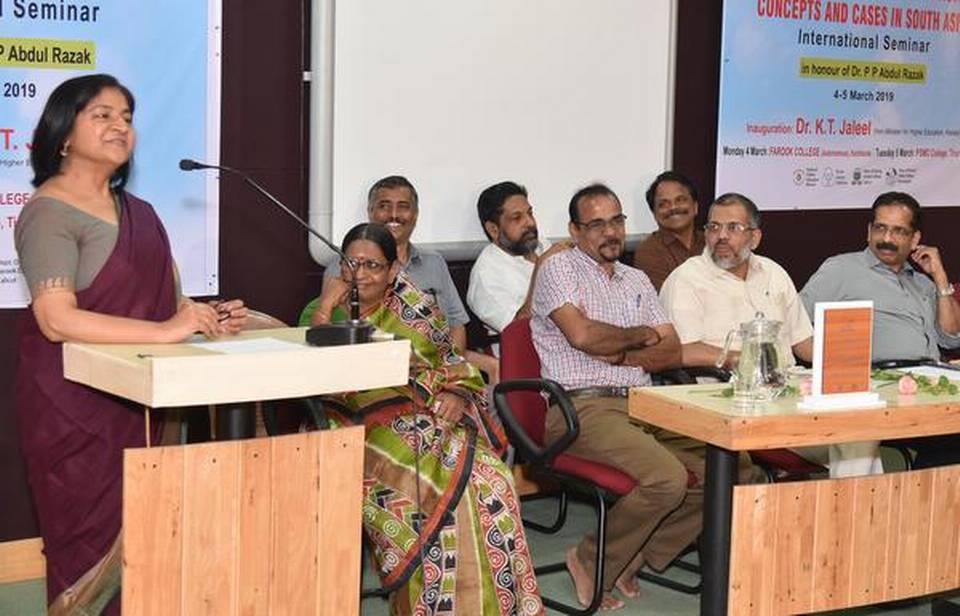
History professor Seema Alavi from Delhi University addressing an international history seminar at Farook College on Monday

Two major colleges of Malabar are jointly hosting an international history seminar in honour of well-known academic P.P. Abdul Razak, who is retiring soon from P.S.M.O. College, Tirurangadi, as its History Department head.

Calicut University Vice Chancellor K. Mohammed Basheer inaugurated the seminar on ‘Early modern and colonial in history: concepts and cases in South Asia’ at Farook College on Monday.

Dr. Basheer called upon historians and researchers to take a diversion from the traditional methods of historiography. He exhorted them to widen the study of history by including the colloquial languages and local history.

“History should be linked to the lives of ordinary people,” he said. Several reputed historians, including Seema Alavi from Delhi University, Mahmood Kooria from Leiden University, Nirmal Renjit Devasiri from Colombo University, K.N. Ganesh and K.S. Madhavan from Calicut University, are attending the two-day meet.

Farook College principal K.M. Naseer presided. T. Mohammedali, head of History Department at Farook College, welcomed the gathering. Kerala History Congress general secretary N. Gopakumaran Nair, Farook College History Old Students Association president P. Ramdas, Vijaya Lakshmi from Malayalam University spoke. K. Lukmanul Hakeem from Government Arts and Science College, Kozhikode, proposed a vote of thanks. While Farook College hosted it on the first day, PSMO College, Tirurangadi, will host the proceedings on Tuesday.

The National Higher Education Mission is supporting the seminar jointly organised by Farook College and PSMO College in association with the Social History Collective, Kozhikode.

source: http://www.thehindu.com / The Hindu / Home> News> States> Kerala / by Staff Reporter / Malappuram – March 05th, 2019

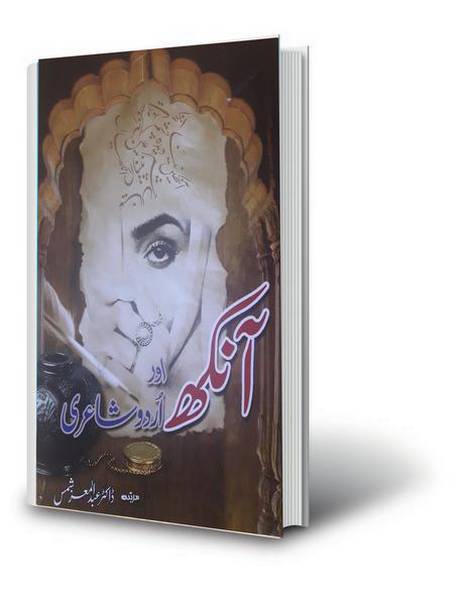
The book ‘Aankh Aur Urdu Shayeri’: A poetic eye on ‘aankh’

Aligarh, UTTAR PRADESH :

UrduBookMPOs11mar2019

An anthology of Urdu verses and proverbs, all on eyes, was launched recently

Eyes are a mirror of the soul, it is said. Some eyes are sly and roguish, some serene and shining, a few, seductive and mysterious. Prod Dr Abdul Moiz Shams and he reels out details about a variety of eyes and their intrinsic worth. He should know considering he is an ophthalmologist by profession, but then Dr Shams also has a keen eye for Urdu  poetry.

DrAbdulMoizMPOs11mar2019

During his long service as an ophthalmologist, he has looked into innumerable defective eyes holding a little flashlight. While restoring vision, he has also looked beyond, into the soul. And what he has come up with is a book titled Aankh Aur Urdu Shayeri.

Inki aankhen ye keh rahi hain Faraz

Ham pe tasneef ek kitab karo

(Her eyes tell Faraz

Write a book on us)

Dr Shams has compiled a 389-page book containing couplets of different shades and emotions on eyes. It’s a treasure trove for connoisseurs of poetry. From Mirza Ghalib, Allama Iqbal to Meer, Sauda, Shaad, Faiz, Majaz, Jigar Muradabadi, Ali Sardar Jafery, Parveen Shakir — a whole lot of Urdu poets and their verses on aankh have been listed.

The book is divided into three parts — the first one contains couplets beginning with aankh, the second one has verses which are allegorical in nature and the third part has proverbs containing the word aankh, listed topic-wise. The book is a ready reckoner of sorts, on eyes. This is perhaps the only book of its kind where all the pages are full of verses on one body part.

Right from his student days Dr Shams had a love for poetry and when he became an eye specialist, his passion took a different turn. He started focussing on poetry of eyes. It’s no wonder that he has four other books to his credit: Hamari Aankhen, Jism-o-Jan, Jism-Be-Jan and Aab-e-Hayat.

“The eye is the jewel of the body. Its function is not just to see but to look beyond and sense colour, form, light and movement. That’s why I started collecting couplets on eyes,” says Aligarh-based Dr Shams who released his book in Hyderabad.

The insightful couplets are real eye-openers. Sample this couplet of Parveen Shakir.

Aankh ko yaad hai wo pal ab bhi

Neend jab pehle pehal tuti thi

Full-length ghazals of Ali Sardar Jafery, Khaisar Siddiqi, Hasrat Mohani and Basheer Badr, all on eyes, make for delightful reading.

Gulab aankhen, sharaab aankhen

Yehi to hain lajawab aankhen

Aankhen uthen to dard ke chashme ubal pade

Palken juhken to payar ka badal baras gaya

One can get an eyeful of couplets in this book which was released at the recent two-day National Urdu Science Congress at the Maulana Azad National Urdu University. “There is no dichotomy between science and literature. In fact they complement each other,” says Dr Abid Moiz, who is also a good humour writer.

source: http://www.thehindu.com / The Hindu / Home> Life & Style> Book / by J S Ifthekhar / March 06th, 2019

Home chefs bag honours in cooking competition

Bengaluru, KARNATAKA :

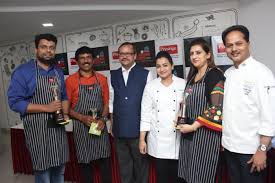
Out of 250 participants, seven home chefs made it to the finals.

From left) Bijesh K V, Manas Ranjan Raut, Dinesh Garg, Chef Shazia Khan, Fahima Zahid and Chef Abhijit Saha at The Cooking Studio.

On Thursday at The Cooking Studio, the seven finalised flexed their culinary muscles to impress the judges and take home the first prize.

The competition was judged by Masterchef and runner-up Shazia Khan, Executive Chef of Taj Vivanta Chef Selvaraju , Chef Abhijit Saha, Founding Director and Chef, Avant Garge Hospitality, and Dinesh Garg, Executive Vice President, Sales and Marketing, TTK Prestige Ltd.

After an intense 90-minute round of cooking one savoury and one dessert using the Prestige equipment, TTK Prestige announced Bijesh K V as Bengaluru’s best home chef 2019.

The IT sales executive also won a voucher of TTK Prestige products worth Rs 50,000.

Fahima Zahid, a homemaker, and Manas Ranjan Raut, ex-Airforce Junior Warrant Officer and fitness trainer, won TTK Prestige products worth Rs 30,000 and Rs 20,000 as first and second runner up, respectively.

The winning dish prepared by Bijesh was Spiced Kiwi Rice, Orange Chicken with a dash of honey and Choco Orange Mug Cake with an Indian spice twist. Fahima prepared Chicken Changezi and Coconut Pana Cotta with Mango Coulis.

Manas cooked Paneer Spinach Mozerella Crispy Ball and Caramel Carrot Halwa Truffles.

Celebrating his win, Bijesh said, “This has been the most phenomenal learning experience for me. I have always been passionate about food and I am so pleased that my dishes were well appreciated.’’

Chef Shazia Khan said, “I was very impressed by the quality of dishes prepared by the participants. I was particularly struck with how Bengalureans have begun to experiment with different cuisines and embrace different kinds of food. It was a difficult choice as all the finalists were accomplished cooks, but our winners displayed risk, great technique and skill in their cooking, which ultimately enabled them to stand out from the others.”

source: http://www.deccanherald.com / Deccan Herald / Home> MetroLife> Metrolife Cityscape / DH News Service, Bengaluru / March 01st, 2019

They win people’s hearts with their special skills

KERALA :

CalicutMPOs01mar2019

Third anniversary of disability management programme

The Community Disability Management and Rehabilitation Programme (CDMRP), a unique outreach scheme of the University of Calicut implemented through the Department of Psychology, celebrated its third anniversary on Thursday. The programme is implemented with the the support of the State Social Justice Department.

The celebrations marked a special gathering of a large group of differently abled children and their parents on the campus. The children with different abilities won the heart of the campus by presenting their special skills without inhibition.

Vice Chancellor K. Mohammed Basheer inaugurated the celebrations.

Speaking on the occasion, Dr. Basheer underscored the need to provide equal status to the differently abled children by bringing them to the mainstream.

Onus on society

He said the onus was on society to bring the differently abled up to the mainstream by providing what they wanted, and not just sympathy.

Registrar T.A. Abdul Majeed presided. Pace Education Group chairman P.A. Ibrahim Haji was the chief guest at the function.

Executive director D. Jayan, CDMRP director K. Manikantan, Syndicate member K.K. Haneefa, Head of Psychology Department Baby Shari, and Kozhikode District Social Justice Officer Parameswaran spoke.

source: http://www.thehindu.com / The Hindu / Home> News> States> Kerala / by Staff Reporter / Malappuram – February 01st, 2019

She chose the less-travelled path

Adoor, KERALA :

HaleemaBiwiMPOs28feb2019

Haleema Beevi, first Muslim woman journalist of Kerala, to be remembered

Her life was a crusade against oppression of women in the Muslim community. Amidst strong protests and threats, she dedicated her life for the empowerment of women in her community.

The Kerala  Sahitya Akademi is remembering Haleema Beevi, the first Muslim woman journalist of the State, on her 100th birth anniversary.

Unsung heroine

The celebration, to be held in connection with the inauguration of the national book exhibition on Saturday, will also pave the way for more explorations on the unsung heroine of Kerala Journalism and her writings, noted Kerala Sahitya Akademi president Vaishakhan.

A recent Facebook post by writer Shihabuddin Poythumkadavu on Haleema Beevi had many responses.

Available records indicate that Haleema Beevi started her career as a journalist at the age of 18. Born in an orthodox Muslim family at Adoor in 1918, as the daughter of Peer Mohammed and Maideen Beevi, she was an ardent reader from childhood. Though she was good at studies, she could not go to school after Class 7. But she continued to read.

Muslim Vanitha

At a time when Muslim women did not even dare to come to the mainstream, Haleema Beevi started a women’s magazine, Muslim Vanitha, at Thiruvalla. Later, its functioning was shifted to Kodungalloor. She later started a daily in 1946 called Bharatha Chandrika. Later, she even started a weekly in the same name. Haleema Beevi functioned as its editor, printer, and publisher.

Prominent writers

Eminent writers Vaikom Mohammed Basheer, Sukumar Azhikode, K. Gomathi, and P. Valsala had written in her publications. Haleema Beevi used to write articles related to education.

Haleema Beevi was a municipal councillor at Thiruvalla for five years. Her husband K.M. Mohammed Moulavi, a prominent presence in the struggles against Sir C.P. Ramaswamy Iyer, was imprisoned for taking part in agitations against the Divan. Haleema Beevi too had gone to jail during the Independence struggles.

She relentlessly worked for the empowerment of women. Her goal was to bring Muslim women, who were socially and educationally backward, to the mainstream.

Women’s education

At that time, the community was even against its members learning Malayalam. But Haleema Beevi argued that education was the basic right of every man and woman. She recalled that even the Prophet had called for women’s education.

She died at the age of 82 in 2000. Though her birth centenary was in 2018, nobody noticed it that time. The akademi and Mr. Poythumkadavu are on efforts to find her writings.

source: http://www.thehindu.com / The Hindu / Home> News> States> Karnataka / by Mini Muringatheri / Thrissur – February 01st, 2019

World War II spy first Indian-origin woman to get Blue Plaque in UK

London, UNITED KINGDOM :

The Blue Plaque scheme run by English Heritage honours notable people who lived or worked in particular buildings across London.

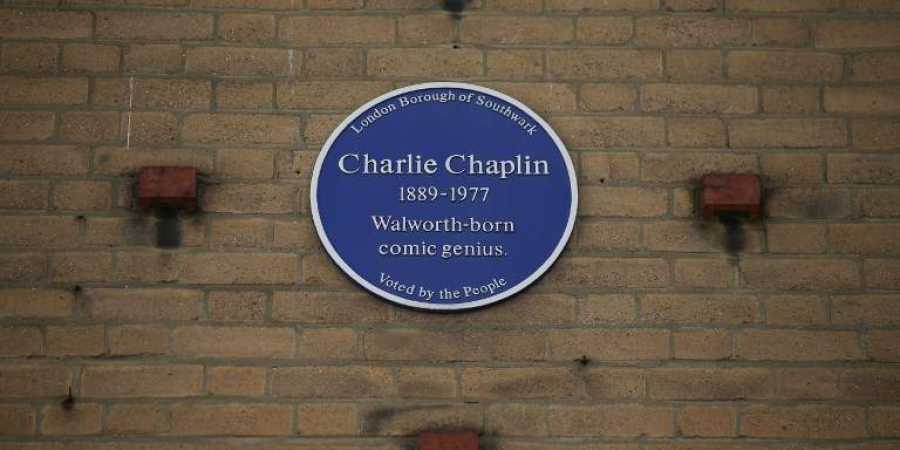
A Blue Plaque about Walworth-born comedian and actor Charlie Chaplin is seen near East Street Market in south London on September 1, 2017. (Photo | PTI)

London :

Britain’s World War II spy Noor Inayat Khan was on Monday confirmed as the first Indian-origin woman to be honoured with a Blue Plaque at her former London home.

The Blue Plaque scheme run by English Heritage honours notable people who lived or worked in particular buildings across London.

Khan’s plaque is set to go up at 4 Taviton Street in Bloomsbury, where she lived as a secret agent during the war. Khan, the daughter of Indian Sufi saint Hazrat Inayat Khan, was an agent for Britain’s Special Operations Executive (SOE) during World War II and was captured and killed by the Nazis in 1944 at just 30 years of age.

“It is from this house that she left on her final and fatal mission. Noor gave her life in the fight against fascism and her message of peace and tolerance of all religions is even more relevant today,” said Shrabani Basu, Chair of the Noor Inayat Khan Memorial Trust (NIKMT).

“The blue plaque will be a wonderful addition to the area that has a special association with Noor. It will be the first Blue Plaque for a woman of Indian-origin in Britain and is a real honour,” said Basu, who has been campaigning for the plaque since 2006 as the author of ‘Spy Princess: The Life of Noor Inayat Khan’.

Taviton Street is close to Gordon Square, which the NIKMT chose for the installation of a memorial bust in 2012 of the spy, a descendant of the 18th century Mysore ruler Tipu Sultan.

The Blue Plaque at her home is expected to be installed following building approval within the next few years.

“The Blue Plaques Panel have agreed that Noor Inayat Khan should be commemorated with a plaque. Once a nomination has been approved, it can take a further two or three years for a plaque to be unveiled,” an English Heritage spokesperson said.

“Noor Inayat Khan has deserved recognition for years. A hero who joined Britain’s effort to fight tyranny,” said Tom Tugendhat, Chair of the UK Parliament’s Foreign Affairs Committee. Born in September 1914 in Moscow to an Indian father and American mother, Khan was raised in both Paris and Britain.

As a Sufi, she believed in non-violence and also supported the Indian Independence movement but she felt compelled to join the British war effort against fascism. She went on to become the first female radio operator to be infiltrated into occupied France, where she was tortured and killed at Dachau concentration camp.

The SOE was an underground force established in Britain in 1940 by war-time Prime Minister Winston Churchill to “set Europe ablaze”.

It recruited men and women to launch guerilla war against Adolf Hitler’s forces.

Historial records show that despite being repeatedly tortured and interrogated, Khan revealed nothing and was executed by a German SS officer and her last word was recorded as “Liberte” or freedom.

She was later awarded the George Cross, the highest civilian decoration in the UK, in recognition of her bravery.

In recent months, Khan was also a frontrunner of a campaign for an ethnic minority personality to be honoured as the face of a redesigned GBP 50 note until the Bank of England announced that the note would feature a scientific figure.

Major Indian figures to be honoured with Blue Plaques in London include Mahatma Gandhi, Jawaharlal Nehru and B R Ambedkar, who spent time in the city during the Indian national movement against Britain’s colonial rule.

source: http://www.newindianexpress.com / The New Indian Express / Home> World / by PTI / February 25th, 2019

Fatima and Fatima

Kolkata, WEST BENGAL :

Two remarkable women from the family of Wajid Ali Shah, the last king of Awadh, are reviving his culinary tradition in Calcutta, the city where he famously introduced potatoes into the biryani!

Last king of Awadh,Wajed Ali Shah,Manzilat Fatima

Manzilat Fatima is a descendent of Wajid Ali Shah, the last Nawab of Awadh who spent 29 years in exile in Metiayaburj, a Calcutta suburb. She launched a pop-up restaurant of Awadhi cuisine in 2014 and a home dining service, Manzilat’s, in 2018 in Calcutta. (Arijit Sen/HT Photo)

What do you do you do if a goose is plump beyond reason, won’t lay eggs and needs too much feed? Cook it, I guess. And that’s what the British Crown did to Wajid Ali Shah, the last king of Awadh, who ascended the throne as a 25-year-old in 1847 and was dethroned nine years later in 1856, a year before the first war of Indian Independence broke out.

The British said this was done because he lived and ate like a king and did little else, thus overlooking his military reforms, his attempts at administration which the East India Company did its best to thwart, and his immense popularity with his subjects.

Packed off to Metiyaburj, about four miles south of Calcutta, the ousted king was joined by his prime minister, some of his wives, musicians and officials. His chefs attended to this displaced court as best as they could. They prepared their master’s banquets with the lavishness of his days as monarch, so that when he sat for his meals, he would remember Lucknow as his great romance and not the painful reality of its passing.

If five kilogrammes of lamb mince was used to make a single kofta when he had been the king, they were not going to scale down, when he was no longer one.

Wajid Ali shah during his days in exile in Metiyaburj, a Calcutta suburb, wearing his trademark kurta with part of his chest exposed. His descendants say it was an expression of his heart being open to his subjects. ( Arijit Sen/HT Photo )

But how do you claim, centuries later, that one of India’s most famous ex-royal is your old man and that you are the sole inheritor of the royal cuisine he helped found? Wajid Ali Shah’s descendants Manzilat Fatima, 51, and Fatima Mirza, 45, of Calcutta are doing that, courtesy the documents of political pensions of their families on the one hand, and by cooking his food, on the other. Team Manzilat and Team Fatima, both say they are the real thing.

***

Family recipes are a cook’s real estate. Wajid Ali Shah’s descendants face the problem of plenty. At the time of his death, the king had 250 wives and 42 children so no ‘family recipe’ matches the other. The British also made sure that after the king’s death in 1887, his days in exile would go undocumented.

On Fatima Mirza’s table: Kachhe Tikia ke Kebab, Mutton biryani, Nargisi Kofta. Mirza is a great-great grandchild of the last king of Awadh. ( Arijit Sen/HT Photo )

“His successors and his subjects were left with nothing,” says Wasif Hussain, the manager of the king’s mausoleum in Metiyaburj. “I’ve heard that in Chartwell House [the country home of a former British premier, Winston Churchill], his kitchen with its tea-kettle, his flour bin, the utensil rack and the weighing machine have been left intact…. It’s a museum….”

A law graduate, Manzilat Fatima, is from the ‘ruling line’. Her father, Kaukub Meerza, a former Reader of the Aligarh Muslim University, is the grandson of Birjis Qadr, the son of Begum Hazrat Mahal and Wajid Ali Shah. Birjis was crowned king by Mughal emperor Bahadur Shah Zafar during 1857 as Wajid Ali Shah was by then in Calcutta. Birjis met his death in 1893 after dinner at a relative’s home in Metiyaburj.

This was not the first time that poisoning had killed an Awadhi royal, Sudipta Mitra, author of Pearl by the River, a book on Wajid Ali Shah’s exile, points out. Royal biographies mention a consort sending the king paan as a token of her love during their better days and the king not putting it past her to lace its leaves with poison when those days were over.

The murder of Birjis and its memory have stayed with the family for over 120 years. It has seeped into Manzilat’s remembrances of her childhood home (“My paternal grandmother would always check the food before it was served to family members”), and explains her impatience with ‘proof’-seekers. Ever since she launched a pop-up restaurant of Awadhi cuisine in 2014 and a home dining service, Manzilat’s, in 2018 in Calcutta, there are some set questions she has had to answer.

“ ‘Do I have monogrammed table-mats from Wajid Ali’s time?’ ‘Did I inherit a recipe book?’ No, I didn’t! Birjis’ murder snapped our links with the other branches of the family. His wife escaped from Metiyaburj to Calcutta…. And besides, my great-great-grandmother, Hazrat Mahal, was a queen who was fighting the British, not writing cookbooks. For a while, I made this my FB status,” says Manzilat cheekily while adding finishing touches to an order of Ghutwaan Kebab (made of mashed meat marinated with papaya) that a delivery man from Swiggy is waiting for her to complete, besides the mandatory biryani.

Manzilat makes a good mutton biryani, but with mustard oil to keep it non-greasy and light; Fatima Mirza, a school principal (she is of the line of Wajid Ali Shah’s principal consort, Khas Mahal) and her husband Shahanshah Mirza (his father Wasif Mirza is another great grandson of Wajid Ali Shah) consider the leaving out of ghee an overturning of the “basic biryani rule-book”. Both families, however, have more in common than they think.

While Manzilat’s cooking displays her control in colour, sense of proportion and spicing so integral to Awadhi cooking, Fatima, too, has considerable domain knowledge. Since 2018, she has been working on a cookbook penning family recipes such as the Kachhe Tikia ke Kebab.

“This is the only Awadhi kebab in which sattu is added and it was a Wajid Ali Shah favourite,” she says. “To neutralise the heat of meat and to make it easily digestible, hakeems advised chefs to add sattu (ground Bengal gram) as the king aged. The trend seems to have been to keep things light and fragrant.”


Shahanshah Mirza, another descendant of Wajid Ali Shah, with a family heirloom – a ceramic bowl. Such bowls were common in royal households. Their contents were checked by food inspectors before they were placed before the nawab. They had a special coating which would ‘crack’ if the food had poison, says Mirza. ( Arijit Sen/HT Photo )

Shahanshah Mirza, a government official and heritage enthusiast, elaborates on the difference between Awadhi and Mughlai cuisine. “Unlike Mughlai, ours has no overdose of mace or cardamom or dry fruits. We say about Urdu, Urdu aap ke zubaan pe hamla nahin karta hai, speaking it, does no assault to your tongue… Likewise, Awadhi food plays on understatement. It is big on presentation though.” Any aspiration to cheffy-ness of the standard of the former royal house of Awadh has to get the food styling right.

Wajid Ali’s descendants also make great allowances for a master chef’s ego. It was not uncommon in the heyday of the king to have his chefs refuse to cook for any other branch of the family. Some of the chefs even announced during the time of seeking employment that they were not going to expand their expertise! That is, the maker of dal would remain a dal specialist throughout his life. A biryani cook would touch nothing else.

***

The Sibtainabad Imambara, the mausoleum of Wajid Ali Shah and his son Birjis Qadr at Metiayaburj. Birjid was declared king in the absence of his father by the sepoys during 1857 and his kingship was acknowledged by the Mughal emperor, Bahadur Shah Zafar. ( Arijit Sen/HT Photo )

In Metiyaburj, Guddu, a grandson of Puttan, a descendant of one of Wajid Ali Shah’s great chefs, drops by at the Shahi Imambara, for a chat. He talks of a dish that has the sound of one made in Awadh’s hoary past. There are few “with the stomach and liver of Wajid Ali Shah” to digest dishes like a meat mutanjan (a rice dish) now, Guddu says. But Nawabi biryani, and yes, with the potato, is everywhere.

Do kings thus prepare the future food of the people? The rich trying out the pleasures that the masses will eventually grasp is something historian Fernand Braudel has elaborated upon in his works. Rows of biryani shops of various prices line the road on either side of the king’s mausoleum. “Jameson Inn, a branch of Shiraz [an old Calcutta eatery], began to make a Murgh Hazrat Mahal in 2011,” informs Hussain, the Imambara manager. But there is a piece of information doing the rounds he would like to correct.

“The potato was added to the biryani because of its exotic value. It was a new vegetable in the market introduced by the Portuguese,” says Hussain. Both Fatimas back this view. According to Abdul Halim Sharar’s Guzishta Lucknow, considered to be the go-to book for any information on Wajid Ali Shah’s exile, the king spent Rs 24,000 on a pair of silk-winged pigeons, Rs 11,000 on a pair of white peacocks and approximately Rs 9,000 a month on food for some animals in his zoo in Metiyaburj.

“If a man could afford so much, he could certainly add more meat to his biryani and not bulk it up with potatoes,” suggests Fatima Mirza. The king would presumably also not risk his social prestige. At the evening concerts in the then resplendent Sultan Khana that had all the splendour of his palaces in Lucknow, when the Calcutta elite would visit, with thumri, there was biryani and it had potatoes. Surely Wajid Ali Shah would not have a dish served that had hard times written all over it.

(L-R) Mohammad Sulaiman Qadr Meerza with his grandfather, Kaukab Meerza, the great grandson of Wajid Ali Shah and Begum Hazrat Mahal, and his father, Kamran Meerza. ( Arijit Sen/HT Photo )

******

Mohammad Sulaiman Qadr Meerza, 9, in a yellow tee and jeans is following the discussion on food and music, and the Awadh royal family closely. When he was six, his father Kamran (Manzilat’s brother), a businessman, disclosed his antecedents. He told his friends in between classes at school that he belonged to a royal family.

His friends asked: “Which one?” Sulaiman said he was the fifth generation of Wajid Ali Shah and Begum Hazrat Mahal. They did not believe him.

Next year, when he is 10, Sulaiman has plans to grow bigger. And then he will try to convince them. He says he must give it one last try.

Kitchen confidential- Nawabi recipes passed down the family
MANZILAT FATIMA’S PINEAPPLE MUTANJAN
INGREDIENTS
  • 1 cup Gobindo Bhog rice soaked for an hour
  • 1 cup sugar
  • 2 cups chopped pineapples
  • 2 1/4 cups boiling hot water (boiled with saffron strands and a pinch of kesariya colour)
  • 1 tbspoon pure ghee
  • 1 cup grated mawa
  • 1 clove; 1 cardamom; almond slivers
METHOD:

Take a heavy-bottom handi, add ghee. When hot, add cloves and the cardamom, then add the whole of the drained rice and saute quickly on medium flame.

Pour the hot water in the handi. Keep the flame high for 2-3 minutes, lower the flame and keep on sim till the rice is 3/4 cooked.

In another handi, scoop out the cooked rice and make a layer; sprinkle 1/2 of the sugar and 1/2 of the chopped pineapples and 1/2 the grated mawa.

Similarly, repeat a second layer, cover the lid and keep the handi on a tawa on sim. Leave for 5-10 minutes till the sugar melts and all ingredients blend well. Switch off the gas.

Before serving lightly mix the layers, serve hot after garnishing with silver leaf and almond slivers.

FATIMA MIRZA’S KACHHE TIKIA KE KEBAB
INGREDIENTS
  • Mince meat 500 gms; salt to taste
  • Bengal gram flour (roasted, powdered) 2 tsp
  • Garam Masala powder -1 teaspoon
  • Paste of nutmeg and mace -1 tsp
  • Onions -2 big ones; ginger-garlic paste -3 tsp; raw papaya paste -2 tsp
  • Green chillies -2; coriander leaves
  • Ghee for frying
METHOD:

Wash the minced meat. Fry the onions till they are golden brown. Mix garam masala, a paste of nutmeg, mace, fried onion and ginger-garlic paste. Sprinkle salt as desired. Add the raw papaya paste. Keep it aside for 10 minutes.

When the mutton turns tender, then mix the chopped coriander leaves and green chillies.

Using the mince mixture make flat round patties (tikia) of even size. Pour ghee into a pan. Heat it on a low flame. When the ghee crackles, start frying the patties till golden brown.

Drain out the excess ghee and serve it hot.

source: http://www.hindustantimes.com / Hindustan Times / Home> India / by Paramita Ghosh / Hindustan Times / February 24th, 2019