Category Archives: Arts, Culture & Entertainment

Nur Jahan: The Mughal queen who wielded the musket

NEW DELHI , INDIA  :

Ruby Lal’s book gives a new life to Nur Jahanas Jahangir’s co-sovereign, a position never held by any Mughal woman
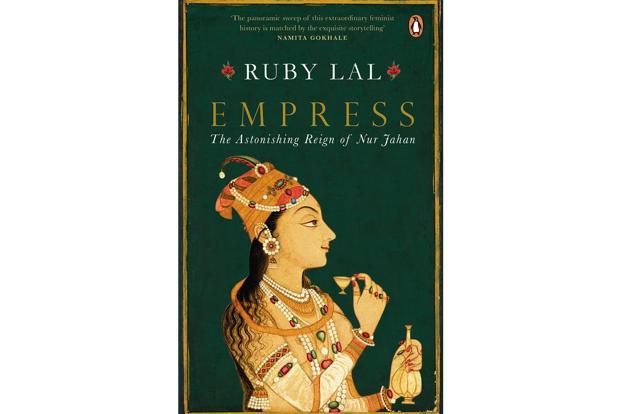
EmpressNurJahan01MPOs31aug2018

While there may be more than a grain of truth in Jahangir’s devotion to his beloved spouse (it has been the subject of several movies), Nur Jahan’s political acumen and gallantry make her phenomenal career trajectory seem inevitable.

The polemical potential of Ruby Lal’s new book is apparent from its title, even before we get to the text proper. Empress: The Astonishing Reign Of Nur Jahan takes the spotlight away from Jahangir, one of the Great Mughals, to shine it on his 20th and favourite wife, who, as Lal proposes, not only scaled untold heights during his reign but also announced herself to be his “co-sovereign”.

“Scholars have for some time acknowledged her power, almost in bullet points, but never in any concrete way thought through it,” says Lal, who teaches at Emory University in the US, on email. “There is still the tendency in scholarly and other writings to lock Nur’s power in a romantic story with Jahangir: in fact, that romance becomes the explanation for her rise.”

While there may be more than a grain of truth in Jahangir’s devotion to his beloved spouse (it has been the subject of several movies), Nur Jahan’s political acumen and gallantry make her phenomenal career trajectory seem inevitable. Lal begins, for instance, with a spectacular scene of a hunt, in which a musket-bearing Nur Jahan kills a man-eating tiger in Mathura, where the royal cavalcade made a stop on its way to the Himalayan foothills in the autumn of 1619. Nur, 42 at the time, had been married to Jahangir, her second husband, since 1611. It was a fate her parents, Ghiyas Beg and Asmat Begum, could never have foreseen when their daughter, Mihr un-Nisa, was born in 1577 by the roadside outside Kandahar, as they fled their home in Herat.

Hounded out of Persia due to religious persecution, Beg sought Akbar’s patronage in the late 16th century, and it was generously provided. Eventually decorated as I’timad ud-Daula, or the Pillar of the State, by his regal son-in-law, Beg went on to assume the highest rank in Jahangir’s service. His family did well by the Mughal rulers too. Beg’s son, Asaf Khan, would turn out to be the future emperor Shah Jahan’s father-in-law. But it was Beg’s daughter, Mihr un-Nisa, honoured by her royal husband as Nur Jahan, or the Light of the World, who assured him a place in history.
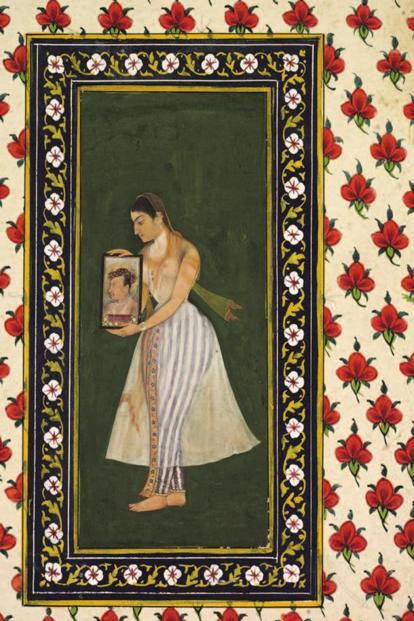
EmpressNurJahan02MPOs31aug2018

If Nur was exemplary for being the first woman in the subcontinent to exercise direct executive privilege, she was doubly impressive for achieving such a status as a rank outsider. “Remember, she was not a Mughal by bloodline,” says Lal, “not like Queen Elizabeth I (of England) or Queen Christina (of Sweden), who were from royal families.” Nur’s elevation, in the context of her times, was certainly unprecedented, though women in the Mughal harem, especially the elders, often did act as confidantes, advisers and counsellors to the emperor.

Gulbadan Banu Begum, Babar’s daughter and Akbar’s aunt, and Hamideh Begum, Akbar’s mother, were matriarchs to reckon with. Nur’s mother, a lady of refinement and education, was credited with the discovery of an itar (perfume) while boiling petals to make rosewater. But no one went as far as Nur, who made appearances on the imperial balcony, issued firmans (orders) and had coins embossed with her own image—all of which were kingly prerogatives. A skilled marksman, Nur would also lead an army later in life in a failed attempt to rescue Jahangir when he was held hostage by one of his aggrieved officials.

Although the Mughal harem has claimed the attention of scholars, Ira Mukhoty’s recent feminist history, Daughters Of The Sun: Empresses, Queens And Begums Of The Mughal Empire, breathed fresh life into it, making it accessible and emotionally absorbing to the common reader. Lal’s book, replete with research but also narrated with a sense of drama befitting a novel, complements it beautifully.

With the paucity of first-person testimonies from the women of the era, it is not surprising that much of the narrative of Empress is pieced together from observations left behind by Nur Jahan’s contemporaries in the footnotes and interstices of archival documents. “The records are plenty and rich,” says Lal, emphatically, “it’s how you approach the courtly documents, paintings, poetry, coins, architecture, and even legends.”

The British diplomat Thomas Roe, for instance, who visited Jahangir’s court to woo him for exclusive trading rights, was piqued by Nur’s bossiness. But her charisma, intelligence and stately demeanour didn’t escape him. “Noormahel fulfils the observation that in all actions of consequence in Court, a woman is not only always an ingredient, but commonly a principal drug of most virtue,” he noted, “and she shows that they are not incapable of conducting business, nor her self void of wit and subtlety.” It’s not hard to imagine why tales were spun around Jahangir’s early infatuation with Nur, since the days he was Prince Salim. Some chroniclers even claim that young Mihr was married off to a fellow Persian nobleman, Ali Quli, to keep her away from the smitten crown prince.

Yet it would be patently unfair to reduce Nur’s influence to her “womanly wiles”. As an astute observer of court politics, she played her hand shrewdly. Initially, she forged an alliance with the ambitious Prince Khurram (later Shah Jahan), but then Nur got her only daughter, Ladli Begum (by her first husband), married to the younger Prince Shahryar, hoping to push the latter for the throne. With Jahangir’s health worsening due to his addiction to alcohol and opium and civil wars breaking out between factions of the royal family, Nur became increasingly anxious about her hold over the palace. The last straw was the ascension of Shah Jahan to the throne after Jahangir’s death when he stripped Nur of her privileges. She was packed off to live on a modest pension away from the court. In exile, too, she conducted herself with the dignity and grace suited to her station as a noblewoman. Known for her philanthropic work for the poor, she also built a tomb for her parents in Agra that would become the model for the Taj Mahal.

Nur Jahan was neither a Machiavellian dissenter nor a feminist rebel, as Lal writes tellingly. She seemed to have accepted the “emphatically patriarchal” norms of her time, the rules of the feudal, aristocratic world she spent her life in. “I do not believe feminist history should be one in which the woman is always a winner,” says Lal. “It is (rather) what she does, and how effectively she does it, despite all odds. Vulnerability is feminist history.”

source: http://www.livemint.com / Live Mint / Home> Lounge> Leisure / by Somak Ghoshal / August 31st, 2018
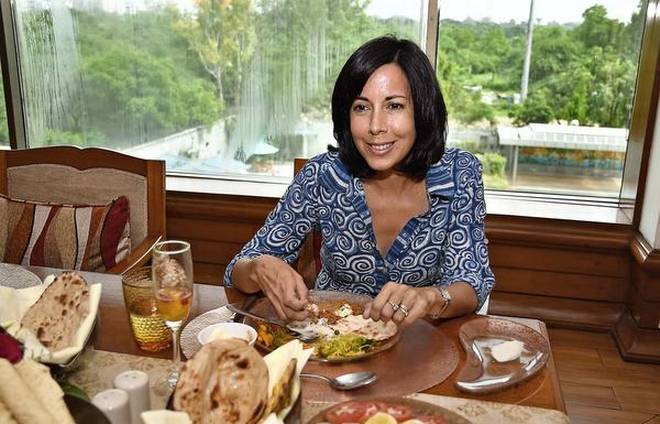
Author Ira Mukhoty’s peek into the Mughal household

NEW DELHI :

Of History and Gastronomy: Ira Mukhoty at Jaypee Vasant Continental’s Paatra restaurant in New Delhi | Photo Credit: SHIV KUMAR PUSHPAKAR

From the resilience of Khanzada Begum to the food habits of Akbar, author Ira Mukhoty reveals many Mughal secrets over a lavish vegetarian meal

Those who suffer from colonial hangover or know their Mughals through movies have an exotic notion about the haramam or harem – a place where many women were housed to please the most important man in the empire. Author Ira Mukhoty, who scans history and mythology to find the status of women in India, counters the perception through a well-argued book, “Daughters Of The Sun” (Aleph). “This idea of ‘oriental harem’ came through the British historians because they had a long association with Islam right from the times of crusades. For them, the Mughals, the Sultans and the Tughlaqs were all the same – part of one Islamic marauding entity. The idea was completely false.”

The whole harem space, she says, evolved from the time of Babur, who wanted his women to be well-educated and was pragmatic about women who ‘fell’ to an enemy. “Over a period of time, when Mughals absorbed some elements of Rajput culture, it became a little different but even then it was completely alien to the oriental idea of a sexual space. Most of these women were in no way sexually available to the Padshah. The harem had relatives, other noble men’s wives; there were servants and attendants…there was a huge collection of women but not to please the emperor,” says Ira, as we settle for an elaborate lunch at Jaypee Vasant Continental’s Paatra restaurant.

The catalyst came from Ira’s previous book, Heroines, where she wrote about powerful women in myth and history. “One of them was Jahanara Begum. I was interested in finding more women like her associated with the Mughal empire.” She found many. But the one story that is most compelling is that of Khanzada Begam, the sister of Babur, whom he left behind with Shaybani Khan as war conquest when he escaped from Samarkand. She remained with Khan for ten years but remained true to her brother’s cause. And when she eventually returned to Babur’s household, her sacrifice and resilience was celebrated. “In fact, she went on to be anointed Padshah Begum of Hindustan during Humayun’s reign,” says Ira.

Powerful women

Women are a neglected lot in our history. Ira says this is not specific to our country. “Around the world, women stories are neglected to a smaller space – it is not just about Mughals or India. You first talk about the kings and and rajas. Women were treated like wallpapers. It is not that I have found something special here. The resources have been there but they have seldom been used to join the dots. For instance, Gulbadan Begum’s biography of her father Babur and brother Humayun was translated from Persian into English in 1907.” She reminds how Jahanara Begum wrote about her Sufi masters in two books. “Her lines are very powerful and erotically charged for Sufis believe in erotic love as means for union with the divine. A 17th Century Muslim woman writing such a powerful language is extraordinary.” Ira has tried to find out first hand information about these women who engaged in diplomacy and patronised the arts. “ I have written about Mughal women who were highly educated, who advised emperors and traded with foreigners. Babur saw them as symbols of Timur legacy. He wanted them to engage in verbal repartees and write poetry.”

Ira says her study of royal firmans reveal that Jahanara Begum asked for permission to go for Haj but it was denied. “Years before her, Gulbadan Begum had made the famous journey that lasted seven years. But by the time of Jahanara, royal women were not encouraged to take this hazardous journey. But she did make a request. I looked at the date and it was one month after her sister Roshanara Begum had died. I wondered that did something come over her.” It is her ability to join these dots that makes Ira’s work much more engaging and accessible than academic works by the likes of Prof Ruby Lal, whom Ira has extensively quoted.

“I try to find a thread between these stories to make fully-rounded characters. With women’s stories you get that sense. However, I tell the reader where I am not sure and am talking about possibilities.” Ira, who studied Immunology in Cambridge University, says her science background has always helped her in research. “It gives me patience. History brings subtlety and nuances which interest me much more. Science is no good for that,” she chuckles. Having said that, she doesn’t believe in speculating. “You should tell the reader where you are not sure even if it breaks the rhythm of the story. If I say it could have happened, I expect the reader to make his own mind.”

A vegetarian these days, Ira undertook ‘walks’ to the Walled City to understand the fragrances and the language of the time gone by. “They might not help you with facts, but they definitely help in writing about a past whose remains are very much part of our ecosystem.” As she appreciates the lavish spread at Paatra, she remembers the meal she had at the Nizamuddin dargah.

Introduction to ghee

Ira hasn’t written much about the Mughal kitchen but she has mentioned some instances which give us an idea of what was cooking. For instance, she captures Humayun’s exile in Persia with Hamida Banu Begum after the embarrassing defeat to Sher Shah Suri. “At one point they were actually cooking horsemeat to survive. But when they went to Persia, they were greeted as kings. Suddenly, the meal changed from fibrous, overcooked horsemeat to the amazing food that the Shah would offer them. When they were leaving, Shah Tahmasp wanted a banquet in Hindustani fashion prepared by his guests. What he liked the most was something called dal khuske which was like matar ka pulao. He tasted ghee for the first time as Persians used to cook in fat.”

Over the years, Mughal food became more and more refined. “There came a time when hens were massaged so that the chicken would be soft and tender. Akbar was a frugal eater who used to have just one meal a day but the time for it was not fixed. At any given time around 100 dishes were kept almost ready for him so that they could be served to the emperor at a short notice.”

Ira, who is now working on a biography of Akbar, says the emperor turned vegetarian under the influence of his Rajput wives. “Luckily for us, we have the Akbar’s biography of Bada’uni. He was a conservative person and his account is not glowing with praise like that of Abu’l-Fazl’s. He could not do what Akbar expected of him. He wrote the biography in secret and it was published during Jahangir’s rule. It is fascinating because it tells truthful things about Akbar. He writes that Akbar is so influenced by his Rajput wives that he gave up meat and indulged in Hindu rituals.” Similarly, she says, Gulbadan Begum’s account is very honest in comparison to a male biographer because she is not looking for building an image for posterity. “She writes very candidly like she explains why Humayun was very angry one day. He believed in astrology and always made the journey when the stars were in right alignment. One day he told the women in harem that they would go on an expedition at such and such time. Unfortunately, his new wife fell off the horse. It took her some time to get back. He got furious. He said he would need some opium to calm down. A male biographer would not have put all this but Gulbadan mentions all these intimate details so that we would know the man not just as a king and a conqueror but also as a father, a husband and a son.”

Ira has emerged at a time when Akbar’s legacy is being questioned and anecdotal history is gaining currency in mainstream discourse. She says hers is not a political book. “I am not trying to push any agenda. However, in this atmosphere, it is not unimportant to hear these stories also to clear many of the prejudices that we may have had. When things remain in anecdotal form, it is easy to manipulate them.”

source: http://www.thehindu.com / The Hindu / Home> Society> History & Culture / by Anuj Kumar / August 31st, 2018

From Kashmir to Kerala, with care for the flood-struck

Srinagar, JAMMU & KASHMIR :

KashmirMPOs31aug2018

The disastrous floods of 2014 in Kashmir is as vivid in Bilal’s mind as if it happened yesterday.

Along with his two brothers, he was stuck in his house in Srinagar for almost 12 hours. The three boys, who had already lost their parents, stared helplessly at the waters which seemed to reflect their fear of death. But fortunately for them, their uncle managed to find his way to their house in a boat and rescued them.

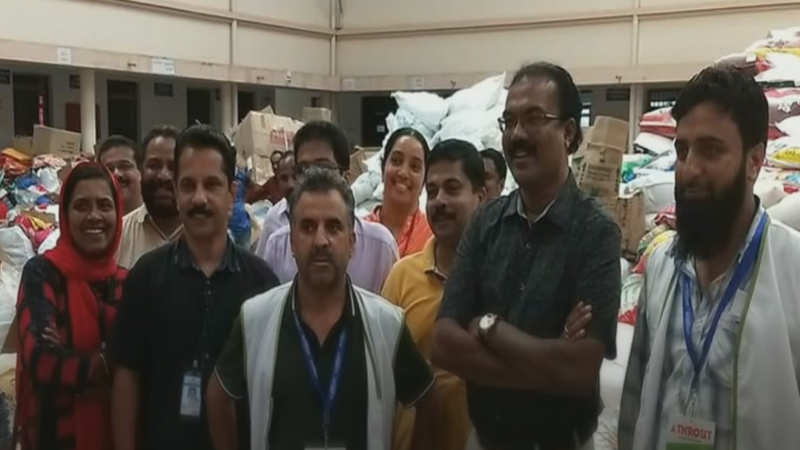
Bilal Ahmed Sofi, a 29-year-old marketing professional from Srinagar, was reminded of those days when he heard about the flood waters rising in the other end of the country, Kerala. The youngster, who has been working as part of a social service group who calls themselves Athrout Kashmir  , kept everything else in the backburner and took off to Kerala, along with two other selfless souls from the group — businessmen Abdul Hamid and Waseem Hakim.

“We flew from Kashmir to Bengaluru first, to source some medicines. From there, we took off to Wayanad by road as it was in the news as one of the most affected districts,” says Bilal. The three-men army from Kashmir helped out the volunteers in Wayanad with medicines, supplies and more for almost a week here, and left only after assuring that if ever in need, they wouldn’t hesitate to come back and help again. “Athrout is a Kashmiri word which means a helping hand. We have many college students, youngsters and more as part of the group and we help with many things like conducting weddings of girls from poor families, helping the unemployed youth start a business, providing medicines, disaster relief, and more to those in need, wherever possible for us.” But then, what inspired them to come all the way to Kerala, from the other end of the country? “I believe that for volunteers, there are no boundaries,” says Bilal.

Hamid, who has also helped the victims of Chennai floods

 in 2015, says, “I feel that the most difficult aspect during such a disaster is overcoming that mental stress, induced when watching your house getting torn down, nature in all her fury and being tormented by thoughts on what would one do from now on. Though there was a language barrier, we tried our best to talk to people and reassure them on how it’s still possible to rebuild their lives, from our own experiences.” The three also joined the various relief groups and visited villages, interacting with people, inquiring their needs and meeting them.

The three feel that when compared to how the authorities in Kashmir handled the floods, Kerala fared much better. Hamid says, “First of all, there was no religion causing any divide at least compared to the Northern States. People were helping each other out very well. We were given food from the house of one of the local volunteers and they were even ready to provide us accommodation.”

But it’s the local administration they praise the most. “The relief work was so systematic and well thought out. We could see that even the supplies we bought were first sorted and stored carefully, after which we were given a receipt. “This is a crisis, so we have to make sure all needs are taken care of,’ said some of the officials. When it happened back home, the counterparts there were only trying to save themselves and nothing more. Here, they were also tracking down dead bodies soon enough,” Bilal says.

At the same time, the trio feel that it’s time the government did something to form well-trained volunteer groups for such situations, across States. “Having a mind to serve is great, but it’s also important to have the right skills for it. For instance, a flood relief volunteer should know how to swim and what medicines would help the ailing. If there are such groups of interested citizens, the relief efforts can save lives better,” Bilal adds.

Click here to watch the video

source: http://www.m.timesofindia.indiatimes.com / Times of India / Home> City / by Deepa Soman , TNN / August 31st, 2018

Food Fit for Royalty: So What Did The Mughal Emperors Eat For Dinner?

Unveiling a tale that is sure to tease your taste buds, we trace the gastronomic journey of Mughal cuisine in India from Babur to Aurangzeb.

One of the most powerful dynasties of the medieval world, the Mughals are entwined inseparably with India’s history and culture. From art and culture to architecture, they bequeathed to this country a substantial legacy that lives on even today.

But what often gets forgotten is that they also left us a rich culinary legacy — the deliciously complex blend of flavours, spices, and aromas called Mughlai cuisine.

Tracing the origins of this cuisine in India, we unveil a tale that is sure to tease your taste buds!

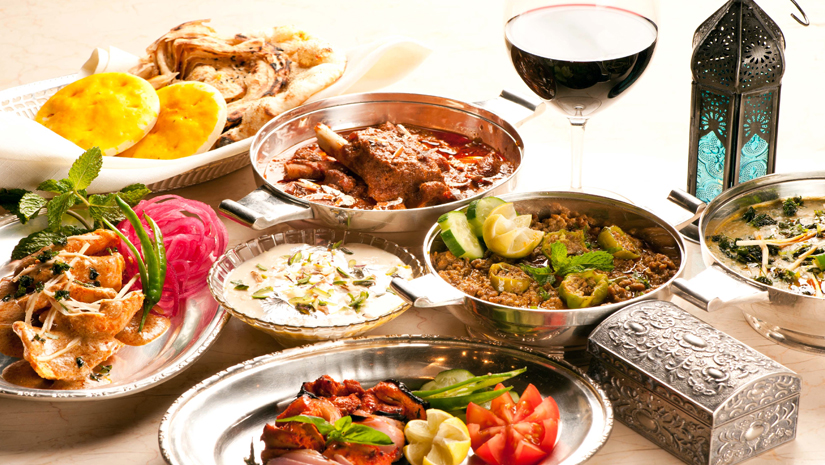
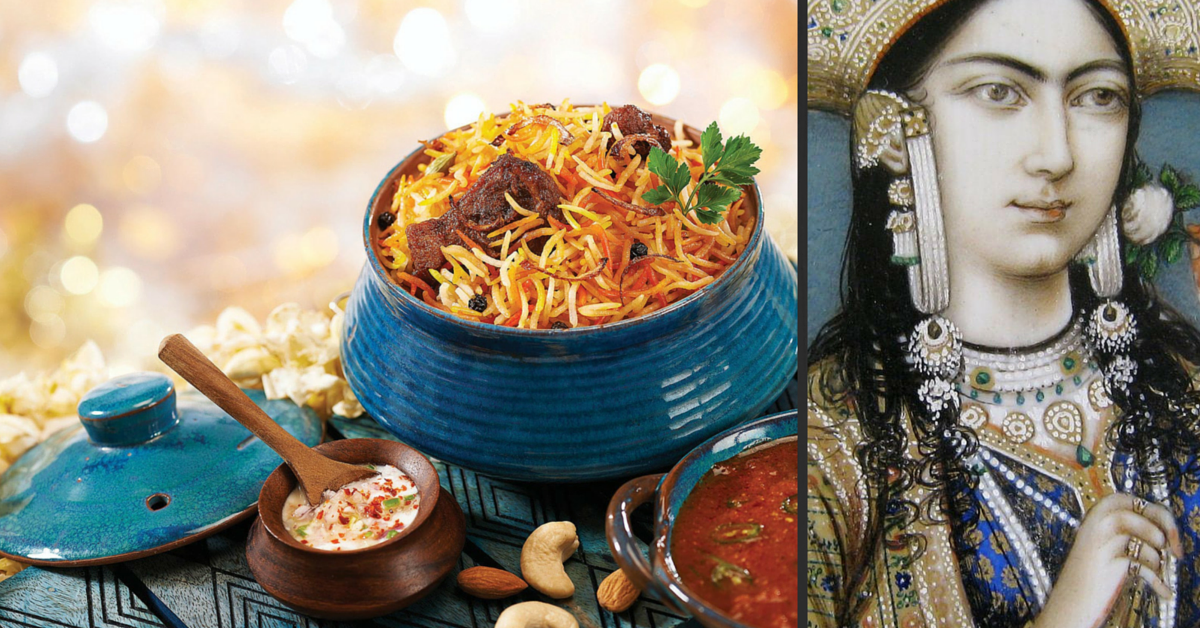
MughalFood01MPOs31aug2018

photosource: https://www.facebook.com/motimahaldeluxknl/

Lavish and extravagant in taste, the Mughals were connoisseurs of rich, complex and sumptuous recipes. Creating such dishes meant that cooking in royal kitchens was a riot of colours, fragrances, and harried experiments.

Curries and gravies were often made richer with milk, cream and yoghurt, with dishes being garnished with edible flowers and foils of precious metals like gold and silver.

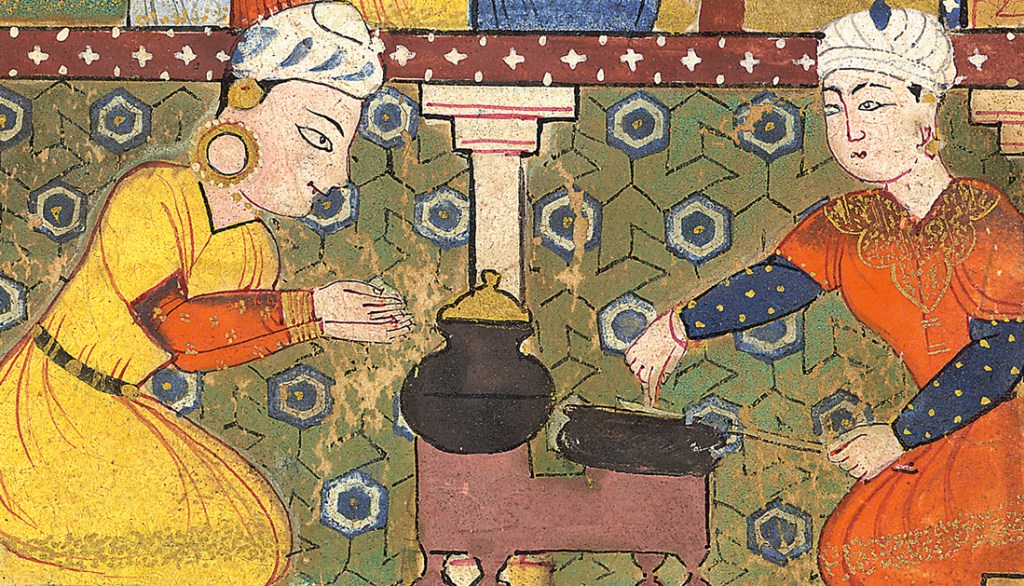
It was also not uncommon for the shahi khansama (chief cook) to consult with the shahi hakim (chief physician) while planning the royal menu, making sure to include medicinally beneficial ingredients. For instance, each grain of rice for the biryani was coated with silver-flecked oil (this was believed to aid digestion and act as an aphrodisiac).

Flavour-wise, the royal cuisine of the Mughals was an amalgamation of all kinds of culinary traditions: Uzbek, Persian, Afghani, Kashmiri, Punjabi and a touch of the Deccan. Interestingly, Shah Jahan’s recipe book Nuskhah-yi Shah Jahani reveals much about the intermingling of these traditions in the imperial kitchens, including a fascinating account of the then-world’s largest sugar lump!

MughalFood02MPOs31aug2018

photosource: https://alifatelier.wordpress.com/category/mughal-miniature-painting/

As for the contributions of the Mughal emperors themselves, each of them added his own chapter.

The foundation, of course, was laid by Babur — the dynastic founder who brought to India not just an army, but immense nostalgia for a childhood spent in the craggy mountains of Uzbekistan.

Not a fan of Indian food, he prefered the cuisine of his native Samarkand, especially the fruits. A legend has it that the the first Mughal emperor would often be moved to tears by the sweet flavour of melons, a painful reminder of the home he’d lost. Interestingly though, he loved fish – which he did not get back in Uzbekistan!

Historical accounts also reveal the prevalence of cooking in earth ovens — earthen pots full of rice, spices and whatever meats were available would be buried in hot pits, before being eventually dug up and served to the warriors. As this suggests, Babur’s cooks were primarily attuned to war campaign diets and employed simple grilling techniques that utilised Indian ingredients.

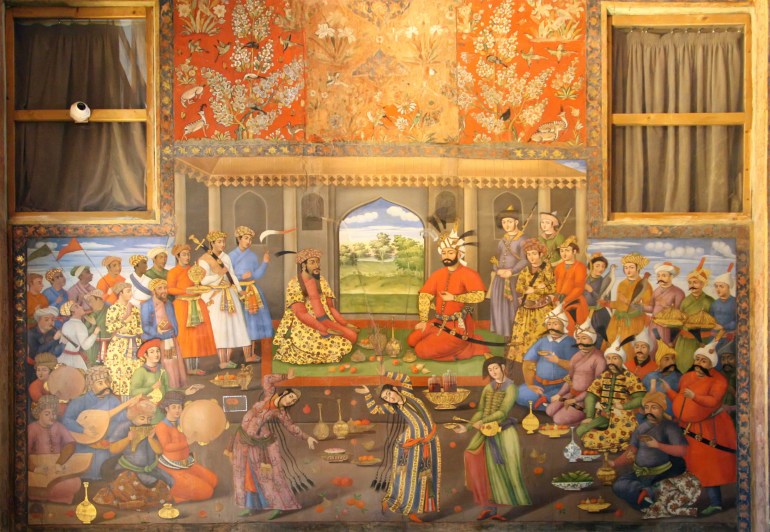
On the other hand, Humayun — an emperor who spent much of his life in exile — brought Persian influences to the Mughal table. More accurately, it was his Iranian wife Hamida who introduced the lavish use of saffron and dry fruits in the royal kitchens during the first half of the 16th century.

Humayun enjoying a feast with the Shah of Iran

photosource: https://en.wikipedia.org/wiki/Tahmasp_I#/media/File:Tahmasp,_Humayun_Meeting.jpg

Humayun was also immensely fond of sherbet. So beverages in the royal household began being flavoured with fruits. As such, ice was brought from the mountains to keep the drinks cool and palatable.

However, it was during Akbar’s reign that Mughlai cuisine truly began evolving. Thanks to his many marital alliances, his cooks came from all corners of India and fused their cooking styles with Persian flavours.

The result? Some of the most unique, elaborate and delicious meals in Mughlai food.

Take, for instance, the magnificent Murgh Musallam, a whole, masala-marinated chicken stuffed with a spice-infused mixture of minced meat and boiled eggs before being slow-cooked.

Or Navratan Korma (curry of nine gems), a deceptively delicious dish prepared from nine different vegetables coated in a subtly sweet cashew-and-cream sauce.

Interestingly, Akbar was a vegetarian three times a week and even cultivated his own kitchen garden — the emperor ensured that his plants were carefully nourished with rosewater so that the vegetables would smell fragrant on being cooked!

Akbar’s wife, Jodha Bai, is also believed to have introduced panchmel dal (also called panchratna dal) into the predominantly non-vegetarian Mughal kitchen, along with a handful of other vegetarian dishes. It became such a big hit with Mughal royalty that by the time Shah Jahan took over the throne, the court had its own shahi panchmel dal recipe!

Mughlai cuisine continued to evolve swiftly during Jehangir’s reign. The reins of the empire lay with his twentieth wife, Mehr-un-Nisa (better known as Nur Jahan). An enormously powerful figure at the royal court, the empress would often be gifted unique preparations by visiting traders from European nations such as France, Britain and Netherlands.

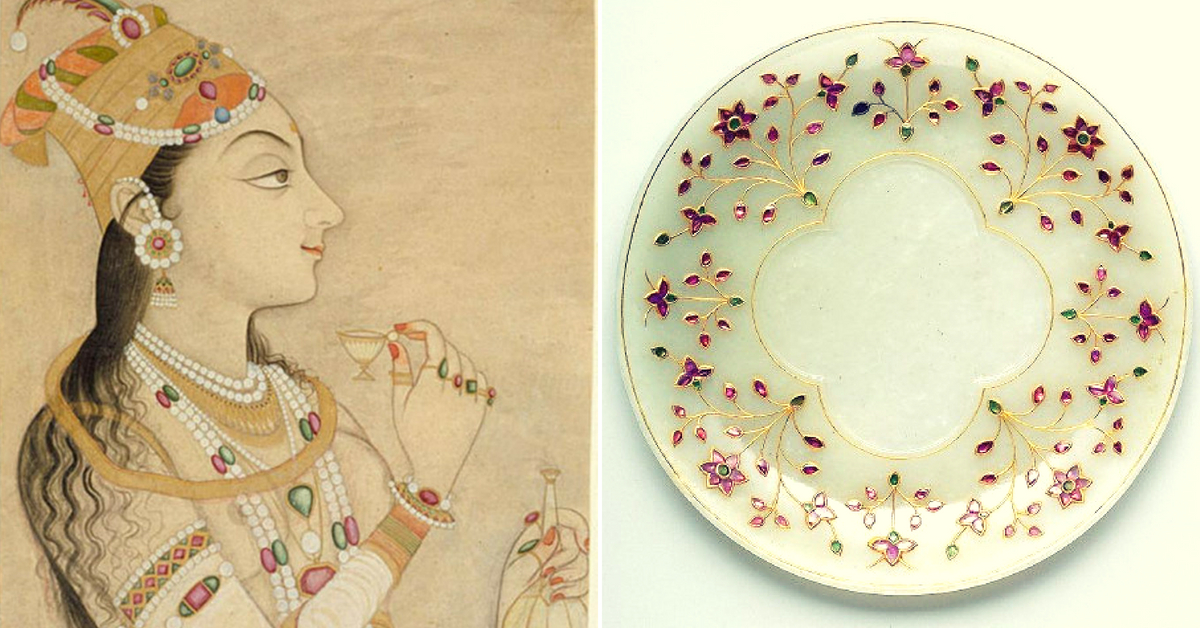
A true aesthete by nature, Nur Jahan used these ideas to create her legendary wines, rainbow-coloured yoghurt and dishes decorated with pretty patterns of rice powder glaze and candied fruit peels!

Noor Jahan (left) and her plate — it was decorated with an inlay of rubies, emerald and gold thread.

photosource:  https://en.wikipedia.org/wiki/Nur_Jahan

However, it was during the reign of Jehangir’s son that the Mughal cuisine reached its zenith. The greatest of the Mughals in pomp and show, Shah Jahan’s first step was to enlarge the menu devised by his father and grandfather.

He instructed his cooks to add more of spices like haldijeera and dhania to royal recipes for their medicinal properties. Interestingly, a legend has it that his cooks also added red chilli powder to keep evil spirits at bay!

Another legend explains the origins of the nihari, a spicy meat stew that is slow-cooked overnight in large cauldrons called shab deg. This is how the story goes:

In the 17th century, soon after Shah Jahan established his capital in Delhi, a virulent flu swept through the sprawling city. It was then that the shahi khansama and the shahi hakim joined their hands to devise a robust spice-packed stew that would keep the body warm and fortified!

Interesting, another popular story traces the origins of biryani to Mumtaz Mahal, Shah Jahan’s beautiful queen who inspired the Taj Mahal.

MughalFood05MPOs31aug2018

photosource : https://www.thebetterindia.com/60553/history-biryani-india/

It is said that Mumtaz once visited the army barracks and found the Mughal soldiers looking weak and undernourished. She asked the chef to prepare a special dish that combined meat and rice to provide balanced nutrition to the soldiers – and the result was the biryani of course!


Also Read: The Story of Biryani: How This Exotic Dish Came, Saw and Conquered India!


The extravagance of Mughlai cuisine during Shah Jahan’s reign was toned down by his son Aurangzeb.

The most religious and frugal of all the Mughal emperors, Aurangzeb fancied vegetarian dishes like the aforementioned panchmel dal more than the roast meat dishes that found favour with his uncles and brothers.

According to Rukat-e-Alamgiri (a book with letters from Aurangzeb to his son), Qubooli — an elaborate biryani made with rice, basil, Bengal gram, dried apricot, almond and curd — also held a place of pride on the dining table of Aurangzeb.

It was also during Aurangzeb’s reign the intermingling of Mughal and Deccan culinary traditions gained momentum (the kitchen moved with the emperor when he went on wars). During this time, Agra and Delhi started to lose their preeminence as hubs of Mughal culture, with the focus shifting to cities like Hyderabad and Lucknow.

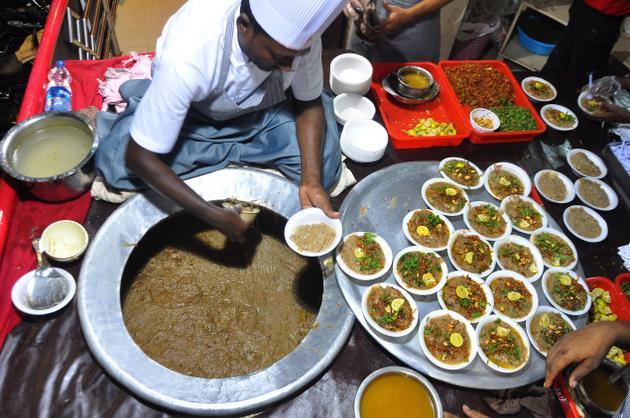
Take, for instance, haleem, present-day Hyderabad’s favourite Ramzan street food which also has a prized Geographical Indication (GI) tag.

MughalFood06MPOs31aug2018

photosource : https://www.youtube.com/watch?v=9caUDHNk0Qg

A deliciously thick paste of meat, wheat, spices and ghee, haleem‘s first recorded appearance in India was in the 16th century according to the historical text Ain-i-Akbari. 

Written by Abul Fazl, the book also mentions that there was a Minister of Kitchen during the reign of Akbar.

While the dish’s exact origins are difficult to pinpoint, haleem is believed to have made its gastronomical journey to the Deccan during the Mughal era.

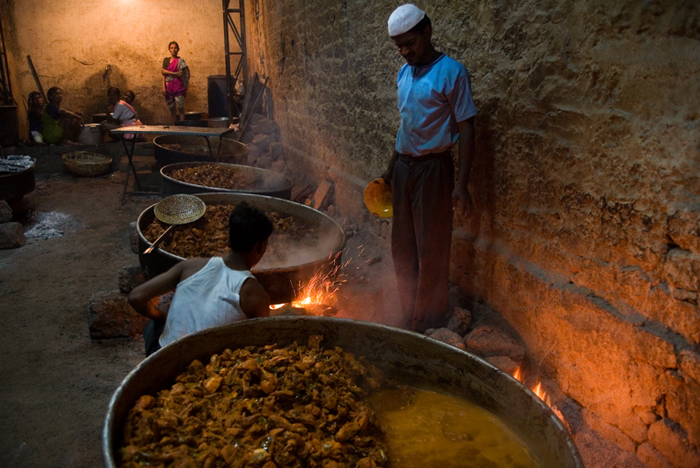
In the years to come, the secrets of the imperial kitchens gradually made their way across the country — not just to the royal kitchens of princely states but also to the gullies and bazaars of many Indian towns.

MughalFood07MPOs31aug2018

photosource: http://www.icytales.com/gourmet-history-biriyani/

And over the centuries, they made their way to fancy restaurants, old-school outlets and home delivery services in bustling cosmopolitan cities.

So the next time you dial for Mughlai paratha and Reshmi Tikka, spend a minute thinking about (and perhaps, thanking) all those food-loving emperors, their fashionable wives and their hardworking khansamas!

Interestingly, the tale of Mughal culinary culture is incomplete without a mention of the dynasty’s fondness for mangoes!

A sole exception to this rule, Babur had little time for mangoes. However, such was Humayun’s love for the fruit that he took care to ensure a good supply of mangoes (through a well-established courier system) while on the run from India to Kabul.

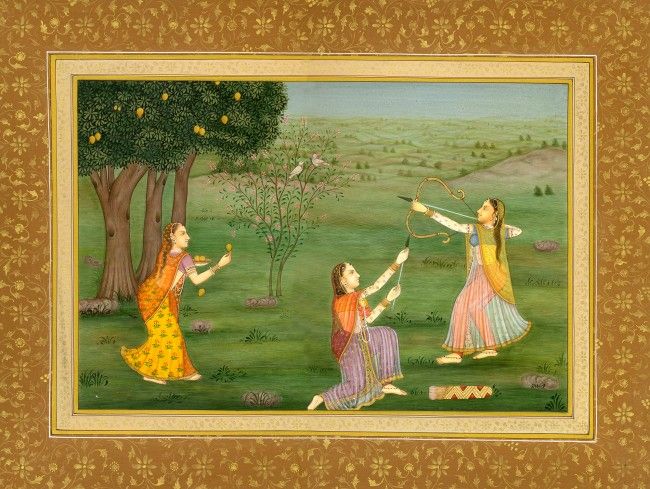
A painting of royal women shooting down mangoes during the Mughal era.

photosource: https://veryshortnews.com/mango-facts/

Akbar built the vast Lakhi Bagh near Darbhanga, growing over a hundred thousand mango trees. This was one of the earliest examples of the grafting of mangoes, including the Totapuri, the Rataul and the expensive Kesar.

Shah Jahan’s fondness for mangoes was so deep that he had his own son, Aurangzeb, punished and placed under house arrest because the latter kept all the mangoes in the palace for himself!

In fact, Jehangir and Shah Jahan even awarded their khansamas for their unique creations like Aam PannaAam ka Lauz and Aam Ka Meetha Pulao (a delicate mango dessert sold all through the summer in Shahjahanabad). It was also mangoes that Aurangzeb sent to Shah Abbas of Persia to support him in his fight for the throne!

(Edited By Vinayak Hegde)

source: http://www.thebetterindia.com / The Better India / Home> Food> History> India / by Sanchari Pal / August 31st, 2018
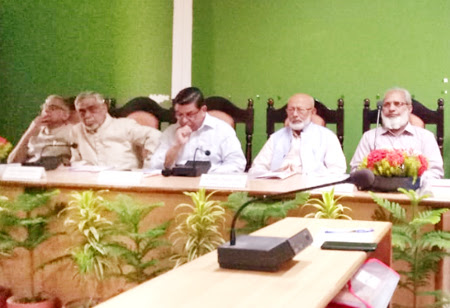
The exotic Nizami cuisine to make a comeback

Hyderabad, TELANGANA :

Royal spread:The ‘Khwan Nemat-e-Asafia’ lists 15 types of biryanis such as Biryani Rumi, Biryani Mahboobi, Biryani Nargis, Biryani Hazar Afreen.

The world knows them for fabulous jewels and splendid palaces. But not many know that the erstwhile Hyderabad rulers had a weakness for a rich diet as well.

Sample this: Biryani Dulhan, Yeqni Palou Shirazi, Khorma Murgh, Qhalia Chamkura, Kabab Gul Khatai. A ‘shahi’ spread any which way. If your mouth is doing a tango, you are not to be blamed.

Now, one can try out these dishes. Urdu daily Siasat has stumbled upon a dog-eared copy containing a list of 680 formulae used by the royal kitchenette of the 6{+t}{+h}Nizam, Mir Mahboob Ali Khan (1866 – 1911). The newspaper plans to publish the recipes in Urdu and English on art paper shortly. The book, titled Matbaqe Asafia , is expected to hit the market in the next two months.

“It will be in time for Ramzan, the month of fasting,” Siasat ’s Editor Zahed Ali Khan says.

Tell me what you eat and I will tell you what you are. A look at the recipes and the ingredients that go into making these sumptuous dishes give an inkling of the royal taste — cuisine that is never clichéd. Every formula differs from the other in the set of instructions and ingredients.

The ‘Khwan Nemat-e-Asafia’ lists 15 different types of biryanis such as Biryani Rumi, Biryani Mahboobi, Biryani Nargis, Biryani Hazar Afreen. As the name suggests, the ‘Dulhan Biryani’ is highly decorated with a fried banana in covering of ‘warq’ (silver foil).

Besides, there are 18 kinds of pulav , 16 of khichidi , 48 of do-pyaza , 21 variants of khorma , 45 of kabab and 29 types of naan . Besides, there are 25 varieties of chutneys (condiments) and 33 types of achaar . Apart from an assortment of spices and dry fruits, the ingredients also include a generous sprinkle of perfumes and sandal.

But some of the formulas could be a recipe for sickness, given the heavy doze of ‘pure ghee’ suggested. There are also some recipes, which, if tried now could land one in trouble. For instance, the book contains formulas for cooking animals which now attract provisions of the Wildlife Act. “But we don’t propose to include such recipes since they are banned now”, Mr. Khan says.

So gourmets, get ready for a royal repast.

Come Ramzan and the Siasat daily plans to publish a list of 680 formulae used by the royal kitchenette of the sixth Nizam, Mir Mahboob Ali Khan

source: http://www.thehindu.com / The Hindu / Home> National> Andhra Pradesh / by J.S. Ifthekhar / Hyderabad – May 13th, 2013

Young Muslim women fight to control their own stories in Ghazala Jamil’s new book

NEW DELHI :

In ‘Muslim Women Speak: Of Dreams and Shackles‘, activist-scholar Jamil tries to find these women’s real voices, instead of just presenting them as victims.

Fatima reads her Quran when her alcoholic father goes out for his daily jaunt. In public, the 15-year-old ‘woman’ can always be seen clad in a burqa. Does that make Fatima a devout Muslim or a victim first? She regrets having to drop out of school and take on the extra job of zari making. She quarrels with her mother about it. Is that a suggestion of Fatima’s latent feminism?

Ghazala Jamil’s analytically robust account of Muslim women is infused with voices of young women wrestling with Jamil across various workshops. They are trying to gain control over the narrative of their own lives from the oppressive and hegemonic stereotypes of women as victims. Worse even, the notion that Muslim women are victims of a special kind.

Chiselled over 10 chapters, the development worker, activist and scholar in Ghazala Jamil together fight her battles with scholarship on multiple fronts. As the cover from Baaraan Ijlal’s installation Birdbox suggests, the project tries to uncover and unshackle young Muslim women in discovering their real voices aside from their popular representation of them as victims.

First, Jamil takes on Indian feminists. She criticises their inability to imagine the experience of womanhood in the grips of minoritisation and marginality. By imposing an imaginary ‘universality’, they subsume religious, sensual, intolerant, para-civilised and violent specificities, to conceptualise an ‘Indian sisterhood’. Such broadstroke feminism, she observes, subsequently fails to account for communally charged alienation of Muslims in India.

From there, she directs her attention to methodological failures in academia, journalism and activism. They continually subject Muslims to quantitative enquiries, failing to unravel the qualitative complexities and multiplicities of Muslim lives. This is evident in the obvious lack of theoretical insights into Muslim lives.

This, she charges, is symptomatic of a global malady that tends to imagine Muslims worldwide as a singular category, indolently conflating religion with civilization.

Further, she tries to situate her work on intimate aspirations by trying to tease out a backdrop of national imaginary that forms an alternative to western imperialism. Following Gopal Guru’s arguments, Ghazala Jamil goes on to assert that theory making is a social responsibility. It restores agency to those deemed powerless and therefore is emancipatory, transformative and a political project in articulating an identity.

Jamil disavows the very notion of authentic knowledge and instead chooses to take recourse to Donna Haraway’s “situated knowledge”. She argues that the “worth of being an insider or outsider may be judged in its ability to deliver”. Thus, she adopts a novel method of engaging in workshops with her interlocutors where they play an active part in generating knowledge about their own lives.

In doing so, Jamila manages to excavate her interlocutors’ views on what they imagine as taking action or acts of agency. Within such a field of agency, silence, hesitation, tears and inaction begin to speak as loud as words do. She exposes her readers to a world of experience beyond words; adding rich denseness of experiences or marginality.

It is from this vantage point that Ghazala Jamil begins to delve into the dreams and aspirations, the shame and humiliation of young Muslim women in India. For instance, criticising quantitative studies that reduce aspirations to solely that of socio-economic status, Jamil attempts to broaden the horizon of aspirations to include educational status and career goals of young Muslim women.

The study also goes on to examine the simultaneously impeding and encouraging influence of faith and family attitude, gender roles, intimate relationships, socio-cultural and political milestones on aspirations of these young women.

Yet the cumulative effect of communalism and poverty infected patriarchy is that daughters often tend to grow up motherless. They seek motherly affection and protection in their marriages. This often does not fructify under the effect of communal violence that collides into their lives long after an incident itself.

Arpita Phukan Biswas holds a Ph.D. in Sociology from the Indian Institute of Technology-Bombay.

source: http://www.theprint.in / The Print / Home> Page Turner> Afterword / by Arpita Phukan Biswas / August 12th, 2018

19th century Nizami cuisine to make a comeback

Hyderabad, TELANGANA :

Come Ramzan and the Siasat daily plans to publish a list of 680 formulae used by the royal kitchenette of the 6 Nizam, Mir Mahboob Ali Khan

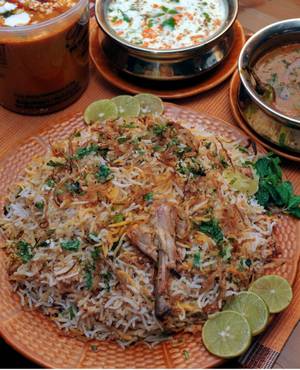
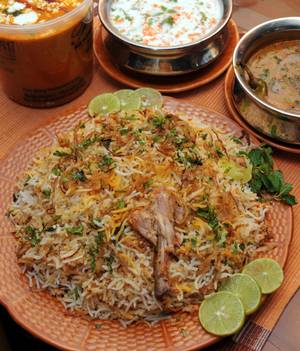
BiriyaniMPOs16aug2018

The world knows them for fabulous jewels and splendid palaces. But not many know that the erstwhile Hyderabad rulers had a weakness for a rich diet as well.

Sample this: Biryani Dulhan, Yeqni Palou Shirazi, Khorma Murgh, Qhalia Chamkura, Kabab Gul Khatai. A ‘shahi’ spread any which way. If your mouth is doing a tango, you are not to be blamed.

Now, one can try out these dishes. Urdu daily Siasat has stumbled upon a dog-eared copy containing a list of 680 formulae used by the royal kitchenette of the 6 Nizam, Mir Mahboob Ali Khan (1866 – 1911). The newspaper plans to publish the recipes in Urdu and English on art paper shortly.

The book, titled Matbaqe Asafia, is expected to hit the market in the next two months.

“It will be in time for Ramzan, the month of fasting,” Siasat’s Editor Zahed Ali Khan says.

Tell me what you eat and I will tell you what you are. A look at the recipes and the ingredients that go into making these sumptuous dishes give an inkling of the royal taste — cuisine that is never clichéd. Every formula differs from the other in the set of instructions and ingredients.

The ‘Khwan Nemat-e-Asafia’ lists 15 different types of biryanis such as Biryani Rumi, Biryani Mahboobi, Biryani Nargis, Biryani Hazar Afreen. As the name suggests, the ‘Dulhan Biryani’ is highly decorated with a fried banana in covering of ‘warq’ (silver foil).

Besides, there are 18 kinds of pulav, 16 of khichidi, 48 of do-pyaza, 21 variants of khorma, 45 of kabab and 29 types of naan. Besides, there are 25 varieties of chutneys (condiments) and 33 types of achaar. Apart from an assortment of spices and dry fruits, the ingredients also include a generous sprinkle of perfumes and sandal.

Piece of advice

But some of the formulas could be a recipe for sickness, given the heavy doze of ‘pure ghee’ suggested. There are also some recipes, which, if tried now could land one in trouble. For instance, the book contains formulas for cooking animals which now attract provisions of the Wildlife Act.

“But we don’t propose to include such recipes since they are banned now”, Mr. Khan says.

So gourmets, get ready for a royal repast.

source: http://www.thehindu.com / The Hindu / Home> News> Cities> Hyderabad / by J.S. Ifthekhar / Hyderabad – May 13th, 2013

Remembering Maulana Hasrat Mohani: A Celebration Of The Diverse And Secular Culture Of India

Mohan, UTTAR PRADESH :

His poetry reflected his passionate love for his country and his goal of total freedom from the British rule.

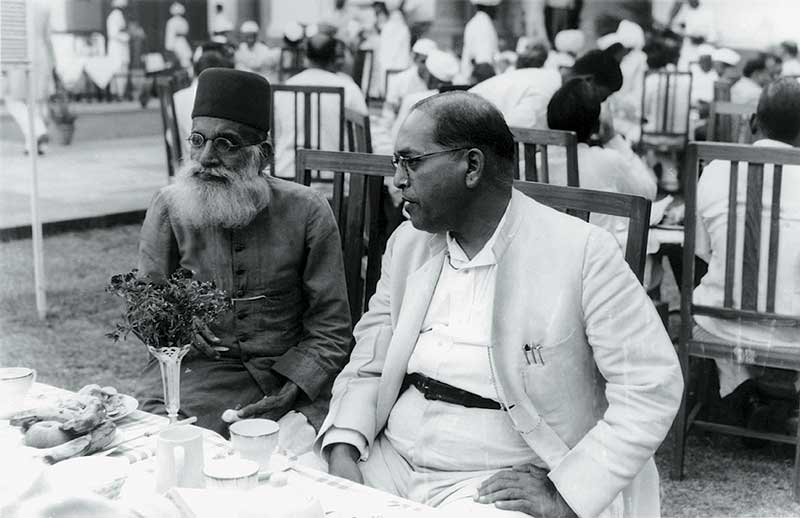
B.R. Ambedkar with Maulana Hasrat Mohani at Sardar Vallabhbhai Patel’s reception in 1949.

On our 72nd Independence day, let us remember the freedom fighter, revolutionary, the poet, the maulana, and the Krishna bhakt: Maulana Hasrat Mohani and celebrate the diversity of India in all its glory.

If the African-American Civil Rights Movement in the United States was fuelled by ‘We shall overcome’, in India that honour would go to ‘Inqilaab Zindabad’ coined by Hasrat Mohani (1875 – 1951). It became the chant of Indian revolutionaries.

Though Mohani is remembered today for his romantic ghazal Chupke chupke raat din, his poetry reflected his passionate love for his country and his goal of total freedom from the British rule. He along with Ram Prasad Bismil got the proposal for Poorna Swaraj (complete Independence) accepted by the Indian National Congress in 1921.

Rasm e jafa kaamyaab dekhiye kab tak rahe,
Hubb e watan mast e khwaab dekhiye kab tak rahe,
Daulat e Hindostan qabzah e aghyar mein
Be adad o be hisaab dekhiye kab tak rahe!

(How long will tyranny succeed, let us see
Till when will freedom be a dream*, let us see
Hindustan’s riches are in the clutches of plunderers
Till When will this continue, let us see.)
[*dream here alludes to awakening of Indians from their slumber]

Maulana Hasrat Mohani was a very complex but extremely interesting personality. He was born in a zamindar family in Mohan near Unnao (Uttar Pradesh) in 1875, and was named Fazlul Hasan. ‘Hasrat’ (longing) was his nom de plume or ‘takhallus’ and Mohani as he hailed from the village Mohan. His early education was in his village and he matriculated from Government High School, Fatehpur. He went on to join the Mohammedan Anglo Oriental College, Aligarh (now Aligarh Muslim University).

Hasrat Mohani was a very active participant in the freedom struggle and was jailed many times. A lot of his poetry is composed during his imprisonment.

Hasrat Mohan was an ardent supporter of Bal Gangadhar Tilak and when he died, the poet penned these lines:

Jab tak wo rahe dunyaa meN raha ham sab ke diloN par zor unka

ab rah ke bahisht meN nizd-i-khuda huro’N pe kareNge raj Tilak –

(As long as he stayed in this world he ruled our hearts

Now in Paradise, closer to God, the houris will be his court.)

Although Hasrat was a romantic poet, he was an active member of the Indian NationalCongress, the Muslim League and the Communist Party of India.

One of his popular verses is:

Gandhi ki tarah baith ke kaate’nge kyun charkh

Lenin ki tarah de’nge duniya ko hila hum

Why should we sit and spin yarn on the ‘charkha’

Like Lenin we will shake the world.

The revolutionary was also a romantic poet and today no ghazal mehfil is complete without a rendition of his evergreen couplet:

“Chupke Chupke raat din aansoo bahana yaad hai

Ham ko ab tak aashiqii kaa vo zamaanaa yaad hai”

(Shedding tears in silence, day and night, I remember

Those days of being in love, I still remember.)

His appeal across nations can be judged from these two stamps by India and Pakistan.

We often talk about his role in the Independence Movement, and his romantic ghazals but rarely do we talk of his devotion to Shri Krishna. According to Prof C.M. Naim, he wrote his first poem on Krishna in Urdu, when he was in Pune during Janmashthami in 1923.

Hasrat Mohani also wrote many verses in praise of Shri Krishna in Bhasha. He visited Brindaban as many times as he went for Hajj to Mecca (11 times) such was his devotion to Shri Krishna.

So while on the one hand, he wrote:

Mose cheR karat nandlāl

lie Thāre abīr gulāl

DhīTh bha’ī jin kī barjorī

auran par rang Dāl-Dāl

ham-huN jo de’ī lipTā’e-ke Hasrat

sārī ye chalbal nikāl

Nandlal keeps teasing me without end;

There he lurks, ready to pour colors on me.

Having safely sprayed others so many times,

He is now set in his bullying ways.

But what if I should embrace him, Hasrat,

Then squeeze him dry of his fancy tricks?

( verse and translation C M Naim’s article ‘the Maulana who loved Krishna )

On the other hand, he wrote innumerable naats and munajats in praise of Prophet Mohammed.

Khyaal e yaar ko dil se mita do Yaa Rasool Allah

Khird ko apna diwaana bana do Yaa Rasool Allah

Remove all thoughts of any other than you O Allah’s Prophet

Make my intellect, crazy for you O Allah’s Prophet

(The answer can be found in his Sufi leaning and learning. Sufism is the path of Bhakti, which has bound Hindus and Muslims together in a syncretic culture, which we call Ganga Jamuni.)

He was a disciple of Hazrat Shah Abdur Razzaq Farangi Mahalli in the Qadria Sufi Order. Sufism believes in losing oneself in the Beloved to achieve salvation and the love of Radha Krishna is a beautiful example of the same.

We can find the answer in the “Iintroductory note to Divan 7) where he refers to the god Krishna as Hazrat Srī Krishna ‘Alaihi-Rahma and claims that in doing so he is follow- ing the path of his spiritual mentors, particularly Hazrat Sayyad Abdur Razzaq Bansawi, whom he mentions.”

Hasrat’s poetry written near Makkah for pilgrimage:

ek khalish hoti hai mehsoos rag o jaan ke qareeb

Aan pahunche hai magar manzil e jaana’n ke qareeb

(A strange pain near my jugular vein I can feel

I have reached my destination near my Beloved)

The music we hear comes from one source, it’s just that we are unable to hear beyond the first few notes. Let’s pause and listen today. To my heart, to your heart and our beloved nation’s heart. I am sure they all want the same thing: peace, prosperity and glory of our great nation where we can live without fear and hatred.

Rana Safvi is an author, historian, blogger and is engaged in documenting of India’s Syncretic past. 

source: http://www.newscentral24x7.com / News Central 24×7 / Home / by Rana Safvi / August 15th, 2018

Deccan papers throw light on Aurangzeb rule

Hyderabad, TELANGANA :

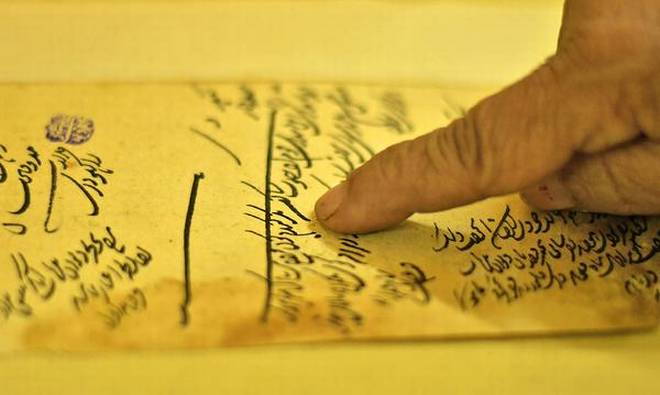
The king’s notes: The Yaddasht-i-Ahkam-i-Muqaddas with Aurangzeb’s imperial instructions. | Photo Credit: G. Ramakrishna

1.5 lakh indelible ink documents preserved in Hyderabad

Think Mughals and you think of Delhi and Agra. But few know that it is Hyderabad that houses the largest collection of written communications of their reign.

The Telangana Archives and Research Institute holds a whopping 1.55 lakh documents — all on handmade paper — including 5,000 from the period of Shah Jahan (1628-1658) and another 1.5 lakh of Aurangzeb (1658-1707). No other archive in the country, not even the National Archives in New Delhi, boasts of such a collection: it gives a graphic picture of the mansabdari system, military administration and revenue machinery of the Mughals in the Deccan. Written in Persian in Shikasta script, cursive style, the documents are linked and arranged in chronological order — date, month and regnal year-wise.

Slew of orders

The documents include Farman (order of the emperor), Nishan (order of a member of the royal family), Yaddasht-i-Ahkam-i-Muqaddas (memorandum containing imperial orders), Parwana (orders issued by higher authorities), Siyaha-Huzur (proceedings of the provincial court), Roznamcha-i-Waqai (daily news report), Qabzul Wasil (bill payments) and Arz-o-Chihra (documents on personnel and horses).

Aurangzeb spent 13 years as the subedar of Deccan during the reign of Shah Jahan and had vast experience in political and other matters. Even after he ascended the throne on July 25, 1658, he continued to focus on the Deccan to check the activities of his rebellious son Mohammed Akbar and on conquering Bijapur and Golconda, which he did in 1687.

According to State Archives director Zareena Parveen, the accountant-general of the erstwhile Hyderabad State, Syed Muhibuddin, went to Aurangabad (the headquarters of the Mughals) for an inspection in 1916 when he discovered a large number of old documents lying in the vaults of Fort Ark.

He took keen interest in preserving them and reported the matter to Daftar-i-Diwani, the administrative wing of Hyderabad State, headed by the superintendent Syed Khurshid Ali. Steps were taken to shift them to Daftar-i-Diwani, which eventually became State Archives. The paper, made by Chinese professionals, has withstood the vagaries of time. The papers remain intact even after water seeped into the archives a few years ago. “In fact they became brighter as it washed away the acidic material that covered the indelible ink used by the Mughals,” said Ms. Parveen.

An expert in Persian herself, Ms. Parveen arranged the documents chronologically, deciphering the contents, and put them in non-acidic dockets.

The documents reveal Aurangzeb’s administrative skills. The Yaddasht-i-Ahkam-i-Muqaddas shows reports on recommendations of pay hikes for staff sent to the emperor, who also had spies to report on negligence, and actions against the government.

source: http://www.thehindu.com / The Hindu / Home> News> Cities> Hyderabad> Sunday Special / by M. Rajeev / Hyderabad – August 11th, 2018