Category Archives: Arts, Culture & Entertainment

The world in an album

DJHamzaMPos24mar2014

DJ Hamza, who has travelled and lived in three different continents shares his experience in the form an his first full length album Gitano 

If you had to sum up over three decades of your life, more than half of which you spent travelling and residing in foreign countries, how would you? Some would probably write a novel, some short stories of selected experiences from here and there and for others a photo book would seem apt. But, 32-year-old DJ Hamza who grew up in Delhi (though his family is from Hyderabad and Mumbai) has travelled and lived around in South Asia, Europe and North America, summed up his story in a ten-song album called Gitano. Gitano means Gypsy in Spanish, which is what Hamza considers himself, having lived in Paris, Boston, New York among many other places.

The ten track album is more than just progressions, scratches and mixes unlike other DJ’s albums. Gitano in all true sense is an offering of new sounds and fabulous fusion. For a DJ to be incorporating elements from Latin, Celtic, Flamenco with house music as a base is something new. For him, electronic sounds are just one aspect of dance music. “Organic sounds are in fact as important as they bring out the primal instinct in us that makes us connect with our core,” he reckons. “The two always have to be in balance in order to reach out to all our sensory points in our bodies. You can always have a completely synthetic sounding track but then there is no soul in it and something having a completely organic track does not give you that punch and thump to drive you to dance.”

It took eight months for Hamza to work on the album. A challenge for sure, he first got the ten ideas in place, then started building on them, later finishing them before finally mixing and mastering the tracks. Gitano is more than just an amalgamation of sounds. In it’s own way, it also describes each place that Hamza has been to. “The title track Gitano has flamenco influences with an underlying African melody as well, which I came across in Barcelona. I have been to Senegal and Mauritania and fell in love with the local music there. It was also interesting to see that the poorest continent in the world had the happiest music, which is something to think about,” says the DJ. From guitars sounds that represent New Orleans to Latin influenced New York house sounds the album has it all.

Hamza goes to the local place in any country where traditional music thrives and he looks at it from two angles — it has to be an essential part of the history of that particular place or it must be so advanced that it automatically fits into the future. Interestingly Hamza was studying to be an investment banker but came out as a music producer. He credits three people who taught him to work at the studio, on stage and as an artist — Danish pianist Niels lan Doky, Jasbir Jassi and Taz from Stereo Nation. His experience of working with many folk helped him.

He and Jassi shared their studio with a gangster rapper back in New York, who had been shot nine times (reminds us of 50 cent) and who even stole their TV. “We then sent one of our friends from the Gurudwara who had a long white beard to get the TV back from him and he had never seen a Sikh person before so he called the police thinking our friend was a Pakistani Ninja,” he says. Hamza plans on taking his music pan India, along with collaborating with local artistes thereby sparking off a new Indian house music scene in the already existing musical revolution.

Catch DJ Hamza live on March 29 at Loft 38

source: http://www.bangaloremirror.com / Bangalore Mirror / Home> Entertainment> Lounge / by Prashanth Vidyasagar, Bangalore Mirror Bureau / March 23rd, 2014 (print mar 24th, 2014)
She brought ‘ghararas’ to Ludhiana

In this town of good taste and high living, women score high on the trend-o-meter. Fashionistas, dance divas, art connoisseurs, bloggers or activists, the ladies don their hats with consummate ease. When it comes to their homes, they keep it both chic and regal. Whether it’s designer cutlery they’re picking or a Louis Vuitton  they’re packing,  Ludhiana’s women make both seem effortless. Every Wednesday, TOI traces these euphoric raconteur women as they share interesting tales…

The tiny little board announcing ‘Naurah’ (flower in Arabic) welcomes city’s shopaholics to this designer wear store. Tucked away in a Sarabha Nagar neighbourhood, this place is no less than a fascinating world of floristry.

The banter inside the charming store is a cinch to transport the womenfolk back to the 1980’s Doordarshan days.

Geti  Kidwai, the dynamic young owner of the boutique, is mobbed by the frenzied girls as she greets each with a wall of chatter and a display of unusual bridal wear. With apair of “karan phool” in her ears, she unwittingly reminds one of a diva news presenter from India’s first public service broadcaster.

“Yes yes… we make ‘ghararas’ here. The one that royal women in Lucknow wear. The one that have ‘zari’ and ‘zardosi’ work. Royal blue, pink, purple… all for your princess. And yes, the iconic newsreader Salma Sultanji is my mother-in-law,” she tells them, speaking breathlessly and with enormous liveliness in her voice.

Geti, who moved to Ludhiana along with her husband Saad in 2007, is credited to have brought a breath of fresh air to designer circles of this fashionable city. Four years ago, she had set a new trend by using ‘ghararas’ with their short, mid-thigh length and a pair of wide-legged pants as the trousseau wear for Ludhiana’s beautiful women. The outfit became an instant hit among the affluent and urbane women of the town. And, Geti developed her own fan following from a closed cohort of women looking up to her as their fashion icon, much like her mother-in-law.

If one were to measure Sarabha Nagar outlet ‘Naurah’ on a style-o-meter, the results will please its owner Geti Kidwai no end. High on vintage and also on modern twists to outfits, the place is all about the 21st century woman’s take on trousseau and bridal wear. And Geti, much like her mother-in-law Salma Sultan — a popular presenter on Doordarshan, has a style of her own.

“Style icons… bhai kuch aisa karo ki log kahe aapko dekha kya cheez hain aap bhi koi tareekhi cheez hain..,” she grins, recollecting a couplet that Salma recited to her. Between 1967 and 1997, Salma Sultan had initiated a trend: of wearing a flower low in her hair and draping the border of her sari around her neck in a modern yet traditional way. It was later picked up by almost all the women newsreaders.

All Geti’s ‘ghararas’ are bespoke and come in different varieties. They are either made of Kimkhav, Jamavar or Banarasi tissues. The embroideries are done using a lot of kundan and jadaau.

From graduating in sociology and fine arts in 1997, through post graduation in interior designing, her journey has been eventful.

There are traces of effusive child-like prattling when she talks about her venturing into modelling and choreography that even drew mild ire of her father.

“Shauk bahut tha na har cheez mai kudne ka… papa kehte hai are bhai ab ruk bhi jao…” she recollects and then breaks into peels of laughter again.

“He then asked me to step out of modelling and do something which involved… like getting into choreography. But here again, I will jump onto the stage and start moving my legs,” she adds.

Her zest to conquer everything took her to contesting Miss India pageant, ramp shows and even setting up a gourmet shop called Just Kebabs in south Delhi. “Kakori… tikka… bharra… you could get all of that there… ab Lucknow se hai toh khaane ka shauq toh rakhenge,” she quips.

There is no economisation of smiles on her face. Every long sentence must ensure a belly laugh for she tells you hilarious incidents, some in Urdu and others in English – both impeccable.

“Ab yeh bhi nahi ki hum bilkul hoosh hai (not that I am an ill-mannered garrulous talker)… gappe lagane mai maza aata hai,” she points out.

When fulfilling her professional duties, she is punctilious and spick and span.

“I like dressing up girls, telling them how to comport at their or other’s weddings, how to carry a clutch bag, eye contact…” she goes on.

Her kids — son Samar, 12 and daughter Mehar, 7 — have begun idealizing her. Samar has been focusing on his chess classes and Mehar has taken up choreography. “Dangayee bachche nahi hai… I tell them shareef hona theek hai… but dumb mat hona… thoda mischievious toh hona chahiye,” she laughs.

source: http://www.timesofindia.indiatimes.com / The Times of India / Home> City> Ludhiana /  by Rohan Dua / July 18th, 2012

Gracefully yours!

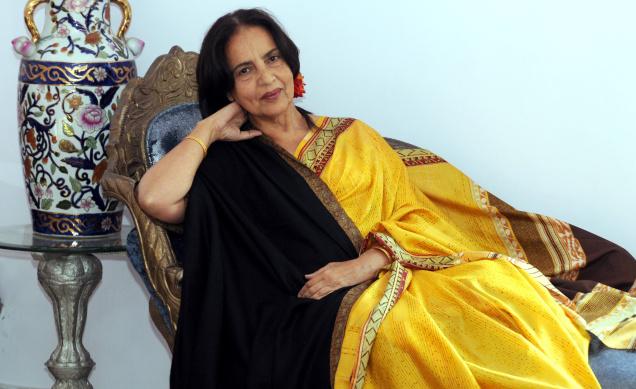
Salma Sultan at her home in New Delhi./  Photo : Rajeev Bhatt / The Hindu
Salma Sultan at her home in New Delhi./ Photo : Rajeev Bhatt / The Hindu

What makes Salma Sultan click even at 63?

“I belong to a city where women ruled for 100 years. So much is the pride in that place that till date most women don’t attach their father or husband’s surname . Most girls still use ‘Sultan,’ just like I do.”

Personifying pride coupled with grace and humility – meet Salma Sultan, the woman who ruled the small screen as a newsreader for over two-and-a-half decades. A rose became synonymous with her and news reading — an elegant exercise.

Today Salma , over 63 years of age, hasn’t lost her charm and poise. Looking at her on television , no one would have imagined that she possessed such a tremendous sense of humour. Barely a sentence of hers is free of effortless wit and hilarity.

A Delhiite for over two decades, Salma now lives in her palatial three-storey bungalow at Jangpura and has to her credit the greenery of the area starting from Sahi Hospital to its back and beyond. An ardent nature lover, she has turned the ugly , illegal parking area to a lush meadow. “Delhi is my karmbhoomi. It has shaped my confidence and given me immense strength to fight contradictory situations.”

As one enters her drawing room through the Rajasthani fort style gate, peace greets through a painting of the Buddha and class via an original M. F Husain painting . “Husain saab gifted it to my father,” that familiar voice falls on the ears as one spots the beautiful woman with her dimpled smile and motherly warmth in her kohl-less eyes. She has “taken great pains” to get ready – a yellow and brown sari, “touch-ups with talcum powder and lipstick”, and stuck a red rose on insistence for the photo shoot. “I don’t like getting ready and ‘pose’ for pictures,” she says politely. She is shy and camera conscious despite, ironically, being in front of the camera from 1967 till the late nineties.

But Salma , quite contrary to her appearance on the small screen, had been a naughty child. “I was very assertive, irrepressible, naughty but not spoiled. Not a single day of my life would go without a prank in school.” For instance, the day “our teacher would ask us to bring the geography book, I would make it a point to give it to someone to get the ‘punishment’ of standing outside the classroom with three others equally party to this plan,” she laughs as her dimple grows deep.

Born to scholar and secretary in the Ministry of Agriculture Mohammed Asghar Ansari and a “Moghul” homemaker mother, Salma was her parents’ second child. “I was an unplanned child but a blessing to my lonely sister (Maimoona Sultan, four-time Member of Parliament) who would protect me from the wrath of my disciplined father who would make sure that I offer all my prayers (namaz) and read the Quran on time. But he has a great contribution in the making of my personality. He used to emphasise education and extra curricular activities in school. He would prepare my debate and make me rehearse in front of him,” recalls Salma about her Sultanpur school days in Bhopal. Salma did her graduation from Bhopal. “I did my post graduation in English from Indraprastha College, and simultaneously gave audition for an announcer on Doordarshan.”

On to news reading

Salma became a newsreader by fluke. “Those days”, she recalls “only Pratima and Gopal Kaul used tor read news. Kaul wanted to become a producer, so his tussle with the DD was a regular affair. Once, as a protest and to make sure not to read news anymore, he shaved his head. As he entered the studio, the producer was shocked.” In the frantic search to replace him, Salma became a casualty. “But there was a hidden desire to read news as it was a well-paid, comfortable job where the newsreader, unlike an announcer like me, had to come at 4 p.m., read the news a couple of times and go back.” A nervous Salma read the 15 minutes news in eight minutes and “paused”. “The hapless producer decided to train me and that’s how the journey began.”

She narrates the story behind the signature rose in her hair. “I once wore a pink rose to match my pink sari and read news. Telephone calls and letters of appreciation poured in. Then the day I wouldn’t tuck a rose, letters of complaints and requests would follow. So, a rose became a regular affair.” And to hunt for matching roses, Salma would either grow her own or “steal from the neighbourhood.”

After her retirement , Salma moved to direction. Her serials Panchtantra, Suno Kahani, Swar Mere Tumhare and Jalte Sawa drew attention. She recalls, “To shoot Panchtantra on minimum budget, I went to Mumbai to look for a set of rajmahal. Someone told me that B.R. Chopra’s set for Mahabharatawas being dismantled after the shooting. I met him and he was kind enough to let me use his set.Panchantra used to be telecast soon after Mahabharata and did very well. I will never forget his compliment , “Mujhe is ladki ki daad deni padegi. Mahabharat ke baad bhi log isse dekhte hain”.”

The mother of an Income Tax Commissioner Saad and a choreographer daughter Sana and two grandchildren, Salma’s quest for learning hasn’t waned. “I am learning synthesiser and , harmonium for my love of music, and computers to be tech-savy.” Salma also does interior designing. She began by doing up her 13-room bungalow in Bhopal followed by an apartment in Patparganj. Her residence is proof of her refined taste.

How does she keep fit? “I do yoga, walk and take supplements. I treat my body as a gift from God…. To purify my inner self, I offer namaz regularly,” she signs off, poise refuses to fade.

source: http://www.thehindu.com / The Hindu / Home> Features> MetroPlus / by Rana Siddique Zaman / February 22nd, 2010

One woman in Khushwant Singh’s life

Author Sadia Dehlvi on her friendship with Khushwant Singh

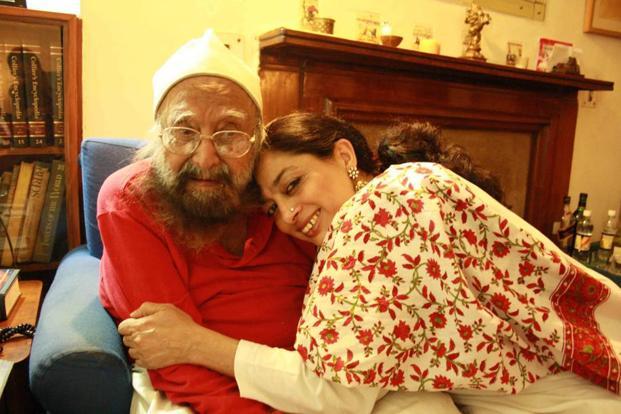
Khushwant Singh and Sadia Dehlvi

 If you ask me about the women in author Khushwant Singh’s life, I would say I am the only one. That’s how special he makes all those around him feel. Women are drawn to him because he doubles up as confidante, friend, father and mentor.

For women afflicted with heartbreak, Khushwant readily provides his shoulders to dry the tears and at celebration time he shares the cheer. He has the remarkable ability to suffer all kinds of people, often getting bullied into inviting them home to his evening durbar. I know many women whom Khushwant helped get jobs, admissions, transfers, and senior government posts. Many authors including me owe their career to his mentoring.

I first met Khushwant thirty years ago at the Arab Cultural Centre where my friend Ameena Ahmed happened to be exhibiting her calligraphic paintings. He walked up to me and said “Why are you so beautiful?”. I laughed replying, “Because I am a beautiful person.” Khushwant asked me to come to his house the next evening and the visits to Sujan Singh Park have continued ever since. His flat became my window to the world of the rich, famous and the absurd. Here I met presidents, parliamentarians, religious zealots, intellectuals, artists, poets, businessmen, harassed women, ambitious men and proud transvestites.

Very soon Khushwant began to mention me repeatedly in his newspaper columns and I too openly wrote of my love for him in my columns. It furthered his notoriety and capitulated me into the public arena. Saying, “I want to show you off”, he took me along to people’s homes and to public functions. When there were special invitees for dinner, I played hostess at his home, ensuring guests were comfortable. Khushwant’s wife Kanval was fond of me so my presence in the living room was never a problem. The women Kanval disapproved had to be entertained in his study and were not welcome to stay for dinner.

In 1993, Khushwant dedicated his book Not a Nice Man to Know to me: To Sadia Dehlvi, who gave me more notoriety and affection than I deserve. Many amongst his women friends turned green with envy and to our amusement, some began to accuse him of ghost-writing my columns. We grew to share an incredible bond, a friendship that continues to nurture me intellectually and emotionally.

We share a common love for the city of Delhi and Urdu poetry. Khushwant has a soft spot for Muslims and Muslim women in particular. His house is adorned with calligraphies from the Quran and the Muslim greeting ‘Salaam Alaikum’ is printed on the curtains. One thing that he despises is dishonesty and religious prejudice. I know many well-known people harbouring communal biases who have been dropped permanently from his circle.

Despite the celebrity status, Khushwant answers the phone himself, replies to letters and till recently was accessible to all those who wished to meet him. Taking a prior appointment used to be the only criteria for visiting rights.

With age and exhaustion, the numbers of those invited to the evening Durbar e Khas has shrunk and one rarely encounters a new face. Conversations are shorter and the poetry is usually Ghalib’s. Khushwant now finds it stressful to meet new faces and I have been ordered not to bring friends any more. I try explaining my helplessness with people seeking access to him. He says, “Just tell them that I’m an irritable, senile and nasty old man.” The truth is that at ninety plus, Khushwant is maashallah just as alert, lovable and wonderful as ever.

This piece is an excerpt from thedelhiwalla.com, where it appeared in 2010

source: http://www.livemint.com / Live Mint & The Wall Street Journal / Home> Leisure / by Sadia Dehlvi / Thursday – March 20th, 2014

A mosque and a mausoleum

The ancient Calvathy mosque is steeped in history. PRIYADARSSHINI SHARMA traces its origin and antiquity as it is poised to get two more floors to accommodate believers.

CalvathyMosque1MPos21mar2014

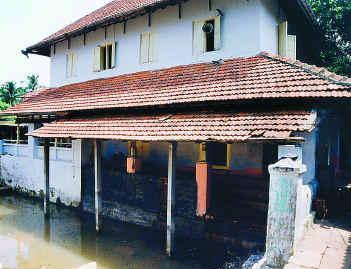
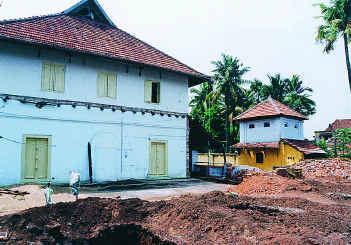
WHEN IT comes to antiquity, every nook and corner of Fort Kochi has a timeless past. While the St Francis Church and the Jewish synagogue hog the limelight as `must-see’ in a traveller’s itinerary, many are unaware of the very ancient Calvathy Jamath Mosque, which exists rather silently along the road connecting the two famous monuments.

It is a historical curiosity that so many varied communities who came to Kochi in succession, settled here to form a long lasting affair with the land and became an indelible part of it. None rampaged the land but settled down harmoniously, imparting richness to its history. The Arabs, who were the first to come for purposes of trade, established places of worship, to which the Calvathy mosque belongs.

CalvathyMosque02MPos21mar2014

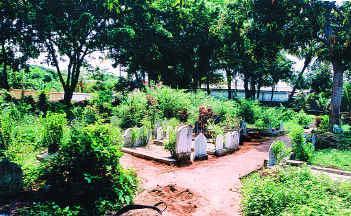
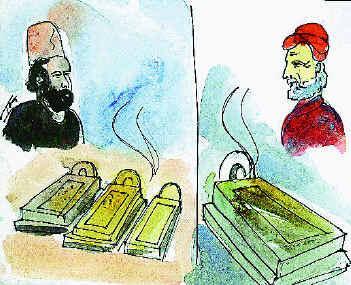
Dating back to the 14th century, it is claimed that the traders, in order to perform their religious rites, built it in the year1384, where historical evidence of records of prayers exist for the last 619 years. Records tell about a trader, Makkar, from Parapanangadi who elevated the existing structure to its present form. From then on several additions were made to it, with the passage of time. The mosque is credited with the fact that many distinguished personalities like Makki Thangal, renowned for his Quranic interpretations and literary works is buried in the adjoining cemetery, just as the mausoleum of Faridudeen Aulia, is erected on the Eastern side of the mosque. The tomb of Faridudeen Aulia, is renowned throughout the country, as he was a preacher of the Koran and was respected and loved by one and all. Thus on Thursdays and Sundays special prayers are offered to him.

Built in a typical Kerala style the mosque has a timber ceiling and no minarets. A water tank in the centre is in keeping with the traditional architecture. The 2-acre plot which houses the mosque has a burial ground and is planted with many rare trees. Presently plans are afoot to build extensions to the mosque. Says the secretary Mr.A.K RajaAnwar, ” We propose to build two floors of 4000 sq ft to accommodate the believers. It will be in keeping with the style.” Managed till a few years ago by the well-known stevedoring Poovath family, the mosque was managed by Paree Moopan, Abdul Rahimkutty Moopan and Bava Moopan.

CalvathyMosque03MPos21mar2014

In the 1940’s a controversy led to the closure of the mosque, which was resolved in the hands of a popular and loved Imam Maroham Mohammed Ali Musaliar. Hailing from Aluva he was respected and followed the Shariat of Islam. He managed the premises for a good 40 years where, besides managing the day-to-day affairs, he also planted a variety of rare trees in the mosque grounds. In the late sixties, prominent persons like T.K Pareekutty, Abdul Rahim Kutty Moopan, Poovath Hassan, V.K. Hamza, Mohammed Koya, with Poovath Hassan as president formed a working committee to run the mosque.

Today, the Jamath Pally manages the mosque along with a few other mosques in the area. A laudable feature of the Calvathy mosque is that its burial grounds are open to other sects of the Muslim community too.

CalvathyMosque04MPos21mar2014

Calvathy, facing the Western side of the mosque, was the first wharf in Kochi and had an active maritime tradition, much before Sir Robert Bristow planned the present port at Willingdon Island. It was the ancient hub of all sea faring activities, in sharp contrast to the neglected locality it is today. An ancient structure like the Calvathy mosque remains deprived of its historical due and it is time the mosque finds a rightful place among the sites and sounds that contribute to the antiquity of Fort Kochi .

source: http://www.hindu.com / The Hindu – Online Edition / Home> Features> Magazine /  by Priyadarsshini Sharma   /  Thursday – May 15th, 2003

Mazars of Delhi poets… a grave story

MazarsMPos21mar2014

WHILE THE last resting place of Sheikh Ibrahim Zauq in Paharganj has been restored some respectability, thanks to the Supreme Court’s intervention, the graves of Khwaja Mir Dard and Hakim Momin Khan Momin behind the Maulana Azad Medical College are still a picture of neglect. It’s high time something was done to save them.

Mir Dard Road leads to the grave of the great Urdu poet, but the land surrounding it has been sold by the unscrupulous, and palatial buildings have come up around it, leaving only a small plot for the mazar. The grave of Momin is within a boundary wall, along with the graves of Shah Walliullah, the saint whom the poet held in high reverence, and members of the Shah’s family.

Over 40 years ago the hilly land near the grave was bulldozed and plans made to do away with the mazars. A great lover of Momin, Sher Ali Mewati heard of this and came from Mewat (Haryana) to save them. It is said that he lay on the road in front of Teen Murti House and did not get up even when Pandit Nehru was being driven out in his car.

Nehru got down from the vehicle and enquired what the matter was. When Sher Ali told him that the graves of Shah Walliullah and Momin were about to be bulldozed, the Prime Minister got very upset and drove to the spot. The demolition was immediately halted, and later Sher Ali Mewati was able to get the mazars repaired and enclosed in a boundary wall.

RVSmithMPos21mar2014

The area where this kabristan is situated is known as Mehdian. Sher Ali Mewati, they say, actually lay before a bulldozer to stop the demolition and his leg was fractured in the process. Whatever may be the truth, the area needs another man like him to preserve it from encroachment.

Khwaja Mir Dard was born in 1719 in Delhi and died on January 7, 1785. “Mysticism ran in the family, for he was descended on his father’s side from Khwaja Baha-ud-Din Naqshbandi, and on the mother’s side from Hazrat Ghaus-e-Azam,” says Professor Muhammad Sadiq.”Dard studied theology with his father, and learnt the art of poetry from Khan-e-Arzu. For some time he was in the army, but he gave it up to lead a life of retirement and study and, at 39, on his father’s death, succeeded him as the head of a sanctuary.”

The vanity and unreality of life and its joys and sorrows, unity of existence, the greatness of man in the hierarchy of life, the mirage of the intellect, praise of intuition, the extinction of self and suspicion of worldly life, pietism, contentment, resignation – nearly one third of his poetry is devoted to these ideas.

Professor Sadiq says that Momin Sadiq’s ancestors had migrated from Kashmir to Delhi. “His father, Hakim Ghulam Nabi, was a physician of note and connected with the imperial court. Momin was born in 1800 and was given that name at the instance of his father’s spiritual guide, Shah `Abdul’ Aziz. His education had been thorough and systematic, as is proved by the embarrassing profusion of technical terms pertaining to medicine, astronomy, mathematics, music, etc., in his qasidas. A man of pleasure in his youth, he forswore his Bohemian ways when he became a disciple of Sayyid Ahmed of Rae Bareily, but he was far too human to sink into a dour puritan. The fruits of his conversion can be studied in his Masnavi-e-Jahadiyya and a few other pieces. He died in 1851.”

Momin is said to have predicted his death in verse, as he was also a najoomi (astronomer-cum-astrologer), saying he would end up with broken arms and legs (“dast-o-bazu”). This is actually what happened years later when he fell from a ladder and died after nine days. His famous couplet, “Tum mere pas hote ho goya/ Jab doosra aur koi nahin hota” made his contemporary Ghalib remark that Momin could take his entire dewan and give him just this pearl of a couplet in exchange.

Momin’s best work is Ab-e-Hayat (Parnassus literally, but water of paradise figuratively) Shouldn’t his grave and that of the great Mir Dard be preserved?

source: http://www.hindu.com / The Hindu – Online Edition / Home> Features> Magazine / Down Memory Lane  by  R V Smith  /  Monday – May 24th, 2004

As she likes it!

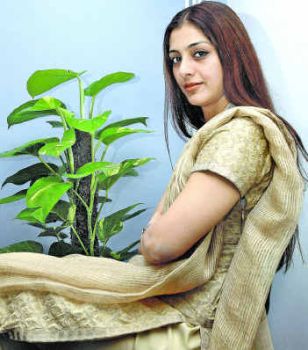
From breathing life into Mira Nair’s Namesake to romancing Amitabh Bachchan in Cheeni Kum, Tabu has a lot on her plate, finds SANGEETHA DEVI.K

________________________________________________________________________

After 18 years in this profession, I think I’m only answerable to the audience. Acting, in its purest form, has held me in good stead.

_________________________________________________________________________

CLASS ACT Tabu is upbeat about her forthcoming movies / Photo: Rajeev Bhatt / The Hindu

A visit to Hyderabad spells more than just work for Tabu. She has finished shooting for a short film on HIV/Aids produced by BBC, but she is in no hurry to pack her bags to Mumbai.

Her new home in Hyderabad is nearing completion and she plans to give the finishing touches. When that’s done, she’ll be back to court the arc lights for a few but coveted projects.

“Things are turning out just as I wanted. Inshallah! I had taken a yearlong self-imposed break after Meenaxi. Feels nice to be working in some good projects again,” she tells us.

The cause comes first 

Being a celebrity, she knows that endorsing a cause is like living life on the razor’s edge. Like she says, “I’ll endorse a cause only when I believe in it. For instance, I’d like to do something substantial for the cause of the girl child. But I’d never want to draw unnecessary attention. I prefer the cause being highlighted rather than the celebrity associated with it.”

Talking about the series produced by BBC, Haath Se Haath Mila, she says, “It talks about people affected by HIV and are yet working in that field to create awareness. I shot an episode with one such victim who is doing voluntary work in Hyderabad.”

Bookmark 

When Vishal Bharadwaj signed Tabu to play Lady Macbeth in Maqbool, Tabu hadn’t read the Macbeth. And neither did she want to, lest it affect the way she interpreted the film’s script.

But Mira Nair’s screen version of Jhumpa Lahiri’s The Namesake was another tale altogether.

“I had read the book much before Mira planned the film. Even back then, I could see myself playing the part of Ashima. As an actor, I am used to associating different characters in a book with different actors.

When the film came my way, I felt like reading the book again. But I resisted that thought since I didn’t want to be influenced too much by the book. I wanted Ashima to turn out the way I had perceived her. It’s not a new character for me. I’ve done strong films like Astitva, Chandni Bar and so on… But the situations that influence Ashima are different. It’s not easy to condense a book into a film. But where Namesake is concerned, Jhumpa Lahiri is pleased with the film.”

The buzz is that the film will be screened at the Cannes Film Festival later in May. Speaking of films that have been inspired by books, Tabu adds, “Very few films do justice to a book. On that account, I enjoyed Bridges of Madison County. Meryl Streep breathed life into the entire film.”

A few good films 

In the making are select projects — Kunal Kohli’s Fanaah co-starring Aamir Khan and Kajol, Cheeni Kum with Amitabh Bachchan, and a Tamil film to be directed by Gautam Menon. Having shot for Fanaah in Poland a few weeks ago, Tabu shrugs, “The makers don’t want me to talk about the film now.”

But she is more forthcoming on acting with Amitabh Bachchan.

Remind her that Bachchan had once confessed that one Indian actress he would like to act with is Tabu and the actress smiles, “What can I say? It’s tough to express it in words when someone like him appreciates your work. We’ll start shooting for Cheeni Kum in April. It’s a mature love story, but not a serious film. We both play our respective ages.”

Detractors accuse her of being too selective about her films. Tabu shrugs it off with, “I do projects that I’d like to be associated with. At different points of time, different thoughts have influenced my choice of films. I don’t do a film to prove a point to anyone. I am at ease doing a strong social film and at the same time, I don’t mind doing an entertaining, light-hearted film.

“After almost 18 years in this profession, I think I’m only answerable to the audience if they feel I’ve done a bad job. Acting, in its purest form, has held me in good stead. When I’m focused on that, everything else is secondary.”

source: http://www.hindu.com / The Hindu – Online Edition / Home> Features> Magazine / by Sangeetha Devi K / Thursday – March 09th, 2006

The timeless beauty: Madhubala

The indelible Madhubala led a tumultuous life albeit with great elegance.

Madhubala1MPos21mar2014

She was the flawless beauty. A woman of resolve and uncanny character. Her mystique and charisma attracted the West to our showbiz shores. More than Raj Kapoor, Dilip Kumar and Dev Anand, the cogs in Hollywood wanted to know who she was, so when Hollywood director Frank Capra visited Bombay, all that he wanted to do was meet her. She was the veritable Indian beauty, our answer to Marylin Monroe. But unlike her Hollywood equivalent, she evoked awe and respect in the Hindi film industry. Her sex-appeal was preceded by her tehzeeb. Unlike Marylin who was chided for being the blonde, she was considered a professional par excellence. As the story goes, she was so dedicated that she obsessed about punctuality. In the late ’40s, she reported on the sets of her film a good hour-and-a-half before time. This after she had braved torrential rain, floods and a trip in the local trains. Her then director Kidar Sharma was pleasantly shocked. She continued to display the same commitment even when she was a top-billed star.

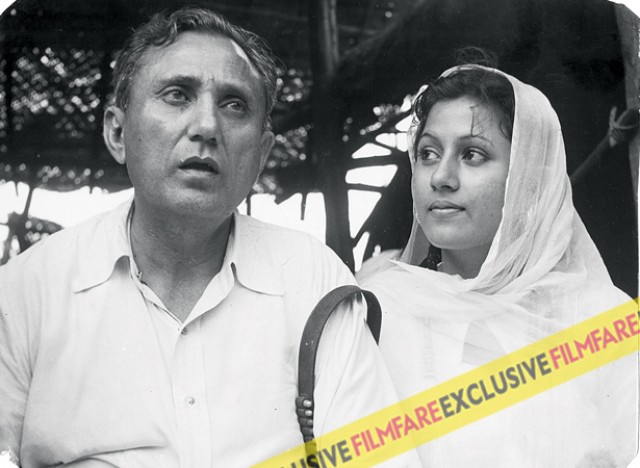
A young Madhubala is pictured with her father Ataullah Khan. Her father was a key figure in Madhubala‘s career. He would maintain strict control over who she could meet and where she could go. Reportedly, he even imposed a 7 pm deadline for the actress.

Beauty with a heart
She was the most exquisite woman celluloid ever witnessed. Her beauty had the power to mend broken hearts. Dilip Kumar was nursing heartbreak in 1950 but when he met she on the set of Tarana, it was her fluttering smile that stole his heart. The list of her suitors just went on and on.

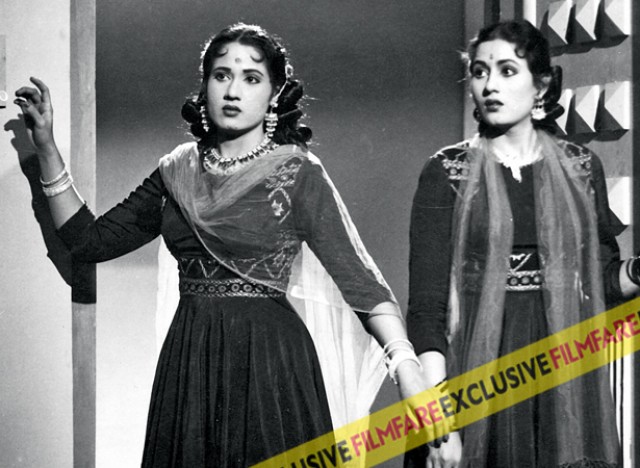
Madhubala (R) with co-star Chanchal (L) in Mehlon Ke Khwab. This the mad cap comedy with Kishore Kumar was one of Madhubala’s early foray into comedy.

Prem Nath who was good friends with Dilip Kumar, also vied for her affections. So much so that, his friendship with Dilip apparently went kaput. Despite the flooding interest of men, she never found what she was looking for – true love. But that didn’t change her intrinsic warmth. She was known to be compulsive about lending a helping hand. She was known to give away a purse full of 100 rupee notes to the less fortunate on her sets. She would even greet trespassing paparazzi with her famous melancholic smile.

Light-hearted romances worked for Madhubala too. Movies like Tarana with Dilip Kumar added good steam to her career.

Sweet poison
She was the most sought after actress in B-town. She could do comedy, tragedy and romance with consummate ease. But for all the talent in the world, her initial foray as leading lady wasn’t well-received. Barring Mahal (1949) and Tarana (1951) all her initial movies failed at the box-office.

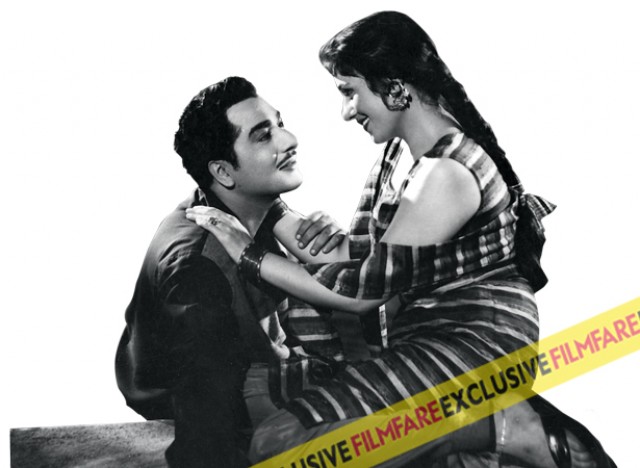
Pradeep Kumar and Madhubala worked together for the first time in Passport. This film was one of the highest grossers of 1961, simply because the audience wanted to see more of the Mughl-E-Azam star.

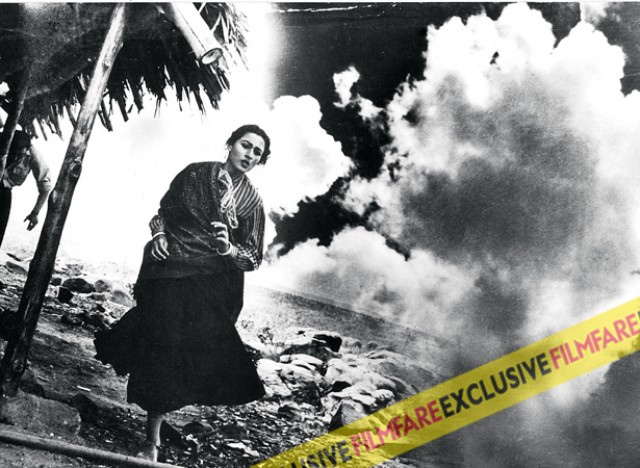
She was called ‘box-office poison’ and was relegated to films like Lal Dupatta, Singaar and Desh Sewa. But as resolute as she was she bounced back with films like Badal, Sangdil, Mr & Mrs 55 and Howrah Bridge. By the time Mughal-E-Azam hit screens in 1960, she was at the top of her game. Her last film to release was Jwala in 1971 with Sunil Dutt.

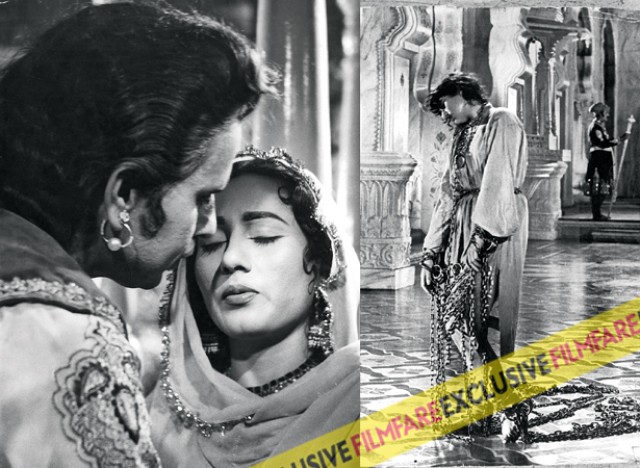
(L)Mughl-E-Azam was the epic film in Madhubala’s career. Not only were audiences curious to see her and Dilip Kumar together in the same frame, they wanted to see why the magnum opus took so many years to complete. (R)It was during the shooting of Mughl-E-Azam that the first bulletins of her heart ailment became public. Director K Asif had reportedly got her shackled in real iron chains which hadn’t helped the ailing actress.
(L)Mughl-E-Azam was the epic film in Madhubala’s career. Not only were audiences curious to see her and Dilip Kumar together in the same frame, they wanted to see why the magnum opus took so many years to complete.
(R)It was during the shooting of Mughl-E-Azam that the first bulletins of her heart ailment became public. Director K Asif had reportedly got her shackled in real iron chains which hadn’t helped the ailing actress.

Business savvy
With the world at her feet, she could’ve had anything she fancied. But her ambitions were modest. The sole reason she worked in films was because she was the breadwinner of her huge family. In the late ’40s, when she first featured as a lead actress, Suraiya was the top heroine.

In the early ’60s musical comedies had become a staple for star her. Her pairing with Kishore Kumar was being appreciated a lot and one such caper was the fun-filled film Jhumroo.

Call her a beauty with brains because she made sure a dozen producers hired her thanks to her more lucrative deals. She used to sign films at one fifth the price that her contemporaries were charging. The modest remunerations changed into fat pay cheques when she became a star.

After a long period of absence Madhubala tried to comeback to the movies in the late ‘60s. Jwala (1971) with Sunil Dutt released two years after her death.

Tragedy hit
Right through her life, she lived in the shadow of her father Ataullah Khan. He’s known to have controlled what movies she worked in, whom she met and what places she could visit. It was his alleged domination that lead to the unfortunate end of her much-talked about love affair with Dilip Kumar. She had her moments of belligerence, when she attended the premiere of Insaniyat (1955) on Dilip’s arm. But eventually the friction led to a public split, what with Dilip having a showdown in court. The trauma of it all broke her already fragile heart.

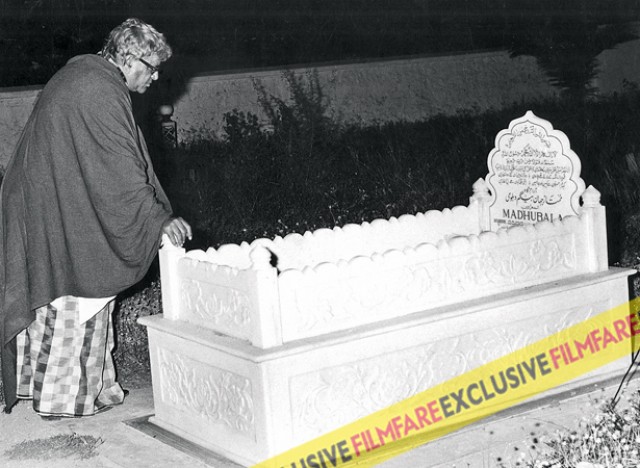
Madhubala’s death was a grave loss. Here you can see Prithviraj Kapoor visiting her burial site in Mumbai.

Yes, the most beautiful Indian woman in the world born on Valentine’s Day, February 14, suffered from a ventricular spetal defect, a hole in the heart. Nonetheless, she was able to ward off depression and anguish and tie the knot with Kishore Kumar. But she was slated for a tragic end. Her health deteriorated. Even though Kishore did his best, he couldn’t save the inevitable. She faded to an ailing heart.

source: http://www.filmfare.com / FilmFare.com / Home> Features / by Rachit Gupta, Features Editor / Monday – November 11th, 2013

Singing parodies into voters’ hearts

With barely three weeks for the Lok Sabha election, Kerala’s political parties are grappling with the fallout of defections, new alliances and the challenge from formidable opponents.

But this poll season, it’s business as usual for 36-year-old Abdul Khader–a song writer based in Kochi–as he works overtime in the recording studio, creating songs for the two warring political fronts with the same gusto. Kerala has been a flourishing market for “parody songs” since the 1990s, but a post-digital lull had hit the industry before Assembly and Lok Sabha elections revitalised the market.

Abdul started out with election parodies in 1997. Seventeen years later, he has morphed into a busy producer churning out songs on demand both for the ruling United Democratic Front and the opposition Left Democratic Front.

“This is a fairly easy season because it’s the Lok Sabha election. With 20 constituencies, there’s a maximum of only about 60 candidates to work for. With the Assembly election that covers 140 constituencies, it’s a different scene,” Abdul said.

source: http://www.deccanherald.com / Deccan Herald / Home> National / DHNS , DH News Service / Thiruvananthapuram – March 19th, 2014

Actor in a Tractor

Mammootty takes up farming in a battle against chemical fertilisers

SAYING NO TO CHEMICALS Mammootty has turned to natural paddy cultivation
SAYING NO TO CHEMICALS    Mammootty has turned to natural paddy cultivation.

Mammootty has played farmer in many films. Now, dismayed by the use of chemicals in farming, he has taken the tractor wheel in his own hands. Busy with his main vocation, the actor had given the 17 acres of land he owned in Cheepungal, near Kumarakom in Kottayam district, on lease for paddy cultivation. This season onwards, he says, he will cultivate the paddy himself. Mammootty insists that his renewed interest in farming is not just a hobby or gimmick and reminds sceptics that he hails from a peasant family.

“When I leaarned about natural farming, I got interested,” he says. “This is very natural paddy cultivation by using only natural manure like green leaves, cow dung, etcetera.” Mammootty has no plans of turning to organic farming. He thinks it is not viable.

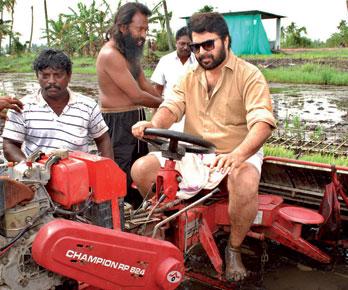
It was a pleasant surprise for Cheepungal locals when the superstar appeared on the farm last Wednesday in a traditional white dhoti, brown shirt and his favourite sunglasses. Appu, his childhood friend, and KM Hilal, a former Left-wing student leader and now a natural farming proponent, accompanied him to the paddy field. The actor drove the tractor and assisted the workers in transplanting the saplings. Mammootty, who has won the National Award for best actor three times, hopes he can inspire others to turn to natural farming. “For paddy, chemical fertilisers are absolutely unnecessary. Cow dung and cow urine are the best manure,” he says.

Mammootty is keen to protect varieties of paddy seeds that are diminishing due to chemicals and is seeking experts who can guide him. “Our ancestors had 3,000 such seeds and at present only 60 exist,” he says. “These seeds succumbed to pests and pesticides.”

Mammootty seems to have been inspired by the concept of Zero Budget Natural Farming (ZBNF) popularised by agri-scientist Subhash Palekar. This promotes crop rotation, mechanical cultivation, biological pest control and green manure. Earlier, Malayalam actor- director Sreenivasan and director Sathyan Anthikkad were in the news too for similar agricultural ventures.

source:  http://www.openthemagazine.com / OPEN Magazine / Home> Open> Regulars / by Shahina KK / July 23rd, 2013