Category Archives: Arts, Culture & Entertainment

Emperor Aurangzeb’s 217.80 carat Shia amulet is world’s largest engraved emerald

DELHI :

Emperor Aurangzeb’s 217.80 carat Shia amulet is world’s largest engraved emerald

The largest engraved emerald gemstone in the world – The Mogul Mughal Emerald, weighing 217.80 carats.

This emerald tablet dates back to the year 1695. It belonged to the Mughal Emperor Aurangzeb who reigned between 1658-1707 and is adorned with the names of the Fourteen Infallible Guides: the Prophet Muhammad, Fatima al-Zahra and the Twelve Imams of Ahl al-Bayt ending with “wal-Mahdi al-Qaim.”

The gem is on display as part of the Al Thani Collection at the Museum of Islamic Art, Doha, Qatar, after it was acquired from Christie’s for $2.2 Million USD.

Emperor Aurangzeb’s 217.80 carat Shia amulet is world’s largest engraved emerald

The translation of the inscription reads: ‘O Merciful One, O Compassionate One, O God. God bless Muhammad and ‘Ali and Fatima and al-Husayn, and al-Hasan and ‘Ali, and Muhammad and Ja’far, and Musa and ‘Ali, and Muhammad and ‘Ali and al-Hasan and the Steadfast [al-Qaim] al-Mahdi.

source: http://www.therahnuma.com / The Rahnuma Daily / Home / August 19th, 2021

Editor of Rahnuma-e-Deccan Syed Viqar Uddin passes away

Hyderabad, TELANGANA :

He was the Chairman of Indo Arab League and tirelessly worked for the Palestinian cause

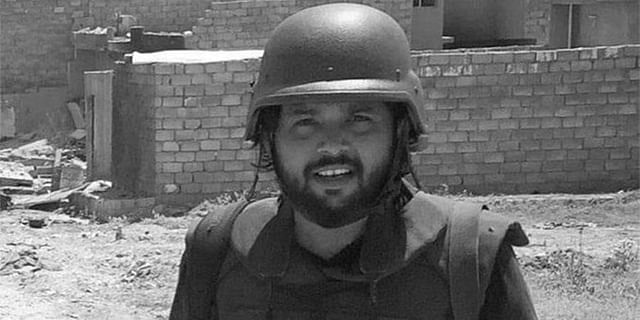
pix: therahnuma.com

Hyderabad:

The Editor of Urdu Daily Rahnuma-e-Deccan Syed Viqar Uddin Qadri passed away on Thursday night after a prolonged illness. He was 82 years old.

For a few months, Qadri was under treatment in a private hospital. Yesterday, after Maghrib he suffered a massive cardiac arrest and passed away at 11:30 p.m.

Qadri was the Chairman of the Indo-Arab League and tirelessly worked for the Palestinian cause. He was a reputed journalist with integrity and was very popular among his friends, peers, and relatives.

He had close personal relations with the former Iraq President Saddam Hussein, the ex Palestinian Authority President Yasser Arafat, and the current Palestinian Authority President Mohammad Abbas.

He organized many meetings under the banner of Indo Arab League which were attended by the Palestinian President Yasser Arafat and Indian Prime Minister Indira Gandhi and other prominent world personalities.

Qadri was awarded the “Star of Jerusalem” the highest Palestinian civil award. He was the first and only Indian to receive this award.

He was also awarded the highest civilian award “Sahibul Jllallah” by Morocco King Mohammed IV. His older brother Syed Lateefuddin played a key role in uniting different Muslim groups in Hyderabad. Lateefuddin had passed away in the 1970s.

Qadri was also close to the ex AP Chief Minister N T Rama Rao and has served as Chairman of the Minority Financial Corporation. He is survived by his two sisters.

His funeral prayer will be held in Mecca Masjid after the Friday prayer. His body will be put to rest in his ancestral graveyard at Hazrat Musa Qadri Dargah at Purana pul.

source: http://www.siasat.com / The Siasat Daily / Home> News> Hyderabad / by Mohammed Hussain Ahmed / December 10th, 2021

Aalim Akhtar and Bilal Tanweer jointly awarded the Jawad Memorial Prize for Urdu-English translation

NEW DELHI :

The Jawad Memorial Prize for Urdu-English translation was instituted to honour the literary legacy of poet and scholar Ali Jawad Zaidi (1916-2004).

Bilal Tanweer (left) and Aalim Akhtar (right)

This year’s Jawad Memorial Prize for Urdu-English translation has been given jointly to Aalim Akhtar’s translation of Hari Bol, written by Zakia Mashhadi, and Bilal Tanweer’s translation of Parasite (Keera), written by Bilal Hasan Minto.

The Jawad Memorial Prize for Urdu-English translation was instituted to honour the literary legacy of poet and scholar Ali Jawad Zaidi (1916-2004). People from across the world can apply with an unpublished translation into English of an (already published) Urdu short story or essay. All submissions are judged blind.

While there are no runner-ups, the jury — comprising authors M Asaduddin and Aakar Patel — had commendations for two translations. Nazia Akhtar’s translation of Chhottam Jaan, written by Zeenath Sajida, and Fathima M’s translation of Shadows (Saaye), written by Khalid Jawed.

In its comments, the jury called Akhtar’s translation of Hari Bol “lucid and accessible”. It remarked that the language was direct and the translation was close to the original text. “Mashhadi’s Hari Bol depicts life lived at a most basic level. The story examines the complexity of human relationships with an unsentimental, even pitiless gaze,” the jury noted.

Tanweer’s translation of Parasite was applauded by the jury for drawing both major characters with great skill, panache, and a clinical eye for detail. “The translation is free-flowing, an elegant rendering from the original,” it said. The jury mentioned that Manto’s Parasite is an unusual and enjoyable story, bordering on surreal. “It draws its strength from the portrayal of characters, which include a tapeworm,” it added.

Akhtar is a PhD scholar at the Center for English Studies, Jawaharlal Nehru University (JNU), New Delhi. After pursuing a Bachelors’ degree at Delhi University’s Kirorimal College and a Masters’ degree at JNU, Akhtar has taught undergraduate students at JNU and at Zakir Hussain Delhi College, DU. As part of the translation studies course at his current centre, Aalim has translated over 25 micro-fictions by Manto, a play, Anarkali by Imtiaz Ali Taj, and some nazms by Jaun Elia. He has also reviewed Srikant Verma’s Relapse: A Novel, translated by Krishna Baldev Vaid, for The Book Review (Sept 2020).

Tanweer’s novel The Scatter Here Is Too Great won the Shakti Bhatt First Book Prize and was shortlisted for the DSC Prize for South Asian Literature, and the Chautauqua Prize (US). The novel was also translated into French (Editions Stock) and German (Carl Hanser Verlag). His translation of Muhammad Khalid Akhtar’s novel and stories, Love in Chakiwara and Other Misadventures, received the PEN Translation Fund Grant.

source: http://www.indianexpress.com / The Indian Express / Home> Books & Literature / by Aditya Vaddepalli / December 05th, 2021

Prestige Group Co-Founder Rezwan Razack Conferred With Honorary Doctorate By GD Goenka University

Bengaluru, KARNATAKA :

Numismatists and real estate mogul Rezwan Razack was conferred an honorary doctorate on Tuesday by GD Goenka University.

The honorary doctorate was conferred on him during a special convocation attended by Chancellor of the GD Goenka University Renu Goenka, Pro-Chancellor Nipun Goenka, Vice-Chancellor Prof. Dr Tabrez Ahmad, Chairman of M3M group Basant Bansal, and Registrar of the university Dr Dhirendra Singh Parihar. Prof. Dr Tabrez Ahmad, Vice-Chancellor of the GD Goenka University, praised Razack for his contribution to numismatic studies and research.

Rezwan Razack is Co-Founder and Joint MD of Bangalore-based Prestige Group and is hailed as the largest collector of Indian currency. He is also the founder of South India’s first currency museum in Bengaluru, one of the largest and most authentic collections of Indian paper money and coins. He is co-author of the Revised Standard Reference Guide to Indian Paper Money.

After receiving the honorary doctorate from the GD Goenka University Razack said it was an honour for him. A graduate of prestigious St. Joseph College Razack is also the current chairman of the International Bank Notes Society-India Banknote Collectors’ Chapter.

source: http://www.thecognate.com / The Cognate / Home> Business / by The Cognate News Desk / November 25th, 2021

Kolkata : Women entrepreneurs showcase their business models at Minorities Business Summit

Kolkata, WEST BENGAL :

Kolkata:

The 10th All India Minorities Business Summit and National Brand Awards for 2021, an initiative from Mumbai-based Maeeshat Media  was organised at Kala Mandir, Kolkata and attended by hundreds of business leaders, delegates, entrepreneurs, social workers from across the country.

The summit provided a great opportunity for the participants from minority communities to come together on one platform to exchange their ideas, opinions, and strategies to drive up business activities both at the personal and community level.

As many as 15 women entrepreneurs working in different fields marked their presence at the event and got the opportunity to showcase their business models to a larger audience in a special segment called “Women Entrepreneurs Showcase 2021.”

Several issues afflicting women entrepreneurship came to the fore due to talks given by women attendees. The biggest obstacle for them is society’s attitude of discounting women’s ability to work beyond the household chores, let alone set up a business.

According to them, people fail to understand that if they are allowed to lead aspirational lives within the boundaries of Islamic laws, not only a family but also the community will benefit at large.

They stressed that with the world changing at a startling pace, minority communities must loosen the shackles on women, letting them pursue their entrepreneurial goals in a more free and welcoming environment.

“During the last two decades, women’s entrepreneurship has been recognized as a vital source of economic growth. Today women have made their existence felt in society by occupying prominent positions in the economy,” Sania Sami, Research Scholar, IISWBM and founder of Indian Institute of Research said.

All the entrepreneur women were high on praise for Maeeshat’s initiative to bring them together and recognise their entrepreneurial skills and hard work.

Maeeshat Media’s Director and group Editor expressed his gratitude and satisfaction over women entrepreneurs gracing the momentous occasion.

He said Maeeshat is committed to connecting minority women entrepreneurs across the country, showcasing their skills, and giving them expert advice so that they are enabled to leap forward in their businesses.

Such summits are annually organised by Maeeshat Media since 2010. This year’s event gave special focus on ensuring the participation of women entrepreneurs.

Here is the list of women entrepreneur attendees at 10th All India Business Summit 2021, Kolkata:

Name                            Entrepreneurial Business/Venture

Shumaila Khalid               Juwi’s Elegant Fashion, Kolkata

Aalima Rahman                Little Stars School, Kolkata

Nageena Eram                 Eram’s Academy, Kolkata

Zareen Khan      ALINA SCOOTY TRAINING CENTER, Kolkata

Saba Hamid        AKASH PAINTS & CHEMICAL WORKS, Kolkata

Afrin Golam       She Fitness Ladies Gym, Kolkata

Arshia Ahmed   Arshia’s Kitchen, Kolkata

Tanzeem Rahman            Adn Interiors–feel the garden of Eden, Kolkata

Saima Bakhtiyar/Anjum Wasim Al Nikah Matrimonial, Kolkata

Jahan Ara            Interiors Designer, Kolkata

Saiqa Azam         Sabia’s Creation, Kolkata

Sabina Yasmin   Velvet Touch, A Boutique of Choice

Miss Tasmiya Ansari       Anees Defence Institute, Pune

Mrs Sania Sami Indian Institute of Research, Kolkata

source: http://www.mulimmirror.com / Muslim Mirror / Home> Economy / by Muslim Mirror Staff / November 24th, 2021

Masters of the Musnud

BENGAL :

The story of what used to be Bengal’s highest seat of power and of some who braved the ascent

SOVEREIGN STONE : The throne of the Subedars of Bengal (in the foreground) at Victoria Memorial Hall in Calcutta / Paromita Sen

In the circular throne room of Hazarduari, or the palace of a thousand doors, in Murshidabad sits a solid silver chair on a marble platform whose fretwork shows signs of having once been gilded. That intricately carved chair, shaded by an intricately worked silver umbrella, used to be the seat of the nawabs of Bengal.

The maroon velvet cushioned throne, no bigger than a dining chair, might make one wonder how comfortable Siraj ud-Daulah would have been seated on it — after all, it is believed he was nearly seven-feet tall. It most definitely could not have been shared by two as was the black stone throne of Bengal.

In 1766, Robert Clive shared the black stone throne with Najm ud Dowla, second son of Mir Jafar. The East India Company had been granted the dewani of Subah Bangla by the then Mughal emperor. “Clive, as a representative of the company, sat on the throne because he had the right to collect revenue, while the Nawab had the right to dispense justice,” explains Santanu Biswas, amateur historian and Murshidabad resident.   

Should you wonder into the Durbar Hall of Calcutta’s Victoria Memorial, you will find a low black table. You might be tempted to put your feet up on it — it is that inconspicuous. But that is it — the erstwhile musnud or throne of Subah Bangla. The throne that was once Shah Shuja’s, son of Shah Jahan; Murshid Quli Khan’s, after whom Murshidabad is named; Alivardi Khan’s, who stopped the Bargi attacks; Siraj ud-Daulah’s, the last independent Nawab of Bengal; the infamous Mir Jafar’s and Clive’s.

The throne is not round but 16-sided; each facet has a simple design inscribed and one of them bears a Persian inscription that declares it was made by “humblest of slaves, Khwajah Nazar of Bokhara” in Munger, Bihar, on November 11, 1641.

How did someone from Bukhara in Uzbekistan end up in Munger? Says Jayanta Sengupta, secretary and curator of Victoria Memorial Hall, “The Mughals were originally from that region. A lot of people came with them. Some kept the place of their origin as part of their name even after having lived in India for generations. It had prestige value.” So, Nazar may never have seen Bukhara. 

Back to the musnud. The 18-inch-high platform, six-feet in diameter and sitting on four fat legs, is carved from a single block of black slate from the Kharkpur or Kharagpur Hills. A framed write-up at the memorial states that the throne must have belonged to Sultan Shuja and had originally been kept at Rajmahal (in what is now Jharkhand) before being moved to Dhaka and then Murshidabad (by Murshid Quli Khan) as the capital of Subah Bangla changed. 

In Murshidabad too, the throne often changed residence. Mir Jafar, for instance, was enthroned in his palace in Mansurganj, on the western bank of the Bhagirathi, while Clive was enthroned in Motijheel Palace on the eastern bank. It seemed to be the practice for the throne to be moved to wherever the Nawab resided.

The throne is an austere structure. “In India it was always a takht or platform,” says Urvi Mukhopadhyay, associate professor at West Bengal State University. The chair-like throne is a European concept and came later. According to Mukhopadhyay, who is a medieval history expert, the king would always kneel on the throne as it was rude to display his feet.

The throne itself was not made of valuable material, its value derived from the post of the man who sat on it. Says Mukhopadhyay, “It was usually made of stone. You can still see Shah Jahan’s marble throne at the Red Fort, though guides are likely to tell you that it is a platform on which the throne was placed.” There was also a beautifully-embroidered chandoya or canopy over the throne and a richly embroidered screen behind it. The musnud of Murshidabad had four holes in four corners through which the poles that held the canopy were set.

The only readily-available photograph of the black stone musnud shows it in its unadorned state on the terrace before the Moti Mahal of Murshidabad’s Mubarak Manzil. This area was once called Findallbagh after the Briton who developed it. 

Mubarak Ali Khan II, better known as Humayun Jah, was the great great grandson of Mir Jafar and the man who built Hazarduari. He bought Findallbagh in 1830 and built the Moti Mahal and the pleasure garden around it that he named Mubarak Manzil. He gave the throne of the Nawab Nazims of Bengal pride of place, but he held court in Hazarduari, on the silver throne that is called the chair of judgement of Humayun Jah.

In The Musnud of Murshidabad (1905), Purna Chandra Majumdar writes, “Drops of reddish liquid issue from certain parts of the stone which when dried up leaves stains, perhaps due to the presence of iron. These are, however, popularly regarded as tears which have flowed ever since the Subadars of Bengal handed the dewani over to the East India Company.”

At the height of their power the nawabs of Bengal sat on a simple platform of black stone, but when they turned puppets of the British their chair of power was solid silver. Perhaps there is a lesson in there somewhere. 

source: http://www.telegraphindia.com / The Telegraph Online / Home> Culture / by Paromita Sen / November 28th, 2021

Lakshmibai, Hazrat and the Revolt of 1857

Faizabad, UTTAR PRADESH / Kathmandu, NEPAL :

Two women, one war. What sets them apart? Professor Lakshmi Subramanian explores Rudrangshu Mukherjee’s ‘A Begum and A Rani’.

The focus of this work, as evident in the title, is two women who fought the same war in 1857 but who never met, whose lives were strangely similar and yet were recalled very differently. Why this was so, what made for a particular telling of their afterlives and how in course of the retrospective retelling, one became a legend and the other a mere trace, forms the core of Rudrangshu Mukherjee’s narrative.

It departs from his earlier work on the Revolt of 1857, where he placed emphasis initially on the diverse structural elements that made up the popular uprising in Awadh and subsequently on explaining the violence that characterised the actions of both the insurgents and their suppressors. Here, in contrast, Mukherjee prefers to focus on the individual as the actor of history and on the politics that animated the reconstruction of individual lives. He does so with elegance, ever attentive to the dictates of Clio, in unravelling the complexity of the context in which the two protagonists found themselves as they were sucked into the vortex of real politics and popular expectations.

(A Begum and A Rani was published by Penguin Allen Lane in July 2021. Buy it here.)

The first two chapters of the book give the reader a taste of the Revolt in its early stages, when a series of military mutinies collapsed into agrarian rebellion, bringing myriad elements into the fray, ranging from the aggrieved taluqdar to the oppressed peasant, from the disenfranchised ruler to the urban dweller. Amidst the clamour of the rebels for a return to Mughal rule and for an end to the unholy power of the hated firang, emerged a slow political front to embark on campaigns against the British forces and coordinate military activity. 

Two parallel centres of authority

In Lucknow, the discarded wife of Wajid Ali Shah found herself at the epicentre of protest, whereas in Jhansi, Lakshmibai was urged by the rebels to take up their cause. While the latter was found in active combat, Hazrat seems to have attended to the day-to-day requirements of the troops, making sure that they were provisioned and supported. Hazrat seems to have also been pitted against one of the most charismatic leaders, Maulvi Amir Ali, who insisted on Hazrat becoming his disciple — which Hazrat herself resisted. 

That these two individuals represented two parallel centres of authority is clear but what this implied in terms of differing conceptions of freedom is not readily apparent. However, in the analysis of the ishtahars or proclamations that were issued, Mukherjee makes the important point that religion was the integral and unifying idiom in the Mutiny.

The Afterlife

It is in the chapter titled Afterlife that the book really comes into its own. Here, Mukherjee tracks the moments in the emergence of a nationalist historical consciousness in Maharashtra, Bengal, and subsequently in North India, in which the status of the martyr queen gained traction. Analysing poetry, local memories, eulogies and early historical work on the Rani of Jhansi, Mukherjee tracks the making of a very particular historical memory and its amnesiac other, thereby engaging with the complex relationship between myth and history. 

He suggests that these categories were not necessarily oppositional. Rather, both were exercises in remembering and forgetting and reconstructing. It is to his credit as a practitioner of history that he reconstructs as well as he does the lives of two women — one of whom was subsequently pushed on to the centre-stage while the other was relegated to the margins.


Lakshmi Subramanian is professor of History in BITS Pilani, Goa. She is the author of several works on music and nationalism as well as on India’s maritime history. Her latest book is Singing Gandhi’s India: Music and Sonic Nationalism. When she is not steeped in teaching and research, she likes to travel to the hills.

source: http://www.telegraphindia.com / The Telegraph, Online / Home> My Kolkata / by Lakshmi Subramanian / December 03rd, 2021

Ishrat Nowshehri: Kashmir’s first female architect

Srinagar, JAMMU & KASHMIR :

“A successful woman is one who can build a firm foundation with the bricks thrown at her,” says Ar. Ishrat Nowshehri who has chosen architecture as her career and has been in the profession for the past two decades.

Talking to Rising Kashmir, Ishrat shared her vast experience of a 23 years career, when architecture as a career for a woman in Kashmir was unheard of. 

Hailing from Soura area of Srinagar, Ishrat says that everything is possible if there is a true commitment behind that.  She is a qualified architect by the Council of Architecture, New Delhi (COA). 

Ishrat was awarded in 2005 by the J&K government for her architecture designed for the famous handicraft market “Kashmir Haat” which is located in the heart of Srinagar.

“When I started my schooling, I had an inclination towards designing, drawing and my parents were expecting that I may become an engineer,” she said.

After completing 12th class examinations from Presentation Convent School in Srinagar, it was not difficult to pursue her studies in architecture as her mind and heart were already ready for that.

Her father was Civil Engineer and she feared that he may force her to pursue studies in the same field. It was totally different when her parents supported her dream, she said.

They realized that it was in architecture and design that her heart lay; they backed her unconditionally, and later Ishrat became the first female architect of the Valley.

After that, Ishrat got enrolled in a five-year course for a bachelor’s in Architecture at Karnataka University in 1999, because in J&K there was no such college at that time providing such a course.

“I topped in my final year design jury among the three colleges of architecture in University,” she said while recalling her college days.

 Ishrat said she got a couple of partnership offers in architectural firms in Dubai, UAE way back in the year 2008 but I opted to stay back in Kashmir and serve my own people.

“I believe that to be successful one needs to be committed, hardworking, and dedicated towards their profession,” she said.

Despite facing many difficulties Ishrat did not look back and continued her journey. After that, she was awarded nationally and internationally and has taken up projects like residential, commercial, interiors, renovations, landscaping, and turnkey projects too,” she said.

In 1999 she did her practical training with senior architects of India including “Ar. Munir Khan” for six months and then started her own architecture consultancy “Ishrat Nowshehri Associates” in the city.

She was awarded in 2005 by the Jammu and Kashmir government for her architecture design for the famous handicraft market, Kashmir Haat, located in the heart of Srinagar.

After that she got job offers to work in other places across India but love towards her motherland forced Ishrat to work in Kashmir and serve her own people.

She worked with many famed architects of Kashmir and under their guidance, she got an opportunity to work on projects in Srinagar city.

Apart from tradition, she also had an interest in contemporary Islamic architecture.

“I feel proud that I have designed architect work for both Masjids and Shrines in Kashmir. From my designs, I want to promote every local thing that is made here.

It may include wood carving, to promote Kashmiri designs and heritage rather than using imported things,” Ishrat says.

She believes that local architects know in depth the weather conditions; culture and house style of Kashmir and can serve them in a better way.

“Now people have become aware and they consult us before going for any construction because architects use the space which a normal mason cannot do,” Ishrat said.

She believes that there is a good scope in this field because people have become aware and they are coming forward.

Apart from Kashmir, she is also getting orders from outside states like Himachal Pradesh and Uttrakhand for special designs for houses, hotels situated at hill stations.

Ishrat works both on traditional and contemporary designs. Over the years, she has worked on various large projects including government buildings, hotels and residential houses.

Some of her architect master designs include Kashmir Haat at MG Road, Sheikh-Ul-Alam (RA) Chair at the University of Kashmir, Hotel Village Walk at Sonamarg, Jehlum automobiles at Awantipora, and many more private works across Kashmir.

As Kashmir witnesses moderate to heavy snowfall during winters every year, due to which scores of rooftops in the Valley collapse, Ishrat suggests that people should consult qualified architects and structural engineers for designing before going for any construction.

She believes that it is not fear that people are not consulting architects but there is a lack of awareness and information.

Ishrat believes that parents should not force their choices on their children because everyone has their own interests and taste.

Working in the male dominated sector is a challenge itself but she says that during the span of 23 years she had not faced anywhere gender bias.

This year in April, she was awarded by Brand Opus India for Outstanding Excellence in Architecture & Designing in Srinagar. Ishrat Nowshehri Associates and Innovative Architecture & Interior Design was adjudged as the Firm of the year 2021 by Architecture & Interior Design Excellence Awards & Conference 2021 Bengaluru.

She has also been awarded under various titles like “Finest architect in Srinagar”, “Bespoke residential architects and designers in Srinagar”, and awardee for “Women entrepreneur (architect) in Srinagar J&K”.

Apart from these awards, she was also nominated and awarded under the category of “finest architect in Srinagar” in India’s most prominent architect and design awards-2020 in New Delhi and “Best residential architects and designers in Srinagar” in “design Icon Awards-2020”.

She also bagged women entrepreneurs (architect) “The Real SuperWoman Award 2020”- at New Delhi. Global Icon Award of the year, Asia’s Creative Architect of the year award” from “RULA International Award” – at Malaysia, Global Shanti Samman & World Peace conference 2021 – at SKICC Srinagar, and other awards.

About her message to aspiring architects, Ishrat said there is always scope when one works with patience, dedication, and commitment.

“I always advise aspiring architects not to be forced into this field. Get in only, if they have patience and a good imagination for design with that one has to be hardworking, dedicated and committed towards their work,” she said.

source:http://www.risingkashmir.com / Rising Kashmir / Home / by Irfan Yattoo / November 07th, 2021

AR Rahman’s daughter Khatija’s animated music video wins global award

Chennai, TAMILNADU :

Although the award will technically go to AR Rahman for being the music director and the producer of the video, it is clear that Rahman considers the video to be the work of his daughter Khatija.

Chennai :

Noted music director AR Rahman’s daughter Khatija Rahman seems to be doing her dad proud. The gifted singer’s music video – ‘Farishton’ – has won the award for the Best Animation Music Video at the International Sound Future Awards.

Although the award will technically go to AR Rahman for being the music director and the producer of the video, it is clear that Rahman considers the video to be the work of his daughter Khatija.

He tweeted the news of the musical video having won the awards. “‘Farishton’ wins one more award. @Rahmankhatija EPI.”

This is not the first award for ‘Farishton’ as just a couple of days ago, the music video won an Award of Merit at the Global Shorts.net, an international short film competition.

The video has also received a special mention award at the Los Angeles Film Awards.

‘Farishton’ is significant as Khatija Rahman considers it to be the beginning of her musical journey.

In a post describing her video on YouTube, Khatija says, “I was born in Chennai in a multicultural family with different genres of music and with friends from diverse backgrounds. I’ve always been fascinated with the wonders of life. As Mawlana Rumi says – ‘There are a thousand ways to kneel and kiss the ground; there are a thousand ways to go home again’. The video’s main character Amal was created with such experiences of mine and the longing to explore the unknown. I hope all of you find your own journey of the unknown.”

source: http://www.newindianexpress.com / The New Indian Express / Home> States> Tamilnadu / by IANS / November 09th, 2021

Nawazuddin Siddiqui’s ‘McMafia’ wins Best Drama at 47th International Emmy Awards

Budhana, UTTAR PRADESH / Mumbai, MAHARASHTRA :

Nawazduddin Siddiqui was also nominated with David Tenant and Roy Nik in the Best Performance as an Actor (Male) category.

Nawazuddin Siddiqui.

Mumbai

Bollywood actor Nawazuddin Siddiqui had a moment of pride as his British show ‘McMafia’ won Best Drama Series at the 47th International Emmy Awards, and he accepted the award for the entire team on the stage.

The actor was also nominated with David Tenant and Roy Nik in the Best Performance as an Actor (Male) category.

Nawazuddin said:

“For me getting recognised and nominated on such a huge level is something I had never dreamt of in my wildest dreams. David Tenant who is nominated with me in the same category makes me feel extremely special.”

“I have watched Des, Hamlet and many other films. He is a performer to watch for and he portrays every scene and character to its perfection and getting nominated alongside such a talented man means a lot.”


The actor will be seen in the upcoming film ‘Jogira Sa Ra Ra’, ‘Heropanti 2’ and ‘Adbhut’. His film ‘No Land’s Man’ was premiered at the Busan International Film Festival and Cairo International Film Festival.

source: http://www.ummid.com / Ummid.com / Home> Life & Style / IANS / November 15th, 2021