In a setback to Bharatiya Janta Party, Congress candidate Yasmeen Kidwai has won Darya Ganj seat after recounting of votes.
Delhi State Election Commission has earlier declared the Bharatiya Janta Party candidate Meeta Bhambri declared victorious after the first round of counting. Darya Ganj has been a stronghold of Congress for many years.
Former cabinet minister Harun Yusuf also hails from old Delhi. However, the territory of Muslim areas have been snatched by the saffron party. The party has fared well in the neighbouring of Chawri Bazar and Kashmiri Gate. The party is leading on 179 seats in MCD.
In an earlier development, Delhi Congress President Ajay Maken resigned from the post.
Former Cheif Minister Sheila Dikshit had accused him of leading the party in an irresponsible manner. Former Congress Delhi women Chief had accused him of not listening to party workers. She later joined the Bhartiya Janta Party after Arvinder Singh Lovely and Amit Malik embraced the saffron party.
source: http://www.india.com / India.com / Home> News> India / by Ravi Kaushal / April 26th, 2017
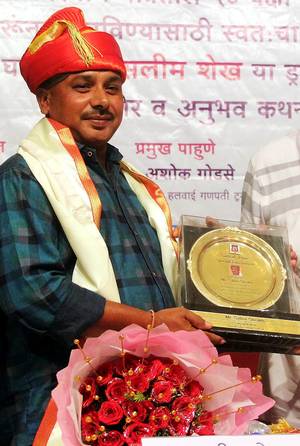
Salim Sheiekh, the bus driver of the ill-fated Amarnath bus who saved the lives of yatra pilgrims during a militant attack. FIle photo.
The Gujarati bus driver who saved 52 Amarnath pilgrims from terror attack has been awarded the “Uttam Jeevan Raksha Padak.”
A bus driver from Gujarat who drove through a hail of bullets and saved the lives of more than 50 Amarnath Yatra pilgrims last year has been selected for the Uttam Jeevan Raksha Padak, the second highest honour given to civilians for gallantry after the Sarvottam Jeevan Raksha Padak.
The Home Ministry announced this on Wednesday ahead of Republic Day.
Sheikh Salim Gafur displayed rare grit and bravery and continued to drive the bus which came under attack on July 10, 2017 in Jammu and Kashmir, an official said.
Daring escape
Seven pilgrims were killed and 14 injured when terrorists opened fire on the bus near Batengoo in Anantnag district, while 52 passengers escaped unharmed as Mr. Gafur showed presence of mind.
The State government will also honour him with a ₹1 lakh cash prize at a function to be held later.
The Jammu and Kashmir police got 38 of the 107 gallantry medals, followed by the CRPF (35) and the police forces of Chhattisgarh (10), Maharashtra (7) and Telangana (6). Five IPS officers are on the medal list.
The highest number of gallantry awards were won by security personnel involved in counter-terror operations in Jammu and Kashmir.
A total of 35 personnel serving in Naxal-affected areas and three in the Northeast too have won them.
Seven police officials have been awarded the medal posthumously.
Among them six were from Chattishgarh who laid down their lives in anti-Naxal operations at Chintagufa in Sukma district.
Nand Kishore Prasad, assistant sub-inspector, CRPF, has been selected for the police gallantry medal for showing exemplary courage in an operation against terrorists who attacked a bus carrying BSF personnel on June 3, 2016.
Of the 785 police medals announced, 616 are for distinguished service.
source: http://www.thehindu.com / The Hindu / Home> News> National / by Special Correspondent / New Delhi – January 24th, 2018
Rambechi village in Talala region boasts of Quraishi Baagh which has the unique distinction of 23 lakh plants / trees in 4 acre of land with 210 medicinal plants, to their credit the Qureshi couple – Gaffarbhai Muhammadbhai and his wife Zebunnisa provide cheap cure to hundreds of patients on very nominal rates.
With, on an average 25000 visitors every year; the plantation received several awards.
In addition to the prestigious Sardar Vallabhbhai Patel Award of the state government, Qureshi has been felicitated twice by the Presidents of India – Gyani Zail Sinh and A. Kalam.
Having visited plantations all over the country Qureshi imbibed on the spot knowledge of plants and medicines though he has no formal education in agriculture nor any diploma in horticulture.
He maintains a nursery from where people buy plants of their choice.
His most cherished desire is to enrich the earth with one crore trees, Allah willing.
source: http://www.milligazette.com / The Milli Gazette / Home> Online News> Community News / Online April 27th, 2013 (Print April 16-30th, 2013)
Break Free: Jameela believes it is every woman’s right to create her own identity. Photo: Nagara Gopal
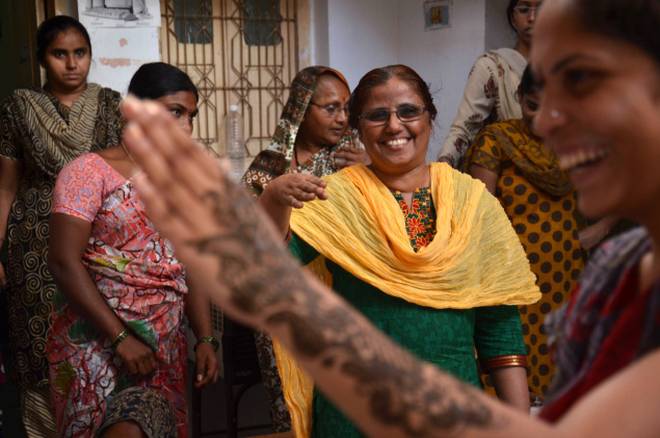
The journey was anything but smooth for Jameela Nishat, now a ray of hope for victims of domestic abuse.
It’s not easy giving up a secure job to work for women’s rights in an area where domestic violence and discrimination is the accepted norm. But if you dream about change and a world of equality, like poet and activist Jameela Nishat did, the transition is not hard at all.
Originally a teacher at a school for special children with a regular pay package, Jameela decided to give it all up to live for her conviction. What followed was a tumultuous journey filled with hostility, social boycott and accusations. But one thing remained constant – Jameela’s patience and perseverance. Today, not only is she well respected, she is also the person most women in Old City turn to for help.
Over the years Jameela has managed to help several women who have been victims of domestic violence, sexual abuse, incest, polygamy and forced marriages to much older men through her organisation Shaheen.
The journey was never smooth though. When she first began her journey as a women’s rights activist, Jameela was met with stiff opposition by not just the men in the locality but even the women.
“Domestic violence was a way of life for these women. I was met with statements like Woh mard hi kya jo aurat ko na maare (what kind of a man doesn’t beat women). When I set up Shaheen in this locality of Sultan Shahi not too many people were open to change. It is only over time that women have begun to realise that they too have a choice,” says Jameela, who is also an executive member of Asmita Resource Centre for Women. On several occasions Jameela and her team have busted fake marriage attempts by Arab men with young city girls.
It took tremendous tact and patience on her part to get her point across. “When I first began coming to this place, I approached the girls saying I could help them with English. Being summer vacations more than 50 girls came forward to learn the language. Gradually a month later I broached the topic of sexuality. Instantly 50 girls stopped coming and I was left with just five who were willing to work with me to create awareness. That is how Shaheen began,” she explains.
Needless to say, there was a lot of resistance. “I remember one particular incident when I was surrounded by more than 25 men, who did not agree with my work. This happened after the 2003 riots in Old City. I decided to hold a workshop for the Muslim, Dalit and BC boys on communal harmony. When our staffers and other girls sat alongside them for the workshop, the boys were livid. They were worried the girls would elope with Dalit boys,” she says.
But the transformation did come about. Slowly women began approaching Jameela for help and numerous cases of domestic violence and incest came to light. “There have been cases of women seeking a divorce after tolerating violence for 25 years. They are slowly beginning to realise that abuse is not a way of life. Most heartrending are the cases of incest. We once had a seven-year-old girl tell us that her 12-year-old sister was covered in cigarette burns by their step-father. When we met the girl we learnt that the man had been sexually abusing her. In another case a mentally unstable girl had been violated for several years by a maulvi under the pretext of treating her. We intervene and try to rehabilitate these girls. But resistance still persists in some people,” says Jameela, recalling an incident where a young woman was tied to the cot and set ablaze by her husband. Yet nobody from the girl’s family wanted to press charges. The girl herself told the police that it was just an accident.
For Jameela these are not mere cases. “I live these cases myself. Victims don’t need our sympathy, they need empathy. And that is what I do,” she says. Quiz her on how her family reacts to her work and she says, “I come from a very cosmopolitan family. My father was a painter and I’m a poet. My husband is an atheist and does not believe in these practices. We are like friends living under one roof. My sons also understand and appreciate what I do. As such I do not discuss my work with my family. My siblings know about what I do through newspaper articles.”
Her true dream though was to become an artist. “However, my father was sceptical about me going to art school since we would have to paint nude models. However, writing was encouraged in Muslim households, so I took to poetry,” she says, adding that she spent her childhood watching M.F. Husain paint on their living room floor. “He was my father’s close friend. He would roll out a canvas on our living room floor, sit on it and create a masterpiece in no time. Sometimes he would just use his hands to spread the colour. I would watch him and paint some pieces myself and pass it off as my brother’s work,” she laughs.
Through all of this, Jameela’s poetry is her constant solace. “I begin my mornings by writing a couplet. I write about the incidents I come across. It helps to channel my feelings through words,” she says, sharing a couplet she recently penned, which she says aptly describes her life.
Iss zindagi ki raah mein
Aese nikal padi
Meri talab sab ko hai,
Mera hisab kucch nahi
source: http://www.thehindu.com / The Hindu / Home> Society / by Ranjani Rajendra / Hyderabad – September 26th, 2013
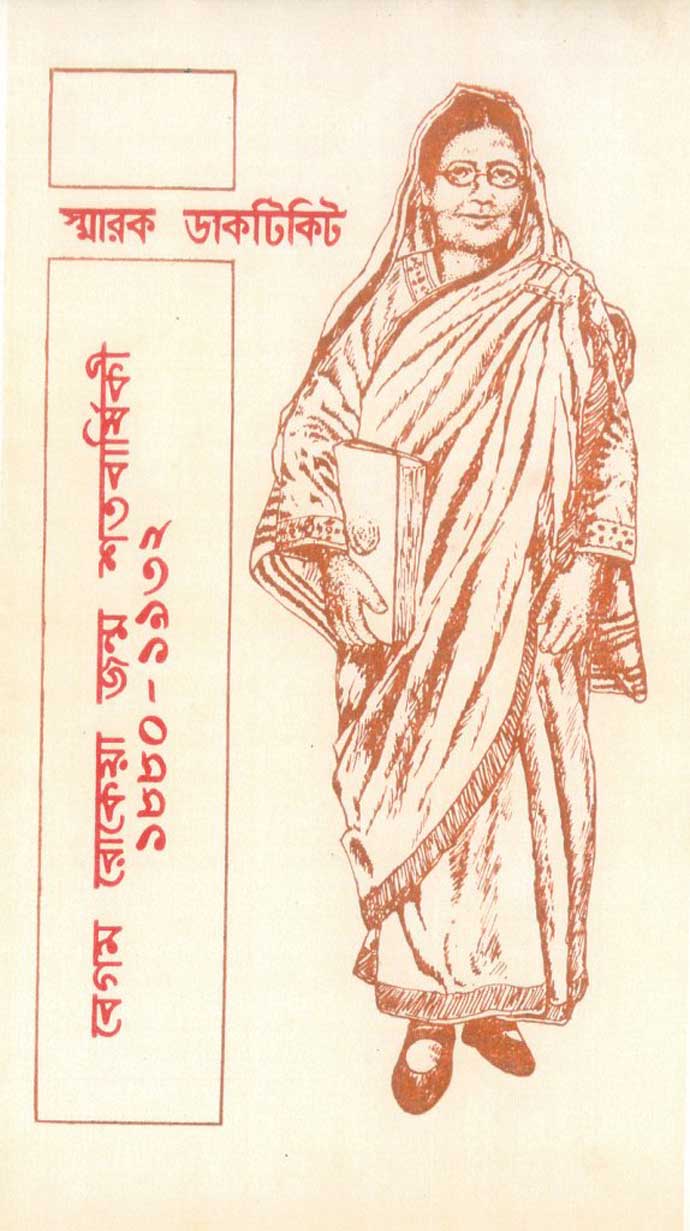
Rokeya Begum was an educationist, writer, social activist and effectively, India’s first Bengali Islamist-feminist.
As a Muslim reformist, her activism was neither half-baked nor exclusionist, yet little is known of her meaningful contributions to society.
Sometimes when wars are long and without any imminent hope of triumph or an end, it’s best to count on the smaller victories. Such as the taking down of Omprakash Mishra’s misogynist cringe-pop video or Uber apologising for their presumptuous and sexist offer on “Wife Appreciation Day” or Hulu’s The Handmaid’s Tale bagging the Emmy for “Best Drama Series” leaving behind popular shows like Westworldand Stranger Things.
The Handmaid’s Tale is to feminists what the BJP manifesto is to Arnab Goswami. Though Margaret Atwood’s evergreen dystopian thriller published in 1985 was one of its kind, it wasn’t the first. Eighty years before that, Begum Rokeya Sakhawat Hossain published her feminist utopian fantasy Sultana’s Dream, a novella investigating the ironies of a technologically advanced, gender-reversed India (one where men were confined to the “zenana” — the part of a house for the seclusion of women, or as Rokeya terms it, the “mardana” — imagined in the dreams of a woman named Sultana.
Born in 1880 to a wealthy Zamindar family in Pairabondh (present Bangladesh), Rokeya Begum was an educationist, writer, social activist and effectively, India’s first Bengali Islamist-feminist. While Savitri Phule and Pandita Rama Bai re-emerged through the obliterating clouds of India’s redacted history-telling, the narrative on Rokeya’s work remains shrouded, at least, in India.
Her father, an orthodox Muslim, persisted that the women maintained purdah and allowed them to be educated in Arabic (only) to enable them to read the Quran. Rokeya and her sister Karimunnesa, learned Bengali and English at the behest of their supportive brothers, who educated them on the sly. Perhaps this phase of her own life contributed amply to her tenacious belief that the lives of Muslim women could not be ameliorated without proper education. Added to that was her own sister who remained a key inspiration for Rokeya’s writings and her social work.
Karimunnesa, a seasoned poet, had been married off before the age of 15, putting what might have been a lucrative future to an abrupt end. This had further consolidated Rokeya’s faith in educational and individual rights for women — chiefly Muslim women, who, in that era, lived like showpieces in a glass casket but with an iron curtain.
With this line of thought and the support of her husband (Sakhawat Hossain, whom she was married to at the age of 16 and who died in 1909) and the money he had set aside, Rokeya went on to establish Sakhawat Girls Memorial High School, five months after his demise.
She started the school in Bhagalpur (a majority-Urdu speaking area in erstwhile East Bengal) with merely five students and was forced to shift the school to Kolkata in 1911 due to property feuds with her husband’s family. It remains one of the city’s most popular schools for girls and is now run by the state government of West Bengal.
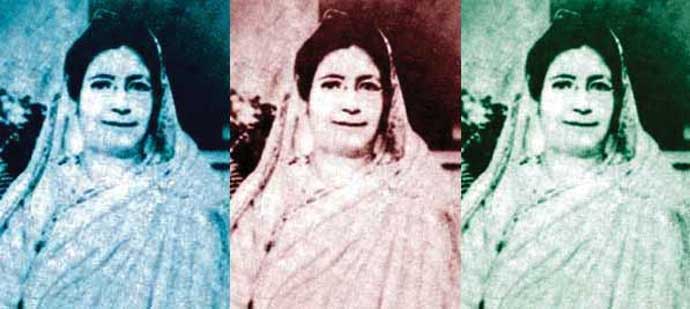
Today, Rokeya’s memory is as fleeting — even for her benefactors — as Sultana’s dream. Photo: http://nationalwomansparty.org
In 1916, she founded the Anjuman-e-Khawateen-e-Islam (Islamic Women’s Association), which was her other organisational contribution to Bengali Muslim women. Through this organisation she offered financial and educational support to downtrodden Muslim women, over and above raising public opinion regarding the issue of Muslim women’s rights. That Rokeya was way ahead of her times finds semblance in the curricula of the school she established, which included physical and vocational training in an attempt to arm women with financial independence. She coined the term “manoshik dashhotto” or mental slavery, referring to the absence of individuality that pervaded the entire gamut of Muslim women and attributed it as the root cause for their subjugation. This rings true even today.
A century ago, Rokeya approached her adversaries with a wit and logic that is hard to find in today’s generation (which appears to be self-deprecatingly volatile). Insightfully, Rokeya tapped into the quintessential Muslim male ego and inversed it to men’s disadvantage, instead of directly antagonising them with liberal arguments.
She writes, “The Muslim society is paying a greater price for the lack of any system of education for their women. I have been informed by a reliable source that some educated Muslim youths of well-to-do families are setting conditions that if they can’t find educated Muslim women, they will not marry. They even threaten to become Christians and marry someone from that community if they fail to find educated Muslim women.”
Critics might question the ethic behind this approach, but the truth is, even now, “the threat to minority identity” continues to be the most veritable impediment to the realisation of Muslim women’s rights.
Keeping this in mind and the socio-politico environment of that era, perhaps by playing on their fears was not only ingenious but also the only way out.
In 1926, when she was invited to chair the Bengal Women’s Educational Conference, she said, “Although I am grateful to you for the respect that you have expressed towards me by inviting me to preside over the conference, I am forced to say that you have not made the right choice. I have been locked up in the socially oppressive iron casket of ‘porda’ for all my life. I have not been able to mix very well with people – as a matter of fact, I do not even know what is expected of a chairperson. I do not know if one is supposed to laugh, or to cry.”
Having lost her husband early and her two children who died at infancy, Begum Rokeya was not just subjected to scathing criticisms for her views but also faced unforgiving social exclusion. Despite the variegated hindrances she faced, in lieu of her gender, her community and the very fabric of the milieu that she had set out to change, she worked tirelessly and fearlessly to carve a way out for many Bengali Muslim women like myself.
Begum Rokeya died on December 9, 1932, and up until 11pm on December 8, 1932, she was working on an unfinished article titled, “Narir Odhikar“, which translates to women’s rights. The over-arching principle that governed her literary and social work was feminism and through it she heralded the discourse into Bengal. As a Muslim reformist from that era, Rokeya’s activism was neither half-baked nor exclusionist as the classist and sexist Aligarh movement led by Syed Ahmed Khan, yet little is known of her meaningful contributions to society. Today, Rokeya’s memory is as fleeting — even for her benefactors — as Sultana’s dream.
source: http://www.dailyo.in / Daily O / Home> Variety / by Suman Quazi / September 21st, 2017
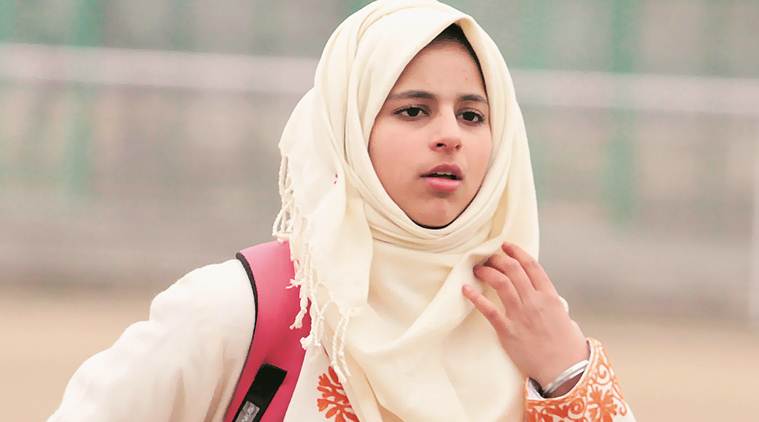
Arwa Imtiyaz Bhat is not a coach or player, but performs a more important role for deaf and mute sportspersons in Srinagar
‘I will keep fighting for them, their rights.’ (Express photo by Shuaib Masoodi)
It’s a white winter morning in Srinagar, and a 16-year-old girl has set out from her cramped home on the city’s outskirts to help a group of badminton players prepare for a tournament at the indoor stadium.
Arwa Imtiyaz Bhat is not a coach, or a player. But this Class X student performs a more important role. She translates the sound of silence.
The players are among the around 250 sportspersons registered with the J&K Sports Association for the Deaf, and Arwa, who is well versed in sign language, is their voice, their mentor. Often giving up classes at school, she’s accompanied J&K teams to tournaments across the country, from Delhi to Chennai, fielding calls from worried families, helping liaise with organisers and officials.
She says the reward is not money — she’s not paid any — but moments such as those last December when the J&K team won four gold, three silver and two bronze medals in the National Games for the Deaf in Ranchi.
“My mother Rehana can’t speak or hear. Her brother Mohammad Saleem, a good badminton player, is also deaf and mute. And ever since I can remember, I have seen them struggle, facing discrimination outside and within our family. I could not stand that, and decided to do whatever I could to help anyone in that situation… I learned how to communicate in sign language from my uncle who had undergone training in Delhi,” says Arwa.
It hasn’t been easy, she admits, especially convincing parents of deaf and mute children to let go.
“When the J&K deaf team was planning to go to Ranchi, the parents sought an assurance from me that they would be safe and secure. I had to finally give them a guarantee. At times, I have had to fight with the families of players for permission to let them play,’’ she says.
According to Waheed ur Rehmad Parra, secretary, J&K Sports Council, Arwa is an inspiration.
“I am surprised by the dedication of this girl. And I try my best to help out and speed up paperwork of any team with which this girl is involved. She is an inspiration for all of us, and she should never feel that she has been let down by the system,” he says.
“There are very few people in the world who really care about deaf and mute children such as mine,” says Nazir Ahmad Bhat from Baramulla, whose two sons Mohammad Ashraf and Showkat Ahmad are sportspersons.
“Whenever my children go for any sports activity, Arwa keeps me informed, even when they are outside the state. At times, we call her so many times every day for information about my sons, she never loses patience,’’ says Bhat.
But for Arwa, who dreams of becoming a doctor, and her family, all of this has come at a cost.
“Last year, I had to accompany these players to different parts of Kashmir and various offices of sports organisations. I missed a lot of classes and was reprimanded by my teachers,” says Arwa.
At home, Arwa’s parents say it’s time someone showed similar concern for their daughter.
“I am an autorickshaw driver, and I want to provide my children, especially Arwa, with a good education. But I struggle to do that because I find it very difficult to keep my house running,’’ says Arwa’s father, Imtiyaz Ahmad Bhat. Arwa’s younger brother Abu Zar is a student of Class V but her elder brother Arbaz dropped out of school in Class X four years ago after he met an accident.
“I don’t think my dream of becoming a doctor will ever come true because I belong to a very poor family. At times, my father doesn’t have money to even deposit my school fees. This is why I was moved from the Fayaz Educational Institute in Naikbagh to the Government High School in Nowgam. But I will still try to complete my education,’’ says Arwa.
Yet, at the end of the day, Arwa says the joy that she sees on the faces of her players is what makes her go to sleep with a smile.
“Whenever they win any game or event, I hug them. At that moment, many of these players struggle to control their emotions and finally break down… I will keep fighting for them, their rights. Here, I am the only person who can highlight their misery.’’
source: http://www.indianexpress.com / The Indian Express / Home> India / by Mir Ehsan / Srinagar / February 05th, 2018
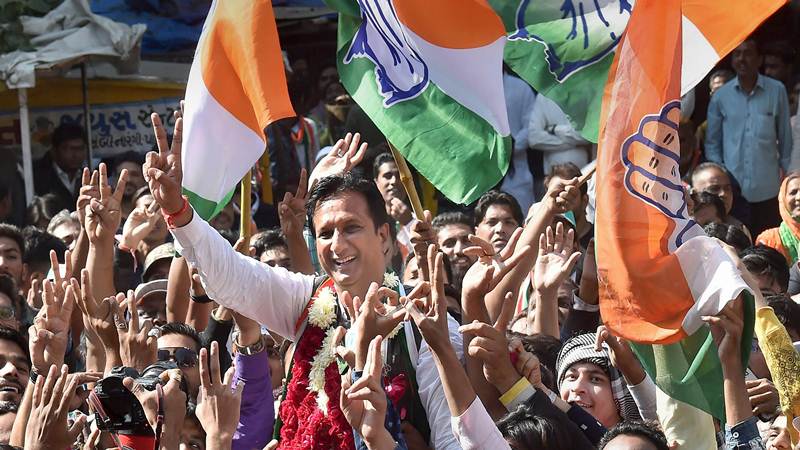
Congress party’s Jamalpur – Khadia seat candidate Imran Khedawala flashes victory sign along wih his supporters. PTI photo by Santosh Hirlekar
Ahmedabad:
Three Muslim candidates, all fielded by the Congress, emerged victorious in the Gujarat Assembly elections this time, against two in the previous House. The ruling BJP did not put up any Muslim candidate in the state where the minority community accounts for 9.67 per cent of the population. The Congress this time put up six Muslim candidates, three of them in urban seats.
The party nominees romped home in Jamalpur-Khadia, Dariapur in Ahmedabad and Wankaner in Rajkot. Whereas the party candidates in Surat-West, Vagra in Bharuch and Bhuj rpt Bhuj lost to their BJP rivals.
Javid Peerzada (Wankaner), Gyasuddin Sheikh (Dariapur) and Imran Khedawala (Jamalpur-Khadia) are the candidates who made it to the Assembly on Congress’ ticket. The Congress nominee wrested the Jamalpur-Khadia seat from the BJP.
The Aam Aadmi Party, which entered the Gujarat polls for the first time, fielded Muslim candidate Usman Gani Sherasiya from Wankaner seat. He finished way behind other nominees by securing just 2,808 votes.
The Janata Dal (United), which contested independently this time, unlike in 2012 when it was in alliance with the Congress, put up a Muslim candidate in Dariapur, but he got only 82 votes, as per figures of the Election Commission.
The Muslim candidates fielded by the BSP and the NCP in Jamalpur-Khadia also failed to make a mark.
In the 2012 Assembly elections also, the Congress had offered tickets to six Muslims, out of whom two had won.
source: http://www.freepressjournal.in / The Free Press Journal / Home> Elections / by PTI / December 19th, 2017
Affan Yesvi continues to bring laurels for the state
New Delhi :
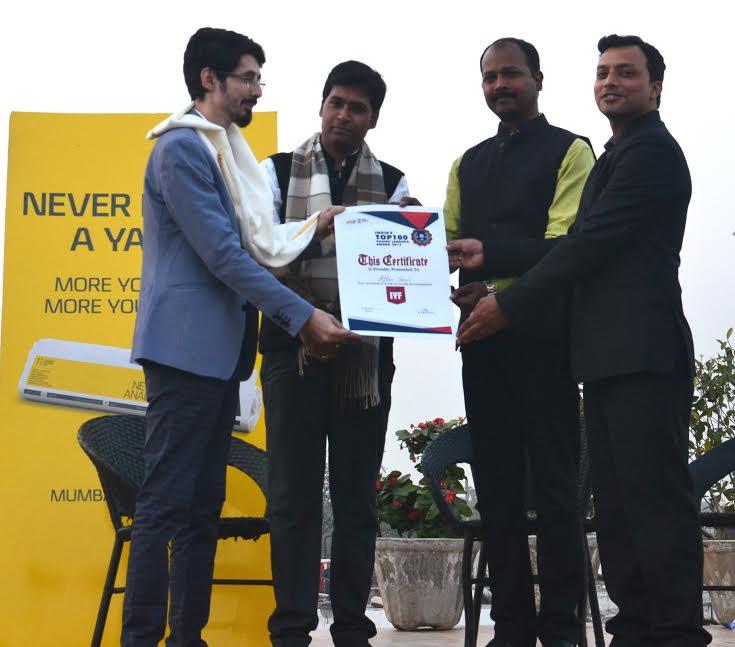
Affan Yesvi, a young award-winning social activist from Kashmir was facilitated with India’s Top 100 Young Leader’s Award 2017 in a glittering award function held at Connaught Place, New Delhi. The event was organized by Indian Youth Forum and the attendants included a diverse crowd of young enthusiasts from all walks of life.
The India’s Top 100 Young Leader’s Award is the one of the most coveted fellowship that is managed through Indian Youth Forum.
Affan, a regular contributor in Huffington post, Hindustan Times, The Tribune, DailyO, The Quint, Speaking Tree, & First Post has been an avid writer on various social issues. He has also presented research papers in various international conferences.
At a very young age, he founded a non-profit organization by the name of ‘The Inner Call – a forum for Evolution, Development and Awareness’ in 2009. The organization has been contributing in spheres of mental health, environment protection, women empowerment, youth activities and social research, with the sole aim of promoting human values. The organization has also organized various legal awareness camps.
In 2011, Affan founded the Yasawi Foundation, a non-profit organization dedicated to promote research and aesthetic development in the Sufi world heritage. Yasawi Foundation has been actively conducting Sufi Workshops and research in mysticism.
It is pertinent to mention that Affan Yesvi has received numerous applauds and recognitions for his efforts in the past as well. Indian Youth Forum is a youth network founded in order to meet people and inspire them to participate in the nation-building process. Creating India’s largest online platform for young people to express themselves on issues of importance, IYF finds and tells stories of people doing good to inspire global action.
Top 100 young leaders Awards is recognition for all those who have brought a change to the society through their actions.
source: http://www.thenewsnow.co.in / The News Now / Home / by TNN Bureau / January 15th, 2018
Awadh, UTTAR PRADESH / London, U. K / Paris, FRANCE :
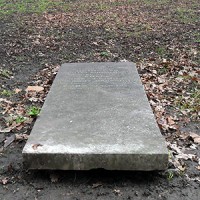
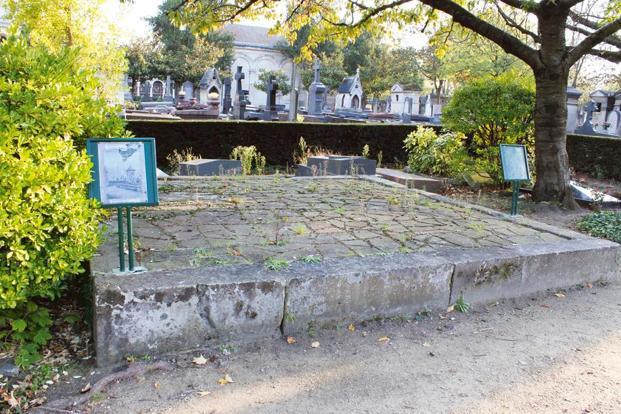
While walking around Paddington Old Cemetery during my lunch break earlier today, for some reason I felt compelled to read the faded stone slab that marked the resting spot of Princess Omdutel. Instantly my attention was grabbed, a Princess buried in Kilburn, North West London of all places, that sure wasn’t something I was expecting to find.
I have walked past the grave of Princess Omdutel, perhaps a 100 times or more since I moved to Kilburn and never paid it any attention. Now she had my full attention.
The badly worn and faded inscription on the stone slab was barely readable, but after a lot of scratching of my head, I finally managed to decipher the words: Sacred to the memory of Princess Omdutel Aurau Begum, daughter of the late General Mirza Sekunder Hishmut Bahadur, Brother to His Majesty King of Oude, who died 14th April 1858 aged 18 months.
With a little help from Google and www.findagrave.com, I managed to find the following information: Princess of Oude. Oude, or Awadh, which was the epicentre of the 1857 Indian Mutiny, when the sepoys rebelled against the British after baulking at orders to use cartridges greased in pig and beef fat. Members of the Awadh Royal Family arrived in London soon afterwards, lobbying unsuccessfully for the return of their lands. The princess’s father, Mirza Bahadur, died two months before her and is buried in Père Lachaise in Paris.
The British obviously offered the Awadh Royal Family a haven in London after they were ousted. I’m not sure how long the family had ruled for in Awadh, which is a region in India. But from what I can gather it seems likely that they were a puppets installed by the British Government.
Princess Omdutel Aurau Begum, her life had barely begun, when she died at only 18 months of age. I wonder if any of the family survived and if so what became of them. It is also intriguing that her father died two months before her in Paris. No mention of the mother, which is kinda sad if you ask me…
I find it strange that I have walked past the grave of Princess Omdutel numerous times over the past twenty months and never once read it, until today. Very strange. Maybe she was wanting a mention on London Is Cool…
source: http://www.londoniscool.com / London is Cool – a blog about Life in London / Home> Out and About in London / by William Wallace / February 21st, 2011
Awadh, UTTAR PRADESH / London, U. K / Paris, FRANCE :
The tragic story of Malika Kishwar, who rests in an unmarked grave in France’s most famous cemetery
The grave of Malika Kishwar at the Père Lachaise cemetery in Paris. Photo: Wikimedia Commons
She lies buried amidst sepulchres that house the remains of many who are still famous.
There is Jim Morrison on the premises, the American rock legend whom trains of tourists come to pay homage, like pilgrims bearing flowers. Edith Piaf, the waif who sang her way to greatness, finds her peace nearby, as does Frederic Chopin, the composer whose pickled heart is in Warsaw but whose body dissolves in the French capital. Benjamin Franklin’s grandson rests here, and in the vicinity there is a man believed to have been sired by Napoleon. Oscar Wilde’s sculpted grave competes with Marcel Proust’s neat bed of stone, and many more still are the artists, writers, and persons of esteem who crowd the hillside cemetery that is Père Lachaise in Paris.
And yet, between them all, under a platform of rugged rock, lies this tragic Indian woman. Her name and cause have been largely forgotten, but since 1858, she has been here, longer than many of her revered neighbours. Tourists walk by with cameras, oblivious to her unmarked square existence. But every now and then there is a stray visitor who arrives on a quest: to locate the final resting place of that remarkable woman, the last queen of Awadh.
I was that visitor a few days ago, when I trekked up Paris’ most famous graveyard to look for this forgotten tomb.
The lady appears in yellowed old books by several names. She was to some Malika Kishwar, while others knew her as Janab-i Aliyah, Her Sublime Excellency, mother to the ruler of “Oude”, Wajid Ali Shah.
In 1856, when the British deposed this nawab from his ancestral seat in Lucknow, his family departed for colonial Calcutta, with all the money they could gather and what dignity they had left. But while the son (a “crazy imbecile” in the eyes of his sneering oppressors) prepared to fade quietly into history, the mother was determined to win back that which was her family’s by right.
That very year, this woman who knew little beyond her sequestered palace, set foot on a ship, determined to sail to England so she might speak—woman to woman—to the English queen in person. After all, declared the middle-aged begum, Victoria was “also a mother”; she would recognize the despair her people had unleashed, and restore to the House of Awadh territory, titles, and its rightful honour. And so proceeded Malika Kishwar, her health already in decline, braving cold winds in a foreign land, to plead the cause of royal justice.
The mission was doomed from the start. Advisers were many and much was the money they sought for the privilege of their counsel. The results, meanwhile, were nowhere to be found.
As historian Rosie Llewellyn-Jones records, Kishwar discovered quickly enough that Queen Victoria, in her “circular dress”, had little power to bestow anything more than polite conversation on her and her Awadhi line—when an audience was granted, they spoke about boats and English mansions, not about imperial treacheries and the unjust business in Lucknow.
In the British parliament, things got worse. A prayer at long last prepared was dismissed on spurious bureaucratic grounds: the begum was to submit a “humble petition”, words that she failed to use in the document laid before the House. While her son accepted British imperium, the mother was obstinate in battle. So, when she wished to travel, they sought to dragoon her into acknowledging their suzerainty—if Malika Kishwar and her ménage wanted passports, she would have to declare herself a “British subject”.
The begum refused to do anything of the sort, prepared, at best, to be under “British protection”, but never anybody’s “subject”. And legal quibbles aside, the Great Rebellion of 1857 compounded matters—there was now no prospect of relinquishing even a fragment of British power when the hour called for a demonstration of obdurate strength alone. Awadh was lost forever.
The tide having turned, in 1858, the begum decided to return at last, defeated and unhappy in the extreme. But in Paris she fell ill and died on 24 January. The funeral was simple, but there was yet some dignity and state—representatives of the Turkish and Persian sultans gave this Indian queen the regard the British denied her and her line.
A cenotaph was constructed by the grave, but it has long since fallen to pieces—when decades later the authorities at Père Lachaise sought funds to repair the tomb, her exiled son decided from Calcutta that it was simply not worth his pension, while the colonial state was even less inclined to honour a difficult woman lying several feet underground in an alien European country. And so, since that time, in a graveyard full of magnificent memorials, the queen of Awadh has remained, a shell of broken stone sheltering her from the weeds and overgrowth that alone have made a claim upon her and the story that she tells.
Others of her suite also suffered. A younger son had come with her, Sikandar Hashmat by name. He died in England, and was carried to join his mother in her unmarked grave. A grandson’s infant child was also buried within, turning the tally in Paris to three.
But it was in London that one more of the delegation fell, this one a baby princess, born to Sikandar Hashmat from his Rajput wife on British shores. I walked around a dull little place called Kilburn to look for this grave. And there, in a cemetery, after an hour between tombs set in the soggy English ground, I found a memorial to the child: Princess Omdutel Aurau Begum, “who died 14th April 1858”, months after her grandmother who was once a queen.
But Omdutel, all of 18 months, had a minor triumph where her royal grandmother had none—lying by a pathway in that cemetery in Kilburn, her grave at least bears her name.
The begum, on the other hand, has become to the passing tourist at Père Lachaise in Paris a plinth on which to rest, smoking a cigarette and looking on to a horizon full of the dead, till a stranger might appear to tell how they have under them.
Medium Rare is a column on society, politics and history. Manu S. Pillai is the author of The Ivory Throne: Chronicles Of The House Of Travancore.
He tweets at @UnamPillai
source: http://www.livemint.com / LiveMint / Home> Leisure> Medium Rare / by Manu S. Pillan / Friday – Jan 12th, 2018