Coping with financial issues, Muhammad Kashif Ghulam Rabbani aced the tough CA exam in his first attempt, becoming an inspiration for many youths in Dhule and beyond
Dhule :
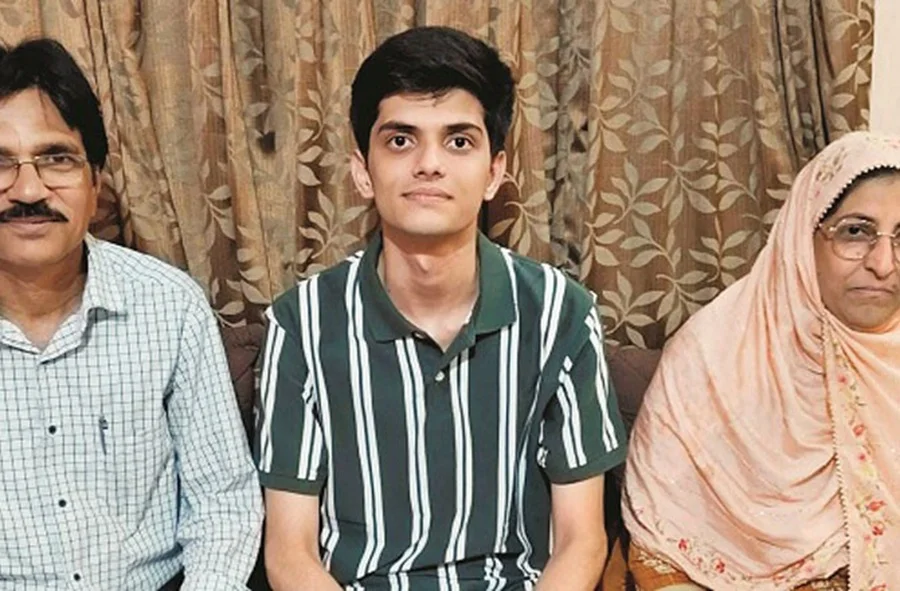
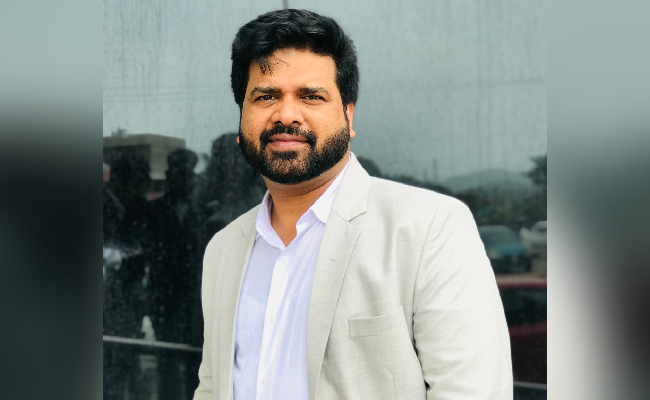
A young man from a humble background has brought pride to his city and community by becoming the first Muslim Chartered Accountant (CA) in the Maharashtra city of Dhule. Muhammad Kashif Ghulam Rabbani, son of a tailor, has successfully passed the final CA examination, considered one of the toughest professional exams in the country.
Kashif’s journey to success was not easy. Coming from a financially struggling family, his father, Ghulam Rabbani, worked tirelessly as a tailor to ensure that his son’s education continued uninterrupted.
“Despite the tough circumstances, Kashif’s father did not let poverty stop his son from chasing his dreams,” said Advocate Sheikh Zubair. “He supported Kashif in every way, and today the result is in front of us.”
Kashif began his education at Muhammadiya Boys Urdu School in Dhule. He completed his 12th Science at SSVPS College and then studied BCom for a year at Jay Hind College. But later, he left traditional studies and shifted his focus entirely to preparing for the CA exam.
Under the guidance of CA Ijaz Sir at Anam & Associates in Pune, Kashif started his onward journey. He did his internship at the ‘Association of Indian Chartered Accountant Firm’ and later studied for the final exam at the Asim Khan Study Centre in Dhule.
Speaking to the media, Kashif shared, “Most children choose fields like engineering, teaching, or law. But when I looked around in our society, I saw a lack of chartered accountants. I decided to step into this field to fill that gap.”
He added, “I worked hard and stayed focused. I had only one goal—to become a CA. I’m happy I passed in my first attempt.”
Kashif’s achievement is not only a personal victory but also a proud moment for the entire city. His success has been widely celebrated by community leaders and educators, who see it as a message of hope for many underprivileged students.
“This is not just a personal success story,” said Advocate Zubair. “It is a message to all youth—especially those who give up studies due to financial problems—that with strong willpower, nothing is impossible.”
Muhammad Kashif’s success has brought honour to his family, school, and city. He now stands as a role model for others who want to achieve big dreams.
With this achievement, Kashif has proved that passion, hard work, and determination can break all barriers.
source: http://www.clarionindia.net / Clarion India / Home> Editor’s Pick> India> Indian Muslim / by Team Clarion / July 10th, 2025
The evocative recapitulation of eminent personalities provides a quick, candid, exquisite and scrupulous portrayal of those who retain their abiding presence without being physically present in the world.
The unprecedented acceptance of monolingualism has put a big question mark on the existence of numerous languages through which people stitch up a warm social rapport and seek to fulfill their cultural aspirations. India, an awe-inspiring repository of innumerable dialects, languages and different linguistic traditions, finds it nerve-racking to carry through the challenges thrown open by the technology-savvy language-English. The domination of English has taken a heavy toll on regional languages, and Urdu, once considered a significant link language, is no exception. Though Urdu is widely used as a spoken language, and its sensitively rendered poetry gets across the country, its script has been fading away with bewildering speed.
It aches much to realize that the popularity draws its sustenance from its oral rendering, and familiarity with its distinct script has been melting away steadily. Barring some notable exceptions, only faculty members and research scholars associated with various departments of Urdu of the universities and colleges use Urdu as the medium of trifling academic discourse. At a time when Urdu faces the threat of obsolescence, the gleam of hope emerges from the citadel of learning, Aligarh, where academicians not belonging to humanities draw on Urdu to initiate a perceptive discourse on a plethora of issues without bringing rhetorical flourish into play.
Professor Saeeduz Zafar Chagatai (Physics), Professor Faseeh Ahmad Siddiqui (Chemistry), Professor Athar Siddiqui (Zoology), Professor Shaan Mohammad (Political Science), Professor Iftikhar Alam Khan (Museology), Professor Zilur Rehman (Unani Medicine), Professor Mohammad Sajjad( History ), Professor Zafar Mahfooz Nomani (Law) Dr Asad Faisal Farooqui (Mass Communication) and the like seek to strengthen non-fiction prose in Urdu.
Autobiography, memories, diary, letters, sketches and anecdotal scrolls are much-adored genres of non-fiction prose, but in Urdu, they usually betray a strong sense of gushiness and sickening self-adulation. The preponderating narrative of reminisces does not go well with the celebrated author, Professor Athar Siddiqui, whose evocative recapitulation of eminent personalities appeared.
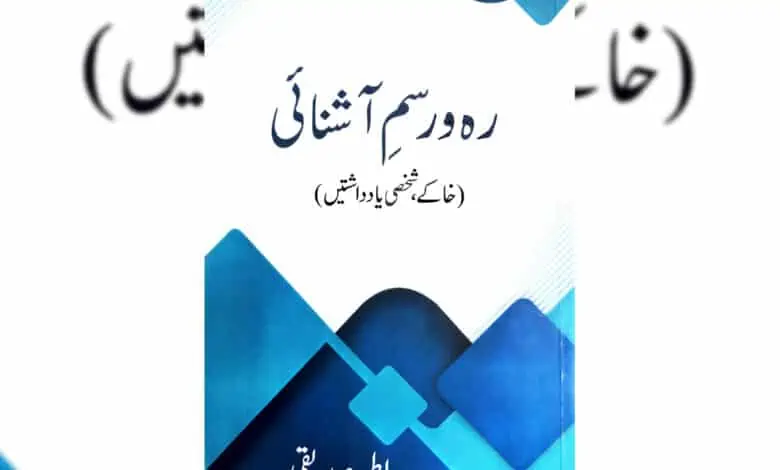
The book Rahe wa Rasm-e-Aashnai (sketches and personal memoirs) provides a quick, candid, exquisite and scrupulous portrayal of those who retain their abiding presence without being physically present in the world.
Professor Athar Siddiqui, a widely recognized scientist, has produced a captivating narrative of his eventful life, Main Keya Meri Hayat kaya, with disarming humility and jotted down travelogues vividly calling attention to down reaching human experiences that frequent foreign travels produce. Interactive media frequently carry intriguing stories featuring commonplace occurrences. The stories with a strong sense of moral tutoring dished out by the digital world need to be shared with non technology conversant Urdu knowing people.
He left Professor Athar Siddiqui to supplement what had been missing and started translating these pulsating stories into Urdu. It was left to Professor Athar Siddiqui to supplement what had been missing, and he translated these pulsating stories into Urdu.
Tahzibul Aklaqh, a prestigious periodical launched by Sir Syed in 1870, started serializing it with a suggestive title Hairat Sarai Ki Kahaniyan (The stories of wonderland), and two volumes of these laconic and absorbing stories have appeared so far.
He meticulously edited two autobiographies of two illustrious alums of Aligarh Muslim University–Dr. Sheikh Mohammad Abdullah (founder of women’s college, AMU) and Nawab Ahmad Saeed Khan Chattari ( former Governor of Uttar Pradesh). He had astutely done over translating books on Shaheryar and Musa Raza.
Athar Siddiqui’s recently published book, Rah-o-Rasam-e – Aashnai,” creatively maps out the accessible and unchartered terrains of thirty-five personalities in candour-driven idiom, and he hardly holds with the popular notion that put a lock on showing the slightest discourtesy to the deceased. The author asserts, “It is widely mentioned that the sketch writer must not use any indecent or improper word for those resting in the peace. If this sort of exhortation is adhered to, then the sketch, personal article and memories will be read as appreciation and admiration-filled text. If history writing sticks to this principle, then the authentic history of any period could not be produced. I do not buy this argument.”
The subtle wised-up mélange focuses on nine creative writers such as Shahryar, Iqbal Matin, Sajida Zaidi, Qazi Abdus Sattar, Professor Mukhtar Uddin Arzoo, Syed Hamid, Lateefuz Zaman and a couple of close relatives, teachers, friends and former vice-chancellors.
Iqbal Matin, whose awe-inspiring artistic sensibility could not get him the recognition across the country he fully deserved, has come in for a refined exploration. Athar Siddiqui’s reminiscence is peppered with unusual but fascinating details about the author. The author living in Aligarh tried desperately to contact Iqbal Matin (Hyderabad) when the letter was the preferred communication medium. He realized that his letters were not delivered to the addressee, who was prone to change houses. Iqbal changed thirty-five houses and bore testimony to his nomadic lifestyle.
Much has been written on Jnanpith awardee and prominent poet Shahryar but a comprehensive and insightful article highlighting his distinctive personal traits and oeuvre is still looked-for. The piece titled “Shahryar as a man and poet” fills the bill with remarkable ease. Athar saheb cites many instances to prove Shahryar’s unflinching loyalty to his friends but never spitting upon the rivals. The voice of modernism with strong traces of neoclassicism, Shahryar never nurtured animosity and did whatever he could for those who looked up to him in their hours of peril. People, even authors and pushover critics tend to read creative texts in the backdrop of personal details; hence when Shahryar suffering from a terminal illness- cancer–composed a couplet; Aasman ab kuch nahi tere karney ke liye/Ham ne sab taiyaariyan karli hain marne ke liye (O sky, now you have nothing to do/I have completed all the preparations for dying) it was considered as the affirmation of impending death. Employing critical acuity, Athar saheb mentioned that the couplet has nothing to do with a nagging sense of personal extinction; the poet laments how we perfected the art of self-destruction reflected in the depletion of Ozone layer manufacturing of weapons of mass destruction.
Athar Siddiqui wrote an immensely readable sketch of Qazi Abdus Sattar, a much overrated and pretentious writer who always took pride in using ornate and florid language in his fiction. His novel Tamam Sultan has been described as magnum opus, but it is hardly more than an oft-repeated titillating story of unrequited love. Athar Saheb and Qazi have had close ties for over fifty years, but Qazi was so intemperate that he pulled ties into pieces as Athar could not attend his facilitation function. It was an act of civility to describe this narcissism as uniqueness of personality.
Prof Zilur Rehman, a widely- respected academician of Unani medicine, is a well-known scholar of Urdu, Persian and Arabic and has more than fifty books to his credit. His books, especially on Ibne Sina, Hakim Ajmal Khan, Sir Ross Masood, Hakim Ehshanullah Khan, and Hakim Abdul Moid, got widespread admiration. In addition to discussing his well-documented and invigorating writings, Athar Siddiqui effortlessly unravels his amenable nature and inimitable passion for books and artefacts. He has a collection of over 70,000 and set up a museum and library, Ibne Sina Academy, which has its website.
Seldom does one attempt to spell out what essentially embodies his wife, going beyond the adulation and berating with a sense of objectivity. This nagging edginess seems to have no bearing on Athar saheb, who painted a stirring wordy portrayal of his wife Zakia Siddiqui, a renowned academician and former principal of Women’s College, Aligarh Muslim University.
One tends to agree with the author when he asserts that during the first ten years wife is treated as the beloved; with the birth of children, she takes over the role of the mother. If harmonious marital life continues, she becomes an inseparable friend who hardly gets perturbed, no matter how annoying one becomes. It is all momentary, and the bond of affinity never weakens.
Athar saheb also evocatively narrated his mother’s life story, and he recollects his memories and anecdotes to document her extraordinary considerate nature. Suhail (son) and Taab (daughter) get pat on the head by the caring and unerring father for their abiding sympathy for others.
The book turns attention to a dozen vice-chancellors and pro-vice-chancellors of AMU, such as Dr Zakir Hussain, Bashir Hussain Zaidi, Badruddin Tyabji, Abdul Aleem, Ali Mohammad Khusro, Syed Hamid, Syed Hashim Ali, Wasiur Rehman, Naseem Farooqui, Mahmoodur Rehman, Hamid Ansari and Abul Hasan Siddiqui.
The author’s appraisal of them looks convincing, but occasionally subjectivity surfaces. The assortment of sketches offers a discerning peep into the life of all who impressed the author. The nuanced and readable prose is used impeccably, and Athar Siddiqui deserves accolades for producing such picturesque vignettes.
Shafey Kidwai is an Indian academic, communication scientist, translator, columnist, and author. He is the chairman of the Department of Mass Communications at Aligarh Muslim University.
source: http://www.siasat.com / The Siasat Daily / Home> Featured News / by Shafey Kidwai / September 26th, 2025
Ather Siddiqi was a researcher of eminence in his field and his research has been nationally and internationally recognised in the scientific world.
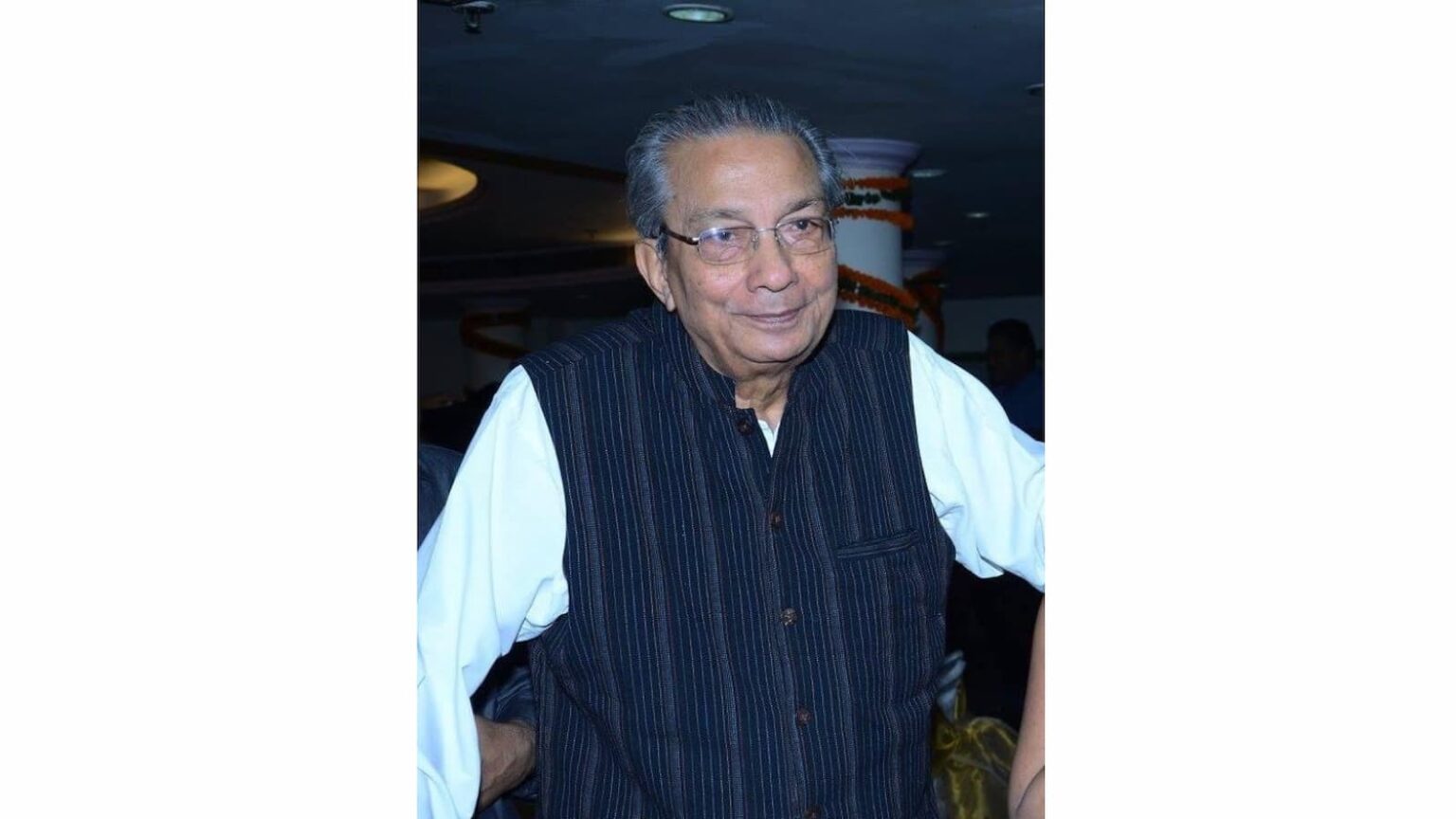
Professor Ather H. Siddiqi was born on December 29, 1931, in Saharanpur, Uttar Pradesh. He attained his early education at the Govt. High School, Saharanpur and obtained the degrees of B.Sc. (1950) and M.Sc. (1953) from A.M.U. Topping the university in Science and Zoology, he received two gold medals. He did his PhD in 1956 under the supervision of Professor Babar Mirza from Aligarh Muslim University.
Ather Siddiqi joined the Department of Zoology as a lecturer in 1953. After three years, he joined Purdue University, USA and completed another doctorate in 1958. He became a reader in 1961 and was appointed as a professor in 1977. Prof. Siddiqi also taught at universities in Nigeria and Libya and returned to India in 1980. He served as the Chairman of the Department of Zoology (1985-88) and as the President of the Indian Society for Parasitology. He also served as the Dean of the Faculty of Life Science in 1988-89, finally retiring from his services in 1994.
His scientific work on helminth taxonomy was published by the New York Academy of Sciences in the form of an exhaustive monograph. Despite that, he received his basic training in classical zoology in the early sixties. Later on, he switched to experimental work in parasitology. Ather Siddiqi was a researcher of eminence in his field and his research is nationally and internationally recognised in the scientific world.
Siddiqi’s Immersion in Urdu Writing
Apart from research articles, his popular writing in Urdu started in the 1980s. His first article in Urdu appeared on the life and scientific contribution of his mentor Professor Babar Mirza in the Quarterly “Fikr-o-Nazar” (January 1987). He published two articles in the early years of “Tehzib-ul-Akhlaq”, Aligarh: ‘Ilm-ul-Hayatiat ke Isatiza se Khitab’ (December 1987), ‘Mohammad Babar Mirza-Apnay Chaman ka Aik Deedawar’ (August 1989).
After his retirement in 1994, he devoted himself completely to Urdu writing. His lengthy article, ‘Mashriq say bezar na Maghrib say Hazar Kar’ narrateing the scientific and cultural activities of European countries was serialised in January 2005-June 2006 issues of “Tehzib-ul-Akhlaq”.
Similarly, his Urdu travelogue ‘Saat Haftay Inglistan Main’ (Seven Weeks in England) was published in the June and July 2006 issues of “Tehzib-ul-Akhlaq”. It carried interesting information regarding the scientific and cultural development of England.
His article based on his visit to Spain ‘Undlus Ka Shandaar Mazi’ (The Bright Past of Spain) discussed the scientific and cultural development of medieval Spain.
Ather Siddiqi along with Syed Zillur Rahman, contributed a chapter, ‘Aligarh Muslim University: Development and Progress of Science Teaching and Research, 1877-1947’ in Science and Modern India: An Institutional History, c. 1784-1947 (ed. Uma Das Gupta), Centre for Studies in Civilisation published in 1999.
A Glimpse into his Published Works
He is regularly contributing a literary column ‘Hairat Sarai Ke Kahania’ to “Tehzib-ul-Akhlaq” which consists of the translation of interesting short stories taken from the internet.
Recently, his popular science articles ‘Parasitism: Aik Dilchasp Tareeq Zindagi’ (Parasitism is an Interesting Way of Life) and ‘Yek khuliya Tufailiati Beenariyan’ (Unicell parasitic diseases) appeared in the February 2022 and February 2023 issue, respectively, of the Urdu monthly ‘Aajkal’, Delhi.
After retirement, Ather Siddiqi devoted himself to Urdu writing and authored, translated and edited dozens of books. The names of some of his books are: ‘Kiya aur meri Hayat Kiya’, ‘Lizzat Aabla Pai’, ‘Nishat Aabla Pai’, ‘Hairat Sarai ke Kahaniyan’ (Vol. 1, 2, 3, 4). In 2022, he published “Rah wa Rasam Aashnai”, his last book. He also rendered Retd IAS officer Musa Raza’s book, “Land of Regrets: Kashmir”, in Urdu as “Kashmir Sarzamin Pashemani”.
Ather Siddiqi was one of the best teachers, an internationally acclaimed Zoologist, and a passionate Urdu writer. And above all, he was a wonderful human being. He passed away on 8th November, 2023, in Delhi at the age of 92 years due to old age illness.
References:
Tehzib-ul-Akhlaq, Aligarh (various issues) Science and Modern India: An Institutional History, c. 1784-1947 (ed. Uma Das Gupta), Centre for Studies in Civilisation, New Delhi, 1999.
source: http://www.heritagetimes.in / Heritage Times / Home / by Dr Asad Faisal Farooqui
The centuries-old Islamic educational centre, birthplace of the Urdu Qur’an translation, struggles to protect its legacy amid growing Hindu-led development projects.
New Delhi :
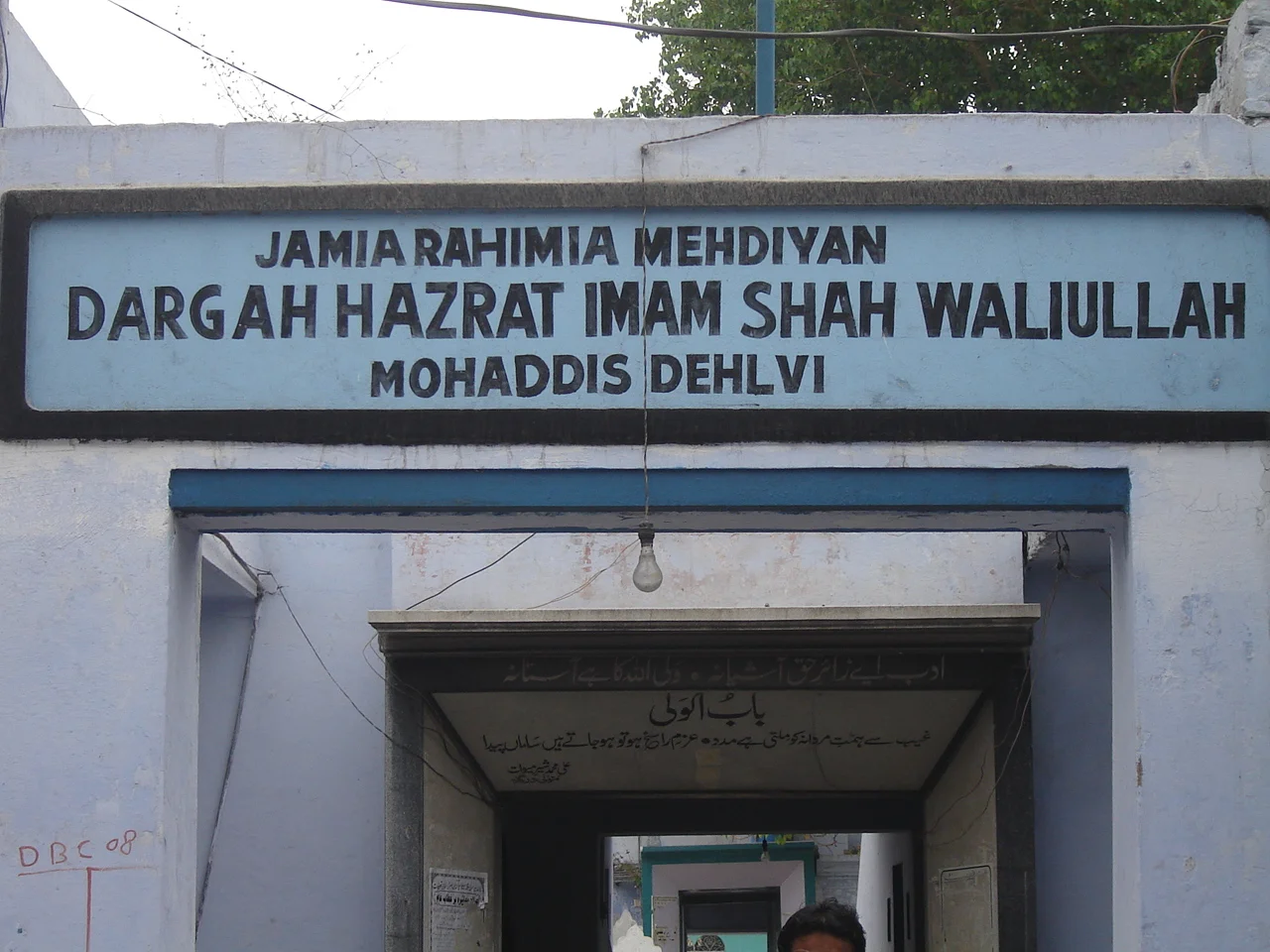
Hidden along the busy Bahadur Shah Zafar Highway, Mehdiyan — home to the revered Madrasa Rahimiya, also known as Jamia Rahimia — stands as one of Delhi’s oldest Islamic learning centres. Established by Shah Abdul Rahim, father of the famed scholar Shah Waliullah Muhaddith Dehlvi, this madrasa has for centuries served as a vital institution nurturing Islamic scholarship. However, today its existence is threatened by creeping urban development dominated by Hindu groups, threatening to erase a vital piece of Muslim heritage.
“Madrasa Rahimiya was not just a school; it was a movement to bring Muslims closer to the Qur’an’s true teachings,” explains Mufti Muhammad Sabir, a Hadith instructor at the madrasa. “But its history is being erased by those who prioritise development over our heritage.”
Madrasa Rahimiya holds a proud place in history, especially for pioneering the first Urdu translation of the Qur’an. In the late 1700s, Shah Abdul Qadir, a key scholar educated under his father and others, undertook the translation project at the Akbarabadi Mosque. This effort laid the foundation for making Islamic scripture accessible to millions of Urdu-speaking Muslims across India, who were otherwise unable to understand the original Arabic text.
“Shah Abdul Qadir’s translation was revolutionary, yet it faced strong opposition from scholars who considered translating the Qur’an sacrilegious,” says Maulana Sabir. “Despite this, his work endured and shaped generations.”
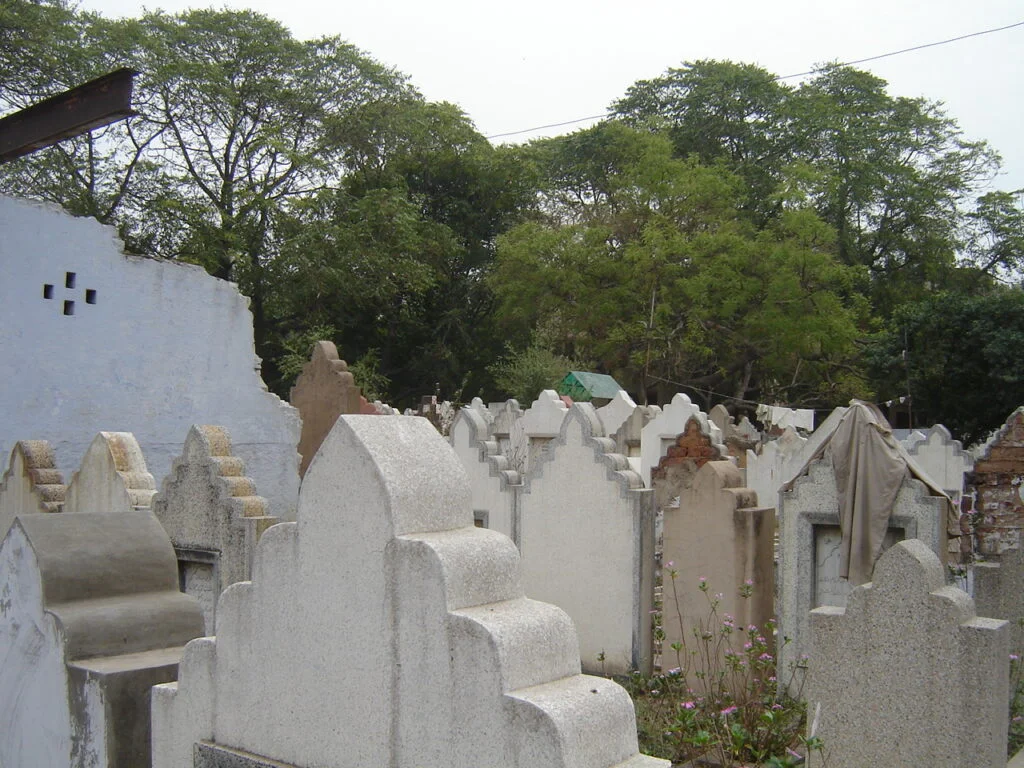
But this rich history has not been free from hardship. After the 1857 War of Independence, British colonial forces destroyed the Akbarabadi Mosque and shuttered the madrasa. The adjoining Mehdiyan cemetery, the resting place of Shah Waliullah and his family members, was drastically reduced. Historian Rana Safavi laments, “Mehdiyan was once a vast necropolis for saints and commoners alike. Now, much of it is lost to encroachment, with what remains used merely as a washing place.”
In the 1960s, Delhi’s expanding urban sprawl posed new threats. Plans to demolish Mehdiyan to build flats and houses were only halted because of the heroic resistance of Ali Muhammad, known locally as Sher-e-Mewat. “He lay down in front of bulldozers and even Pandit Nehru’s car to protect these sacred shrines,” recalls resident Bilal Ahmed. “He broke his leg but ensured our heritage survived.” Jawaharlal Nehru himself was moved by Ali Muhammad’s determination and ordered the preservation of these sites, which were later enclosed by a boundary wall.
Yet, the madrasa’s survival is once again at risk. Critics point out that the latest wave of urban planning, heavily influenced by Hindu groups, disproportionately targets Muslim heritage areas. Historian Zafar Khan asserts, “Hindu groups have long viewed places like Mehdiyan as obstacles to their vision of a ‘modern’ Delhi. This is not just about land — it’s an attempt to erase Muslim identity.”
Local Muslims feel the marginalisation acutely. “Our history is being systematically sidelined,” says Ayesha Begum, a teacher at Jamia Rahimia. “While Hindu temples receive government protection and funding, our sacred sites are neglected, ignored, or demolished.” She highlights the glaring lack of state support for the madrasa compared to the ample aid granted to Hindu religious institutions.
Despite the ongoing pressures, Madrasa Rahimiya endures as a symbol of resilience and faith. Its small mosque and student quarters continue to operate, preserving the teachings that Shah Waliullah and his predecessors established centuries ago.
“We teach the same Qur’an and Hadith that Shah Waliullah did,” says Mufti Sabir. “No matter the encroachment or neglect, that legacy will not disappear.”
The battle to save Mehdiyan reflects wider tensions in India, where Muslim cultural and religious heritage frequently confronts Hindu nationalist agendas. For now, the madrasa stands firm — a testament to Delhi’s Muslim scholars’ enduring spirit and their steadfast commitment to preserving Islamic knowledge and identity.
source: http://www.clarionindia.net / Clarion India / Home> Culture> Editor’s Pick> India / by Mohammed Bin Ismail / May 24th, 2025
Pallikkere (Kasargod District) / Kozhikode, KERALA / Dubai, U.A.E :
Kozhikode:
PA Ibrahim Haji, one of the most prominent businessmen, educational entrepreneurs, and philanthropists of India and the Middle East, passed away on Tuesday in Kozhikode aged 78.
According to the reports, Ibrahim Haji was first hospitalized on December 11 in Dubai Healthcare City on December 11 after he suffered a major cardiac arrest. He was later shifted to MIMS Hospital in Kozhikode on December 20. He breathed his last on Tuesday afternoon at the hospital.
Ibrahim Haji was the founder vice-chairman of Malabar Gold and Diamonds. He also served as the director of Chandrika newspaper, vice-chairman of Indus Motors, and founder chairman of PACE Group of Institutions.
Born in Pallikkara in Kasaragod district on September 6, 1943, Ibrahim Haji migrated to the Gulf in 1966 where he set up the successful textile, garment, and jewelry businesses. He ventured into the education sector with the launch of Pace Group of Institutions in 1999. At present, 20,000 students from 25 countries pursue many courses in various PACE institutions in India, United Arab Emirates, and Kuwait. In Kerala, the group owns RIMS International School in Kannur, PACE Residential School, and Blossom Public School, both in Manjeri. The group also owns the PA College of Engineering, PA College of Pharmacy, PA Institute of Physiotherapy, PA Polytechnic, and PA First Grade College in Mangaluru in Karnataka.
His mortal remains will be kept for public viewing at his house in Kuttikkattoor in Kozhikode till 3 pm.
Burial will take place at Vettekkad Juma Masjid in Manjeri after 4pm.
source: http://www.english.varthabharati.in / Vartha Bharati / Home> Karavali / by Vartha Bharati / December 12th, 2021
Muhammad Umaid Khan, a young Muslim student from Nagpur in Maharashtra, has made his community proud by securing the 21st rank nationwide in the NEET UG exam, a highly competitive medical entrance test in India. Umaid, whose academic journey has been marked by dedication and strong family support, now aims to pursue MBBS from the prestigious AIIMS in New Delhi with the clear goal of serving people through the medical profession.
Umaid Khan, son of Furqan and Shaheen Khan, studied at the Indian Olympiad School in Nagpur from 8th to 12th grade and achieved exceptional academic results, scoring 95.6% in his 10th standard and maintaining a similar level in the 12th grade science stream. Despite clearing the JEE Mains exam earlier, he chose to follow his passion for medicine, driven by a desire to help others.
Speaking exclusively to Clarion India, Umaid shared his study approach: “I studied with a plan and worked hard to achieve my goal. I prepared for NEET at the Alien Coaching Institute in Nagpur. I used to strictly follow my study schedule, revising daily, clearing doubts, and taking mock exams. This routine helped me stay focused and confident.”
Umaid’s success is also a reflection of his strong family backing. His father, Furqan Khan, is a civil engineer, and his mother, Shaheen Khan, manages the home. He has two brothers—Adeel Khan, an engineer, and Areeb Khan, who recently completed his MBBS and is undergoing an internship. Umaid credits their encouragement for his achievement. “My family’s support kept me motivated throughout,” he said.
Sohail Khan, Director of Indian Olympiad School, praised Umaid’s determination: “This student is an inspiration for all students of our school and college and is proof that determination and discipline are the keys to great success. His accomplishment highlights the potential of the Muslim youth when given the right environment.”
Umaid Khan’s story counters common negative stereotypes and showcases the commitment and talent present within the Muslim community. His decision to choose medicine over engineering despite acing both exams reveals a thoughtful choice prioritising public service over personal convenience.
“NEET is a tough exam, but nothing beats discipline, hard work, and consistency,” Umaid advised other students aiming for success. His words reflect the reality that merit and dedication can overcome barriers faced by minority students in India.
Indian Muslims often face challenges, including social prejudice and limited access to quality resources, yet stories like Umaid’s demonstrate their capability to shine at the national level. His journey from Nagpur to a national rank in one of the toughest medical exams in India is a clear sign that Muslim youth are ready and willing to contribute meaningfully to society.
As Umaid prepares for the next step in his career at AIIMS Delhi, he hopes to serve communities like his own and inspire other young Muslims to aim high and work hard. His achievement sends a strong message that with support and determination, Muslims can achieve excellence in education and professional fields.
source: http://www.clarionindia.net / Clarion India / Home> India> Indian Muslims / by Mohammed Bin Ismail / July 08th, 2025
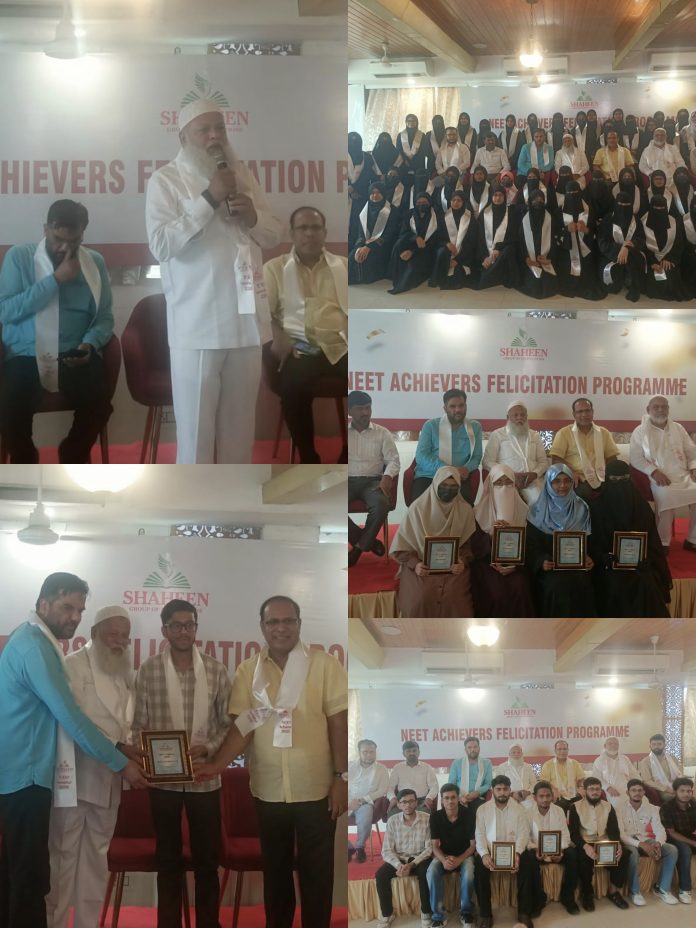
Shaheen Academy organised a grand event to honour its NEET achievers. The ceremony celebrated the students’ success and dedication.
The event was attended by educationists and community leaders. Among them was Abdul Qadeer, founder and chairman of Shaheen Group of Institutions.
In his keynote speech, Abdul Qadeer praised students and faculty. He stressed that education should not just be for earning. “Education can uplift society and spark social change,” he said. “It plays a key role in national growth and development.”
He reaffirmed Shaheen Academy’s mission: to offer value-based, holistic education. He said students must grow into responsible citizens and future leaders.
Abdul Qadeer urged students to look beyond personal success. He asked them to engage in social service and nation-building.
He also made a heartfelt appeal against lavish weddings. “Don’t spend lakhs on grand celebrations,” he said. “Use that money to educate your children, neighbours, and the poor.”
He called education the true celebration. “Transforming lives through education is the real joy,” he added.
He also underlined the need for wider educational outreach. “Five or six institutions are not enough,” he said. “We need 5,000 organisations working for value-based education. Shaheen must have 500 branches to transform society.”
Kaleemul Hafeez, Chairman of Al-Hafeez Educational Academy, also spoke. He compared Abdul Qadeer’s work to that of Sir Syed Ahmad Khan. “Abdul Qadeer Sahib is continuing that legacy to educate a new generation,” he said.
Noor Nawaz, founder of The Hind Guru Academy, echoed the same spirit. He reminded students of the idea of Rabbul Alamin—Lord of all worlds. “Be ambassadors of Prophet Muhammad ﷺ,” he said. “Show compassion, honesty, and service in all you do.”
The event ended with a special honour for teachers and staff of Shaheen Academy. Their hard work was praised as a key part of the students’ success.
The celebration not only recognised academic achievement but also highlighted education’s role in building a better society.
source: http://www.radiancenews.com / Radiance News / Home> Latest News> Report / by Radiance News Bureau / June 28th, 2025
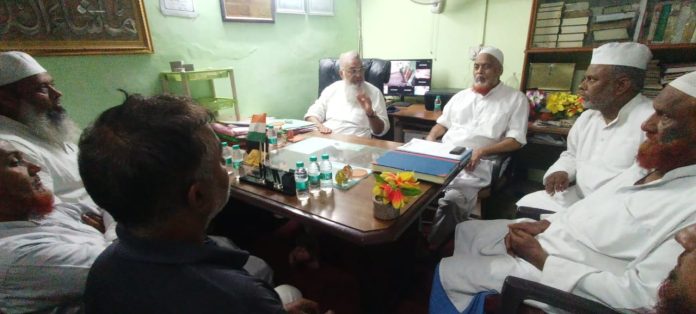
The annual meeting of the Executive Council of Rahmaniya Education Society was held at Darul Uloom Rahmaniya (a branch of Nadwatul Ulama, Lucknow), located in Sangam Vihar, New Delhi, under the chairmanship of Maulana Muhammad Khalid Nadwi Ghazipuri. In this meeting, renowned social figure and medical expert Dr. Syed Ahmad Khan was unanimously elected as the new President.
On this occasion, after presenting the Secretary’s report, Maulana Muhammad Khalid Nadwi Ghazipuri congratulated Dr. Syed Ahmad Khan on his new responsibilities and extended best wishes to him. The meeting conducted a thorough review of the educational and training activities of the madrasa and deliberated on its infrastructural needs. Additionally, the proposal for the annual increment in the salaries of the madrasa’s teachers and staff was approved.
The meeting also considered the inclusion of certain necessary contemporary subjects in the madrasa’s curriculum. In light of this need, a structured plan of action was prepared and a proposal was made to implement it.
Special participants in the meeting included Maulana Shamsul Haq, Dr. Obaidur Rahman, Haji Syed Zahid Ali, Abdul Ahad, Muhammad Ishaq Khan, Muhammad Sabir, and Me’raj Khan Nadwi, all of whom shared their thoughts and emphasised the importance of expanding educational and training programmes at Darul Uloom Rahmaniya.
The meeting concluded with an emotional prayer led by Maulana Muhammad Khalid Nadwi Ghazipuri, and a vote of thanks was delivered by Maulana Me’raj Ahmad Nadwi.
source: http://www.radiancenews.com / Radiance News / Home> Latest News / by Radiance News Bureau / July 07th, 2025
Office of the Commissioner for Entrance Examinations (CEE) Government of Kerala published on its official website ‘cee.kerala.gov.in’ KEAM 2025 Pharmacy (B Pharm) Rank List and toppers’ name and score.
KEAM 2025 Pharmacy Rank List:
Office of the Commissioner for Entrance Examinations (CEE) Government of Kerala published on its official website ‘cee.kerala.gov.in’ KEAM 2025 Pharmacy (B Pharm) Rank List and toppers’ name and score.
The Office of the Commissioner for Entrance Examinations (CEE) Government of Kerala released the KEAM 2025 Pharmacy and Engineering Rank List and Toppers details on Tuesday July 01, 2025.
The KEAM Entrance Test for Engineering and Pharmacy was held from April 24 to 28, 2025. It will be followed by entrance exam for Architecture and Medical Courses.
KEAM 2025 Pharmacy Rank List – Top 10
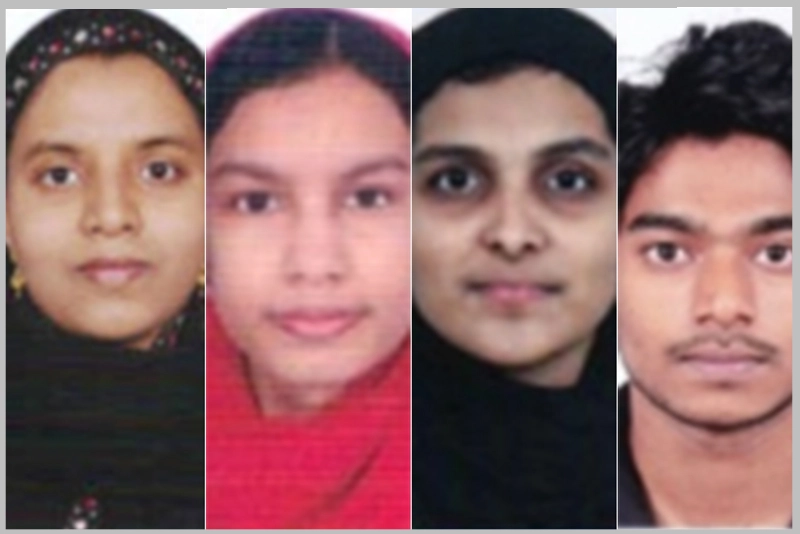
According to the KEAM Pharmacy Rank List published Tuesday, Anakha Anil is the state topper with a score of 290.0000/300.
Hrishikesh Shenoy and Fathimathu Zahra have respectively secured the 2nd and 3rd ranks in KEAM Pharmacy Merit List 2025, both scoring 290.0000/300 marks.
Besides Fathimathu Zahra, the KEAM Pharmacy Merit List 2025, has names of three more Muslims.
Among them is Hadiya Afnan from Palakkad district who scored 282.2757/300 marks and secured the 6th rank.
Hisana P, Mohammed Arshad and Sanoobiya – all from Malappuram district of Kerala have scored 282.2757/300 marks to secure the 7th, 8th and 9th ranks in the KEAM 2025 Pharmacy Merit List.
Fathimathu Zahra, who stood 3rd in the state merit list is also among female toppers.
KEAM 2025 Pharmacy Rank List – Key Highlights
According to the KEAM 2025 B Pharm Result Data published on the CEE Kerala website, a total of 33,425 candidates – including 25,257 females and 8,168 males, appeared in the Pharmacy entrance exam. Out of them, 27,841 – including 21,606 females and 6,235 males, qualified and included in the rank list.
Thiruvananthapuram is the district topper where a total of 72 candidates are in the first 1000 rank holders followed by Kollam (63 candidates) and Pathanamthitta (17) candidates.
Tope 3 districts from where candidates appeared in KEAM 2025 Pharmacy Top 100 List are Malappuram (51), Kozhikode (10) and Palakkad (8).
After successfully conducting the KEAM 2025 for Engineering and Pharmacy (B Pharm), the CEE Kerala had released the Provisional Answer Keys on April 29, 2025, and asked candidates to raise objections and challenge answer key before 05:00 PM on May 03, 2025.
Saying it has recieved some objections, the CEE Kerala published on May 9, 2025, KEAM 2025 Final Answer Key and Candidates’ Responses (OMR Sheet) on its official website, and is now set to declare the KEAM result.
Candidates should note that KEAM B Pharm Counselling and Seat Allotment will be held based on the rank obtained by the candidates. KEAM Pharmacy Counselling schedule of the year 2025 will be available on the website soon.
Dr. Mustafa Basthikodi, Professor and Head of the Department of Computer Science and Engineering at Sahyadri College of Engineering & Management (SCEM), Mangaluru, has been appointed as a Member of the 9th Academic Senate of Visvesvaraya Technological University (VTU), Belagavi.
The appointment was officially notified through the Karnataka Governor’s Secretariat Notification (No. GS 06 TUM 2025) dated June 25, 2025, under Section 22 of the VTU Act, 1994. The announcement was made by the Hon’ble Vice Chancellor of VTU.
The Academic Senate is the highest academic body of the university and plays a key role in shaping academic policies and strategies. Dr. Basthikodi’s appointment is considered a recognition of his work in the field of technical education and research.
source: http://www.english.varthabharati.in / Vartha Bharati / Home> Karavali / by Vartha Bharati / June 26th, 2025