Category Archives: Education

Kolkata boy Hamed Aziz Safwi sets up library and career guidance centre in Uluberia

Kolkata, WEST BENGAL:

The Haider Aziz Safwi Career Development Centre aims to create awareness, and make books and resources accessible

Hamed Aziz Safwi hopes to take the youth of Uluberia closer to their career dreams
All pictures by Arijit Sen

Less than 40km away from Kolkata, Uluberia lacked a library for students and most Class XII passouts seemed at a loss about the road ahead. Haider Aziz Safwi Career Development Centre — the initiative of La Martiniere boy and son of former IPS officer and MLA from the area — aims to fill that gap and take the youth closer to their dreams.

The Haider Aziz Safwi Career Development Centre in Uluberia will be inaugurated on December 12, the death anniversary of Haider Aziz Safwi, the late IPS officer and MLA. 

My Kolkata caught up with his son and founder of the centre, Hamed Aziz Safwi, to know more about his plans

Hamed chose to set up the career development centre at Taj Mahal Library, a subsidiary of the Taj Mahal Gram Vikas Kendra, as the place itself has some reputation locally

The infrastructure 

The Haider Aziz Safwi Career Development Centre is housed inside the Taj Mahal Library, a subsidiary of the Taj Mahal Gram Vikas Kendra that has earned quite a reputation in the area over the years. The original library was set up in 1952 by the late Ahmed Hossain Mullick, late Atibar Rahman Mullick, late Yacub Ali Khan and late Mohhammad Moinuddin. 

“The Taj Mahal Gram Vikas Kendra has an established reputation here and has been involved in a lot of activities, including the Taj Mahal Library. It was decided that since there is space available, we can convert it into a career development centre. Since it’s a place of repute, I will not have to worry about the day-to-day functioning and local student outreach,” said Hamed, who completed his post-graduation in Economics in 2022 from St Xavier’s University after graduating in 2020 from St Xavier’s College in the same subject. 

“We have spoken to the head teachers of the high schools of the three blocks and teachers’ groups. The local administration will also go school to school and interact,” he said.
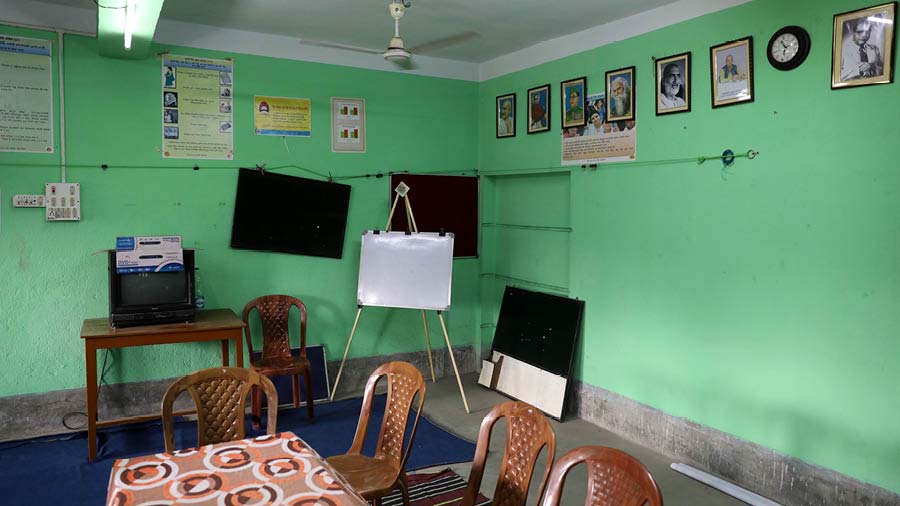
The library is open to all students from 10am to 6pm, Mondays to Saturday for book lending

The library and centre

The library caters to around 600 students of about 45 schools from three blocks — Uluberia, Santrail and Panchla. It has a stock of over 1,000 books for students of Class XI and upwards. 

“We will basically have Chhhaya Prakasani books for West Bengal board students of Classes XI and XII — maths, physics, chemistry, biology and other subjects. There will also be competitive exams-oriented books in English,” Hamed said.

The library is open to all students from 10am to 6pm, Mondays to Saturday for book lending; however during examination the hours can be stretched for solo or group studies with prior intimation to the administration. 

Career guidance

The career development centre will have books for CAT, CLAT, CA preparations. “Uluberia doesn’t have any good coaching centres. Parents are not always willing to send their children all the way to Kolkata. Also, these books are very expensive. What we are trying to do is to make sure that the students have access to books when they need it,” said Hamed, talking about the gaps he wants to fill to make knowledge accessible to the youth of Uluberia.

“When we interacted with the students, there seemed to be a complete lack of awareness about any sort of career goal. For example, somebody who wanted to be an engineer or doctor had taken up Humanities in Plus II. They also had no idea about which exams to appear for,” Hamed said. “Later, we will get some people who can offer career guidance to them. We will also establish an online class setup later with a laptop. We can also do group studies.”

“We have already spoken about a paramedic course and computer training. Once this is up and running we will try to get them into some ITIs. We will be getting some coaching institutes and some teachers, if possible weekly once or twice a month to come and sit with the students,” Hamed said. 

To encourage and motivate the students and take them ahead on their career path, Hamed has also instituted the Haider Aziz Safwi Scholarship Distribution. 

Managing funds 

The library has mostly been funded by Hamed along with crucial administration and infrastructure inputs from the local community and the kendra. 

‘’For book donations one can get in touch at haiderazizsafwi@gmail.com . We have a zero cash transaction policy,’’ said Hamed.

Hamed Aziz Safwi , founder; Zahir Azad Mollick, teacher and treasurer of Taj Mahal Gram Vikas Kendra; Abdul Malek Mollick, retired headmaster, president Taj Mahal Gram Vikas Kendra and Taj Mahal Library; Rejwan Ali Mullick, secretary, Taj Mahal Library; Sk. Farukh, social worker; Sk. Amarullah , social worker; Sk. Samim Parvez, homeopathic practitioner; Arabinda Bhowmick, teacher and other executive committee members of Taj Mahal Gram Vikas Kendra team.

Dream and objective

The La Martiniere boy from Kolkata shared why Uluberia has always been so close to his heart. ‘’My father was an IPS officer and was an MLA from here. What shocked me was that despite him being an IPS and MLA, we failed to provide a library that caters to students. That for me was a big dilemma, which is why I focused on this. And we will establish more of these.’’ 

“The first objective is to create awareness and secondly try to create an environment where people are able to excel. It is not possible overnight. But we are creating a process which will set up an environment of competitive exams,” Hamed signed off. 

source: http://www.telegraphindia.com / The Telegraph / Home> My Kolkata> Resource Centre / by Subhadrika Sen / December 11th, 2022

World Urdu day: Do you know Oxford dictionary have these Urdu words in it

INDIA :

The words like ‘bandobast’ and ‘decko’, apart from many other Hindustani words are now loved by the British dictionary.

article-image

Mumbai:

If you are born in India, and that means any part of India, Urdu is the language that you must have come across in its purest or hybrid form. The language is even liked by the Oxford English Dictionary, which has words listed throughout its collection. On Wednesday, November 9, Urdu is being celebrated all around the world on the occasion of “World Urdu Day.”

The words that belong to Urdu and are now in the OED include “bandobast”and, after literally “deckoing” the arrangements, “Abba” (father), “Accha” (okay, good), “Gulab Jamun,” “Mirch Masala,” “Keema,” “Chowkidar,” “Funda,” and “Chamcha.”

Urdu, along with Hindi and Sanskrit, is the oldest language and, literally speaking, a display of Indian culture. Though the most real and oldest words are not frequently in used today, there are rhetoric, which belong to Urdu and which the Oxford English Dictionary has included in its collection.

Urdu, before being replaced by the East India Company against Persian, was earlier known as the “Hindustani” language, and its basic roots can be traced to the “Daur (reign)” of Moghul King Shah Jahan. Though the language was in its infancy at the time, there are numerous documentary evidences that prove that the language was used by locals.

The 400-year-old language has maintained its charm in the 21st century. Everything has become online, and for that, English is a must. However, there are some Urdu words that “English” enjoys as well. And these words are included in the Oxford English Dictionary.

Shahid Latif, editor (Madeer in Urdu), explains that the process is entirely dependent on the OED’s meticulous research and analysis. Latif said, “Urdu has major influence from Persian and Arabic.” The words derived from Urdu are being included in the OED with a proper announcement. For example, “Bandobast,” in which band means protection and bast means tightly wrapping, is part of the OED. Apart from it, “decko” is also a word that was included in the English language long before independence, bought from the Urdu word “dekho” and used by the British police to “check out” anything suspicious.

source: http://www.freepressjournal.in / The Free Press Journal / Home> Mumbai / by Nooruddin Inamdar / November 09th, 2022

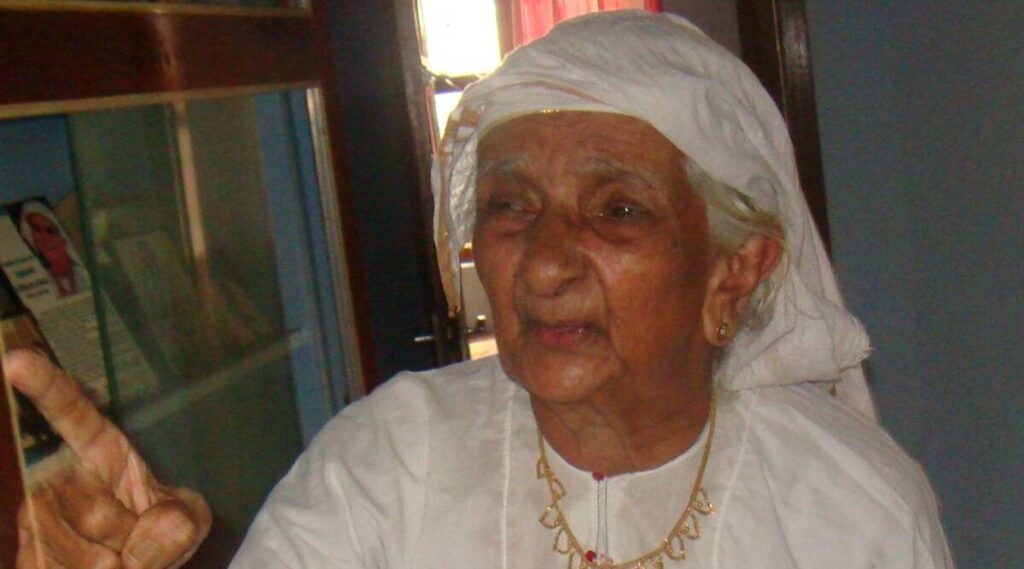
Maliyekkal Mariyumma, the first Muslim woman in North Kerala to get English education, dies at 95

Thalassery (Kannur District), KERALA :

The Muslim community had frowned upon the girl, who went to school to study English wearing burqa. She had faced the insult from her community but her father O V Abdulla, who was a religious scholar, stood with her and encouraged her to continue English education.

Mariyumma was an avid reader of English and hence local people used to call her English Mariyumma. Wikimedia Commons

THE FIRST Muslim woman in North Kerala to get English education, Maliyekkal Mariyumma, died on Friday in Thalassery, Kannur district. She was 95.

An icon of English education among Muslims in North Kerala, Mariyumma had been an inspiration for generations.

Condoling the death of Mariyumma, Chief Minister Pinarayi Vijayan said, “We have lost a person who had left her indelible footprints along with the history of Thalassery. Braving the barriers of conservatism, she learned English and thus became a guiding light for others. She fought for the educational rights of Muslim girls. Always a progressive face, she had also been an icon of religious harmony. Her death plunges a generation and a region into grief.”

Born in 1927, Mariyumma belonged to one of the prominent Muslim families in Thalassery. After completing lower primary education, she joined Sacred Heart Convent School in Thalassery for further studies. She was the only Muslim girl among 200-odd students at the school established in 1886. She studied the English alphabet in class 5.

Later, she recalled that as she did not understand English, her father consoled and encouraged her to continue studies. At noon, she used to go to a relative’s house for namaz. Realising this, the nuns arranged a facility for her namaz at the school. She recalled how nuns created a love for the English language in her mind.

The Muslim community had frowned upon the girl, who went to school to study English wearing burqa. She had faced the insult from her community but her father O V Abdulla, who was a religious scholar, stood with her and encouraged her to continue English education.

Abdulla had studied only up to class 2, but he used to read and write in English. Mariyumma continued her convent education till 1943, the year she was married off after she completed fifth forum (class 10).

After marriage, she associated herself with Muslim Mahila Samajam to continue her social work. Later, she focused on activities aimed at empowering women.

Mariyumma was an avid reader of English and hence local people used to call her English Mariyumma. The image of Mariymma reading English daily had inspired hundreds of Muslim girls to pursue education.

source: http://www.indianexpress.com / The Indian Express / Home> Cities> Thiruvananthapuram / by Shaju Philip / August 06th, 2022

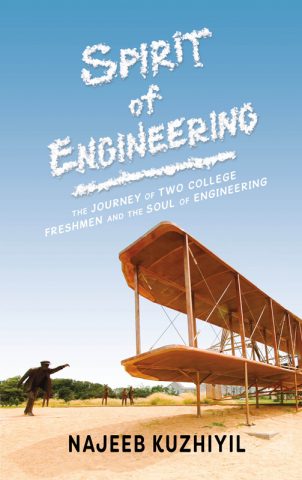
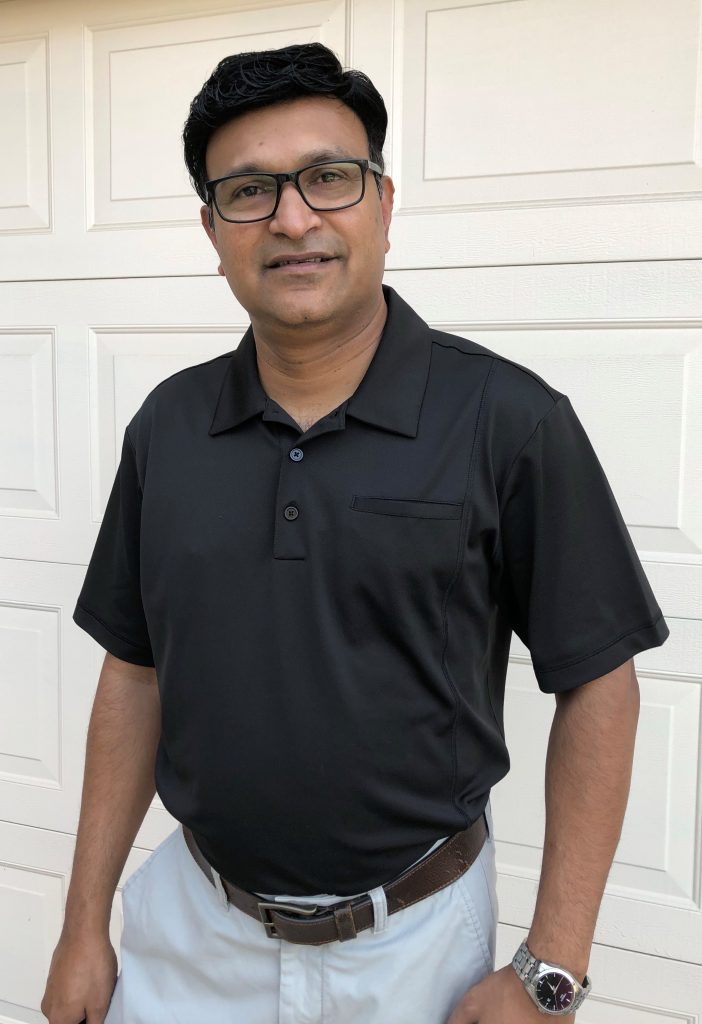
Mechanical Engineering Alumni of Iowa State University, Najeeb Kuzhiyil publishes novel: ‘Spirit of Engineering’

Kochi, KERALA / Texas, USA :

Spirit of Engineering, published by ME alum Najeeb Kuzhiyil in December 2017, tells the story of two freshman college students and their journey to discover what engineering is. Image courtesy of Najeeb Kuzhiyil

A novel penned by a mechanical engineering alum tells the story of two freshmen college students and their journey to discover what engineering is.

Najeeb Kuzhiyil, who graduated with a PhD in ME in 2013, recently published his first novel: Spirit of Engineering: The Journey of Two College Freshmen and the Soul of Engineering. The idea to write the book, which was published in December 2017, first came to Kuzhiyil while he was a student at Iowa State.

“So I thought before you begin your undergrad studies, you should understand what engineering is in simple terms,” said Kuzhiyil. “I really wanted to write a book that was simple enough for high school students.”

The book took about a year and a half to write and started out as separate essays covering four pillars of engineering: methodical approach, practical skills, abstraction, and creativity.

“One morning I was lying in my bed and I thought why don’t I tell this as a story. I can include all of these concepts and wind them into a nice plot,” Kuzhiyil said.

The target audience for the book is high school students or perhaps even freshmen in college. The plot is set in modern times and follows around two main characters who are both first year engineering students at an unnamed Midwestern college: Matt from northern Iowa and Maya from India.

Matt and Maya come across a presentation about the Wright Brothers which piques their interest to the point that they decide to travel to the Wright Brothers museum in Dayton, Ohio in an attempt to better understand what engineering really is. During their travels they meet an experienced, middle-aged engineer who helps them understand how math, physics, and other natural phenomena apply to engineering.

Kuzhiyil said that his PhD advisor Robert C Brown, Anson Marston Distinguished Professor in Engineering, was a major influence on him personally and with his writing style specifically.

“He’s a wonderful engineer and he’s a great writer because we as engineers aren’t always great writers,” said Kuzhiyil. “Before coming to Iowa State I never paid attention to my English but Dr. Brown told us ‘You might be great engineers but you also have to learn how to write well. It’s very important to be able to express your ideas.’”

Brown, who also serves as director of the Bioeconomy Institute at Iowa State, wrote the foreword of the book. He said he thinks the book can be helpful for the next generation of engineers.

“I would have benefited from this book when I was in high school, at the time having no clear idea of the engineering profession. Even today despite the emphasis on STEM education, engineers are rarely portrayed in popular culture except for the occasional less than flattering role of bumbling technocrat. Najeeb’s book helps to overcome this stereotype,” Brown said.

Kuzhiyil cited Brown, whose research focuses on biorenewable resources, as a major reason why he chose Iowa State to pursue his PhD. Kuzhiyil is originally from the state of Kerala in southern India. He attended school in the city of Kochi and began developing an interest in chemical engineering in high school. He attributed his interest in engineering to his older brother, Dr. Abdul Kader, who studied chemistry and worked at a fertilizer manufacturing company.

“I didn’t know anything about chemical engineering, but as a kid I thought it would be cool to learn about it,” he said, adding there was a large petroleum refinery close to home that always fascinated him.

Kuzhiyil graduated with a bachelor of technology in chemical engineering from the University of Calicut and went on to work as a tech service engineer for Indian Oil Corporation.

After a decade in industry, Kuzhiyil decided to pursue an advanced degree. In graduate school his interest shifted from chemical engineering to renewable energy. He graduated with a MS in Combustion and Energy from the University of Leeds in England in 2005.

Kuzhiyil came to Iowa State in 2008 and was involved in various groups outside of his engineering studies, including serving as president of the Indian Students Association from 2009 to 2010. Despite spending just three years in Ames, Kuzhiyil said he made friends and memories that will last a lifetime.

“There were so many moments I really enjoyed at Iowa State,” said Kuzhiyil. “Our research group was so big we had people from all over the world. We had people from India, China, Europe, Africa, from all over and we had discussions on science, on politics, on life, on love, on everything. They were all great for me because different viewpoints and perspectives on different things were really insightful. I really had a blast and enjoyed every moment of my PhD.”

Kuzhiyil added that he loved the beauty of Iowa State’s campus, especially during the spring bloom, and that he enjoyed participating in the International Food Festival during the annual VEISHEA celebration.

After completing his PhD, he worked as a fuels and lubricants technologist at General Electric for six years. In November 2017, he was hired as a staff engineer in synthetic lubricants at ExxonMobil Corporation. His current work focuses on engine oils and gear oils and how it relates to fuel economy.

“By using synthetic lubricants we can improve fuel and the energy efficiency. Synthetics are more of a move toward a sustainable future,” Kuzhiyil said, adding that the job has been a nice marriage between his interests in chemical engineering and renewable energy.

During his career, Kuzhiyil has studied or worked on three different continents. He said that these diverse experiences have contributed to his professional development and have been helpful when approaching challenges.

“In engineering most of the problems we deal with are open-ended. There’s no single answer to many of the problems. You can design things in different ways so the engineer’s job is to design a product or a process or whatever, within the constraints of resources, environment, culture and weather. All of those factors play into the engineering,” said Kuzhiyil.

“Because I come from India, and I lived in Europe and the U.S., all of these places are different if you look at the available resources, the weather, the philosophy, etcetera. I really got a lot of examples of how the same product can be different on these three different continents and I think that’s been helpful in getting me to where I am today.”

source: http://www.news.engineering.iastate.edu / Iowa State University, College of Engineering / by Nick Fetty (headline edited) / April 02nd, 2018

GMU: The biggest success story in private health education space marks completion of 24 years

Mangaluru, KARNATAKA /Ajman, U.A.E :

Ajman :

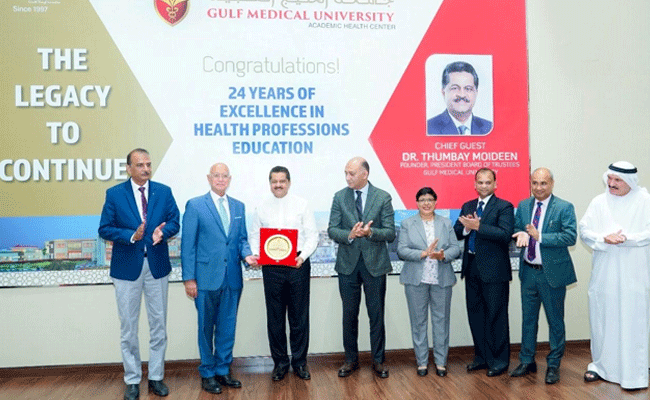
Gulf Medical University (GMU), Ajman, the biggest private medical university in the Middle East region celebrated its 24th anniversary, with a special ceremony attended by Dr. Thumbay Moideen – Founder, President Board of Trustees GMU, Prof. Hossam Hamdy – Chancellor of GMU, Mr. Akbar Moideen Thumbay – Vice President of the Healthcare Division of Thumbay Group, and Deans of the colleges of the University as well as other staff and students.

The celebration was an occasion to reflect GMU’s achievements till date, at the same time reaffirming its commitment to foster continued evolution of Gulf Medical University as an international powerhouse of health professions education, research and innovation.

Highlighting the evolution and development of the Gulf Medical University in terms of buildings, staff, students and scientific and educational degrees, Dr. Thumbay Moideen said, “From humble beginnings as the region’s first private medical University, today GMU is a testament of along and distinguished success story of being the region’s only private Academic Health System- delivering futuristic medical education at the same time playing an important role in providing state-of-the-art healthcare and promoting innovative research.

Our progress over the last 24 years has been driven by the dedication of our staff, students and partners, in addition to GMU’s philosophy of constant innovation and above all, the Grace of the Almighty. We have also received excellent support from the government throughout this journey. 

Prof. Hossam Hamdy said that GMU has developed a unique model in the form of the Gulf Medical University Academic Health System, showcasing on a global front that the future of medical education is ‘systems’ linking education, healthcare and research. “The shared philosophies of the six colleges under Gulf Medical University, its teaching hospital and the passion for supporting all-round excellence has helped in making many distinctive contributions to the overall community over the last two decades. In addition, our response to the COVID-19 pandemic has demonstrated the great value of our academic community and the strengths of our basic, convergent and translational science.”

Recently, the ‘Academic Team’ at Gulf Medical University unveiled a long-term strategic growth plan of doubling its capacity in the next three to four years, aligning to future requirements and strategic direction of education policies laid down by the United Arab Emirates and thereby creating an Emirati healthcare workforce to serve the region

Gulf Medical University and Thumbay network of academic hospitals daycare, Labs, Pharmacies and clinics together train around 20 percent of the doctors and approximately 60 percent of the healthcare professionals in the country, creating a significant impact on the healthcare sector of the country and the region.

Moreover, students benefit with adequate opportunities to showcase their achievements through student activities, Interprofessional skills, sporting and cultural events that train them to be multi-disciplinary experts.

Other benefits provided to the students include: Clinical training sites of unmatched quality at 8 hospitals, 10 clinics, 5 labs and 48 pharmacies and a total of 700 beds; tie-ups with other local entities as clinical training sites with over 400 qualified faculty, doctors and adjunct faculty who provide one-on-one clinical training to students and quality care to the patients of UAE; access to technological platforms and an outstanding infrastructure for research on imaging, functional genomics, sequencing with NGS facility. 

In terms of advancing healthcare in the UAE and globally, GMU has launched the establishment of the first liquid biopsy facility in the region, the zebra fish and a platform for drug discovery and development. This has led to achieving its position as a leader in research in medical education in UAE and the entire region with 70% of all papers published in medical education in the UAE coming from GMU. 

Since its inception, around 2000 students have graduated from GMU, advancing their career and securing successful positions including CEOs, COOs, Medical Directors and Heads of Departments in the healthcare and research across the Middle East, Africa, South Asia, Europe, North America and Australia.

Moreover, the university’s academic and research tie-ups with over 70 international universities and research institutions has ensured global recognition and employability for GMU graduates.

To name a few, GMU’s collaboration with International Federation of Red Cross and Red Crescent Societies (IFRC) has led to humanitarian learning in healthcare to create a model youth force in the country that will be equipped with all the basic skills and knowledge to fight any emergency crisis as per international standards.

Likewise, the ‘Future Scientist program’ has been an innovative educational enrichment internship program for Male/ Female Emirati talent who are motivated to nurture their interest in biomedical and drug discovery research. The program helps in preparing them for an exciting career as research scientists.

Recently, GMU has also achieved international accreditation by the Quality Assurance Agency (QAA)-the agency responsible for accrediting higher education institutions in the UK utilizing european standards and guidelines for Quality assurance.

Besides, Gulf Medical University has won several global recognitions such as Forbes, Dubai Quality Award, QS Awards, QS Reimagine WRC Leaders and Ranking from QS University Rankings, Times Higher Education, placing placed the university among top health professions education institutions in the region and globally.

source: http://ww.english.varthabharati.in / Vartha Bharati / Home / by press release / November 21st, 2022

Scholarships Worth Rs 1 Crore 51 Lakhs Given To Over 4,146 Girls By Bazm-E-Niswan

Bengaluru, KARNATAKA :

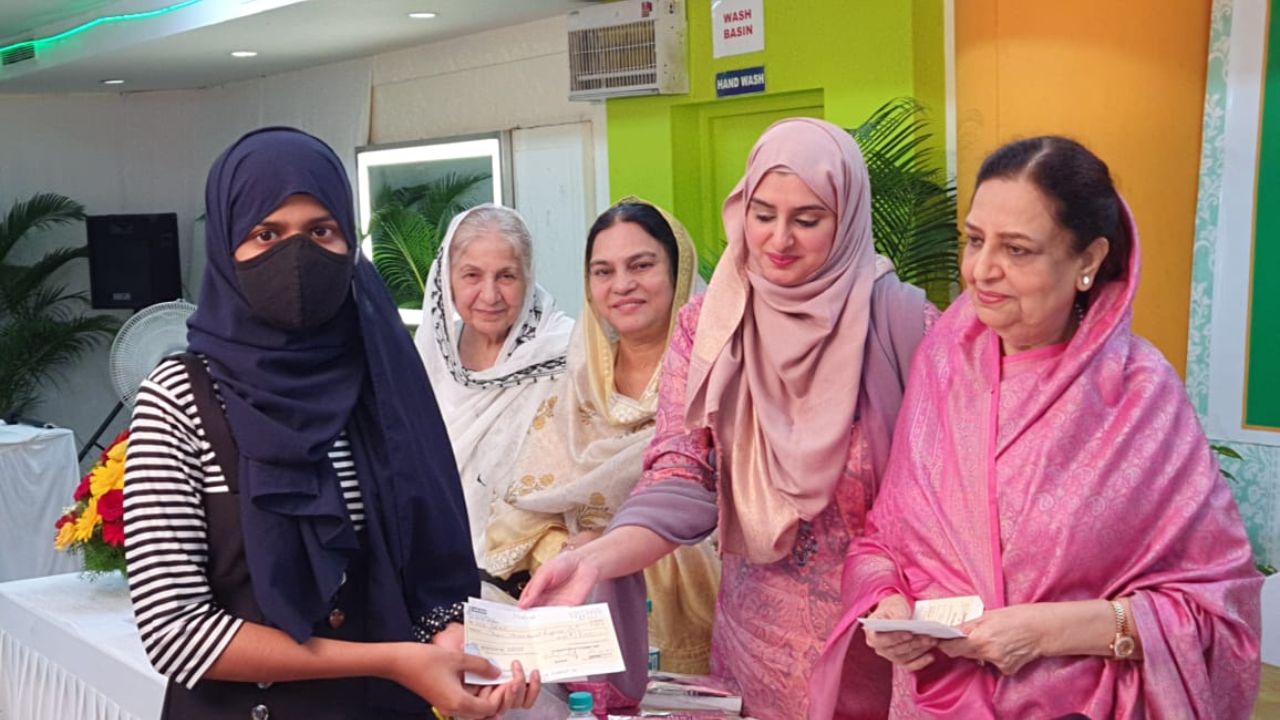
Bazm-E-Niswan, an all women’s charitable trust distributed Rs. 1 crore 51 lakhs in scholarships to 4146 female students from the economically weaker section of the community on Sunday. While 2,166 beneficiaries are PU students, 1,796 are pursuing undergraduate courses. As many as 59 are diploma students and 125 are post-graduate students.

The organisation has been distributing scholarships since its inception in 1971 and has so far given financial aid to over 67000 students to complete their higher education

The purpose behind the yearly scholarships is to encourage Muslim girls from deprived sections to pursue higher studies, Mrs Husna Ziaullah Sheriff, president, Bazm-E-Niswan said.

These girls are now successfully qualified as teachers, professors, doctors, lawyers, government officers, businesswomen, engineers, journalists, trainers, nurses, paramedics and in many other professional courses, she said.

Students applied for the scholarship online through Bazm-E-Niswan’ website. Candidates were required to fill out an online application and submit the hard copy of the application at the trust’s office. The fresh students who had secured more than 50 per cent in their previous exam were selected.

“We received 5,200 online applications this year as against 4,505 last year. The increase in applications indicates the growing need for scholarship due to the financial crisis post Covid 19,” Ms Sheriff said.

“Overall 69.7% students belong to BPL families and 30.3% belong to non BPL families,” she said.

However, the total number of applicants in Post Graduation was only 152, compared to 2,350 in Under Graduation. “This shows only 6.46% girls pursue Post graduation after completing their UG,” it was observed.

source: http://www.thecognate.com / The Cognate / Home> Education / by Shaik Zakeer Hussain / November 27th, 2022

AMU students win Judges Choice Award in NASA Space App Challenge

Aligarh, UTTAR PRADESH :

Aligarh :

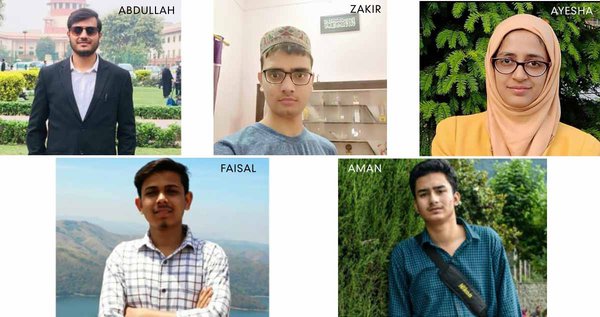
An unintended but welcome consequence of the lockdown to contain the coronavirus has been improved air quality stated the presentation of ALTAIR, a team of Aligarh Muslim University (AMU) students led by MBBS first-year student, Ayesha Samdani, which won the ‘The Judges Choice Award’ in the International NASA Space App Challenge-2020 for presenting a solution in response to the NASA’s Challenge ‘A One Health Approach’.

Ayesha and team members, Mohd Zakir Husain (MBBS), Aman Ahmad Khan (MBBS), Faisal Jamil (B.Tech) and Abdullah Samdani (BA LLB) gave an analysis on air quality of the pre and post lockdown periods in the Indo Gangetic region of Northern India. Their study gave details about how an improvement in the air quality benefited the health of people.

For the presentation, the ALTAIR members also coded an Air Quality Index (AQI) Calculator to measure AQI of a certain region, which is helpful in giving health and cautionary statements and providing guidance to common people on pollution related health issues.

Congratulating the students on the achievement, Prof Shahid Ali Siddiqui, Principal, Jawaharlal Nehru Medical College (JNMC) of the university and Prof Shakeel Samdani, Dean, Faculty of Law said that the work of these AMU students is formative as it provides a clear comparison of average concentration levels during the months before the lockdown and the time period during the lockdown restrictions, showing a reduction in SO2 level.

The event was judged by ISRO and NASA scientists including Tazeen Siddiqui of NASA.

source: http://www.milligazette.com / The Milli Gazette / Home> News> Community News / by The Milli Gazette Online / October 06th, 2020

Mariam Afifa Ansari becomes India’s youngest female Muslim neurosurgeon

Hyderabad, TELANGANA / MAHARASHTRA :

Mariam Afifa Ansari

New Delhi :

Success comes to those who believe in hard work and dedication and this sentence fits the case of Dr Mariam Afifa Ansari, the youngest female neurosurgeon in the Muslim community in India, as per the state president of MSO Maharashtra.

Mariam Afifa Ansari always dreamed of becoming a doctor, and this dream of hers became a reality when she secured 137th rank in the All India NEET exam in 2020.

Mariam said, “Now I have become Dr Afifa from Miss Afifa and my dream of wearing a white coat and examining patients with a stethoscope has come true”.

Since her school days, she has always been a top performer. Mariam completed her primary education in an Urdu medium school in Malagao.

Having been educated in Urdu medium schools till the 10th class, Mariam has left many amazed with her consistent successes. Mariam took her primary education from an Urdu medium school in Malegaon. After that, she came to Hyderabad.

In Hyderabad, she studied till 10th at Rajkumari Durushevar Girls High School, where she won a gold medal in class 10th. Mariam did MBBS from Osmania Medical College and then obtained a master’s degree in general surgery from the same college, said the state president of MSO Maharashtra.

Mariam five gold medals during his MBBS course. After completing her course in 2017, she managed to get free admission for a master’s course in general surgery at the same college.

In 2019, she completed her postgraduate degree, MRCS from the Royal College of Surgeons, England. In 2020, she did the Diploma of National Board course.

It is a special postgraduate degree awarded to specialist doctors in India. After scoring high in the 2020 NEET SS exam, she was granted free admission to MCh at Osmania Medical College.

Mariam’s continuous hard work has helped her cross every hurdle on the path to success. Dr Mariam Afifa Ansari is an inspiration for the young generation in India.

She added also, “My success is a gift from Allah and now a responsibility,”.

Mariam said that she would try to serve the community through her profession. Giving a message to Muslim girls, she said, “Don’t give up, never let anyone tell you that you can’t do it, prove them wrong, by getting it.”

Mariam’s mother is a single mother and a teacher. She is proud of her daughter. Apart from studies, Mariam also excels in painting, calligraphy and Islamic teaching.

source: http://www.muslimmirror.com / Muslim Mirror / Home> Indian Muslim> Women / by Muslim Mirror Desk / November 21st, 2022

AMU faculty elected Fellow of the National Academy of Sciences

Aligarh, UTTAR PRADESH :

Prof Nafees Ahmad Khan, Department of Botany, Aligarh Muslim University, has been declared as the Elected Fellow of the National Academy of Sciences, India (NASI).

The National Academy of Sciences,  recognises researchers who excel in the field of their research as Fellow of the Academy, which is considered as the most coveted accomplishment in academics.

Prof Khan has worked on the mechanisms of hormonal and nutritional regulation of plant development with emphasis on plant resilience against stressful environments using nutriomics and metabolomics. 

He has published many research papers in crucial high Impact Factors journals and collaborated internationally for research. He has published about 200 research papers(H-index 67; i–10 index 175)and was noted as one of the most-cited Indian researchers in the area of Plant Science by Elsevier every year from 2019 to 2022. 

He has edited 19 books published by Elsevier, Springer-Nature, Frontiers, NOVA, Alpha Science and others. Supervised research projects focused on signalling molecules-nutriomics and abiotic stress tolerance mechanisms, and served as Editor/Guest Editor of the leading plant science journals, published by Elsevier, Frontiers, Springer-Nature MDPI.

Prof Khan is also fellow of The Linnean Society, Indian Botanical Society, Indian Society for Plant Physiology.

source: http://www.amu.ac.in / Aligarh Muslim University / Home / by Public Relations Office / November 04th, 2022

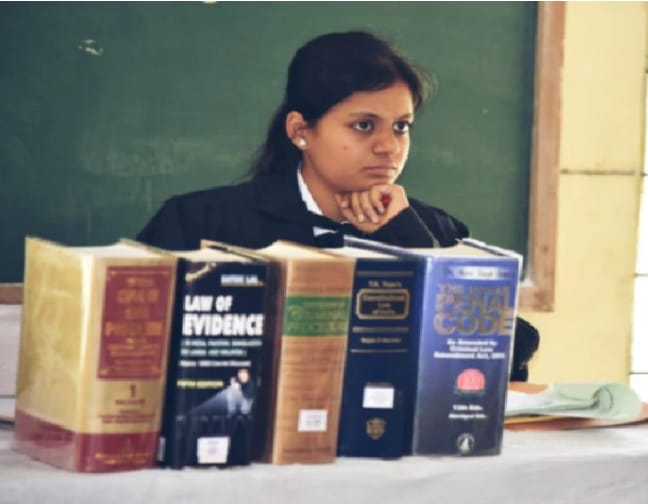
Farmer’s daughter Ayesha becomes Judge

Tolanur Village (Akalkot Taluk, Solapur District) ,MAHARASHTRA :

Unfovourable conditions were my inspiration, which pumped me to achieve something and bring positive and healthy change in family’s financial status, said Ayesha.

It is an inspiring story of 24 years Old Village girl Ayesha Aziz pasha Peerzade who defeated all odds and cracked the MPSC exam on her first attempt and became judge .


After four years of legal education, she has passed the first class examination of the Civil Judge Junior Division and the Judicial Magistrate. About 15,000 students from across the state sat for the exam. However, only 190 students have passed the exam and grab in the final list. Ayesha Rank is 99.

The girl who is eldest among five sisters from Tolanur, a small village in Akalkot taluka in Solapur district, has achieved a tremendous success which has brought smile on faces of her relatives and village people.

She is claimed to be the first girl in the district to be a judge at such a young age.

Tolanur is about 40 km from Akkalkot town and 70 km from Solapur city . Due to the difficulty of language in the village, Karnataka border is within walking distance of the village. Only up to 10 education facilities is available in the village.

Hence Ayesha along with her three sisters had to shift to Solapur city for higher education and she joined Dayanand Vidhi College.

During Conversation with Millattimes.com Ayesha shared, those days were challenging for us, we, four sisters used to live in small rented room for years. During stay we faced financial crunch several times.

Ayesha’s father, Azizpasha is a small landholding farmer. Agriculture is the only means of livelihood in the village. They have five daughters. But despite the circumstances, they did not allow their daughters to go away from education. Four out of five girls are highly educated. Their fifth daughter is also attending school.

He also taught Ayesha with the same amount of hard work. The family is happy after this success. Aisha also had tears of joy.

According to Ayesha in some Muslim families, girls are usually not motivated for education. But we are fortunate enough.


Credit of this success goes to my father and mother who always encourage us and take pains for our educational purposes , ”Aisha told Millattimes.com

Competitive exam guide Asif Yatnal commented that, Ayesha’s performances is encouraging. She has become a role model for Muslim community girls. We should try to create awareness among Muslim youngsters to join judiciary, Asif added further.

Adv. Asim Bangi lauded Ayesha’s success and congratulated her. He said that cracking such an important exam in a young age is really appreciable.Hope that more and more girls will take inspiration from this rural area girl’s remarkable success, added Adv. Asim.

source: http://www.millattimes.com / Millat Times / Home> Education> Muslim World / by Imran Inamdar / January 16th, 2020