Category Archives: Freedom Fighters (under research project)

Ajmer Dargah’s role in Indian Freedom Struggle

Ajmer, RAJASTHAN:

Dargah of Khawaja Moinudin Chisty during the annual Urs

“The Dargah (Ajmer Sharif) is undoubtedly a danger-center….the sedition is more or less confined to the Dargah and that it is very difficult to get evidence of what goes on there.” The Above excerpt is from a secret report submitted to the British Government by Intelligence officials in 1922.

A common man may not think that the Dargahs, shrines, and Sufi centers were at the forefront of the Indian Freedom Struggle. For reasons unknown, most people believe that Ajmer Dargah played no, or little, role in the struggle. The fact is that it acted as a center of nationalist activities so much so that the British Government snooped over the activities in Dargah.

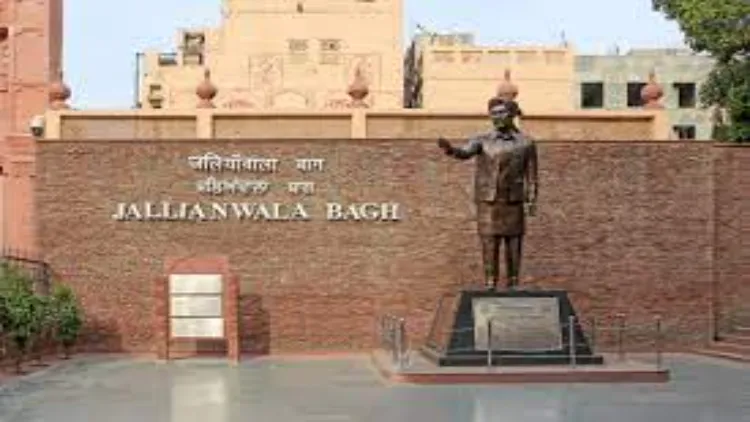
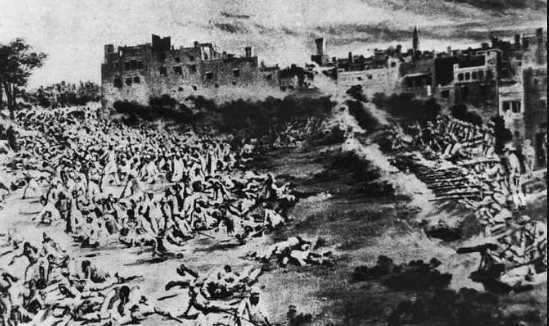
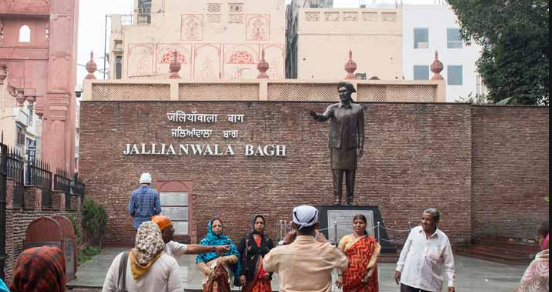
The official committee which was formed after Jallianwala Bagh Massacre in its findings pointed out that the Indians were planning a popular uprising against the British. The plan was discussed by nationalists at the Urs under the leadership of Maulana Abdul Bari Firangimahli. 

The spies regularly updated the government on the nationalist activities in the Dragah. In 1920 they reported that more than 5,000 people attended a meeting at Idgah which was addressed by Lala Chand Karan who asked people to fight the British because they promote cow slaughter, massacred people in Punjab, and cause disunity between Muslims and Hindus. The same report notes that the Pesh Imam of the Ajmer Dargah prayed for the defeat of the British after which Maulvi Moinuddin asked people to renounce the titles bestowed upon them by foreign rulers.

Another report from 1921 notes that anti-British speeches were being delivered at the Dargah during Friday prayers.

In 1922, intelligence officers again reported that Urs at the Dargah would be an occasion where the nationalists would be meeting to discuss nationalist ideas.

An intelligence report from 1922 contains the most explosive information. The report claimed that Muslims and Hindus in Rajputana had taken an oath of allegiance with Maulvi Moinuddin of Ajmer. Under his instructions, they were preparing for a war against the British.

An armed militant organisation Jamiat ul-Thaba was founded and arms had been procured from different places in the country. Jamiat ul-Thaba passed a resolution and declared that the British were enemies of religion, nation, and country and that revenge would be taken from them.

75 years have passed since Independence and most of us are unaware of the role of Ajmer Dargah in winning this independence. 

source: http://www.awazthevoice.in / Awaz, The Voice / Home> Story / by Saquib Salim / April 02nd, 2023

Nehru, Muslims and India’s Freedom Movement

INDIA:

A new book questions political wisdom about competitive communalism before and after Independence.

Former Prime Minister Jawaharlal Nehru. Image Courtesy: PTI

The prevailing political wisdom of the day is to chastise Jawaharlal Nehru, his Congress party, and their inclusive vision for the republic. Given this, one is caught in a fix if a published work subjects the Congress-Nehruvian performance to criticism. The republican and constitutional vision of India, and its plans and goals were outcomes of a prolonged anti-colonial mass agitation, which multiple ideological and identitarian political formations joined, complemented and contested.

Besides the aligned or contending forces, intellectuals and activists of various 19th and 20th-century hues also provided inputs. Privileged Muslims articulated some strands, including the exclusionary right-wing politics of communal separatism. Though represented by the Muslim League, and its sole spokesman MA Jinnah, they straddled nearly every shade of political articulation, ranging from Left to Centre, from those who advocated separatism to its vociferous opponents.

Unfortunately, the academic and popular domains popularise Muslim separatism more than their resistance to separatism. Academic studies also focus too much on Uttar Pradesh (earlier the United Provinces of Agra and Awadh). Gyanesh Kudaisya (2002) characterised this province as India’s heartland in terms of population and geographic size but also narrative-making for the Indian polity.

The former landed elites of the Muslims of this region, whom David Lelyveld (1978) called the “Kutchery Milieu”, were in the forefront and mainstay of the Muslim League. An important Muslim League leader from Lucknow, Chaudhry Khaliquzzaman (1889-1973), candidly and proudly proclaimed this in his 1961 memoir, Pathway to Pakistan. Quoting Maulana Azad, he writes, “All students of Indian politics know that it was from the U.P. that the League was reorganised. Mr Jinnah took full advantage of the situation and started an offensive which ultimately led to Pakistan.” Interestingly, in the late 1930s, Khaliquzzaman was the mayor of Lucknow and allied at least once with the Hindu Mahasabha. After Partition, it took him a long time to migrate to the other side of the border.

Against this backdrop, Aishwarya Pandit’s Claiming Citizenship and Nation: Muslim Politics and State Building in North India, 1947-1986, published by Routledge in 2021, is a critical intervention. She writes, “Given the demographic dominance of U.P. Muslims in some constituencies, the threat of revival of ‘Muslim communalism’ continued to impact their politics. In the colonial period, the United Provinces had remained central to Muslim politics around issues of representation, minority safeguards and language.”

Pandit disagrees with Kudaisya and proposes in her introductory chapter that the Uttar Pradesh Congress opposed the Centre’s move to “introduce minority and cultural safeguards after 1947”. Her book examines the intersections of law, identity and property and notes region-specific Muslim—and anti-Muslim—politics and articulations. Notably, she includes in her work the tensions that prevailed within the Muslim community over contemporary concerns.

Pandit says the new Muslim leadership that emerged after independence articulated the weaknesses of Nehruvian secularism, particularly concerning their religious, cultural and identitarian concerns. Further, from the mid-1970s onward, “Fatwa and Ulema politics acquired the centre stage”. Her study ends in 1986, a period that, according to her, “signaled the continuation of Hindu counter mobilisation, which set in the 1950s around the [Babri] Masjid-[Ram] Temple issue [of Ayodhya], the issue of minority appeasement and personal law and also coincided with the dipping fortunes of the Congress party in Uttar Pradesh”.

In her effort to discover reasons for the Congress party’s decline in Uttar Pradesh, she argues that Muslims here [and in Bihar] “made some surprising alliances including those with the Jan Sangh in the 1960s and 70s”. Pandit attempts to absolve Muslims of the responsibility for this, and “challenges the widespread view that Muslims acted as a secure and stable ‘vote-bank’ for the Congress after independence”.

This is where the book would provoke many to raise a few questions that have been left unasked or unanswered. Terminating the study in 1986—and not a few years later—may have excluded the author from raising some crucial questions. Hindu counter-mobilisation got massive support from the Shah Bano issue that raged from May 1985 to April 1986, other than the ‘nationalisation’ of the local Ayodhya dispute, which Pandit chooses not to examine. Scholars, even those not inclined to the right, often sidestep Muslim contributions to communalising narratives that fed Hindu majoritarianism, weakening India’s fragile pluralist secularism.

On 15 January 1986, at a Momin Conference session at the Siri Fort Auditorium in Delhi, then prime minister Rajiv Gandhi announced his intention to amend the law to nullify the Supreme Court’s April 1985 verdict in favour of Shah Bano. Driven out of her home in 1975, 43 years after her marriage, Bano had approached the courts seeking maintenance. Given instant triple divorce in 1978—inside a trial court in Indore—the case moved from the High Court to the Supreme Court. In May 1986, the Rajiv Gandhi-led government passed the Muslim Women (Protection of Rights on Divorce) Act following strident Muslim protests in January that year against the progressive judicial verdict that granted Shah Bano alimony. The law passed in Parliament reversed the maintenance the court had said she was entitled to.

The Urdu memoir, Karwan-e-Zindagi, published in 1988 by Maulana Abul Hasan Ali Miyan Nadvi (1914-1999), makes the conservative Muslim approach to this issue pretty clear. In Volume 3, Nadvi triumphantly writes about how he persuaded Rajiv Gandhi not to accept the proposition that many Islamic countries had reformed their personal laws. He rejoices in accomplishing his effort to stymie similar reforms in India. He says his arguments had a particular psychological impact on Rajiv Gandhi—“Woh teer apney nishaaney par baitha—My arrow hit its target”. Nadvi includes a candid confession: “Our mobilisation to protect the Shariat in 1986 complicated the Babri Masjid issue and vitiated the atmosphere in a big way—“Iss ney fiza mein ishte’aal wa izteraab paida karney mein bahut bara hissa liya,” he writes.

Nadvi admits in his memoir that he had promised to Rajiv Gandhi he would persuade the Waqf Boards to make an endowment available to maintain abandoned women. But this issue remains unaddressed until today. Aishwarya Pandit, rather than exploring the clergy politics of Lucknow’s Nadvi, jumps over to Delhi’s “Imam” Bukhari and his demagoguery and rhetoric.

Nadvi’s politics of 1985-1986 needs to be read with Nicholas Nugent, who writes in his book, Rajiv Gandhi: Son of a Dynasty, published by BBC Books in 1990, that the Congress High Command decided in early 1986 to play the Hindu card like the Muslim women’s bill played the Muslim card. Nugent writes, “Ayodhya was supposed to be a package deal…a tit for tat for the Muslim women’s bill…Rajiv played a key role in carrying out the Hindu side of the package deal by such actions as arranging that pictures of Hindus worshipping at the newly unlocked shrine be shown on television.”

On 1 February 1986, within an hour of the Faizabad district court judgment, the lock of the Babri Masjid was opened. The “deal” between the Prime Minister, the Muslim clergy and the Momin Conference’s Ziaur Rahman Ansari, who died in 1992, had been struck a month earlier. Ansari’s biography, Wings of Destiny, written by his son Fasihur Rahman and published in 2018, refers to this series of events. Yet, nagging questions remain: who wanted the locks opened and why? After all, elections were four years away, and Rajiv Gandhi did not have a direct electoral stake in the event, except for a few reverses in by-elections for the Congress party.

A sizeable section of Hindus was peeved after Nehru reformed, though more symbolically than substantively, Hindu Personal Laws in the 1950s, but left out Muslim Personal Laws. This aspect is brought out by Reba Som in February 1994, in “ Jawaharlal Nehru and the Hindu Code: A Victory of Symbol over Substance ?

Put another way, what the votaries of Hindutva call Muslim appeasement is the State appeasing the conservative and patriarchic Muslim clergy. Quite often, liberal and left scholars and activists hold the position that reforms must emerge from within the Muslim communities. Nevertheless, competitive communalism adversely affected the Congress party in the electoral sphere. First, the ex-Socialist forces, comprising the backward classes and Dalits, replaced Congress with the Bharatiya Janata Party. Pandit disappoints on this count in her sixth chapter despite delving into primary archival sources on all issues raised in her immensely readable book.

In the third chapter, Pandit discusses Hindi-Urdu battles and blames the ruling Congress for the deficits in State support for Urdu. She misses out that the protagonists of Urdu in Uttar Pradesh also share some blame for the idioms and methods of political mobilisation they didn’t employ for the Urdu cause. Selma K. Sonntag (1996) provides a more informed comparative assessment of the Urdu politics of Bihar and Uttar Pradesh.

Besides Urdu and personal laws, another central controversy has been the minority status of the centrally-funded Aligarh Muslim University. Pandit touches upon this subject but leaves out too much. She does not concern herself with the academic performance or research at the university, which has refrained from examining Muslim concerns such as communal strife, caste among Muslims, patriarchy, and Muslim under-representation. Just a few months before his unfortunate death in 2010, Omar Khalidi candidly raised these issues. Could these deficits possibly have contributed to the disjunctions between State and society as also between India’s Muslims and the Aligarh Muslim University?

Quite often, the ruling party had to yield to pressures from Muslim conservatives and reactionaries, perhaps because despite massive funding to the university, it did not foster enough progressive Muslim opinion-makers and leaders. If true, this would limit the university’s contribution to resisting competitive communalism and can explain why the support base of the ruling Congress deserted it, eventually leading to the rise of what scholars such as Edward Anderson, Christophe Jaffrelot and Deepa Reddy call Neo-Hindutva.

Possibly because of this omission, this book does not help figure out why Uttar Pradesh Muslims could not throw up the kind of ‘Pasmanda movement’, or the short-lived Left-inspired gender movement Tehreek-e-Niswan, which emerged in adjacent Bihar in the 1990s.

Why Muslims in Uttar Pradesh failed to strengthen post-independence movements for citizenship rights and confined themselves to emotive religious, cultural and identitarian issues is a vital but unanswered question. Thus, this book ignores this pertinent question: to claim citizenship, and for the secularization of the state and society, how to strike a balance with rights for religious communities? This approach of the author doesn’t allow her to deal, even when discussing Muslim assets, with why Uttar Pradesh Muslims did not employ their wealth for capacity-building of their community, as South Indian Muslims did and still do, in the spheres of education, and health? Why did they remain highly dependent upon the State?

Notwithstanding these limitations of perspective, Pandit’s considerably well-researched book delves into untapped and under-tapped primary sources. Her analysis of a wide range of evidence and her articulation is lucid. True to its claim, it is a valuable contribution toward understanding post-independence Uttar Pradesh.

The author teaches modern and contemporary Indian History at Aligarh Muslim University. The views are personal.

source: http://www.newsclick.in / News Click / Home> India> Politics / by Mohammad Sajjad / February 20th, 2023

Haryana boys led first mutiny of World War I

HARYANA:

Chandigarh :

The first mutiny of World War I was led mostly by young men from villages of Hisar, Rohtak, Meham and Gurgaon districts of Haryana. The Singapore Mutiny, which is known as the first mutiny of WW-I and left an indelible  mark on India’s freedom struggle, started on February 15, 1915. It was led by Muslim soldiers who belonged to British army’s 5th Light Infantry Brigade.

Even as the world observes the centenary of the Great War, the sacrifice of these soldiers has been all but forgotten as most of the soldiers and their descendants migrated to Pakistan after Partition.

The brigade mainly comprised Rajput Muslims and Pathans and had been sent from Madras to replace the Yorkshire Light Infantry in Singapore. They reached there in October 1914 and were to leave for Hong Kong in February. On the day of embarkment, a rumour spread that they were actually being sent to Turkey and would have to fight Muslims there.

Singapore Mutiny shook the foundation of British rule in Asia

A rumoured triggered the Singapore revolt. The sepoys killed British officers and seized ammunition. The mutiny went on for 5 days. Eight hundred Indian sepoys of the British army killed 47 British nationals; 200 sepoys faced court martial;  73 were given a range of punishments.

As many as 41 sepoys were shot by a firing squad in front of 15,000 spectators at Outram Prison in Singapore.

In his book “The Mutiny in Singapore”, author Sho Kuwajima has argued that the mutiny not only caught the British off-guard but also shook the foundation of British rule in Singapore and forced the British to reconsider their strategy in Asia.

“The mutiny had a great impact on India’s freedom struggle. Freedom fighters, including Ghadarites were vindicated when finally in 1946, the British decided to leave following the naval revolt of February 19, 1946 when they felt that their protective shield, the armed forces, had itself turned against them,” said historian Malwinder Jit Singh Waraich, who has penned a number of books on the freedom struggle.

Four of those executed in public were from Jamalpur (Hisar), three from Jatusana (Gurgaon) and two from Balyali (Hisar).  According to Phul Chand Jain’s Swatantarta Sainik Granth Mala, most of these people belonged to Jamalpur, Paten, Balyali, Kirawad and Balliya Ali in Hisar; Jatusana, Karmpur and Kheri Nangal in Gurgaon; Garhi, Kani and Kahnaur in Rohtak. One sepoy each was from Muzaffarnagar in Uttar Pradesh, Karnal and Nabha in Punjab.

“These villages were gripped by violence of Partition, so, there is not much trace of their memories now,” says documentary filmmaker Daljit Ami, who is making a film on the Singapore Mutiny and has visited these villages a number of times. In the course of his research, he came across just one man who had heard about these heroes and their Haryana connection.

According to historians, the Singapore Mutiny was followed by the Russian soldiers’ mutiny in 1917 and a series of mutinies in the French armies.

source: http://www.timesofindia.indiatimes.com / The Times of India / Home> News> India News / by Sarika Sharma / TNN / July 05th, 2014

Battle of Malegaon: The Maratha army’s Muslim Heroes

Malegaon (Nashik District) , MAHARASHTRA:

At the Battle of Malegaon, Muslim soldiers in the Maratha army defied the British army for a full month when they had no hope of victory as the Chhatrapati and Peshwa had already surrendered.


These battles, says Colonel Anil A Athale (retd), are in contrast to the colonial mindset driven narrative of Muslim separatism.


The current politics of both communities ensures that the heroes of Malegaon — or for that matter personalities like Ibrahim Khan, who led the Maratha artillery at the battle of Panipat in 1761 — are forgotten.

IMAGE: The Malegaon fort. Kind courtesy: Wikipedia

On January 1, 2018, the bicentenary of the defence of Koregaon by a small British force — that had a number of Mahar troops — was observed with great fanfare.

The British — the victors in the third Anglo-Maratha war — erected a pillar to commemorate the event.

During the same war, Muslim troops of the Marathas defied British forces for a full month from May 15, 1818 to June 13, 1818.

Since the Marathas were on the losing side, this saga of bravery was obliterated from history by the British.

As we approach the bicentenary of that event it is time to remember the brave soldiers of the Maratha army who continued to fight even when they had no hope since the Chhatrapati had already been captured by the British and Poona and Satara were under British occupation.

The loyalty to the Maratha flag by its Muslim soldiers even in a hopeless situation deserves to be remembered.

My own research in 1990 began with a question posed by the late Major General D K Palit, a military history scholar of repute.

The question he posed was this: How is it that the Marathas — who spiritedly fought a 22 year-long guerilla war against the mighty Mughal empire — succumbed to the British without a fight?

It is this quest for truth that led me to research the story of the Anglo-Maratha struggles of the 18th and 19th century.

The Battle of Malegaon fought in May-June 1818 was the last major attempt at resistance by the Marathas.

On May 15, 1818, a brigade strength force under Lieutenant Colonel A MacDowell reached the vicinity of Malegaon fort.

The British expected that this show of force would be sufficient to overawe the defenders of the Malegaon fort.

The British were in for a nasty surprise.

In response to summons to surrender, the defenders fired on the British camp leading to panic.

The quadrangular fort of Malegaon is located near the bend in the Musam river so as to cover two side of the fort, Malegaon town being on the other sides.

The fort had two lines of defence built of masonry surrounded by a seven feet wall and a 25 feet deep 16 feet wide ditch.

The outer wall had watch towers built of mud and stone. The inner fort or the citadel was 60 feet high with 16 feet wide ramparts.

On May 16, Colonel MacDowell reached the west bank of the river and began work to erect barriers of breastwork to deploy guns for the final assault.

At 8 am the British began bombardment of the fort with 20 guns, an assortment of 12 pounders (the biggest calibre gun then in India), 8 pounders and mortars.

The defending soldiers sortied out of the fort, destroyed the batteries and killed two British officers and several soldiers.

At the same time 7 guns from the fort opened devastating fire on the British lines on the west bank of the river.

The ding dong battle continued for six days.

On May 22, after particularly heavy shelling from the fort, the British were forced to abandon the breastwork for the guns and retreated.

On May 26, the British — through constant bombardment — succeeded in creating a breach in the inner wall of the fort.

The next day the British launched a three pronged attack after a bombardment lasting nearly two hours.

One column was led by Major Greenhill and consisted of a native battalion of 1,000 soldiers with 100 Europeans to directly go into the fort through the breach.

Another column of 800 sepoys under Lieutenant Colonel Stewart crossed the river downstream to outflank the fort from the west.

The third column consisting of 300 sepoys and 50 Europeans under Major Macbean went towards the river gate.

Each column had pioneers with tools, mines and ladders to tackle the fortification.

But the defenders of the Malegaon fort proved equal to the challenge.

The attacking British were met with a hail of bullets and gunfire. The attempt to scale the inner wall failed. Many of the engineer officers leading the attack suffered injuries.

Both the columns led by Majors Greenhill and Macbean were ordered to withdraw.

Only Lieutenant Colonel; Stewart’s column met with some success and he occupied part of the town.

The stalemate continued till June 4.

On that day another column under Major Watson arrived from Ahmednagar with a battalion of native infantry and a large number of siege guns.

For nine days, till June 13, the fort was subjected to heavy bombardment by the British guns.

On June 13, at 3 pm, the fort garrison accepted surrender and the Union Jack was hoisted in place of the Maratha saffron jari patka flag.

The next morning the garrison of 300 men marched out of the fort and surrendered their arms.

The British strength at Malegaon numbered over 2,000 troops. During the battle the British casualties numbered 11 officers and 220 soldiers (killed or wounded).

Thirty Maratha defenders died while 60 Maratha soldiers were wounded.

The British record states that in the end they used 36 guns, fired over 8,000 shells and used 35,500 pounds of gunpowder.

The British were so impressed with the valour and chivalry of the defenders that they permitted the surrendered soldiers to keep their daggers.

Historian N C Kelkar notes in his Marathi book Marathe ani Ingraj that at one stage the desperate British sent a message to the Muslim soldiers of the Maratha army that since the Chhatrapati had already surrendered, they should do likewise.

The doughty defenders replied that they were indeed aware that their king was in British captivity, but they were yet to receive instructions from him to surrender and therefore would keep fighting.

The devotion to duty and loyalty to their king was of the kind seen later only during World War II when many Japanese soldiers continued to fight even after Japan surrendered.

There is neither any victory pillar nor are the names of these brave soldiers engraved anywhere.

Even two hundred years after the event and the departure of British 70 years ago, the Muslim heroes of battle of Malegaon remain unknown, forgotten and unsung.

Two hundred years ago, the third Anglo-Maratha war fought in 1817 and 1818 ended in the Maratha Chhatrapati and Peshwa (prime minister) surrendering to the English.

After having defeated the Holkars and Shindias in early 1817, the British turned to the conquest of Maharashtra proper.

The full story of the Maratha struggle with the British has for long been swept under the carpet. In its place a modern myth of the British having directly taken over India from the Mughals or accidently acquired an empire has gained currency.

Ignoring the Marathas and their role in ruling most of north and central India was part of the grand colonial project of disinformation that sought to then play up Mughal-Rajput rule.

I recall an interesting news report some years ago, datelined Aligarh, where an Aligarh Muslim university ‘scholar’ had discovered that a major battle between the Marathas and the English had indeed taken place in Aligarh in 1803!

The worthy had, of course, never heard of the second Anglo-Maratha war that took place in 1803-1804 with battles at Delhi, Lassawari near Agra, Aligarh, Shekohabad etc.

The British had sound reasons to whitewash the Maratha period of our history.

Since the Marathas formed a formidable alliance with the Muslims, Jats and Sikhs in resisting the British, they posed a potential threat.

The distortions continued post-Independence as writing and teaching history was hijacked by the left-leaning Delhi elite. But those who ignore the Maratha or Sikh epoch fail to answer a simple question.

The Marathas fought three wars with the British, so did the Sikhs, the Gorkhas and Tipu Sultan in the south. Is there any mention of the Anglo-Mughal wars, even in the doctored historical narrative?

Note: The information about the Battle of Malegaon is based on a British Indian Army General Staff Publication (Simla 1910), Maratha and the Pindari War pages 89-91.

Colonel Anil A Athale (retd) is a military historian. This article is based on extracts from his forthcoming book, The Story of the Mighty Marathas and their Empire.

source: http://www.rediff.com / rediff.com / Home> News / by Colonel Anil A Athale (retd) / April 10th, 2018

The Forgotten Heroes of Malegaon

Malegaon (Nashik District) , MAHARASHTRA:

At most of the places in the country, the names of the martyrs have been put on specially constructed Memorials. But the Memorial in Malegaon is still waiting for the names of the seven martyrs to be written over it.

“I have always wondered how, the Muslims and the Hindus together, had decided to set a Mandir on fire”, said Dr. Iftekhar Ansari recalling the incident when on April 25 in1921, the Malegaonians set the Pophale Mandir on fire where, Bhaskarrao, the PI and Incharge of the only Police Station in Malegaon was hiding. He was ultimately killed by the people. A Muslim Constable was also killed in the same uprising.

He further said, “It demonstrates not only the harmony with which the Malegaonians were living then, but also shows their eagerness for the country’s freedom. For them, the freedom was above everything, even their religion. In fact, Hindus and Muslims, except few from both the communities as was the case everywhere, had demonstrated a rare unanimity during the whole struggle. I believe if it was a Mosque, a Gurdwara or any other place, it must have met with the same fate.”

Agreeing with Dr. Iftekhar, Ramzan Painter 74, who has collected more than hundred-years of the city records added, “A confirmed account of the exact situation during 1921, clearly suggests the harmony with which people were living.” Mentioning the name of Balu Shah, owner of the first newspaper in Malegaon and a prominent figure of that time who was actively involved in the whole movement with the Muslims, he added, “And who can forget the contributions of Advocate Tatya Khare and Gadgil Wakeel, who remained at the forefront in establishing a separate court in Malegaon.”

“I have always wondered how, the Muslims and the Hindus together, had decided to set a Mandir on fire”

But, as it had done at several other places in the country, the British Police registered the whole incident as rioting and hanged the upfront leaders of the uprising in Yeroda jail. However, after the independence in 1947, the State as well as the Central governments, mentioned the historic event of April 1921 as part of the freedom struggle and included the names of the seven martyrs in their gazettes with due respects. Also, when the Parliament passed a resolution for the construction of a Memorial of similar shape everywhere in the country and to put the names of the martyrs on them, a Memorial was also built in Malegaon.

However in Malegaon, unlike other places in the country, the names of the martyrs have not been put on the Memorial till now. Interestingly the civic body, despite passing many resolutions in its general meeting for putting the names of these martyrs on the Memorial, has also not cared for doing so.

And as if it is not enough to dishonor these martyrs, every year on Kranti Diwas when officials gather everywhere near these Memorials for offering their tributes, in Malegaon, no one cares to honor these martyrs.

source: http://www.ummid.com / Ummid.com / Home / by Aleem Faizee (headline edited)

Muslim freedom fighters to be remembered on Republic Day

INDIA:

Mandi Ahmedgarh :

With an intent to highlight the role of Islamic leaders in the pre-independence freedom struggle, a group of Muslim youths have decided to organise a function on the occasion of Republic Day, during which sacrifices of unsung heroes from their community would be highlighted.

Besides organising an elaborate programme after unfurling the Tricolour at the Dehliz Chowk on January 26, the enthusiasts will also install banners displaying portraits of more than 20 prominent Muslim freedom fighters at various locations.

The organisers say the gesture will motivate Muslim youths of the region to come forward and play active in nation building, irrespective of their political, social or religious allegiances.

Zeshan Haidar, the convener of the scheduled event, said youths from various Muslim organisations of the area had been roped in to work in tandem for restoring the lost glory of leaders from their community, who had made supreme sacrifices in struggle against the British Government and played a major role in getting freedom for the country.

“Unfortunately, successive governments have failed to recognise the contributions of Muslim leaders in the freedom struggle and a majority of Muslim freedom fighters and martyrs have remained unsung during functions held to celebrate national events such as Republic Day and Independence Day,” Zeshan Haidar said, adding that these names were also missing from history books.

The enthusiasts have shortlisted names of about 100 Muslim leaders of pre-Independence era and portraits of 20 from them will be displayed in the region.

Maulana Shah Abdul Qadir Ludhianvi (grandfather of Shahi Imam Punjab Maulana Usman Ludhianvi), Zakir Husain, Begum Hazrat Mehal, Maulvi Ahmadullah, Abadi Bano Begam, Ashfaqulla Khan and Husain Ahmed Madni were cited among more prominent Muslim freedom fighters whose portraits figure on the proposed banners.

source: http://www.tribuneindia.com / The Tribune / Home> Ludhiana / by the Correspondent, The Tribune / January 24th, 2023

New Findings on the Mappila Uprising: Further Evidence that the Mappilas were Fighting for India’s Freedom and were not Anti-Hindu

Bengaluru, KARNATAKA / MALAYSIA:

Hereunder are a selection of newspaper clippings, mainly from the US Press, extracted from the well-researched book just released titled, “Sultan Variomkunnan” by young historian Ramees Mohammed on the Mappila Uprising. These clippings furnish further evidence that the Mappilas were fighting for India’s Freedom and were not Anti-Hindu.

The following statements by the correspondent of the Chicago Tribune are pertinent:

“Hindus Shared the Unrest and ‘Gandhi ki Jai’ was the Watchword”
The Moplahs Revere the Sultan Caliph and Loathe his Enemies”

The Mappila Uprising was to Destroy British Rule

______________

“Hindus Shared the Unrest and ‘Gandhi ki Jai’ was the Watchword”
The Moplahs Revere the Sultan Caliph and Loathe his Enemies”

_____________

______________

______________

British Police and Intelligence responsible for forced conversions to discredit Mappilas

___________

source: http://www.turkvehind.org / Turkiye Ve Hindistan / by Noor Mohammed Khalid

Abdul Ghaffar Khan was no Gandhi—he was the powerhouse Pathan who mobilised Indian Muslims

Utmanzai, BRITISH INDIA / AFGHANISTAN:

Popularly known as Frontier Gandhi, Badshah Khan, Bacha Khan and Fakhr-e-Afghan, his indomitable political spirit has found a place in all of his names.

Khan Abdul Ghaffar Khan (L) with Gandhi at King Edward's College, NWFP, in 1938 | Wikimedia commons
Khan Abdul Ghaffar Khan (L) with Gandhi at King Edward’s College, NWFP, in 1938 | Wikimedia commons


Buried under the historical violence of Pakistan’s tribal belt is a sliver of peace—and it is because of Khan Abdul Ghaffar Khan, a lifelong pacifist who mobilised Pathans against British colonialists in India. Popularly known as ‘Frontier Gandhi’, Badshah Khan, Bacha Khan and Fakhr-e-Afghan, his indomitable political spirit has found a place in all of his names, a reminder of peace, secularism and unity even 35 years after his death in January 1988.

Born into a wealthy Sunni Pashtun family in Pakistan’s Utmanzai in 1890, Khan hailed from the landowning Mohammadzai clan. He devoted his life and resources to upending poverty and promoting education and Hindu-Muslim harmony. But his biggest contribution to the Indian subcontinent, perhaps, came with the ‘Khudai Khidmatgar’, or Servants of God, movement in 1929—the beginning of mass mobilisation against an exploitative British Raj.

Khan’s innate ability to unite the masses non-violently turned him into a ‘powerhouse Muslim leader’ from the erstwhile North West Frontier Province (NWFP). Crackdowns, custodial violence and imprisonment only hardened his anti-colonial stance, laying the foundations for a spiritual resilience which is talked about to this day.

“It is my inmost conviction that Islam is amal, yakeen, muhabat – selfless service, faith, and love,” Khan had said. He had also urged Pathans to “arise and rebuild” their “fallen house.”

Powerhouse Pathan

While Khan’s life was fraught with hurdles and clashes with the colonial government, his political fervour refused to die. For instance, in 1921, he was asked to lead the Khilafat Committee in Peshawar as its president. During his tour of the province, he delivered speeches and emphasised the need to eliminate British imperialism in South Asia. He was subsequently jailed and tortured by the British for three years.

“When Abdul Ghaffar came out of jail in 1924, he was frail and worn-out in body, but his spirit was unvanquished. His blue eyes were proud of their suffering, determined and cold. The Pathans looked at Abdul Ghaffar with admiration; they had found their leader, thanks to the British,” writes documentary filmmaker Dinanath Gopal Tendulkar, in his book Abdul Ghaffar Khan: Faith is a Battle.

Khan led the Khudai Khidmatgar movement with the call to lay down arms and use civil resistance to challenge British rule. This massive movement involved 100,000 Pathans who took an oath to join the movement: “Since God needs no service, I promise to serve humanity in the name of God. I promise to refrain from violence and from taking revenge. I promise to forgive those who oppress me or treat me with cruelty. I promise to devote at least two hours a day to social work.”

Within a short time, they established a network in the province, particularly in neglected rural areas.

The leaders of the Khudai Khidmatgar movement put great emphasis on discipline. The volunteers were organised and drilled in a military fashion, given the ranks of generals, colonels, captains, etc. They even wore identical shirts in shades of brown or dark red. This move invited extensive propaganda from the British Indian government, which equated Khidmatgars to the Bolsheviks. But Khan never left his non-violent ideals.

“There is nothing surprising in a Muslim or a Pathan like me subscribing to the creed of non-violence. It is not a new creed,” Khan had once declared, as per his biographer Eknath Easwaran.

Friendship with Gandhi, relationship with Congress

Khan is also often remembered in history for his curious and close friendship with M.K. Gandhi. The link that connected the two has its roots in the 1919 Rowlatt Act. Khan stood up against the Act—which promoted indefinite imprisonment without a trial—and mobilised 50,000 people in Utmanzai to raise their voices in protest.

Scholars have differentiated how Khan and Gandhi approached their respective philosophies of non-violence. In popular discourse, it is often portrayed that Gandhi heavily inspired Khan’s ideals of non-violence. But J.S. Bright, a biographer of Khan, thinks differently.

Bright also said that in Gandhi’s case, his ideals received more publicity and that he should be called “Indian Khan” instead.

Khan never supported Partition

In December 1929, Ghaffar Khan and other prominent members of the Khudai Khidmatgar attended the Lahore Session of the Indian National Congress to raise awareness of the volatile situation in the NWFP.

Impressed with the Congress’s support, Khan endorsed the party’s programme of complete independence and non-payment of taxes and revenues.

But when it came to the issue of Partition, Khan felt “betrayed” by the Congress Working Committee. Owing to the violence and realpolitik, most Congress leaders agreed to the Partition plan laid out by British viceroy Louis Mountbatten, with the Congress Working Committee overwhelmingly ratifying it. Only four leaders held out – Gandhi, Khan, Ram Manohar Lohia and Jayaprakash Narayan.

“You have thrown us to the wolves,” Khan said in resentment, according to an article about his death published in Los Angeles Times.

The Pashtuns were only given the choice of going with India or Pakistan; independence was out of the question. Convinced that his participation in the decision-making referendum would lead to violence and bloodshed among Pathans, Khan and the Khudai Khidmatgars left the ball in the Muslim League’s court.

The NWFP eventually voted to join Pakistan, where Khan fought for a better deal for the frontier region and advocated for the province’s autonomy. For this, he spent years in prison.

After 17 years of isolation and imprisonment in Pakistan, Khan went on to live in Kabul in the mid-1970s.

He spent his last years in the Afghan city of Jalalabad, visiting India occasionally for medical treatment, mainly for arthritis. Khan died on 20 January 1988 of complications from a stroke while under house arrest in Peshawar and was laid to rest in Jalalabad.

(Edited by Zoya Bhatti)

source: http://www.theprint.in / The Print / Home> The Print Profile / by Shania Mathew / January 20th, 2023

We should be rehabilitated, say Tipu descendants

KARNATAKA:

Tipu descendant Rahimunissa and husband Mansoor Ali (second and third from left)

Bengaluru: 

In the backdrop of the dissolution of the Tipu Sultan Waqf Estate (TSWE) which was chaired by Congress MLA Tanveer Sait, descendants of Tipu Sultan suggested that the new committee should rehabilitate all of them using revenue generated from said properties.

They added that they should especially get some monetary benefit from the properties for essential matters like health care and education. They also demanded establishment of a library and a research centre, which would deal with Tipu’s history.

They also said that historical structures could do with better upkeep, for which at least four of them be made members of the new committee when it is formed. Mansoor Ali, who is married to Rahimunissa, a descendant of the 18th century sultan from one of his younger sons, said that he was thankful to the Waqf Tribunal for its judgement, which was favourable to them. “We will approach the government and demand rehabilitation of the entire family,” he said.

“Instead of asking votes in the name of Tipu Sultan, at least give minimum help by way of medical and educational help to the family of Tipu Sultan who are in difficulty. We are not demanding palaces, nor are we demanding properties.

We are saying that we be included in the managing committee, which deals with the upkeep of places like Masjide-Aalaa and religious activities,” he added. Mansoor said that the earlier committee hadn’t been following waqf by-laws. “We had approached the High Court who referred the matter to the Waqf Tribunal. In 2021, Rahimunissa told the court that the committee (TSWE) has not been made according to the by-laws.

As per the rules, the committee should not have a chairman for more than two terms. It ought not to have two vice chairmen. The Secretary should be an ex-official. There should be an audit report every 11 months. There should be a meeting every month because they are heritage properties. There should have been a research centre and a library.

“Despite these deficiencies, he (Sait) used his political influence, as an MLA, as a Waqf Board member to violate by-laws and misused his power. However, we got justice from the judiciary. When he claimed that we were not real descendants, we produced documents to prove that as well,” he said.

source: http://www.newstrailindia.com / News Trail / Home / by NT Correspondent / January 14th, 2023

Role of Darul Uloom, Deoband in India’s Freedom Struggle

Deoband, UTTAR PRADESH :

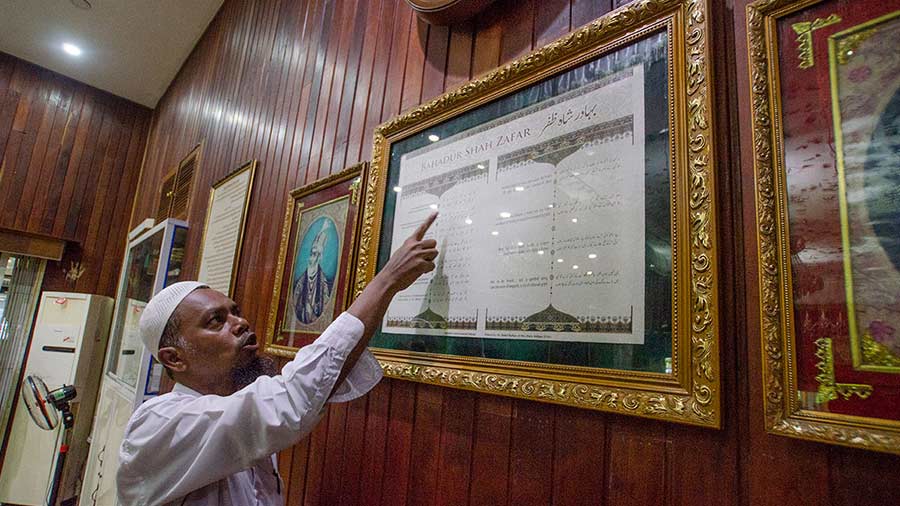
When the English imprisoned Abu Zafar Sirajuddin Muhammad Bahadur Shah Zafar (1775-1862), the last Indian Moghul Emperor, in the Jail of Rangoon in 1857, instead of Indian Flag, Union Jack started hoisting at Dehli’s Red Fort and Queen Victoria became the full-fledged ruler of India without any obstacle, at that time, many country patriots came into field united to fight against the British rule.

Maulana Muhammad Qasmi Nanautavi (1832-1879) was one of them too.

In 1857, one Fatwa for Jihad against the English was issued.

The Fatwa carried the signature of 34 prominent Ulama. One among them was Maulana Nanautavi himself. As other elders had participated in the Jihad of Shamli in 1857, Maulana Nanautavi also had participated personally with his colleagues. Briefly in the battle of Shamli, Nanautavi and his colleagues got defeated to British forces.

He was a far sighted scholar. He comprehended that the British has not only occupied India and would attack the Indian culture, but even the faith of Indians would be at risk. Therefore, while on the one hand, he started fighting against the English, he began debating with clergyman on the other. But to that time, the freedom wasn’t destined for India, so he didn’t succeed in the mission.

In this situation, intending to free India from the British rule, in the company of some friends, Maulana Nanautavi adopted another policy to establish a Madrasa on 21st May, 1866 (a famous learning centre of Indian Subcontinent, Darul Uloom, Deoband) beneath a pomegranate tree in Chattah Masjid of Deoband. So that the trained products of the Madrasa would sacrifice themselves to preserve the country and Islam both in British India. Alhamdulillah, Nanautavi succeeded in his mission and a good number of Darul Uloom’s product gave sacrifices for the sake of Indian freedom and Islam.

The noted Islamic scholar Maulana Manazir Ahsan Gilani (1892-1956) quoted in his book, “Ihaatae Darul Uloom Men Beete Huwe Din” (The Days Passed in the Campus of Darul Uloom) from his teacher and the first graduate of the seminary, Shaikhul Hind Mahmood Hasan Deobandi (1851-1920) saying:“Did my teacher (Maulana Muhammad Qasim Nanautavi) establish this seminary only for the teaching and learning? The seminary was established before me, as far as my knowledge goes, my teacher established this one in 1866 to compensate the defeat of 1857 from the British. I have chosen the same mission for which it was established before me.”

Very few people know the fact: “In the meeting of Jamiat Ulama-e-Hind at Kolkata in 1926, the participants included graduates of Darul Uloom, Deoband and they supported the group which called for complete independence of India from the British rule.

Indian National Congress was to declare complete independence as its goal three years later, in its session at Lahore.” (Wikipedia, Darul Uloom Deoband)The famous freedom fighter, Frontier Gandhi, Khan Abdu Ghaffar Khan (1890-1988), who visited Darul Uloom, during his visit to India in 1969, had said, “I have had relation with Darul Uloom since the time, Shaikhul Hind Maulana Mahmood Hasan, was alive. Sitting here, we used to make plans for the independence movement, as to how we might drive away the English from this country and how we could make India free the yoke of slavery of the British Raj. This institution has made great efforts for the freedom of this country.” (Wikipedia, Darul Uloom Deoband)Due to the great interest in India’s freedom struggle, Shaikhul Hind became an icon of Indian independence movement. Though he was a teacher of Darul Uloom, but made much effort to start an armed revolution against British rule from the both inside and outside India.

He started a programme to train volunteers and his students in the seminary from India and abroad for that goal. The most eminent among those who joined the movement were his students: Maulana Ubaidullah Sindhi (1872-1944), Maulana Husain Ahmad Madani (1879-1957), Maulana Muhammad Mian Mansoor Ansari etc.Shaikhul Hind sent Maulana Sindhi to Kabul and Ansari to the North-West Frontier Province to mobilize the popular support and recruit volunteers. And he with Maulana Husain Ahmad Madani travelled to Hijaz (KSA) to secure Turkish support. Getting the Turkish governor, Ghalib Pasha’s signature on a declaration of Jihad against the British, he planned to return to India via Baghdad and Bluchistan to start the rebellion.When Shaikhul Hind planned to return, the Silken Letter Movement was captured by Punjab CID.

Due to this movement, Shaikhul Hind was arrested in Hijaz. He was imprisoned in Malta, where he was tortured mercilessly, for more than three years.

Here it seems necessary to mention that what was the Silken Letter Movement. Shaikhul Hind wanted an armed revolution against the British rule, as I mentioned. So, he needed arms and ammunition. He and his colleagues, therefore, travelled to different countries to seek support from the anti-British countries; such as Afghanistan, Turkey and Russia. During the visiting different countries, letter exchanged between Shaikhul Hind and his colleagues, containing the outlines of the plan to recruit the volunteers for army and to establish a national government were written on silk piece of cloth. That is why the movement was known as the Silken Letter Movement/Tahreeke Reshmi Rumal (in Urdu)/Silk Letter Conspiracy (according to British government).When he returned to India, after release, was conferred upon by the title of Shaikhul Hind, leading leader of India.

Now he issued a Fatwa making it a duty of all Indian Muslims to support and participate with Mahatma Gandhi (1869-1948) and the Indian National Congress, who had prescribed a policy of non-cooperation and mass civil disobedience through non-violence.

He died on November 30, 1920 wishing to get martyrdom for India’s freedom.

Though Shaikhul Hind was no more, but he left a good number of students, who followed the footprint of their elders and worked tirelessly for the freedom of India.

Maulana Ubaidullah Sindhi (1872-1944), a 1891’s graduate of Darul Uloom, was also among them. He was the most active and prominent member of India’s freedom movement. He was among those leaders of Darul Uloom who left India, following the commandment of Shaikhul Hind, during World War 1, to get support of the anti-British central powers for an armed revolution against British rule.

Maulana Sindhi reached Kabul to rally the Afghan Amir Habibullah Khan.

After a period of time, he offered his support to Raja Mahendra Praratab’s plans for revolution in India with German support. He joined the Provisional Government of India formed in Kabul on 1st December, 1915. In this government, he was nominated the Minister for India. It was declared a revolutionary government in exile, which was supposed to take the charge of independent India, if the British government has been overthrown according to the plan. But unfortunately, in 1919, the provisional government was dissolved under the diplomatic pressure to Afghanistan.

He stayed in Afghanistan for 7-year nearly.

Then visiting Soviet Russia,he reached Turkey, where he issued the charter for the independence of India from Istanbul.

He left Turkey for Hijaz and remained there until 1929. He journeyed from a country to country for the sake of India’s independence. He died on 22nd August, 1944, at Deenpur in Pakistan.

Shikhul Islam Maulana Husain Ahmad Madani (1879-1957) was also one of the Shaikhul-Hind’s students and graduate and latter Professor of Hadith at Darul Uloom, Deoband.

Though he had been not convicted, but he accompanied Shaikhul Hind to Malta voluntarily, to take care of him. He stayed in Malta three years upto the release of Shaikhul Hind. Returning to India, he actively became involved in the freedom struggle. He had been imprisoned several times by the British authority for his participation in the freedom movement. It was he who dared to issue a Fatwa in the meeting of Indian National Congress at Karachi that working as British army and police is Haraam. After this Fatwa, he was rewarded two years rigorous imprisonment. He never stepped down from the freedom struggle movement, until India got freedom.

At the time of independence, the Muslim League and the Indian National Congress were at logger heads on partition of united India. On that occasion, Madani opposed the partition thoroughly. He journeyed the different provinces of India along with Maulana Abul Kalam Azad (1888-1958) and Mahatama Gandhi to assure the people safety and security and tried his level best to stop them to migrate from India to Pakistan. Many people targeted him, but he never conformed to the opinion of the partition.

After the independence, he was served a ministry, but he refused and restricted himself under the four walls of Darul Uloom and Jamiat Ulama-e-Hind for teaching and social works.

Like Madani and Sindhi, there were hundreds of Darul Uloom’s graduates, who actively took part in the freedom struggle of India. To mention the works of those patriots, the volumes and volumes are required.

It’s sorrowful matter that historians of modern India ignored completely the role played and efforts made by Darul Uloom for India’s freedom struggle. Today, most of the people aren’t aware of this historical institution. Some people know that Darul Uloom is a conservative seminary that produces merely Maulanas or a factory that only issues Fatwaas. And some say that Darul Uloom is “a Station of Terrorism” and “it produces terrorists”. This one is a famous opinion among Hindu fundamentalists, while the fact is otherwise as I stated in the essay.

It’s a bird’s eye view of the role of Darul Uloom, Deoband in India’s freedom struggle.

One who is interested on the topic, should go through the book, “Taarikhe Darul Uloom” (History of Darul Uloom).

May Allah accept the works of the seminary!

source: http://www.millattimes.com / Millat Times / Home> Special Column / by Khursheed Alam Dawood Qasmi , Email: qasmikhursheed@yahoo.co.in / August 15th, 2022