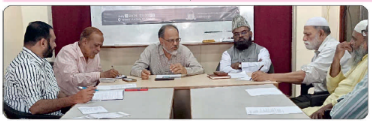
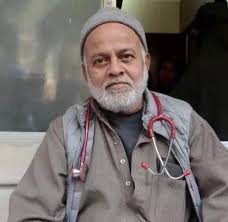
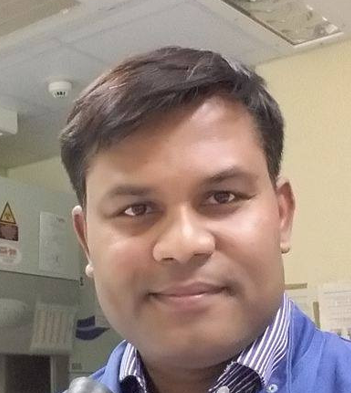
Jamaat-e-Islami Hind (JIH) Karnataka is stepping up its drive to promote economic stability by expanding interest-free financial institutions across the state. At a meeting with Souharda Cooperative Society leaders, JIH Karnataka State President Dr. Belgami Mohammed Sa’d stressed the need to free people from exploitative moneylenders.
Dr. Sa’d outlined plans to set up interest-free cooperative societies in major cities and towns as the first step in a state-wide mission. “Economic stability is a cornerstone of positive social change,” he said, urging community support to replicate the model in more regions.
JIH Karnataka State Secretary Mohammed Yusuf Kanni highlighted the success of existing Souharda Societies. About 18,000 members are part of these societies in Bidar, Kalburgi, Raichur, Ilkal, Bellary, Davangere, Bhatkal, Udupi, and Mangalore. Last year, they handled transactions worth ₹125 crore.
Mr. Kanni announced expansion to Sindhanur, Hubli, Hassan, and Bijapur by March 2026. He said the aim is to give more people access to interest-free finance, promote equitable participation, and reduce reliance on conventional banks.
Mriza Abid Baig Falahi from Jamaat’s Shariah Council recently visited societies in Bidar, Kalburgi, Raichur, Ilkal, and Bellary. His inspection focused on Shariah compliance and staff training in Islamic finance modules like Mudarabah, Musharakah, and Murabaha. “Interest-free finance is an ethical necessity for a just and inclusive economy,” he said.
Prominent members from different districts attended, including Mujtaba Khan from Bidar, Hamza Muazzam from Kalburgi, Imtiaz Baig from Davangere, Nazeer Ahmed Qazi from Bhatkal, and Riaz Ahmed from Koppal. Souharda Societies’ convenor Rafiq Ahmed opened the meeting, focusing on operational expansion, Shariah compliance, and greater community involvement.
The initiative is part of Jamaat’s mission to drive societal reform through ethical measures. By offering cooperative, interest-free finance, it aims to empower individuals, support small businesses, and protect vulnerable people from debt traps.
With planned expansions, JIH Karnataka hopes to build a strong network of Shariah-compliant institutions. Leaders believe sustained community participation will make interest-free finance a widely accessible reality in the state.
source: http://www.radiancenews.com / Radiance News / Home> Latest News> Report / by Radiance News Bureau / August 13th, 2025
Man from Kozhikode left state at young age, visited last in 2007.
Kozhikode:
Kerala-born entrepreneur Shaikh Rafik Mohammed, 42, has been appointed Major General of Kyrgyzstan, in a first for an Indian in the Central Asian country.
Mr Mohammed assumed the prestigious post in the presence of defence minister Ali Mirza at an official ceremony held in Kyrgyzstan. He holds Kyrgyzstan nationality, conferred by former President Kurmanbek Saliyevich Bakiyev, whom he had met in his late-20s while working in Iran.
Mr Mohammed, who heads Gammon Middle East in Saudi Arabia, used to be an adviser to Kyrgistan President and the latest appointment is in recognition of his contributions to the country, sources in Dubai said.
Rafik, known as Rafi here is the son of Late Abdul Hameed and Fathima of Eravannur, 12 km from Kozhikode. He had studied up to Class VII at local AMPL School, Eravannur. According to his sister Rukhiya K.M, Rafik left for Mumbai at the age of 20 and then to Gulf. “We are all elated by his elevation to the prestitgious post. He called us on Saturday and we spoke a lot. Mr Mohammed’s last visit to Kozhikode was in 2007,” Ms Rukhiya told this newspaper. Mr Mohammed, who has an Iranian wife, has made it big from a humble background. His father was a fisherman and struggled to make two ends meet.
Mr Mohammed’s neighbour and distant relative, Mr Azis Master U.P., says he maintains a warm relation with his birthplace. “It was Rafik who gave ’25 lakh for the construction of a madrasa recently. Similarly he will reach out to anyone in time of need,” Mr Azis master said.
Sources said that Mr Mohammad keeps cordial relations with major political leaders of Kerala. He holds Kyrgyzstan nationality conferred by its former President Kurmanbek Saliyevich Bakiyev whom he casually met in his 20s while working in Iran. Later, he became the adviser to Mr Bakiyev.
Dubai reports said Mr Mohammed, after selling the successful project to the Iranian government, went to Kyrgyzstan and presented a similar project to Mr Kurmanbek, then a governor who was preparing to contest presidential elections.
After Kurmanbek won the election, he appointed young Rafik as his chief adviser – a milestone in his career.
He developed wide network of friends in the Central Asian country, which has witnessed a rapid flow of foreign investment and reversal of socialist mode of development to a capitalist mode of production, reports said.
source: http://www.deccanchronicle.com / Deccan Chronicle / Home> Nation / by Amiya Meethal / January 02nd, 2017
How a series of breakfast conversations grew into an exhibition and a book.
On some mornings, Diba Siddiqi would sit down at the breakfast table in her parents’ home in Bengaluru, and record her father’s voice.
He would hold forth on everything under the sun – science, history, justice, conflict, photography, politics, poetry, philosophy, the evolution of language and silence. The musings continued well after the meal was over and an Olympus digital voice recorder Diba Siddiqi had placed nearby would capture her father’s thoughts.
The sheer range of topics wasn’t surprising. Obaid Siddiqi was one of India’s most eminent scientists whose pioneering work in the field of molecular biology and neurogenetics are well known.
Siddiqi was keen to have an account of her father’s stories in his own voice so that she could revisit them later. She had tried taking notes, but found the process distracting. She started using the digital recorder so that she could give him his full attention.
But the recordings, which started in 2007, ended in 2013 when the senior Siddiqi was killed in an accident while taking a stroll near his home. He was 81.
Immersed in history
Months later, Diba Siddiqi finally revisited the “breakfast monologues” as she called them.
She immersed herself in the stories her father had shared of growing up in eastern Uttar Pradesh in pre-Partition India and the sadness at how the Siddiqis lost track of family members who moved to Pakistan.
It wasn’t long before Siddiqi began to dig through old family photographs, many of them developed in darkrooms by her father and his siblings.
It didn’t stop at that. Diba Siddiqi’s mother, Asiya, is a distinguished historian, who has spent a large part of her life studying Mumbai’s past. Siddiqi began to delve into her mother’s life too.
The result is Rooh: The Enduring Spirit, an exhibition of old family photographs interspersed with new images Diba Siddiqi has taken of places that played an important part in her parents’ lives. A book of the same name is set to be released shortly.
Dominating figure
It’s obvious that Obaid Siddiqi was an overarching presence for his daughter. “My father was this colossal figure in my life,” said Siddiqi. “No language is adequate to express his continuing presence in my life. I still find myself quietly and unconsciously carrying on conversations with him.”
Born in Basti, Uttar Pradesh, in 1932, Obaid Siddiqi completed an MSc from Aligarh University before obtaining a doctorate from the University of Glasgow in Scotland. His family lived in Benares in two spells between 1932 and 1948 before finally settling down in Aligarh.
Preventive detention
The includes an account of the two years Obaid Siddiqi spent in jail from 1949 under preventive measures at a time when 30,000 communists were detained across country. Recalling his period of detention in the company of 13 Communist leaders, he said:
“So you see jail authorities, they used the criminals, who were called pukkas, to beat us up. They were prisoners who had served ten years, fifteen years, had life imprisonment… They acted like small unofficial wardens to control other prisoners. They were dressed to look like police. They beat up our friend Syed Ali badly, giving him galis, saying, ‘Pakistan se saala Pakistani Communist banta hai!’
However, Obaid Siddiqi could also recognise the benevolent side of the police officer who had beaten up the comrades, realising that human nature can never be categorised as entirely good or bad.
His parents and six siblings managed to send him letters during his imprisonment. His sisters arranged to smuggle letters in and out of jail while delivering home-cooked food to him once a week.
In 2014, Siddiqi visited Benares, where her father spent some time as a child. Waking at the crack of dawn every day, she walked around the ancient city, photographing the people and its streets.
Mumbai chronicler
Siddiqi also took many pictures in Mumbai, a city whose past her mother has written about extensively. One of Asiya Siddiqi’s celebrated works recreates the lives of people who went bankrupt in the 19th century. Roaming the bylanes of Mohammad Ali road and Dongri, in Mumbai, Siddiqui imagined that the ghosts of these people “and their descendants surely dwell in the neighbourhood I roamed in… The descendants of tailors, carpenters, blacksmiths, milk vendors, courtesans, dancing girls and prostitutes may continue to live and work here.”
Though the project is intensely personal, she believes it has broad appeal. She said she hoped viewers would let her work touch their mind and spirit and perhaps remind them of their own histories. “It is an expression of life that I have been a part of,” she said. “It has been about finding a voice in the images and bringing it together in one space.”
Rooh: The Enduring Spirit can be viewed at Bangalore’s 1 Shanthi Road gallery until February 11.
source: http://www.scroll.in / Scroll.in / Home> Photo Feature / by Zinnia Ray Chaudhuri / February 09th, 2016
Obaid Siddiqi, one of the most outstanding scientists of modern India, died in a freak accident in Bangalore on July 26. While he was out on a walk on July 21, a moped being driven by a young person of the neighbourhood rammed into him, and caused severe brain damage from which he could not recover.
He leaves behind his wife, Asiya Siddiqi, who is herself a very distinguished historian, and four gifted children: Yumna, whose area is English literature, Kaleem, who is a scientist, Diba, a promising photographer, and Imran, also a scientist whose work on seed-cloning has the potential to revolutionize agriculture in developing countries and questions the rush to Bt for raising yields.
But I want to talk not about the family that Obaid and Asiya raised but about the family of siblings and their spouses that surrounded Obaid, the larger family, as it were, to which he belonged. It was such a remarkable family, it so captured within itself all that is salutary in the development of modern India, that its individual members are worth recalling.
There were two sons, including Obaid, and five daughters, born to his parents. The youngest daughter, Imrana, married to the well-known social activist, Anubrata (Dunu) Roy, was a paediatrician at the All India Institute of Medical Sciences who turned to academic work in the social sciences and became one of the founders of the Centre for Social Medicine and Community Health at the Jawaharlal Nehru University. This centre, of which Binayak Sen was once a faculty member, remains to this day an unparalleled institution in India.
She was for decades our neighbour on the JNU campus. She was not just a close friend but one who epitomized what friendship should be, and it is through her that I came to know the remarkable Siddiqi family. Being a doctor in residence, in the early years of JNU when the campus had meagre medical facilities, she was the informal physician for every household, cheerfully available day and night; and she saw my family, especially my two children, through numerous medical emergencies. Because of her unbounded generosity, we called her “the Florence Nightingale of the JNU campus”; but that was unfair to her, since she was also a highly skilled medical practitioner, unlike Florence, and combined her expertise with a radical social philosophy.
One of her older sisters, Maimoona, was married to Ali Ashraf, a founder of the communist party in Bihar, and the first to translate the Communist Manifesto into Urdu. (Maulana Azad had earlier translated and published only some extracts in his newspaper.) Maimoona was herself a communist activist, and, together with her husband, worked at the party headquarters in Bombay bringing out its Urdu newspaper, and lived in the famous party commune set up by its general secretary, P.C. Joshi. In later years, she taught Urdu first at the Patna College and subsequently at the Aligarh Muslim University.
Ali Ashraf’s friend, Ziaul Hasan, also a very early member of the communist party in Bihar, married another of the Siddiqi sisters, Tahira, and also lived for long at the Bombay party commune while working for the party’s Urdu newspaper. B.T. Ranadive, then in ‘disgrace’ following the collapse of his 1948 line, was at the same commune and comrades were somewhat circumspect about socializing with him; but the Hasans struck up a deep friendship with him. Ziaul Hasan was then sent to Srinagar to work with Sheikh Abdullah, when the latter sought the help of the communists for carrying out land reforms in the state. Jammu and Kashmir, as is well-known, was the first state in India, even before Kerala and West Bengal, to implement radical land redistribution. He and his family lived with Imrana on the JNU campus for some years when he was working as a journalist on the staff of the Patriot newspaper, and my discussions with him on several evenings, when he would be reminiscing about the commune or berating me for my sectarian understanding, are a treasured memory.
Yet another of the sisters, Sayera, a highly distinguished economist who taught at the Aligarh Muslim University, was the first person, after the nationalist writers of the colonial period, to make an estimate, and a meticulous one at that, of the magnitude of “the drain of surplus” from India to Britain. A life-long communist, she married a fellow student against whom she had once taken disciplinary action as the All India Students Federation leader on the AMU campus. This fellow student, belonging to the AISF, was Irfan Habib, the famous historian and pre-eminent Marxist intellectual of the country.
The last sister, Shaista, was attached to the medical college at AMU and built from scratch its department of obstetrics and gynaecology. The other brother, Aslam, also belonged to the AMU faculty, to the department of engineering. He was asked to set up the university’s computer centre; he did so and served as its director for some time.
Obaid Siddiqi belonged to this family. All the traits that characterized the family, the generosity, the brilliance, the gentleness, the self-effacing commitment to work, the contempt for careerism, and the disdain for fame and status, were concentrated, as it were, in him. And he also shared the family’s social commitment and passion for effecting a revolutionary transformation in the country. Irfan Saheb once remarked to me that Obaid Siddiqi must have been the only Fellow of the Royal Society in its entire history who had spent time in jail for communist activities. That was during the “BTR period”, following the party’s Calcutta congress, when Obaid was an activist of the AISF at the AMU.
His passions included Urdu poetry (he was chancellor of the Urdu University at Hyderabad), Persian, and above all, music. He learned to play the sarod from Annapoorna Devi, and played it beautifully. He was meticulous about doing riyaz everyday, and later took lessons from the Dagar brothers who became his good friends.
I met Obaid Siddiqi occasionally on the JNU campus when he stayed overnight at Imrana’s place, having come for some meeting from Mumbai where he was then located at the Tata Institute of Fundamental Research. But I got to know him better when he came to deliver the Krishna Bharadwaj Memorial Lecture at the Centre for Economic Studies and Planning of JNU. The topic was “Do animals think?” and Obaid Siddiqi gave, in very simple language to a packed and overflowing audience, an account of his internationally acclaimed research into the neurology of the Drosophila fly. His answer to the provocative question of the title of the lecture was that while “thinking” was too ambitious a term to describe what animals did, several very elementary forms of it, suggesting a more developed consciousness beyond mere instinct, appeared to characterize them. The discussion that followed the lecture carried over into dinner and long afterwards into the night.
I met him a little more frequently when we both served on the research council of the National Institute of Science, Technology and Development Studies of the CSIR. But I got a chance for closer interaction at the convocation of the Kalyani University in 2003. By then he had moved to Bangalore where the TIFR was setting up an off-shoot for research on biology; he had been asked to head it and had already gathered around him a brilliant group of young researchers. Kalyani University was conferring an honorary doctorate on him, and on Sunil Gangopadhyay and Ganesh Pyne; and I had been asked to deliver the convocation address. We were lodged together at the same guest house for the event.
His acceptance speech was brief but extraordinarily illuminating. It was based on research work done at the Indian Statistical Institute, Calcutta, and highlighted the fact that the Indian population, barring small numbers inhabiting remote regions, was remarkably racially mixed, and hence far less diverse than commonly supposed. His interest in the area had possibly been stimulated by his radicalism, which approved a scientific finding that undermined any racial segregation of the population; but he referred only to the scientific finding itself.
Obaid Siddiqi was a compelling speaker, without flourishes, but with a solid command over facts and a meticulousness of reasoning that did not allow one’s attention to stray. His using the brief Kalyani speech to present what he thought was interesting rather than his own research is indicative of an attitude that values scientific advance over personal achievement, and sees knowledge as interconnected. He shared this perception of interconnectedness of knowledge with his friend, another great scientist from the subcontinent, Abdus Salam; it lifted him above the normal run of scientists into an outstanding intellectual. His death is a huge loss to the country.
_________________
The author is Professor Emeritus, Centre for Economic Studies, Jawaharlal Nehru University, New Delhi / Prabhat Patnaik The Author Is Professor Emeritus, Centre For Economic Studies, Jawaharlal Nehru University, New Delhi
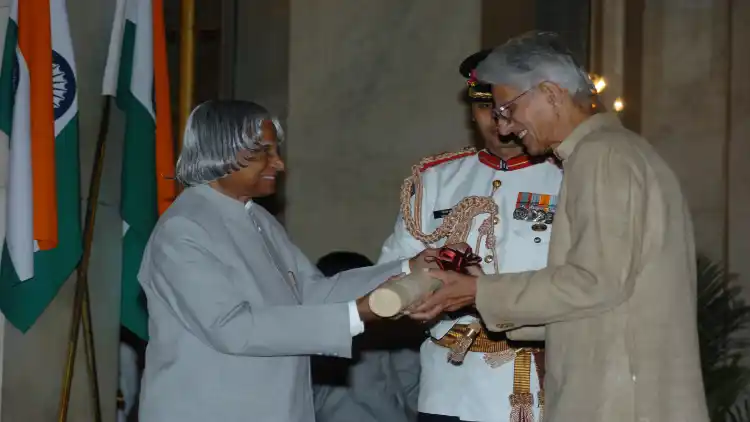
Obaid Siddiqui receiving Padma Vibhushan from the President
Genes and DNA are the words we hear frequently on our Televisions and other media. Genetic mapping has revolutionised the way humans understand organisms in general and themselves in particular. The past few decades have witnessed developments in biotechnology and genetics leading us to understand and treat diseases hitherto thought curable. Very few among us know that one of the important men who laid the foundation of this revolution was an Indian, Obaid Siddiqui.
Born on this day in 1932 in Basti, Uttar Pradesh, Obaid Siddiqui completed his Masters in Botany from Aligarh Muslim University (AMU) in 1953. Initially, he joined AMU as an agricultural scientist, after his Masters, and later moved to Indian Agriculture Research Institute (IARI), New Delhi. At IARI Siddiqui had prepared a testbed for wheat crossbreeds. But a devastating hail storm destroyed the crop and ruined his year-long labour. A frustrated Siddiqui, who had a keen interest in genetics, an emerging field at the time, wrote a letter to Professor Guido Pontecorvo at Glasgow asking him for a research opportunity with him. Pontecorvo accepted him and Siddiqui started his PhD at Glasgow on microbial systems – a paradigm shift from Botany.
During his PhD, Obaid made some path-breaking observations, which revolutionised the field of Genetics. Two very important observations made by him were:
His studies were the first reports of fine mapping of a gene.
He pointed out the concentration of mutational sites in a small part of genes.
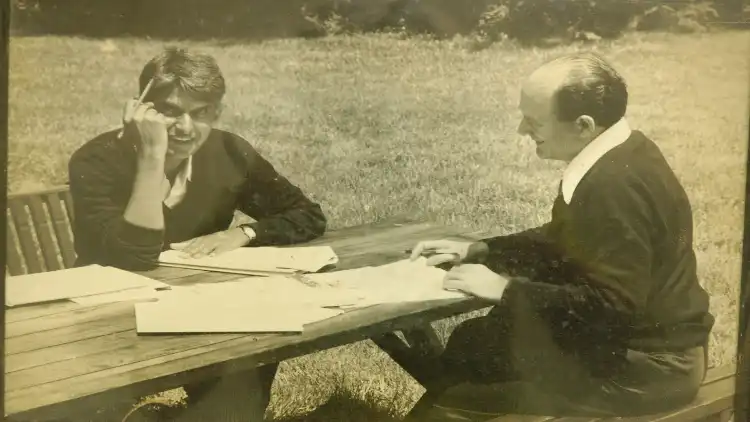
Obaid Siddiqui with Semour Benzer
So, when he submitted his PhD thesis in 1961 Siddiqui had already revolutionised the sciences in general and genetics in particular. Considering the fact that he shifted from Botany to a different field makes his achievement even more stellar.
The same year Siddiqui moved to Pennsylvania to work with Alan Garen as a postdoctoral fellow. Here, he discovered the suppressors of “nonsense” mutations. In simpler words, he discovered why a few mutations in a gene would not express themselves and remain suppressed. The discovery was a logical result of his earlier pioneering work in mapping of genes. Another important impact of this discovery was the finding of “nonsense” codons, the stop signal of genes. Har Gobind Khorana, Robert Holley, and Marshall Nirenberg received the 1968 Nobel prize for identifying “nonsense” codons and they personally acknowledged the role of Siddiqui in their research.
Siddiqui did not pursue his study of Codons further which got others a Nobel Prize because his heart was not in the USA. Siddiqui wanted to return to India to serve his motherland. This selfless patriot left the lucrative opportunities and told Alan Garen, in 1962, that he wanted to return to India.
Garen asked renowned physicist Leo Szilard to write to Homi Bhabha asking him to arrange a position for Siddiqui in India. Ignoring the opposition from fellow scientists in India, Bhabha showed confidence in Siddiqui and gave him the responsibility of establishing a molecular biology unit at Tata Institute of Fundamental Research (TIFR).
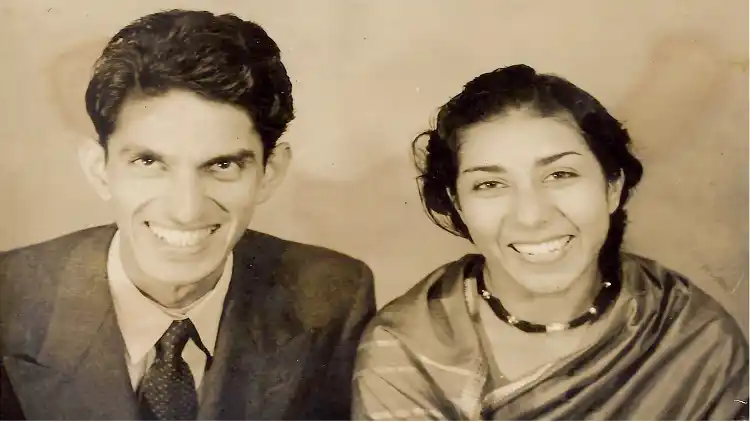
Obaid ASiddiqui with Wife Asiya Siddiqui
At TIFR, Siddiqui nurtured a younger crop of scientists and also brought Indians working in foreign labs back to India. With one of his students, P. Vijay Sarathy, Siddiqui showed that recombinant bacteria inherit DNA of bi-parental origin thus laying the foundation of principles of lateral gene transfer. In layman’s language his findings are the basis of the now well-known principle that genes pass from one generation to another.
With his other students like Kavita Arora and Veronica Rodrigues, Siddiqui showed that taste and smell of Drosophila have a genetic basis and thus opened a new field of chemosensory neurogenetics. These findings led others to research the role of genes on sensory perceptions, learning and memory.
Siddiqui was not a man who would compartmentalize his intellect to one branch of science. He contributed to fields as diverse as plants, Drosophila, bacteria, and genetics. He did not stop at research. He was an institution builder and established the National Centre for Biological Sciences in 1992 in Bangalore. Siddiqui was known for nurturing young minds by giving them the freedom to question.
Moreover, Siddiqui was a man who believed that sciences cannot operate in isolation of society. Scientists have a social responsibility and Siddiqui understood this. He stood for Human Rights, campaigned against communalisation and took part in social movements. Not only a music lover of Hindustani Music, Siddiqui was an established Sarod artist.
Obaid Siddiqui was awarded the second-highest civilian award, Padma Vibhusahan, by the Government of India. He was the true son of the soil who left lucrative offers in a foreign land to establish a research culture in India. His students are now serving the nation, which includes the present Principal Scientific Advisor of India, Professor Vijay Raghavan.
source: http://www.awazthevoice.in / Awaz, The Voice / Home> Stories / by Saquib Salim / July 26th, 2021
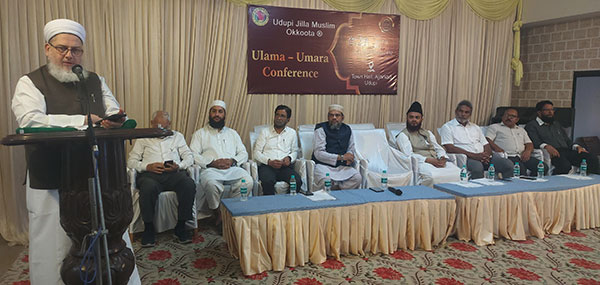
“There is growing concern among communal forces regarding the progress of the Muslim community, and this has led to them being increasingly targeted,” said Maulana Syed Tanveer Hashmi, a member of the Karnataka State Waqf Board and All India Muslim Personal Law Board. He stressed that the community must intensify its efforts towards educational and overall development, especially encouraging the youth to aspire for civil services.
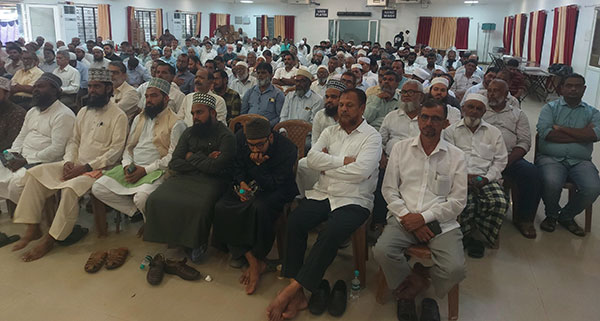
He was addressing a seminar titled “Current scenario and our responsibilities” organised by the Udupi District Muslim Federation at the mini auditorium of the Udupi Town Hall on Tuesday.
Maulana Hashmi highlighted the need to integrate Islamic values deeply into daily life to reform the challenges prevailing in society. “The community must actively engage in social service, extend help to the underprivileged, and foster harmonious relationships with people of other religions. During festivals, we must invite our non-Muslim brothers and share the joy of the celebration with them,” he said.
He further emphasised that Muslims should fully practice religious values and instil Islamic principles within their families, including children, women, and men. Education must be prioritized, with awareness cultivated within the community to promote academic growth.
Cautioning against objectionable behaviour on social media, he urged the youth to be responsible and avoid provocative posts. “We must stay away from the hateful narratives of ‘Godi Media’, communal provocations, and toxic online environments,” he stated.
Sulaiman Khan Sahib from Bengaluru, assistant general secretary of the All India Milli Council and Karnataka co-coordinator of the “Save Waqf, Save Constitution” movement, also addressed the gathering.
The event was presided over by Udupi District Muslim Federation president Muhammad Wawla. During the seminar, a book titled ‘Dharmadharma’ authored by federation member and writer Mustaq Hennabail was released.
The stage was graced by senior vice president Rafiq Kundapur, vice presidents Shabhi Qazi, Fareed Sheikh, and Fayyaz Byndur. The programme began with a recitation from the Holy Quran by Udupi Jamia Masjid Imam Maulana Rasheed Umri.
The event was welcomed by Maulana Zamir Ahmad Rashadi. Former district president M P Modinabba delivered the introductory address.
General secretary Ismail Hussain Katapady extended the vote of thanks, while Yaseen Kodibengre compered the event.
source: http://www.daijiworld.com / Daijiworld.com / Home> Karnataka / by Daijiworld Media News Network – Udupi / July 29th, 2025
E. Abu Bakar (born in 1952) is a significant figure in the socio-political landscape of India, particularly known for his role as a leader in the banned Popular Front of India (PFI). He is also a founder member of All India Muslim Personal Law Board,
Born and raised in Kerala, Abu Bakar became actively involved in social and political activism early in his life, driven by a deep sense of commitment to the rights and empowerment of marginalized communities, especially Muslims.
Abu Bakar’s leadership in PFI has been marked by his efforts to address issues related to social justice, communal harmony, and the upliftment of the downtrodden. Under his guidance, PFI has focused on various initiatives aimed at improving the socio-economic conditions of underprivileged communities. These initiatives include educational programs, legal aid, and awareness campaigns about constitutional rights and social justice.
A charismatic and articulate leader, E. Abu Bakar has been vocal about the challenges faced by Muslims in India, advocating for their rights in a democratic framework. He has been actively involved in organizing campaigns and movements that highlight issues of discrimination, police brutality, and state excesses. His approach often emphasizes the need for community unity and strategic action to address these challenges.
However, Abu Bakar’s leadership has also been contentious. PFI has faced criticism and legal scrutiny over its activities, with allegations of involvement in extremist activities and incitement of violence. Despite these controversies, Abu Bakar has maintained that PFI is committed to lawful activism and peaceful advocacy for the rights of marginalized groups.
Throughout his career, E. Abu Bakar has remained a polarizing figure, admired by many for his unwavering commitment to social justice, while also facing criticism from those who view his methods as provocative.
He has been in custody for two years following his arrest on September 22, 2022, under UAPA from his residence in Kozhikode.
At the time of his arrest, Abubacker, had no prior criminal record. He has been bedridden since January 2020 due to severe health conditions. He underwent extensive treatment for cancer, including chemotherapy and surgery, which involved the surgical removal of 80% of his abdominal and intestinal area. This has left his digestive system severely compromised. He also suffers from Parkinson’s disease, diabetes, vision loss, and hypertension, further deteriorating his overall health.
source: http://www.the100indianmuslims.com / The100 Indian Muslims / Home / 2024
Tucked between the roaring waves of the Arabian Sea and the lush green canopy of the Western Ghats lies a jewel of a town – Bhatkal.
A place where coconut palms sway in the ocean breeze, where the call to prayer echoes through the valleys, and where the scent of cardamom-laced biryani mingles with the salty sea air. But beyond its scenic charm and poetic quietude, Bhatkal tells an inspiring story – a story of legacy, faith, culture, and a deep-rooted commitment to education.
Once a humble trading post frequented by Arab merchants, Bhatkal today is a dynamic blend of history and modernity. Its people, mostly of Arab descent, still carry the flame of their forefathers – traders who braved the seas, settled in distant lands, and left behind more than just wealth. They bequeathed a way of life, a sense of community, and a passion for learning that continues to flourish in remarkable ways.
Imagine waking up to a view where mist-kissed mountains tumble into spice-scented fields, only to meet a coastline where waves pound golden sands under the watchful gaze of age-old palms. That’s Bhatkal – not just a town, but a canvas painted with the green of the hills, the blue of the sea, and the gold of tradition. And amid this natural splendour, an educational movement has quietly taken root – transforming lives and reaffirming the town’s historic role as a cradle of knowledge and cultural resilience.
A Legacy Carried on the Tides
The story begins not just in Bhatkal, but far beyond – across the seas in the Gulf. Over the last five decades, thousands of Bhatkalis migrated to the UAE, Saudi Arabia, Oman, and Kuwait – carrying with them their culture, values, and a remarkable sense of unity. Wherever they went, they established Jamaats (community organisations), which became lifelines of cultural preservation and mutual support.
But by the 1990s, community elders noticed a worrying trend. Amid the glitz of Gulf jobs and the comfort of petro-dollar salaries, education was beginning to take a back seat. Young boys were dropping out after high school, opting to join the workforce early. The allure of quick earnings began to eclipse the pursuit of knowledge.
It was then that the Bhatkal Muslim Khaleej Council – an umbrella body of 11 Gulf-based Bhatkali Jamaats – decided to act.
The Birth of the Rabita Educational Award
The Council launched the Rabita Educational Award to rekindle academic ambition among Bhatkali youth. It wasn’t just about giving away medals or cash – it was about igniting pride, ambition, and a sense of purpose. The idea was simple: if we honour excellence, others will strive for it.
When the initiative began 30 years ago, the bar was modest. Students securing 65-70% were among the awardees. Yet even then, it was revolutionary. For the first time, young boys and girls felt seen and celebrated, and parents began to regard education as a shared community value.
Fast forward to today: Rabita Award winners score as high as 98% and above. This year, the difference between the topper and the runner-up was a mere 0.0375%. That’s not a gap – it’s a heartbeat.
This Year’s Celebration: A Festival of Learning
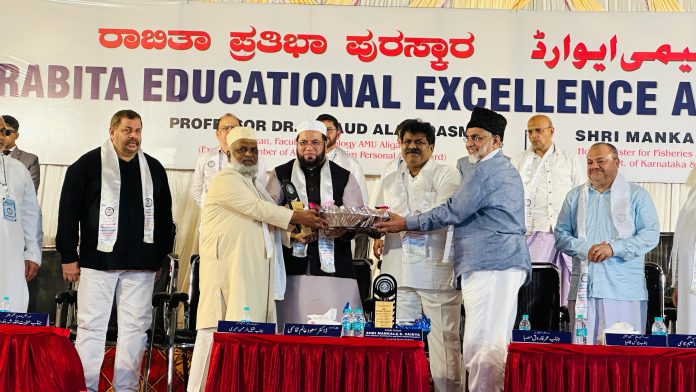
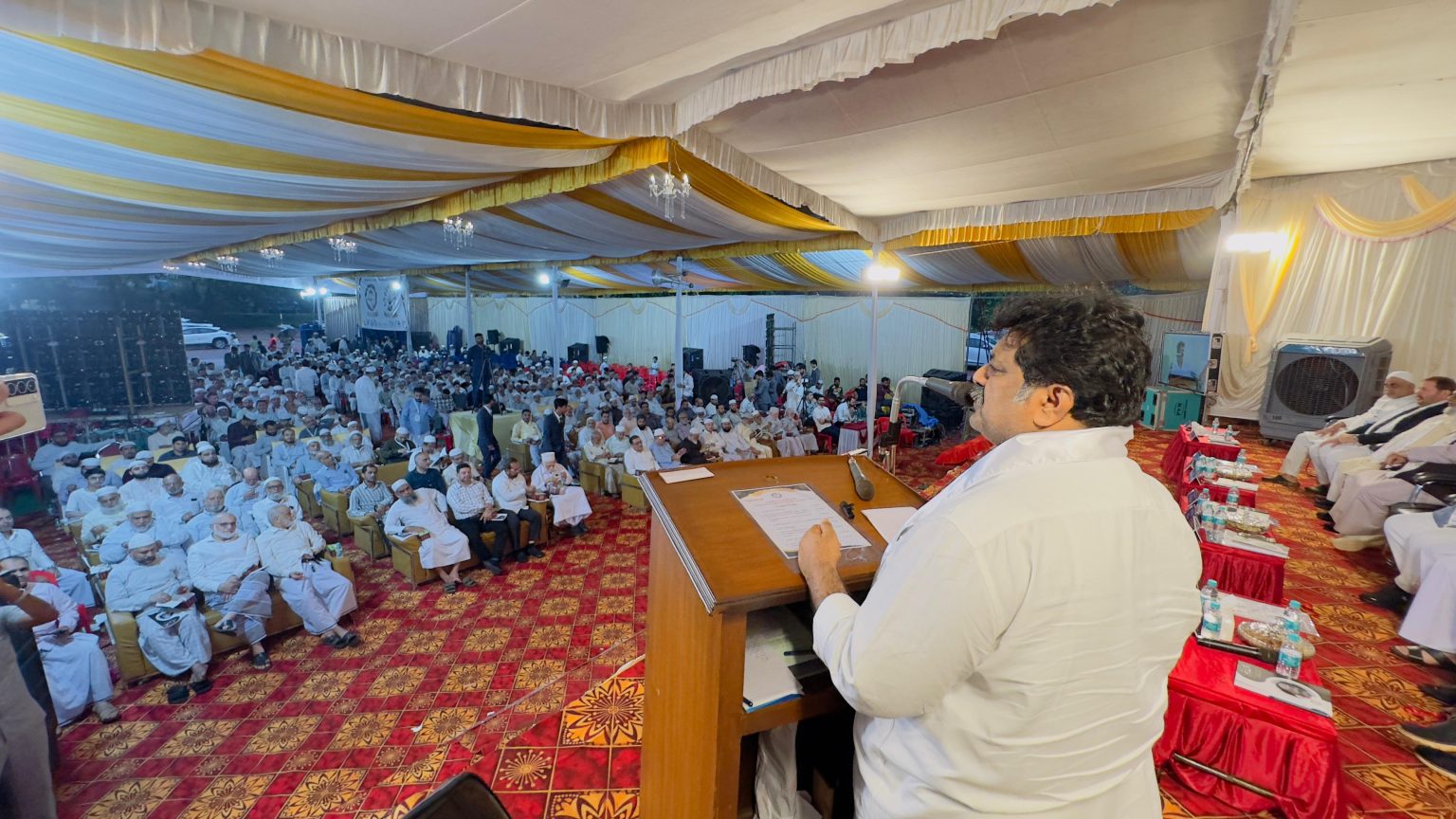
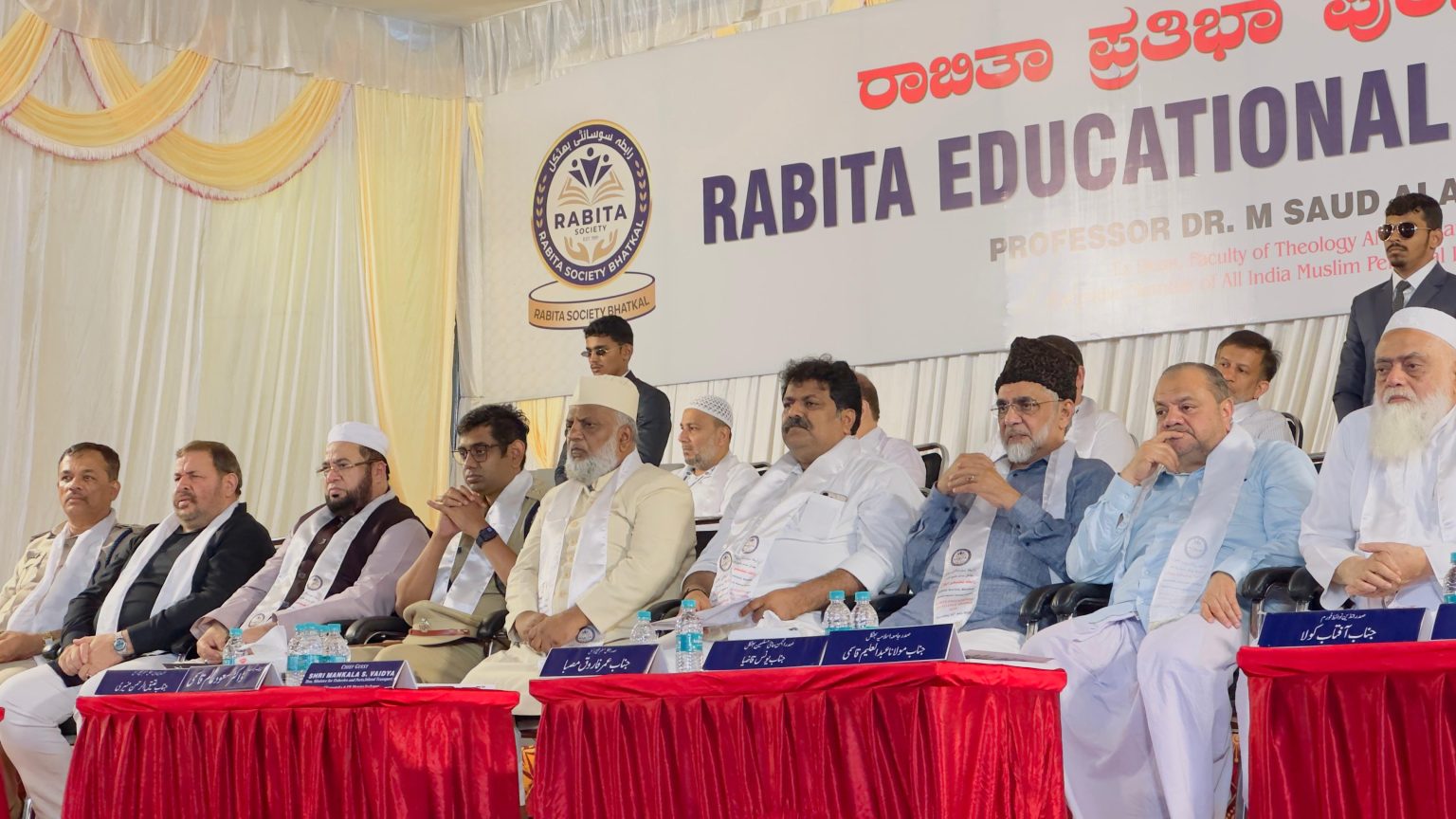
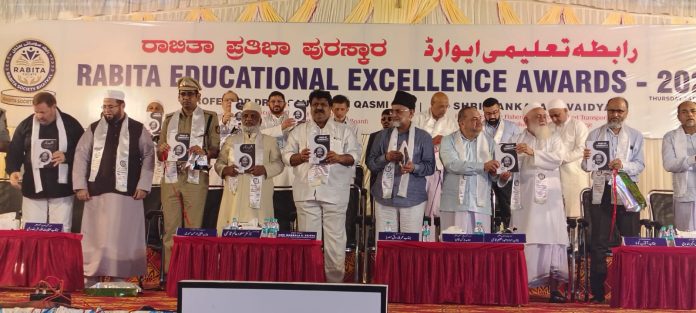
The 2025 Rabita Award Ceremony, held on 24th July at the sprawling grounds of Anjuman Islamiah Anglo-Urdu High School, was nothing short of majestic.
Even as rain poured steadily over the coastal town, the people of Bhatkal gathered in full strength. The makeshift auditorium overflowed with parents, teachers, and well-wishers – proving once again that no weather can dampen a community’s spirit when the cause is education. The stage, draped in the colours of Bhatkal’s spirit, welcomed an audience of thousands – parents, educators, students, and dignitaries.
Dr. Saud Alam Qasmi, a respected professor from Aligarh Muslim University and member of the All India Muslim Personal Law Board, addressed the gathering. His words resonated deeply:
“The United Nations declared education a basic human right in 1947. But 1,450 years ago, Islam declared: ‘Seeking knowledge is an obligation upon every Muslim man and woman.’”
His speech wove together spiritual insight and modern urgency, urging families to view education not as a luxury, but as both a sacred duty and a social necessity.
Joining him was Karnataka State Minister Mankal Vaidya, who praised Bhatkal’s educational institutions and pledged full support for establishing a medical college – recognising that Anjuman already offers nearly every other academic faculty.
More Than Medals: The Power of Encouragement
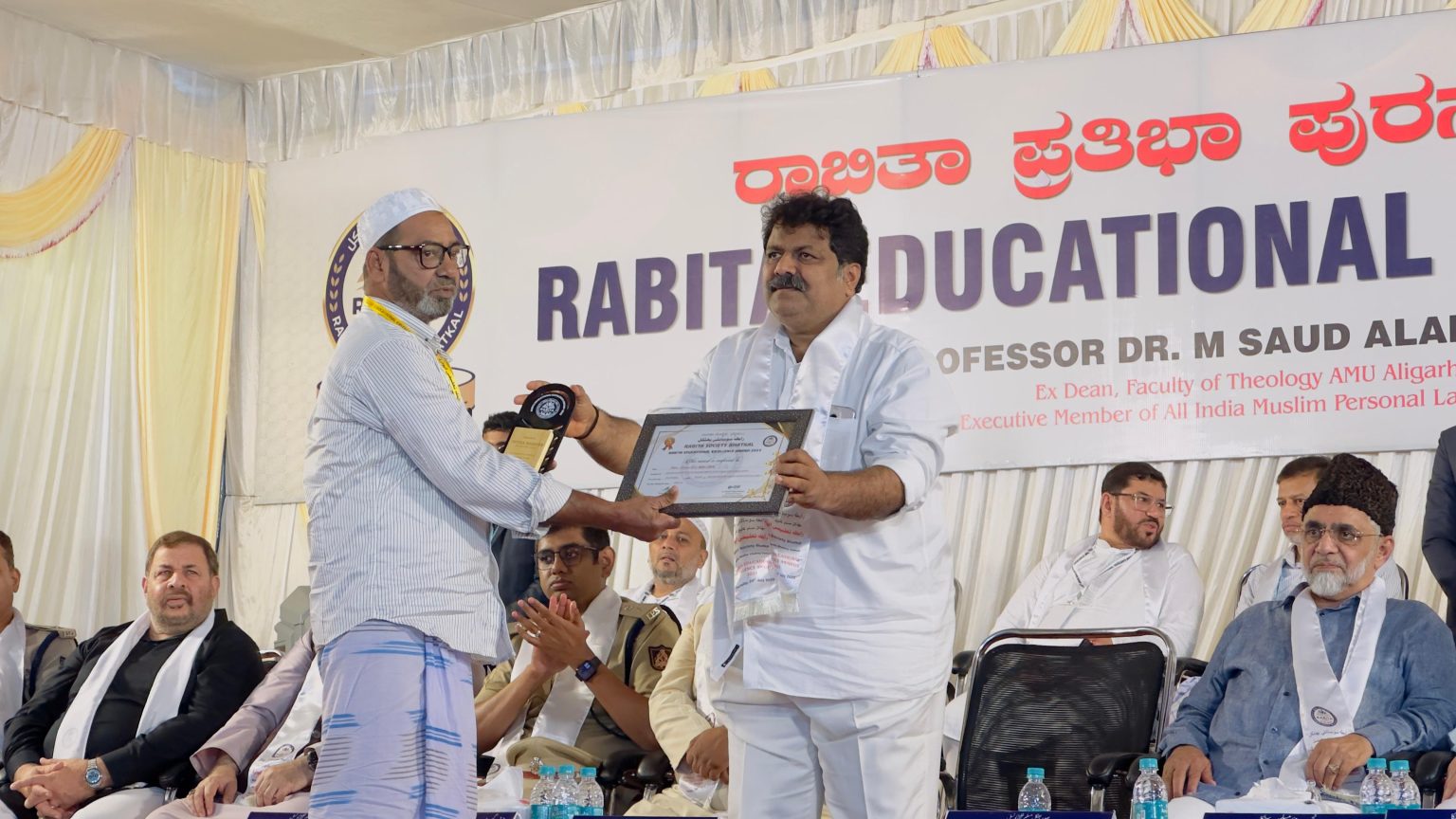
This year, 35 students across SSLC, PUC, and degree levels were honoured with gold medals and thoughtful gifts. Among them, female students once again outshone their peers, capturing two-thirds of the recognitions – a heartening sign of changing mindsets and growing gender parity in education.
The Best School Award continues to be named after Janab Usman Hassan, the legendary headmaster of Islamia Anglo High School, who worked tirelessly to promote education in Bhatkal. A pioneer in his own right, he laid the foundation for a culture of academic excellence that still echoes through the town’s institutions.
In a meaningful addition this year, the Best Teacher Award was named after Janab Syed Khaleelur Rahman Sahib, the very same visionary celebrated in the tribute volume “Iftikhar-e-Qaum Janab SM Khaleelur Rahman”. From his Gulf office in Dubai, he dreamt of uplifting his people through knowledge – and worked quietly but tirelessly to turn that vision into reality.
Though he now rests in the desert sands of Arabia, his legacy continues to bloom each year in the smiles and successes of the awardees he once imagined. Honouring him through the Best Teacher Award is both a tribute and a reminder that behind every great student is a teacher who believed in their potential.
This year’s recognitions reflected that enduring vision.
Ali Public School (Girls) received the Best School title, led by their standout student Hafsa Bint Hafeezullah, who scored an impressive 98.04%.
The Best Teacher honour went to Ms. Fatima Wida Siddiqui of Noonahal Central School, recognised for her outstanding dedication to education.
District toppers such as Shagufta Anjum (Urdu) and Bhoomika (English) were also felicitated, symbolising the inclusive spirit of academic celebration that the Rabita Awards embody.
Why This Model Deserves to Be Replicated
In an age when education is increasingly commodified, where coaching institutes manufacture toppers and commercial schools chase ranks, the Rabita model stands apart.
It is community-funded, value-driven, and inclusive. It celebrates the bright, uplifts the average, and motivates the struggling. It views education not merely as individual success, but as a shared legacy and a community responsibility.
The Rabita Award isn’t just a medal; it’s a signal fire – telling every child, “We see you. We believe in you. We’re with you.”
Imagine This in Every Town
What if every small town like Bhatkal decided to invest in its children this way?
What if the diaspora of Hyderabad, Azamgarh, Kutch, or Kolkata pooled their earnings not just for lavish marriages and luxury homes, but for educational dreams?
What if every community – regardless of faith, culture, or geography – told its youth: “We are proud of your academic journey. Keep going. We’re watching. We care.”
Communities that value knowledge rise. Those that don’t, perish slowly.
A Lesson from the Sea and the Ghats
Just like the waves of the Arabian Sea, education must be relentless – always pushing, always reshaping. And like the roots of the Western Ghats, it must be deep, nourishing generations, and anchoring identity against the floods of time.
Bhatkal is not just a place; it’s a model of what’s possible when community, culture, and commitment converge.
As the sun sets behind its palm-draped shores, one truth becomes clear:
Awards don’t just honour achievers. They create them.
Let This Be Your Takeaway
If you’re reading this in another town, another country, another community – know this: you too can start your Rabita. You too can plant the seeds of pride, perseverance, and purpose in your youth.
Start small. Honour the top three in your school. Involve your elders. Call the students to the stage. Clap for them. Gift them a medal. Take their picture. Tell the story. And do it again next year.
That’s how legacies begin.
And who knows? One day, someone may write about your town the way we write about Bhatkal – a place where the sea sings songs of learning, and the mountains stand tall in witness to dreams fulfilled.
source: http://www.radiancenews.com / Radiance News / Home> Education / by Mohammed Talha Siddi Bapa / July 26th, 2025
She calls upon council and the people for concerted efforts to take district forward
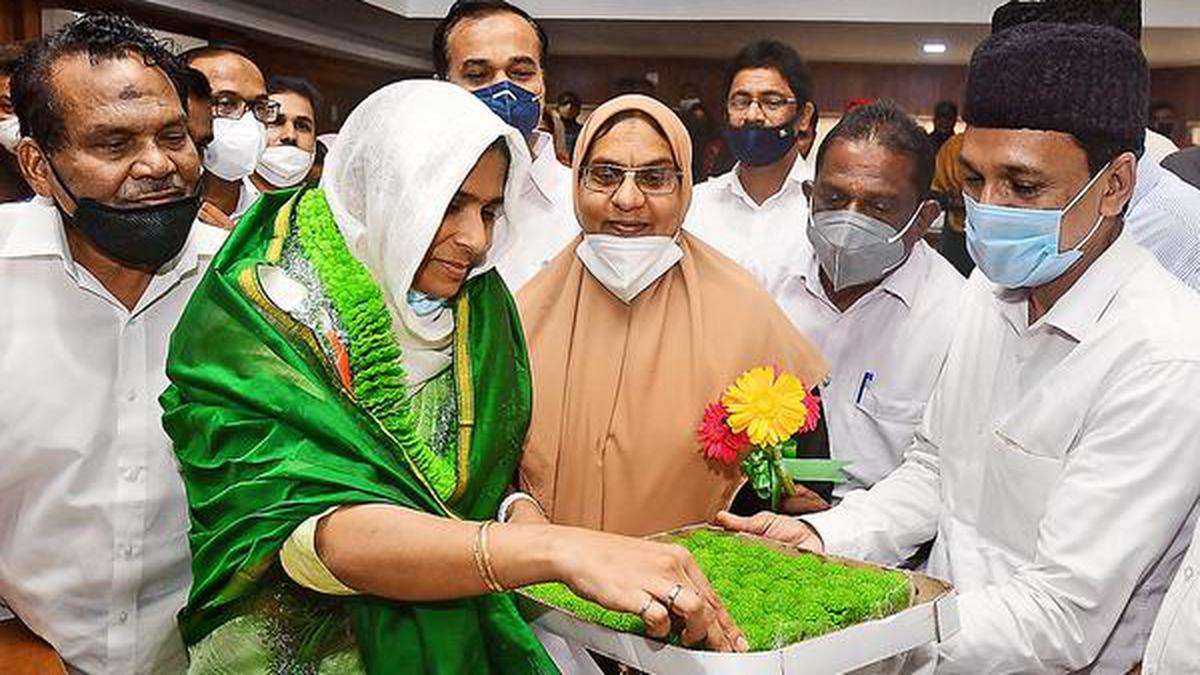
IUML Malappuram district president Sayed Sadikali Shihab Thangal offering sweets to newly elected District Panchayat President M.K. Rafeeka in Malappuram on Wednesday.
Indian Union Muslim League (IUML)’s M.K. Rafeeka was elected president of the Malappuram District Panchayat here on Wednesday. IUML’s Ismail Moothedam was elected vice president.
Ms. Rafeeka became President by winning 26 of the 32 votes. She defeated Left Democratic Front (LDF)’s Arifa Nasar, who got five votes. One vote was declared invalid.
Congress’s N.A. Kareem proposed Ms. Rafeeka for the president’s post, and P. Manaf backed her. Ms. Rafeeka represents Anakkayam division of the District Panchayat.
Ismail Moothedam was elected Vice President by winning 27 votes against LDF’s A.K. Subair. K.T. Ajmal proposed Mr. Moothedam’s name and P.K.C. Abdurahman seconded it. Mr. Moothedam represents Chokad division of the District Panchayat.
District Collector K. Gopalakrishnan administered the oath of office to Ms. Rafeeka.
IUML district president Sayed Sadikali Shihab Thangal; Sayed Basheerali Shihab Thangal; IUML district general secretary U.A. Latheef; P. Ubaidullah, MLA; former District Panchayat presidents K.P. Mariyumma, Arimbra Mohammed, Suhara Mampad and A.P. Unnikrishnan; senior IUML leaders Umer Arakkal, Salim Kuruvambalam, Kurukkoli Moideen, Noushad Mannisseri, and Congress leaders V.A. Kareem and K. Mohandas addressed a meeting that followed the oath taking ceremony. A commerce postgraduate, Ms. Rafeeka said that she would look upon the responsible position with due respect.
She called upon the entire council and the people for concerted efforts to take the district forward in comprehensive development.
Former president of Pulamanthol grama panchayat, Ms. Rafeeka was elected from Anakkayam division with 11,449 votes majority. She was instrumental in winning many accolades for Pulamanthol grama panchayat between 2010 and 2015. In 2011, the panchayat won the State Swaraj Trophy, the Central Vayo Sreshta Samman, and Gaurav Grama Sabha award. In 2013, she won a Central award for panchayat empowerment. In 2014, Pulamanthol won Rajiv Gandhi Best Grama Panchayat award.
source: http://www.thehindu.com / The Hindu / Home> News> India> Kerala / by Staff Reporter / December 30th, 2020
Among them are women who, through their work, have not only guided society but also become role models themselves. With courage, dedication, hard work, and limited resources, they are bringing about changes.
The list includes teachers, entrepreneurs, social workers, and heralds of change. Their stories fill us with pride and remind us that you can realise your objectives of serving society.
Khursheed Ahmad
Khursheed Ahmad has played a pivotal role in reviving Bihar’s cultural soul and turning Patna into a vibrant center of literature and arts. He has brought traditional forms like qawwali, poetry, literature, and Sufi music back into public life, infusing them with fresh energy and contemporary relevance.
Jabir Ansari
The right guidance at the right time can profoundly shape a life. Jabir Ansari, who hails from a humble background, reached the international martial arts arena thanks to his unwavering dedication. Hailing from Tumba Pahaad village in the Naxal-affected Jhajha block of Jamui district, he has won many gold medals and made his mark in martial arts.
Shams Alam
When doctors diagnosed a tumor in Shams Alam’s spine, they reassured him he would be running again in weeks. That day never came. Paralysis left his body’s lower half numb—a life-changing moment. Instead of despairing, Shams chose determination. Through grit and love for swimming, he emerged as a para‑swimmer who has made an indelible mark in Bihar, across India, and on international stages—breaking records and breaking barriers.
Tayyaba Afroz
She’s a pilot, and her social media bio proudly features phrases like “Born To Fly,” and “Dream, Achieve, Fly.” But behind these inspiring words lies a powerful story—selling ancestral land, withstanding social criticism, and overcoming physical and emotional barriers. Tayyaba Afroz from Jalalpur village in Saran district is not just the state’s first Muslim woman commercial pilot—she is a vibrant symbol of struggle, perseverance, and lofty dreams.
Dr. M. Aijaz Ali
Former Rajya Sabha MP Dr. M. Aijaz Ali has been an advocate for the marginalized for nearly 30 years. His guiding belief is that true development is incomplete without social equality and protecting the rights of the poor. Born in 1958 and raised in an orphanage, he overcame poverty through his academic passion to gain admission to the prestigious Patna Medical College.
Jameel Akhtar
As Deputy General Manager at NTPC, Jameel Akhtar has dedicated his life to educating underprivileged children in Bihar. His commitment is so intense that he has chosen to remain unmarried, believing marriage might hinder his mission. “If I marry, managing the education and care of 550 children will become difficult,” he told Awaz –The Voice. In a senior role at NTPC, his heart beats for the children who have no means to attend school.
Mohammad Ibrahim
A resident of Ramna in Motihari, Mohammad Ibrahim’s extraordinary journey inspires not just the youth of Bihar but all of India. His path from Motihari to Dubai is a powerful testament to determination and purpose. Recently honoured with Oxford University’s Best Travel & Immigration Services Award, his story marks a significant milestone in his professional journey.
Dr. Mumtaz Nair
Dr. Mumtaz Nair hails from a small village in the Kishanganj district of Bihar. In her early years, her family struggled even to meet basic needs. Despite hardships, her family chose to invest in her education—a decision that one day contributed significantly to the global fight against some of the world’s deadliest viruses.
Faizan Ali
At just 18 years, Faizan Ali was earning a degree in business studies when life called him to a deeper purpose. More than studies or ambition, he realised his true calling was serving humanity. “If you truly want to share someone’s pain, age and education don’t matter—passion does,” Faizan told Awaz – The Voice. Now 23, Faizan from Gaya is a shining example of selfless service. Raised in a modest family, he never imagined his life would pivot from a corporate future to community work.
Rani Khanam
Rani Khanam is the first Muslim Kathak dancer in Independent India to turn her love for classical dance into a profession. Originally from Gopalganj, Bihar, she practiced Kathak clandestinely, in a family that did not allow music or dance. Through her art, she has empowered women and highlighted key social issues.
source: http://www.awazthevoice.in / Awaz, The Voice / Home>The Changemakers / July 20th, 2025