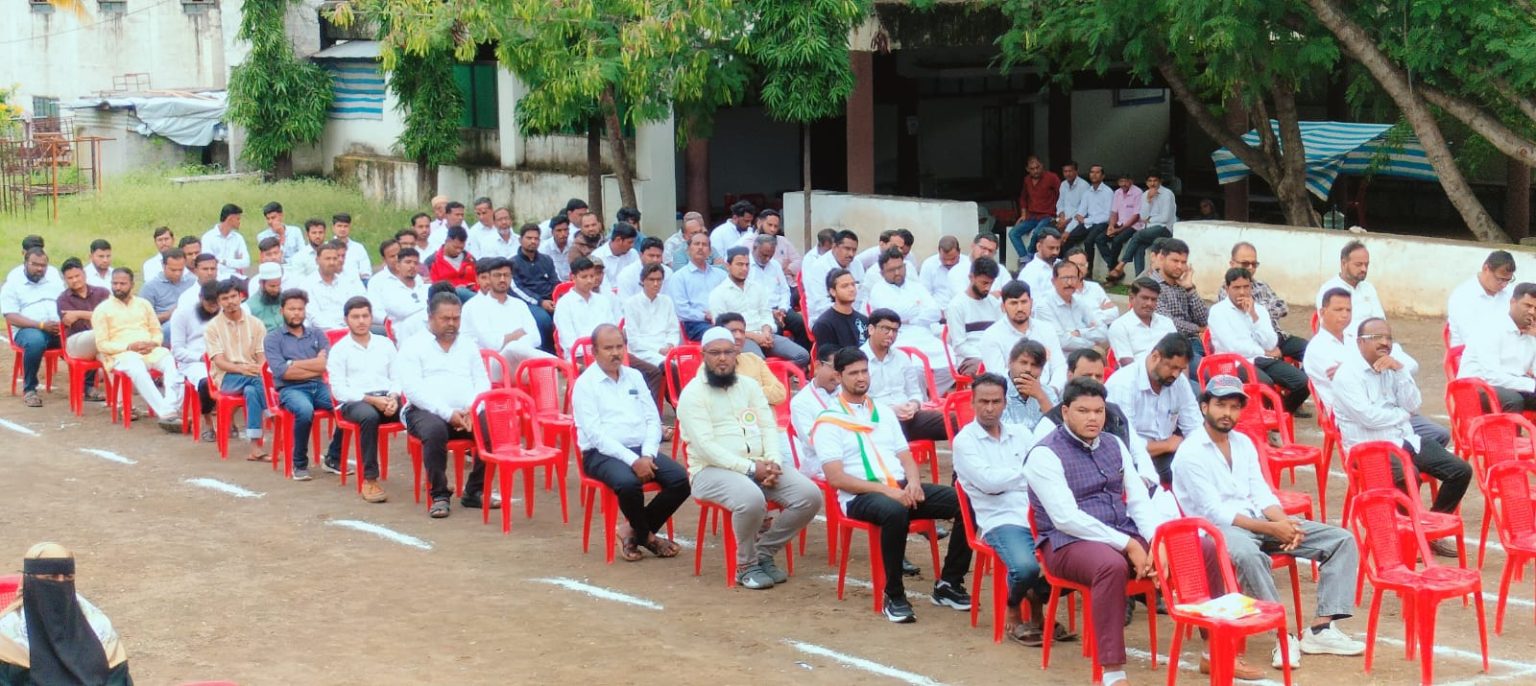
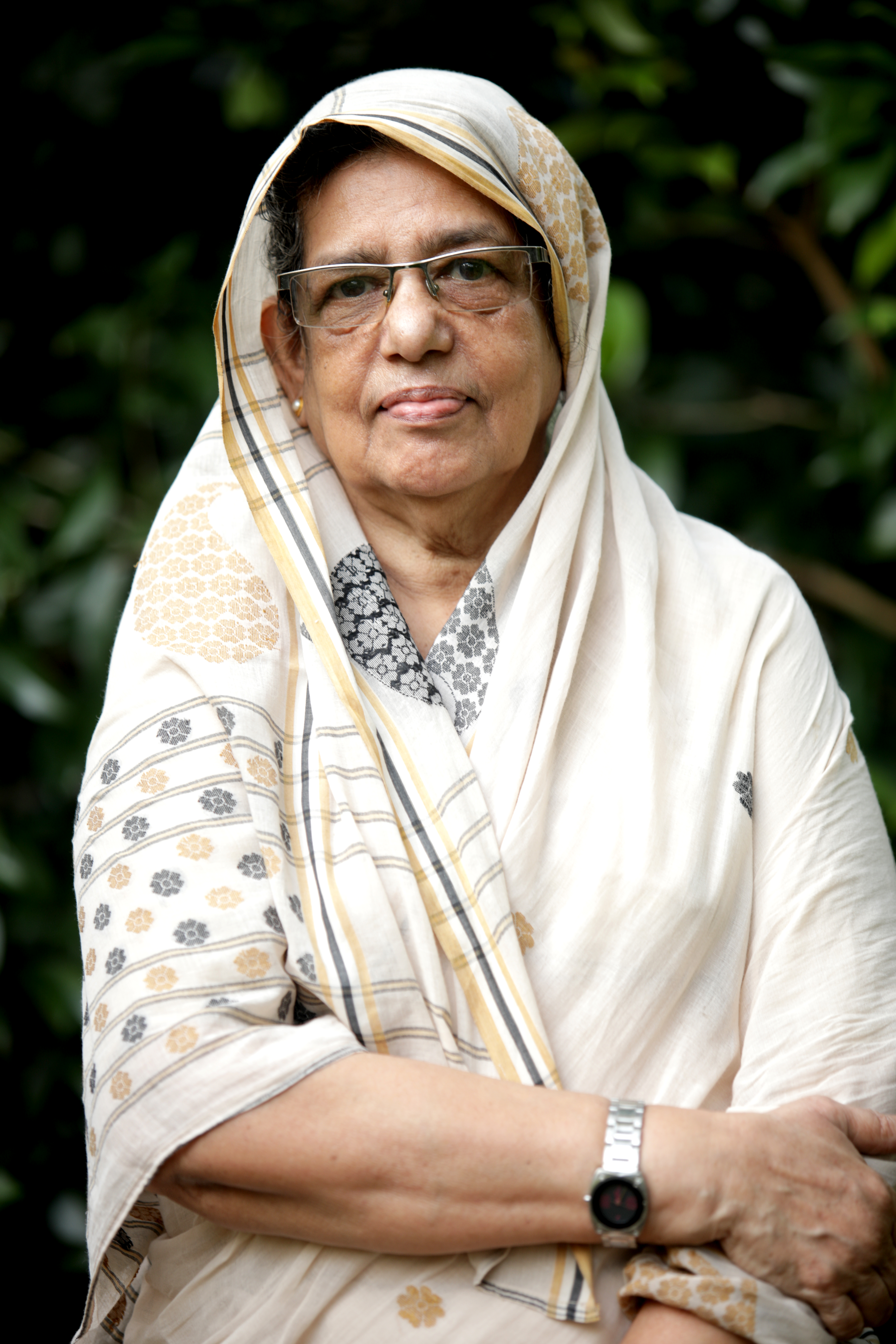
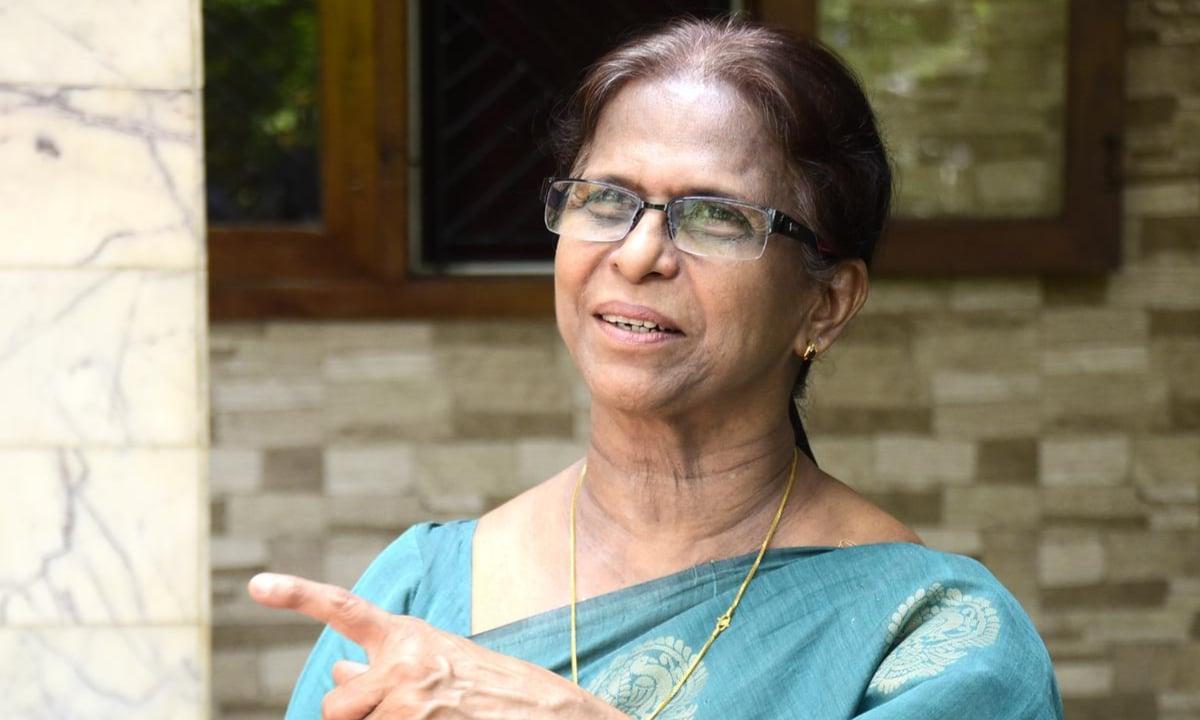
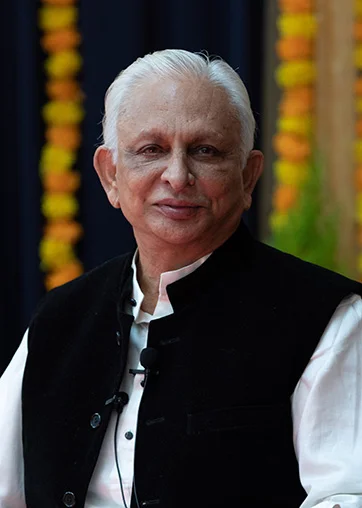
Dr Thumbay Moideen was honoured for transforming the Thumbay Group into a global model of purpose-driven entrepreneurship in healthcare, education & Research.
In a moment of immense pride and global recognition, Dr. Thumbay Moideen, Founder and President of Thumbay Group, has been conferred his Fifth Honorary Doctorate, this time by the prestigious University of Lublin, Poland.
This accolade reaffirms his unmatched contributions to global healthcare, medical education, and Research for the community development.
The honorary doctorate was awarded in recognition of Dr. Moideen’s extraordinary leadership in establishing the First Private Academic Health Sytem and the region’s largest private medical university — and for transforming Thumbay Group into a global model of purpose-driven entrepreneurship in healthcare, education & Research.
Under his visionary leadership, Thumbay Group has impacted millions across more than 175 nationalities, offering compassionate care, research excellence, and world-class medical training.
The University of Lublin acknowledged Dr. Moideen’s pioneering efforts in integrating innovation with empathy, notably through the Thumbay International Research Grant (TIRG) — an initiative investing AED 3 million annually in areas like cancer immunology, AI in healthcare,precision medicine and many more Area’s of Research.
From a young entrepreneur in Karnataka to being celebrated as the most respected Indian Muslim and leading Beary in the world, Dr. Thumbay Moideen’s journey is a testament to what’s possible when faith meets action. Recognized as the leading NRI from Karnataka in the Gulf region, he is admired not just for his accomplishments, but for the values that drive them.
Once someone who measured success through projects and milestones, he has evolved into a changemaker who defines impact by how many lives his work touches.
With this latest recognition, Dr. Moideen joins an elite group of globally honoured visionaries who have reshaped industries while staying rooted in service, humility, and impact.
This doctorate reflects not only his entrepreneurial brilliance but also his enduring belief that health and education are fundamental rights, not privileges.
Speaking at the ceremony, Dr. Moideen said: “If our work has empowered others to dream, to heal, to grow, then I consider it a success. It’s no longer about how far I’ve gone, but how many I’ve taken along. I want Thumbay Group to be remembered as a force that empowered the underprivileged, raised the standards of education, healthcare & Research.”
The vision of Thumbay Group is to deliver excellence by building a seamless ecosystem of education, healthcare, and innovation. From its flagship Gulf Medical University to hospitals, labs, rehabilitation centers, and AI-driven research programs, the Group continues its mission of shaping the future of healthcare —the Group plans to Double its Healthcare capacity and expand its all business to grow 5 fold and have a global presence.
source: http://www.gulftoday.ae / Gulf Today / Home> News / by Gulf Today, Staff Reporter / June 18th, 2025
The Union Public Service Commission (UPSC) declared the results of the 2024 Civil Services Examination on April 22, with 1009 candidates clearing one of India’s most competitive exams. Among them, Adiba Anam has made history by becoming the first Muslim woman from Maharashtra to be selected for the Indian Administrative Service (IAS).
Hailing from Kalam Chowk in Yavatmal, a small town in eastern Maharashtra, Anam secured an all-India rank of 142. Her achievement has been widely hailed as a breakthrough for both women and minorities in the state. Her father, Ashfaq Ahmed, earns a living by driving an auto-rickshaw.
Raised in modest circumstances, Anam completed her schooling in Urdu medium from a local Zilla Parishad school. Despite limited resources, she consistently excelled academically—scoring 94% in her Urdu board exams and 92% in 12th grade with a science stream.
Speaking to India Tomorrow, Anam recounted her journey through UPSC. Her first attempt in 2021 ended at the preliminary stage. Undeterred, she progressed to the mains in her second attempt, and finally, in her fourth attempt, clinched success with a rank likely to earn her an IAS cadre.
“My parents never asked me to give up on my education. There were people who suggested I take up a small job to ease our financial burden, but my parents never let those voices affect me,” she said.
Anam noted the social barriers women often face in her community. “Yes, girls do face restrictions. But these challenges only overpower us if we allow ourselves to feel weak. Once we build our mental strength, those obstacles lose their power,” she said. Her message to young women: “Stay mentally strong. Chase your dreams with courage and determination.”
Initially aspiring to become a doctor, Anam couldn’t clear the NEET exam. It was then that her uncle, Nizamuddin Sheikh—a local NGO secretary in Yavatmal—encouraged her to consider civil services as a way to serve the public.
Adiba Anam draws inspiration from the poetry of Allama Iqbal. Two couplets, in particular, fuel her determination:
“Khudi ko kar buland itna ke har taqdeer se pehle, Khuda bande se khud pooche, bata teri raza kya hai, ” meaning, “Elevate your selfhood to such heights that even destiny, before shaping your fate, is compelled to ask you: ‘Tell me, what is it that you desire?’”
This powerful verse emphasizes self-empowerment, urging individuals to strengthen their character and willpower to such an extent that even fate bows before their determination.
“Amal se zindagi banti hai jannat bhi jahannam bhi, Yeh khaaki apni fitrat mein na noori hai na naari hai.” This translates in English as “Through actions, life can become either a paradise or a hell. This being (the human) made of dust is by nature neither angelic nor demonic.”
The couplet underscores the idea that our actions determine the quality and direction of our lives. Human beings are not inherently good (like angels) or evil (like demons); it is their actions (amal) that shape their destiny and define their identity.
Explaining the two couplets, she said, “These lines remind me of the power of action. If you just sit still, nothing will change. But if you act, if you try to change your situation, something will definitely happen,” she said.
Anam’s journey—from a small-town Urdu-medium student to a future IAS officer—stands as a powerful story of resilience, ambition, and the transformative potential of education.
Here is the list of 26 Muslim candidates who cleared the UPSC Civil Services Examination this year, with their ranks written in front of their names.
• Iram Chaudhary – Rank 40
• Farkhanda Quraishi – Rank 67
• Mohammad Muneeb Bhatt – Rank 131
• Adiba Anam Ashfaq Ahmed – Rank 142
• Wasim ur Rehman – Rank 281
• Md. Nayab Anjum – Rank 292
• Mohammad Haris Mir – Rank 314
• Mohammad Shaukat Azeem – Rank 345
• Alifa Khan – Rank 417
• Nadia Abdul Rashid – Rank 429
• Najma Salam – Rank 442
• Shakeel Ahmed – Rank 506
• Shah Mohammad Imran Mohammad Irfan – Rank 553
• Mohammad Aftab Alam – Rank 560
• Mohsina Bano – Rank 585
• Syed Mohammad Arif Moin – Rank 594
• Ghulam Haider – Rank 633
• Hasan Khan – Rank 643
• Ghanchi Gajala Mohammad Hanif – Rank 660
• Mohammad Salah T.A. – Rank 711
• Sadaf Malik – Rank 742
• Yasir Ahmed Bhatti – Rank 768
• Javed Mev – Rank 815
• Nazeer Ahmed Bijran – Rank 847
• Arshad Aziz Quresh – Rank 993
• Iqbal Ahmed – Rank 998
source: http://www.indiatomorrow.net / India Tomorrow / Home> Education / by Mohammad Akram / April 2025
Thavathiru Kundrakudi Ponnambala Adigalar having a word with C. Nainar Mohamed (right). File Photo: R.M. Rajarathinam
Renowned Tamil scholar, writer and former Principal of Jamal Mohamed College, Tiruchi, C. Nainar Mohamed passed away at his daughter’s residence at Texas in USA on Wednesday night. He was 85.
Popularly known as ‘Perum Pulavar’, a title conferred on him by late Kundrakudi Adigalar, Nainar Mohamed served as the Head of the Department of Tamil of Jamal Mohamed College for a record 32 years, and its Principal for four years in the 1980s. After retiring from the college service, he served as professor at Tamil University, Thanjavur for five years.
He launched the Tamizhaga Pulavar Kuzhu along with late K.A.P. Viswanatham and served as its secretary for 28 years. He also set up the Islamia Ilakkiya Kazhagam. A leading figure in Tiruchi Tamil Sangam, he continued to remain as its deputy Minister till now.
The Madurai Kamaraj University honoured him with ‘Tamil Chemmal’ award and the Ulaga Tirukkural Peravai with ‘Tirukkural Neri Thondral’ and ‘Kural Gnayiru’ awards. Through the Islamia Ilakkiya Kazhagam, he organized five International Tamil Literary conferences, which brought to light the richness of the Islamic Tamil literary works to the world.
A regular in world Tamil conferences, he has authored many books.
He is survived by wife Hasina Nainar, four sons and a daughter.
source: http://www.thehindu.com / The Hindu / Home> News> Cities> Tiruchirapalli / by Syed Muthahar Saqaf / July 24th, 2025
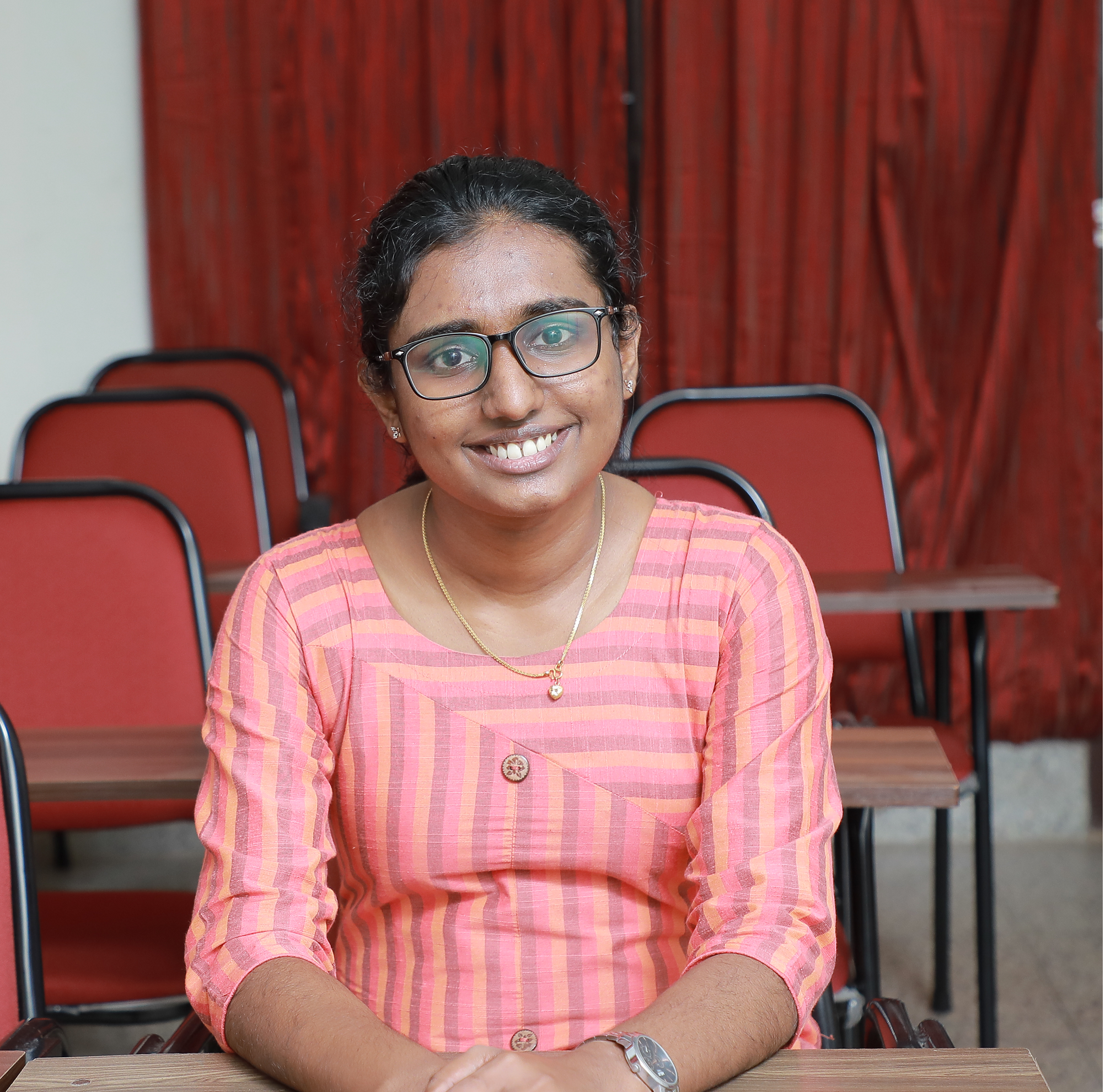
A Nabila, native of Cumbum in Theni district made the town proud in cracking the TNPSC Group I services exam in getting a posting as Assistant Commissioner (Commercial Taxes). Her alma mater Al Azhar Matriculation Higher Secondary School correspondent Nainar Mohamed and principal Ahamed Meeran felicitated for her achievement and presented a memento. Also present is her mom and husband Mohamed Afzal.
“Consistent effort and simple strategy is the mantra for success,” said 28-year-old A. Nabila, who cracked the TNPSC Group I services exam with 27th rank for the position as Assistant Commissioner (Commercial Taxes).
Hailing from Cumbum, a picturesque town nestled in the backdrops of Western Ghats known for its serene atmosphere, vibrant culture and rich history in Theni district, the enterprising young woman is on cloud nine thereby bringing laurels to her hometown.
To be precise, she brought to the fore that there is no shortcut for victory, be it course or career. In fact, she has proved that more than hard work, smart work will definitely fetch fruitful results. Giving useful tips in a lucid style to government job aspirants through a YouTube channel (Geethasamy Publishers), she made it clear that candidates must make it a point to complete question papers within the timeframe more importantly legibly while ensuring neat presentation.
Great to infer that the promising young woman had earlier cleared Group II services to become the State topper to join the subordinate services in the Tamil Nadu Agri and Farmers Welfare department at the Secretariat. Even while serving, she had a vision to scale new heights as to the inspiring words of American General and Diplomat Colin Powell – There are no secrets to success. It is the result of preparation, hard work and learning from failure. Undoubtedly, she romped home to victory through dedication and determination.
Armed with her BSc (2014-2018 batch) from Madurai Agriculture College and Research Institute (a constituent college under Tamil Nadu Agricultural University), she prepared for the competitive exams soon after her graduation without any second thought with a firm belief to excel in her vision.
Lady luck failed to smile at her in her first attempt in 2019.After getting into wedlock, she took a break only to continue her TNPSC Group II exam in 2022 and emerged successful. She dedicated her success to her parents, in-laws, brother Faizal and more particularly her hubby Mohammed Afzal while not to speak of her director and the faculty at the coaching institute. Her dad, A Ahamed Kabeer, is serving as Sanitary Inspector at Bodinayakanur Municipality.
At an event held yesterday, Cumbum Al Azhar Matriculation Higher Secondary School correspondent Nainar Mohamed and principal Ahamed Meeran felicitated Nabila for her achievement and presented a memento. Later, she addressed the students narrating the road she had travelled to be what she is now and urged them to have an ambition in life to reach dizzy heights in their chosen line of interest.
It is learnt that Nabila had her schooling from LKG to 8th at Cumbum Al Azhar Matriculation Higher Secondary School and continued her 9th and 10th at Theni MelaPettai Hindu Nadar Uravinmurai Saraswathy school and completed her Plus One and Plus Two at Tiruchengode Vidyaa Vikas school.
Quite encouraging to witness many female candidates from the rural background cracking UPSC civil services and TNPSC exams.
[The author is former Indian Express and Deccan Chronicle chief]
source: http://www.radiancenews.com / Radiance News / Home> Muslims World> Asia / by M Rafi Ahmed / June 20th, 2025
UAE-based Indian doctor and philanthropist Dr Shamsheer Vayalil has announced Rs 6 crore in financial aid for the families of medical students and doctors affected by the Air India plane crash in Ahmedabad last week.
The ill-fated aircraft struck the BJ Medical College’s Atulyam hostel complex during lunch hour, reducing student residences and the dining hall to rubble.
All but one of the 242 passengers and crew on board the Boeing 787-8(AI 171) and another 29 persons, including five MBBS students, on the ground were killed when the London-bound aircraft crashed, moments after it took off from the Sardar Vallabhbhai Patel International Airport.
Announcing the relief from the UAE capital of Abu Dhabi, Dr Shamsheer, founder and chairman of Burjeel Holdings and managing director of VPS Health, said he was deeply shaken when he saw the aftermath of the crash.
As someone who had lived in similar hostels during his medical education at Kasturba Medical College in Mangalore and Sri Ramachandra Medical College in Chennai, the images struck a chord, he said.
“I saw the footage from the mess and the hostel, and it truly shook me. It reminded me of the places I once called home, the corridors, the beds, the laughter, the pressure of exams, and the anticipation of a call from family,” he said.
“No one expects a commercial aircraft to come crashing into that world,” he added.
“Those students started the day thinking about lectures, assignments, and patients. Their lives ended in a way none of us could ever imagine. It hit close. Too close,” he said.
Dr Shamsheer’s relief package includes Rs 1 crore for each of the four deceased students’ families, Rs 20 lakh each for five seriously injured students, and Rs 20 lakh each for the families of doctors who lost loved ones.
The financial assistance will be delivered in coordination with the Junior Doctors’ Association at BJ Medical College, ensuring that those in need receive support swiftly.
This is not the first time Dr Shamsheer has responded to such a crisis. In 2010, following the Mangalore air crash, he provided financial assistance and employment opportunities to affected families at Burjeel Holdings, a leading healthcare provider in the Middle East.
source: http://www.english.varthabharati.in / Vartha Bharati / Home> Gulf / by Vartha Bharati / June 17th, 2025
Abdul Nasser’s childhood in orphanages and years of working multiple jobs show his courage and determination. His phenomenal rise proves that dedication can defeat all obstacles
New Delhi :
Abdul Nasser’s life began in the modest town of Thalassery in Kerala’s Kannur district. His early years were shadowed by tragedy when his father passed away when Nasser was only five years old. This loss pushed the family into severe financial difficulties. His mother, striving to make ends meet, took on various jobs to feed her children, but the hardship was such that Nasser and his siblings had to spend a large part of their childhood in orphanages.
Nasser spent about 13 years in various orphanages across Kerala. Despite the challenges of living without parental support and the difficulties of orphanage life, he never lost his desire to learn. At times, he ran away from these institutions, but the pull of education and a better future brought him back each time.
Speaking about his early struggles, Nasser once said, “I never allowed my circumstances to define me. Each time I faced hardship, I reminded myself that education was my way out.”
While still a child, Abdul Nasser took on multiple jobs to support his education and ease his family’s burden. When he was just ten, he began working as a cleaner in a local hotel. His hard work earned him additional responsibilities, and soon he was also helping as a supplier at the same hotel. To raise more funds for his studies, he also distributed newspapers, took up tuitions, and worked as a phone operator.
This early experience of juggling work and education shaped Nasser’s character and showed his commitment to personal growth. “Every job I did was a step towards my dream. I never allowed fatigue or failure to stop me,” he explained in a recent interview.
Despite these difficulties, Nasser’s dedication to education remained strong. He completed his graduation at a government college in Thalassery, a significant achievement for someone from his background. Determined to further his knowledge, he earned a postgraduate degree in 1994.
Education was not just a personal achievement for him but also a beacon of hope for those in similar difficult situations. His academic success inspired many young people in Kerala facing financial or family hardships.
After completing his postgraduate degree, Nasser entered the Kerala Health Department as a government employee. His sincerity, hard work, and dedication quickly became apparent to his superiors. He earned respect and opportunities through his honest approach to public service.
In 2006, Nasser took the Kerala State Civil Services Examination. His success led to his appointment as Deputy Collector, an important administrative post. His work was marked by sensitivity and a focus on social welfare, which earned him special recognition. In 2015, he was named the best Deputy Collector in Kerala, a clear sign of his dedication and impact.
Traditionally, entry into the Indian Administrative Service (IAS) requires passing the Union Public Service Commission (UPSC) examination, considered one of the most difficult exams in India. However, Abdul Nasser’s journey took a different path.
Because of his consistent performance, leadership skills, and administrative ability, the Kerala government promoted him to the IAS cadre in 2017 without requiring the UPSC exam. This rare achievement highlights the respect he had earned within the government.
“This promotion showed me that honest work and dedication can break barriers. It was a moment of great pride not just for me but for all those who struggle silently,” Nasser said.
After becoming an IAS officer, Abdul Nasser was appointed to key roles, including Kollam District Collector and Housing Commissioner in the Kerala Government. In these positions, he continued to serve the public with the same passion and commitment that had defined his career.
Nasser’s life story is more than just personal success. It sends a powerful message to all young people facing difficulties: with determination and hard work, one can rise above any circumstance.
People who know Abdul Nasser well speak highly of his journey and character. A fellow officer commented, “Nasser’s rise is an example of true grit and dedication. His background shows how difficult it is to succeed, yet he has done it with humility and hard work.”
A local social worker added, “His life encourages so many children who have lost their families or face poverty. He proves that where there is will, there is a way.”
Abdul Nasser’s story stands out because it breaks common stereotypes about who can succeed in the Indian civil service. Coming from a background without financial support or family guidance, many would have given up. Instead, Nasser found ways to keep moving forward.
In a society where many young people struggle to access education and opportunities, Nasser’s life offers hope and inspiration.
“I want every child growing up in hardship to know that their past does not determine their future. Keep working, keep believing,” he said.
source: http://www.clarionindia.net / Clarion India / Home> Editor’s Pick> India> Indian Muslims / by Team Clarion / June 20th, 2025
Unlike the majority of Muslim youths from Assam who pass out from Darul Uloom Deoband, an Islamic university and seminary in Uttar Pradesh, who often end up joining mosques, madrassas, and other institutions to teach the holy Quran and other Islamic practices, Maulana Nurul Amin Qasimi choose a different path.
He launched a mission to remove misconceptions about Islam and the Muslim community. He has been preaching Islam in the right form with exceptional and innovative thoughts across Assam.
Many videos of Maulana Nurul Amin Qasimi have already received widespread attention on social media. In these videos, Maulavi is seen explaining the importance of education to the Muslims, the essence of Islam, and translating various verses of the Quran into local Assamese languages for easy understanding of the people.
He has been rendering his inspiring speeches at mosques, Edgars, madrassas, public functions, and other influential platforms.
Maulana Nurul Amin Qasimi during a social campaign
Maulana Nurul Amin Qasimi has recently published the Assamese interpretation and translation of the Holy Quran for Assamese readers. He has also launched the Assamese translation of the Holy Quran in audio format with his voice-over as many people do not read books nowadays due to lack of time.
He has also founded the Islamic Research and Study Center in central Assam’s Tezpur town with a few young men who had received Islamic education with progressive thoughts for society.
Maulana Nurul Amin Qasimi received his primary education from Sootea Higher Secondary School in central Assam’s Sonitpur district and then enrolled himself in Khutaktia Dini Alia Madrasa in Lakhimpur district for Islamic education. After studying there for six years, he enrolled in HojaiJalalia Madrassa. He passed his high school leaving certificate examination or Class 10 final exam in general education while studying at a madrassa in Jalalia Madrasa in Hojai.
After four years of study, he received the rest of his Islamic education at Darul Uloom Deoband Madrasa in Uttar Pradesh. After completing his Islamic education, he started teaching at Markazul Ma-Arif in central Assam’s Hojai district.
While teaching, Qasimi successfully passed his higher secondary examination or Class 12 final exam in general education. He then graduated from Ruphi College and obtained his postgraduate degree from Gauhati University. He is now studying for his PhD at Gauhati University.
In an interview with Awaz-The Voice, Maulana Nurul Amin Qasimi said: “We are Assamese Muslims and we live as Assamese Muslims. There is sometimes confusion about Islam and it is because of some Muslim people that others develop misunderstandings about Islam. Some followers of Islam misinterpret the religion because of their lack of knowledge.
Maulana Nurul Amin Qasmi recording Holy Quran in Assamese
“I felt the need to enlighten people about the Holy Quran and the true words of Prophet Mohammad. We must present Islam in its true form in our local language. That is why I am making this effort. The Holy Books are in Arabic so it is our responsibility to explain it to everyone in our language.”
When Muslims congregate for the mandatory Jumma Namaz (Friday prayers), the Imam (head priest) gives a sermon called khutbah. He speaks about the principles of Islam, one’s duty towards society, the call for good deeds, respect for other religions, etc. Since the khutbah is rendered in the Arabic language in many mosques, it is difficult for the locals to understand the true meaning of these verses.
“I thought that if the messages of peace, humanity, or statements in khutbah were explained in the simple local language that people could understand, they would benefit and the misconceptions about Islam removed. There are ideological differences over reciting khutbah in Arabic. Some say that it should be explained in the mother tongue. But, according to our Islamic law, since the tradition of reciting the khutbah in Arabic has been going on since the time of the Prophet, it has not changed in some places,” the imam said.
Maulana Nurul Amin Qasimi said it’s important to learn modern general education along with Islamic education. “Muslim society is quite backward in education. In Muslim society, Maulanas or Ulemas are respected and considered religious leaders. So, if Ulemas advise on education, I think everyone will follow them and derive benefits. Our religious leaders have a lot to do in this regard. These matters get less importance in religious congregations. It is compulsory to take the basic education of Islam, but we should also be educated to be good citizens and individuals ready for the future,” he said.
Maulana Nurul Amin Qasimi Distributing blankets
Maulana Nurul Amin Qasimi has been consistently speaking along the same lines in all the religious gatherings he is invited to. “Our Prophet Mohammad commanded us to go up to China for education. The first word of the Holy Quran is Ikra (read). Since our Prophet has allowed us to go to China for education, but, there is no scope for Islamic education in China. So our Prophet has, at the same time, laid special emphasis on IT and modern education besides Islamic education. Now only 4% of Muslim children study in madrassa.
“Not all Muslim children study in madrassa and not all need to study. The 4% must become Maulanas or Hafizs because they will have to uphold the religion in the future. We must educate the remaining 96% of the students’ modern education and establish them as good members of society,” he said.
Apart from the children studying in madrassas or receiving modern education, the Maulana said it is also necessary to think about school dropouts. He said the Muslim community could be rescued from its present condition only through education.
source: http://www.awazthevoice.in / Awaz, The Voice / Home> Stories / by Daulat Rahman, Guwahati / June 15th, 2025
Kodangallur, KERALA / Fulat(Phulat)Village (Muzaffarnagar District), UTTAR PRADESH :
Recently, I had the opportunity to visit Vision International Academy (VIA), situated in the village of Fullat in Muzaffarnagar district, Uttar Pradesh. It was a journey I had long awaited. Spending time with the children there—even briefly—was a moving experience. Before me sat over 300 Huffaz—young children who had committed the Qur’an to memory. But the academy is not merely a Hifz institution. As the name “Vision” suggests, it embodies a deeper insight into human potential, blending spiritual excellence with academic brilliance.
Mammooty Anjukunnu
That evening, while returning to Darul Uloom Deoband, I received a call from Babukka. He sounded emotional. He had called to express his joy—not just about my visit to Vision or meeting the students—but about something much greater. Because what I had visited was not just another educational center. It was a mission. A dream. And behind it stood the journey of a visionary man.
Let me tell you that story.
A man from Kodungallur, Kerala—Ameer Ahmad Babu Manappat—never imagined that his life would take a turn into the field of Islamic education. A former student of Aligarh Muslim University, he was first struck by the concept of Hifz during a visit to Delhi. Intrigued, he began exploring madrasas in Saharanpur, Deoband, and surrounding areas of North India. He wanted to understand the intellectual capacity of Huffaz. People had told him these children possessed extraordinary memory and brilliance.
However, while interacting with them, he found something amiss. These bright children, despite having memorized the entire Qur’an, were often unaware of the world outside. And he, in turn, was a stranger to theirs. This encounter exposed a painful reality: two different worlds existed—and there was a vast, unbridged distance between them.
In North India, the term “madrasa” is broad and includes Hifz centers, Arabic colleges, and basic religious schools. Many children are enrolled in such madrasas without access to formal education. They might learn basic arithmetic or science, but there’s little focus on academic rigor or integration. Most teachers remain confined to their own disciplines. The idea of combining Qur’anic and modern education barely exists.
Ameer Babu, grandson of Kerala’s renowned Muslim reformer Manappat Kunhahammad Haji, felt a growing sense of responsibility. He believed that Huffaz—gifted with sharpened intellect and memory—deserved access to high-quality general education. Their potential, he thought, could be channeled for the upliftment of society and the community.
He spent months researching and, with experts, developed an innovative bridge course—an academic fast-track that compresses eight years of schooling into one. After two more years, students would be ready for the 10th-grade public examination.
Many doubted his vision. He met numerous religious scholars and explained the idea, but most dismissed it. “We already teach school subjects,” they would say. “What more do you want?”
In reality, over 35,000 Huffaz graduate annually from madrasas in Uttar Pradesh alone. Yet less than 10% of them appear for the 10th-grade board exams. Most do not pursue further education. Many end up in manual labor, small trades, or low-income jobs.
Still, Ameer Babu did not abandon his mission.
His journey brought him to Fullat, near the UP-Delhi border, home to a vast madrasa campus named Jamia Shah Waliullah, founded by Maulana Kaleem Siddiqui, a renowned scholar and spiritual leader. The madrasa is located in the birthplace of Imam Shah Waliullah Dehlawi, one of the greatest Islamic scholars in Indian history.
When Ameer Babu shared his vision with the people there, he was told, “Let Hazrat come, he will help you.” Soon, Hazrat arrived—dressed in white, with a radiant smile and graceful demeanor. It was Maulana Kaleem Siddiqui himself.
After listening carefully, Maulana asked Ameer Babu:
“Ameer Saab, what do you want?
Land? Buildings? Some support?”
Then he stood up, led him to a nearby three-acre plot of land adjacent to the madrasa, and asked: “Is this enough?”
That was the beginning.
In August 2017, Ameer Babu admitted 76 Huffaz in the first batch. The results were astounding. These students, with their incredible memory skills, were able to learn up to 1,500 words a week. They completed an entire year’s academic syllabus in just 13 to 18 days, using innovative learning techniques. Simultaneously, their Qur’anic memorization was maintained through a dedicated revision system (daura).
Under the Open School system, the first batch achieved a 92% pass rate in the 10th-grade board exams. Encouraged, they transitioned to the more rigorous UP State Board—and the pass rate rose to 96%. Then, Vision shifted to the CBSE curriculum, and the first batch passed with a 100% success rate.
Classes were expanded to include Plus One and Plus Two, with both Science and Humanities streams. Today, more than 300 Huffaz are enrolled at VIA.
Among its graduates:
2 are now in medical colleges
7 in engineering colleges
8 in law schools
Over 50 in various Arts & Science colleges
Vision’s students now come from across seven Indian states. They are fluent in English, academically competitive, and grounded in Qur’anic values.
Last year, during Ramadan, 235 VIA students led Taraweeh prayers as Imams in 17 Indian states, including Kerala—showcasing both their spiritual and intellectual discipline.
Some of these students have now joined the SAFI Institute in Kerala, where Ameer Babu serves as Vice Chairman—an ongoing experiment in integrated education. His goal is to nurture a generation of confident, competent Muslim youth who carry the Qur’an in their hearts and knowledge in their minds.
During my visit, Babukka shared with me his dream—to build 100 such institutions across India for Huffaz. I responded with a story.
In 1992, Balbir Singh, a leader in the mob that demolished the Babri Masjid, returned to his village a hero. But his father rejected him. His wife left. Disgraced and broken, he eventually arrived at Maulana Kaleem Siddiqui’s khanqah in Fullat. There, he broke down and wept. He embraced Islam and became known as Mohammad Aamir.
Following Maulana’s advice, Aamir joined Tablighi Jamaat for four months. Later, he told Maulana:
“Hazrat, I was one of those who demolished Babri Masjid. I must build 100 mosques to atone.”
Before his death in 2021, Mohammad Aamir fulfilled that dream.
Now, from the same khanqah, Ameer Babu has set out on his own mission—to build 100 schools for Huffaz.
When Maulana Kaleem Siddiqui’s dawah efforts began shaking the status quo, the authorities arrested him under fabricated charges. That is a different story altogether.
But Ameer Babu carries on, undeterred.
He serves— the Qur’an, and those who carry it within.
source: http://www.muslimmirror.com / Muslim Mirror / Home> Education> Positive Story / by Mammooty Anjukunnu / June 07th, 2025
The correct name is Yahya Ali Streets – 1, 2 and 3, and they take their names from Justice Yahya Ali of the High Court of Madras. | Photo Credit: Special Arrangement
The street sign says it all – Yahali 3rd Street. There are three of them, all connecting Anna Salai with G.N. Chetty Road, at Teynampet, very close to Semmozhi Poonga. Only Yahali is not the correct name. Google Maps has compounded matters further. You need to search under Yaya Hali Street if you need to find it. The correct name is Yahya Ali Streets – 1, 2, and 3, and they take their names from Justice Yahya Ali of the High Court of Madras.
The learned judge is not in public memory. When I spoke to a friend on this, he said that the Internet has no reference to such a judge, and I guess that would mean such a person did not exist. But he did. And when he died as a sitting judge in 1949, the High Court convened to condole his passing. The brilliant barrister and then Public Prosecutor V.L. Ethiraj led the mourners. He dwelt on the “keen intellect, great learning, profound human understanding and exquisite courtesy we found in that frail figure.” But to get full biographical details, we need to turn to the speech of an illustrious contemporary, V.C. Gopalaratnam, who spoke on behalf of the Madras Advocates Association.
Yahya Ali was born in August 1893 in Nellore, his father serving as Assistant Secretary in the Finance Department of the Nizams of Hyderabad. He graduated in History and Economics from the Presidency College in 1916 and then qualified in Law. He set up practice in Nellore and became Government Pleader and Public Prosecutor. He was a member of the Madras Legislative Council as well. In between, he became Chairman of Nellore Municipality, his election being testimony to the regard he enjoyed from all residents of the town. It was a place notorious for communal tension, and being a Hindu majority, it was considered impossible for a Muslim to win the ballot.
In 1926, Yahya Ali became District Judge, being posted in that capacity to various parts of Madras Presidency. His specialisation in matters concerning finance led to his being appointed by the then Imperial Government in 1942 as the Chairman of the Appellate Income Tax Tribunal where he equipped himself “with a thorough and exhaustive knowledge of Income Tax Law and Procedure.” In 1945 he became a judge of the High Court of Madras. It is interesting to note that he sat in judgment till the last day of his life, taking ill on April 21, 1949, and passing away the next day.
While these details are from Gopalaratnam’s speech during the condolence meet, we learn some more from what the then Chief Justice P.V. Rajamannar had to say. Yahya Ali, he noted, was a connoisseur of Telugu poetry and “he was a deeply cultured person – culture with the best ingredients of what I may call Moghul culture – urbanity, catholicity and instinctive love of all that was beautiful.”
What was his link to Teynampet? He was at the time of his death Mutawalli (trustee or guardian) of the Teynampet Mosque in which his family had taken a deep interest. It was also in the precincts of this mosque that Yahya Ali was buried. And eventually, a locality was named after him. And from there, the name has morphed phonetically as it were, to what it is now with street names changing accordingly.
I wish the Corporation would be more careful with street signs. We have suffered enough mutilation with truncation of many names to initials, morphing of others, and of course, name changes at the drop of a hat.
source: http://www.thehindu.com / The Hindu / Home> News> Cities> Chennai>My Madras / by Sriram V / June 11th, 2025
In 2007, Farah Usmani was working at the United Nations headquarters in New York when she made a pivotal decision that sparked a movement aimed at empowering women worldwide through financial independence.
Dr. Usmani, a physician from Uttar Pradesh, relocated to the city six years ago for work. During her search for a rental apartment, she discovered that New York’s rental prices were soaring and becoming unaffordable. After doing some quick calculations, she opted for a low-interest mortgage from the UN Federal Credit Union to purchase an apartment. She ended up buying a two-bedroom apartment in Manhattan, with a monthly mortgage payment that was only slightly higher than the rent she would have paid.
“This slightly higher expenditure (along with a down payment) would enable me to own an asset, and not fritter away my money on rent. It was such a wise decision. Today, 15 years later, I am on track to be a mortgage-free homeowner,” Usmani shared with the Morning Star newspaper. This experience inspired her to launch a campaign aimed at educating women around the globe about the importance of financial freedom and empowering themselves through financial independence.
Today Dr. Farah Usmani is an international health, gender and development expert based in New York.
Dr. Farah Usmani with her husband Javed Usmani
Dr. Usmani is also the first Muslim woman from India to work with the United Nations International Civil Service at Director Level. She is the recipient of the 2021 Mahatma Award for Social Impact for her work with women, girls, and minorities.
She has 25 years of experience working with the United Nations International Civil Service with UNFPA, focusing on women and girls and their reproductive health and rights.
Carrying forward her mission to empower women, Dr. Usmani is the Global Vice President of SAFAR Foundation,(Supporting Action for Advancement and Rights), a philanthropic organization focused on uplifting marginalized women and girls.
She is the Founder of “Rising Beyond The Ceiling”, a global initiative supported by SAFAR to shine a spotlight on Muslim women of India and contribute towards changing their stereotypical narrative.
The organization has published its first volume on Muslim women from Uttar Pradesh and is working on the rest of the Indian states.
Farah has received several awards and recognitions including the British Council and the Joint-Japan World Bank Merit Fellowships.
Dr. Farah Usmani
At the UNFPA (United Nations Population Fund), Dr. Usmani played a pivotal role in policy, planning, technical leadership, and health services across more than 50 countries, working on the rights of women and girls. She became the first Indian Muslim woman to reach the Director level in the UN’s International Civil Service in New York.
She noticed that Muslim women were often boxed into stereotypical roles on every platform. Farah made it her mission to break that mold.
“Why are our stories limited to the veil and the home?”
Inspired by this question, Dr. Farah Usmani launched Rising Beyond the Ceiling a global initiative that highlights the achievements of Indian Muslim women, brings their hidden stories to light, and challenges societal stereotypes.
This initiative didn’t stay confined to books or speeches it became a movement. A beacon of hope for every woman in a small town who dreams of a bigger world.
Dr. Usmani believes that money is not just a necessity it is power. She says, “Instead of being afraid of money, we need to befriend it.” Her husband taught her: money that doesn’t generate returns slowly vanishes. And that’s where her journey into financial literacy began.She started investing in tax-free savings, fixed deposits, and NRE (Non-Resident External) deposits. Today, her daughter Saba is also a real estate investor in Manhattan. This is not just a financial legacy it is an intellectual one, building a story of empowerment across generations.
Dr. Usmani has received numerous accolades, including Merit Fellowships from the World Bank and the British Council, and the Mahatma Award in 2021. She has worked globally for the rights of women, minorities, and marginalized girls.
She also serves as the Global Vice President of SAFAR Supporting Action for Advancement and Rights a philanthropic organization focused on uplifting marginalized women and girls.Breaking many gender barriers at different stages in her life, she has the distinction of being the first woman student to top the merit list in the pre-medical examination of the Aligarh Muslim University, where she completed her medical training.
She is the recipient of the 2021 Mahatma Award for Social Impact for her work with women, girls, and minorities.
Farah Usmani comes from a middle-class Muslim Family in Aligarh, Uttar Pradesh.
She holds a Master’s in Health Policy, Planning & Financing given by the London School of Economics & London School of Hygiene & Tropical Medicine & a M.D. in Obstetrics & Gynecology from Jawaharlal Nehru Medical College, Aligarh India. She has certifications in leadership and organizational management from Cornell University, Cranfield School of Management, Stanford University & the American Management Association, New York.
Farah is married to Jawed Usmani, an Indian civil servant, who rose to the position of Chief secretary of the Uttar Pradesh government. They have two children Faraz Usmani and Sabah Usmani.
Dr. Usmani says, “The coins our mothers and grandmothers hid in their mattresses were not just savings they were their attempt at independence.
Indian Muslim Women who feature in the list of Rising Beyond the Ceiling
The “The time has come for women to see money not as shame, but as strength.”
Her mindset, her struggles, her smile they are a source of inspiration for every woman who dreams of flying in an open sky, not a cage.
Dr. Farah Usmani’s story reads like a novel with trials, a determined heroine, a journey of transformation, and a path toward the light.
It teaches us that with courage, even the walls of a house can become the rooftop of the world’s tallest building.
Because when a woman shapes her identity by herself, she doesn’t just create a path for herself but for every generation that follows.
source: http://www.awazthevoice.in / Awaz, The Voice / Home> Stories> The Changemakers / by Onika Maheshwari, New Delhi / June 02nd, 2025