Category Archives: Leaders

Muslims who dominated headlines in 2021

INDIA :

Danish Siddiqui in Afghanistan

As the year draws to an end, we have compiled a brief list of the Indian Muslims who have been in news during 2021.

Danish Siddiqui :

Danish Siddiqui was a Pulitzer Award winning photojournalist from New Delhi, who was killed by Taliban while covering the war in Afghanistan. An alumnus of Jamia Millia Islamia, Siddiqui was one of the country’s most well known photographers who documented the Rohingya refugee crisis, Covid deaths and the Delhi riots to win several awards. In July 2021, Reuters assigned him documentation of the Afghanistan War as an embedded journalist with Afghan Special Forces. On July 16, Siddiqui was killed in action. Governments of India, USA, Afghanistan and United Nations expressed grief and shock on his death and thousands joined his funeral procession in DelhI.

Dr Shahid Jameel :

Dr. Shahid Jameel is a world renowned virologist and is one of the leaders of India’s fight against Covid-19. The Covid-19 outbreak has thrown new challenges to the scientific community. When the Government of India set up an Indian Sars-Cov-2 Genomics Sequencing Consortium (INSACOG), which consists of 38 laboratories to monitor the genomic variations in the SARS-CoV-2, Jameel was appointed as the head of its scientific advisory group. He served the INSACOG in this position till May, 2021 and still advises different government and non-government bodies in strategising the war against Covid-19. 

Coach Naseem Ahmed with Olympian Neeraj Chopra

Naseem Ahmed :

Naseem Ahmed: On 7 August, 2021, Neeraj Chopra threw Javelin for 87.58 mts. and became the first Indian to win an Olympic Gold in track and field events. With this success, Naseem Ahmed of Panchkula also hit the headlines. Ahmed was his first coach, who coached Chopra for almost six years at Tau Devi Lal Sports Complex in Panchkula. It was under his guidance that Chopra turned into an athlete from a chubby child. After returning to India, Chopra went to meet and receive blessings from his coach.

Mohammad Shareef alias Shareef Chacha receiving Padma Shri from President Ran Nath Kovind

Mohammad Shareef :

Mohammad Shareef is a bicycle mechanic from Faizabad, Ayodhya and hit the news headlines this year for receiving Padma Shri, the fourth highest civilian award in India, from the President Ram Nath Kovind. In 1992, his son was murdered and was eaten by animals as nobody claimed it. This incident moved him so much that he took it upon himself to perform the last rights of unclaimed dead bodies. In the last 28 years, he has performed the last rights of more than 25,000 unclaimed dead bodies according to their religions.

Firoz Alam as an IPS officer (Left) and as a Constable of the Delhi Police (Right)

Firoz Alam :

Firoz Alam’s story is straight out of a fiction, where his character bears resemblance to those played on screen by several film stars. Alam, a resident of Hapur in U.P, was a constable with Delhi Police since 2010. In 2014, he started preparing for UPSC CSE. The work pressure and family responsibilities did not allow him to devote full time to the studies, like many availing coachings could do. After five unsuccessful attempts, in his sixth attempt he qualified UPSC CSE and joined as an IPS officer. His inspiring journey from a constable to IPS had taken the nation by a storm when he joined the training after leaving the job as constable.

Sadaf Choudhary 

Sadaf Choudhary :

Sadaf Choudhary came into limelight when the UPSC CSE results were declared in September and she secured 23rd rank. She was the highest rank holder among Muslims this year and will become an IAS officer. It must be kept in mind that since independence only 179 Muslims have secured ranks to get IAS allotted to them.

Mohammed Siraj praying at the gave of his father

Mohammed Siraj :

Mohammed Siraj is an Indian cricketer from Hyderabad who made it to the headlines in January by becoming the highest wicket taker from India during the India – Australia Test Match Series in Australia. To claim his 13 scalps, he played only three of the four tests in the series. The fact that his father had died just before the series and he was given an option to return to the country, which he declined citing his commitment to the nation made it even more special.

In the last test match at Brisbane, he bagged five Australian wickets to script a historic win and became a national hero. The headlines of the sports column were filled with his heroics, commitment and ability. Since then he has been a regular feature of the Indian Cricket team as a pacer. 

source: http://www.awazthevoice.in / Awaz, The Voice / Home> Stories / by Saquib Salim / December 30th, 2021

Parbhani Elects First Muslim Mayor from Shiv Sena Faction

Parbhani, MAHARASHTRA :

Mumbai:

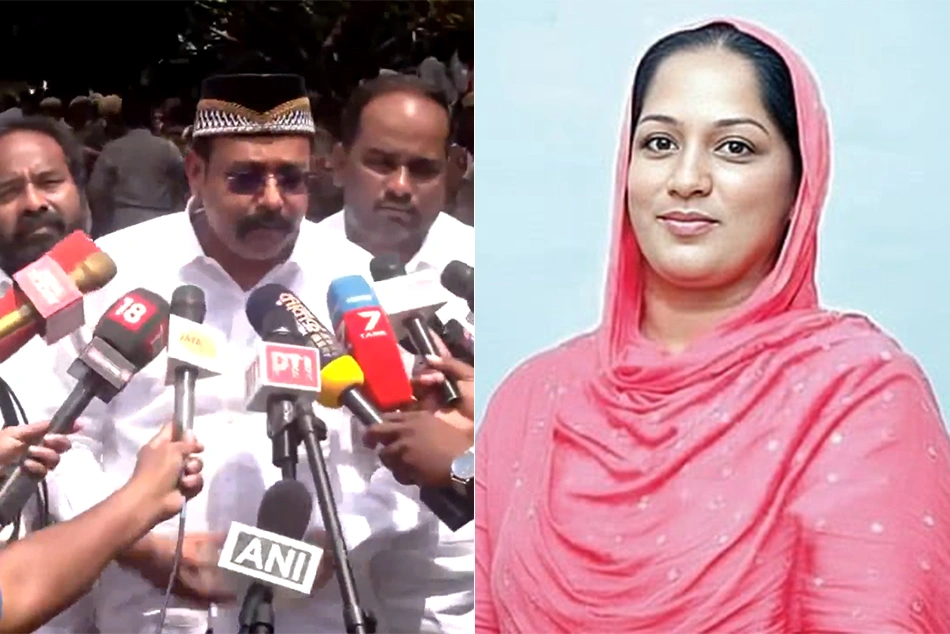
Parbhani has elected its first Muslim mayor from the Shiv Sena since the party’s formation in the 1960s. Shiv Sena UBT leader Syed Iqbal Syed Khwaja won the mayoral post in the 65 member Parbhani Municipal Corporation. He secured 39 votes, defeating BJP candidate Tirumala Khilare, who received 26. The majority mark stood at 33.

This marks the only municipal corporation where the Uddhav Thackeray led Shiv Sena faction has formed a civic government. The party won 25 seats, emerging as the single largest group. Congress and BJP secured 12 seats each, while the Ajit Pawar led NCP won 11. Together, Shiv Sena UBT and Congress held 37 members in the House.

Parbhani holds political history linked to religious division. In the 1990 Assembly election, the slogan Khan viruddh Ban framed the contest along religious lines. The Shiv Sena then consolidated its base in the region.

Today, the political equation has shifted. Around 42 percent of Parbhani’s population is Muslim. In the recent civic polls, 13 of the 25 elected Shiv Sena UBT corporators were Muslims, including Syed Iqbal.

A first time corporator, Syed Iqbal is a local activist. His brother, Syed Abdul Khadar, has influence in Muslim localities and maintains close ties with party MP Sanjay Jadhav.

After his win, Syed said he would focus on development and serve all communities. BJP leaders criticised the decision, while Congress stated it backed the candidate to keep the BJP out of power and honour alliance commitments.

source: http://www.radiancenews.com / Radiance News / Home> Latest News> Report / by Radiance News Bureau / February 13th, 2026

Bengaluru: U.T. Khader appointed to panel on Constitution’s Tenth Schedule

Bengaluru, KARNATAKA :

U.T. Khader

Bengaluru:

Legislative Assembly Speaker U.T. Khader has been appointed as a member of a four-member Committee of Presiding Officers formed to examine matters related to the Tenth Schedule of the Constitution, which deals with anti-defection provisions, Deccan Herald reported on Wednesday.

According to an official release from the Karnataka Secretariat, the committee was constituted by Lok Sabha Speaker Om Birla.

The panel is chaired by Maharashtra Legislative Assembly Speaker Rahul Narwekar, with Odisha Speaker Surama Padhy and Nagaland Speaker Sharingain Longkumer as members.

The Committee held its meeting on February 9 and 10 at Vidhan Bhavan in Mumbai. During the meeting, members discussed issues related to anti-defection laws and legislative procedures.

source: http://www.english.varthabharati.in / Vartha Bharati / Home> Karnataka / by Vartha Bharati / February 11th, 2026

JIH Karnataka, Rifah Chamber of Commerce Host Workshop for Female Entrepreneurs and Business Starters

Bengaluru, KARNATAKA :

When Haram Appears Dominant, There Is a Need to Establish Halal – Ali Shareef

Bengaluru:

Emphasising the importance of halal and ethical trade for the economic empowerment of the Muslim community, Mr. Ali Shareef, General Secretary of Lifeline Foundation, stated that mosques should be developed as centres for economic guidance. Where this is not feasible, local schools should be utilised to educate people about the principles of economic development. He stressed that businesses can be initiated even with small capital, and institutions like Jamaat-e-Islami Hind, Lifeline Foundation, and others are actively guiding the community in this direction.

Mr. Ali Shareef was addressing a programme organised for Muslim women engaged in small-scale businesses at the Agriculture Institute of Technology, Bengaluru. The programme was jointly organised by Jamaat-e-Islami Hind, Karnataka, and Rifah Chamber of Commerce, Karnataka, under the theme of community economic development.

Speaking on the occasion, Ms. Fakhra Atiq, Assistant Secretary Markaz JIH and MD Saheliyan, highlighted the importance of business planning and sustainability. She emphasised that proper planning is essential for long-term economic growth and stability and encouraged Muslim women to utilise their skills while remaining mindful of ethical and social boundaries.

Mr. Riyaz Ahmed Kopal, Director of MEWA, introduced various central and state government schemes, urging participants to focus particularly on schemes related to medical services, education, MSMEs, and agriculture. He pointed out that many government schemes fail to reach beneficiaries due to lack of awareness and information.

Delivering the keynote address, Er. Syed Mumtaz Mansoori, President of Rifah Chamber of Commerce, Karnataka, reflected on the responsibilities of women in the light of the Qur’an and Hadith. He cited examples of courageous Muslim businesswomen from early Islamic history, including Hazrat Asma bint Makhzuma, who was engaged in the perfume trade, and highlighted the role of Ansari women who worked in agriculture and supervised date palm cultivation. He also elaborated on various dimensions of trade and commerce.

During the programme, Naheeda, Tayyab Nourishers, Madiha Sheerin, Chocko Turf, Pratibha, and Energy Bar shared their entrepreneurial experiences. Mr. Afnan Hasan, CEO of Hamd Foods and Founder of Pizza Valley, spoke on effective marketing strategies for small businesses.

In his concluding address, Mr. Muhammad Yusuf Kanni, Secretary of Jamaat-e-Islami Hind, Karnataka, remarked that the economic condition of Muslims in the country can be gauged from the fact that many Muslim women are compelled to conceal their identity and work in others’ homes. He explained that the title of the programme, “Azm” (Resolve), symbolises firm determination, strong intent, and perseverance. He emphasised that commitment, planning, and consistent effort are essential for economic empowerment.

Highlighting the initiatives of Jamaat-e-Islami Hind, Karnataka, he mentioned the establishment of Rifah Chamber of Commerce, engagement with traders on a large scale, formation of facilitation societies, efforts toward microfinance initiatives, guidance for small businesses, and a focused approach toward agricultural development. He concluded by stating that sustainable progress is possible only through patience, perseverance, piety, and righteousness.

The programme commenced with a motivational address by Mr. Rafiq Ahmed, National Advisory Member of Rifah Chamber of Commerce. Ms. Tasneem Farzana, Assistant Secretary (Halqa), delivered the opening remarks and explained the objective of the programme, stating that it was named “Azm” to reflect the resolve to support families through halal and ethical trade while seeking the pleasure of Allah and success in the Hereafter.

The responsibilities of the convener were carried out by Ms. Arshiya Fatima Tanzil, while the vote of thanks was presented by Ms. Sameena Bano, General Secretary.

source: http://www.radiancenews.com / Radiance News / Home> Entrepreneurship > Latest News / by Radiance News Bureau / February 10th, 2026

Mystery still shrouds ‘Saath Kabra’

Vijayapura, KARNATAKA :

This haunting historical site in Vijayapura deserves better conservation efforts from Archaeological Survey of India as well as deeper research from historians to understand the legends swirling around the monument.

Saath Kabra, the cluster of 63 tombs, in Vijayapura (Photo | Express)

Vijayapura :

Far from being just another tourist destination, ‘Saath Kabra’ in Vijayapura stands out as one of the most haunting historical sites in the region. Often described as a silent witness to a tragic past, ‘Saath Kabra’ is a cluster of 63 tombs arranged on a raised black stone platform, that has generated legends, scholarly debate and enduring curiosity.

The most widespread legend surrounding ‘Saath Kabra’ is linked to the period of Ali Adil Shah II of the Bijapur Sultanate, who is also credited with commissioning the unfinished ‘Bara Kaman’ monument. During his reign, the Bijapur Empire faced a serious challenge from the Maratha leader Chhatrapati Shivaji. To counter this threat, Ali Adil Shah appointed his powerful general Afzal Khan to confront Shivaji.

Afzal Khan, originally from Afghanistan, was known as a formidable warrior. Historical narratives also describe him as deeply superstitious, placing great faith in astrology and spiritual predictions. In 1659, before leaving to face Shivaji, Afzal Khan is believed to have consulted a Sufi Pir, who foretold that he would not return from the campaign. According to local legend, this prophecy deeply disturbed him.

Folklore claims that Afzal Khan, fearing defeat and dishonour, killed more than 60 of his wives by pushing them into a well and later constructed tombs at the site. The alleged motive was to prevent them from remarrying or falling into the hands of enemies and facing humiliation or violence in the event of his death. This story has long been used to explain the existence of the mass graves at ‘Saath Kabra.’

The cenotaph of Afzal Khan

Afzal Khan later travelled to Pratapgarh in the present-day Maharashtra to confront Shivaji. Instead of a direct battlefield encounter, negotiations were arranged. Historical records state that Afzal Khan planned to assassinate Shivaji during a peace meeting. Shivaji, aware of the plot, took defensive measures by wearing armour and concealing iron tiger claws on his fingers. During a traditional embrace, Afzal Khan attempted to overpower Shivaji, but failed. Shivaji retaliated and killed Afzal Khan. Afzal Khan’s body was subsequently buried at the foothills of Pratapgarh Fort.

There is no evidence to support the claim that Afzal Khan murdered his wives or that ‘Saath Kabra’ is their burial site. Vijayapura-based historians Abdul Gani Imaratwale and Krishna Kolhara Kulkarni dismissed the popular narrative as baseless, stating that no credible historical text mentions such an act by Afzal Khan. They emphasised that, in the absence of documentary evidence, the story must be treated as legend rather than history, and that research is required to determine the true origins of the graves.

Dr Imaratwale likes to call the 60 women as ‘half-wives’ as though they were not legally wedded wives, however they enjoyed almost the same privileges that of wives. He said that Khan had four legally wedded wives.

Dr Imaratwale says that such women were accorded considerable respect and were not buried in public graveyards. Separate land was often chosen for their burial, which could explain the clustered graves at ‘Saath Kabra.’

Dr Imaratwale says that it is not credible that a general, who commanded an army of around 40,000 soldiers, would be so fearful of his enemy that he would drown his women one by one in an open well.

Dr Imaratwale suggests alternative possibilities. He said the deaths could have occurred due to mass poisoning or as a result of an accident, such as the collapse of a large structure where the women may have been residing. However, he acknowledged that no information is available to establish the exact cause.

The historians say there is no clear record to confirm whether the women died while Afzal Khan was in Bijapur or during his military campaign. They believe it is more likely that their deaths occurred when Afzal Khan was fighting in Maharashtra. Afzal Khan himself died there, and his body was never brought back to Bijapur. As a result, his cenotaph exists in Vijayapura, built in accordance with his wish to be buried there, a wish that ultimately remained unfulfilled.

Tourists largely confine their visits to prominent landmarks such as the Gol Gumbaz, Bara Kaman and Ibrahim Roza while dozens of other monuments remain overlooked. Located in Navarasapur on the outskirts of the city, ‘Saath Kabra’ is difficult to access. The site includes 63 black stone tombs, an ancient well now filled with silt. Many tombstones are broken or missing, and the entire complex is in a dilapidated state. Poor road connectivity, lack of signboards and absence of maintenance have further contributed to its neglect, with little effort made by the tourism department or the Archaeological Survey of India to promote or preserve the site.

Owing to its eerie atmosphere and disturbing legends, local residents often avoid the monument. Whether it represents a misunderstood burial site, a tragic episode lost to time, or folklore layered over fragments of history, ‘Saath Kabra’remains one of Vijayapura’s most enigmatic monuments, underscoring the urgent need for serious research, preservation and historical clarity.

source: http://www.newindianexpress.com / The New Indian Express / Home> Bengaluru / by Firoz Rozindar / February 08th, 2026


Col Sofiya Qureshi, who led Op Sindoor briefing, conferred with ‘Vishisht Seva Medal’

Vadodara, GUJARAT :

Colonel Sofiya played a key role in press briefing during Operation Sindoor in 2025.

Image Credit: IANS

Colonel Sofiya Qureshi, who emerged as a prominent representative of India on the global stage during Operation Sindoor in 2025 against Pakistan-based terrorists, has been selected for the Vishisht Seva Medal in the 2026 Republic Day honours.

The award, given for “distinguished service of a high order”, which adds one more milestone for her. 

On the eve of the 77th Republic Day, President Droupadi Murmu sanctioned gallantry awards for 70 personnel of the armed forces, including six honours awarded posthumously. In addition, she approved the conferment of 301 military decorations on members of the armed forces and other personnel.

These decorations comprise 30 Param Vishisht Seva Medals, four Uttam Yudh Seva Medals, 56 Ati Vishisht Seva Medals, nine Yudh Seva Medals, two Bars to Sena Medals (Distinguished), 43 Sena Medals (Distinguished), eight Nao Sena Medals (Distinguished), 14 Vayu Sena Medals (Distinguished), and 135 Vishisht Seva Medals.

Colonel Sofiya is recognised for her calm, composed demeanour and clear, measured communication, especially during press briefings where she served alongside Wing Commander Vyomika Singh of the Indian Air Force.

After Operation Sindoor, and following the initial statement by Foreign Secretary Vikram Misri, Colonel Qureshi and Wing Commander Vyomika Singh briefed the media on the manner in which the strikes were conducted. 

Colonel Sophia Qureshi was the first woman officer to lead an Army training contingent in a multinational military exercise. She commanded a 40-member Indian Army contingent at ‘Exercise Force 18’.

source: http://www.zeenews.india.com / Z News / Home> India / by Zee Media Bureau / January 25th, 2026

Fraternity Movement–MSF–NSUI Alliance Wins EFLU Students’ Union, Defeats ABVP

Hyderabad, TELANGANA :

Hyderabad:

The Awaaz Alliance—comprising the Fraternity Movement, Muslim Students Federation (MSF), and the National Students’ Union of India (NSUI)—has won all Central Panel posts in the English and Foreign Languages University (EFLU) Students’ Union elections, defeating the right-wing student group Akhil Bharatiya Vidyarthi Parishad (ABVP).

Harshad Shibin NK a PhD student from the Fraternity Movement has been elected as the new Students’ Union president.

Irfan Shajudheen from MSF a student of BA (digital communication) won the post of general secretary, while NSUI’s Sonu Raj 2year BA (English) student was elected vice-president. Other winners include MSF’s Haleemathu SS Adiya studying BA Arabic (Joint Secretary), Fraternity Movement’s Ayisha Neha (Cultural Secretary), and NSUI’s Udita Purkait (Sports Secretary).

ABVP finished second in all seats, while the Left student group Students’ Federation of India (SFI) emerged a distant third across all positions.

“This historic victory demonstrates the growing unity of democratic student forces committed to safeguarding campus diversity, social justice, and students’ rights. The mandate clearly rejects the politics of hatred and polarisation and affirms the students’ aspiration for an inclusive, egalitarian, and vibrant campus culture,” the Fraternity Movement said in a statement.

The newly elected panel members said they are committed to working tirelessly for academic welfare, gender justice, minority rights and democratisation of campuses.

source: http://www.radiancenews.com / Radiance News / Home> Latest News> Report / by Radiance News Bureau / February 07th, 2026

A First for Malegaon: Muslim Women Elected Mayor and Deputy Mayor

Malegaon, MAHARASHTRA :

The Malegaon Secular Front of ISLAM Party and the Samajwadi Party, secured the mayor and deputy mayor posts in the civic body, while AIMIM and BJP stayed away from voting

Malegaon :

Malegaon in Maharashtra has entered a new phase in local politics after the mayor and deputy mayor elections brought a clear win for the ISLAM Party–Samajwadi Party alliance, known as the Malegaon Secular Front. Sheikh Nasreen Khalid was elected mayor, while Shan-e-Hind Nihal Ahmed was chosen as deputy mayor on Saturday.

The election took place in the 84-member Malegaon Municipal Corporation, where 43 votes were needed to secure a majority. With the backing of the Congress, the Malegaon Secular Front reached the required number and took control of the civic body.

Sheikh Nasreen Khalid received 43 votes in the mayoral election. These included 35 councillors from the ISLAM Party, five from the Samajwadi Party, and three from the Congress. Her nearest rival, Shiv Sena candidate Lata Ghodke from the Eknath Shinde group, managed to secure only 18 votes.

All India Majlis Ittehad-ul Muslimeen’s (AIMIM) 21 councillors and the BJP’s two councillors stayed away from the voting process. The BJP, which is part of the ruling alliance at the Centre and in Maharashtra, did not vote in support of the Shiv Sena candidate, dealing a setback to the Shinde faction in Malegaon.

Speaking after her election, Mayor Sheikh Nasreen Khalid said, “This victory belongs to the people of Malegaon. We will work for justice, development, and equal respect for every section of society.”

In the deputy mayor election, Samajwadi Party councillor Shan-e-Hind Nihal Ahmed defeated Shiv Sena’s Advocate Nilesh Kakade by the same margin. Nihal Ahmed secured 43 votes, while Kakade received 18. AIMIM again stayed away, and the BJP did not take part in the vote.

After her win, Deputy Mayor Nihal Ahmed said, “Malegaon has shown faith in secular values. Our duty is to serve the city honestly and listen to the voice of the common people.”

The municipal elections were held on 15 January. Results showed the ISLAM Party emerging as the single largest party with 35 seats. AIMIM won 21 seats, Shiv Sena secured 18, the Samajwadi Party five, Congress three, and the BJP two.

The ISLAM Party was founded by former Congress MLA Sheikh Asif Sheikh Rashid on 20 October 2024. In its first civic election, the party succeeded in winning the mayor’s post, marking a strong start in local politics.

District Collector Ayush Prasad conducted the election as the presiding officer. He said, “The mayor and deputy mayor elections were completed in a peaceful and orderly manner.”

For many residents, the result reflects the political strength and unity of Malegaon’s Muslim-majority population and reinforces their role in shaping the city’s democratic future through the ballot box.

source: http://www.clarionindia.net / Clarion India / Home> Editor’s Pick> India> Indian Muslims / by Team Clarion / February 08th, 2026

CONNECTA Cultural Exhibition: Reclaiming Human Bonds in an Age of Separation

Kannur, KERALA :

Kannur:

On a January evening, the busy town square of Kannur changed in a big way.  Usually, the square is crowded with people rushing about their daily work. But on this day, it became a calm and welcoming space. People slowed down, reflected, and spoke with one another. They discussed daily habits, shared ideas, learned about different cultures, and understood what others believe in.

This transformation happened because the CONNECTA Cultural Exhibition was inaugurated. The event was organised by the Dialogue Centre Kerala.

A Call to Kindness and Togetherness

The inauguration was not a routine ceremony. It was a strong message inviting people to show kindness and build unity. CONNECTA reminded everyone that all human beings are connected in many ways. This message is especially important today, when people often focus more on differences than shared values.

CONNECTA highlighted common issues, lifestyles, and moral values that unite people, regardless of faith, culture, or background.

CONNECTA is built on three key ideas: Faith, Culture, and Dialogue. These elements can help heal divisions in society. The organisers carefully selected displays that encouraged visitors to reflect and engage in meaningful conversations. Alongside this, the exhibition included many cultural activities that brought people together.

Every display in CONNECTA carried a clear message: faith and culture should unite people, not separate them. The exhibition emphasised that belief systems and traditions are meant to build understanding and harmony.

We live in a world where disagreements are common and often lead to conflict. CONNECTA offers a hopeful vision. It encourages people to recognise differences, respect them, and even celebrate them. According to CONNECTA, diversity is not a weakness; it is what makes us truly human and is something to value.

Message from Ms. A. Rahmathunnissa

Ms. A. Rahmathunnissa, National Secretary of Jamaat-e-Islami Hind and Executive Member of All India Muslim Personal Law Board, addressed the gathering. She spoke about the deep importance of the exhibition’s theme and thanked everyone who worked together to make CONNECTA possible.

She began by highlighting the disturbing patterns that exist in today’s society. She noted that messages of disconnection, isolation, and separation are being heard again and again, shaping attitudes in ways that lead people to demonise one another, push others to the margins, and cut themselves off from the collective. In such a context, the call to connect people becomes not just relevant, but essential. Rebuilding bonds, restoring trust, and bringing people together is the urgent need of our time.

She pointed out that people today are growing increasingly distant from one another. In such times, exhibitions like CONNECTA are deeply needed, as they help rebuild human connections and strengthen relationships. CONNECTA, she said, reminds us to care for one another and to restore lost bonds.

CONNECTA as a Way of Life

Ms. Rahmathunnissa explained that CONNECTA represents a way of living. It encourages personal responsibility, peaceful coexistence, and moral awareness. CONNECTA serves as a guide for ethical and spiritual living, teaching people how to act with integrity and live in harmony with others.

She described CONNECTA as a path rooted in responsibility, social balance, and moral consciousness – principles that can help people lead meaningful lives.

Ms. Rahmathunnissa expanded CONNECTA as an acronym and explained its meaning as

C – Contemplate the signs of God in the universe

She encouraged people to reflect on nature, culture, and humanity. The variety we see in the world is a sign of God’s wisdom. Diversity is not accidental; it is part of the Creator’s design. Differences in creation reflect God’s intention and should be appreciated.

O – Open hearts to compassion and empathy

True faith, she said, softens the heart. It helps people feel compassion for others. Compassion allows us to see others not as strangers, but as fellow travellers sharing the same journey of life.

N – Nurture relationships with all creatures

Human beings have a duty to care for everyone, not just those close to them. Every person, animal, and living being deserves kindness and respect. Caring for the Earth and its creatures is a core human responsibility.

N – Navigate the path of balance and harmony

Extremes can damage communities. Balance creates unity. Harmony grows when justice, mercy, and wisdom work together. This balance strengthens society and brings people closer.

E – Embrace the interconnectedness of all things

No one lives in isolation. Each person’s life is linked to others. Communities thrive because of these connections, even when we are not always aware of them.

C – Cultivate gratitude and mindfulness

Gratitude keeps people aware of what truly matters. Mindfulness reminds us that our words and actions have consequences. Together, gratitude and awareness help people act responsibly and thoughtfully.

T – Transmit love, peace, and kindness

These values are not just beliefs; they must be practised. People must actively live these values and share them through their actions every day.

A – Awaken to our role as ambassadors of God on Earth.

Being ambassadors of Allah, it is our duty to consider everyone and take everyone together.

A Timely and Lasting Message

Ms. Rahamathunnisa expressed hope that CONNECTA would inspire people to practise kindness and responsibility. The exhibition encourages gratitude toward the Creator and care for one another.

CONNECTA promotes dialogue, shared values, empathy, and understanding – qualities essential for harmony in a diverse society. By encouraging connection over isolation and compassion over fear, CONNECTA calls on humanity to honour one another and the Creator who gave life to all.

[The writer is Assistant Secretary, Jamaat-e-Islami Hind, Media In-Charge Women’s Department]

source: http://www.radiancenews.com / Radiance News / Home> Latest News> Report / by Rabia Basri / February 06th, 2026

Muslim bodies reach out to Tripura villagers rendered homeless

TRIPURA :

Muslim leaders with relief material

Ahead of the holy month of Ramazan, an inspiring example of humanity, compassion, and community solidarity has emerged from the northeastern Indian state of Tripura.

The Northeast India Emirate Sharia and Nadwatut Tameer jointly launched an initiative to assist distressed Muslim families affected by the recent violence in the Shimultali area of ​​Kumarghat Phatikra in northern Tripura.

This humanitarian effort involved the distribution of blankets and other essential household items to the needy families and also provided one-time financial assistance to enable them to live with dignity during the sacred month.

On January 10, a mosque in the Shimultali area of ​​Kumarghat Phatikara, and houses of Muslims around it were damaged. As such, the locals belong to the lower-income group.

This incident left many families suddenly homeless and helpless, ahead of the fasting month.

Although the state government provided one-time compensation to the affected families, at least five families in the area remained in dire straits due to their limited resources. The Northeast India Emirates Sharia and Nadwatut Tamir provided relief to such families.

The delegation leader at the venue of arson

A delegation led by the organisation’s central general secretary, Maulana Ataur Rahman Mazharbhuiyan, visited the affected homes and met with the families. It was ensured that the assistance provided was not merely symbolic but in line with actual needs.

Each affected family received cash assistance starting at a minimum of Rs 5,000. They also received blankets and other essential items.

On this occasion, the organisation’s leadership appealed to affected Muslim citizens to remain patient and reassured them that they were not alone.

They urged them to trust the state and national governments, protect their rights through constitutional means, and refrain from any provocation.

Speakers particularly emphasised that maintaining an atmosphere of social harmony and brotherhood is the need of the hour, so that such incidents are not repeated in the future.

The Tripura government’s Waqf Board has taken a significant step ahead of Ramazan. The Tripura Waqf Board has allocated Rs 3.8 lakh for the restoration of the damaged mosque in Shimultali.

Board Chairman and former MLA Mafswar Ali emphasised that the Waqf Board was working to preserve, maintain, and rebuild minority Waqf properties.

The delegation included Central Office Secretary Maulana Nayeem Uddin Choudhury, Tripura State Nadwa Secretary Abul Kalam, Kailashahar District Emirate Sharia and Nadwatut Tamir General Secretary Maulana Syed Ahmed, District Qazi Maulana Yusuf Ali, prominent Nadwa activist and advocate Kamal M. Masdar, and several other dignitaries.

source: http://www.awazthevoice.in / Awaz, The Voice / Home> Stories / by Nurul Haque, Agartala / January 31st, 2026