Category Archives: Leaders

Poignant Real-Life Stories

xxx

When Nobles became non-entities, Princes became paupers and Begums were reduced to beggars…

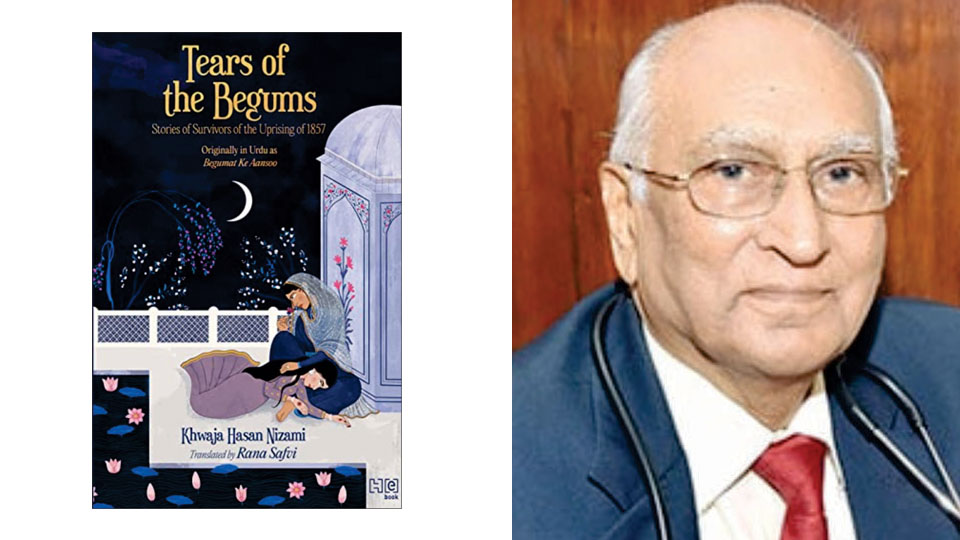
  • Title: Tears of the Begums: Stories of Survivors of the Uprising of 1857  (Originally in Urdu  as ‘Begumat Ke Aansoo’)
  • Author: Khwaja Hasan Nizami
  • Publisher: Hachette India
  • Year of Publication : 1922 
  • Translator : Ms. Rana Safvi  (2022)
  • Pages: 212+xii
  • Price: Rs. 499

The Sepoy Mutiny (or the First War of Independence as we call it) started in 1857, over the issue of the greasing of the cartridges used in the guns of Indian soldiers of the East India Company army. It was known by the Urdu word “Ghadar” meaning rebellion or revolt. 

The rebellion spread rapidly in North India particularly around Lucknow and Delhi. The rebellious soldiers killed a large number of British officers, women and children. They adopted as their leader the surviving Mughal emperor Bahadur Shah Zafar without his consent. He was only a namesake Emperor who was on a generous pension given by the East India Company, and did not have any power beyond the precincts of the Red Fort, nor had the money to help the soldiers.  He was reluctant to take on the British army  but  was helpless and had to go with the demands of rebellious soldiers.

Though initially the British had a setback,  they quickly regrouped and took over Delhi. The Red Fort had about 3,000 royal families all of whom were descendants of the present and past emperors. The emperor’s court life was filled with pomp and grandeur, though he had no real authority. 

Bahadur Shah himself was a refined and gentle soul and a poet. Delhi was ruled by the English Resident. The lives of  the royals living in the “Lal Qila” was lavish with big mansions, large number of servants and slaves. Ghadar was a watershed moment in Indian history and the grand and elegant Mughal culture ended suddenly and dramatically.

Kulsum Zamani Begum was the beloved daughter of the last emperor Bahadur Shah. On the night he left the fort, he sent her and her family away entrusting them to the care of Khuda (God). Within a few days of leaving the Red Fort they were looted of all their money, jewels and even their expensive clothes. Finally on the way some villagers give them shelter in a thatched hut. The company soldiers were looking for the emperor’s descendants to arrest and punish. They escaped to Hyderabad, where they were given shelter by Nawab Lashkar Jung,  who had given shelter to many Mughal royals who had escaped from Delhi.

In a few years the British had their way and the Princess was advised to leave Hyderabad. Some of the well-wishers of the Mughals arranged for her to travel to Mecca.  One of the slaves she had freed while she was the Princess in Delhi had migrated to Mecca and had become an extremely wealthy merchant there.  He looked after her very well and made her family stay comfortable.

The Ambassador of Turkey  learnt  that the Emperor’s daughter had taken refuge in Mecca and arranged a pension for her from the Sultan of Turkey. She lived comfortably in Mecca for a number of years.  Ultimately she longed to return to her beloved Delhi.  When she went  back to Delhi, the English Governor  out of compassion, arranged a pension for her family. The British who had taken away her dad’s empire, gave her in return a grand compensation of ten rupees a month.

Sakina Khanum was the daughter-in-law of Nawab Faulad Khan. Nawab died while fighting the company soldiers during the Ghadar. When his body was brought  home by the soldiers, Sakina was writhing in severe labour pains. The Nawabs’ son had died four days earlier in the war, and his wife had passed away two years ago. Sakina delivered a boy with the help of the servants, while the corpse of the Nawab  was lying in the front yard, without even a shroud.  She had to run away from their mansion at midnight, taking a few jewels, some cash which was in the house and her new-born baby. The four maids who were in the house went with her. 

After a few days, the maids stole all the money and jewels and deserted her. They even took away the new-born son of the Princess.  She tried to eke out a living by working as a maid in households. Unfortunately for her, she had no skills needed for domestic help. After all she was the daughter-in-law of a Nawab and had lived in luxury with many servants and slaves at her command. She was frequently thrown out of many homes where she worked,  as she could not work hard enough.

Finally, the Princess became a beggar for her living. After a few years, one afternoon she was begging in front of a wedding house. She was exhausted due to the hot summer sun. She had not eaten for many days and was extremely hungry. As she was begging, one young handsome boy came out of the wedding hall. Hearing her wails, he sat in front of her and gave her the food he was carrying for himself.  The boy spoke to the beggar and consoled her and told that his mother was a maid in the wedding house. 

As he was speaking with her, his mother came out and Sakina immediately recognised her as her maid who had deserted her and realised that the boy  who fed her was her own son. After many years Sakina the beggar Princess had been reunited with her long lost son.

Qismat Baig worked as a chef at the palatial Taj Mahal hotel in Bombay. He was a recluse and an irascible and difficult man.  None knew his antecedents.  Whenever asked  about himself he would answer that he was a Badshah and walk away. The Maharaja of Bhavnagar would frequently stay at the Taj Mahal Hotel whenever he was in Bombay, and he immensely enjoyed the food cooked by Qismat Baig.

One day  the Maharaja expressed his desire to meet the chef.  Qismat  Baig, who never liked to meet anyone, was persuaded to visit him. When the king asked Qismat Baig as to who he was, Baig gave a long philosophical discourse.  Surprised at the erudition of the chef, the king persuaded him to tell his story.  Baig started recounting his long sad story. He was the son of the last Mughal Emperor Bahadur Shah born to a slave girl.  He was named Timur Shah after the great ancestor of the Mughals. The emperor had provided well for him and his mother and they lived comfortably in luxury with servants and maids. As a young boy he was well educated and would often visit a Dargah near his home in the evenings and had imbibed Sufi mysticism and Dervish practices.

When Ghadar started, his mother lost everything. He worked as an assistant to a cook and learnt the culinary art.  Misfortune always haunted him.  He lost his mother, wife and children to illnesses and became alone in the world. Living in Delhi made him very sad and migrated to Bombay where Timur Shah changed his name to Qismat Baig, a man of destiny.  The son of the Mughal Emperor had become  a Bawarchi (chef) in a hotel.

These are some of the poignant real-life stories in the book “Tears of the Begums”. Khwaja Hasan Nizami was a young man at the time of Mutiny. In later years he became a writer. He personally interviewed many survivors of nobility and recorded their  tragic stories. It was published as  a book “Begumat Ke Aansoo” in 1922.  Ghadar was a cataclysmic event in the narrative of India. It ended the centuries of pomp of the Mughal Court and the wealthy refined and elegant lives of the aristocracy. Nobles became non-entities, Princes became paupers and Begums were reduced to beggars. The sad stories in the book bring “Aansoo” to the eyes of the readers.

source: http://www.starofmysore.com / Star of Mysore / Home> Feature Articles / by Dr. C.D. Sreenivasa Murthy / October 11th, 2022
125 minority students step closer to IAS dream

Mumbai, MAHARASHTRA :

A one-of-its-kind campaign is providing deserving students personalised free training to appear for civil service exams

125 minority students step closer to IAS dream
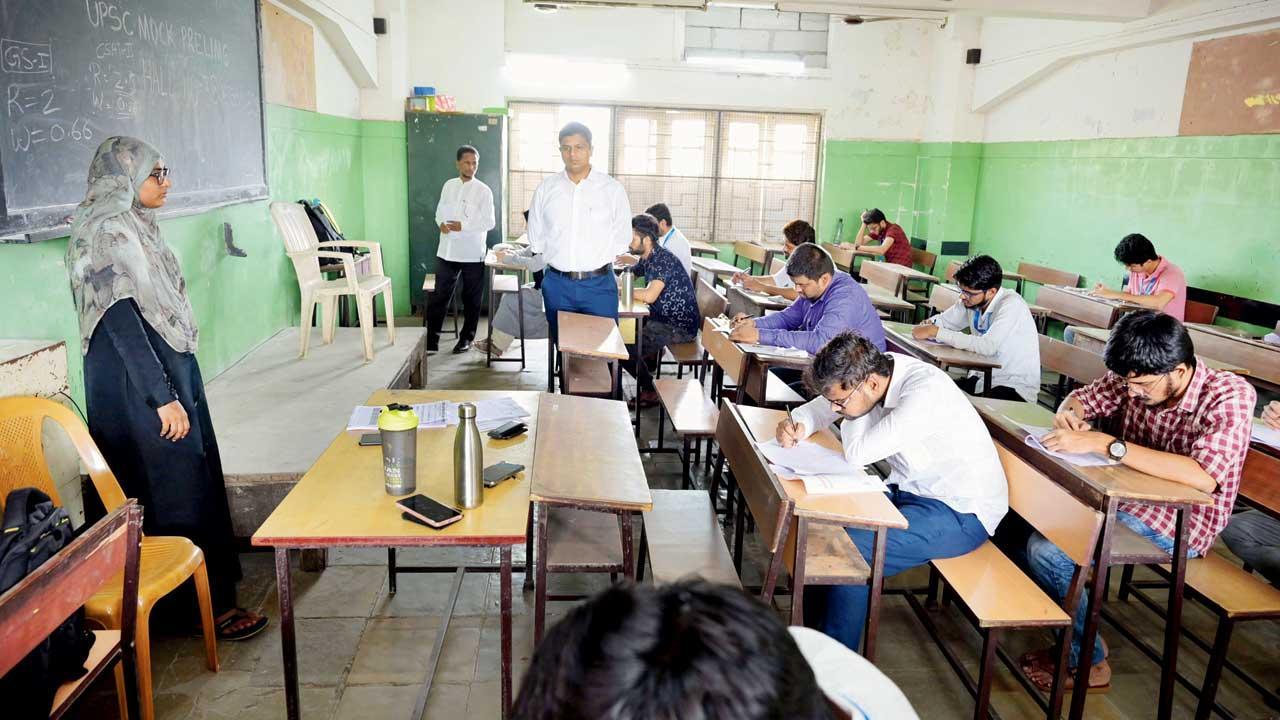
Students appear for a mock UPSC exam in May. Pic/Bipin Kokate

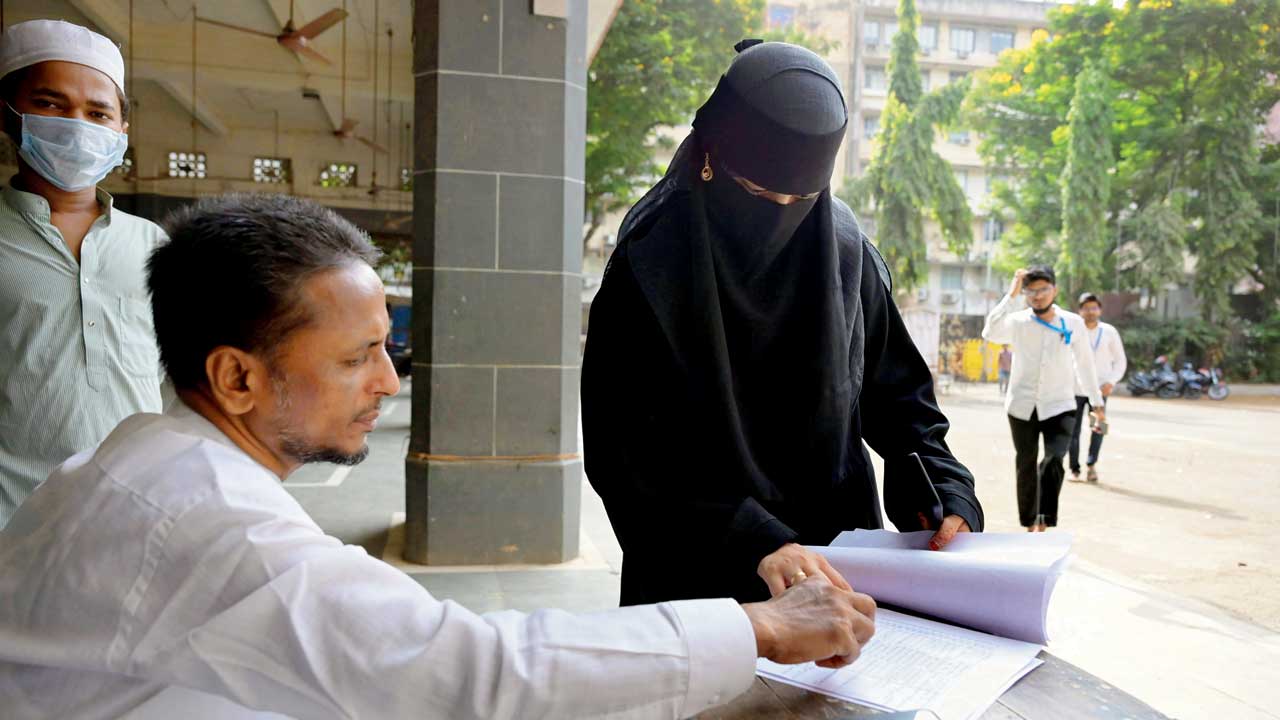
For 28-year-old Shabina Khan, joining the IAS always seemed like a distant dream. Born into a poor family, she had to struggle to complete her education. On Sunday, Khan, who will be sitting for the UPSC exam, will be a step closer to fulfilling her dream, thanks to the Dr APJ Abdul Kalam IAS-IPS Exam campaign, initiated in 2018.

Actively supported by Anjuman-I-Islam and All India Khilafat Committee, the campaign is providing deserving students personalised coaching, guidance and free training for the MPSC and UPSC exams. After a brief lull during the pandemic, which forced them to move all their classes online, the initiative formally launched in February this year. “Since February, 125 students have enrolled with us,” said Gulam Nabi Idrisi, founder chairman of the initiative.

According to Idrisi, several government officials are associated with the campaign, and are helping set mock test papers. The students already gave three mock tests in the month of May, and will be appearing for the UPSC preliminary exams scheduled today.

Speaking with mid-day, Shabnam Shamim Choudhary, 25, resident of Jari Mari, Kurla, said, “I wanted to become an IAS officer, but my family couldn’t afford the fees of the institute or even pay for the study material. This initiative has come as a blessing. I have managed to get at least basic training, so that I can take a shot at the UPSC exam.” Out of the 125 students enrolled with the campaign, 60 hail from Dongri. “We have been providing them with free food and accommodation. The students living in our facility belong to marginalised minority communities,” said Idrisi. The campaign is currently supporting Muslim, Buddhist, Jain, Christian, Parsi and Sikh students, who wish to appear for civil service exams. 

Dr Zahir Kazi, President, Anjuman-I-Islam, said, “The administration must have representation of all sects and religions. Unfortunately, due to lack of facility and funds most of the students cannot pursue this dream.”

Sarfaraz Arzu, chairman, All India Khilafat Committee, shares his sentiments. “If we have to solve community issues, the presence of marginalised and minority officials [in administration] is a must.”

source: http://www.mid-day.com / mid-day / Home> Mumbai. Mumbai News / Article by Anurag Kamble & Samiullah Khan / June 05th, 2022

Mangaluru: Yenepoya organization has backed grief-stricken people – Bishop Dr Peter Paul Saldanha

Deralakatte (Mangaluru), KARNATAKA :

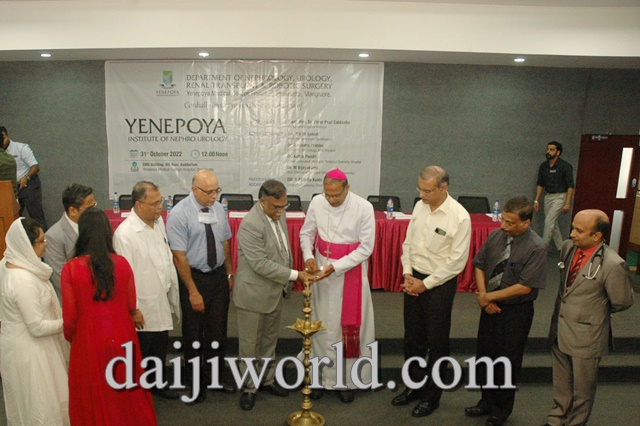
“The Yenepoya organization, which backs grief-stricken people and is in the forefront of humanitarian service, is model to all. Organ donation is very important is present times as many are dying due to organ failure. All have to think about organ donation,” opined Bishop of Mangalore Diocese Dr Peter Paul Saldanha.

The bishop was speaking after inaugurating the Yenepoya Nephro Urology organization under the aegis of Nephrology, Urology, Renal transplant and Robotic surgery departments of Deralakatte Yenepoya Medical College.

The bishop further said, “Yenepoya organization has recently given honorary doctorate to president of Gulbarga University recognising his humanitarian service. This is really appreciable. There is a possibility of giving life to five people from a person who is brain dead. Many make their death a fruitful one. We have to learn a lot from the people who are dying. Greek believed the whole world as one life. It is important to save lives.”

Prof Dr Ravindra Prabhu of Nephrology department, KMC Manipal said, “There was time when anyone with kidney ailment was going to die for sure. Very few were coming to hospital with kidney disease. Many have died due to heart attack because of psychological pressure of kidney ailment. Others were not even taking any medicine. Now many are getting cured due to innovative technology. Let the Nephro Urology department which has begun in Yenepoya, give good training to students.”

Vice chancellor of Yenepoya University Dr M Vijayakumar said, “The corporate zone is ruled by the renal department treatment method. The organ donation when one is alive shows the highest form of humanitarian values.”

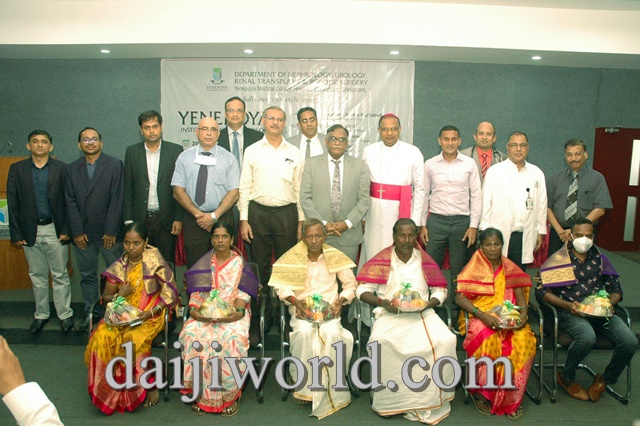
Seven people who donated kidney to relatives were felicitated on the occasion. Farhad Yenepoya, Associate vice chancellor of Yenepoya deemed university, Dr Gangadhar Somayaji, registrar, Dr M S Moosabba, dean of Yenepoya Medical College, Dr Prakash R M Saldanha, medical superintendent of Yenepoya medical college were the chief guests.

Senior urologist of Yenepoya Speciality Hospital Dr Ashok Pandit, head of Nephrology department of Yenepoya Dr Santhosh Pai gave details of the felicitated people.

Dr Altaf Khan welcomed the gathering. Dr Mujib Ur Rehman did the introduction. Dr Nishchith D’Souza proposed a vote of thanks.

source: http://www.daijiworld.com / DaijiWorld.com / Home> Top Stories / by Mohan Kuthan / Daijiworld Media Network – Mangaluru (MS) / October 31st, 2022

Former British Air Force officer of Hyderabad Squadron travels to city where Nizam was born

BRITISH INDIA / Bath, U.K :

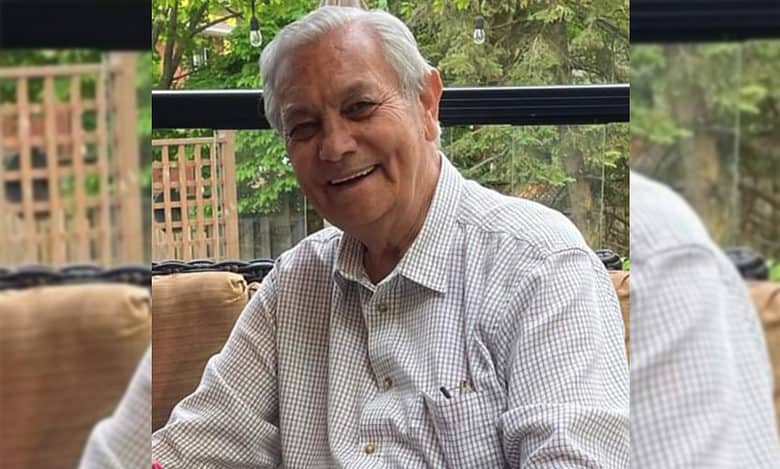
Raymond George Rees-Oliviere (Photo: Supplied)

“I have great respect for the Nizam of Hyderabad. He stood by us when it mattered most and donated millions of pounds to help Britain’s air force. It was because I have a deep regard for the Nizam that I am making this trip to Hyderabad. Now that I am here I feel a sense of happiness and satisfaction.”

These words were spoken by Raymond George Rees-Oliviere, a former air force officer of the 110 Squadron in Britain. This squadron was one that was set up during the First World War in 1917 with the money donated by the Nizam.

It was called the Hyderabad Squadron and retained that name after the Royal Flying Corps was merged with the Royal Naval Air Service to form the Royal Air Force. During the Second World War, the Nizam donated more funds and two more squadrons were set up. But the 110 Squadron was the first of these and it was the one in which Raymond served in the 1960s.

“I want to relate a very unusual coincidence that happened before I came to Hyderabad,” continued Raymond. “I live in the city of Bath. For my Visa application to travel to India, I had to go to Cardiff because the processing is done there. It turned out that the Indian gentleman, who was the Visa officer, was from Hyderabad. He asked me why I wanted to travel to Hyderabad and that is when I told  him my story. How the Nizam had donated a sum of money which set up the 110 Squadron in which I had served. The gentleman was overjoyed when he heard these facts. He granted me a Visa in no time. Moreover, although I had asked for two months, he granted me six months,” said Raymond.

Raymond belongs to a family of Englishmen who lived in India for generations. His father and grandfather lived in India and Raymond was born in India in 1937. He studied at the Goethals Memorial School in the town of Kurseong in Darjeeling district. When he was ten years old the family moved back to England. There he completed his education and then joined the Air Force.

During his air force career he served as a gunner and as helicopter crewman during the Malaysian Confrontation of 1962 to 1966. He had many hair raising tales to relate but all of these cannot be retold in this article.

After retiring from the air force, he continued to work in the aviation sector. He worked in aerospace and defence in the UK and in Oman and France. He then served as Principal Airworthiness Specialist in Saudi Arabia for seven years. His dedication was given respect and recognition in Saudi Arabia. He received a letter of recommendation from the Ministry of Defence and Aviation, Civil Aviation Presidency in Jeddah. Later he worked in Norway and Germany. He worked for well known companies such as Rolls Royce, BAE Systems, Raytheon and British Airways.

He was also a keen sportsman. During his service he played hockey, boxing and rugby. In boxing he was coached by the famous Harper brothers. His fellow boxers included Jack and Brian London. The latter became world famous and was the top challenger to Muhammad Ali in 1966. However he was defeated by Ali. Another of Oliviere’s boxing teammates was Dick McTaggart who took part in the 1956 and 1960 Olympic Games and won a bronze and a gold medal.

In this hectic journey of life, he got married to Margaret and had four children. His first child was a daughter whom the couple named Tracy. She was born in Singapore in 1964. Next came Lee, Alison and Alexandra, all born in the UK. He and his wife remained married for 61 years until she passed away last December.

But for many years Raymond also cherished another dream. He wanted to visit Hyderabad and see for himself the land which was once ruled by the 7th Nizam. That dream finally materialised when he landed at the Rajiv Gandhi International airport on 28th October 2022. During a brief stay in Hyderabad he took the opportunity to visit the historical landmarks and sample the Hyderabadi cuisine.

“My life has come full circle. What began with the connection to the Nizam at the beginning of my air force career has now been completed with my visit to Hyderabad. Although my stay here was brief, I have enjoyed myself thoroughly and made very good friends. I have found that the people of Hyderabad are excellent hosts. I will carry back with me fond memories of this delightful city,” concluded Raymond who will also be going to Kurseong to catch up with his old school mates.

source: http://www.siasat.com / The Siasat Daily / Home> News> Hyderabad / by Abhijit Sen Gupta / October 31st, 2022

Ramadan 2021: meet the Dubai mother who feeds 500 people every day during the holy month

Mangaluru, KARNATAKA / Dubai, UAE :

Mahnaz Faquih teams up with local charities to distribute food parcels at worker accommodation in Al Quoz.

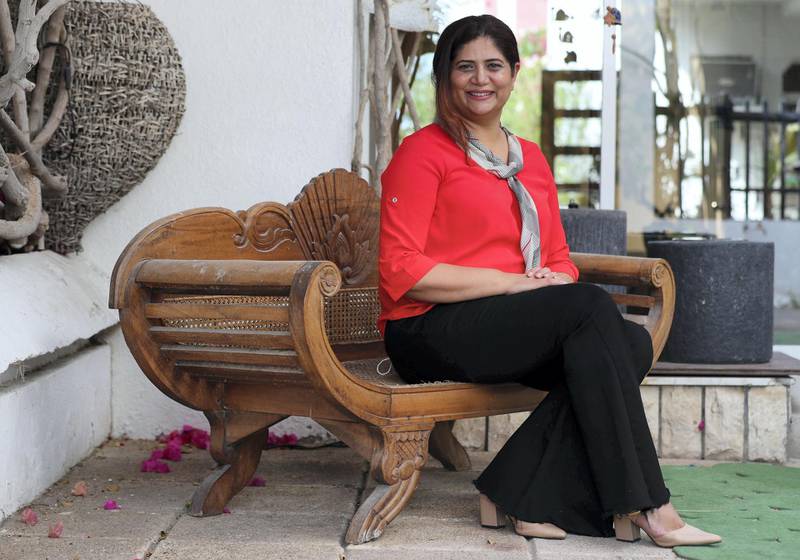
Mahnaz Faquih has helped donate tens of thousands of iftar boxes to the needy in the past 20 years in Dubai. Chris Whiteoak / The National

Dubai resident Mahnaz Faquih, 51, feeds 500 needy people every day during Ramadan.

She started when she moved to Dubai from India in 2002, distributing food during Ramadan to those around her, including the security guard in her building.

In 2018, thanks to the help of her friends and community members, she delivered 500 iftar boxes a day to workers and unemployed people during the holy month.

That trend has continued every year since.

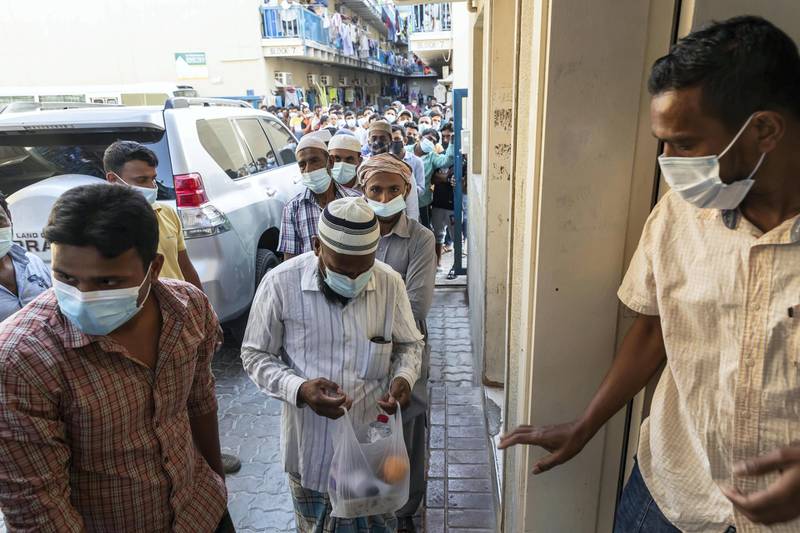
This year, because of Covid-19 restrictions on sharing and distributing food, Ms Faquih joined up with local charities to distribute food parcels at worker accommodation in Al Quoz.

In 2020, she worked with Sahana, a Sri Lankan Welfare Association in the UAE, to help provide meals to those who lost their jobs during the pandemic.

“I moved to the UAE from India where I lived in a joint family of 10 people and there was a lot of Ramadan fervour,” Ms Faquih said.

“For me, Ramadan meant being involved in charity.

“My parents always encouraged me to help others and I wanted to keep that tradition alive.

“I started sending iftar boxes of fruit, laban or juice to my local mosque,” she said.

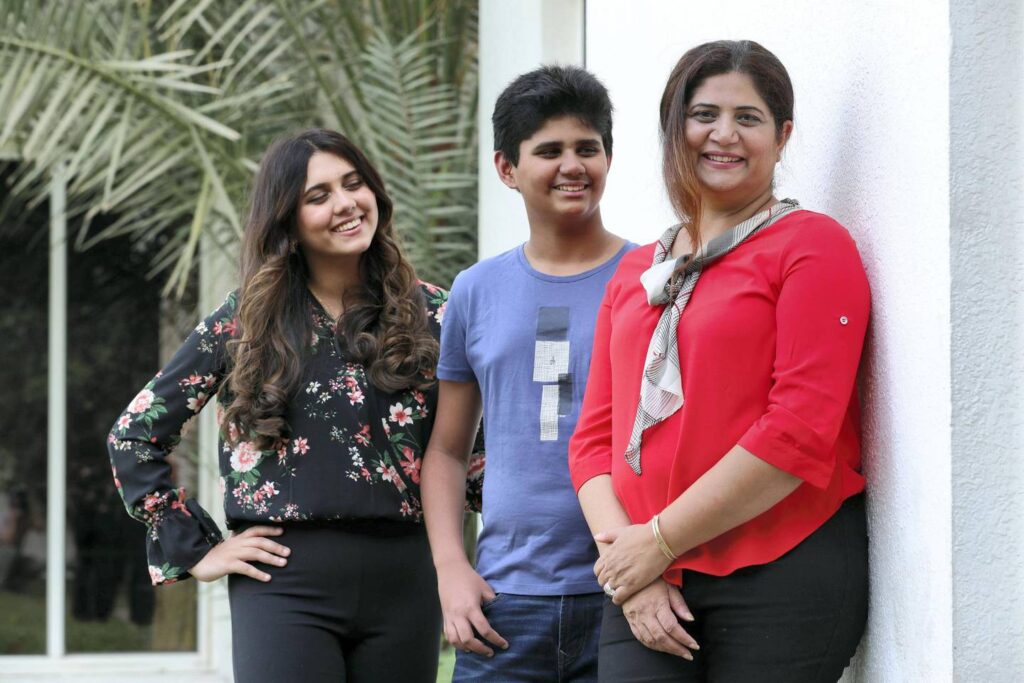
Mahnaz Faquih with her daughter Alina and son Mikhail. Chris Whiteoak / The National

Ms Faquih, an interior designer, said she ensured her children understood the importance of giving while realising their own privilege.

“The initiative has grown so big. It started with a wish to treat others to some good food or a box of biryani,” Ms Faquih said.

“Before the pandemic, I asked my children to give away the food packets so that it touched their hearts.

“I wanted them to have the consciousness that others are needy and they are privileged.

“My parents always gave away money or gifts through us, and I wanted my children to think about others.”

Her daughter, Alina Shaikh, 16, has been helping her mother since she was six and her son, Mikhail Shaikh, 12, also helps to distribute boxes.

“When we were little, we used to bring food and juices to workers every single day during Ramadan,” Alina said.

“We feel happy and grateful that we are lucky enough to help others.

“It’s such an amazing and rewarding feeling.

“It’s allowed us to understand how others live and empathise with them. It has helped us become humble and open-minded to people from different walks of life,” she said.

Mikhail also enjoyed being able to help others.

“In the past, we helped in packing the food boxes, but most of the time we handed out the iftar meals to people,” he said.

“We think that giving back is extremely important and when you have the ability to help others, why not do it?”

Ms Faquih said her friends supported her, too.

Shanu Hathiramani, an Indian from Nigeria living in Dubai, has known Ms Faquih for the past eight years and often helps her with her charitable work.

“Mahnaz is a very giving and helpful person,” Ms Hathiramani said.

“In the past, we have helped feed people during Ramadan. My son also helped out with the charity work.”

Iftar boxes being distributed at a workers’ accommodation – in picture

Sri Lankan community volunteers hand out meals for 300 people at a labour accommodation block in Sonapur, Dubai. All pictures by Antonie Robertson / The National

source: http://www.thenationalnews.com / The National / Home> UAE / by Anam Rizvi / May 07th, 2021

AIMIM opens account in Vijayapura Municipal Corporation, wins two seats

Hyderabad, TELANGANA / Vijayapura (formerly Bijapur), KARNATAKA:

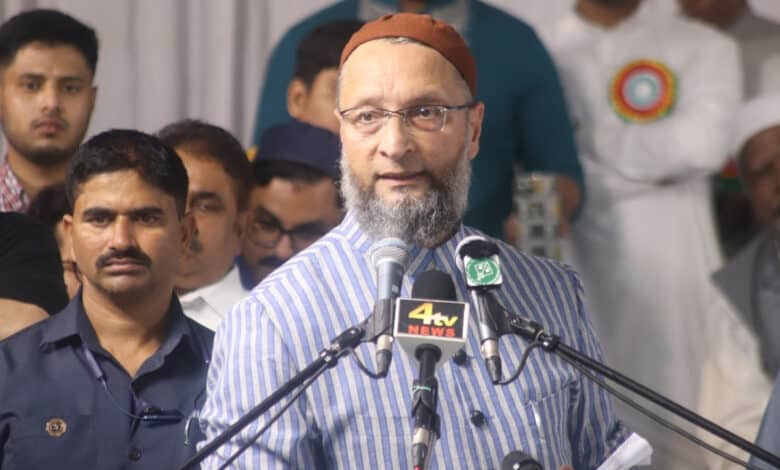
 AIMIM chief Asaduddin Owaisi (file photo)

Party has fielded its candidates in four out of 35 wards of the corporation

Vijayapura (formerly Bijapur):

All India Majlis-e-Ittehadul Muslimeen (AIMIM) on Monday opened its account in Vijayapura (Bijapur) Municipal Corporation by winning two seats. The party candidates Sufiya Abdul Rehaman Vatti and Rizwana Kaisar Hussain Inamdar won from ward numbers 25 and 28 respectively.

In the elections, the party has fielded its candidates in four out of 35 wards of the corporation.

AIMIM to contest alone in Karnataka Assembly polls

Earlier, AIMIM chief Asaduddin Owaisi ruled out any possible alliance with the Janata Dal (Secular) for the upcoming Karnataka Assembly elections scheduled to be held next year.

Speaking to reporters, Owaisi said that last time at the request of Telangana Rashtra Samithi (TRS) supremo K Chandrashekar Rao, the AIMIM did not contest the elections and campaigned for the Janata Dal (S). However, this time it won’t happen like that, Owaisi said.

Impact of AIMIM entry into Karnataka politics

Though AIMIM entry is not likely to have a major impact on Karanataka’s politics, it may divide the vote bank of Congress and JD(S).

As in the Hubbali-Dharwad areas, there are a sizable number of Muslim voters, a few leaders from Congress and JD(S) believe that AIMIM candidates may split the votes.

source: http://www.siasat.com / The Siasat Daily / Home> News> India / posted by Sameer Khan / October 31st, 2022

Mangaluru: Dr Habib Rehman, DKWJA selected for district Rajyotsava awards

Mangaluru, KARNATAKA :

Deputy commissioner Dr Kumar announced the list of Rajyotsava awardees of Dakshina Kannada district on Sunday, October 30.

In total 34 people including president of Unity Hospital Dr Habib Rehman are selected for the award. In addition, 20 organizations including Dakshina Kannada district working journalists’ association are also selected for the award.

The list includes Yadupati Gowda (literature), Shekhara Gowda Bajpe (literature), Uttam Kumar J (Hindustani Music), Achyutha Marnadu Beluvai (Yakshagana), Bantwal Jayarama Acharya (Yakshagana), K Narayana Poojary Ujire (Yakshagana), Keshava Shaktinagar (Arts), Manjunath M G Sullia (arts), Pooja U Kanchan Kulai (drama), Dejappa Poojary N Vittal (art), Padma Malekudiya Malavantige (artisan), Krishna Prasad Devadiga Uppinangady (music), Chandrashekhar K Monkey stand (music), Gurupriya Nayak S Narimogaru (music), Pratima Sridhar Holla Kottara (Bharatanatya), P Krishnappa Bondel (environment), Shashidhara Poyyathabail Kotekar (journalism), Venkatesh Bantwal (journalism), K Wilfred D’Souza Peruvai (journalism), Dr Habib Rehman Mangaluru (medical), Dr Bhaskar Rao Bantwal (medical), Dr Sudhakar Shetty Pune (medical).

Ganesh Pandit Ullal (herbal doctor), Venkappa Nalike Allipade (Daivaradhane), Sesappa Bangera Montepadavu (Daivaradhane), Honnayya Kulal Beltangady (social service), Yogish Shetty Kotekar (social service), Jayarama Rai Kedambadi (social service), Sesappa Kotian Kallega (social service), Gangadhara Shetty Hosamane Nelyadi (social service), Rajesh Kadri Shaktinagar (social service/education), Nalike Kookra Salian Marooru (Bhootaradhane).

The organizations which are selected for the awards include Coast writers and readers association (literature), South Kanara photographers’ association (photography), Dakshina Kannada district Working Journalists’ Association (DKWJA) (journalism), Swaptaswara Kalathanda Konaje (social service), Abhyudaya Bharati Seva Trust Katipalla (social service), Utsahi yuvaka vrinda, Padavu Bikkarnakatte (social service), Karnataka Shiva Seva Samiti Pandeshwar (social service), Kudroli Yuva Sangha (social service), Netaji yuvaka sangha Deraje (social service), Blood Donors Mangaluru Deralakatte (social service), Bharath Friends club Ira (social service), Youth Center Padil (social service), Vijaya Yuva Sangama Ekkaru (social service), Vivekananda Yuvaka Mandala Chelayaru (social service), Vishwabrahmana Samaja Seva Sangha Suratkal (social service), Vishwabharathi friends circle Kodikal (Social service), Sri Anjaneya Gudi and Vyayama shale Sasihitlu (social service), Sharada Friends circle Sajipa Munnoor (social service), Baduku Kattona Banni Team Beltanagady (Social service), Sri Veeranjaneya Vyayama Shale Hosabettu (sports).

source: http://www.daijiworld.com / Daijiworld.com / Home> Top Stories / by Daijiworld Media Network – Mangaluru (MS) / October 31st, 2022

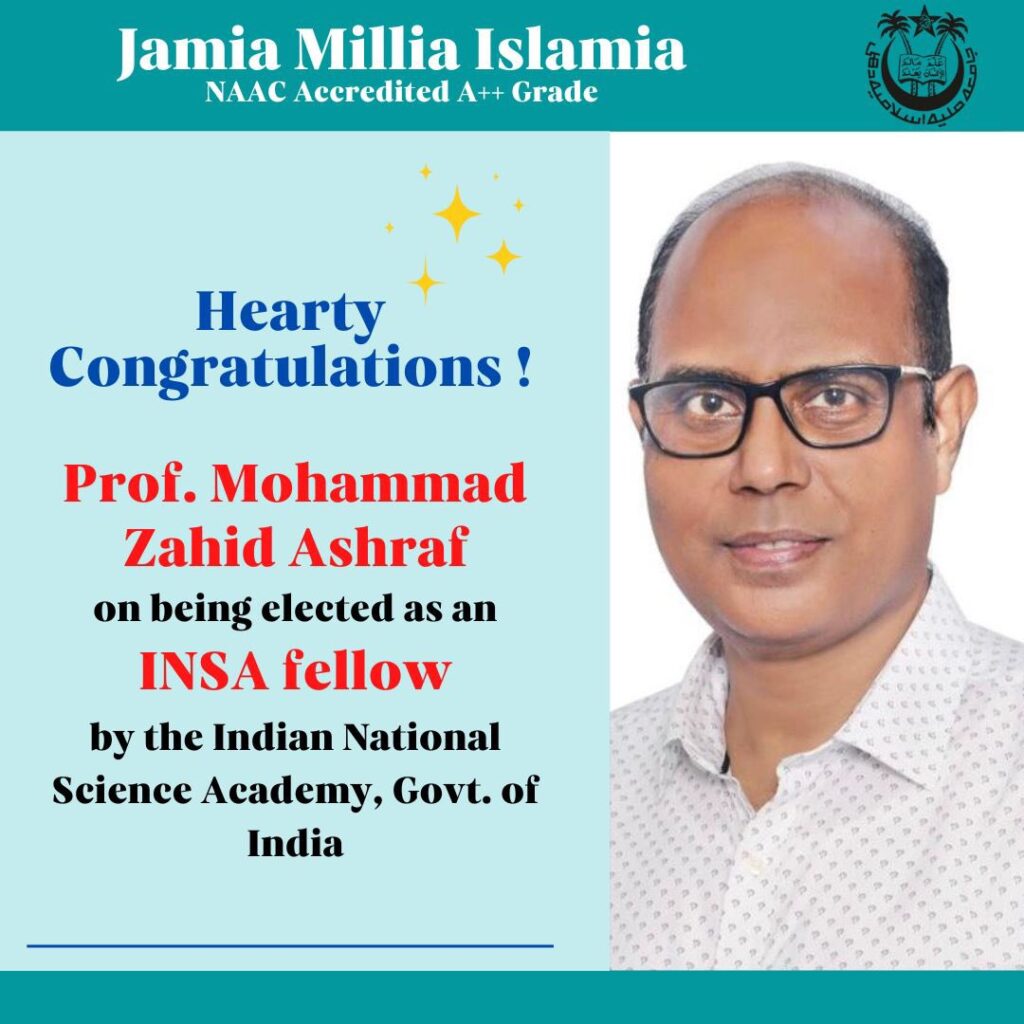
JMI Professor Mohammad Zahid Ashraf elected as fellow of Indian National Science Academy (INSA)

Aligarh, UTTAR PRADESH:

pix: twitter.com / @jmiu_official

The Indian Nation Science Academy (INSA) has elected Prof. Mohammad Zahid Ashraf, Head, Department of Biotechnology, Jamia Millia Islamia (JMI), as a fellow of the academy. His fundamental work on the role of high-altitude hypoxia in the development of cardiovascular and blood clotting disorders has been recognised with the coveted fellowship.


The Indian National Science Academy, one of the most renowned academies in the nation, was founded to promote science in India and utilise scientific knowledge for the benefit of humanity and the nation. As a fellow of the Academy, Prof. Ashraf will work to further the scientific cause of the nation. To his credit, Prof. Ashraf is now elected fellow of all three national science academies – the Indian National Science Academy, the Indian Academy of Sciences, and the National Academy of Sciences.


JMI Vice-Chancellor Prof Najma Akhtar, who has recently been conferred with Padma Shri Award, congratulated Prof. Ashraf for his outstanding accomplishments. She further mentioned that Prof. Ashraf’s achievements will motivate other faculty members for excelling in research and contribute to the nation’s progress.


Prof. Ashraf is best known for his unique work on high altitude induced blood clotting disorders. His research has had a substantial impact on both fundamental and applied aspects of cardiovascular biology and human diseases. He is a pioneer in the field of highaltitude thrombosis and has done seminal work in unravelling the enigma of blood clotting in response to hypoxia. His remarkable efforts have enriched our understanding
of the prevalence, mechanism, genetics, diagnostics, and development of therapeutics for hypoxia- induced thromboembolic disorders.


Prof. Ashraf’s contribution to the research community is well acknowledged. He is the recipient of the 2020 Visitor’s Award by Hon’ble President of India for biological sciences, The Ramachandran National Bioscience Award by DBT and the Basanti Devi Amir Chand Award of ICMR, among several other accolades.

Prof. Ashraf also holds membership of the prestigious Guha Research Conference and various scientific committees.

source: http://www.jmi.ac.in / Jamia Millia Islamia / Home / by Press Relations Officer, JMI (headline edited) / October 19th, 2022

Jamia Hamdard Pro VC Ahmed Kamal among top 2% scientists of the world

Hyderabad, TELANGANA / NEW DELHI :

Prof Kamal is also ranked 2nd in India in the subject of Medicinal and Biomolecular Chemistry.

New Delhi: 

Professor Ahmed Kamal, Jamia Hamdard Pro-Vice Chancellor has been named among top 2 per cent cientists in the world by Stanford University.

Prof Ahmed Kamal has also been ranked among top 0.10 per cent scientists in India with 537 papers in his name and with a worldwide subject rank of 83 among scientists.

Prof Kamal is also ranked 2nd in India in the subject of Medicinal and Biomolecular Chemistry.

Prof Ahmed Kamal has been named among top scientists globally in the subject-wise analysis conducted by a team of scientists at Stanford University USA which was led by Dr. John PA Ioannidis.

The analyses used citations from Scopus with data assessing scientists for career-long citation impact up until the end of 2019 and for citation impact during the single calendar year.

Prof Ahmed Kamal has filed more than 368 patents. Five of his US patents that have been licensed to a pharmaceutical company and are under the process of clinical development.

Prof Kamal’s research interests mainly focus on the design and synthesis of gene-targeting compounds as new anti-cancer agents and their targeted delivery. He has designed and developed a large number of target based new molecules as potential cytotoxic agents for the treatment of various cancers mostly inspired from natural products. New chemical entities for anti-tubercular and anti-microbial activities are also his research avenues.

Prof Kamal is also proficient in the development of new efficient synthetic methodologies including solid phase, resin bound reagents and chemo-enzymatic strategies that are useful in both basic and applied pharmaceutical chemistry. He has won several honours and awards for his research work.

Prof Kamal has over 540 publications, more than 10000 citations, 30 review papers and 10 book chapters in the areas of medicinal chemistry and biocatalysis.

source: http://www.ummid.com / Ummid.com / Home> Science & Technology / by Ummid.con News Network / November 03rd, 2020

Kerala: League of Islamic Universities ‘Climate Summit’ concludes on positive notes

Kozhikode, KERALA:

League of Islamic Universities launches climate action on campuses
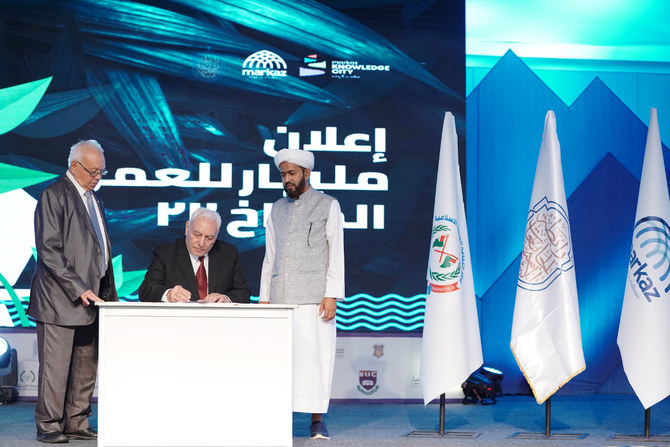
Dr. Osama Al-Abed, secretary-general of the League of Islamic Universities, signs the Malabar Declaration on climate action in Kozhikode, India, on Oct. 20. (Photo courtesy: LIU)

On October 27, the ‘Malaibar Declaration for Climate Action’ held by the League of Islamic Universities based in Cairo and Jamia Markaz Kozhikode in Markaz Knowledge City concluded.

Members including 200 universities from 60 countries, were present at Jamia Markaz, an Islamic university in Kozhikode, Kerala, for the International Climate Action Summit which was held between October 17-20.

Dr. Osama Al-Abed, secretary general of the league, opened the event by urging global stakeholders to use fresh approaches to combat climate change because the globe is currently “facing challenges that are structurally different from the past.”

As a consequence of talks on many facets of the main issue, Dr. Al Abdu and Muhammed Abdul Hakim Azhari, the rector of Jamia Markaz, jointly made the following declaration: The Partnership of University Leadership in Mitigating the Climate Change.

The declaration includes a request for environmental science to be taught in member universities’ curricula, for financial and human resources to be set aside for research into tackling climate challenges, as well as for new technology to be developed for the same.

“We thought that the real community who has to work on climate change is students. In every country, if the universities go for some course on climate then the future generation would be working on climate change,” Jamia Markaz rector Dr. Abdul Hakeem Al-Kandi told reporters.

“Students, who are the future leaders, when they are getting aware of climate change, (they) will impact the whole world.” he said.

Al-Kandi stated that the league would create an environmental studies centre in Calicut, India.

The goal of the university league’s activity, according to environmentalist and Markaz Law College principal Dr. C. Abdul Samad, who organised the summit, was to engage community members in various societies and make them stakeholders in saving the environment.

“Introducing environmental science courses in universities is important as the young leaders need to be educated to think about nature and climate change, and its impact,” he said.

“It is the new generation that can preserve the diversity of nature and respect the environment. The whole idea is to save the planet for the future,” he further stated.

At the summit, 63 research papers on diverse facets of the main issue were presented. A hundred trees were planted on the Knowledge City Campus by university leaders as part of Jamia Markaz’s afforestation programme and in support of the summit.

source: http://www.muslimmirror.com / Muslim Mirror / Home> Environment> Indian Muslim> Positive Story / by Muslim Mirror Staff / October 27th, 2022