Category Archives: Leaders

English, Urdu books on contribution of Indian Muslims in freedom movement released

NEW DELHI :

Patna: 

In a glittering ceremony, two books on Muslims’ contribution in India’s Freedom movement were launched here in Patna on 17th December. The function was presided over by Harsh Mandar, former IAS officer and human rights defender in the country.

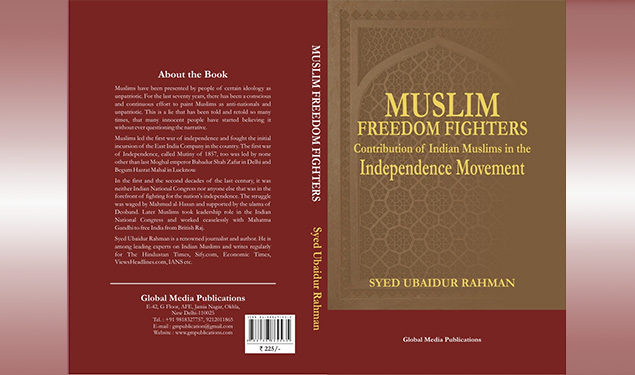
The books ‘Muslim Freedom Fighters: Contribution of Indian Muslims in the Independence Movement’ and its Urdu version ‘Muslim Mujahideen-e-Azadi aur Tehrik-e-Azadi Mein Unki Khidmat’ have been authored by Delhi based author and journalist Syed Ubaidur Rahman.

The two books try to fight the oft-repeated allegations that Muslims are anti-national and have not contributed for the freedom of the nation. The books nail the lie and prove that Muslims not just participated in the freedom movement, they went on to lead the freedom struggle for a long time. The first war of Independence or Mutiny of 1857 was led by Mughal emperor Bahadur Shah Zafar in Delhi and Begum Hazrat Mahal in Lucknow. The Independence Movement in the first two decades of the twentieth century was led by Mahmud Hasan and ulama of Deoband and they had respect and support of everyone including Hindus and Muslims.

If anyone has any doubt about the Muslim contribution in the freedom movement, the fact that the Indian National Congress had as many as nine Muslims as its president till the year 1947 will remove such doubts.

While speaking on the occasion, Harsh Mandar said that the divisive forces in the country are trying to divide the nation on the basis of religion and faith. He said that the danger from such forces for the national fabric and its unity has become grave.

Harsh Mandar added that the threat to the communal amity in the country was never so high as is today as divisive forces are doing every thing to pit one community against the other and create a fear psychosis among the majority community prompting it to turn it against minorities.

Khursheed Mallick, a Chicago based urologist, philanthropist and director of IMEFNA said that the book is a timely reminder to the nation that Muslims and Hindus both sacrificed for the nation and this fact must be clearly told to our young generation. He said Muslims sacrificed heavily for the cause of the freedom of the nation and efforts must be made to tell the history.

Syed Ubaidur Rahman, the author of the two books, while speaking on the occasion said Muslims have been rather loath to write about the sacrifices they have made for the cause of the Independence and freedom. He said Muslims suffered badly throughout the freedom movement. They were the worst suffers in the wake of the mutiny of 1857 and its aftermath when Muslims were hounded across North India and beyond. Tens of thousands of Muslims lost their lives for the freedom.

Syed added that ulama of Deoband played a stellar role in the freedom movement. Unlike the common perception, they were secular to the core and when they established a government in exile in Kabul in 1915, they appointed Raja Mahendra Pratap as its President and Maulana Barkatullah Bhopali as its Prime Minister.

The book documents the lives of forty renowned Muslim freedom fighters including, Shaikhul Hind Maulana Mahmud al-Hasan, Maulana Barkatullah Bhopali, Hakim Ajmal Khan, Maulana Ubaidullah Sindhi, Maulana Abul Kalam Azad, Maulana Mohammad Ali Jauhar, Dr Maghfoor Ahmad Ajazi, Dr Mukhtar Ahmad Ansari, Ashfaqulla Khan, Maulana Hasrat Mohani, Maulana Muhammad Mian Mansoor Ansari, Asaf Ali, Husain Ahmad Madani, Aruna Asaf Ali (Kulsum Zamani), Peer Ali Khan, Saifuddin Kitchlew, Mohammed Abdur Rahiman, Captain Abbas Ali, Abdul Qaiyum Ansari, Prof. Abdul Bari, Moulvi Abdul Rasul, Nawab Syed Mohammed Bahadur, Rahimtulla Mahomed Sayani, Syed Hasan Imam, Sir Syed Ali Imam, M.C. Chagla, Yusuf Meherally, Justice Fazal Ali, General Shah Nawaz Khan, Allama Fazle Haq Khairabadi, Maulana Shaukat Ali, Syed Mahmud, Maulana Mazharul Haque, Badruddin Tyabji, Col Mehboob Ahmed, Begum Hazrat Mahal, Maulana Shafi Daudi, Rafi Ahmed Kidwai, Syed Mohammad Sharfuddin Quadri, Batak Mian

The book launch function was organized at Anjuman Taraqqi Urdu and was presided over by Abdul Qaiyum Ansari, chairman of Anjuman Taraqqi Urdu Bihar.

Name of the Book: Muslim Freedom Fighters: Contribution of Indian Muslims in the Independence Movement
Author: Syed Ubaidur Rahman
ISBN: 81-88869-43-0
Price Rs 225/-
Global Media Publications
E-42, G. Floor, AFE, Jamia nagar, Okhla, New Delhi-110025

source: http://www.ummid.com / Ummid.com / Home> India / by ummid.com News Network / December 12th, 2017
Intelligence and education of Hyderabad’s Hakim helped raise level of Indian football

Hyderabad, TELANGANA:

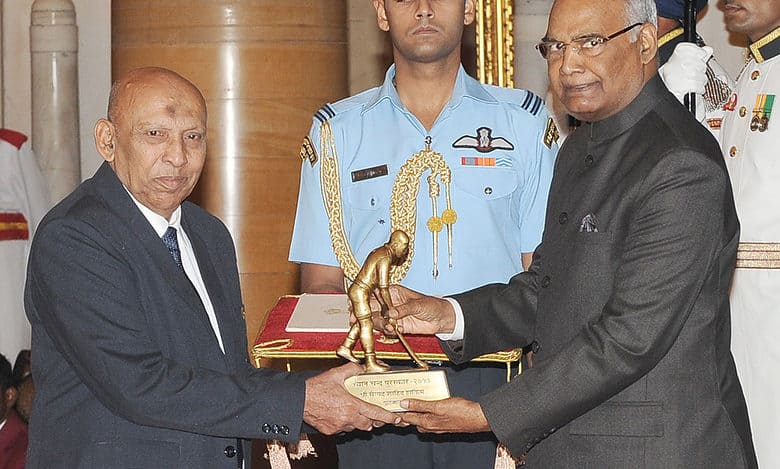
 The President, Shri Ram Nath Kovind presenting the Dhyan Chand Award, 2017 to Shri Syed Shahid Hakim for Football, in a glittering ceremony, at Rashtrapati Bhavan, in New Delhi on August 29, 2017. Photo: Wikipedia

The name of Syed Shahid Hakim is familiar to the entire football fraternity of India. He was one of the most accomplished personalities who graced Hyderabad and Indian football as a player, referee and coach. Indeed it would not be wrong to say that there were few people in India who could match his knowledge and acumen about the different aspects of football. Besides being a well known personality in football, he also served as an officer in the Indian Air Force.

Being one of the sons of the great coach S.A. Rahim, he grew up in a football related environment. Hakim belonged to that period when Hyderabad was at the zenith of Indian football. He played with the illustrious players of India. Among his teammates were the famous goalkeeper Peter Thangaraj, D. Kannan, S.A. Latif, Yousuf Khan, S. Narayanan, H H Hamed and others. All these players were from the twin cities of Hyderabad and Secunderabad.

As a player, Hakim’s talent bloomed at an early age. He was at his peak in the late 1950s. He was a member of the Hyderabad state team which won the Santosh Trophy in 1957. Due to his prodigious talent and his rising status in Indian football, he was selected to represent India in the Pre-Olympic tournaments in Jakarta, Singapore and Malaysia.

It was not a surprise when he was also selected in the Indian team for the 1960 Olympic Games in Rome. That was the last time that India qualified for the Olympic Games. Although India narrowly failed to enter the knockout stage of the tournament, the Games were a great learning opportunity for Hakim.

The close interaction that Hakim had with the world’s best players and coaches gave his keen intelligence some valuable insights into the tactics and training of European and South American players. These he later put into use when guiding his own trainees. This is where his education and learning proved to be a big asset. Having studied at All Saints HS, Nizam College and then Osmania University, his level of education was above many other footballers. This enabled him to interact easily with foreigners and learn from everything that he observed.

Later, after he joined the Indian Air Force, he played for the defence services team and went on to be appointed captain of the All India Services team.

After retiring from the game as a player, he continued to serve Indian football in various capacities. He became a well known referee who was among the best in India. Starting from 1970 he continued to serve as a referee for many years. In 1974 he was selected to be a member of the FIFA Referees panel which was a great honour for an Indian referee.

Thereafter, he officiated in 33 international matches and it is a record which is still not broken. No other Indian referee has officiated in 33 international matches.

But that was not the end of his distinguished career. Thereafter, Hakim became a reputed coach and coached the Indian team from 1980 to 1982 for the Merdeka Cup and Delhi Asian Games along with other coaches.

When he was 80, he fell prey to the rampaging COVID pandemic but recovered. However, despite winning the battle against the dreaded virus, his life did not last long thereafter. He suffered two strokes in rapid succession and passed away in Gulbarga where he had been admitted to a hospital in August 2021. His death left a void in Indian football which will perhaps never be fulfilled.

source: http://www.siasat.com / The Siasat Daily / Home> News> Hyderabad / by Abhijit Sen Gupta / December 09th, 2022

Billionaires in Africa, Maha tycoons follow father, feed thousands in hometown

Yavatmal , MAHARASHTRA / CONGO (formerly Zaire) :

Billionaires in Africa, Maha tycoons follow father, feed thousands in hometown

Yavatmal :

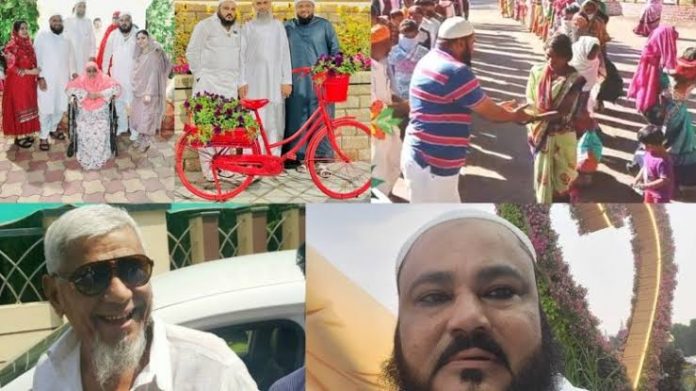
Decades ago, a humble Maharashtra State Road Transport Corporation (MSRTC) district driver Abdul Narsinghani had a strange habit before going off to work.

Every morning he would instruct his wife Fatima to pack a few ‘rotis’, he put them in his pocket and at various stops of his ST bus en route, would distribute them among a few poor people he encountered.

His young kids — sons Aman, Aslam and daughter Farida — closely watched all this but often wondered at their father’s undue concern for others when they themselves eked out a bare existence in a 200 square feet slum tenement in Yavatmal.

Years later, Aman, 45, and Aslam, 43 are successful business magnates in Congo, (formerly Zaire), Africa, and Farida I. Budhwani is a housewife in Mumbai, but now they warmly cherish their simple father’s small acts of charity for fellow beings.

“We brothers completed our high secondary school (Class XII) and got jobs in Uganda, so we went there in 1998. In just three years (2000), we got an offer to start a pharmaceutical business in the adjoining country, Congo, and we grabbed the opportunity,” Aman told IANS.

That was the turning point for the Narsinghani brothers, and they became the first Indians to start a business in Congo, and their venture is named Sara Pharmaceuticals.

“Many Africans have a fetish to pop in medicines for everything… We imported various types of medicines from India or China and then sold them there… Slowly, that tiny business has grown into a pharma-cum-electronics empire with a turnover of over Rs 1,200 crore per annum,” said Aman.

On their frequent trips back home from Africa, they never forgot their father’s daily habit of donating ‘rotis’ or his wise advice – ‘Let nobody go empty handed from my door’ – and decided to do something to take it forward.

“From 2009, we have launched a community kitchen that feeds around 750 people for lunch and some 250 for dinner daily… 98 per cent of the beneficiaries are the local poor people, irrespective of religion or status, all are equally welcome…” said Aman.

The daily offering through ‘Khidmat-E-Khalk’ (Selfless Service) is either good quality rice-vegetables, lip-smacking vegetable or chicken biryanis and other foodstuff as the people may desire, and distributed at a couple of locations in Yavatmal, 365 days a year.

It was during the Covid-19 pandemic (2020-2021) lockdown that the small kitchen proved its true worth and utility for lakhs of deprived people, especially the migrant folks stranded far from home.

“In the first six months of the stringent lockdown, we fed over 1.50 crore people. We also distributed food-kits of around 25 kg rations worth Rs 2 crore to the helpless people who had lost their jobs,” said Aslam.

After the lockdown eased a bit from October 2020 onwards, the Narsinghani brothers shifted their attention to the local Shri Vasantrao Naik Government Medical College & Hospital, where they served free food to all the patients for over one year.

As the pharma business of the siblings flourished in Central Africa, the duo also progressed, upgrading from their humble 200-sq.ft. slum abode to a palatial 10,000 sq.ft mansion in Yavatmal, where they rank among the most esteemed citizens.

The devout Khoja Muslim, Abdul Narsinghani, who gave his children an invaluable lesson to care for fellow humans, witnessed everything with joy and pride. He passed away peacefully in 2015, while his widow Fatima, 71, continues to guide and support her two sons in all their ventures.

Doing business in Africa is not everybody’s cup tea, given the political turmoil in many countries there, plus the social, cultural and language barriers, but the Narsinghani brothers managed to learn Swahili in just a couple of years and were accepted with open arms in Uganda, Congo and other countries in Central African region.

“Though we have seen a lot of social-cultural-political upheavals there in the past 25 years, but luckily, the Indian community there does not face problems from any quarter and we are probably treated as ‘more than equals’ among the rest,” Aman smiled.

The pharma business has gradually expanded within Africa, and lately the duo diversified into electronics trading which is picking up hugely through their several retail outlets.

“The Almighty has been magnanimous and benevolent to us and coupled with what our parents bequeathed us, we are trying in our own little way, to repay all the blessings,” acknowledge the Narsinghanis. — IANS

source: http://www.muslimmirror.com / Muslim Mirror / Home> Culture> Indian Muslims / by IANS / December 04th, 2022

114 years old freedom fighter dies in Kolkata

Kumrava, Nawada District) BIHAR / Kolkata, WEST BENGAL :

He had accompanied Mahatma Gandhi on the Dandi March and later spent several days with him in a prison in Cuttack. In 2007, he was conferred with the Padma Bhushan for his fight against the British rule in India.

114 years old freedom fighter dies in Kolkata | The Times of India
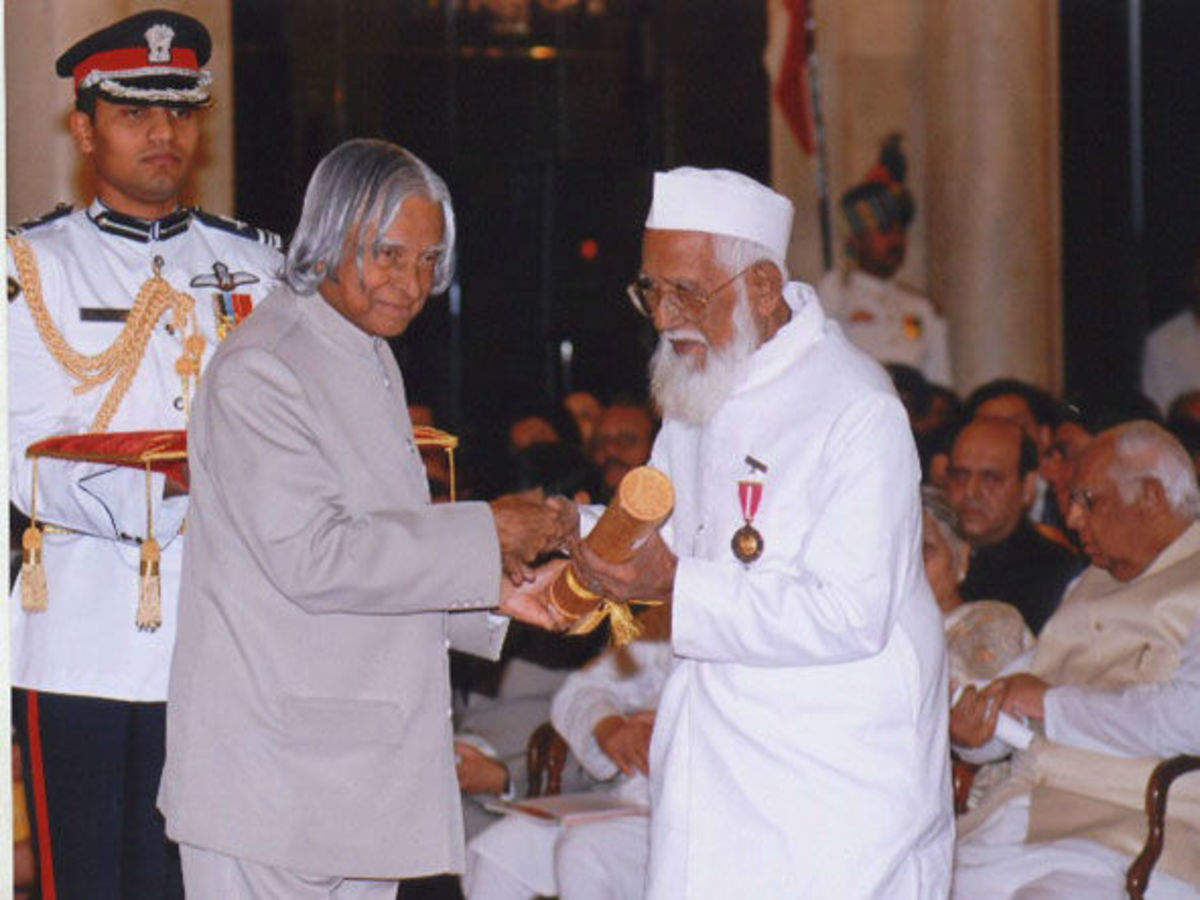
Syed Mohammad Sharfuddin Quadri being conferred with the Padma Bhushan by the then President APJ Abdul Kalam.

Late on Monday night, Syed Mohammad Sharfuddin Quadri, who was affectionately referred to as hakim sahab in his neighbourhood in Rippon Street, passed away three days after celebrating his 114th birthday.

Quadri, a renowned Unani practitioner who was instrumental in founding the Unani Medical College and Hospital in Abdul Halim Lane in central Kolkata, was born on December 25, in 1901 when Kolkata was still the capital of the country and Mahatma Gandhi had not returned to India.

“My father was imprisoned with Gandhiji by the British in Cuttack. He would accompany him everywhere during the Civil Disobedience Movement,” said son Manzar Sadique in the family’s home in 84/9 Rippon Street.

“In October, abba had travelled to Lucknow where he was the chief guest at a conference of Unani practitioners. Chief minister Akhilesh Yadav had invited him over to his house,” informs Sadique.

Quadri was born in the remote village of Kumrava in Nawada district of Bihar on Christmas Day in 1901. His family moved to Calcutta in the mid-1930s. Hakimji would begin his day with Fajar (the morning namaaz) at the break of dawn followed by his visit to his chamber, Swadeshi Dawa khana on Haji Mohammed Mohsin Square, where patients would already be waiting for him. He would examine more than 100 patients every day free of cost, says son Sadique.

“Unani was his passion and he could identify the ailment just by feeling the pulse of the patient,” says Sadique.

The centurion who specialized in treating infertility would never miss his customary walk after work. “He suffered from arthritis which is why he took special care of his fitness,” said Sadique.

Quadri who began an informal school for children and triggered an adult literacy campaign in Rippon Street was the founder member of the

Once Quadri once revealed the secret behind his fitness and longevity to his friends. “I drink two glasses of neem juice every day,” he has said. This fitness mantra was handed over to him by his father Mohammad Mohibbudin who had died at the age of 121 years!

Hasnain Imam, a teacher and resident of Rippon Street fondly recalled the time he had spent with “hakim sahib” when he was in college. “He was a treasure trove of knowledge. From politics to medicine to Sufism, we would discuss a wide range of topics. They don’t make people like them anymore,”  said Imam.

source: http://www.timesofindia.indiatimes.com / Times of India / Home> News> Kolkata News / by Zeeshan Javed / TNN / December 30th, 2015

GMU: The biggest success story in private health education space marks completion of 24 years

Mangaluru, KARNATAKA /Ajman, U.A.E :

Ajman :

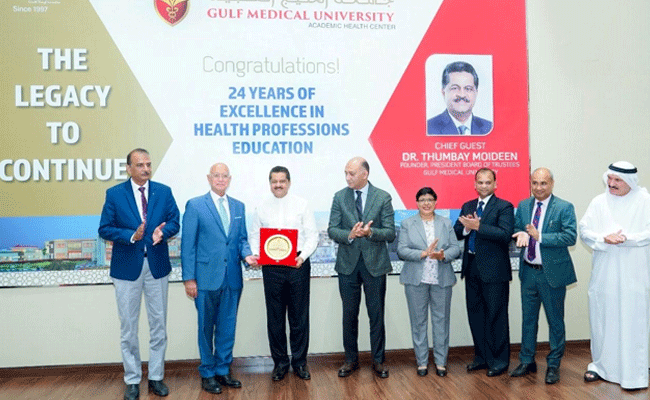
Gulf Medical University (GMU), Ajman, the biggest private medical university in the Middle East region celebrated its 24th anniversary, with a special ceremony attended by Dr. Thumbay Moideen – Founder, President Board of Trustees GMU, Prof. Hossam Hamdy – Chancellor of GMU, Mr. Akbar Moideen Thumbay – Vice President of the Healthcare Division of Thumbay Group, and Deans of the colleges of the University as well as other staff and students.

The celebration was an occasion to reflect GMU’s achievements till date, at the same time reaffirming its commitment to foster continued evolution of Gulf Medical University as an international powerhouse of health professions education, research and innovation.

Highlighting the evolution and development of the Gulf Medical University in terms of buildings, staff, students and scientific and educational degrees, Dr. Thumbay Moideen said, “From humble beginnings as the region’s first private medical University, today GMU is a testament of along and distinguished success story of being the region’s only private Academic Health System- delivering futuristic medical education at the same time playing an important role in providing state-of-the-art healthcare and promoting innovative research.

Our progress over the last 24 years has been driven by the dedication of our staff, students and partners, in addition to GMU’s philosophy of constant innovation and above all, the Grace of the Almighty. We have also received excellent support from the government throughout this journey. 

Prof. Hossam Hamdy said that GMU has developed a unique model in the form of the Gulf Medical University Academic Health System, showcasing on a global front that the future of medical education is ‘systems’ linking education, healthcare and research. “The shared philosophies of the six colleges under Gulf Medical University, its teaching hospital and the passion for supporting all-round excellence has helped in making many distinctive contributions to the overall community over the last two decades. In addition, our response to the COVID-19 pandemic has demonstrated the great value of our academic community and the strengths of our basic, convergent and translational science.”

Recently, the ‘Academic Team’ at Gulf Medical University unveiled a long-term strategic growth plan of doubling its capacity in the next three to four years, aligning to future requirements and strategic direction of education policies laid down by the United Arab Emirates and thereby creating an Emirati healthcare workforce to serve the region

Gulf Medical University and Thumbay network of academic hospitals daycare, Labs, Pharmacies and clinics together train around 20 percent of the doctors and approximately 60 percent of the healthcare professionals in the country, creating a significant impact on the healthcare sector of the country and the region.

Moreover, students benefit with adequate opportunities to showcase their achievements through student activities, Interprofessional skills, sporting and cultural events that train them to be multi-disciplinary experts.

Other benefits provided to the students include: Clinical training sites of unmatched quality at 8 hospitals, 10 clinics, 5 labs and 48 pharmacies and a total of 700 beds; tie-ups with other local entities as clinical training sites with over 400 qualified faculty, doctors and adjunct faculty who provide one-on-one clinical training to students and quality care to the patients of UAE; access to technological platforms and an outstanding infrastructure for research on imaging, functional genomics, sequencing with NGS facility. 

In terms of advancing healthcare in the UAE and globally, GMU has launched the establishment of the first liquid biopsy facility in the region, the zebra fish and a platform for drug discovery and development. This has led to achieving its position as a leader in research in medical education in UAE and the entire region with 70% of all papers published in medical education in the UAE coming from GMU. 

Since its inception, around 2000 students have graduated from GMU, advancing their career and securing successful positions including CEOs, COOs, Medical Directors and Heads of Departments in the healthcare and research across the Middle East, Africa, South Asia, Europe, North America and Australia.

Moreover, the university’s academic and research tie-ups with over 70 international universities and research institutions has ensured global recognition and employability for GMU graduates.

To name a few, GMU’s collaboration with International Federation of Red Cross and Red Crescent Societies (IFRC) has led to humanitarian learning in healthcare to create a model youth force in the country that will be equipped with all the basic skills and knowledge to fight any emergency crisis as per international standards.

Likewise, the ‘Future Scientist program’ has been an innovative educational enrichment internship program for Male/ Female Emirati talent who are motivated to nurture their interest in biomedical and drug discovery research. The program helps in preparing them for an exciting career as research scientists.

Recently, GMU has also achieved international accreditation by the Quality Assurance Agency (QAA)-the agency responsible for accrediting higher education institutions in the UK utilizing european standards and guidelines for Quality assurance.

Besides, Gulf Medical University has won several global recognitions such as Forbes, Dubai Quality Award, QS Awards, QS Reimagine WRC Leaders and Ranking from QS University Rankings, Times Higher Education, placing placed the university among top health professions education institutions in the region and globally.

source: http://ww.english.varthabharati.in / Vartha Bharati / Home / by press release / November 21st, 2022

Scholarships Worth Rs 1 Crore 51 Lakhs Given To Over 4,146 Girls By Bazm-E-Niswan

Bengaluru, KARNATAKA :

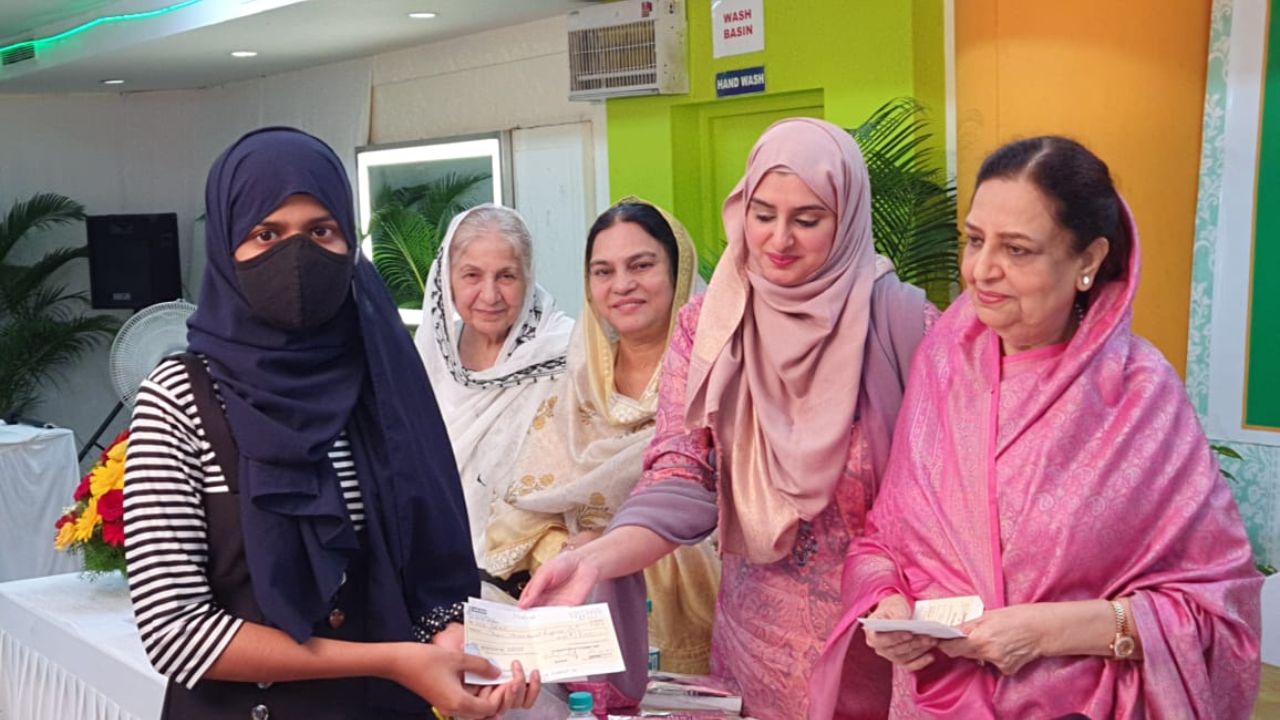
Bazm-E-Niswan, an all women’s charitable trust distributed Rs. 1 crore 51 lakhs in scholarships to 4146 female students from the economically weaker section of the community on Sunday. While 2,166 beneficiaries are PU students, 1,796 are pursuing undergraduate courses. As many as 59 are diploma students and 125 are post-graduate students.

The organisation has been distributing scholarships since its inception in 1971 and has so far given financial aid to over 67000 students to complete their higher education

The purpose behind the yearly scholarships is to encourage Muslim girls from deprived sections to pursue higher studies, Mrs Husna Ziaullah Sheriff, president, Bazm-E-Niswan said.

These girls are now successfully qualified as teachers, professors, doctors, lawyers, government officers, businesswomen, engineers, journalists, trainers, nurses, paramedics and in many other professional courses, she said.

Students applied for the scholarship online through Bazm-E-Niswan’ website. Candidates were required to fill out an online application and submit the hard copy of the application at the trust’s office. The fresh students who had secured more than 50 per cent in their previous exam were selected.

“We received 5,200 online applications this year as against 4,505 last year. The increase in applications indicates the growing need for scholarship due to the financial crisis post Covid 19,” Ms Sheriff said.

“Overall 69.7% students belong to BPL families and 30.3% belong to non BPL families,” she said.

However, the total number of applicants in Post Graduation was only 152, compared to 2,350 in Under Graduation. “This shows only 6.46% girls pursue Post graduation after completing their UG,” it was observed.

source: http://www.thecognate.com / The Cognate / Home> Education / by Shaik Zakeer Hussain / November 27th, 2022

AMU faculty elected Fellow of the National Academy of Sciences

Aligarh, UTTAR PRADESH :

Prof Nafees Ahmad Khan, Department of Botany, Aligarh Muslim University, has been declared as the Elected Fellow of the National Academy of Sciences, India (NASI).

The National Academy of Sciences,  recognises researchers who excel in the field of their research as Fellow of the Academy, which is considered as the most coveted accomplishment in academics.

Prof Khan has worked on the mechanisms of hormonal and nutritional regulation of plant development with emphasis on plant resilience against stressful environments using nutriomics and metabolomics. 

He has published many research papers in crucial high Impact Factors journals and collaborated internationally for research. He has published about 200 research papers(H-index 67; i–10 index 175)and was noted as one of the most-cited Indian researchers in the area of Plant Science by Elsevier every year from 2019 to 2022. 

He has edited 19 books published by Elsevier, Springer-Nature, Frontiers, NOVA, Alpha Science and others. Supervised research projects focused on signalling molecules-nutriomics and abiotic stress tolerance mechanisms, and served as Editor/Guest Editor of the leading plant science journals, published by Elsevier, Frontiers, Springer-Nature MDPI.

Prof Khan is also fellow of The Linnean Society, Indian Botanical Society, Indian Society for Plant Physiology.

source: http://www.amu.ac.in / Aligarh Muslim University / Home / by Public Relations Office / November 04th, 2022

Huge Loss To Civil Society In Bengaluru: Activist Firdouse Khan Passes Away

Bengaluru, KARNATAKA :

Firdouse Khan, a prominent Muslim activist passed away at her residence on Friday morning in Bengaluru.

Firdouse was the secretary and consultant at the city-based Forward Trust, a family and marital counselling organisation. She was actively involved with Bahutva Karnataka, Communal Friendship Forum, Jamaat-e-Islami Hind and other civic organisations.

Speaking of the demise of Firdous, Bahutva Karnataka activist Adv Vinay Sreenivas told The Cognate, “She cared a lot about society and was a person like who exhibited a lot of goodness. It was her dream to live in a society which is in harmony.”

The 52-year-old previously held the post of manager at HCL. She later resigned from the post and was involved in social activities. She took part in several protests, including the anti CAA/NRC protests. The activist regularly organised legal literacy workshops.

“Firdouse was interested in building bridges across people, faiths, and like, there are different communities. She stayed in touch with everybody and was like a very spirited person. Her life was committed to support others and she did what she could do to ease somebody’s pain,” Vinay said.

“A personification of the kind of values we want in a fraternity, Firdous was a believer and she had made connections with people from other faiths. It’s just it’s a very big loss for the civil society in Bangalore because we have very few people like this.”

The deceased is survived by her husband Waseem Khan, one son and a daughter.

source: http://www.thecognate.com / The Cognate / Home> News / by Rabia Shireen / November 11th, 2022

Jamaat-e-Islami Hind President mourns demise of renowned economist Dr Nejatullah Siddiqui

Gorakhpur / Aligarh /UTTAR PRADESH / U.S.A. :

New Delhi : 

Jamaat-e-Islami Hind (JIH) President Syed Sadatullah Husaini has mourned the passing away of renowned economist Dr. Nejatullah Siddiqui

In a media statement, the JIH President said that Dr. Nejatullah Siddiqui’s contribution to the field of Islamic economics was unparalleled and he pioneered the concept of Islamic banking and laid the foundations of what is currently a thriving multi-billion-dollar industry.

Mr.Husaini held that Dr. Nejatullah was a very versatile personality dedicated to learning and development and, despite living abroad, he contributed intellectually to many forums and institutions in India. Calling his demise, a great loss to the Muslim world and the Islamic Movement, Mr.Husaini said, “his passing away leaves a great vacuum in the field of Islamic economics and finance.”

Offering his heartfelt condolences to the bereaved family members, the JIH leader said, “May Allah forgive him, grant him the highest position in Paradise and bestow patience upon his family members.”

Dr. Mohammad Nejatullah Siddiqui, an Indian economist, was awarded the King Faisal International Prize (Saudi Arabia) for Islamic Studies in 1982. Born in India in 1931, he was educated at Aligarh Muslim University as well as Rampur and Azamgarh.

He served as Associate Professor of economics and Professor of Islamic studies at the Aligarh Muslim University and as Professor of economics at the King Abdul Aziz University, Jeddah, Saudi Arabia, in its Center for Research in Islamic Economics.

He later became a Fellow at the Center for Near Eastern Studies at the University of California, Los Angeles (USA), and after that a visiting scholar at the Islamic Research and Training Institute, Islamic Development Bank, Jeddah.

He was a prolific writer in Urdu and English with 63 works in 177 publications and 1301 library holdings to his credit. Several of his works have been translated into Arabic, Persian, Turkish, Indonesian, Malaysian, and Thai languages. He was also the recipient of the Shah Waliullah Award in New Delhi for contributions to Islamic Economics.

Some of his notable books are Recent Theories of Profit: A Critical Examination, Economic Enterprise in Islam, Muslim Economic Thinking, Banking Without Interest, Partnership and profit-sharing in Islamic law, Insurance in an Islamic Economy, Teaching Economics from in Islamic Perspective, Role of the State in Islamic Economy, Dialogue in Islamic Economics, and Islam’s View on Property.

source: http://www.indiatomorrow.net / India Tomorrow / Home> National Interest / November 12th, 2022

Ex-VP Hamid Ansari’s ‘Challenges to a liberal polity’ book review: The politics of being Indian

Kolkata, WEST BENGAL / NEW DELHI :

A collection of speeches and articles by former vice-president Hamid Ansari, offering engaging insights into our democracy.

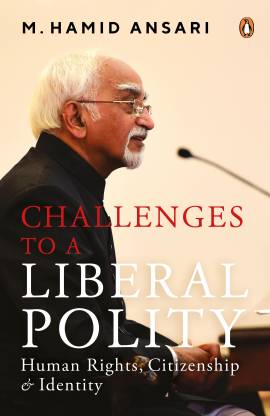
Challenges to A Liberal Polity: Buy Challenges to A Liberal Polity by Ansari  M. Hamid at Low Price in India | Flipkart.com
Challenges to a Liberal Polity: Human Rights, Citizenship & Identity / by M Hamid Ansari / Publisher Penguin / Pages 277 /Price 799 INR

For the past decade, public discourse in India has remained sharply focused on challenges to the liberal polity and the threats that have grown to human rights. Issues of citizenship and identity are entwined inextricably in this. It is in this context that Challenges to a Liberal Polity: Human Rights, Citizenship & Identity assumes not only topicality but also a significance that can be overlooked only at the readers’ own peril.

Hamid Ansari is a distinguished diplomat, academic, statesman and also, the often misused word, a public intellectual. He has, in his long career, worn many hats. He has served as the Indian ambassador to Afghanistan, Vice-Chancellor of the Aligarh Muslim University (AMU), Chairman of the Minorities Commission and the Vice President of India. Throughout his life, Ansari has never shied away from speaking his mind—bluntly if need be.

The author has, at times, been exposed to unfair criticism and deliberately humiliated by persons in high office who should have known better. When bidding him farewell, PM Narendra Modi was unnecessarily sarcastic—some thought gracelessly—by mentioning that Ansari had spent most of his diplomatic career in Islamic countries and perhaps he would be more comfortable now that he was relieved of the burden of the constitutional position to freely voice criticism of whatever he didn’t agree with. The PM conveniently forgot that the former vice-president served with distinction as India’s permanent representative in the United Nations and as Chief of Protocol when Indira Gandhi was the prime minister in an era of dynamic Indian diplomacy. But, let us not digress.

This volume is a collection of speeches, forewords and articles contributed by the author on subjects that overlap and cover a vast time span from the turn of the century to the present day. The introduction is stimulating and thought-provoking. It presents a distilled essence of state-of-the-art research in political science and Indian society. This prepares the readers for what is to follow.

The book is divided into three sections. The first section deals with human rights and group rights. The subsections or mini-chapters can be read profitably as independent essays. Of particular interest are the ones titled––‘India and the Contemporary International Norms on Group Rights’, ‘Minorities and the Modern State’ and ‘Majorities and Minorities in Secular India: Sensitivity and Responsibility’.

The second section is titled ‘Indian Polity, Identity, Diversity and Citizenship’. This is more substantial than the preceding segment and covers a range of topics that should engage readers with different interests and ideological orientations. Examples include ‘Identity and Citizenship: An Indian Perspective’, ‘Religion, Religiosity and World Order’, ‘Two Obligatory -isms: Why Pluralism and Secularism is Essential to our Democracy’. There are shorter pieces like ‘The Ethics of Gandhi’ and ‘The Dead Weight of State Craft’, ‘India’s Plural Diversity is Under Threat: Some Thoughts on Contemporary Challenges in the Realm of Culture’. How one wishes that these themes had been explored in greater detail.

To some it may appear that this is nitpicking, but this is the hazard of compiling a collection of comments and observations made on commemorative occasions such as inaugurating or concluding a seminar, a workshop or writing a short preface. Ansari is primarily a scholar, who is deeply distraught by the happenings around him and is restless to share his constructive thoughts and not just the distress and despair. The tone is always cautiously optimistic.

The concluding section deals with ‘Indian-Muslim Perception and Indian Contribution to Culture of Islam’. The essays on ‘Militant Islam’, ‘Islam and Democratic Principle’ and ‘India and Islamic Civilisation: Contributions and Challenges’ deserve to be read by all Indians, particularly the young. One may disagree with the author, but it is impossible to imagine that any meaningful dialogue can take place between the majorities and minorities in India without an understanding of how the ‘other’ thinks and perceives the world.

His convocation addresses delivered at Jamia Millia Islamia (where he taught) and the AMU (his alma mater) have a different flavour. The tone is personal and evokes shared nostalgia. The final essay is a review of India and muslim world.

The book has substantial end-notes that provide useful bibliographical information. One can flip through these pages to pursue the themes dealt in the book according to one’s own inclination and at leisure.


This book is for all. The general reader, who has no scholarly pretensions, too can turn the pages of this book with great pleasure. Many a time, the author peppers the prose with Urdu couplets that hook the reader to his line of arguments. One such piece is his Fakhruddin Ali Ahmed Memorial lecture. Most people remember this vice-president as the supine individual who signed on the dotted line with dimmer when Indira Gandhi declared Emergency at midnight. Ansari, however,  has used the book brilliantly to make some hard- hitting comments that are im- possible not to take on the chin.

The chapter begins with: Yaad-e-maazi azaab hai yaa rab/ Chheen le mujhse hafiza mera (The memory of the past is torturous, O God/Take away my memory from me), and concludes with: “Can the amnesia, the compromises and the misconceptions of recent and not-so-recent past be overcome?” Yes, only if meaningful alternative is offered. We do stand at the crossroads.

source: http://www.newindianexpress.com / The New Indian Express / Home> Lifestyle> Books / by Pushpesh Pant / Express News Service / November 06th, 2022