Category Archives: Travel & Tourism

Umrao Jaan gets a tomb in Varanasi

Faizabad / Varanasi , UTTAR PRADESH :

Rekha as Umrao Jaan
Rekha as Umrao Jaan

Lucknow:

Umrao Jaan, the courtesan and poetess immortalised by Rekha in a 1981 classic, has got an address 80 years after her death.

A local club of sportspersons and social activists who had found Umrao Jaan’s nondescript grave in Varanasi in 2004 have built a tomb and decorated it for public viewing.

The tomb at the Fatman graveyard in Sigra was thrown open for public viewing on Tuesday (December 26, believed to be her death anniversary) and over 2,000 people have paid tribute to her since then.

Although there is no authentic research available on her, the general belief is that Umrao Jaan, on whose turbulent life at least a dozen films have been made in India and Pakistan and who inspired Mirza Hadi Ruswa’s novel Umrao Jaan Ada, left Awadh at the turn of the 19th century and lived in many places since, slipping into oblivion.

Shakil Ahmad, the president of the Derbyshire Club, a group of sportspersons and While trying to gather more information about her, “I was working on the grave of (shehnai exponent) Ustad Bismillah Khan one-and-a-half years ago when someone told me Umrao Jaan’s resting place was near his.”Some local people and I discussed and decided to renovate her grave. . The grave has been kept open at the centre in keeping with Islamic tradition, which says a grave shouldn’t be completely covered

None of the films made on Umrao Jaan, including the 2006 movie in which Aishwarya Rai Bachchan played the courtesan, mentions that she spent her final years in Varanasi.

source:  http://www.telegraphindia.com / The Telegraph, Calcutta, India / Home> India / by  Piyush Shrivastava / December 28th, 2017

Fort museum opened in Bidar

Bidar, KARNATAKA :

An amazing collection of artefacts, inscriptions and photographs are on display at the refurbished tourist information centre and museum opened by the Archaeological Survey of India on the fort premises here on Wednesday.

The museum had been closed for two years for restoration.

The old museum housed in the Royal Bath room inside the Turkash Mahal complex has been moved to the Awwal Talukdar office near the front gate, opposite Rangeen Mahal.

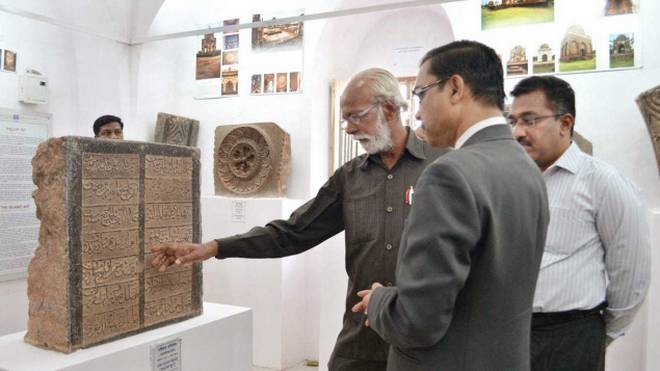
It has tools used by hunters in Neolithic times that were found in 11 archaeological sites in Bidar district. Stone tablets dating from the 1st century; inscriptions that speak of the genealogy of Hassan Gangu Behman, the founder of the Bahmani dynasty; and a space saving tablet that has an inscription on one side and a design on the other, are among the exhibits.

The weapons section is full of guns of various shapes and sizes, cannon balls and thorns and grenades. Metal armour, swords, and khanjars are on display.

Of special interest are implements used by doctors in the 14th century, ornaments made from sea shells, terracotta tiles and painted wall hangings.

It also has artefacts found in neighbouring sites of Sannati, Maski, Kalaburagi, Vijayapura and Basavakalyan.

Archaeologist Prasanna Kumar took visitors and students around the museum and explained the significance of the artefacts. He spoke of sculptors used soap stone to carve female figurines to symbolise that beauty fade away over time, like the rock it was carved on. Abdul Samad Bharati read Persian and Arabic inscriptions to the delight of young visitors.

A.M.V Subrahmanya, Superintending Archaeologist, ASI, pointed out that some Madanika busts found in Basavakalyan and other sites in Bidar district were older than those found in Belur and Halebid.

A 30-minute audio guide about Bidar would be prepared to help tourists, he said. He also said work would start on an interpretation centre and sound and light show in Bidar fort.

The ASI is working with various government departments to draft a proposal to be sent to the UNESCO seeking heritage city status to Bidar- Kalaburagi and Vijayapura, he said.

Hanchate Sanjiv Kumar inaugurated the museum and asked youth to take pride in their history. Prakash Nikam, Superintendent of police, asked youth to desist from defacing monuments. “If we don’t etch on the walls at home, why should we do so on the walls of monuments that are national treasures?” he said

source: http://www.thehindu.com/ The Hindu / Home> News> States> Karnataka / by Rishikesh Bahadur Desai / Bidar – February 05th, 2016

Inscription traces genealogy of Bahmani Kingdom founder

Bidar, KARNATAKA :

Historian Abdul Samad Bharati showing the stone inscription to visitors in the Bidar ASI museum.— File Photo: T. Gopichand

History textbooks in the State say that Allauddin Hasan Gangu, founder of the Bahmani dynasty, began his life as the slave of a Brahmin in New Delhi. However, other versions of history strongly claim that he hailed from Iran and served in the army of the medieval Delhi kings.

The latest evidence that argues against the slave-to-king theory is a stone inscription unveiled at the Archaeological Survey of India museum in Bidar that opened last month.

The inscription of two sets of seven lines, with neatly carved rectangular borders, starts with hailing King Ahmed Shah Bahmani and how his rule brought prosperity to the region. It speaks of how he was the ninth king of the Bahmani Sultanate founded by Allauddin Hasan Gangu Bahmani . It identifies Hasan Gangu as a descendant of the legendary warrior Esfandiyar Goshtap. It describes him as a proud son of a Bahmani village in Iran. “Experts have dated this tablet between 1350 and 1550,” said Prasanna Kumar, archaeologist with the Bidar ASI office.

“For long, scholars have argued with evidence that Allauddin was a general in Mohammad Bin Tughlaq’s army. He founded the Bahmani Kingdom in Kalaburagi, after rebelling against the Delhi kings in 1347. But, we continue to teach the legend that Allauddin was a slave who became a king by chance. This is unfortunate,” said Abdul Samad Bharati, historian and author of the book ‘Historic monuments of Bidar’. He hoped the Bidar inscription would help change the minds of history writers. “There are two other documents that refute the theory about Allauddin’s humble beginnings, a book published by University of Dhaka that speaks of the life and contribution of the hero and medieval era historian Abdul Mallik Esami, who said Allauddin was an Iranian, who joined the Delhi army,” he said.

International scholars also feel the same. “The whole story of Hasan Gangu being a slave to Gangadhar Shastri is a legend that is not supported by any primary source,” said Sara Mondini, art history scholar from Ca’ Foscari University of Venice, who is on a tour of Ashtur near Bidar. Helen Philon, historian of the Deccan Heritage Foundation, says history books need to accommodate changes over the years. “Farishta, a court historian of the Bijapur Adilshahis accorded legitimacy to such legends and hearsay in the 17 th century. Most historians and writers seemed to have believed Farishta, without considering theories that offered alternative explanations,” she said.

Ashwath Narayana, professor of history in Bangalore University, and a member of the Karnataka state textbook review committee, said history textbooks should change with the emergence of new sources. “If history is an attempt at truth-telling, new research should prompt us to change the way it is written. We will study this inscription and make suitable changes to the history of the Deccan, if need be,” he said.

A stone inscription unveiled at the ASI museum in Bidar is evidence that negates the slave-to-king theory in history textbooks.

source: http://www.thehindu.com/ The Hindu / Home> News> States> Karnataka / by Rishikesh Bahadur Desai / Bidar – April 04th, 2016

Lucknow, recovered

Lucknow, UTTAR PRADESH :

Lessons in conservation at the Sibtainabad Imambara

As a young girl, when I was studying in Lucknow, I would often go to Hazratganj to buy storybooks. Browsing through the collection in the market and buying a book would be the highlight of every week. I only had my eyes on the bookshops and never on the name of the market or the dilapidated gateway, which had once been impressive but now looked the worse for wear.

Even on subsequent trips as an adult, I never bothered to think about it till the day a Lucknow-based heritage activist and lawyer, Syed Mohammad Haider Rizvi, invited me to speak at an inter-faith assembly in Sibtainabad Imambara.

As a devout follower of Imam Hussain, I had visited almost every Imambara in Lucknow for the majlis, or assemblies, to commemorate his sacrifice, but never this one. I wondered why I hadn’t even know it existed. I soon found out.

Origin of the Imambara

Amjad Ali Shah was the fourth Nawab of Awadh and ruled from 1842 to 1847. Since he had a religious bent of mind, as a child he learnt Islamic values of faith and piety. His piety as a ruler earned him the sobriquet of Hazrat. The famous Hazratganj of Lucknow is named after him and that’s the area where he chose to build an Imambara which would also house his mausoleum.

It was started in 1847 and completed after his death by his son Nawab Wajid Ali Shah. It was named Sibtainabad as the two Shia imams Hasan and Hussain (grandsons of the Prophet) are known collectively as Sibtain.

When I entered, I found myself inside a huge open area from where I could see a compound with a beautiful Imambara, a congregation hall for assemblies where Imam Hussain is mourned.

The Imambara architecture comprises a main hall (with additional halls depending on the size) where the mourners gather, a raised shahnasheen (platform) where the taziyas and alams (replicas of the shrine of Imam Hussain and his standard) are kept. A pulpit would be kept on one side for the speakers who would speak of the tragedy of Karbala.

The reason I had never been to this Imambara when I was living in Lucknow soon became clear. Once a beautiful Imambara covered with fine carpets, silk curtains, priceless art treasures and exquisite chandeliers, it was vandalised in 1857 during the First War of Independence. Nawab Amjad Ali Khan lay buried here in a vault under the central hall, forgotten by all.

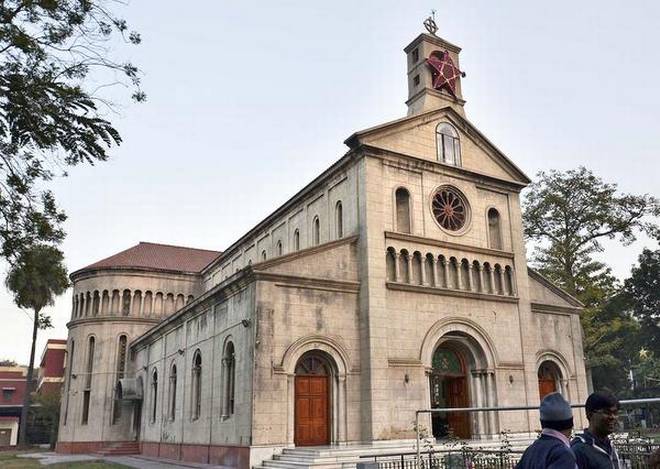
It was even used as a church by the British officers till 1860, while the Christ Church was being built, and Lord Canning attended a service in the building.

In 1919, it was declared a protected monument by the Archaeological Survey of India (ASI). Despite this, it was sold by one Sultan Bahadur in 1921, who claimed to be a descendant of Nawab Amjad Ali Khan, to the Lucknow Improvement Trust (LIT). The LIT, in turn, allotted the surrounding land for residential purposes. The Imambara fell into disuse and disrepair.

The main Imambara post-1947 was used as a workshop and storehouse for furniture as well as by the government census office. A motor workshop had sprung up outside.

In 2008, Rizvi was appointed the joint mutawalli by the Shia Waqf Board and he started the long fight to free it from encroachment and illegal occupation. He took recourse to judicial avenues and slowly, with the help of Right to Information applications and public interest litigations, he succeeded. Then came the task of restoration, which was undertaken by the ASI.

The splendour inside

The approach to the Imambara is through the gateway and into an open space which gives way to an enclosed court. The Imambara stands on a high platform and its arched façade looks very impressive, with its delicate floral stucco and stained glass doors. The inner walls, which had got blackened with neglect and abuse, have been lovingly restored, and its green and white paintings and stucco work are exquisite. The roof and “its beams, which formed a vault over the grave of the late king, had collapsed in a heap of rubble,” according to a 1945 report. It once again supports beautiful glass chandeliers.

A recurring motif on the archways inside the halls is a painting of the Prophet’s celestial steed, the ‘buraq’, that carried him to heaven on the night of ascension. The master mason, Ansaruddin, traced out the designs and restored the paintings and stucco work very carefully.

Preservation of our heritage is our fundamental duty as it is an important source of history of the era in which these buildings were built. If other ‘lost monuments’ received such dedicated and methodical renovation, they could also be rehabilitated and restored to us.

source: http://www.thehindu.com / The Hindu / Home> Opinion> Columns / by Rana Safvi / November 26th, 2017

Learn photography online in nine Indian languages

Lovedale, Nilgiris (Ooty) , TAMIL NADU :

IqbalMohamed01MPOs07jan2018

Language is no barrier to learning the nuances of photography at the Light and Life Academy

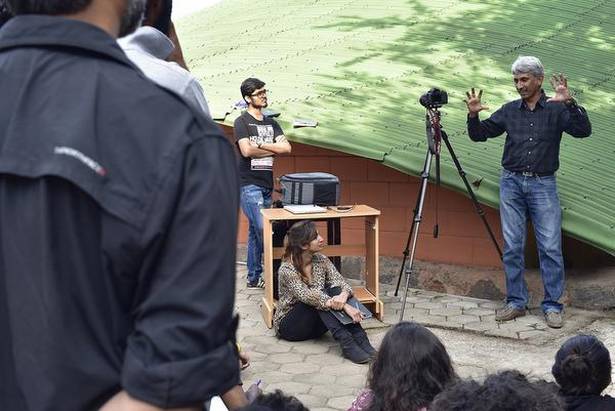
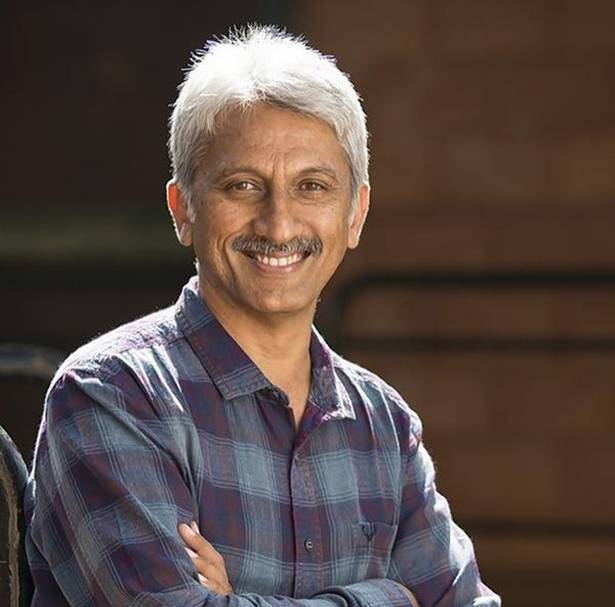
It is 6 am, and I watch Iqbal Mohamed quietly set up his camera in front of the big glass windows in his living room and wait for the sun to rise. We are at the Light and Life Academy (LLA) in Lovedale in the Nilgiris, and I learn that he does this every morning. “No two sunrise is the same,” he offers by way of explanation. Mohamed doesn’t say very much. He prefers to let his photographs do the talking, laughs his more vocal wife Anuradha.

The photographer founded LLA in 2001 as a full-facility photography institute. The inspiration was his alma mater, the Brooks Institute California. He worked in Hollywood with some of the biggest names in photography, and in India, winning considerable acclaim, before setting up his school. LLA, which maintains high standards of professionalism and excellence, has added immensely to the pool of talented photographers in the country. And the alumni have now helped him realise another dream — to set up an online course called ‘Get Creative with Photography’.

Seamless lessons

IqbalMohamed02MPOs07jan2018

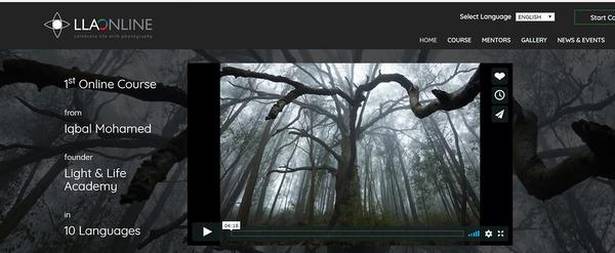
They want to reach out to more people who take pictures as a serious hobby, says Anuradha. “But we did not want it to become just another random photography course. Mohamed’s book, Portrait & Function Photography, in eight Indian languages, was enthusiastically received, and that made us think of an online programme that was serious, structured and professional,” she adds. LLA online was born after three long years of hard work. The programme is available in English and nine Indian languages (Tamil, Telugu, Malayalam, Kannada, Hindi, Marathi, Gujarati, Oriya and Bengali). “Prahlad Kakar advised us on how to create the video tutorials, all shot in campus, and make them not just informative, but also entertaining,” she says.

I click on the online programme to see how it looks, and the screen fills up with a haunting photograph of trees. Even to my unprofessional eye it is a stunning image. It is one of Mohamed’s photographs.

Nattily dressed LLA alumni present the lessons. Each one is an acclaimed photographer, says Anuradha, with considerable pride. “Without them, this course would not have been possible.” These include Shaheen Thaha (celebrity, fashion and architecture), Mihir Hardikar (food and beverages), Ajit SN (automobile and underwater), Punya Arora (editorial and underwater fashion), Satish Kumar (automobile) and Ankit Gupta (architecture and travel).

Getting into the details

IqbalMohamed03MPOs07jan2018

The online tutorial begins with clear, concise and simply-worded instructions. Then comes the fun part. I ask Anuradha if can see/hear the lesson in Bengali. I follow it up with a class in Tamil, Hindi and Kannada! The dubbing is perfect and as someone who has only taken pictures on her mobile phone, even I can understand everything. ‘Getting Ready & Exposure’ is the first lesson, followed by ‘Shutter’, and two sessions each on ‘Lenses and Apertures’, four sessions on ‘Light’, a lesson on ‘Colour’, and finally one on ‘Composition’.

Each of the modules explains the concepts and is supported by images. At the end of each class, an assignment is given that the students have to complete and upload in a week. Their homework is critiqued by mentors and peers, and only then can they proceed to the next class. If required, they are allowed to re-shoot. “This way they share ideas and learn from each others’ mistakes,” explains Anuradha, who emphasises that a strict protocol and system is followed and those signing up for the course have to be committed. There is no skipping lessons.

Offline vs online

IqbalMohamed04MPOs07jan2018

Online students have access to more than 500 stunning photographs by over 90 LLA alumni to give them an idea of what they can do with their cameras. Mohamed oversees their work and comments when necessary. The first set of students have already completed two assignments and the results have been promising, says Anuradha. Once they get feedback, they will launch other programmes, she adds.

Prahalad Muralidharan, CEO of LLA Online, explains that it was challenging to replicate the successful methods of their full-time courses on to the online platform. “After brainstorming and countless revisions, we finally found a way to do it. With peer-group interaction, an online forum and professional feedback, LLA Online is as close as it gets to LLA in terms of learning on an online platform!” he says.

The course includes 10 sessions over 10 weeks. The fee is ₹10,000. The full time courses at LLA can go up to ₹6,65,000. Details: llaonline.in or call: 97511-51999

source: http://www.thehindu.com / The Hindu / Home> Life & Style / by Pankiaja Srinivasan / January 05th, 2018

The jungle man of Coimbatore

Coimbatore, TAMIL NADU :

Jalaluddin01MPOs04jan2018

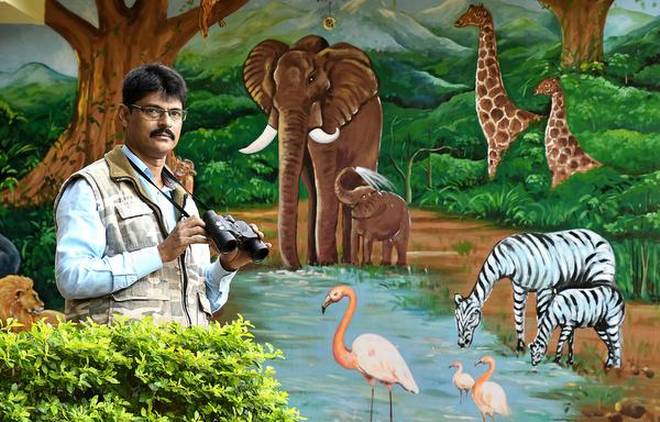
Wild life lover N.I. Jalaluddin is convinced that the way forward in conservation is through young people and he works tirelessly to sensitise them about forests, animals and birds

“My love for Nature started with birds, by observing the kaaka and kuruvi,” laughs N.I. Jalaluddin. As a school boy he was in Kollegal where his father was working. And, as he stared up at the sky, he was often beset by questions about the birds he saw flying. He wondered: ‘How do the migratory birds fly across continents and sometimes over 16,000 kms without any GPS, fuel, or driver?’.

That enthusiasm and curiosity combined with a trek to Mudumalai as a part of WWF camp fuelled his interest further. “I was a regular at BNHS Nature camps in Bandipur, Nagarhole and Masinagudi. And, I decided to talk about Nature and Wildlife among school students from then on.”

Jalaluddin02MPOs04jan2018

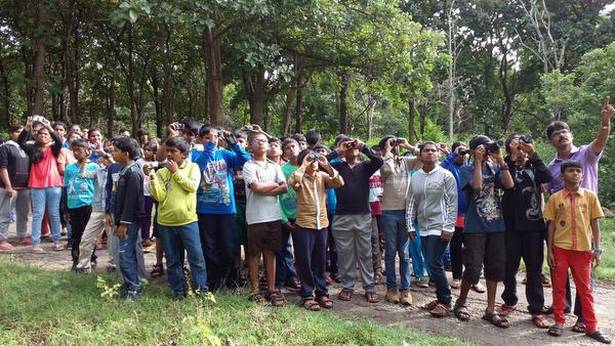
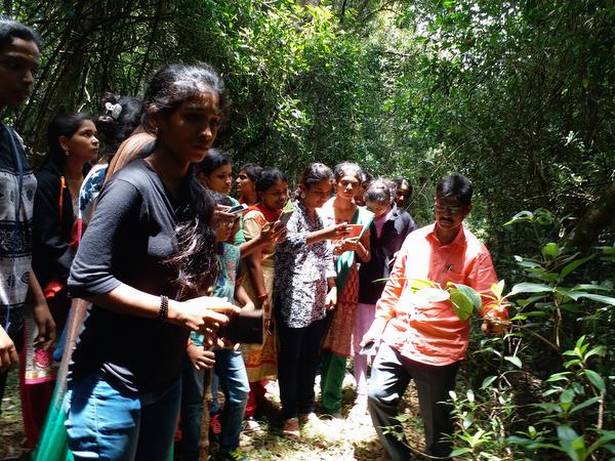
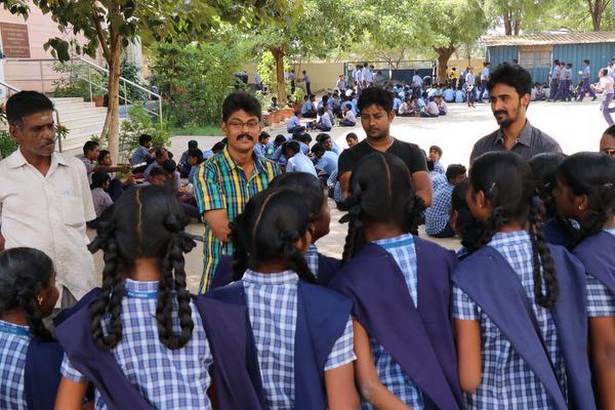
Today, his Nature Conservation Society that spreads awareness among students and the public has completed thousands of Nature camps and reached out to millions of students. Several awards have come his way with the latest one being the Best Service Award by the District Collector. “I work with eco-club students and take them on Nature walks in the Western Ghats,” he says. He educates them about the forests and the rich biodiversity it supports. Then, there is bird watching, and learning about mammals too. “I tell them how to identify pug marks, foot prints, and spoor of animals, and the importance of animal census.”

Jalaluddin talks excitedly about Project Kaliru, an initiative by Tamil Nadu Forest Department to save elephants. As a part of the project, he will cover 46 institutions, schools and colleges, and talk to them about elephants and wildlife. “The elephants lead the forests and set the terrain route for other animals. One of the prime objectives of Project Kaliru is to ensure that there is nil human -animal conflict. Did you know that the elephants as they migrate also bring a variety of plants from another region? The elephant dung has about 40 per cent of undigested food that includes seeds of a variety of fruits and vegetables.”

Awareness is the key, he stresses. “Tribals and animals have co-existed for generations. The conflict arises only in urban zones. In one year, there are over 15,000 deaths by road accidents while the death by human-animal conflict is about 30, which can be easily mitigated.” He is also making a documentary on elephant-human conflict called Wild Witness. “ It’s a dream project for me. One of my students, actor Aravind, who has attended my camps, is helping us out with the camera equipment. DFO Satish and Conservator of Forest S. Ramasubramaniam have been very helpful.” Jalaluddin is a regular at surveys of wildlife population with the forest department. He has rescued many species like snakes, birds, and animals used in illegal trade and handed them over to the forest department for release and rehabilitation. He has spoken out vociferously to save the wetlands. “When I raised my voice against cutting of trees for highway expansion, the authorities threatened to file a criminal case against me. But the Bar Association backed me and we fought it out .” He has intervened and stopped cutting of thousands of trees in the city by litigation, court stay orders, and through dialogues with higher officials. “Youngsters are the change makers, our hope. We have to start with them to care for Nature. Even awareness on banning plastics works better when you take it through them.”

Recently, Jalaluddin took a group of 150 students from Shree Sakthi College of Engineering on a trek to Valparai. “I told them to observe the scratching of animals on trees. It is one of the ways to understand that we are in tiger territory. Engineering colleges should also inculcate nature awareness. A watch tower or a check dam involves engineering skills.”

Jalaluddin03MPOs04jan2018

He recounts some thrilling experiences. “Once, we spotted a leopard in Mudumalai. Another time, we saw a herd of 13 elephants at a very close distance while on a trek at Theppakaadu. Luckily, there was a trench in between, much to the relief of the students,” he laughs. Along with students from Chandra Matriculation School, and Ramakrishna College for Women, he has spotted tigers in Bandipur, Thengumarhada…. “It’s a pity that some schools ignore this aspect of education. We live in the Western Ghats, the hotspot of bio-diversity. When I ask the students about our State animal (Nilgiri Tahr), bird ( Emerald Dove) flower ( Senkaanthal), or tree (palm tree), most them don’t know. A lot of animals, for example wild dogs or dhols have become a rare species now. I have spotted the Emerald Dove or Panchavarna pura so many times at Siruvani foothills. That is also very rare. In Tamil Nadu, we have four Project Tiger programmes in Anaimalai, Mudumalai, Satyamangalam and Kalakkad-Mundanthurai. We have Project Elephant too in Anaimalai and Mudumalai to care for and conserve the elephants.”

People fondly call him Kaatuvaasi or man of the jungle. He brushes it off with a smile, and says, “ I keep doing my work. We have to leave something for the future generation. I feel happy even if one student out of every 10 I talk to, plants a tree. He will in turn talk to another 10 people. Then, there is no stopping. That, is an achievement.”

Jalaluddin04MPOs04jan2018

Awareness programmes

Banning plastic bags, film shooting in reserve forests

Conducting awareness drives through rallies, photo exhibitions and workshops in schools

Supporting the forest department in mitigating human-animal conflict by dialogues with affected villagers

Awarding schools and individuals who contribute to a healthy eco-system

source: http://www.thehindu.com / The Hindu / Home> Sci-Tech> Environment / by K. Jeshi / January 01st, 2018

Sharif Manzil’s Hakims

NEW DELHI :

Hakim02MPOs30dec2017

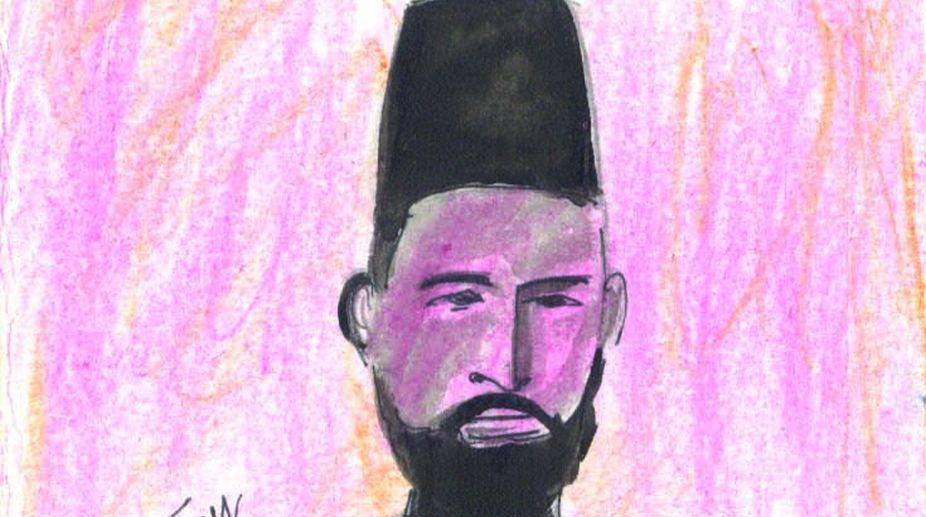
Not far from Gali Mir Qasim Jan, where Ghalib’s haveli is situated, is Sharif Manzil. Here the descendants of the famous hakim Sharif Khan live in comfort. Among the hakims of Sharif Manzil were such physicians as Mahmud Khan and his sons, of whom Hakim Ajmal Khan (in sketch) became almost a legend in his lifetime. It was he who established the Hindustani Dawakhana nearby and also the Tibbia College in Karol Bagh.

At Sharif Manzil, which had dropped the suffix haveli, came rajas and maharajas and even government officials, besides ordinary people to seek medical advice from Ajmal Khan and his two elder brothers. During the “Mutiny” of 1857, the Manzil was guarded by the troops of the Maharaja of Patiala, who patronised the hakims. Ghalib too escaped arrest and destruction of his haveli because the hakims sent some of the Patiala soldiers to guard it. When Ghalib’s younger brother died and a sort of curfew order was in force in the troubled city it was under the protection of these troopers that the dead body was taken for burial.

Lala Chunna Mal’s haveli in Chandni Chowk is a 120-room building with shops below it. The haveli is partly occupied by his descendants, while the others have locked their rooms and gone to stay in modern bungalows in the posh areas of New Delhi. Chunna Mal, who belonged to the Khatri community, was an influential banker of the Mughals and a friend of the Sharif Manzil hakims, but after the “Mutiny” he came into the good books of the British, who allowed him (on payment) to take control of some Mehrauli palaces and Fatehpuri Masjid, which was given back to the Muslims only in 1877, otherwise it was closed to the namazis.

Skinner’s haveli in Kashmere Gate area is now a ruin of its former self and occupied by transporters. It was at this haveli that Col Skinner used to hold his lavish parties in which the main attraction was his friend and British Resident at the Mughal court, William Frazer. The Christmas, New Year and Easter get-togethers here have passed into legend.

The havelis of Mirza Jahangir and fellow-royal Mirza Babar in Nizamuddin were magnificent buildings during the last days of the Mughals and still retain some of their old grandeur.

source: http://www.thestatesman.com / The Statesman / Home> Features / Statesman News Service  / December 17th, 2017

Armenian X’mas link

Agra, UTTAR PRADESH :

ArmenianChurchMPOs26dec2017

This Christmas, let’s rewind to the times when the cross and the crescent met in the Capital

Christmas is much the same everywhere but the medieval Armenian one was different. Even the Cross (that proclaims Christ’s crucifixion) had its own peculiar shape, hardly seen in Catholic and Protestant churches, except in old cemeteries, like the one in Agra which was once a Mughal orchard gifted to an Armenian lady by Akbar in the 17th Century. In Armenian celebrations, cakes were there, of course, but the emphasis was on animal sacrifices. The cakes and sweet breads were embellished with raisins (kishmish). No wonder non-Christians started calling Christmas “Kishmish”.

The visit of the former Armenian President, Levon Der Petrossian during Indira Gandhi’s time was a reminder of the age-old ties between India and Armenia, two countries where the Aryan influence predominated. The visit of Vice-President Hamid Ansari earlier this year was a follow-up to the one by Mrs Gandhi’s to Yeravan.

Armenia is an ancient country which has been regarded as “the doorway between East and West.” Mount Ararat, where Noah’s Ark rested after the Deluge, was in the present Turkish part of Armenia and it was there that those who were saved from the great flood along with the patriarch settled down to create a new world. It was, therefore, natural for Christianity to take root there in its initial days. It is worth mentioning, however, that the old beliefs of the Armenians were incorporated into the Church for quite a long time. Animals were sacrificed in the church porch before the celebration of the Eucharest, especially at X’mas and Easter. The Armenians had started coming to the Mughal Empire some years before the invasion of their country by Turkey. They found the hospitality that they needed and built churches in Delhi, which, however, do not exist now.

At Agra also they built a chapel and the son of a nobleman, Mirza Zulquarnain, was brought up by Akbar. He was later to become the head of the salt works at Sambar. The Mirza is known as the Father of Christianity in North India because it was during his time that the cross and the crescent met in the Mughal Capital.

Mirza Zulquarnain’s palace occupied the land where the British later built the Agra Central Prison, which in recent times has made way for the ambitious shopping project known as Sanjay Place. It was on this piece of land that a cathedral was erected by the Capuchins 200 years later. The Armenians planted olive trees, one of which still survives near Akbar’s church. The mystical cross was used as an emblem on even residential buildings. It is said that during Akbar’s time after Christmas Mass the sick members of the congregation drank of the water in which earlier a crucifix had been bathed. It was supposed to cure patients, or so the belief went. In the Martyrs’ Cemetry at Agra are the graves of many Armenians which look like Muslim graves with Persian inscriptions. One of the graves, that of the saintly Armenian merchant, Khwaja Mortiniphas is still venerated, along with that of Fr. Santus. Some say he was related to the Bishop of Tabriz and became a hermit in later life after giving all his wealth to the poor.

In Delhi, the most famous Armenian tomb is that of Sarmad Shaheed at the foot of the Jama Masjid. Kishanganj, between old Delhi and Sarai Rohila stations, also has some Armenian graves, besides those of Dutch nationals some connected to the Mughal Court like Bibi Juliana. Incidentally, the Chief Justice in Akbar’s reign was Abdul Hayee, an Armenian Christian.

Destroyed by Nadir Shah

There were two Armenian churches in Delhi, one near the slaughter house, beyond the old Sabzi Mandi, another in Sarai Rohilla; though accounts of their exact location differ. According to Sir Edward Maclagan, there were 120 catholics in Delhi during Shah Jahan’s reign in 1650. Their number went upto 300 by 1686, when Aurangzeb was on the throne. Two priests looked after them. A Catholic cemetery was also in existence from 1656. Father Desideri, who came to the city from Tibet, found the churches in ruins in 1732 (Mohd Shah’s reign). He stayed on for three years and built a new Armenian church dedicated to the Virgin Mary and blessed on All Souls’ Day, Nov 2, 1723. In 1739, this church and another Armenian one were destroyed by the Persian invader, Nadir Shah during the massacre of Delhi. One of the churches was rebuilt in 1746, and blessed on Christmas Eve. Later another Armenian church came up, but both seem to have been razed in the early 19th century.

When the Armenians held X’mas celebrations, boys and girls dressed as angels greeted Akbar and later Jahangir at their church in Agra which still exists. After that the two emperors watched the Christmas play and later sent the ladies of the harem to see the crib depicting Christ’s truth in a manger. Armenian X’mas is now a nostalgic memory but when the church bells peal for midnight Mass at Christmas in the Cathedral near Akbar’s church, the Armenian spirit is revived as the local Padritolians pull the ropes of the five huge bells imported from Belgium by the Italian Capuchin fathers. This tradition dates back to Armenian times, when one of the bells broke and could be lifted with great difficulty by two elephants, who deposited it in the Mughal Kotwali till Jahangir had it repaired and restored to the old church.

Probably the most famous Armenian in Indian history was Shah Nazar Khan who cast the Zamzamah gun for the Third Battle of Panipat (1761) on the orders of Ahmed Shah Abdali and about which Kipling wrote: “Who hold Zam-Zamah, that fire-breathing dragon, hold the Punjab”. The giant on wheels, gun is now parked in front of the Lahore Museum, while Nazar Khan rests in Agra where father discovered the nearly-obliterated Persian inscription on his tomb in December 1935, almost two years before one was born. Merry Christmas!

source:  http://www.thehindu.com / The Hindu / Home> Miscellaenous> Othes / by R.V.  Smith / December 26th, 2017

Taj brings back Farhat Jamal, this time as senior VP

Mumbai, MAHARASHTRA :

In his new role, Jamal will be responsible for the hotel's operations in Western India
In his new role, Jamal will be responsible for the hotel’s operations in Western India


Mumbai :

Seasoned hotelier Farhat Jamal returns to the Taj chain after eight years and this time, as its senior vice-president (operations).

In his new role, Jamal will be responsible for the hotel’s operations in Western India and Africa. Jamal had left Taj in November 2007 after being with the Tata Group-owned chain for nearly three decades.

Between November 2007 and until now, Jamal was with Lalit Hotels as its chief operating officer and Shangri-La Hotels as head of India operations.

source: http://www.timesofindia.indiatimes.com / The Times of India / News Home> City> Mumbai / by Reeba Zachariah / TNN / July 21st, 2015

Colonel MA Kaleem Attempts a 35000 km World Record Ride at 68 Years

Hyderabad, TELANGANA :

ColKaleem01MPOs24dec2017

Col. MA Kaleem, a veteran motorcyclist, young at 68 years, begins a solo ride around India, riding a total distance of 35,000 km. He is attempting to break the existing world record for longest distance traveled within a country without retracting on same route. He’ll be travelling to all the states in the country touching their capital cities. Some of the cities he will be visiting are Chennai, Trivandrum, Kochi, Mangalore, Panaji, Bangalore, Pune, Mumbai, Nagpur, Lucknow, Allahabad, Jaipur, Delhi, Chandigarh, Ludhiana, Agra, Gwalior, Siliguri, Calcutta, Ahmedabad, Bhopal, Indore, Guwahati. He intends to travel this Distance in a time of 90 days.

ColKaleem02MPOs24dec2017

He has done innumerable solo rides in India and is affectionately called Moonchwala in Biker circles. He was part of the Hyderabad – Kashmir – Hyderabad ride done last year. He was flagged off in Hyderabad By the Joint Transport Commisioner and Secretary, RTA, HYDERABAD Mr T. Raghunath.

ColKaleem03MPOs24dec2017

Mr. Kaleem Planted a tree at the RTA Khairatabad in Hyderabad to commemorate the occasion. Speaking on the occasion he thanked his Sponsors HP for the Petrol, CEAT Tires for 2 Sets of Brand new tires, ViaTerra for the Claw and GT customized luggage systems, HV Kumar & Forum for Live Online Support, Xbhp members for support and MapMyIndia for the GPS Device. He also mentioned that he is dedicated to protect environment and plants trees whenever he sets out for a ride. He wanted everyone in the society to pledge for their own as well as others safety while on the road.

ColKaleem04MPOs24dec2017

Mr.T. Raghunath explained all the innovative ways they are using to make life of citizens on the roads in Hyderabad better. The safety measures and implementations of different policies were explained to the gathering.

Members from the online community will also be greeting and supporting him at every major town. We wish the young-at-heart colonel all the best in his record attempt.

source: http://www.motoroids.com / Motoroids.com / Home> Features / 2014