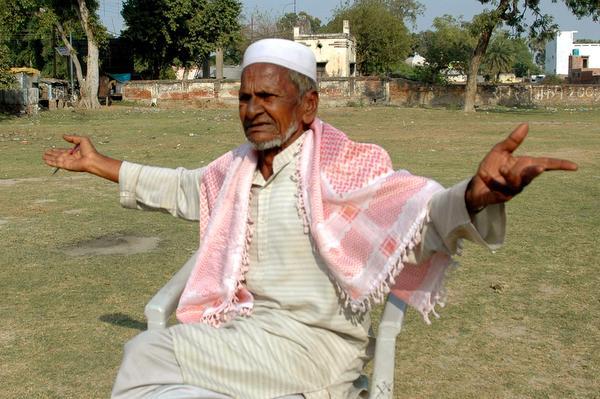
Former Rajya Sabha member and Congress leader Faiz Mohammed Khan (82), popularly known as F.M. Khan, who was residing at Balayatrie Estate in Kodagu, passed away yesterday after a brief illness.
He leaves behind his wife and three daughters.
According to family sources, Khan’s last rites were held at Rasulpur in Guddehosur in Kodagu this morning.
Khan entered politics during 1960s along with his friend former Chief Minister R. Gundu Rao and joined the Indian National Congress led by former Prime Minister Indira Gandhi.
He became the General Secretary of State Youth Congress before becoming a member of the Legislative Council in 1974.
Khan was a two-time RS MP, elected in 1976 and1982. He was also a former Vice-President of Indian Olympic Association (IOA). He had been away from politics for more than two decades.
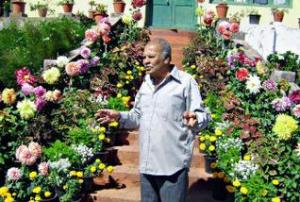
Khan was famous for his annual flower show at his Balayatrie Estate in Kodagu.
source: http://www.starofmysore.com / Star of Mysore / Home> General News / July 22nd, 2016
F.M. Khan (82), former Rajya Sabha member, and a controversial politician hailing from Coorg, passed away on Thursday at his Balayatrie estate near Madikeri in Kodagu.
Fiaz Mohammed Khan, popularly known as F.M. Khan, was a close associate of former Karnataka chief minister, Gundu Rao who affectionately referred to his mentor as ‘Father Mother Khan’.
Khan was part of the Sanjay Gandhi brigade during the Emergency and was allegedly involved in several unsavoury incidents. But Gundu Rao always went to his rescue.
He was the general secretary of the state Youth Congress and was a member of the Legislative Council from 1974 to 1976. Khan was elected to the Rajya Sabha twice in 1976 and 1982. He was also associated with various organisations connected with sports. He was vice-president of the Indian Olympic Association.
The former Rajya Sabha member was known for his love for gardens and won accolades for maintaining the best garden in Delhi in his MP bungalow. Back in Kodagu after his controversial political innings, Khan had been nurturing his garden and has been holding annual private flower show since 1998.
Khan was married to a Kodavathi. He leaves behind his wife and three daughters. The funeral will be held at Rasulpur in Guddehosur in Kodagu on Friday.
source: http://www.coorgnews.in / CoorgNews.in / Home> General News / July 21st, 2016
Faiz Mohammed Khan, popularly known as F.M. Khan, former Rajya Sabha member and Congress leader, died in his Balayatrie Estate in Somwarpet taluk of Kodagu on Thursday.
A close associate of the former Chief Minister R. Gundu Rao, Mr. Khan (82) leaves behind his wife and three daughters.
Family sources said Mr. Khan passed away around 11.30 a.m. on Thursday.
The funeral will be held on Friday at 10 a.m. at Rasulpur in Guddehosur in Kodagu, according his niece Gazala Khan.
Mr. Khan was involved in the anti-Hindi agitation and later joined the Congress. He became the general secretary of State Youth Congress before becoming a member of the Legislative Council in 1974.
Mr. Khan was elected to the Rajya Sabha first in 1976 and for the second time in 1982. Mr. Khan was also a former vice-president of the Indian Olympic Association. Having been away from politics for more than two decades, Mr. Khan used to hold an annual flower show at his estate.
source: http://www.thehindu.com / The Hindu / Home> Karnataka / by Special Correspondent / Mysuru – July 22nd, 2016
Former Rajya Sabha member and Congress leader Faiz Mohammed Khan, popularly known as F.M. Khan, died in his Balayatrie estate in Kodagu on Thursday. A close associate of former Chief Minister R. Gundu Rao, he leaves behind his wife and three daughters.
Family sources said Mr. Khan (82) died at around 11.30 a.m. on Thursday. The funeral will be held at 10 a.m. at Rasulpur in Guddehosur in Kodagu on Friday, according his niece, Gazala Khan.
Mr. Khan entered politics in the mid-Sixties during the anti-Hindi agitation, and then joined the Congress led by former Prime Minister Indira Gandhi. He became the General Secretary of State Youth Congress before becoming a member of the Legislative Council in 1974. Mr. Khan was a two-time Rajya Sabha MP, elected in 1976 and in 1982. He was also a former Vice-President of Indian Olympic Association (IOA).
He had been away from politics for more than two decades. He was holding an annual flower show at his Balayatri estate in Somwarpet taluk.
source: http://www.thehindu.com / The Hindu / Home> National> Karnataka / Special Correspondent / Mysuru – June 21st, 2016
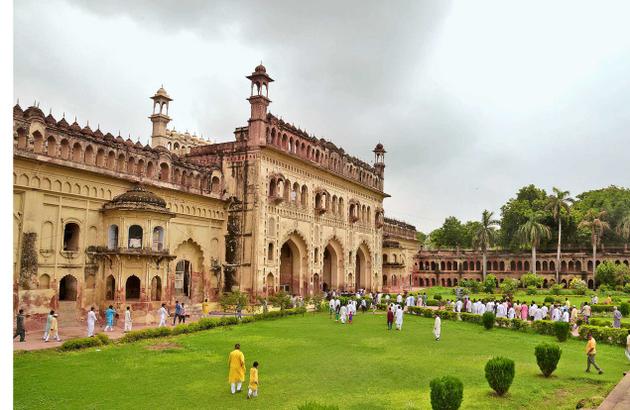
The city of etiquette -Bada Imambara complex of Lucknow / Photo: Rajeev Bhatt
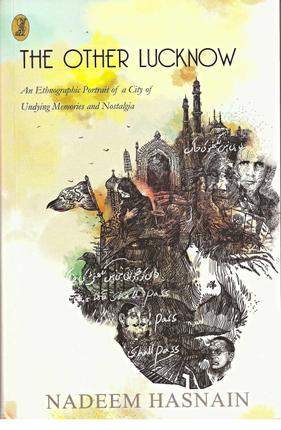
“The Other Lucknow” captures the syncretic traditions of the city
Guru Dutt’s immensely popular film Chaudhvin Ka Chand opens with a Shakeel Budayuni song sung by Mohammad Rafi and composed by Ravi. The song Ye Lakhnau Ki Sarzameen sums up Lucknow and the essence of its famed cultural heritage. Perhaps, no other city in the sprawling Hindi-speaking region evokes such nostalgia, romance, devotion and attachment as Banaras and Lucknow do.
So far, for nearly a century, we used to go back to Abdul Halim Sharar’s classic “Guzishta Lakhnau” that vividly describes the city’s cultural and social life, customs, traditions and history in great detail. This was serialised in the form of articles between 1913 and 1920 in Urdu literary journal “Dilgudaz” that Sharar had launched in 1887. Later, the articles were brought out as a book with a rather longish title “Hindustan mein mashriqi tamaddun ka akhiri namoona: Lakhnau” (Lucknow: The last example of Oriental culture in India). However, the world knows it simply as “Guzishta Lakhnau” (The Lucknow of the Old). National Book Trust published a Hindi translation in 1971 titled “Purana Lakhnau” (The Old Lucknow) with a scholarly introduction written by eminent Urdu critic Mohammad Hasan.
Born in 1860, Abdul Halim went to Matiaburz when he was nine years old. Matiaburz was the place near Calcutta (now Kolkata) where the deposed Nawab of Lucknow, Wajid Ali Shah, had shifted in 1856. How close his family was with the Nawab can be gauged from the fact that his maternal grandfather had gone to London to present Wajid Ali Shah’s case before Queen Victoria.
When still in his teens, Abdul Halim started writing and adopted the nom de plume ‘Sharar’ (spark). His book is a treasure trove of information about the history and culture of Lucknow which was a truly unique city representing the famed Ganga-Jamuni culture.
Wajid Ali Shah, the last Nawab, was an accomplished poet, musician, dancer, actor and dramatist. Urdu drama owes its beginning to him and dance-dramas like “Inder Sabha”, which he commissioned, where Indra, the king of Hindu gods, would sit on a throne wearing a dress that resembled that of the Nawab himself and fairies would sing thumris in Braj bhasha while conversing in chaste Urdu. What better picture of a syncretic culture can we find elsewhere?
Sharar divided the book into three parts and devoted the first two parts to the history of Awadh and Lucknow and that of the nawabs of Awadh. The third and the last part is the one that introduces us to the way people of Lucknow dressed, talked, ate, sang and danced, set new standards of cultured behaviour and etiquette, gathered to celebrate religious and social festivals at fairs, and offered an example of harmonious communal living. It was also a great centre of the Shias.
Now, Vani Prakashan, which is essentially a publishing house of Hindi books, has come out with a book on Lucknow in English in collaboration with the Ayodhya Research Institute, an autonomous organisation of the Uttar Pradesh government. Titled “The Other Lucknow: An Ethnographic Portrait of a City of Undying Memories and Nostalgia”, it is the outcome of a research project headed by social anthropologist Professor Nadeem Hasnain, who has put the book together.
The book appropriately opens with a poem that the Jnanpith award winning poet Kunwar Narain, who spent most of his creative life in the city, has written on Lucknow. It has been reproduced in Hindi which lends a special flavour to the book as the rest of it is a collection of articles, reports and analysis written in English. It is a sort of counterfoil to Sharar’s book as it brings the story of Lucknow in its fullness up to the present times.
“The Other Lucknow” is in a class of its own as it can equally serve a tourist as a guide book and an intellectual who wants to know and understand the history, culture, politics, arts and crafts, business and trade, literature, music and dance, architecture and religion – both past and present.
The book opens with a scholarly article “A Short Cultural History” by noted scholar Sandria Freitag followed by an excellent survey of the city’s social fabric underling its diversity. The survey is based on field research and informs us that Kashmiri Pandits, Bengalis, Punjabis, Sindhis, Malayalis, Oriyas, Maharashtrians and Assamese have also become an integral part of Lucknow’s population. It also offers a detailed description of the religious and caste communities residing in the city. In addition to paying close attention to the mohallas, mandis, bastis, landmarks, arts and craft, music and dance, religious places, Ram Leela, qawwalis and danstangoi, the book brings out the city’s Bollywood connection.
It concludes with an article on Dalit imaginations, laying bare the story of the mega monuments and parks created by former Chief Minister Mayawati to commemorate Dalit icons.
One is not surprised to read, as quoted by Nadeem Hasnain to begin his introduction, what William Russel, correspondent of The Times, London wrote in 1858 about Lucknow: “Not Rome, not Athens, nor Constantinople, not any city I have ever seen appears to me so striking and so beautiful as this.”
The writer is a senior literary critic
Corrections & Clarifications:
This article has been edited for a factual error.
source: http://www.thehindu.com / The Hindu / Home> Metroplus / by Kuldeep Kumar / July 09th, 2016
The most significant of Tipu’s memories lie at the Scottish National War Museum in the Edinburgh Castle.
Tipu Sultan, the Tiger of Mysore, whose birth anniversary celebrations became a contentious issue recently, is avidly remembered, ironically, through his countless artefacts and personal effects displayed in museums and art galleries in England and Scotland. The soldiers and commanders too fought valiantly for this great warrior king, the only monarch to have died on the battlefield fighting the British.
After Tipu was killed on May 4, 1799, Arthur Wellesley, the future Duke of Wellington, gave a free hand to the victorious army to pillage Tipu’s palace and arsenals in Srirangapatnam. The excited British soldiers indulged in such acts of loot and confiscation that there was no one in the army who did not carry multiple artefacts as souvenirs and war spoils.Most valuable ones like the swords, ivory goods, pistols, cannons and jewellery were to the turn of the high ranking officers. The remnants of war rockets, Tipu used to the bewilderment of the British, numbering 700, were shipped to England where they were subjected to reverse engineering to unravel the process of making them.The iconic 42 inch sword that Tipu held on the fateful day of his death and presented to General David Baird as war trophy, was bought by the now beleaguered liquor baron Vijay Mallya in 2003 at a Sotheby auction for Rs 1.57 crore. It is reported that Mallya also bought several other war items like carved quires, flint lock pistols, cannon and other personal items of Tipu.A finger ring with the word Ram engraved in Devanagari script, recovered from Tipu’s body, was exhibited in the British museum. It is said that the ring was later presented by Wellesley to his niece, Lady Fitzroy Somerset. The gorgeous Tipu’s throne with a gold canopy was ripped out and all its eight large diamond studded tiger heads that formed the front of the throne were shared among the generals.
One of them was presented to Edward Clive (son of Robert Clive), then governor of Madras, is now exhibited in Clive Museum at Powis Castle in Wales. A pair of Tipu’s golden slippers, his glittering tent, a camp cot, swords, walking stick with tiger head etc, are also seen here.
Of all the curious objects of Tipu, the “toy tiger” displayed in the Victoria & Albert Museum, London, is the most important. It is an awesome life-size wooden toy seen in a military uniform. This impressive toy has in its body a mechanical pipe organ hidden and by turning a handle, creates wailing shrieks and a loud roar while the victim’s hand moves up and down in despair.
The design of this toy tiger is said to have been inspired by the death of the son of the Scottish General Sir Hector Munro, a bête noire of Tipu. There are also several items of jewellery taken from Tipu’s palace which are on display in this museum.
In 1999, Edinburgh’s National Museum of Scotland, as a part of the bi-centennial celebrations of Tipu’s death, held a special exhibition in which a replica of Tipu’s toy tiger was made for the occasion. It continues to be in the museum now.
A significant legacy of Tipu was the proliferation of paintings and sketches the contemporary artists produced. Due to these paintings, the image of Tipu was entrenched in the collective memory of the British so well that in 1831 when Ram Mohan Roy visited England, he was embarrassed to face hostile booing crowds at many places. As Ram Mohan Roy’s headgear resembled Tipu’s turban, he was mistaken to be a descendant of Tipu Sultan.
Castle’s war museum
The most significant of Tipu’s memories lie at the Scottish National War Museum in the historic Edinburgh Castle. Here are preserved swords, daggers, war medals and other articles taken from the arsenals at Srirangapatnam. There are numerous ornamental swords belonging to several prominent Scottish army generals who saw action in the Mysore wars.
Swords presented to the generals as souvenirs are also on display. The names, Carnatic, Mysore and Srirangapatnam carved on stones, indicate the importance the Scots bestowed on their combats against Tipu. An armlet of Tipu, found on his body that was presented to David Baird, is also preserved here.
At the concluding ceremony of Edinburgh International Festival (EIF) held annually, a spectacular display of fireworks takes place outside of the castle in commemoration of the Mysore wars. The exquisite Amaravathi sculptures excavated from near Guntur in 1845 by Sir Walter Elliot, now exhibited at the British Museum, and the enigmatic Kohinoor diamond taken away in 1850 after the Second Sikh war and presented to Queen Victoria, form part of the crown jewels displayed now in the Tower of London. They attract millions of tourists from all over the world annually.
The indiscriminately looted Tipu’s Srirangapatna treasures, now as global exhibits, stand as quintessential reminders of the nature of the British colonial aggrandisement in India.
(The writer is retired professor of History, University of Hyderabad)
source: http://www.deccanherald.com / Deccan Herald / Home> In Perspective / by K S S Seshan / July 12th, 2016
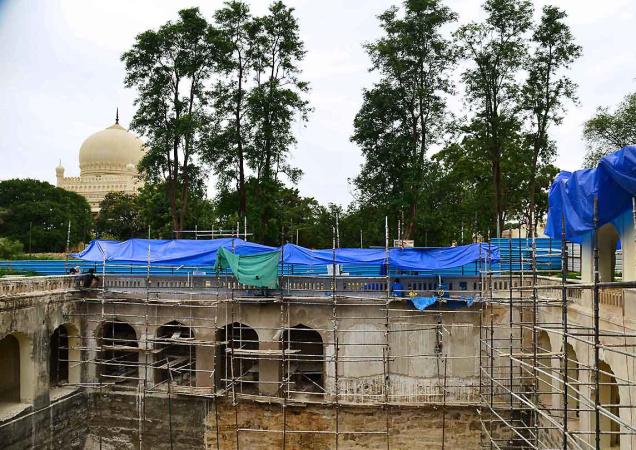
Heritage regained:Work nearing completion at the Badi Baoli with the western wall, which had collapsed in 2013, also fully restored now.— Photo: K.V.S. GIRI
The 400-year-old step well collects 10 lakh litres of water this rainy season
Among all the structures on the premises of the Qutb Shahi tombs, one of the first to come up near the entrance is the Badi Baoli (step well), built more than 400 years ago by Sultan Qutb-ul-Mulk, the first ruler of the Qutb Shahi dynasty. The huge quadrangle edifice, which looks like anything but a well, has been brought back to life about three years ago after a part of it had collapsed due to heavy rains.
And now, it is the same monsoon that is making the Badi Baoli do what it was meant to do: to collect water for the purpose of irrigation or gardening in the premises. “We have collected one lakh litres of water after it had started raining this year,” said Ratish Nanda, CEO of the Aga Khan Trust for Culture (AKTC), which is currently restoring the Qutb Shahi Tombs.
In 2013, the western wall of the Badi Baoli had collapsed due to heavy rains, and details of the construction remained only on a small portion of the structure. A visit to the old step well now will perhaps bring a smile on the face of any heritage lover. The details have been restored, and the cement on parts of the edifice has also been taken off.
The restoration was also done with the help of archival images from the 1860s, when certain changes were made to the structure during the Asaf Jahi era. “The work is going to finish in a few days, as the lime-plaster is being applied,” mentioned Mr. Nanda.
Collecting Water a part of the restoration plan:
One of the advantages of restoring the Badi Baoli is that the AKTC is utilising the water collected for irrigation and restoration work as well, effectively having to rely lesser on water tankers. “We have created catchment areas for all the six baolis on the premises. Wherever there is a step-well, we built channels to divert rain water directly into it, instead of allowing it to get logged or sucked underground,” explained Mr. Nanda.
Apart from the Badi Baoli, the AKTC has also restored the Hamam (bath) Baoli and the Jamshed Baoli. The other three step-wells in the Qutb Shahi Tombs premises are located in the Eidgah and the Deccan park. They will also be restored at a later stage of the restoration, which is currently in its first phase. Under it, about 30 of the 70-plus heritage structures will be restored by the end of 2017.
The historic necropolis is being restored by the AKTC in partnership with the Department of Archaeology. The project is also being funded by the Dorabji Tata Trust.
source: http://www.thehindu.com / The Hindu / Home> News> Cities> Hyderabad / by Yunus Y. Lasania / Hyderabad – July 10th, 2016
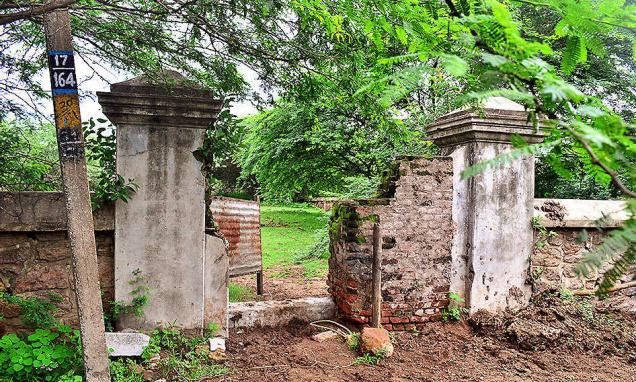
The two-storey mansion where the Hyderabadi noblewoman once stayed is now in ruins.—Photo: T. Appala Naidu
Mansion where noblewoman Khair-Un-Nissa stayed is now a cattle shed
In April 1807, Hyderabadi noblewoman Khair-Un-Nissa was given shelter in a two-storey mansion with a mesmerizing view of palms, fishing canoes and breakers of the Coromandal coast, according to ‘White Mughals; Love and Betrayal in 18th Century India’ by William Dalrymple.
Now, the view of the mansion, which was then residence of East India’s agent in Masulipatam, Alexander, resembles a small jungle, with a cattle shed within the stonewall in the Bandarkota area in Machilipatnam.
Khair-Un-Nissa, most excellent of the women had stayed in the mansion with her mother Sharaf-Un-Nissa for nearly two years during her exile. After Mir Alam, Hyderabad Nizam, died in January 1809, Khair-Un-Nissa and her mother appeared to have returned to Hyderabad.
Outlawed after love affair
Colonel James Achilles Kirkpatrick, the British Resident in Hyderabad (1797-1805), fell in love with Khair-Un-Nissa, and married her in January 1801. Citing disgrace to her family, Khair-Un-Nissa was ordered by Mir Alam that she would not be allowed back to Hyderabad on her way back from Calcutta, where she spent some months, mourning the death of her husband Kirkpatrick. He was 41.
Widowed at 19, Khair-Un-Nissa had to live outside the Nizam’s dominions and thus she had to stay in Masulipatam as suggested by her husband’s assistant, Henry Russel. Nestled between the Dutch fort and an armoury, the mansion has been erased from the memory of the people of Masula and become home for cattle.
The Machilipatnam Municipality’s survey records show that the nearly two-acre site of the mansion is now under the control of private people. “We do not know any history attached to the land. The entire site has been distributed among the 12 members of our family, Vemoori family,” Vemoori Badri toldThe Hindu . Mr. Badri’s family uses this historical site as shelter for their cattle.
“Until 1979, the two-storey British building was in good shape with rooms with spiralling space. It has disappeared on the site over the years. Possession and transfer of right over the site by locals remains a puzzle for me,” local historian and then Masula Revenue Inspector Mohammed Silar told The Hindu . Most of the protection wall and entrance gates to the British site were collapsed. A thatched cattle shed raised on the pillars of the old construction welcomes the visitors.
source: http://www.thehindu.com / The Hindu / Home> National> Andhra Pradesh / T. Appala Naidu / Machilipatnam – July 02nd, 2016
The Mustafabad cannon at Allapur Gate and Landa Qasab cannon, in Vijayapura, are facing neglect.
Some of the massive and marvellous cannons belonging to the Adil Shahi era here are decaying because of lack of efforts to preserve them.
While only a few giant cannons have been preserved at Nakkar Khana, the main pavilion of the Gol Gumbaz, at Malik-e-Maidan, some others are left there in the open.
The cannons at Mustafabad near Allapur Gate, a few hundred metres from the Gol Gumbaz, are in the worst shape.
The cannon was earlier placed on the fort wall. Over a period of time, the wall collapsed owing to lack of maintenance and the giant cannon fell on the ground.
The authorities have not made any efforts to locate it to a better place where it could be preserved. They are now getting gradually buried under a heap of garbage and human waste.
Similar is the condition of the Landa Qasab cannon near Kirti Nagar and Ali Burj.
While a signboard has been placed by the Archaeological Survey of India near the Landa Qasab cannon, the one at Mustafabad does not have one.
According to historians, these cannons played a significant role in protecting the boundaries of the Adil Shahi empire from enemies.
They were strategically placed on towers where security men could keep a watch on the entry of enemies.
source: http://www.thehindu.com / The Hindu / Home> National> Karnataka / Firoz Rozindar / Vijayapura – June 30th, 2016
If you thought only guys can do wheelies, twirl in the air on their bikes and land on the ground, only to take off for another stunt, think again. For here’s a young woman who’s sure to give all those men, who brag about great stunts, a run for their money.
Probably the youngest professional bike stunt performer and rider in the country, Anam Hashim says she knew her heart lay in riding when she was barely 11.
In 2015, she became the youngest Indian female rider to scale the Khardung La Pass on a 110cc TVS Scooty, a record-breaking feat which has entered the India Book of Records.
In an interview with Nina C George, Anam talks about what got her hooked to riding and how it felt to be atop one of the country’s highest points.
When did you first discover your love for bikes?
As a child, I used to run behind my father whenever he rode the bike and tried to get a hold of the handle bar. In fact, it is my father who gave me my first ride and a feel of what it is like to handle the machine. He would make me sit in front and give me a chance to hold the handle bar and control the bike.
Have you undergone any formal training in performing bike stunts?
I began learning on my own and slowly, I started taking lessons from a few well-known bikers across the country. I would spend a lot of time reading, researching and understanding what bike stunts are about and the safety measures involved. You can’t suddenly wake up one morning and want to do bike stunts. There’s a certain logic and principle behind the whole process.
Is bike stunt riding a popular sport?
No, it wasn’t popular until recently. Bike stunt riders are aplenty in the West but we don’t find many here. In an effort to introduce a championship for stunt riding in India, I had recently organised the ‘India Bike Week’ Stunt Championships and the response was truly encouraging.
What was it like to scale the Khardung La Pass on a scooty?
At first, it seemed like an impossible task but when I began riding, I not only found the whole process quite challenging but also an enjoyable one. There were places where there were no roads or even a path to ride on. I had to negotiate really rough terrains to reach the top but the excitement of getting atop was irresistible.
Being a woman, do you find stunt riding tough?
I believe nothing is impossible. Every rider has to keep himself or herself extremely fit physically, emotionally and mentally. Bike stunts are not for the weak-hearted. I eat every three hours and exercise to build strength.
How do you keep yourself motivated?
I keep myself updated about the latest developments in the world of stunt riding. I watch a lot of videos and interact with riders who have been in the field for a long time. Sometimes, I look at my own videos to keep my spirits high.
Have you ever experienced fear during your rides?
I’ve certainly experienced fear but I try and overcome it and move on. I try to focus on the task at hand and concentrate on achieving it.
We hear you are a good cook…
Yes. I mustn’t brag about myself, but I make the most amazing ‘Nawabi biryani’ and ‘khichdi’.
What’s next?
I will soon be leading a group of 10 women, riding the TVS Scooty Zest 110cc, to Khardung La Pass in August 2016. The riders will be chosen through an all-India competition named ‘Himalayan High Season 2’. The 10 shortlisted riders will undergo training before the final ride.