When you think Hyderabad, you think Nizam and by extension you think biryani. To satiate that palate yet give a new twist to the old, Viva at Vivanta by Taj, Begumpet, has launched the Jeelani Diaries, a unique pairing of Nizami food with cocktails.
The four course menu is prepared by Chef Jeelani, who spent the better part of his childhood in the Nizam’s kitchen along with his father who was an assistant in the royal kitchens. With typical specialities like the Dum biriyani almost considered ‘ghar ka khana’ (homemade food) for the chef who has always been preparing and specialising in the Hyderabadi-Nizam cuisine, the spread is promising.
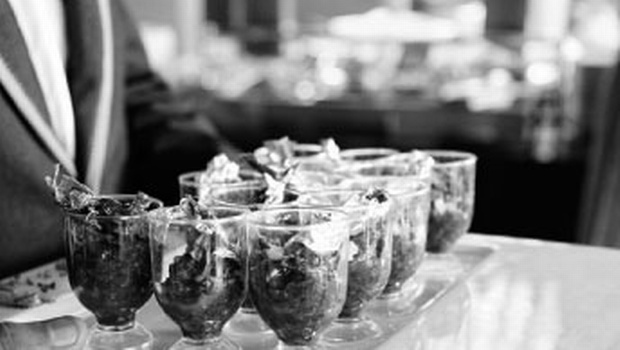
Besides the chef, what makes the Jeelani Diaries even more of a mouthful is the careful cocktail pairing. Served with the starters, each comes with a choice of two cocktails that complement and enhance the flavours.
For instance, the menu opens with a selection of signature favourites such as the kale chane ke kebab that comes with a serving of falak or pudina while the aloo shikampoor is teamed with mild firangi nariyal or vodka shikanji.
The idea is sip on the drink while you eat, so make sure you don’t down yours before you finish off your kebabs; the elaborate pairing that has gone into the process to improve the flavour will be lost.
Besides a colourful array on your platter, the chefs have ensured a colourful array of the cocktails as well.
Other authentic dishes find their way to the menu, including Bhagara Baigan, Charra Aloo Choti Methi and Jungli Murghi ka Salan. But make sure you end your meal with their rather interesting choice of desserts — Palak ka halwa, Mirchi ka halwa and Gosht ka halwa.The Jeelani Diaries is open for lunch and dinner at Viva from 12:30 to 3 pm, and 7:30 to 11 pm.
For reservations, contact 040 6725 3642.
source: http://www.newindianexpress.com / The New Indian Express / Home> Cities> Hyderabad / by Express Features – Hyderabad / April 11th, 2014
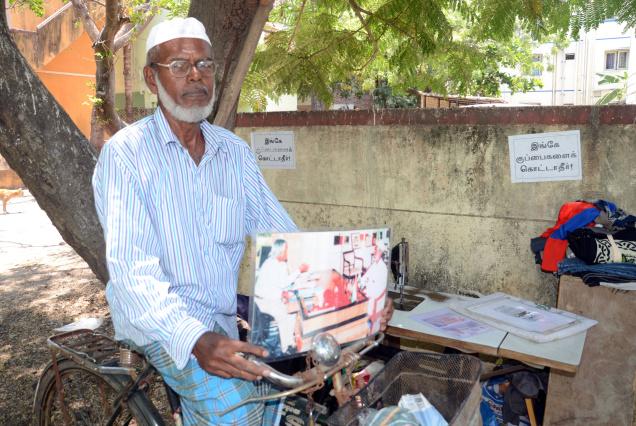
Mission on wheels: While cycling to Delhi from Chennai, S. Nagoor Meeran made many friends./ Photo: M. Karunakaran / The Hindu
Nagoor Meeran, a tailor, cycled to Delhi to meet Abdul Kalam. Vipasha Sinha on his feat
Neither the merciless weather nor the bumpy roads could stop S. Nagoor Meeran from meeting the APJ Abdul Kalam in 2003. At that time, Kalam was the President of India.
Nagoor started his journey to the capital by cycle from Tenkasi. In 35 days, he rode through Chennai, Hyderabad, Nagpur, Bhopal, Agra. It was commendable for a 57-year old to perform such a feat.
Ten years later, Nagoor shares the story of that journey and talks of his love for cycling.
“The Lion’s Club was planning to do an event to promote world peace. They had different ideas in mind but I suggested that I could cycle all the way to Delhi and meet the president,” says Nagoor, who is a tailor by the day and watchman by the night.
It was an Imam from his town who suggested to him the idea long ago and this seemed like a perfect opportunity. He had also met Kalam’s brother in Rameshwaram and expressed his interest in meeting the head of the country.
“However, when I reached Delhi I was told I could not meet the President. Yet I was hopeful. I wrote about my journey and the purpose of the meeting and left the request in a glass box kept for people who wish to meet the President. Reading it, he agreed to meet me. I quickly changed my clothes ahead of the meeting. Mr. Kalam was kind enough to have lunch with me. We spoke about three things – the need to promote peace and communal harmony, development in his native town of Tenkasi, and my desire to visit Mecca. I also presented a letter appreciating him,” says Nagoor.
He also got a chance meet other ministers and personalities. All that he carried for the journey on a basic Hercules cycle was a small bag and a bottle of water. He says there were many people who helped him complete his quest along the way.
“I would start in the morning and by six in the evening, I would look for a temple or a police station or a forest department office where I could spend the night. Some people would offer food and water. Between Agra and Delhi come these humungous soft drink outlets, I went there and they gave me two big bottles of cool drinks for the journey. Since water was a major problem, I would befriend the truck and lorry drivers on the highway, and they would erect tents where they could rest. I would use their water tanks to clean my clothes and take a bath. There were times when I would go without a bath for days. I also maintained a diary with the signature and names of all the people who helped me during the journey,” says Nagoor, who has to spend around Rs. 10,000 for this trip, which was partially sponsored by Lions Club and Sun Tv.
Completing his mission, he took a train back to Chennai. Now, he carries in his small bag a photo taken with Kalam and few newspaper clippings lauding his feat. Ask him why he took that journey, he says: “It was just for the love of cycling.”
source: http://www.thehindu.com / The Hindu / Home> Features> Down Town / by Vipasha Sinha / Chennai – March 29th, 2014
Private collectors across the world possess Mohammed Ayaz-ud-Din’s photographs
Mohammed Ayaz-ud-Din
Gulbarga, Karnataka :
The story of lensman Mohammed Ayaz-ud-Din hailing from a remote village in Gulbarga district is an example of how dogged perseverance can take a person to the pinnacle in his profession.
Mr. Ayaz-ud-Din, who was born in a middle class family in Gadikeshwar village of Chincholi taluk, is making waves in the world of photography. Many of his works are owned by private collectors across the world.
Mr. Ayaz-ud-Din completed his post-graduation in photography from the College of Visual Arts, Gulbarga. He has a passion for historical monuments, and his photographs of Khajuraho Temple, Bodhgaya, and Ajmer, and the monuments in North Karnataka have won him laurels not only in India, but also in countries such as the United Arab Emirates (UAE).
The prizes he has received include the All India Exhibition Best Photography Award in 1990; award in the PAC Salon Photography Competition: Best Photography Award during Mysore Dasara in 2000; Tasmiya Art House Best Photography Award; Best Photography Award in the Awantika Art Exhibition in New Delhi. Mr. Ayaz-ud-Din’s love for photography took him from the expansive deserts of Rajasthan to the Khajuraho Temple and fashion shows in Sharjah. Al Sayegh Graphic Company appointed him graphic designer and still photographer in Sharjah for a period of three years from 1991.
Mr. Ayaz-ud-Din helped Mexican researcher Nora Fisher for during her research work on the lives of Lambada women.
His private gallery, “Ayaz Art Gallery,” which will be the second of its kind in the Hyderabad-Karnataka region, is scheduled to be inaugurated next week. Mr. Ayaz-ud-Din has made documentaries on artists, including former Minister Ghorpade, J.S. Khanderao, and Mr. Patil, and also on the Khaja Bande Nawaz Darga and Sharanabasaveshwar Temple in Gulbarga city. He is the founder president of the National Graduate Art and Photography Association.
source: http://www.thehindu.com / The Hindu / Home> Karnataka – Gulbarga / by Special Correspondent / Wednesday – May 03rd, 2006
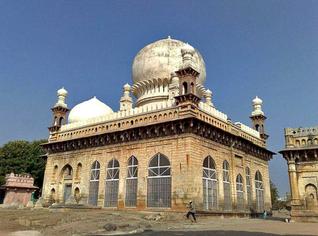
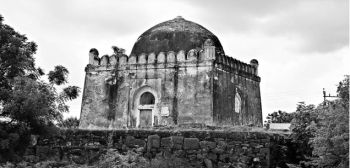
Majestic: The tomb of Allaudin Hasan Gangu Bahamani, founder of the Bahamani dynasty, in Gulbarga will be one of the monuments to get a facelift.
Gulbaraga, Karnataka :
Some of the monuments in Gulbarga, which date back to the 14th century, are all set for a facelift under the Asian Development Bank (ADB)-assisted North Karnataka Urban Sector Investment Programme (NKUSIP).
Deputy Project Director of NKUSIP, G.M. Chowdhary, told The Hindu here on Thursday that it had been proposed to give a facelift to the three tombs of the founder of the Bahamani dynasty Allaudin Hasan Gangu Bahamani; Jamia Masjid, constructed on the model of the great mosque of Cordova in Spain inside the Gulbarga Fort; another masjid Sheikh Roza Minar; and Chor Gumbuz, an imposing vacant tomb on the outskirts of Gulbarga city. Also, a heritage track from the government museum to Hafth Gumbuz covering a distance of 1.8 km has been proposed.
Mr. Chowdhary said the total cost was estimated at Rs. 2.01 crore. The work would begin in July.
Proposals
As per the proposals, the approach road to tomb no. 1 of Allaudin Hasan Gangu Bahamani would be improved at a cost of Rs. 7.15 lakh along with restoration of the entrance and walkway from the main gate to tomb at a cost of Rs. 1.91 lakh; illumination and beautification of the outside of the tomb by providing solar lamps would cost Rs. 2.88 lakh. Besides, landscaping and drinking water facilities would be provided at a cost of Rs. 2.92 lakh.
Mr. Chowdhary said that at tomb no. 2, Rs. 6.15 lakh would be spent for improving the area around the tomb and illumination and beautification of the place. At tomb no. 3, Rs. 8.42 lakh would be spent on improving the approach road, entrance to the tomb, construction of compound wall, providing flooring in the tomb and seating arrangements around the tomb for visitors and illumination of the tomb. A sum of Rs. 12.35 lakh would be spent for improving facilities at the Jamia Masjid inside the fort. This included development of landscaping with walkways and seating arrangements at a cost of Rs. 7.37 lakh; providing drinking water facility at a cost of Rs. 2.1 lakh and illumination and beautification outside the masjid at a cost of Rs. 2.88 lakh. A sum of Rs. 1.3 crore would be spent on laying a heritage track of 1.8 km.
Besides, Rs. 3.64 lakh would be spent for improving facilities at Sheikh Roza Minar and Rs. 20.43 lakh on the Chor Gumbuz, one of the important landmarks in Gulbarga city. Also, Rs. 5.38 lakh would be spent for improving facilities at the government museum.
source: http://www.thehindu.com / The Hindu / Home> Karnataka – Gulbarga / by Special Correspondent / Saturday – June 04th, 2011
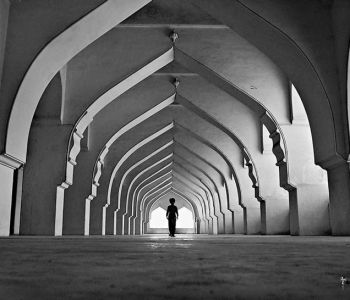
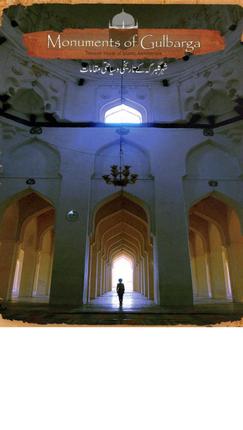
Many layers to it:The interiors of the Jama Masjid captured by photographer Mohammed Ayazuddin Patel and published in his book, ‘Monuments of Gulbarga: Treasure of Islamic Architecture’.
Gulbarga , Karnataka :
Mohammed Ayzuddin Patel, an eminent photographer, has come out with a pictorial tribute to the monuments in Gulbarga district in a book titled ‘Monuments of Gulbarga: Treasure of Islamic Architecture’.
The 96-page book has some rare photographs of the historic monuments in Gulbarga district. This is for the first time that a serious attempt had been made to bring out the breathtaking beauty of these heritage structures in the form of a book. This private initiative is supported by Qamarul Islam, Gulbarga North MLA.
The book was released by Union Minister for Tourism Subodh Kant Sahay during the Gulbarga Utsav on April 15.
One of the features of this book, printed on glossy paper, is the brief historic background of the monuments on each page. The book contains photographs of the crumbling yet imposing tomb of the founder of the Bahamani dynasty, Allauddin Hassan Gangu Bahamani, tucked away in a remote corner in Gulbarga city. This monument, under the control of the State Department of Archaeology and Museums, was a picture of neglect till Mr. Patel took it up with the authorities and the Archaeology Department started conservation work.
Another striking photograph is that of the historic Jama Masjid inside the Gulbarga Fort.
The imposing structure is shown before and after restoration. The book also contains photographs of the interiors of the masjid from different angles. The book also has photographs of the dargah of Hazrat Shaikh Sirajuddin Junaidi, who had come to Gulbarga even before the Bahamani kingdom was established.
The book contains rare photographs of the “mysterious” fort at Holkonda on the outskirts of Gulbarga city with many tombs inside it. The book has some rare photographs of the Nizams of Hyderabad and also the train used by them to visit Gulbarga in summer.
However, Mr. Patel says that only a few monuments have been printed in the book and hundreds of others hidden away from the public need to be brought to the limelight for conservation.
source: http://www.thehindu.com / The Hindu / Home> Karnataka-Gulbarga / by Special Correspondent / Sunday – May 01st, 2011
BOOK Monuments of Gulbarga is a book that captures ancient art and architecture through photographs.
Domes, tombs, minars , forts, moats and off-course masjids . Are you thinking of Delhi? Why travel thousands of kilometres to experience the reminiscences of the sultanate? Prefer going to Gulbarga, a night’s journey from Bangalore. Instead, feel every bit of Gulbarga’s history by just turning the pages of a book. “Monuments of Gulbarga, Treasure House of Islamic Architecture”, a photo-book authored by Mr. Mohammed Ayazuddin Patel gives you this experience.
Gulbarga, now a district headquarters in northern Karnataka, was the capital city of Bahamani Sultanate for two centuries. It was at its zenith in the 15{+t}{+h}century and was home to hundreds of monuments. The Sultanate was founded by Bahaman Shah or Allauddin Hasan Gangu. He shifted the capital from Daulatabad in the present-day Maharashtra to Gulbarga and laid the foundation for a magnificent city. The other great kings of the dynasty were Mohammed Shah and Mujahid Shah.
Resembles Spain`s Mezquita
The book provides a pictorial account of the history of the Bahamani kingdom. Beginning with a nostalgic photo of a tomb of Allauddin Hasan Gangu Bahamani, the founder of the dynasty, the book vividly portrays the beautiful Gulbarga fort, its ramparts, fine arches and abutments. The Jama Masjid, built within the fort, resembles the Great Mosque of Cordova (Mezquita) in Spain with grand corridors and lofty entrance. Various pictures of Shahi Jama masjid in the book unfurl a tableau in front of the onlooker. This masjid located in Shahbazaar was constructed for the members of the royal family. ‘It has a unique architectural style of Mughals and the Persian style’, the book says.
The mausoleums of Mujahid Shah, Daud Shah, Ghiyat-al-din Shah, and Shams-al-din resemble that of Hasan Gangu. Unique is the Tomb of Feroz Shah, with intricate jalis and twin domes. The pictures of 800-year-old Holkonda fort capture the Islamic culture and the simplicity of Tughlaq style aptly. This fort houses an idgah and a Dargah of Hazarath Mohamad Mashaq Sahib, a Sufi saint believed to have come to Gulbarga at the request of Bahamani Sultans.
Gulbarga is famous for the tombs of Sufi saints and Pirs . Noted among them is Dargah of Khaja Bande Nawaz Gesudaraz, built by Mohammad Shah Bahamani. It has a Bijapuri arch built by Afzal Khan, army general of the Ailshahis. Other Sufi tombs being Dargah Khabullah Hussaini with beautiful paintings and calligraphy, Dargah Hazarath Kamal-e-Mujarrad and Dargah Hazarath Shaik Sirajuddin Junaidi.
Majestic, but dilapidated is the Ferozabad fort, built by Feroze Shah Bahamani. He was known for his flair for fine-arts and architecture. This fort, on the banks of Bheema river, encompasses a huge mosque, Tosha khana , and palacial buildings. In spite of its beauty and historical significance, this fort is ill-maintained. Arrays of dung cakes adorn the walls of the sepulchral edifices. Weed-infested mahals are on the verge of collapse due to vagaries of nature. Crumbling structures like Kanchini Mahal, once magnificent and awe-inspiring narrate a story of wanton negligence.
The Chor Gumbad with floral designs, Chand Bibi Gumbad or Kali Gumbad with exquisite Chajjas andJalis , Upli Gumbad – incomplete, yet beautiful, the utterly neglected tomb of Jaccha Bibi, the Siddi Ambar Gumbad with a rectangular porch, are only a few identified among tens of such monuments wailing for attention.
Water conservation
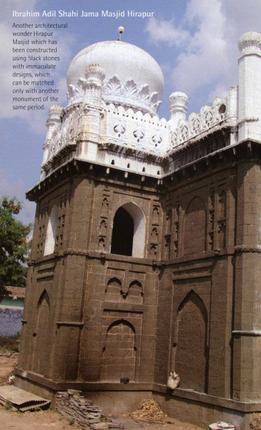
The photos of Hirapur form an interesting set. Hirapur, a suburb of Gulbarga has Ibrahim Adil Shahi Jama Masjid, built in black stone decorated with immaculate designs.
The town has wells, embedded with finely crafted staircases, jharokas and of all, ingenious technology of water conservation to avoid excessive evaporation in soaring temperatures. The wells are still seen as an evidence of splendour, but grossly uncared for.
Strewn inside the fort and atop the bastions are numerous canons, cast in brass and other alloys, weighing several tons, flaunting an intimidating appearance. Famous among these canons is Baragazi Toop atop the Burj in the fort.
Gulbarga is dotted with tombs and mausoleums lost in history, beckoning the curious eyes with their regality. This book displays a tableau of medieval Islamic culture and gives a splendid account of the forgotten monuments. The author also gives an account of Hindu and Jain monuments and pilgrim centres. Patel dedicates quite a bit to the revered Sharanabasaveshwara Temple, Sannati Chandralamba Temple, Ganagapura Dattatreya Temple, and Mallinatha Basadi at Malkhed, but, there is no reference to the nearly 700 year-old-shrine of the Madhwa saint Jayateertha on the banks of river Kagina at Malkhed, a major pilgrim centre.
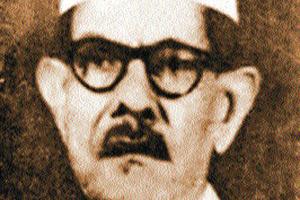
Patel, a national award winner, also records Aiwan-e-shahi, Osmania Intermediate College, MSK Mills established in 1884 by the Nizams. He is President of National Graduate Art and Photographers Association.
TAMRAPARNI R. RAGHAVENDRA
source: http://www.thehindu.com / The Hindu / Home> Features> Friday Review / by Tamraparni S. Raghavendra / March 28th, 2014
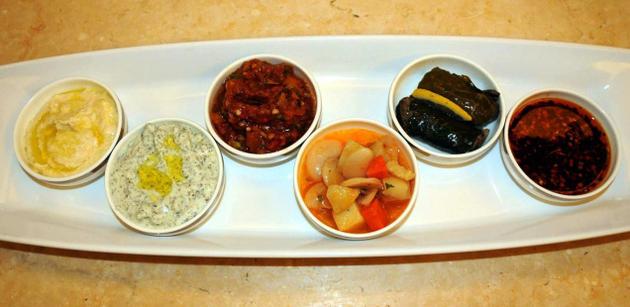
A cold mezze platter. / Photo: K. Ramesh Babu / The Hindu
The Turkish food festival at Park Hyatt offers a lot more than the staple doner kebab
The connection between Hyderabad and Turkey goes back a few centuries; Alauddin Khilji of the Khilji dynasty which ruled the state in the 14th century was of Turkic origin, Sultan Quli Qutb Shah who founded the Qutb Shahi dynasty too was of the same ethnicity, Princess Durre Shehvar, wife of Azam Jah, the eldest son of the seventh Nizam of Hyderabad is the daughter of the last Caliph of Turkey and more recently, Princess Esra, wife of Prince Mukarram Jah too hails from the country.
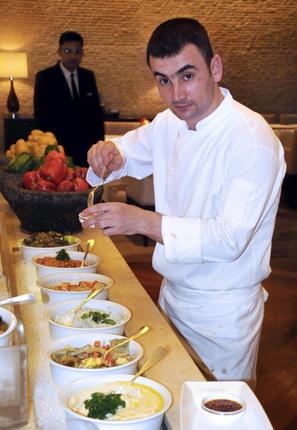
Surprisingly, while Hyderabad still retains much of the Mughlai and Iranian influence when it comes to culinary matters, Turkish food still remains quite different in flavour, ingredients and in technique. Moreover, while Mediterranean food is quite popular in the city, the fare is restricted to Lebanese, Greek and Italian, with the latter being present in almost every restaurant. So we head, all excited, to the Turkish food festival at The Dining Room in Park Hyatt with Turkish chef Turgut Tonbol from the Grand Hyatt in Istanbul. We sit down with the chef, who hails from Bolu, a province which he informs us is a region known for its contribution to Turkish culinary heritage.
“Turkish food mainly consists of the cold mezze and grilled or boiled meat,” he informs us, “but we also have a lot of broad beans, chickpeas and lots of soups in the diet.” Hyderabadis are no strangers to the cold mezze platter which has become a staple in many multi-cuisine and continental restaurants but the platter offered by Chef Tonbol has more than the usual Hummus and Tzatziki. The most interesting of these is the vine leaves, stuffed with rice, nuts and spices doused in olive oil. The platter also contains a simple preparation with broad beans and a mild chilli sauce. The freshly baked pita bread goes well with all or any of these accompaniments.
The cold mezze includes mainly vegetarian dishes. “In Turkey, we don’t have meat for mezze. It is only vegetables,” points out Chef Tonbol who says that the festival includes at least one dish from all the different culinary traditions in Turkey.
Chef Turgut Tonbol./ Photo: K. Ramesh Babu / The Hindu
Ask Chef Tonbol what his favourite dish of the afternoon is and he doesn’t think too much before naming the Shrimp Guvec, a mild stew spiced with chilli and herbs. He also suggests the Chicken Sheesh, a grilled meat dish very similar to our own kebabs, except it is marinated with a special Turkish red chilli, a milder version of the Indian chilli. “It is more similar to Kashmiri chilli which is bright in colour but less spicy in taste,” he informs adding jokingly that to eat Indian food, you “must be a strong man” to be able to take the level of spice. “The Yayla soup, a yoghurt based soup with mint, rice and egg is also a uniquely Turkish dish and a must try.”
Desserts include the favourite Baklava, a Turkish rice pudding and Turkish pumpkin, a simple but fresh and tasty dessert of sweetened pumpkin and cream cheese. But whatever you may pick for the main course, Chef Tonbol advises that you don’t leave without savouring the Turkish coffee accompanied by Turkish delights. The strong black coffee is a must after a meal, “for the gossip sessions”.
source: http://www.thehindu.com / The Hindu / Home> Features> MetroPlus> Food / by Zeenab Aneez / Hyderabad – March 13th, 2014
The ancient Calvathy mosque is steeped in history. PRIYADARSSHINI SHARMA traces its origin and antiquity as it is poised to get two more floors to accommodate believers.
WHEN IT comes to antiquity, every nook and corner of Fort Kochi has a timeless past. While the St Francis Church and the Jewish synagogue hog the limelight as `must-see’ in a traveller’s itinerary, many are unaware of the very ancient Calvathy Jamath Mosque, which exists rather silently along the road connecting the two famous monuments.
It is a historical curiosity that so many varied communities who came to Kochi in succession, settled here to form a long lasting affair with the land and became an indelible part of it. None rampaged the land but settled down harmoniously, imparting richness to its history. The Arabs, who were the first to come for purposes of trade, established places of worship, to which the Calvathy mosque belongs.
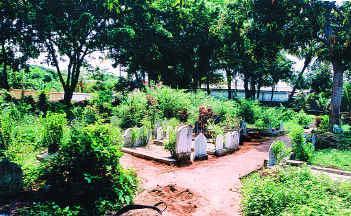
Dating back to the 14th century, it is claimed that the traders, in order to perform their religious rites, built it in the year1384, where historical evidence of records of prayers exist for the last 619 years. Records tell about a trader, Makkar, from Parapanangadi who elevated the existing structure to its present form. From then on several additions were made to it, with the passage of time. The mosque is credited with the fact that many distinguished personalities like Makki Thangal, renowned for his Quranic interpretations and literary works is buried in the adjoining cemetery, just as the mausoleum of Faridudeen Aulia, is erected on the Eastern side of the mosque. The tomb of Faridudeen Aulia, is renowned throughout the country, as he was a preacher of the Koran and was respected and loved by one and all. Thus on Thursdays and Sundays special prayers are offered to him.
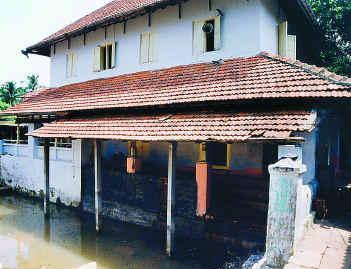
Built in a typical Kerala style the mosque has a timber ceiling and no minarets. A water tank in the centre is in keeping with the traditional architecture. The 2-acre plot which houses the mosque has a burial ground and is planted with many rare trees. Presently plans are afoot to build extensions to the mosque. Says the secretary Mr.A.K RajaAnwar, ” We propose to build two floors of 4000 sq ft to accommodate the believers. It will be in keeping with the style.” Managed till a few years ago by the well-known stevedoring Poovath family, the mosque was managed by Paree Moopan, Abdul Rahimkutty Moopan and Bava Moopan.
In the 1940’s a controversy led to the closure of the mosque, which was resolved in the hands of a popular and loved Imam Maroham Mohammed Ali Musaliar. Hailing from Aluva he was respected and followed the Shariat of Islam. He managed the premises for a good 40 years where, besides managing the day-to-day affairs, he also planted a variety of rare trees in the mosque grounds. In the late sixties, prominent persons like T.K Pareekutty, Abdul Rahim Kutty Moopan, Poovath Hassan, V.K. Hamza, Mohammed Koya, with Poovath Hassan as president formed a working committee to run the mosque.
Today, the Jamath Pally manages the mosque along with a few other mosques in the area. A laudable feature of the Calvathy mosque is that its burial grounds are open to other sects of the Muslim community too.
Calvathy, facing the Western side of the mosque, was the first wharf in Kochi and had an active maritime tradition, much before Sir Robert Bristow planned the present port at Willingdon Island. It was the ancient hub of all sea faring activities, in sharp contrast to the neglected locality it is today. An ancient structure like the Calvathy mosque remains deprived of its historical due and it is time the mosque finds a rightful place among the sites and sounds that contribute to the antiquity of Fort Kochi .
source: http://www.hindu.com / The Hindu – Online Edition / Home> Features> Magazine / by Priyadarsshini Sharma / Thursday – May 15th, 2003
WHILE THE last resting place of Sheikh Ibrahim Zauq in Paharganj has been restored some respectability, thanks to the Supreme Court’s intervention, the graves of Khwaja Mir Dard and Hakim Momin Khan Momin behind the Maulana Azad Medical College are still a picture of neglect. It’s high time something was done to save them.
Mir Dard Road leads to the grave of the great Urdu poet, but the land surrounding it has been sold by the unscrupulous, and palatial buildings have come up around it, leaving only a small plot for the mazar. The grave of Momin is within a boundary wall, along with the graves of Shah Walliullah, the saint whom the poet held in high reverence, and members of the Shah’s family.
Over 40 years ago the hilly land near the grave was bulldozed and plans made to do away with the mazars. A great lover of Momin, Sher Ali Mewati heard of this and came from Mewat (Haryana) to save them. It is said that he lay on the road in front of Teen Murti House and did not get up even when Pandit Nehru was being driven out in his car.
Nehru got down from the vehicle and enquired what the matter was. When Sher Ali told him that the graves of Shah Walliullah and Momin were about to be bulldozed, the Prime Minister got very upset and drove to the spot. The demolition was immediately halted, and later Sher Ali Mewati was able to get the mazars repaired and enclosed in a boundary wall.
The area where this kabristan is situated is known as Mehdian. Sher Ali Mewati, they say, actually lay before a bulldozer to stop the demolition and his leg was fractured in the process. Whatever may be the truth, the area needs another man like him to preserve it from encroachment.
Khwaja Mir Dard was born in 1719 in Delhi and died on January 7, 1785. “Mysticism ran in the family, for he was descended on his father’s side from Khwaja Baha-ud-Din Naqshbandi, and on the mother’s side from Hazrat Ghaus-e-Azam,” says Professor Muhammad Sadiq.”Dard studied theology with his father, and learnt the art of poetry from Khan-e-Arzu. For some time he was in the army, but he gave it up to lead a life of retirement and study and, at 39, on his father’s death, succeeded him as the head of a sanctuary.”
The vanity and unreality of life and its joys and sorrows, unity of existence, the greatness of man in the hierarchy of life, the mirage of the intellect, praise of intuition, the extinction of self and suspicion of worldly life, pietism, contentment, resignation – nearly one third of his poetry is devoted to these ideas.
Professor Sadiq says that Momin Sadiq’s ancestors had migrated from Kashmir to Delhi. “His father, Hakim Ghulam Nabi, was a physician of note and connected with the imperial court. Momin was born in 1800 and was given that name at the instance of his father’s spiritual guide, Shah `Abdul’ Aziz. His education had been thorough and systematic, as is proved by the embarrassing profusion of technical terms pertaining to medicine, astronomy, mathematics, music, etc., in his qasidas. A man of pleasure in his youth, he forswore his Bohemian ways when he became a disciple of Sayyid Ahmed of Rae Bareily, but he was far too human to sink into a dour puritan. The fruits of his conversion can be studied in his Masnavi-e-Jahadiyya and a few other pieces. He died in 1851.”
Momin is said to have predicted his death in verse, as he was also a najoomi (astronomer-cum-astrologer), saying he would end up with broken arms and legs (“dast-o-bazu”). This is actually what happened years later when he fell from a ladder and died after nine days. His famous couplet, “Tum mere pas hote ho goya/ Jab doosra aur koi nahin hota” made his contemporary Ghalib remark that Momin could take his entire dewan and give him just this pearl of a couplet in exchange.
Momin’s best work is Ab-e-Hayat (Parnassus literally, but water of paradise figuratively) Shouldn’t his grave and that of the great Mir Dard be preserved?
source: http://www.hindu.com / The Hindu – Online Edition / Home> Features> Magazine / Down Memory Lane by R V Smith / Monday – May 24th, 2004
Once upon a time, a queen lost her kingdom to a foreign invader. Under the terms of surrender, she was allowed to retain her title, inheritable by the seniormost member of the royal family. She was also assured an annual payment to maintain her standard of living. It was a generous sum back then. Then came the passage of time. Sovereigns vanished into history and elected governments came into existence. The royal family didn’t live happily ever after. Their annual pension, a fixed sum, was ravaged by inflation.
It began to look smaller and smaller, until it came to a point where it was not even as much as the monthly salary any of them earned.
And then the family decided to make a calculation. When they were first allotted that sum, how much gold could they have bought with it? And how much would that gold be worth today? This figure, they convinced themselves, was the sum that they should logically be getting.
And so they went to the government and asked for it. Else, they demanded their kingdom back. They will probably not get either.
+++
That, in short, is the story of the Arakkal family that once ruled the city of Cannanore (now Kannur) and Lakshadweep Islands, a reign that lasted five centuries. The trust that governs their affairs recently made the bizarre demand that the Indian government either raise their pension or return Lakshadweep.
I had to wait ten minutes after ringing the bell at the present queen’s residence in Talassery, a town 20 km away from Kannur. A huge house modelled on the original palace that is now a museum of history, it is as silent and empty as any other house along the Malabar coast whose members have left for greener pastures abroad. The queen has three sons, all working overseas, and one daughter. It is the daughter, who looks around 50, who opens the door and welcomes us in. She had been busy with her evening prayers and apologises for making us wait. She and her mother are the only two residents of this palatial house.
I am taken to the queen’s room, where the 92-year-old Sultan Arakkal Adi Raja Sainaba Aishabi, also known as Arakkal Beevi, reclines on a bed. More than three years ago, she had suffered a stroke and never fully recovered. But she welcomes me with a gladdening smile. I have to bend forward to catch the words of her broken voice.
“Journalists often come here,” she whispers, “though I am not well enough to talk. You may get sufficient information from my children. Please don’t forget to have tea and some food before you leave.”
I ask her whether she is aware of the Arakkal royal family trust’s demand. She answers with the same bright smile. It is her daughter who speaks. “She is too old to get into such headaches,” she says.
For centuries, the royal title has been passed along to the seniormost member of the family irrespective of gender. A male king would be called Ali Raja Adi Raja (‘lord of the sea’) and a female, Arakkal Beevi.
According to historians, the Arakkal Dynasty was Kerala’s only Muslim family of rulers. There is no consensus on their origins, but some say their assumption of power dates back to the 13th century.
According to a piece of local lore, the dynasty was founded by a minister of Kolathiri Raja (the then regional ruler) who converted to Islam and became a ruler.
Another says that the Arakkal royal family traces its lineage to Mohemmad Ali, a nephew of Cheraman Perumal (a regional ruler before the region split into different principalities) who is said to have embraced Islam. The only thing certain is that the Arakkal Dynasty had sovereign control of Cannanore that later extended to Lakshadweep islands off the coast of Kerala in the Arabian Sea.
The arrival of European seafaring powers bolstered their kingdom’s trade and commerce. They had a love-hate relationship with the Portuguese, the Dutch and the British. According to Dr A Sreedhara Menon, a scholar on Kerala history, the Arakkal principality of power came to an end in 1790, the year in which St Angelo Fort of Cannanore was stormed by General Abercromby, the then British Army general. Locally known as Kannur Fort, it had been built in 1505 by the Portuguese; it was later owned by the Dutch, who then sold it to the Arakkal king for Rs 1 lakh. The fort is now a tourist destination. The East India Company later forced the then Arakkal Beevi into an agreement under which she had to give up control of Lakshadweep islands. She was allowed possession of Cannanore city, but deprived of any claim to sovereignty. The East India Company pensioned off the Arakkals the same way they did other local kings and chieftains in India.
By 1900, the family had lost every trace of power. In 1905, they had to make another agreement with the British giving up all sovereign claims on Cannanore and Lakshadweep. In return, they were entitled to receive an annual pension, termed malikhana, of Rs 23,000. This is a sum they still get, though from the Government of India, which took over the obligations of the departing British.
+++
On 10 July this year, a decision was taken at a meeting of the royal family trust to press the demand for a raise (or a return ‘surrender’ of their kingdom). “It is not the first time we have made this demand,” says Ali Raja Adi Raja Hameed Hussain, the eldest male member of the royal family. We are at a shop he has in Kannur, where he runs the family business of spice exports. He takes a bundle of papers off a wooden shelf to show us. The stack includes copies of representations submitted to Central and state ministers to raise their malikhana. “We have been demanding a reasonable hike for long,” he says, “This time we decided to make it public through the media.”
While that may be so, why they consider their demand reasonable remains a mystery. India, after all, is a democracy and there is nothing that entitles them to such a payment. “We need money because we want to continue the charity work which had been done by our ancestors,” says Hameed Hussain. But why demand public money for purposes of charity?
“Because we are descendants of a sovereign ruler,” replies Ali Raja Mohammed Rafi, younger son of Arakkal Beevi Sainaba Aishabi, who runs an advertising agency in the UAE. “As per the contract of 1905 with the English East India Company, we are entitled to receive an amount sufficient to maintain the standards of royal living.”
The agreement, a copy of which is with Open, reads: ‘The Government would pay to the Adi Raja and to his heirs and successors a Malikhana of Rs 23,000 per annum in equal monthly installments one half being paid to him during his life and after his death to the head of the family for the time being as a personal grant for the maintenance of his position and dignity and the other half being paid to him and to his heirs and successors as heads of the family.’
Mohemmad Rafi, who is the managing trustee of the royal trust, says that Rs 23,000 was a huge amount in 1905. If calculated in terms of gold, he says, it would have bought 64 kg of the metal in 1905. “Considering the value of gold [now], we should get around Rs 14 crore per annum,” claims Mohemmad Rafi. “We know that is not practically viable and so we are demanding only a reasonable hike in the annual pension.”
+++
This is not the Arakkals’ only family tussle over ancestral property. There is an ongoing dispute with another family of Muslim landowners, the Keyis, over 1.4 million Saudi riyals—about Rs 2.2 crore—said to be lying in the Saudi Arabian government’s treasury. The exact sum cannot be verified, though many believe it to be in the tune of Rs 90 crore. About 150 years ago, a member of the Keyi family, Mayinkutty, is said to have built a guesthouse in Mecca to accommodate Hajj pilgrims from Malabar. In 1971, the Saudi government demolished this structure as part of a development exercise, allotting 1.4 million riyals as compensation to be handed over to the Keyi heirs. At that point, the Arakkal royal family also staked claim to the amount on the grounds that Mayinkutty had married one of their members, Aychi Beevi. “It is beyond dispute that we are the legal heirs of Mayinkutty Keyi and have legitimate claim over that property,” says Mohemmad Rafi.
The Kerala government recently appointed an IAS officer, TO Suraj, to look into the matter and take a final decision. He says that neither family might have any right to it. “In my understanding, the property was dedicated to the Wakf for the welfare of pilgrims,” says Suraj, “The government is trying to attach the property [for use of] the Wakf Board by due process.”
Professor Rajan Gurukkal, a historian and former vice-chancellor of Mahatma Gandhi University, thinks that would be ideal. “It should go to the government and be used for a public purpose,” he says. Gurukkal also thinks that the demand to raise the malikhana has no legal validity. Dr KKN Kurup, a historian of the Malabar region, author of a book on the Arakkal family’s history called Aliraja of Cannanore and former vice-chancellor of Calicut University, terms the demand “absolutely irrational”. He says there is no reason to spend public money on the upkeep of aristocracies and royalties of the past. “The malikhana was maintained primarily on the condition that they should be loyal to the English East India Company. How can they claim the same even after independence? Does it mean that the Arakkal family is still loyal to the British? What if all the heirs of rulers of princely states make similar demands?”
source: http://www.openthemagazine.com / OPEN Magazine / Home> Open> Feature / by Shahina KK / August 23rd, 2013